
Guinness Clone
intro
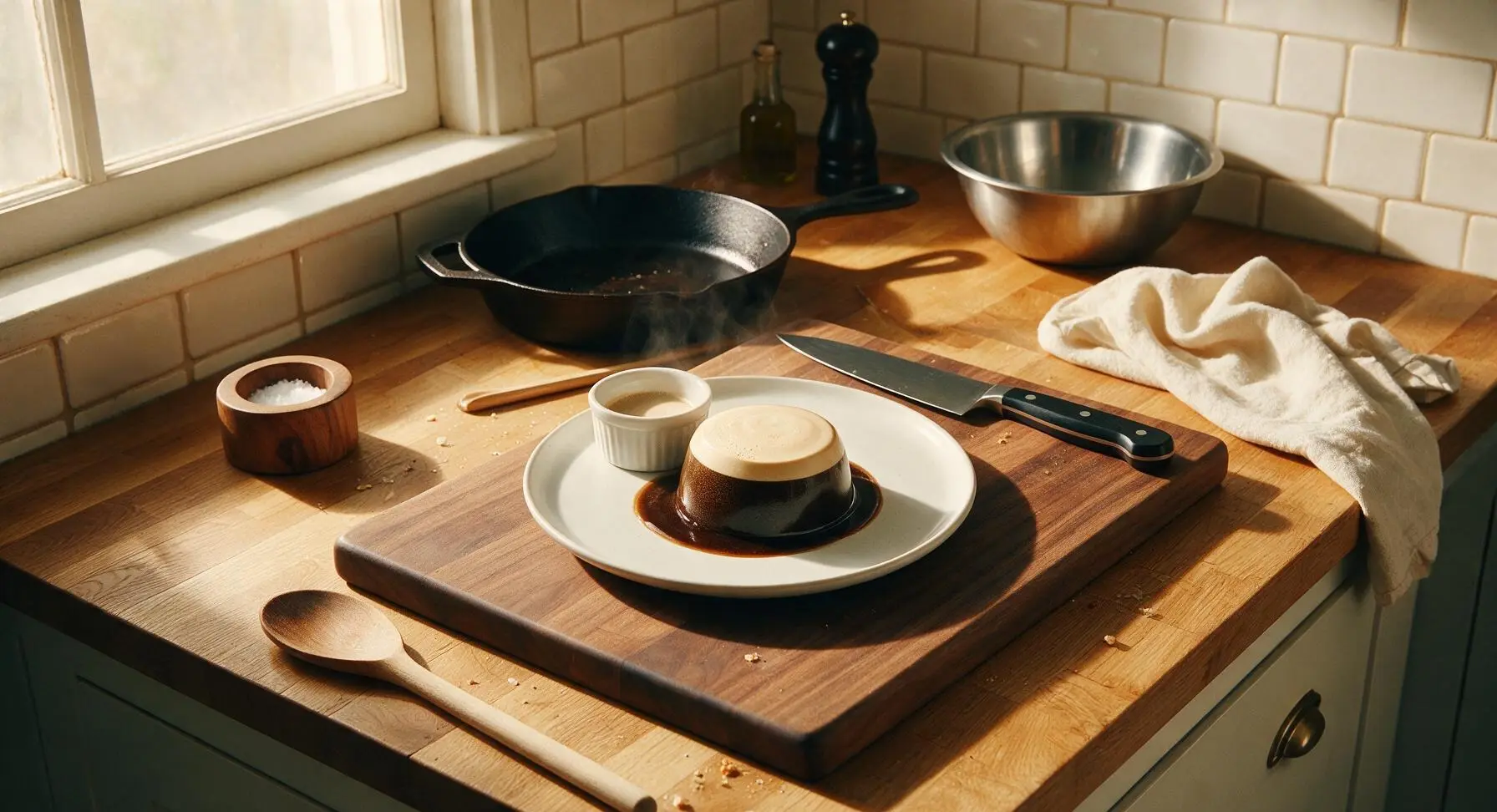
This smooth, roasty dry Irish stout clone matches Guinness’s iconic velvety texture, deep coffee-like notes, thick creamy head, and crisp dry finish, perfect for cold-weather sipping.
Ingredients
Steps
Sanitize All Equipment
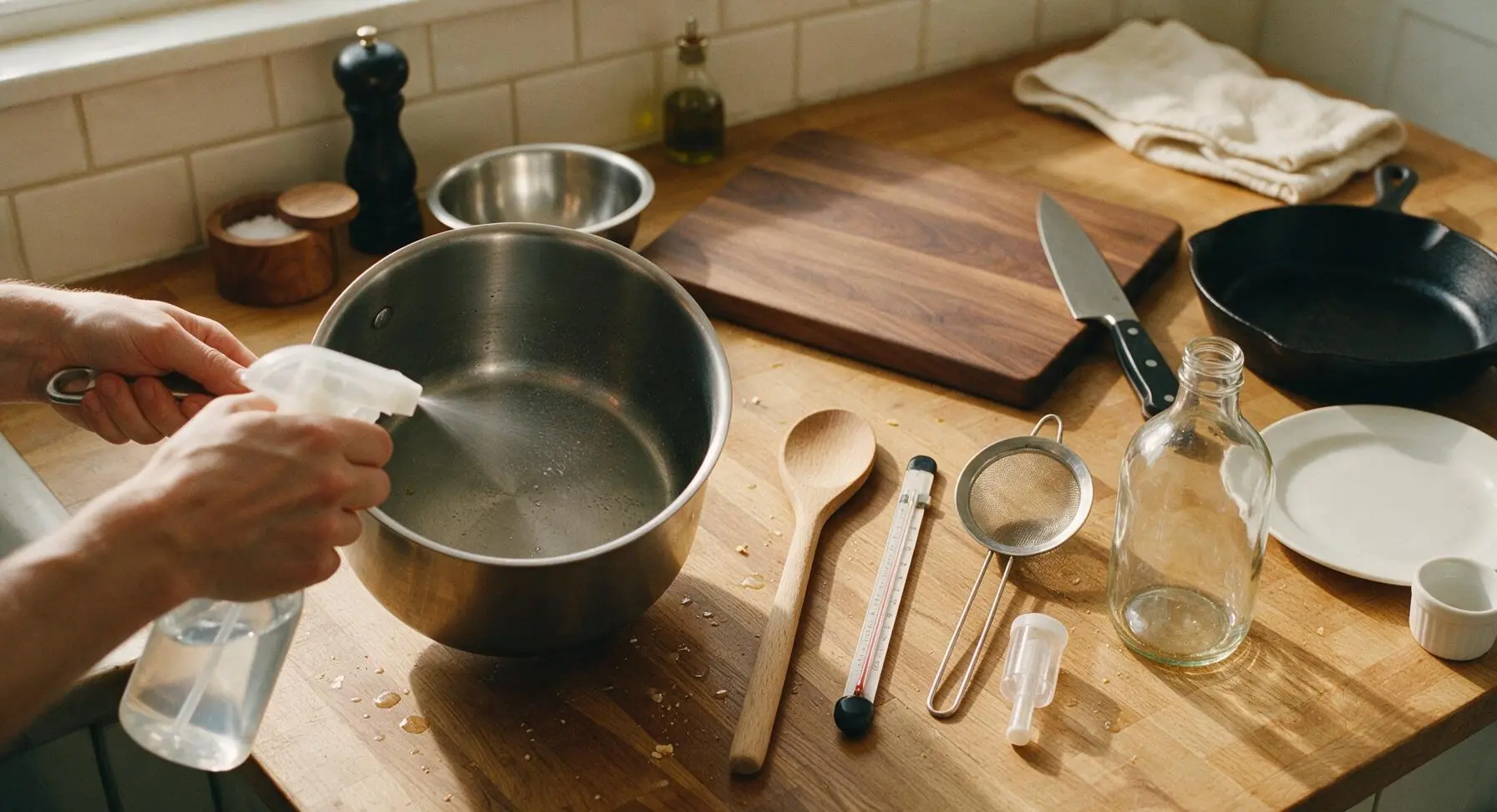
First, spray all food-contact surfaces of the stock pot, stirring spoon, thermometer, strainer, fermentation jug, and airlock with no-rinse brewing sanitizer from the front-left spray bottle. Wipe lightly with a clean corner of the dark gray towel, and allow to air dry for 5 minutes. Any surface that touches cooled wort must be fully sanitized to prevent off-flavors or bacterial infection.
Steep Roasted Grains
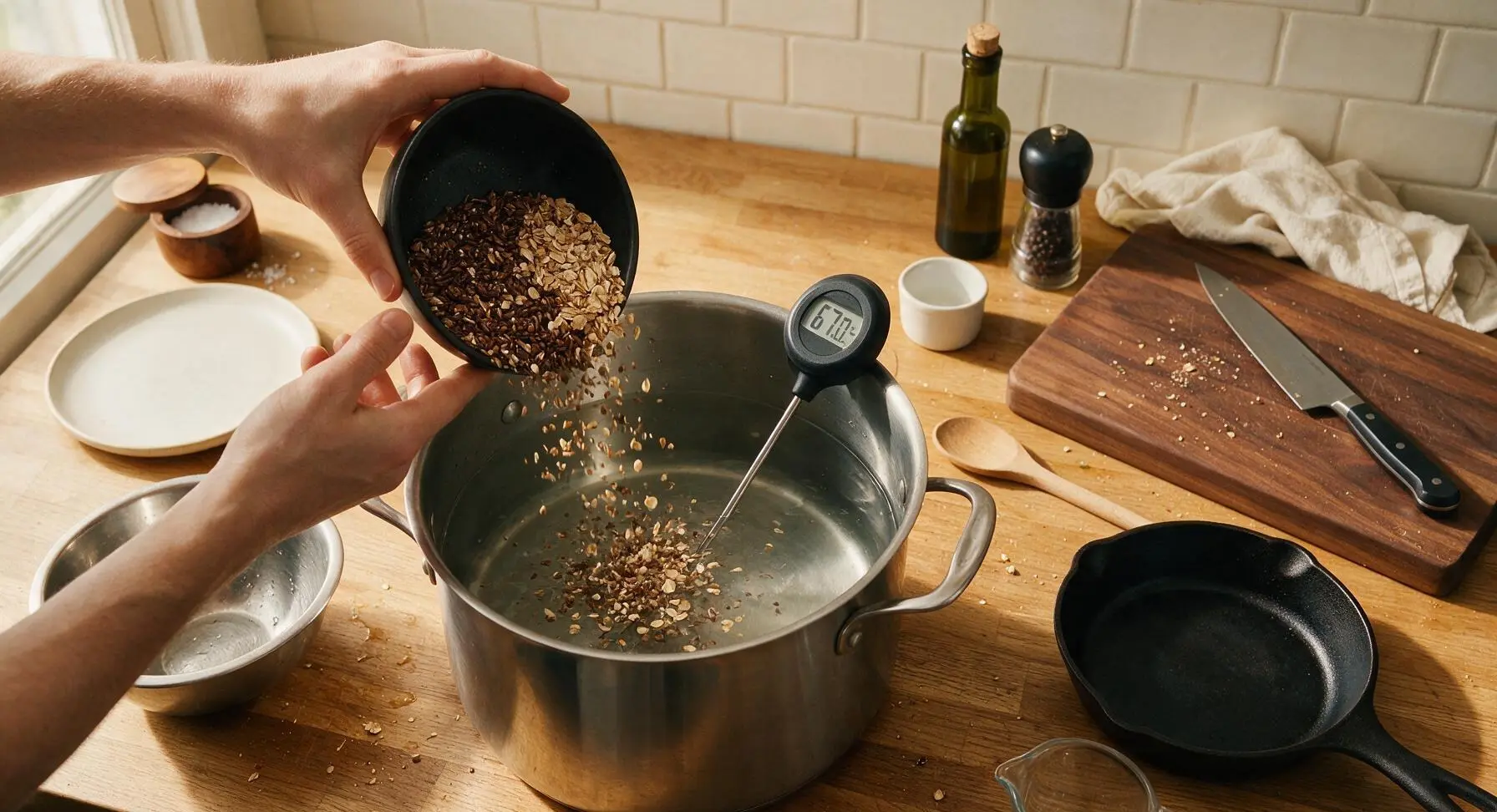
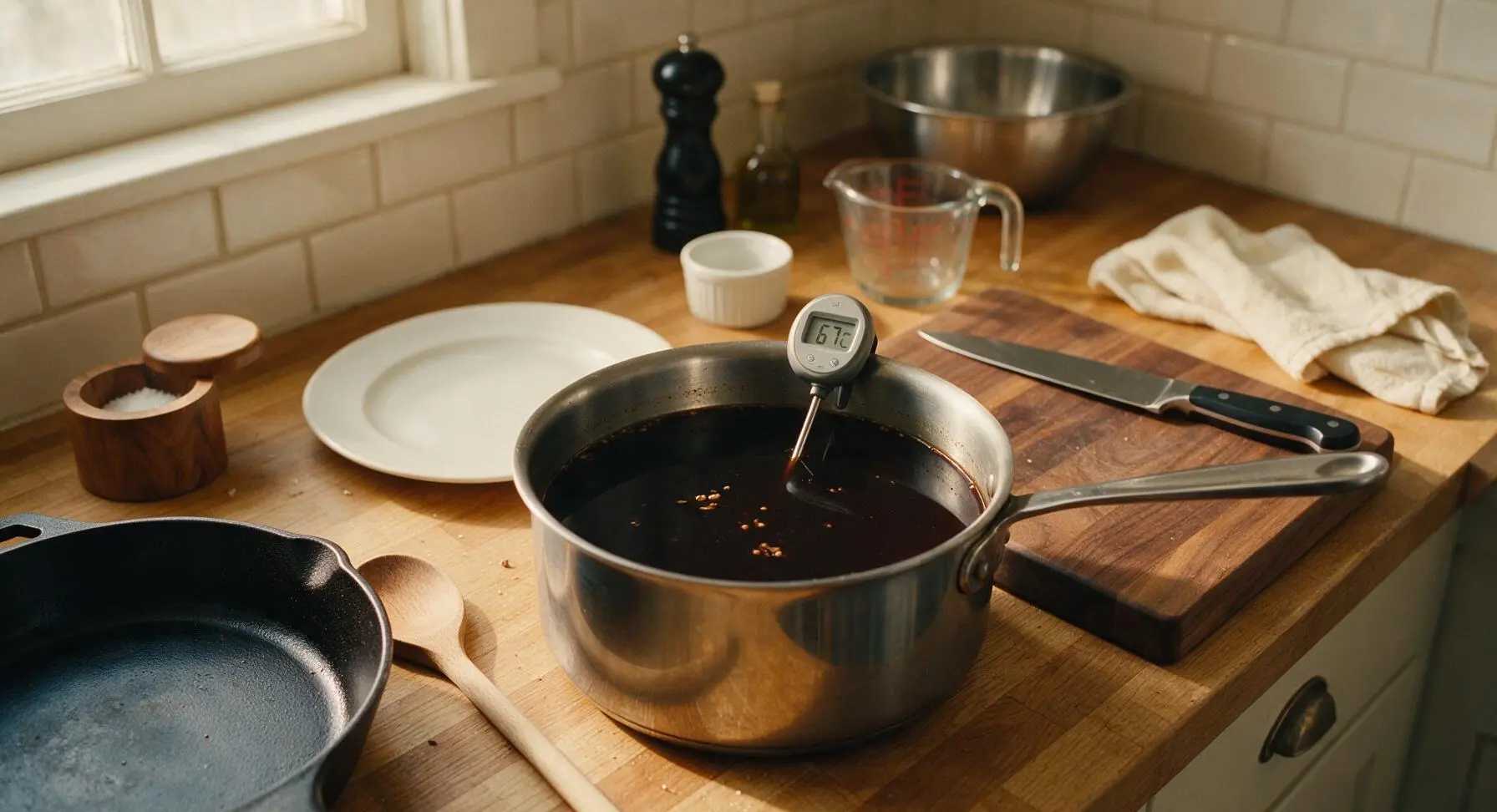
Pour 2L of cold filtered water into the stock pot, and place over medium heat. Add the cracked roasted unmalted barley and flaked barley, clip the digital thermometer to the pot rim, and heat the water to 67C (153F). Hold this steady temperature for 20 minutes, stirring occasionally with the slotted spoon, until the water turns deep opaque dark brown, similar to strong black coffee. Do not boil the grains, as this will extract harsh, astringent tannins.
Boil Wort, Add Hops
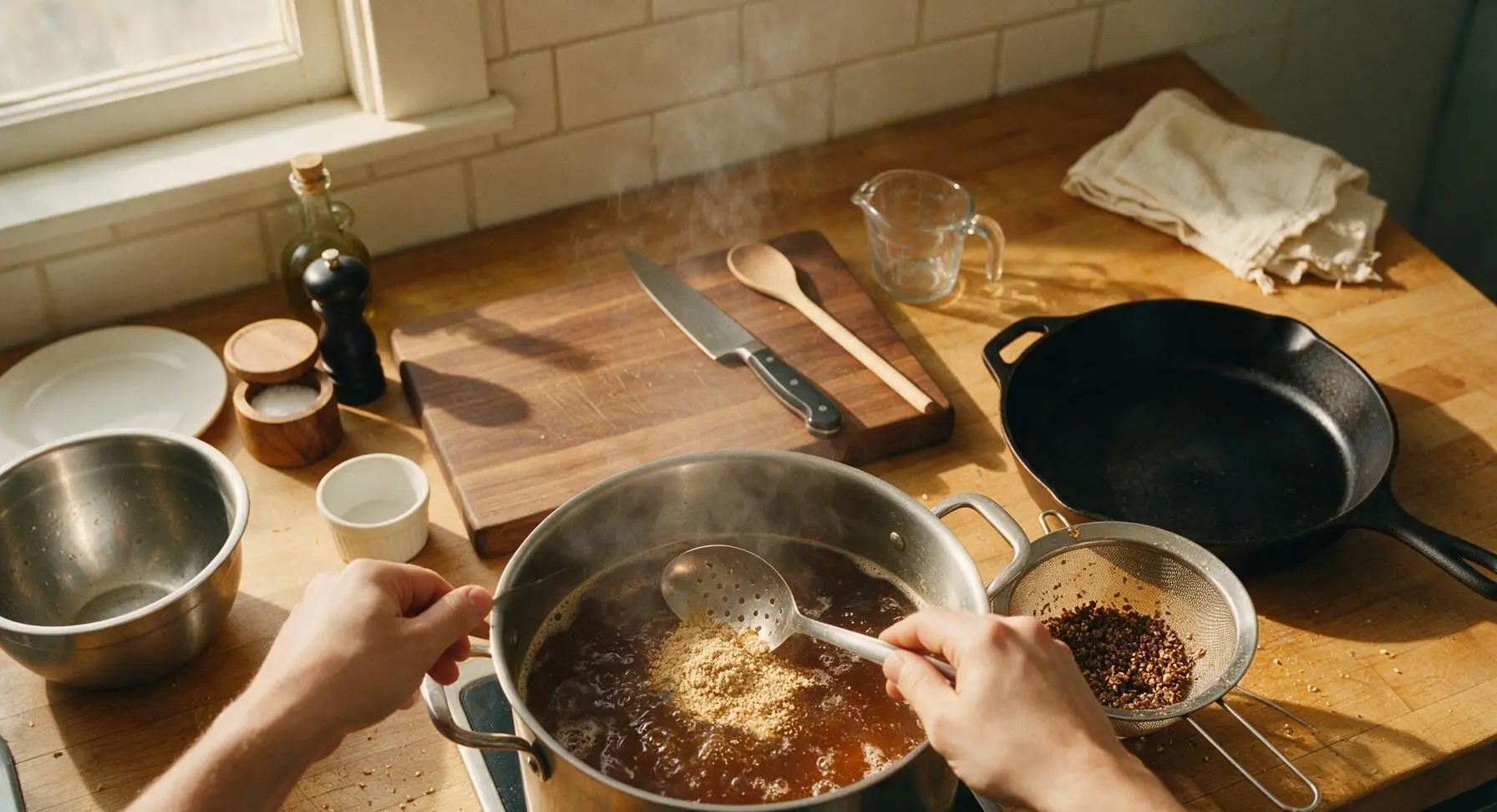
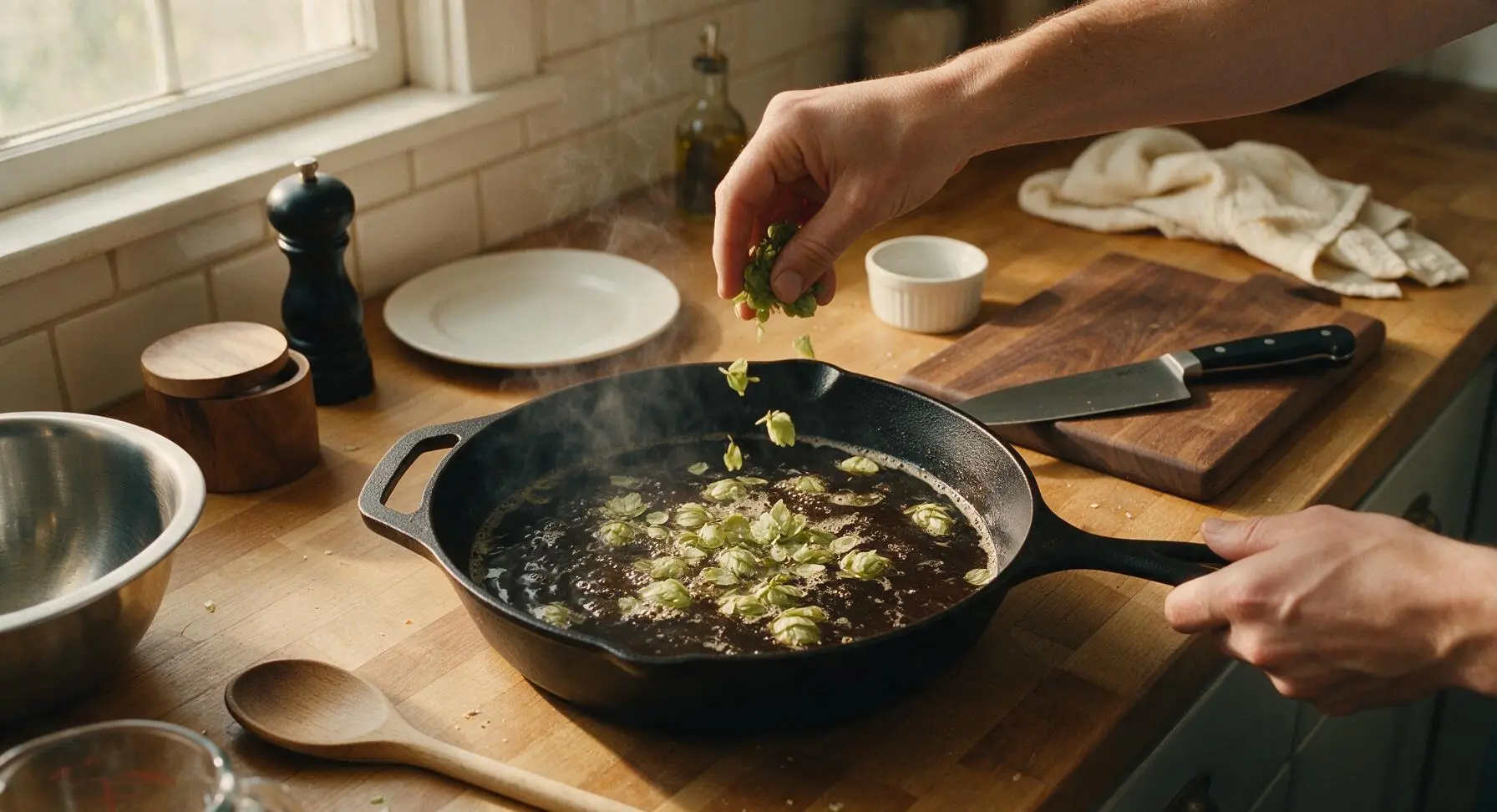
Pour the remaining 2L of filtered water into the pot, then use the fine-mesh strainer to scoop out all steeped grain particles from the liquid. Bring the liquid to a gentle rolling boil (100C/212F), then slowly stir in all of the dry light malt extract until fully dissolved, with no dry clumps remaining. Once the boil resumes, add 7g of the East Kent Goldings hops for bittering, set a timer for 45 minutes, and maintain a steady gentle boil. Add the remaining 7g of hops for the final 10 minutes of the boil to add bright, earthy aroma.
Cool Wort Rapidly
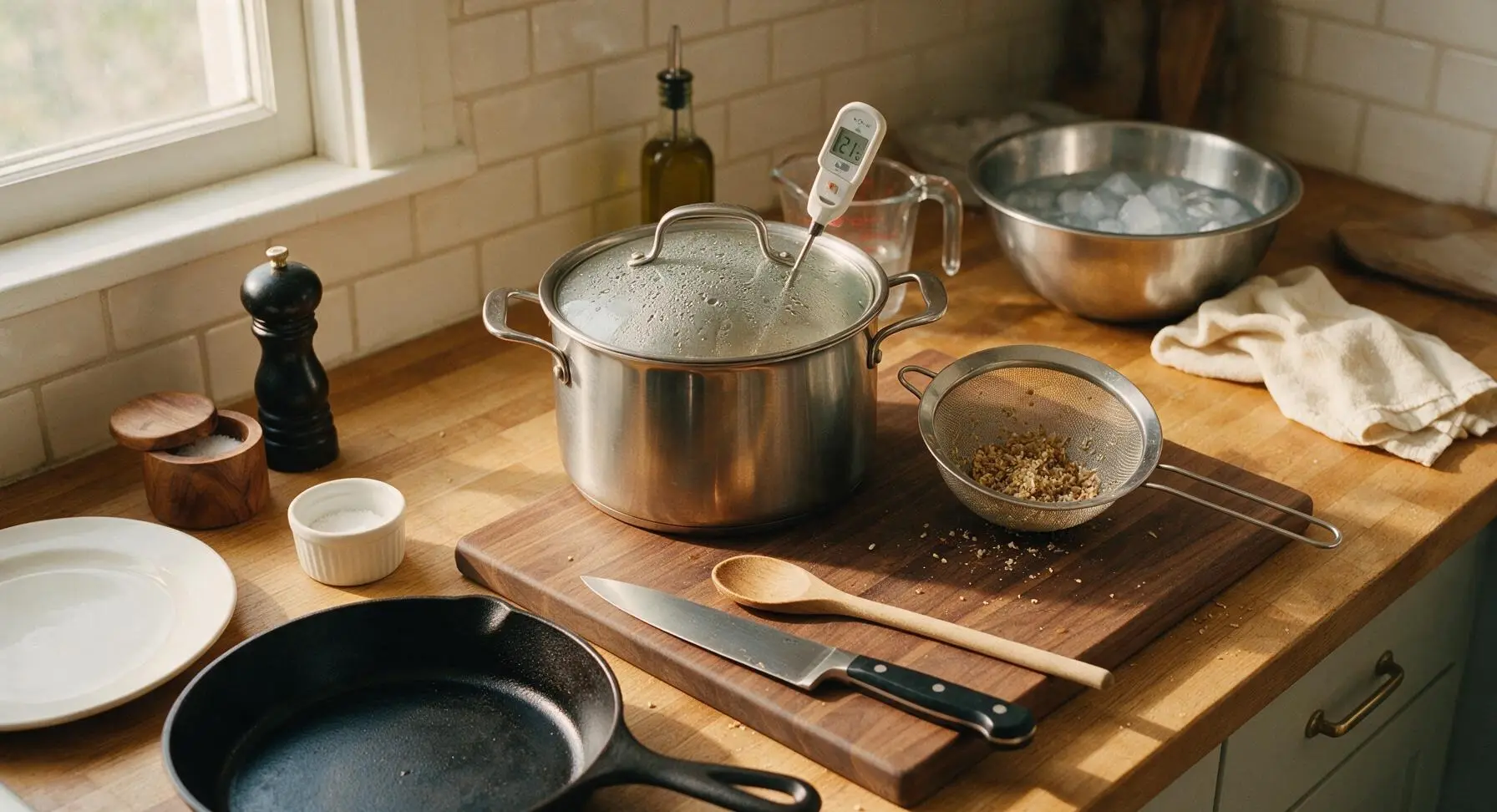
Once the 45-minute boil is complete, turn off the heat. Place the tight-fitting lid on the stock pot, and set the pot into an ice water bath (just outside frame) to cool. Return the pot to the central counter once the wort reaches 21C (70F), which takes 20-30 minutes. Check temperature regularly with the clip-on thermometer, and avoid opening the pot lid unnecessarily while cooling to reduce contamination risk.
Transfer, Pitch Yeast
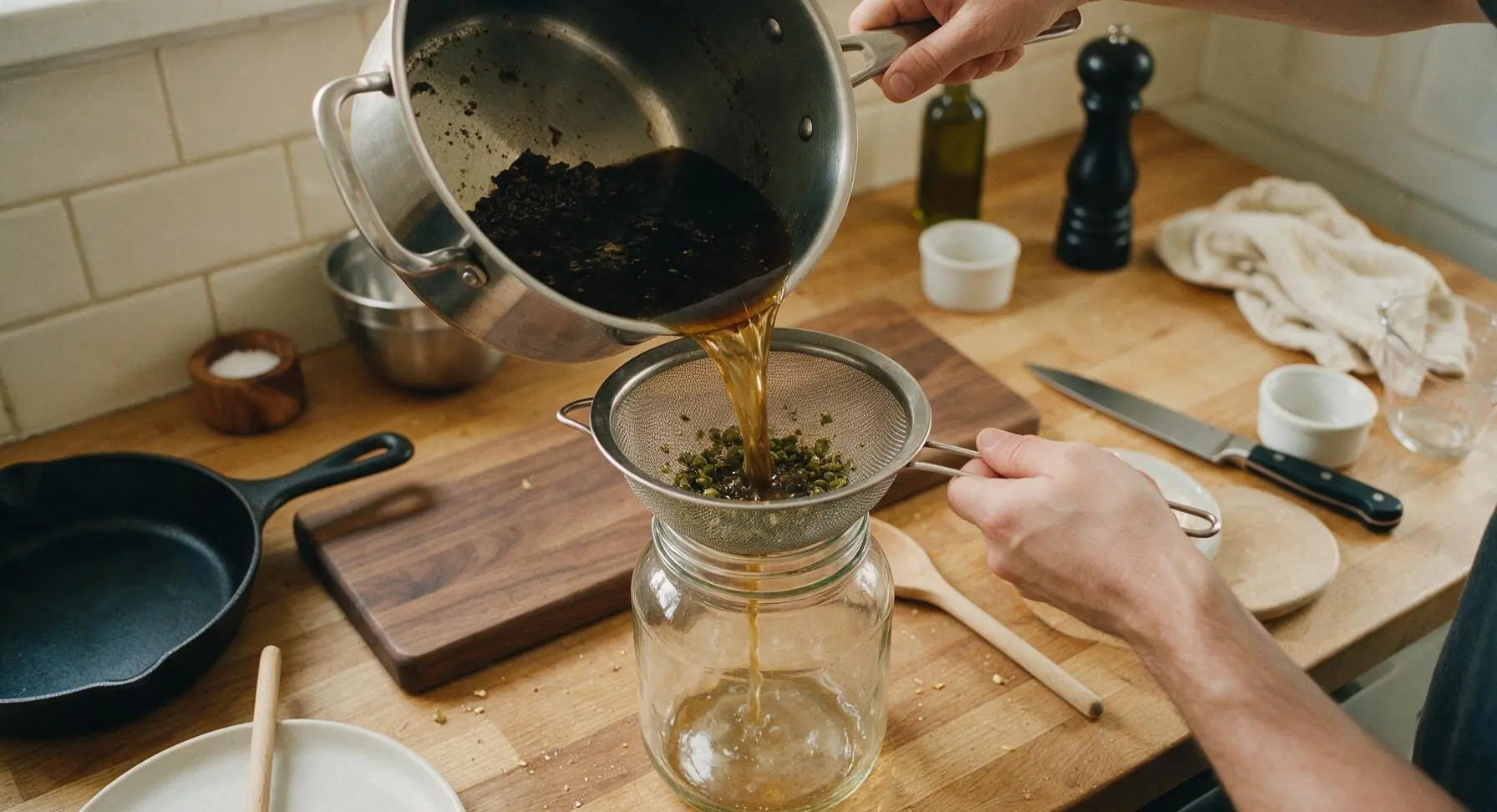
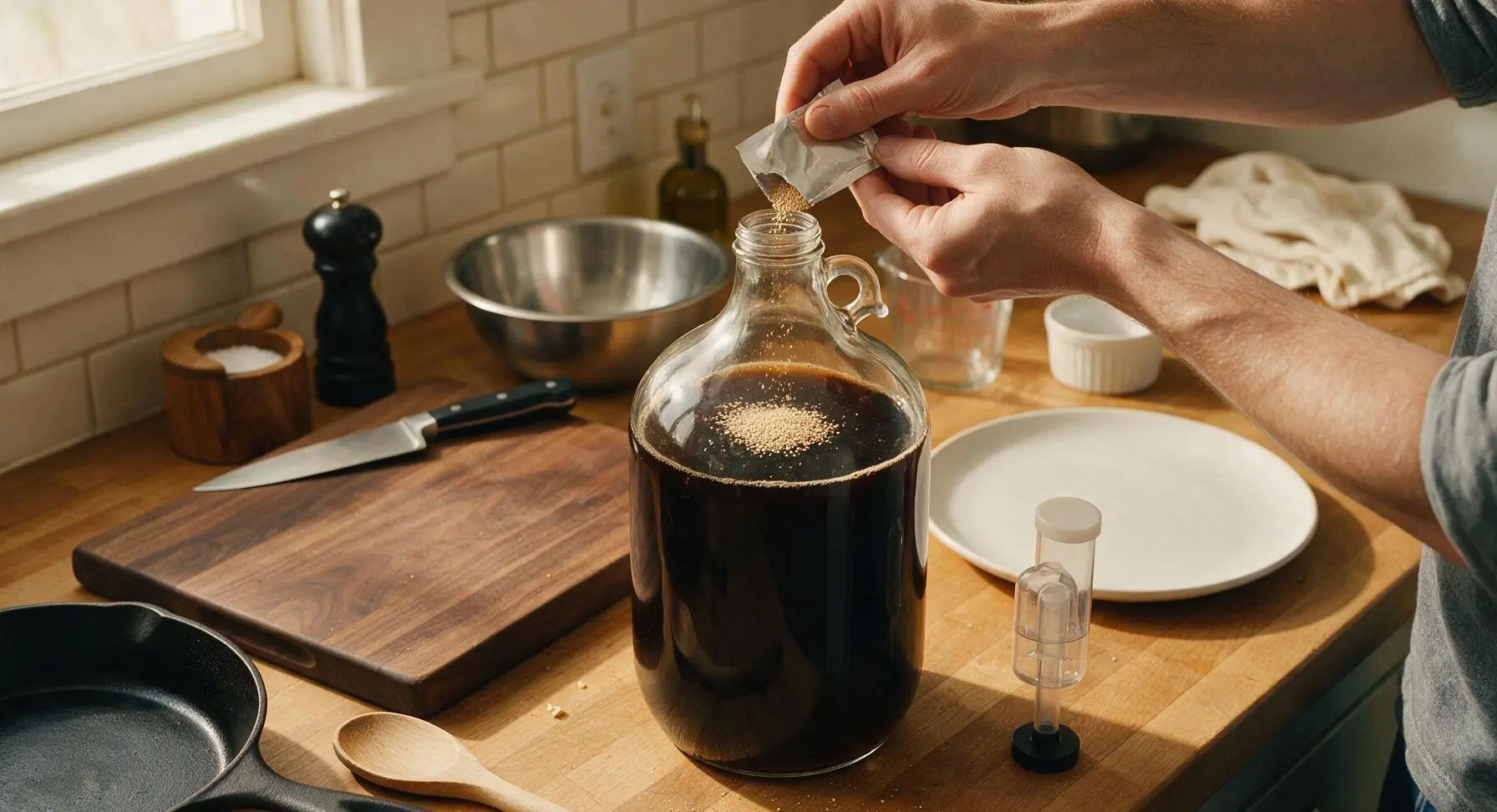
Place the fine-mesh strainer over the mouth of the 1-gallon glass fermentation jug. Pour the cooled wort through the strainer into the jug, catching any remaining hop particles and grain trub, leaving heavy sediment in the bottom of the stock pot. Top up the jug with extra cold filtered water if needed to reach the 3.8L (1 gallon) etched mark. Sprinkle the full packet of Irish ale yeast over the wort surface, then seal the jug with the rubber stopper and airlock, filling the airlock halfway with sanitizer solution.
Ferment Two Weeks
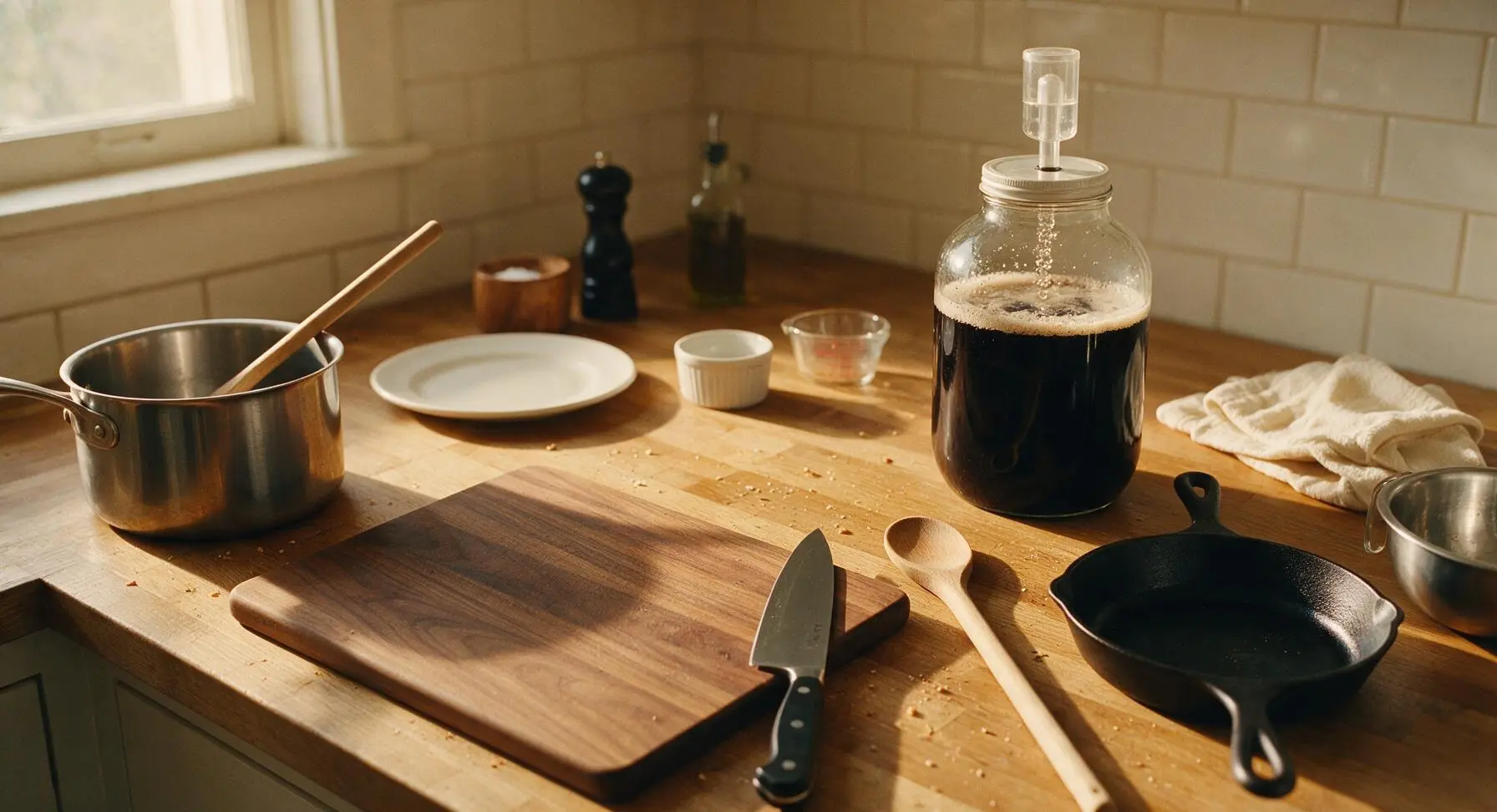
Leave the sealed fermentation jug in its fixed back-right counter position (or a similarly dark, cool spot held at 18-21C / 65-70F) out of direct sunlight. Leave undisturbed for 14 days, until bubbling in the airlock stops completely and the beer clarifies to a deep jet black, with a thin layer of tan yeast sediment settled at the bottom of the jug. Do not open the jug during active fermentation to avoid oxidation.
Bottle with Priming Sugar
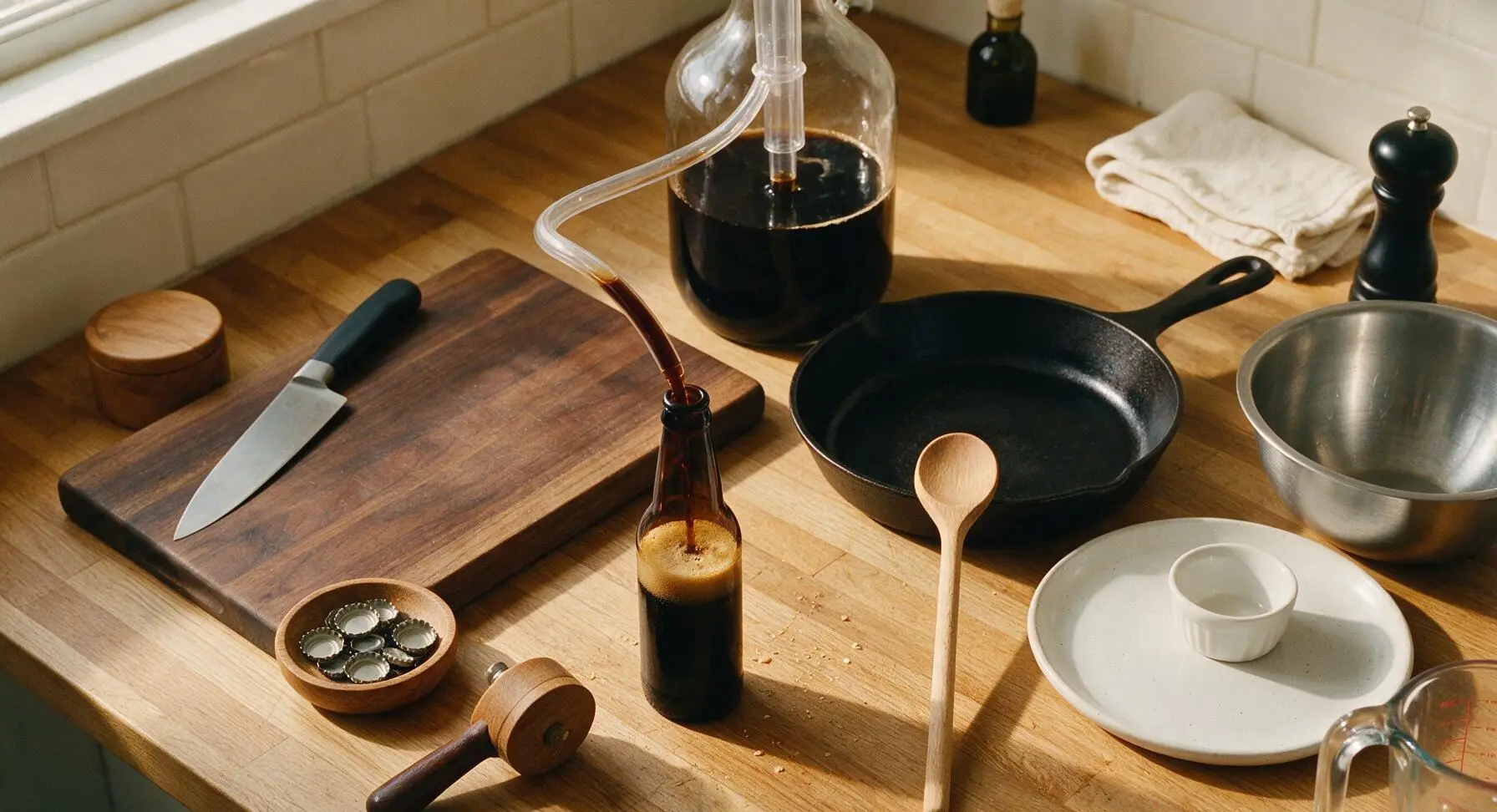
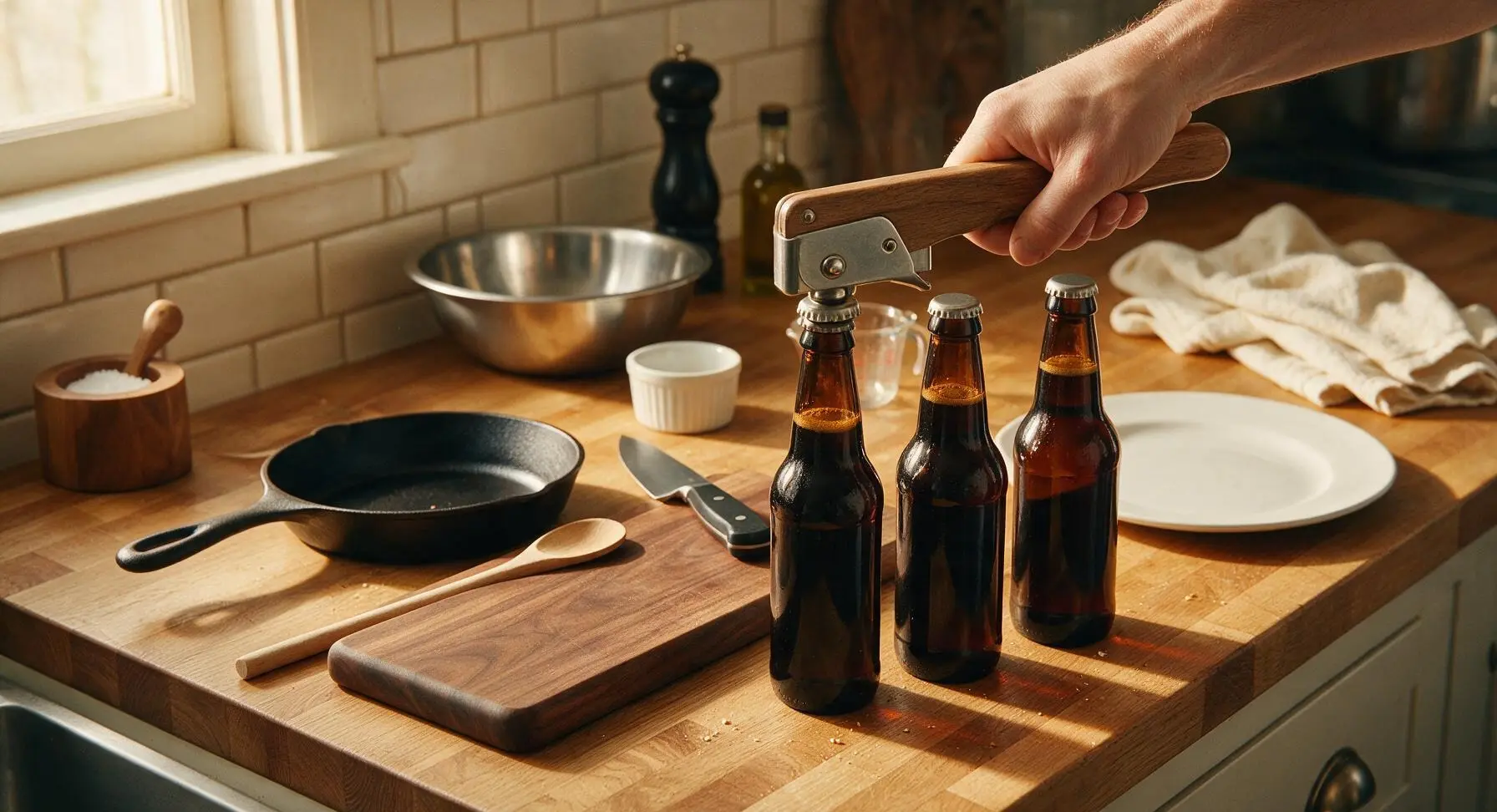
First, spray the auto-siphon, bottle capper, and all amber bottles with sanitizer and air dry. Boil the 28g of corn sugar in 60ml of water for 5 minutes, then pour the cooled sugar solution into the bottom of the fermentation jug, stirring gently with the sanitized spoon to distribute evenly. Use the auto-siphon to transfer the clear, fermented stout into the sanitized amber 12oz bottles, leaving 2cm of headspace at the top of each bottle. Use the oak bottle capper to crimp a silver metal bottle cap onto each bottle, ensuring a tight, airtight seal.
Condition, Then Serve
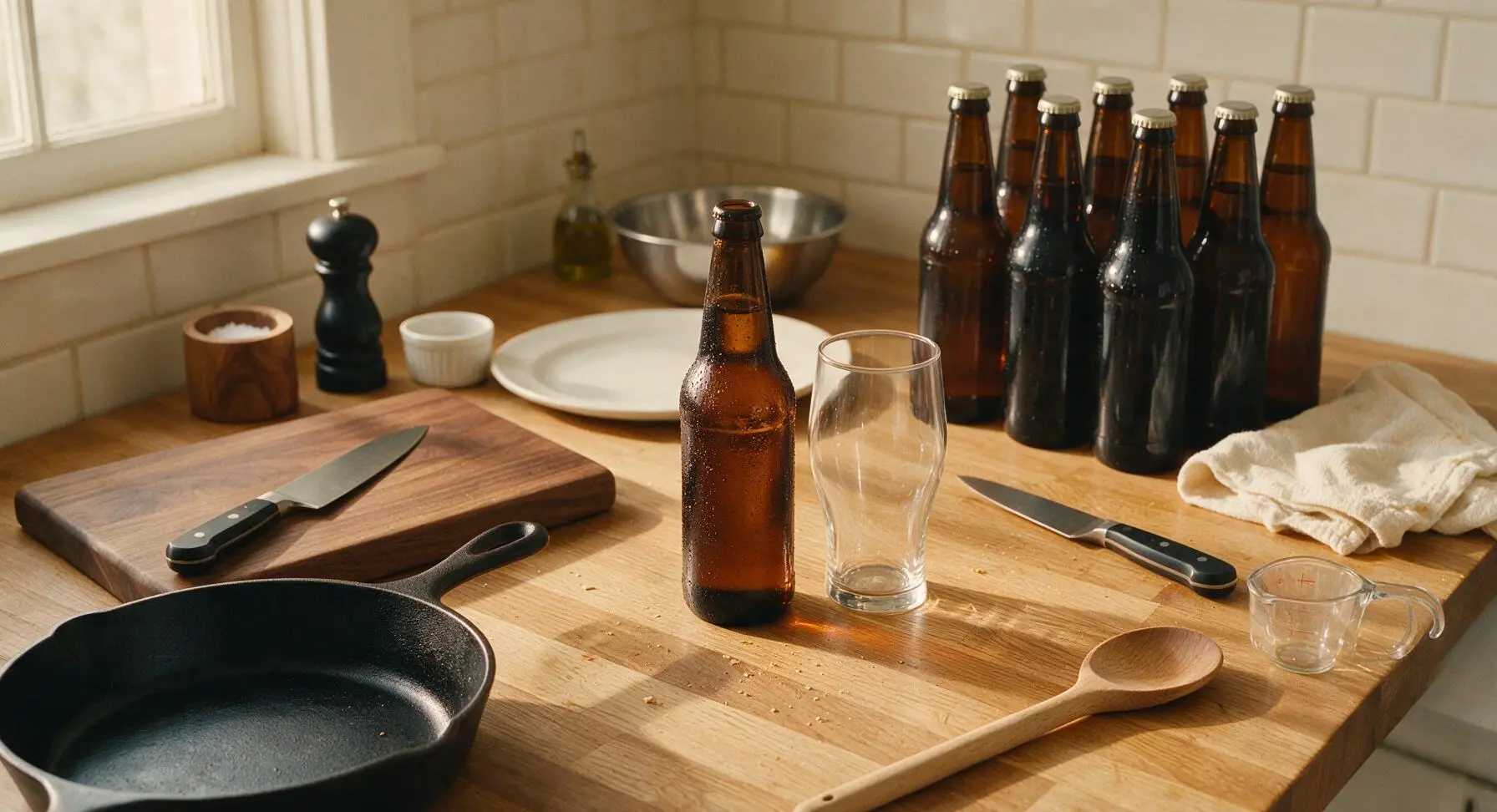
Store the sealed bottles in the same cool, dark spot for 7 more days to allow natural carbonation to build as the remaining yeast ferments the priming sugar. After conditioning, chill one bottle for 24 hours at 4C (39F) before pouring. Pour slowly in one steady stream down the inner side of the tulip pint glass to build the signature 1-inch creamy tan head, just like a pub-poured Guinness.
Tips
2.Cool your wort as quickly as possible after the boil: rapid cooling prevents unwanted bacterial growth, reduces cooked-corn off-flavors from dimethyl sulfide (DMS), and helps create a clearer, cleaner-tasting final beer.
3.Skip the hard, two-part pour often recommended for Guinness: for homebrewed clone batches, a slow, steady single pour down the side of the glass creates that iconic thick, long-lasting creamy head without stirring up yeast sediment from the bottle bottom or creating excess fizz.






OMG, this dry Irish stout clone turned out SO good! I brewed a batch for our annual St. Paddy’s day potluck and everyone was begging for the recipe — half my friends thought I’d snuck actual Guinness into the keg! The roast barley note is spot on, not too bitter, super smooth just like the real deal. Total game changer for my homebrew lineup, I already have a second batch fermenting now.
Really solid clone recipe! My first attempt came out a little more carbonated than I expected, but the flavor is dead on. We cracked the first bottle at our family dinner last Sunday and my brother-in-law (who’s a total Guinness snob) said it was better than the import he usually buys. Only heads up is make sure you measure your priming sugar super carefully if you’re bottling instead of kegging!
SO good! I was nervous to try this since it’s marked medium difficulty and I’m still pretty new to homebrewing, but the step-by-step instructions made it so manageable. The active wort boil was exactly an hour like the recipe said, no weird fancy equipment required, and the finished stout is perfect for these chilly fall Pacific Northwest nights. I brought a growler to my weekly trivia night potluck and my whole team went crazy for it. Will absolutely be making this a regular in my brew rotation!
Total game changer! I’ve tried 3 other Guinness clone recipes over the last year and none of them nailed that iconic dry, smooth finish like this one. I hooked up my nitro tap last night for the first pour and it tasted exactly like the pint I got at a Dublin pub when I visited a few years back. 10/10, don’t sleep on this recipe if you’re a dry Irish stout fan.