ham brine cure recipe

title 1
ham brine cure recipe
⏱️ cook time 2 hours 30 minutes
🍽️ servings 12
⚡ Difficulty medium

intro

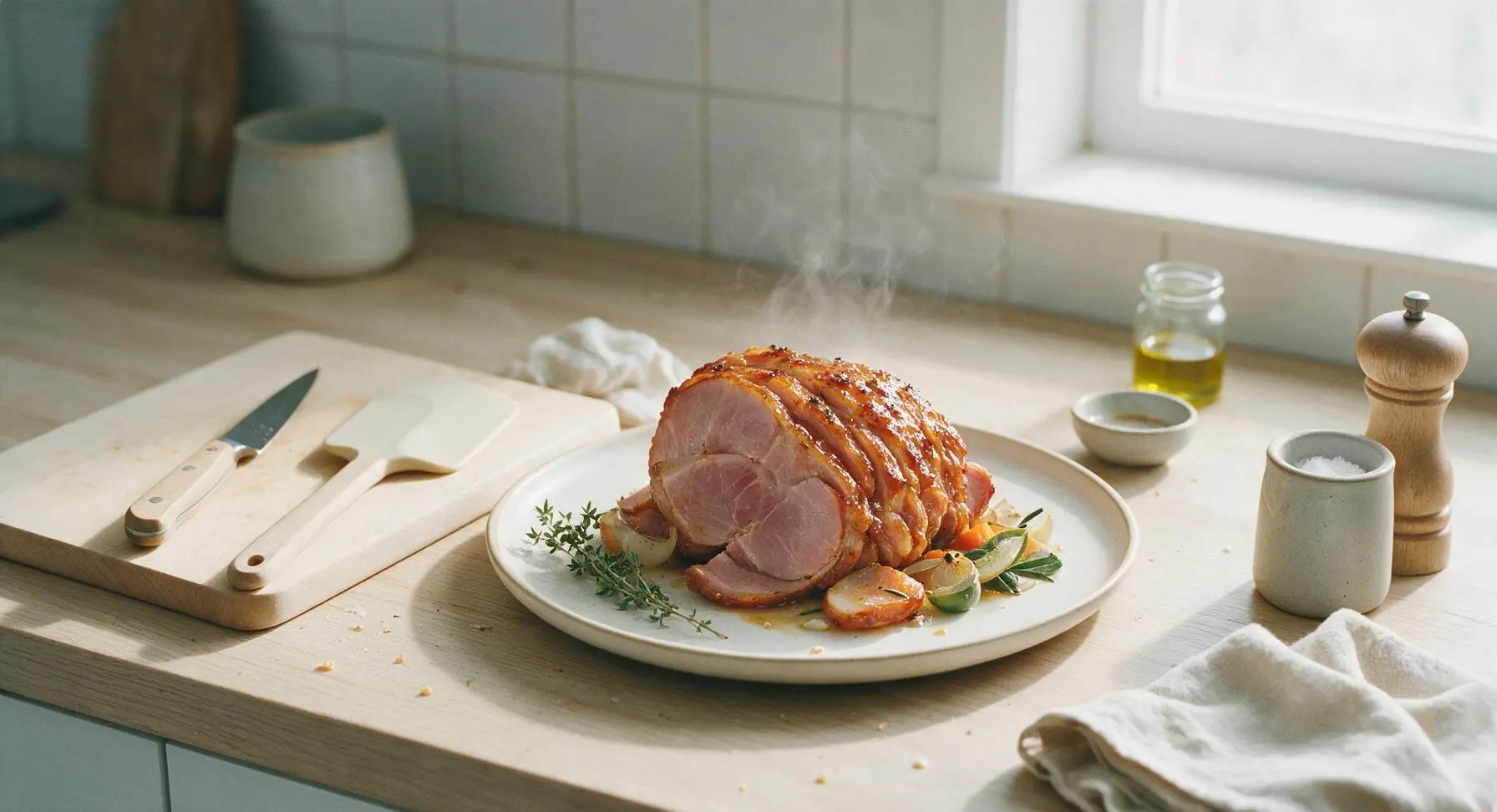
This classic brine cure produces juicy, evenly seasoned, deeply flavorful holiday ham with a glossy golden glaze, perfect for Christmas feasts and leftover sandwiches.

Ingredients
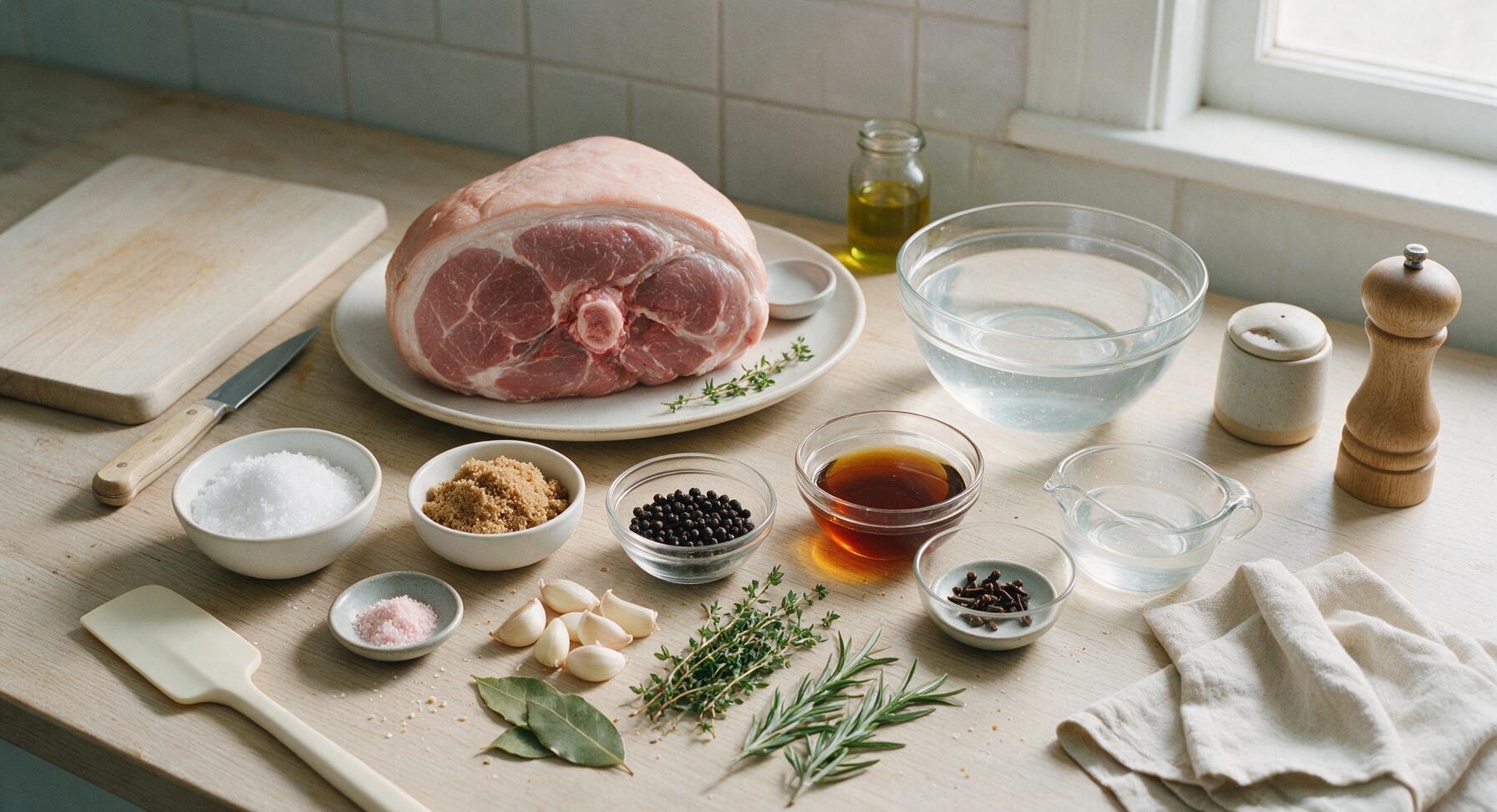
Fresh bone-in skin-on uncured pork ham 4kg (9lb)
Kosher salt 1.5 cups (432g)
Packed dark brown sugar 1 cup (220g)
Pink curing salt (Prague Powder #1) 2 tsp (12g)
Whole black peppercorns 2 tbsp (18g)
Garlic cloves 6 each
Bay leaves 3 each
Fresh thyme sprigs 8 each
Fresh rosemary sprigs 4 each
Pure maple syrup 3/4 cup (180ml)
Whole cloves 1 tbsp (6g)
Cold water 6 quarts (5.7L)

Steps

1

Prep Brine Ingredients

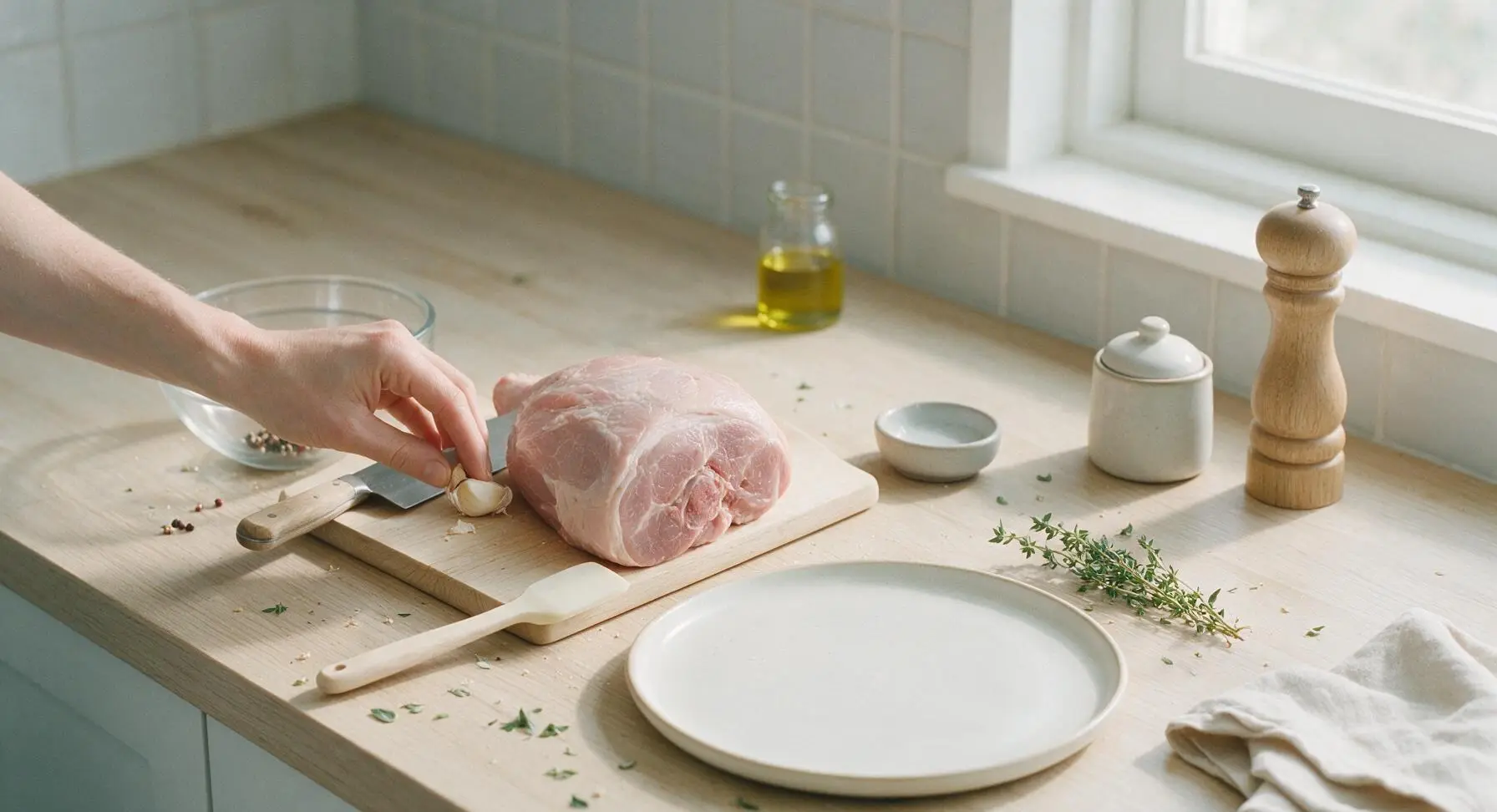
Set out all measured ingredients on the counter. Place the fresh ham on the maple cutting board, pat it dry with the cream cotton towel, and use the chef's knife to trim loose hanging fat to leave a uniform 1/4-inch fat cap across the surface. Lightly crush garlic cloves with the flat of the chef's knife, crack peppercorns gently with the base of the clear glass prep bowl, and tie thyme and rosemary sprigs together with a short length of kitchen twine for easy removal later.
Step 1
step1:Prep Brine Ingredients
2

Simmer Brine Base

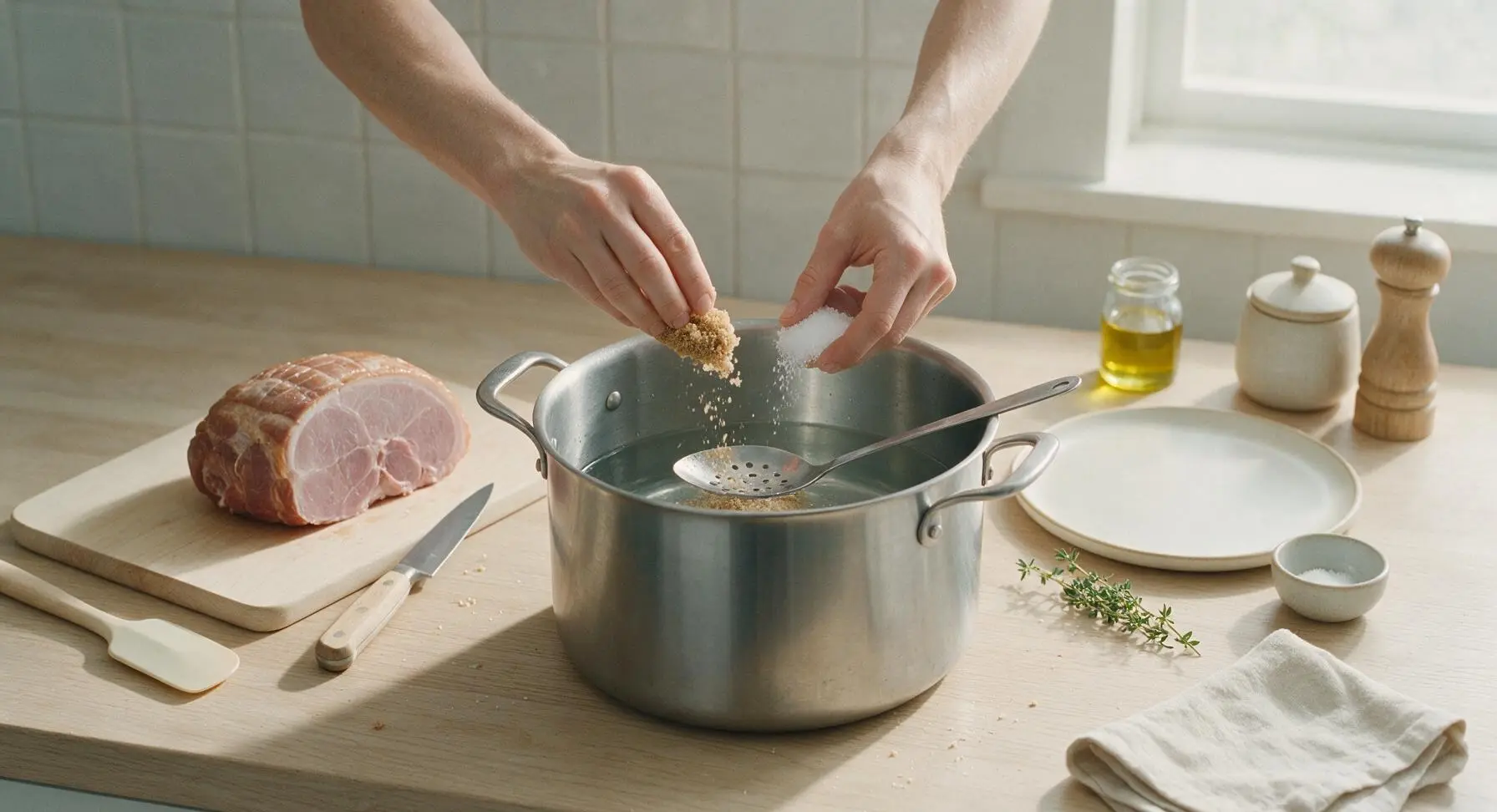
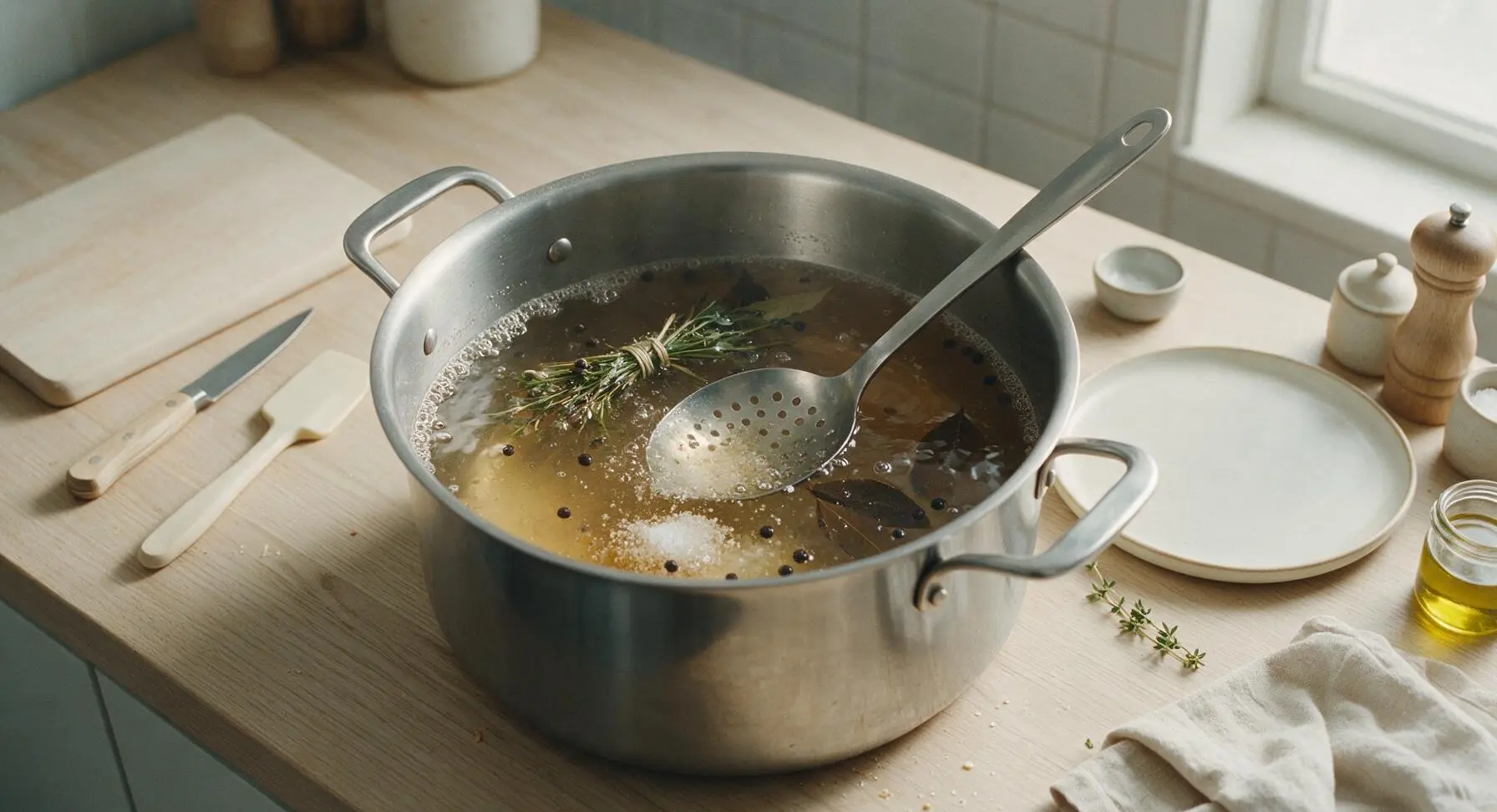
Pour 2 quarts of cold water into the 12-quart stainless steel stock pot set over medium heat. Add kosher salt, 3/4 cup of the dark brown sugar, pink curing salt, crushed garlic, cracked peppercorns, bay leaves, tied herb bundle, and half the whole cloves. Stir with the stainless steel slotted spoon until salt and sugar fully dissolve, then bring to a gentle 180°F (82°C) simmer (verified with the instant-read thermometer) and hold for 5 minutes to extract aromatic flavor. Do not boil rapidly, as this will over-concentrate the brine.
Step 2
step2:Simmer Brine Base
Step 2
step2:Simmer Brine Base
3

Cool Brine Completely

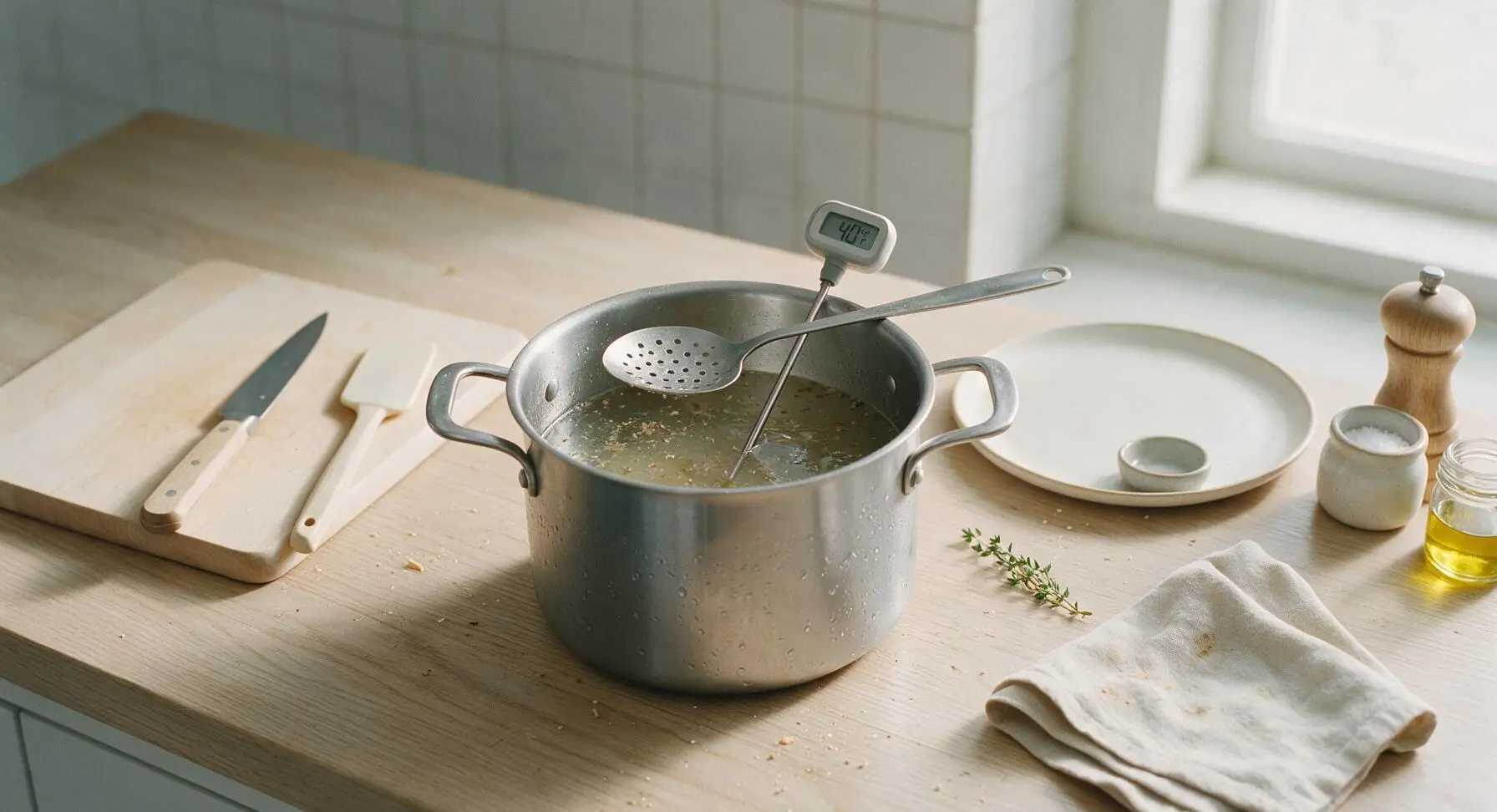
Remove the stock pot from heat, stir in the remaining 4 quarts of ice-cold water and 1/2 cup of the maple syrup to rapidly drop the brine temperature. Use the instant-read thermometer to confirm the brine is fully chilled to 40°F (4°C) or below before adding meat—warm brine encourages bacterial growth and will spoil the ham. Leave aromatics in the brine as it cools to continue infusing flavor.
Step 3
step3:Cool Brine Completely
4

Submerge Ham in Brine

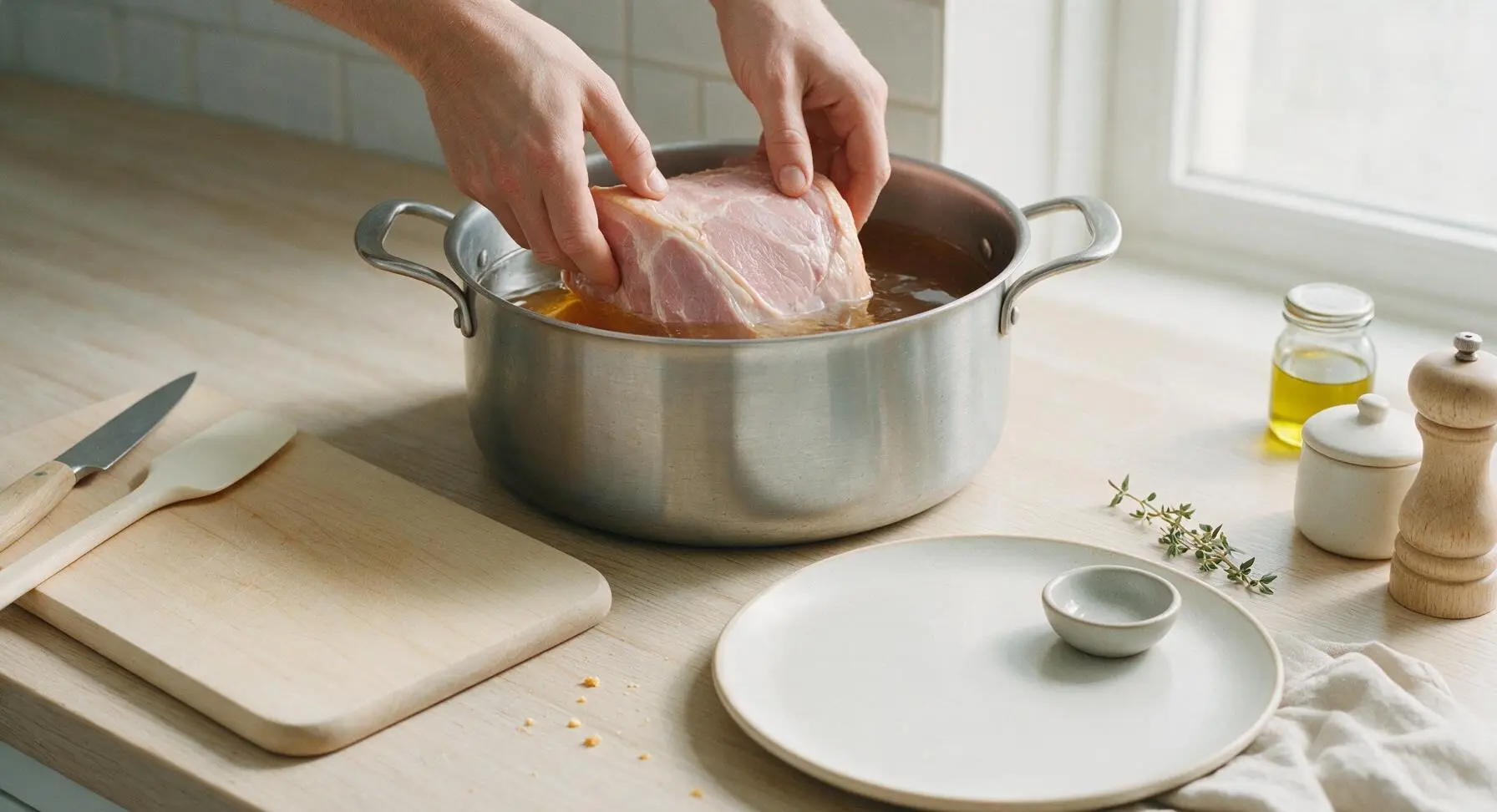
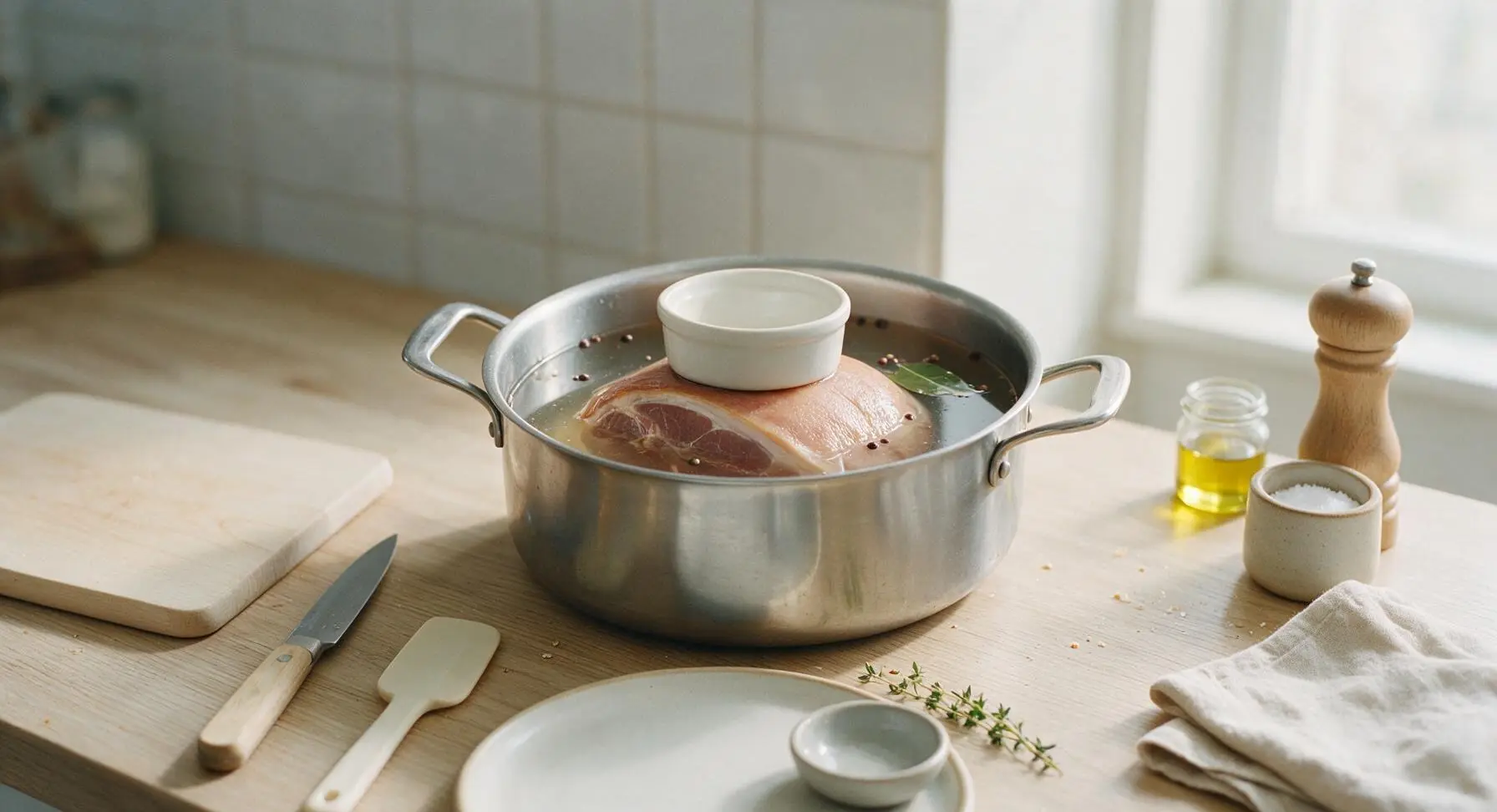
Place the trimmed, dried ham into the fully chilled brine skin-side down. The ham must be completely submerged under the brine surface; if it floats, weigh it down with the matte white ceramic ramekin set on top of the ham to hold it under the liquid. Cover the stock pot tightly with its stainless steel lid.
Step 4
step4:Submerge Ham in Brine
Step 4
step4:Submerge Ham in Brine
5

Cure Ham in Fridge

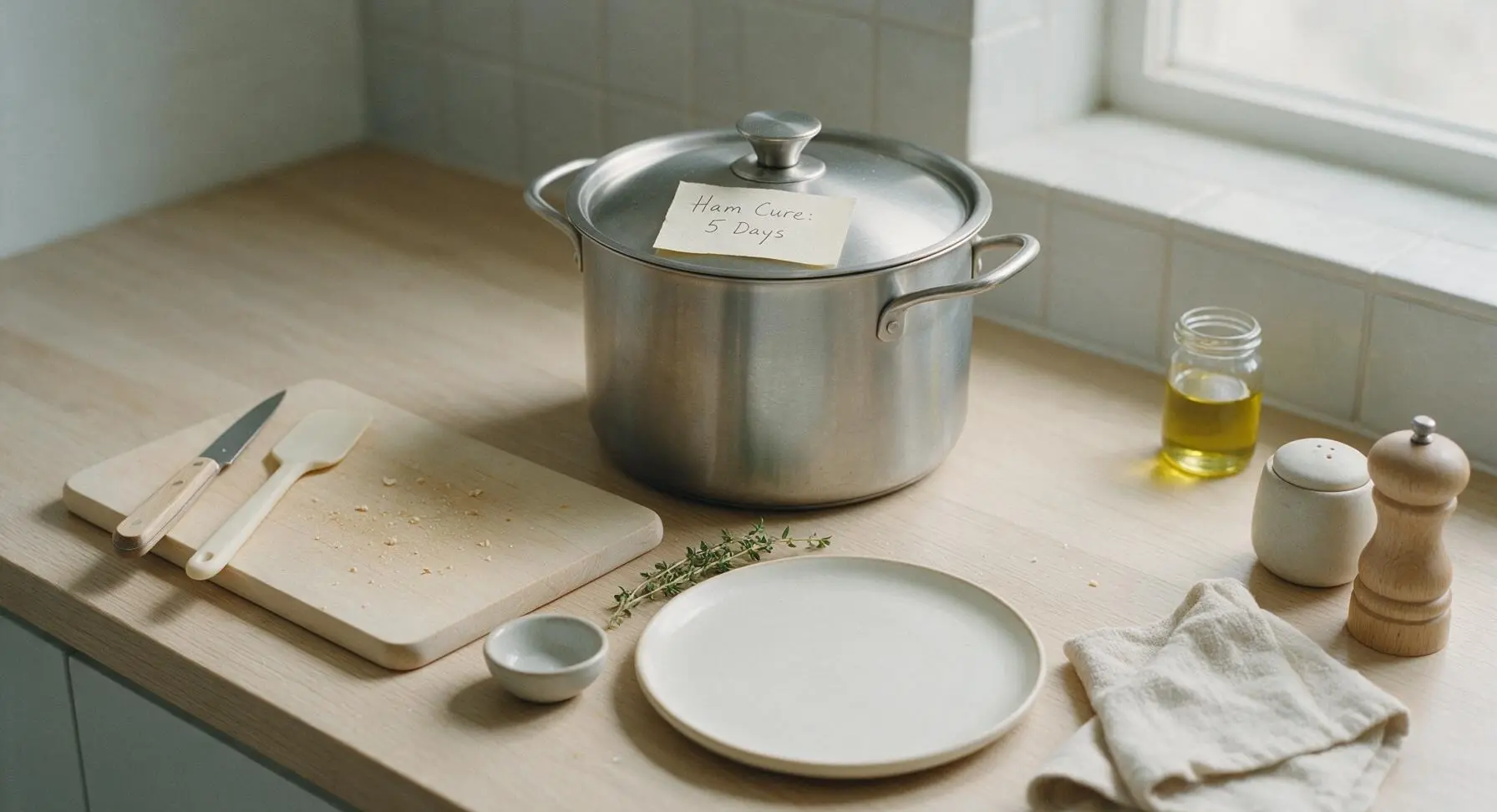
Transfer the covered stock pot to the refrigerator, and allow the ham to cure for 1 day per 2 pounds of meat (4.5 total days for this 9lb ham). Check once daily to confirm the ham remains fully submerged, and stir the brine gently to redistribute seasonings. Never cure at room temperature, as this poses severe food safety risk.
Step 5
step5:Cure Ham in Fridge
6

Rinse Cured Ham

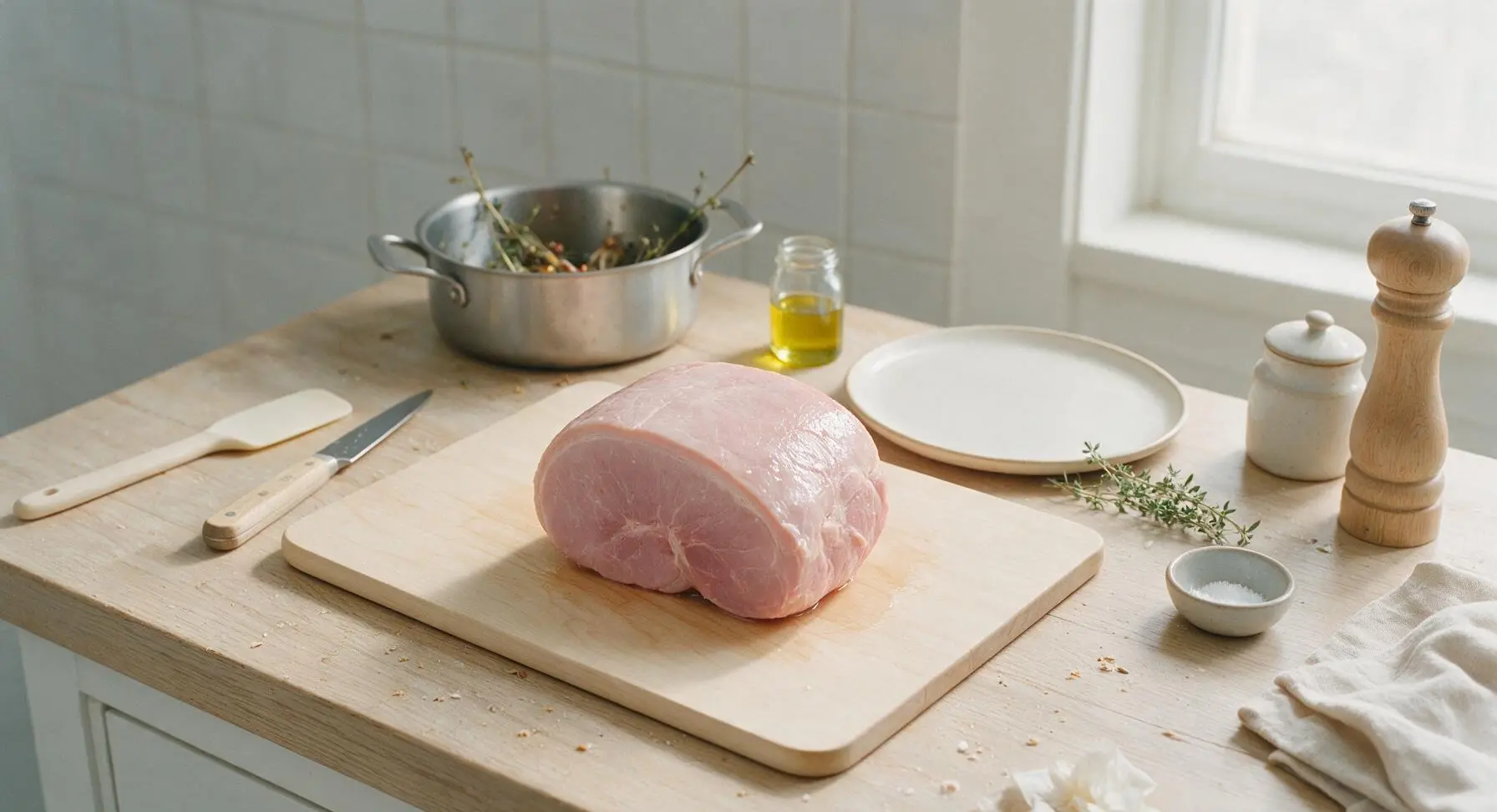
After the full 4.5 day cure time, lift the ham from the brine using the slotted spoon, and discard the spent brine, herbs, and spices. Rinse the entire ham surface under cold running water to wash away excess surface salt, which prevents the finished ham from being too salty. Pat the ham completely dry with clean paper towels, then set it on the maple cutting board to rest for 15 minutes while the oven preheats to 325°F (165°C).
Step 6
step6:Rinse Cured Ham
7

Score and Stud Ham

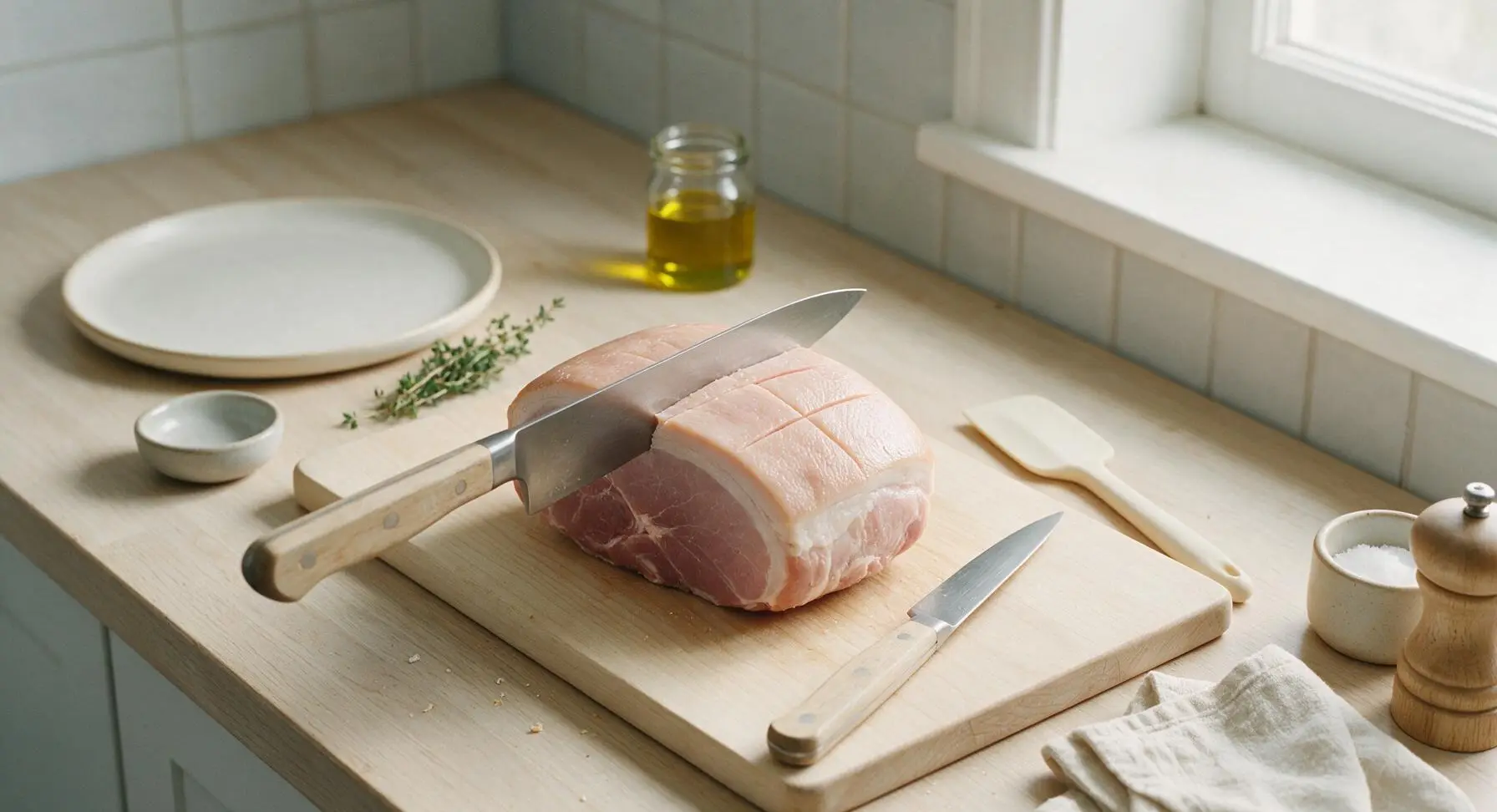
Use the chef's knife to cut 1-inch deep diagonal lines across the ham's fat cap, taking care not to cut into the meat below, to form a uniform diamond pattern. Press one whole clove into the center of each diamond intersection to add warm, aromatic flavor as the ham cooks.
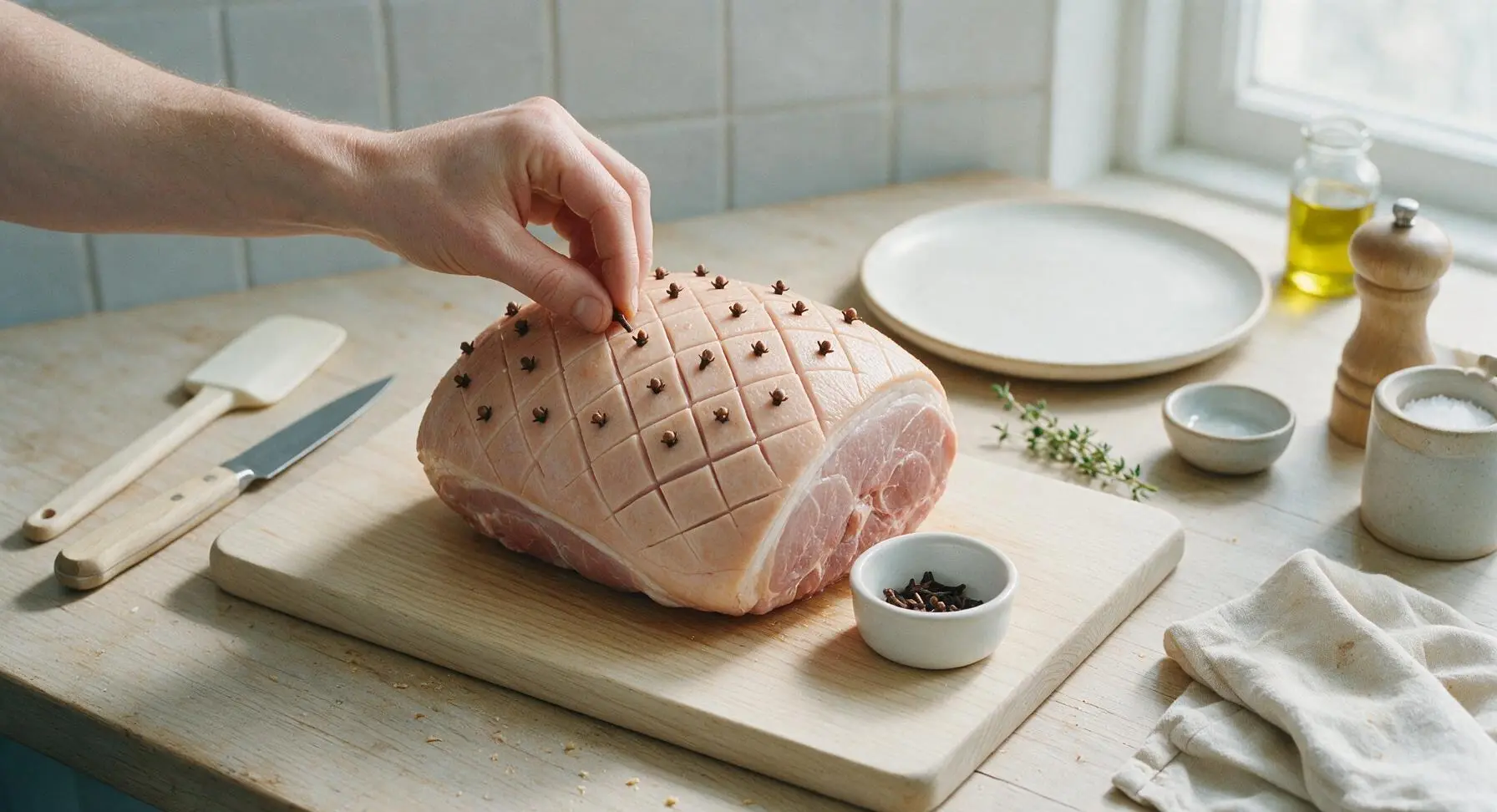
Step 7
step7:Score and Stud Ham
Step 7
step7:Score and Stud Ham
8

Roast Cured Ham

Place the scored, clove-studded ham on a wire rack inside a roasting pan, add 1 cup of water to the pan bottom to prevent burning drippings, then roast in the preheated 325°F (165°C) oven for 2 hours. Baste with pan drippings every 30 minutes, and cook until the internal temperature reaches 130°F (54°C) when measured with the instant-read thermometer in the thickest part of the meat, away from bone.
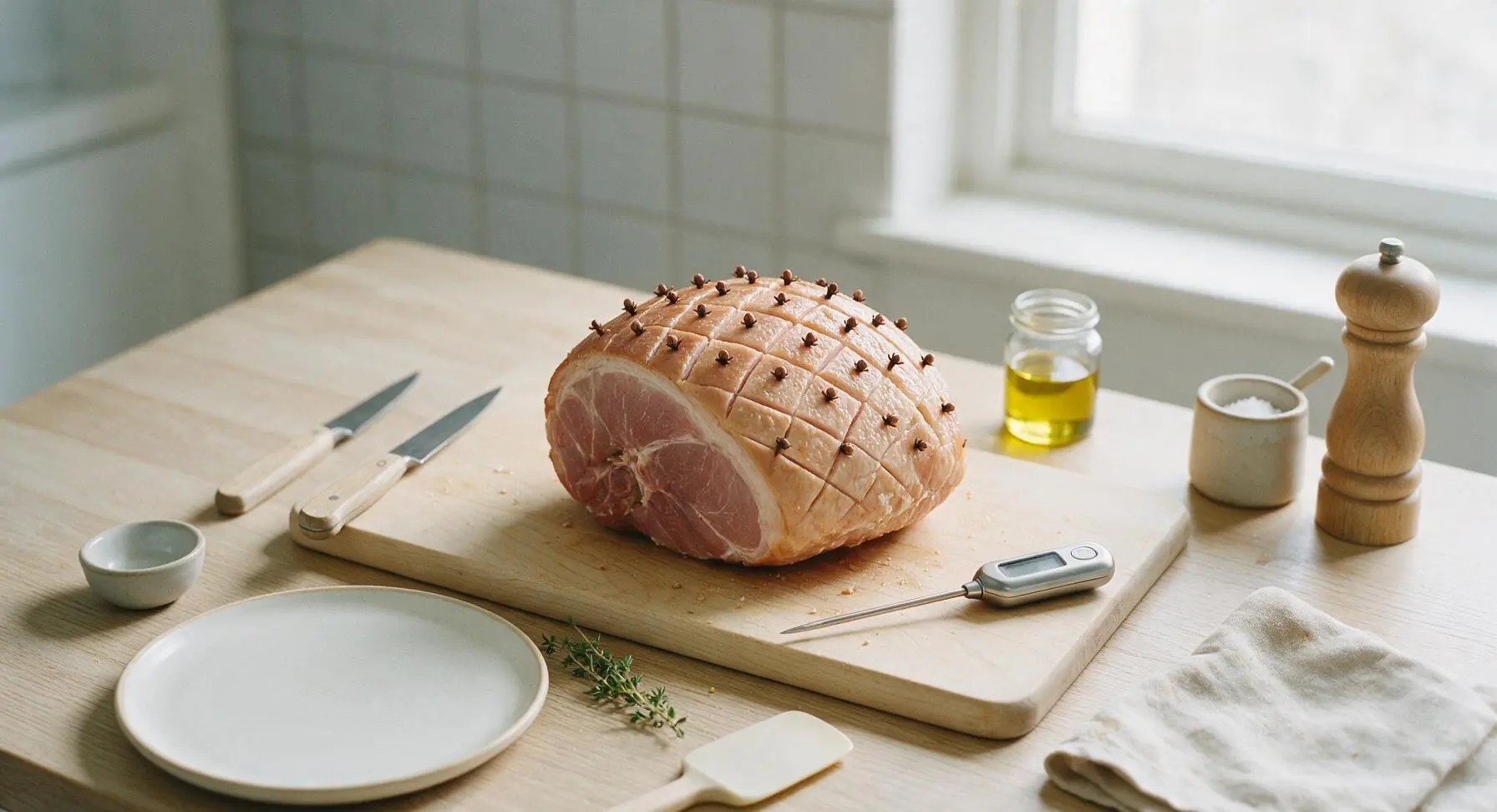
Step 8
step8:Roast Cured Ham
9

Glaze and Rest Ham

Once the ham reaches 130°F internal temperature, brush the entire scored surface generously with a glaze made from the remaining 1/4 cup maple syrup and 1/4 cup reserved dark brown sugar. Return to the oven for 30 final minutes, until the glaze is bubbly and deep golden brown, and internal temperature reaches 140°F (60°C). Remove from oven and let rest 30 minutes before slicing to let juices redistribute.
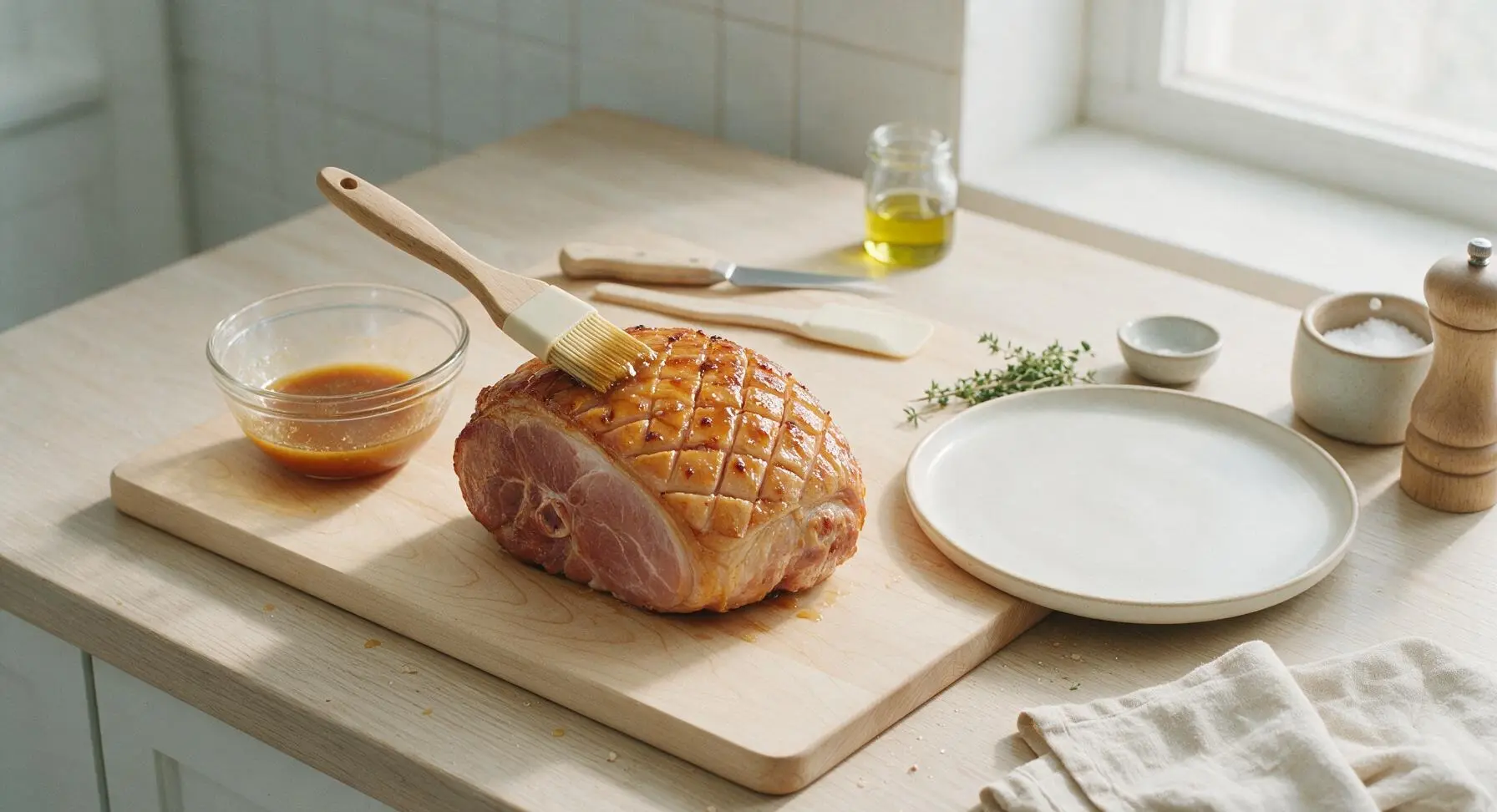
Step 9
step9:Glaze and Rest Ham

Tips

1.Always chill brine to 40°F (4°C) or below before adding raw ham: warm brine creates dangerous bacteria growth conditions and can partially cook the meat’s outer layer, leading to uneven texture and food safety risk.
2.Rinse cured ham thoroughly under cold water after brining: residual surface salt will draw out moisture during roasting, resulting in overly salty, dry meat instead of evenly seasoned, juicy ham.
3.Let the roasted ham rest a full 30 minutes before slicing: cutting immediately causes brine-infused juices to leak out onto the platter, while resting lets muscle fibers relax and reabsorb moisture for perfect, juicy slices every time.

✨ You May Also Like

Main Course
🍜 United Kingdom

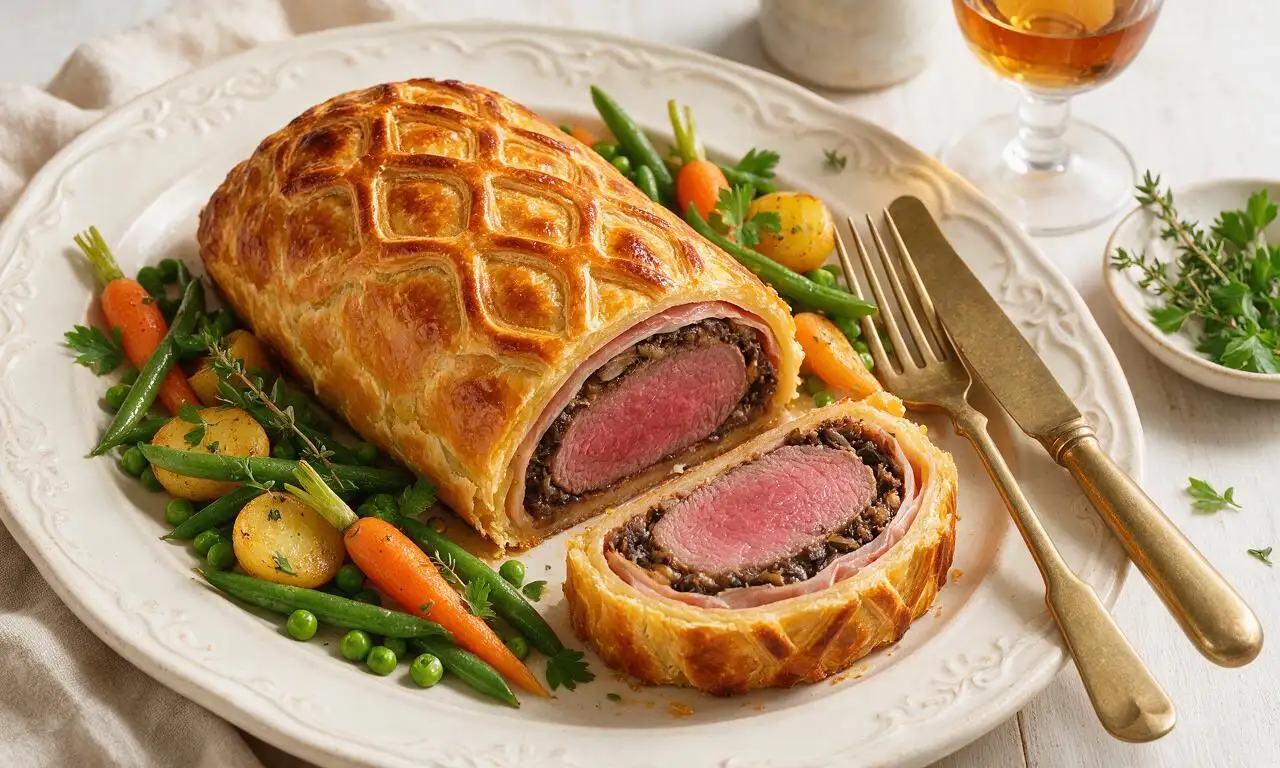
A showstopping classic of tender seared beef, savory mushroom duxelles, and crisp prosciutto wrapped in flaky golden puff pastry, baked to juicy perfection.

⏱️ 2 hours 1Main Course ★ 4.7
Main Course
🍜 India

Tender charred marinated chicken simmered in a rich, spiced creamy tomato sauce, this iconic Anglo-Indian curry pairs perfectly with basmati rice or warm naan.

⏱️ 50 minuteMain Course ★ 4.6
Main Course
🍜 Thailand

Classic tangy, sweet, and savory Thai stir-fried rice noodles with shrimp, tofu, and crunchy garnishes, balancing all five core Thai flavor profiles.

⏱️ 30 minuteMain Course ★ 4.5
Main Course
🍜 United Kingdom

Crispy golden beer-battered cod and fluffy double-fried chips, served with tangy tartar sauce and malt vinegar: the timeless, beloved British pub comfort classic.

⏱️ 45 minuteMain Course ★ 4.7
Main Course
🍜 Mexico

Smoky, chile-marinated pork tacos with caramelized pineapple, fresh cilantro, and lime: a beloved classic Mexican street food perfect for casual summer gatherings.

⏱️ 1 hour 45Main Course ★ 4.8
Main Course
🍜 United States

Crunchy Fritos corn chips layered with savory beef chili and melted cheddar, topped with cool, zesty fixings for a beloved, cozy Tex-Mex comfort food.

⏱️ 35 minuteMain Course ★ 4.8

ham brine cure recipe:Frequently Asked Questions

1.Can I use a pre-cured or pre-smoked ham for this brine recipe? ▾
No, stick strictly to fresh, uncured, bone-in, skin-on pork ham for this cure. Pre-cured or pre-smoked hams already have added salt and curing agents, so brining them will result in an overly salty, unbalanced final product. The bone amplifies deep, savory flavor, while the skin locks in moisture as the ham cooks post-brine.
2.Why is pink curing salt (Prague Powder #1) required, and can I skip it? ▾
Don’t skip Prague Powder #1 for this cure—it serves two critical purposes: it prevents dangerous botulism growth during the long, low-temperature curing process, and it creates that signature rosy, evenly colored interior and classic cured ham flavor perfect for holiday spreads. It is not interchangeable with regular Kosher or table salt.
3.How do I adjust Kosher salt measurements if I use a different brand than the recipe calls for? ▾
Kosher salt crystal sizes vary wildly by brand, so measuring by weight gives the most consistent results. If you only have volume tools, use 25% less Morton’s Kosher Salt than Diamond Crystal, since Morton’s has denser, smaller crystals that pack more tightly into a cup to avoid over-salting your cure.
4.How long do I need to leave the ham in the brine for the best results? ▾
Plan for 1 full day of brine time per 2 pounds of ham, held at a consistent 36–40°F in your refrigerator. For a standard 10-pound holiday ham, that works out to 5 full days of curing. Don’t cut the time short (you’ll get uneven seasoning) or over-brine, which will make the ham excessively salty.
5.Do I need to keep the brine cold for the entire curing process? ▾
Absolutely—food safety is non-negotiable here. Your brine and ham must stay at a steady 36–40°F for the whole curing period to prevent harmful bacteria growth. If your fridge runs warm, tuck a sealed ice pack into the brining container daily, and verify the temperature with a quick-read thermometer.
6.Can I substitute light brown sugar for the dark brown sugar in this cure? ▾
You can, but you’ll miss some of the deep, molasses-kissed richness dark brown sugar brings to the final ham flavor. If you only have light brown sugar on hand, stir 1 tablespoon of unsulphured molasses into every cup of light brown sugar to match the sweetness and depth balance the original cure is designed for.
7.What kind of container should I use to brine a whole holiday ham? ▾
Use a non-reactive, food-grade container: a 12–18 quart stock pot, food-safe plastic bucket, or heavy-duty brining bag works perfectly. Make sure the ham is fully submerged in brine the entire time—weigh it down with a clean, heavy plate if it floats to avoid uneven curing on exposed sections.
8.Do I need to rinse the ham after it finishes brining before I cook it? ▾
Yes, always give the ham a thorough cold water rinse after pulling it from the brine, then pat it completely dry with paper towels before cooking and glazing. Rinsing removes excess surface salt that would create an unpleasantly salty crust, and drying the skin helps you get that glossy, golden finish the recipe promises.
9.Can I add extra spices or aromatics to the brine without ruining the cure? ▾
Absolutely—this classic base is very flexible. Feel free to add bay leaves, crushed garlic, juniper berries, allspice berries, or fresh thyme to the brine as it simmers to add extra warm, holiday-appropriate depth. Just stick to the core ratios of salt, sugar, and curing salt to keep the cure safe and balanced.
10.Why does this recipe call for whole black peppercorns instead of pre-ground pepper? ▾
Whole black peppercorns release a softer, more rounded, warm spice flavor as they steep in the brine, without the harsh, bitter, dusty notes pre-ground pepper can add after months in storage. Lightly crush the peppercorns with the flat of a chef’s knife before adding them to help their aromatic oils release more evenly.
11.How far in advance can I cure the ham before my holiday meal? ▾
You can complete the brine cure up to 2 days before your planned meal. After rinsing and drying the ham, keep it uncovered on a wire rack in your fridge to let the skin dry out slightly, which creates a crispier, better glaze crust. You can also freeze fully brined, unglazed ham for up to 3 months for earlier prep.
12.What happens if I use regular table salt instead of Kosher salt in the brine? ▾
Table salt has much smaller, denser crystals and often includes anti-caking agents that can give the brine a slightly metallic off-flavor. If you only have table salt on hand, use half the measured volume of Kosher salt the recipe calls for to avoid over-salting, and stir until fully dissolved before adding the ham.

Comments (4)

5 days ago

OMG this brine is a total game changer for our annual Christmas dinner! I was so nervous to brine my first ever whole ham for 12 people this year, and this recipe made it so juicy and flavorful, even my picky mother-in-law asked for seconds. My kids loved the sweet-savory balance, no weird overly salty bite like the store-bought pre-brined hams we’ve gotten in years past. 10/10 will be my go-to every holiday from now on!

3 days ago

So glad you said that about the store-bought ones! I got a pre-brined ham last Thanksgiving and it was so salty no one could finish it, definitely trying this brine for our New Years gathering.

2 days ago

That makes our day to hear! Quick pro tip: if you do end up using a pre-brined ham in the future, cut the salt amount in this recipe in half to avoid that overly salty result. Hope your family loves it every year!

30 minutes ago

Wait, quick question—has anyone tried this brine on a smoked ham instead of baking it in the oven? I’ve got my pellet smoker fired up for our neighborhood potluck this weekend and want to make sure the flavors hold up to low and slow smoke. I did a test run with a smaller ham steak last week and the flavor was SO good, just want to confirm it works for a full 10lb bone-in ham on the smoker.

5 minutes ago

Great question! This brine works beautifully for smoked ham—we recommend pulling the ham when it hits 140°F internal temp to keep it juicy, and the brown sugar and clove notes in the cure pair perfectly with hickory or apple wood smoke. Enjoy the potluck!

1 week ago

This brine is chef’s kiss! I made a half ham for our weekly meal prep last Sunday, and the leftovers made the absolute best ham and cheese sliders, breakfast omelets, and split pea soup all week long. It was way easier than I thought it would be too—medium difficulty felt totally approachable even as someone who’s only been cooking seriously for about a year. No fancy equipment needed!

5 days ago

Oh the split pea soup leftover hack is genius! I never thought to use leftover holiday ham for that, I usually just make sandwiches until I’m sick of ham. Trying that for sure this year.

2 hours ago

Panicking a little because I forgot to pick up curing salt for this! Can I still make the brine work with regular kosher salt, or is that a total dealbreaker? I’m hosting my whole extended family for Christmas Eve and don’t have time to run to the specialty grocery store across town tomorrow.