Hokkaido Milk Bread Scrambled Eggs

title 1
Hokkaido Milk Bread Scrambled Eggs
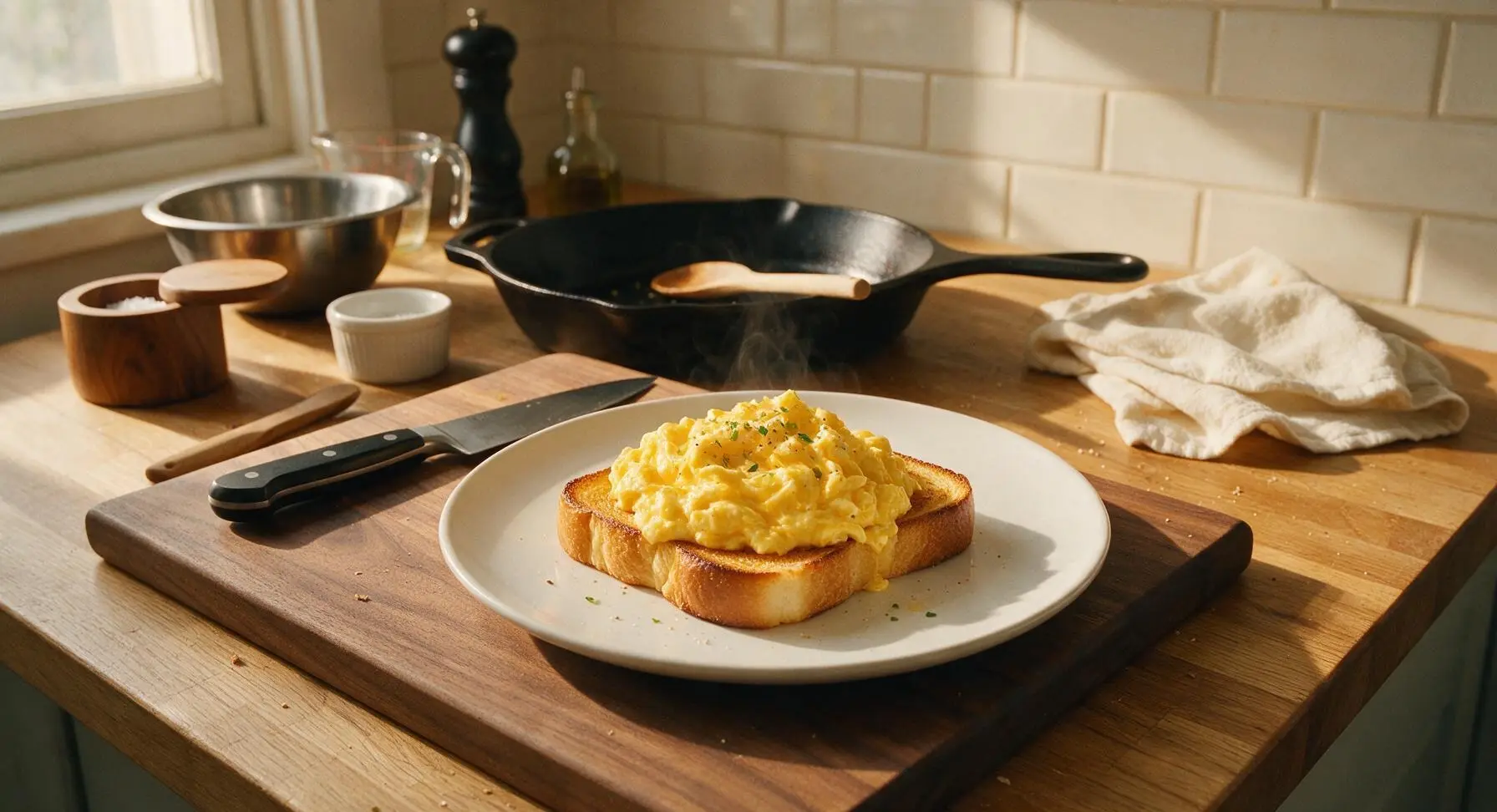
⏱️ cook time 8 minutes
🍽️ servings 2
⚡ Difficulty easy

intro

Silky cloud-like soft scrambled eggs piled on buttery toasted Hokkaido milk bread: a light, comforting Japanese-inspired bite ready in minutes.

Ingredients
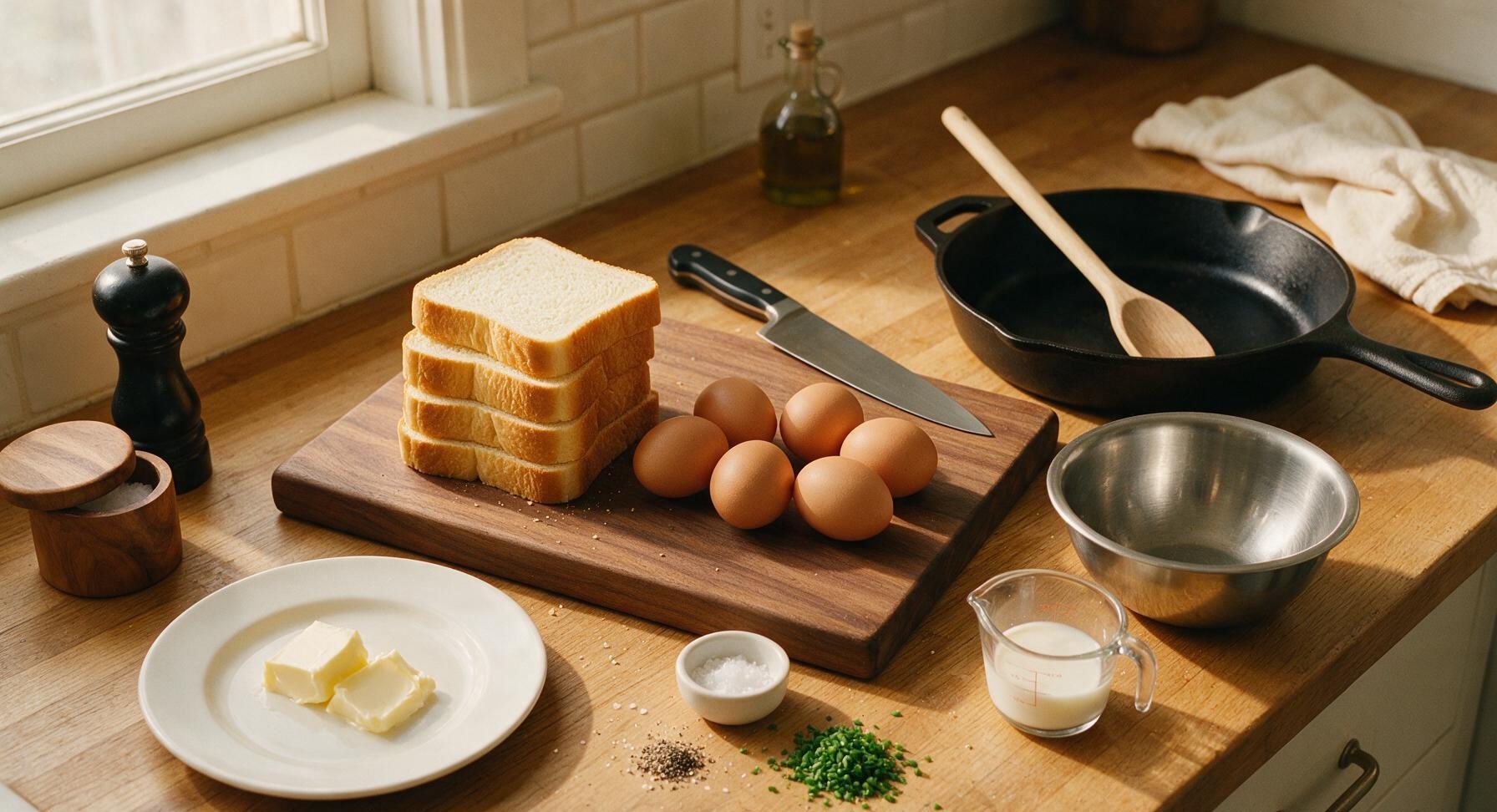
Thick-cut Hokkaido milk bread 4 slices (1-inch thick)
Large eggs 6
Whole milk 2 tablespoons
Unsalted butter 2 tablespoons, divided
Flaky sea salt 1/4 teaspoon
Freshly ground black pepper 1/8 teaspoon
Fresh chives 1 tablespoon, finely chopped

Steps

1

Whisk Egg Base

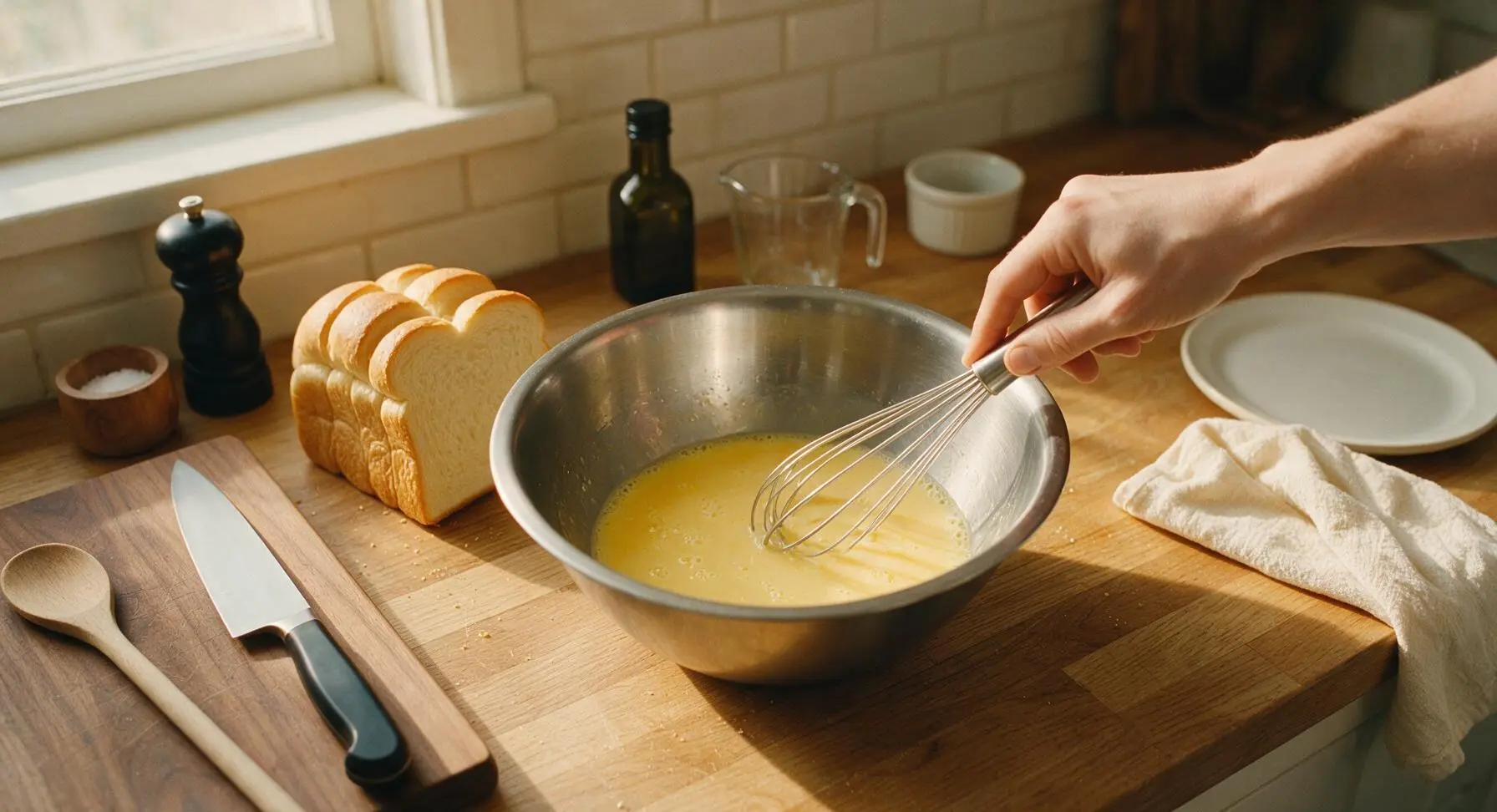
Crack all 6 large eggs into the small brushed stainless steel mixing bowl. Add 2 tablespoons whole milk and 1/8 teaspoon flaky sea salt. Use the stainless steel wire whisk to beat the mixture for 45-60 seconds, until yolks and whites are fully combined, no streaks of clear white remain, and the surface is covered in tiny, uniform bubbles. Do not over-whisk to avoid watery eggs.
Step 1
step1:Whisk Egg Base
2

Preheat Pan for Toast

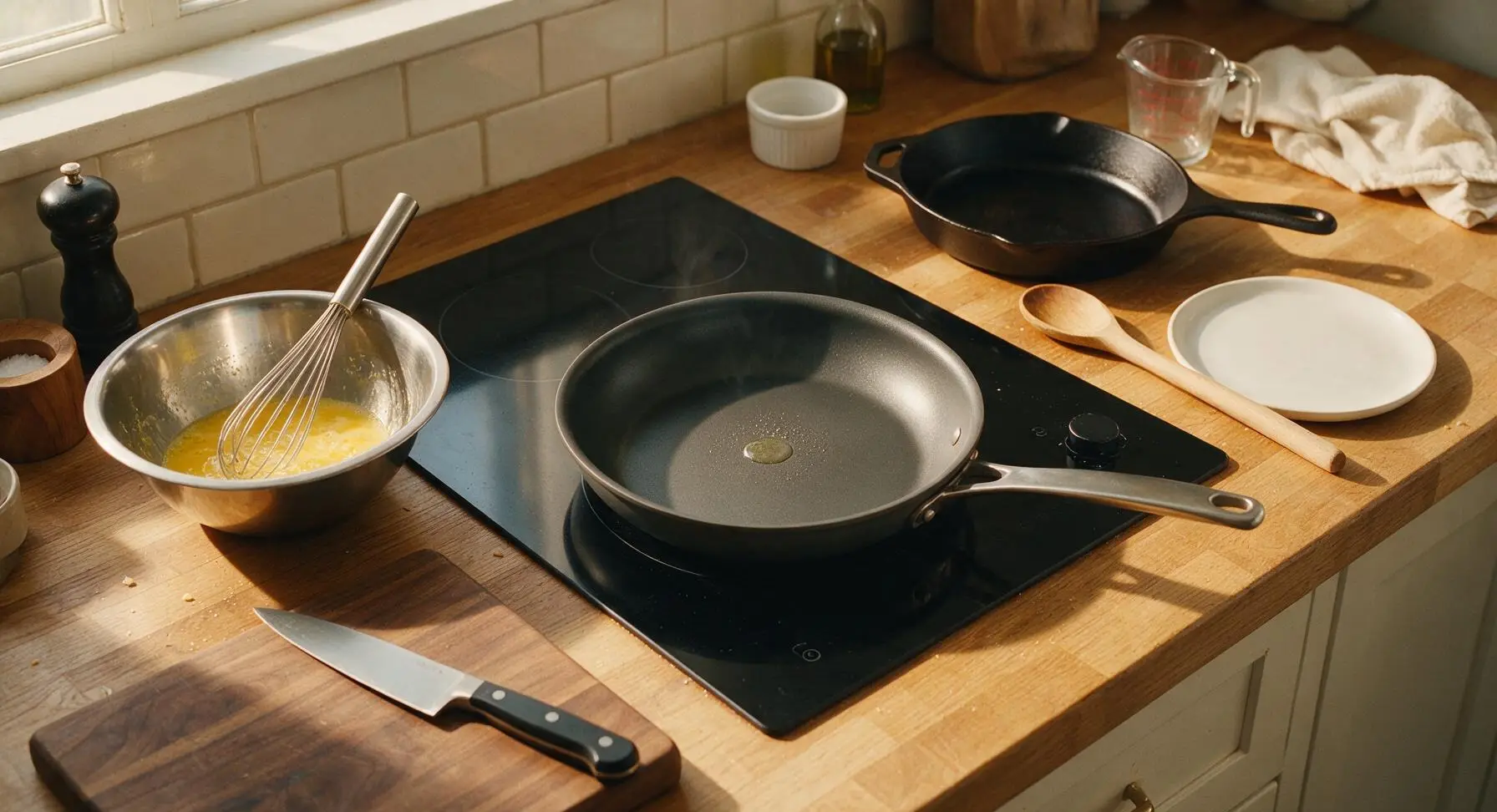
Place the 10-inch matte charcoal non-stick frying pan on the center of the induction cooktop, set to medium-low heat (300°F / 150°C). Let the pan preheat for 2 minutes, until a drop of water flicked onto the surface sizzles and evaporates slowly in 3-4 seconds.
Step 2
step2:Preheat Pan for Toast
3

Toast Hokkaido Bread

Add 1 tablespoon of unsalted butter (scooped from the fixed glass butter jar) to the preheated pan, swirling until fully melted and coating the pan bottom evenly. Place 2 slices of Hokkaido milk bread in a single layer in the pan (cook in 2 batches to avoid crowding). Toast for 1.5 minutes per side, until the surface is golden brown and crisp at the edges, with the inner crumb remaining soft and pillowy. Use the beech wood spatula to transfer toasted slices to the matte cream ceramic breakfast plate, arranging them in two overlapping pairs as batches finish.
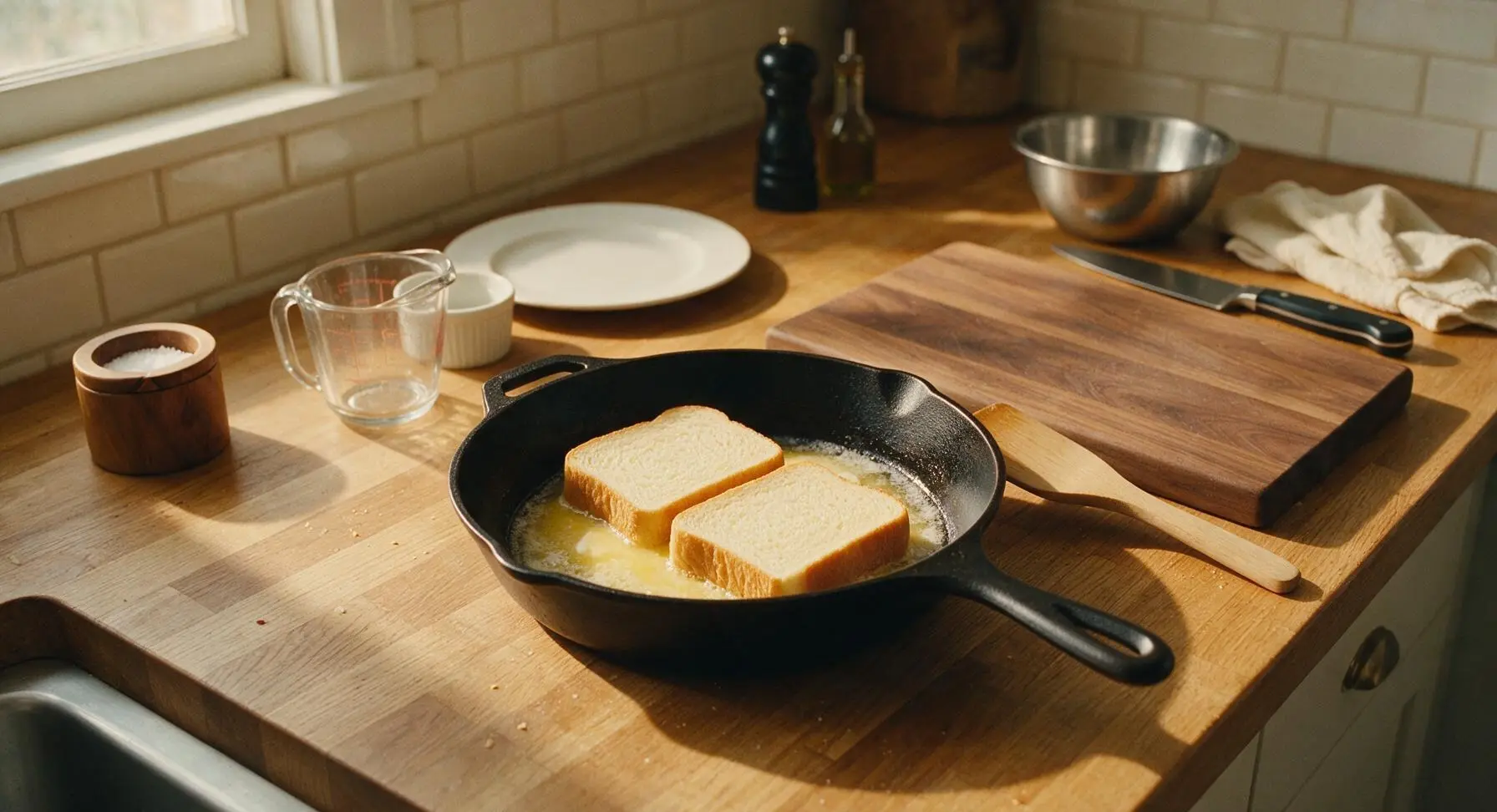
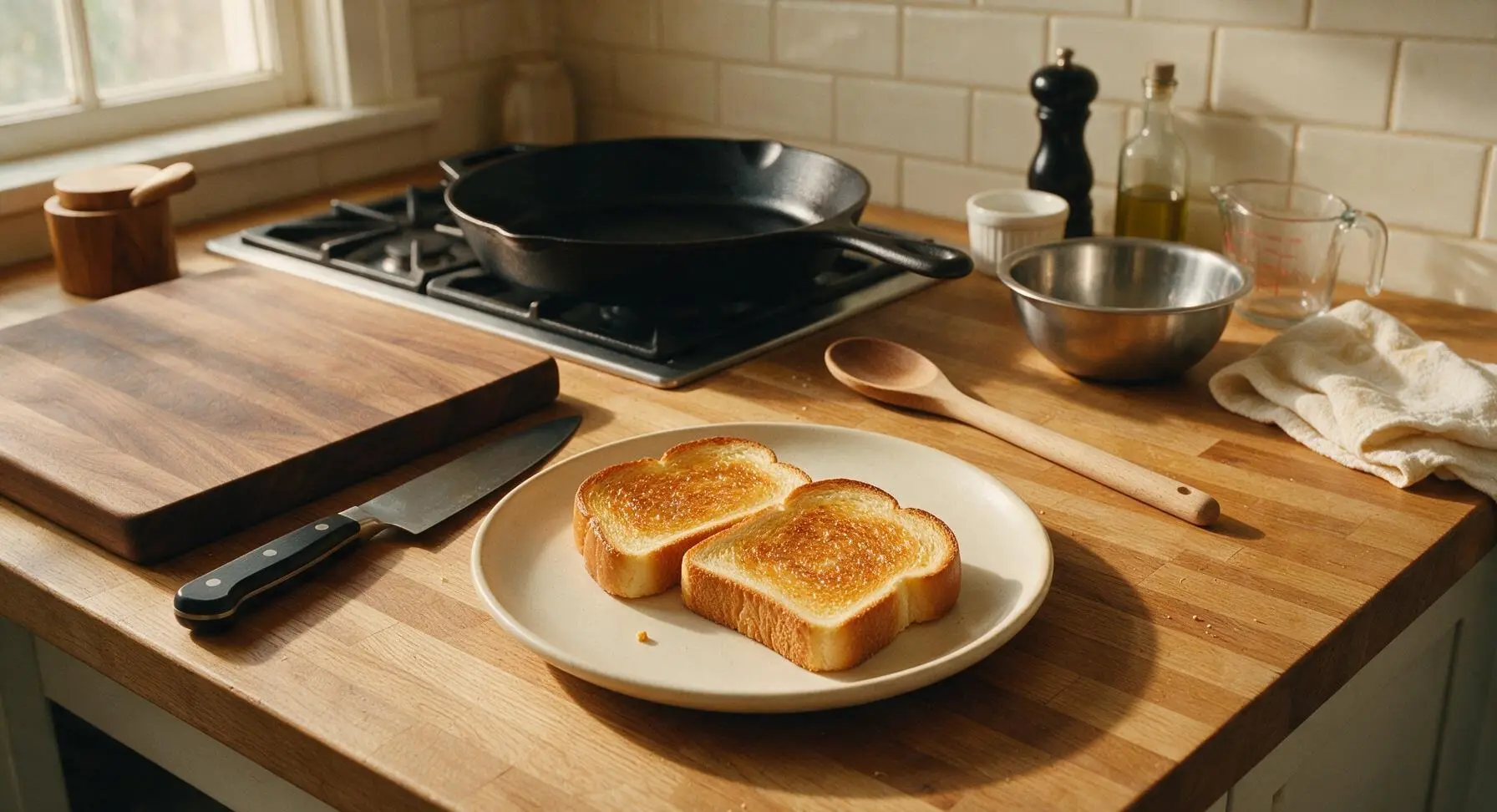
Step 3
step3:Toast Hokkaido Bread
Step 3
step3:Toast Hokkaido Bread
4

Melt Butter for Eggs

Once all bread is toasted and set on the plate, reduce the induction cooktop heat to low (225°F / 110°C). Add the remaining 1 tablespoon of unsalted butter to the same pan used for toasting, swirling gently until fully melted and foamy, but not browned (if butter starts to turn golden, remove pan from heat for 30 seconds to cool slightly). The butter should coat the entire pan surface in a thin, glossy layer.
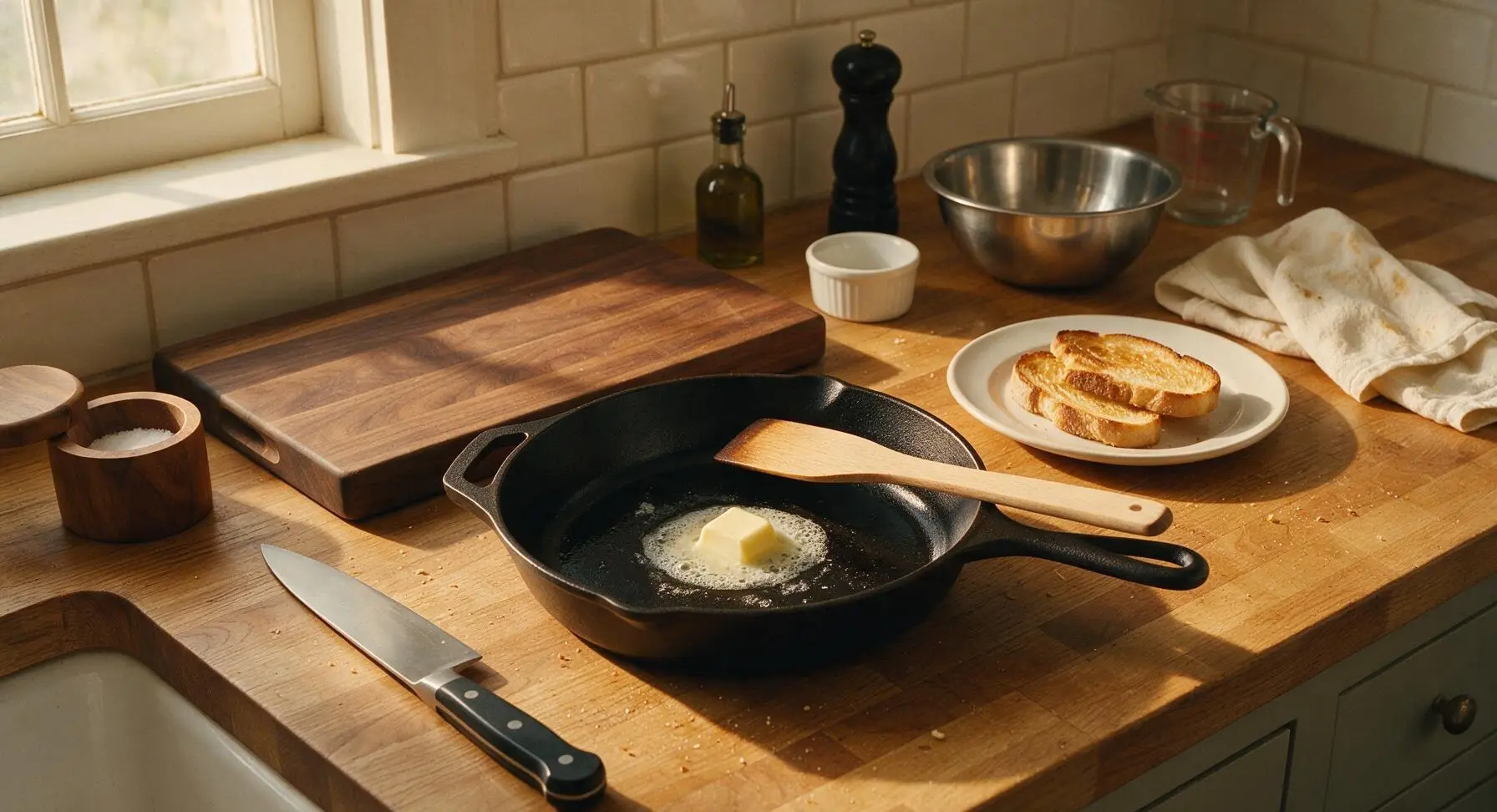
Step 4
step4:Melt Butter for Eggs
5

Cook Soft Scrambled Eggs

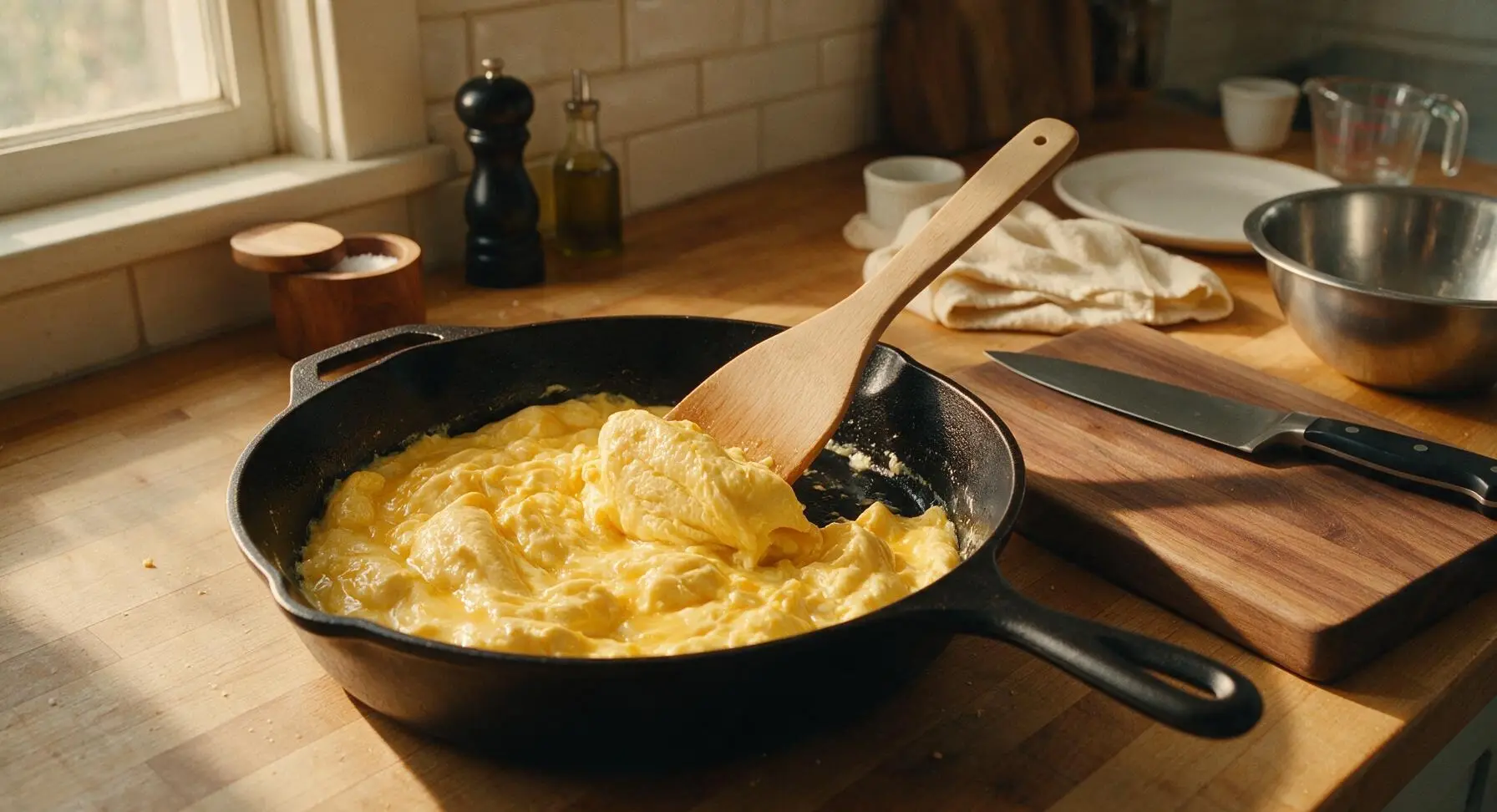
Pour the fully whisked egg mixture into the pan with melted butter. Let the eggs sit undisturbed for 15 seconds, until soft, small curds start to form at the pan edges. Use the beech wood spatula to gently push the set curds from the edge of the pan toward the center, tilting the pan to let uncooked, runny egg flow into the empty spaces left by the pushed curds. Repeat this slow, gentle pushing motion continuously for 2-3 minutes, until the eggs form soft, large, creamy curds that are just set, with no loose runny liquid remaining but still moist and glossy on the surface. Do not stir rapidly or break curds into small pieces, as this will create dry, crumbly eggs.
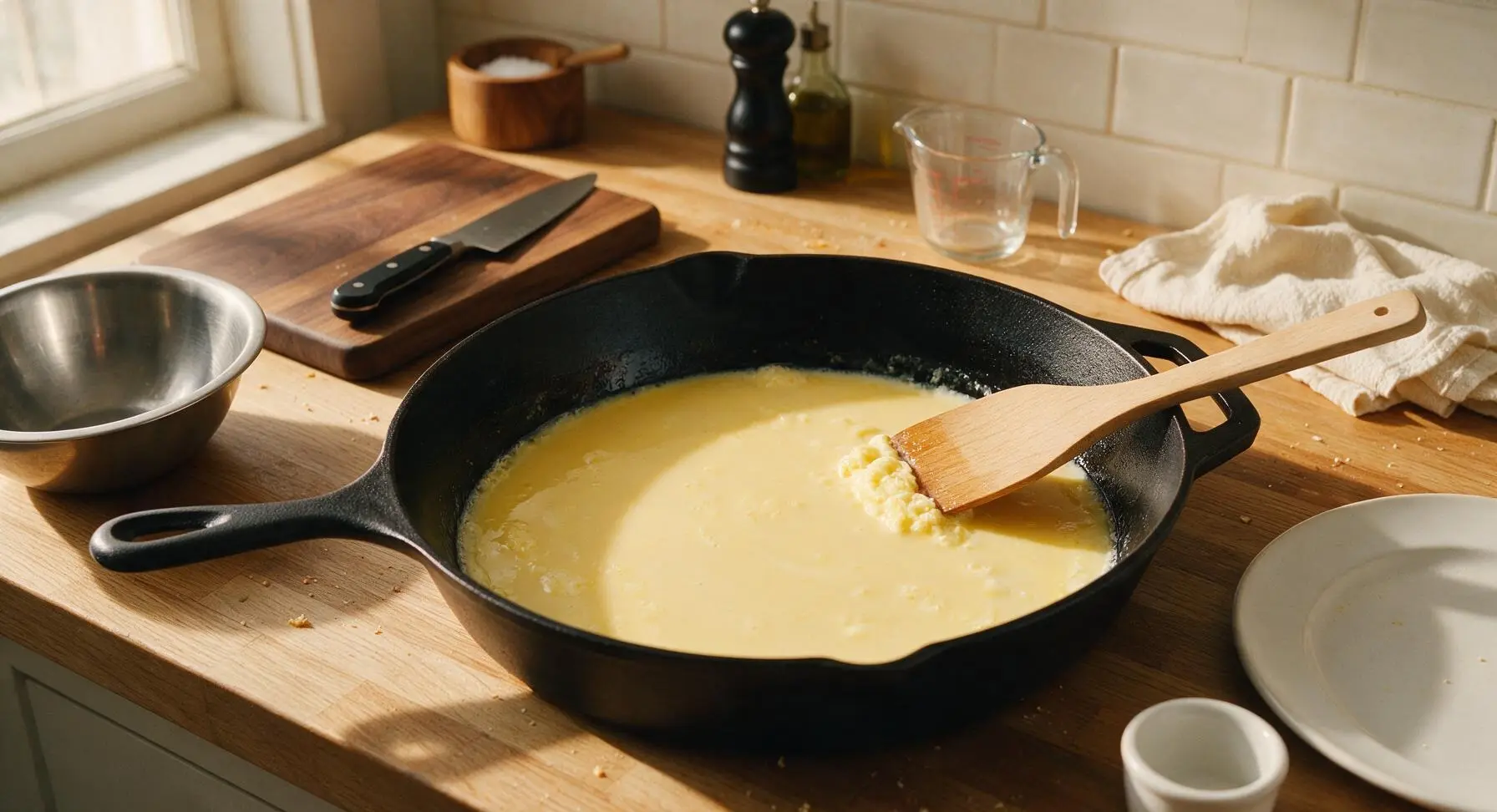
Step 5
step5:Cook Soft Scrambled Eggs
Step 5
step5:Cook Soft Scrambled Eggs
6

Season and Plate Eggs

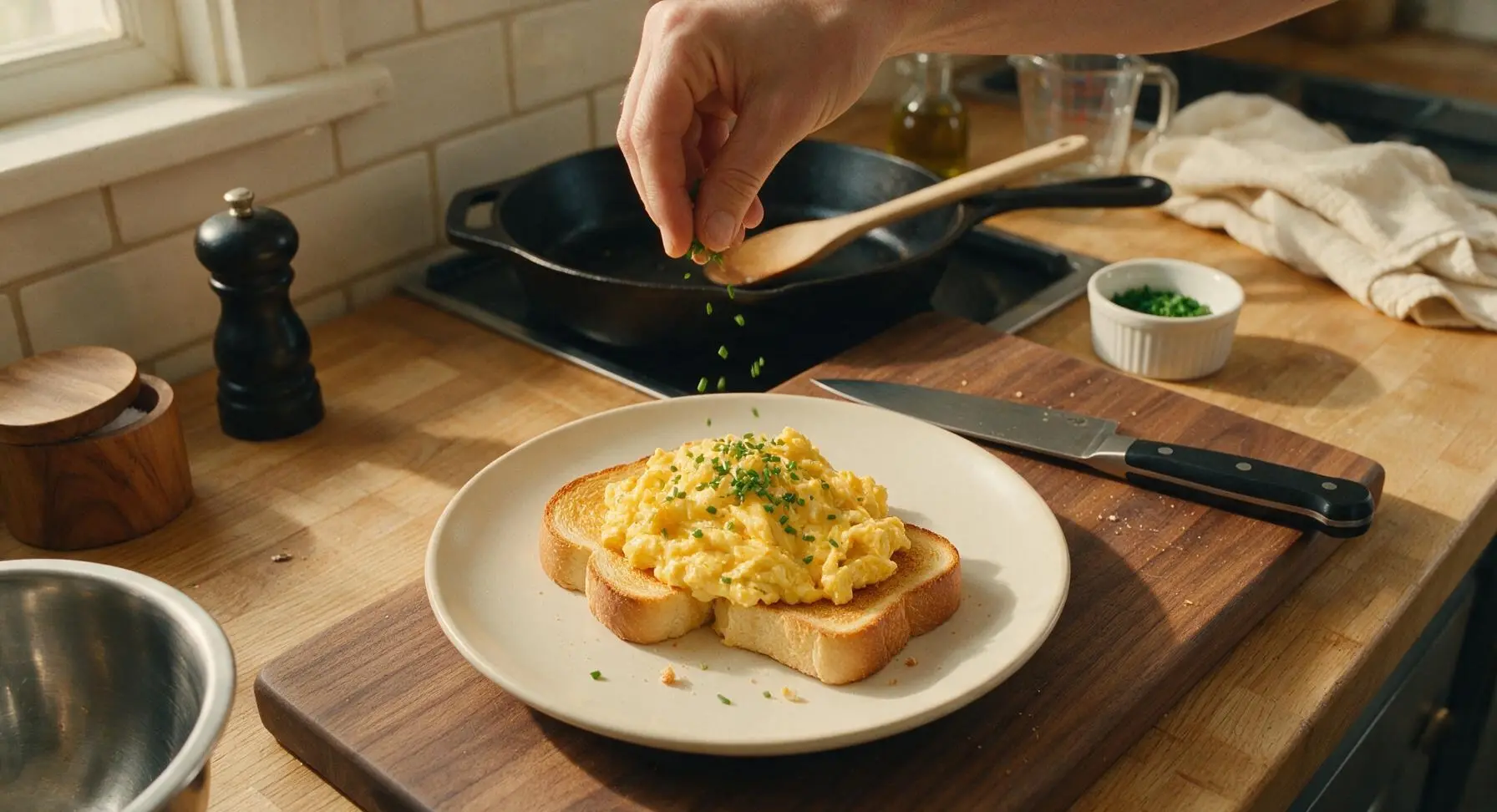
Remove the pan from heat immediately once eggs reach the soft curd stage (eggs will continue to cook from residual heat). Spoon the scrambled eggs evenly in a generous, loose mound across the top of the two pairs of toasted Hokkaido milk bread on the cream ceramic plate. Sprinkle the eggs with the remaining 1/8 teaspoon flaky sea salt, a light grind of black pepper from the fixed pepper grinder, and the finely chopped fresh chives from the pinch bowl.
Step 6
step6:Season and Plate Eggs

Tips

1.Use the lowest heat setting for scrambling eggs: high heat causes tough, rubbery curds and browned, dry edges, while consistent low heat creates the signature silky, melt-in-your-mouth texture that pairs perfectly with soft Hokkaido milk bread.
2.Never press bread slices firmly with the spatula while toasting: this squeezes out the delicate, airy crumb structure that makes Hokkaido milk bread unique, leading to dense, flat toast instead of light, crisp slices with a pillowy, soft center.
3.Pull eggs from the heat 10 seconds before you think they are fully done: residual heat from the pan and the eggs themselves will continue to cook the curds for 60 seconds after plating, which prevents dry, overcooked eggs that ruin the dish.
✨ You May Also Like

Breakfast
🍜 United States

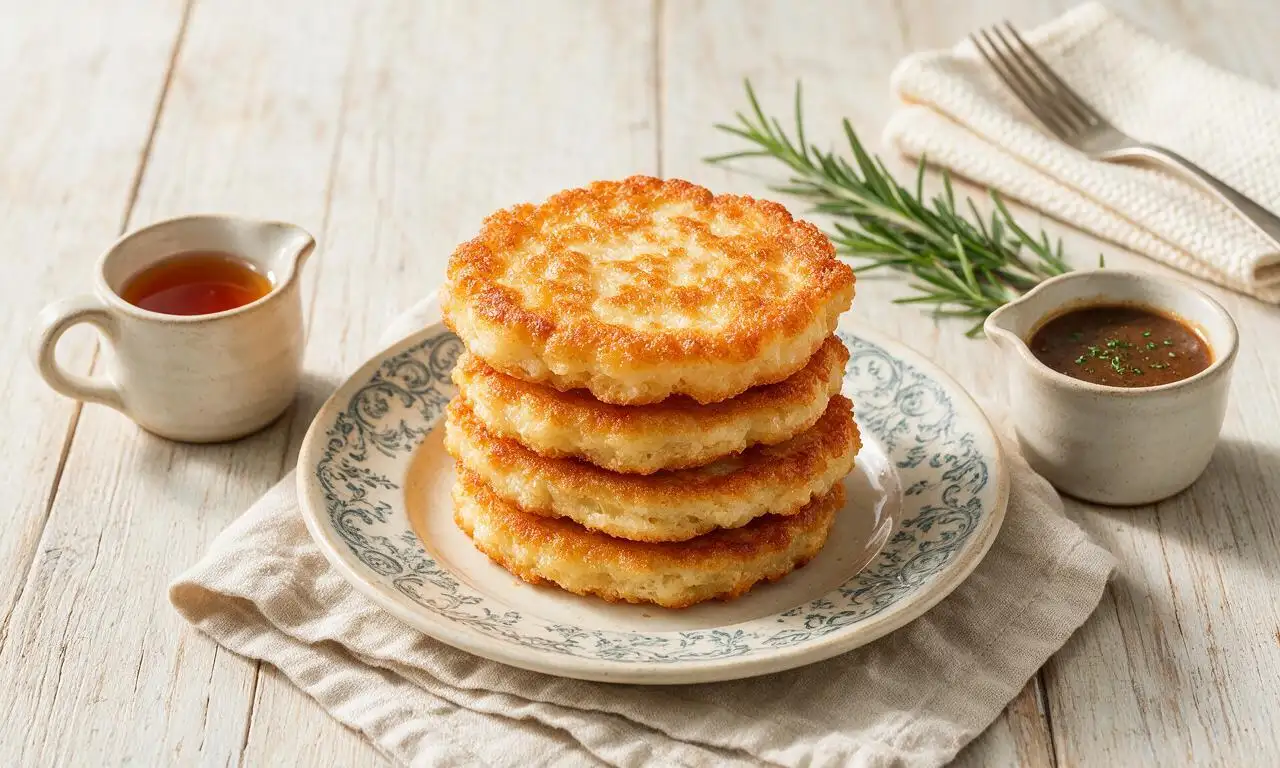
Crisp-edged, fluffy lard griddle cakes are a nostalgic homestyle staple, with rich savoriness from rendered lard, perfect topped with maple syrup or savory gravy.

⏱️ 25 minuteBreakfast ★ 4.8
Breakfast
🍜 United States

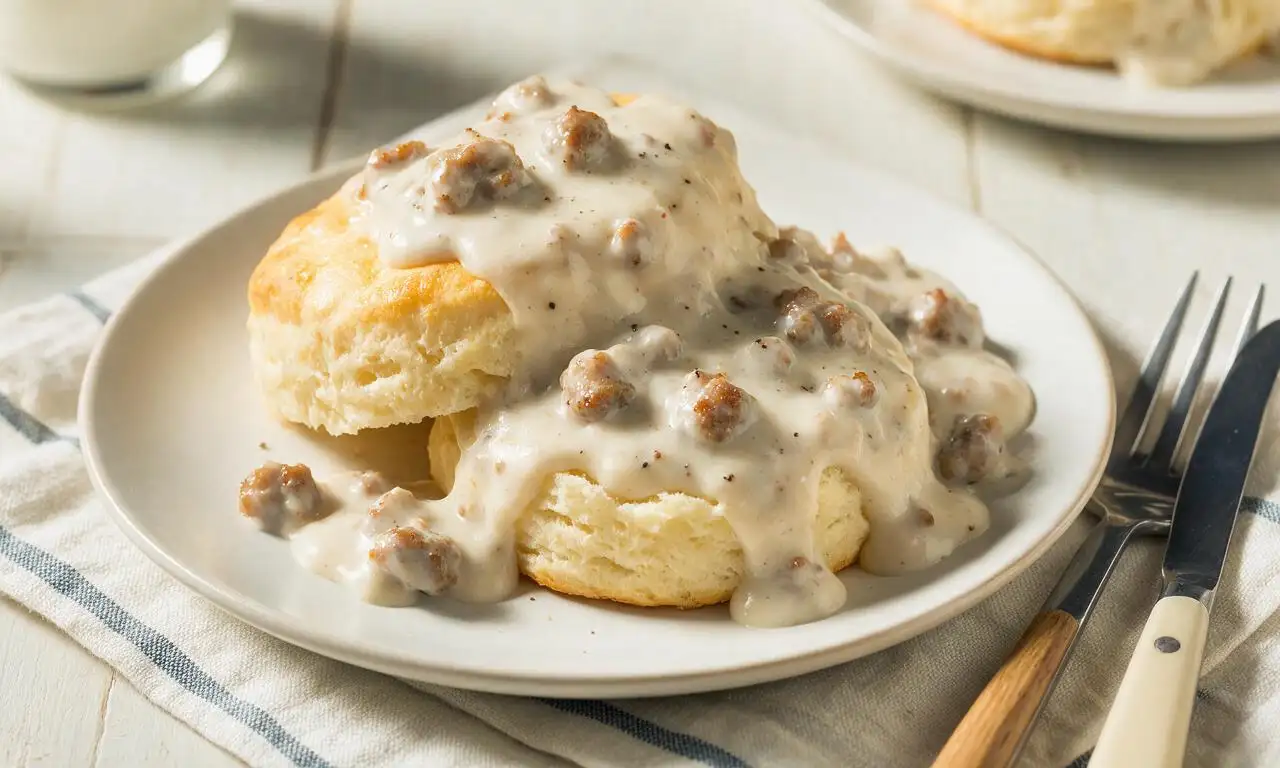
Flaky, buttery homemade buttermilk biscuits smothered in creamy, peppery pork sausage gravy: a beloved, hearty Southern American comfort food classic.

⏱️ 35 minuteBreakfast ★ 4.8
Breakfast
🍜 United States

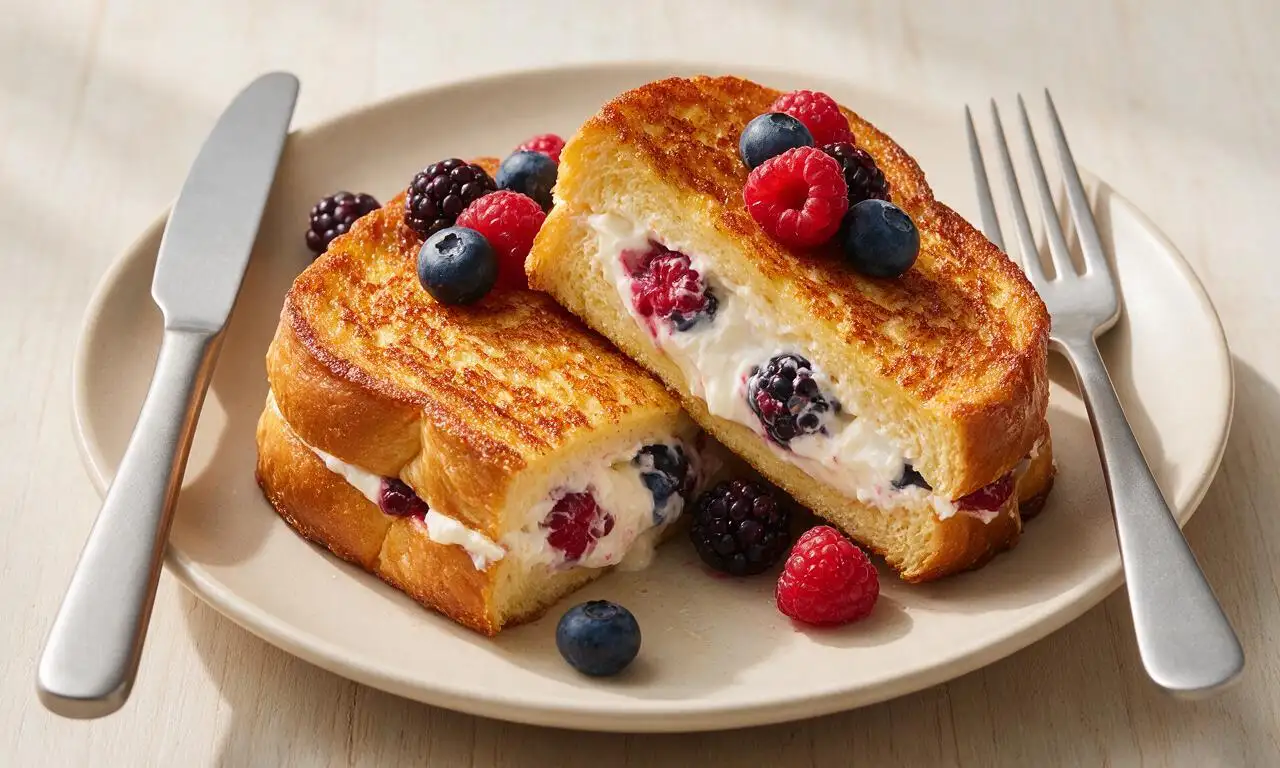
Golden, custardy brioche stuffed with sweet cream cheese and fresh berries, pan-fried to crisp perfection. An indulgent, cozy breakfast perfect for slow weekend mornings.

⏱️ 30 minuteBreakfast ★ 4.7
Breakfast
🍜 United States

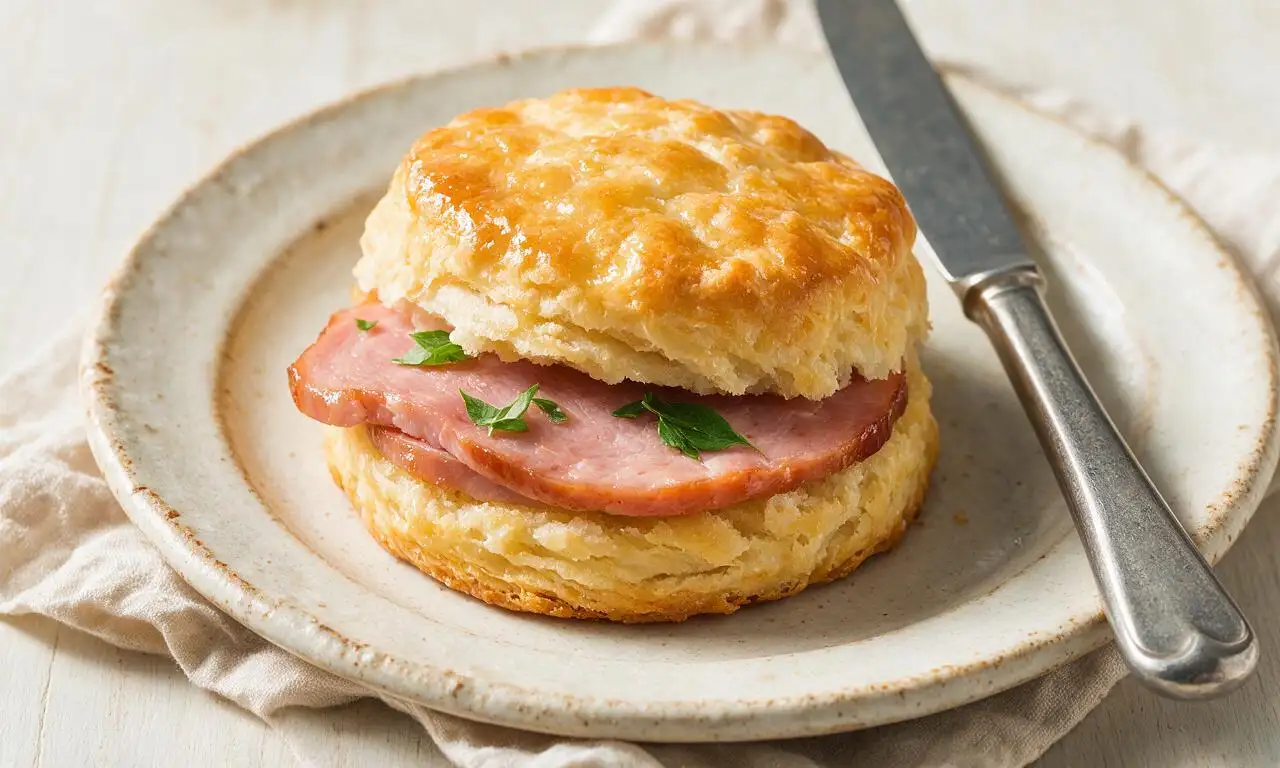
Flaky, buttery Southern-style biscuits stuffed with savory salty country ham, a portable, satisfying classic perfect for casual on-the-go meals.

⏱️ 25 minuteBreakfast ★ 4.8
Breakfast
🍜 United States

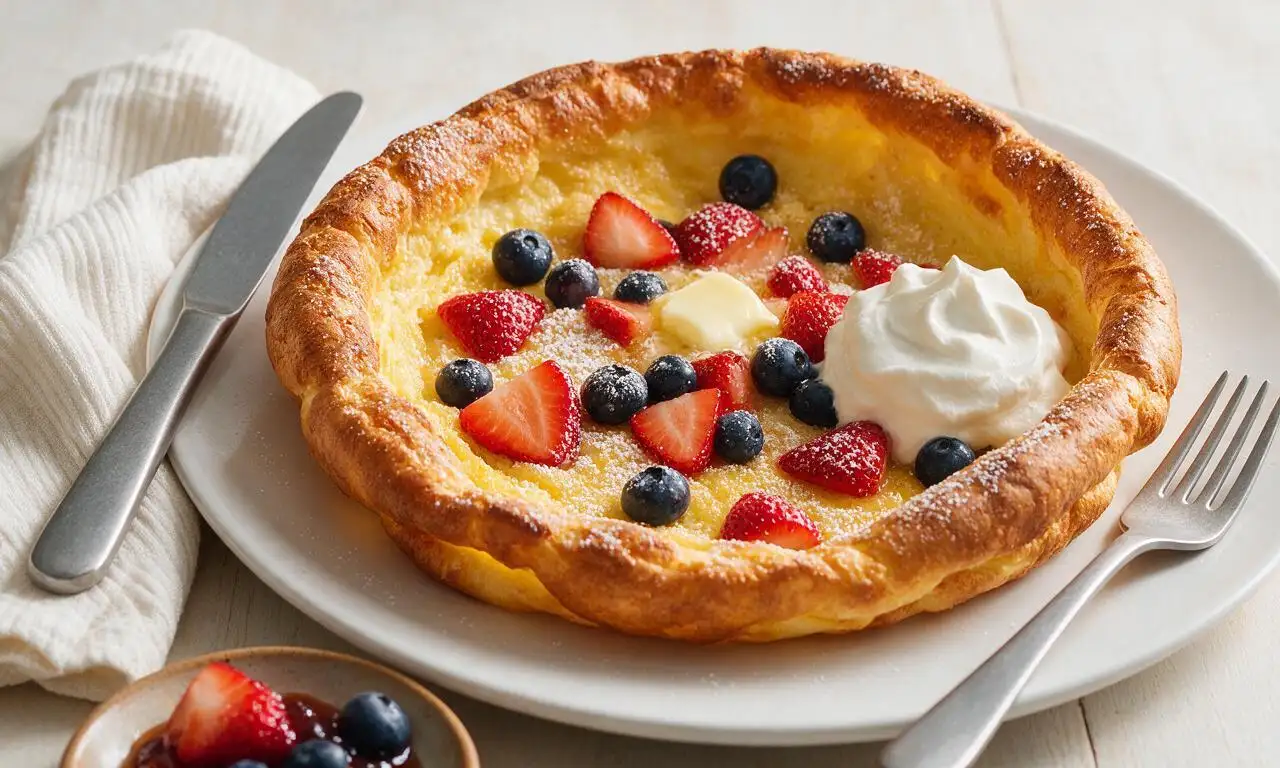
Iconic puffy baked pancake popularized in Seattle, with crisp golden edges and soft custardy center, served warm with classic sweet toppings.

⏱️ 35 minuteBreakfast ★ 4.6
Breakfast
🍜 United States

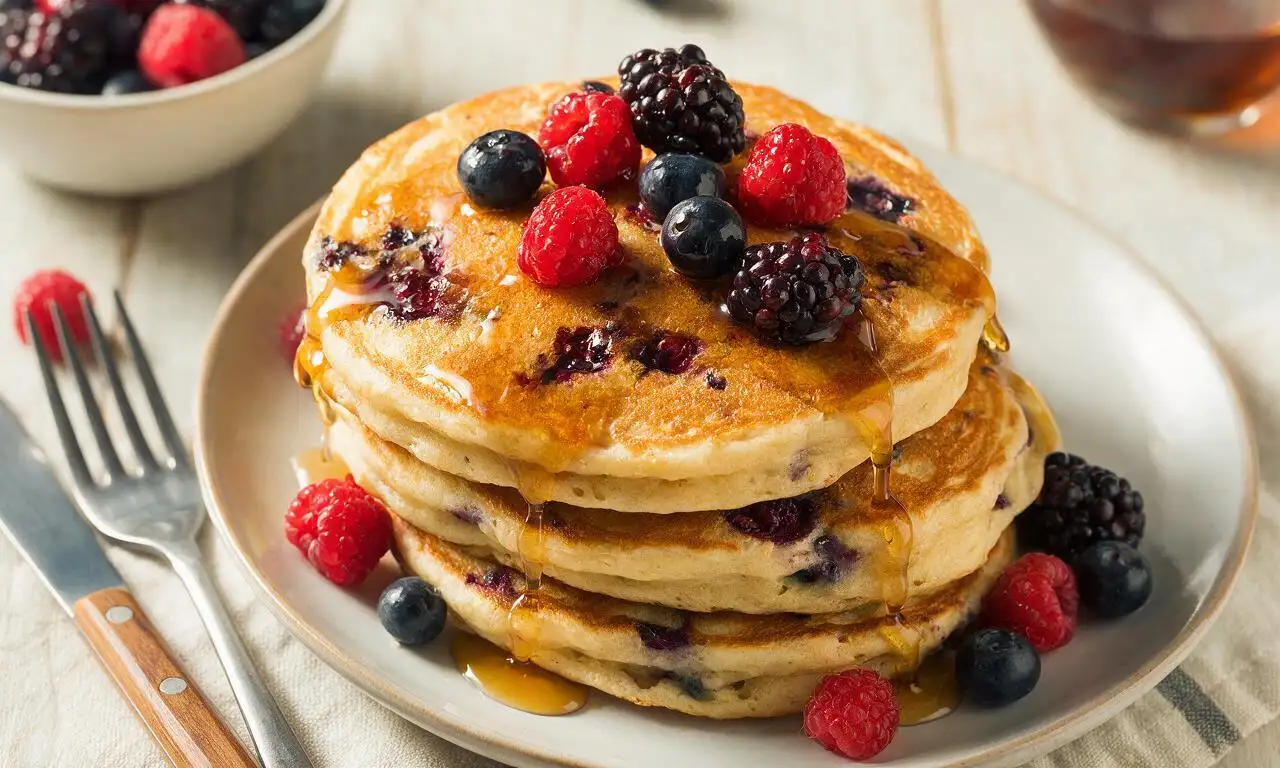
Fluffy, golden pancakes studded with juicy peak-summer mixed berries, drizzled with maple syrup for a bright, comforting, crowd-pleasing family breakfast.

⏱️ 25 minuteBreakfast ★ 4.7

Hokkaido Milk Bread Scrambled Eggs:Frequently Asked Questions

1.What makes Hokkaido milk bread different from regular white bread for this recipe? ▾
Hokkaido milk bread uses a tangzhong (cooked flour roux) starter that gives it an ultra-soft, pillowy crumb, subtle milky sweetness, and rich buttery notes regular white bread lacks. It toasts up to a perfect crisp exterior without turning tough, and its mild, creamy flavor pairs seamlessly with silky scrambled eggs instead of overpowering them.
2.Can I use thin-sliced Hokkaido milk bread if I can’t find thick-cut? ▾
Absolutely, just adjust your toasting time to avoid burning. Thin slices will crisp faster, so aim for a light golden toast rather than a deep, crunchy char. For the closest experience to thick-cut, stack two thin toasted slices to get that satisfying, substantial base that holds the soft eggs without getting soggy too quickly.
3.What’s the ideal egg-to-milk ratio for the silkiest scrambled eggs here? ▾
For 2 servings, use 4 large eggs and 2 tablespoons of whole milk — that’s ½ tablespoon of milk per egg. This ratio creates a tender, creamy curd without making the eggs watery. Skip heavy cream here, as it will overpower the delicate, light flavor that pairs so well with the sweet, milky bread.
4.Do I need to temper the eggs before cooking to avoid rubbery texture? ▾
You don’t need a formal temper, but you should whisk the eggs and milk together thoroughly until completely uniform, with no streaks of separate egg white left, before they hit the pan. Whisking right up until cooking breaks down egg proteins for softer curds, and eliminates random rubbery white bits in your final scramble.
5.What heat setting should I use to cook the scrambled eggs for this dish? ▾
Stick to low to medium-low heat the entire time. High heat will shock the eggs into forming tough, dry curds fast, ruining that cloud-like texture. Low heat lets you slowly pull soft, small curds as the eggs set, resulting in that melt-in-your-mouth consistency that matches the soft Hokkaido bread perfectly.
6.How much butter should I use for both toasting the bread and cooking the eggs? ▾
For 2 servings, use 1 tablespoon of unsalted butter total: ½ tablespoon melted in the pan to toast the bread to golden, buttery crispness, and the remaining ½ tablespoon to cook the eggs. Using unsalted butter lets you control sodium levels, so you can finish with flaky sea salt to taste without over-salting.
7.Can I substitute plant-based milk for whole milk in the scrambled eggs? ▾
You can, but stick to unsweetened plain oat milk for the closest creamy texture and neutral flavor. Almond or soy milk can add a noticeable nutty or beany aftertaste that clashes with the mild, sweet bread, and thin low-fat plant milks will make eggs watery, so avoid those if you want that classic silky result.
8.How do I keep the toasted bread from getting soggy under the scrambled eggs? ▾
First, make sure you toast the bread until it has a firm, crisp golden surface, not just lightly warmed. Let excess butter on the toast absorb for 30 seconds after toasting, and don’t pile the eggs on until you’re ready to eat immediately — letting the dish sit for too long is the top cause of soggy bread.
9.What size curds should I aim for when scrambling the eggs for this recipe? ▾
Aim for small, soft, pillowy curds about the size of a pea. As the eggs cook on low heat, use a silicone spatula to gently push set egg from the pan edges to the center, letting runny egg flow into the empty space. Avoid chopping eggs into tiny crumbs or leaving large, bulky curds for the best light, cloud-like bite.
10.Can I add cheese to this scrambled egg dish? ▾
You absolutely can, but stick to mild, creamy cheeses that won’t overpower the delicate bread and eggs. A tablespoon of finely grated soft white cheddar or crumble of fresh goat cheese stirred in right as eggs finish cooking works beautifully. Skip strong, sharp cheeses like aged parmesan or blue cheese, as they throw off the mild, comforting flavor balance.
11.How do I know when the scrambled eggs are done cooking? ▾
Pull the eggs off the heat when they are just set, with a very soft, almost wet look — they will keep cooking for 30 to 60 seconds from residual pan heat (that’s carryover cooking). If you wait until they look fully firm in the pan, they will end up dry and rubbery by the time you pile them on the toast.
12.Is flaky sea salt really necessary, or can I use regular table salt? ▾
Flaky sea salt is preferred because it adds bright, crunchy pops of salt on top of the eggs and toast that elevate every bite, instead of dissolving completely and making the dish taste uniformly salty. If you only have table salt, use half the amount of flaky salt, and mix it into eggs before cooking instead of sprinkling on top.
13.Can I make this recipe ahead for meal prep? ▾
This dish is best eaten immediately after making, as both the toast and scrambled eggs lose their ideal texture quickly. If you need to prep ahead, you can pre-slice Hokkaido milk bread and keep it in an airtight bag, and pre-whisk your egg and milk mixture in a sealed fridge container for up to 2 days to cut down cook time.
14.What’s the best way to toast the Hokkaido milk bread for this recipe? ▾
Toast it directly in a skillet over medium-low heat with melted butter, rather than a pop-up toaster, for the best buttery, even crisp. Press the bread lightly into the melted butter as it toasts for 1 to 2 minutes per side, until it’s golden on the outside but still has a hint of soft, pillowy crumb in the center.
15.Can I use salted butter instead of unsalted for this recipe? ▾
You can, just cut back on the finishing flaky sea salt to avoid over-salting the dish. Salted butter has about ¼ teaspoon of added salt per stick, so taste the eggs as you cook before adding extra salt. Keep in mind salted butter can sometimes have a slightly more muted, less fresh butter flavor than unsalted for this simple, clean-tasting dish.
16.Are there any common toppings that pair well with this basic recipe? ▾
Light, fresh toppings work best: a sprinkle of thinly sliced chives, a pinch of shichimi togarashi for a tiny warm kick, a thin spread of Japanese mayo on the toast before adding eggs, or a few slices of ripe avocado. Skip heavy, saucy toppings like hot sauce or gravy, as they make bread soggy and overpower the mild flavors.
17.Why are my scrambled eggs coming out watery even when I follow the ratio? ▾
Watery eggs usually come from either cooking on too high heat, which causes milk to separate from egg curds, or adding extra milk beyond the recommended ½ tablespoon per egg. Make sure your pan isn’t too hot, don’t over-whisk eggs to the point of creating lots of foam, and pull them off heat just as they set to avoid separation.
18.How many servings does this standard recipe make? ▾
The standard ratio of 2 thick-cut bread slices, 4 large eggs, 2 tablespoons milk, and 1 tablespoon butter makes 2 light, satisfying servings, perfect for a quick weekday breakfast or light brunch. If serving heartier appetites, scale the recipe up by 50% to 3 eggs per person, keeping egg-to-milk and butter ratios consistent.
19.Can I use frozen Hokkaido milk bread for this recipe? ▾
Absolutely — thick-cut Hokkaido milk bread freezes beautifully, and you don’t even need to thaw it first. Toss the frozen slice straight into the buttered skillet over low heat, toasting for an extra 30 seconds per side until it’s crisp outside and warmed all the way through, with no soggy thawed texture. It works just as well as fresh bread for this dish.

Comments (4)

2 hours ago

OMG this is such a game changer for busy weekday mornings! I always have a loaf of Hokkaido milk bread in the fridge for toast, never thought to use it for scrambled eggs? The soft, milky bread soaks up the egg so perfectly, no weird soggy texture at all. My 7 and 9 year old devoured theirs before I even sat down to eat, 10/10 will be adding this to our weekly breakfast rotation.

30 minutes ago

Wait wait, do you tear the bread up into little chunks and mix it right into the egg? I’ve seen similar recipes but I was worried it would get mushy, this makes me want to try it tomorrow!

5 minutes ago

Great question! You’ll want to tear the bread into 1-inch cubes and gently fold them into the whisked eggs right before pouring into the pan, that keeps the texture soft but not mushy. So glad your family loved the recipe!

2 days ago

Perfect quick meal prep option! I made a big batch of these on Sunday for grab-and-go breakfasts all week, they reheat so much better than regular plain scrambled eggs. The subtle sweetness from the Hokkaido milk bread pairs so nicely with a little sprinkle of everything bagel seasoning on top. SO good, even my picky roommate stole a serving this morning lmao. Only knock is I wish the recipe noted how long they stay good in the fridge, mine were a little dry by day 4.

yesterday

Wait this was way easier than I thought it would be! I’m usually terrible at making fluffy scrambled eggs, they always turn rubbery if I look away for 2 seconds. The 8 minute cook time is no joke, I had a hot, fancy-feeling breakfast on the table before my coffee even finished brewing. Only thing I added was a tiny drizzle of honey on top, chef’s kiss.

2 hours ago

So happy this worked out for you! The milk bread actually helps keep the eggs extra tender so you don’t have to stress as much about overcooking, that honey drizzle idea sounds amazing, I’ll have to try that myself next time!

1 week ago

Brought these to a neighborhood brunch potluck last weekend and everyone was begging for the recipe! I served them in little slider buns with a slice of crispy bacon and a dash of hot sauce, people went back for thirds. Who knew such a simple 8 minute recipe would be the star of the whole spread?

5 days ago

Oh the slider idea is genius! I’m hosting a brunch next month and have been stressing about easy menu items that don’t require me to be stuck in the kitchen the whole time, this is going on the list for sure.