homemade bacon dry cure recipe

title 1
homemade bacon dry cure recipe
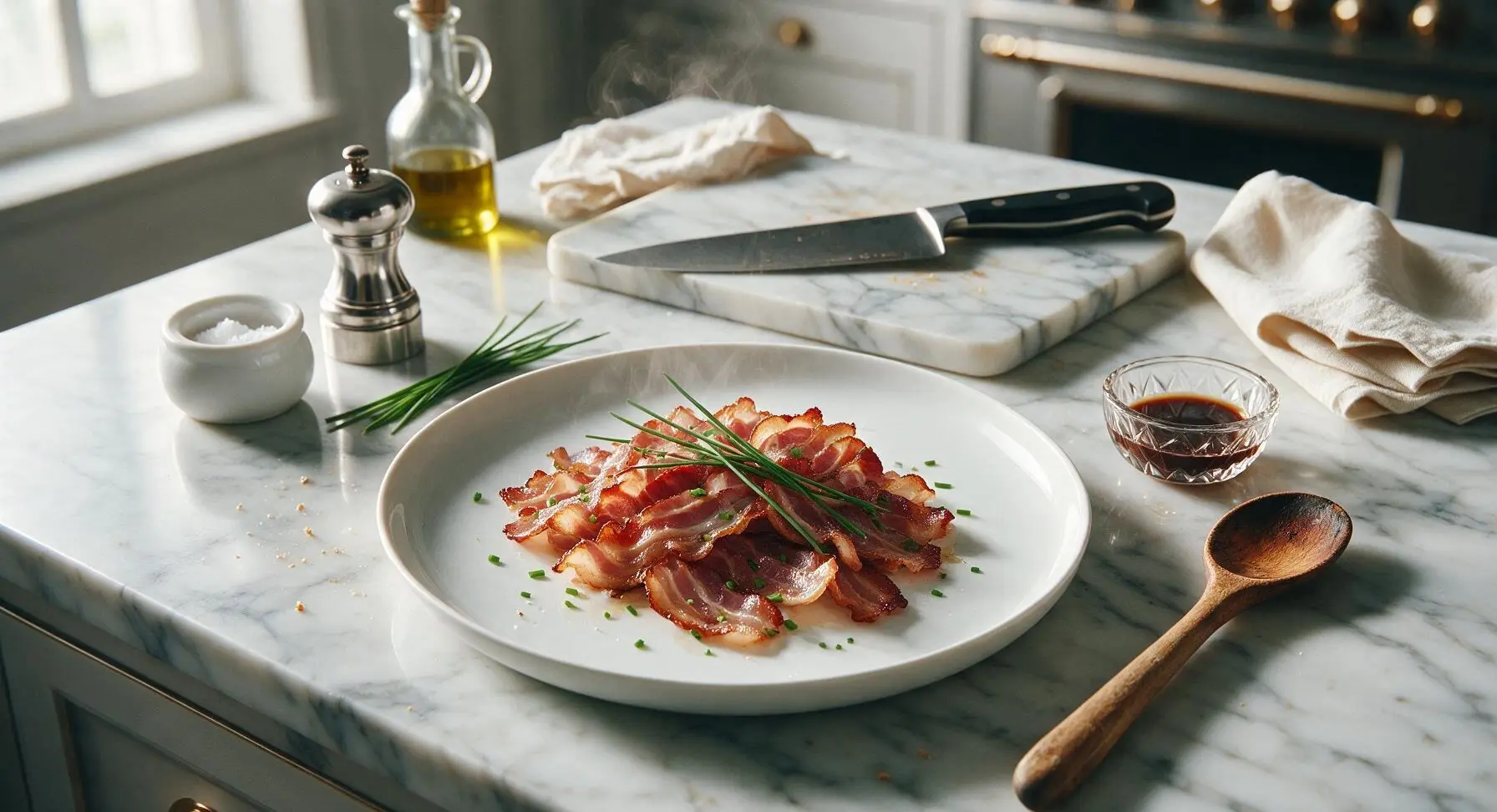
⏱️ cook time 2 hours
🍽️ servings 12
⚡ Difficulty medium

intro

Ditch preservative-laden store-bought bacon for this rich, perfectly salty dry-cured version, made with simple pantry ingredients for unbeatable breakfast flavor.

Ingredients
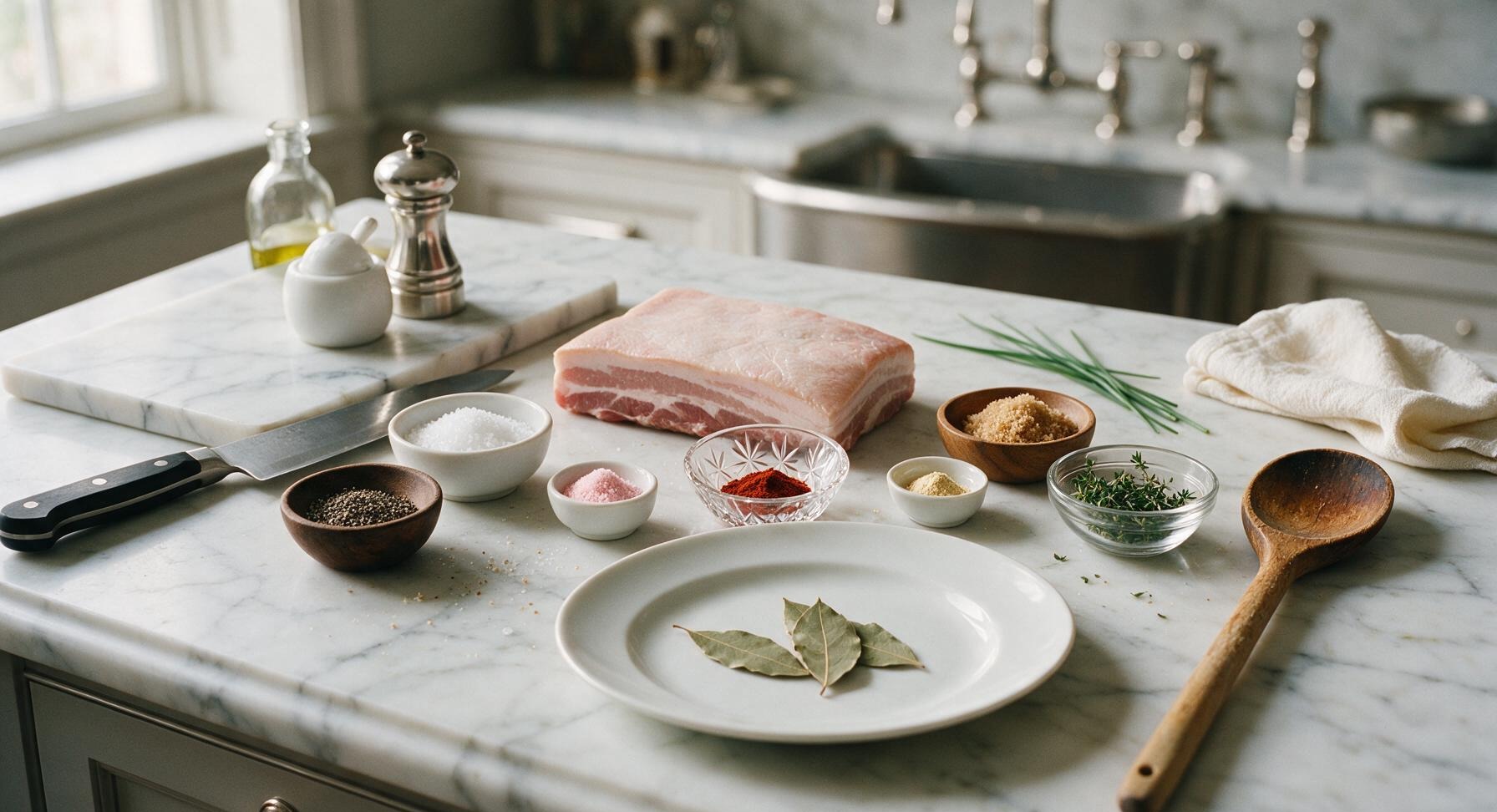
Skin-on pork belly 900g (2lb)
Coarse kosher salt 3 tbsp (45g)
Pink curing salt #1 (Prague powder) 1 tsp (5g)
Light brown sugar 2 tbsp (25g)
Freshly cracked black pepper 1 tbsp (8g)
Smoked paprika 1 tsp (3g)
Garlic powder 1 tsp (3g)
Fresh thyme (leaves picked) 1 tbsp (3g)
Dried bay leaves 3 leaves

Steps

1

Trim Pork Belly

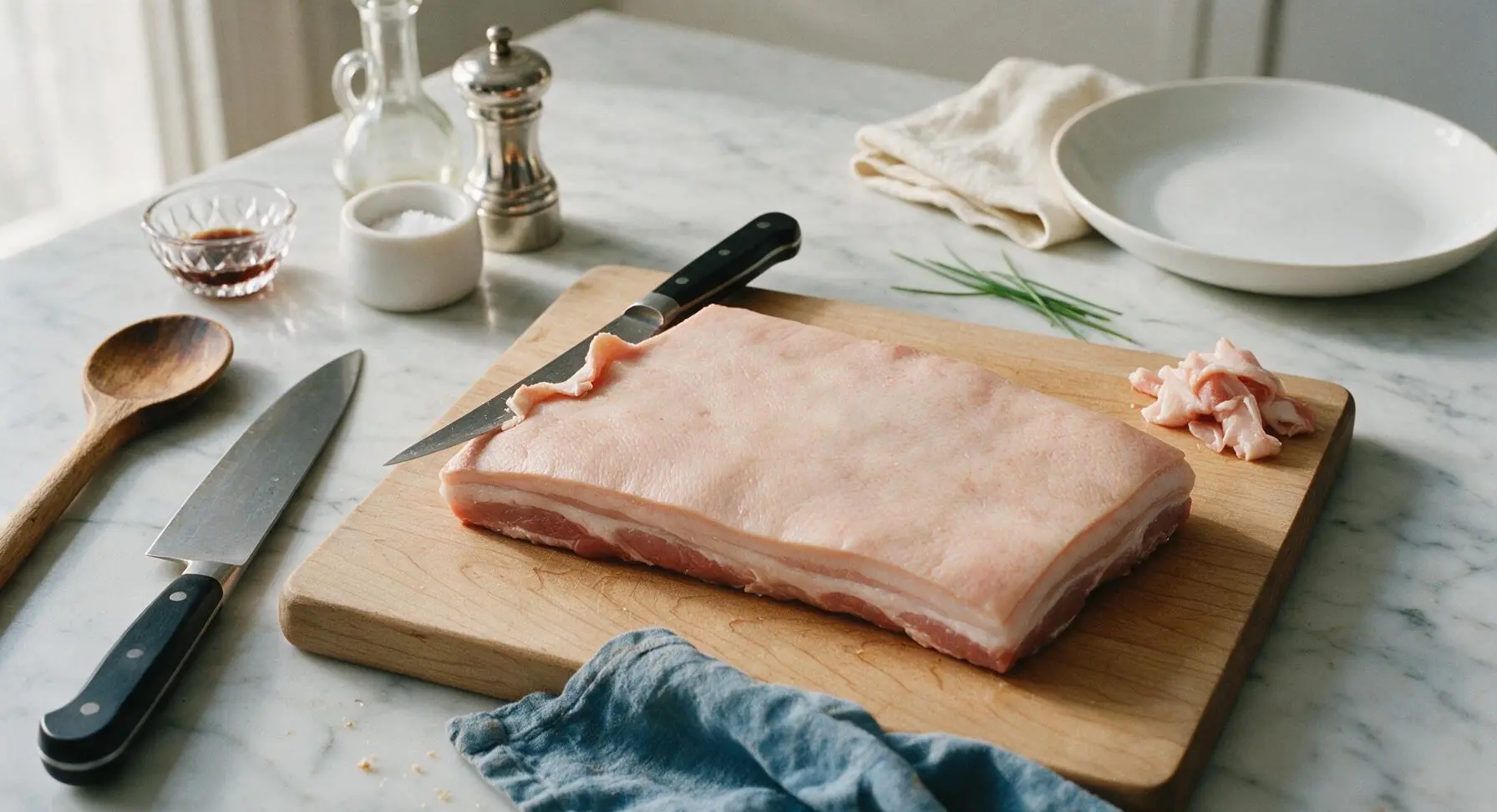
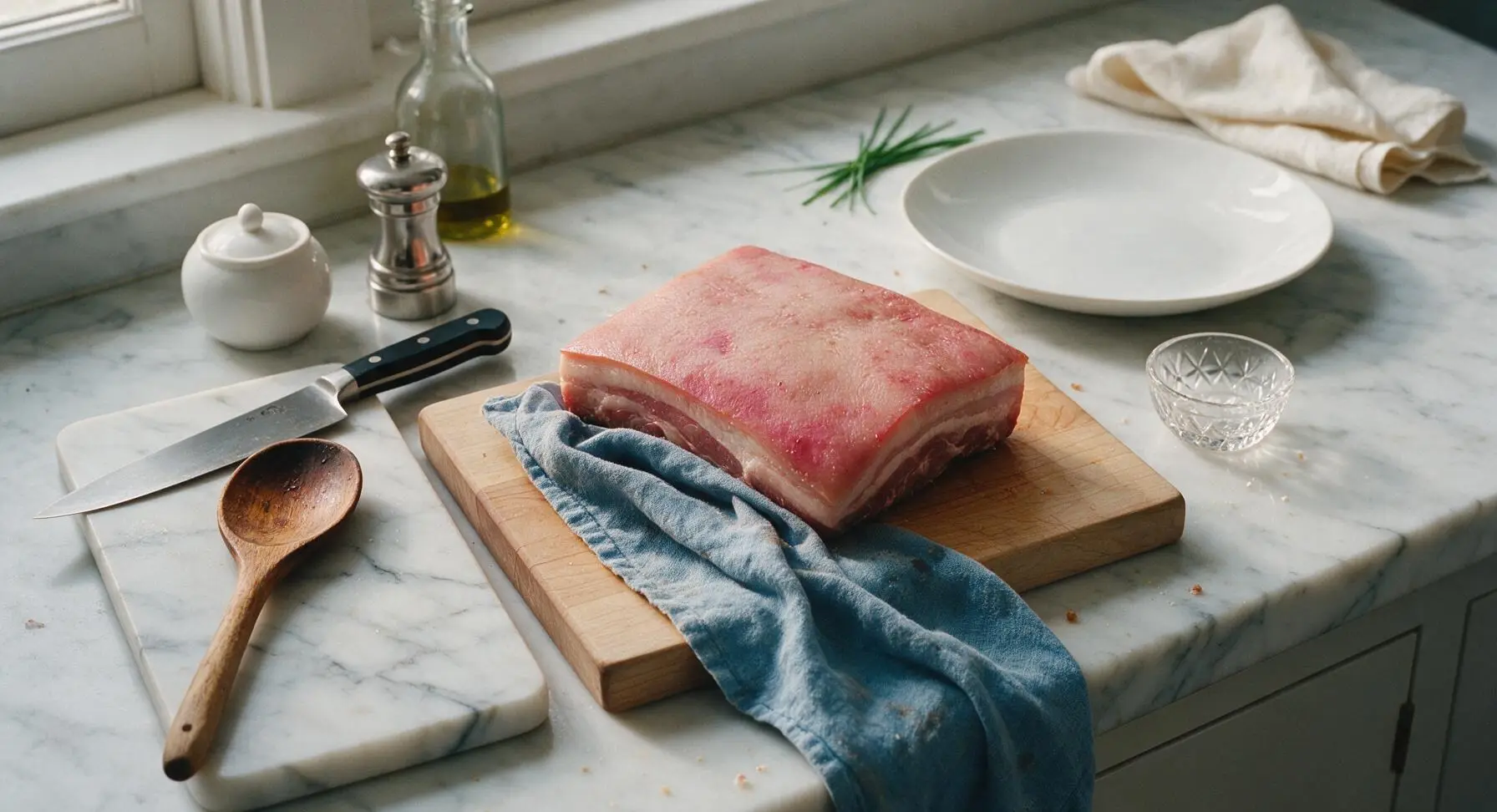
Place the 900g skin-on pork belly skin-side up on the central maple cutting board. Use the 6-inch boning knife to trim any ragged edges, loose fat, or leftover hair follicles from the skin, and square the edges to form a neat, even rectangle approximately 5cm thick. Pat the entire surface (skin and meat sides) completely dry with the corner of the faded blue linen towel. Discard any trimmed scraps.
Step 1
step1:Trim Pork Belly
2

Mix Dry Cure

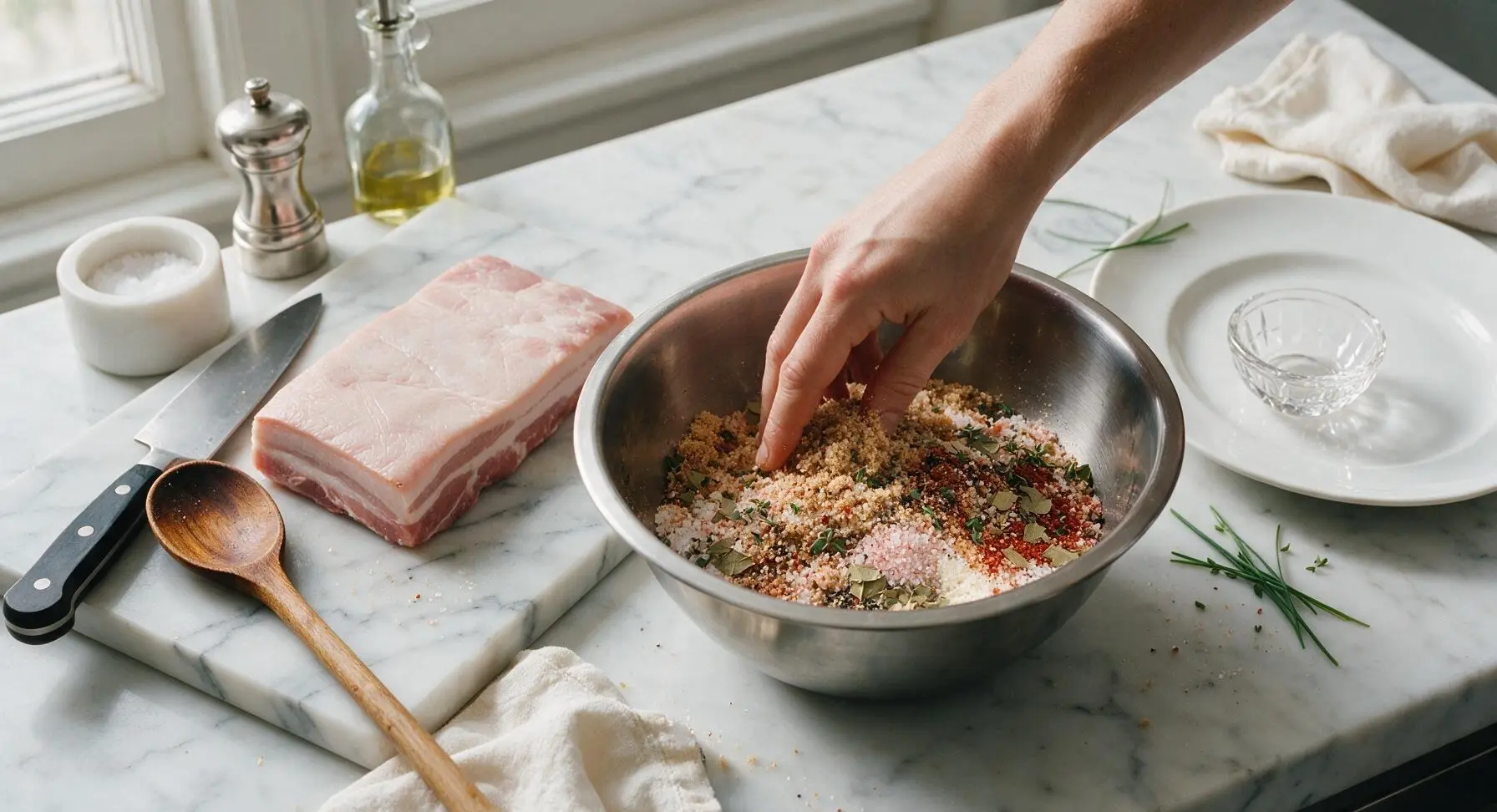
In the brushed stainless steel mixing bowl, combine 3 tbsp coarse kosher salt, 1 tsp pink curing salt #1, 2 tbsp packed light brown sugar, 1 tbsp freshly cracked black pepper, 1 tsp smoked paprika, 1 tsp garlic powder, 1 tbsp picked fresh thyme leaves, and 3 crumbled dried bay leaves. Stir thoroughly with your fingers for 30 seconds until all ingredients are evenly distributed, with no clumps of brown sugar remaining.
Step 2
step2:Mix Dry Cure
3

Rub Cure Evenly

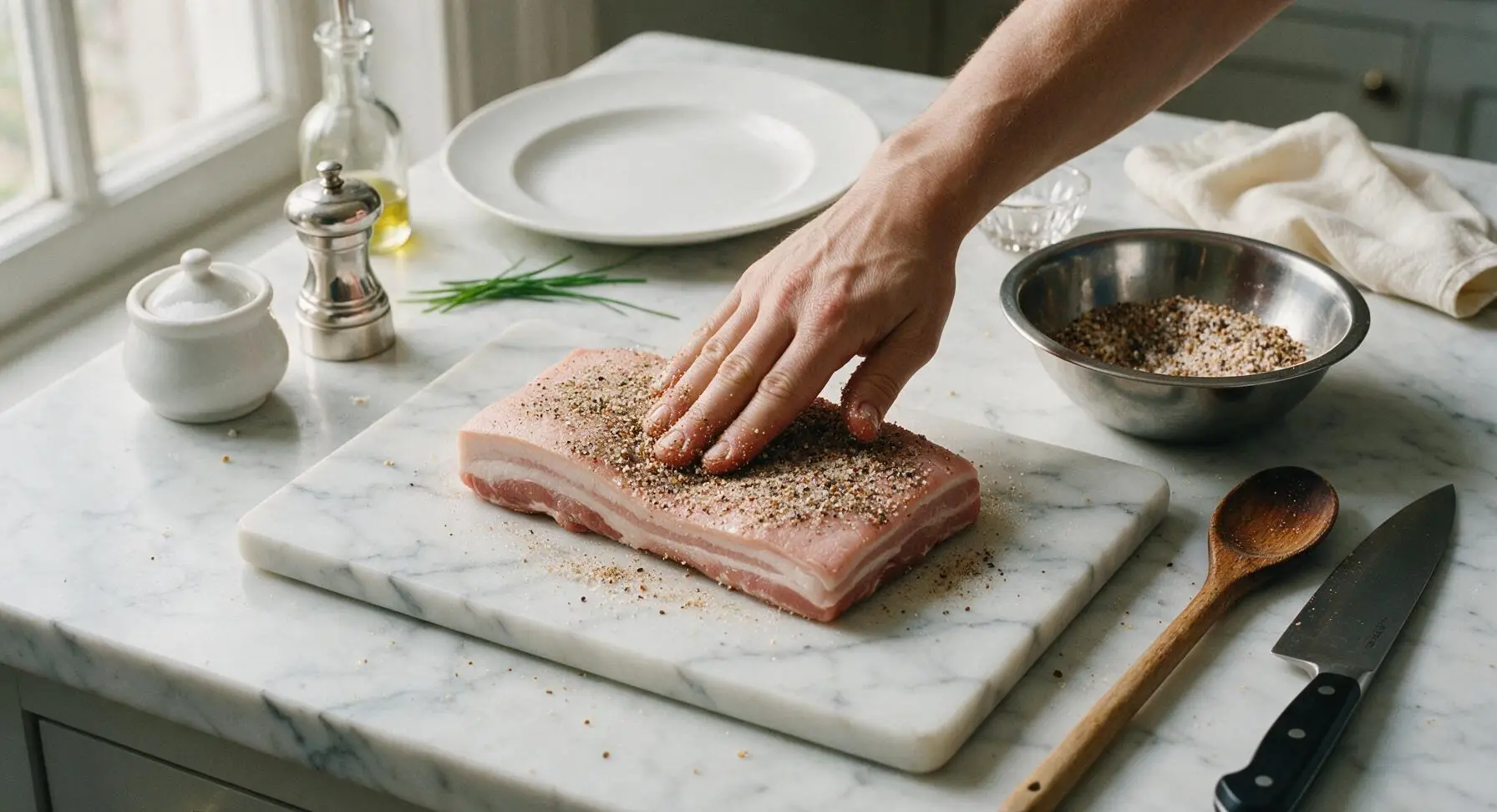
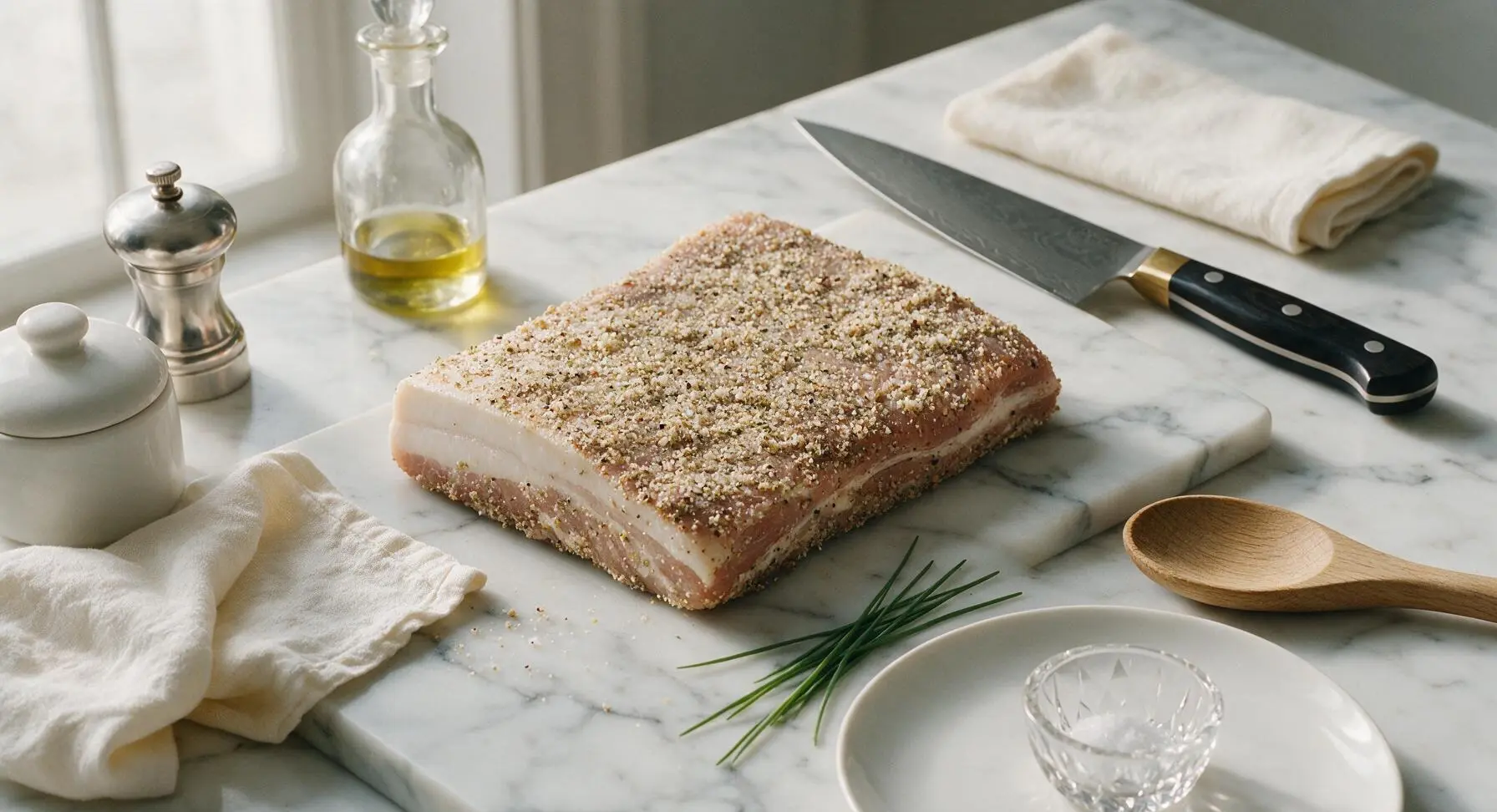
Sprinkle half of the dry cure mixture evenly over the skin side of the pork belly, rubbing firmly into every crevice and edge with your hands. Flip the belly over using the boning knife to lift the edge, then sprinkle and rub the remaining cure over the meat side and all four cut edges, ensuring no bare spots remain. The entire surface of the pork should be coated in a thin, even layer of the spice blend.
Step 3
step3:Rub Cure Evenly
Step 3
step3:Rub Cure Evenly
4

Pack for Curing

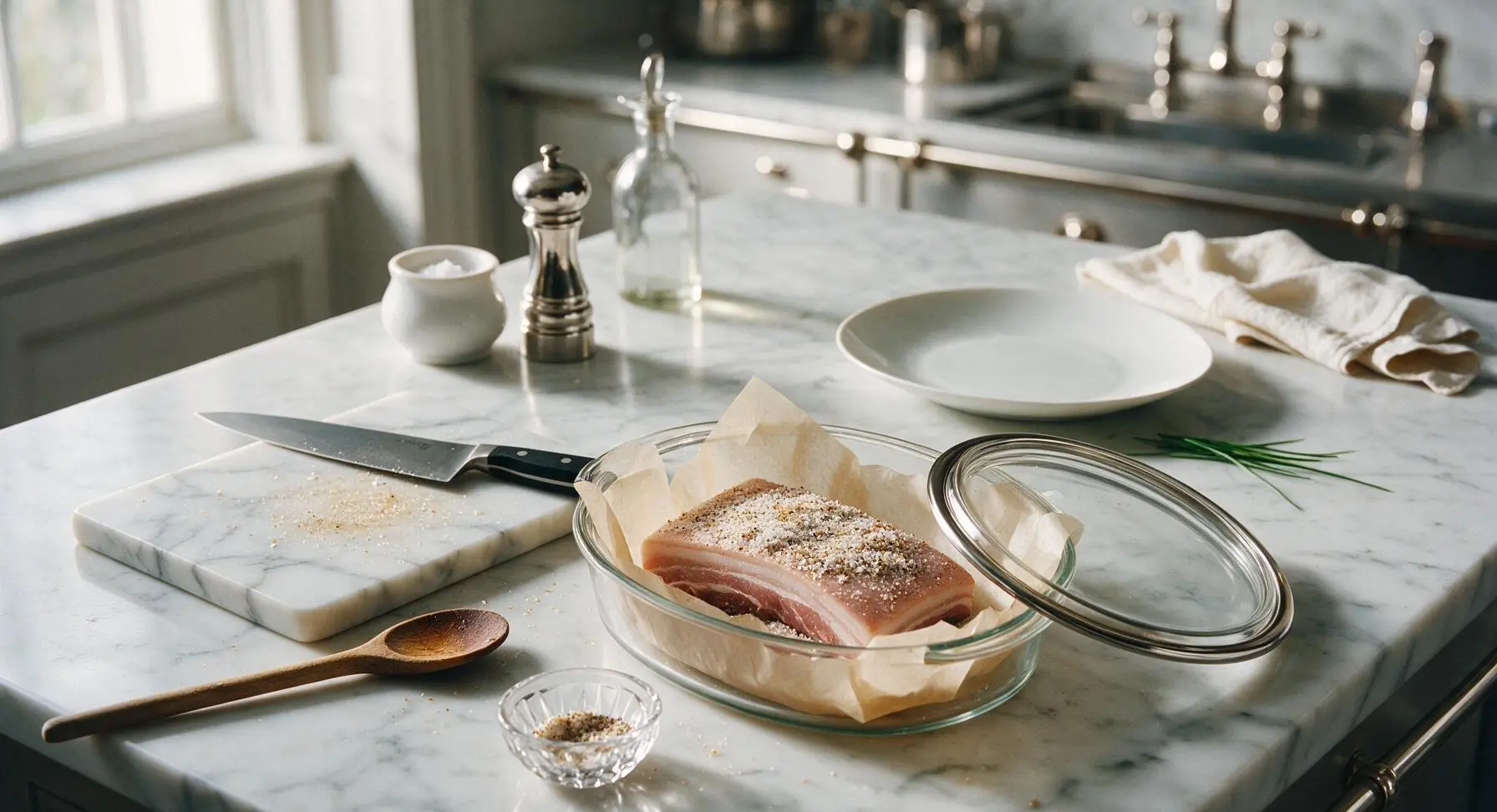
Line the bottom of the clear glass curing container with a sheet of unbleached parchment paper cut to size. Place the fully cure-coated pork belly skin-side down in the container, then pour any remaining cure from the mixing bowl over the top. Seal the container tightly with its glass lid, then place in the refrigerator set to 38-40°F (3-4°C).
Step 4
step4:Pack for Curing
5

Cure in Refrigerator

Leave the sealed pork belly in the refrigerator to cure for 7-10 days, flipping the belly over every 2 days to redistribute the liquid that will leach out of the meat (this is normal, as salt draws moisture out). The bacon is fully cured when the entire belly feels firm to the touch, with no soft, squishy spots remaining in the thickest sections.

Step 5
step5:Cure in Refrigerator
6

Rinse and Dry

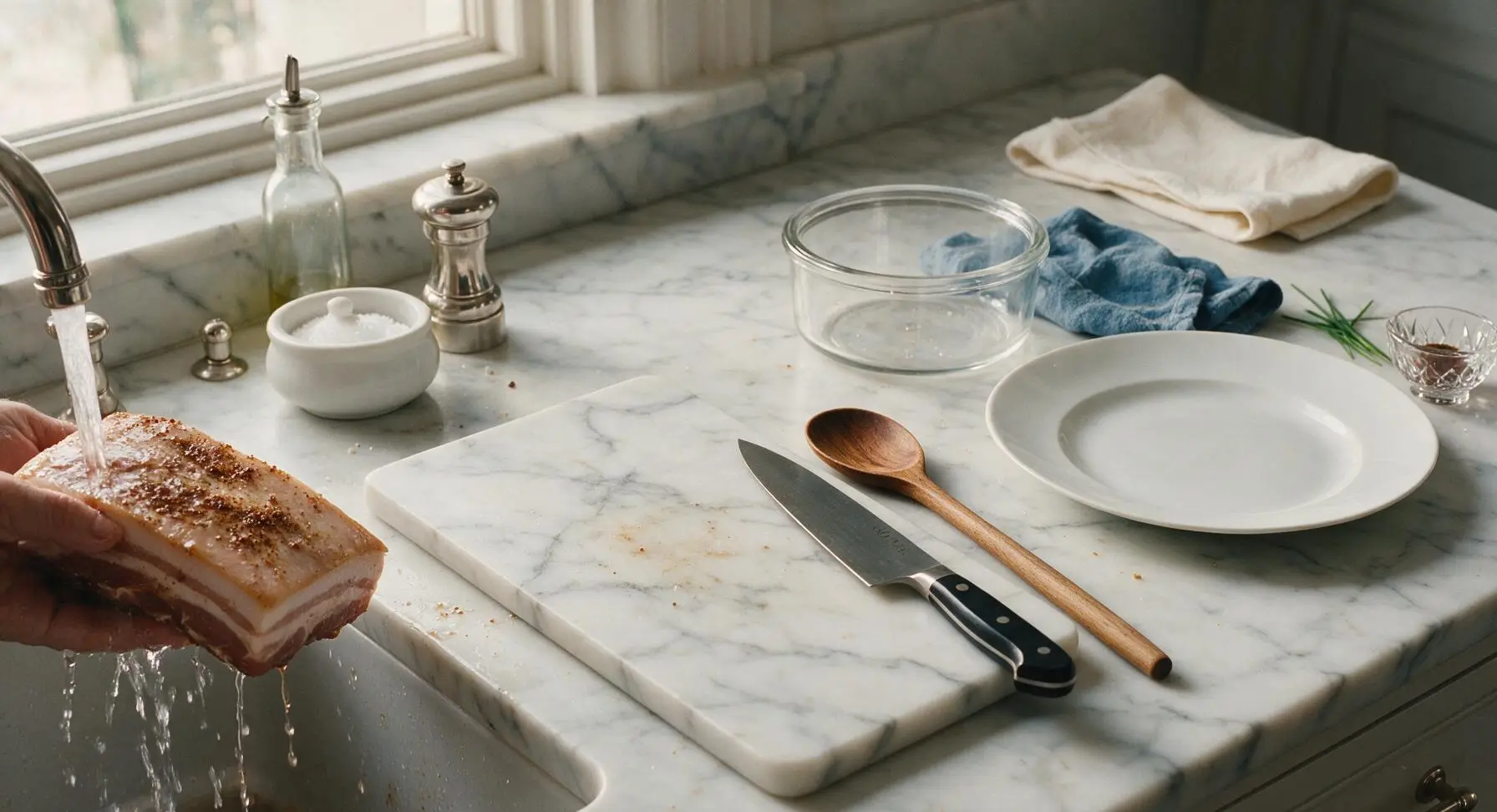
After curing is complete, remove the pork belly from the container, discard the parchment paper and accumulated liquid. Rinse the entire surface of the belly under cold running water to wash off all remaining cure, then pat completely dry with the faded blue linen towel. Place the belly back on the clean cutting board, and leave it uncovered on a wire rack in the refrigerator for 12-24 hours to form a dry, slightly tacky pellicle on the surface – this helps smoke and flavor adhere during cooking.
Step 6
step6:Rinse and Dry
Step 6
step6:Rinse and Dry
7

Slow Cook Bacon

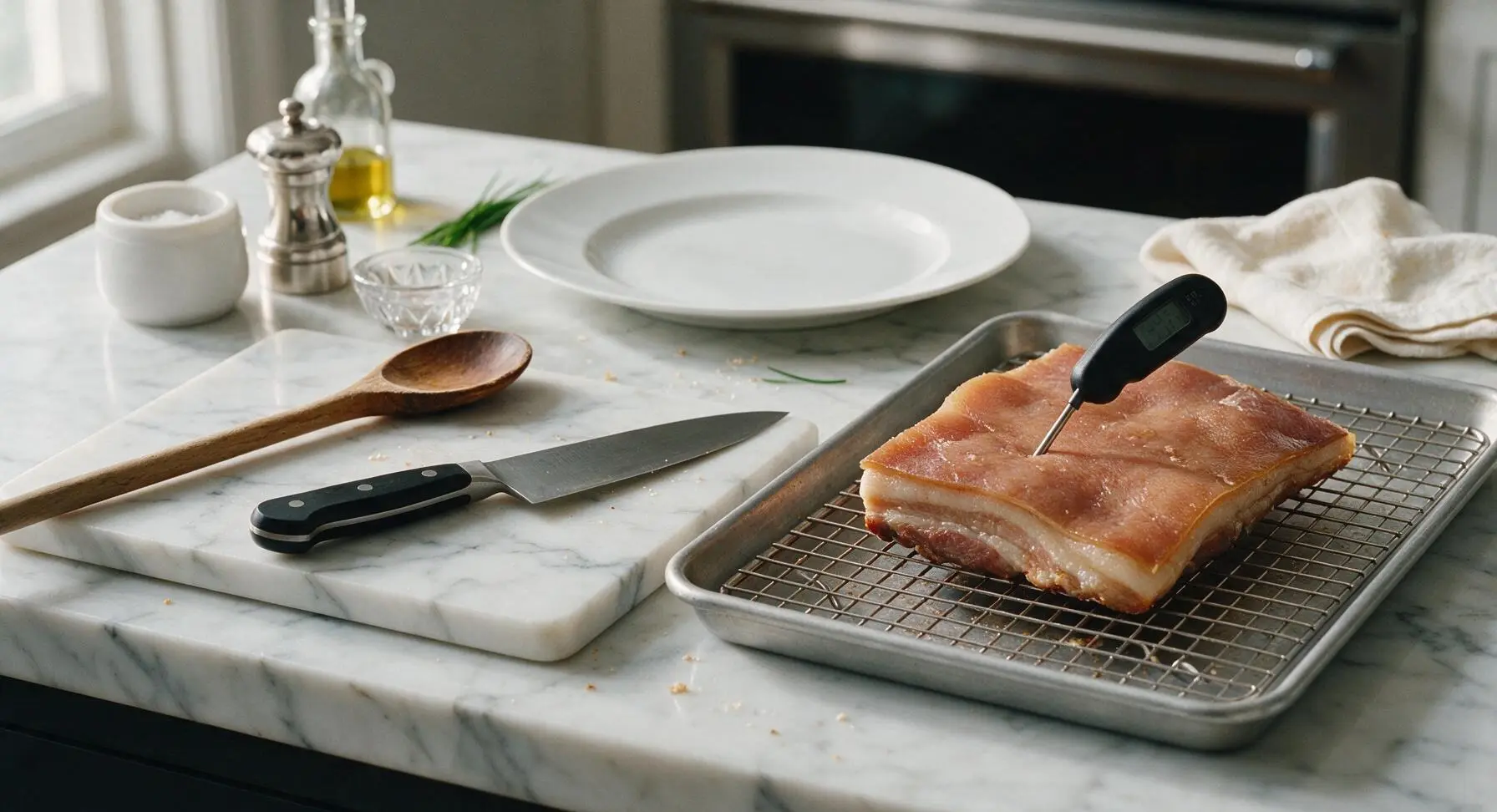
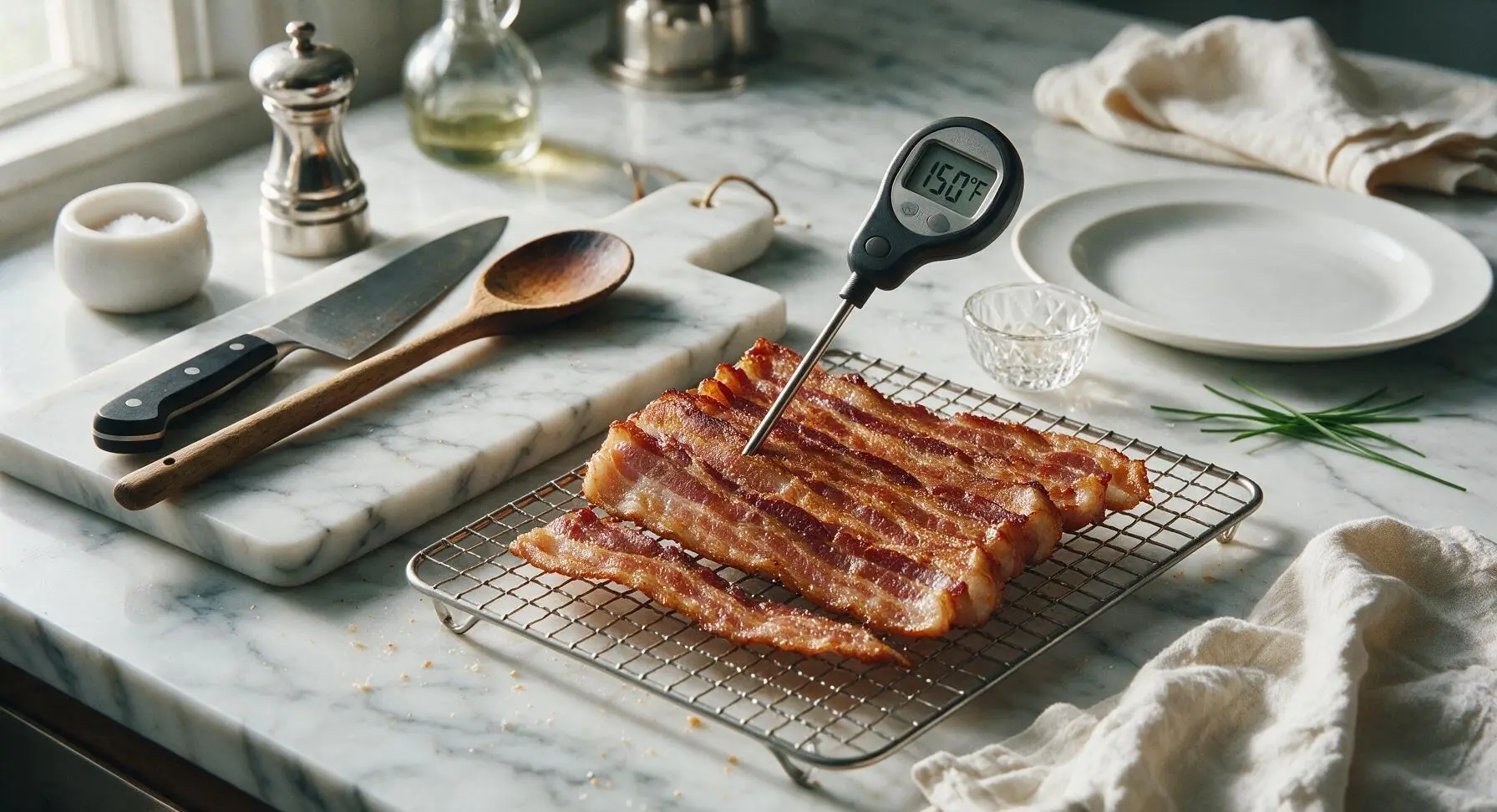
Preheat your oven or smoker to 200°F (93°C). Place the dried cured pork belly skin-side up on a wire rack set over a rimmed baking sheet. Cook until the internal temperature reaches 150°F (66°C) when measured with the instant-read thermometer in the thickest part of the belly, approximately 1.5-2 hours. If using a smoker, use apple or hickory wood for mild, classic smoky flavor.
Step 7
step7:Slow Cook Bacon
Step 7
step7:Slow Cook Bacon
8

Slice and Serve

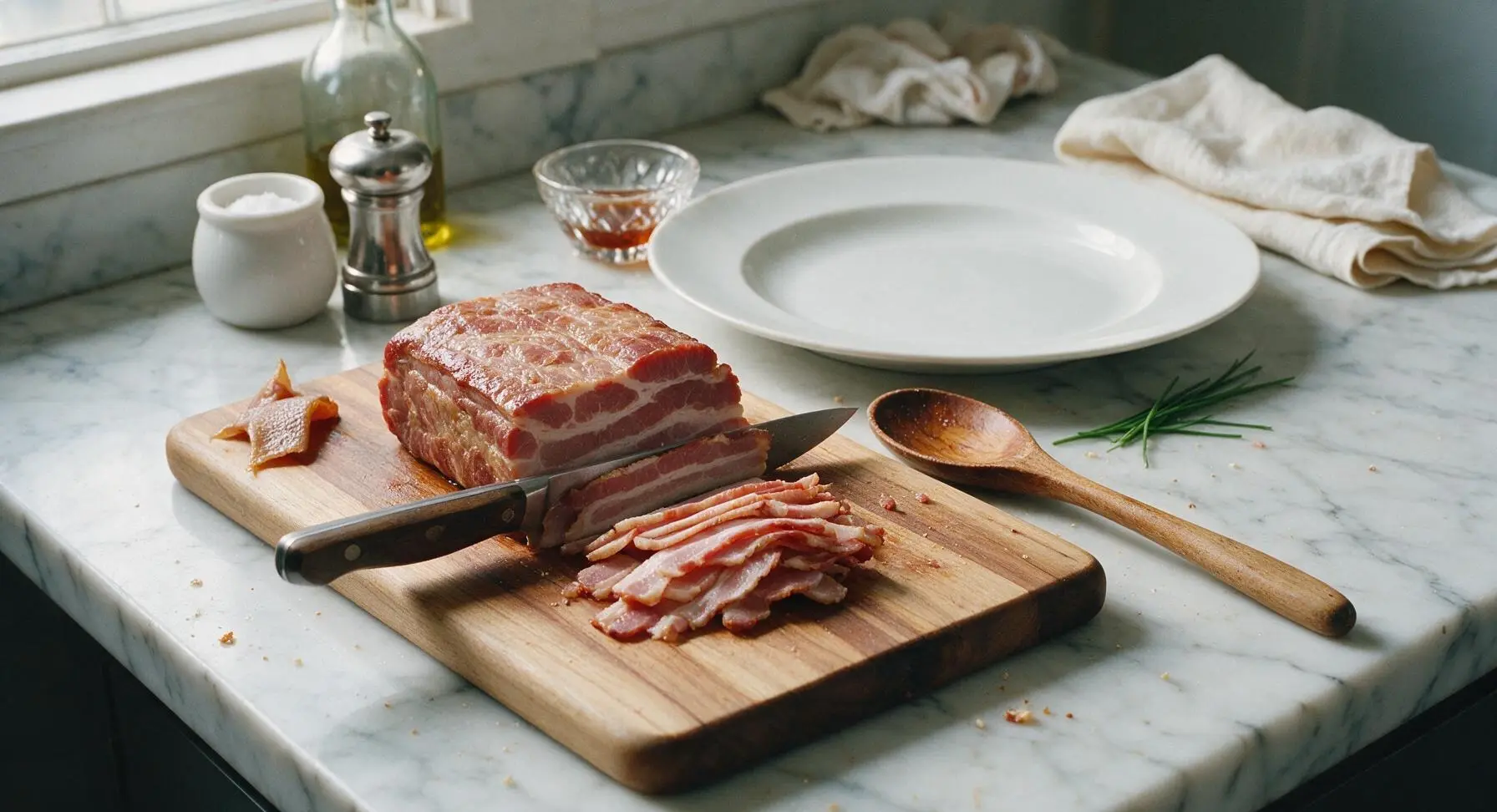
Let the cooked bacon cool completely for 1 hour at room temperature, then chill in the refrigerator for 2 hours for easier slicing. Use the 6-inch boning knife to peel off the tough outer skin layer, discarding it. Slice the chilled bacon block into even 3-5mm thick strips against the grain. To serve, cook slices in a dry skillet over medium heat for 1-2 minutes per side until edges are crisp and fat is rendered, then drain briefly before arranging on the serving plate.
Step 8
step8:Slice and Serve

Tips

1.Never skip pink curing salt #1: it prevents harmful botulism bacteria growth during the long cold curing process, and creates the signature rosy pink color and savory depth that regular salt alone cannot replicate. It is available at most butcher shops and specialty grocery stores.
2.Allow the rinsed bacon to air-dry uncovered in the fridge for 12-24 hours before cooking: this forms a tacky surface layer called a pellicle, which helps smoke adhere evenly (if smoking) and prevents steaming, leading to a richer, more flavorful crust on the finished bacon.
3.Chill the fully cooked bacon block for 2 hours before slicing: warm bacon is soft and will tear or slice unevenly, while chilled bacon cuts cleanly into uniform strips that cook evenly without falling apart in the pan.


✨ You May Also Like

Breakfast
🍜 United States

Crisp-edged, fluffy lard griddle cakes are a nostalgic homestyle staple, with rich savoriness from rendered lard, perfect topped with maple syrup or savory gravy.

⏱️ 25 minuteBreakfast ★ 4.8
Breakfast
🍜 United States

Flaky, buttery homemade buttermilk biscuits smothered in creamy, peppery pork sausage gravy: a beloved, hearty Southern American comfort food classic.

⏱️ 35 minuteBreakfast ★ 4.8
Breakfast
🍜 United States

Golden, custardy brioche stuffed with sweet cream cheese and fresh berries, pan-fried to crisp perfection. An indulgent, cozy breakfast perfect for slow weekend mornings.

⏱️ 30 minuteBreakfast ★ 4.7
Breakfast
🍜 United States

Flaky, buttery Southern-style biscuits stuffed with savory salty country ham, a portable, satisfying classic perfect for casual on-the-go meals.

⏱️ 25 minuteBreakfast ★ 4.8
Breakfast
🍜 United States

Iconic puffy baked pancake popularized in Seattle, with crisp golden edges and soft custardy center, served warm with classic sweet toppings.

⏱️ 35 minuteBreakfast ★ 4.6
Breakfast
🍜 United States

Fluffy, golden pancakes studded with juicy peak-summer mixed berries, drizzled with maple syrup for a bright, comforting, crowd-pleasing family breakfast.

⏱️ 25 minuteBreakfast ★ 4.7

homemade bacon dry cure recipe:Frequently Asked Questions

1.Do I really need to use pink curing salt #1 for this recipe? ▾
Absolutely—pink curing salt #1 (Prague powder) is non-negotiable for safe, classic-tasting bacon. It prevents dangerous botulism growth during the long, cool curing process, locks in that signature pink bacon hue, and stops off-flavors from developing. Always measure it exactly as directed, and never swap it for regular pink Himalayan table salt.
2.Can I use skinless pork belly if I can’t find skin-on? ▾
You can, but skin-on pork belly delivers far better results. The skin acts as a natural barrier to prevent over-salting of the meat, holds shape during curing and cooking, and crisps up beautifully if left on for slices. If you use skinless, cut total cure time by 1-2 days to avoid overly salty bacon.
3.How long do I need to leave the dry cure on the pork belly? ▾
For a standard 3-4 pound skin-on pork belly, plan for 7-10 days of curing in the refrigerator. You’ll know it’s ready when the entire belly feels firm to the touch, with no squishy raw spots in the thickest sections. Flip the belly every 2 days to redistribute cure for even seasoning.
4.Do I have to rinse the cure off before cooking or smoking the bacon? ▾
Yes, always rinse all the dry cure mixture off the pork belly surface under cool running water after curing. If you skip this step, residual salt, sugar, and cracked black pepper will burn and turn unpleasantly bitter during low-heat cooking, and your final bacon will be far too salty to enjoy.
5.Can I substitute table salt for coarse kosher salt in the cure? ▾
I don’t recommend it. Table salt is much denser and finer than kosher salt, so swapping it 1:1 will result in drastically over-salted, inedible bacon. If you must use a substitute, use non-iodized fine sea salt, and cut the total salt amount by 25% to match kosher salt’s salinity level.
6.What purpose does light brown sugar serve in the dry cure? ▾
Light brown sugar does two key jobs in this cure: first, it balances sharp saltiness to create that classic savory-sweet bacon flavor everyone loves. Second, it helps the bacon surface develop a gorgeous caramelized golden crust when cooked, and cuts harsh metallic notes from the curing salt.
7.How long will finished homemade dry-cured bacon last in storage? ▾
Once you’ve cured, rinsed, and cooked/smoked your bacon to a safe internal temp of 150°F, it will keep well-wrapped in the refrigerator for up to 2 weeks. You can also slice it, portion it into freezer bags, and freeze it for up to 3 months for quick, easy breakfasts whenever you want.
8.Can I make this bacon if I don’t own a smoker? ▾
You absolutely don’t need a fancy smoker to make great homemade bacon. After curing and rinsing, roast the pork belly on a wire rack set over a baking sheet in a 200°F oven until it hits 150°F internal temp. For smoky flavor without a smoker, add 1 teaspoon of smoked paprika to the cure mix.
9.How thick should I slice my finished homemade bacon? ▾
That’s totally up to your preference, but I recommend slicing it 1/8 to 1/4-inch thick for the most versatile results. Thinner slices get ultra crispy for sandwiches or salad toppings, while thicker cuts hold up for hearty breakfast plates. Always slice partially frozen bacon for clean, even cuts.
10.Is it normal for liquid to pool in the cure container in the fridge? ▾
That’s totally normal! The salt and sugar in the cure draw moisture out of the pork belly through osmosis, creating a seasoned wet brine at the bottom of your container. You don’t need to dump this liquid—just flip the belly every 2 days so all sides get equal contact with it.
11.Can I add extra seasonings to the base cure mix? ▾
Absolutely, this base recipe is super customizable. Try adding crushed red pepper for spicy bacon, maple powder for extra sweetness, garlic powder, dried thyme, or even a splash of bourbon mixed into the cure. Just never increase the total amount of salt or pink curing salt, no matter what add-ins you use.
12.How do I tell if my curing bacon has gone bad before cooking? ▾
Trust your senses: if the pork belly develops a slimy texture, sour, rancid, or putrid odor, or has fuzzy green or black mold growing on the surface, throw it out immediately. Properly cured bacon kept at a consistent fridge temp below 40°F will almost never spoil during the 7-10 day cure window.
13.What kind of container should I use to cure the pork belly? ▾
Use a non-reactive container, like a glass baking dish, food-grade plastic tub, or stainless steel pan, to hold the belly while it cures. Avoid uncoated aluminum containers, which can react with the salt in the cure and give your bacon a weird metallic off-flavor. Loosely cover the top for slight air circulation.
14.Why is my homemade bacon saltier than store-bought bacon? ▾
Over-salting usually happens for one of three reasons: you used dense table salt instead of kosher salt, you left the cure on for too long, or you didn’t rinse the cure off completely after curing. Next time, stick to the measured kosher salt amount, follow the recommended cure time, and rinse thoroughly.
15.Can I use dark brown sugar instead of light brown sugar in the cure? ▾
You can absolutely swap in dark brown sugar if that’s what you have on hand. It has a higher molasses content, so it will give your bacon a deeper, slightly more robust, toasty sweet flavor compared to the mild caramel notes of light brown sugar. It won’t impact curing safety or texture at all.
16.Do I need to weigh down the pork belly while it cures? ▾
You don’t have to, but placing a small weight (like a second baking dish with a couple canned goods on top) on the belly helps it cure more evenly, keeps it flat for easier slicing later, and ensures consistent contact between the meat and cure. If you skip the weight, just be extra diligent about flipping every 48 hours.

Comments (3)

3 days ago

OMG, this dry cure is a total game changer! I’ve been buying overpriced artisanal bacon from the local butcher for years because every other homemade cure I tried came out either too salty or totally bland. I followed the recipe exactly, let the cure sit for 7 days in the fridge, then smoked the belly over apple wood, and my entire family went crazy for it at Sunday brunch. My kids even asked for extra bacon in their school lunch meal prep this week! SO good, I will never go back to store bought bacon again.

2 days ago

Wait, did you rinse the cure off before smoking? I’m nervous about leaving it on too long and making it inedibly salty, this is my first time curing meat at home!

1 day ago

Such a great question, Liz! You’ll want to rinse all the cure off thoroughly under cold water after the full curing period, pat the pork belly completely dry, and let it rest uncovered on a wire rack in the fridge for 12-24 hours to form a tacky pellicle before cooking or smoking. That step keeps the salt level perfectly balanced and helps the smoke stick evenly for that classic smoky bacon flavor. Jake, that’s exactly the right process — we’re so stoked your family loved the batch!

1 week ago

Tried this last weekend for a potluck at my neighbor’s house, and people were begging me for the recipe before I even set the platter down! The only swap I made was adding a tiny pinch of cayenne for a little subtle heat, and it paired so well with the maple and black pepper in the base cure. Difficulty was totally manageable even as someone who’s only dabbled in charcuterie a handful of times, 10/10.

5 days ago

Love that cayenne addition, Sarah! That little hint of heat pairs so perfectly with the sweet and savory cure base. We’re thrilled it was such a hit at your potluck — that’s exactly what we love to hear!

2 hours ago

So stoked to try this for my dad’s birthday dinner next weekend! Quick question before I dive in — the listed cook time is 2 hours, but I’ve seen other bacon cure recipes say you have to let the cure sit on the pork belly for 5-7 days in the fridge first? Did I skip over that section? Don’t want to rush it and ruin the batch!