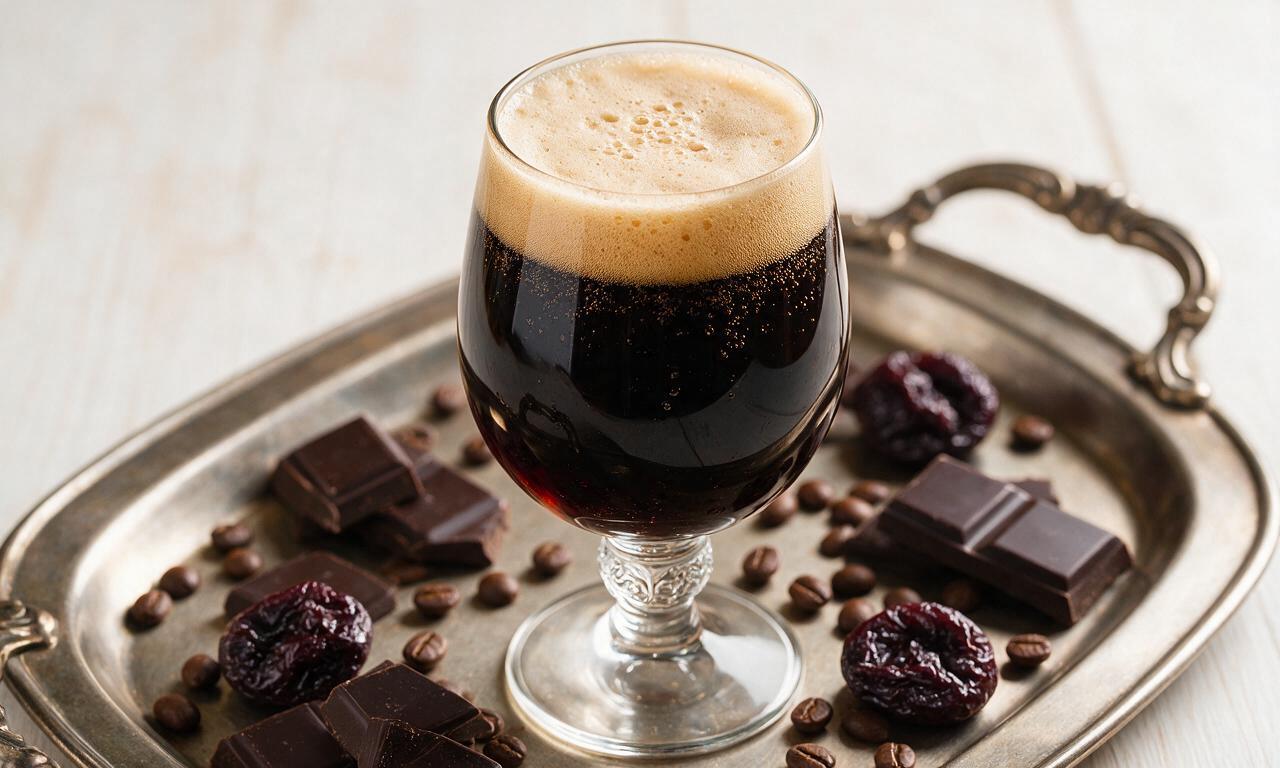
Imperial Stout

Imperial Stout
⏱️ cook time 3 hours active, 4 weeks fermentation/conditioning
🍽️ servings 10
⚡ Difficulty hard

intro

Rich, roasty, high-ABV Russian imperial stout with deep coffee, dark chocolate, and dried fruit notes, a bold sipping beer perfect for cold winter days.

Ingredients

Crushed 2-row pale malt 900 grams
Crushed roasted barley 150 grams
Crushed chocolate malt 100 grams
Crushed 60L crystal malt 50 grams
East Kent Goldings hop pellets 28 grams
Dark brown sugar 113 grams (1/2 cup)
English ale yeast (Wyeast 1098 or equivalent) 1 packet (11 grams)
Distilled water 6 liters
Corn sugar (for bottle carbonation) 40 grams (10 teaspoons)

Steps

1

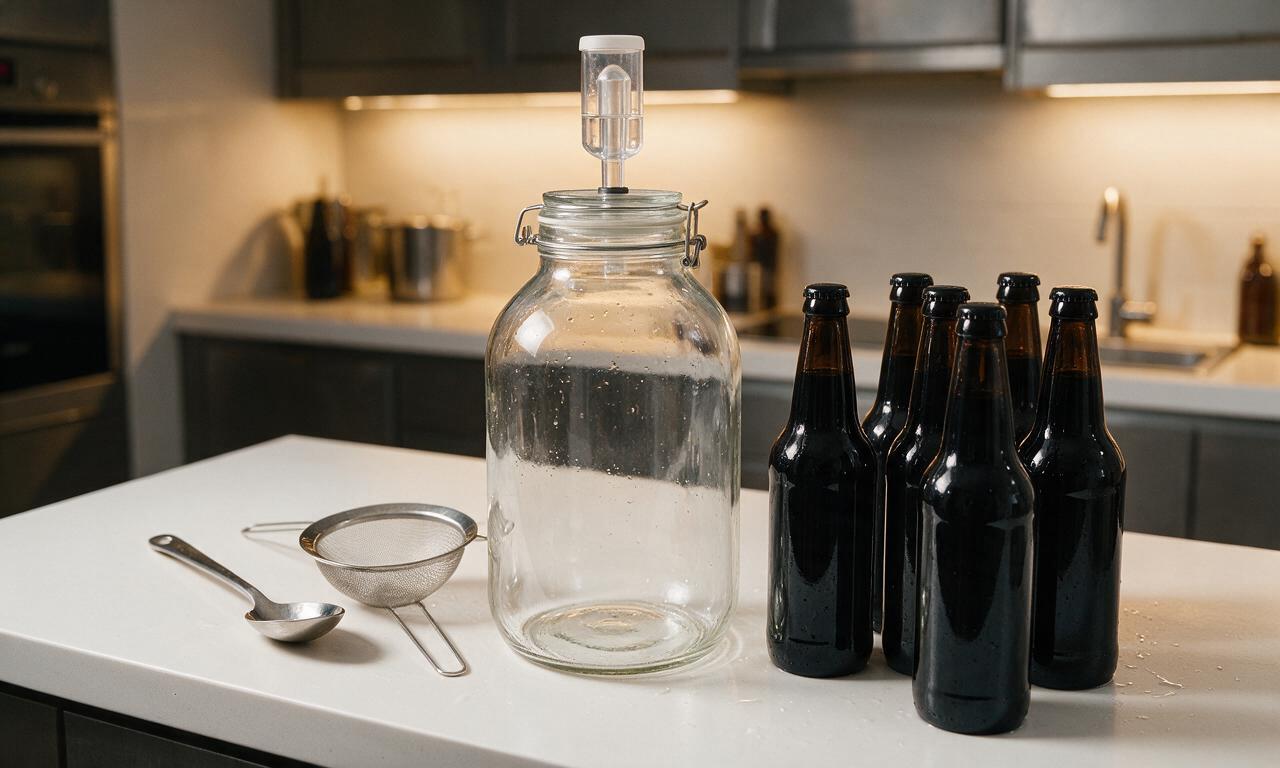
First, fully sanitize all brewing equipment (1-gallon glass fermentation jug, rubber stopper, airlock, long stirring spoon, fine-mesh strainer, siphon, thermometer, bottles, bottle caps) using no-rinse food-grade brewing sanitizer, mixed at a ratio of 1 tablespoon sanitizer per 4 liters of cool water. Ensure all surfaces contact the sanitizer for at least 1 full minute to kill spoilage bacteria, then drain excess solution without rinsing.
Step 1
step1:
2

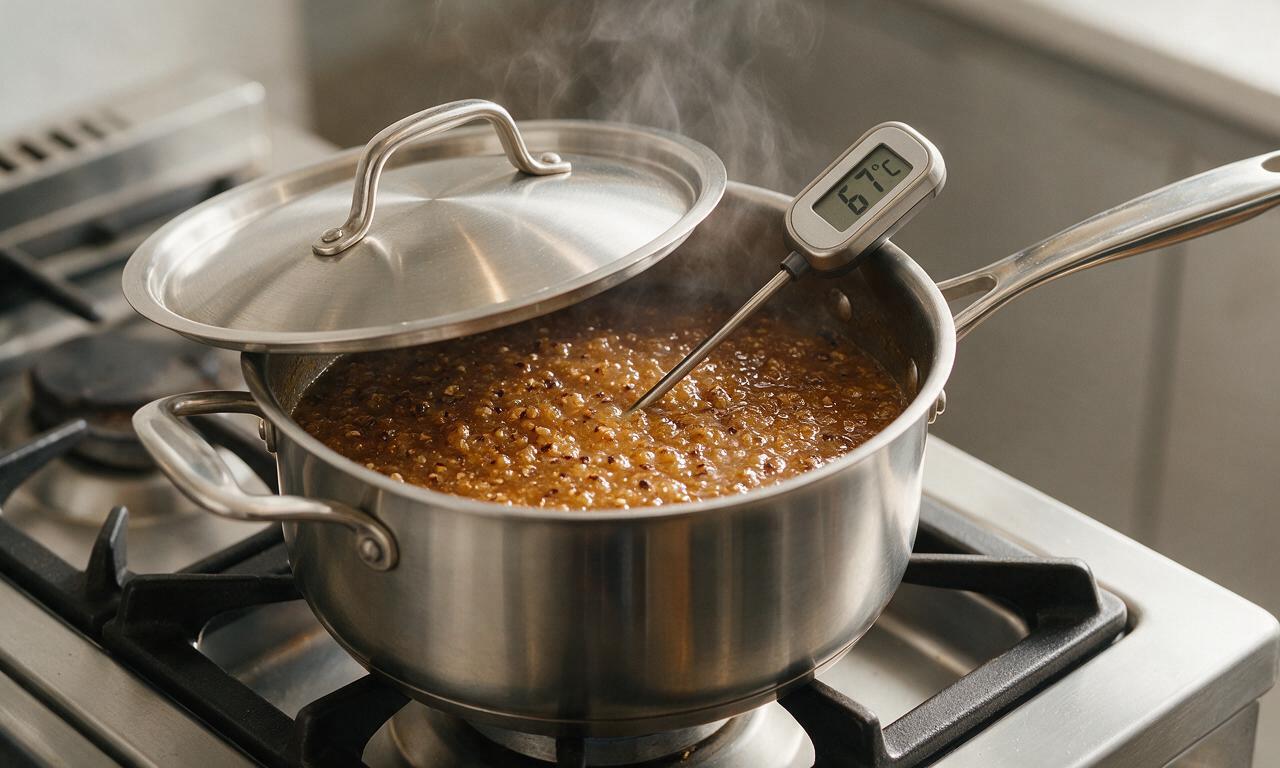
Heat 3.8 liters of distilled water in a large 8-liter stainless steel stockpot over medium-low heat until it reaches a steady 67°C (153°F), monitored with a clip-on digital thermometer. Add all crushed grains (2-row pale malt, roasted barley, chocolate malt, crystal malt) to the heated water, stirring thoroughly to eliminate dry clumps. Hold the mash temperature steady between 65-68°C (149-154°F) for 60 minutes, adjusting stove heat to low if temperature climbs, and covering the pot between temperature checks.
Step 2
step2:
3

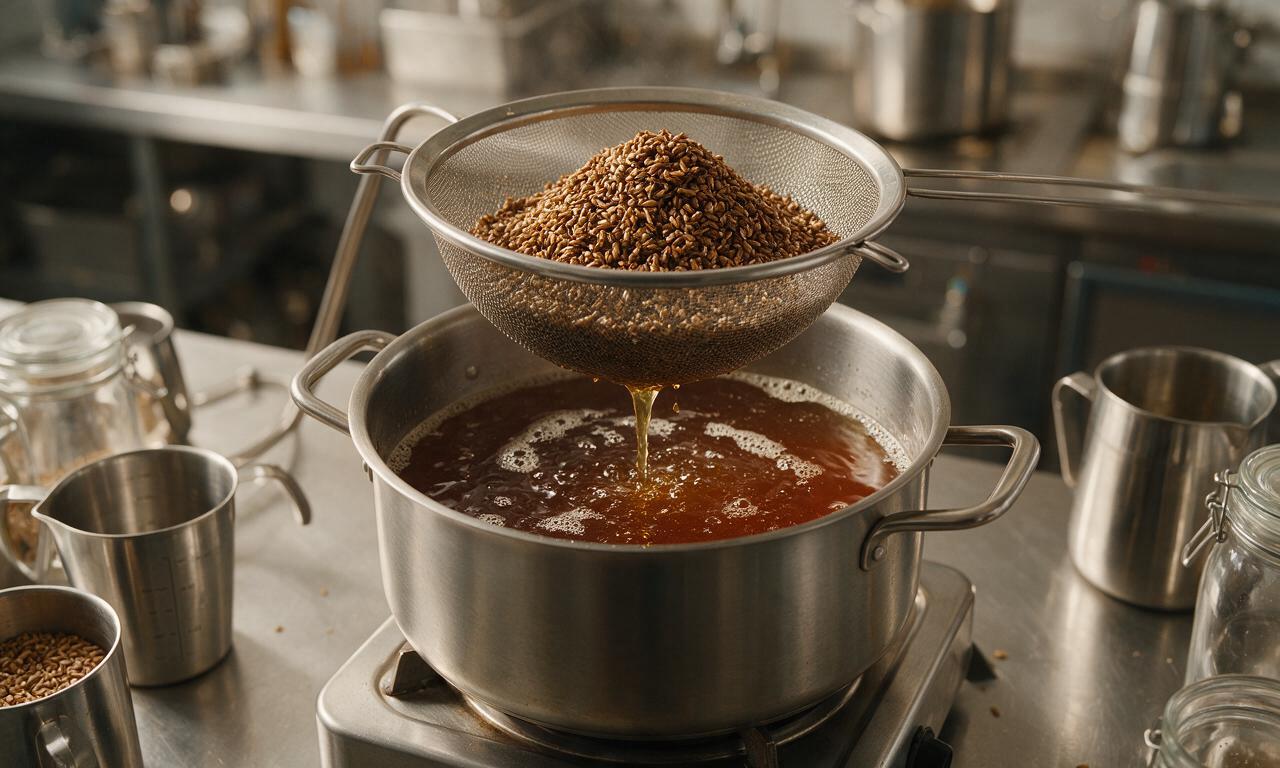
After the 60-minute mash rest, pour the grain and liquid mixture through a fine-mesh strainer into a second clean 8-liter stockpot to separate the sweet wort from spent grains. Slowly pour 2.2 liters of 77°C (170°F) distilled water over the grain bed in the strainer to rinse residual sugars (sparging), then discard the spent grains. Heat the collected wort over medium-high heat until it reaches a gentle rolling boil, then set a timer for 60 minutes of boil time.
Step 3
step3:
4

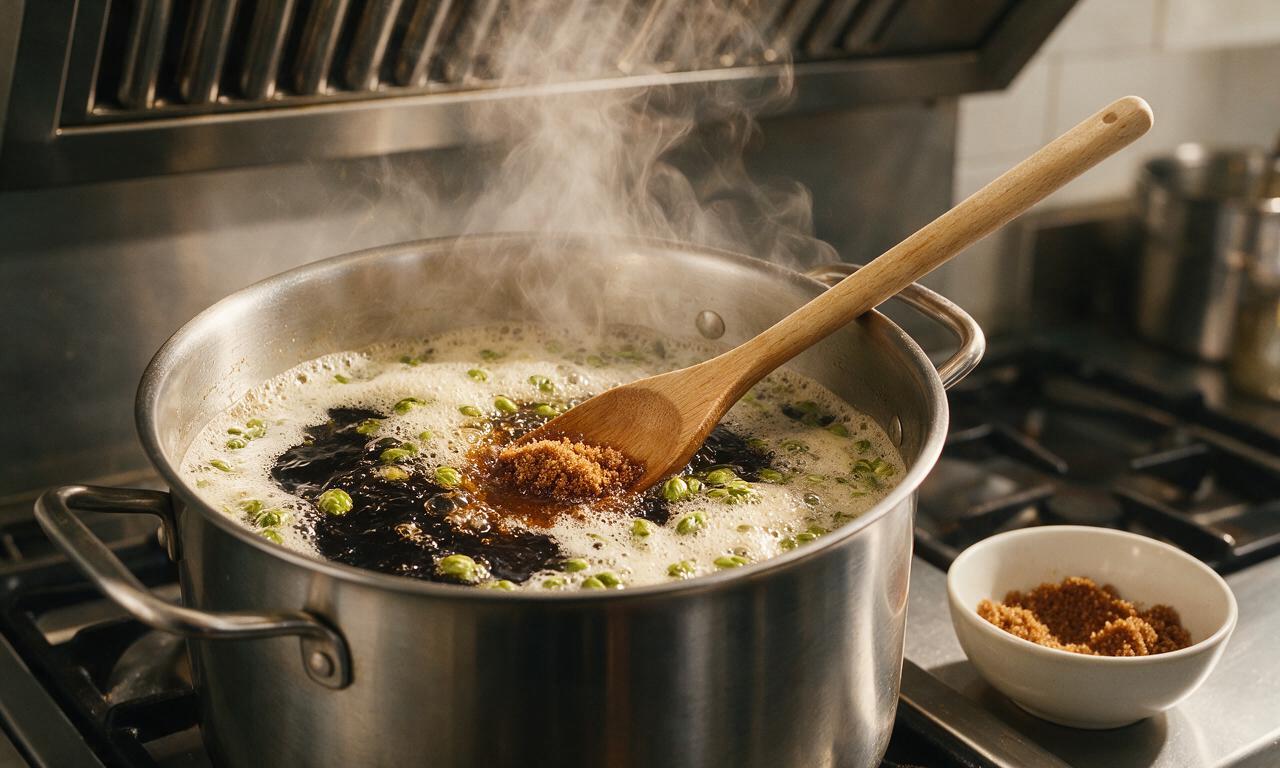
Once the wort maintains a steady rolling boil, add 14 grams of East Kent Goldings hops at the 0-minute mark (start of boil) to provide balanced bitterness. When 10 minutes remain on the 60-minute boil timer, add the remaining 14 grams of East Kent Goldings hops and all 113 grams (1/2 cup) of dark brown sugar, stirring constantly for 1 minute until the sugar fully dissolves. Adjust heat to medium to prevent the wort from boiling over the pot edges.
Step 4
step4:
5

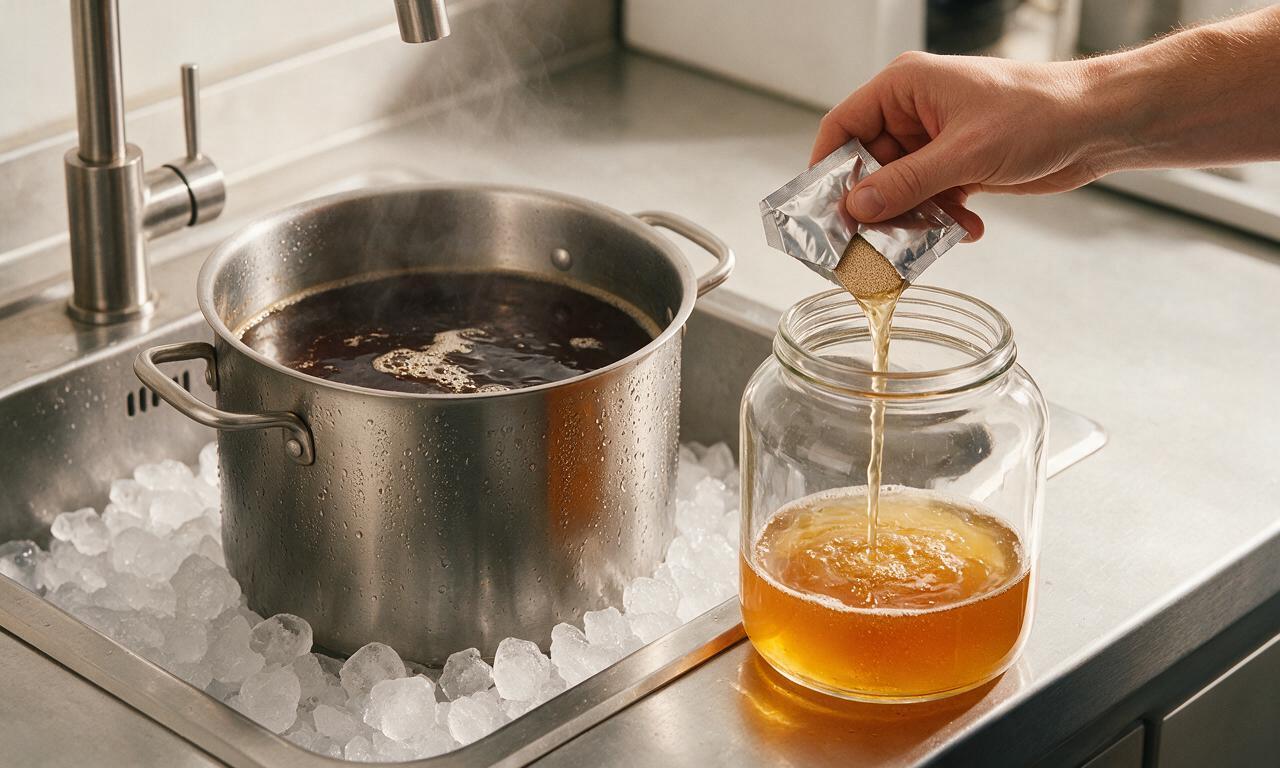
When the 60-minute boil completes, immediately move the pot to a clean kitchen sink filled with ice and cold water to create an ice bath. Chill the wort to exactly 20°C (68°F), which takes approximately 20 minutes, stirring occasionally to speed cooling. Pour the cooled wort into the sanitized 1-gallon fermentation jug, seal the jug tightly, and shake vigorously for 30 seconds to aerate the wort for healthy yeast. Open the jug, sprinkle the full 11-gram packet of English ale yeast on the wort surface, then seal with the sanitized stopper and airlock filled halfway with sanitizer solution.
Step 5
step5:
6

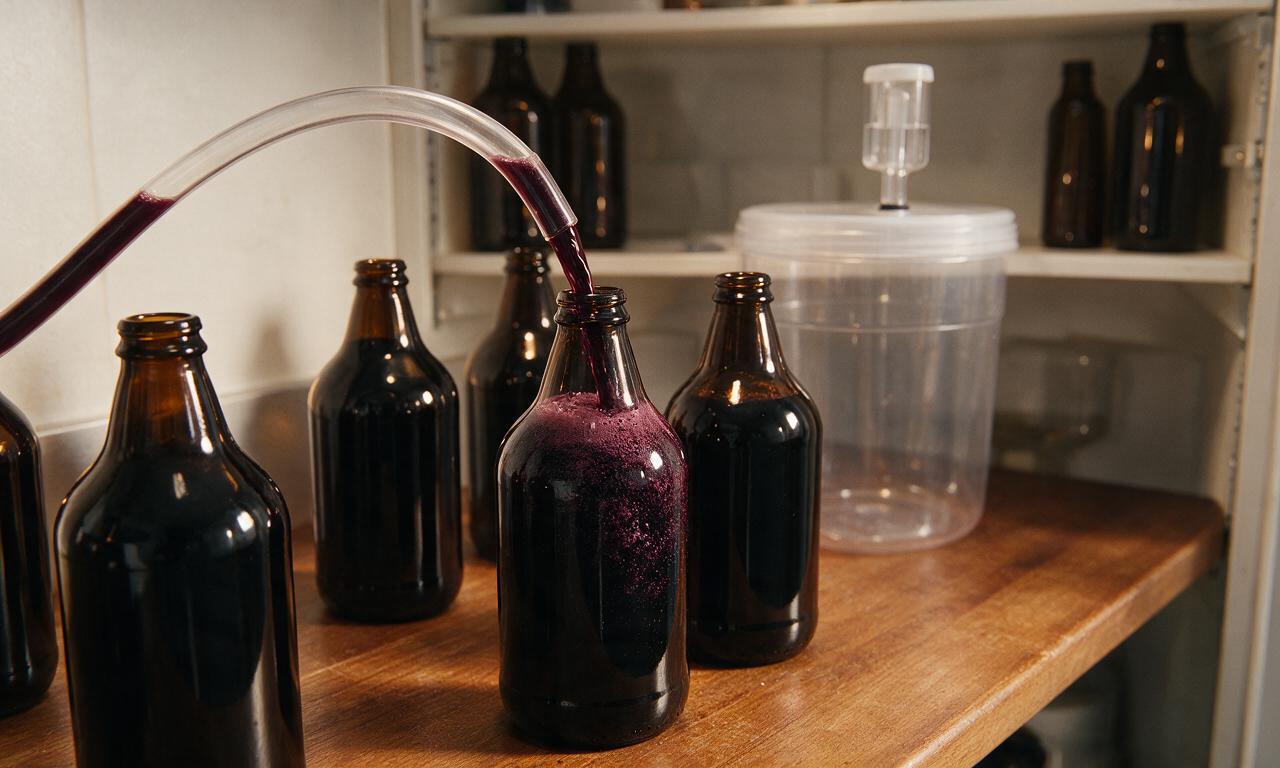
Move the sealed fermentation jug to a dark, temperature-stable closet or cabinet held between 18-21°C (65-70°F) and leave it undisturbed for 2 weeks, until bubbling in the airlock stops completely to signal finished primary fermentation. Siphon the clear beer off the sediment at the bottom of the jug into sanitized glass bottles, adding 1 teaspoon (4 grams) of corn sugar to each 355ml (12oz) bottle to create natural carbonation, then cap bottles tightly. Store sealed bottles in the same dark, cool spot for an additional 2 weeks to condition and carbonate, then chill to 7°C (45°F) before serving.
Step 6
step6:

Tips

1.Sanitize every piece of equipment that touches cooled, post-boil wort; even small amounts of bacteria or leftover soap can create sour, undrinkable beer.
2.Hold mash and fermentation temperatures steady: mash over 70°C (158°F) creates overly sweet, thick beer, while fermentation over 24°C (75°F) causes harsh, solvent-like off-flavors.
3.Wait the full 2-week bottle conditioning period before opening; early pours are flat and harsh, while full conditioning creates smooth, carbonated, well-balanced stout.
✨ You May Also Like

Drinks & Beverages
🍜 Mexico

A bright, balanced tequila-based cocktail with zesty fresh lime, smooth orange liqueur, and a signature salt rim, perfect for warm summer sipping.

⏱️ 5 minutesDrinks & Beverages ★ 4.7
Drinks & Beverages
🍜 United States

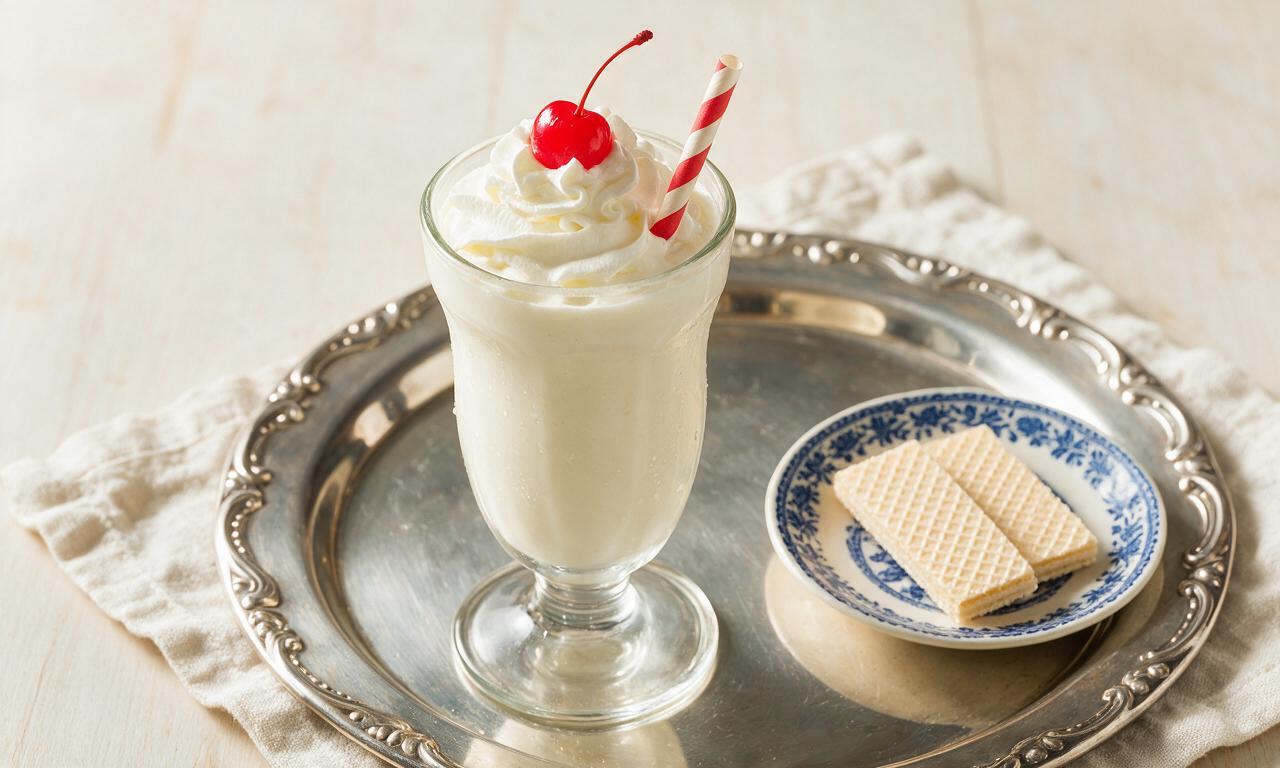
Thick, creamy, nostalgic classic vanilla milkshake with a rich, smooth texture, topped with whipped cream and a cherry for cool, sweet refreshment.

⏱️ 5 minutesDrinks & Beverages ★ 4.6
Drinks & Beverages
🍜 United States

A bright, golden strong ale with fruity banana-clove notes, subtle hop spice, and soft carbonation, brewed in classic Trappist Tripel tradition.

⏱️ 2 hours aDrinks & Beverages ★ 4.7
Drinks & Beverages
🍜 United States

A frothy, nostalgic American soda fountain treat pairing bubbly cold root beer with creamy vanilla ice cream, perfect for cooling down at warm weather gatherings.

⏱️ 20 minuteDrinks & Beverages ★ 4.9
Drinks & Beverages
🍜 United States

Tart, funky, effervescent American Wild Ale is a complex fruity craft beer brewed with wild yeast, delivering bright, zesty notes perfect for warm-weather sipping.

⏱️ 2 hours aDrinks & Beverages ★ 4.5
Drinks & Beverages
🍜 United States

Bright, bubbly copycat of the iconic American caramel cola, balanced with citrus and warm spice, perfect for sipping ice-cold on hot days.

⏱️ 15 minuteDrinks & Beverages ★ 4.8

Imperial Stout:Frequently Asked Questions

1.What final ABV can I expect from this homemade Russian Imperial Stout?
You’ll typically land between 9–12% ABV with this grain bill, which lines up with classic imperial stout profiles. Take a hydrometer reading right before pitching yeast, then another once fermentation holds steady for 3 consecutive days, to calculate your exact ABV—small mashing or temperature shifts can nudge that number slightly.
2.Do I need special professional equipment to brew this stout at home?
You don’t need fancy pro gear to pull this off! A basic 5-gallon homebrew setup with a boil kettle, fermenter, airlock, hydrometer, and no-rinse brewer’s sanitizer is all you require. Just make sure every surface that touches the beer is fully sanitized first, since high-grain, high-ABV beers are extra vulnerable to off-flavor-causing bacteria.
3.What flavor does each crushed malt in the recipe contribute to the finished beer?
The crushed 2-row pale malt forms the smooth, malty, boozy backbone of the stout, while crushed roasted barley brings that bold, rich coffee note the style is known for. Chocolate malt adds deep, bittersweet dark chocolate character, and 60L crystal malt lends subtle dried fruit and soft caramel notes that balance roasty bite.
4.When during the brew process should I add the East Kent Goldings hop pellets?
Add 70% of your East Kent Goldings pellets at the start of your 60-minute boil to deliver subtle, earthy bittering that cuts through the heavy malt sweetness. Save the remaining 30% to add in the last 10–15 minutes of the boil to pull out delicate, floral, slightly honeyed hop notes without adding harsh, scratchy bitterness.
5.How long do I need to ferment this stout before it’s ready to drink?
Plan for a minimum of 3 weeks of primary fermentation at a steady 65–70°F if using a clean American ale yeast, followed by 2–3 months of bottle conditioning in a cool, dark spot. Unlike lighter beers, this high-ABV stout gets dramatically smoother with age, so don’t rush the process if you can wait a little longer.
6.Can I adjust the roast level if I don’t love super bitter, coffee-heavy stouts?
Absolutely! If you want a smoother, less astringent roast profile, cut the roasted barley amount by 25% and swap in an extra 2 ounces of chocolate malt instead. Avoid steeping roasted grains for longer than 60 minutes during mashing, too—over-extracting those roasted malts is what leads to harsh, ashy off-flavors.
7.What yeast strain works best for this specific stout recipe?
A clean, high-alcohol-tolerant American ale yeast like US-05 is a foolproof pick, as it won’t compete with the malt and hop flavors. If you want extra dried fruit depth, go for a British ale yeast like S-04, just make sure whatever strain you pick tolerates up to 12% ABV so it doesn’t stall out mid-fermentation.
8.Why is my starting gravity reading lower than the recipe’s target?
A low starting gravity almost always traces back to a mashing issue, usually if your mash temperature crept over 158°F or you didn’t hold the mash long enough to convert all grain starches to sugar. On your next batch, hold mash steady at 152–155°F for 60 minutes to get full sugar conversion from the crushed malt bill.
9.Do I need to do a secondary fermentation for this stout?
Secondary fermentation isn’t strictly required, but it does help create a clearer, smoother final beer if you plan to age it for 6+ months. If you skip secondary, just make sure you don’t leave the stout on primary yeast trub for longer than 4 weeks, to avoid soapy or yeasty off-flavors from breaking down old yeast.
10.How much priming sugar do I need for bottle conditioning this stout?
Use about 3/4 cup of corn sugar for a 5-gallon batch to get soft, classic stout carbonation levels—around 2 to 2.25 volumes of CO2. Don’t overdo the priming sugar, though! The high residual sugar in this stout can lead to over-carbonated, gushing bottles if you add too much or bottle before fermentation fully finishes.
11.Can I add extra flavor add-ins like coffee or vanilla to this recipe?
Definitely! This bold malt base pairs beautifully with extra flavor add-ins—try adding 4 ounces of cold-brewed dark roast coffee or 2 split, sanitized vanilla beans during the last 3 days of fermentation for extra depth. Just make sure all add-ins are fully sanitized before adding them to avoid spoiling the batch.
12.What causes ashy, burnt off-flavors in my finished stout?
Harsh, ashy notes almost always come from over-extracting your roasted barley and chocolate malt, either by mashing them at too high a temperature, boiling them for too long, or using over-crushed roasted grains. You can mellow out a slightly ashy batch by aging it an extra 2–3 months; those harsh notes soften significantly over time.
13.How long can I age this Russian imperial stout before it goes bad?
When stored in a cool, dark spot at a steady 55–60°F, properly sealed bottles will stay delicious for 2–3 years, and many batches get even better after a year of aging as the roasty, boozy edges mellow and dried fruit notes become more prominent. Keep bottles away from sunlight and temp swings to avoid skunking.
14.Is there a way to make a lower-ABV version of this stout without losing that rich flavor?
You can drop the ABV to a more sessionable 6–7% by cutting the total crushed 2-row pale malt amount by 30% and keeping all the specialty roasted barley, chocolate malt, and 60L crystal malt amounts exactly the same. This keeps that iconic roasty, chocolate, dried fruit profile intact without the high alcohol punch.
15.What’s the best serving temperature for this homemade stout?
Skip the ice-cold serving temp you’d use for light lagers—serve this stout between 50–55°F to let all the coffee, dark chocolate, and dried fruit notes come through fully. Pour it into a tulip glass or stout snifter to concentrate the aromas, and give it a few minutes to warm if it’s been stored in a chilly cellar.
16.Why did my fermentation stall before reaching the target final gravity?
Stuck fermentation is usually caused by pitching too little yeast, fermenting at too low a temperature, or using a yeast strain that can’t handle the high alcohol content. If this happens, gently rouse settled yeast by swirling the fermenter, nudge the temp up 2–3°F, and add a fresh packet of high-tolerance yeast to restart activity.
17.Can I brew this recipe as an extract batch instead of an all-grain batch?
Absolutely! If you don’t have all-grain mashing equipment, swap the crushed 2-row pale malt for 6.5 pounds of light dried malt extract, and keep the crushed roasted barley, chocolate malt, and 60L crystal malt as specialty steeping grains. Steep those grains in 155°F water for 20 minutes before adding extract and proceeding with the boil as normal.

Comments (16)

2 days ago

OMGGGG this Russian Imperial Stout recipe is an absolute game changer! I brought my first finished batch to my weekly game night with the guys last weekend and everyone was begging for the recipe. That deep roasted coffee, dark chocolate note? *Chef's kiss* Took every bit of 4 weeks to condition but it was SO worth the wait. 10/10 will be brewing this every fall from now on!

yesterday

Dude same! I brought mine to a neighborhood potluck a couple weeks back and even the people who say they 'hate dark beer' were going back for seconds. The balance between the bitter hops and that sweet malt backbone is unreal.

yesterday

So stoked you both loved it! Pro tip if you want to level it up next batch: throw a whole vanilla bean in the secondary ferment for an extra smooth, sweet layer that pairs perfectly with the roasted malts.

1 week ago

First time ever attempting an imperial stout and I was so nervous because I know they’re tricky! The 3 hour active cook time went way faster than I thought it would as long as I pre-measured all my grains and hops ahead of time. Mine turned out a little hoppier than I expected but still totally drinkable.

5 days ago

Great job nailing your first imperial stout! The hop level can vary a little depending on how long you do your bittering addition – if you want it smoother next time, cut the 60 minute hop addition by 0.5 oz and you’ll get that richer, less bitter profile.

yesterday

Tried this recipe last month, cracked my first bottle last night. Got those nice dark fruit notes (plum, raisin) coming through just like the recipe said, plus that subtle boozy warmth you want from an imperial. Paired it with a smoked brisket I made for dinner and it was chef’s kiss. Will absolutely make again.

3 days ago

Wait, has anyone tried splitting this batch and aging half on bourbon soaked oak chips? I’m planning my brew day for this weekend and wondering how much to add if I go that route, I don’t want to overdo the oak flavor and cover up that awesome chocolate malt taste.

2 days ago

I did that on my last batch! Used 2 oz of medium toast oak chips soaked in 4 oz of bourbon for 3 days, added them to secondary for 1 week. It was perfect – not too oaky, just a nice hint of bourbon that complemented the roast really well.

2 days ago

Rob’s tip is spot on! Just make sure you don’t leave the chips in for longer than 10 days max, otherwise you’ll get that weird woody, overly oaky taste that throws the whole balance off. Can’t wait to hear how your batch turns out!

2 weeks ago

Full transparency: I messed up the mash temp on my first go-round with this recipe and thought I ruined the whole batch. Turns out it still fermented out great, just came out a little drier than the intended profile. Still got tons of compliments on it at my Labor Day cookout!

1 week ago

Oh thank god I’m not the only one who messes up mash temps sometimes! I was stressing hard when mine hit 158 instead of 152 last batch, but it still turned out so good I didn’t even care.

5 days ago

Game. Changer. I’ve been homebrewing for 8 years and this is hands down the best imperial stout recipe I’ve ever tried. The ABV came out right at 9.2% which is perfect, not so boozy it burns but enough of that warm kick you want on a cold night. My wife who only drinks light lager even said it was really good!

3 days ago

That makes my day to hear, Carl! So cool even your wife who prefers lighter beers enjoyed it – that’s the sign of a really well balanced stout, in my book.

30 minutes ago

Made this for my husband’s birthday since he’s obsessed with imperial stouts, and he said it tasted better than the $15 a bottle craft ones we buy at the liquor store! He’s already asked me to brew a double batch to have on hand for our holiday parties this winter. So excited!

5 minutes ago

Quick question for anyone who’s made this: do I really need to let it condition the full 4 weeks? I’m having a big Halloween party in 3 weeks and was hoping to have this ready to serve, but I don’t want to serve it before it tastes right.

just now

I’d wait the full 4 weeks if you can! I cracked one at 3 weeks on my first batch and it was super yeasty and harsh, by week 4 all those rough edges mellowed out so much. It’s worth the wait!

just now

Katie is 100% right! If you absolutely have to serve it at 3 weeks, try cold crashing it for 48 hours before bottling to help drop the yeast out faster, but it will taste significantly better if you can hold off for that 4th week. Your party guests will thank you!

1 week ago

SO good! I added a little extra roasted barley on my last batch because I love that super dark, almost coffee-like bitterness and it came out incredible. Served it with chocolate brownies at my book club last week and everyone was raving about how good the pairing was.

3 days ago

Oh that brownie pairing sounds insane! I’m making a batch this weekend and I’m definitely going to note that for when mine is done conditioning. My book club is going to lose their minds.

2 weeks ago

Okay, full disclaimer: this is definitely a hard recipe, don’t go into it if you’ve only brewed a couple simple extract batches! I tried this as my third ever brew and I definitely fumbled a couple steps, but even with my mistakes it turned out way better than I expected. Just don’t rush the steps!

1 week ago

Hard agree! I made the mistake of trying this as my first all-grain batch and I was so overwhelmed by the 3 hour active time. Ended up with a pretty good beer anyway, but I definitely would’ve nailed it if I had a few more batches under my belt first.

1 week ago

You both make such a good point! I always recommend new brewers get 2-3 simpler extract or small batch brews done before tackling an imperial stout, just to get the hang of temperature control and mash steps. So glad even with the fumbles your batches turned out drinkable!

2 hours ago

Carbonation came out perfect on my batch, nice tight head that sticks around the whole glass. Got those hints of dark chocolate and espresso just like the description said, super smooth, no weird off flavors. 10/10, this is going to be my go-to stout recipe from now on.

3 days ago

I aged a few bottles of this for 6 months after it was done conditioning and HOLY COW it got even better. The dark fruit notes got more prominent, the boozy heat mellowed out completely, it tasted like a fancy expensive import. I’m definitely setting aside half my next batch to age long term.

2 days ago

That’s the magic of imperial stouts – they age like a dream! I’ve got a 2 year old bottle of this exact recipe in my cellar that I break out for special occasions, it just gets smoother and more complex every year.

just now

My husband and I brewed this together over the weekend for a fun date day activity, and it was such a fun project! We’re already counting down the days until we can crack the first bottle. The prep was super straightforward as long as we followed the timeline step by step.

just now

Brew day dates are the best! My partner and I do a big brew day once a month and it’s our favorite way to spend a Saturday. You guys are going to love how this turns out!

1 week ago

Took this to my local homebrew club meetup last week and it won first place in the stout category! The judges raved about the balance between the malt sweetness and hop bitterness, said it was better than a lot of commercial imperial stouts they’ve had. Can’t brag enough about this recipe.

2 days ago

Wait, quick question: I don’t have a temperature controlled fermentation chamber, will this recipe still turn out okay if my garage stays around 68-72 degrees during fermentation? I really want to make this but I don’t want to drop a bunch of money on new equipment right now.

yesterday

I made my first batch of this without a temp control chamber in my basement that was right around that temp range and it turned out totally fine! Just make sure you don’t let it get above 75, otherwise you’ll get those weird fruity off-flavors from the yeast getting too warm.

yesterday

Great call out from ChicagoBrewGuy! 68-72 is totally within the acceptable range for the yeast strain in this recipe, just try to keep it as consistent as possible and avoid big temperature swings. You’ll be just fine without a fancy chamber!

3 days ago

Brewed a batch of this for my annual fall potluck and it was the hit of the party! Everyone was asking how I made it, people were bringing over their own glasses to fill up from the growler I brought. The rich, roasty flavor pairs so good with all the hearty fall foods like chili and pot roast. SO good.