
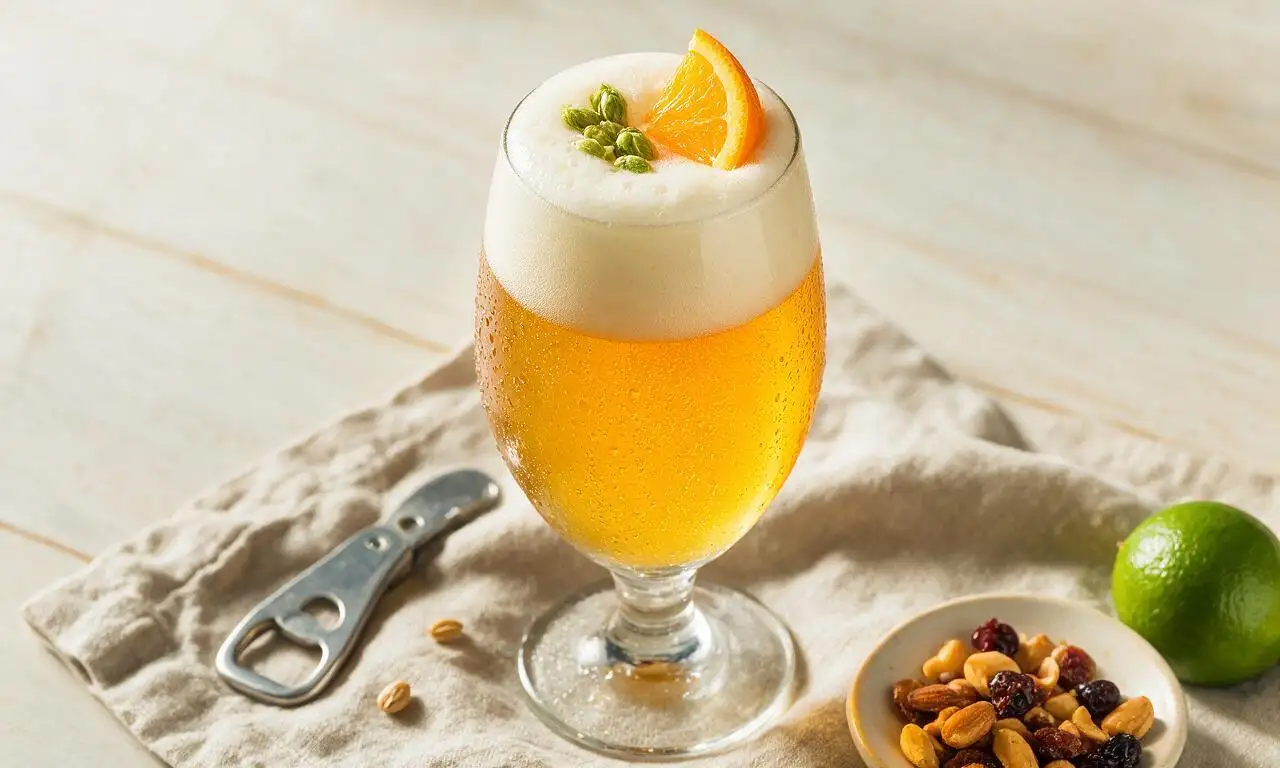
IPA

title 1
IPA
⏱️ cook time 90 minutes active time, 14 days total from brew to serve
🍽️ servings 4
⚡ Difficulty medium

intro

Bright, citrusy, hoppy India Pale Ale (IPA) with a crisp malt backbone, brewed in classic West Coast style for cold, refreshing sipping.

Ingredients

Light liquid malt extract 450 grams (1 lb)
Cascade hop pellets 18 grams (0.63 oz, split into 7g/7g/4g portions)
US-05 American ale yeast 5 grams (0.18 oz)
Filtered dechlorinated water 1.5 liters (6.3 cups)
Corn sugar (priming sugar) 28 grams (2 tablespoons)

Steps

1

Sanitize All Brewing Equipment

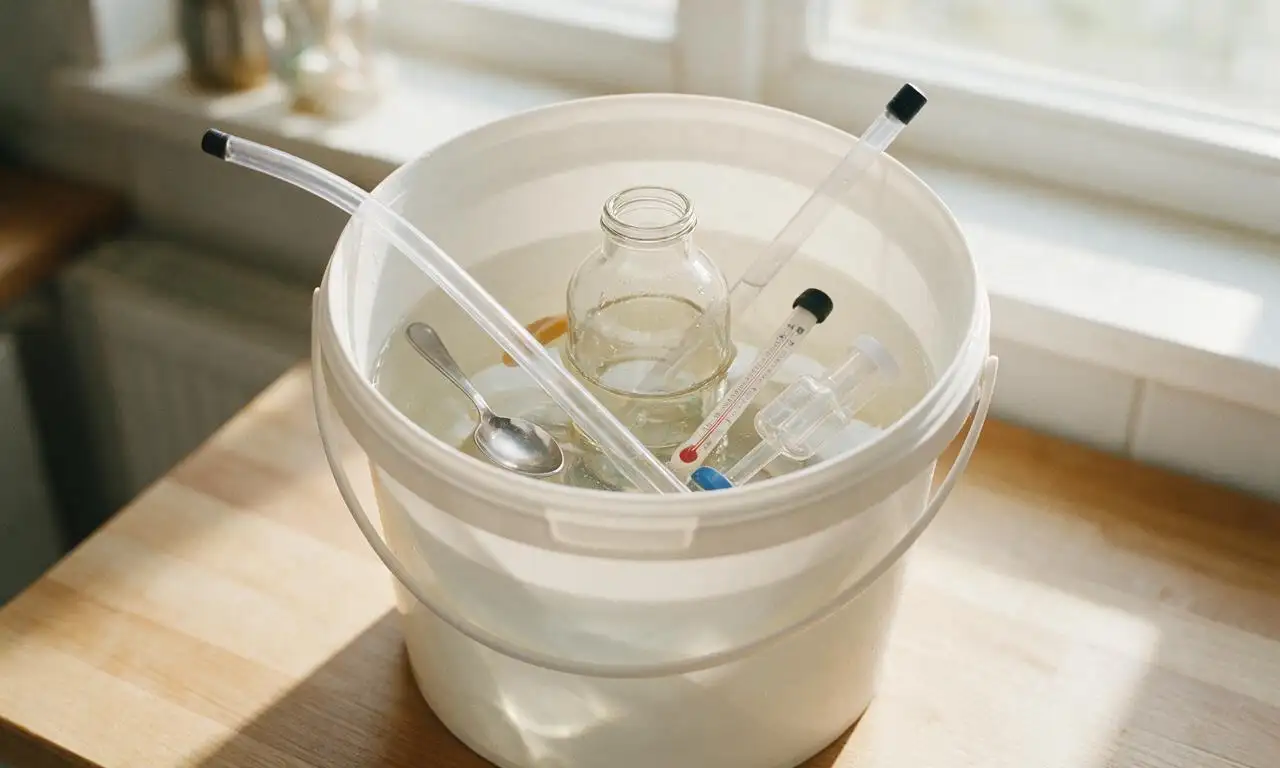
Sanitize all brewing equipment first: Mix 1 tablespoon of no-rinse food-grade brewer’s sanitizer with 2 liters of cool tap water in a clean 3-liter food-grade bucket. Submerge your 2-liter glass fermenter, airlock, rubber stopper, siphon tubing, stirring spoon, and thermometer for 2 full minutes, then set items on a clean paper towel to air dry completely before use.
Step 1
step1:Sanitize All Brewing Equipment
2

Boil Water and Add Malt

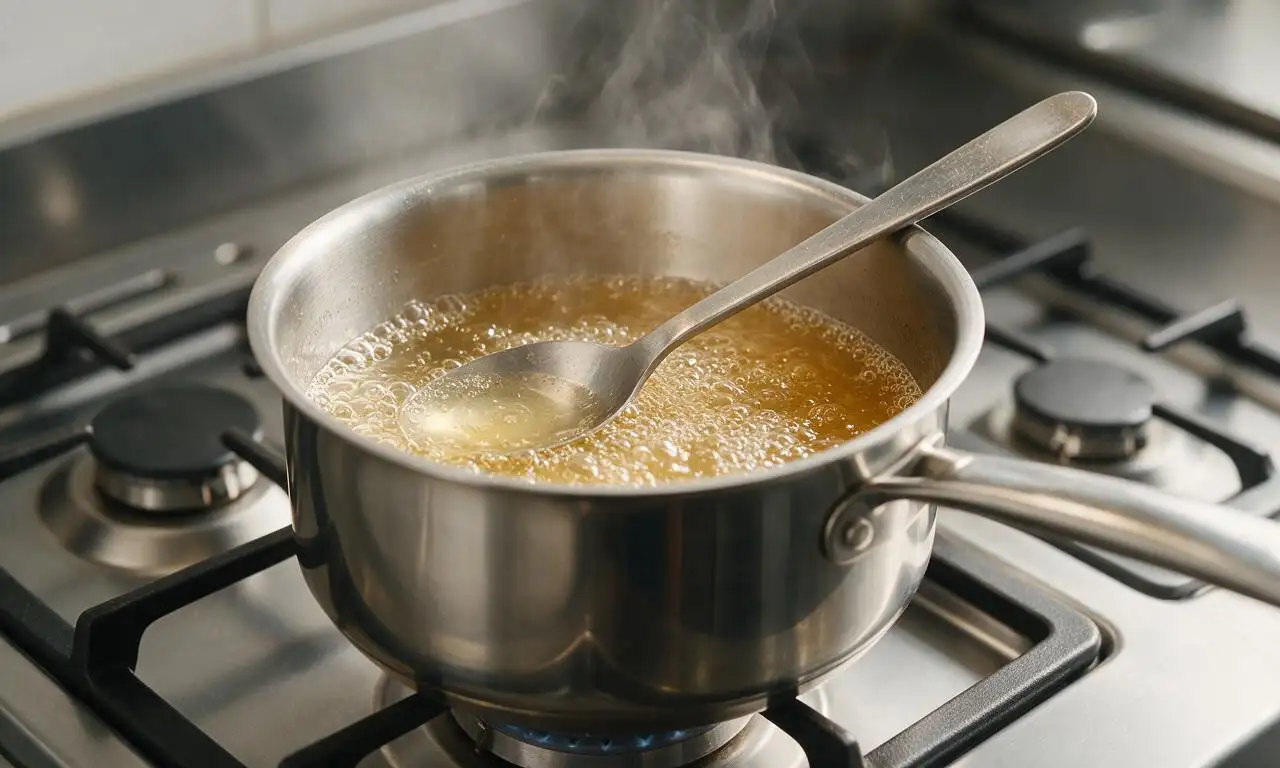
Pour 1 liter of filtered, dechlorinated water into a 4-liter stainless steel stockpot, and bring to a gentle rolling boil over medium-high heat (1500W stovetop setting). Slowly stir in 450 grams of light liquid malt extract, stirring constantly until fully dissolved to prevent scorching on the pot bottom. Maintain a steady, gentle boil (not a violent, bubbling-over boil) for 60 minutes total.
Step 2
step2:Boil Water and Add Malt
3

Add Hops at Timed Intervals

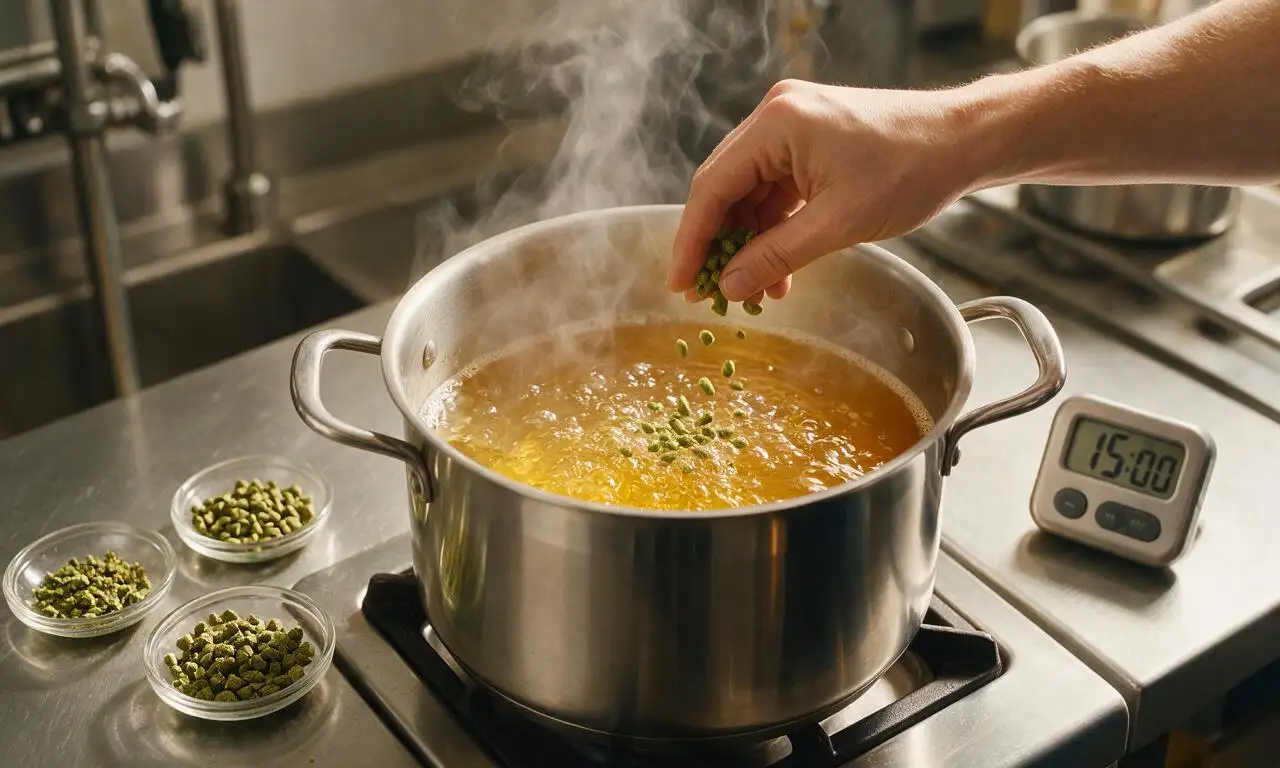
Add hops at precise timed intervals during the 60-minute boil: When the wort first reaches a steady boil, add 7 grams of Cascade hop pellets (bittering addition) and set a timer for 45 minutes. When the timer goes off, add another 7 grams of Cascade hop pellets (flavor addition) and reset the timer for the final 15 minutes of boiling. When the full 60 minutes of boil time ends, turn off the heat, add the remaining 4 grams of Cascade hop pellets (aroma addition), and cover the pot tightly with a lid.
Step 3
step3:Add Hops at Timed Intervals
4

Cool Hot Wort Rapidly

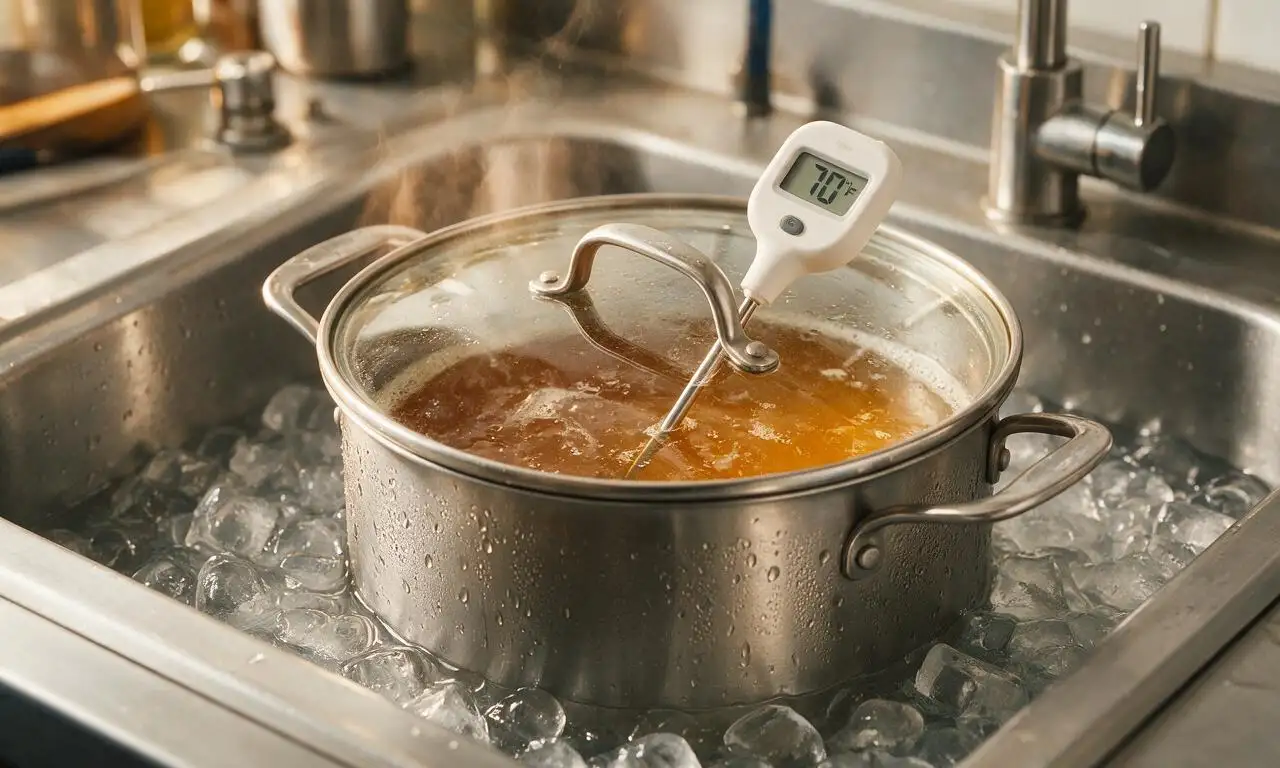
Cool the hot wort rapidly to avoid contamination: Move the covered stockpot to a kitchen sink filled with a mix of ice cubes and cold tap water, so the water level reaches the same height as the wort inside the pot. Gently stir the wort every 5 minutes to speed cooling, until a thermometer reads 21°C (70°F), which takes roughly 15 minutes for this small batch. Keep the lid on except when stirring to keep out wild bacteria.
Step 4
step4:Cool Hot Wort Rapidly
5

Transfer Wort and Add Yeast

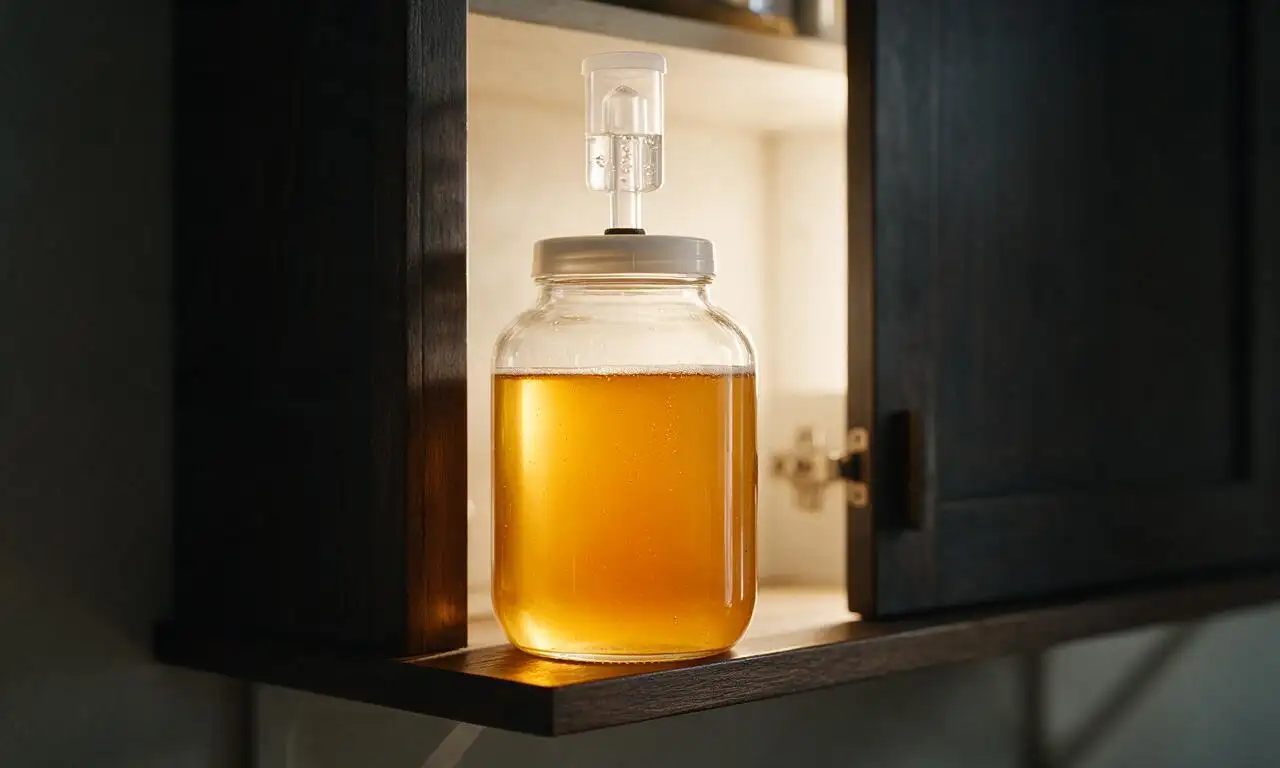
Transfer the cooled wort to your sanitized 2-liter glass fermenter, topping up with extra cool filtered water to reach a total volume of 1.5 liters if needed. Sprinkle 5 grams of US-05 American ale yeast evenly across the surface of the wort, then seal the fermenter with the sanitized rubber stopper and airlock, filling the airlock halfway with leftover sanitizer solution. Store the fermenter in a dark, temperature-controlled space held at a steady 18-20°C (65-68°F) for 7 days to allow primary fermentation.
Step 5
step5:Transfer Wort and Add Yeast
6

Prepare Priming Sugar Solution

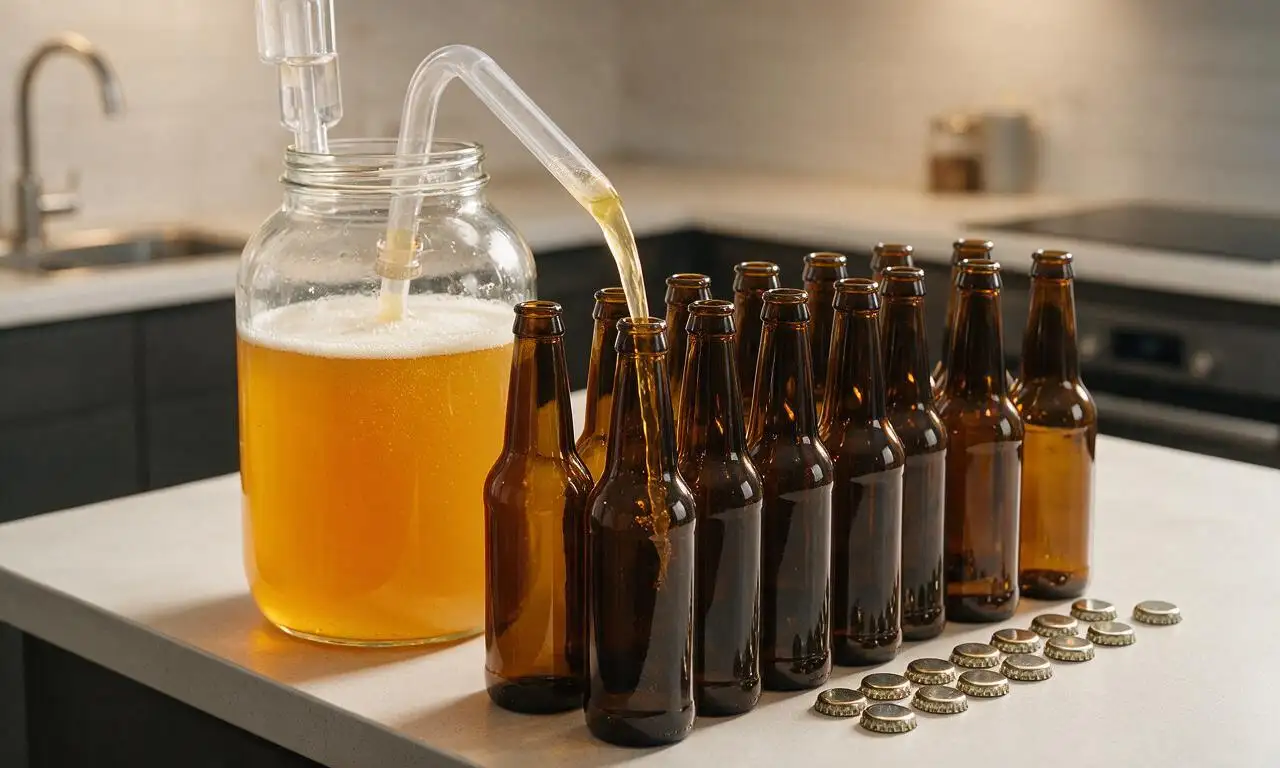
After 7 days, when airlock bubbling slows to 1 bubble every 60 seconds, prepare priming sugar for carbonation: Boil 28 grams (2 tablespoons) of corn sugar in 60ml (1/4 cup) of water over medium heat for 5 minutes, then cool to 21°C (70°F). Pour the cooled sugar solution into a sanitized 2-liter bottling bucket, then siphon the fermented beer from the fermenter into the bucket, stirring gently to evenly mix the sugar. Siphon the beer into four sanitized 375ml (12.7oz) amber glass beer bottles, and seal tightly with sanitized metal bottle caps.
Step 6
step6:Prepare Priming Sugar Solution
7

Condition and Chill Bottled Beer

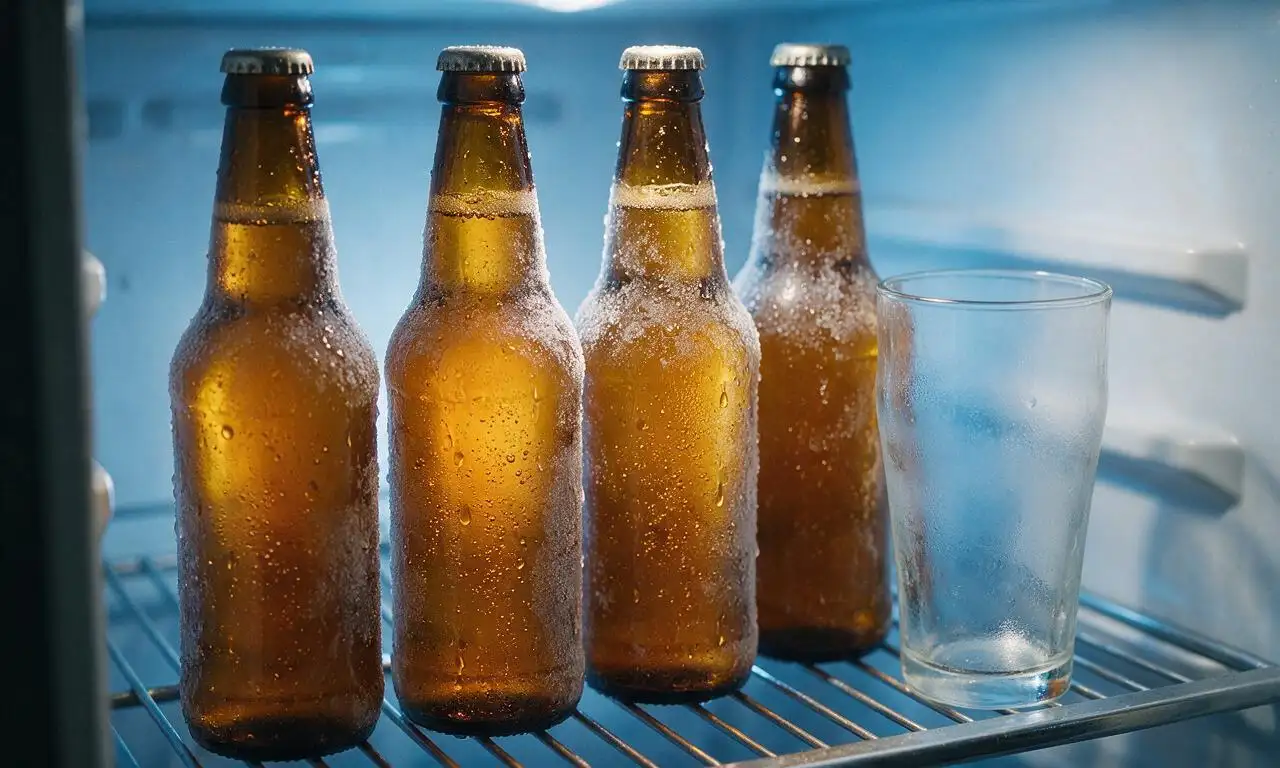
Store the capped, sealed bottles in the same dark, 18-20°C space for 7 full days to allow natural carbonation to build. After conditioning, move the bottles to a refrigerator to chill for a minimum of 24 hours to reach 4°C (40°F) before opening and serving.
Step 7
step7:Condition and Chill Bottled Beer

Tips

1.Never skip sanitization: Any surface that touches cooled wort or finished beer must be fully sanitized, as wild bacteria or yeast will create sour, off-flavors that ruin the batch.
2.Avoid boiling wort at too high a temperature or adding bittering hops too early, as this creates harsh, astringent bitterness instead of the bright, citrusy hop flavor IPA is known for.
3.Keep fermenting and conditioning beer away from direct sunlight, as UV light reacts with hop compounds to create a strong, skunky off-flavor that cannot be fixed.


✨ You May Also Like

Drinks & Beverages
🍜 Mexico

A bright, balanced tequila-based cocktail with zesty fresh lime, smooth orange liqueur, and a signature salt rim, perfect for warm summer sipping.

⏱️ 5 minutesDrinks & Beverages ★ 4.9
Drinks & Beverages
🍜 United States

Thick, creamy, nostalgic classic vanilla milkshake with a rich, smooth texture, topped with whipped cream and a cherry for cool, sweet refreshment.

⏱️ 5 minutesDrinks & Beverages ★ 4.7
Drinks & Beverages
🍜 United States

A bright, golden strong ale with fruity banana-clove notes, subtle hop spice, and soft carbonation, brewed in classic Trappist Tripel tradition.

⏱️ 2 hours aDrinks & Beverages ★ 4.5
Drinks & Beverages
🍜 United States

A frothy, nostalgic American soda fountain treat pairing bubbly cold root beer with creamy vanilla ice cream, perfect for cooling down at warm weather gatherings.

⏱️ 20 minuteDrinks & Beverages ★ 4.8
Drinks & Beverages
🍜 United States

Tart, funky, effervescent American Wild Ale is a complex fruity craft beer brewed with wild yeast, delivering bright, zesty notes perfect for warm-weather sipping.

⏱️ 2 hours aDrinks & Beverages ★ 4.4
Drinks & Beverages
🍜 United States

Bright, bubbly copycat of the iconic American caramel cola, balanced with citrus and warm spice, perfect for sipping ice-cold on hot days.

⏱️ 15 minuteDrinks & Beverages ★ 4.8

IPA:Frequently Asked Questions

1.What makes this a classic West Coast IPA instead of other popular IPA styles like hazy New England IPA? ▾
This West Coast IPA is defined by its bright, clear citrusy Cascade hop punch, crisp light malt backbone from light liquid malt extract, and clean, dry finish—unlike hazy New England IPAs, which are juicier, softer, and intentionally cloudy. US-05 yeast ferments clean to let hops shine, and corn sugar priming adds snappy carbonation for that iconic cold, refreshing bite.
2.Do I really need dechlorinated filtered water, or can I just use regular tap water for this brew? ▾
Skip straight tap water if it’s treated with chlorine or chloramine—those compounds create harsh, medicinal off-flavors that will overpower your bright Cascade hop notes. You can use affordable filtered pitcher water, or treat tap water with one campden tablet 24 hours before brewing to strip out chlorine for a clean, neutral base.
3.When should I add my Cascade hop pellets to get that classic balanced citrus flavor without harsh bitterness? ▾
For iconic West Coast balance, add 60% of your Cascade pellets early in the boil for clean, rounded bitterness, 25% with 15 minutes left in the boil for bright citrus flavor, and the final 15% at flameout to lock in fresh, zesty aroma. Skip overloading early additions to keep the finish crisp, not harshly bitter.
4.Why is US-05 American ale yeast the recommended strain for this recipe instead of other ale yeasts? ▾
US-05 is the gold standard for classic West Coast IPAs because it ferments extremely clean, with subtle neutral fruity notes that never compete with bright Cascade hop character. It flocculates well to leave your final beer clear rather than hazy, ferments reliably at 65–70°F, and produces the crisp, dry finish the style is famous for.
5.How much corn sugar do I need for priming, and what carbonation level is right for this IPA style? ▾
Aim for 2.3 to 2.5 volumes of CO2, the snappy, classic carbonation level for West Coast IPAs, which works out to roughly 5 ounces of corn sugar for a standard 5-gallon batch. Dissolve the sugar in a small amount of boiled, cooled water before mixing it evenly with finished beer right before bottling to avoid uneven fizz across bottles.
6.Can I substitute dry malt extract for the light liquid malt extract if that’s all I have available? ▾
Absolutely! Light dry malt extract is a reliable swap—just use 20% less by weight than the liquid malt extract called for, since dry extract is more concentrated. Stick to a very pale, plain light variety to keep the malt backbone crisp and neutral; skip darker or honey-infused extracts that will muddle bright Cascade hop flavor.
7.How long does this IPA need to ferment and condition before it’s ready to drink? ▾
Ferment with US-05 at a steady 67°F for 7 to 10 days first, until you see no more airlock bubbling and the beer hits a stable final gravity for two straight days. After bottling with corn sugar, let bottles condition at room temperature for two more weeks to build carbonation and mellow sharp hop notes into smooth, bright citrus flavor.
8.Why did my first batch turn out more harshly bitter than the West Coast IPA I expected? ▾
Overly sharp, harsh bitterness usually stems from one of three common missteps: boiling late Cascade hop additions for too long, using chlorinated tap water, or rushing the bottle conditioning phase. Let bottles condition for an extra week to soften bitter notes, and double-check hop addition timings on your next batch for better balance.
9.Do I need fancy specialty homebrewing equipment to make this recipe as a first-time brewer? ▾
This is an ideal beginner recipe that only requires basic entry-level gear: a 5-gallon food-grade fermentation bucket with an airlock, a large stock pot, siphon, bottle capper, and no-rinse brewer’s sanitizer. You don’t need fancy conical fermenters or high-end temperature controllers as long as you can hold a steady 65–70°F for your US-05 yeast.
10.How should I store my finished IPA to keep that bright, fresh hop flavor for as long as possible? ▾
Store capped, conditioned bottles upright in a cool, dark space between 45–55°F—a basement or the back of a refrigerator works perfectly—to keep Cascade hop notes bright and citrusy. Avoid warm spots or direct sunlight, which creates skunky off-flavors, and drink within 3 months of bottling for the freshest, most authentic flavor.
11.Can I add extra Cascade hops for dry hopping to amp up aroma without straying from the classic style? ▾
You can absolutely add a small 0.5–1 ounce addition of Cascade pellets to your fermenter 3 days before bottling for extra bright, piney-citrus aroma without ditching classic West Coast character. Just don’t overdo it—too much dry hop creates grassy, vegetal off-flavors or hazy beer that pulls away from this recipe’s crisp, clear profile.

Comments (12)

2 weeks ago

OMG, this West Coast IPA turned out SO good! I followed the recipe exactly except I swapped a touch of Cascade for extra Citra, and the pine/citrus punch is exactly what I crave from a classic WC. Brought a growler to my buddy's potluck last weekend and everyone was begging for the recipe. Total game changer for my homebrew lineup!

1 week ago

Wait, how much extra Citra did you add? I’ve been wanting to tweak this to be more citrus forward too, my last batch was a little too pine heavy for my wife’s taste!

1 week ago

So stoked this was a hit at your potluck! A good rule of thumb for dry hop additions is to never go over 2 oz per 5 gallon batch to avoid grassy off flavors, if you’re experimenting with extra Citra. Cheers!

1 week ago

Was a little nervous to tackle this as someone who’s only done extract brews before, since the difficulty is listed as medium. The 90 minute active time flew by while I was jamming to my playlist, and the two week wait was so worth it. My husband said it tastes better than the $18 six packs we grab at the bottle shop!

5 days ago

That’s such awesome feedback, Jen! So many new brewers get intimidated by all-grain adjacent WC IPAs, but we promise the active time moves fast once you get a rhythm going. So glad it impressed your husband!

5 days ago

Solid base recipe, but I found the bitterness a little sharp for my preference. Next time I’ll cut the 60 minute boil addition of Magnum by a quarter ounce to mellow it out a touch, make it a little more balanced. The finish is super clean though, no weird off flavors from my first time using a new fermenter.

3 days ago

Wait, quick question for anyone who’s made this — my batch fermented a little warmer than the recommended temp (hit 72 degrees for a day and a half when our AC went out) — am I going to get weird fruity off flavors? I’m on day 4 of fermentation right now, stressing a little.

2 days ago

I had the exact same thing happen on my last batch! It added a tiny bit of stone fruit note that actually went really well with the pine hops, no weird solventy off flavors as long as it didn’t go over 75 for long. Don’t stress!

2 days ago

Great call from AustinBrewDude! A short temp spike under 75 usually doesn’t cause major issues for WC yeast strains, just make sure to keep it steady for the rest of fermentation and do a cold crash before bottling if you can to smooth it out.

2 days ago

Brought a six pack of this to our weekly taco night with the neighbors, and it paired perfectly with spicy carnitas and lime. The crisp carbonation cuts right through the heat, 10/10 will be brewing this on repeat all summer.

yesterday

Oh that pairing sounds chef’s kiss! I was planning to make this next weekend for our beach bonfire, now I’m definitely grabbing carnitas tacos to go with it.

30 minutes ago

I wish the recipe specified what type of water profile to aim for! My tap water is super hard here in Ohio, and I feel like my batch came out a little minerally compared to the commercial WC IPAs I love. Next time I’ll pick up bottled spring water to see if that fixes it.

yesterday

Game changer! I’ve been chasing that classic 90s West Coast IPA bite for years, and this recipe nails it. Not hazy, not too sweet, just that perfect resinous hop bite and clean malt backbone. I dry hopped on day 5 and day 8 per the instructions and the aroma is insane when you crack a cold one.

yesterday

Love to hear that! That old-school WC bite is exactly what we were going for — so many modern recipes lean hazy these days, we wanted a throwback that hits that classic bitter, hoppy note. Cheers!

5 days ago

Wait, did anyone else have their final gravity come out a little higher than listed? Mine hit 1.014 instead of the 1.010 the recipe says, I mashed at 152 exactly like the instructions said. Tastes fine, just a little more malty than I expected.

3 days ago

Same thing happened to me! I realized I crushed my grain a little too coarse, so my conversion was off. Still tasted great, just a touch more body than intended.

2 days ago

A couple points higher FG is totally normal and nothing to worry about! If you want a drier finish next time, you can mash 1-2 degrees lower or add a half pound of rice hulls to help with conversion during the mash.

2 hours ago

SO good! I added an extra half ounce of Simcoe in the dry hop because I’m obsessed with that dank, piney flavor, and it’s easily the best beer I’ve ever brewed. Even my roommate who hates IPAs said he’d drink this.

30 minutes ago

Oh adding extra Simcoe is such a good call, I’m doing that on my next batch! I’ve got a pound of frozen Simcoe hops in my freezer I’ve been waiting to use.

3 days ago

Full transparency, I messed up the first dry hop addition because I forgot to sanitize my hop dropper and got a tiny bit of gunk in the fermenter, but even with that the beer turned out totally drinkable! Super forgiving recipe for a total newbie like me, will definitely make it again now that I know what I’m doing.

5 minutes ago

This is the most authentic West Coast IPA recipe I’ve found outside of actually traveling to California. The balance of bitter to aromatic is spot on, no weird juicy hazy nonsense that everyone seems to be making these days. Kegged mine last night and already snuck a sample, can’t wait for it to carbonate fully.

just now

Thanks for the love! We’re with you — hazy IPAs are great, but nothing hits like a crisp, bitter classic WC. Make sure to save us a pour once that carbonation kicks in!

just now

Solid recipe, but I wish the total time note was a little more front and center! I planned to brew this for a party 10 days out and forgot it needs a full 14 days from brew to serve, so I had to run to the liquor store last minute. The beer is great though, just bad planning on my part.

just now

Oh man I did the exact same thing! I thought it was a week total like my old extract kits, was so sad I couldn’t bring it to my buddy’s BBQ. Worth the wait though, right?

just now

That’s such good feedback! We’ll move the total 14 day timeline note to the top of the recipe card so it’s harder to miss. Glad the final beer turned out tasty for you!



