
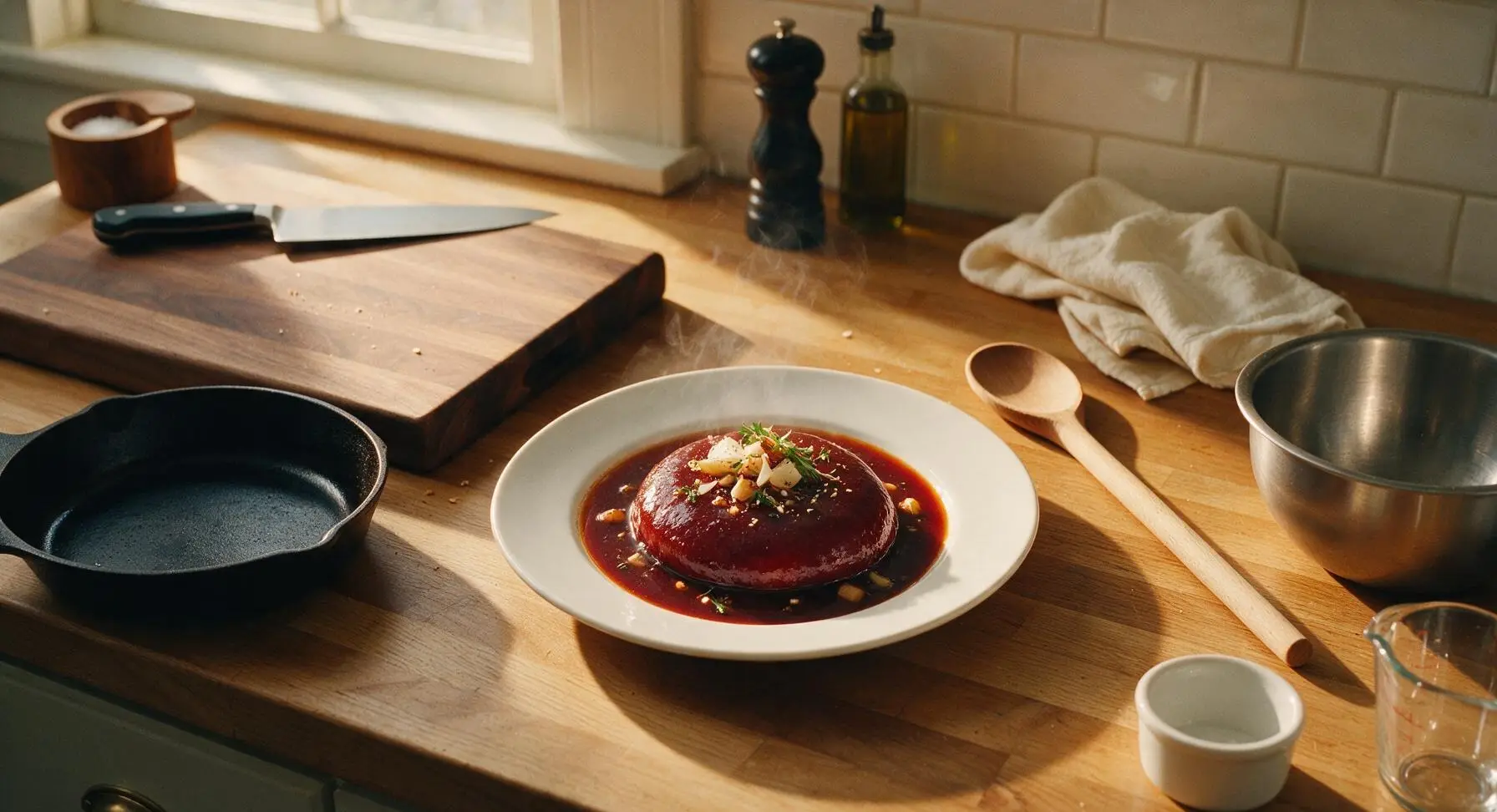
Irish Red Ale

title 1
Irish Red Ale
⏱️ cook time 1 hour 30 minutes
🍽️ servings 48
⚡ Difficulty medium

intro

Smooth, malty Irish Red Ale with soft caramel notes, a faint dry roasted finish, and deep ruby hue, perfect for sipping with friends on casual evenings.

Ingredients
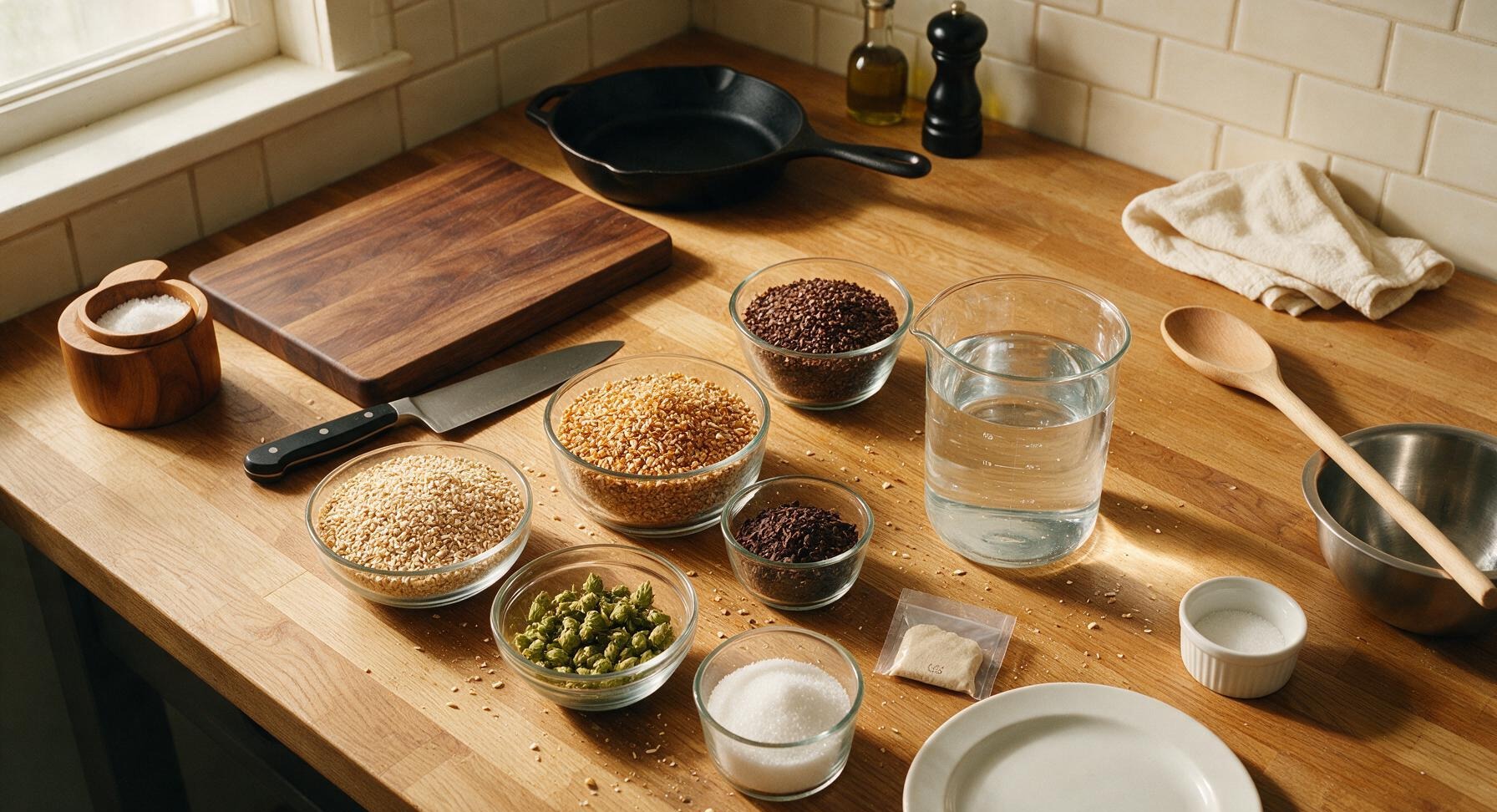
Filtered brewing water 6 gallons (22.7L)
Crushed pale 2-row malt 8 lbs (3.6kg)
Crushed crystal malt (40L) 1 lb (454g)
Crushed roasted barley 4 oz (113g)
Crushed chocolate malt 2 oz (57g)
East Kent Goldings hops (bittering) 1.5 oz (42g)
East Kent Goldings hops (aroma) 0.5 oz (14g)
Irish ale yeast 1 packet (11g)
Priming corn sugar 5 oz (142g)

Steps

1

Sanitize Brewing Equipment

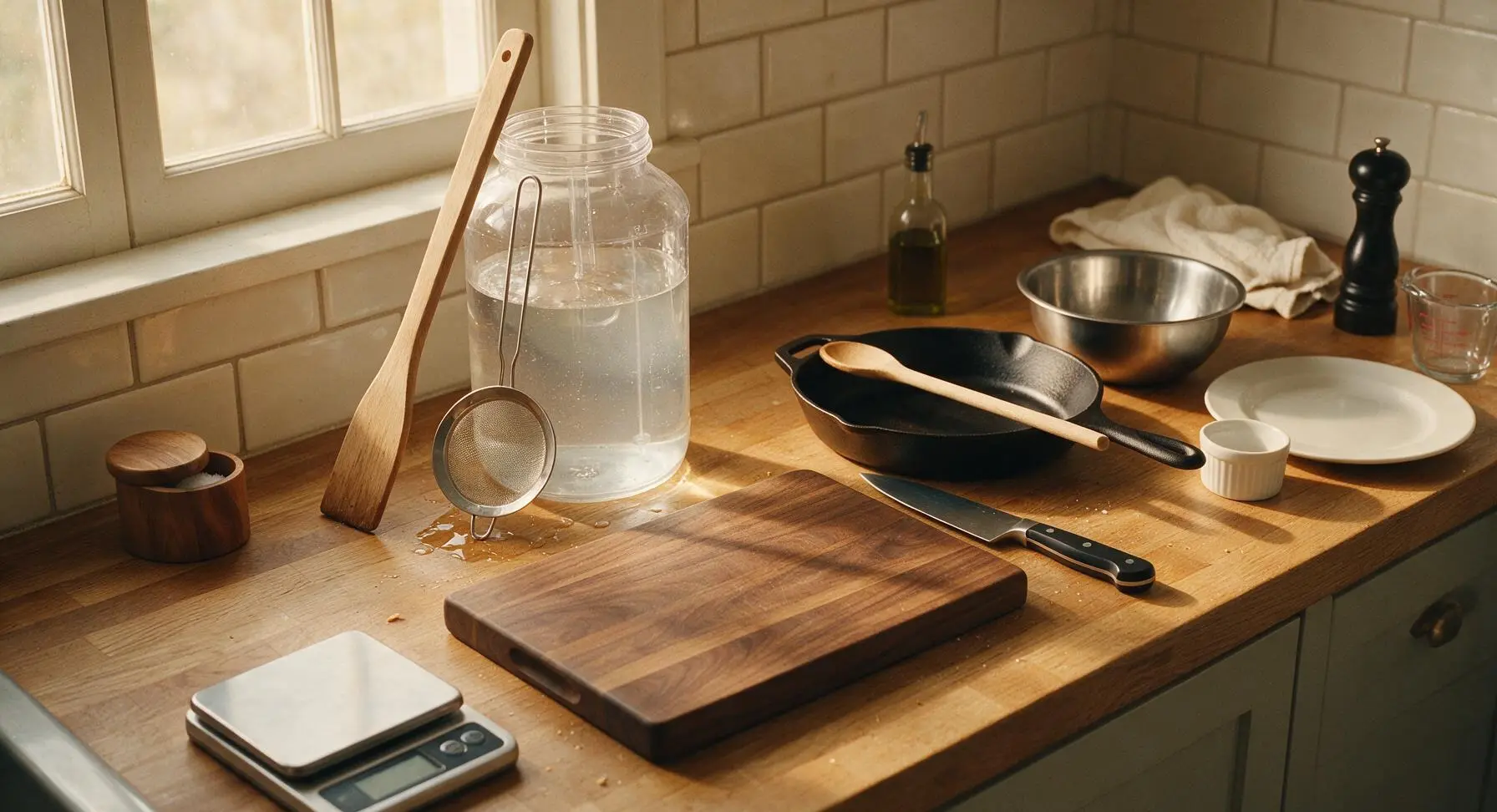
Mix 1 gallon of cool filtered water with 1 teaspoon of no-rinse brewing sanitizer inside the clear glass fermenter. Submerge the mash paddle, fine-mesh strainer, auto-siphon, and white ceramic ramekins in the sanitizer solution for 2 full minutes, then lift items out and let them drain completely on a clean section of counter. Ensure no suds remain on surfaces, as leftover sanitizer will kill yeast and create off-flavors.
Step 1
step1:Sanitize Brewing Equipment
2

Heat Mash Water

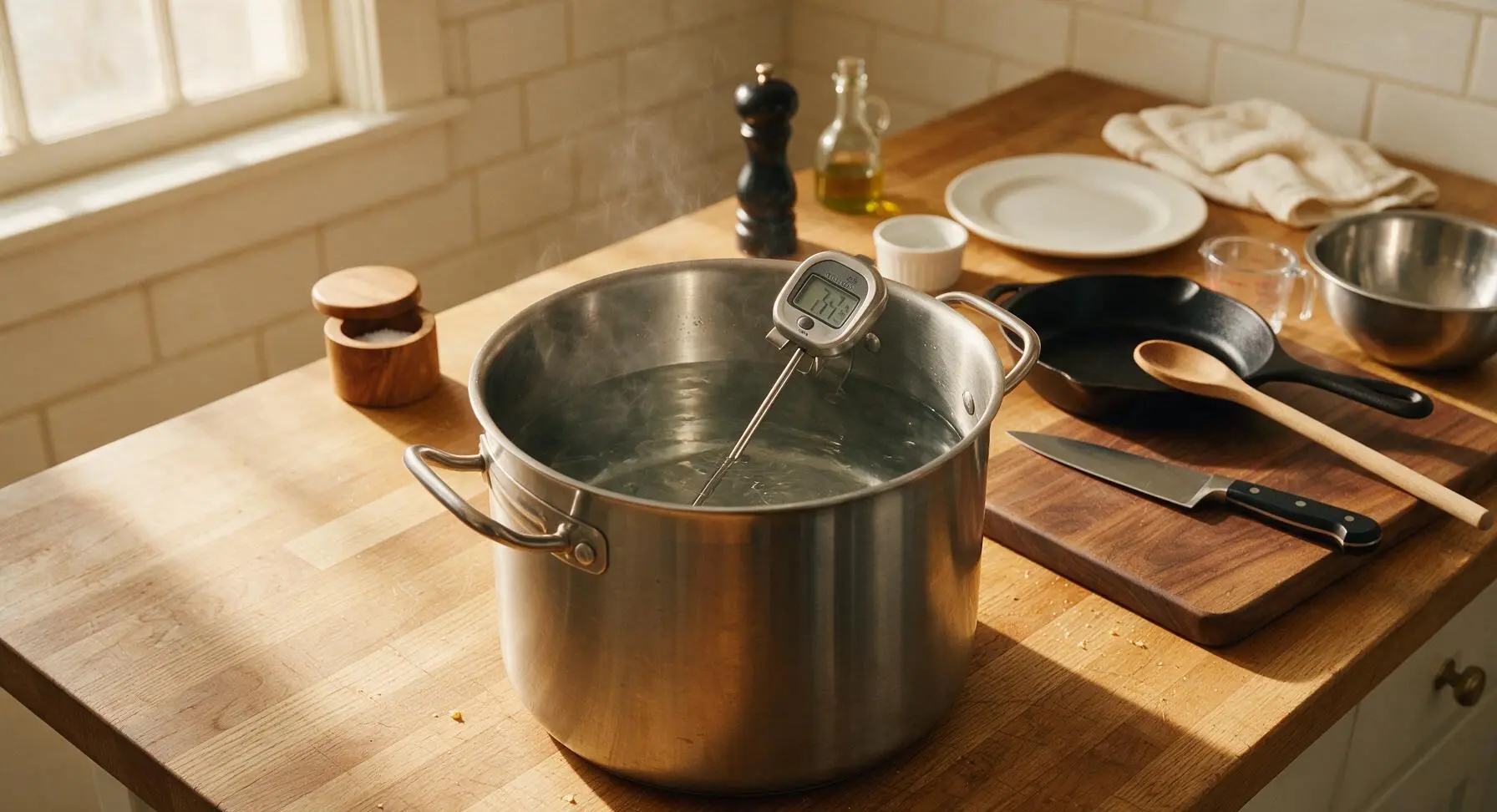
Pour 3 gallons of filtered brewing water into the 5-gallon stainless steel brew kettle. Clip the digital instant-read thermometer to the kettle rim, submerging the probe 2 inches into the water, then heat the water to a steady 155°F (68°C). Watch the thermometer closely; temperatures above 160°F will extract harsh, astringent tannins from the grain.
Step 2
step2:Heat Mash Water
3

Mash the Grain Bill

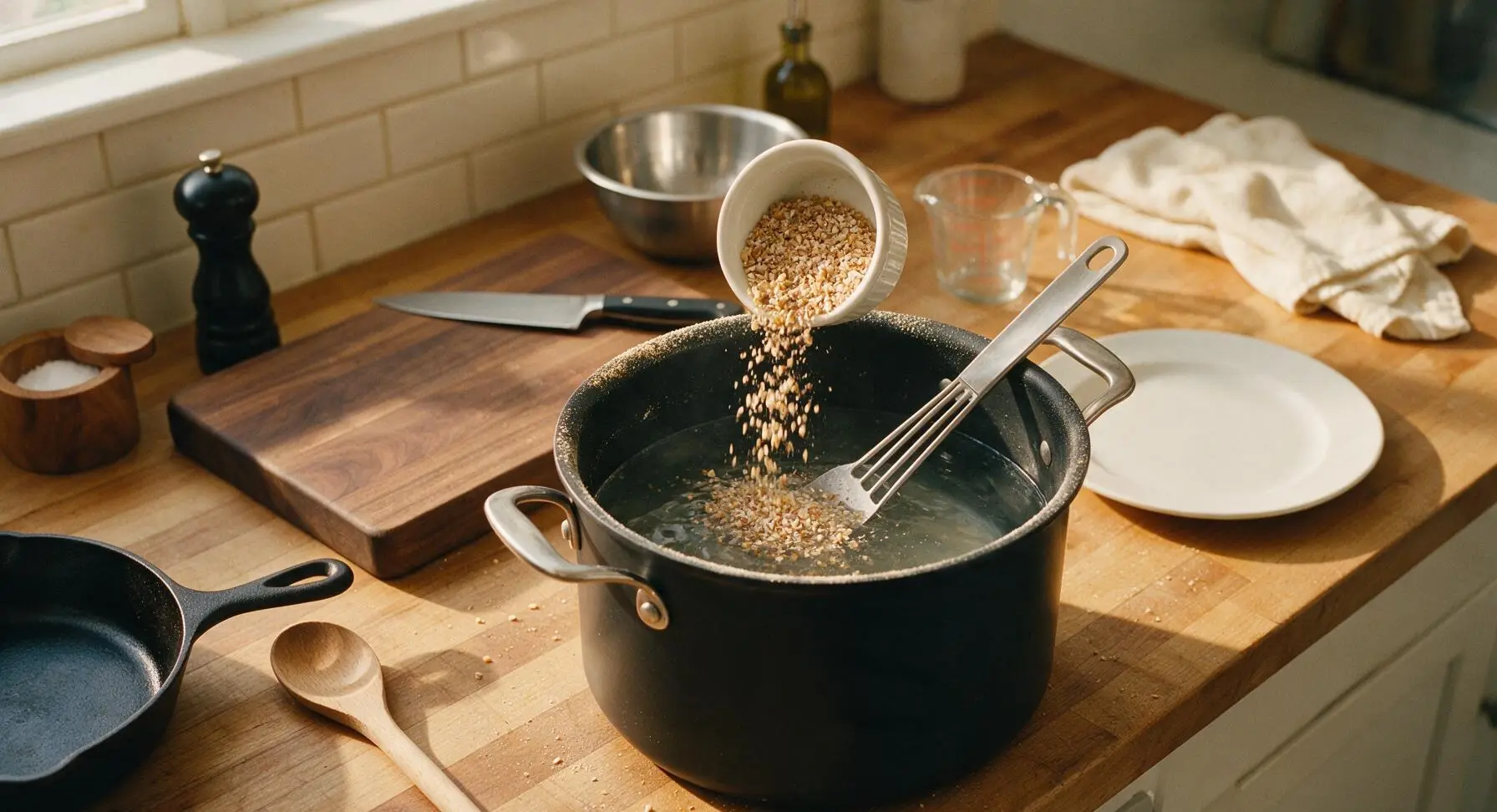
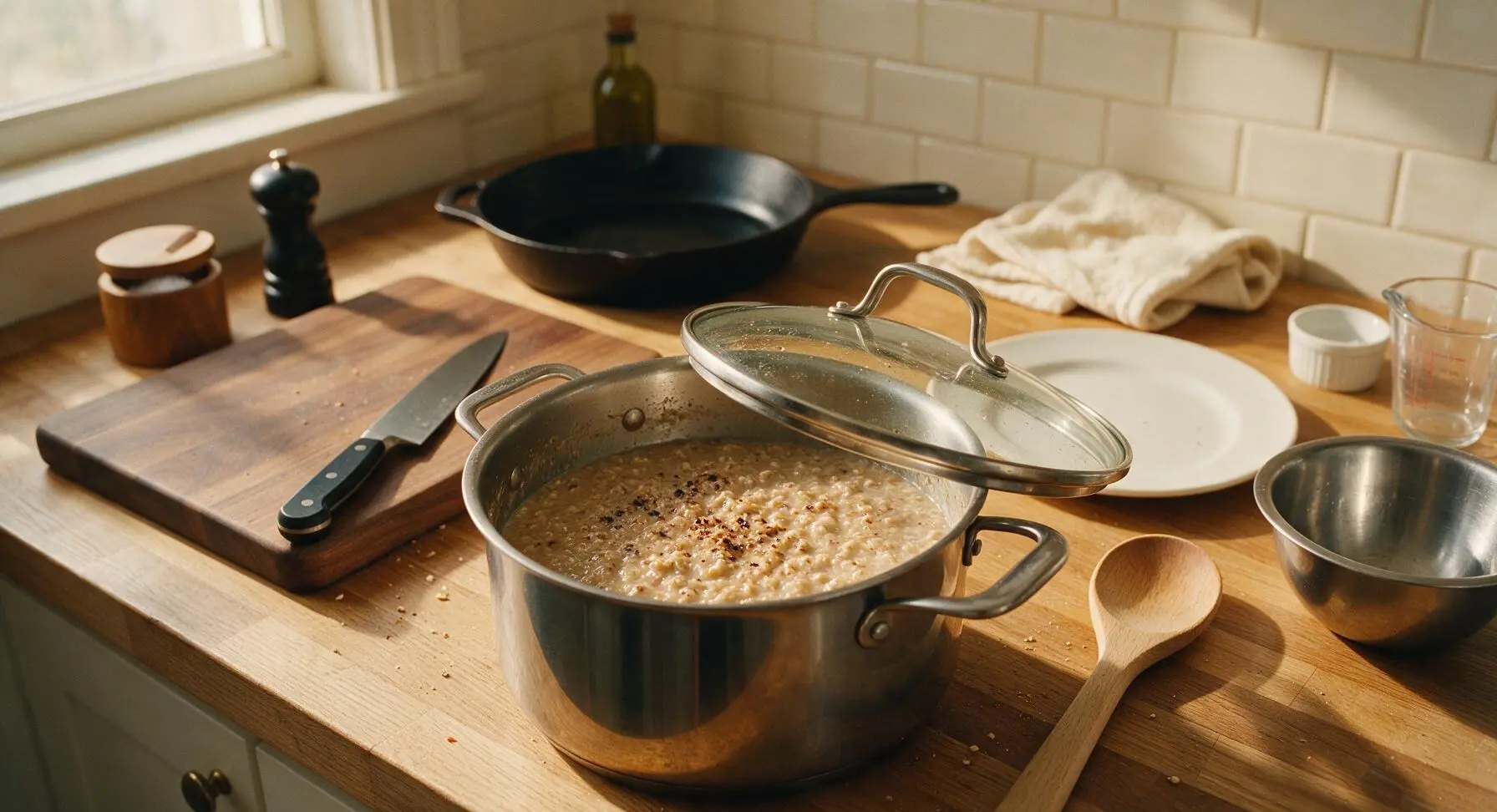
Slowly stir all pre-measured crushed malts (pale 2-row, crystal 40L, roasted barley, chocolate malt) into the 155°F water using the stainless steel mash paddle, stirring thoroughly to break up any dry, clumped grain pockets. Cover the kettle and hold the temperature steady between 150–155°F for 60 minutes. The finished mash will have a thick, porridge-like consistency and smell of warm, sweet bread.
Step 3
step3:Mash the Grain Bill
Step 3
step3:Mash the Grain Bill
4

Sparge and Collect Wort

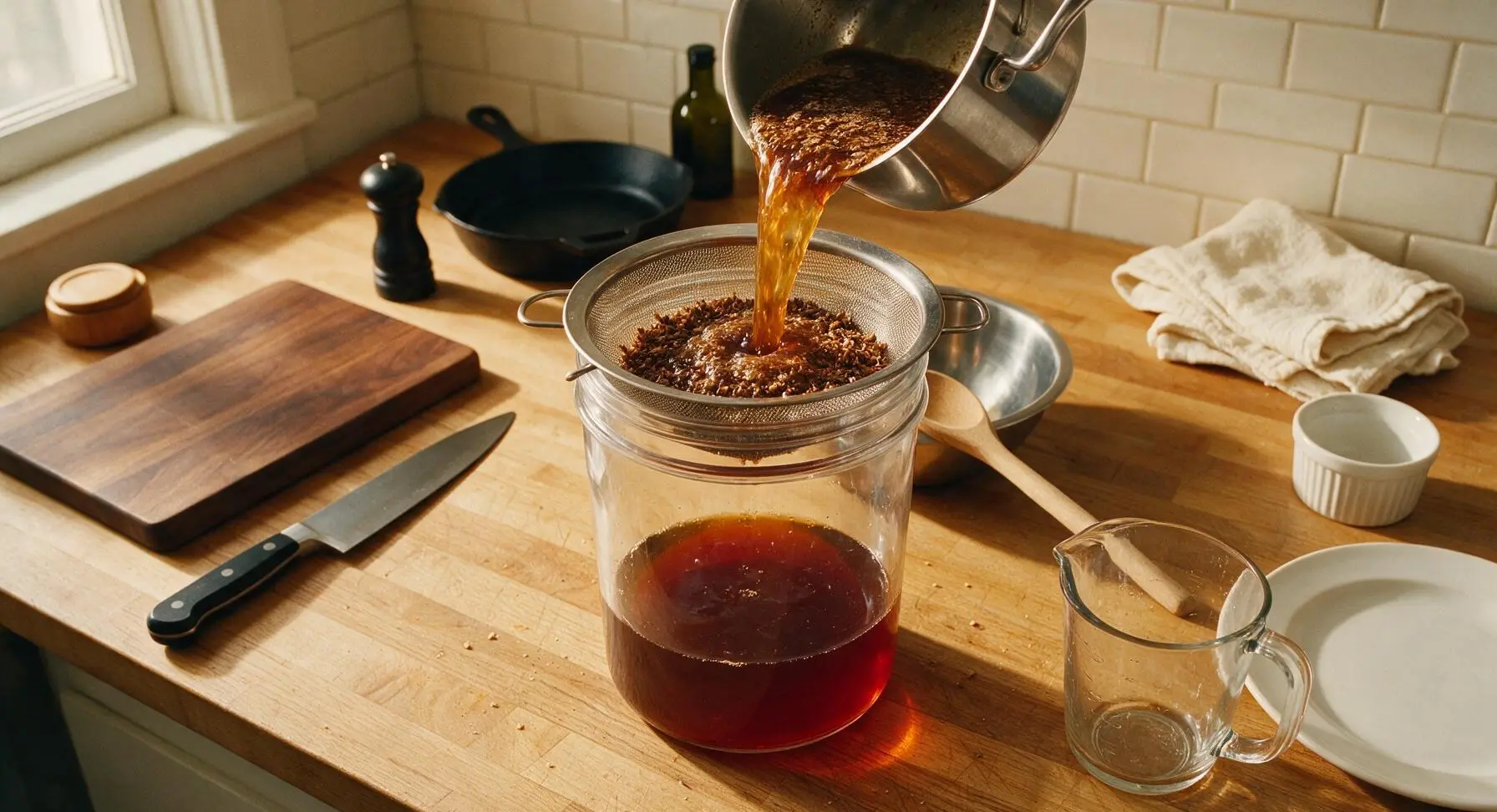
After the 60-minute mash rest, slowly pour 2 gallons of 170°F (77°C) filtered water over the grain bed to rinse trapped sugars from the grains. Set the fine-mesh stainless steel strainer across the mouth of the sanitized fermenter, then carefully pour the sweet, sugar-rich liquid (called wort) through the strainer to filter out all spent grain particles. Collect approximately 5 gallons of clear, deep amber wort in the fermenter.
Step 4
step4:Sparge and Collect Wort
5

Boil the Wort

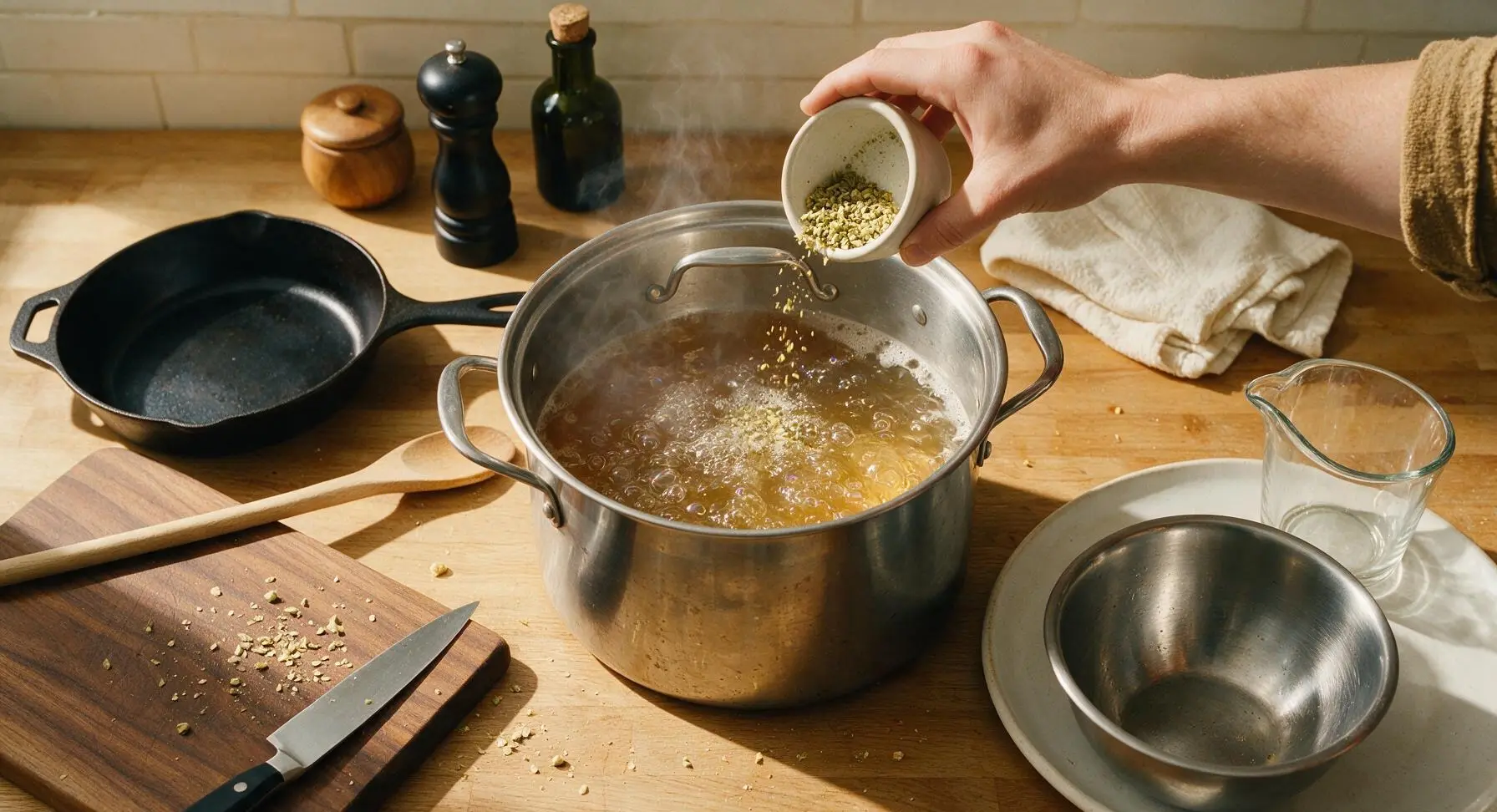
Pour the collected strained wort back into the cleaned brew kettle, then heat to a gentle, rolling boil (adjust heat to avoid messy boilovers). Once the boil is steady, add the 1.5 oz measure of bittering East Kent Goldings hops, then set a timer for 60 minutes. With 15 minutes remaining on the timer, add the 0.5 oz measure of aroma East Kent Goldings hops. The boiling wort will darken slightly and release earthy, caramelized hop aromas as it cooks.
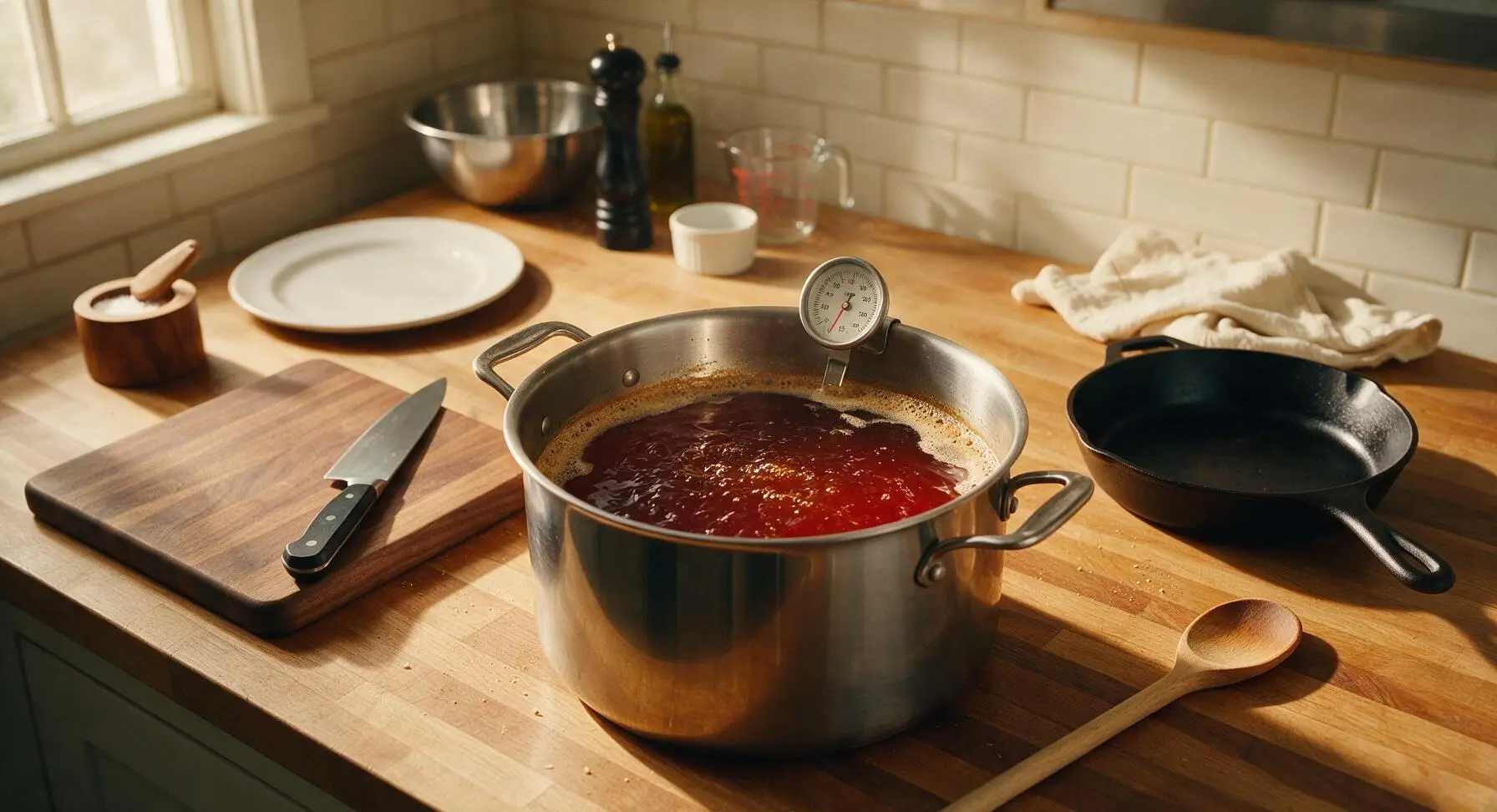
Step 5
step5:Boil the Wort
Step 5
step5:Boil the Wort
6

Cool the Wort

As soon as the 60-minute boil ends, remove the kettle from heat and cool the wort as quickly as possible to 68°F (20°C) using an ice bath or immersion wort chiller. Keep the kettle lid loosely covered during cooling to prevent airborne bacteria from contaminating the wort. The wort is ready when no steam rises from the surface and the kettle exterior feels lukewarm to the touch.
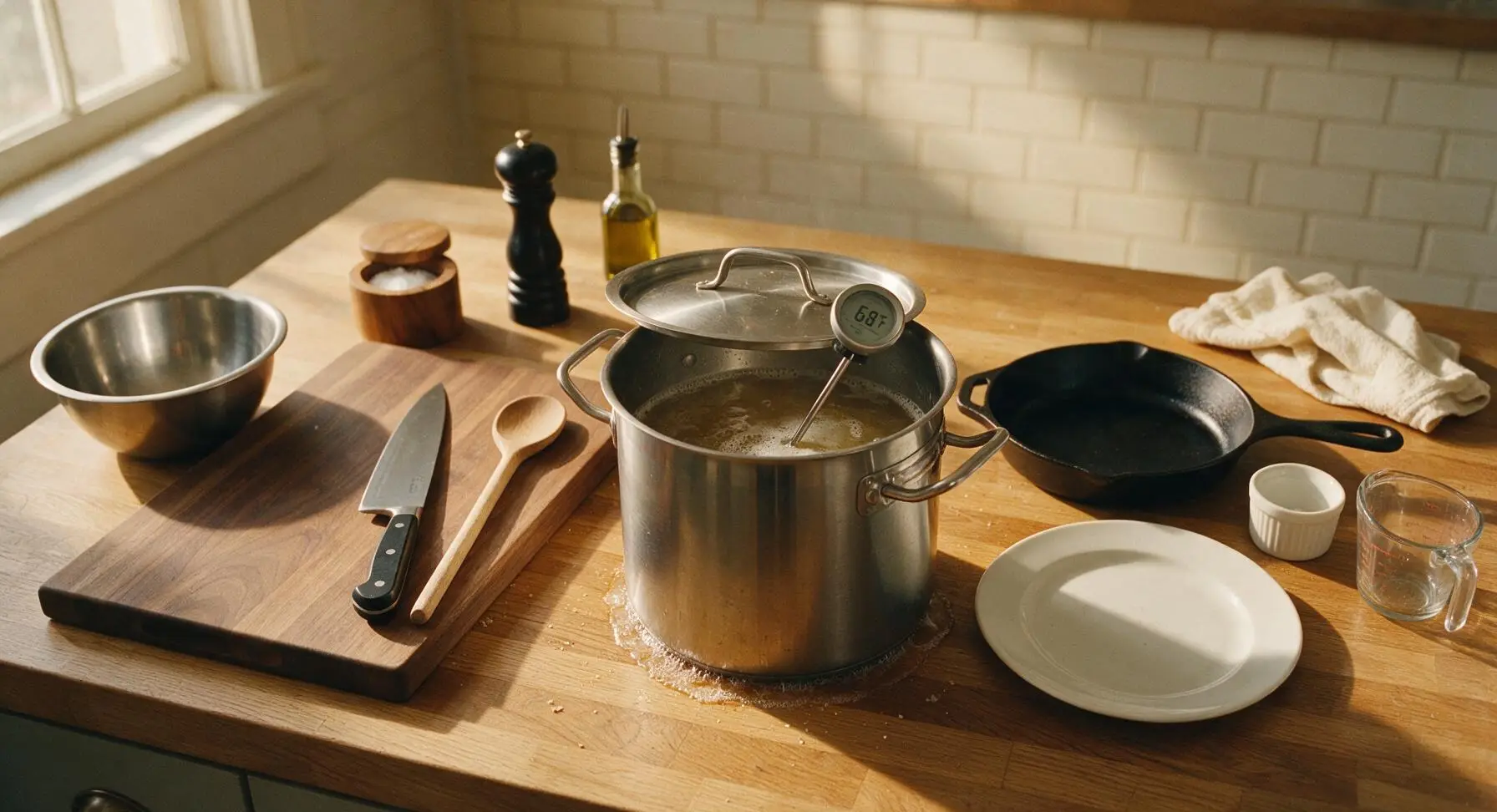
Step 6
step6:Cool the Wort
7

Pitch Ale Yeast

Pour the cooled, strained wort back into the sanitized clear fermenter, seal the lid tightly, and shake the fermenter vigorously for 30 seconds to aerate the wort (yeast requires oxygen to begin healthy fermentation). Sprinkle the full packet of Irish ale yeast evenly across the wort surface, then fill the airlock halfway with sanitizer and insert it into the fermenter lid. Store the sealed fermenter in a dark, 65–68°F space for 7 days, until bubbling in the airlock stops completely.
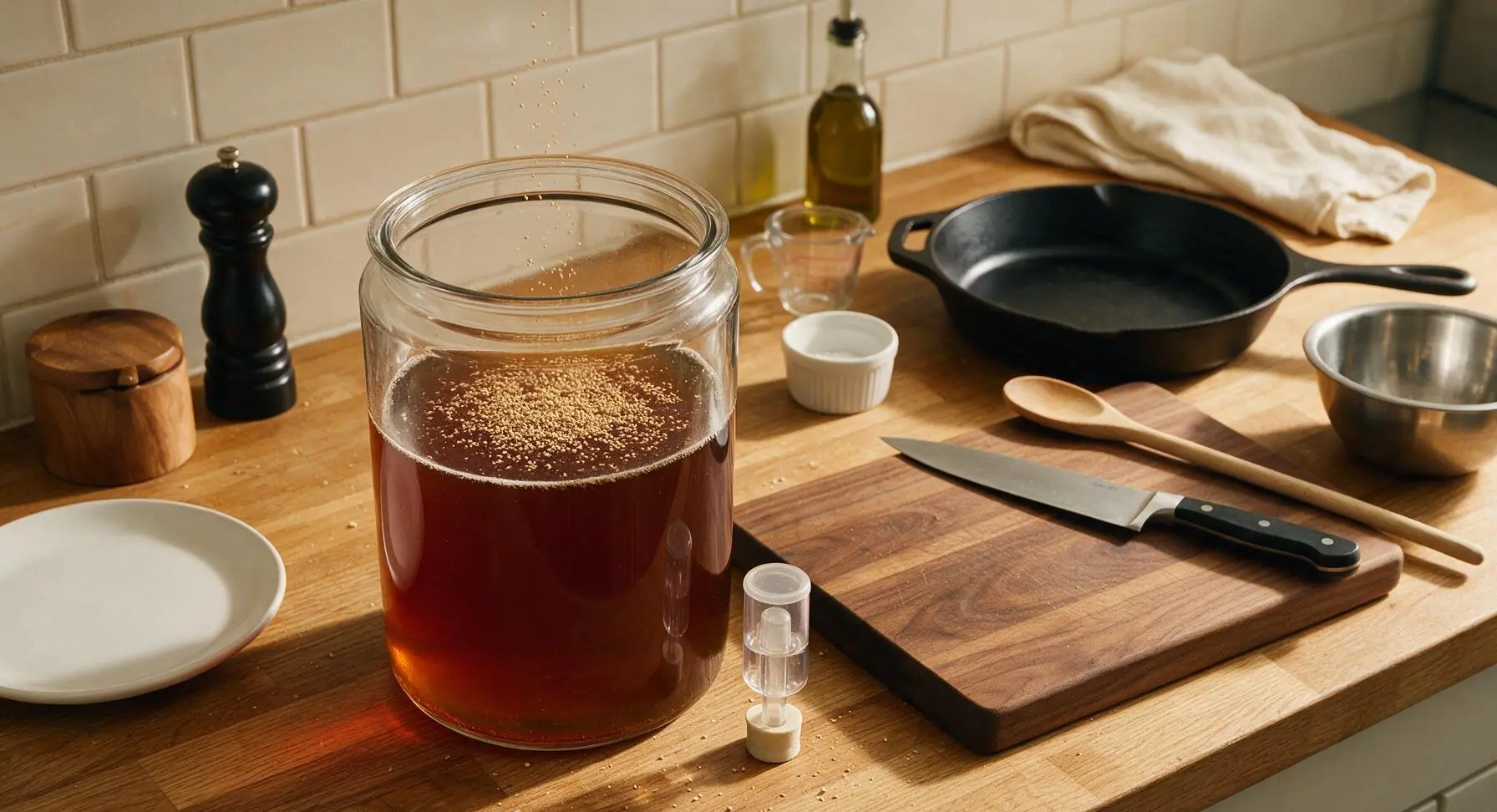
Step 7
step7:Pitch Ale Yeast
8

Bottle and Condition

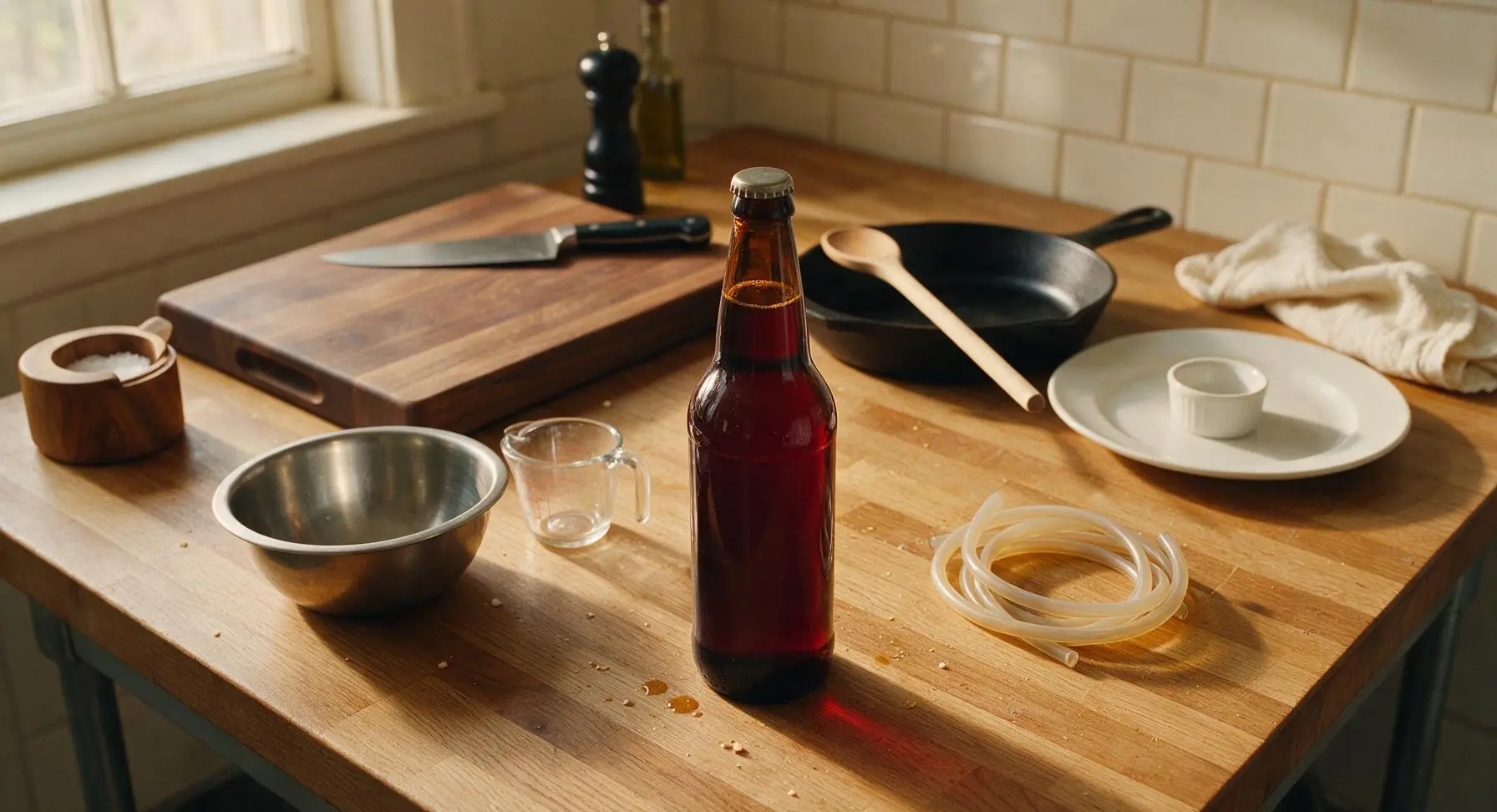
After 7 days of primary fermentation, dissolve the 5 oz of priming corn sugar in 1 cup of boiling water, cool to room temperature, and add to a clean sanitized bottling bucket. Use the auto-siphon to transfer the finished beer from the fermenter onto the priming sugar, stirring gently to mix evenly, leaving the thick yeast sediment (trub) behind in the fermenter. Fill sanitized 12oz bottles, cap tightly, and store in a dark 68°F space for 14 days to build natural carbonation. Chill bottles for 24 hours before serving for the smoothest flavor.
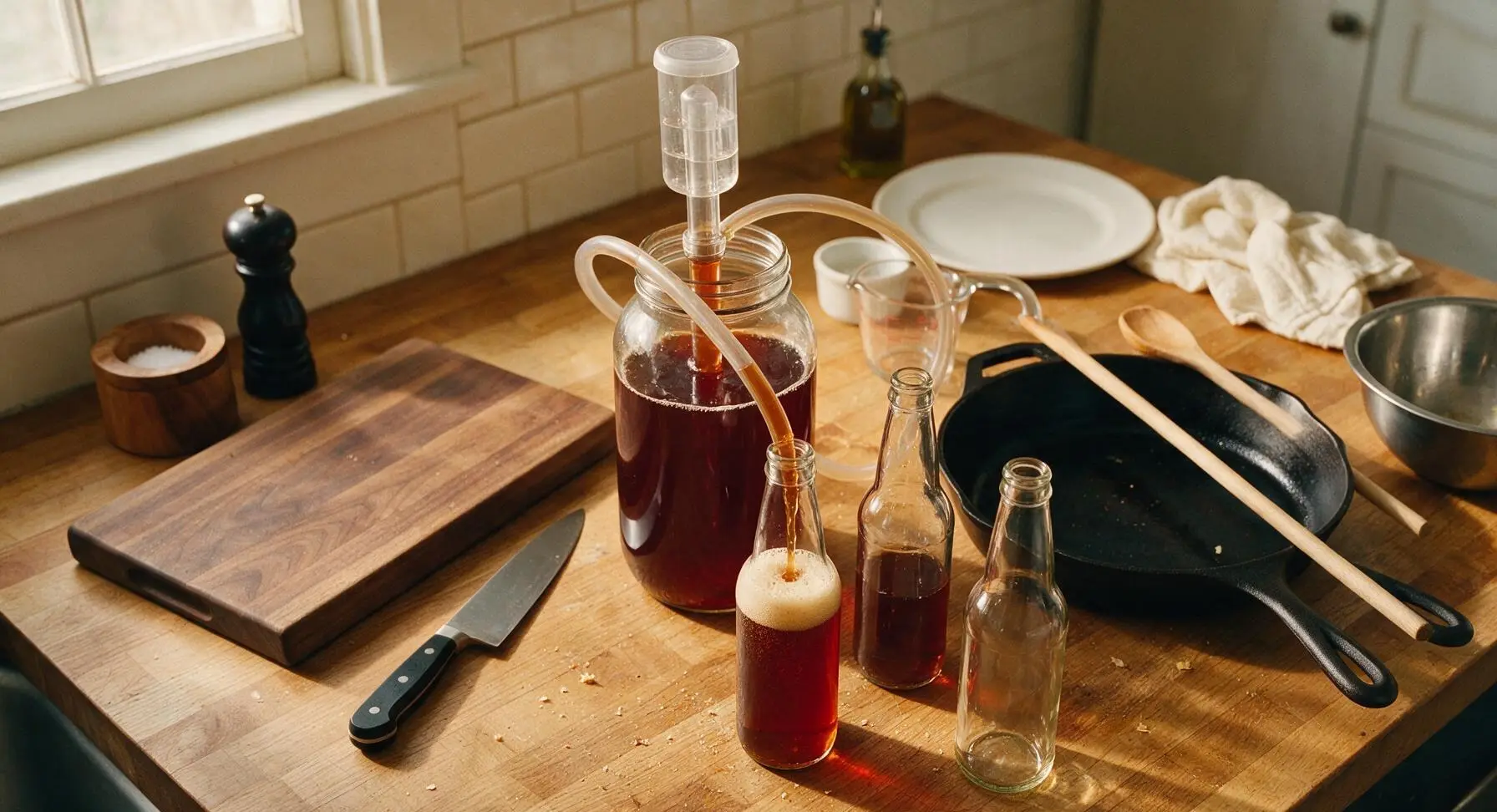
Step 8
step8:Bottle and Condition
Step 8
step8:Bottle and Condition

Tips

1.Skip extra roasted barley: Using more than 4oz will lend harsh, ashy stout-like flavors instead of the signature subtle dry finish and clear ruby-red hue that defines Irish Red Ale.
2.Cool wort rapidly post-boil: Quick cooling (within 30 minutes) prevents canned-corn flavored off-notes from dimethyl sulfide (DMS) and reduces the window for unwanted bacteria to contaminate the wort before yeast is added.
3.Don’t rush bottle conditioning: Waiting the full 14 days allows natural carbonation to fully develop and lets harsh 'green beer' flavors mellow into the smooth, balanced malt profile the style is known for.


✨ You May Also Like

Drinks & Beverages
🍜 Mexico

A bright, balanced tequila-based cocktail with zesty fresh lime, smooth orange liqueur, and a signature salt rim, perfect for warm summer sipping.

⏱️ 5 minutesDrinks & Beverages ★ 4.9
Drinks & Beverages
🍜 United States

Thick, creamy, nostalgic classic vanilla milkshake with a rich, smooth texture, topped with whipped cream and a cherry for cool, sweet refreshment.

⏱️ 5 minutesDrinks & Beverages ★ 4.7
Drinks & Beverages
🍜 United States

A bright, golden strong ale with fruity banana-clove notes, subtle hop spice, and soft carbonation, brewed in classic Trappist Tripel tradition.

⏱️ 2 hours aDrinks & Beverages ★ 4.5
Drinks & Beverages
🍜 United States

A frothy, nostalgic American soda fountain treat pairing bubbly cold root beer with creamy vanilla ice cream, perfect for cooling down at warm weather gatherings.

⏱️ 20 minuteDrinks & Beverages ★ 4.8
Drinks & Beverages
🍜 United States

Tart, funky, effervescent American Wild Ale is a complex fruity craft beer brewed with wild yeast, delivering bright, zesty notes perfect for warm-weather sipping.

⏱️ 2 hours aDrinks & Beverages ★ 4.4
Drinks & Beverages
🍜 United States

Bright, bubbly copycat of the iconic American caramel cola, balanced with citrus and warm spice, perfect for sipping ice-cold on hot days.

⏱️ 15 minuteDrinks & Beverages ★ 4.8

Irish Red Ale:Frequently Asked Questions

1.What gives this Irish Red Ale its signature deep ruby hue? ▾
That iconic ruby color comes from small, measured amounts of crushed roasted barley and chocolate malt in the grain bill—no artificial coloring needed. Keep those dark malts to just 1-2% of your total grain weight so you get that rich red glow without turning the beer too dark or adding harsh burnt notes, with the 40L crystal malt adding warm amber depth underneath.
2.Can I substitute the crushed pale 2-row malt if I don’t have it on hand? ▾
Absolutely, you can swap pale 2-row for domestic 2-row base malt, or even a light pilsner malt in a pinch, just note pilsner will add a slightly crisper, lighter base. Avoid heavily kilned base malts like dark Munich here—they’ll overpower the soft, smooth malt profile that makes this red ale so approachable and throw off its balanced caramel notes.
3.How do I avoid harsh, burnt flavors from the roasted barley and chocolate malt? ▾
The key is to avoid steeping those dark roasted malts for too long, or in water that’s too hot. Keep your mash temperature between 150–155°F, and leave dark malts in the mash for no longer than 60 minutes total. You only need a small amount of each to get that signature dry finish, so resist the urge to add extra to amp up color.
4.What water profile works best for this Irish Red Ale recipe? ▾
Stick to soft, filtered brewing water with low to moderate mineral content for the most authentic, smooth result. You don’t need heavily mineralized stout water here—aim for slightly elevated chloride levels (50–75 ppm) to boost soft, round malt flavor, and keep sulfate levels low to avoid making the dry roast finish taste sharp or bitter.
5.What is the typical ABV of this Irish Red Ale? ▾
When brewed to the standard profile with this grain bill, you’ll land around 4.5–5.5% ABV, which is right in the classic sessionable Irish red range. It’s strong enough to have satisfying malt depth, but light enough to sip a few pints over a casual evening with friends without feeling heavy, which is exactly what makes the style so beloved.
6.What role does the 40L crystal malt play in this recipe? ▾
That 40L crystal malt is what delivers the soft, gentle caramel notes the style is known for, without the cloying, heavy toffee flavor you get from darker crystal malts. It adds subtle residual sweetness that balances the faint dry bite from the roasted barley, and contributes to that smooth, rounded mouthfeel that makes the ale go down so easy.
7.Do I need a long, extended boil for this Irish Red Ale? ▾
You don’t need an extra-long boil for this Irish red—a standard 60-minute rolling boil works perfectly. Long 90+ minute boils create extra deep Maillard browning that makes the beer taste more like a heavy brown ale than a bright, clean red. Just maintain a steady roll to drive off unwanted harsh volatile compounds from the malt.
8.How long should I condition this Irish Red Ale before drinking it? ▾
After primary fermentation wraps up (usually 1–2 weeks at 65–68°F for standard ale yeast), give it 1–2 weeks of cold conditioning at around 40°F to let soft malt flavors meld and any faint roast astringency mellow out. You can drink it earlier, but that short rest makes the finish smoother and lets that pretty ruby color clarify nicely.
9.What foods pair best with this finished Irish Red Ale? ▾
Its smooth malt and faint dry roast make it incredibly versatile for casual meals. It pairs perfectly with hearty pub fare like bangers and mash, sharp cheddar cheese boards, crispy fish and chips, or even slow-cooked corned beef. The soft caramel notes cut through salty, savory food, while the dry finish keeps each sip from feeling too heavy or sweet.
10.Why is my batch coming out brown instead of the signature ruby red? ▾
If your ale is murky brown instead of that vivid ruby, you almost certainly added too much roasted barley or chocolate malt, or steeped those dark malts at too high a temperature. Those dark malts should only make up 2-3% of your total grain bill max; add them late in the mash for brighter, clearer red color without extra harshness.
11.Can I brew this recipe with extract or partial mash equipment if I don’t do all-grain brewing? ▾
Absolutely! This recipe translates beautifully to extract or partial mash setups. Swap the bulk of the pale 2-row for a light domestic liquid malt extract, and steep the crushed crystal, roasted barley, and chocolate malts in 155°F filtered water for 20 minutes before adding extract and proceeding with your usual boil and fermentation for the same smooth, malty result.

Comments (15)

2 weeks ago

OMG this Irish Red Ale recipe is such a game changer! I brewed a batch for our St. Paddy’s day potluck last weekend and every single person was asking for the recipe. It has that perfect malty sweetness without being too heavy, zero weird bitter aftertaste. Even my husband who only drinks cheap macro lagers went back for three pints! 10/10 will make again.

1 week ago

Wait did you do the dry hop addition the recipe lists? I skipped it last time and felt like it was missing a little something, curious if it’s worth adding next batch!

5 days ago

Great question! The dry hop addition is totally optional but adds that subtle, earthy backbone that makes this red ale taste like the pub versions you’d get in Dublin. If you’re a fan of brighter, maltier brews you can absolutely skip it though!

1 week ago

Pretty solid Irish Red! The 90 minute cook time was totally manageable even on a weeknight when I was juggling making dinner for the kids too. Only note is I wish the recipe specified what kind of caramel malt to use a little clearer — I used 60L and it came out a touch darker than the photo shows. Tasted great though, perfect for backyard cookouts.

5 days ago

Thanks for the feedback! We recommend 40L caramel malt for that classic ruby red hue, but 60L works great if you prefer a toastier, deeper flavor. So glad it turned out tasty for you!

3 days ago

SO good. I’ve tried three other Irish Red homebrew recipes and this one is by far the most balanced. The little touch of roasted barley gives it that perfect dry finish without making it taste like a stout. Already planning my second batch to have on hand for our fall football watch parties.

5 days ago

Decent recipe, but I ran into a stuck sparge when I followed the grain bill exactly. Ended up losing about a quart of wort and had to top it off with a little extra water, which made the final ABV a bit lower than listed. Flavor was still nice, but the process was more stressful than I expected for a medium difficulty recipe.

3 days ago

I had the same issue my first batch! I added half a pound of rice hulls to the grain bill and haven’t had a stuck sparge since, doesn’t impact the flavor at all!

2 days ago

Sorry to hear about the stuck sparge! That’s such a frustrating hiccup — Lisa’s rice hull tip is spot on, we’ll add a note about that to the recipe tips section for future brewers. Glad the flavor still came out well for you!

2 days ago

Brewed this with my roommate last weekend and we were shocked how close it tastes to the commercial red ale we used to order at our local pub before it closed. The carbonation level was perfect after two weeks in the bottle, super smooth, no off flavors at all. Total win!

yesterday

How long did you let it ferment before bottling? I’m about to start my first ever batch and I’m paranoid I’ll bottle too early!

yesterday

Made this for my partner’s birthday cookout and it was a total hit! We had a whole spread of burgers, brats, and coleslaw, and this ale paired perfectly with everything. It’s light enough to drink in the Florida heat but has enough depth to feel special. Already sent the recipe to three of my neighbors.

2 hours ago

First time making an ale that didn’t come out tasting like soapy dishwater, so that’s a huge win for me! The step-by-step instructions were super clear, even for someone who’s only done extract brews before. Knocked a star off because I wish there were more notes on adjusting for higher altitude, but I figured it out as I went.

30 minutes ago

So stoked this didn’t turn out soapy for you — that’s the worst! Great call on the altitude note, we’ll add a section with adjustments for brewers above 3,000 feet soon, thanks for the feedback!

1 week ago

I don’t even brew beer that often but I decided to test this out for our annual neighborhood block party and Y’ALL. People were raving so much I felt like a professional brewer! It’s got that beautiful red color that looks so pretty in a pint glass, the flavor is smooth enough for people who don’t drink craft beer regularly, and it’s strong enough for the beer snobs in the group. Perfect middle ground!

5 days ago

Did you keg this or bottle it? I’m trying to decide if it’s worth kegging my next batch or if bottle conditioning works just as well.

3 days ago

I bottled mine! Let them condition for 3 weeks at room temp and they were perfectly carbed, no complaints from anyone at the party. I’m sure kegging would work great too though!

30 minutes ago

Just finished cooling the wort for my first batch of this and the smell already has me so excited. The grain mix smelled like warm caramel and toast while I was mashing, my whole house smelled amazing. Will update once it’s done fermenting but so far the process has been so smooth!

3 days ago

Game changer for my monthly brew rotation! I like to brew a big batch once a month to have on hand for weeknight dinners and weekend hangs, and this is going straight into my regular rotation. It’s not too hoppy, so it pairs great with pizza, tacos, even the roasted salmon I make for meal prep on Sundays. Obsessed.

2 days ago

Oh taco pairing is such a good call! I never thought to drink red ale with spicy food but that malty sweetness would cut the heat so well, trying that this weekend.

5 days ago

This was my very first homebrew attempt ever! I was so nervous I’d mess it up, but the instructions were really straightforward and I only made one tiny mistake (forgot to add the Irish moss at 15 minutes left in the boil). It came out a little hazy but the flavor is still chef’s kiss. My roommates loved it, we already went through half the batch in two nights.

3 days ago

Congrats on your first homebrew — that’s such a huge milestone! A little haze from skipping Irish moss is totally normal and doesn’t impact flavor at all, so don’t even stress about it. We’re so glad you and your roommates enjoyed it!

2 days ago

Welcome to the homebrew club! My first batch was a disaster (exploding bottles all over my closet) so you’re already way ahead of the game. This recipe is a great starter pick, nice choice.

2 weeks ago

I’ve been brewing for 8 years and this is easily one of the best Irish Red recipes I’ve ever tested. It’s authentic, not overcomplicated, and the flavor profile is exactly what a traditional red ale should be — no weird trendy add-ins that ruin the classic vibe. I brought a growler to my local homebrew club meetup and everyone asked for the link.

1 week ago

That means the world coming from a seasoned brewer! We wanted to keep this true to the classic Irish pub style without any unnecessary frills, so we’re thrilled it got the seal of approval from you and your homebrew club.

just now

Just poured my first glass of this after conditioning for 3 weeks and I’m screaming. It’s SO good. Perfectly carbonated, that nice toasty malt flavor, just a tiny hint of roast on the finish. My dad is a total Irish Red snob and he’s going to lose his mind when he tries this at our Father’s Day gathering.

2 days ago

Really solid recipe! I added a tiny bit of extra vanilla bean (like 1/4 of a bean, scraped in at the end of the boil) to give it a little extra warmth and it turned out incredible. Only reason it’s not 5 stars is I wish the yield was a little bigger, I only ended up with 4.5 gallons instead of 5 after trub loss.

yesterday

That vanilla addition sounds absolutely delicious — we love when people put their own creative spin on the recipe! The trub loss can vary a bit depending on your setup, so we recommend adding an extra half quart of water pre-boil if you consistently lose more volume than expected.

5 minutes ago

Followed this recipe exactly for a St. Jude’s fundraiser beer tasting event and it won second place in the amber/red ale category! The judges commented on how clean and balanced the flavor was, and how it had that perfect authentic Irish red character. Can’t recommend this enough for anyone looking for a reliable, crowd-pleasing brew.



