1.Why do I need to use aged napa cabbage kimchi instead of fresh kimchi for this stew?
▾
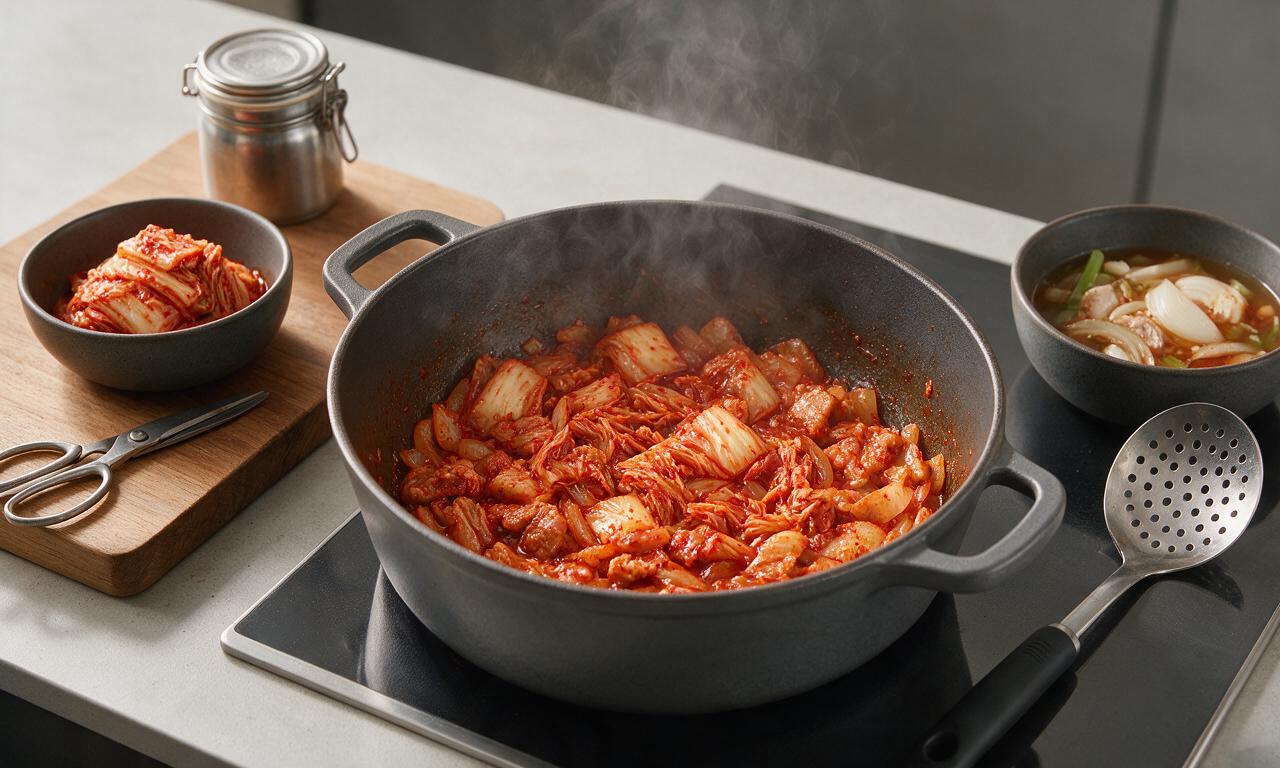
Aged (2–4 week old, nicely sour) napa kimchi delivers the deep, tangy, umami fermented base that makes jjigae taste authentic. Fresh kimchi is crisp and bright, perfect for a side dish, but it tastes flat and watery when stewed. If your kimchi is too new, leave it on the counter 1–2 days to sour, and save all its brine—it’s liquid gold for your broth.
2.Can I substitute the skinless pork belly if I don’t eat pork?
▾
Absolutely! Skinless pork belly adds rich, fatty savoriness, but great swaps include thinly sliced pork shoulder, oil-packed canned tuna (drained slightly), or shiitake mushrooms for a plant-based version. Note that leaner or non-meat swaps won’t render fat, so add a teaspoon of toasted sesame oil when sautéing to replicate that deep, rounded savoriness.
3.What’s the difference between firm silken tofu and regular firm tofu for this recipe?
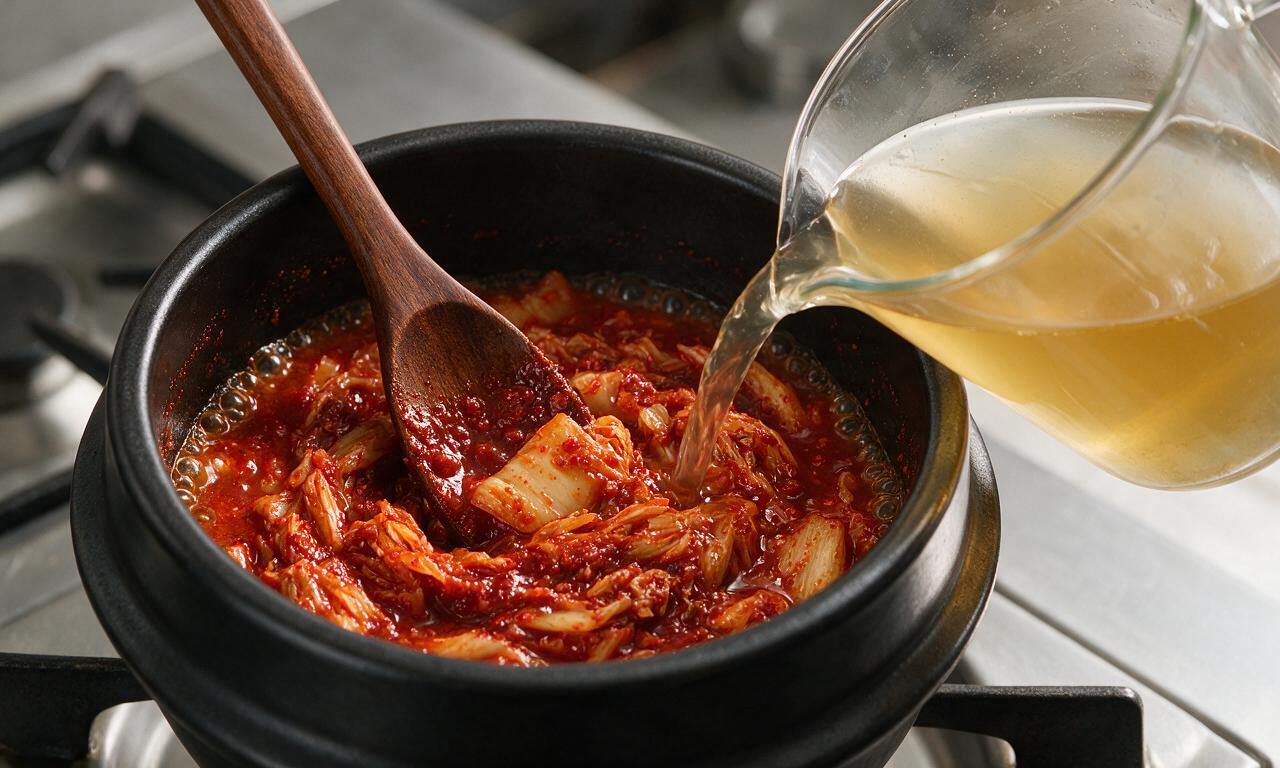
▾
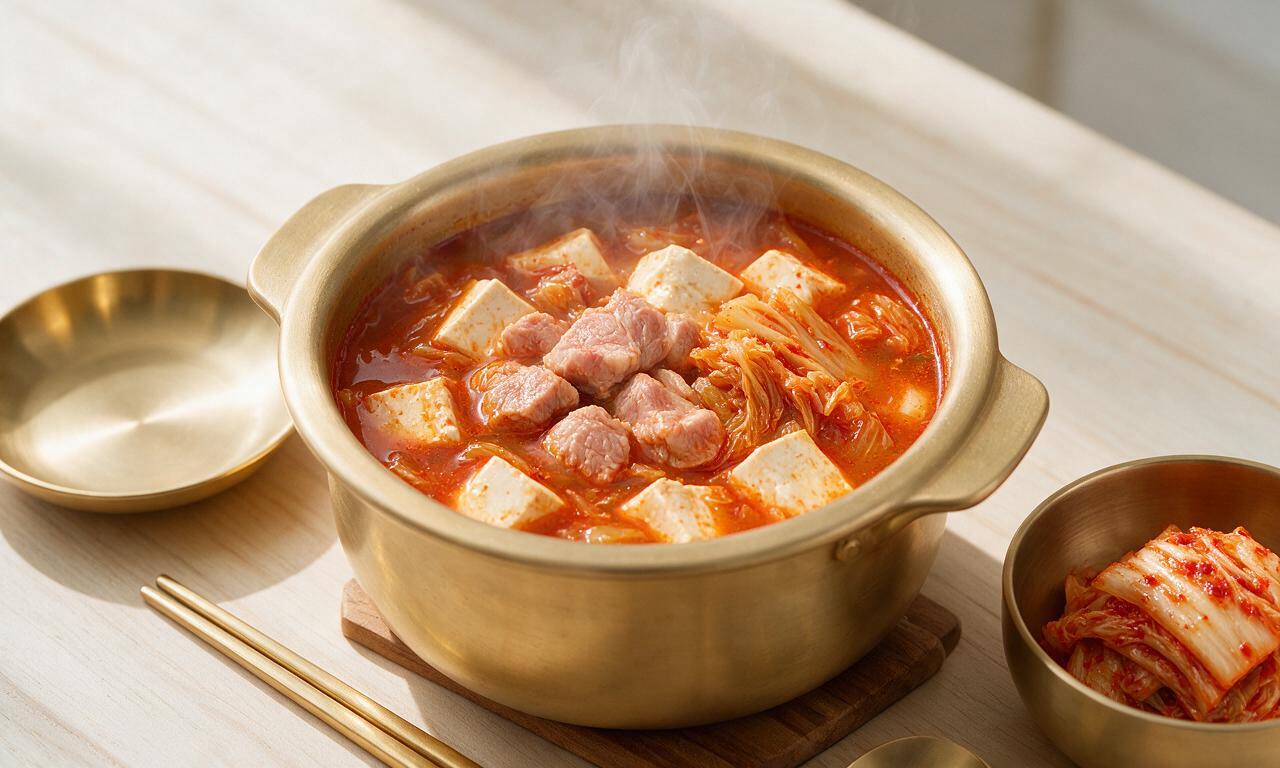
Firm silken tofu has the delicate, custardy, soft texture that’s classic for kimchi jjigae—it holds its shape gently while simmering but has that melt-in-your-mouth bite when you eat it. Regular firm tofu is denser, chewier, and more porous; it will soak up broth but won’t deliver that iconic soft, silky texture people expect from this comfort stew.
4.Do I really need to sauté the pork and kimchi first before adding broth?
▾
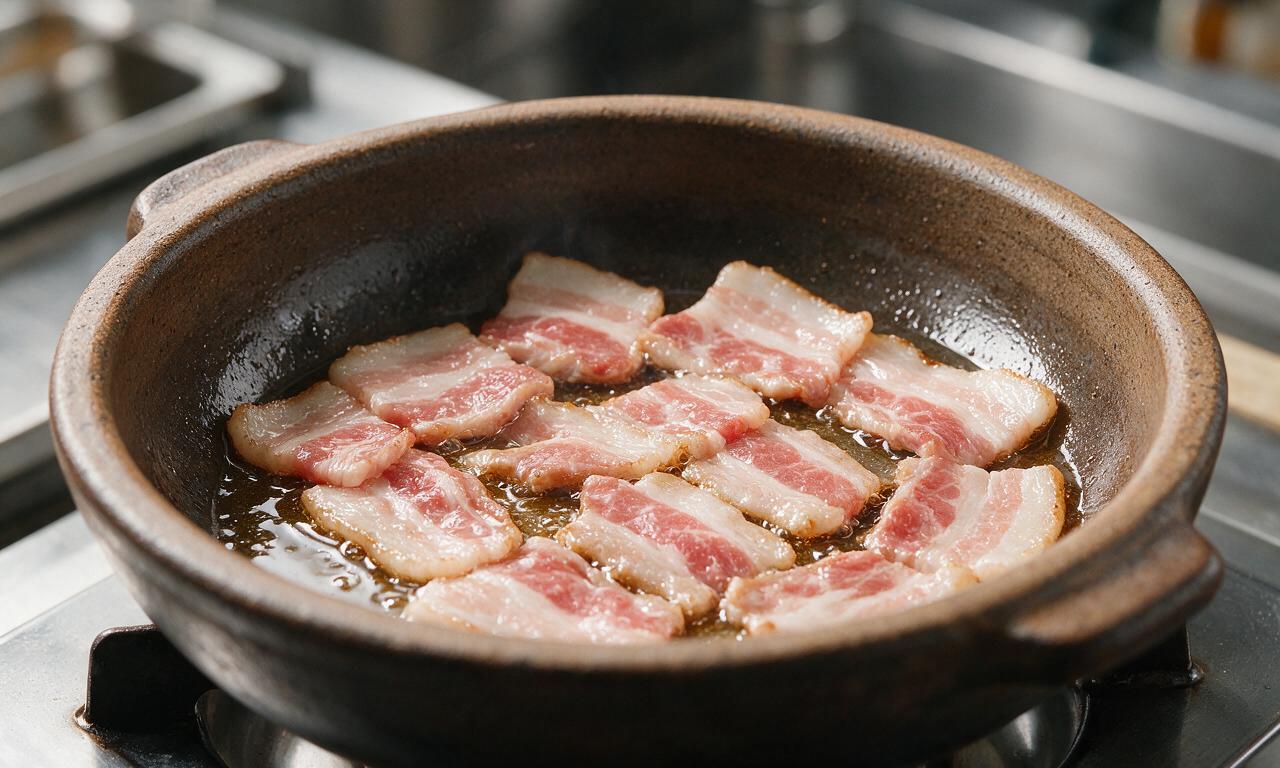
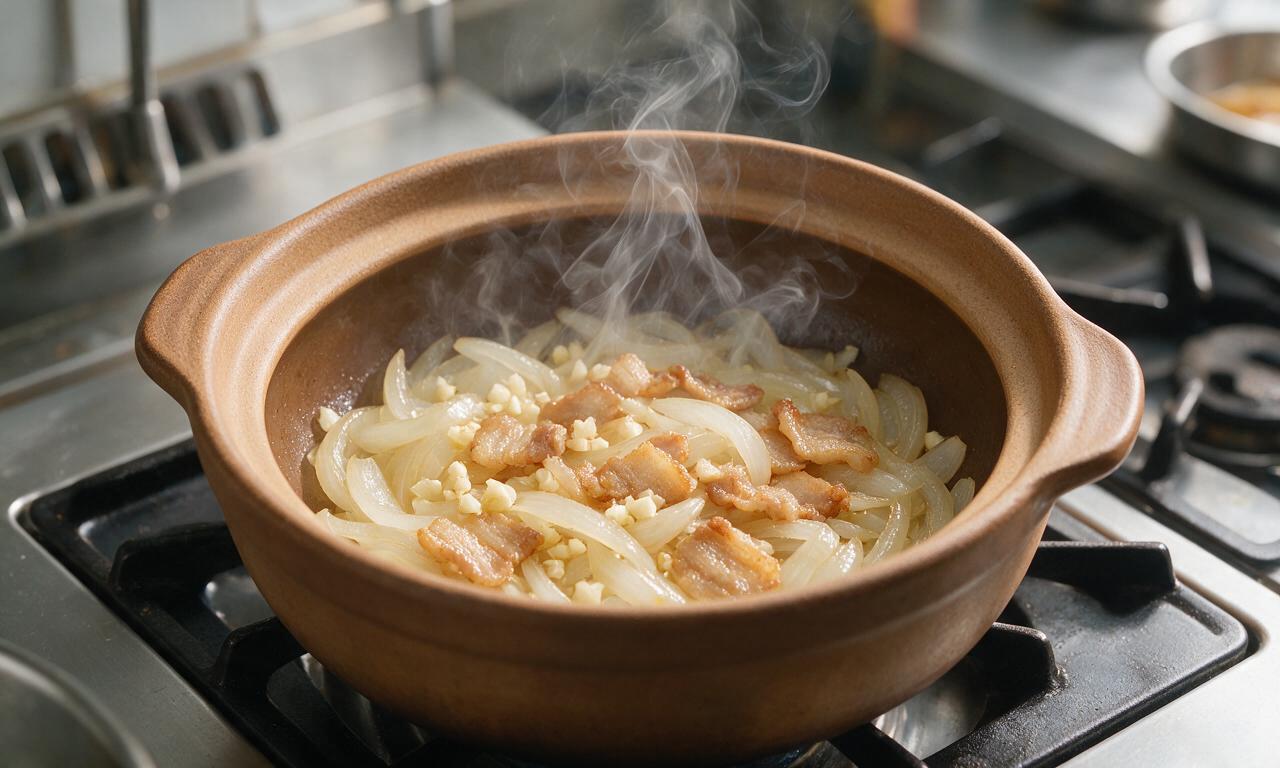
Yes, that quick initial sauté is non-negotiable for deep, well-rounded flavor! Cooking the pork belly first renders out its rich fat, then sautéing the aged kimchi and minced garlic in that fat caramelizes the kimchi’s edges, mellows sharp sour notes, and builds a layered base that tastes far better than boiling all ingredients together from the start.
5.How long should I simmer the stew to get perfectly tender kimchi?
▾
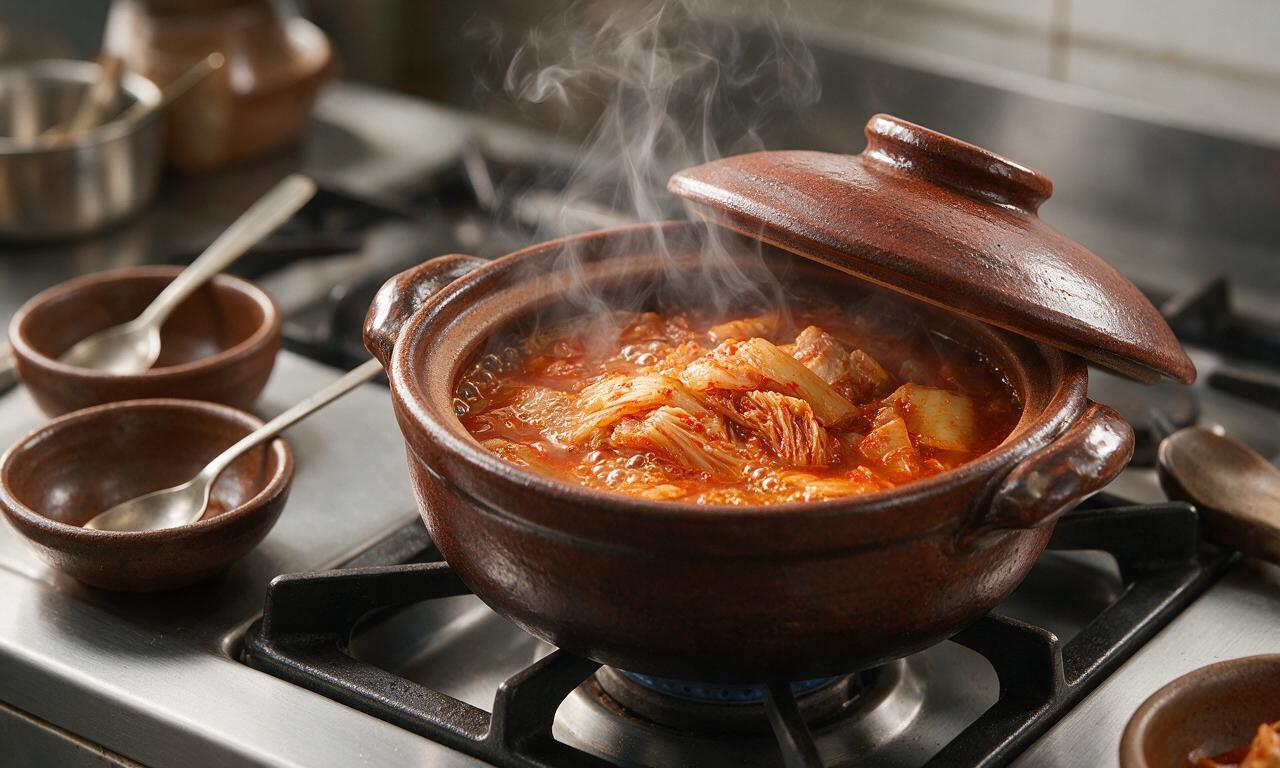
Simmer it for 15–20 minutes over medium-low heat once you add your broth—don’t let it boil rapidly, as that will make the pork tough and break up the tofu too much. That simmer time is just long enough for kimchi to turn soft and mellow, pork to get tender, and all flavors to meld without turning the ingredients mushy and overcooked.
6.Can I make this kimchi jjigae ahead for meal prep?
▾
Absolutely—it actually tastes even better the next day! Let the stew cool completely, store it in an airtight container in the fridge for up to 4 days, and hold off on adding the tofu until you reheat if possible. The flavors meld and deepen as it sits; just reheat gently over low heat and nestle in cubed tofu to warm through for 3 minutes before serving.
7.What’s the best liquid to use if I don’t have enough reserved kimchi brine?
▾
If you don’t have ½ cup of reserved kimchi brine per batch, low-sodium chicken or anchovy broth works perfectly. Avoid heavily salted store-bought broths, because aged kimchi is already quite salty. Always taste the stew before adding extra soy sauce or salt—you’ll likely need far less added seasoning than you initially think.
8.Why does my kimchi jjigae turn out bland instead of tangy and savory?
▾
Bland jjigae almost always comes from using too-fresh kimchi, skipping the initial sauté step, or diluting the broth too much with plain water. Fix it by stirring in a splash of extra kimchi brine, a tiny pinch of sugar to balance sour notes, and letting it simmer 5 more minutes to concentrate flavors; avoid adding extra water, which washes out that signature fermented umami.
9.Can I use white or red onion instead of the specified yellow onion?
▾
Yellow onion is ideal because it has a balanced sweet, sharp flavor that softens beautifully when sautéed and simmered, but you can swap in mild sweet white onion if that’s what you have on hand. Skip sharp red onion for this recipe—it has a harsher, peppery bite that will overpower the delicate kimchi and pork flavors instead of complementing them.
10.How do I keep the firm silken tofu from breaking apart when I cook the stew?
▾
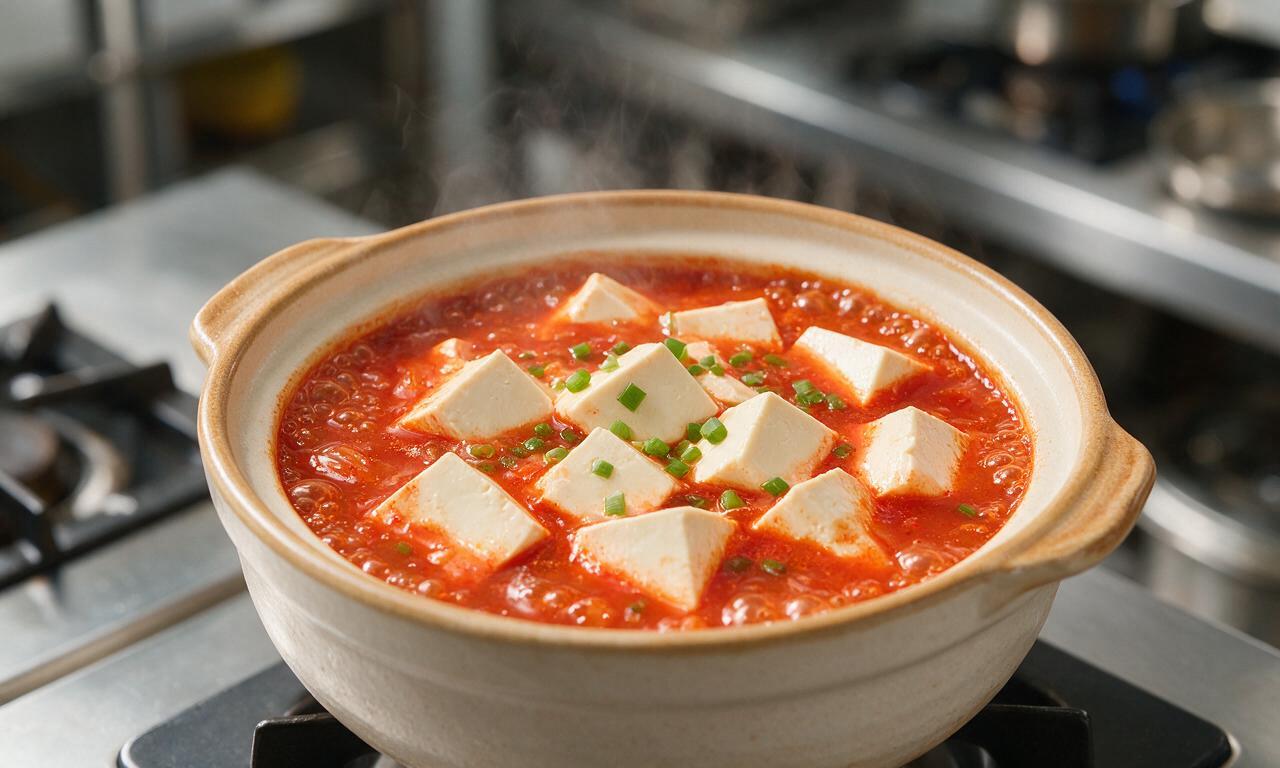
Cut the firm silken tofu into big 1.5-inch cubes, and don’t stir it directly into the stew. Instead, nestle the cubes gently into the simmering liquid during the last 5 minutes of cooking. If you stir too aggressively, the soft tofu will crumble into tiny bits; a gentle shake of the pot is all you need to settle cubes into the broth without breaking them.
11.What are the best sides to serve with kimchi jjigae?
▾
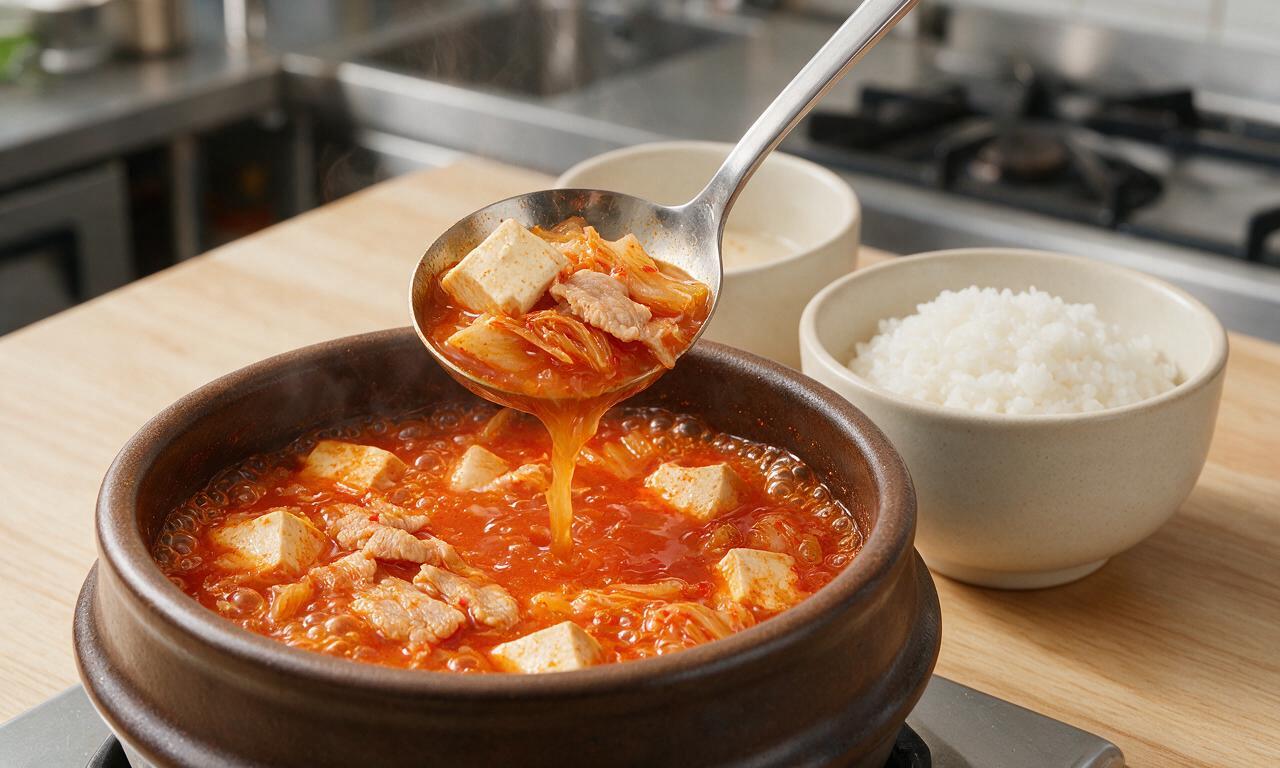
The classic, no-fuss pairing is a bowl of freshly steamed short-grain white rice, plus a few small Korean banchan: quick pickled radishes, seasoned sesame spinach, and a tiny dish of gochugaru for people who want extra heat. The fluffy, mild rice cuts through the stew’s rich, tangy flavor perfectly, making every bite feel balanced and cozy.
12.Can I make a vegetarian or vegan version of this stew without losing depth of flavor?
▾
You absolutely can! Swap the pork belly for 8 ounces of sliced shiitake mushrooms, use low-sodium vegetable or dried mushroom broth instead of meat-based broth, and stir in a teaspoon of doenjang (Korean fermented soybean paste) when you sauté the kimchi. That fermented soybean punch adds the same deep savoriness pork provides, so you won’t miss the meat at all.
13.How do I adjust the stew if my aged kimchi is extra sour and pungent?
▾
If your kimchi is extra tangy from fermenting longer than expected, don’t toss it! Just add ¼ teaspoon of white sugar or a splash of unseasoned rice wine when you sauté it to balance the sharp acid, and toss in a few extra slices of yellow onion to add natural sweetness. You’ll keep that signature tang, just mellow it so it’s pleasant instead of mouth-puckering.

OMG this kimchi jjigae was SO good! I made it for our Sunday family dinner last night and even my super picky 8 year old asked for seconds. I used a little extra pork belly because my husband is a meat fiend, and it came together in literally 30 minutes just like the recipe said. Total game changer for weeknight meals too, I’m adding this to our regular rotation!
This recipe is perfect for meal prep! I made a big batch on Sunday, portioned it out with rice, and it reheated like a dream all week for work lunches. The flavor actually got better each day, which I was not expecting! Super easy too, I didn’t have to run to any special Asian market because I already had all the staples in my pantry. 10/10.
As a college student on a super tight budget, this was chef’s kiss. I used old kimchi I had in the back of my fridge, a can of tuna I had lying around instead of pork, and it still slapped. Took me 25 minutes total, and I have enough leftovers for 3 more meals. No fancy equipment needed either, just my beat up old stock pot. Only reason I’m not giving 5 stars is I wish I’d had silken tofu to throw in, that’s on me though! Will definitely make this again when I’m tired of instant noodles.
I brought this to my office potluck last week and people were literally coming up to me asking for the recipe all afternoon! I doubled the recipe to feed a crowd, added extra tofu and zucchini, and it was gone in 10 minutes flat. Even my coworker who hates spicy food ate a whole bowl, she said the flavor was so good she powered through the heat. Obsessed!
This was my first time ever making any kind of Korean stew and I was so nervous it would turn out wrong, but the instructions were so straightforward! I messed up a little and added too much gochugaru at first, but I threw in an extra half cup of anchovy broth and it balanced out perfectly. It tasted just like the kimchi jjigae I get at my favorite local Korean restaurant, I was so proud of myself.
I’m a total wimp when it comes to super spicy food so I cut the gochugaru in half and used a mild kimchi, and it was still absolutely packed with flavor. I added a handful of chopped green onions and a drizzle of sesame oil at the end like my grandma used to do, and it gave it that perfect nutty finish. So cozy for rainy cold days, I ate two bowls straight from the pot while watching TV last night.
I swore I hated soft tofu until I made this recipe. I was this close to leaving it out entirely but decided to follow the recipe exactly, and oh my god? The silken tofu soaks up all that tangy, spicy broth so well, it’s my favorite part now! I made this with my partner last night and we both agreed it’s the best comfort food we’ve made all winter. We even fought over the last serving.
30 minute cook time? No fancy ingredients? Sign me up! I’m a single dad with three kids under 10 and I’m always looking for fast, filling dinners that don’t require a million steps. I made this tonight with pork shoulder I had in the freezer, served it with rice and roasted seaweed, and all three kids cleaned their plates. Even my teenager, who turns her nose up at everything I cook lately, asked if we can have this again next week. Worth every minute.