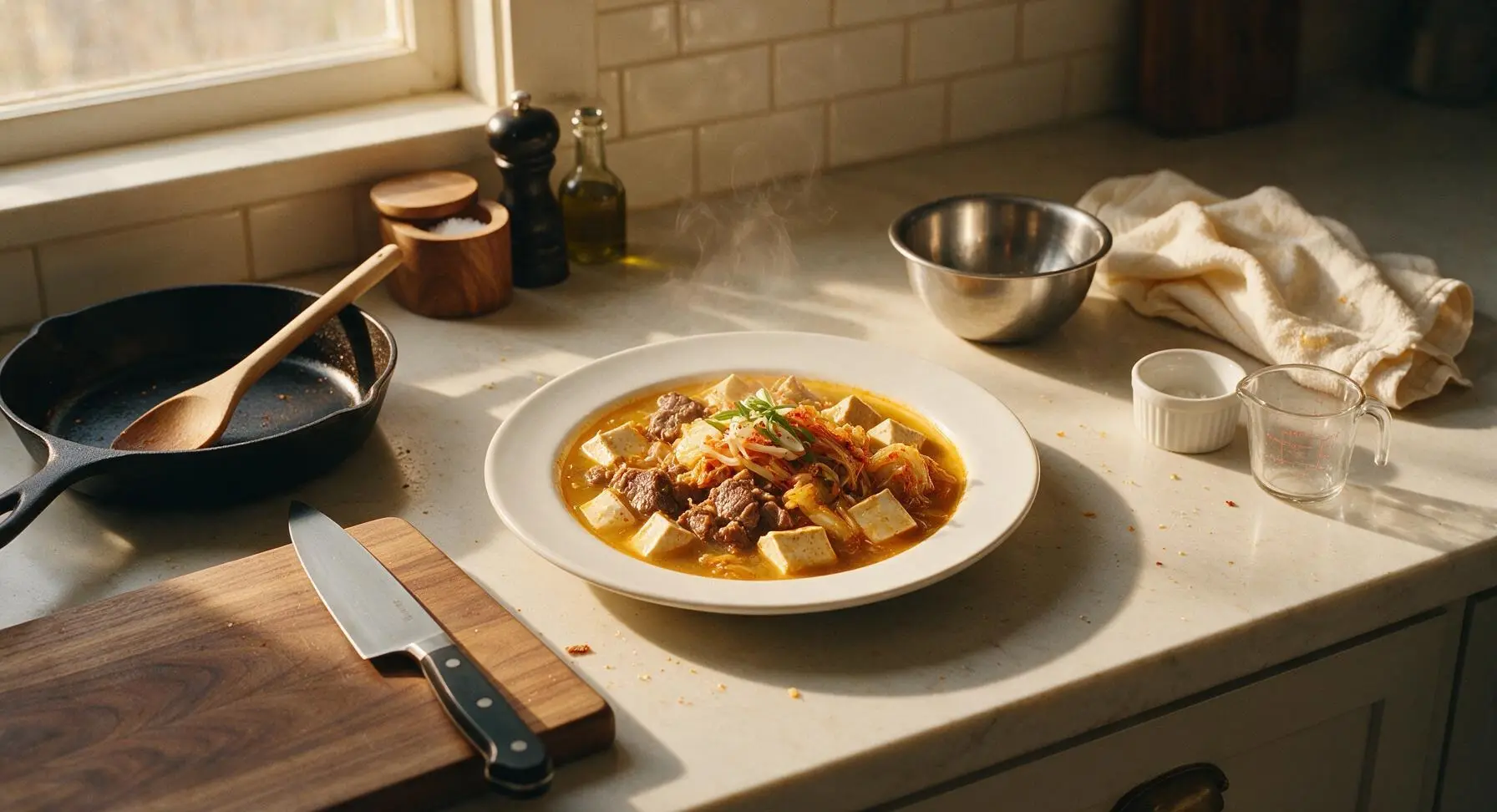
Kimchi Jjigae with Beef

title 1
Kimchi Jjigae with Beef
⏱️ cook time 25 minutes
🍽️ servings 4
⚡ Difficulty easy

intro

Deeply savory, tangy fermented kimchi stew with tender marbled beef and silky tofu, the ultimate Korean cold-weather comfort food made for sharing with rice.

Ingredients
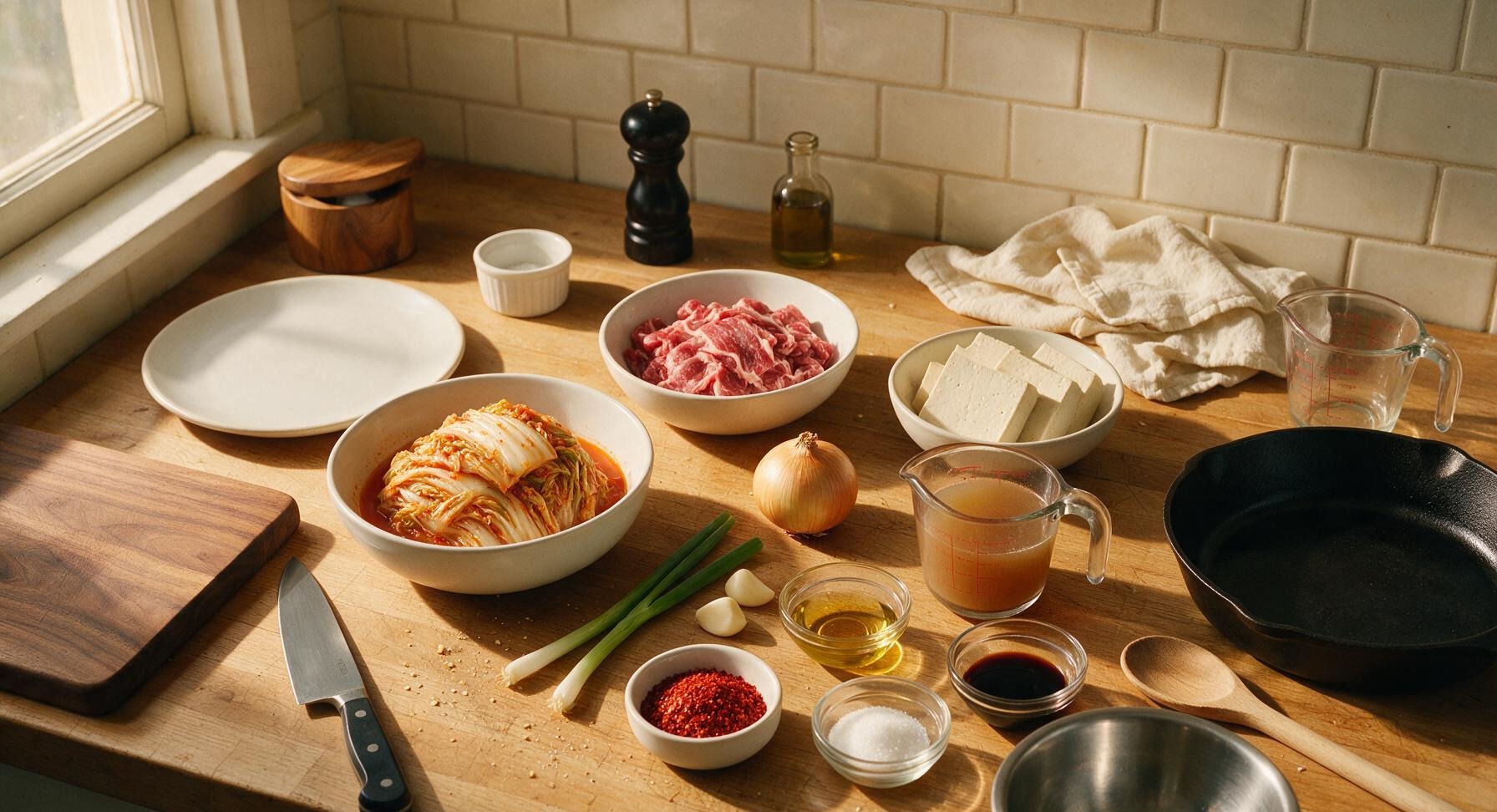
Well-fermented napa cabbage kimchi (with reserved brine) 300g (plus 60ml reserved brine)
Thinly sliced marbled beef (brisket or short rib) 200g
Firm tofu 200g
Yellow onion 1 small (100g)
Scallions 2 stalks (20g)
Garlic cloves 3 (10g)
Gochugaru (Korean red chili flakes) 1 tbsp (5g)
Low-sodium beef broth 480ml (2 cups)
Soy sauce 1 tbsp (15ml)
Toasted sesame oil 1 tsp (5ml)
Granulated sugar 1 tsp (4g)
Neutral vegetable oil 1 tbsp (15ml)

Steps

1

Prep All Ingredients

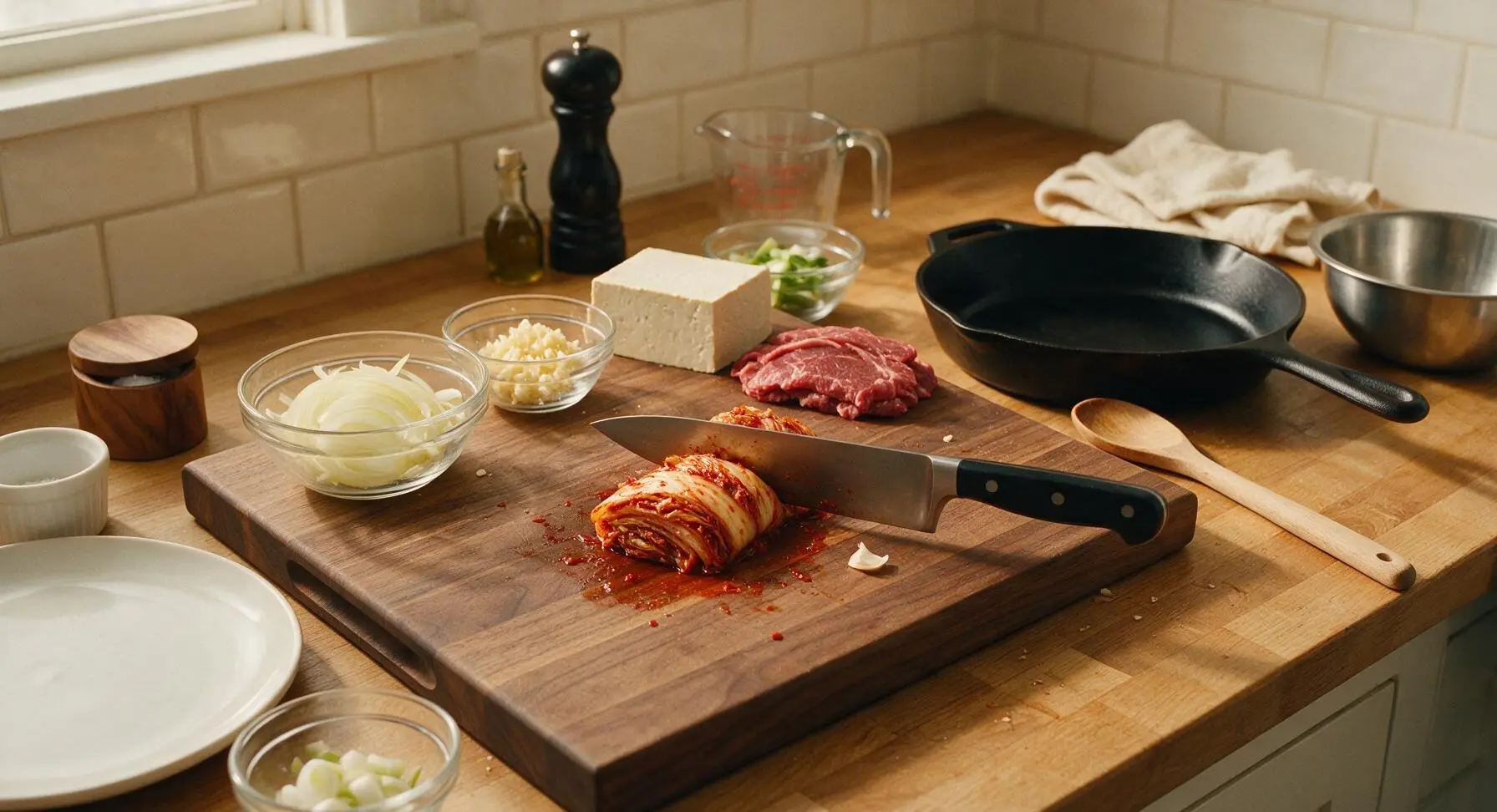
Set the acacia wood cutting board on the center of the counter. Using the chef knife, cut the fermented kimchi into 2.5cm bite-sized pieces, reserving 60ml of its brine in the smallest prep bowl. Slice the beef against the grain into 0.5cm thick strips, cut firm tofu into 2.5cm cubes, thinly slice the yellow onion, mince garlic cloves, and slice scallions into 2cm lengths, separating white and green parts. Place each prepped ingredient into separate clear glass prep bowls to stay organized. Expect this step to take approximately 10 minutes.
Step 1
step1:Prep All Ingredients
2

Sear the Sliced Beef

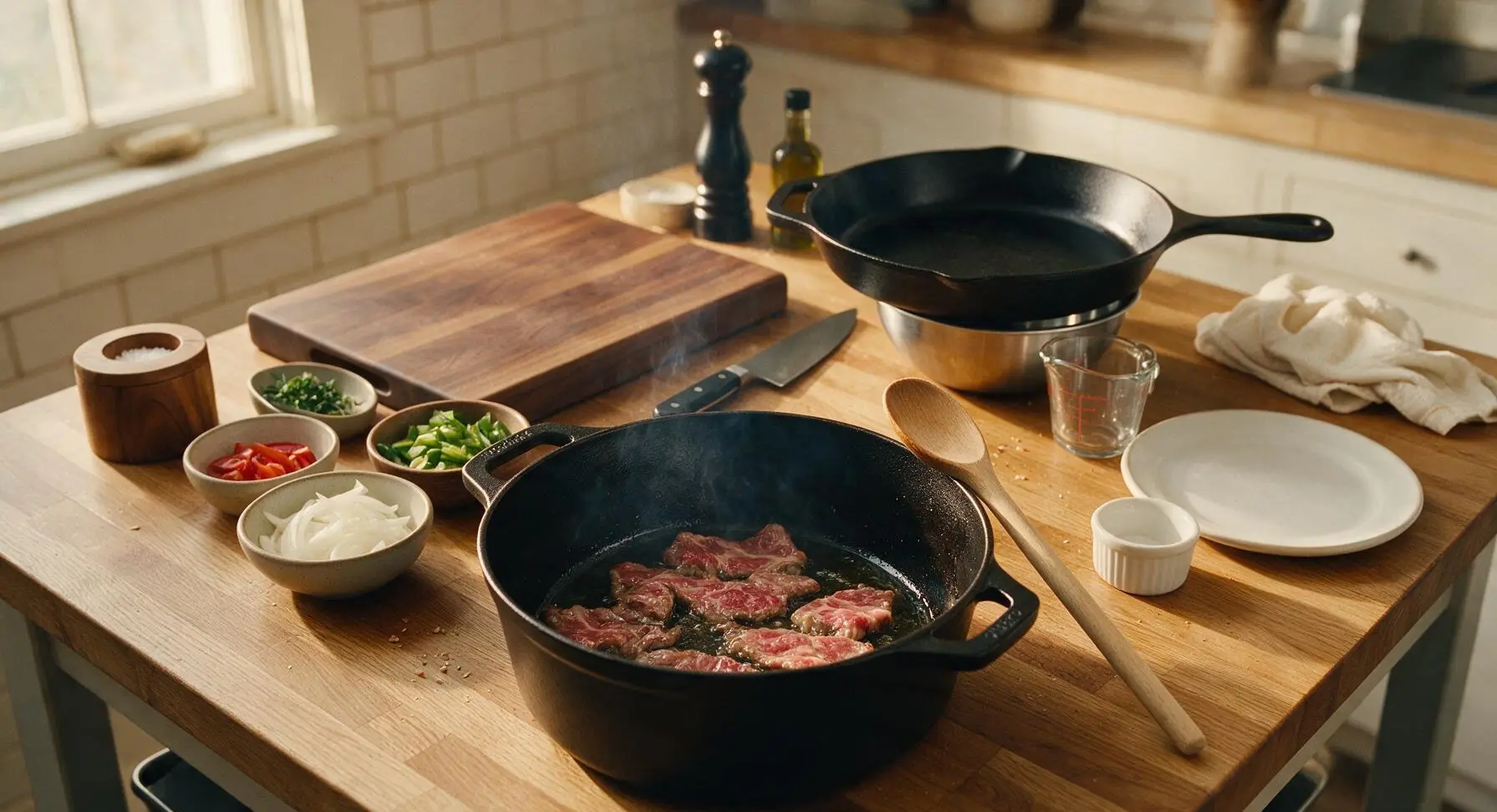
Place the matte black enameled cast iron pot on the burner (centered on the counter work area) and heat to medium (175C/350F). Add 1 tablespoon neutral vegetable oil. Once the oil shimmers (about 1 minute), add sliced beef in a single layer, seasoning with a pinch of coarse salt and one twist of black pepper. Sear for 2 minutes, stirring once with the beech wood spoon, until beef is lightly browned at the edges but not fully cooked through. Cook in two small batches if needed to avoid overcrowding the pot, which causes steaming instead of searing.
Step 2
step2:Sear the Sliced Beef
3

Saute Kimchi and Aromatics

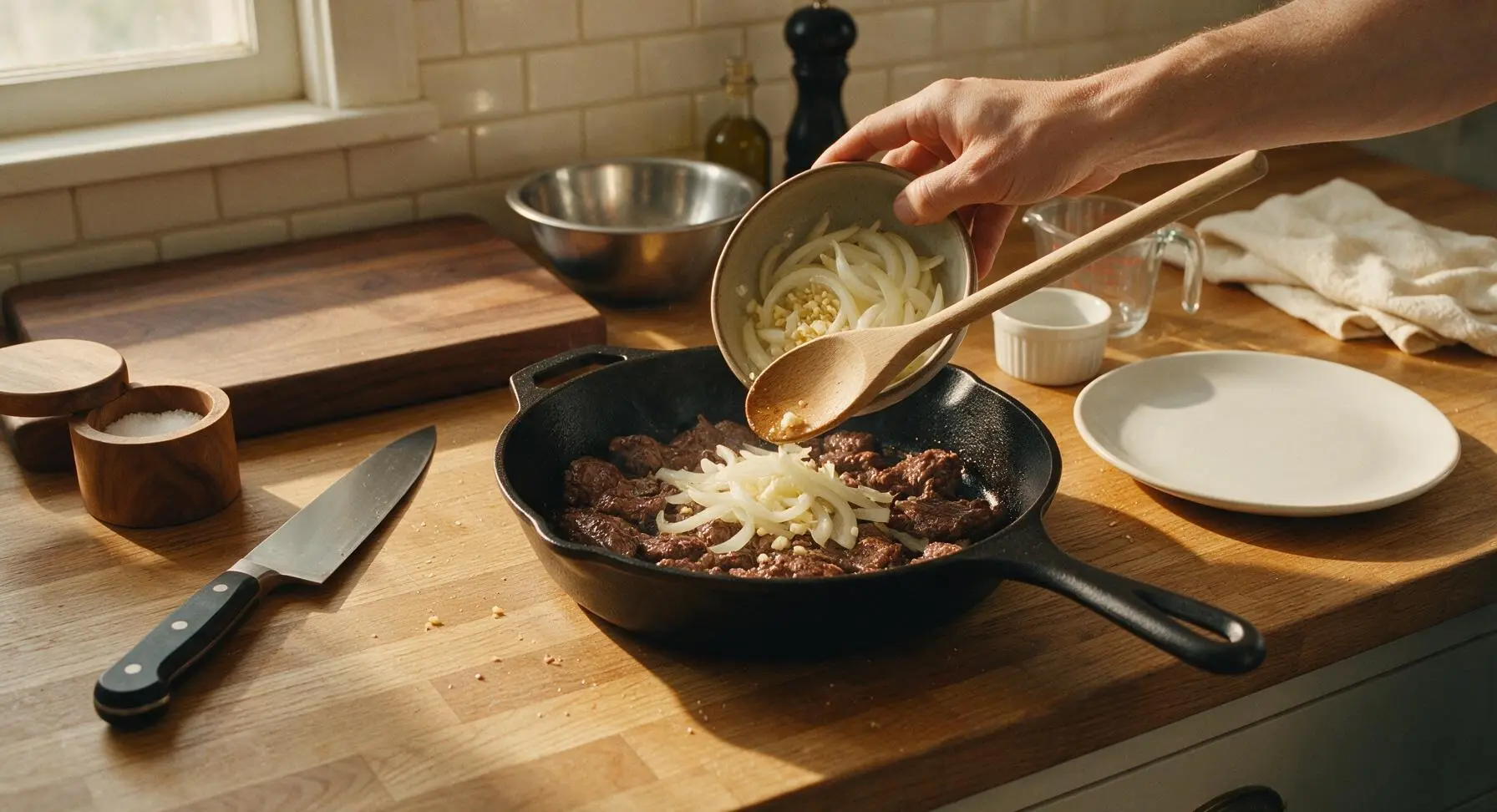
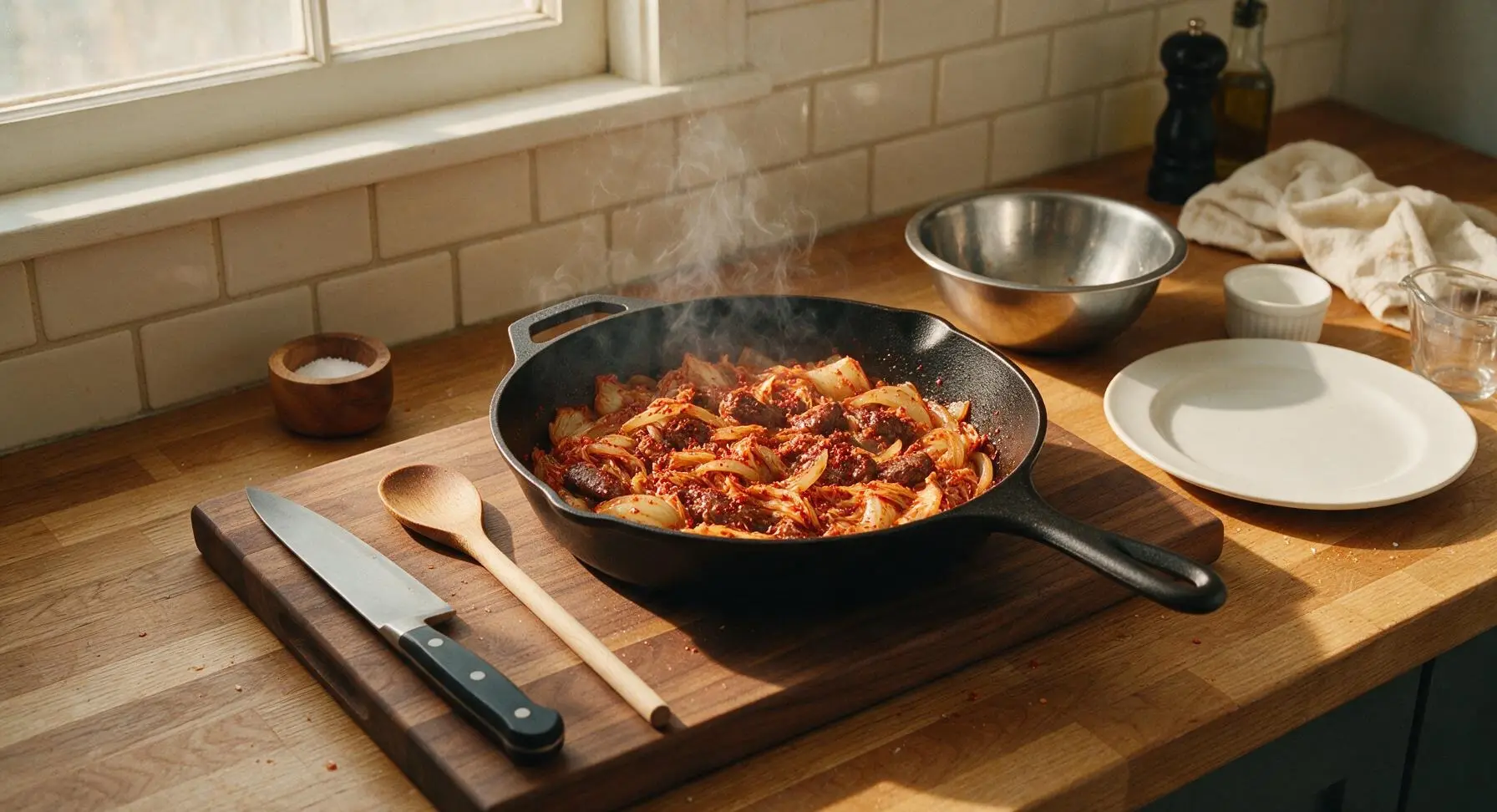
Add sliced yellow onion, minced garlic, and white scallion parts to the pot with seared beef. Saute for 2 minutes, stirring occasionally, until onion turns translucent and smells fragrant. Add cut kimchi, 1 teaspoon granulated sugar, and 1 tablespoon gochugaru, stirring to coat all ingredients in spice and oil. Saute for 3 additional minutes, until kimchi softens slightly and releases its deep, tangy aroma. The small amount of sugar balances the sharp sourness of fermented kimchi for a rounded, well-balanced flavor.
Step 3
step3:Saute Kimchi and Aromatics
Step 3
step3:Saute Kimchi and Aromatics
4

Simmer the Stew Base

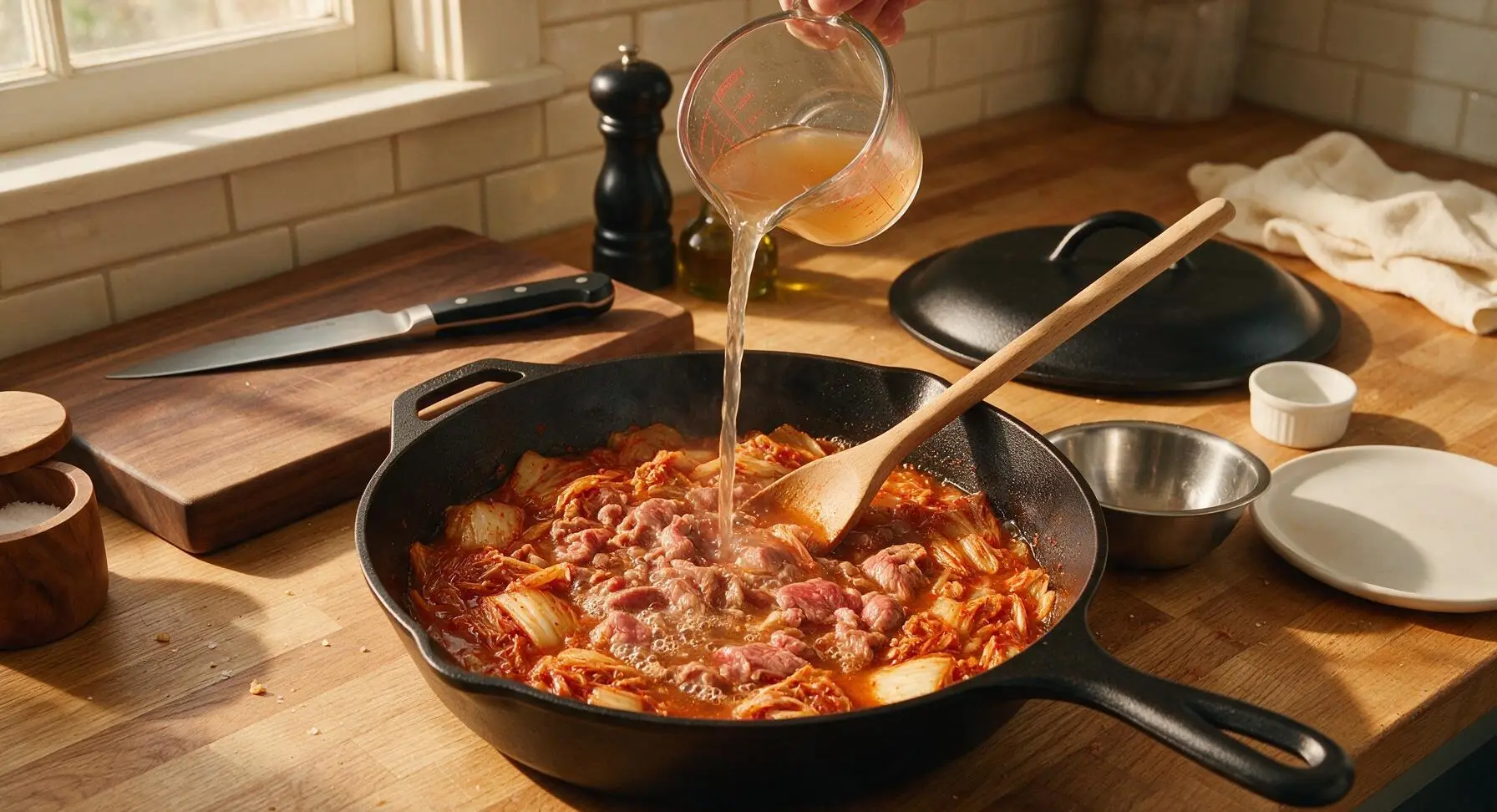
Pour 480ml low-sodium beef broth and the reserved 60ml kimchi brine into the pot, along with 1 tablespoon soy sauce. Stir to fully combine, then bring liquid to a gentle boil (approximately 3 minutes). Once boiling, reduce heat to medium-low (120C/250F), cover the pot with its matching black lid, and let the stew base simmer for 10 minutes. This slow simmer draws out deep umami from the kimchi and tenderizes the beef slices.
Step 4
step4:Simmer the Stew Base
5

Gently Add Tofu

After 10 minutes of simmering, lift the pot lid. Carefully place cubed firm tofu on top of the simmering stew, pressing down very gently with the back of the spoon to submerge cubes in broth. Do not stir aggressively, as this will break the soft tofu. Replace the pot lid and let the stew simmer for 5 more minutes, until tofu is heated through and has absorbed a light red tint from the broth.
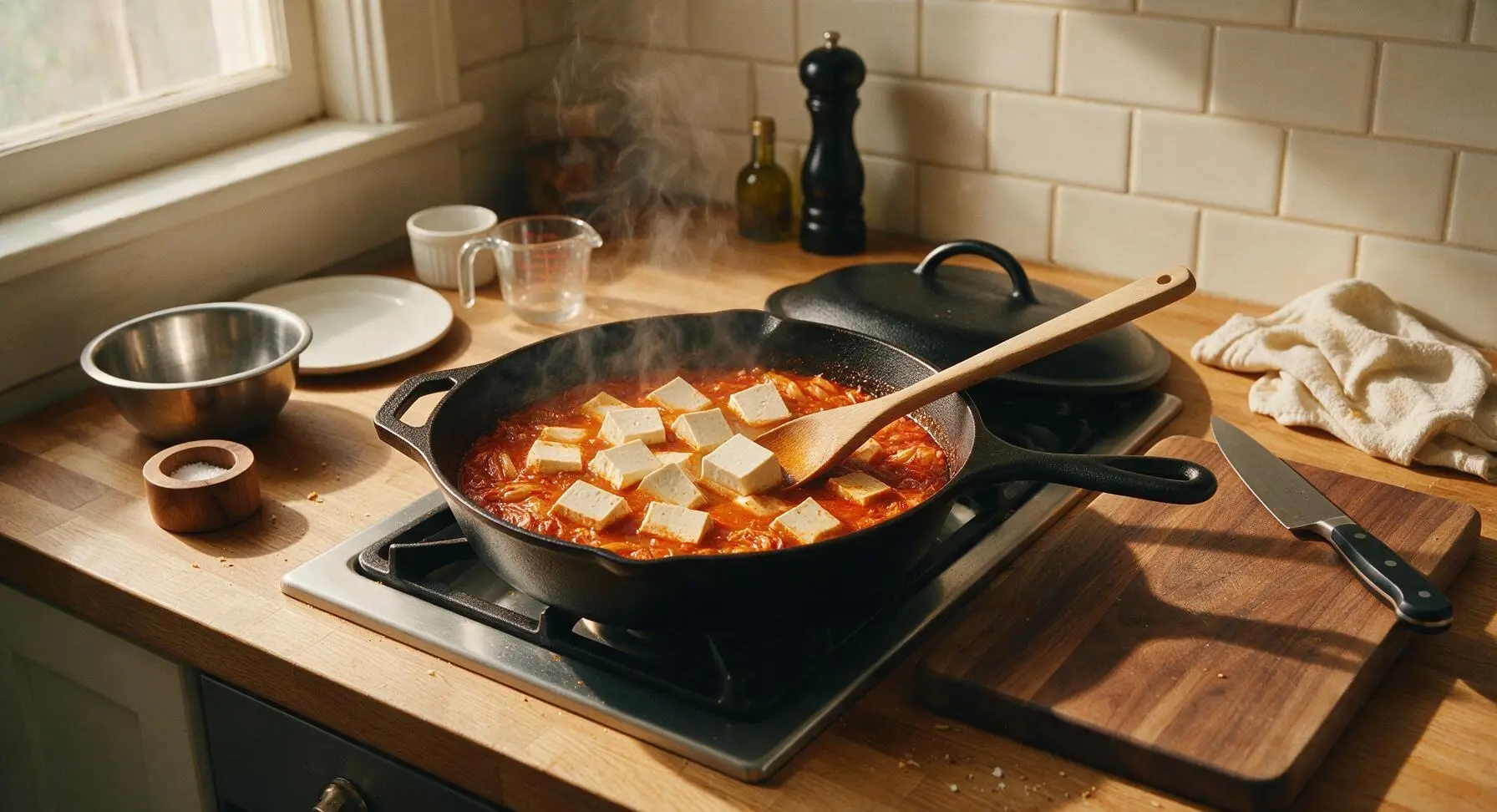
Step 5
step5:Gently Add Tofu
6

Finish and Season

Turn off the heat. Drizzle 1 teaspoon toasted sesame oil over the stew surface, and scatter reserved green scallion slices across the top. Taste the broth, adding a pinch more salt or extra splash of kimchi brine if a tangier, deeper flavor is desired. Let the stew rest, uncovered, for 2 minutes to allow flavors to meld before serving.
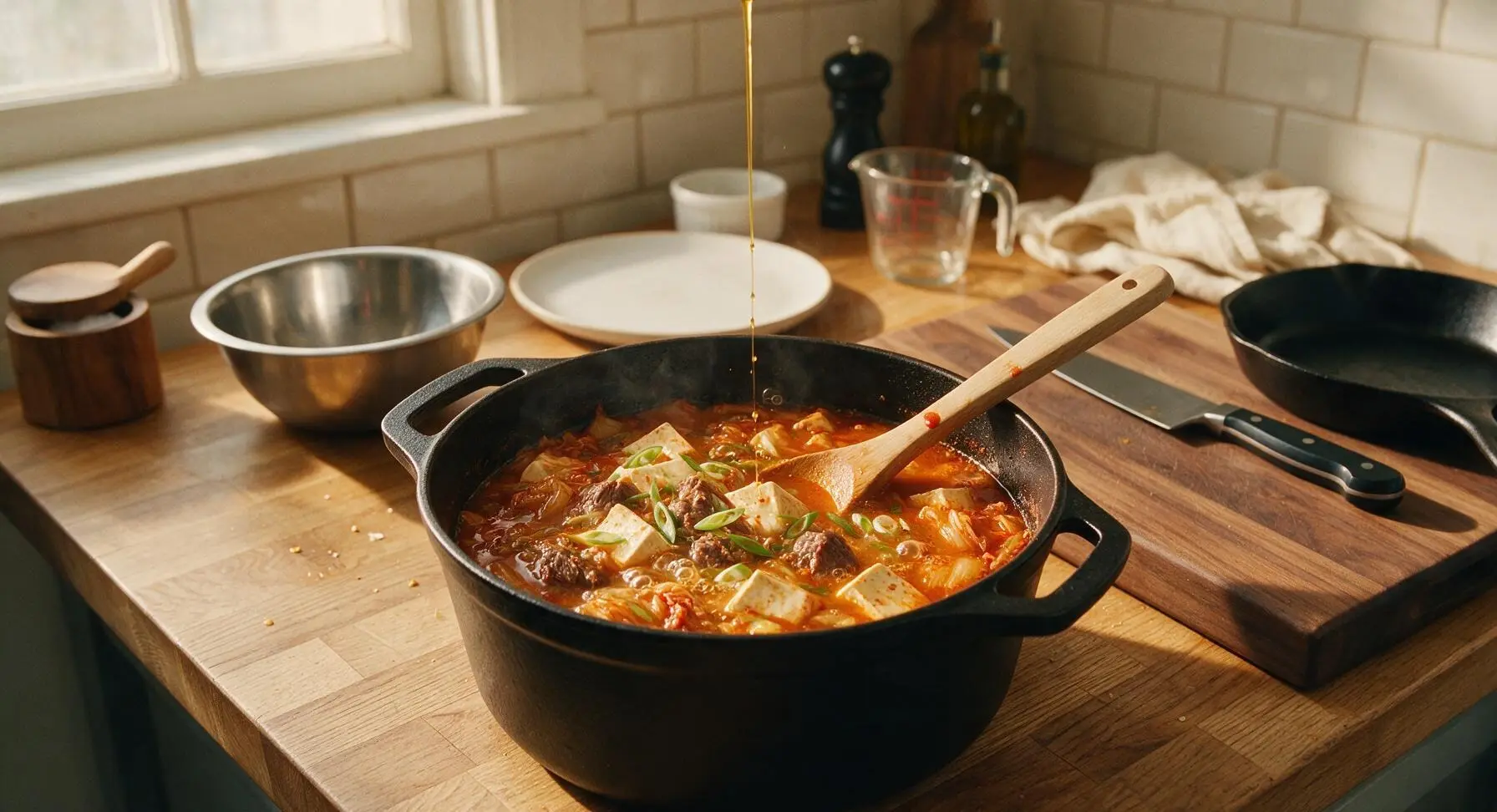
Step 6
step6:Finish and Season
7

Ladle and Serve

Using the stainless steel ladle, carefully scoop stew into the matte cream ceramic serving bowls, ensuring each portion gets equal amounts of beef, kimchi, tofu, and broth. Serve immediately alongside small bowls of hot steamed white rice, with extra kimchi available on the side for those who want more tang.
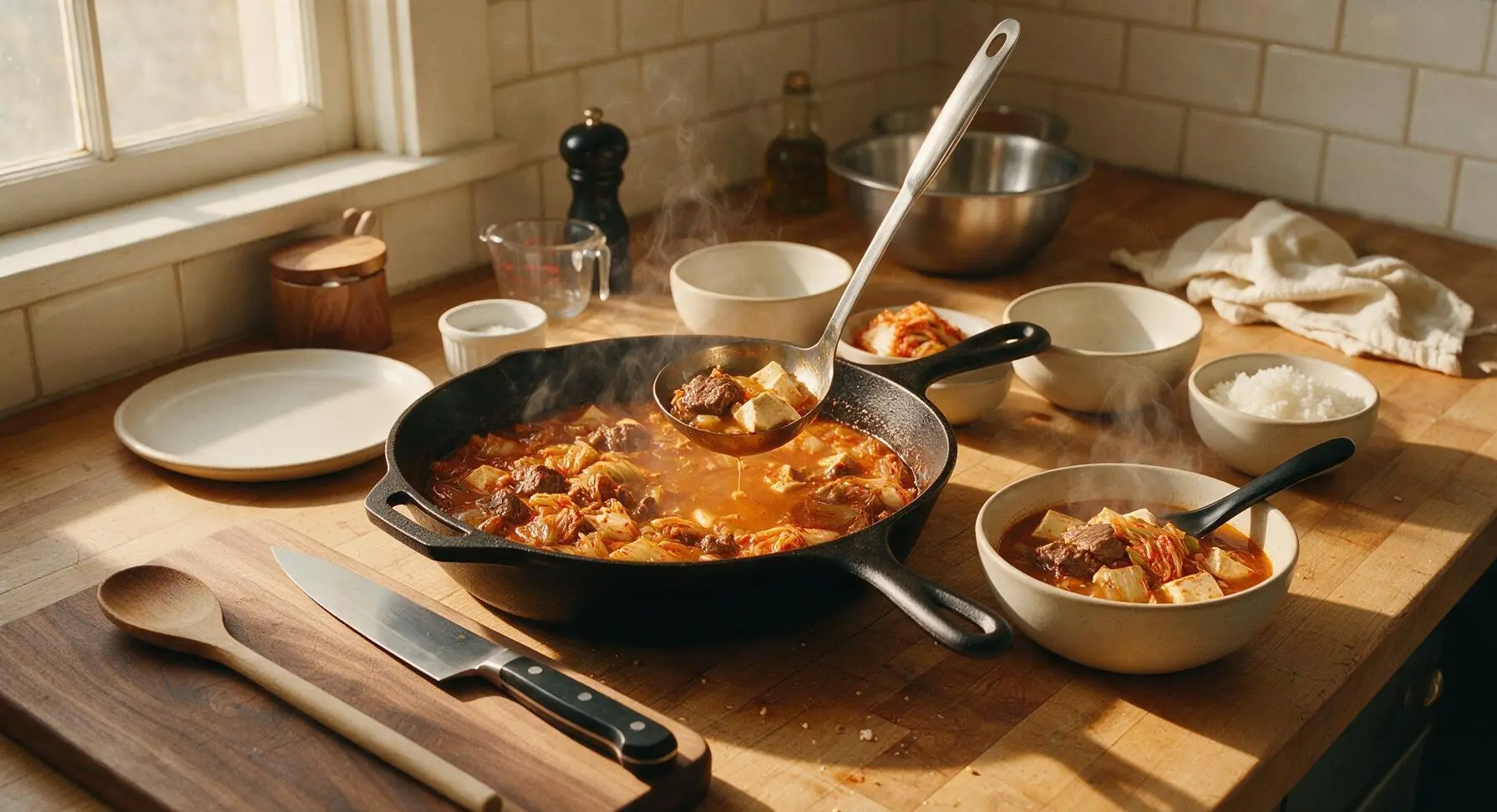
Step 7
step7:Ladle and Serve

Tips

1.Use well-fermented, slightly sour kimchi (1–2 weeks old, stored in the fridge) for the best flavor. Fresh, newly made kimchi will taste mild and flat, as long fermentation develops the tangy lactic acid umami that makes this stew taste rich and complex.
2.Avoid stirring vigorously after adding tofu. Firm tofu is delicate when warm, and hard stirring will break cubes into small, uneven pieces; a gentle press to submerge is all that is needed to let it absorb broth flavor while staying intact.
3.Don’t discard the kimchi brine at the bottom of the jar. This cloudy, red liquid is packed with concentrated flavor and tang; if your kimchi has less than 60ml of brine, top it up with 1 teaspoon of unseasoned rice vinegar to replicate the bright, sour note.

✨ You May Also Like

Soups & Stews
🍜 Japan

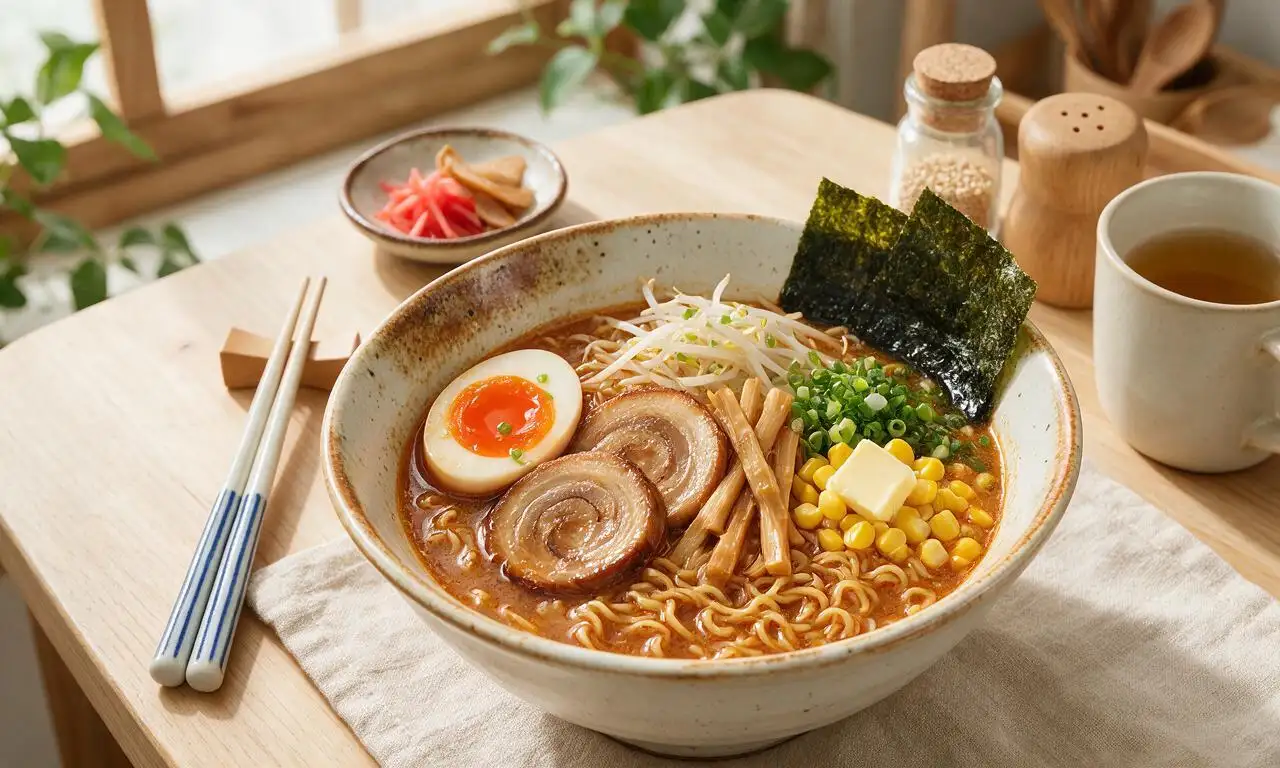
Rich, umami-dense Hokkaido-style miso ramen with chewy noodles, savory fermented broth, and classic toppings, a cozy, deeply satisfying warm meal.

⏱️ 45 minuteSoups & Stews ★ 4.5
Soups & Stews
🍜 United States

A hearty, peppery tripe and root vegetable stew with colonial Philadelphia roots, thick, warming, and packed with bold savory flavor for cold winter days.

⏱️ 2 hours 3Soups & Stews ★ 4.6
Soups & Stews
🍜 Mexico

Hearty, warming red pork posole loaded with tender hominy, slow-simmered in a rich smoky chile broth, served with zesty fresh garnishes for a deeply comforting, satisfying meal.

⏱️ 2 hours 3Soups & Stews ★ 4.7
Soups & Stews
🍜 United States

Warm, soothing classic chicken noodle soup loaded with tender chicken, soft egg noodles, and savory veggies, perfect for chasing chills and feeding the whole family.

⏱️ 40 minuteSoups & Stews ★ 4.9
Soups & Stews
🍜 France

Deeply savory caramelized onion broth topped with crusty bread and bubbly melted Gruyère, a timeless French bistro comfort food ideal for cold days.

⏱️ 1 hour 25Soups & Stews ★ 4.8
Soups & Stews
🍜 United States

Hearty, briny Maryland crab soup loaded with sweet blue crab, tender summer vegetables, and zesty Old Bay, a beloved Chesapeake Bay coastal comfort staple.

⏱️ 55 minuteSoups & Stews ★ 4.9

Kimchi Jjigae with Beef:Frequently Asked Questions

1.How do I tell if my kimchi is fermented enough for this stew? ▾
Look for kimchi that’s 2–3 weeks old at minimum, with slightly translucent cabbage leaves, a bright tangy aroma, and a little fizz when you crack open the jar. Freshly made, unfermented kimchi will give you a flat, bland stew, so save that crisp, new kimchi for serving as a side dish instead of cooking with it.
2.Can I use lean beef instead of marbled brisket or short rib? ▾
I don’t recommend it, honestly. The rendered fat from marbled cuts adds deep, rich savoriness that cuts through kimchi’s sharp tang, and thin slices stay tender even with quick cooking. Lean beef will turn dry and chewy; if that’s all you have, toss slices with a teaspoon of sesame oil before cooking to add missing fat.
3.Do I really need to reserve the kimchi brine for this recipe? ▾
Absolutely—don’t pour that brine down the drain! It’s packed with concentrated umami, tang, and that signature fermented depth that makes kimchi jjigae taste authentic, not just like kimchi boiled in water. Add ¼ to ⅓ cup of it to your stew base, adjusting to taste if you prefer a more punchy, tangy flavor.
4.Why do you call for firm tofu instead of soft or silken tofu? ▾
Firm tofu holds its shape really well through the simmer, so you get nice, neat, silky cubes that don’t disintegrate into the stew when you scoop it. Soft or silken tofu will break apart easily while stirring, turning your broth cloudy and leaving you with mushy, uneven bites instead of that satisfying tender texture contrast.
5.How thin should I slice the beef for the best texture? ▾
Aim for slices that are ⅛-inch thick, almost paper-thin, cut against the grain. Partially freezing the beef for 30 minutes before slicing makes this way easier, even with a regular home kitchen knife. Thin slices cook in 2–3 minutes flat, soak up stew flavor beautifully, and stay melt-in-your-mouth tender instead of chewy.
6.Can I make this stew ahead of time for meal prep? ▾
Definitely! It actually tastes even better the next day, because the flavors meld together as it chills in the fridge. Store it in an airtight container for up to 4 days, and hold off on adding the tofu and scallions until you reheat it, so the tofu stays firm and the scallions stay bright, not mushy.
7.What’s the best way to serve kimchi jjigae with beef? ▾
Serve it piping hot, straight from the pot if you can, alongside a big bowl of steamed short-grain white rice, plus a few small Korean side dishes (banchan) if you have them. It’s meant to be shared family-style, so set the pot in the middle of the table and let everyone scoop stew over their rice, no fancy plating required.
8.My kimchi is extra sour—can I still use it for jjigae? ▾
Extra-sour, over-fermented kimchi is actually my favorite for this stew! It has a deeper, more complex tang that mellows perfectly as it simmers. If it’s almost too puckery, just add a tiny pinch of sugar (about ½ teaspoon) to balance the acid, instead of diluting it with extra water which washes out flavor.
9.Do I need a Korean earthenware ttukbaegi pot to make this correctly? ▾
You don’t need any special equipment to make great jjigae! A heavy-bottomed stainless steel pot or Dutch oven works perfectly. Ttukbaegi retain heat really well and keep the stew bubbling at the table, but they’re not required—any pot that distributes heat evenly will give you a rich, flavorful result.
10.Should I rinse my kimchi before adding it to the stew? ▾
Never rinse your kimchi for this recipe! Rinsing washes away all the flavorful lactic acid, umami, and seasoned pepper paste that gives the stew its core flavor. Just squeeze it lightly over the jar to catch excess brine to reserve, then chop it into bite-sized pieces and add it straight to the pot.
11.When should I add the tofu so it doesn’t fall apart while cooking? ▾
Add your cubed firm tofu during the last 5 minutes of simmering. Gently nestle it into the broth instead of stirring it hard, so it doesn’t break. This gives it just enough time to heat through and soak up a little stew flavor, without getting overcooked, spongy, or crumbly from too much time in simmering liquid.
12.Can I add extra vegetables to customize this stew? ▾
Of course! The base recipe is simple, so it’s easy to tweak to your taste. Tasty additions include sliced garlic, zucchini, cremini mushrooms, or even a handful of chopped baby spinach. Just don’t overload the pot—keep extra vegetable add-ins to 1 cup total, so you don’t water down the bold kimchi and beef flavor.
13.Why is the beef in my jjigae coming out chewy? ▾
Chewy beef usually comes from three common mistakes: slices cut too thick, cut with the grain instead of against it, or added too early in the cook time. Remember, your thin, against-the-grain slices only need 2–3 minutes to cook through at a gentle simmer; boiling them for 10+ minutes will make them tough and rubbery every time.
14.How much kimchi brine should I add to avoid making the stew too salty? ▾
Start with ¼ cup of reserved kimchi brine, then taste the broth after it simmers for 10 minutes before adding more. Kimchi brine varies widely in salt content between brands and fermentation lengths, so adding it gradually lets you control salt and tang levels, instead of ending up with an over-salted stew you can’t easily fix.
15.Is it worth sautéing the kimchi first before adding broth? ▾
Yes, that’s a pro trick for deeper, more rounded flavor! Sauté the chopped kimchi and yellow onion in a little sesame oil over medium heat for 3–4 minutes before adding your liquid. This caramelizes the kimchi slightly, mellows its raw sharpness, and helps the flavor infuse the entire broth instead of tasting like kimchi floating in water.
16.How long should I simmer the stew for the best possible flavor? ▾
Simmer the kimchi, onion, and beef base for 15–20 minutes over low heat, and don’t boil it hard. A gentle, low simmer lets the kimchi break down slightly, the beef render its rich fat, and the flavors meld without making the beef tough. Add the tofu for the last 5 minutes, and top with scallions right before serving.
17.Can I freeze leftover kimchi jjigae for later? ▾
You can freeze it for up to 3 months, but leave out the tofu if you plan to freeze batches. Tofu gets spongy and grainy when frozen and thawed, so freeze just the stew base (kimchi, beef, onion, broth) in airtight containers, then add fresh cubed tofu and scallions when you reheat it on the stovetop for the best texture.
18.I only have fresh, unfermented kimchi—can I make this work? ▾
Fresh, unfermented kimchi won’t give you the deep, tangy, umami flavor that defines this stew, and you’ll end up with a bland, cabbagey soup that doesn’t taste quite right. If you’re in a total pinch, add 1 tablespoon of unseasoned rice vinegar and a teaspoon of fish sauce to fresh kimchi to mimic that classic fermented tang.
19.Can I add gochujang or gochugaru if I want a spicier stew? ▾
Absolutely! If you love extra heat, stir in 1 teaspoon of gochujang or ½ teaspoon of coarse gochugaru (Korean red pepper flakes) when you add the broth. Start small, taste as you go, and remember that fermented kimchi already has some built-in heat, so you don’t want to overpower the savory, tangy base.

Comments (8)

2 days ago

OMG this kimchi jjigae was SO good! I made it for family dinner last night and even my super picky 7 year old asked for seconds. I used slightly older kimchi from the back of my fridge like my grandma used to suggest and it came out perfectly tangy. Total game changer for weeknight meals since it only took 25 minutes, no fancy steps needed!

1 day ago

Wait, older kimchi is the trick?! I’ve been using fresh kimchi every time and it’s always too mild, I’m definitely grabbing that half-empty jar I forgot about in my fridge to make this tonight!

1 day ago

So glad your family loved it! You’re totally right, well-fermented kimchi is the secret to that deep, rich tangy flavor that makes this jjigae taste like it came from your favorite Korean spot. If you want an extra kick, toss in a pinch of gochugaru at the end!

3 days ago

As a guy who can barely boil water without burning it, I was shocked how easy this was to pull off. Grabbed some thinly sliced beef from the grocery store, a jar of kimchi, and followed the steps exactly. Ended up bringing leftovers to my potluck at work and half my coworkers asked for the recipe. No cap, this is going into my regular rotation.

2 days ago

That’s what we love to hear! This recipe is designed to be totally beginner-friendly, so it makes us so happy even new cooks can nail it on the first try. Pro tip: if you make a big batch, it actually tastes even better the next day for meal prep!

1 week ago

Made a double batch of this on Sunday for my weekly meal prep and it held up perfectly all week in the fridge! I swapped the beef for pork belly once halfway through the week just to mix it up and it was still chef’s kiss. Only note: I added a block of extra firm tofu cut into cubes because I love the texture, highly recommend that add-in.

5 days ago

Tried this last night after seeing it pop up on my feed and I’m genuinely upset I didn’t make kimchi jjigae at home sooner. The broth is so rich and savory, the beef gets super tender, and it’s so cozy on a cold night. I served it with a side of steamed rice and some pickled radishes, 10/10 comfort food.

3 days ago

Wait do you think this would work in a dorm rice cooker? I don’t have a real stove in my dorm but I’ve been craving jjigae so bad ever since I had it at a restaurant downtown last month

2 days ago

Great question! You can absolutely make this in a rice cooker! Just sauté the kimchi and beef first using the rice cooker’s ‘cook’ setting before adding the rest of the ingredients, then let it simmer for 15-20 minutes. It won’t be exactly the same as stovetop but it’ll still be delicious!

30 minutes ago

Pretty solid base recipe! I found it a little less spicy than I prefer so I added an extra tablespoon of gochujang and a handful of sliced scallions at the end. My partner who hates most fermented foods even went back for a second bowl, so that’s a massive win in my book. Will make again for sure.

10 minutes ago

I did the extra gochujang trick too! I also threw in a few dashes of fish sauce to amp up the umami, you should try that next time you make it, it’s chef’s kiss

yesterday

Just made this in my tiny dorm kitchen with cheap pre-sliced beef from the campus grocery store and a $5 jar of kimchi, and it came out insane. Spent less than $15 total for 4 servings, which is way cheaper than ordering takeout from the Korean place down the street. My roommate stole half the pot and Venmoed me $5 for his share lmao

2 hours ago

Ran home and made this after seeing all the rave reviews, and y’all were NOT lying. The tang from the kimchi paired with the savory beef is unreal. I made the mistake of not having enough rice to go with it, so I ended up drinking the leftover broth straight from the pot no shame. 10/10, will be making this at least once a week from now on.

1 hour ago

We’ve all been there drinking the leftover broth straight, no judgment at all! So glad you loved it — if you want to bulk it up next time, adding some soft tofu or zucchini slices works perfectly to make it even more filling without extra work

2 weeks ago

I’ve been making kimchi jjigae for my family for over 40 years, and I have to say this recipe is spot on! I love that it’s simple enough for new cooks but has all the deep, comforting flavor I remember from my own mom’s kitchen. I added a handful of enoki mushrooms at the end like I always do, and it was perfect.

1 week ago

Oh enoki mushrooms sound amazing! I never thought to add those, I’m picking some up on my next grocery run to throw in when I make this again this weekend

1 week ago

What a wonderful compliment, thank you so much! Enoki mushrooms are such a classic, delicious add-in — they soak up all that gorgeous broth so well. We love hearing longtime jjigae makers approve of the recipe, that means the world to us!