korean shrimp

title 1
korean shrimp
⏱️ cook time 10 minutes
🍽️ servings 4
⚡ Difficulty easy

intro

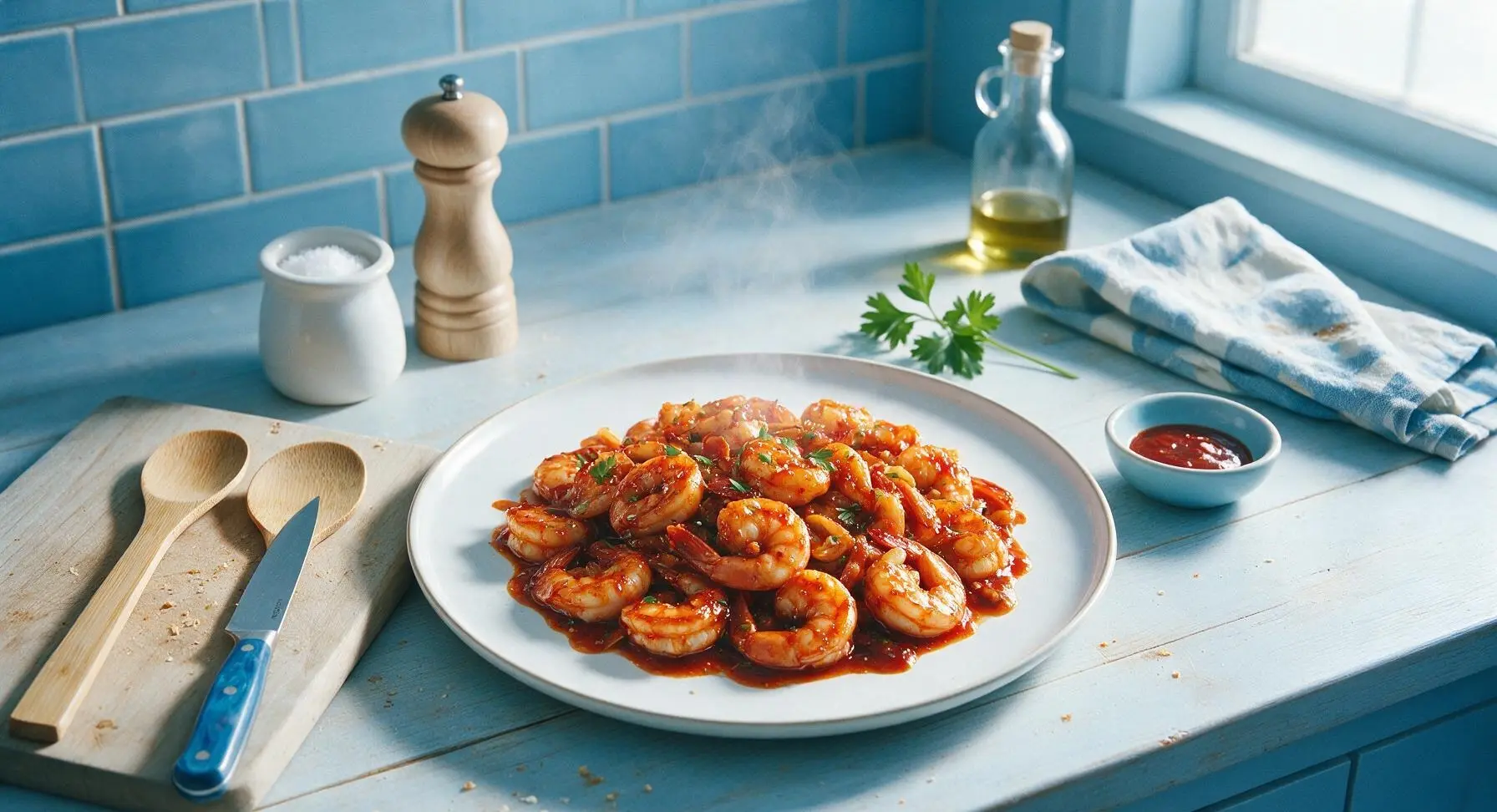
Sweet, spicy, garlicky stir-fried shrimp coated in glossy gochujang sauce, ready in 20 minutes for a fast, flavorful weeknight meal with tender, juicy, umami-packed bites.

Ingredients
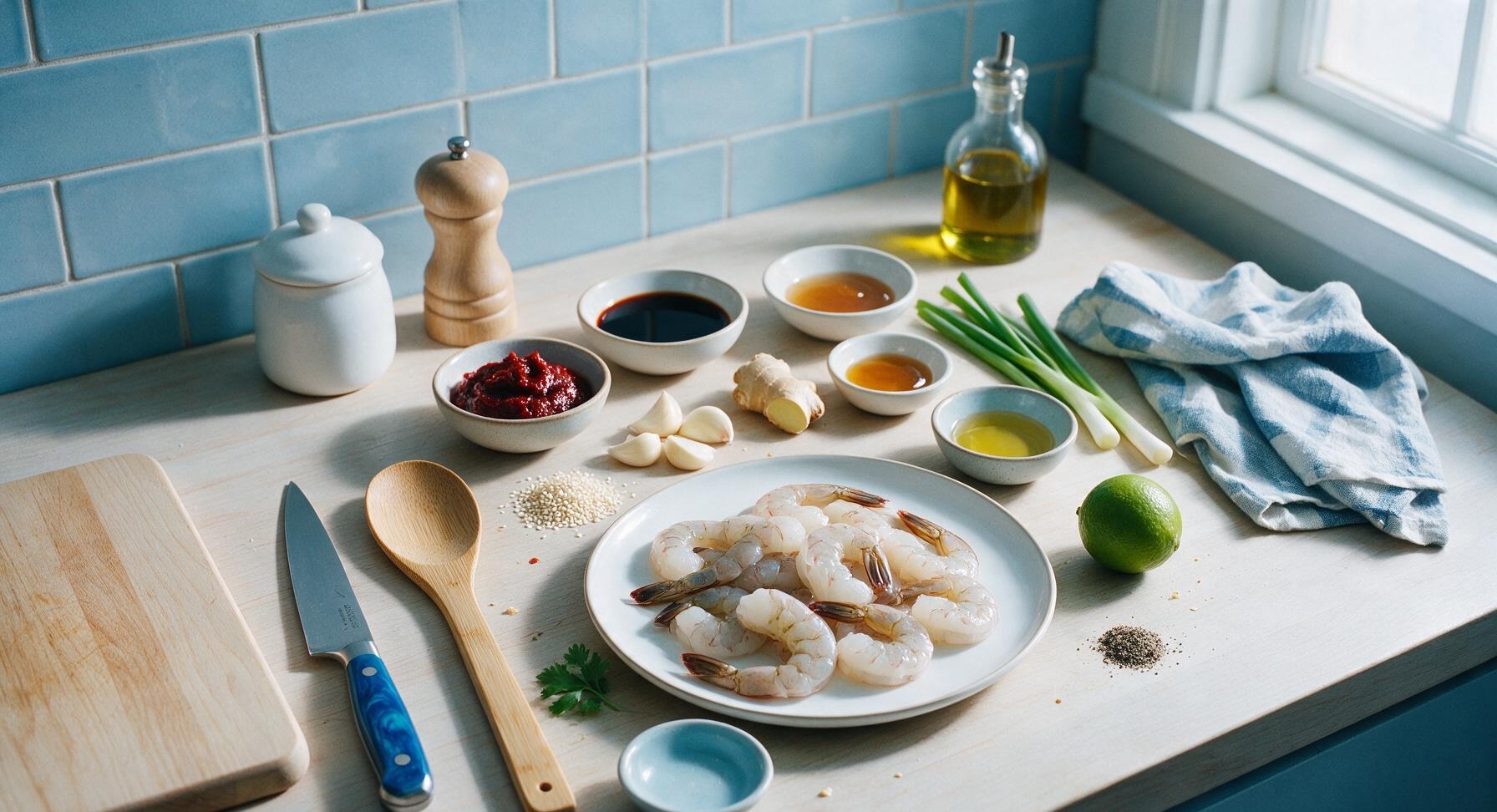
Large raw shrimp (peeled, deveined, tails on) 1 lb (450g)
Gochujang (Korean red chili paste) 3 tbsp
Low-sodium soy sauce 2 tbsp
Honey 1.5 tbsp
Toasted sesame oil 1 tbsp
Fresh garlic 6 cloves
Fresh ginger 1-inch knob
Scallions 4 stalks
Toasted white sesame seeds 1 tsp
Neutral cooking oil (avocado/canola) 1 tbsp
Fresh lime 1 whole
Ground black pepper 1/4 tsp

Steps

1

Prep and Pat Shrimp Dry

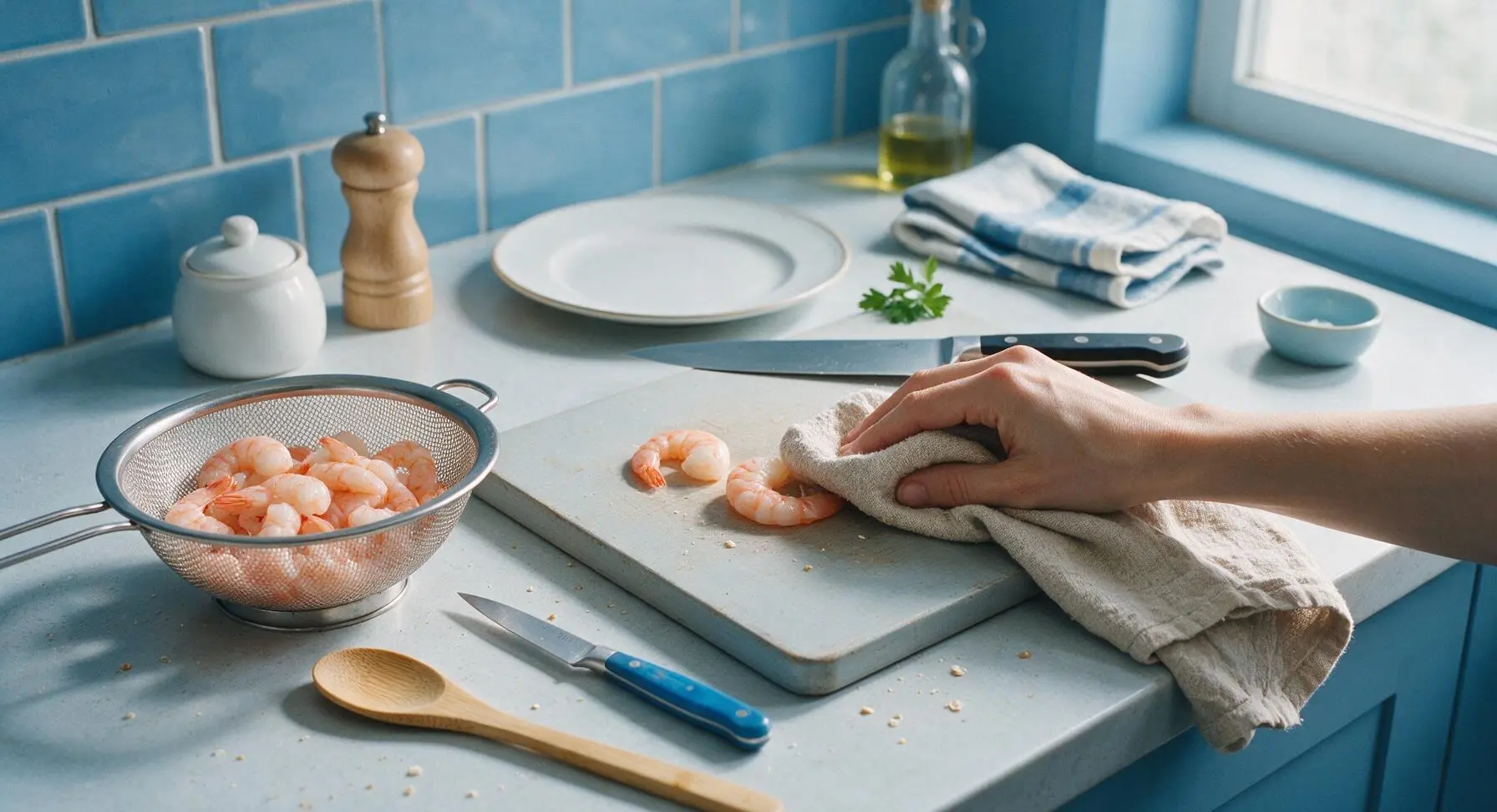
Place thawed raw shrimp in the fine-mesh stainless steel colander to drain excess melted ice water, then transfer shrimp to the light grey cutting board. Pat shrimp thoroughly dry on all sides using a corner of the fixed oatmeal linen towel, leaving tail shells intact. Season lightly with 1/4 tsp ground black pepper. Fully dried shrimp ensures a crisp sear rather than steaming when added to hot oil.
Step 1
step1:Prep and Pat Shrimp Dry
2

Whisk Stir-Fry Sauce

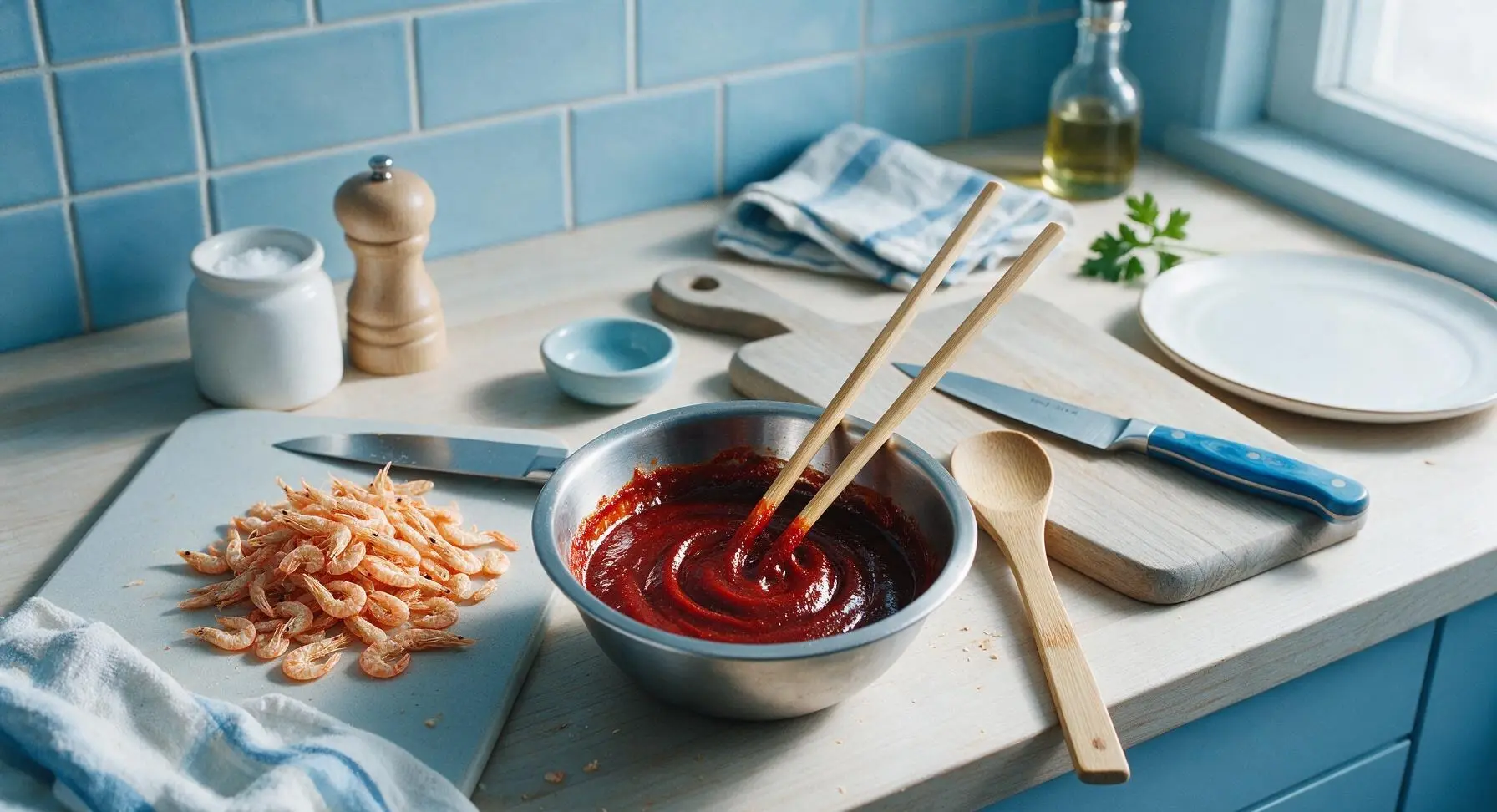
In the small brushed stainless steel mixing bowl, combine 3 tbsp gochujang, 2 tbsp low-sodium soy sauce, 1.5 tbsp honey, 1 tbsp toasted sesame oil, grated fresh ginger, and half of the minced garlic. Stir with the fixed light oak chopsticks until completely smooth, with no visible lumps of gochujang. The finished sauce should be a glossy deep red, thick enough to lightly coat the back of a chopstick.
Step 2
step2:Whisk Stir-Fry Sauce
3

Chop Aromatic Vegetables

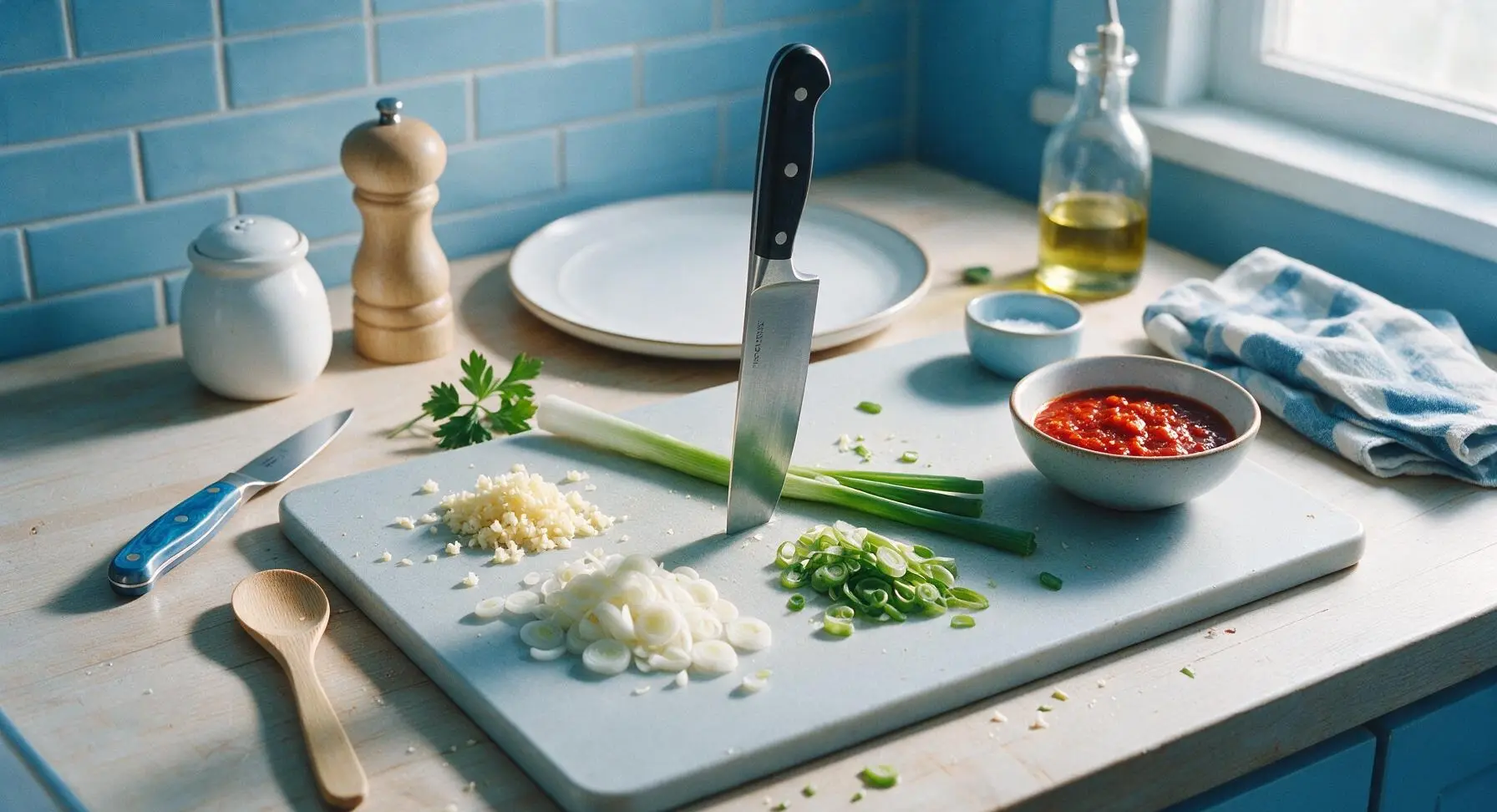
Use the 8-inch stainless steel chef knife on the light grey cutting board to mince the remaining garlic cloves, then slice the scallions, separating the firm white lower parts from the tender green upper parts. Set green scallion slices aside in one of the small white ceramic pinch bowls for garnish, and keep white scallion parts near the stovetop for cooking. Discard any dry, wilted scallion root ends.
Step 3
step3:Chop Aromatic Vegetables
4

Sear Shrimp in Hot Wok

Set the 12-inch carbon steel wok on the rear stovetop burner over medium-high heat, add 1 tbsp neutral cooking oil, and heat until the oil shimmers and moves easily across the wok surface (approximately 2 minutes). Add dried, seasoned shrimp to the wok in a single layer, working in two small batches if needed to avoid overcrowding. Sear for 1 minute per side, until shrimp turn bright pink with faint golden edges, but are not fully cooked through. Use the red silicone tongs to flip shrimp gently to avoid tearing the flesh.
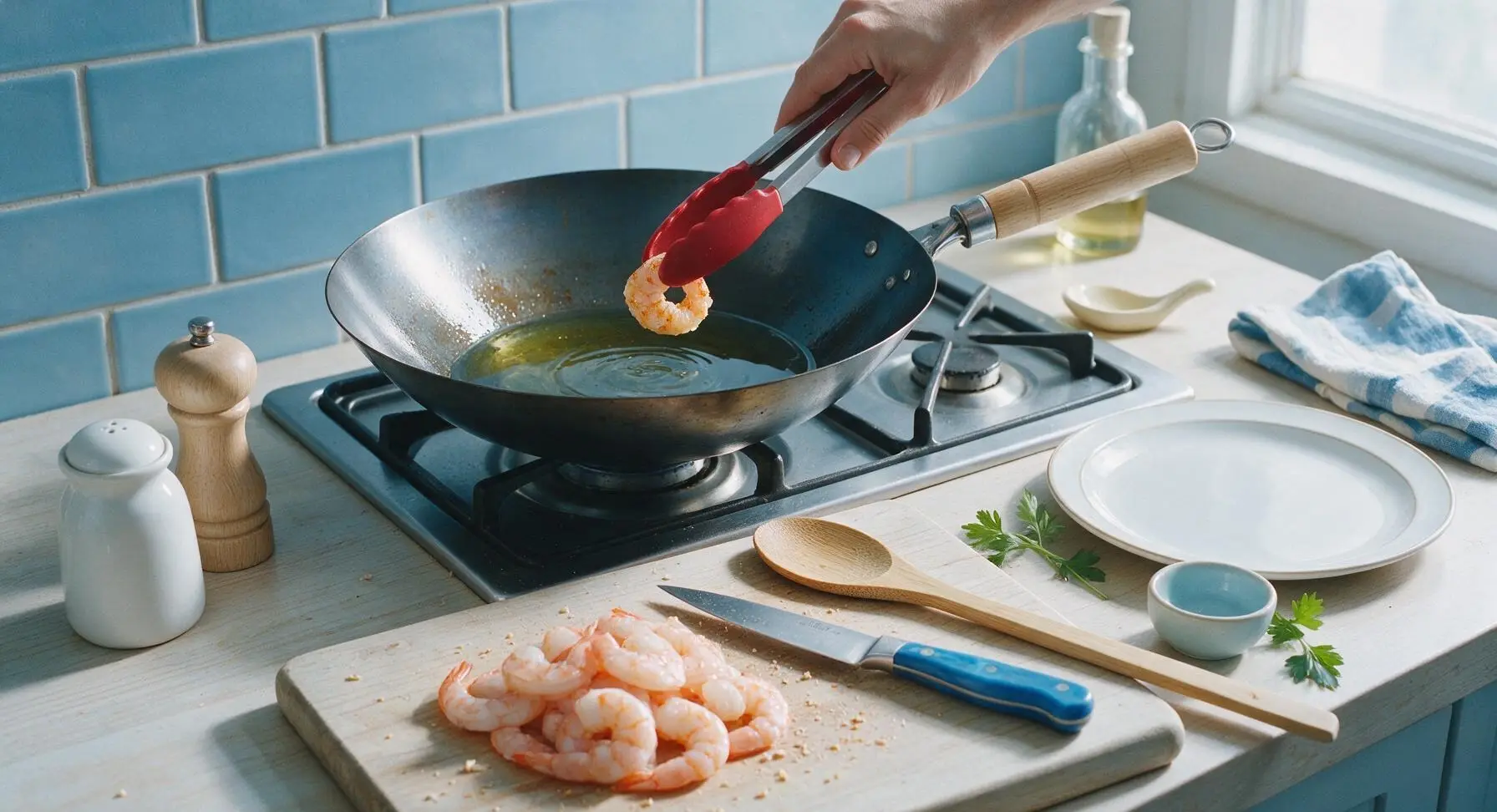
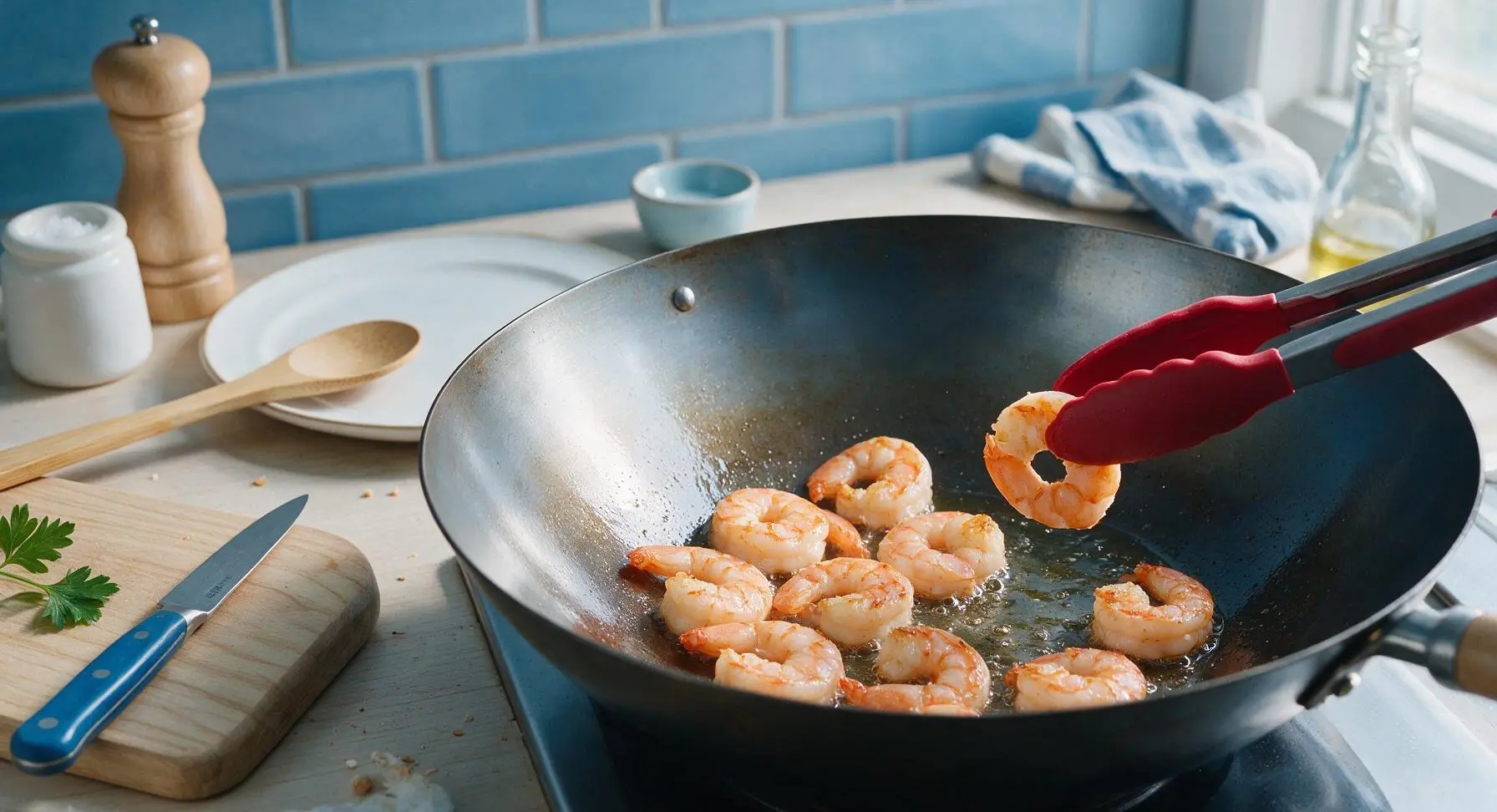
Step 4
step4:Sear Shrimp in Hot Wok
Step 4
step4:Sear Shrimp in Hot Wok
5

Toss with Sauce and Aromatics

Add sliced white scallion parts and remaining minced garlic to the wok with the seared shrimp, stirring constantly with the silicone tongs for 30 seconds until fragrant, taking extreme care not to burn the garlic (burnt garlic will turn the dish bitter). Pour the pre-mixed gochujang sauce from the stainless steel mixing bowl over the shrimp, and toss continuously for 1.5 to 2 minutes, until every shrimp is evenly coated in glossy sauce and fully cooked (internal temperature 145°F / 63°C, with no translucent grey flesh remaining). Turn off the heat immediately to prevent shrimp from turning rubbery from overcooking.
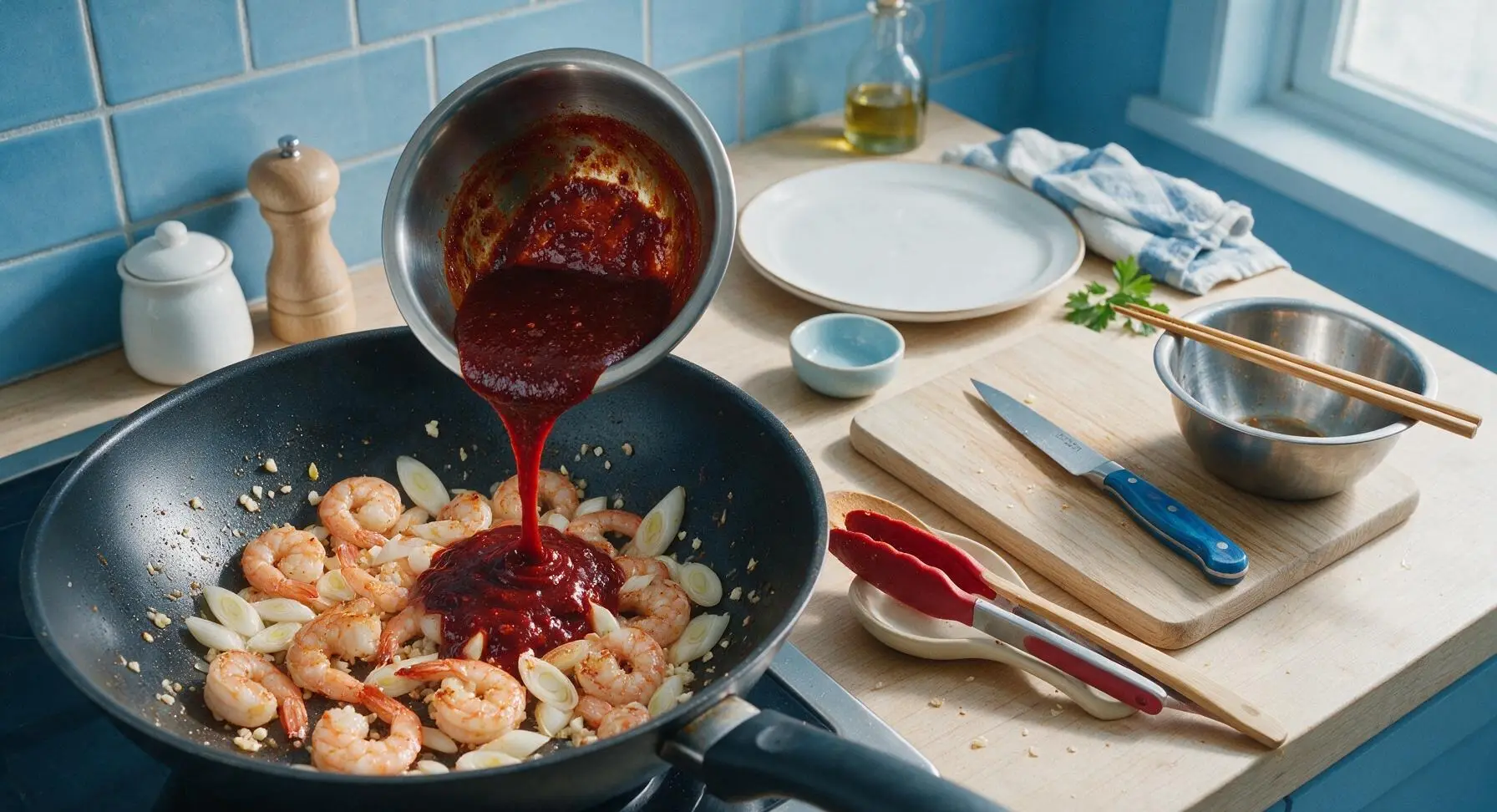
Step 5
step5:Toss with Sauce and Aromatics
6

Plate and Garnish Dish

Use the red silicone tongs to transfer sauced shrimp from the wok to the center of the matte off-white stoneware dinner plate, piling them slightly for visual height. Drizzle any remaining thick sauce from the wok over the top of the shrimp pile, then sprinkle evenly with reserved sliced green scallions and 1 tsp toasted white sesame seeds. Tuck a fresh lime wedge against the shrimp pile at the edge of the plate for squeezing over top before serving.
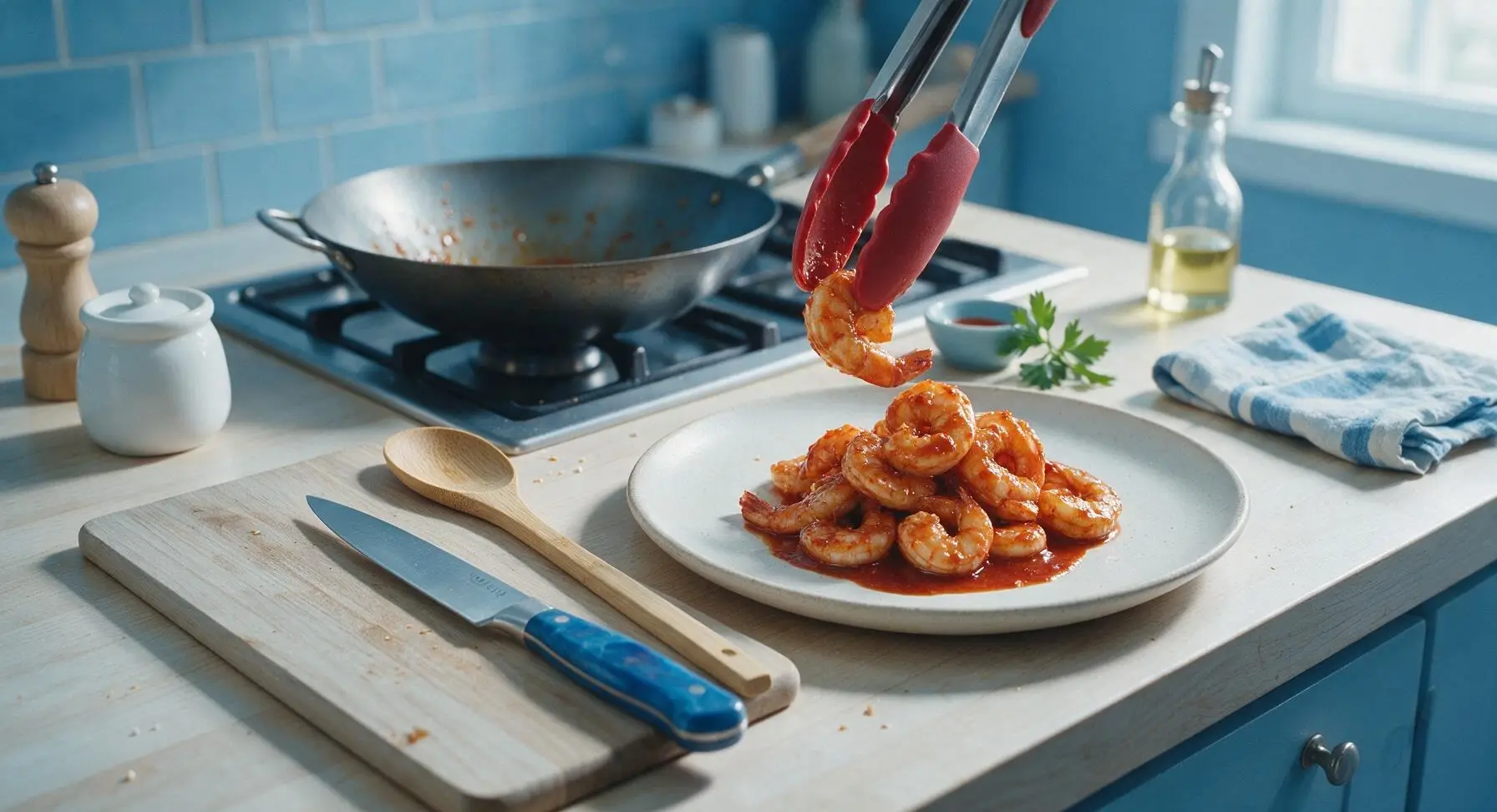
Step 6
step6:Plate and Garnish Dish

Tips

1.Pat shrimp completely dry before searing: excess surface moisture will cause shrimp to steam instead of developing a light, golden sear, and will water down the thick, glossy sauce coating that defines this dish.
2.Avoid overcooking shrimp: shrimp transition from perfectly tender to tough and rubbery in as little as 60 seconds, so turn off the heat as soon as the flesh turns fully opaque and every piece is evenly coated in sauce, as residual pan heat will finish cooking the shrimp.
3.Adjust heat to your preference: use 2 tablespoons of gochujang for mild, kid-friendly heat, or 4 tablespoons for extra fiery, restaurant-style spice, balancing extra heat with an extra 1/2 tablespoon of honey to round out the flavor and cut sharp chili burn.
✨ You May Also Like

Main Course
🍜 United Kingdom

A showstopping classic of tender seared beef, savory mushroom duxelles, and crisp prosciutto wrapped in flaky golden puff pastry, baked to juicy perfection.

⏱️ 2 hours 1Main Course ★ 4.7
Main Course
🍜 India

Tender charred marinated chicken simmered in a rich, spiced creamy tomato sauce, this iconic Anglo-Indian curry pairs perfectly with basmati rice or warm naan.

⏱️ 50 minuteMain Course ★ 4.6
Main Course
🍜 Thailand

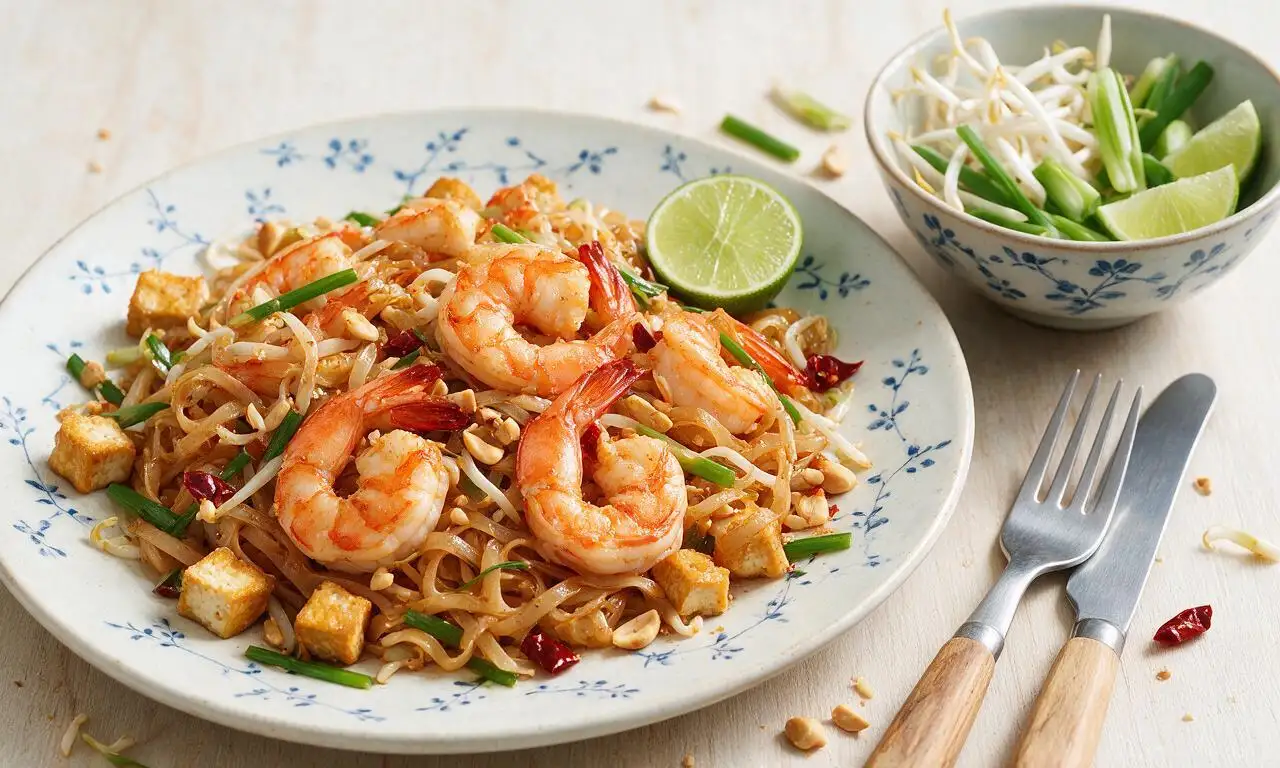
Classic tangy, sweet, and savory Thai stir-fried rice noodles with shrimp, tofu, and crunchy garnishes, balancing all five core Thai flavor profiles.

⏱️ 30 minuteMain Course ★ 4.5
Main Course
🍜 United Kingdom

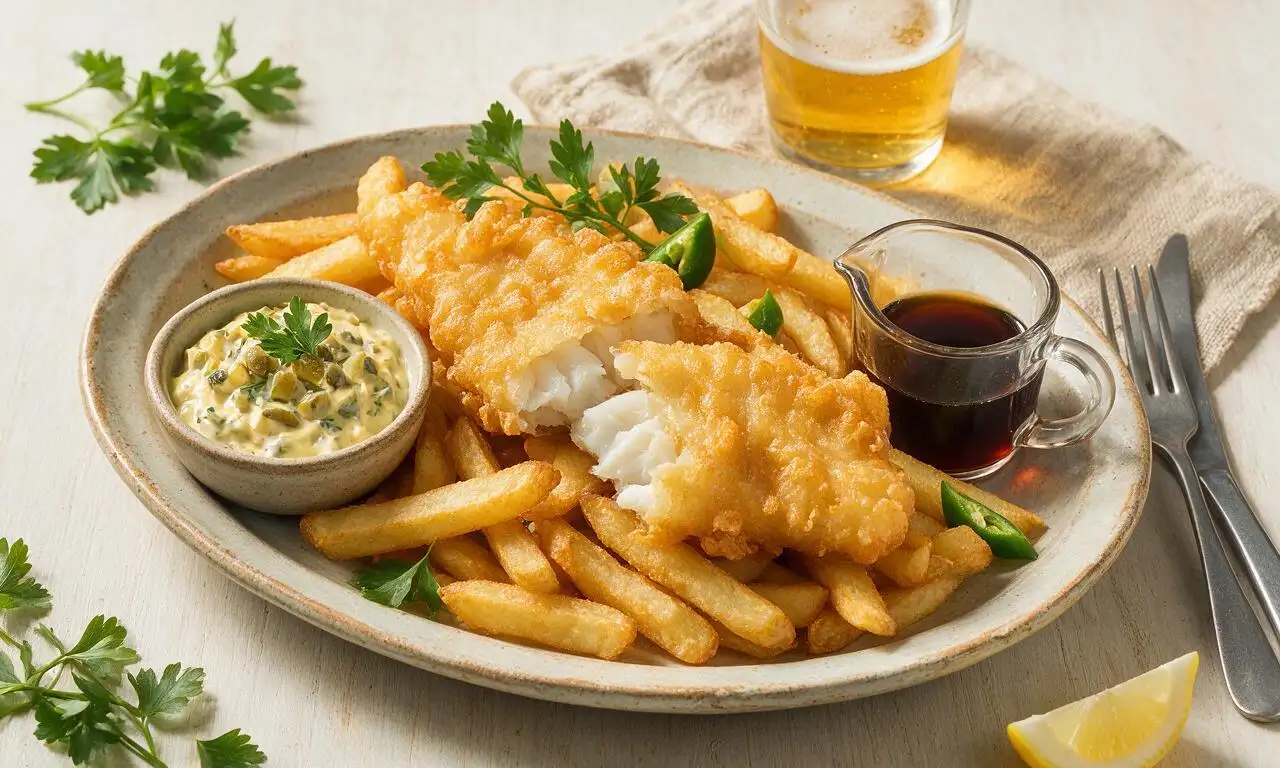
Crispy golden beer-battered cod and fluffy double-fried chips, served with tangy tartar sauce and malt vinegar: the timeless, beloved British pub comfort classic.

⏱️ 45 minuteMain Course ★ 4.7
Main Course
🍜 Mexico

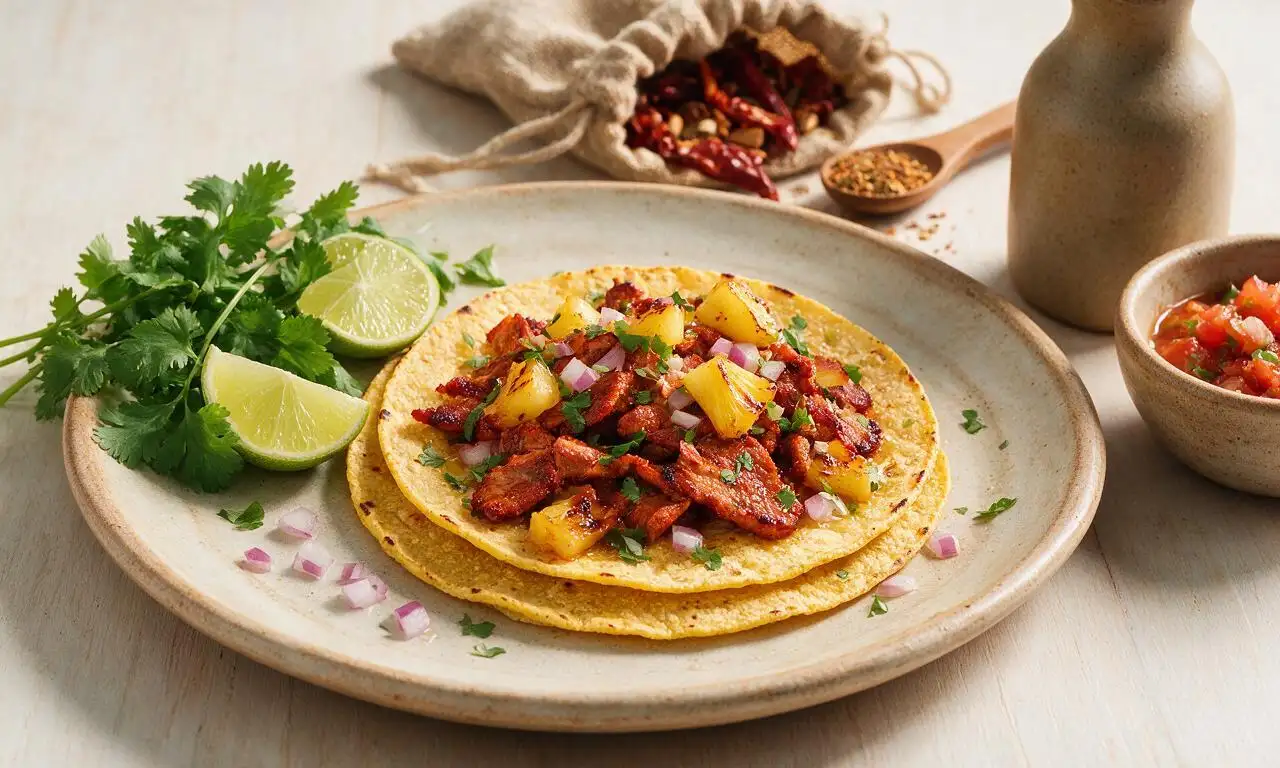
Smoky, chile-marinated pork tacos with caramelized pineapple, fresh cilantro, and lime: a beloved classic Mexican street food perfect for casual summer gatherings.

⏱️ 1 hour 45Main Course ★ 4.8
Main Course
🍜 United States

Crunchy Fritos corn chips layered with savory beef chili and melted cheddar, topped with cool, zesty fixings for a beloved, cozy Tex-Mex comfort food.

⏱️ 35 minuteMain Course ★ 4.8

korean shrimp:Frequently Asked Questions

1.Can I use frozen shrimp for this recipe instead of fresh? ▾
Absolutely! Frozen large shrimp works perfectly here—just thaw it completely in the fridge overnight, or in a bowl of cold tap water for 15 minutes if you’re short on time. Pat the shrimp very dry with paper towels before cooking to get a nice sear instead of steaming, and keep tails on for classic presentation and extra savoriness.
2.How spicy is this Saeu Bokkeum, and can I adjust the heat level? ▾
The base recipe has warm, garlicky heat balanced by honey’s sweetness—it’s not overwhelmingly fiery for most people. To dial heat up, add 1/4 teaspoon of gochugaru (Korean chili flakes) or a pinch of cayenne. To make it milder, cut the gochujang by half and add a splash of extra soy sauce to keep sauce depth consistent.
3.Why does my stir-fried shrimp always turn out rubbery? ▾
Rubbery shrimp almost always comes from overcooking! Large shrimp only need 2-3 minutes total over high heat—they’re done the second they turn opaque pink and curl into a loose C shape. Don’t overcrowd the pan, and toss continuously once you add the sauce to keep shrimp tender, plump, and juicy.
4.Can I make this spicy garlic shrimp gluten-free? ▾
Definitely! The only gluten-containing ingredient in the base recipe is low-sodium soy sauce, so simply swap it for an equal amount of gluten-free tamari. If you use coconut aminos instead, note it’s sweeter than soy sauce, so cut the honey by 1/2 teaspoon to keep flavor balanced, and confirm your gochujang is gluten-free, as some brands include wheat.
5.What are the best side dishes to serve with Saeu Bokkeum? ▾
This glossy, flavor-packed shrimp pairs beautifully with steamed short-grain white rice to soak up extra sauce, quick pickled cucumbers to cut the richness, and simple seasoned Korean spinach (sigeumchi namul). For a heartier weeknight meal, you can also toss the finished shrimp with cooked chewy glass noodles right in the pan.
6.Do I have to leave the shrimp tails on for this recipe? ▾
Leaving tails on is totally optional! It adds a nice pop of color and subtle shellfish savoriness to the sauce as it cooks, plus it creates a more restaurant-worthy presentation. If you prefer easier, no-mess eating, just peel the tails off completely before cooking—no other adjustments to timing or sauce ratios are needed.
7.How long do leftovers of this dish last, and what’s the best way to reheat them? ▾
Store fully cooled leftover shrimp in an airtight container in the fridge for up to 3 days. I don’t recommend freezing it, as cooked shrimp gets unpleasantly mushy when thawed. To reheat, toss it in a dry skillet over medium-low heat for 2-3 minutes until just warmed through—microwaving will make shrimp tough and rubbery fast.
8.Can I prep components of this recipe ahead for faster weeknight cooking? ▾
Absolutely! Mix the gochujang, low-sodium soy sauce, honey, and toasted sesame oil together in an airtight jar and store it in the fridge for up to 1 week. When you’re ready to cook, all you have to do is pat your shrimp dry, give the sauce a quick stir, and you’ll cut total prep and cook time down to under 10 minutes.
9.I don’t have gochujang on hand—what’s a good substitute? ▾
While nothing matches gochujang’s unique fermented umami and warm, sweet heat, you can make a solid quick stand-in by mixing 2 tablespoons of mild white miso, 1 tablespoon of sriracha, 1/2 teaspoon of sugar, and a tiny pinch of smoked paprika. It won’t be identical, but it creates a similarly glossy, spicy, savory coating for the shrimp.
10.Should I marinate the shrimp before stir-frying to add more flavor? ▾
You don’t need to marinate the shrimp for this recipe! The high-heat stir-fry method and thick, clingy gochujang sauce coat every bite with bold flavor as it cooks, so a long marinade is unnecessary. In fact, marinating shrimp in salty sauce for too long can break down its delicate texture, leading to mushy bites instead of tender, juicy ones.

Comments (3)

2 hours ago

OMG this was SO good!!! I threw this together last night for a quick weeknight family dinner right after my son’s soccer practice and even my super picky 8 year old cleaned his plate. That 10 minute cook time is no joke, I had it on the table faster than our usual go-to takeout would’ve showed up. The only small swap I made was adding a pinch of extra honey to cut the heat a little for the kids. Total game changer, will absolutely be adding this to our regular meal prep rotation!

30 minutes ago

Wait that extra honey hack is genius! I made this last week and thought the gochugaru heat was a little too sharp for my partner who can’t handle super spicy food, definitely trying that on my next batch. Did you serve this with rice or noodles?

5 minutes ago

So glad the whole family loved it! The extra honey swap is such a great call for folks who prefer a milder kick. This pairs perfectly with steamed short-grain rice and a quick side of pickled cucumbers if you want to round out the meal for next time!

2 days ago

Made this for my apartment potluck last weekend and people were literally begging for the recipe before we even finished eating. It’s so easy I was low-key stressed I messed something up when it came together that fast? The garlic gets perfectly crispy and that spicy, savory glaze hits just right. One quick pro tip for other folks making this: make sure you pat the shrimp really dry before searing so they get that nice little crisp edge instead of steaming in the pan.

yesterday

Great tip about patting the shrimp dry! That’s such a key step for getting that perfect seared texture, I’m glad you called that out for other home cooks. So stoked this was such a hit at your potluck!

3 days ago

Wow, this is way easier than the saeu bokkeum I usually order at my local Korean spot! I was worried I’d need a bunch of hard-to-find specialty ingredients I don’t keep stocked in my pantry but I already had everything except the fresh shrimp, which I grabbed on my way home from work. Spicy, garlicky, buttery, what more could you want? Full transparency: I ate way more than I should have straight out of the pan before I even got it on a plate oops.