Sujebi Ribs

title 1
Sujebi Ribs
⏱️ cook time 1 hour
🍽️ servings 4
⚡ Difficulty medium

intro

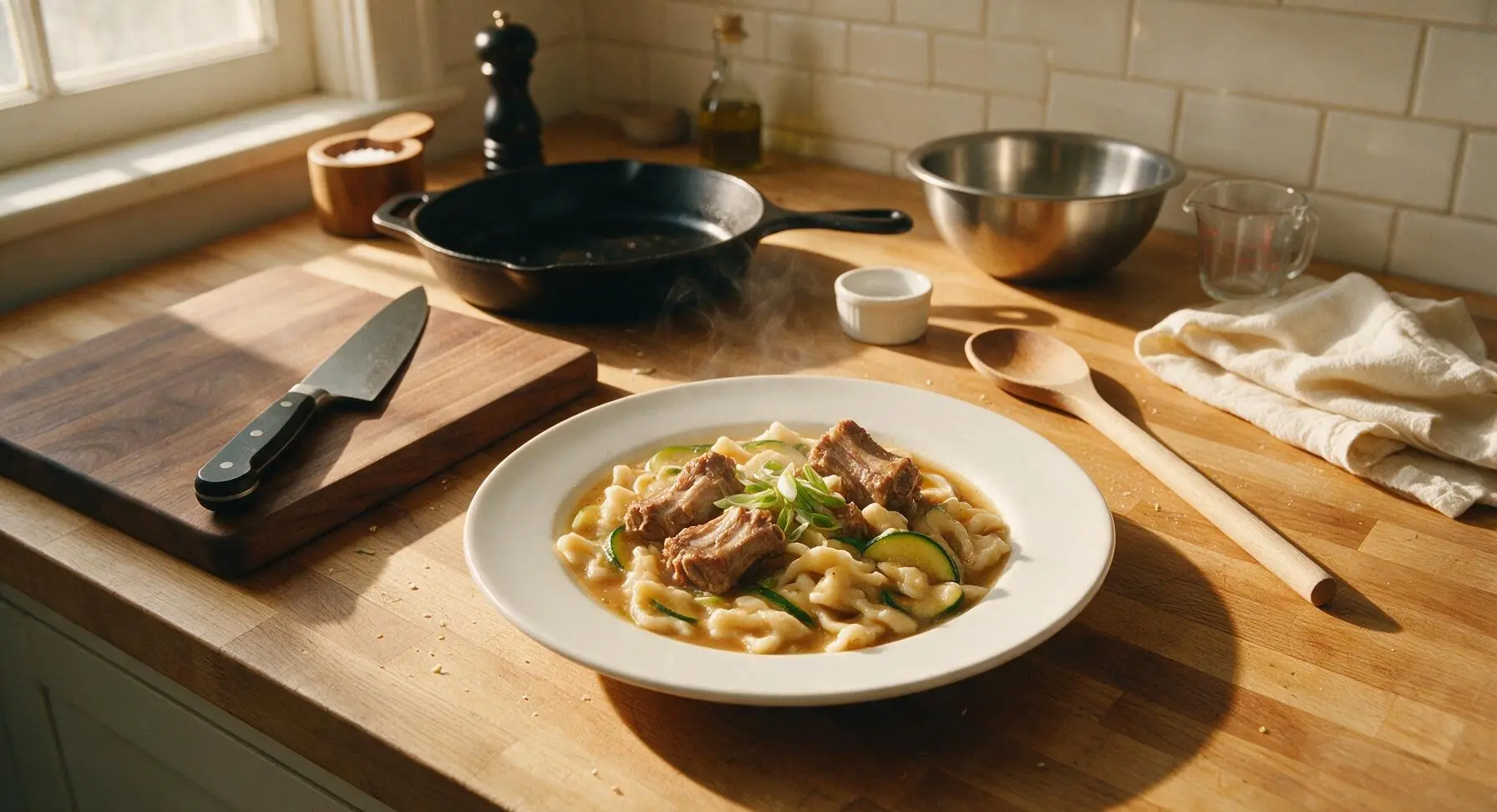
Tender slow-simmered pork ribs meet chewy hand-torn wheat sujebi noodles in savory umami broth, finished with soft zucchini and scallions for classic Korean cold-weather comfort.

Ingredients
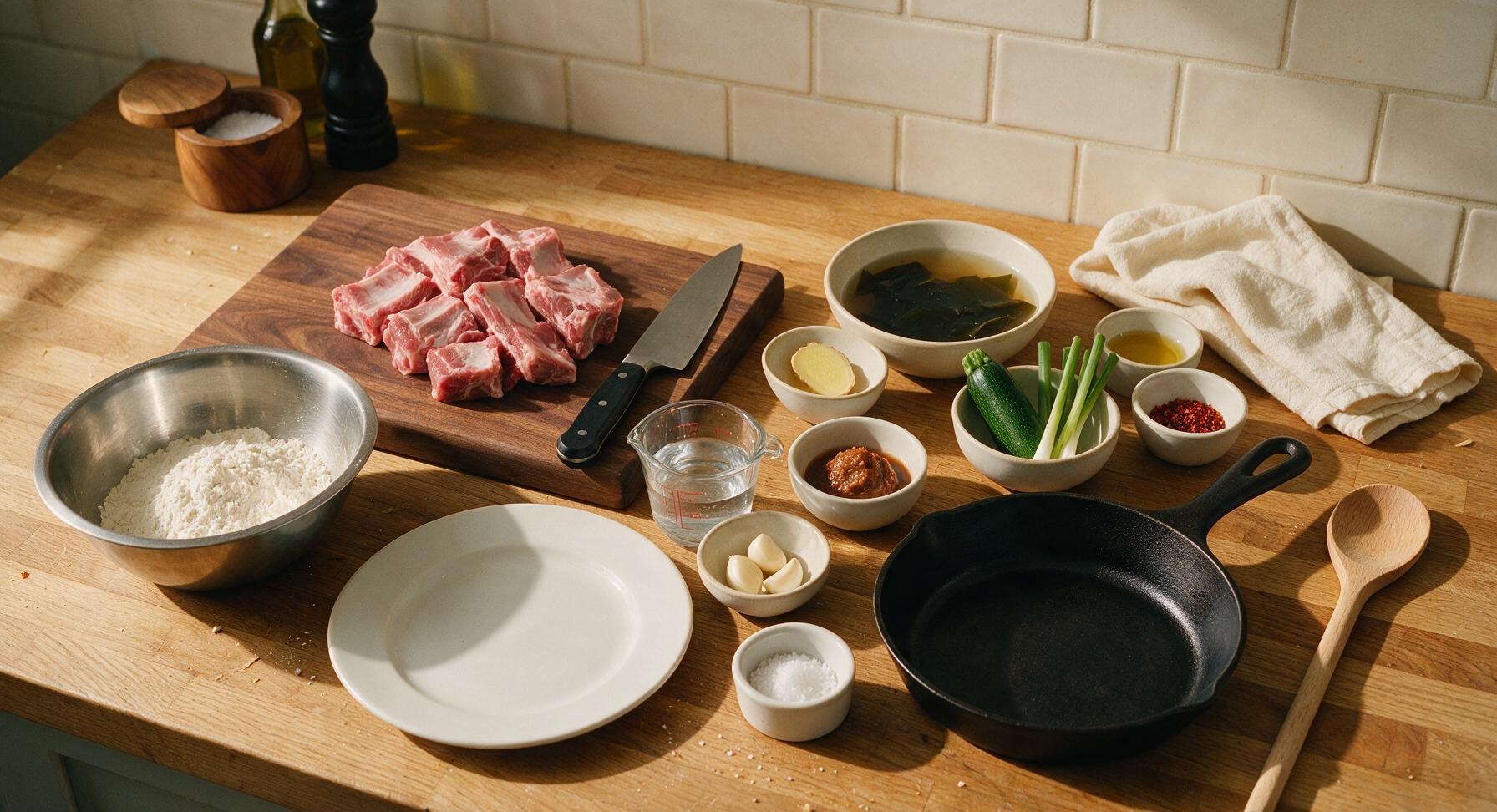
Bone-in pork short ribs 800g
All-purpose flour 200g
Ice-cold water (for dough) 120ml
Coarse sea salt 1 tbsp
Anchovy-kelp stock 1L
Doenjang (Korean soybean paste) 1 tbsp
Garlic cloves 3 (15g)
Fresh ginger 1 thin slice (5g)
Zucchini 1 small (150g)
Scallions 4 (60g)
Gochugaru (Korean chili flakes) 1 tsp
Toasted sesame oil 1 tsp

Steps

1

Mix and Rest Dough

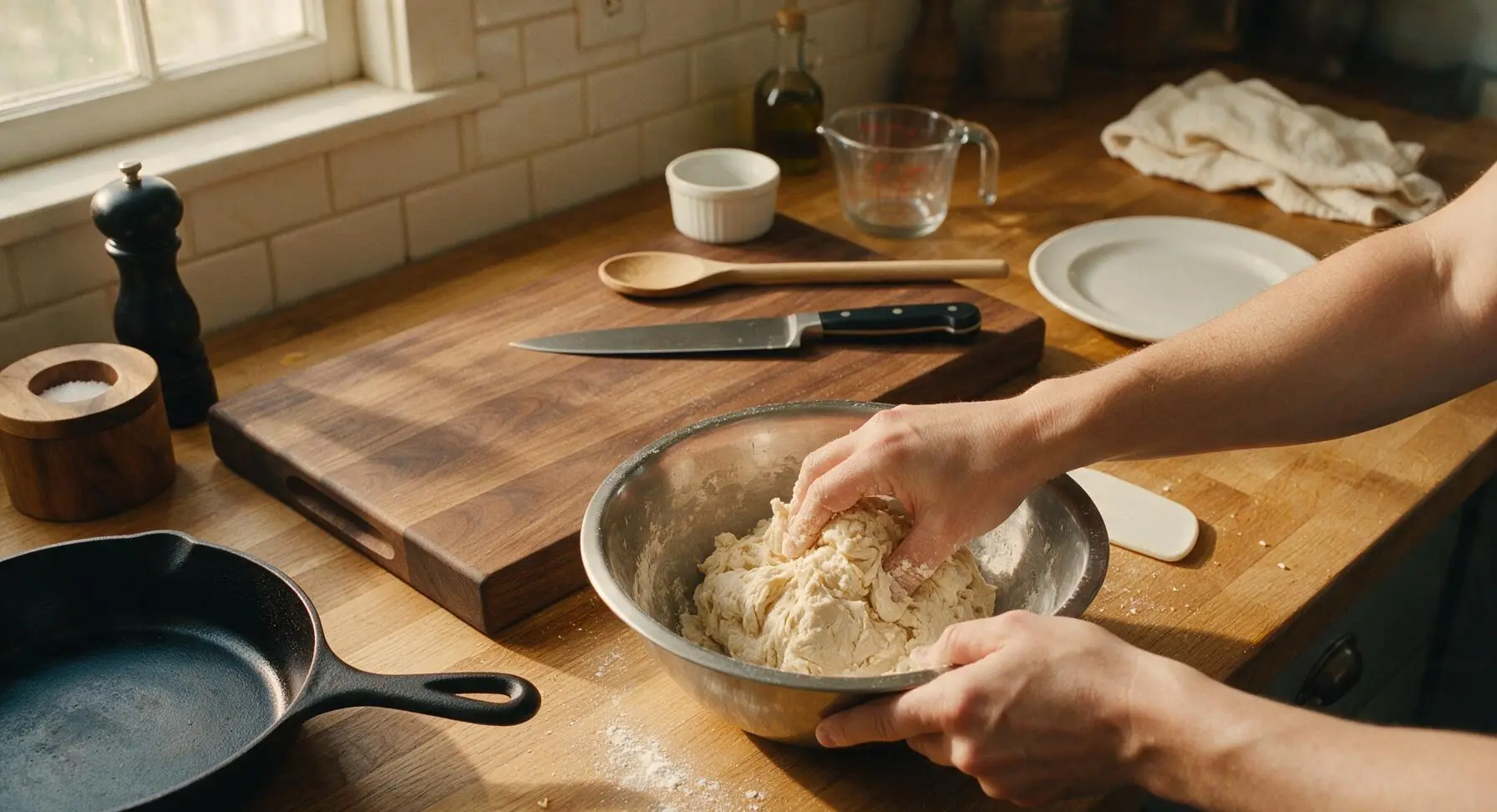
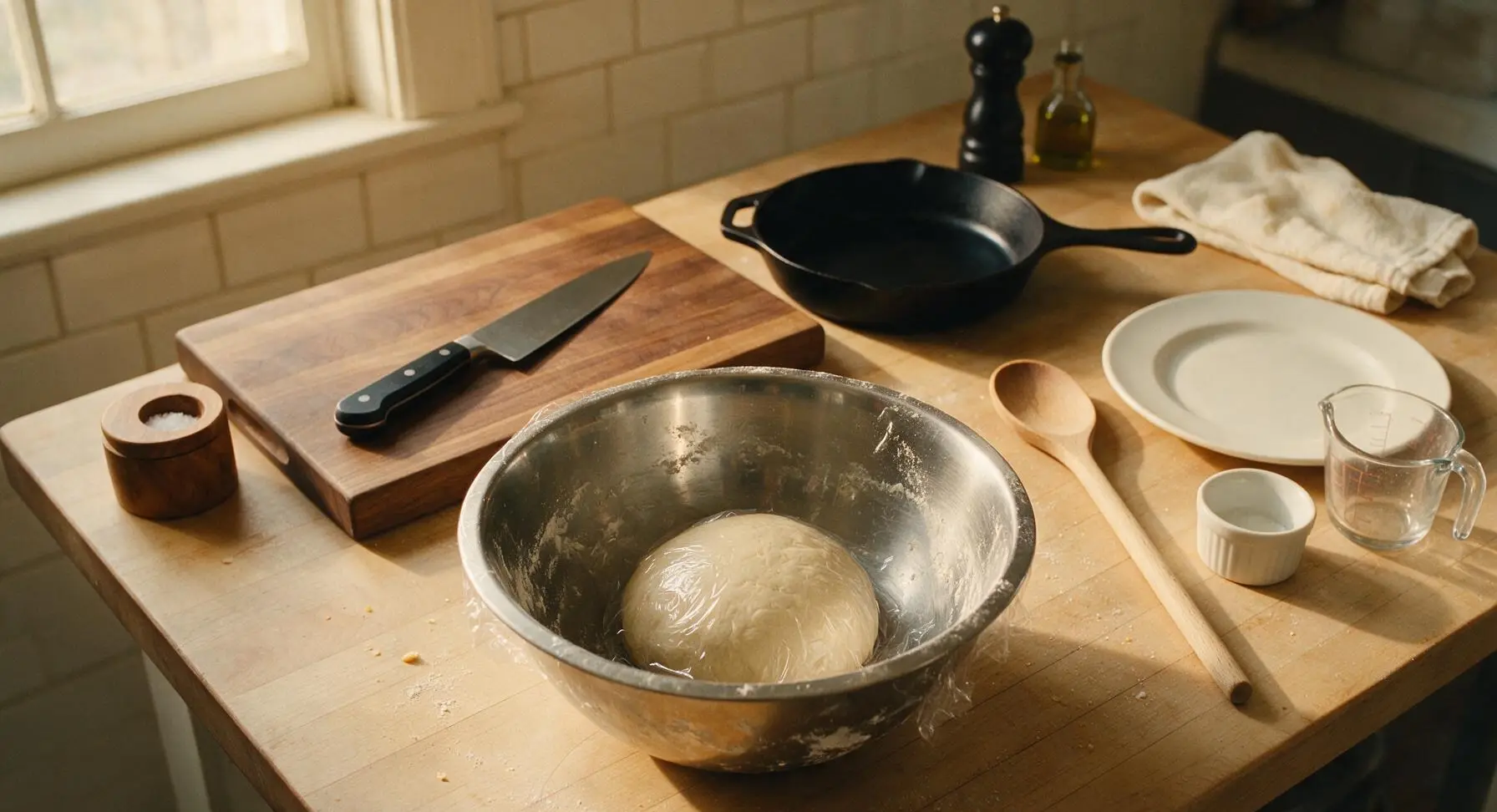
Combine 200g all-purpose flour, 1/2 teaspoon coarse sea salt, and 120ml ice-cold water in the medium stainless steel mixing bowl. Use the white silicone dough scraper to mix ingredients until a shaggy, crumbly mass forms, then knead by hand for 5 minutes until the dough is smooth, firm, and completely non-sticky to the touch. Cover the bowl tightly with plastic wrap and let rest at room temperature for 30 minutes; this relaxes the wheat gluten so the dough tears easily later without shrinking back into thick lumps.
Step 1
step1:Mix and Rest Dough
Step 1
step1:Mix and Rest Dough
2

Blanch Pork Ribs

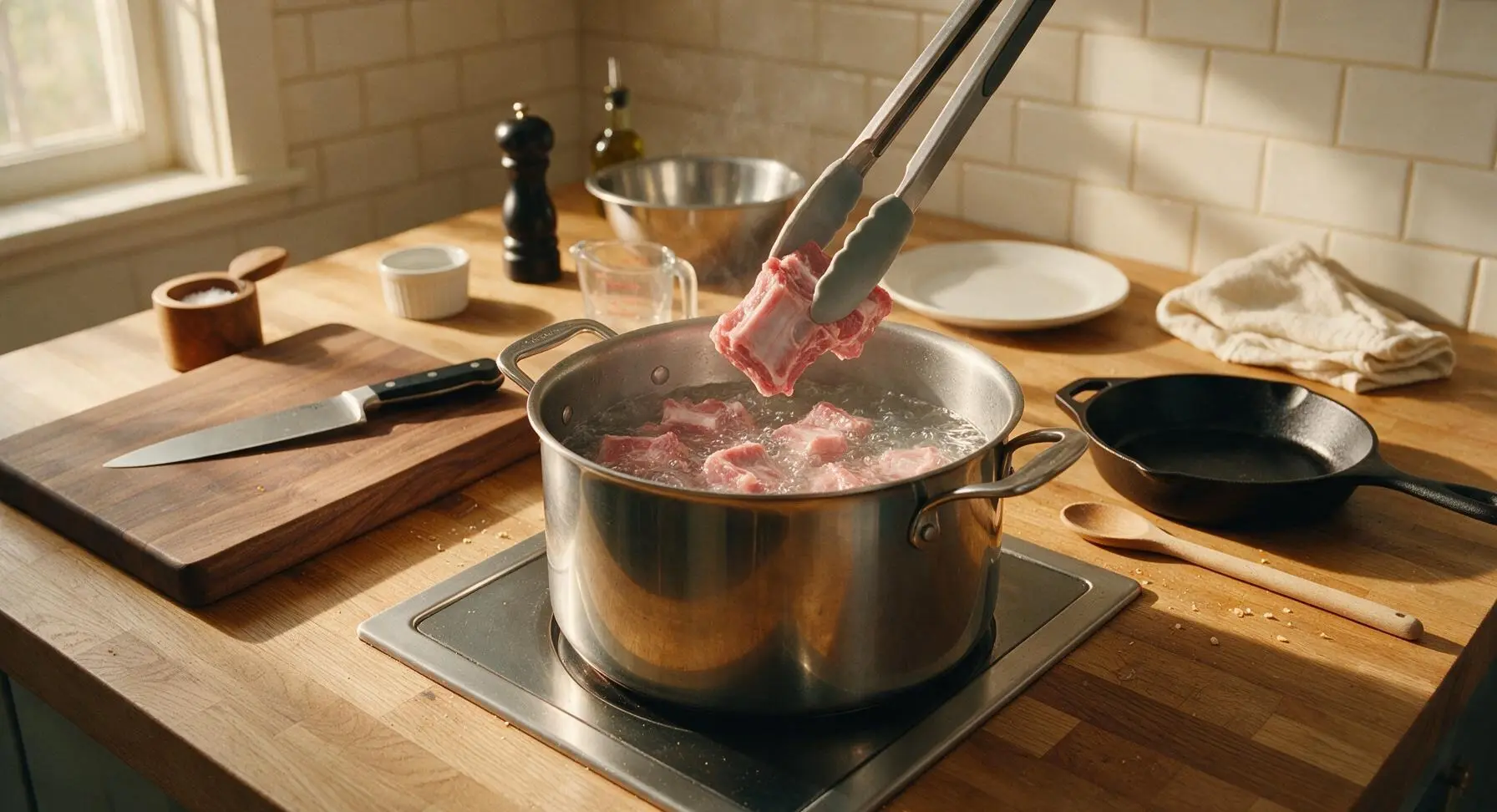
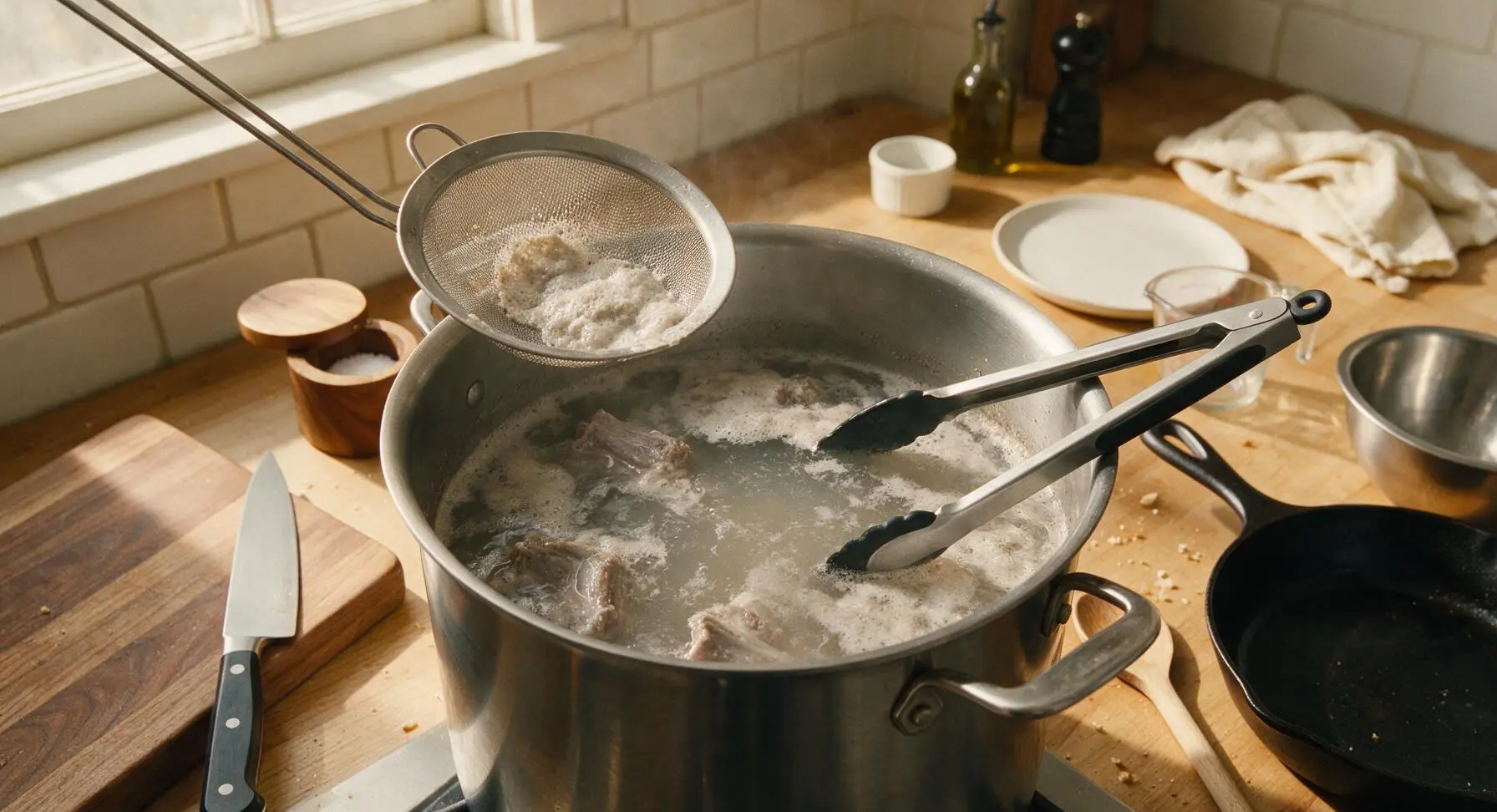
Cut the 800g pork short ribs into 5cm individual pieces using the chef knife on the maple cutting board, if not pre-portioned by the butcher. Bring 2L of cold water to a rolling boil in the 5L stainless steel stock pot over high heat. Use the silicone-tipped tongs to add the rib pieces to the boiling water, and cook for 5 minutes until thick gray foam rises to the water surface. Use the fine mesh skimmer ladle to remove all floating scum, then transfer ribs to a clean plate, discard the blanching water, and rinse the pot thoroughly to remove any stuck-on residue.
Step 2
step2:Blanch Pork Ribs
Step 2
step2:Blanch Pork Ribs
3

Simmer Rib Broth

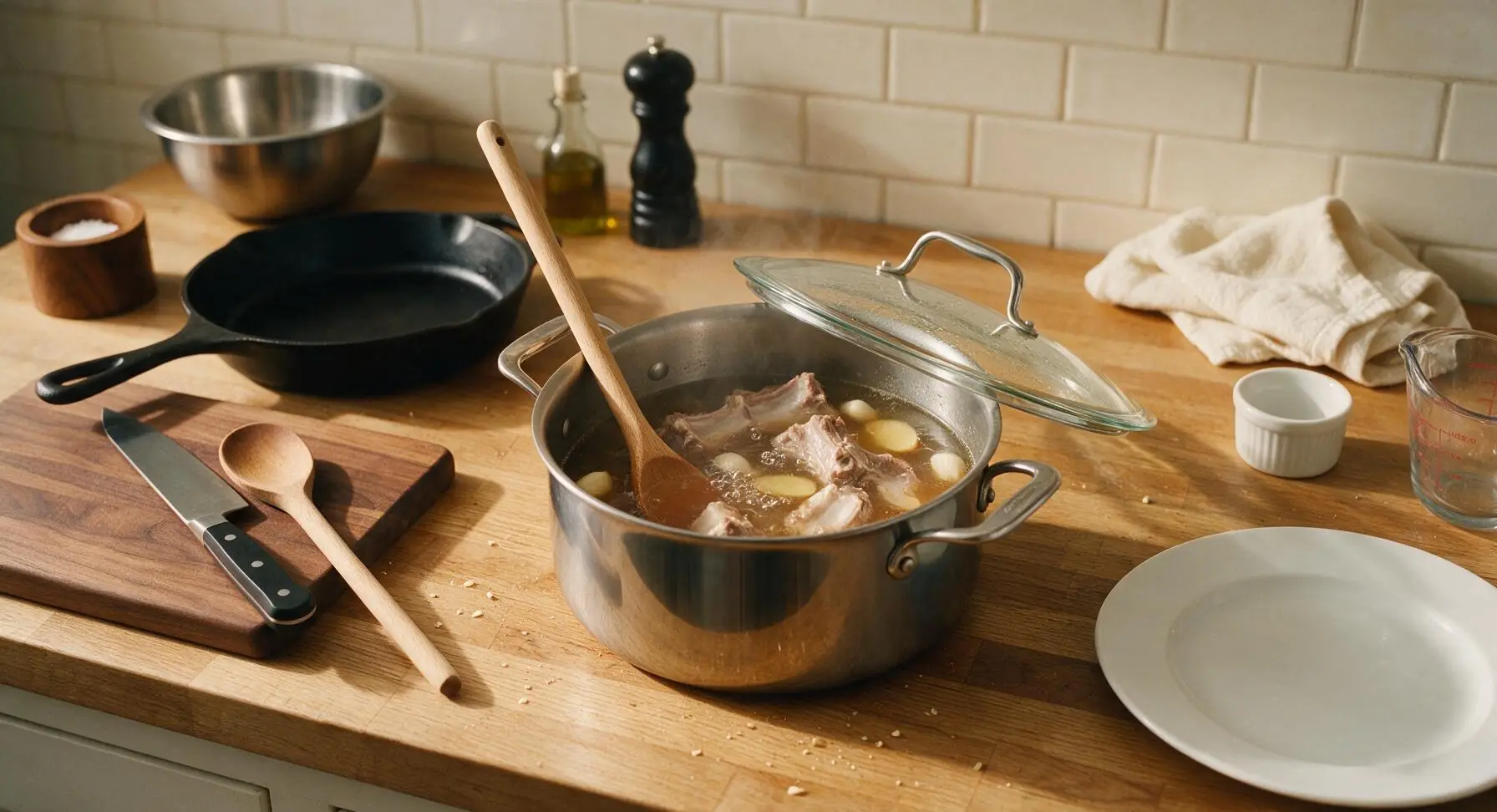
Return the rinsed ribs to the clean stock pot, pour in 1L of anchovy-kelp stock, add the peeled garlic cloves, ginger slice, and 1 tablespoon doenjang. Stir with the long beech wood spoon until the doenjang is fully dissolved into the broth. Bring to a gentle boil over medium heat, then reduce heat to low to maintain a soft simmer, cover with the glass lid, and cook for 45 minutes. Skim any small amounts of rising foam with the skimmer every 15 minutes to keep the broth perfectly clear; ribs are done when a fork slides easily into the meat but it does not fall completely off the bone.
Step 3
step3:Simmer Rib Broth
4

Prep Soup Vegetables

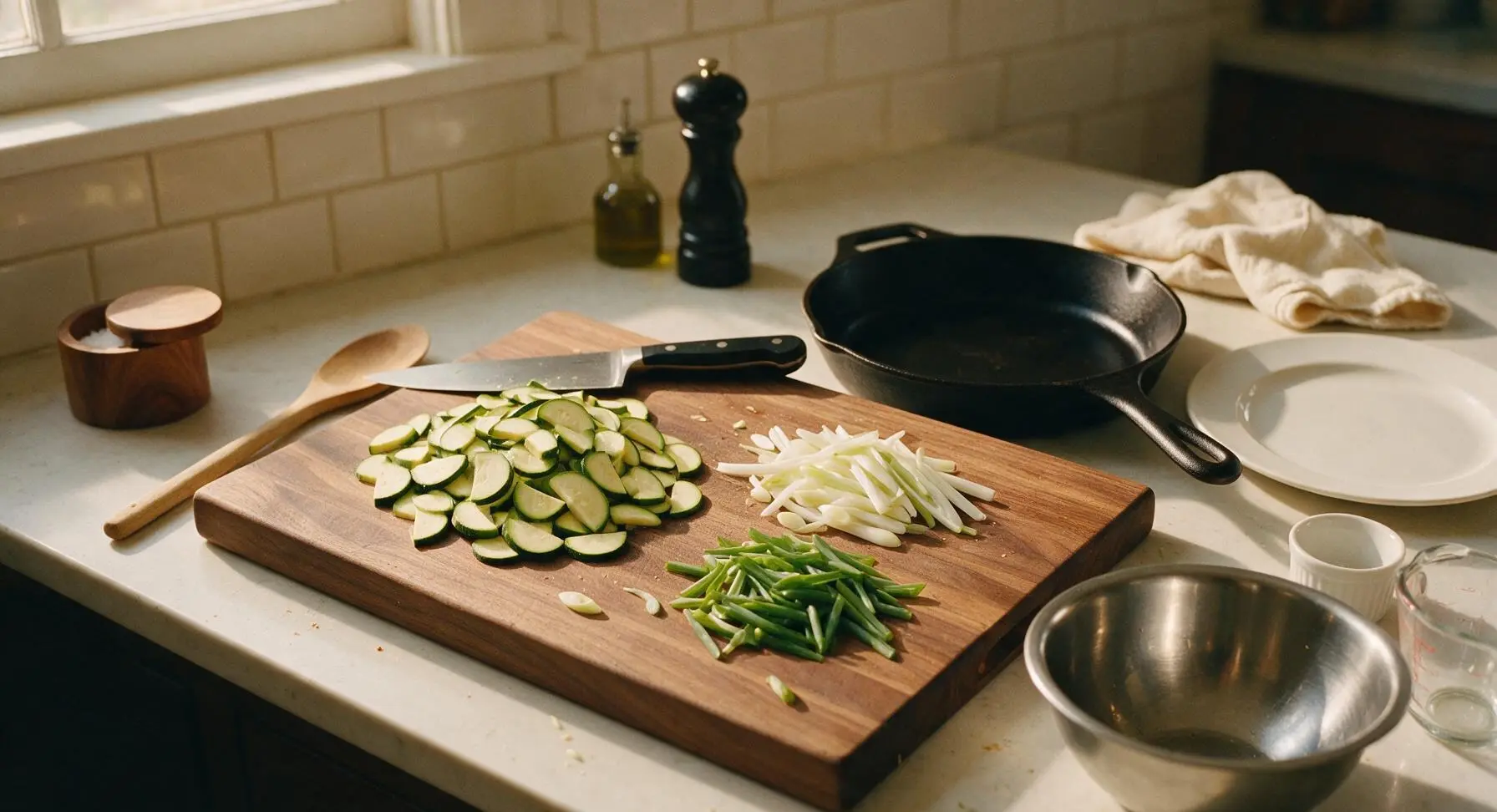
While the ribs simmer, place the whole zucchini and scallions on the maple cutting board. Use the 8-inch chef knife to slice the zucchini into 0.5cm thick half-moon slices, and cut the scallions into 5cm long strips, separating the firmer white parts from the tender green parts. Set cut vegetables aside in small piles on the board until needed.
Step 4
step4:Prep Soup Vegetables
5

Tear Sujebi Dough

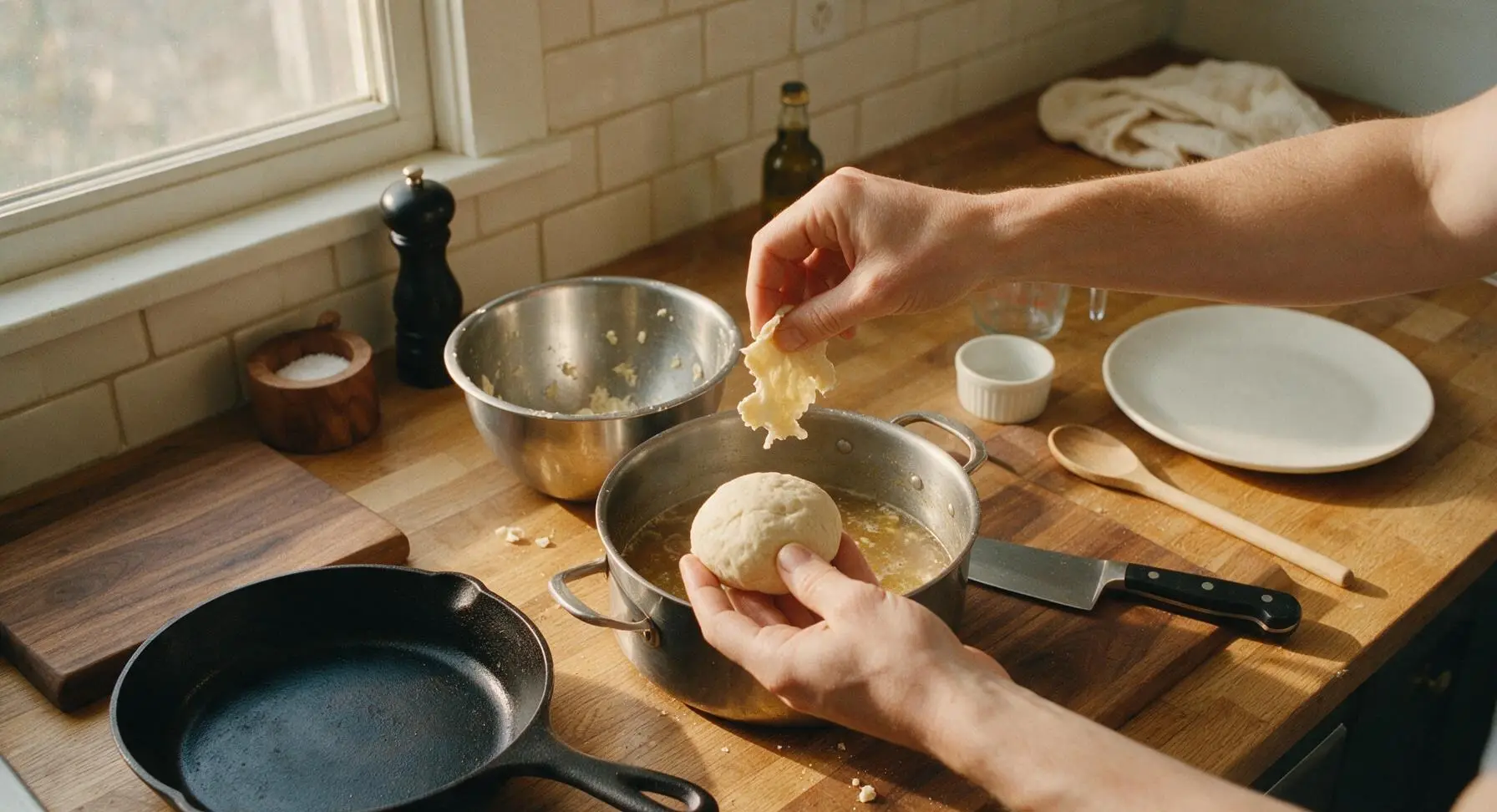
Once the ribs are tender, uncover the rested dough. Pinch off 2cm sized pieces of dough, pulling each piece thin between your thumb and forefinger to create irregular, wavy-edged flat flakes about 1mm thick. Drop torn pieces directly into the gently simmering broth as you work, stirring occasionally with the beech wood spoon to prevent dough from sticking to the pot bottom. After all dough is added, simmer for 7 minutes until all sujebi pieces float to the surface and appear slightly translucent at the edges.
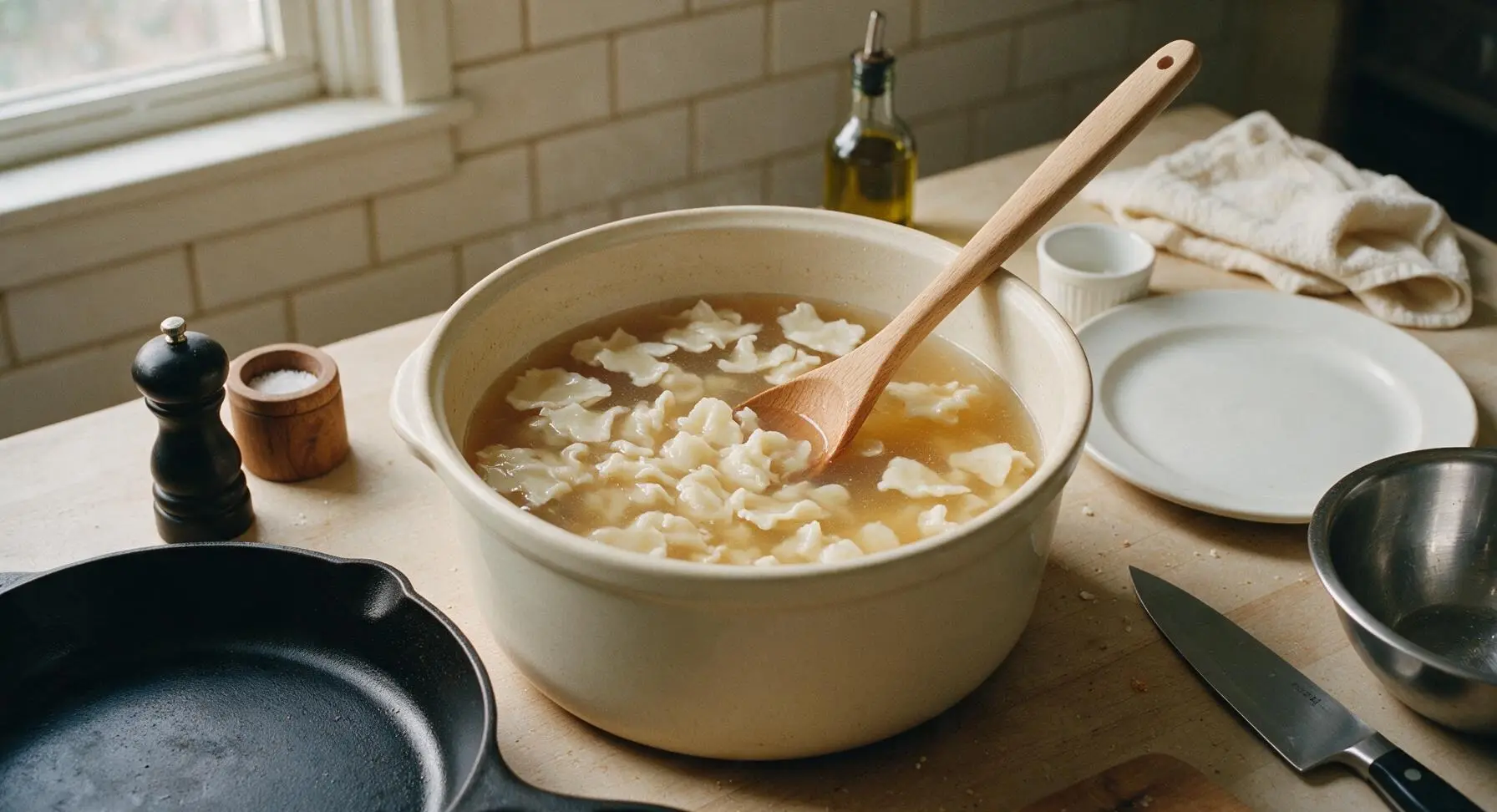
Step 5
step5:Tear Sujebi Dough
Step 5
step5:Tear Sujebi Dough
6

Add Veggies and Season

Add the sliced zucchini and white scallion strips to the pot, stir gently, and simmer for 3 minutes until the zucchini is just tender-crisp (overcooking will turn it mushy). Stir in 1 teaspoon gochugaru (add more for extra heat if preferred), then taste the broth and add a pinch of coarse sea salt if needed. Turn off the heat, drizzle with 1 teaspoon toasted sesame oil, and scatter the green scallion strips over the top.
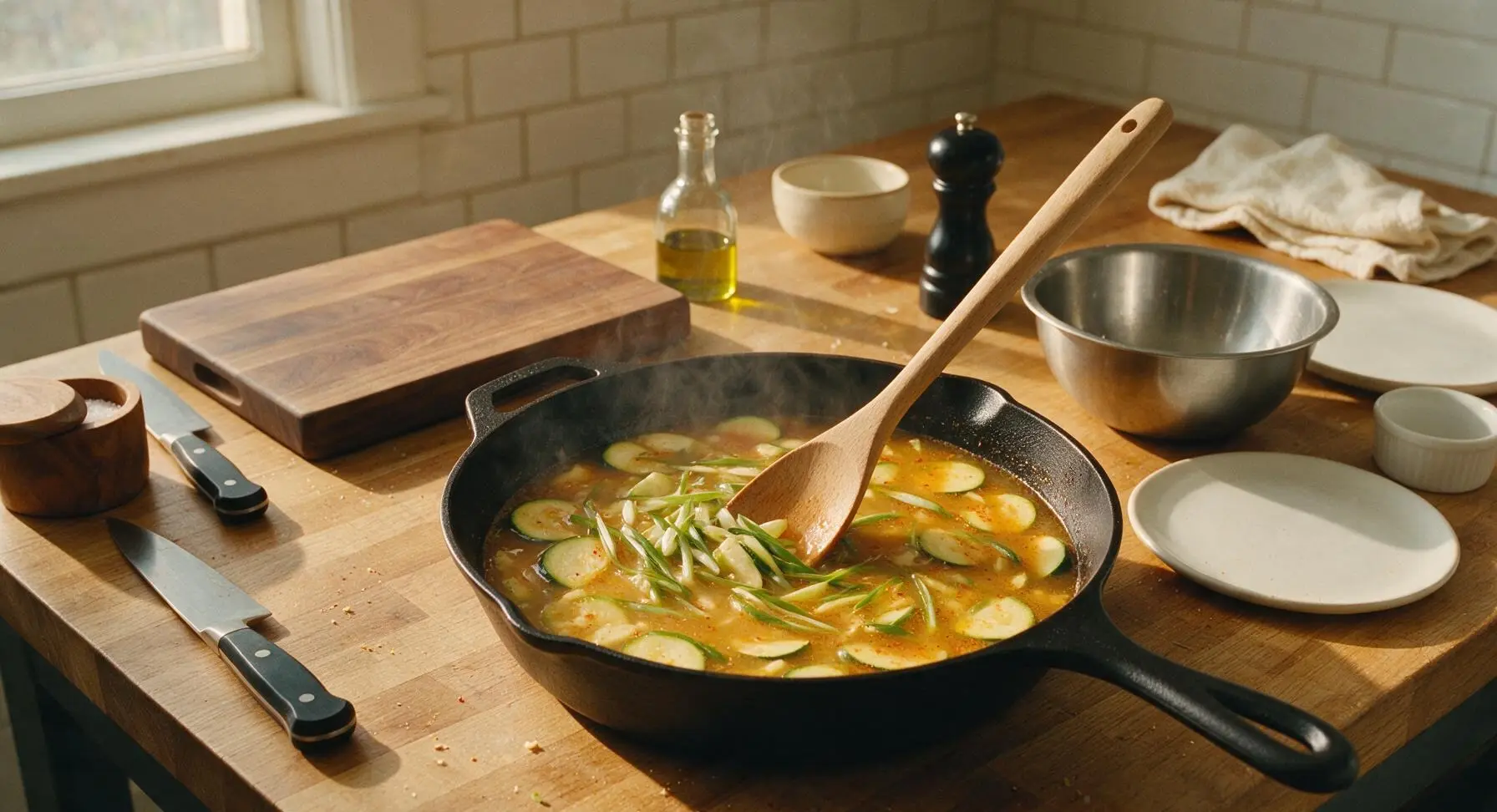
Step 6
step6:Add Veggies and Season
7

Ladle and Serve

Use the stainless steel soup ladle to divide the broth, ribs, sujebi pieces, and vegetables evenly between 4 off-white ceramic wide-rim soup bowls. Serve immediately while piping hot, with extra gochugaru or light soy sauce on the side for diners to adjust seasoning to their taste.
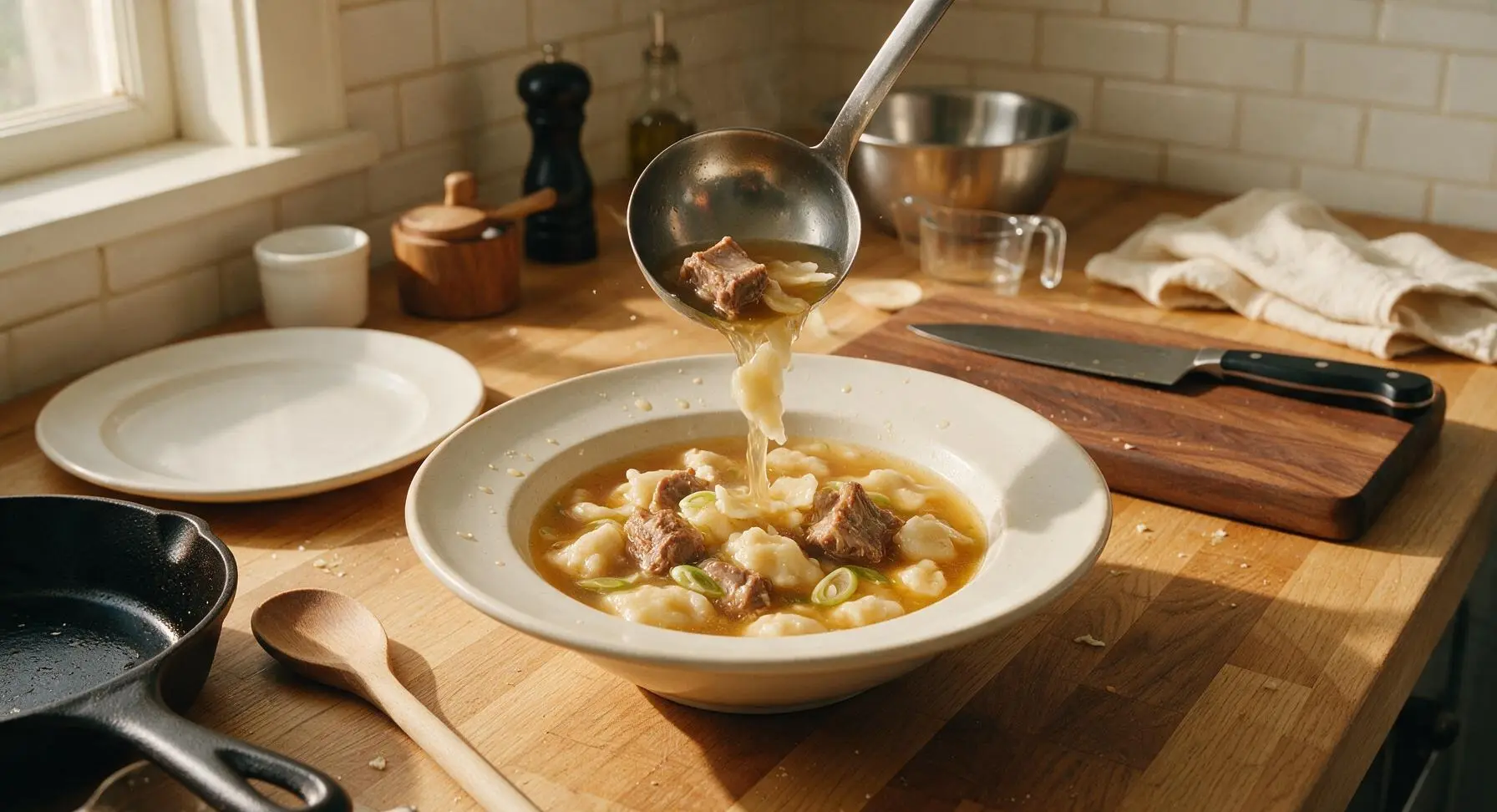
Step 7
step7:Ladle and Serve

Tips

1.Use ice-cold water when mixing the sujebi dough: this keeps the gluten structure tight, resulting in chewy, springy noodle flakes that won’t turn mushy even after a few minutes of simmering in hot broth.
2.Don’t skip blanching the pork ribs: this step removes blood and surface impurities that would make the broth cloudy and give it a heavy, gamey flavor, resulting in the clean, pale golden broth classic to Korean sujebi.
3.Tear dough pieces as thin as possible: thick, bulky dough pieces will be doughy and undercooked in the center, while thin, irregular flakes cook evenly and catch broth in their crevices for more flavor in every bite.
✨ You May Also Like

Soups & Stews
🍜 Japan

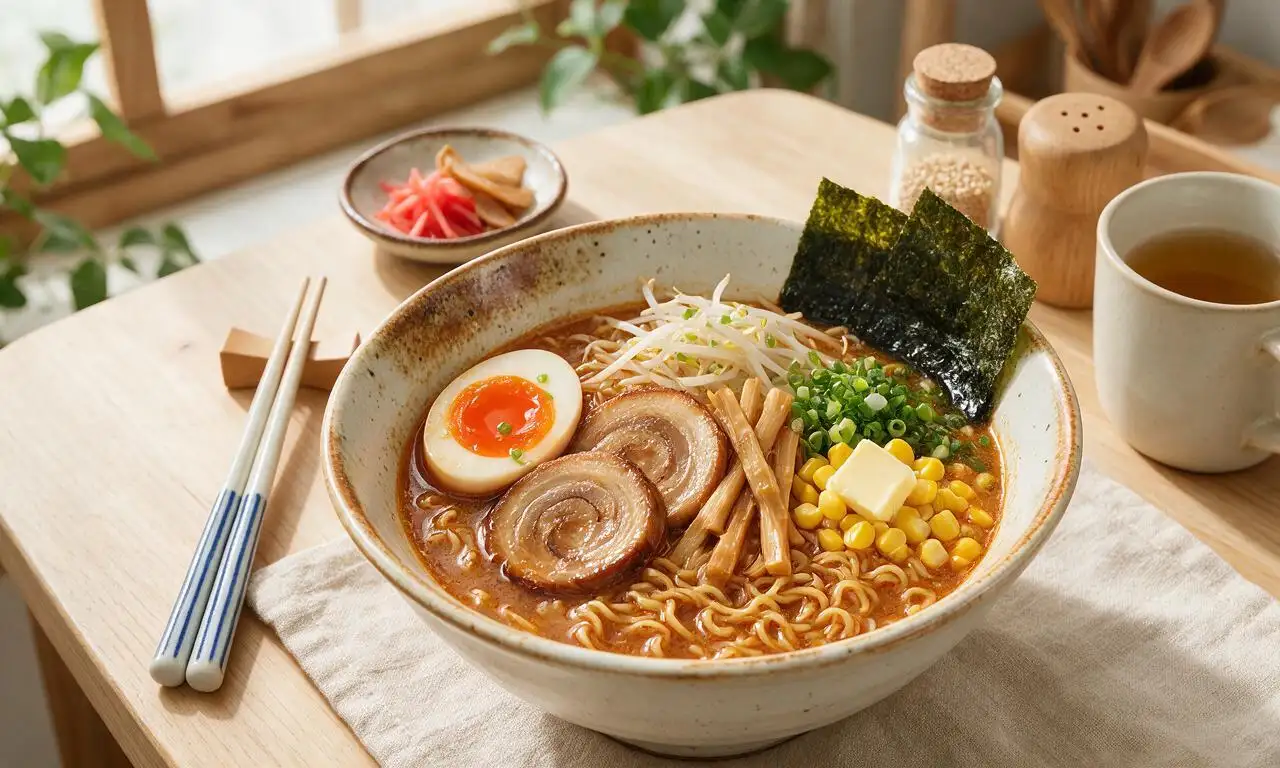
Rich, umami-dense Hokkaido-style miso ramen with chewy noodles, savory fermented broth, and classic toppings, a cozy, deeply satisfying warm meal.

⏱️ 45 minuteSoups & Stews ★ 4.5
Soups & Stews
🍜 United States

A hearty, peppery tripe and root vegetable stew with colonial Philadelphia roots, thick, warming, and packed with bold savory flavor for cold winter days.

⏱️ 2 hours 3Soups & Stews ★ 4.6
Soups & Stews
🍜 Mexico

Hearty, warming red pork posole loaded with tender hominy, slow-simmered in a rich smoky chile broth, served with zesty fresh garnishes for a deeply comforting, satisfying meal.

⏱️ 2 hours 3Soups & Stews ★ 4.7
Soups & Stews
🍜 United States

Warm, soothing classic chicken noodle soup loaded with tender chicken, soft egg noodles, and savory veggies, perfect for chasing chills and feeding the whole family.

⏱️ 40 minuteSoups & Stews ★ 4.9
Soups & Stews
🍜 France

Deeply savory caramelized onion broth topped with crusty bread and bubbly melted Gruyère, a timeless French bistro comfort food ideal for cold days.

⏱️ 1 hour 25Soups & Stews ★ 4.8
Soups & Stews
🍜 United States

Hearty, briny Maryland crab soup loaded with sweet blue crab, tender summer vegetables, and zesty Old Bay, a beloved Chesapeake Bay coastal comfort staple.

⏱️ 55 minuteSoups & Stews ★ 4.9

Sujebi Ribs:Frequently Asked Questions

1.What makes Sujebi Ribs different from standard Korean sujebi? ▾
Traditional sujebi centers on hand-torn wheat noodles in light anchovy-kelp broth, but this heartier version adds slow-simmered bone-in pork short ribs. The ribs render gentle fat and deep meaty savoriness into the umami stock, turning a simple noodle soup into a filling, protein-packed cold-weather comfort meal.
2.Do I really need to use ice-cold water for the sujebi dough? ▾
Yes, ice-cold water is key to getting that signature chewy sujebi texture. It slows gluten development just enough so the torn noodle bits don’t turn mushy when simmered, and holds their satisfying, springy bite instead of dissolving or getting gummy in the hot broth.
3.Can I substitute all-purpose flour with another flour for the sujebi? ▾
All-purpose flour delivers the classic light, chewy sujebi texture best, but if you need a swap, use a 50/50 mix of AP and whole wheat for a nuttier bite. Skip bread flour (it makes noodles too tough) or cake flour (noodles fall apart) as both throw off the dish’s balanced texture.
4.How long do I need to simmer the pork short ribs to get them tender? ▾
Plan for 1 to 1.5 hours of gentle, low simmer in the anchovy-kelp stock for fall-off-the-bone tender ribs. Keep the heat low so the broth stays at a soft bubble, not a rolling boil—hard boiling will make meat tough and turn the broth cloudy instead of clear and savory.
5.Should I soak pork ribs before simmering them for this recipe? ▾
It’s a smart, low-effort step! Soak bone-in short ribs in cold water for 30 to 60 minutes, changing the water once, to draw out excess blood. This keeps your anchovy-kelp broth clean-tasting, clear, and free of bitter, metallic off-notes from residual blood in the rib bones.
6.Can I make the sujebi dough ahead of time? ▾
Absolutely! Mix the flour, ice water, and pinch of coarse sea salt into a tight dough, wrap it tightly in plastic wrap, and store it in the fridge for up to 24 hours. Chilled dough is actually easier to tear into thin, irregular pieces, and still cooks up to that perfect chewy texture.
7.How thin should I tear the sujebi dough pieces? ▾
Tear dough into roughly 2-inch, paper-thin irregular pieces—there’s no need for uniform shapes, that’s part of sujebi’s rustic charm. If pieces are too thick, they’ll be doughy in the center; too thin, and they’ll dissolve into the broth before setting into chewy noodles.
8.Can I use store-bought noodles instead of homemade hand-torn sujebi? ▾
While homemade sujebi has the best fresh, chewy texture, you can use pre-made refrigerated sujebi from a Korean market as a time-saver. Skip dry wheat noodles or udon here—their dense texture won’t absorb the savory rib and anchovy-kelp broth the way light sujebi does.
9.Why does the recipe call for coarse sea salt instead of regular table salt? ▾
Coarse sea salt has a cleaner, brinier, less harsh mineral flavor than iodized table salt, making it ideal for seasoning both the sujebi dough and broth. It dissolves more slowly too, so you can build seasoning gradually without accidentally over-salting the delicate umami stock.
10.Do I need to blanch ribs before adding them to the anchovy-kelp stock? ▾
It’s a quick step that makes a huge difference in broth quality. Give ribs a 5-minute boil in plain water, then scrub off any gray scum from the bones and meat before adding them to the stock. This removes surface impurities so your finished broth is bright, clear, and free of murky off-flavors.
11.When should I add the zucchini and scallions to the soup? ▾
Add thinly sliced zucchini during the last 3 minutes of cooking, and chopped scallions in the final 60 seconds. Both veggies have a delicate, soft texture that turns mushy if overcooked—this short cook time keeps them bright, lightly sweet, and a fresh contrast to rich ribs and chewy noodles.
12.What can I use if I don’t have anchovy-kelp stock? ▾
Anchovy-kelp stock gives the dish its classic light umami base that doesn’t overpower pork flavor, but if you need a swap, use low-sodium chicken stock thinned with 25% water. Skip heavy beef stock or creamy broths—they’ll make the soup too heavy and mask the sujebi’s subtle wheat flavor.
13.How do I keep sujebi noodles from sticking together in the broth? ▾
After tearing each piece of dough, drop it directly into the gently simmering broth instead of piling torn pieces on a plate first. Give the soup a gentle stir right after adding all noodles to separate them, and keep the broth at a steady low simmer so pieces don’t clump as they cook.
14.Can I make Sujebi Ribs in a slow cooker? ▾
Definitely! Add blanched ribs and anchovy-kelp stock to your slow cooker, and cook on low for 6 hours until ribs are tender. Turn the heat to high, tear in the sujebi pieces, and cook 10 more minutes, then add zucchini and scallions right before serving for the same great texture and flavor.
15.How can I make this dish feel less rich and heavy? ▾
If you want a lighter version, trim excess thick fat from the short ribs before simmering, and skim the broth’s surface with a spoon to remove rendered fat before adding sujebi and veggies. You’ll still get deep pork flavor, without the greasy mouthfeel that can come from excess rib fat.
16.How do I tell when sujebi noodles are fully cooked? ▾
Fresh hand-torn sujebi cooks quickly, usually 7 to 9 minutes after you add them to simmering broth. They’re done when they float to the surface, are translucent around the edges, and have a chewy, springy bite all the way through with no raw, doughy white center.
17.Can I add extra vegetables to Sujebi Ribs? ▾
Absolutely! Classic complementary add-ins include thinly sliced potato, napa cabbage, or shiitake mushrooms, which all hold up well to simmering and boost the broth’s savoriness. Add firmer veggies like potato 10 minutes before the noodles, so they cook through without turning mushy.
18.What’s the best way to store leftover Sujebi Ribs? ▾
Store cooled leftovers in an airtight container in the fridge for up to 3 days. Note that sujebi noodles will absorb broth as they sit, so add a splash of water or extra stock when reheating on the stovetop over low heat to bring the soup back to its original, cozy consistency.
19.Do I need to rest the sujebi dough after mixing it? ▾
Yes, let the mixed dough rest, covered, at room temperature for 20 minutes before tearing. This gives gluten time to relax, so the dough stretches easily without springing back, making it simple to tear into thin, even pieces that cook evenly instead of shrinking up in hot broth.
20.What’s the best way to season Sujebi Ribs to taste? ▾
Start with a light hand, using coarse sea salt to adjust seasoning right before serving, since anchovy-kelp stock and slow-simmered ribs already add natural umami and saltiness. You can add a tiny splash of fish sauce for extra depth, but skip heavy seasonings that cover the clean, comforting flavor.

Comments (17)

1 week ago

Took this to my neighborhood potluck last weekend and people were hounding me for the recipe before I even set the dish down! The ribs were fall-off-the-bone tender and the chewy sujebi noodles were such a fun twist on regular noodle soup. Only note is I added a little extra gochugaru for heat because my household loves spicy food, worked like a charm.

3 days ago

Great for weekly meal prep! I made a big batch Sunday, portioned it out into containers, and it held up perfectly all week for work lunches. The noodles didn’t get mushy at all which I was worried about, and the rib flavor got even better as it sat in the fridge. Solid medium difficulty, didn’t have any issues following the steps even as someone who doesn’t make Korean food often.

5 minutes ago

Okay as a broke college student with limited kitchen tools I was worried this would be too hard, but it was totally doable! I didn’t have a fancy rolling pin so I just tore the dough straight into the pot with my hands, and it turned out so cozy on a cold rainy exam week night. Only took an hour total, didn’t even make that big of a mess in my tiny dorm kitchen.

2 weeks ago

Made this for me and my husband when the kids were out of town, and we both agreed it’s the perfect comfort food for a quiet night in. The broth is so deep and rich, I didn’t even need to add extra salt or seasoning. I will say if you’re making it for two people you might want to halve the recipe, because the full batch makes a TON of food.

just now

Made this after a long cold hike last Saturday and it hit DIFFERENT. Warm, hearty, packed with protein from the ribs, the chewy noodles were so satisfying after burning all those calories on the trail. I added a handful of extra zucchini like the tip suggested and it added such a nice fresh crunch. Will be making this every post-hike weekend from now on.

2 hours ago

Wait this was SO good, but I messed up the sujebi dough the first time around – it was way too sticky and I couldn’t tear it into nice pieces, I ended up with big gloopy blobs. Any idea what I did wrong? Flavor was still chef’s kiss even with the wonky noodles though, so I’m definitely trying again.

30 minutes ago

So glad you loved the flavor even with the dough mishap! Sticky dough usually means you added a touch too much water, or didn’t let it rest long enough after mixing. Next time, add water 1 tablespoon at a time until the dough comes together into a smooth, not tacky, ball, and let it rest covered for 15 minutes before tearing – that makes it way easier to get those thin, even pieces!

yesterday

Game changer! I’ve always been intimidated to make sujebi at home because I thought it took all day, but an hour total cook time? Unreal. The ribs were so flavorful I didn’t even need to make a separate stock. My kids loved it – my 10 year old who hates “squishy noodles” ate two whole bowls. Obsessed.

2 hours ago

Omg same! My kid turns his nose up at every soup I make but he devoured this last night, I was shocked. I added a little extra soy sauce at the end like my grandma used to and it was perfect.

3 days ago

First time ever making any kind of Korean food at home and this was a hit! I was worried I’d mess up the flavors since I don’t have a lot of the specialty ingredients on hand, but I followed the recipe exactly and it tasted just like the sujebi I got at that little restaurant in K-town last month. So proud of myself!

2 days ago

That makes us so happy to hear! You don’t need a pantry full of specialty ingredients to make great sujebi ribs, that’s one of our favorite things about this recipe. Great job nailing it on your first try!

5 days ago

Made this on a weeknight between soccer practice and piano lessons and it was actually doable! I prepped the dough the night before and let it sit in the fridge, so when I got home all I had to do was sear the ribs, make the broth, and tear the noodles in. Whole thing came together in 40 minutes instead of an hour that way, which saved me on a chaotic night.

3 days ago

Thanks for the tip about prepping the dough the night before! I’m gonna try that this week because my weeknights are always chaos with kid activities, that would cut down so much time.

1 week ago

This was delicious, but I found the broth a little too salty for my taste since I follow a lower sodium diet. Any tips for cutting the salt without losing that deep rib flavor? I’d love to make this again but adjust it for my diet!

5 days ago

Great question! You can cut the soy sauce in half and swap regular broth for low-sodium beef broth to reduce the salt content by almost half without losing that rich umami flavor. A squeeze of fresh lime at the end also helps brighten it up so you won’t even miss the extra salt!

2 weeks ago

Served this at our monthly game night with friends and everyone was raving! It’s the perfect shareable comfort food, everyone could scoop as much as they wanted, and it stayed warm the whole night in my big Dutch oven. I paired it with some quick pickled radishes on the side and it was chef’s kiss.

1 week ago

The pickled radish side is such a good call! The tang cuts through the rich broth so perfectly, I’m stealing that idea for my next dinner party.

30 minutes ago

Normally I pick every vegetable out of my soup but the potato and zucchini in this were so good soaked up in that rib broth? I didn’t even pick them out! That’s how good this recipe is, it got me to eat veggies without complaining. The ribs were so tender they fell right off the bone, no knife needed.

5 minutes ago

Love that! The slow simmer in the rib broth makes all the veggies taste so rich and flavorful, even for folks who usually aren’t veggie fans. So glad you gave them a chance!

2 days ago

Wait, is there a gluten free flour swap that works for the sujebi noodles? I have celiac so I can’t do regular all purpose, but I’ve been craving this soup forever since I had it at a friend’s house last year! I’d be so sad if I couldn’t make it work.

yesterday

I used a 1:1 gluten free all purpose flour blend with a little extra xanthan gum last time I made this and it worked perfectly! The noodles were just as chewy as regular ones, nobody could tell the difference.

2 hours ago

Mia’s tip is spot on! A good 1:1 GF flour blend with a pinch of extra xanthan gum works great for the sujebi dough. Just make sure to let the GF dough rest an extra 10 minutes so it doesn’t tear too easily when you drop it into the broth.

yesterday

Wait I used beef back ribs instead of short ribs because that’s what the grocery store had, did I ruin it? It’s simmering on the stove right now and I’m panicking a little because I don’t want it to be tough! Smells amazing so far though.

2 hours ago

Dude I did the same thing last month! Just let them simmer 10 extra minutes and they’ll be fall off the bone tender, it worked great for me. The flavor is almost identical, don’t stress!

30 minutes ago

Jake is totally right! Beef back ribs work beautifully here, they just need a tiny bit longer to simmer to get that melt-in-your-mouth texture. As long as you cook them until the meat pulls easily from the bone, you’re golden – enjoy!

1 week ago

OMG this is the ultimate cold weather comfort food! We got 6 inches of snow here yesterday so I threw this together, and it warmed us right up after building snowmen with the kids. The only thing I changed was adding a handful of chopped kimchi at the end for a little tang, and it was *chef’s kiss*. 10/10, will make every snow day from now on.

5 days ago

Adding kimchi at the end is genius! I never thought to do that, I bet the tang cuts through the rich broth so perfectly. I’m making this this weekend and I’m definitely stealing that hack.

3 days ago

The kimchi addition sounds incredible! We love when people add their own favorite twists to the recipe, that tangy kick is such a perfect pair for the savory rib broth. We might have to test that version ourselves!

3 days ago

Y’all I burn everything, so I was shocked this turned out as good as it did! The directions were so clear, I didn’t even overcook the ribs or turn the noodles into mush. My husband thought I ordered takeout from our favorite Korean spot, I didn’t even tell him I made it myself for 20 minutes just to mess with him. Worth every minute of the hour cook time.

2 days ago

LMAO that’s such a good prank! I’m the same way, I burn toast half the time, so this makes me way less nervous to try making this next week. If you could pull it off I definitely can too!

yesterday

This is our favorite comment ever! We work hard to make our recipes approachable for cooks of every skill level, even folks who burn toast regularly. So glad you got to prank your husband with a delicious homemade meal – that’s a win in our book!

5 days ago

Wait how budget friendly is this? I’m trying to cut down on grocery costs this month, and short ribs can be kind of pricey where I live. Is there a cheaper cut of rib that works just as well without ruining the dish? I really wanna try it but don’t wanna blow my grocery budget for the week.

3 days ago

I used bone-in beef chuck ribs that were on sale for half price last week and it was amazing! They’re a little fattier but they get just as tender as short ribs when you simmer them for the full hour, and I saved like $12 on the meat. Total win!

2 days ago

Cara’s tip is perfect! Bone-in chuck ribs are a fantastic budget swap, as are beef back ribs like Tony mentioned earlier. You don’t need to splurge on fancy short ribs to get that rich, deep flavor – any bone-in, marbled beef cut will work great here as long as you let it simmer low and slow.