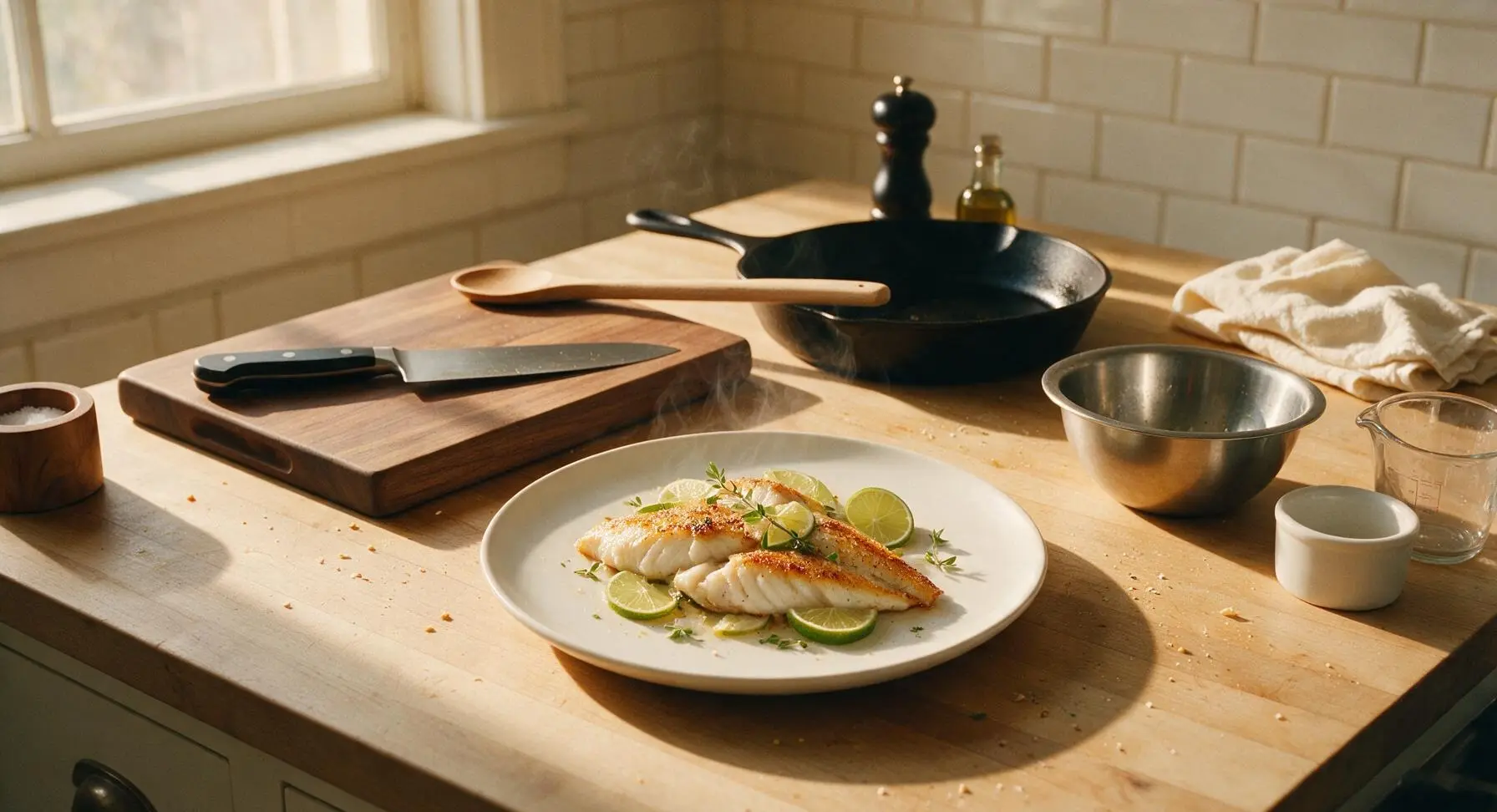
Lime Brined Catfish

title 1
Lime Brined Catfish
⏱️ cook time 10 minutes
🍽️ servings 4
⚡ Difficulty easy

intro

Tender, flaky lime-brined catfish with a crisp golden sear, bright citrus flavor, and none of the muddy aftertaste common to freshwater fish—fast, light, and endlessly versatile.

Ingredients
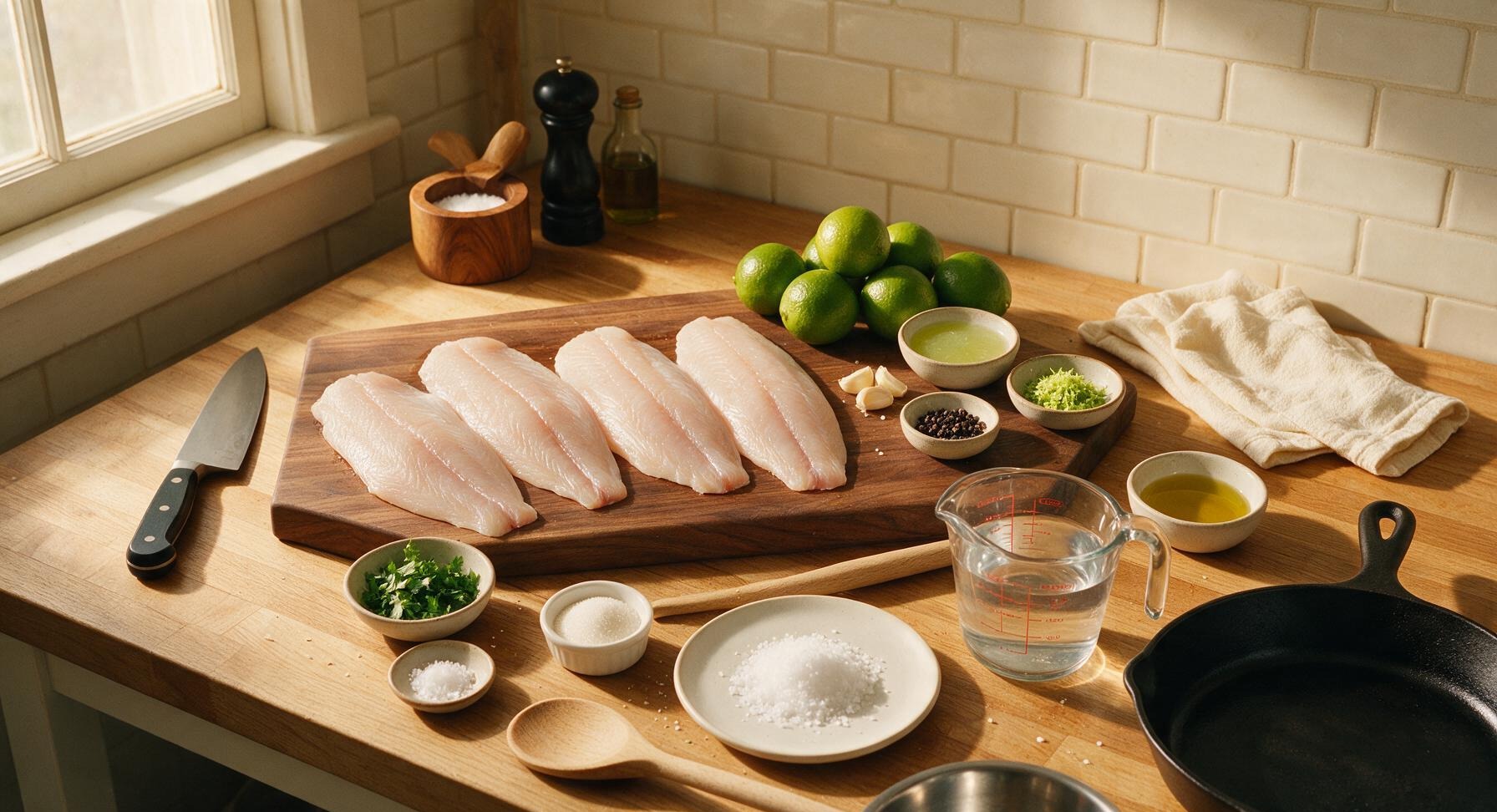
Skinless catfish fillets 4 (150g each, 600g total)
Cold water 4 cups (960ml)
Kosher salt 3 tbsp
Granulated sugar 1 tbsp
Fresh limes 6 (120ml juice, plus 2 tsp zest)
Garlic cloves 3, crushed
Whole black peppercorns 1 tsp, crushed
Canola oil 2 tbsp
Fresh cilantro 2 tbsp, chopped
Flaky sea salt 1/4 tsp

Steps

1

Prepare Lime Brine

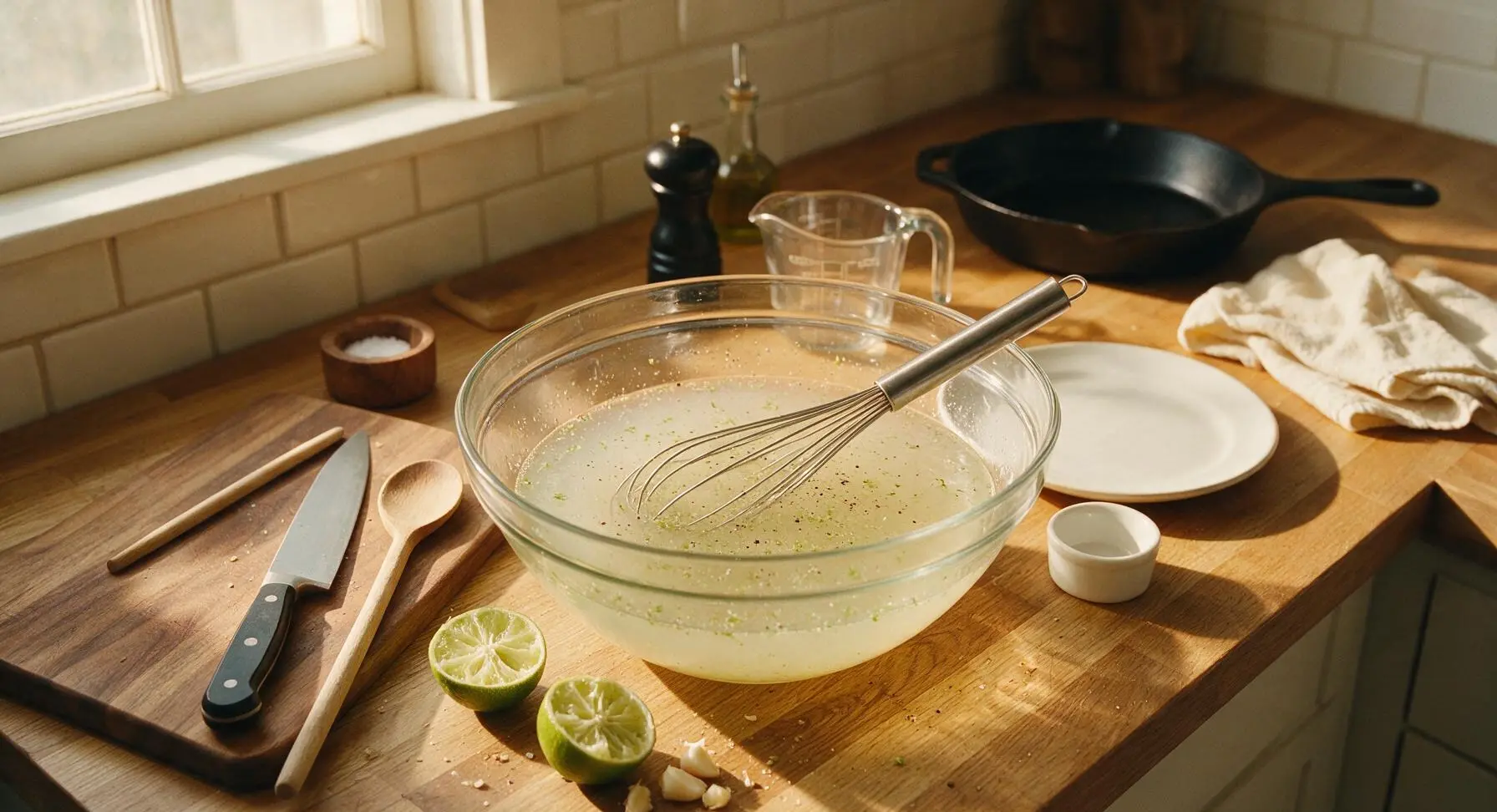
In the large clear glass mixing bowl, combine 4 cups cold water (measured in the glass measuring cup), 3 tablespoons kosher salt, 1 tablespoon granulated sugar, 120ml fresh lime juice, 2 teaspoons lime zest, 3 crushed garlic cloves, and 1 teaspoon crushed black peppercorns. Use the long-handled stainless steel whisk to stir vigorously for 1 minute until salt and sugar are fully dissolved, with no grit visible at the bottom of the bowl. The finished brine will be pale, slightly cloudy, and smell bright with citrus and garlic.
Step 1
step1:Prepare Lime Brine
2

Brine the Catfish

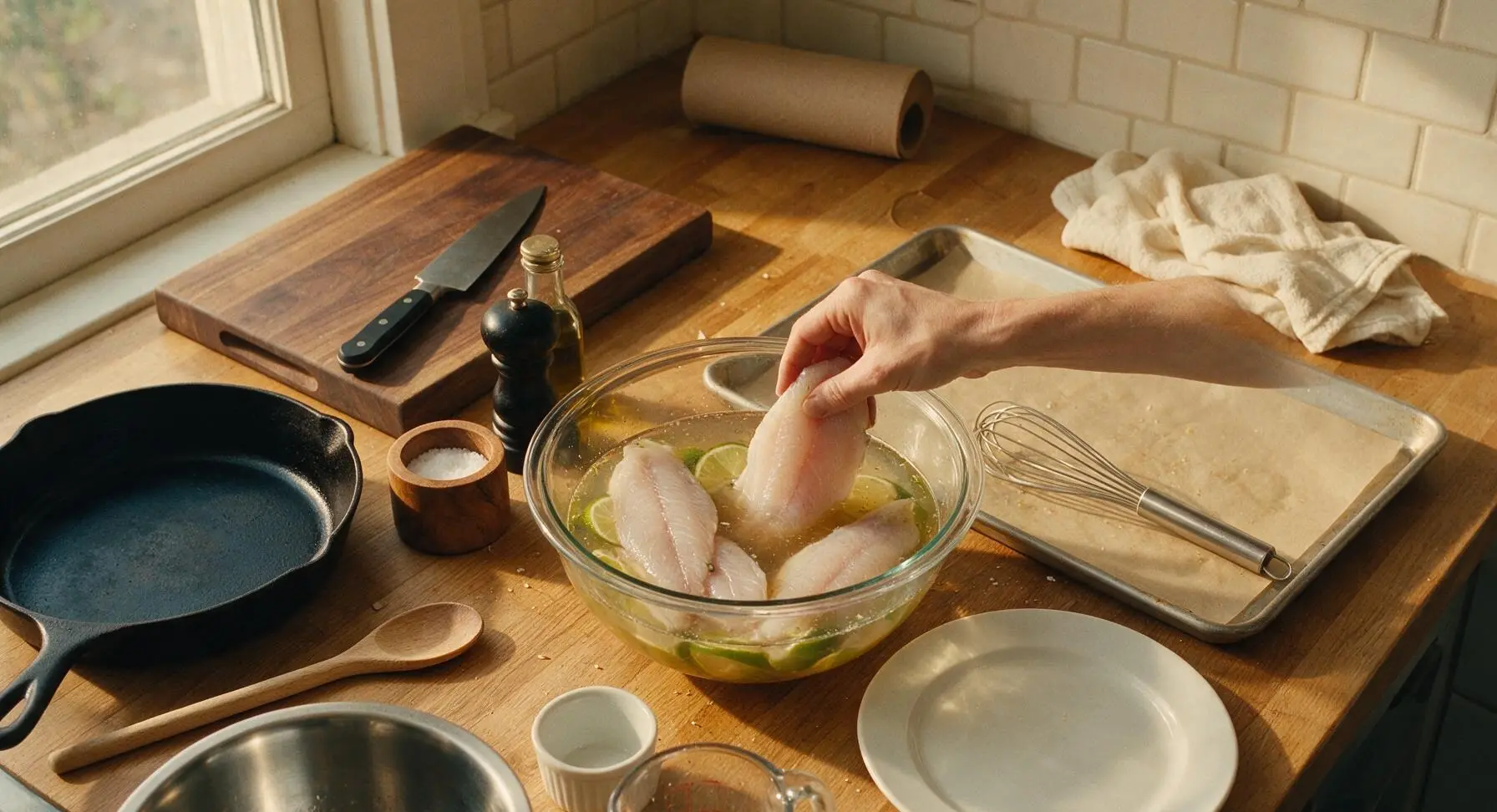
Pat the catfish fillets lightly with paper towel to remove any surface packaging moisture, then lower them fully into the lime brine, ensuring every fillet is completely submerged. If fillets float, place a small heatproof plate on top to weigh them down. Cover the bowl loosely with parchment paper, then refrigerate for exactly 30 minutes — do not brine longer than 45 minutes, as the citric acid will begin to cure the fish surface and create a mushy, ceviche-like texture.
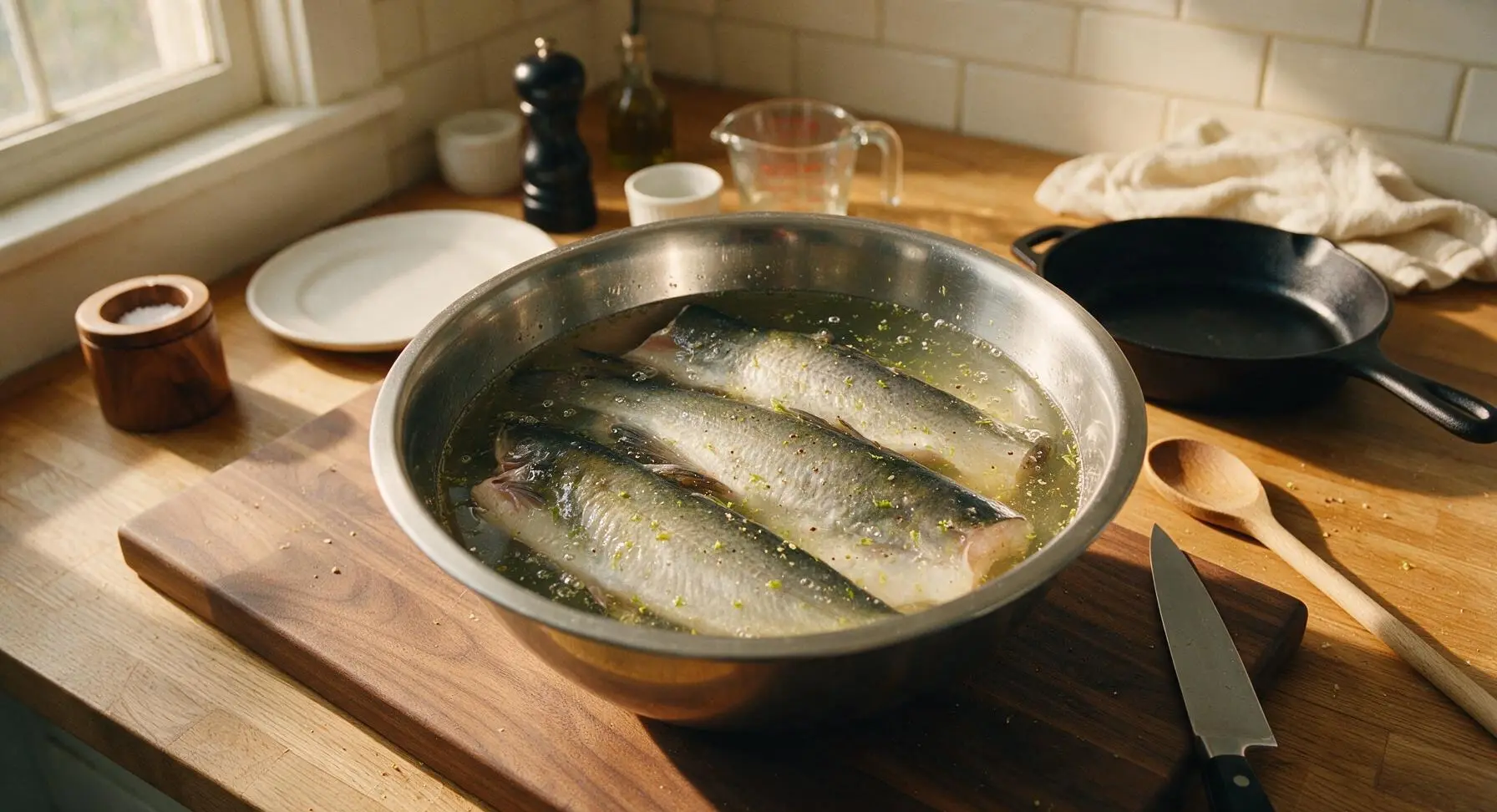
Step 2
step2:Brine the Catfish
Step 2
step2:Brine the Catfish
3

Pat Fillets Dry

After 30 minutes of brining, remove the catfish fillets from the brine, letting excess liquid drip back into the bowl. Transfer fillets to the chrome stainless steel wire rack set inside the parchment-lined aluminum baking sheet. Use fresh sheets from the brown paper towel roll to pat every surface of the fillets completely dry, pressing firmly to remove all surface moisture — this step is critical for achieving a crisp, golden sear instead of steaming the fish. Discard the used brine.
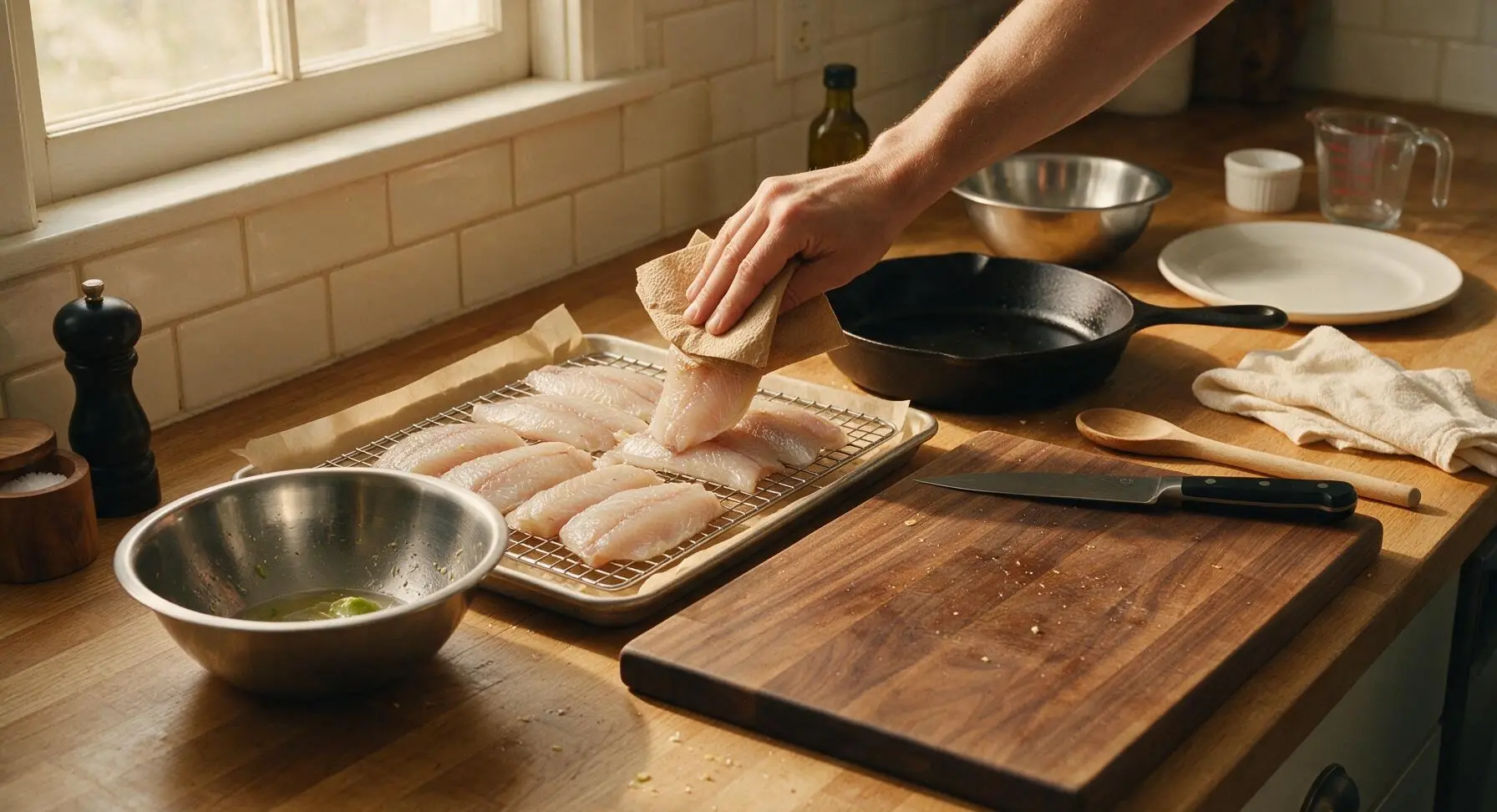
Step 3
step3:Pat Fillets Dry
4

Preheat the Skillet

Place the 10-inch matte black cast iron skillet on the front stovetop burner, add 2 tablespoons canola oil, and heat over medium-high heat for 3-4 minutes until the oil shimmers and sends up thin, wispy trails of smoke. Test the pan heat by flicking a single drop of water onto the surface: the pan is ready when the drop beads up and skitters across the oil immediately without evaporating instantly.
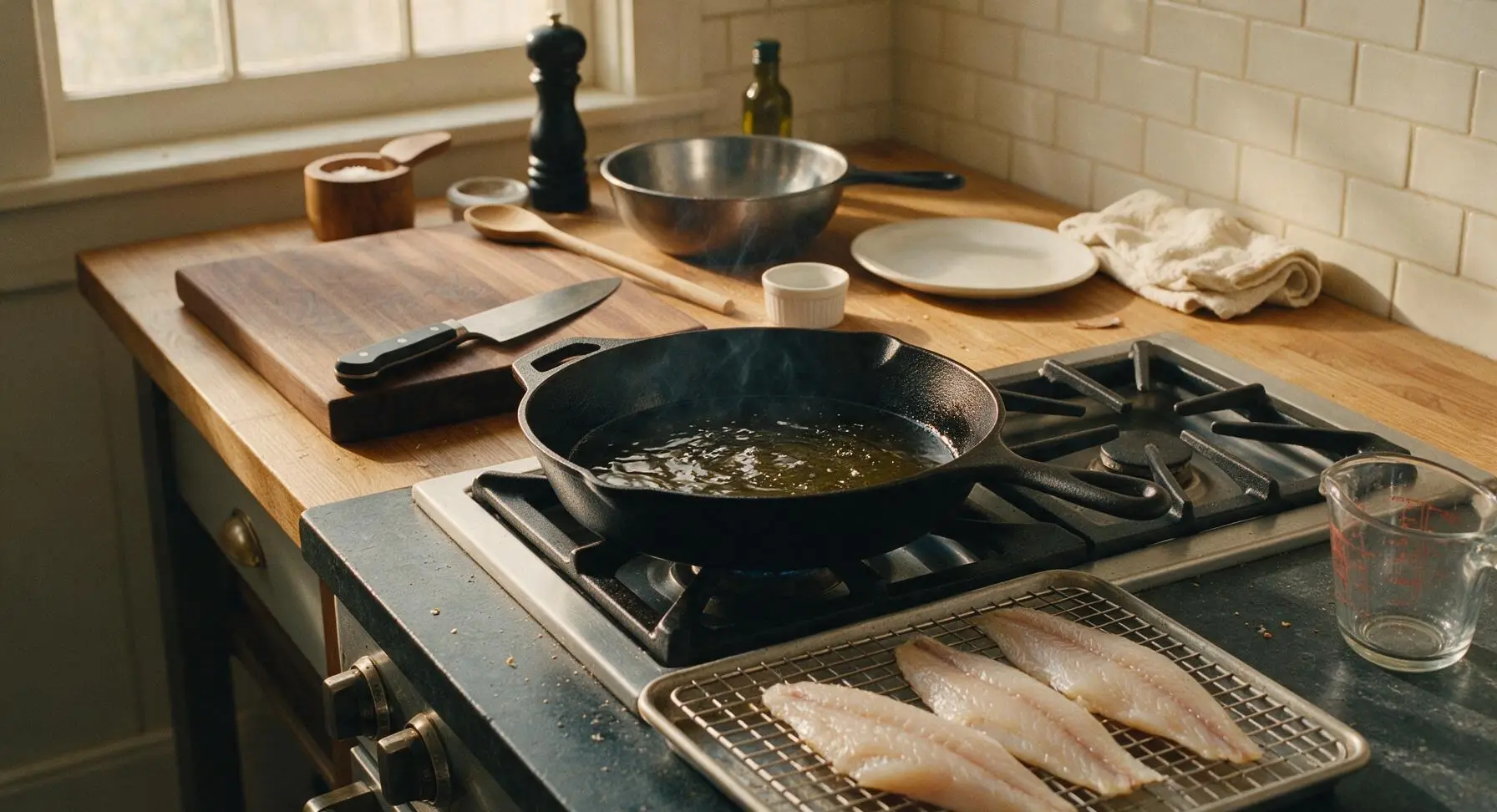
Step 4
step4:Preheat the Skillet
5

Sear First Side

Carefully lay the dried catfish fillets in the hot skillet one at a time, placing them away from your body to avoid hot oil splatter. Cook in two batches if needed to leave 2cm of space between each fillet, as overcrowding will drop the pan temperature and steam the fish. Sear undisturbed for 4 minutes, until the bottom edge turns deep golden brown and crisp, and the fish releases easily from the pan when nudged with tongs.
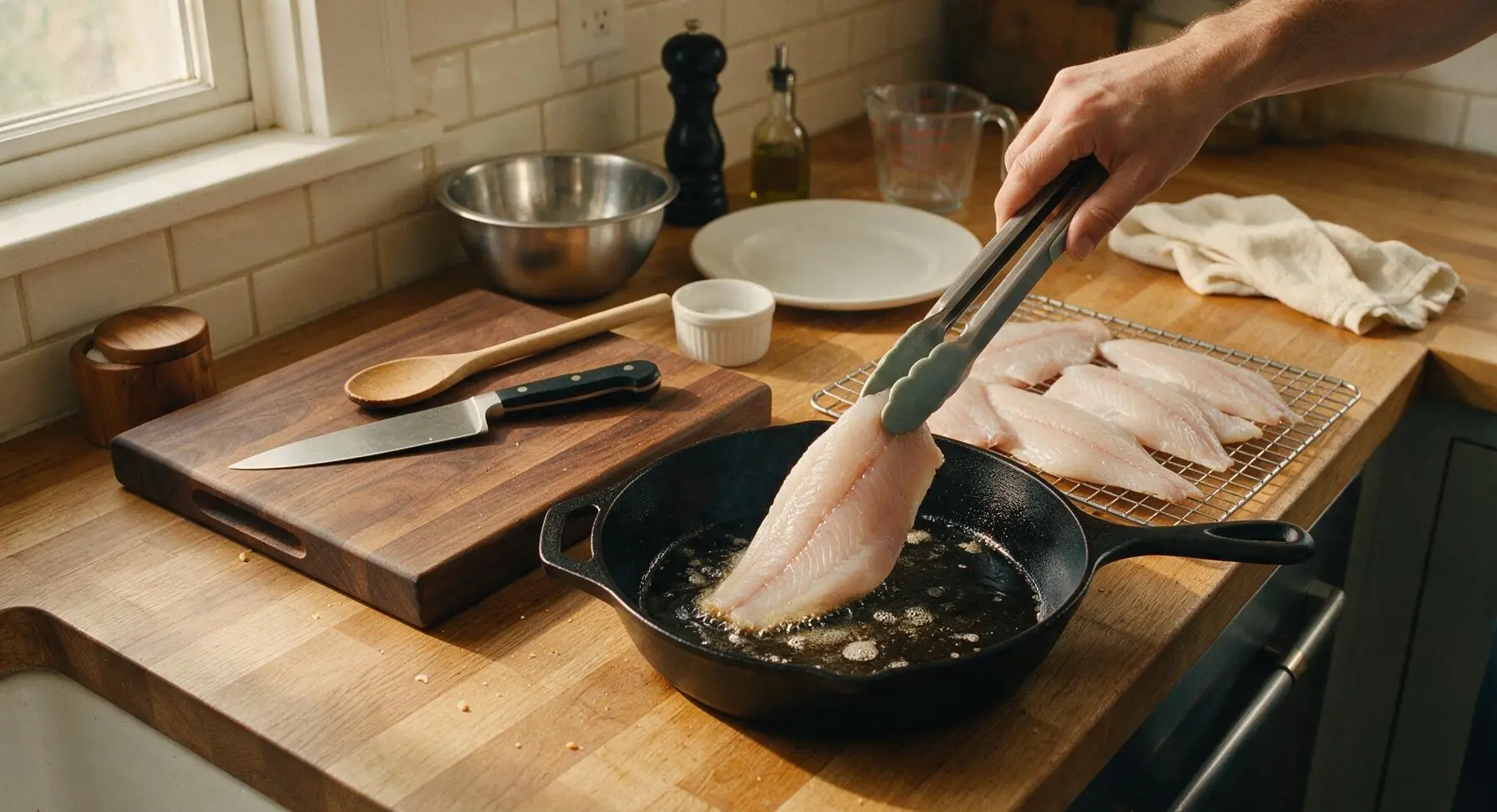
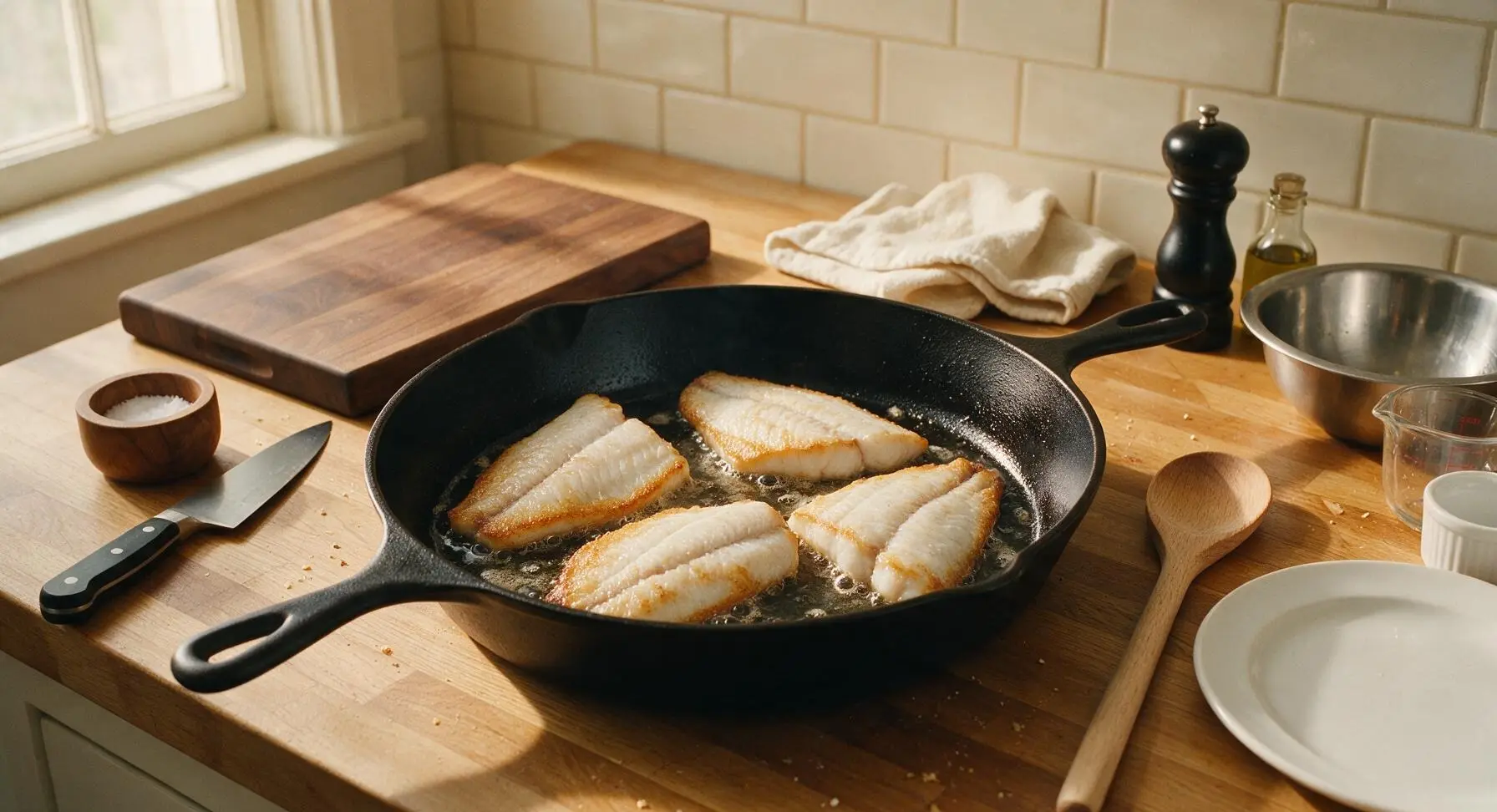
Step 5
step5:Sear First Side
Step 5
step5:Sear First Side
6

Flip and Cook Through

Use the silicone-tipped tongs to gently flip each catfish fillet to the second side, taking care not to tear the crisp seared crust. Sear for an additional 3-4 minutes, until the second side is equally golden and crisp. Check doneness by inserting the digital instant-read thermometer into the thickest part of the fillet: the fish is done when it reaches an internal temperature of 63°C (145°F), and the flesh flaks easily with a fork with no translucent raw center.
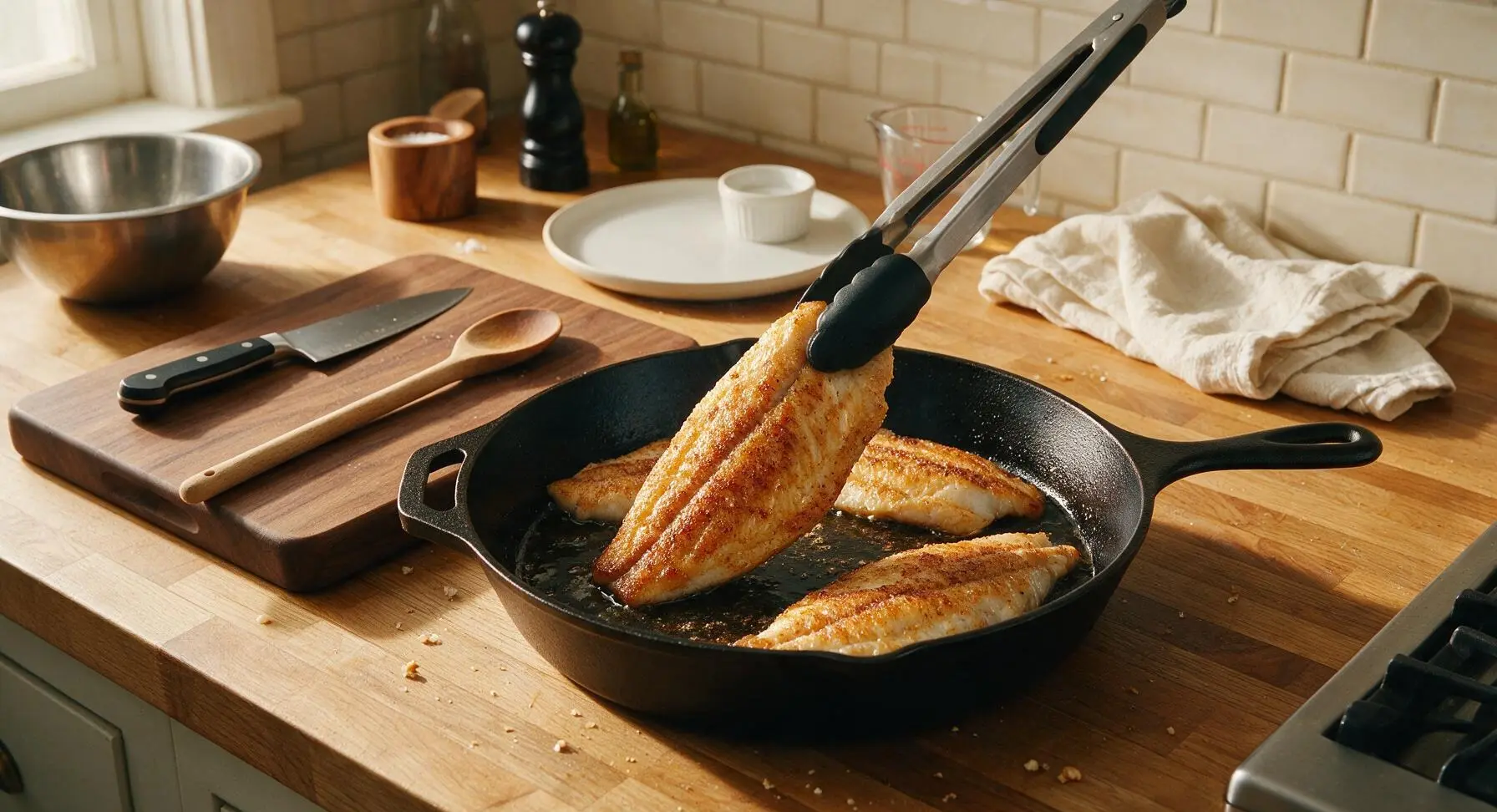
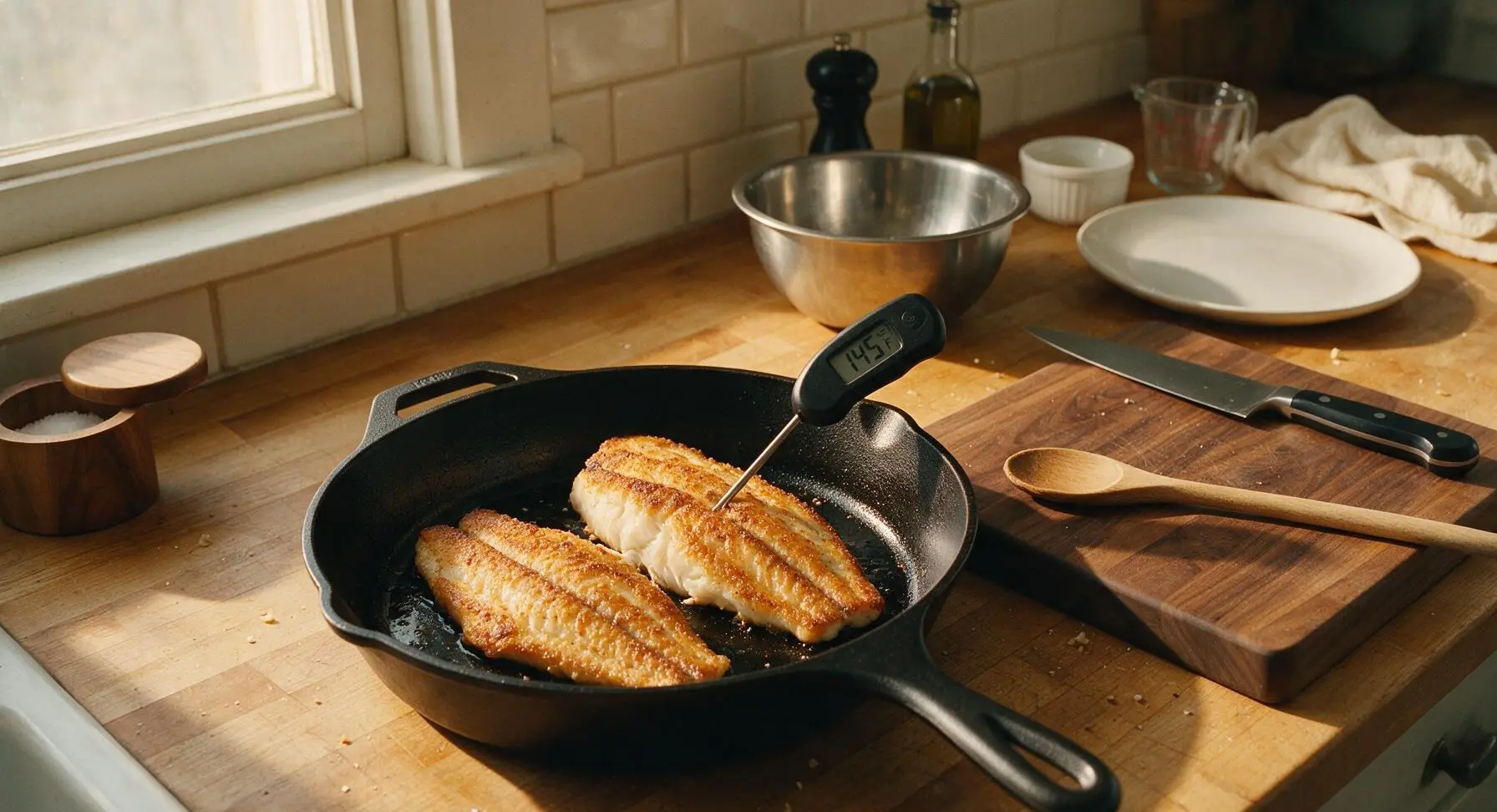
Step 6
step6:Flip and Cook Through
Step 6
step6:Flip and Cook Through
7

Rest and Plate

Transfer the cooked catfish fillets back to the stainless steel wire rack to rest for 2 minutes, which allows muscle fibers to relax and reabsorb juices for more tender fish. Place two fillets on the pre-warmed matte speckled cream stoneware dinner plate, garnish with a light sprinkle of flaky sea salt, chopped fresh cilantro, and fresh lime wedges for squeezing. Serve immediately while hot and crisp.
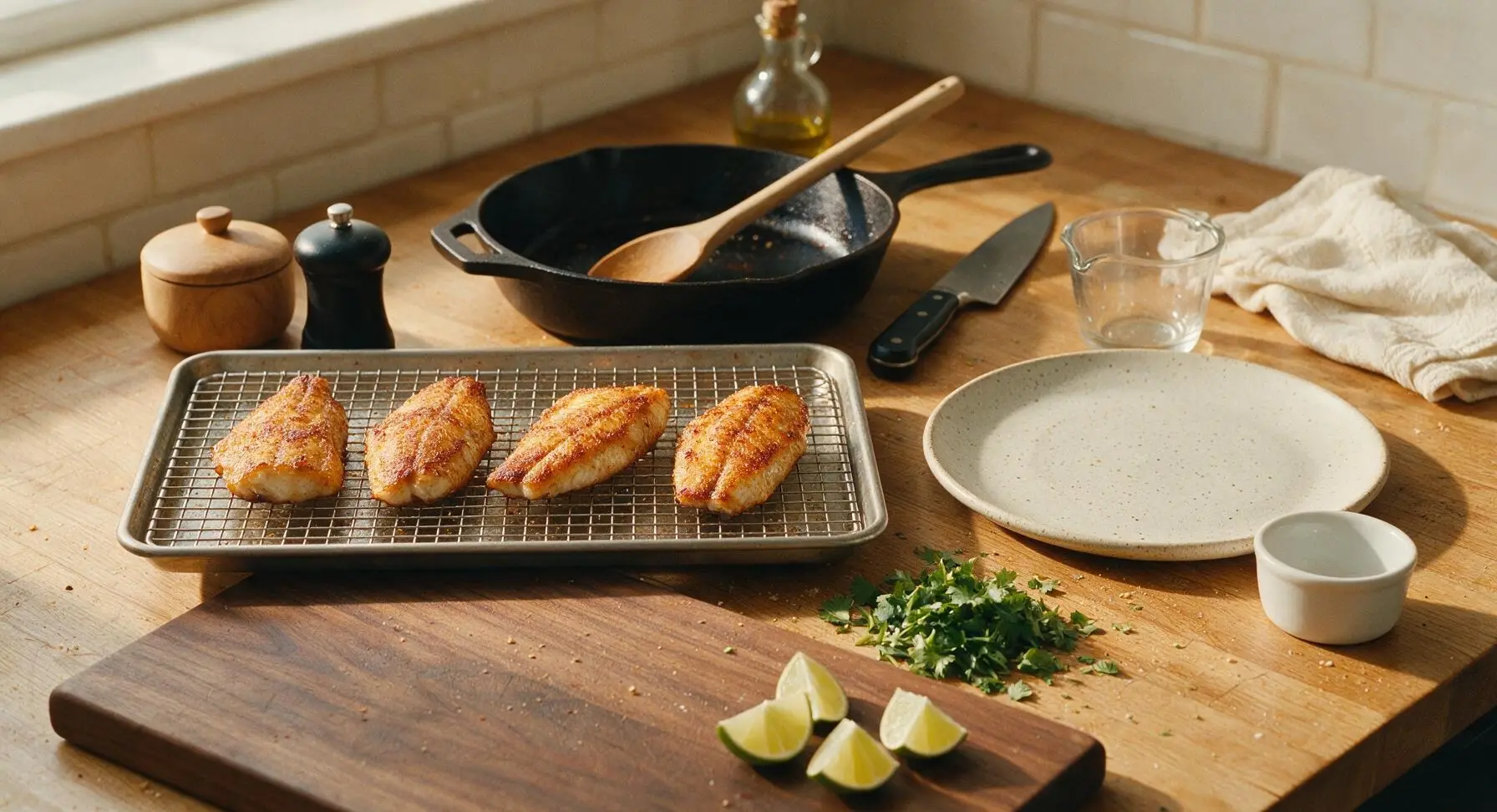
Step 7
step7:Rest and Plate

Tips

1.Stick to the 30-minute brine time: the citric acid in lime juice will start to denature the fish’s surface proteins after 45 minutes, creating a mushy, ceviche-like texture instead of the firm, tender bite we want. This short brine is perfectly calibrated to cut through the mild, earthy 'muddy' note common in farmed catfish without making the fish taste overly sour.
2.Dry fillets thoroughly for a crisp crust: any leftover surface moisture from the brine will cause the fish to steam instead of sear in the hot oil, leading to pale, soggy skin instead of the crunchy golden crust. Press firmly with paper towels until no moisture transfers to the towel when you touch the fish.
3.Rest cooked fish on a rack, not a plate: letting the fish rest for 2 minutes lets juices redistribute so they don’t run out when you cut into the fish, and the elevated rack keeps air circulating under the fillets so the crisp crust doesn’t get soggy from trapped steam against a flat plate surface.
✨ You May Also Like

Seafood
🍜 United States

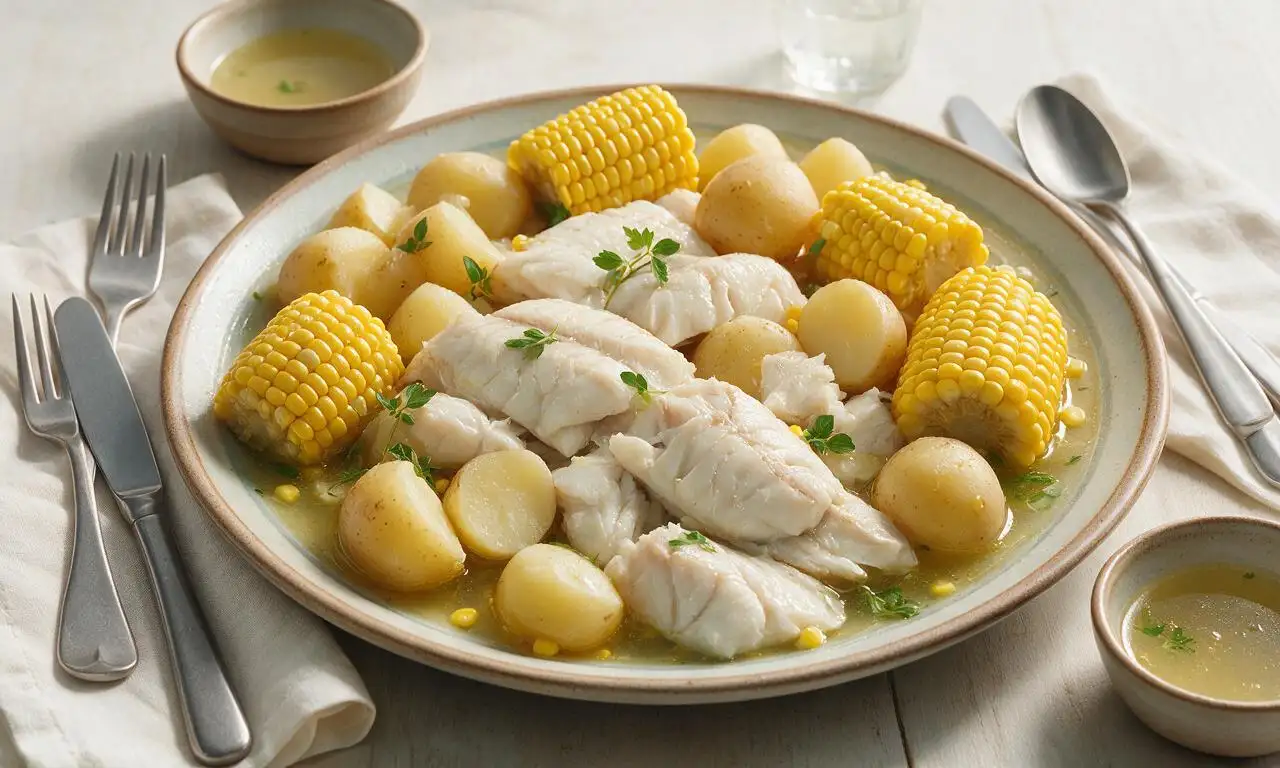
An iconic Door County, Wisconsin tradition of flaky boiled whitefish, tender potatoes, and sweet corn, cooked outdoors for casual, communal summer gatherings.

⏱️ 45 minuteSeafood ★ 4.7
Seafood
🍜 United States

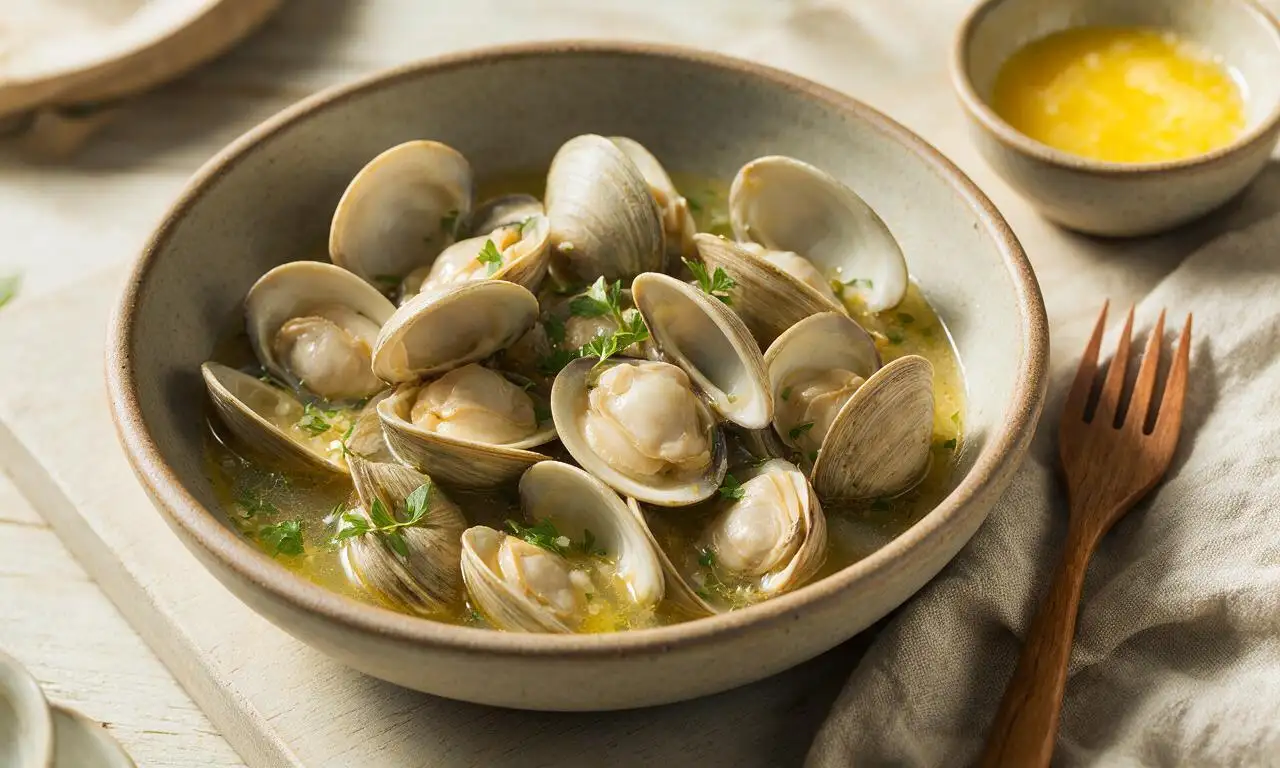
Tender, briny soft-shell clams steamed in garlicky white wine broth, served with warm broth and melted butter for dipping—classic coastal comfort food.

⏱️ 30 minuteSeafood ★ 4.7
Seafood
🍜 United States

Iconic zesty, savory spice blend from Maryland’s Chesapeake Bay, perfect for seafood boils, grilled fare, fries, and corn, made fresh without preservatives.

⏱️ 10 minuteSeafood ★ 4.9
Seafood
🍜 China

Tender, crisp, sweet blanched geoduck topped with fragrant sizzled ginger and scallion, a luxurious Cantonese dish highlighting the clam’s natural briny, delicate flavor.

⏱️ 30 minuteSeafood ★ 4.7
Seafood
🍜 United States

Succulent sweet crab legs coated in rich garlic butter, steamed to tender perfection for a juicy, indulgent seafood feast that requires minimal prep and cook time.

⏱️ 25 minuteSeafood ★ 4.7
Seafood
🍜 United States

A nostalgic chilled jellied seafood staple of 1950s American potlucks, loaded with tender shrimp, lump crab, crisp veggies, and bright creamy tang.

⏱️ 4 hours 2Seafood ★ 4.6

Lime Brined Catfish:Frequently Asked Questions

1.Why does this lime brine eliminate the muddy aftertaste common to catfish? ▾
Great question! The kosher salt in the brine draws out blood and trace muscle compounds that cause catfish’s signature murky, muddy aftertaste, while fresh lime acid cuts through any remaining residual earthiness. Unlike heavy vinegar soaks, this brine leaves bright, clean citrus notes instead of masking the fish’s mild, natural sweetness.
2.Can I use frozen catfish fillets for this recipe instead of fresh? ▾
Absolutely! Just thaw frozen skinless catfish fillets completely in the fridge overnight first, and pat them very dry with paper towels before adding them to the brine. The brine plumps the fish’s muscle fibers back up, so you won’t end up with mushy, watery fillets even if you use previously frozen fish.
3.What’s the correct ratio of salt, sugar, and lime for the brine? ▾
For 4 standard 6-ounce skinless catfish fillets, mix 4 cups cold water with 3 tablespoons kosher salt, 1 tablespoon granulated sugar, and the zest and juice of 3 fresh limes. Stir until salt and sugar fully dissolve before adding fish; this balanced ratio seasons deeply without making fillets overly salty or tart.
4.How long should I leave catfish in the lime brine before cooking? ▾
For standard 1-inch thick catfish fillets, 45 minutes to 1 hour in the fridge is ideal. Any shorter and the brine won’t penetrate to season the center or cut through muddy off-notes; any longer and the lime acid will start to cure the fish’s surface, leaving an unpleasantly firm, ceviche-like texture.
5.Do I need to rinse the brine off the catfish before searing? ▾
Yes, give fillets a quick light rinse under cold water after brining to remove excess salt or lime residue from the surface, then pat them extremely dry with paper towels on both sides. That bone-dry surface is non-negotiable for getting that crisp, golden, non-stick sear instead of pale, steamed, stuck-on fish.
6.Can I brine the catfish overnight to save prep time the next day? ▾
I don’t recommend it. Even if you cut back on salt, the citric acid from the limes will break down catfish’s delicate flesh over 8+ hours, leaving you with mushy, slightly pickled fillets that won’t hold up to high-heat searing. Stick to the 45–60 minute brine window for the best tender, flaky texture.
7.What type of pan works best for getting a crisp sear on these fillets? ▾
A heavy-bottomed cast iron skillet is my top pick, as it holds even high heat without hot spots that burn the fish before it cooks through. If you don’t have cast iron, a thick stainless steel pan works great too—just avoid thin nonstick pans, which can’t get hot enough to build that crisp golden crust without excess smoking.
8.Can I substitute bottled lime juice for fresh limes in the brine? ▾
I’d skip bottled lime juice if you can. Bottled juice often has added preservatives like sodium benzoate that leave a flat, slightly metallic aftertaste, and it lacks the bright, aromatic citrus oils from fresh lime zest that give this brine its signature bright flavor. If you’re in a real pinch, use 1/3 cup unsweetened bottled juice, but expect slightly less depth.
9.How do I know when the seared catfish is done cooking? ▾
The catfish is perfectly done when it reaches an internal temperature of 145°F at the thickest point, and the flesh flakes easily with a fork with no translucent raw center. For 1-inch fillets, that usually takes 3 to 4 minutes per side over medium-high heat—resist flipping too early, or you’ll tear the delicate crisp crust.
10.Can I use this brined catfish for frying instead of pan-searing? ▾
Absolutely! This brine is a fantastic base for classic Southern fried catfish. After brining, pat fillets dry, dredge them in cornmeal or your favorite fried fish breading, and fry as usual. The brine keeps flesh juicy and well-seasoned all the way through, so you won’t end up with bland, watery fish under a crisp breading.
11.What’s the point of adding sugar to the lime brine? ▾
That small amount of granulated sugar doesn’t make the fish taste sweet—it balances out sharp salt and tart lime, helps the fillet surface brown faster for that perfect golden sear, and softens any lingering bitter, earthy catfish notes so the final flavor tastes bright and rounded, not harsh.
12.Do I need to leave the skin on the catfish for this recipe? ▾
This recipe is written for skinless fillets, which let the brine penetrate evenly on all sides without a tough skin barrier blocking flavor. If you prefer skin-on catfish, you can absolutely use it—just score the skin lightly before brining, and cook skin-side down first to render it crisp before flipping.
13.How should I store leftover cooked lime brined catfish? ▾
Let leftover cooked fillets cool completely to room temperature, then store them in an airtight container in the fridge for up to 3 days. I don’t recommend freezing cooked catfish, as the delicate flesh turns mushy when thawed. Reheat gently in a 325°F oven for 8–10 minutes to crisp the surface back up instead of using the microwave.
14.Can I add other seasonings to the lime brine for extra flavor? ▾
Definitely! The base lime brine is super versatile, so feel free to add smashed garlic cloves, cracked black pepper, fresh cilantro stems, a pinch of cayenne, or a splash of fish sauce to the cold brine before adding the catfish. Just skip extra acid like vinegar, which will throw off the pH and over-cure the delicate fish surface.
15.Why is my catfish still mushy after searing, even after brining? ▾
Mushy seared catfish almost always traces back to two common mistakes: either you didn’t pat fillets completely dry after brining, so they steamed instead of searing, or you over-brined them so the lime acid broke down the flesh too much. Stick to the 1-hour max brine time and dry fillets until paper towels come away completely clean for firm, flaky results.
16.Is this brine suitable for other types of freshwater fish besides catfish? ▾
It works beautifully for other mild, firm freshwater fish like tilapia, largemouth bass, or crappie, all of which can carry faint earthy, muddy notes just like catfish. Adjust brine time for thinner cuts: cut brine time to 25–30 minutes for fillets thinner than ½ inch to avoid over-curing from the lime acid.
17.What are easy side dishes to serve with this lime brined catfish? ▾
The bright, light flavor of this catfish pairs perfectly with simple sides like cilantro-lime rice, roasted corn salad, tangy coleslaw, sautéed zucchini, or buttered new potatoes. It also works great flaked into tacos, tossed over green salads, or piled into a po’ boy for a quick, flexible weeknight meal.
18.Can I use table salt instead of kosher salt for the brine? ▾
You can, but you’ll need to adjust the measurement, because fine table salt is much denser and sharper-tasting than flaky kosher salt. For every 3 tablespoons of kosher salt the brine calls for, use only 1.5 tablespoons of fine table salt—skip iodized versions if you can, as they can leave a faint metallic aftertaste on the fish.

Comments (12)

just now

OMG, this lime brine is a total game changer! I catch catfish out on the Colorado River all the time and usually just fry it up plain with cornmeal, but this brine made the fish so tender and bright. No more muddy aftertaste at all. Cooked it up in 10 minutes flat like the recipe said, served it with coleslaw and hushpuppies for dinner last night. SO good.

1 week ago

My kids are so picky about fish, they usually turn their noses up at anything that isn’t fish sticks, but they devoured this lime brined catfish! I baked it instead of pan frying to cut a little oil and it still came out perfect. Even my 7 year old asked for seconds, which never happens. Adding this to our weekly weeknight rotation for sure.

3 days ago

Perfect for Sunday meal prep! I made a big batch of this brined catfish on Sunday, portioned it out with roasted veggies and cilantro lime rice, and it held up amazing all week for lunches. The lime flavor doesn’t get weird or overpowering when you reheat it, which is a huge win for me. 10/10, easy enough to throw together even when I’m exhausted after weekend errands.

5 days ago

Brought this to our neighborhood potluck last weekend and people were asking me for the recipe before I even set the platter down! I added a little extra chili powder to the seasoning rub to give it a tiny kick and it paired so well with the tangy lime brine. Will absolutely be making this for our next cookout, it’s way easier than smoking a whole brisket for a crowd.

30 minutes ago

Wait, I’ve never brined fish before — is there a big difference if I only let it sit in the lime brine for like 20 minutes instead of the full hour? I’m super crammed for time before my friends come over for game night and don’t wanna mess this up! The recipe looks so easy otherwise, can’t wait to try it.

5 minutes ago

Great question! Even 20 minutes in the lime brine will add nice bright flavor, just make sure you don’t let it sit longer than 90 minutes total because the acid in the lime can start to make the fish texture mushy if it brines too long. It’ll turn out great for game night!

2 weeks ago

This recipe is just lovely! I’ve been making catfish for my family for over 40 years and I’ll admit I was skeptical about a lime brine, but it made the fish so moist. I served it with my classic tartar sauce and a side of fried okra, and my grandson said it was the best catfish he’s ever had. Only note is I used a little less salt than the recipe called for because I watch my sodium, worked perfectly.

1 week ago

Oh that’s such a helpful note about cutting the salt! I’ve been avoiding brined recipes because I’m on a low-sodium diet for my blood pressure, so I’ll definitely dial the salt back when I make this for Sunday dinner. Thanks for the tip!

yesterday

Wow, 10 minute cook time is no joke! I got home late from work last night, threw this together while my pasta was boiling, and had a full dinner on the table in under 25 minutes total. The lime cuts through the richness of the catfish so well, I didn’t even feel heavy after eating. Total weeknight win.

2 hours ago

Love that this worked for your busy weeknight! That fast cook time is exactly why we love this recipe so much — great seafood doesn’t have to take hours to make.

2 hours ago

I pan-seared this catfish and served it in corn tortillas with slaw and avocado for fish tacos, and it was INSANE. The lime brine means you don’t even need extra lime on the tacos, the flavor is already baked right in. Who knew catfish tacos could be this good?

30 minutes ago

Oh my god the fish taco idea is genius! I was just gonna serve this with rice but I’m absolutely doing taco night with this recipe tomorrow, that sounds unreal.

5 minutes ago

Tried this last night and the flavor was great, but my catfish stuck really bad to my cast iron skillet. Did I not heat the pan enough? I was really looking forward to that crispy skin and ended up with half the filet stuck to the pan, bummer.

just now

Oh no, sorry to hear the fish stuck! The most common culprit here is not letting the pan get fully hot before adding the oil and fish, or moving the filet too soon — let it cook undisturbed for 4-5 minutes on the first side and it will release easily once it’s crispy. Give it another try, it’s worth it!

yesterday

Can I use this same lime brine for other types of fish? I have some tilapia and cod in the freezer I need to use up this week, and this brine was so good on catfish I wanna put it on everything.

2 hours ago

I used it on tilapia last week! I only brined it for 30 minutes because tilapia is thinner than catfish, and it came out amazing. Super bright, no weird fishy aftertaste at all.

30 minutes ago

So glad you love the brine! It works beautifully on most mild white fish — just adjust brine time for thinner filets like tilapia (20-30 minutes is perfect, as Kris mentioned!) so the acid doesn’t break down the delicate flesh too much. Cod works great too, you can brine thicker cod filets for the full hour.

1 week ago

Made this on my camp stove last weekend while we were out fishing at the lake, used fresh lime we picked up on the drive up and catfish we caught that morning. 10 minute cook time is perfect for camp cooking, no fancy equipment needed, everyone at the campsite was raving. Best camp meal I’ve made all summer.

3 days ago

Camp cooking idea!?! I’m obsessed. I’m always struggling to make good food on car camping trips that doesn’t come in a freeze-dried bag, this is going on my menu for our trip next month.

2 days ago

There is nothing better than fresh caught fish cooked lakeside! Love that you took this recipe out camping — it’s such a great low-fuss option for trips because you can mix the brine up ahead of time in a mason jar to bring with you.

2 days ago

Wait, is this catfish good cold? I’m prepping dishes for a backyard baby shower next weekend and wanted something that can sit out for a little bit without getting gross. Fried catfish gets soggy when it’s cold, but I’m wondering if this pan-seared lime brined version holds up. The recipe looks perfect otherwise, just wanna make sure it works for a crowd!

yesterday

I made this for a picnic last month and ate it cold on top of a green salad a few hours after cooking, it was delish! The lime flavor is still bright, and the filet doesn’t get soggy like fried catfish does. Would be perfect for a baby shower.

2 hours ago

Great question! This catfish holds up really well at room temp for a couple of hours, and is delicious cold too — it’s fantastic flaked on top of salads, on sliders, or even as a cold appetizer with a little dipping sauce. It would be perfect for a baby shower spread!