
Liver and Onions
intro
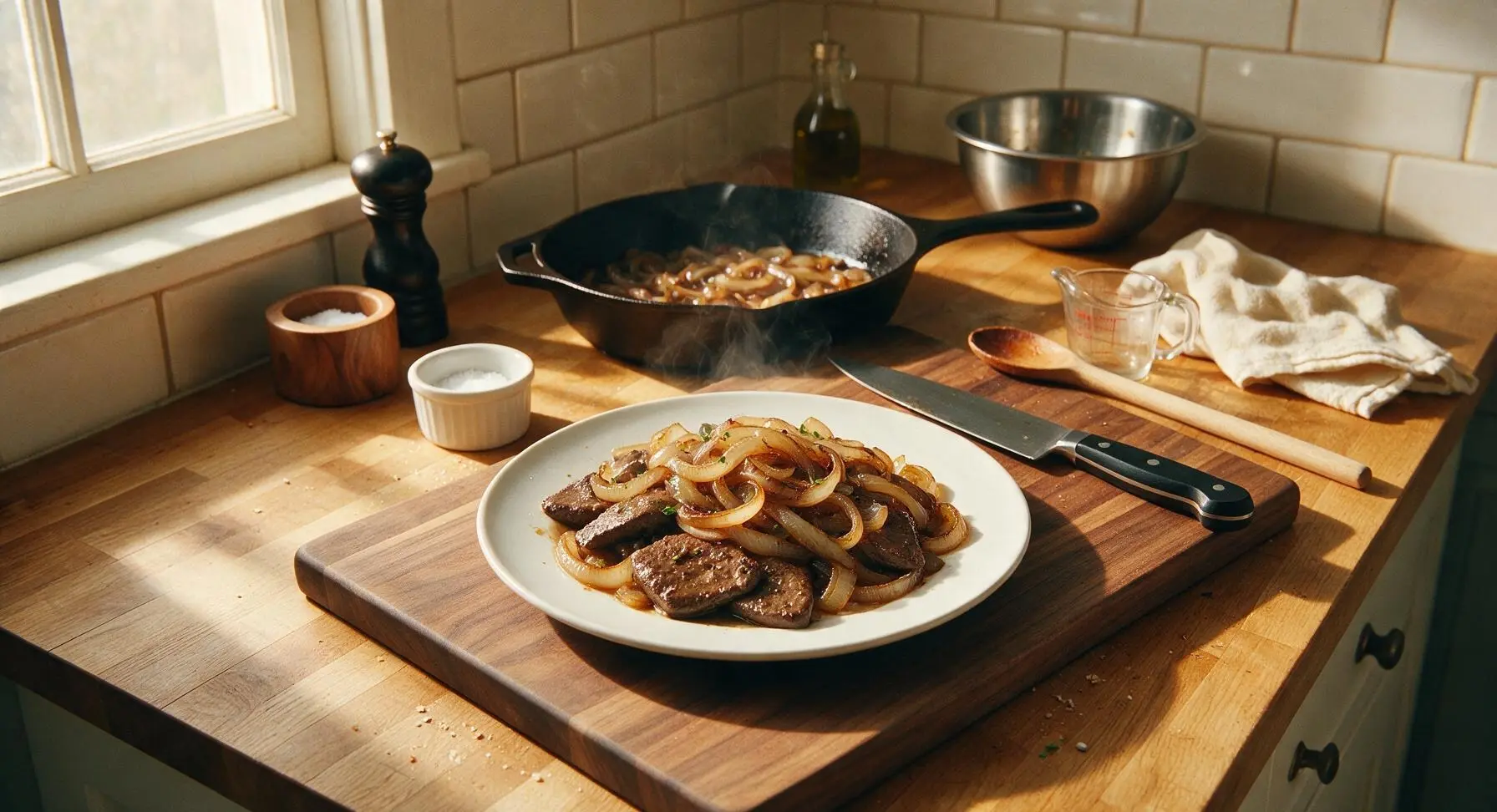
Tender, savory pan-seared beef liver paired with sweet, slow-caramelized onions, a nostalgic, budget-friendly comfort food packed with rich, deep flavor and high protein.
Ingredients
Steps
Soak liver in milk
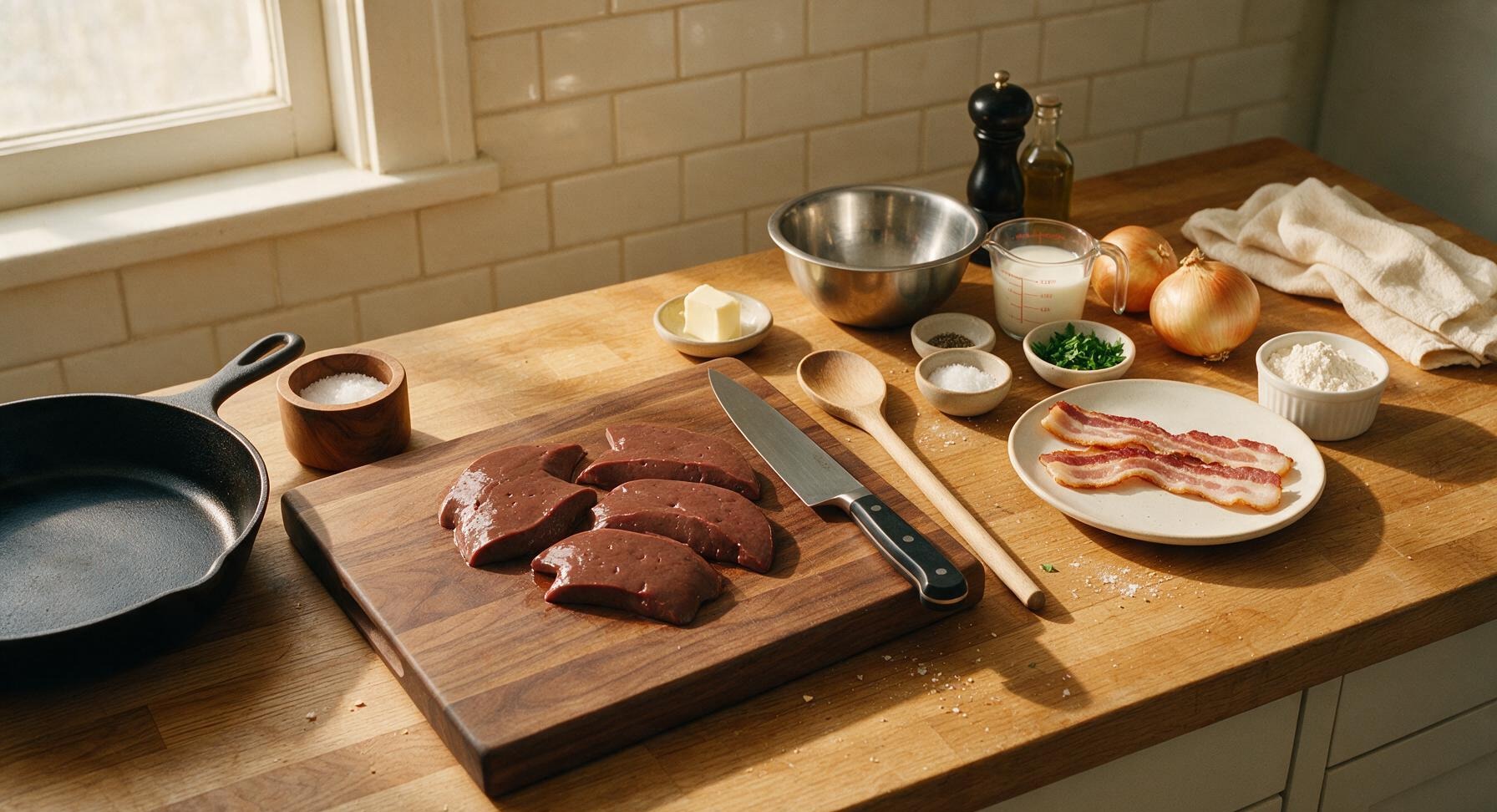
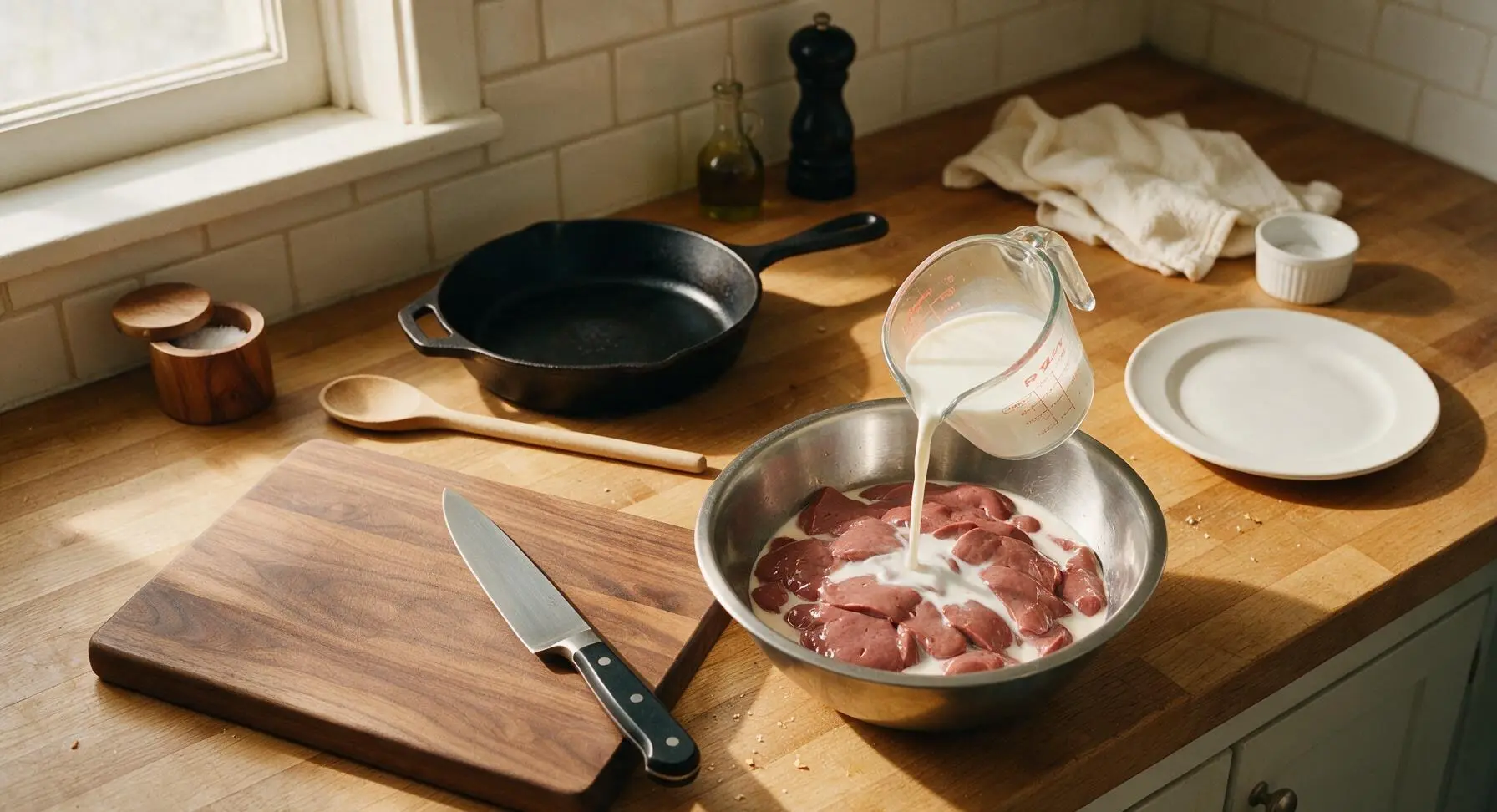
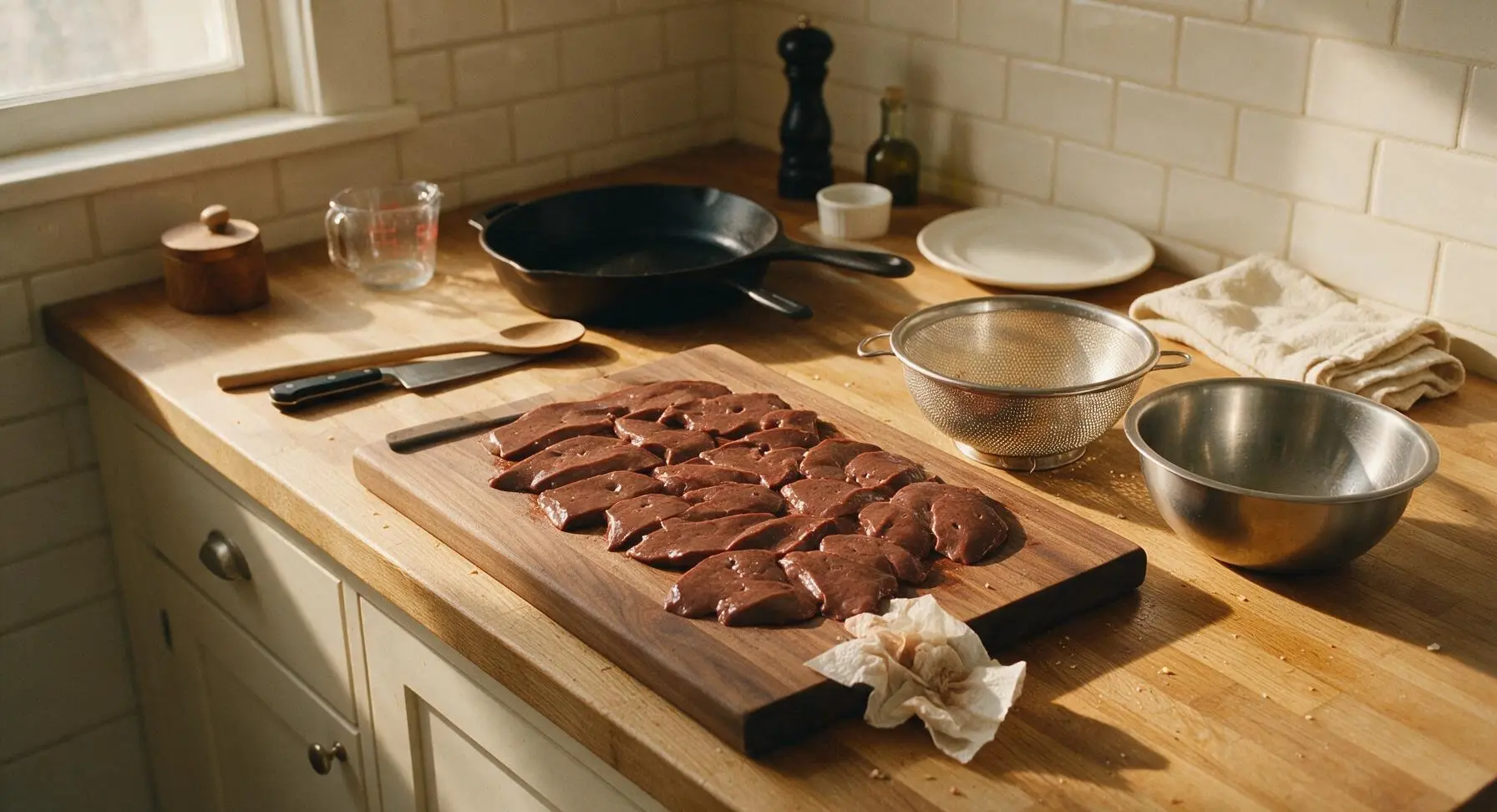
Place 450g of 1/2-inch thick sliced beef liver into the medium brushed stainless steel mixing bowl. Pour 250ml whole milk from the clear glass measuring cup over the liver until every slice is fully submerged. Set aside for 15 minutes at room temperature to draw out bitter metallic flavors. After soaking, transfer liver to the fine-mesh stainless steel colander to drain, then pat every slice completely dry with unbleached paper towels; discard the soaking milk.
Slice onions thinly
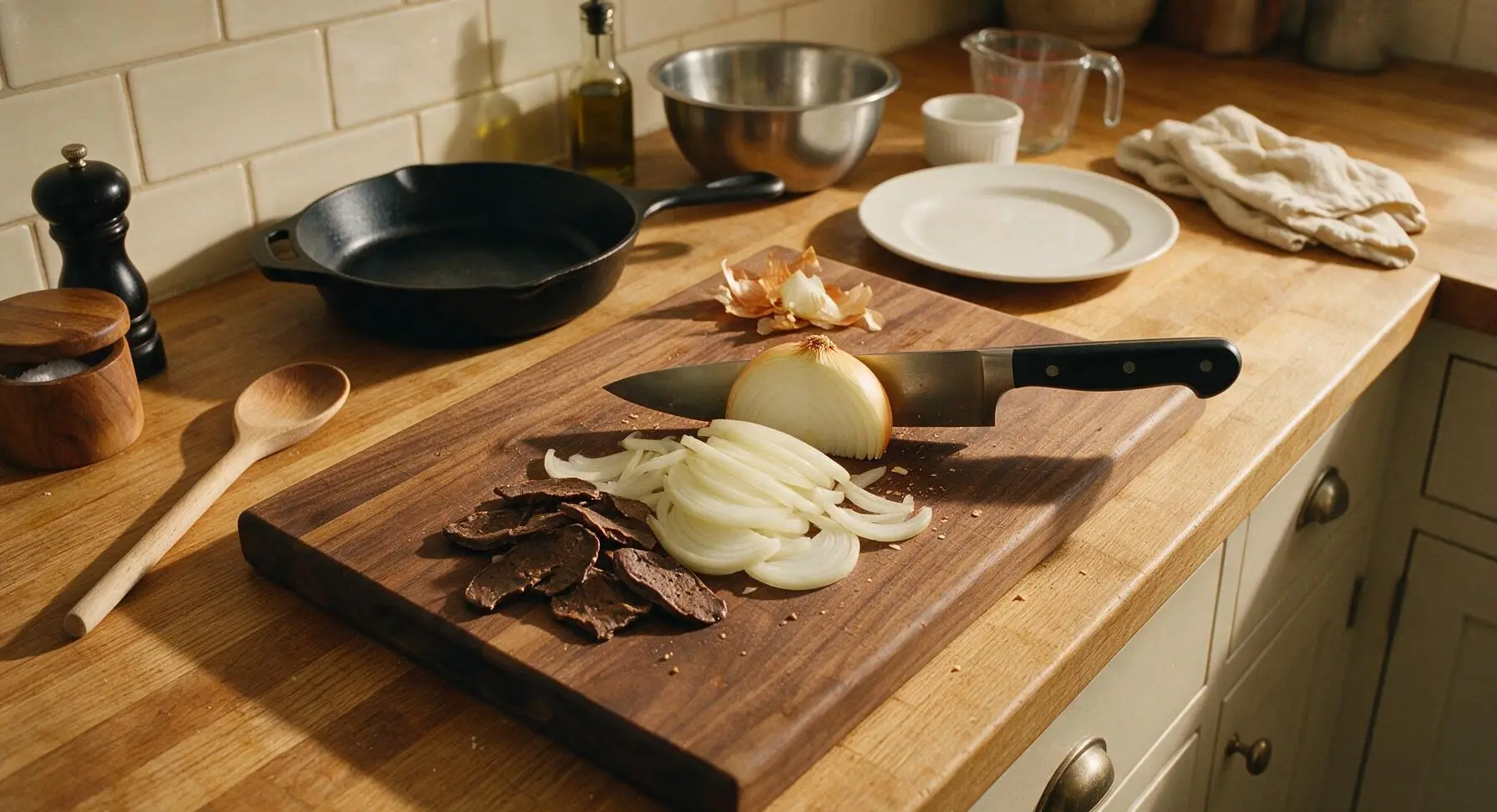
Trim the root and stem ends from the 2 large yellow onions, peel off the dry outer papery skin. Place onions on the maple cutting board, and use the 8-inch chef knife to slice them into uniform 1/4-inch thick half-moon strips, taking care to keep slices even so they caramelize at the same rate. Set sliced onions aside in a small pile at the corner of the cutting board.
Cook bacon for fat
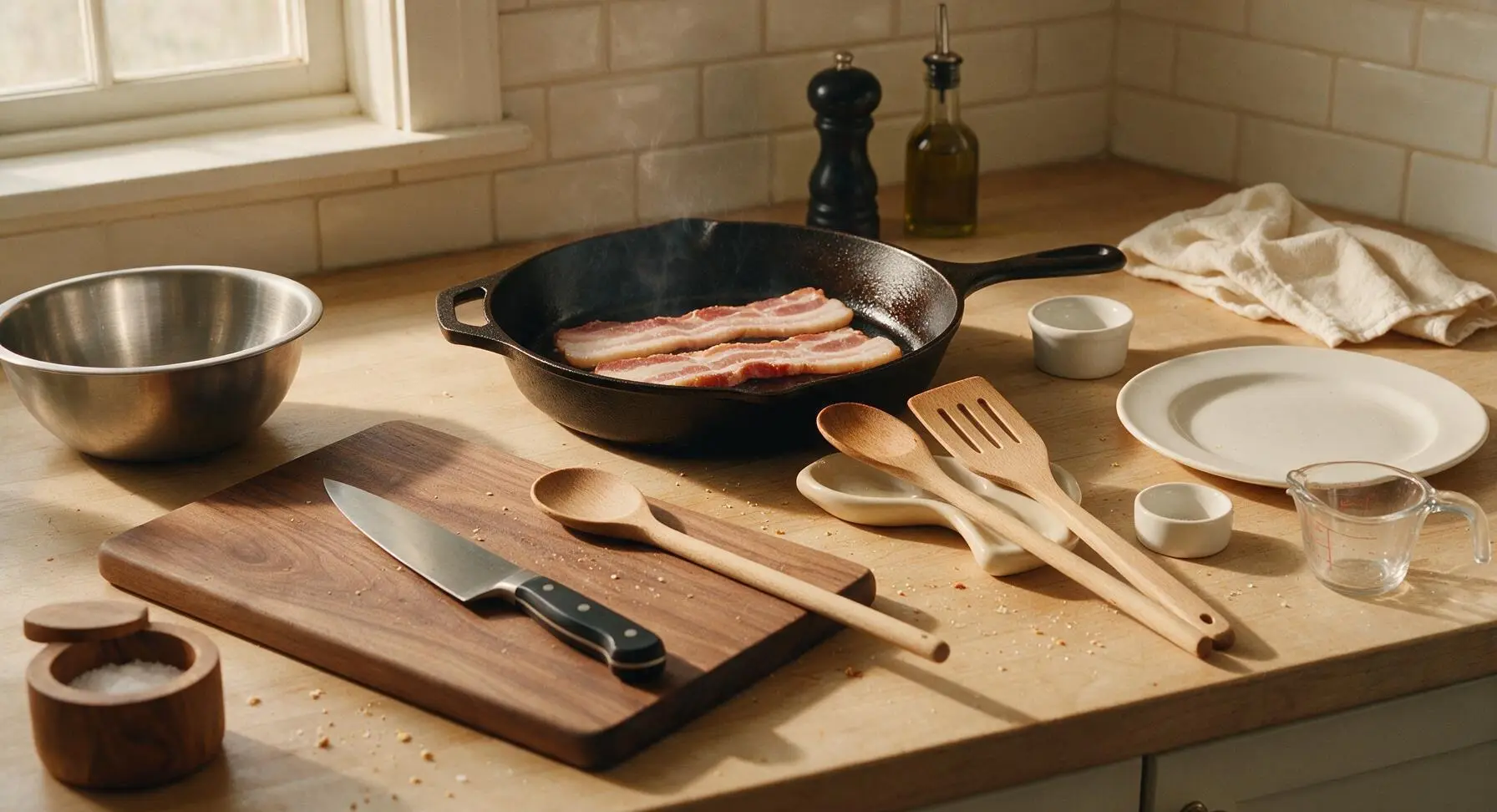
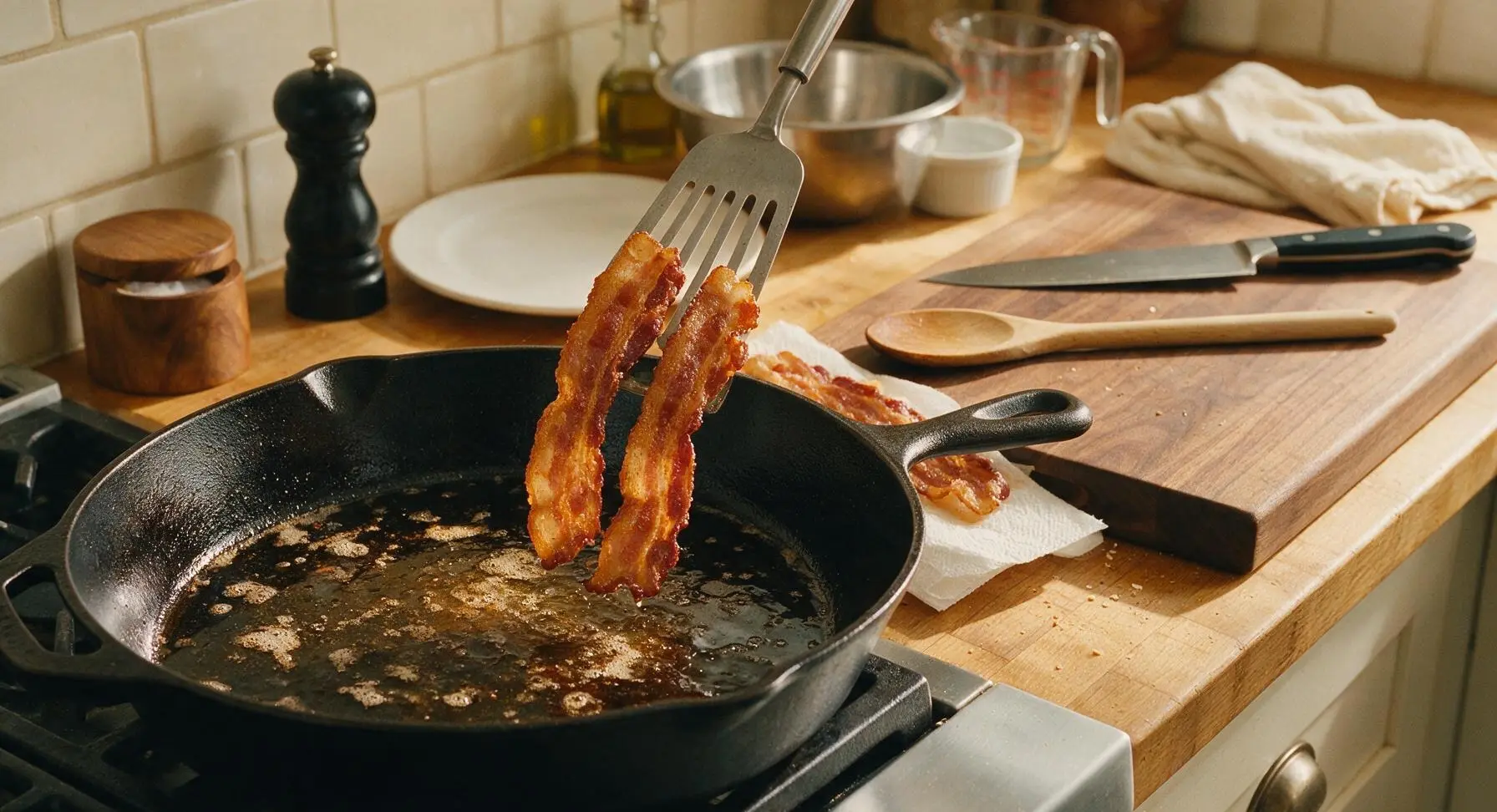
Place the 12-inch well-seasoned black cast iron skillet on the stovetop over medium heat (350°F / 175°C). Lay the 2 thick-cut bacon strips in the cold skillet, cooking for 4-5 minutes per side until fat renders fully and bacon is crisp (deep golden, edges slightly curled). Transfer cooked bacon to a paper towel to drain, leaving all rendered bacon fat in the skillet; crumble bacon once cool to use as optional topping.
Caramelize the onions
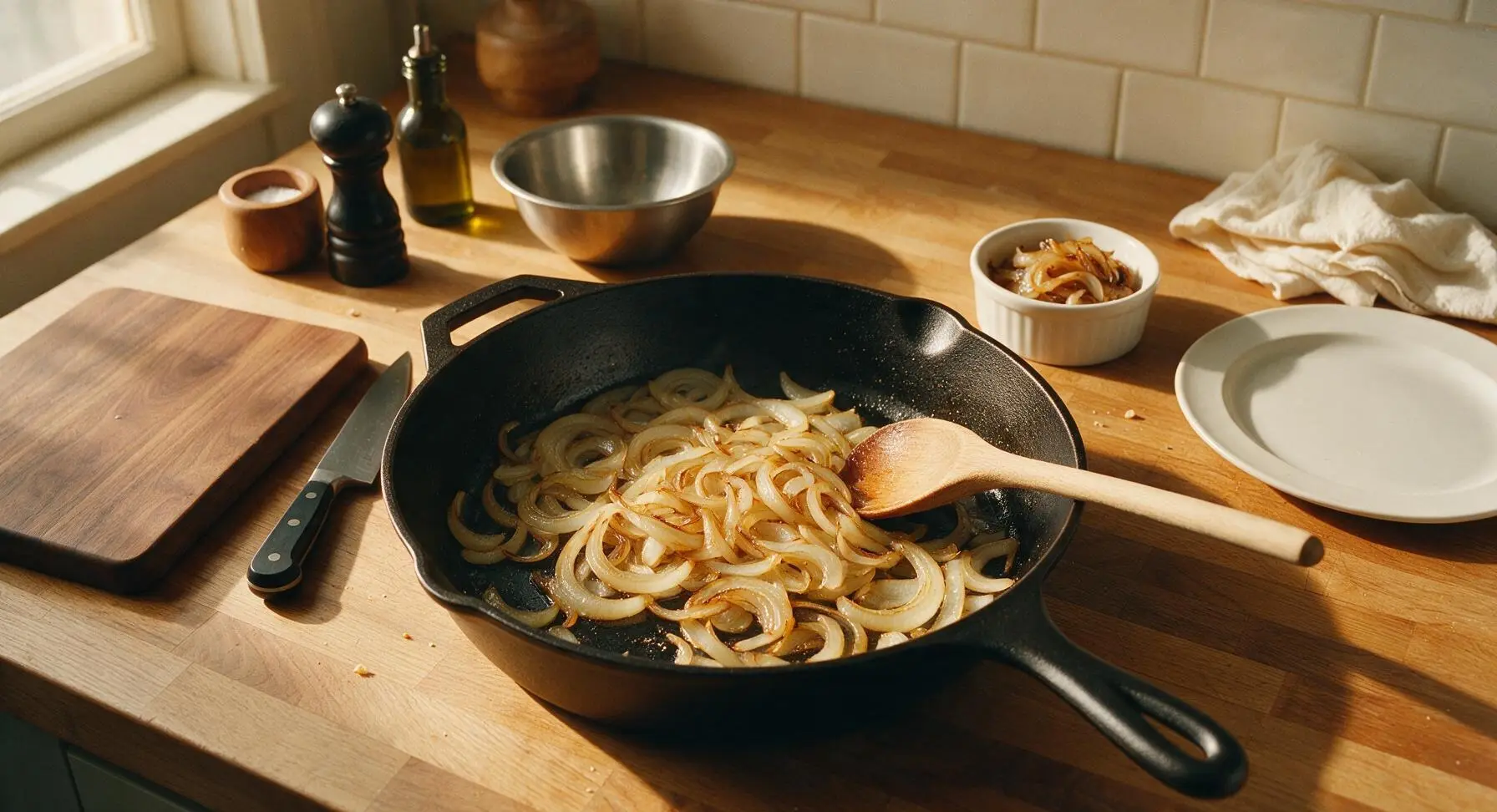
Add 1 tbsp of unsalted butter to the hot bacon fat in the skillet, swirling until melted. Toss all the sliced onions into the fat, stirring with the beech wood wooden spoon to coat evenly. Reduce heat to medium-low (300°F / 150°C), cooking onions for 15-18 minutes, stirring every 3 minutes, until they turn deep golden, soft, and sweetly caramelized (no crisp white onion remaining, all slices translucent and amber-hued). Stir in 1/4 tsp garlic powder in the last minute of cooking, then transfer caramelized onions to a small white ramekin, leaving as much fat in the skillet as possible.
Dredge liver in flour
Combine 60g all-purpose flour, 1 tsp kosher salt, and 1/2 tsp freshly ground black pepper in the second small white ceramic ramekin, stirring to mix evenly. Dredge each dried liver slice in the seasoned flour, coating both sides lightly, then shake off any excess flour so only a thin, even layer remains (no dry clumps of flour on the liver surface). Set dredged slices on a clean section of the maple cutting board, ready to sear.
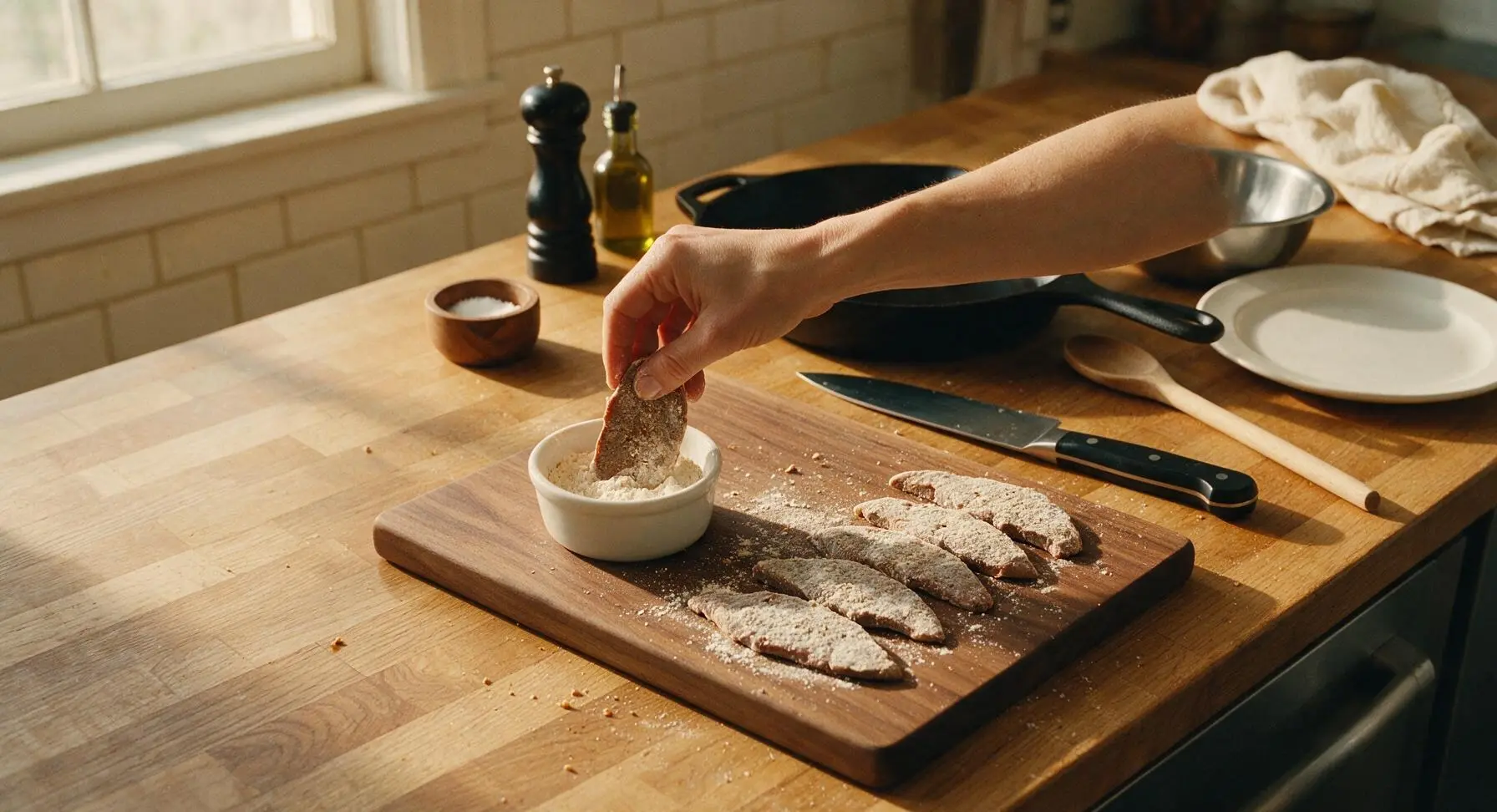
Sear liver to perfection
Turn the stovetop heat back up to medium (350°F / 175°C), heating the remaining fat in the cast iron skillet until it shimmers (faint ripples across the fat surface, no smoking). Carefully lay the dredged liver slices in the skillet in a single layer, working in batches of 2 slices if needed to avoid crowding the pan (crowding causes steaming instead of searing). Sear for 2-3 minutes per side, until the exterior is deep golden brown and crisp, and the internal temperature reaches 145°F (63°C) for tender, slightly pink centers—cooking longer will make liver tough and rubbery.
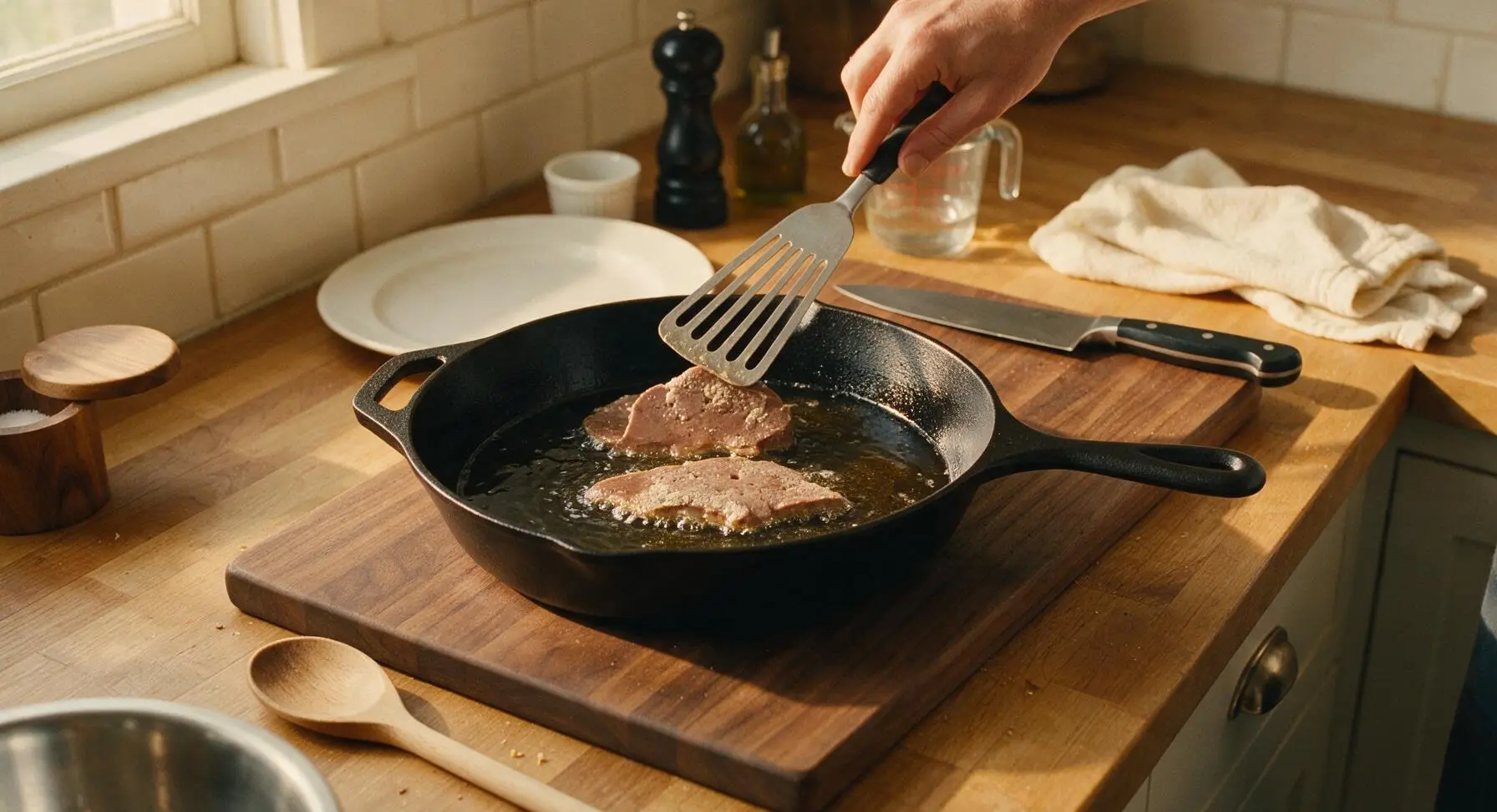
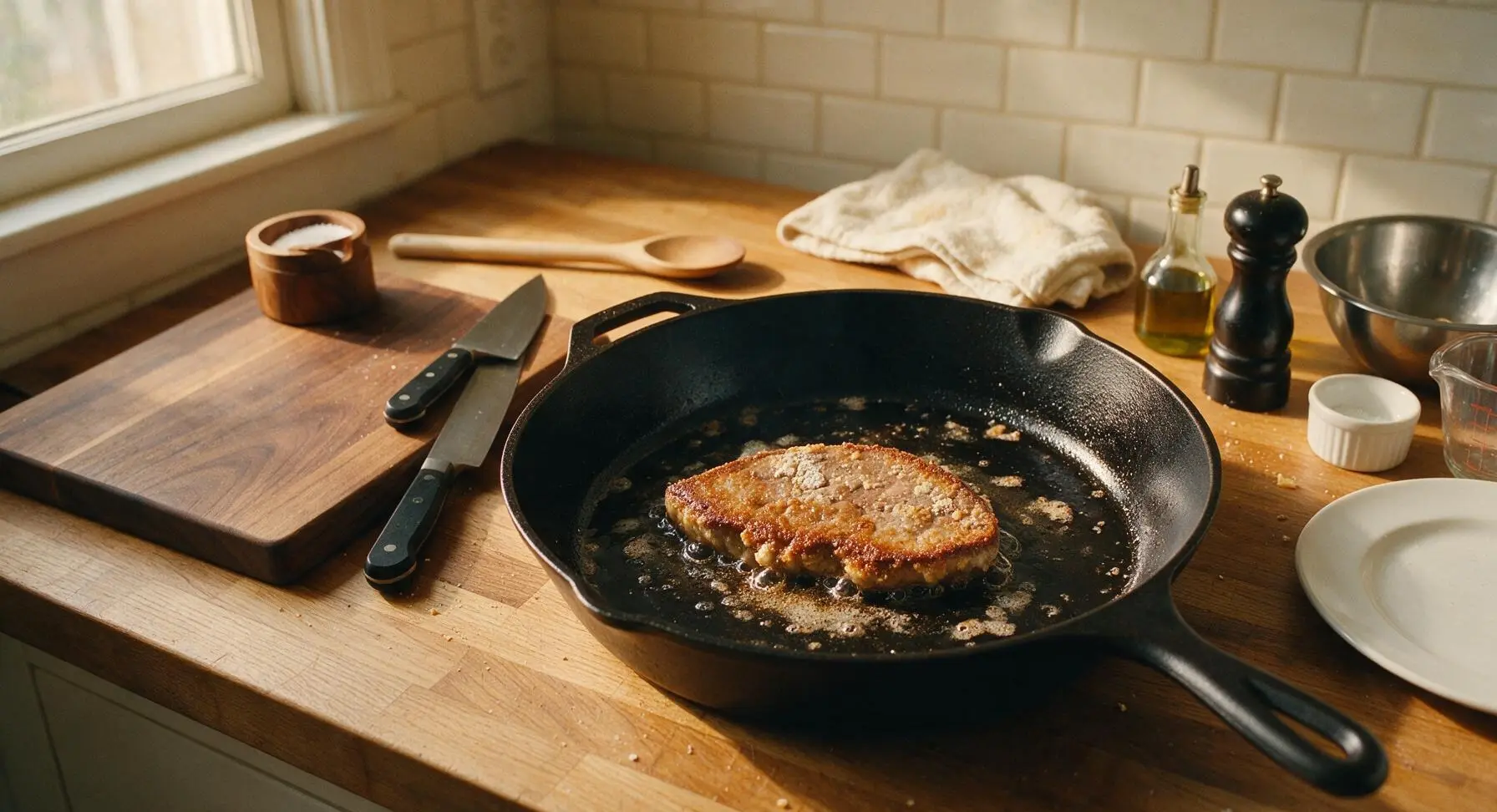
Plate liver and onions
Once liver is cooked to temperature, transfer slices to the matte off-white ceramic dinner plate, arranging them in a gentle overlapping fan. Pile the warm caramelized onions generously over the top of the liver, crumble the reserved cooked bacon over the onions if desired, and drizzle 1 tsp of pan juices from the skillet over the dish. Garnish with chopped fresh flat-leaf parsley, and let rest for 2 minutes before serving to let juices redistribute.
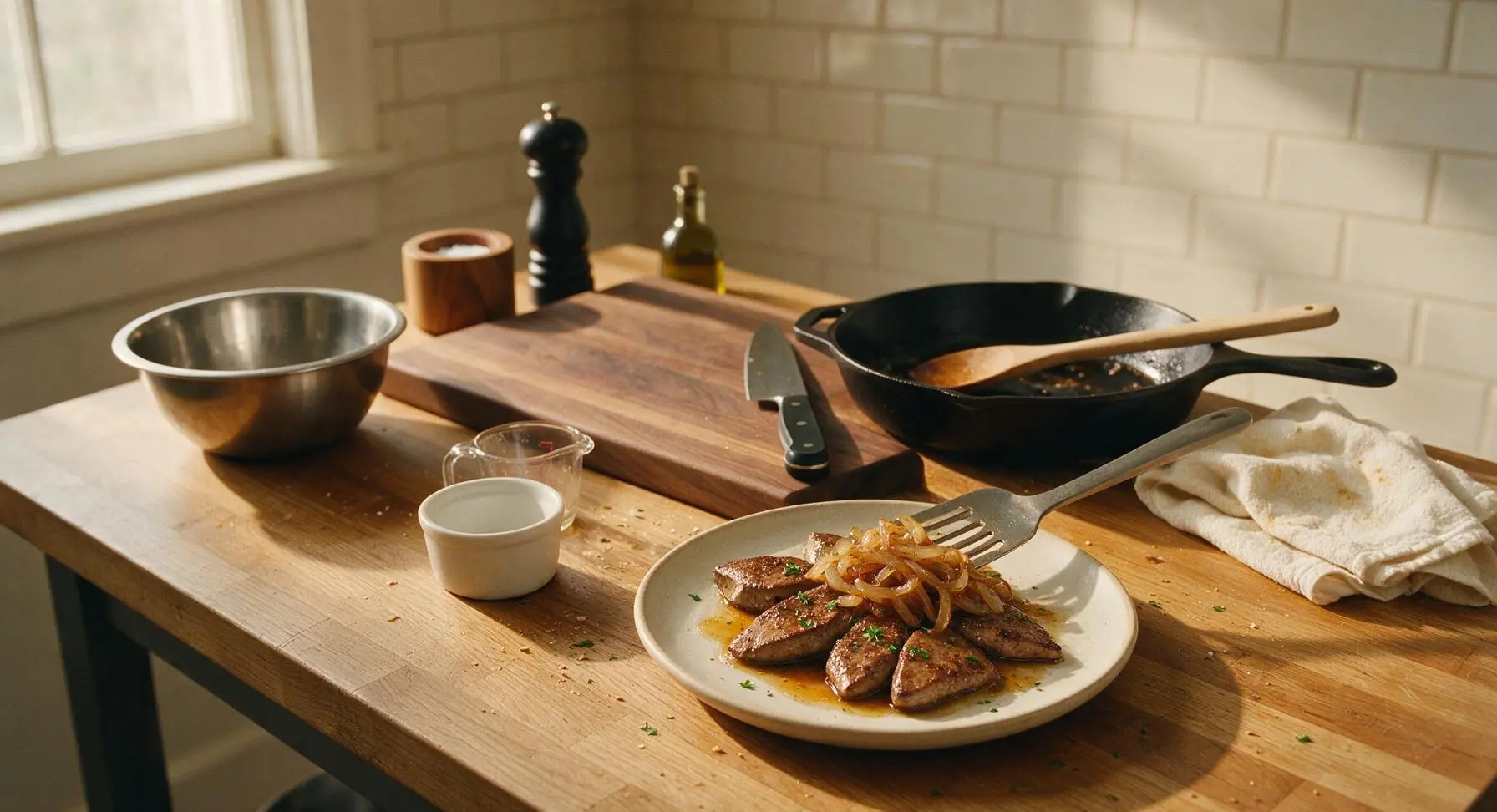
Tips
2.Pat liver completely dry before dredging and searing: Residual surface moisture will make the flour coating turn gummy instead of crisp, and will cause hot oil to splatter dangerously when slices hit the pan. Dry slices will develop a perfectly crisp, golden crust.
3.Avoid overcooking liver at all costs: Liver transitions from melt-in-your-mouth tender to rubbery, chalky, and unpleasant in as little as 60 seconds of extra cooking. Aim for a faint pink center at the thickest point (145°F / 63°C internal temperature), and remember residual heat will continue to cook the liver as it rests for 2 minutes after plating.
Comments (0)