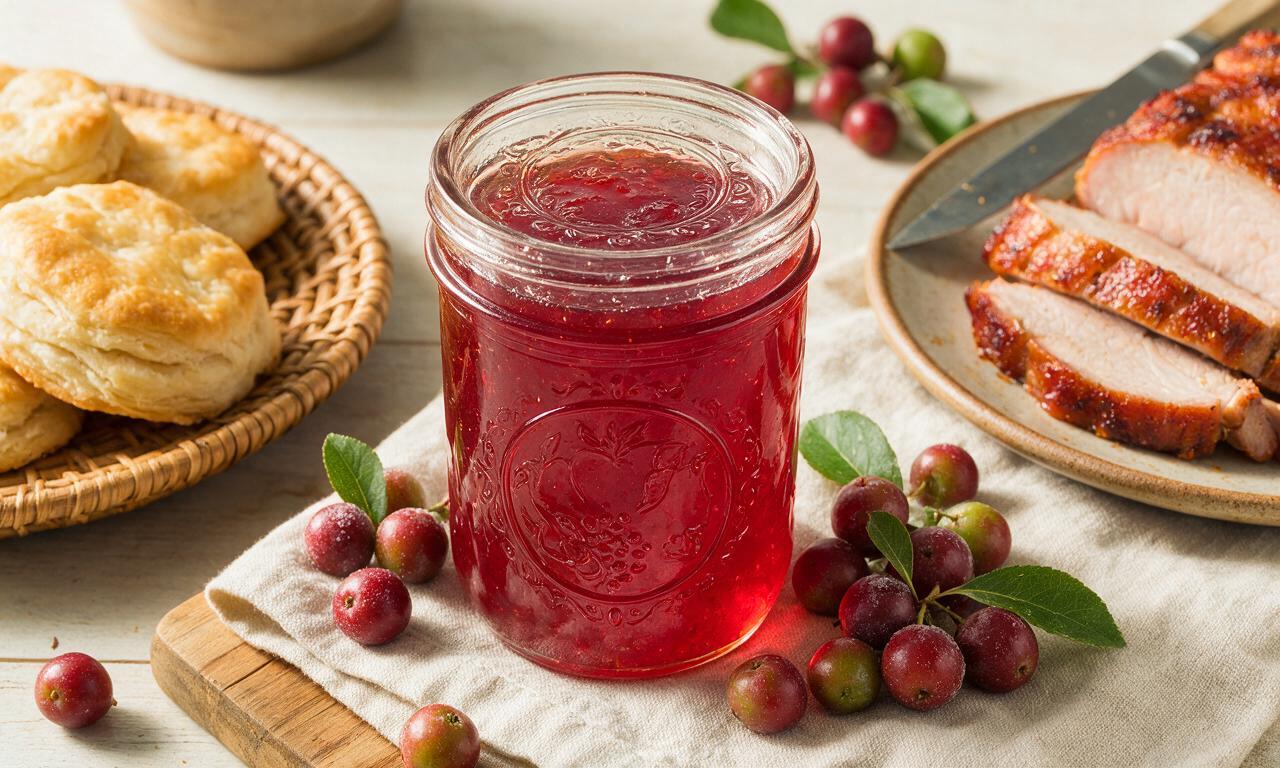
Mayhaw Jelly

Mayhaw Jelly
⏱️ cook time 1 hour 15 minutes
🍽️ servings 32
⚡ Difficulty medium

intro

Tart, ruby-red traditional Gulf Coast Southern jelly made from wild mayhaw berries, perfect for biscuits or pairing with savory roasted pork.

Ingredients

Fresh mayhaw berries 900 grams (6 cups, rinsed, stems removed)
Filtered water 720 ml (3 cups)
Granulated white sugar 800 grams (4 cups)
Powdered fruit pectin 49 grams (1 standard box)
Fresh lemon juice 30 ml (2 tablespoons)
Unsalted butter 5 grams (1 teaspoon)

Steps

1

Cook the mayhaw berries

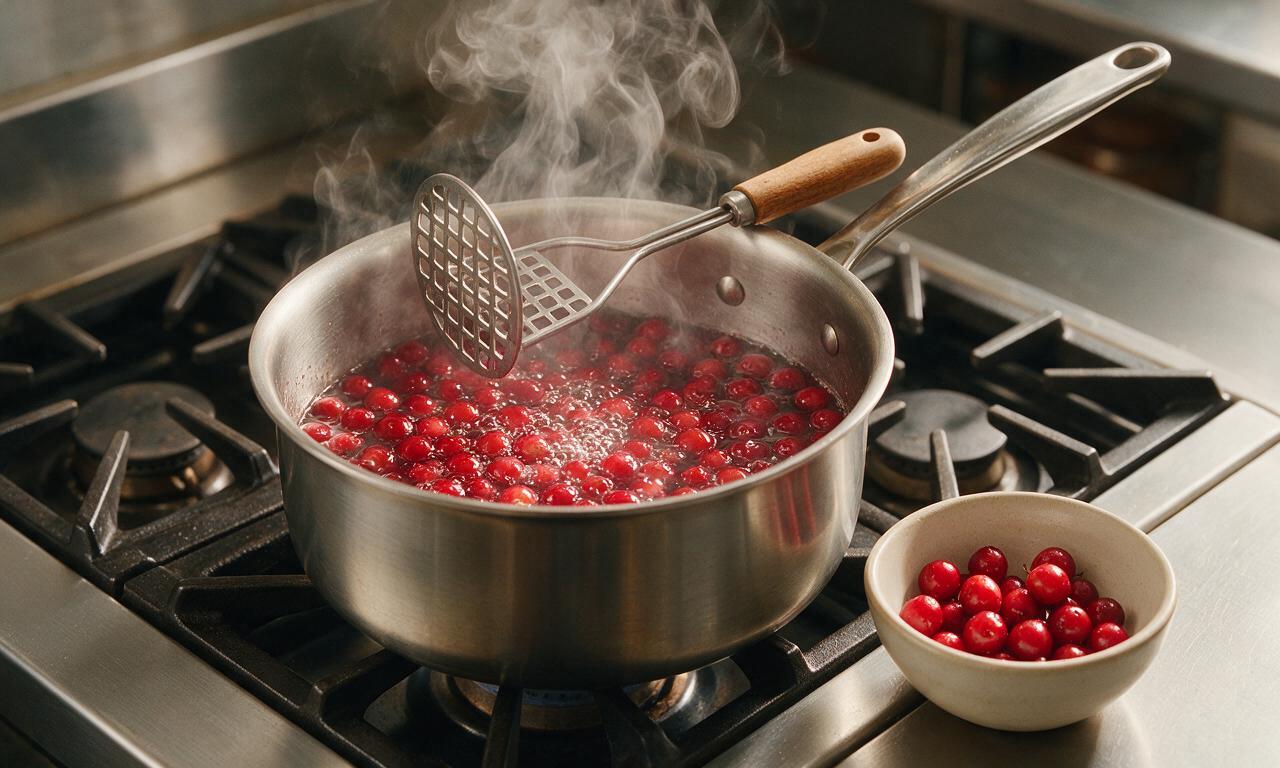
Place 900 grams rinsed, stemmed mayhaw berries and 720 ml filtered water in a large, heavy-bottomed stockpot over medium-high heat. Bring to a rolling boil, then reduce heat to medium-low, cover, and simmer for 20 minutes, mashing berries gently with a potato masher every 5 minutes to release juice.
Step 1
step1:Cook the mayhaw berries
2

Strain the mayhaw juice

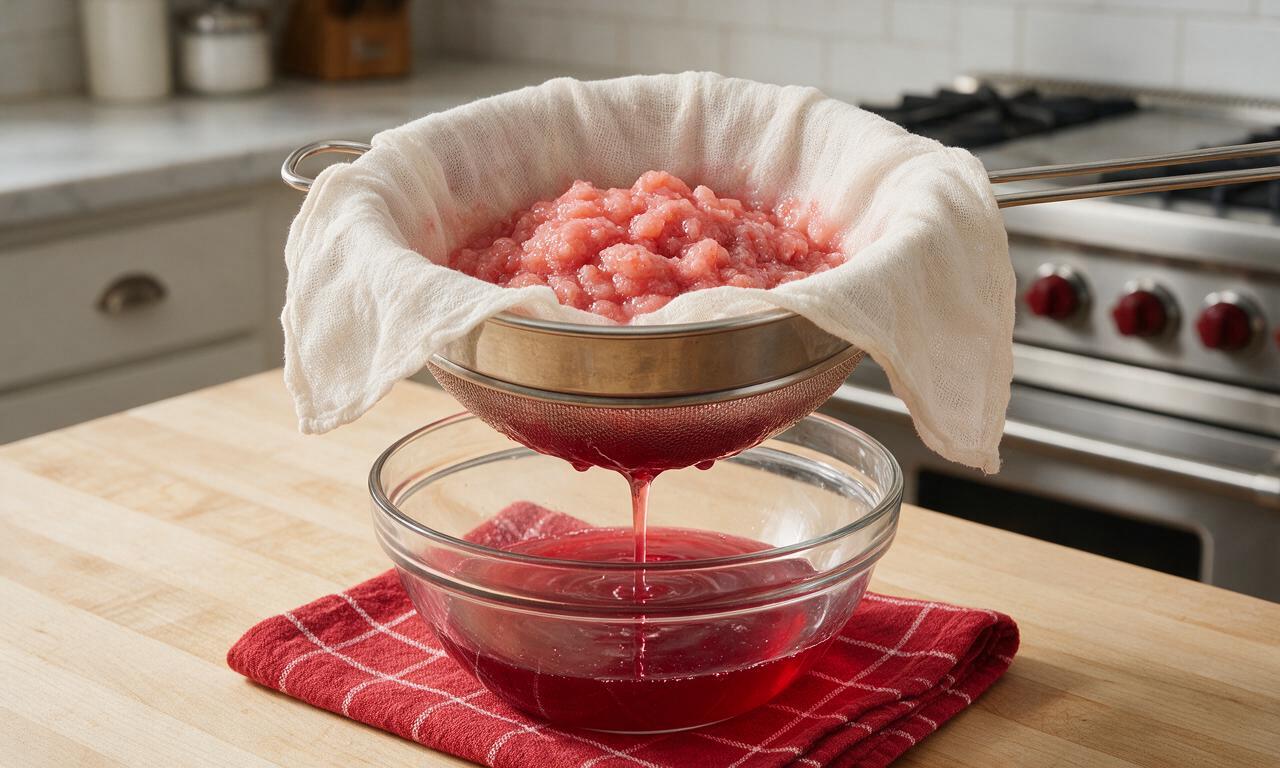
Set a fine-mesh sieve lined with 2 layers of cheesecloth over a large heatproof glass bowl. Pour the cooked berry pulp and liquid into the sieve, and let drain undisturbed for 30 minutes; do not press the pulp, as this will create cloudy jelly. You will yield approximately 800 ml (3 1/3 cups) of clear, ruby-red juice.
Step 2
step2:Strain the mayhaw juice
3

Prep canning jars

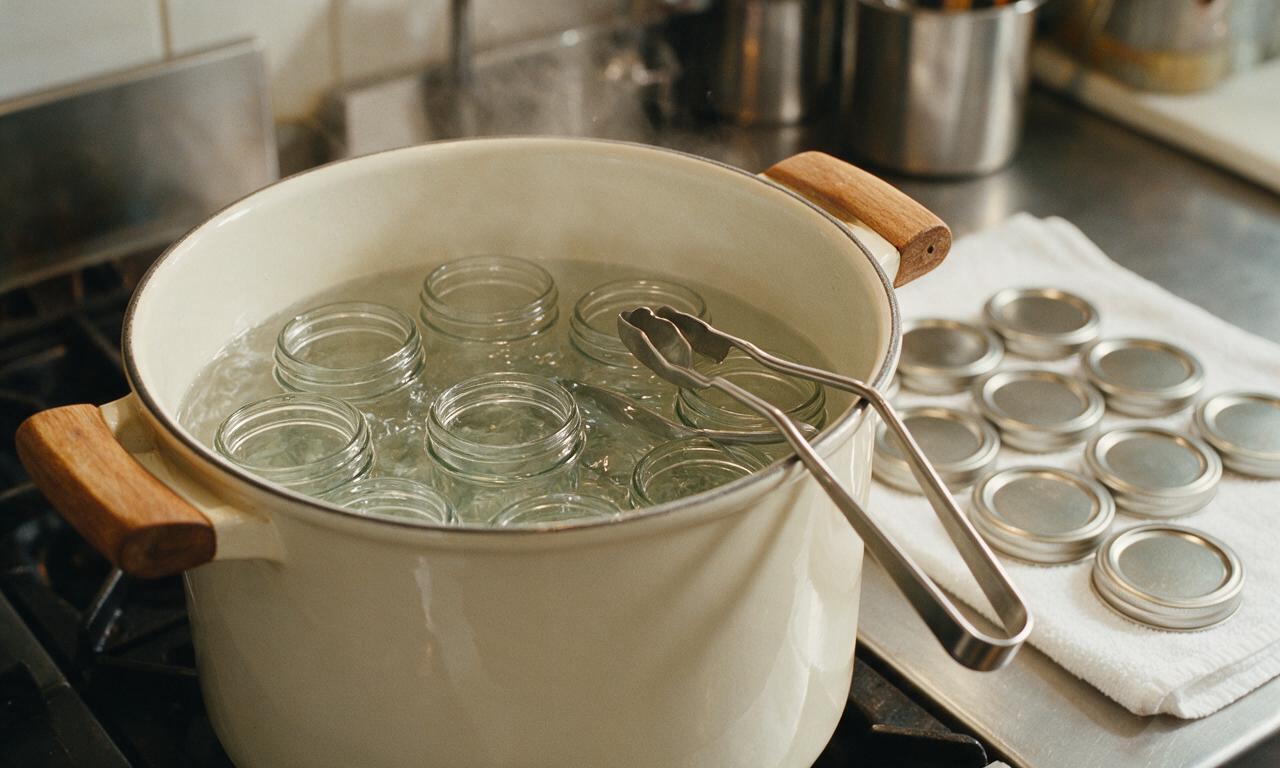
While juice drains, wash 4 half-pint (240 ml) glass canning jars, lids, and screw bands in hot soapy water. Submerge jars in a boiling water canner filled with water, hold at a low simmer (82°C/180°F) for 10 minutes to sterilize, and set lids and bands in a small bowl of hot (not boiling) water until use.
Step 3
step3:Prep canning jars
4

Cook the jelly base

Pour strained mayhaw juice back into the clean stockpot, stir in 49 grams powdered pectin, 30 ml fresh lemon juice, and 5 grams unsalted butter (to reduce surface foam). Bring to a full rolling boil over high heat, stirring constantly, then add all 800 grams granulated sugar at once, stirring until fully dissolved. Return to a stir-proof rolling boil, and boil hard for exactly 1 minute, stirring nonstop.
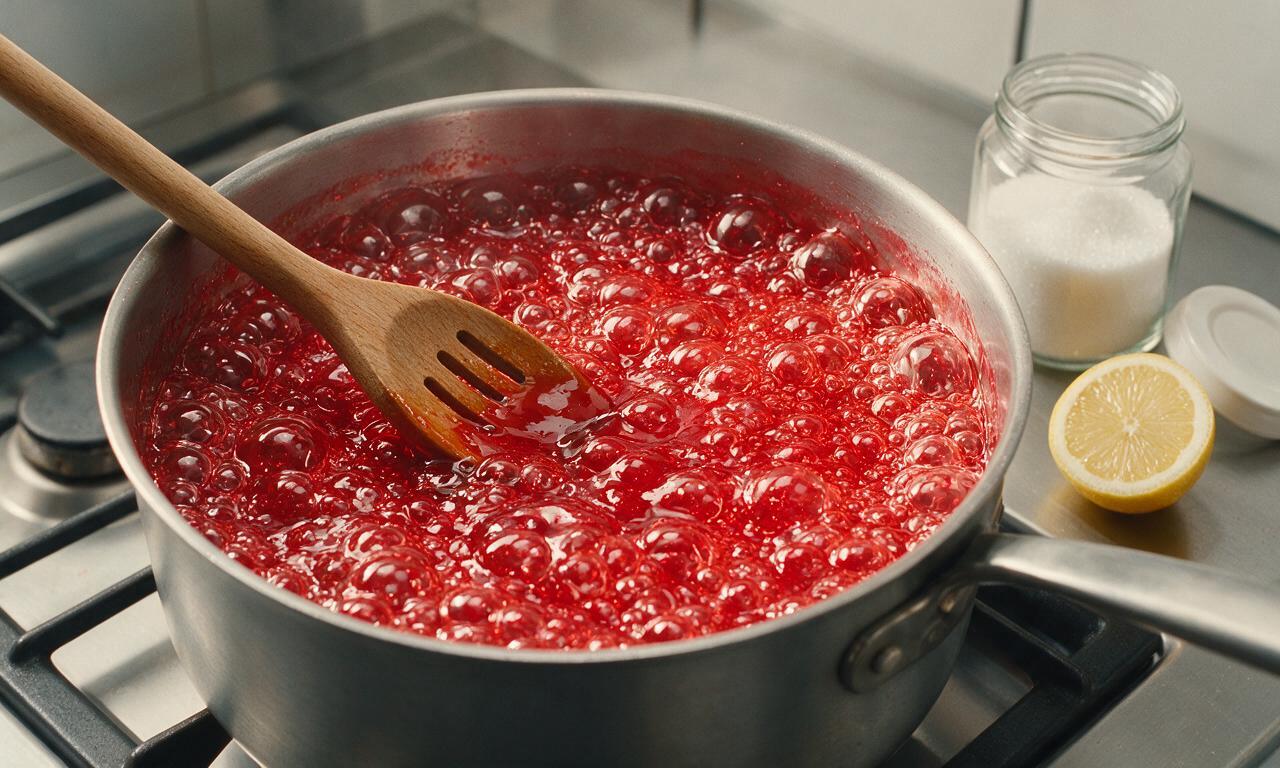
Step 4
step4:Cook the jelly base
5

Test jelly set point

Remove the pot from heat. To test set, place 1 teaspoon of hot jelly onto a cold plate chilled in the freezer for 10 minutes; wait 30 seconds, then push the dollop with a finger. If it wrinkles and holds shape, it is set; if runny, return to boil for 30 seconds and retest. Skim any residual foam from the jelly surface with a metal spoon.
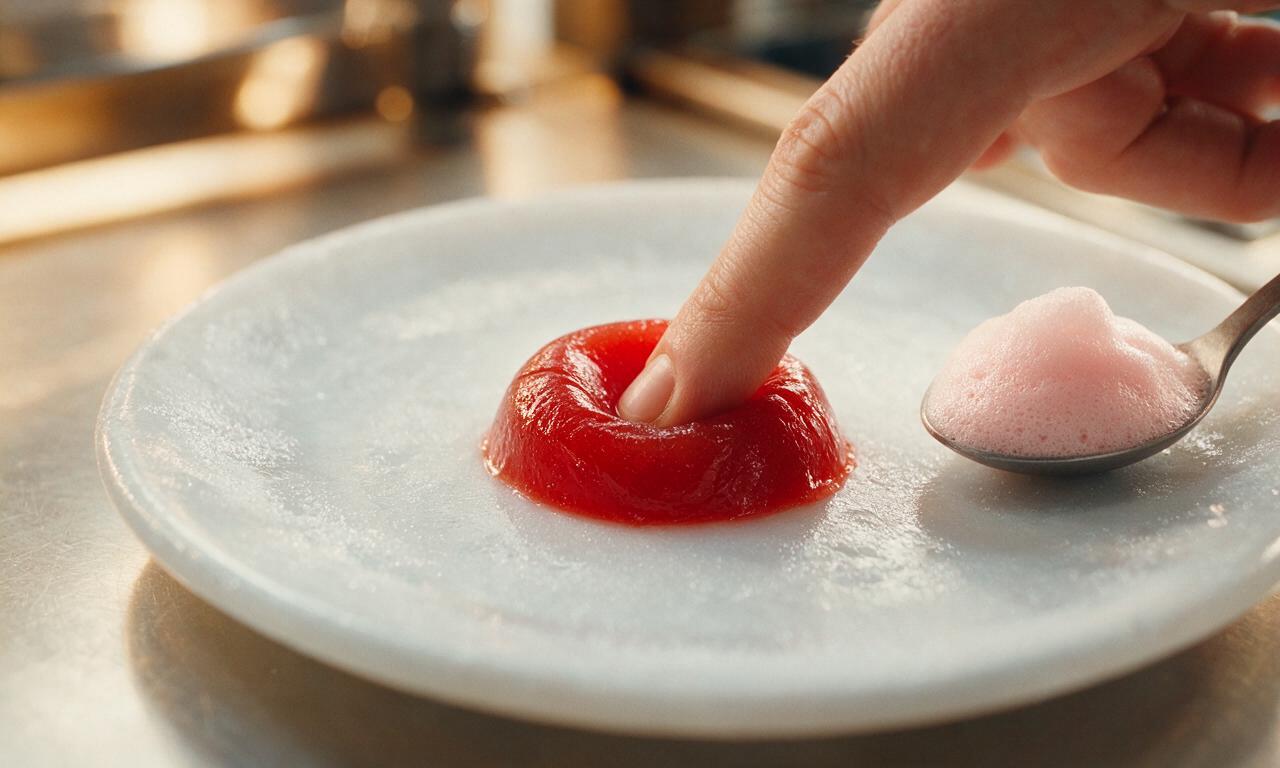
Step 5
step5:Test jelly set point
6

Fill and seal jars

Lift sterilized jars from the canner with a jar lifter, draining all excess water. Ladle hot jelly into jars, leaving exactly 6 mm (1/4 inch) of headspace at the top of each jar. Wipe jar rims clean with a damp paper towel to ensure a tight seal, center lids on jars, and screw bands on to fingertip tight (no over-tightening).
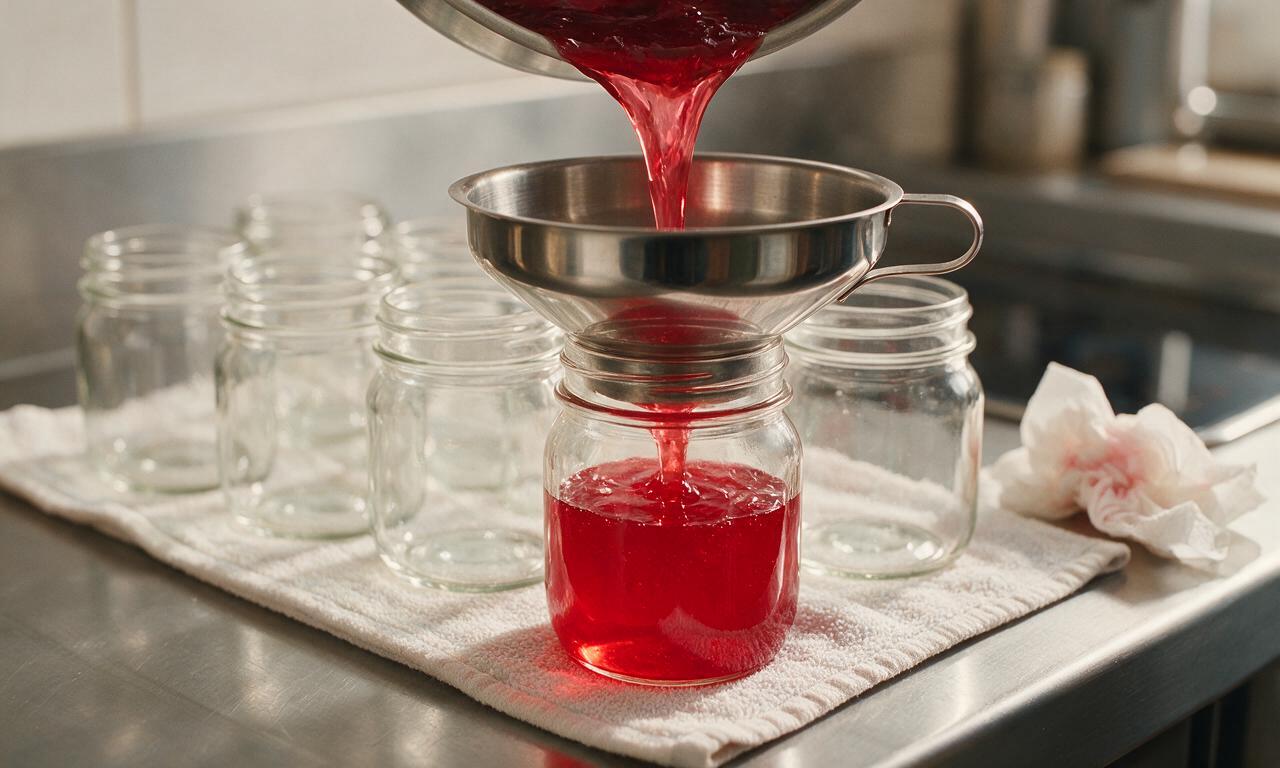
Step 6
step6:Fill and seal jars
7

Process and cool jelly

Lower filled jars back into the boiling water canner, ensuring water covers jars by 2.5 cm (1 inch). Return water to a full rolling boil, then process for 10 minutes, adjusting processing time for altitudes above 300 meters (1000 feet) as needed. Turn off heat, let jars rest in water for 5 minutes, then transfer to a towel-lined counter to cool undisturbed for 12-24 hours; sealed lids will make a sharp 'ping' sound as they vacuum seal. Store sealed jars in a cool, dark place for up to 1 year, refrigerate opened jars for up to 3 weeks.
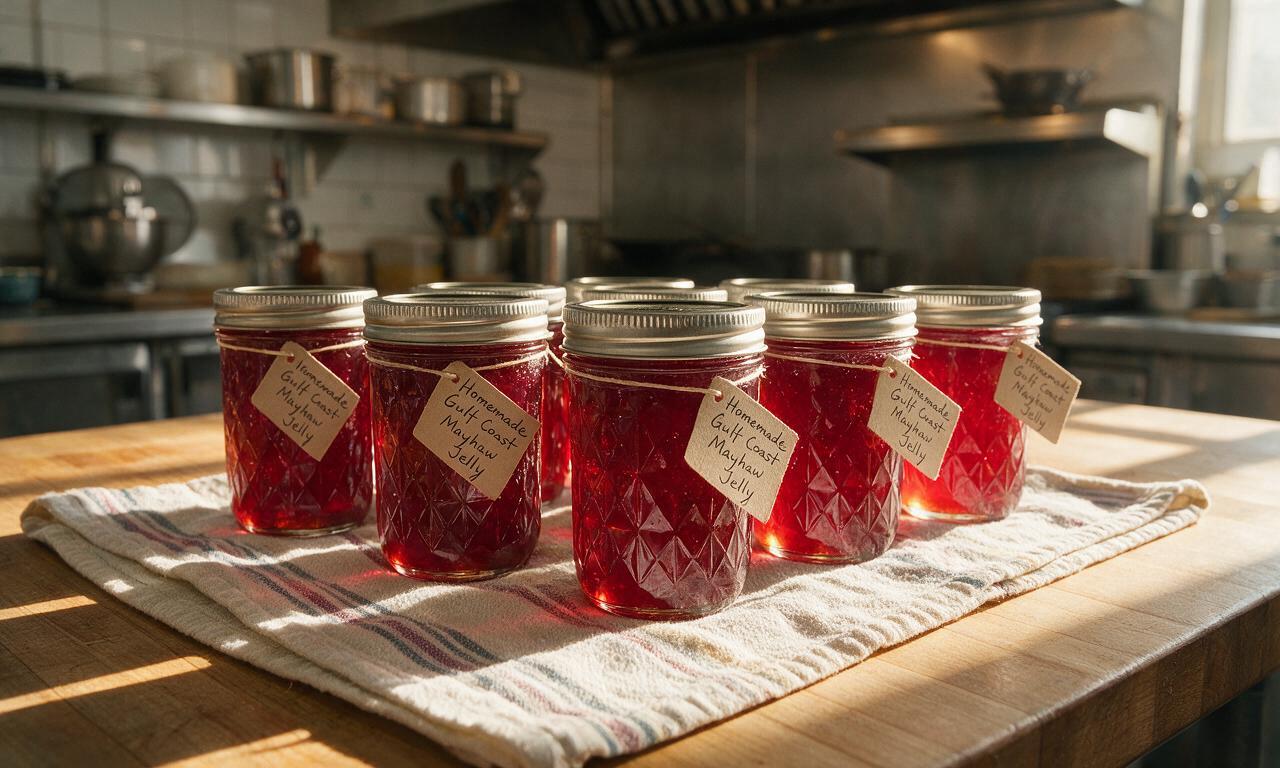
Step 7
step7:Process and cool jelly

Tips

1.Never squeeze or press the berry pulp in the cheesecloth during straining—this forces fine fruit sediment into the juice, resulting in cloudy, dull jelly instead of the signature clear, bright ruby appearance.
2.Use a precise timer for the 1-minute hard boil after adding sugar: over-boiling will create tough, rubbery jelly, while under-boiling will prevent the pectin from setting, leading to runny syrup instead of spreadable jelly.
3.If fresh mayhaws are out of season, unsweetened frozen mayhaws work identically in this recipe—no measurement adjustments are needed, just thaw berries completely before cooking.
✨ You May Also Like

Breakfast
🍜 United States

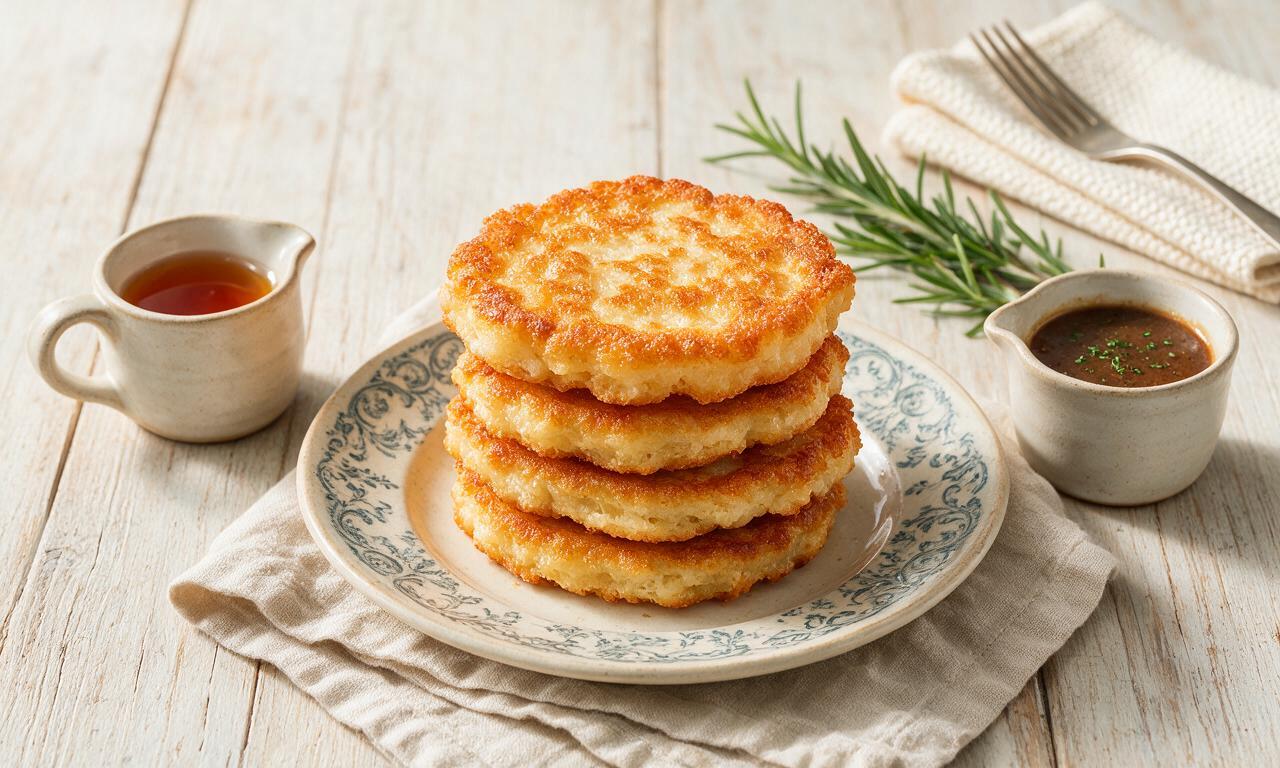
Crisp-edged, fluffy lard griddle cakes are a nostalgic homestyle staple, with rich savoriness from rendered lard, perfect topped with maple syrup or savory gravy.

⏱️ 25 minuteBreakfast ★ 4.9
Breakfast
🍜 United States

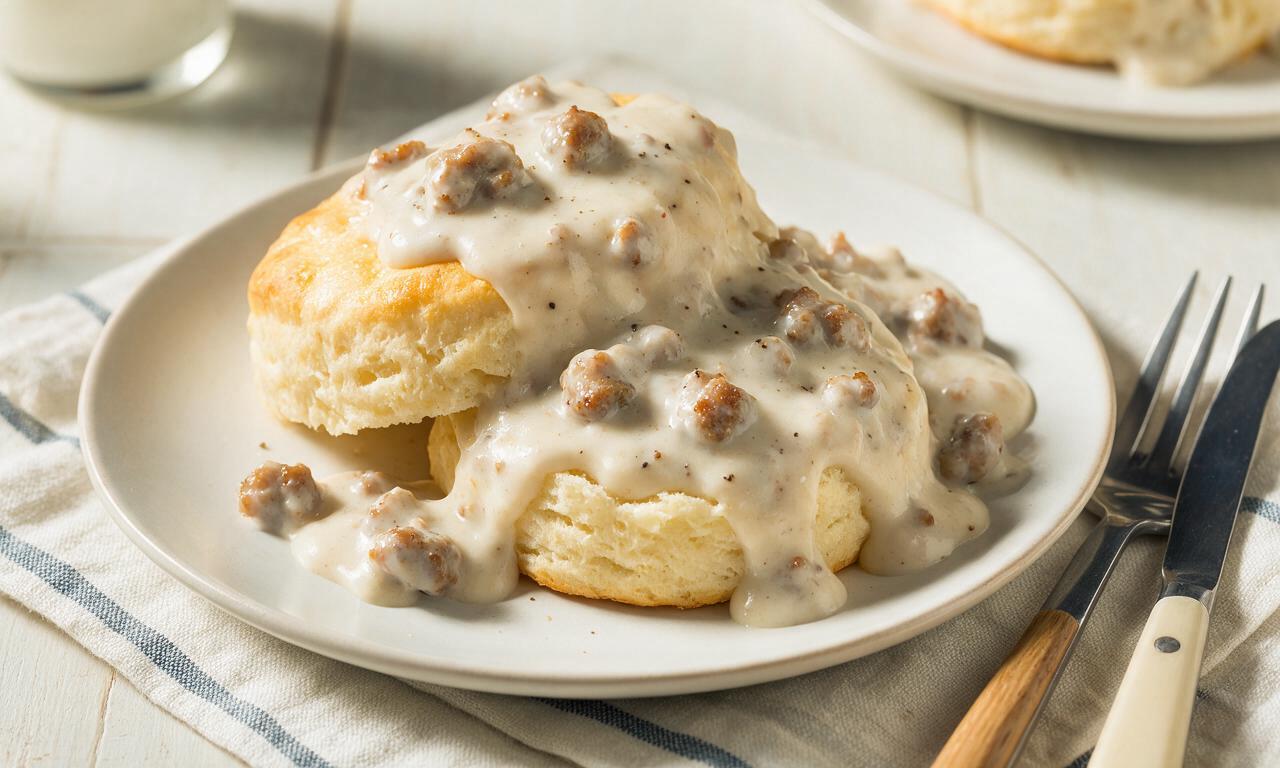
Flaky, buttery homemade buttermilk biscuits smothered in creamy, peppery pork sausage gravy: a beloved, hearty Southern American comfort food classic.

⏱️ 35 minuteBreakfast ★ 5
Breakfast
🍜 United States

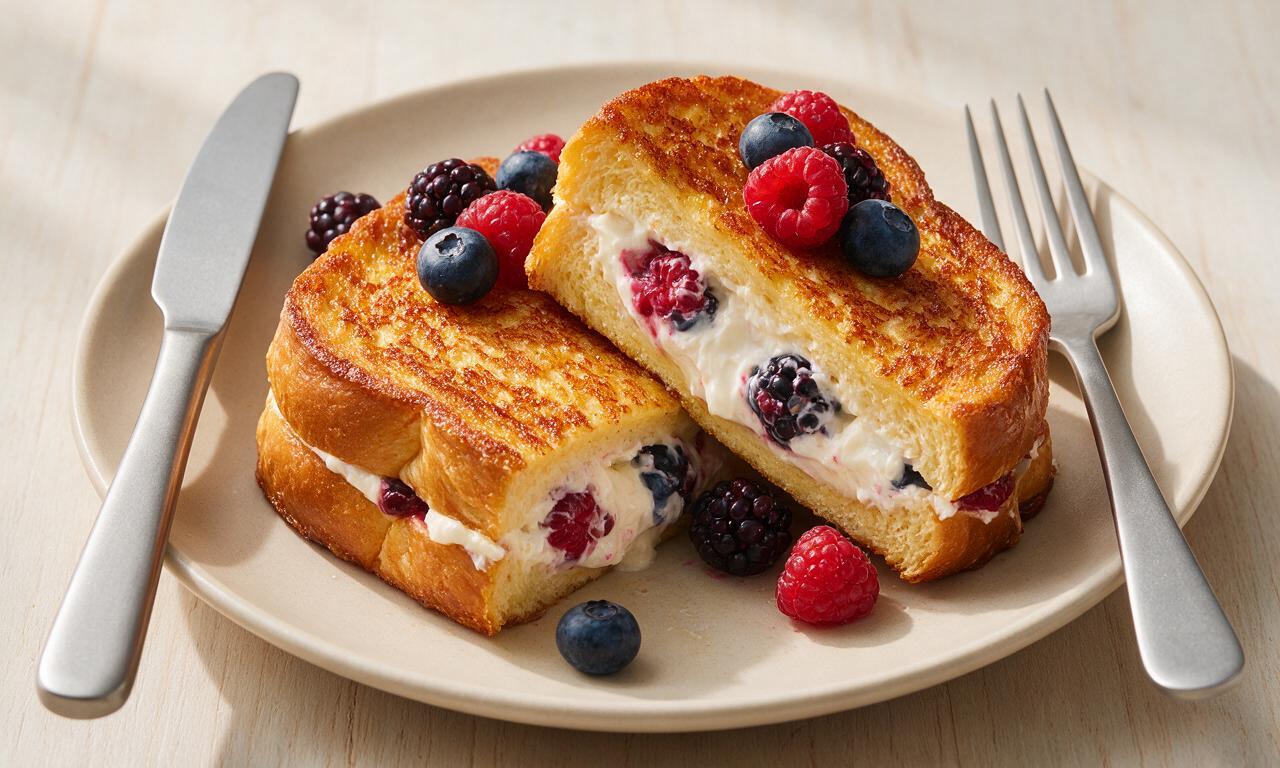
Golden, custardy brioche stuffed with sweet cream cheese and fresh berries, pan-fried to crisp perfection. An indulgent, cozy breakfast perfect for slow weekend mornings.

⏱️ 30 minuteBreakfast ★ 4.7
Breakfast
🍜 United States

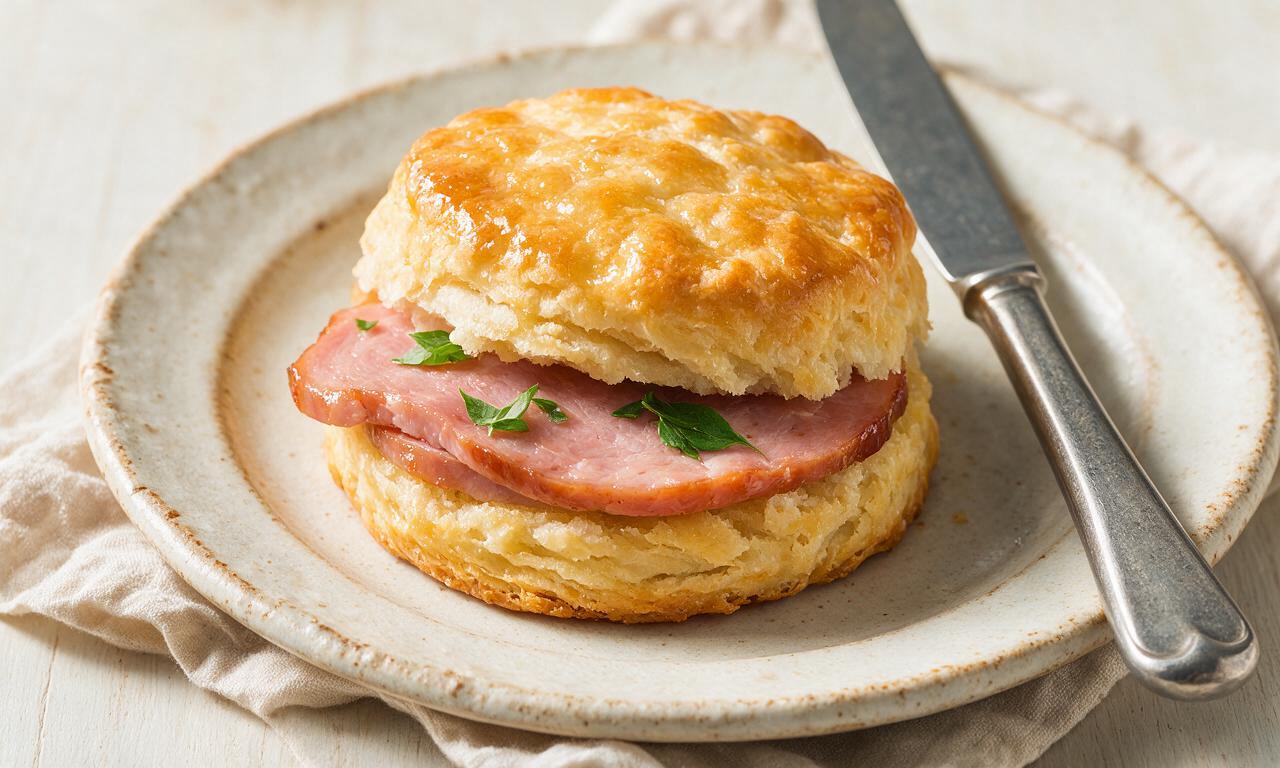
Flaky, buttery Southern-style biscuits stuffed with savory salty country ham, a portable, satisfying classic perfect for casual on-the-go meals.

⏱️ 25 minuteBreakfast ★ 4.8
Breakfast
🍜 United States

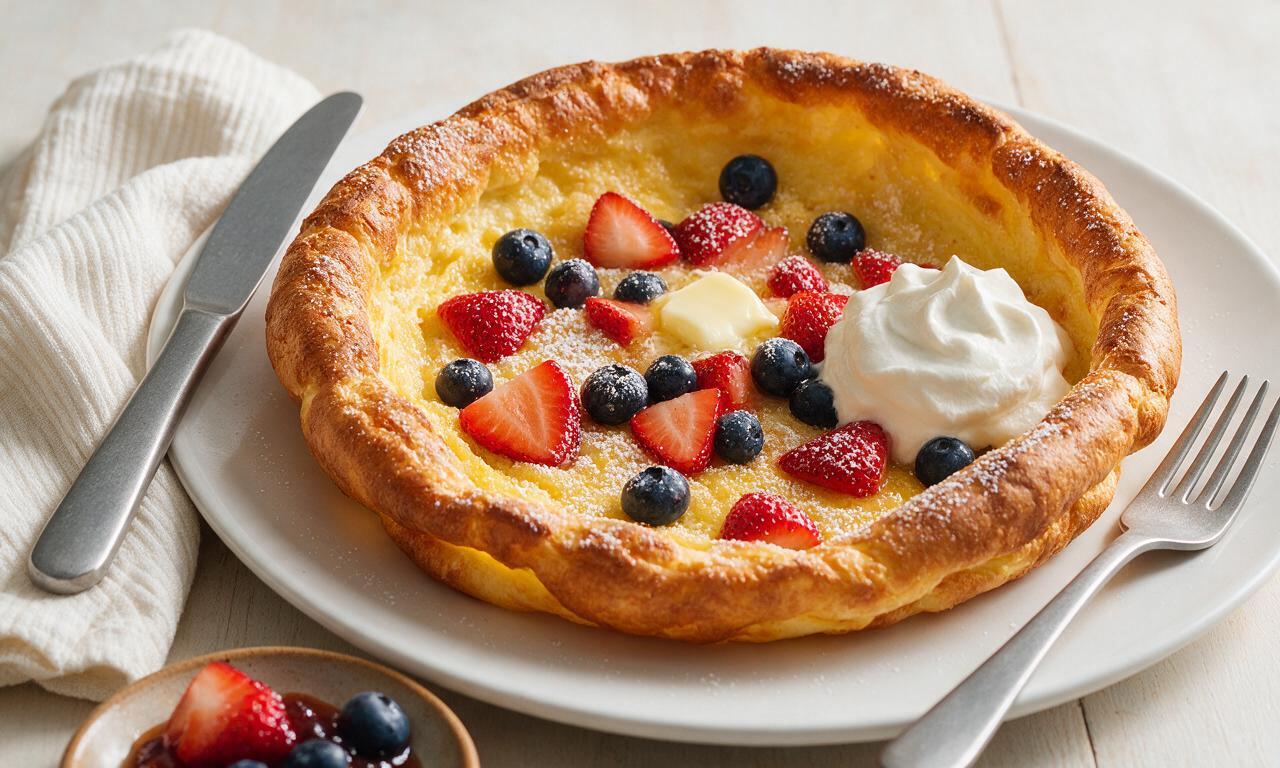
Iconic puffy baked pancake popularized in Seattle, with crisp golden edges and soft custardy center, served warm with classic sweet toppings.

⏱️ 35 minuteBreakfast ★ 4.6
Breakfast
🍜 United States

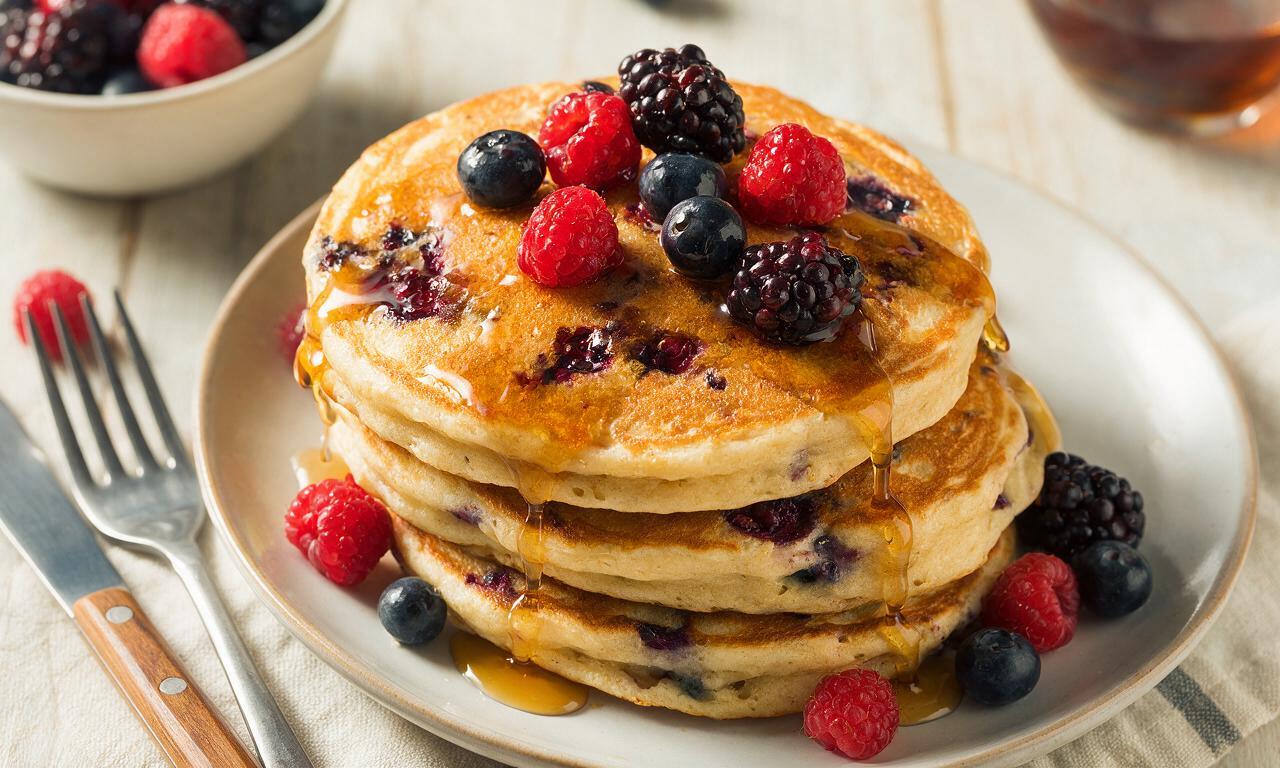
Fluffy, golden pancakes studded with juicy peak-summer mixed berries, drizzled with maple syrup for a bright, comforting, crowd-pleasing family breakfast.

⏱️ 25 minuteBreakfast ★ 4.8

Mayhaw Jelly:Frequently Asked Questions

1.What are mayhaw berries, and where can I source them if I don’t forage locally?
Mayhaws are small, tart wild hawthorn berries native to Gulf Coast wetland areas, ripening in late April to early May and prized for their bright, tangy flavor. You can find fresh mayhaws at regional Gulf Coast farmers markets during peak season, or order frozen, pre-cleaned mayhaw pulp from specialty Southern food retailers online if you live outside the region.
2.Can I use frozen mayhaws instead of fresh for this jelly?
Absolutely! Frozen mayhaws work just as well as fresh, as they’re typically picked and frozen at peak ripeness so you won’t lose that signature tart, bright flavor. Just thaw them fully before cooking, and reserve all the juice that releases during thawing to add to your pot—don’t pour that concentrated, flavorful liquid down the drain.
3.If mayhaws are already tart, why do I need to add fresh lemon juice?
Mayhaws have really variable natural acid levels depending on their ripeness and growing conditions, so lemon juice standardizes that acid content to help powdered pectin set properly. It also brightens the jelly’s rich berry flavor, balances the sweetness of the sugar, and adds a food safety buffer to prevent unwanted bacterial growth in sealed jars.
4.My last batch of mayhaw jelly never set up—what went wrong?
The most common culprits for runny jelly are overripe mayhaws (which have lower natural pectin content), incorrect pectin measurements, cooking the pectin-sugar mixture for too little or too long at a rolling boil, or skimping on the required lemon juice. You can fix runny batches by reheating with a small amount of extra pectin and lemon juice, boiling for 1 minute, and re-canning.
5.Can I substitute liquid pectin for the powdered pectin in this recipe?
You can, but you’ll need to adjust quantities and timing to avoid a too-soft or rubbery set. For every 4 cups of extracted mayhaw juice this recipe yields, use 3 ounces of liquid pectin instead of the measured powdered pectin, and add it right after the sugar fully dissolves instead of mixing it in with the sugar ahead of cooking.
6.How do I extract mayhaw juice without getting bitter, cloudy sediment in my jelly?
After simmering berries for 10 minutes to soften their skins and pulp, pour the whole mixture into a jelly bag or double layer of cheesecloth set over a bowl, and let it drip naturally for 2 to 3 hours. Never squeeze the bag to speed up draining, as that pushes bitter, fine sediment from skins and seeds through the cloth, making your jelly hazy and off-flavored.
7.Can I cut back on the sugar to make a less sweet mayhaw jelly?
I don’t recommend cutting sugar by more than 25% if you’re using standard powdered pectin, because sugar is critical to help pectin form a firm gel, and it acts as a natural preservative for shelf-stable storage. If you want a significantly lower-sugar jelly, swap for a low-sugar formulated powdered pectin designed to set with less sweetener to avoid runny results.
8.How long does homemade mayhaw jelly stay fresh?
Properly sealed, water-bath processed jars will stay shelf-stable in a cool, dark pantry for up to 18 months, as long as the lid seal remains intact. Once you break the seal on a jar, store it in the refrigerator where it will hold its bright flavor and firm texture for 3 to 4 months. Discard any jelly that grows mold, smells fermented, or develops a slimy texture.
9.Do I need to use a boiling water bath canner, or is the open-kettle method safe?
For reliable, shelf-stable jars that don’t develop mold or harmful bacteria over time, I always recommend processing half-pint jars in a boiling water bath for 10 minutes (adjusting for elevation over 1,000 feet). Open-kettle canning doesn’t create a consistent, strong vacuum seal to prevent spoilage long-term, even if you hear lids pop as they cool.
10.What are the best ways to serve this mayhaw jelly besides on biscuits?
While it’s iconic slathered on warm, buttery buttermilk biscuits, that bright tart-sweet profile pairs beautifully with savory foods too. Serve it alongside roasted pork tenderloin or smoked ham, stir a spoonful into pan sauces for wild game, spread it on toast with cream cheese, or use it as a quick glaze for grilled chicken thighs for a classic Gulf Coast kick.
11.Can I leave small bits of mayhaw pulp in for a more rustic, textured jelly?
You absolutely can if you prefer a chunkier, fruit-forward preserve over perfectly clear jelly! Skip the slow drip through a jelly bag, and instead run the softened cooked berries through a food mill to remove all the hard seeds before measuring your juice-pulp mixture. Note this will give you a slightly cloudier, more robust final product instead of the classic crystal-clear ruby jelly.
12.How do I tell when wild mayhaws are ripe enough to pick for jelly?
Ripe mayhaws turn a deep rosy red to dark maroon color, give slightly when squeezed gently, and drop easily from tree branches when shaken. Many Gulf Coast foragers lay tarps under mayhaw trees to collect fallen ripe berries in late April to early May. Skip hard, green unripe berries, which are overly astringent and lack that signature bright, balanced tart flavor.
13.Why did my last batch turn out cloudy instead of clear, ruby-red jelly?
Cloudy jelly almost always comes from one of three easy-to-fix missteps: squeezing the jelly bag during straining to push sediment through, cooking the jelly at too high a rolling boil for too long, or forgetting to skim the pale white foam off the top of the cooked jelly before pouring it into jars. Skim that foam thoroughly right before canning for crystal-clear results.
14.Can I add extra flavors to my mayhaw jelly without overpowering it?
Mayhaws have a delicate, unique tart flavor, so stick to subtle complementary add-ins that won’t cover it up. Try adding a 1-inch strip of fresh ginger, a couple of whole allspice berries, or a split vanilla bean to the juice as it simmers, then fish those add-ins out before adding sugar and pectin. Skip strong flavors like heavy cinnamon or mixed berries that will drown out the mayhaw taste.
15.What size jars work best for canning this mayhaw jelly?
Standard 8-ounce half-pint canning jars are ideal, as that’s a usable amount for most households to finish within 3 to 4 months of opening, and they heat evenly during water bath processing. You can also use 4-ounce quarter-pint jars for gifting—just keep the same 10-minute processing time, since the jelly’s high acid and sugar content ensures safe, consistent results in smaller jars.

Comments (8)

2 weeks ago

OMG, I’ve been trying to nail my grandma’s mayhaw jelly recipe for YEARS and this one is dead on! The tart-sweet balance is exactly how I remember it from our family beach trips to the Gulf. Brought a jar to our church potluck last Sunday and people were practically begging for the recipe. SO good on buttermilk biscuits, I’m already making a second batch to give as Christmas gifts this year!

1 week ago

Wait did you add the extra lemon juice the recipe calls for? I skipped it last batch and it was a little too sweet for my taste!

1 week ago

So glad you loved the recipe! Great call gifting jars — this jelly makes the perfect homemade present, and a quick pro tip: adding a tiny pinch of cinnamon to the next batch elevates it even more for holiday spreads!

3 days ago

This was my first time ever making jelly from foraged fruit! I picked mayhaws on a recent trip to the Gulf Coast and was nervous I’d mess up the canning process, but the step-by-step instructions were so clear. My kids loved it slathered on peanut butter toast for breakfast this week — total game changer for our morning routine. Only thing I’d note is that it took my batch about 10 extra minutes to hit the gel stage, probably because my stove runs a little cool.

5 days ago

Medium difficulty is spot on for this one — I’ve made a lot of jellies over the years and the pectin ratio here is perfect, no runny mess like I’ve gotten with other online mayhaw recipes. I served this alongside a charcuterie board at our family dinner last weekend and every single guest asked where I bought it, they couldn’t believe it was homemade! Will absolutely be adding this to my yearly canning rotation.

3 days ago

Thrilled to hear the pectin ratio worked perfectly for you! It’s such a great addition to charcuterie boards — the bright tartness cuts right through rich cheeses and cured meats so well.

2 days ago

I made a big batch of this on Sunday for meal prep and it’s already half gone! I was worried my kids would turn their noses up at a jelly they’d never tried before, but they’ve been putting it on everything — pancakes, yogurt, even ice cream. Wait, does anyone know how long sealed jars of this stay good on the pantry shelf? I want to stock up while mayhaws are in season!

yesterday

I’ve kept sealed jars for up to 18 months in a cool dark pantry and they taste just as fresh as the day I canned them! Just make sure your lids seal properly when you process them.

yesterday

Great question! Properly sealed and processed jars will stay good for 12-18 months in a cool, dark spot as Kris mentioned. Once opened, just keep it in the fridge and it’ll last 2-3 months!

yesterday

I ordered frozen mayhaws online because we don’t get them up here in New York, and I was so happy this recipe worked perfectly even with frozen fruit! The flavor is unreal, way brighter and more complex than the store-bought grape jelly we usually buy. My only tiny complaint is that my kitchen smelled like cooked fruit for two whole days after, but honestly it was worth it for how good this turned out.

2 hours ago

Oh the frozen mayhaws work so well! I stock up on fresh ones during mayhaw season and freeze them so I can make jelly year round, no one can ever tell the difference!

1 week ago

Tried this recipe last weekend when my cousin brought a bag of fresh mayhaws back from a trip to Louisiana. It was my first time water bath canning anything and I was so stressed I’d mess it up, but the instructions for checking the gel set were super easy to follow. The jelly is perfectly tart, not cloyingly sweet like so many store-bought jellies. Already planning to make more to bring to our next hiking group potluck!

30 minutes ago

I’m a professional line cook and I’ve been wanting to make mayhaw jelly ever since I had it at a pop-up in New Orleans a couple years ago. This recipe is absolutely solid — the cook time is exactly right, the flavor is balanced, and it sets perfectly every time. I used it to glaze a batch of pork ribs last weekend and it was insane, the sweet-tart flavor pairs so well with smoky meat. 10/10 would make again.

5 minutes ago

Love that you used this as a rib glaze! That’s one of our favorite underrated ways to use this jelly — it adds the best bright kick to smoked and grilled meats. So glad it lived up to the pop-up version you remembered!

2 hours ago

Wait, I didn’t have regular lemons on hand so I used Meyer lemons from my backyard tree, and it still turned out amazing! I was worried the swap would throw off the flavor, but you can barely tell the difference. I gave a jar to my next door neighbor and she brought over fresh sourdough to eat it with, best neighbor trade ever. Only heads up is that this makes a little more than 6 half-pint jars for me, so have an extra jar sterilized just in case!

30 minutes ago

Thanks for the heads up about the extra jar! I always forget that fruit juiciness can vary batch to batch, I would have been scrambling if I only had 6 jars ready.

just now

So glad the Meyer lemon swap worked for you! Great tip about the extra jar — depending on how juicy your mayhaws are, yield can vary a little, so it never hurts to have an extra sterilized jar on hand. That sourdough and jelly trade sounds like the perfect neighborhood win!