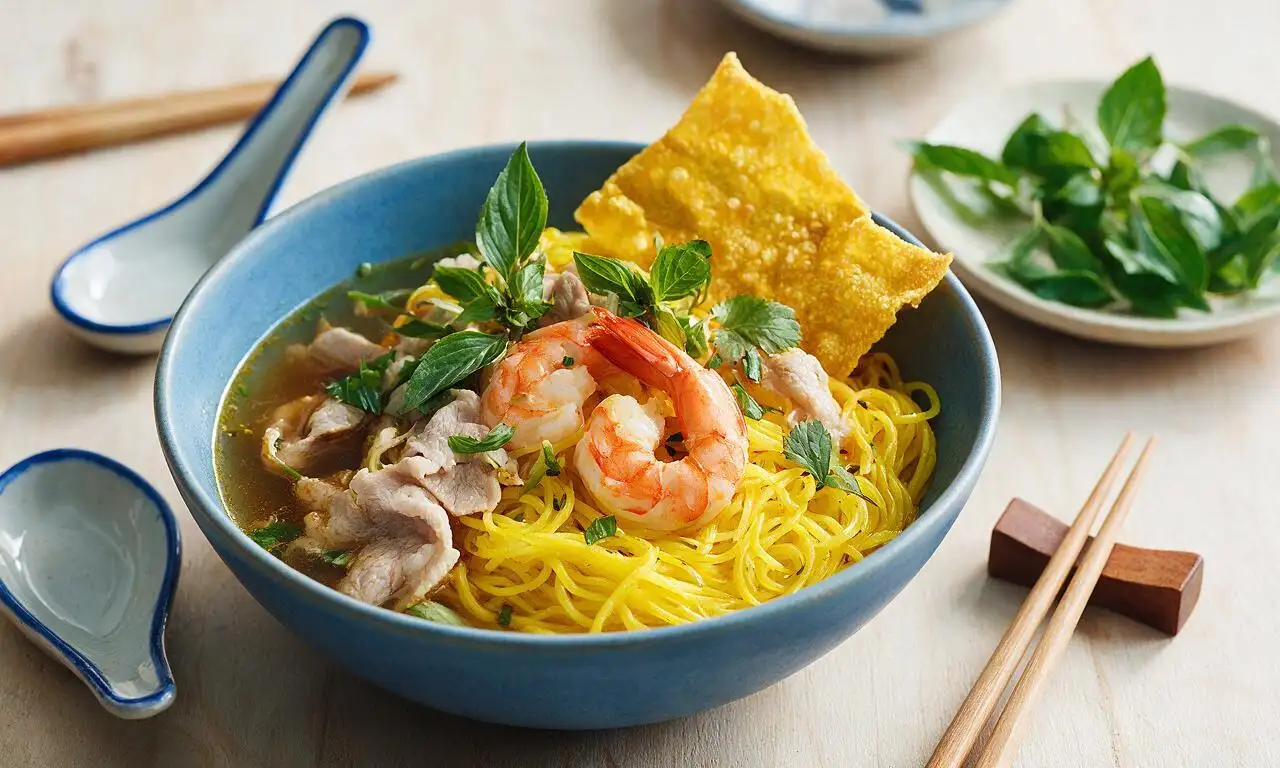
Mi Quang

title 1
Mi Quang
⏱️ cook time 55 minutes
🍽️ servings 4
⚡ Difficulty medium

intro

Vibrant Central Vietnamese turmeric-infused rice noodle dish topped with shrimp, pork, fresh herbs, and crispy crackers, served with a small portion of rich savory broth.

Ingredients

Wide fresh Mi Quang-style rice noodles 500 grams
Boneless pork shoulder, thinly sliced against the grain 200 grams
Large shrimp (16/20 count), peeled, deveined, tails intact 200 grams
Ground turmeric 1 tablespoon
Shallots, finely minced 80 grams (approx 5 medium shallots)
Garlic cloves, minced 15 grams (approx 4 cloves)
Fish sauce 3 tablespoons
Annatto seed oil 2 tablespoons
Low-sodium chicken broth 750 ml (3 cups)
Granulated sugar 1 tablespoon
Freshly ground black pepper 1 teaspoon
Hard-boiled quail eggs, peeled 8 pieces
Fresh bean sprouts 200 grams
Mixed fresh herbs (Thai basil, cilantro, perilla, mint) 2 cups, loosely packed
Roasted unsalted peanuts, crushed 4 tablespoons
Sesame-topped rice crackers (banh trang me) 4 pieces
Fresh lime, cut into wedges 1 whole (approx 60 grams)
Fresh red bird's eye chili, thinly sliced 2 pieces

Steps

1

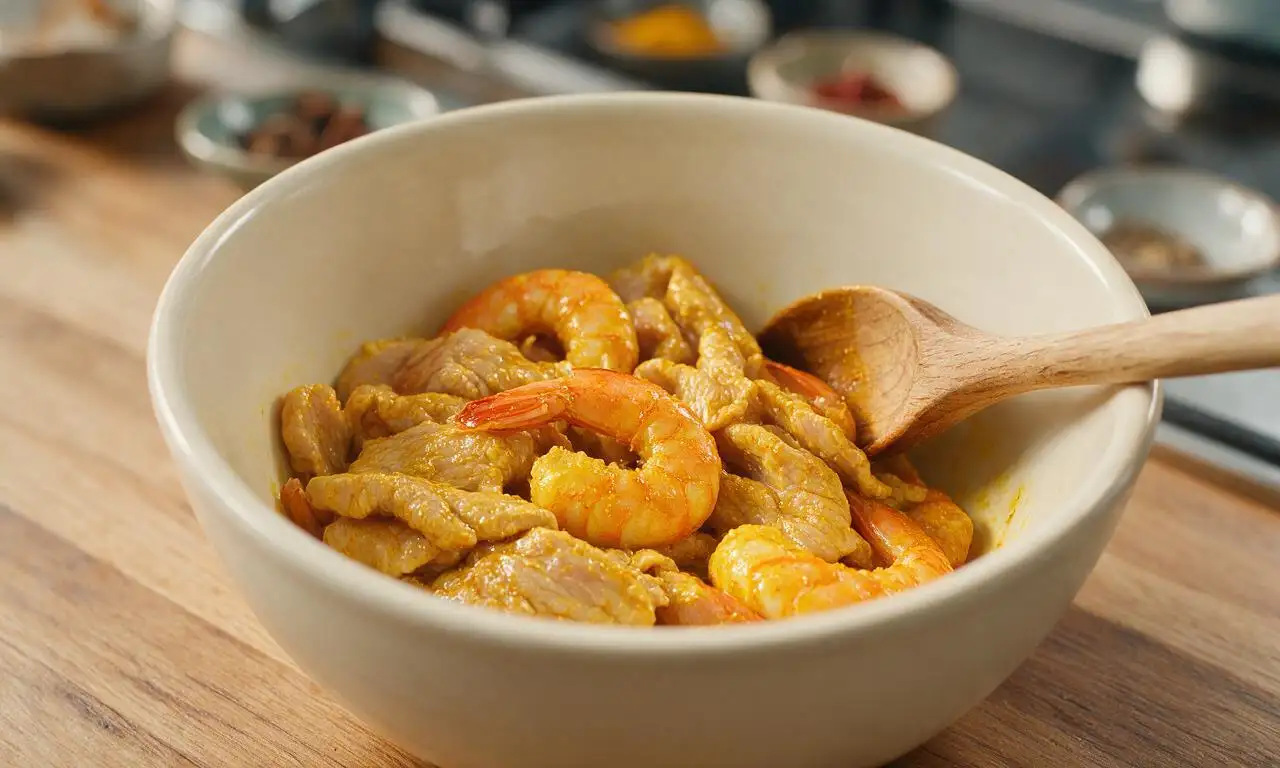
Marinate Pork and Shrimp

In a large mixing bowl, combine 200g thinly sliced boneless pork shoulder, 200g peeled deveined large shrimp (tails intact), 1 tablespoon ground turmeric, 2 minced shallots (approx 32g), 2 minced garlic cloves (approx 7.5g), 1 tablespoon fish sauce, 1 teaspoon freshly ground black pepper, and 1 teaspoon granulated sugar. Toss thoroughly to coat all protein evenly, then let rest at room temperature for 20 minutes to marinate.
Step 1
step1:Marinate Pork and Shrimp
2

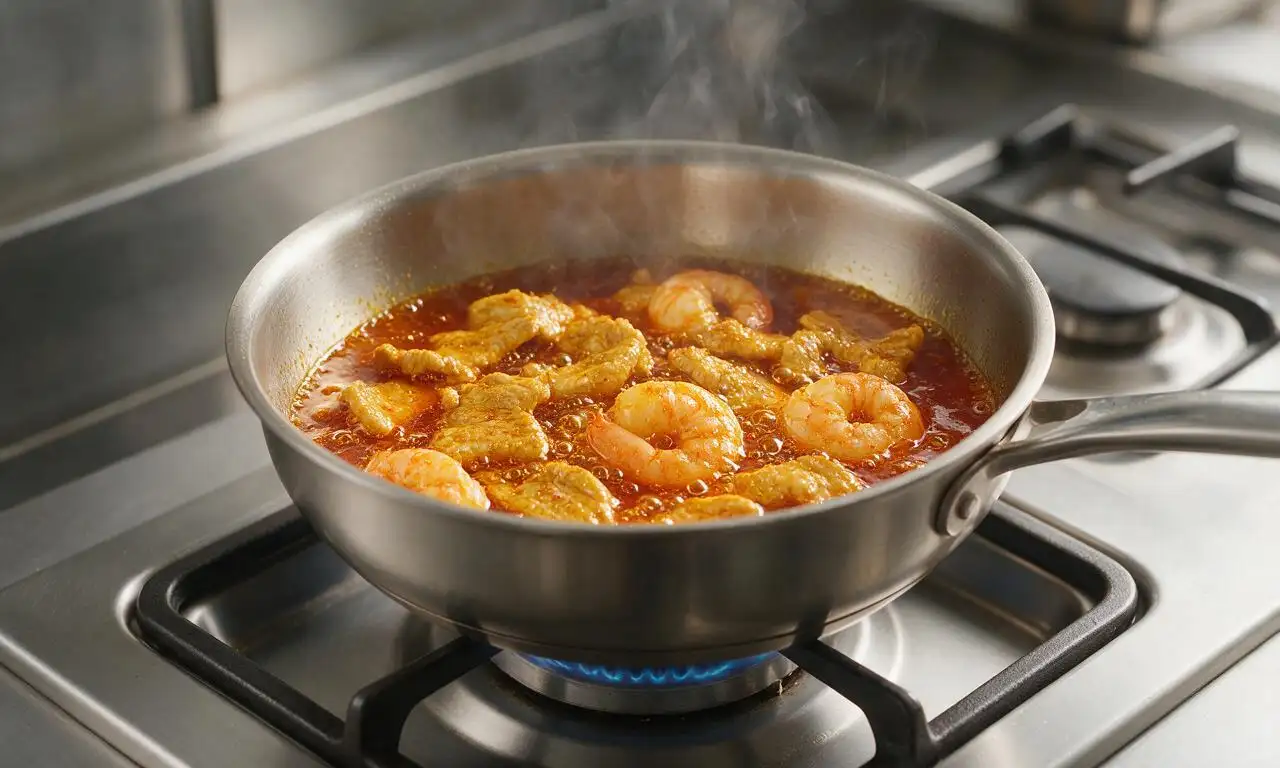
Sear Marinated Pork and Shrimp

Heat 2 tablespoons annatto seed oil in a 5L heavy-bottomed stockpot over medium heat (350°F / 175°C). Add the remaining 3 minced shallots (approx 48g) and 2 minced garlic cloves (approx 7.5g), sauté for 1 minute until fragrant, taking care not to burn the garlic. Add the marinated pork and shrimp, sear for 4 minutes, stirring occasionally, until the pork is lightly browned on all edges and shrimp turn opaque and pink.
Step 2
step2:Sear Marinated Pork and Shrimp
3

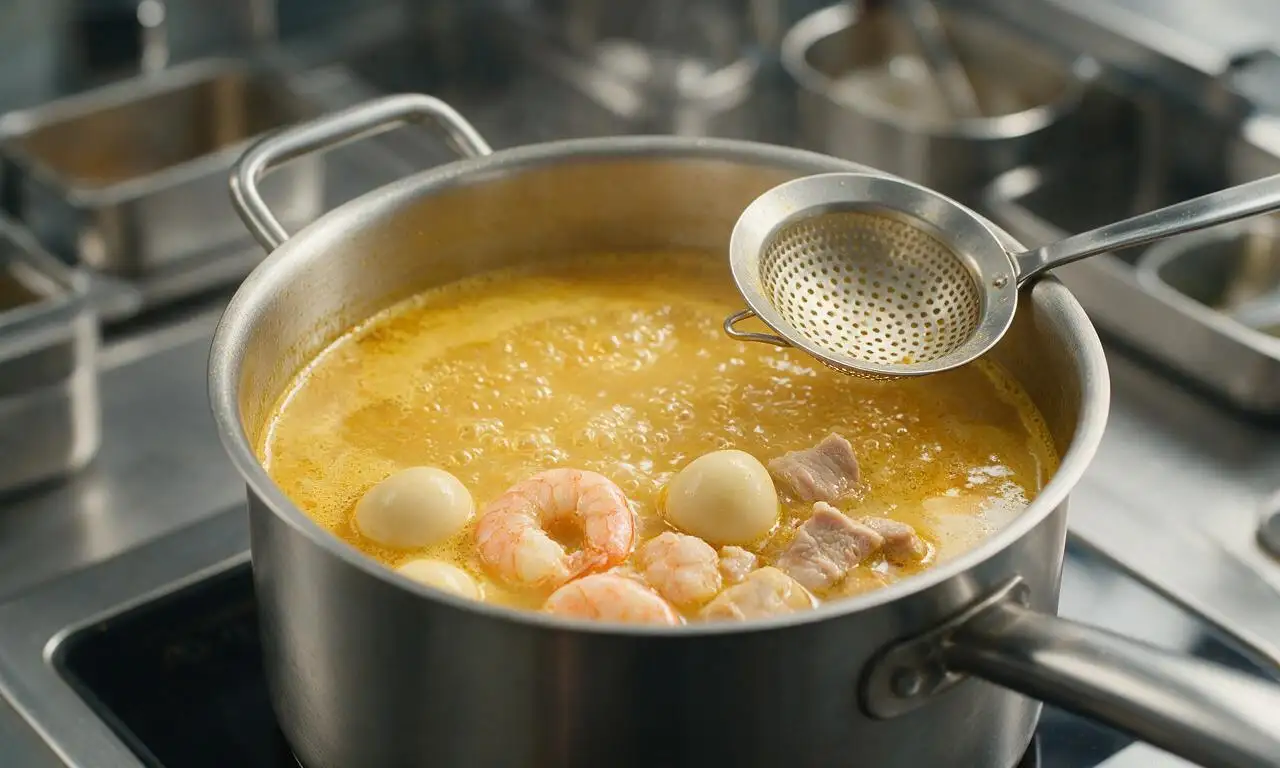
Simmer the Seasoned Broth

Pour 750ml (3 cups) low-sodium chicken broth into the pot with the seared protein, stir in the remaining 2 tablespoons fish sauce and 2 teaspoons granulated sugar. Bring the liquid to a rolling boil over high heat, then reduce heat to medium-low (200°F / 95°C) and let simmer uncovered for 15 minutes. Skim any light brown foam that rises to the surface with a fine skimmer for a clear broth, then add 8 peeled hard-boiled quail eggs to warm through for the final 2 minutes of simmering.
Step 3
step3:Simmer the Seasoned Broth
4

Blanch Bean Sprouts and Noodles

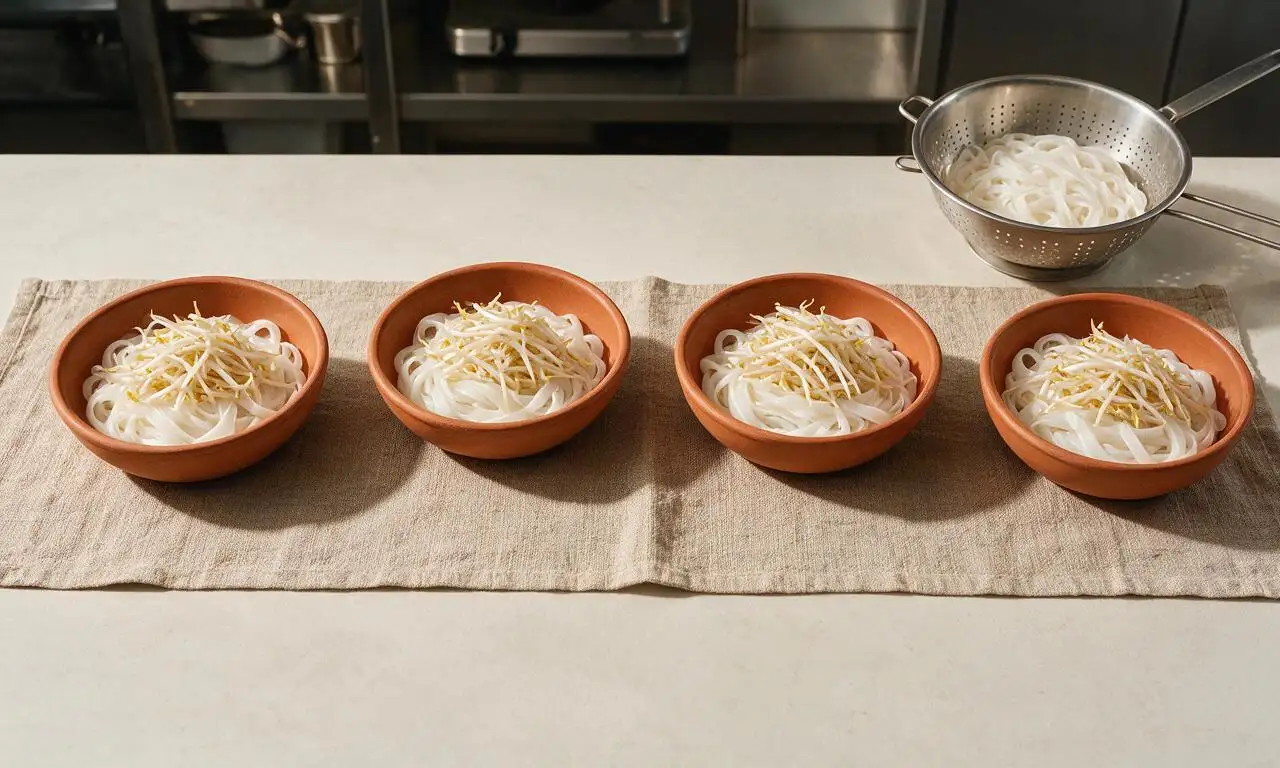
While the broth simmers, bring a separate 4L pot of water to a rolling boil over high heat. First blanch 200g fresh bean sprouts for 30 seconds, remove with a slotted spoon and drain thoroughly. Next, blanch 500g fresh wide Mi Quang-style rice noodles in the same boiling water for 90 seconds until tender but chewy, then drain completely. Divide noodles evenly between 4 deep serving bowls, topping each portion with 50g of the blanched bean sprouts.
Step 4
step4:Blanch Bean Sprouts and Noodles
5

Assemble the Noodle Bowls

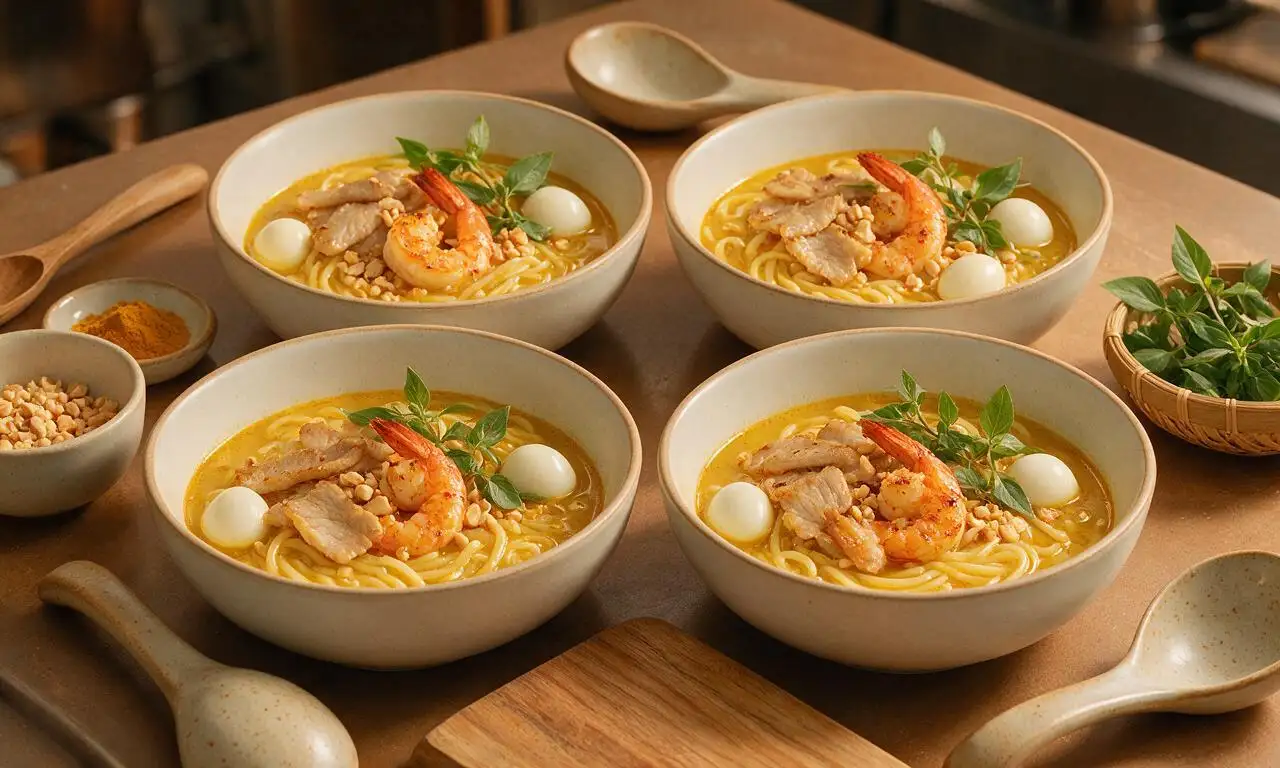
Ladle 180ml (¾ cup) of the hot golden broth over each bowl of noodles, making sure each serving gets equal portions of pork, shrimp, and 2 quail eggs. Top each bowl with 1 tablespoon crushed roasted unsalted peanuts, a ½ cup handful of mixed fresh herbs (Thai basil, cilantro, perilla, mint), and a few slices of fresh red bird's eye chili to taste.
Step 5
step5:Assemble the Noodle Bowls
6

Toast the Rice Crackers

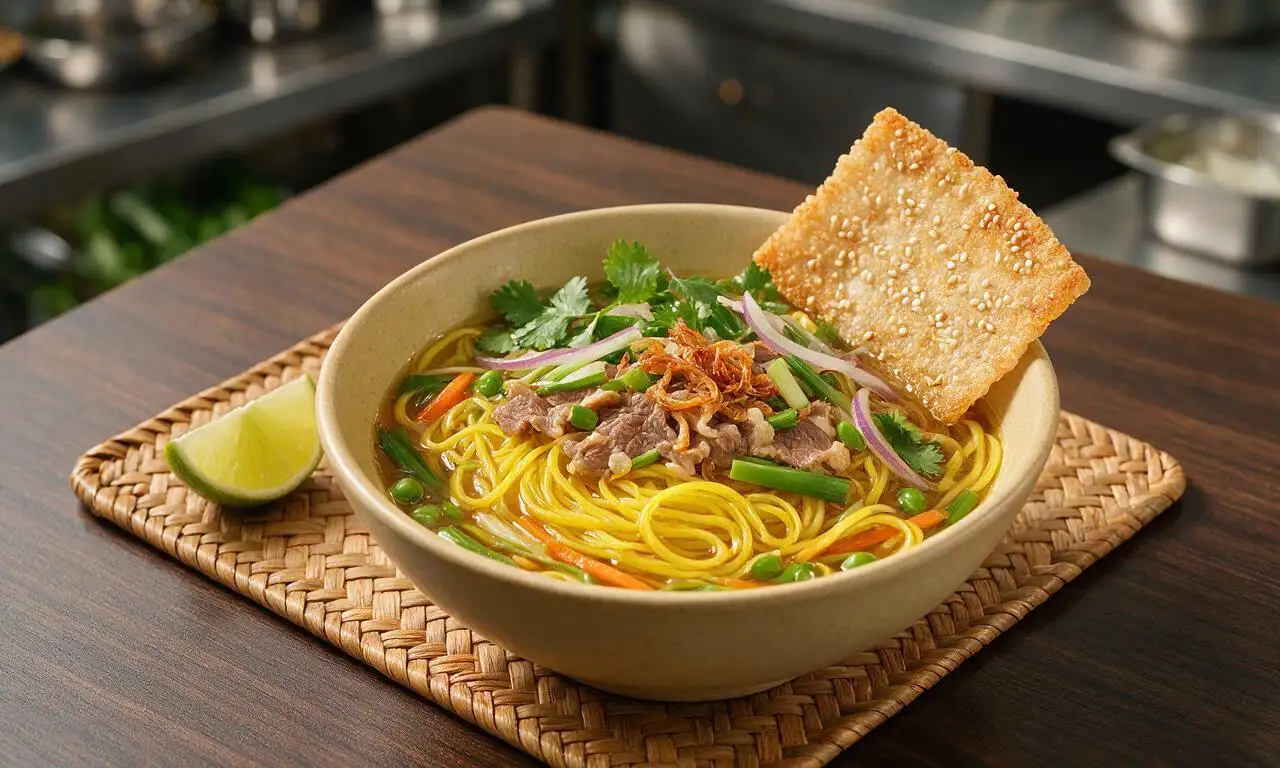
Toast 4 sesame-topped rice crackers over low gas flame or in a dry skillet over low heat for 30 seconds per side until crispy and lightly golden, taking care not to burn them. Place one toasted cracker on the edge of each serving bowl. Serve immediately with lime wedges on the side for diners to squeeze over their noodles to taste.
Step 6
step6:Toast the Rice Crackers

Tips

1.Do not overcook fresh rice noodles—they should have a slight chewy (al dente) bite after blanching, as they will soften further when hot broth is poured over them.
2.Authentic Mi Quang uses only a small amount of concentrated broth (not enough to submerge the noodles) to keep the dish focused on the noodles and toppings; avoid adding extra broth to stay true to the traditional recipe.
3.If fresh wide Mi Quang-style rice noodles are unavailable, substitute dried wide rice noodles soaked in warm water for 1 hour, then blanch for 2 minutes until chewy before assembling.
✨ You May Also Like

Main Course
🍜 United Kingdom

A showstopping classic of tender seared beef, savory mushroom duxelles, and crisp prosciutto wrapped in flaky golden puff pastry, baked to juicy perfection.

⏱️ 2 hours 1Main Course ★ 4.7
Main Course
🍜 India

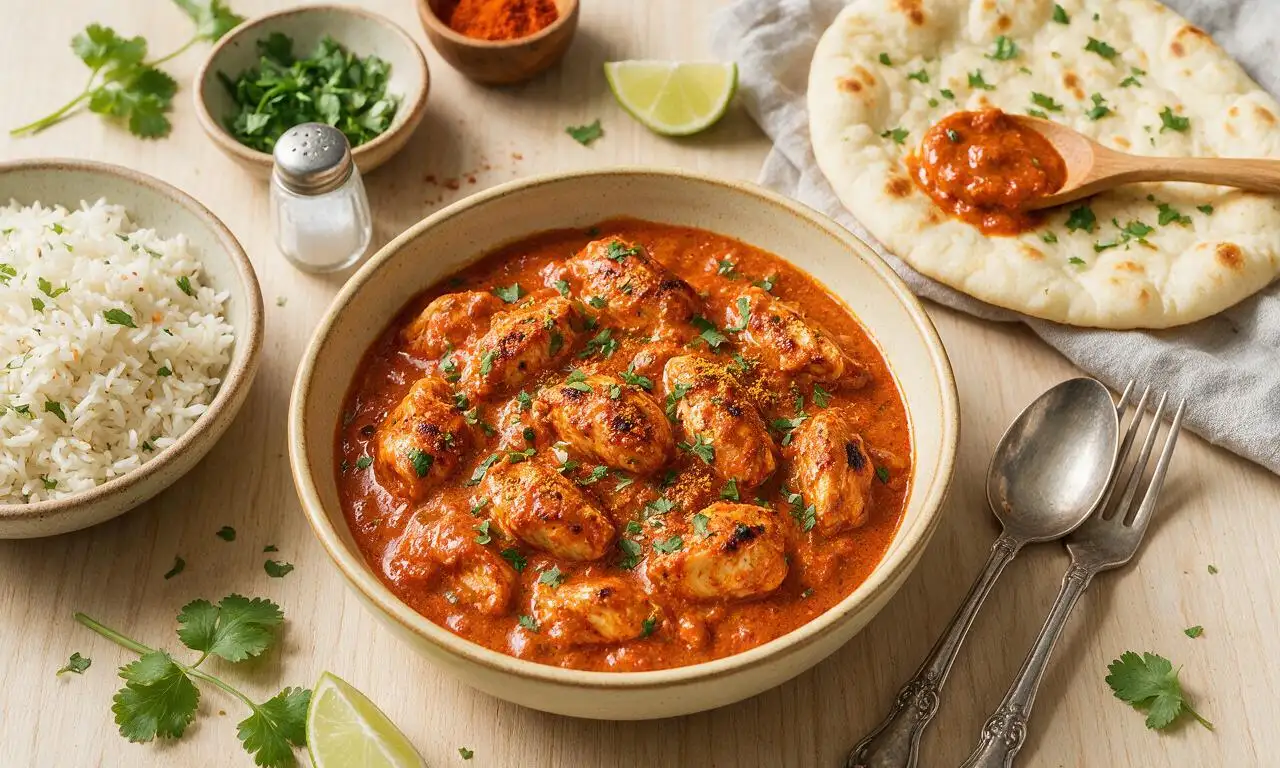
Tender charred marinated chicken simmered in a rich, spiced creamy tomato sauce, this iconic Anglo-Indian curry pairs perfectly with basmati rice or warm naan.

⏱️ 50 minuteMain Course ★ 4.6
Main Course
🍜 Thailand

Classic tangy, sweet, and savory Thai stir-fried rice noodles with shrimp, tofu, and crunchy garnishes, balancing all five core Thai flavor profiles.

⏱️ 30 minuteMain Course ★ 4.5
Main Course
🍜 United Kingdom

Crispy golden beer-battered cod and fluffy double-fried chips, served with tangy tartar sauce and malt vinegar: the timeless, beloved British pub comfort classic.

⏱️ 45 minuteMain Course ★ 4.7
Main Course
🍜 Mexico

Smoky, chile-marinated pork tacos with caramelized pineapple, fresh cilantro, and lime: a beloved classic Mexican street food perfect for casual summer gatherings.

⏱️ 1 hour 45Main Course ★ 4.8
Main Course
🍜 United States

Crunchy Fritos corn chips layered with savory beef chili and melted cheddar, topped with cool, zesty fixings for a beloved, cozy Tex-Mex comfort food.

⏱️ 35 minuteMain Course ★ 4.8

Mi Quang:Frequently Asked Questions

1.What makes authentic Mi Quang different from other popular Vietnamese noodle dishes like pho or bun bo Hue? ▾
Great question! Unlike pho or bun bo Hue, which are served fully submerged in large volumes of slow-simmered broth, authentic Mi Quang only uses a small pour of rich, turmeric-infused broth just to coat its signature wide rice noodles. It leans heavily on fresh herb toppings and crispy rice crackers for texture, rather than making broth the main star.
2.I can’t find specialty fresh Mi Quang-style wide rice noodles at my local Asian market—what’s the best substitute? ▾
No stress! Look for 10mm (½-inch) wide dried rice noodles, sometimes labeled for pad see ew, as a reliable stand-in. Soak them in lukewarm water for 30 minutes before blanching for 1 to 2 minutes until chewy, not mushy. Skip thinner rice vermicelli, as it won’t hold up to hearty toppings and concentrated broth the way wide noodles do.
3.Why does the recipe specify slicing pork shoulder against the grain, and how thin should the slices be? ▾
Slicing against the grain cuts through the pork’s long, tough muscle fibers, so every bite stays tender instead of chewy or stringy after quick searing. Aim for ⅛-inch thick slices, roughly the thickness of a U.S. quarter. Popping the pork in the freezer for 15 minutes first makes it much easier to cut clean, even thin slices without tearing.
4.The recipe calls for 16/20 count shrimp—what does that mean, and can I use smaller shrimp instead? ▾
The 16/20 count label means there are 16 to 20 shrimp per pound, which are meaty, large shrimp that hold their texture well and feel substantial as a topping. You can use smaller 21/25 count shrimp if that’s all you have, just cut the cook time by 30 seconds to avoid rubbery texture, and remove tails if you prefer easier, no-fuss eating.
5.How much ground turmeric do I need to get that signature golden color without making the dish bitter? ▾
For 4 standard servings of Mi Quang, 1 to 1.5 teaspoons of ground turmeric is perfect—it delivers that iconic vibrant golden hue and warm, earthy flavor without crossing into bitter territory. Always bloom the turmeric in hot oil with minced shallots for 10 to 15 seconds before adding protein, to mellow its raw edge and deepen flavor.
6.Do I really only serve a small amount of broth? I’m used to noodle dishes with full bowls of soup! ▾
I totally get the confusion! Authentic Central Vietnamese Mi Quang is intentionally not a soup—think of the broth as a rich, concentrated sauce rather than a sipping base. You only need ¼ to ⅓ cup of broth per serving, just enough to pool slightly at the bowl bottom and coat every noodle, so toppings and herb texture stay front and center.
7.What are the crispy crackers served with Mi Quang, and can I make them at home if I can’t find them? ▾
Those are shattery toasted sesame rice crackers, called banh trang me, that add a nutty, crunchy contrast to soft noodles and tender protein. If you can’t find pre-made versions, brush dried rice paper wrappers with sesame oil, sprinkle with white sesame seeds, and bake at 400°F for 3 to 4 minutes until puffed, then break into chunks for topping.
8.How do I keep the shrimp from turning rubbery and overcooked in this recipe? ▾
The easiest trick is to add shrimp during the last 2 minutes of simmering broth, or sear them quickly right after cooking the pork so they don’t sit in high heat too long. Cook just until they turn opaque pink and curl into a loose C shape—if they curl into a tight O, they’re already overcooked, so pull them off heat immediately.
9.What fresh herbs are traditional for Mi Quang, and are there any I absolutely can’t skip? ▾
The classic Mi Quang herb spread includes perilla leaves, Thai basil, cilantro, sliced banana blossom, mint, lime wedges, and thin jalapeño slices for heat. If you can’t find harder-to-source items like banana blossom or perilla, don’t stress—Thai basil, mint, and cilantro are the non-negotiable core, and shredded green cabbage works as a crunchy banana blossom swap.
10.Can I prep components of this Mi Quang ahead of time for fast weeknight meals? ▾
Absolutely! You can marinate the pork and shrimp, prep all fresh herb toppings, and simmer the broth 2 to 3 days ahead, stored in sealed airtight containers in the fridge. Fresh or rehydrated noodles only need a 30-second blanch right before serving, and crispy crackers are best made the day of so they don’t go stale and lose their signature shattery crunch.
11.I don’t eat pork—what’s the best substitute for pork shoulder that keeps the dish tasting authentic? ▾
If you don’t eat pork, the closest swap is boneless, skinless chicken thigh, sliced thin against the grain, because it has the same rich, tender texture that stands up to turmeric and savory broth. For a plant-based version, use pressed extra-firm tofu pan-fried until crispy, with an extra splash of tamari to bump up umami to match the pork’s depth.

Comments (4)

2 days ago

OMG this Mi Quang recipe is an absolute game changer! I’ve been searching for a version that tastes like the bowls I had on my trip to Da Nang a few years back, and this totally nailed it. The turmeric aroma while it was simmering had my whole house smelling insane, my kids even asked for second helpings before I finished setting the table! I did swap the shrimp for extra pork belly because that’s what I had on hand, and it still turned out SO good. 10/10 will be adding this to our weekly meal prep rotation.

yesterday

Wait swapping shrimp for extra pork belly sounds genius! I’ve got a pack of thick-cut pork belly in my fridge I need to use up, I’m definitely stealing that hack this weekend. Did you have to adjust the cook time at all when you made that swap?

yesterday

So glad you loved the recipe, Mia! Swapping in extra pork belly is such a tasty call — that rich, fatty cut pairs perfectly with the bright turmeric and fresh herb toppings. No extra cook time needed if you slice the pork belly thin, just make sure to get it nice and crispy on the edges before simmering it in the broth! 😊

3 days ago

Took me a little longer than the listed 55 minute cook time because I was chopping all the fresh herbs and toasting the sesame rice crackers on the side, but wow was it worth the effort! I brought this to our neighborhood potluck last night and every single person asked me for the recipe before they even finished their bowl. My only note is that I wish I’d made a double batch — it was gone in 10 minutes flat!

2 days ago

That makes my day to hear, Lindsey! All the fresh prep work is definitely what gives Mi Quang that signature bright, layered flavor, so I’m glad it paid off for you. Next time a double batch is 100% the move for potlucks — I’ve learned that lesson the hard way too when I brought a single batch to a friend’s cookout and it vanished instantly!

1 week ago

Solid Mi Quang recipe! I’ve tried a couple other online versions that were way too bland or skimped on the turmeric, but this one had that perfect deep, earthy flavor I was looking for. I tossed in a little extra chili garlic sauce to my bowl for heat, which hit just right. Great weeknight dinner option if you do a little veggie prep ahead of time to cut down on cook night work.

2 hours ago

As someone whose mom is from Hue, I’m super picky about Mi Quang, and this recipe did not disappoint! It tasted just like the batches my grandma used to make when we’d visit family in Central Vietnam when I was a kid. The tip to not overcook the rice noodles was so key — I’ve messed that up so many times before ending up with a sad bowl of mushy noodles. Can’t wait to make this for my mom when she comes to visit next month!

30 minutes ago

Oh that’s such a glowing review from someone who grew up eating the authentic version! I’ve been nervous to try making Mi Quang at home because I thought it would be too complicated for a weeknight, but your comment just convinced me to add all the ingredients to my grocery list for next week.