
milk kheer in english
intro
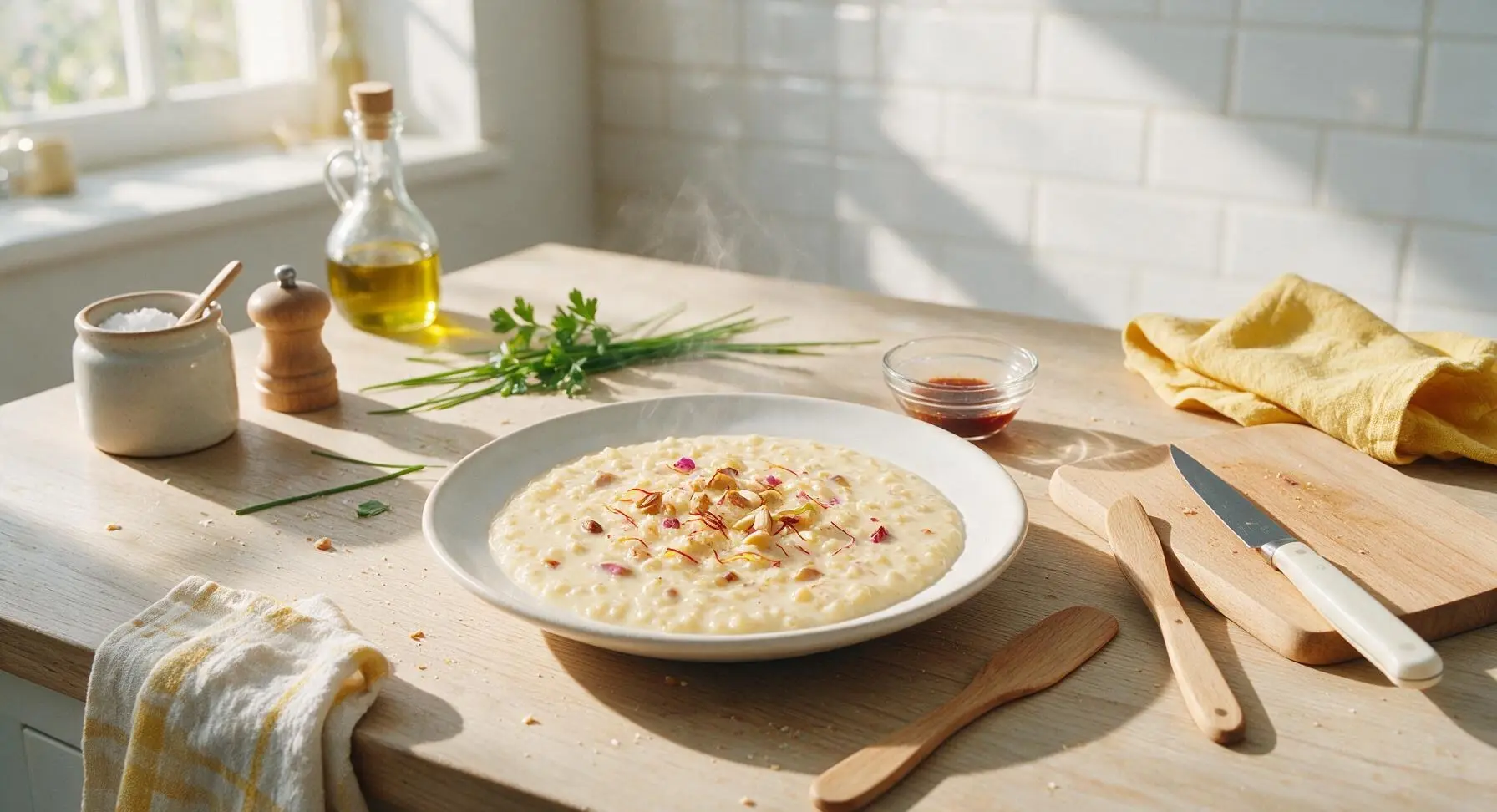
Creamy, cardamom-scented North Indian milk kheer is a velvety slow-simmered rice pudding dotted with nuts, saffron, and delicate rose notes, ideal for cozy winter family meals.
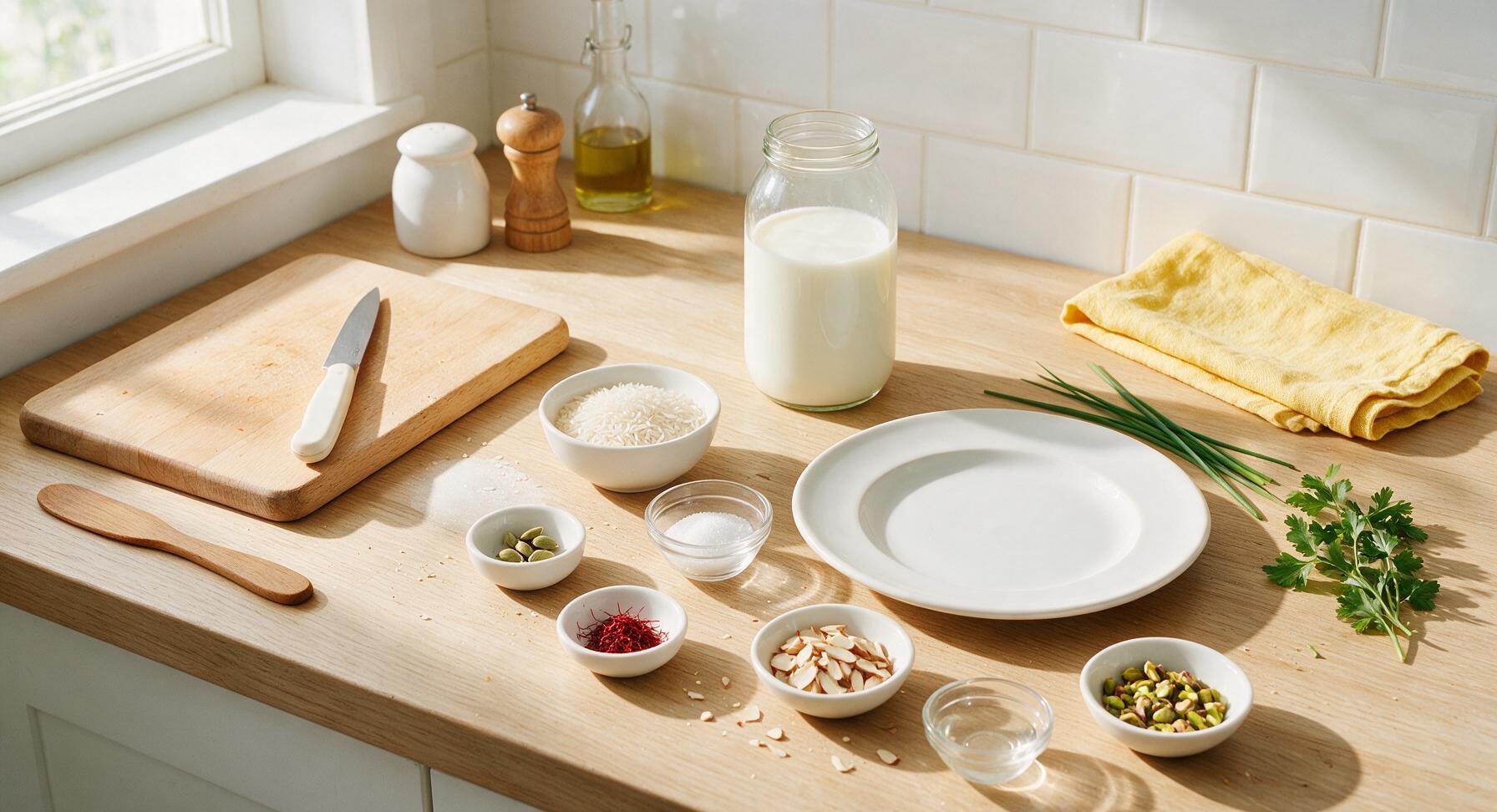
Ingredients
Steps
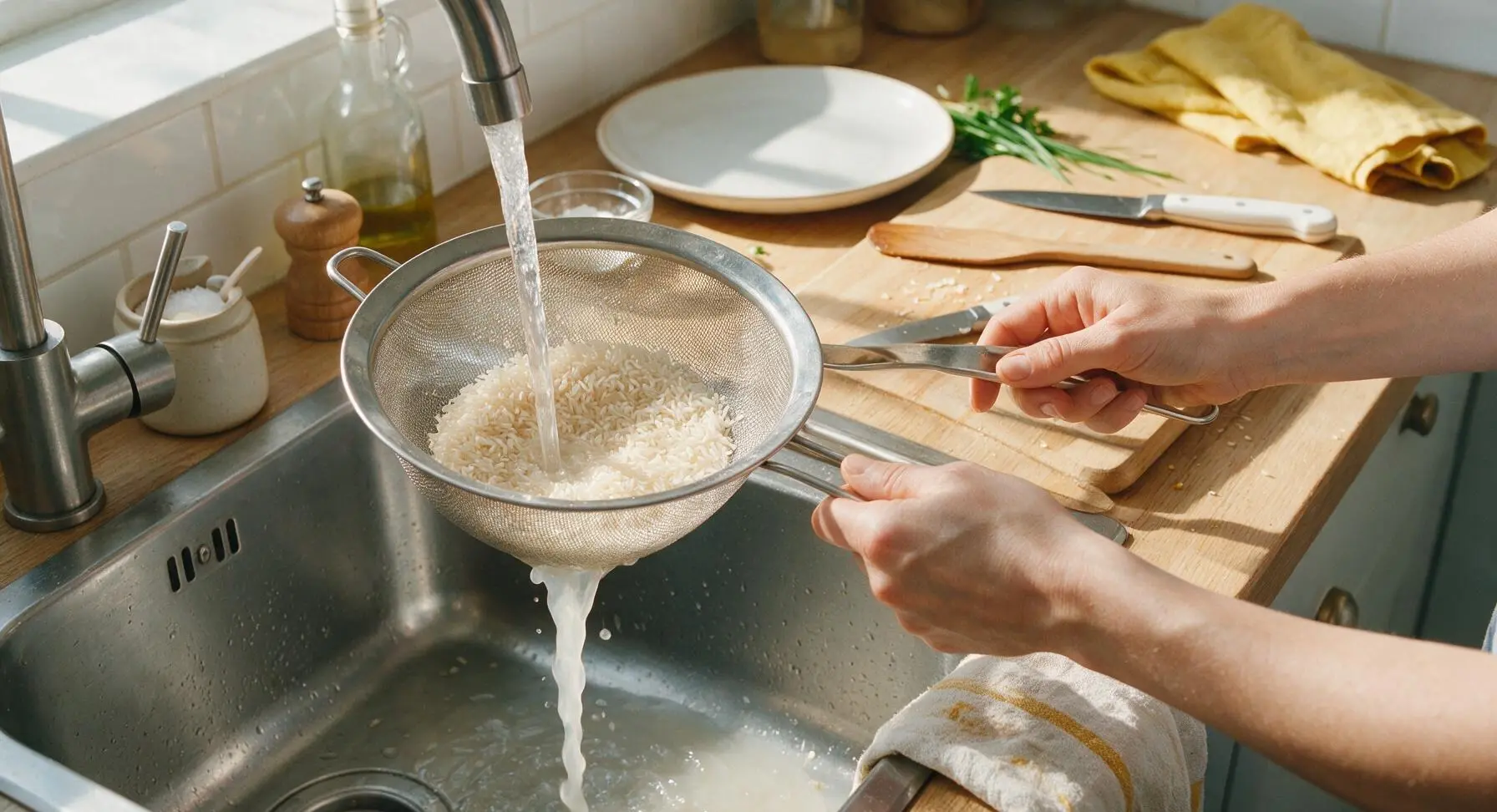
Rinse the Basmati Rice
Place 3 tablespoons basmati rice in the fine-mesh strainer held over the kitchen sink. Rinse under cold running water for 45 seconds, swishing gently with your fingers to dislodge surface starch, until the water dripping from the strainer runs completely clear with no cloudy white residue. Drain well, then transfer the rinsed rice to a small bowl and let it rest for 5 minutes. Do not soak the rice for longer, as over-soaking will lead to a mushy final texture.
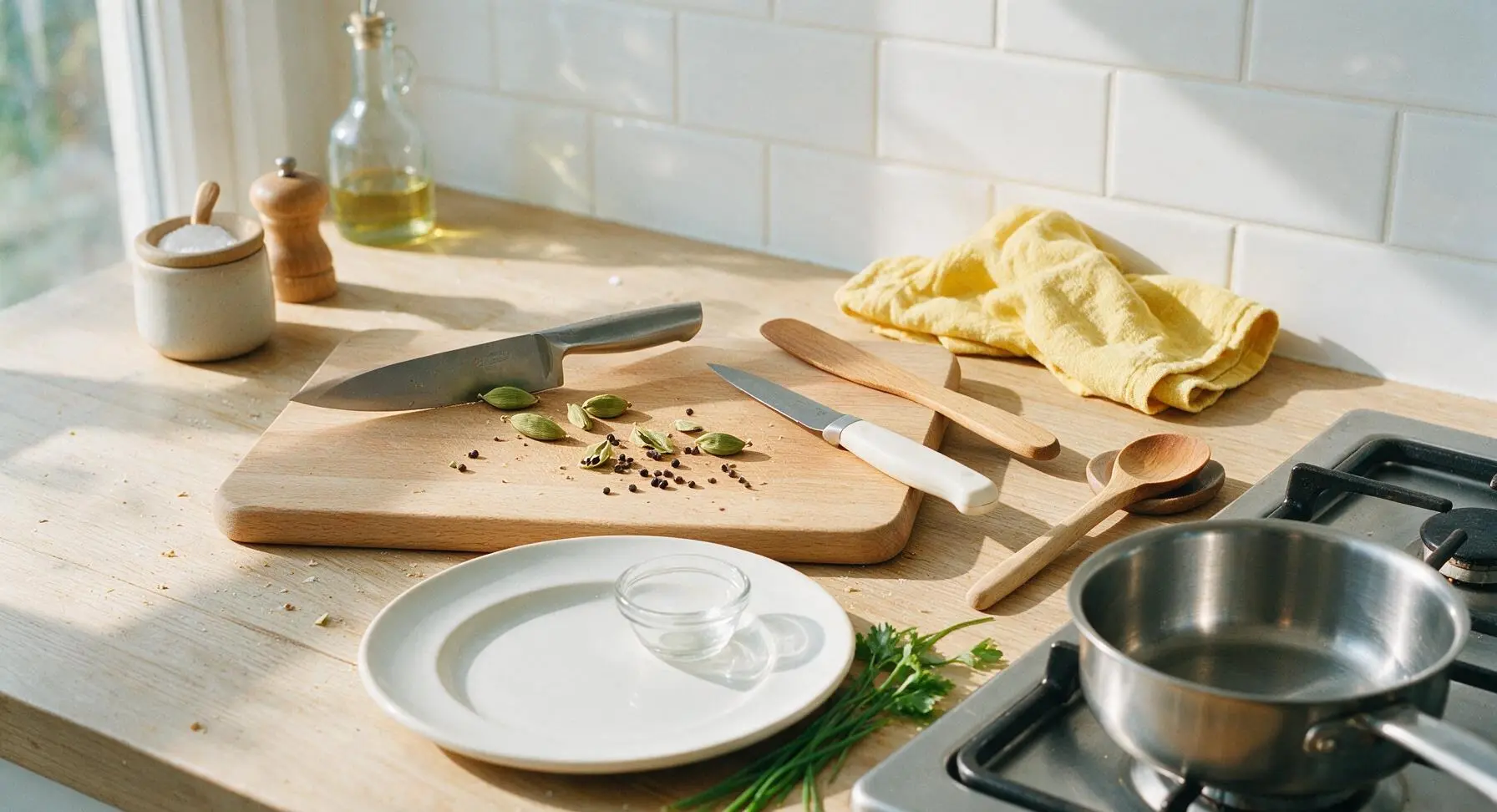
Prep Spices and Nuts
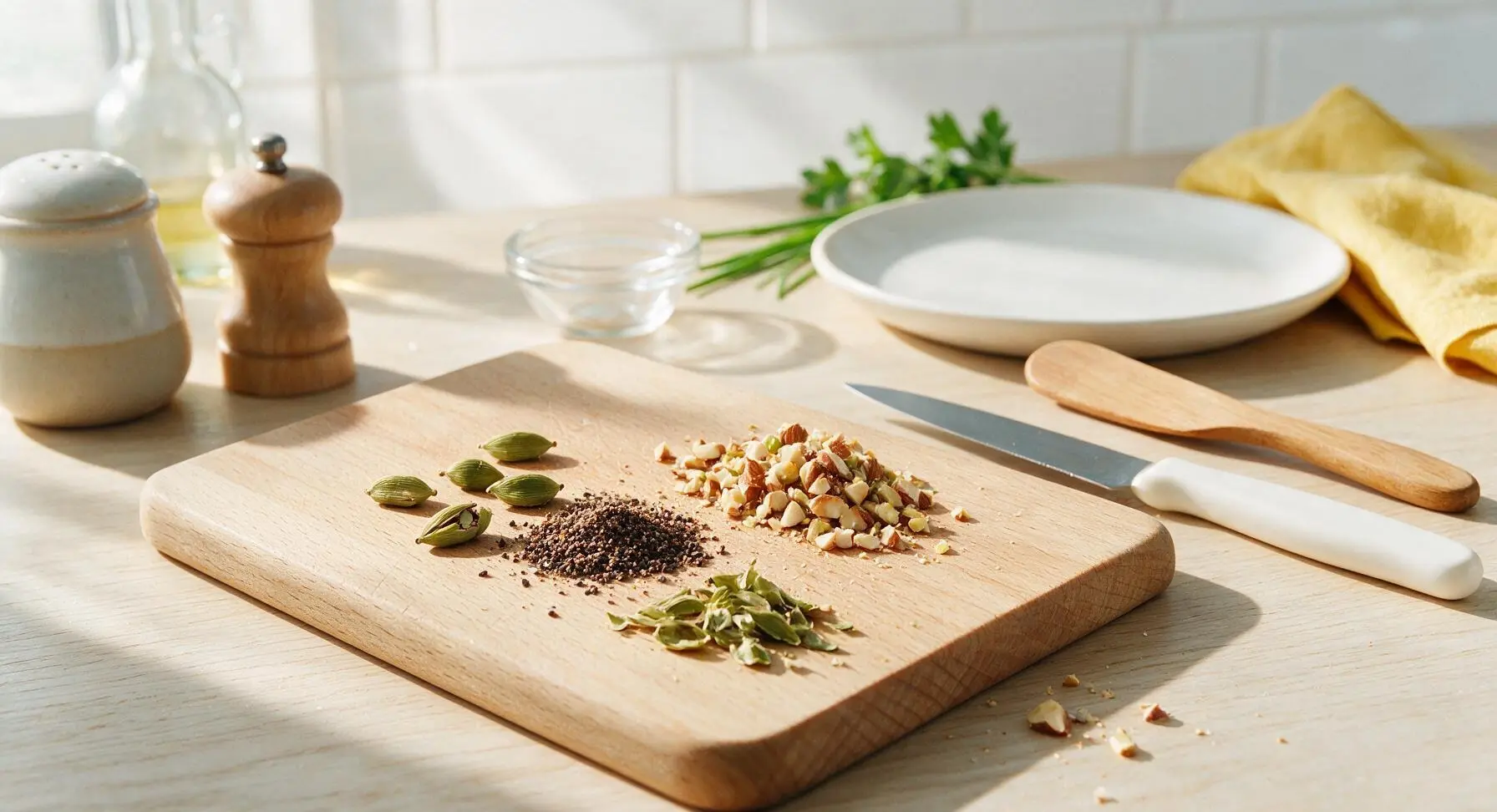
Place the 4 green cardamom pods on the beech wood cutting board. Use the flat side of the chef's knife to gently press down on the pods to crack them open, peel away and discard the tough outer green husks, then crush the tiny black inner seeds into a coarse powder with the knife edge. Roughly chop the slivered almonds and pistachios into small, uneven pieces, setting aside 1 teaspoon of the mixed nuts for final garnish. Retrieve the stainless steel saucepan from the lower cabinet and place it on the front right stovetop burner, ready for heating.
Bring Milk to Gentle Simmer
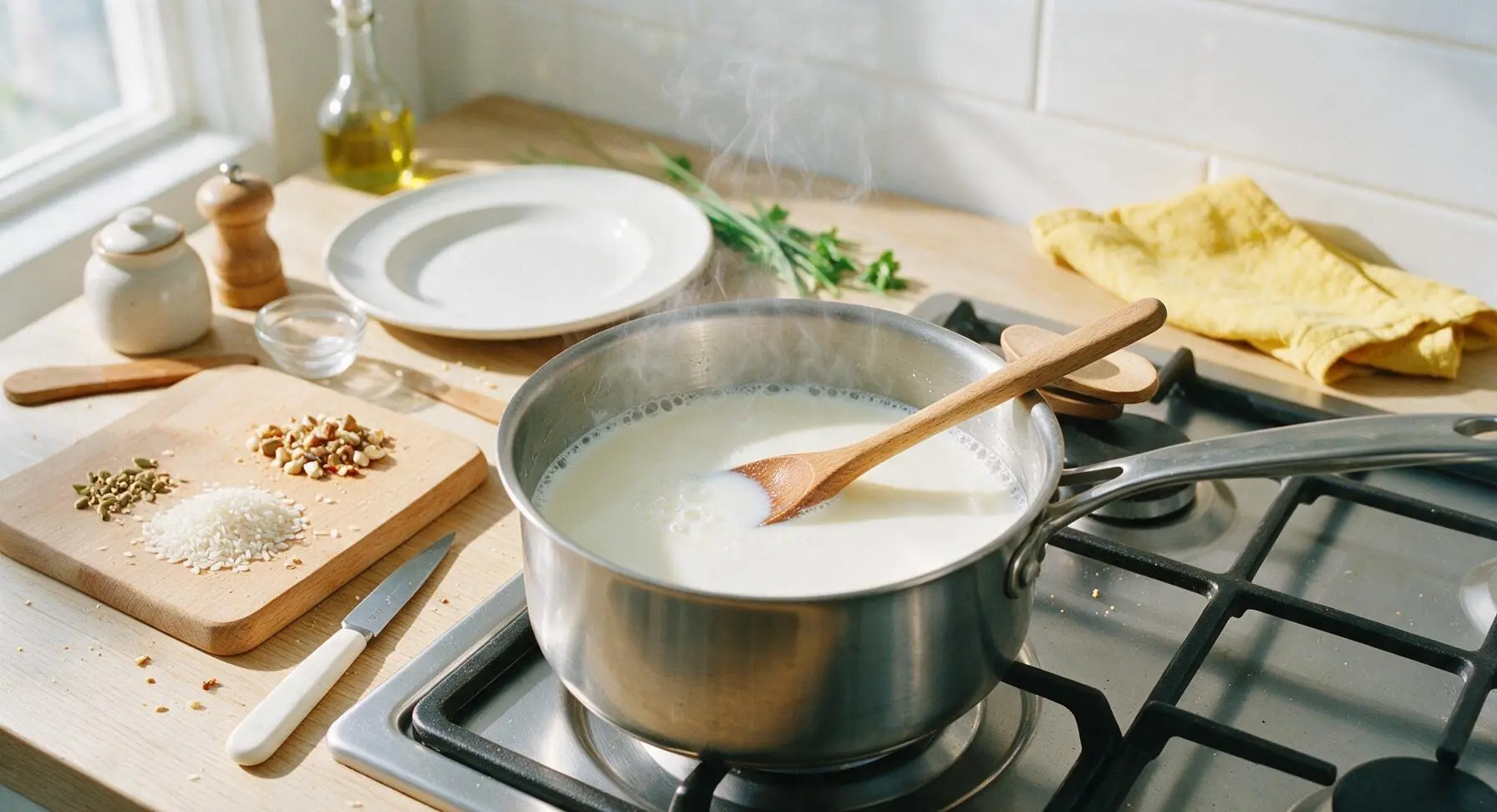
Pour the full 1 liter of whole milk into the stainless steel saucepan on the stovetop. Turn the burner to medium-low heat (approximately 300°F / 150°C for electric cooktops), stirring occasionally with the maple wooden spoon to prevent a thick skin from forming on the milk surface. Heat for 8-10 minutes until the milk reaches a gentle, rolling simmer: small bubbles breaking steadily around the pan edges, thin steam rising, no violent bubbling or boiling over. Do not turn the heat higher, as scalded milk will give the kheer a burnt, bitter taste.
Add Rice and Slow Simmer
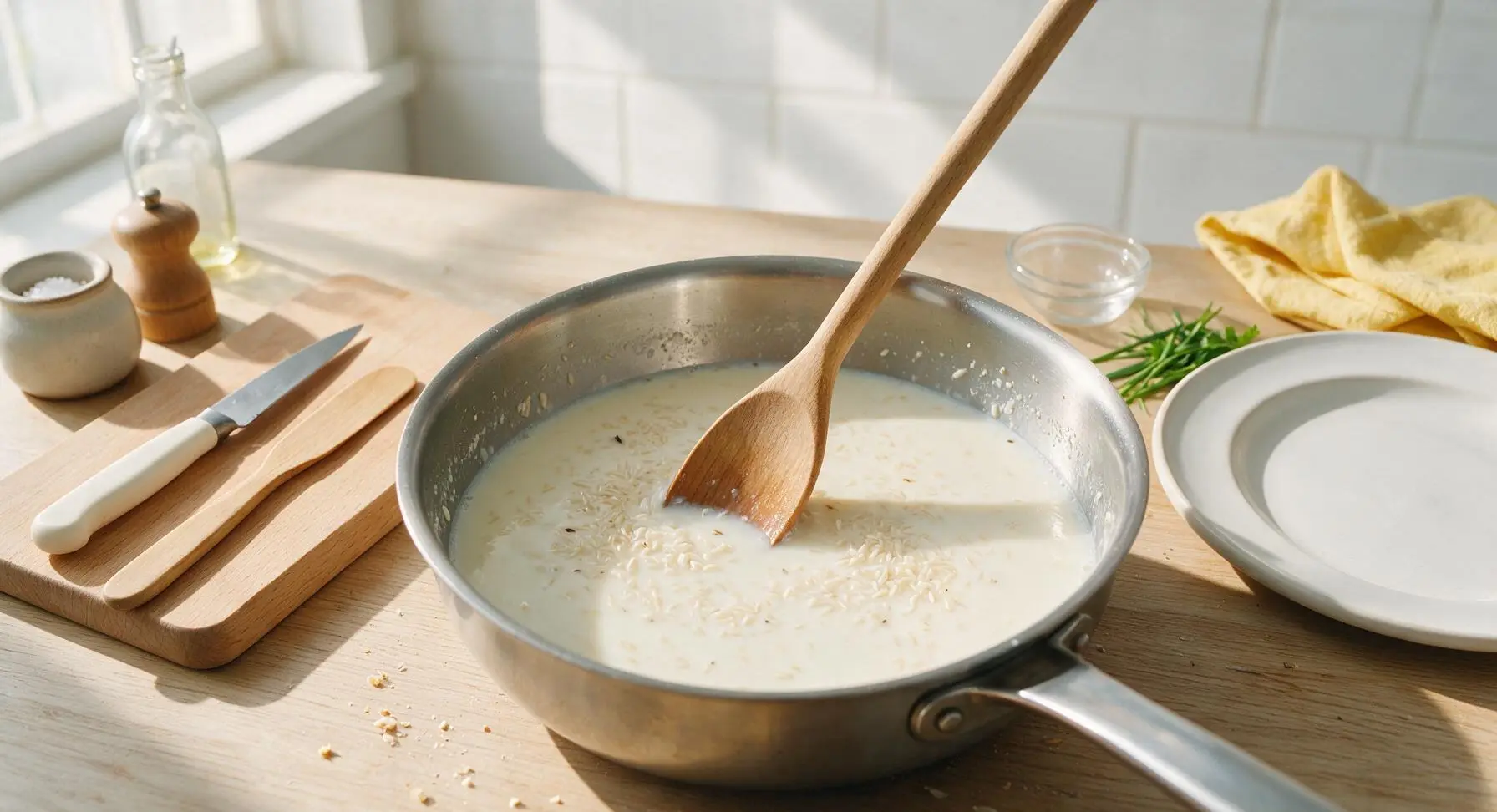
Add the drained, rinsed basmati rice and crushed cardamom powder to the simmering milk, stirring once to fully combine. Reduce heat to low (approximately 200°F / 95°C), maintaining the gentlest possible simmer (only 1-2 bubbles breaking the surface every few seconds). Cook uncovered for 35 minutes, stirring every 3-4 minutes to prevent rice from sticking to the pan bottom, and scraping the sides of the pan to reincorporate any thin milk skin that forms. Over this time, the rice will gradually soften, and the milk will reduce by roughly one third, turning a thick, creamy pale ivory.
Stir in Sugar and Saffron
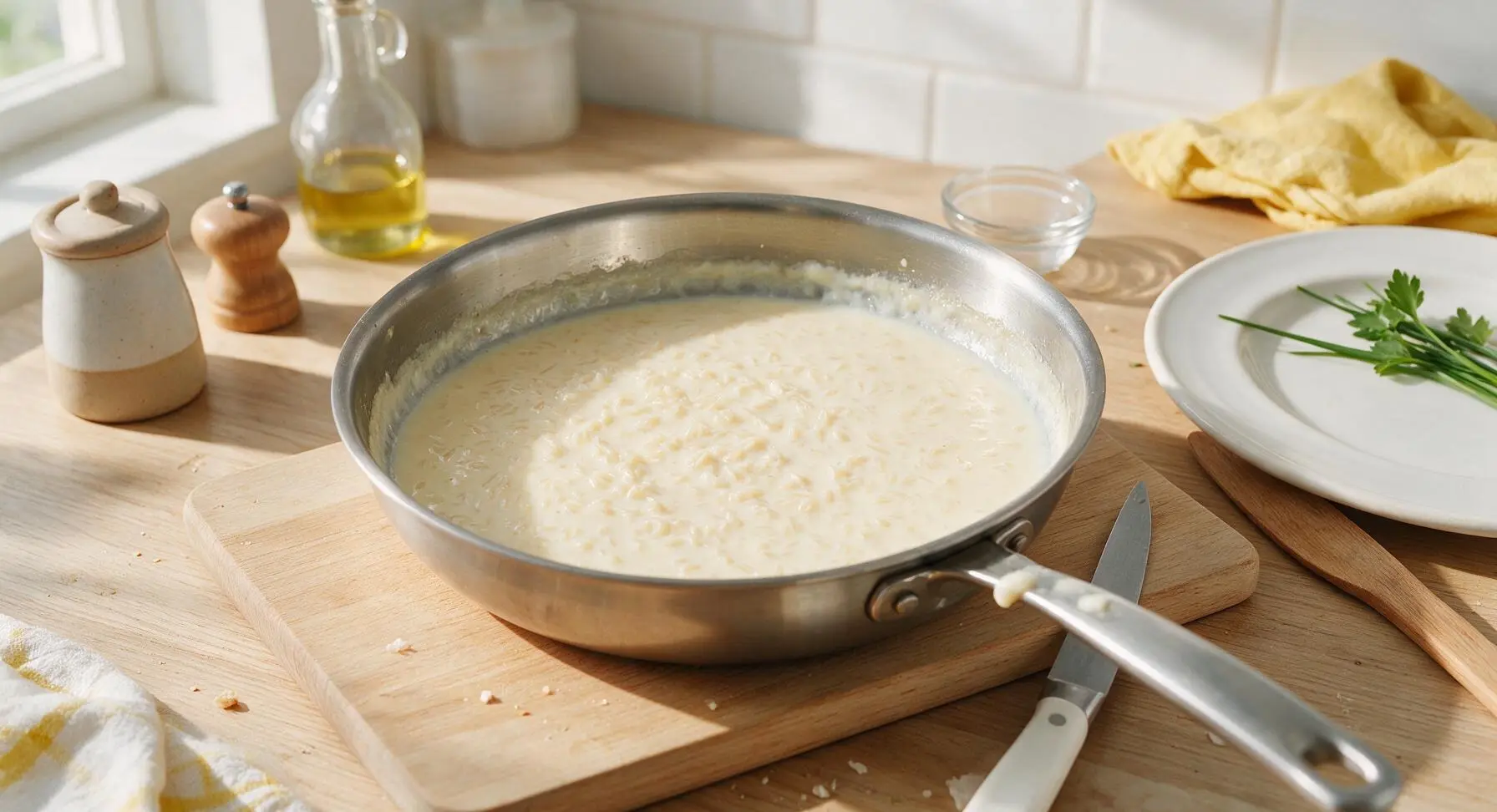
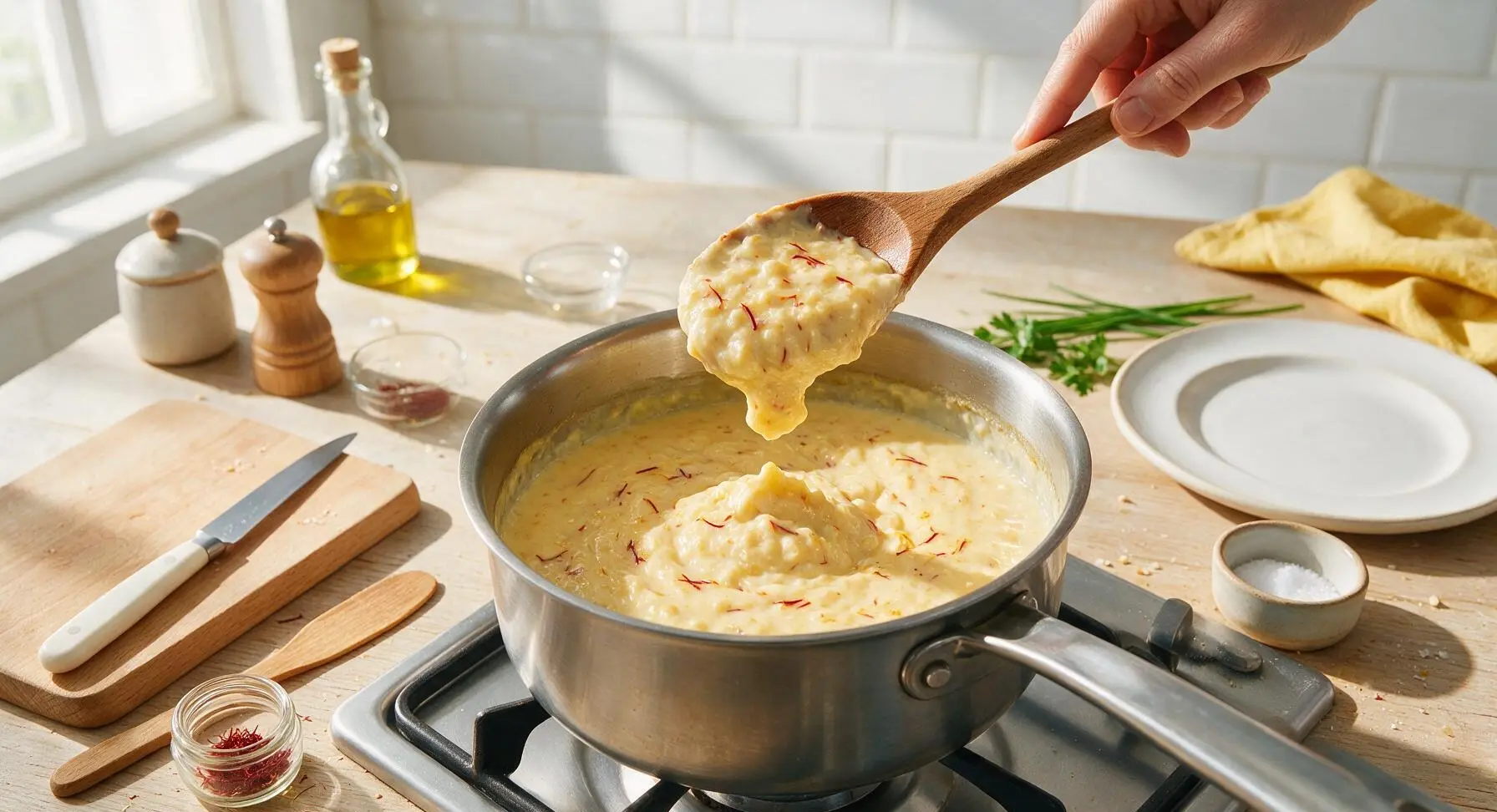
Add the 4 tablespoons of granulated sugar and pinch of saffron threads to the thickened kheer, stirring continuously for 2 minutes until the sugar is fully dissolved and no gritty texture remains when you scrape the pan bottom. The saffron will tint the kheer a soft pale golden-ivory as it infuses, releasing its warm, honeyed aroma. Continue to simmer on low for 5 more minutes, stirring occasionally, until the kheer coats the back of the wooden spoon thickly: when you run your finger across the coated spoon, the line holds cleanly without running or dripping.
Add Rose Water and Nuts
Turn off the stovetop burner completely. Stir in the 1/4 teaspoon rose water and all but 1 teaspoon of the chopped mixed nuts (reserving the smaller portion for garnish), mixing evenly to distribute the nuts throughout the kheer. Do not add more rose water, as excess will give the kheer a soapy, perfumed taste. Let the kheer rest for 5 minutes in the pan off the heat; it will continue to thicken as it cools slightly to serving temperature.
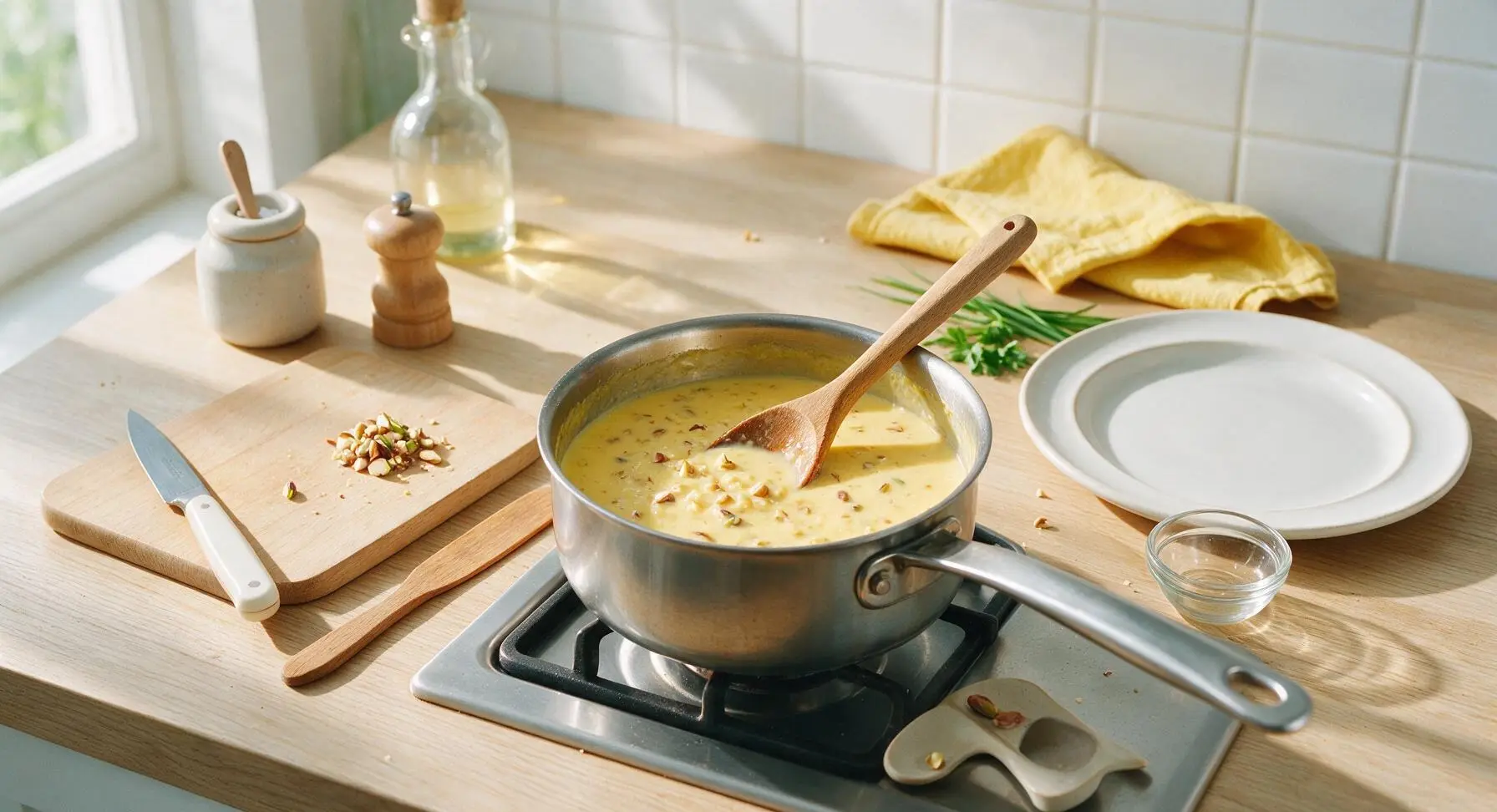
Plate and Garnish Kheer
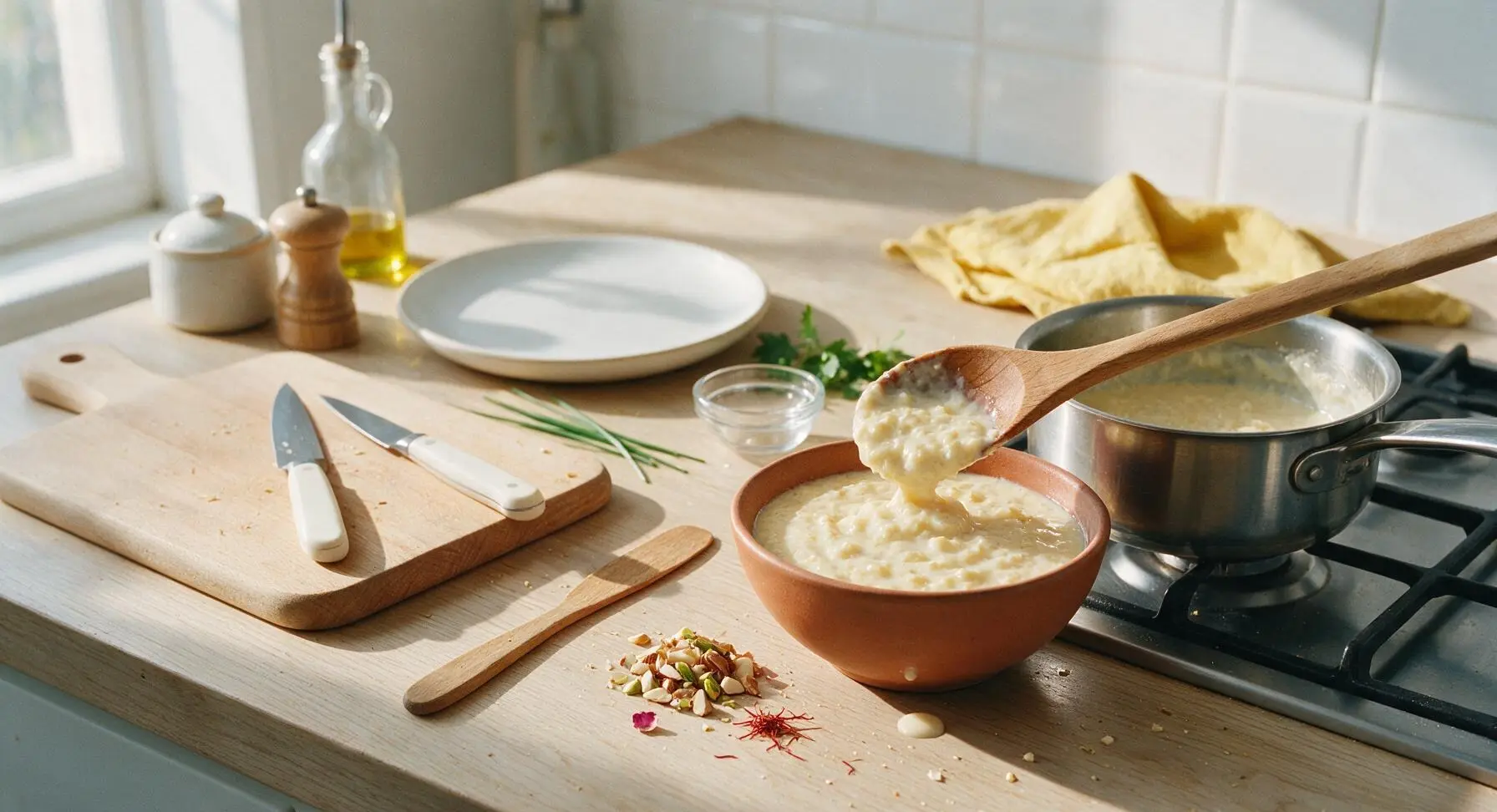
Ladle the warm kheer into one of the matte terracotta dessert bowls, filling it to 1cm below the rim (reserve remaining kheer in the pan for additional servings). Sprinkle the reserved 1 teaspoon of chopped almonds and pistachios across the center of the kheer, top with a pinch of extra saffron threads, and add one tiny edible dried rose petal for a classic decorative touch. Serve immediately for a warm winter dessert, or chill covered in the refrigerator for 2 hours for a cold, refreshing variation.
Tips
2.Do not soak basmati rice for longer than the 5-minute rest after rinsing: over-soaked rice breaks down into mushy starch during simmering, creating a gluey, porridge-like texture instead of the classic silky milk with soft, distinct rice grains.
3.Add rose water only after turning off the heat: the delicate floral aromatic compounds in rose water break down quickly at high temperatures, leading to a flat, soapy taste instead of the subtle, perfumed note that defines classic kheer.



OMG this kheer is SO good!!! I made it for our neighborhood potluck last weekend and everyone was begging me for the recipe. It was so creamy, not too sweet, and the cardamom + saffron combo is a total game changer. My kids went back for thirds even after we got home, no joke. I was worried it’d be fussy since I’ve never made Indian desserts before, but the easy difficulty rating was totally spot on.
This came out super rich and delicious! I swapped the white sugar for a little jaggery because that’s what I had in the pantry, and it added such a nice deep, caramelized flavor. Only reason I’m not giving 5 stars is I had to cook it an extra 10 minutes to get it to the thick, creamy consistency I wanted, maybe my stovetop runs low? Will definitely make again for our next family dinner.
Game. Changer. I’ve been buying pre-made kheer from the local Indian grocery store for years because I thought it was too hard to make at home, but this recipe took barely any active effort and tastes 10x better than the store bought stuff. Meal prepped a big batch on Sunday and I’ve been having a small bowl for dessert every night this week, absolute chef’s kiss.
This tastes exactly like the kheer my nani used to make when we’d visit her in Delhi growing up!!! I added a handful of chopped pistachios and a tiny pinch of nutmeg on top before serving, and it was perfect for my Diwali get-together with friends last night. 10/10, will be my go-to kheer recipe from now on.