
Milk Scrambled Eggs
intro
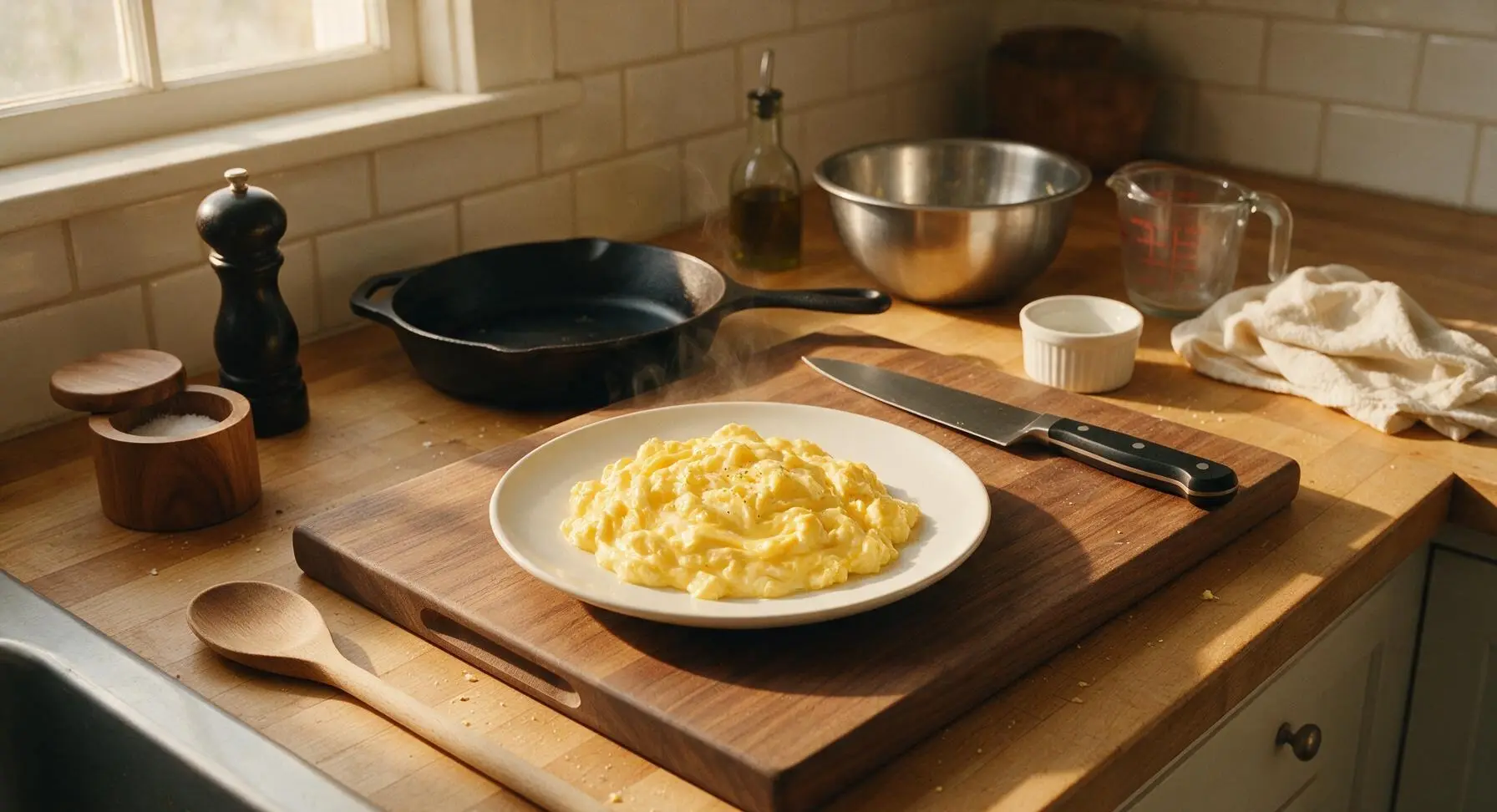
Silky, creamy soft-scrambled eggs made with a splash of whole milk, light and tender with no rubbery texture—perfect for a fast, comforting meal any time of day.
Ingredients
Steps
Crack Eggs into Bowl
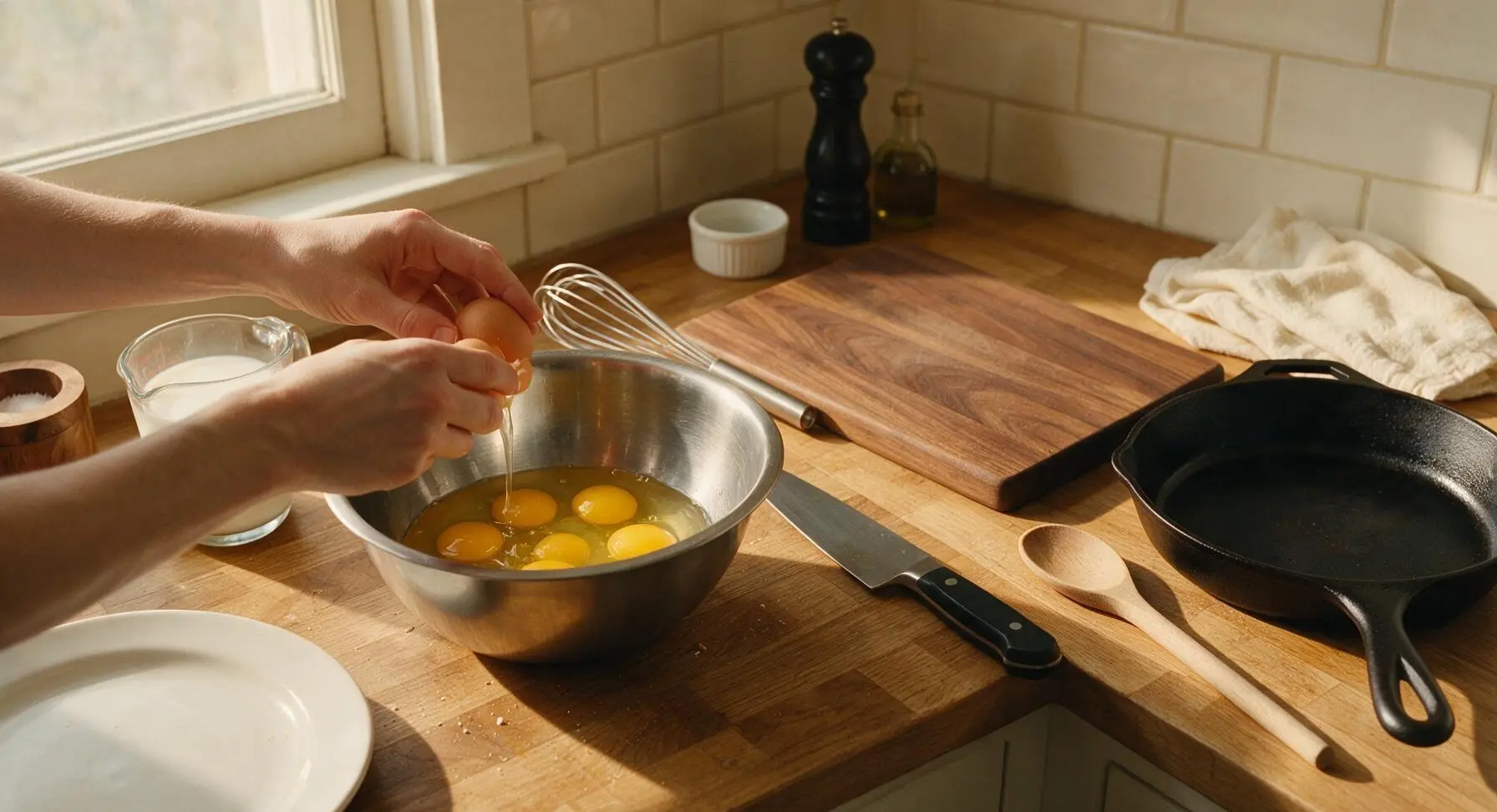
Gently tap each of the 6 large eggs on the edge of the medium stainless steel mixing bowl to crack, pulling the shells apart to let the egg white and yolk fall into the bowl. Take care not to drop any shell fragments into the mixture; fish out any stray bits with a piece of empty eggshell if needed, as shell fragments are sharp and unpleasant to bite into. Do not whisk the eggs at this stage.
Add Milk and Salt
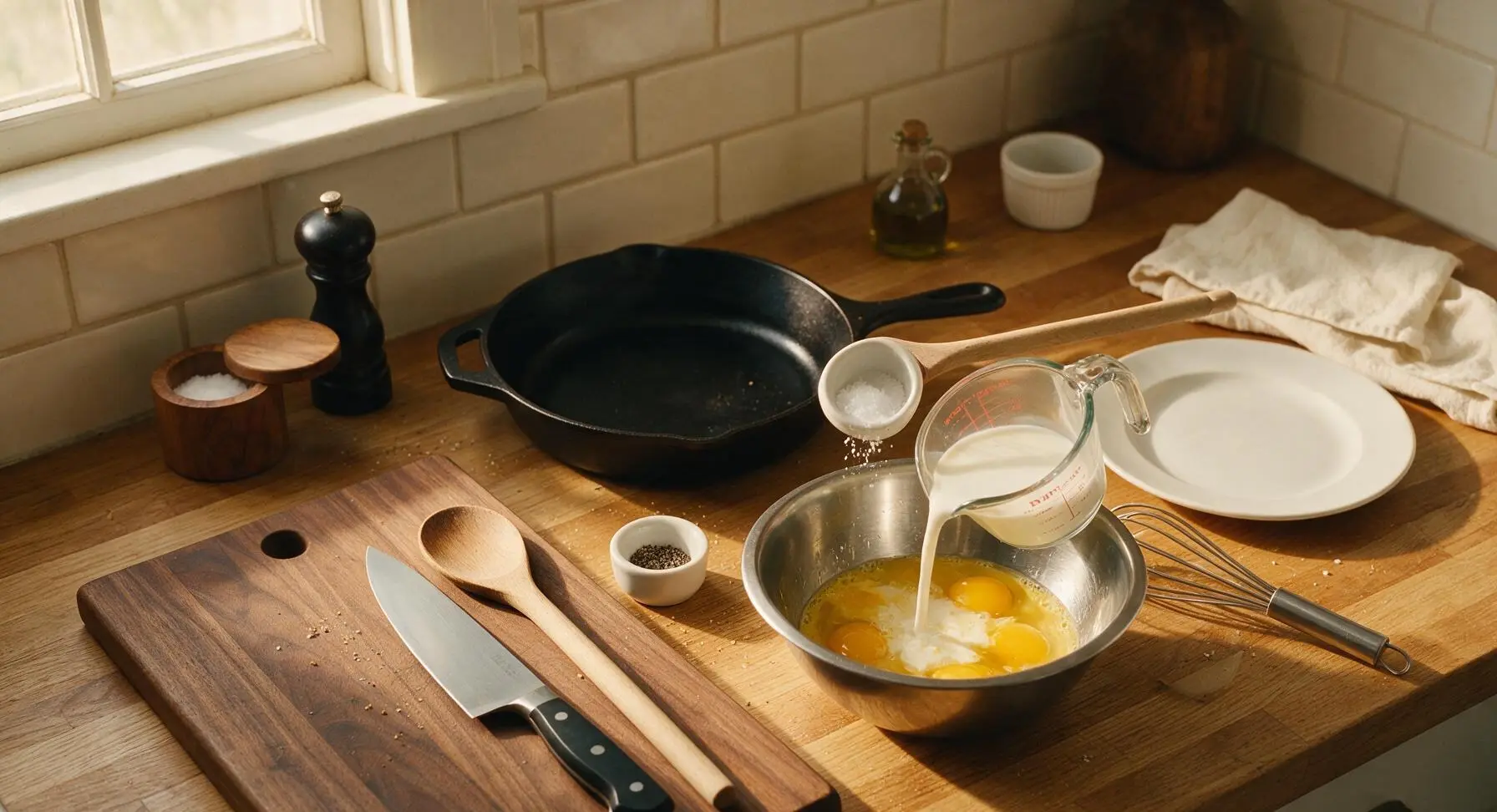
Pour the measured 1/4 cup whole milk from the clear glass measuring cup into the bowl with the eggs. Add 1/2 teaspoon kosher salt, but hold the black pepper until after cooking—adding ground pepper too early can cause it to cook and turn bitter, dulling its bright flavor. Do not add extra milk, as too much liquid will make eggs watery instead of creamy.
Whisk to Combine
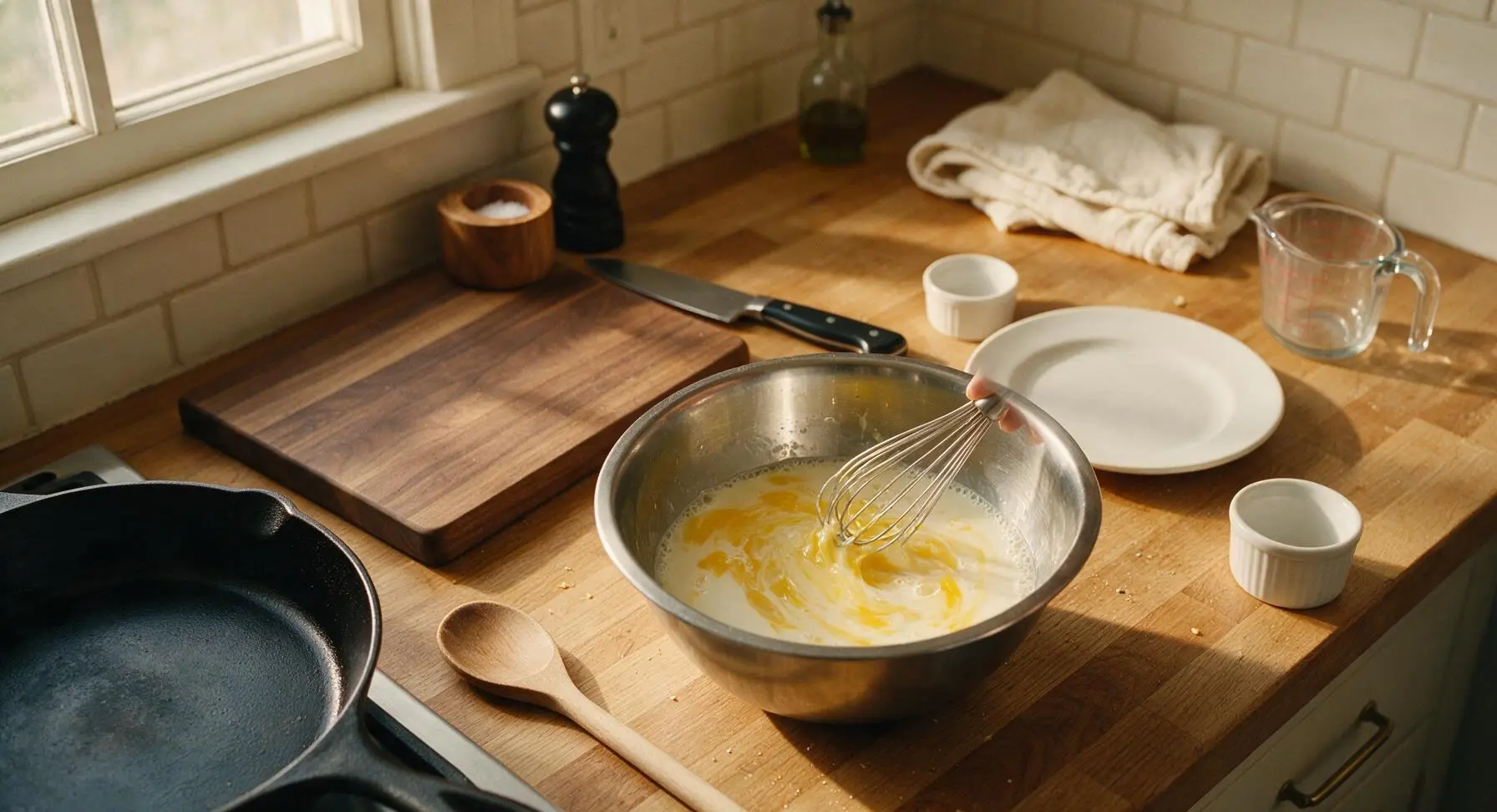
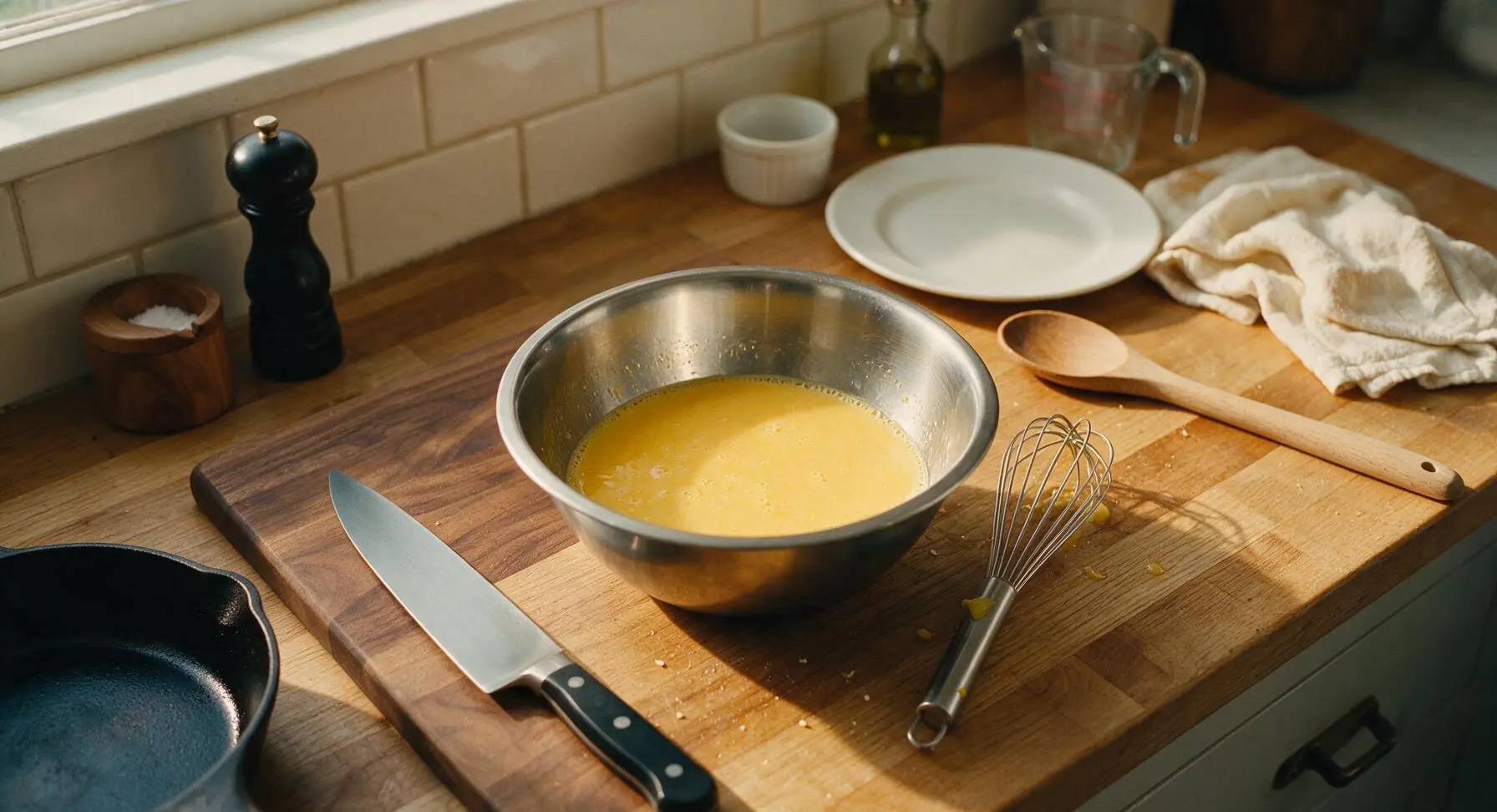
Use the small stainless steel wire whisk to beat the egg, milk, and salt mixture for 20-30 seconds, just until the yolks and whites are fully combined, the mixture is a uniform pale yellow, and a thin layer of small bubbles forms on the surface. Do not over-whisk, as incorporating too much air will make eggs tough and spongy instead of silky and dense.
Heat Butter in Pan
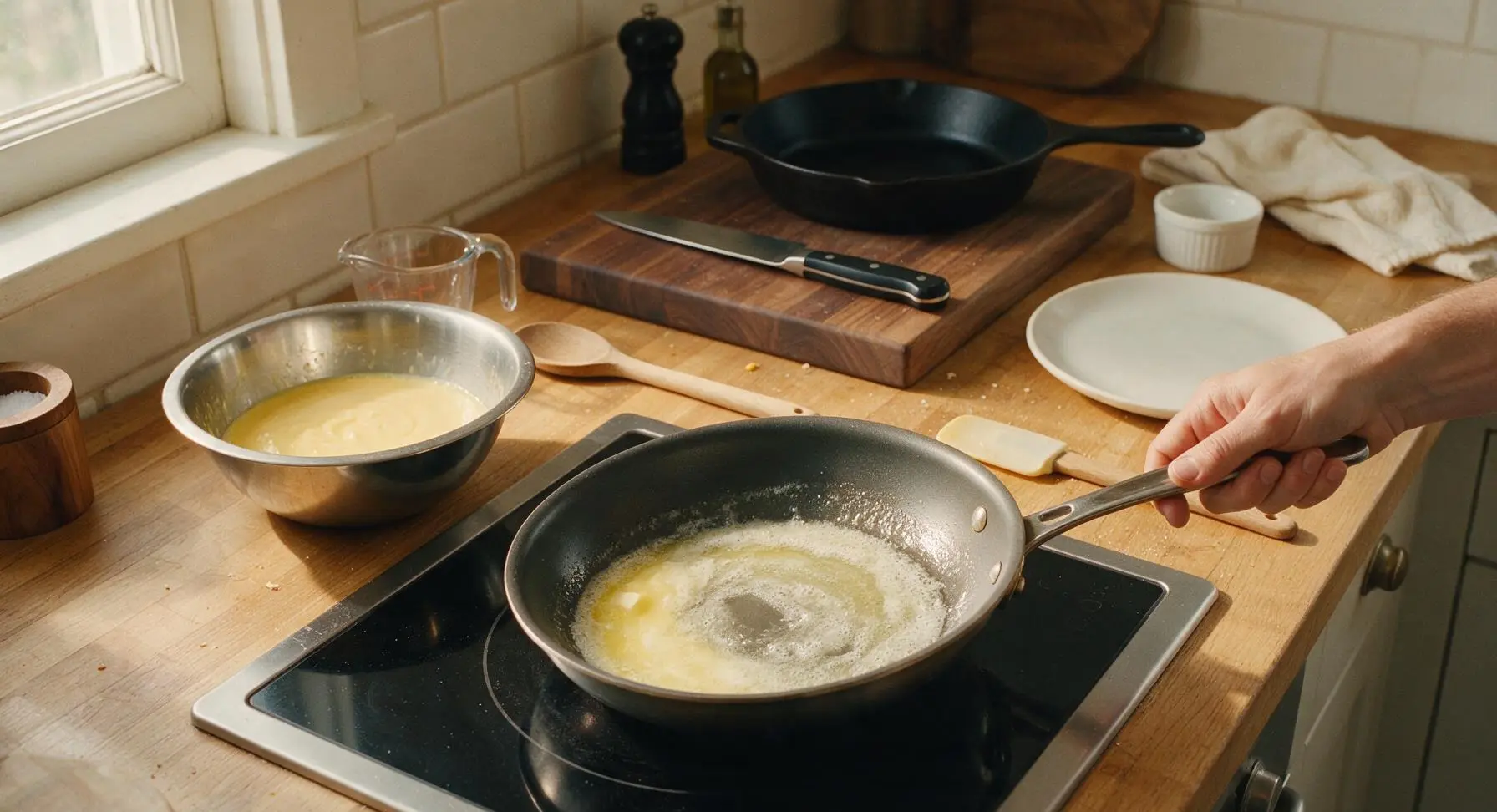
Retrieve the 20cm non-stick skillet from storage and place it on the induction burner set to medium-low heat (130C / 265F). Add the 2 tablespoons of unsalted butter to the pan, letting it melt slowly for 1-2 minutes until it foams gently but does not turn nutty brown. Swirl the pan to coat the entire bottom surface evenly with melted butter. Retrieve the silicone spatula and set it within reach next to the stovetop.
Cook Eggs Gently
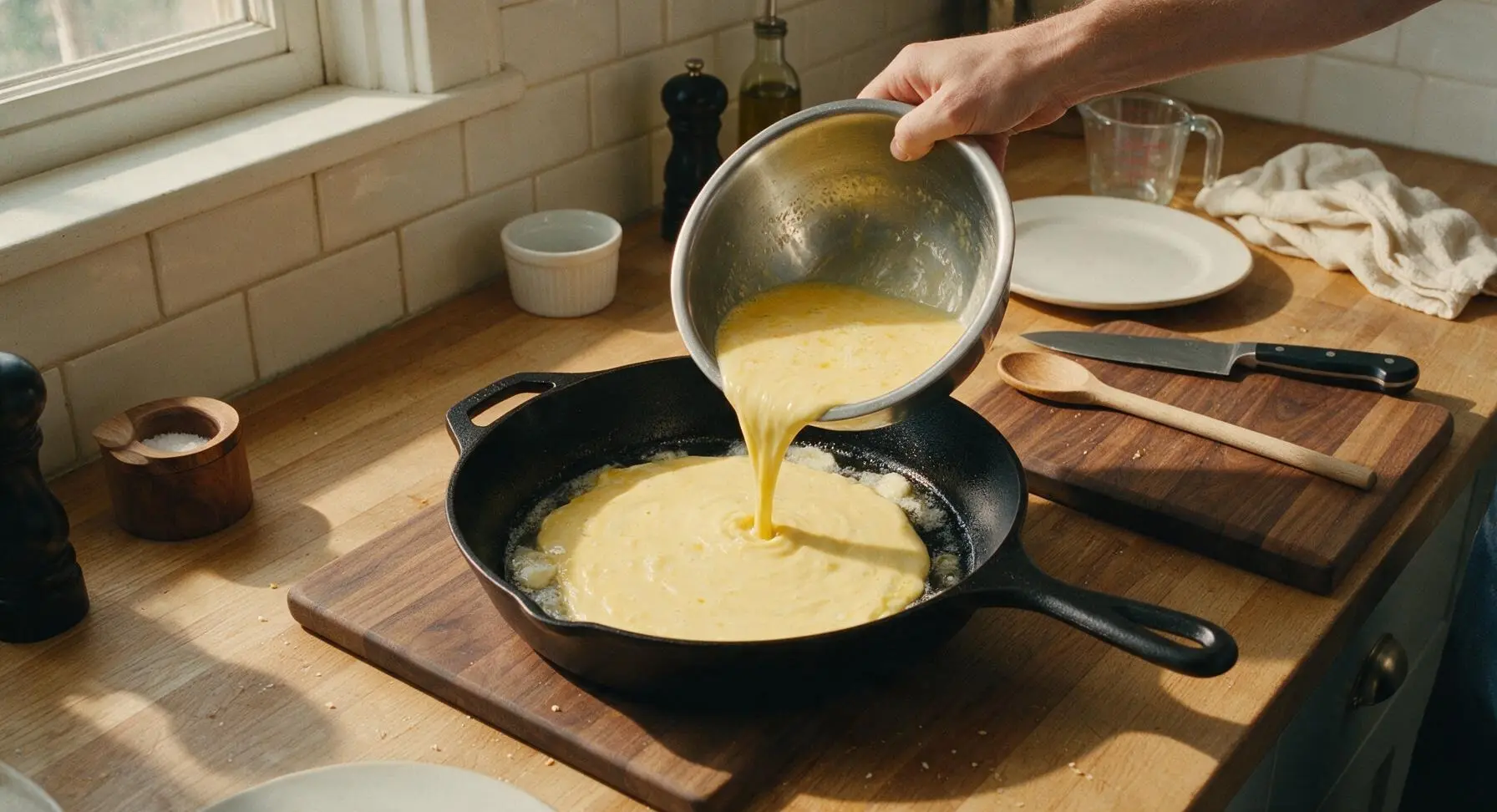
Pour the entire whisked egg and milk mixture into the preheated buttered skillet. Let the eggs sit undisturbed for 15-20 seconds, until the edges just start to set into soft, pale curds. Use the pale cream silicone spatula to push the set curds gently from the edges of the pan toward the center, letting runny uncooked egg flow into the empty spaces left behind. Repeat this slow pushing motion every 10 seconds, keeping the heat steady on medium-low, never letting the pan get hot enough to brown or crisp the eggs.
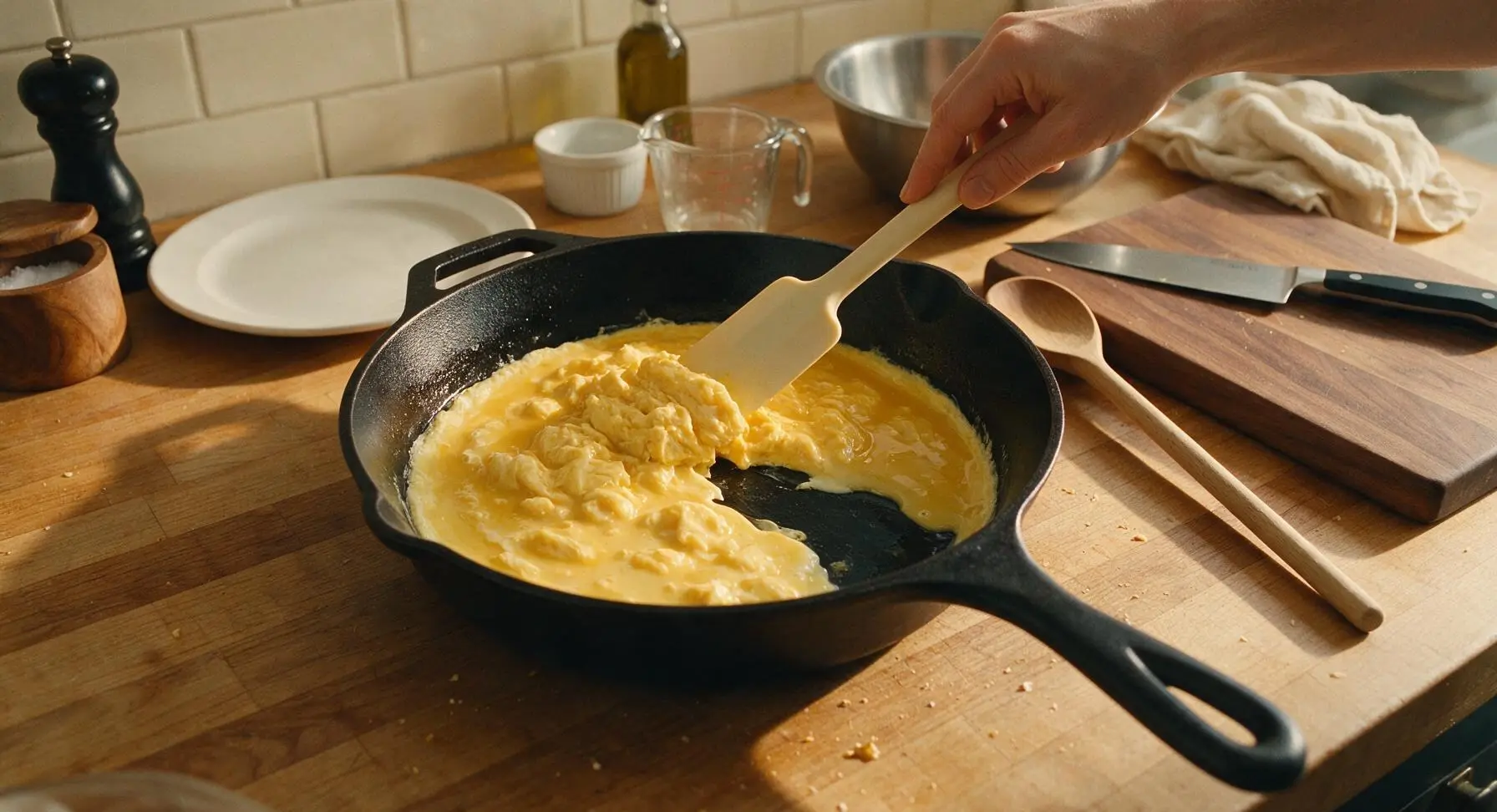
Finish Soft Curds
Continue cooking and pushing curds for a total of 3-4 minutes, until the eggs are about 80% set, with soft, large, moist curds and just a small amount of slightly runny egg remaining. Turn off the burner immediately—overcooking even by 30 seconds will result in rubbery, dry eggs. Do not stir constantly, as this will break curds into tiny, dry crumbles instead of large, tender pieces.
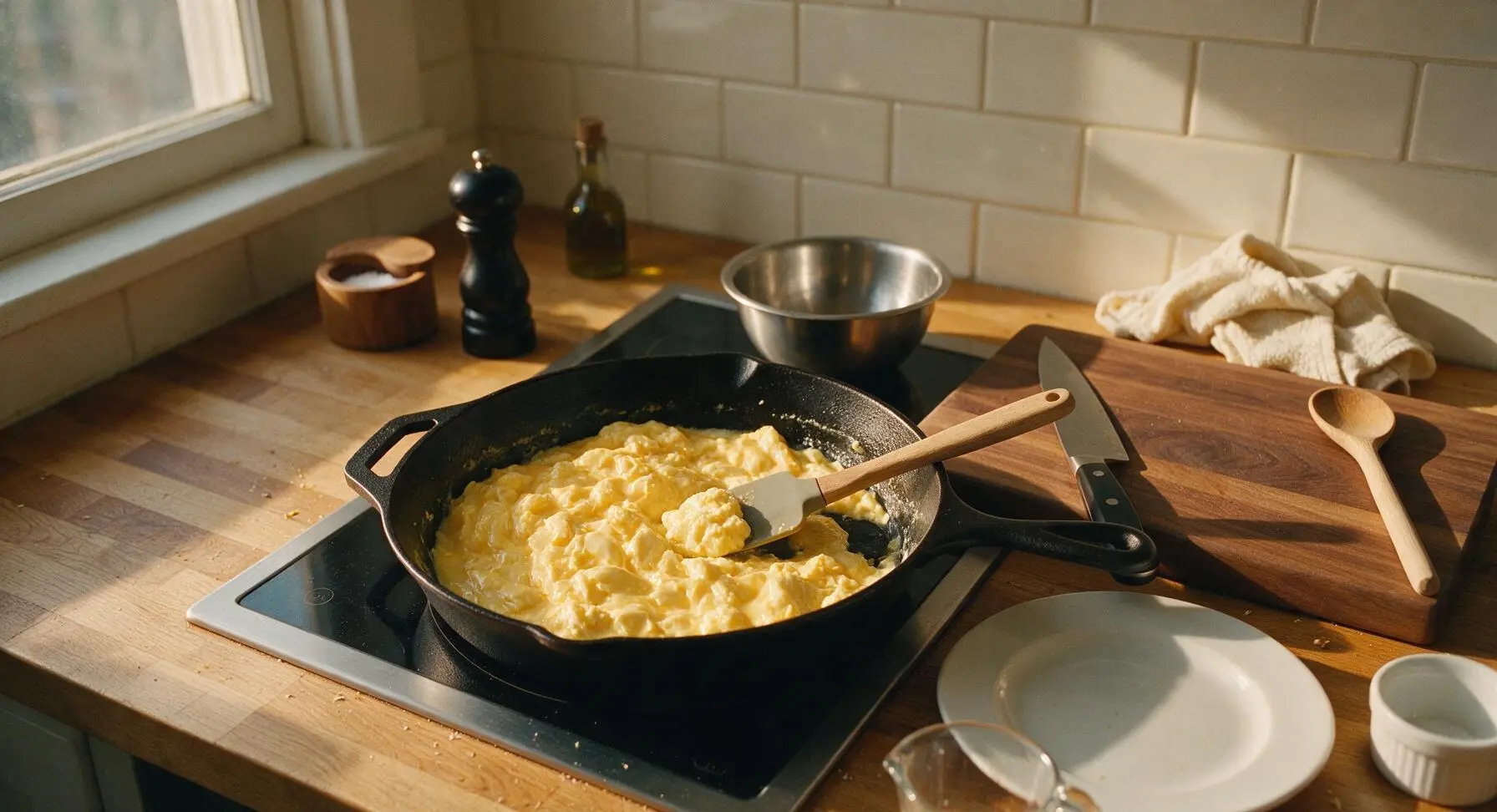
Plate and Garnish
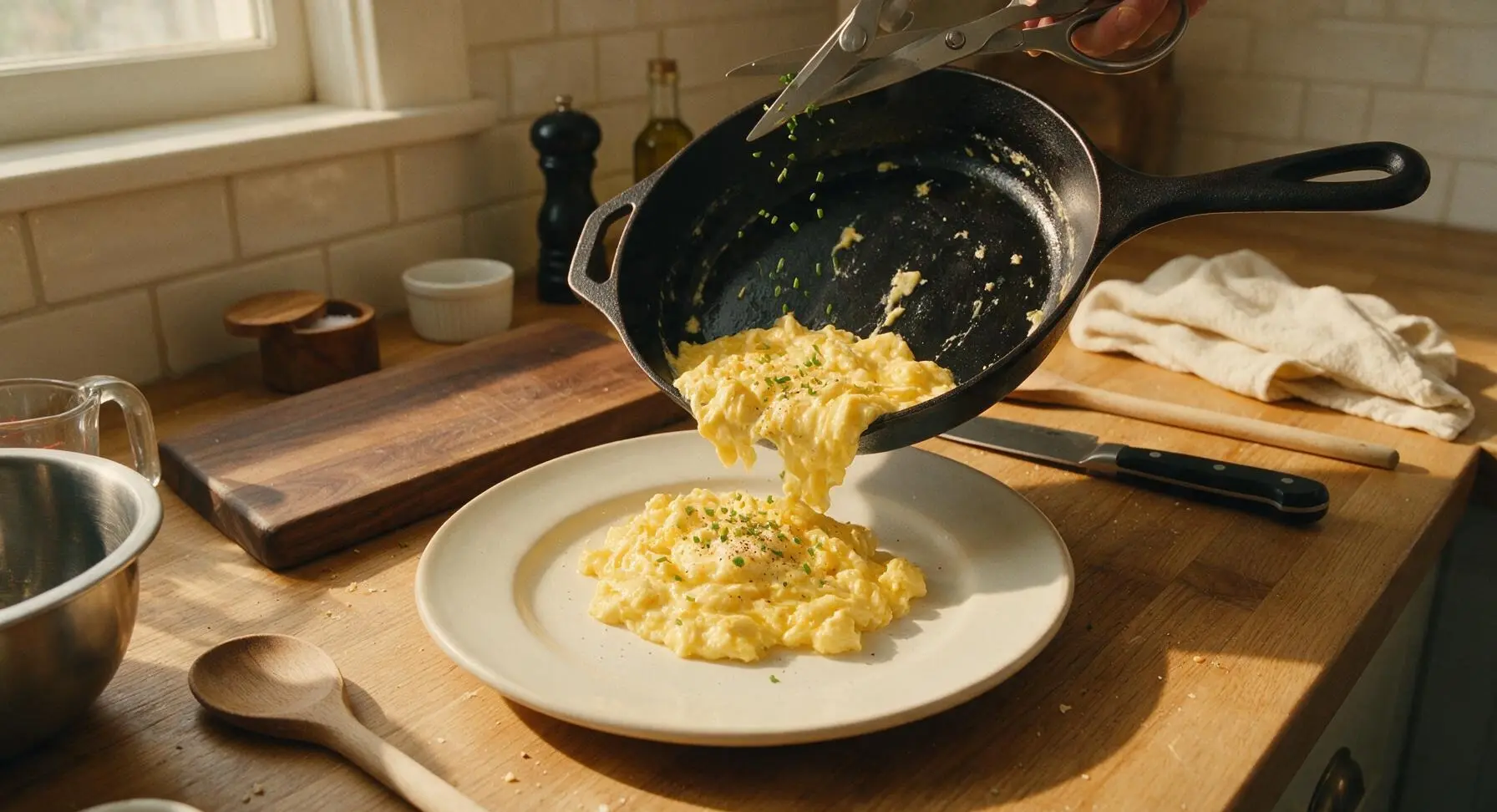
Retrieve the kitchen shears and slide the soft scrambled eggs gently from the skillet onto the center of the cream white ceramic breakfast plate. Use the shears to snip tiny pieces of fresh chive (if using) over the top of the eggs, then give a light twist of the black pepper grinder to add a sprinkle of fresh black pepper. Serve immediately, as eggs will continue to set as they sit.
Tips
2.Avoid adding extra milk: Using more than 1 tablespoon of milk per 2 eggs dilutes egg proteins, leading to watery, separated eggs instead of rich, cohesive curds. Whole milk works best, as skim or low-fat milk has a higher water content that produces less creamy results.
3.Remove eggs from heat just before they look fully done: Residual heat in the pan and on the plate will continue to cook the eggs for 1 to 2 minutes after plating, so stopping when eggs are 80% set (with just a small amount of soft, runny curd left) ensures they stay moist and tender, not dry and crumbly, when served.

OMG these are SO good! I’ve been making rubbery scrambled eggs for years and this 5 minute method is a total game changer. My 7 year old and 4 year old both asked for seconds this morning, which never happens. I added a tiny pinch of chives on top and it was perfect.
Super easy to whip up before my early morning shift, no fancy ingredients needed. I was skeptical that adding milk would make them watery but low and slow heat like the recipe says keeps them so creamy. 10/10 will be making this every weekday for meal prep.
Wait, is there a non-dairy swap that works here? My partner is lactose intolerant so I can’t use regular milk, but I’ve been craving creamy eggs for weeks.
Made these for our weekend brunch potluck with friends and everyone was asking for the recipe! I stirred in a little crumbled feta at the end and *chef’s kiss*, so good. Can’t believe how quick it is too, I didn’t even break a sweat prepping while everyone was chatting.
Tried making these this morning and mine came out a little watery? Did I stir too much or add too much milk? I followed the cook time but maybe my stovetop runs hotter than most.