Milk Stout

title 1
Milk Stout
⏱️ cook time 1 hour 20 minutes
🍽️ servings 10
⚡ Difficulty medium

intro

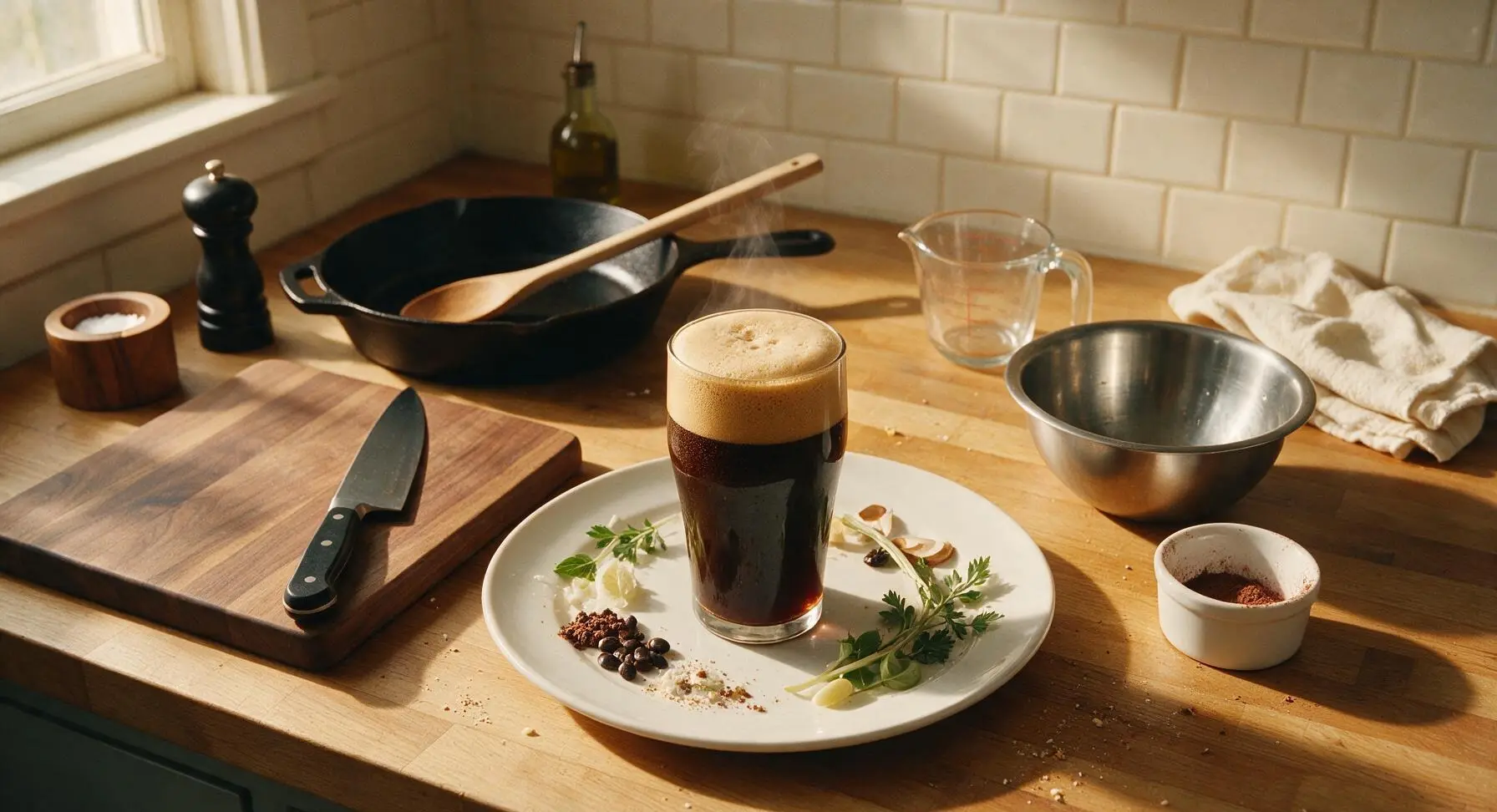
Creamy, roasty, and subtly sweet, homemade milk stout carries notes of dark chocolate, coffee, and smooth caramel, with a velvety tan head perfect for slow autumn sipping.

Ingredients
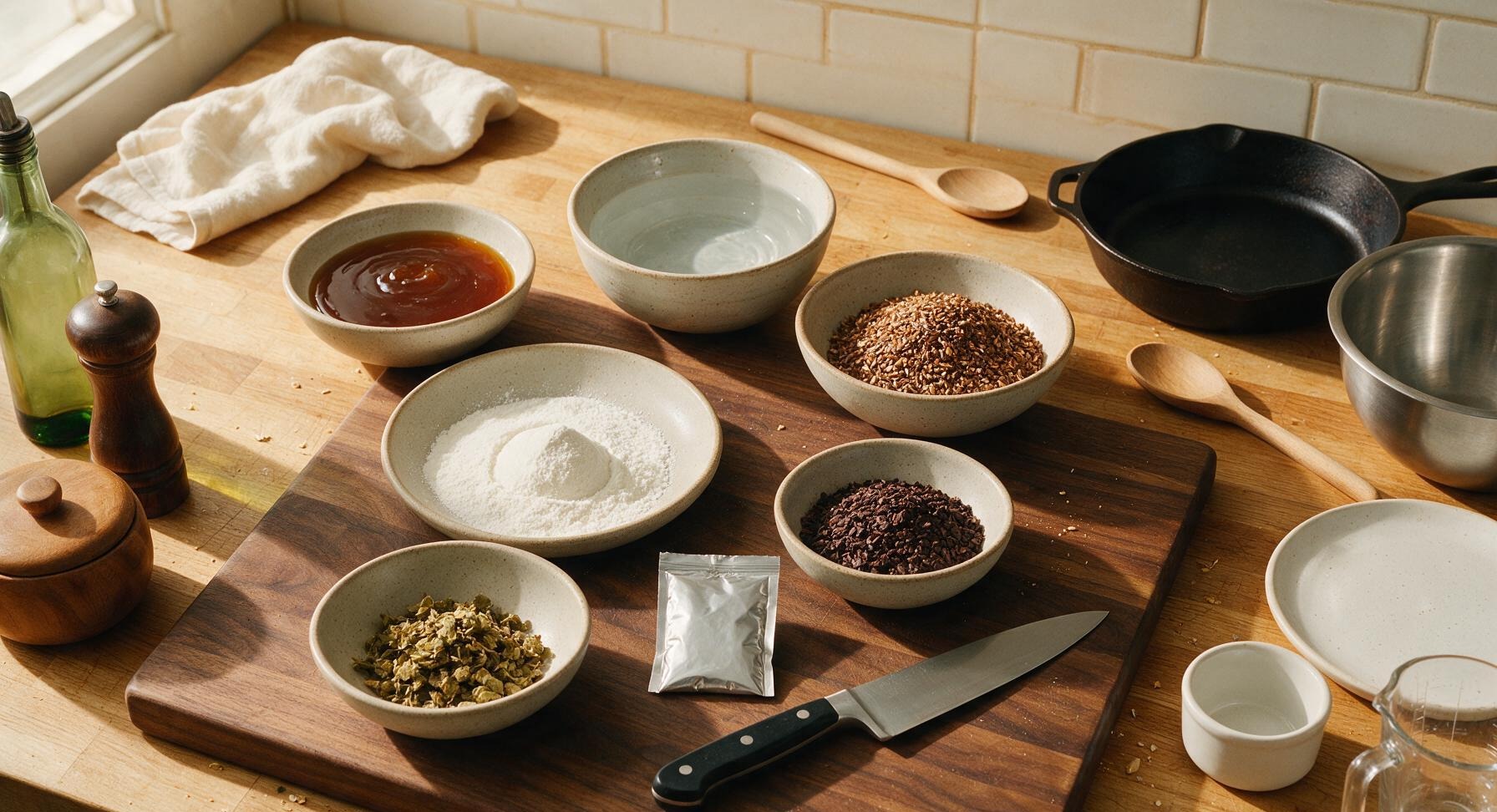
Pale liquid malt extract 450g
Crushed roasted barley 57g
Crushed chocolate malt 57g
Lactose (milk sugar) 113g
East Kent Goldings hops 14g
Dry English ale yeast 7g (1 packet)
Cold filtered water 4 liters

Steps

1

Sanitize Brewing Equipment

First, mix no-rinse brewing sanitizer in the clear spray bottle per package directions. Thoroughly mist all surfaces that will touch cooled beer: the interior of the 1-gallon fermentation jug, airlock, funnel, slotted stirring spoon, thermometer probe, and auto-siphon. Wipe excess sanitizer with the dark gray cotton towel, ensuring no residual soap or debris remains on any tool—contamination is the leading cause of off-flavors in homebrew. This process takes approximately 10 minutes.
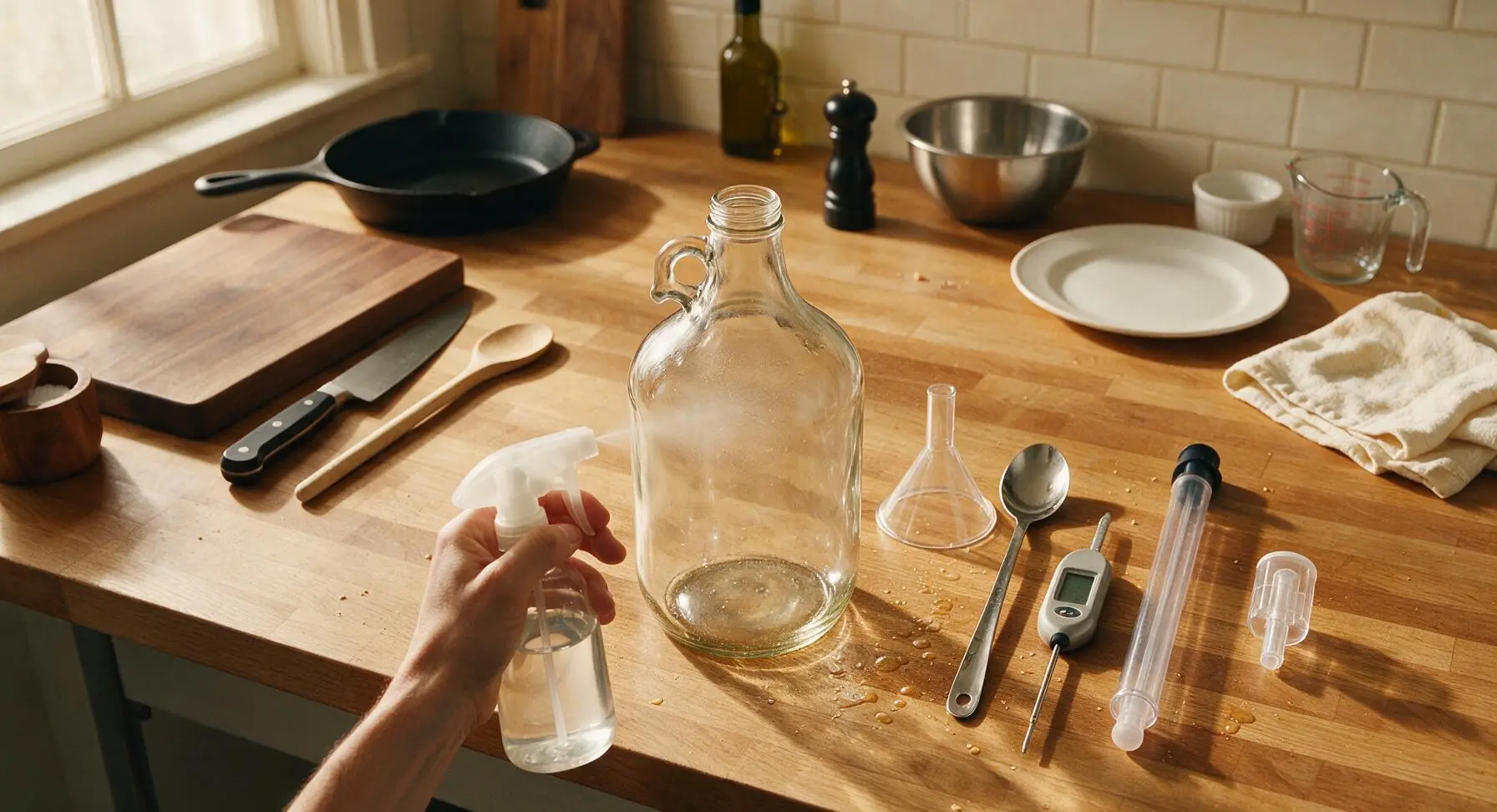
Step 1
step1:Sanitize Brewing Equipment
2

Steep Roasted Grains

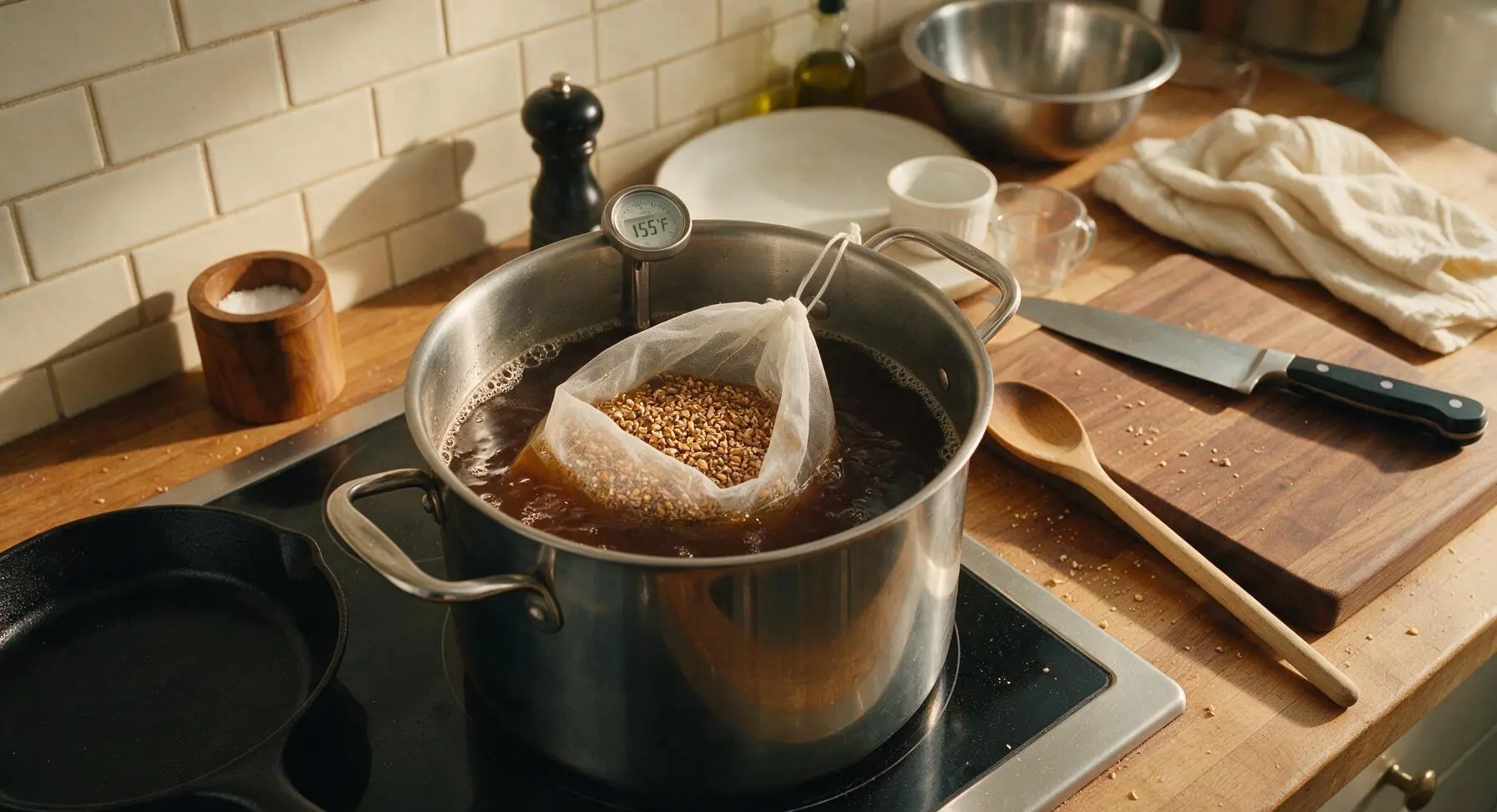
Add the crushed roasted barley and crushed chocolate malt to the white nylon straining bag, pulling the cotton drawstring tight to seal. Pour 2 liters of cold filtered water into the 2-gallon stainless steel brew pot, set the pot on the center induction burner, and clip the digital thermometer to the pot rim. Submerge the grain bag in the water, heating to a steady 155°F (68°C). Hold this temperature for 20 minutes, never letting the water reach a boil—overheating extracts harsh, bitter tannins from grain husks. The water will darken to a deep coffee-brown as grains steep.
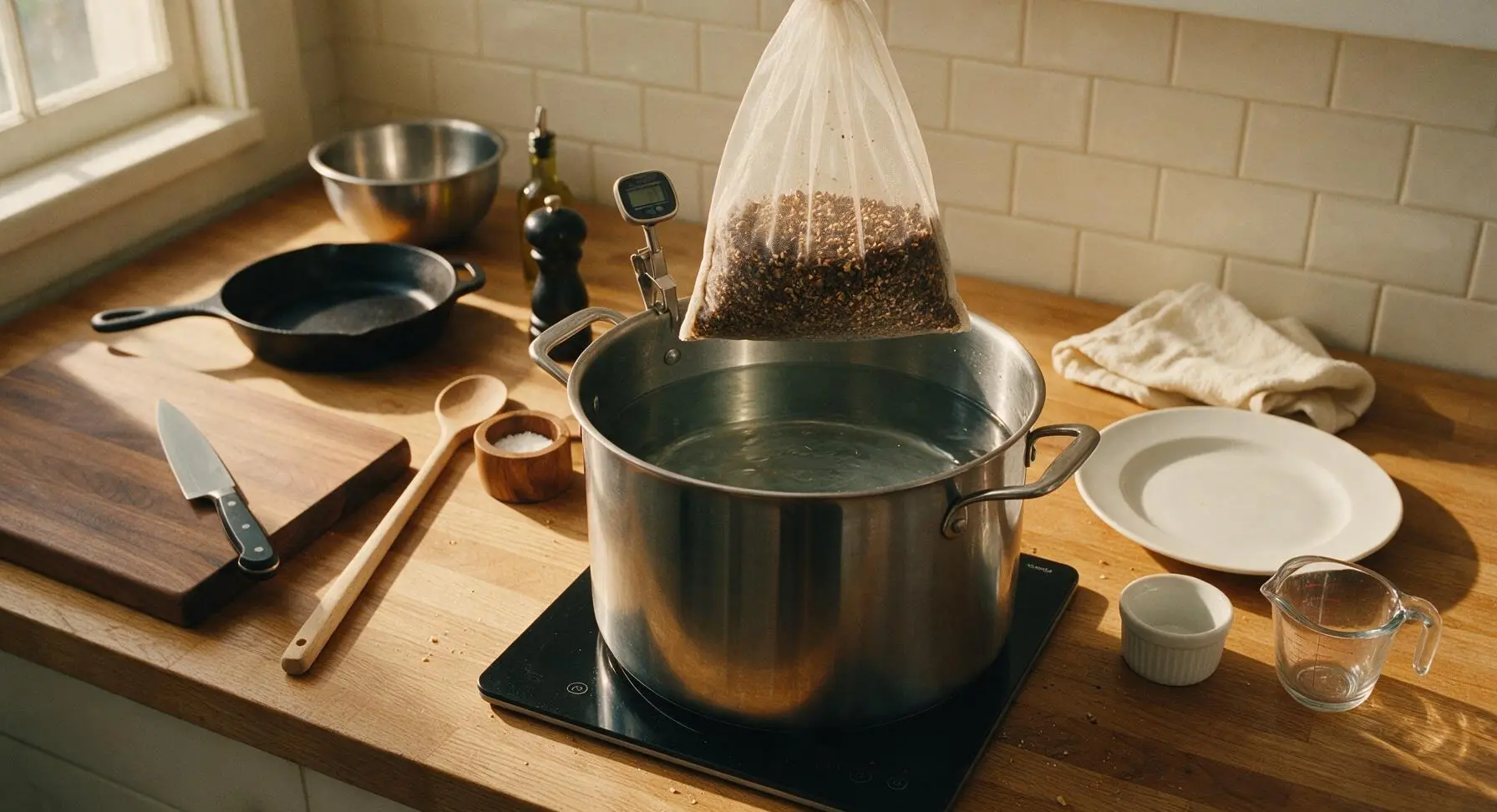
Step 2
step2:Steep Roasted Grains
Step 2
step2:Steep Roasted Grains
3

Bring Wort to Boil

After 20 minutes of steeping, lift the grain bag out of the pot and let it drain naturally over the liquid for 2 minutes—do not squeeze the bag. Stir the full 450g of pale liquid malt extract into the grain-infused water with the slotted stainless steel spoon, stirring until fully dissolved to prevent extract from burning on the pot bottom. Turn the induction burner to high, and bring the liquid (now called wort) to a gentle, rolling boil, watching closely to avoid messy boilovers.
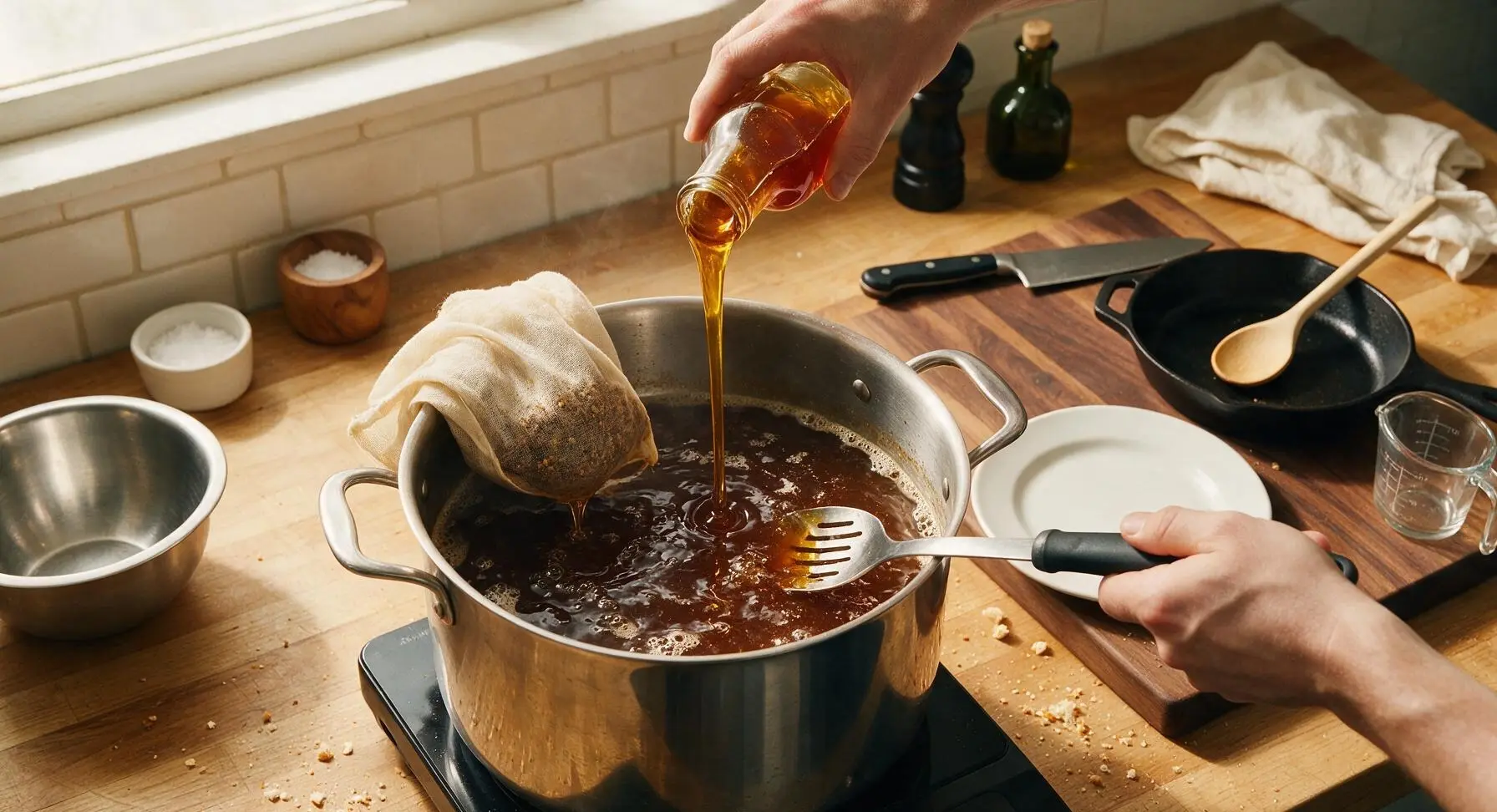
Step 3
step3:Bring Wort to Boil
4

Add Hops and Lactose

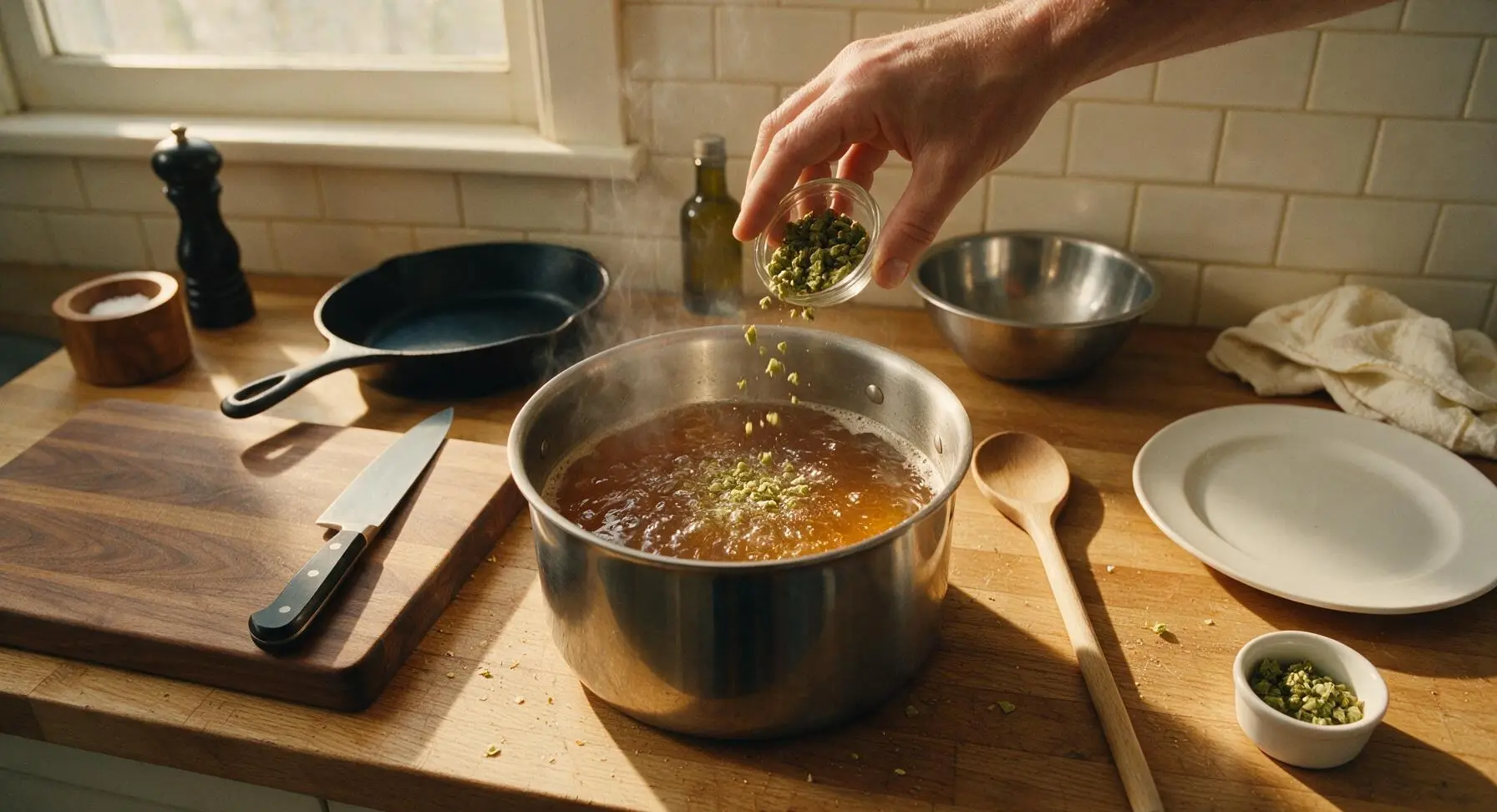
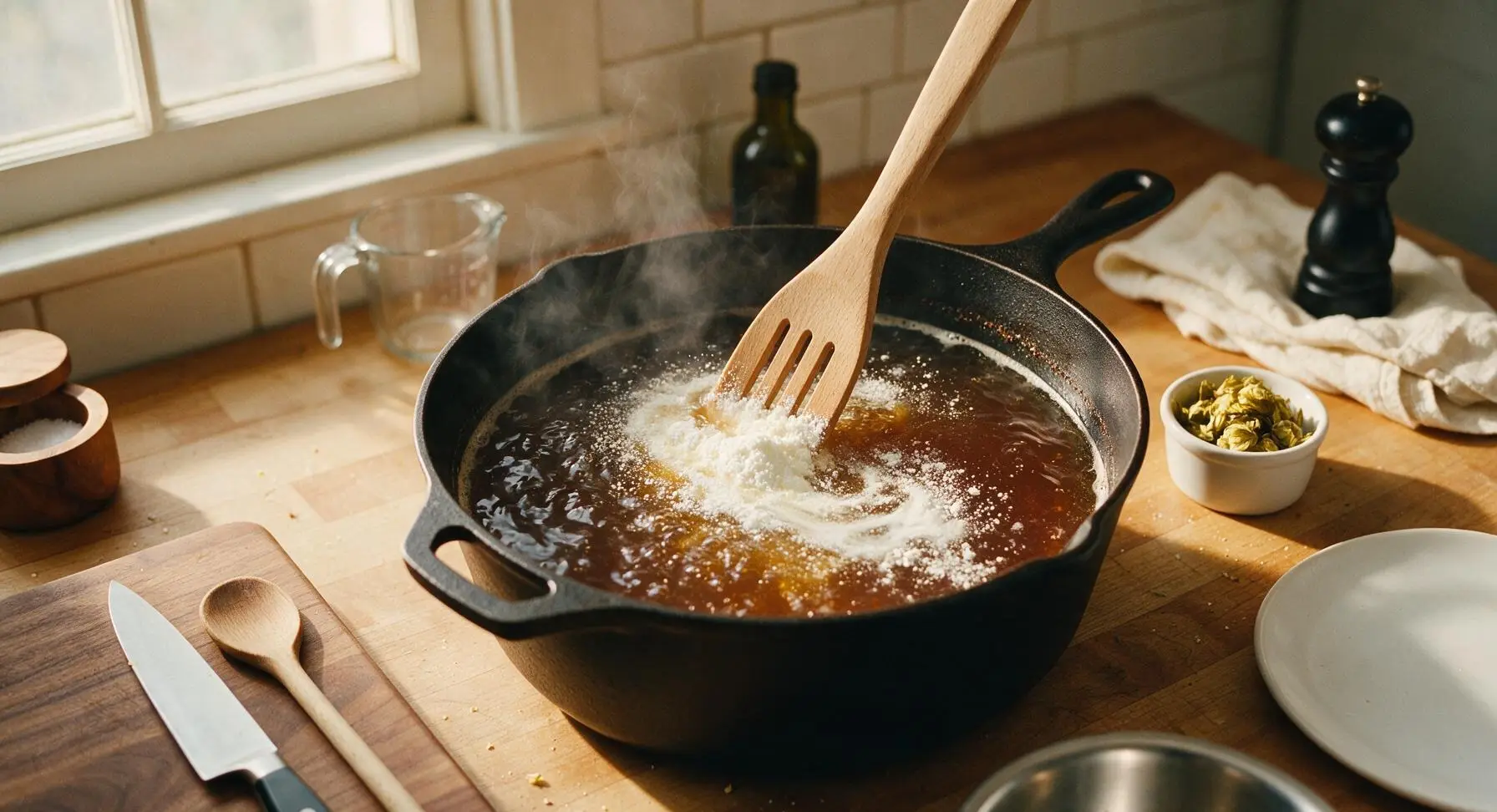
Once the wort reaches a steady rolling boil, set a timer for 60 minutes. Add 7g of East Kent Goldings hops at the start of the boil to provide balanced bitterness. With 15 minutes remaining on the boil, stir in the full 113g of lactose until fully dissolved—lactose is unfermentable by brewer’s yeast, so it remains in the finished beer to create milk stout’s signature smooth, sweet creaminess. Add the remaining 7g of hops with 5 minutes left in the boil to add bright, earthy aroma. Maintain a gentle rolling boil for the full 60 minutes.
Step 4
step4:Add Hops and Lactose
Step 4
step4:Add Hops and Lactose
5

Cool and Pitch Yeast

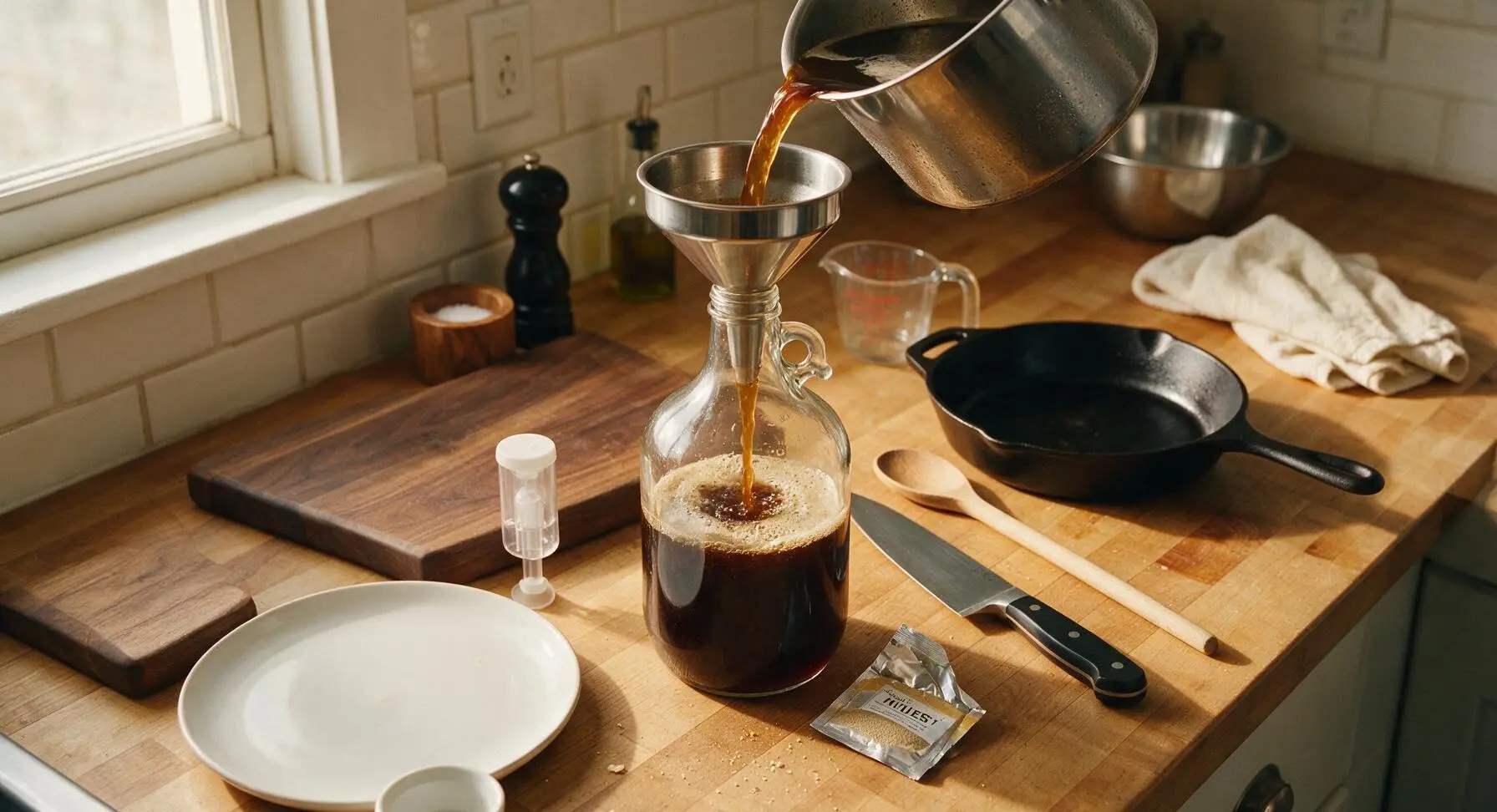
After the 60-minute boil completes, turn off the induction burner. Cover the pot, and set it in an ice bath to cool the wort quickly to 70°F (21°C), which takes roughly 20 minutes. Place the stainless steel funnel in the neck of the sanitized fermentation jug, then pour the cooled wort through the funnel into the jug. Top up to the 1-gallon mark with remaining cold filtered water if needed. Sprinkle the full 7g packet of dry English ale yeast over the wort surface, then seal the jug with the airlock filled halfway with sanitizer solution. Store the jug in a dark, 65-70°F space for 14 days to ferment.
Step 5
step5:Cool and Pitch Yeast
6

Siphon Clear Beer

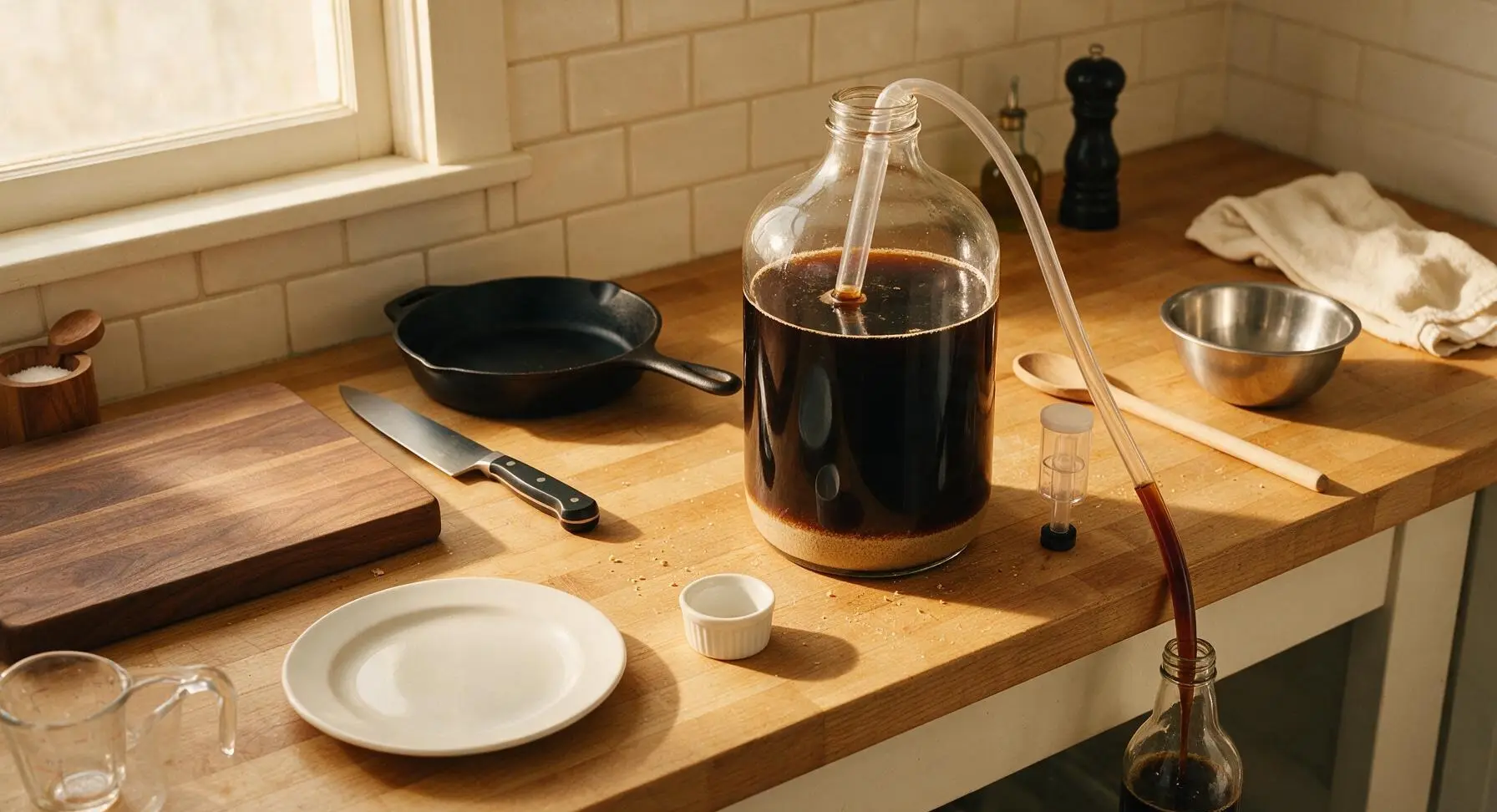
After 14 days of primary fermentation, confirm activity has stopped: no bubbles pass through the airlock for 48 consecutive hours, and the beer is mostly clear with a compact, pale tan layer of yeast sediment settled at the jug bottom. Sanitize the auto-siphon and tubing, then insert the siphon tip into the clear beer, keeping it above the sediment layer to avoid transferring cloudy yeast. Siphon the beer into sanitized sealable glass bottles, leaving 1 inch of headspace in each bottle. Add 1/8 teaspoon of priming sugar per 12oz bottle to create natural carbonation, then cap bottles tightly.
Step 6
step6:Siphon Clear Beer
7

Condition and Serve

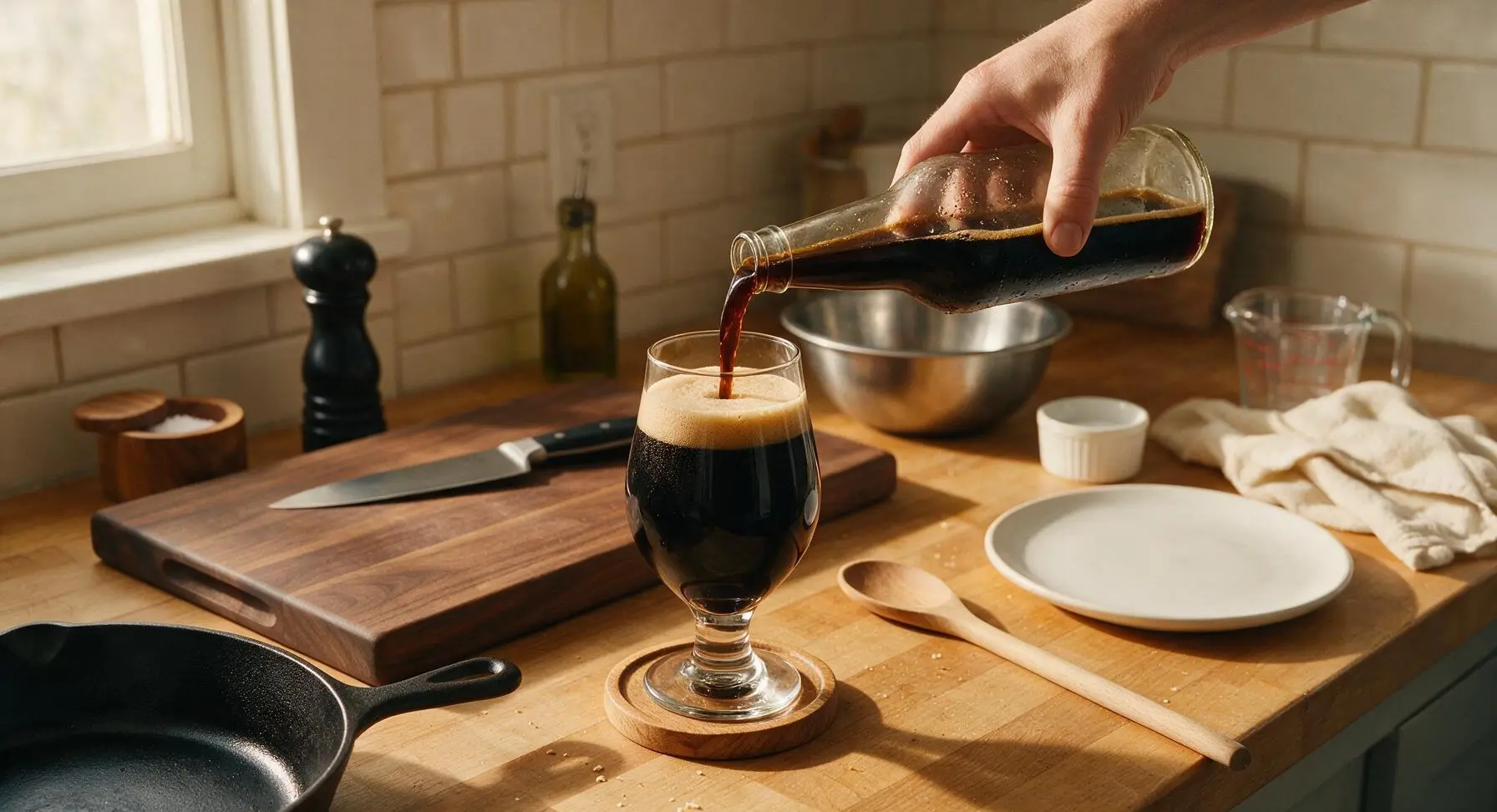
Store sealed bottles in a dark, 68°F space for 10 days to allow natural carbonation to develop, then chill bottles in the refrigerator for 24 hours before serving. Pour slowly into the tulip stout glass at a 45-degree angle, straightening the glass as you near the top to build a thick, 2-inch creamy tan head. Let the poured beer warm for 3-5 minutes before sipping to bring out full flavor.
Step 7
step7:Condition and Serve

Tips

1.Never squeeze the grain bag after steeping: Squeezing presses harsh, astringent tannins out of grain husks, leading to a dry, bitter aftertaste instead of the smooth, roasty profile milk stout is known for. Let the bag drain naturally over the pot for 2 full minutes instead.
2.Avoid serving milk stout ice cold: Fridge-cold (38°F) temperatures mute the subtle dark chocolate, coffee, and caramel notes. Let the poured stout sit for 3-5 minutes to warm slightly to 45-50°F, when its full flavor profile comes through.
3.Do not rush primary fermentation: Fermenting at temperatures above 72°F causes yeast to produce harsh, solvent-like off-flavors that overpower the stout’s smooth character. Keep the fermentation jug in a consistently cool, dark closet for the full 14 days for clean, balanced flavor.

✨ You May Also Like

Drinks & Beverages
🍜 Mexico

A bright, balanced tequila-based cocktail with zesty fresh lime, smooth orange liqueur, and a signature salt rim, perfect for warm summer sipping.

⏱️ 5 minutesDrinks & Beverages ★ 4.9
Drinks & Beverages
🍜 United States

Thick, creamy, nostalgic classic vanilla milkshake with a rich, smooth texture, topped with whipped cream and a cherry for cool, sweet refreshment.

⏱️ 5 minutesDrinks & Beverages ★ 4.7
Drinks & Beverages
🍜 United States

A bright, golden strong ale with fruity banana-clove notes, subtle hop spice, and soft carbonation, brewed in classic Trappist Tripel tradition.

⏱️ 2 hours aDrinks & Beverages ★ 4.5
Drinks & Beverages
🍜 United States

A frothy, nostalgic American soda fountain treat pairing bubbly cold root beer with creamy vanilla ice cream, perfect for cooling down at warm weather gatherings.

⏱️ 20 minuteDrinks & Beverages ★ 4.8
Drinks & Beverages
🍜 United States

Tart, funky, effervescent American Wild Ale is a complex fruity craft beer brewed with wild yeast, delivering bright, zesty notes perfect for warm-weather sipping.

⏱️ 2 hours aDrinks & Beverages ★ 4.4
Drinks & Beverages
🍜 United States

Bright, bubbly copycat of the iconic American caramel cola, balanced with citrus and warm spice, perfect for sipping ice-cold on hot days.

⏱️ 15 minuteDrinks & Beverages ★ 4.8

Milk Stout:Frequently Asked Questions

1.What makes milk stout different from a regular dry stout? ▾
Unlike dry Irish stout, milk stout includes lactose, an unfermentable milk sugar that adds that signature subtle sweetness and creamy mouthfeel standard stouts lack. It balances the sharp roasty bite from roasted barley and chocolate malt, resulting in smoother, less bitter sips with classic dark chocolate and coffee notes, no harsh dry finish.
2.Can I make this milk stout if I’m a total beginner to homebrewing? ▾
Absolutely! This recipe uses pale liquid malt extract instead of requiring all-grain mashing, which cuts down on complicated equipment and steep time for new brewers. As long as you fully sanitize all your gear, follow steep temperature guidelines for the roasted grains, and track fermentation temp, you’ll turn out a great batch on your first try.
3.Why does the recipe call for crushed roasted barley instead of whole grain? ▾
Crushed roasted barley exposes the grain’s inner, roasty kernel so its rich coffee, dark toast notes steep easily into your wort without needing a full mash. Whole grains won’t release those flavors effectively during the short steep time for extract brewing; just make sure grains are evenly cracked, not ground to powder, to avoid harsh astringency.
4.Is this homemade milk stout safe for people with lactose intolerance? ▾
Since lactose is unfermentable by standard brewing yeast, it stays fully present in the finished stout, so it is not safe for anyone with a severe lactose intolerance. If you’re brewing for a group with sensitivities, you can split the batch and leave lactose out of one portion, though that will produce a drier, more traditional stout profile.
5.What temperature should I steep the crushed roasted barley and chocolate malt at? ▾
Aim for a steep temperature between 150–160°F (65–71°C) for those specialty grains. Steeping hotter than 170°F will leach harsh, bitter tannins from the grain husks that throw off the smooth, balanced flavor, while steeping too cool will fail to pull out those rich chocolate and roasted coffee notes you want.
6.When is the right time to add lactose during the brewing process? ▾
Add your measured lactose during the last 10 minutes of the wort boil, right before your final hop addition. This gives the sugar time to fully dissolve and sanitize without breaking down its sweet, creamy properties, and ensures it mixes evenly throughout the wort before you transfer it to your fermentation vessel.
7.Why use East Kent Goldings hops instead of other common hop varieties? ▾
East Kent Goldings are a classic English hop with mild, earthy, slightly floral, subtly spicy notes that complement rather than overpower the roasty malt and creamy lactose in this stout. Bolder, high-alpha hops like Cascade or Citra would clash with the smooth, mellow profile, adding harsh, bright bitterness that throws off the balance.
8.How long does this milk stout need to ferment before it’s ready to drink? ▾
Plan for a primary fermentation of 10–14 days at a steady 65–68°F (18–20°C) with standard ale yeast, then a 1-week conditioning period in bottles or kegs after carbonating. For the smoothest, most balanced flavor, let bottles condition for an extra 2 weeks in a cool, dark spot—those roasty flavors mellow beautifully with a little extra time.
9.Do I need fancy, specialized equipment to brew this at home? ▾
You don’t need professional-grade gear! A basic 5-gallon homebrewing kit with a boil pot, fermentation bucket, airlock, siphon, and no-rinse sanitizer is all you need. Skip expensive all-grain mashing equipment for this extract-based recipe; a simple mesh grain bag to hold crushed specialty grains during steeping is the only small extra supply required.
10.Why did my first batch turn out more bitter than I expected? ▾
Overly bitter results usually come from one of two easy-to-fix mistakes: either you steeped your roasted grains too hot (over 170°F) which pulled out astringent, puckery tannins, or you added your hops too early in the boil for too long. Next batch, stick to the 150–160°F steep temp and follow the hop addition timeline for balanced flavor.
11.How do I get that thick, velvety tan head the recipe describes? ▾
That signature long-lasting tan head comes from a combination of properly carbonating your stout to 2.0–2.3 volumes of CO2, and avoiding over-filtering your finished beer, as residual proteins from the malt extract and roasted grains build head retention. Pour at a 45-degree angle and leave a half inch of glass space for the head to form.
12.Can I add extra flavors like coffee or vanilla to this base recipe? ▾
Absolutely! This milk stout base is incredibly adaptable. Add 4–8 oz of cold-brewed coffee during secondary fermentation for an extra coffee kick, or 1 split and scraped vanilla bean in the last 3 days of fermentation for a creamy vanilla note that pairs perfectly with chocolate malt and lactose. Start with small amounts to avoid overpowering the base.
13.How long will bottled homemade milk stout stay fresh? ▾
Stored in a cool, dark spot away from direct sunlight and temperature swings, your bottled milk stout will stay fresh and flavorful for 4–6 months. The roasty notes will mellow slightly over time, but the lactose helps keep the mouthfeel smooth, so it won’t get overly dry or thin as it ages the way hoppier, higher-ABV beers might.
14.Can I substitute dry malt extract for the pale liquid malt extract? ▾
You can swap pale liquid malt extract for pale dry malt extract at a 1:1.2 ratio (use 1 lb dry malt extract for every 1.2 lb of liquid called for) if that’s what you have on hand. Keep in mind liquid malt extract adds a slightly richer, more caramel-forward sweetness that pairs perfectly with lactose, so dry extract will produce a slightly crisper final stout.
15.Why is my wort such a dark, murky brown after steeping the grains? ▾
That deep, dark chestnut brown color is totally normal and expected! The crushed roasted barley and chocolate malt release dark, roasty compounds that give the stout its signature deep hue, just like cold brew coffee looks dark when steeped. It will clarify slightly during fermentation and conditioning, so don’t worry if it looks opaque right after the boil.
16.What is the approximate ABV of this finished milk stout? ▾
When brewed to recipe specifications with standard ale yeast, this milk stout lands at a very approachable 4.5–5.5% ABV, perfect for slow sipping on cool autumn evenings. It’s lower in alcohol than big imperial stouts, so you can enjoy a pint without it feeling heavy, and the creamy sweetness makes it go down surprisingly smooth.
17.Can I keg this stout instead of bottling it? ▾
Kegging works beautifully for this milk stout! Force carbonate it to 2.2 volumes of CO2 at 38°F for 5–7 days for that perfect creamy, pub-style mouthfeel. Kegging cuts down on bottling work, and you can serve it on nitro if you have the setup, which amplifies that velvety texture and thick, fluffy tan head even more.
18.What happens if I add too much lactose to my batch? ▾
Adding more than the recommended 8–10 oz of lactose per 5-gallon batch will make your stout taste cloyingly sweet, like drinking flat chocolate milk, and throw off the balance between roasty grain, hop bitterness, and sweetness. If you accidentally over-add lactose, offset it slightly with a tiny extra pinch of East Kent Goldings in the last 5 minutes of the boil for balancing bitterness.
19.What foods pair best with this homemade milk stout? ▾
Its creamy, roasty, slightly sweet profile pairs perfectly with rich, savory foods like smoked brisket, sharp aged cheddar, dark chocolate brownies, or salted caramel desserts. The subtle coffee and chocolate notes cut through fatty, rich foods, while the smooth sweetness balances salty, charred flavors, making it ideal for fall cookouts or cozy dessert nights.

Comments (6)

2 days ago

OMG this homemade milk stout recipe is an absolute game changer! I’ve been homebrewing for 3 years and have tried half a dozen milk stout recipes that always came out too thin or too bitter, but this one? Perfectly creamy, just the right amount of chocolate note, not overly hoppy. I brought a 6-pack to our neighborhood potluck last weekend and it was gone before the burgers even came off the grill. 10/10, will be making this on repeat all fall. Wait, quick question—has anyone tried adding a splash of vanilla bean in the secondary ferment? Curious if that would mess with the balance.

yesterday

I did exactly that last batch! Added 2 split vanilla beans when I racked to secondary, let it sit for 2 weeks, and it tasted exactly like a chocolate milkshake stout. Didn’t throw off the balance at all, just added that nice warm vanilla depth. Highly recommend!

yesterday

Great question, Jake! Adding vanilla bean is a fantastic mod—we’ve tested it with 1-2 split beans per 5 gallon batch, and as Molly mentioned, it complements the roasted malt and lactose beautifully without overpowering the base stout. Just make sure to sanitize the beans really well before adding them to avoid contamination!

3 days ago

I was super nervous to try this because I’m a total homebrew newbie and the difficulty says medium, but the steps were so straightforward! The 1 hour 20 minute active cook time felt totally manageable even with my tiny apartment kitchen setup. My only oops was I almost forgot to add the lactose at the end of the boil—thank goodness I re-read the instructions right before I turned the heat off. SO good, my roommate and I have been sipping pints of it every night while we watch weeknight football. Would absolutely recommend to anyone on the fence about trying their first stout!

2 days ago

So glad you gave it a shot, Sarah! Forgetting the lactose is such a common first-timer misstep, nice catch catching that before it was too late. If you end up experimenting with other add-ins down the line, we’ve got a few variation notes on the recipe card for coffee and peanut butter versions too!

5 days ago

I brewed a double batch of this last Sunday as part of my weekly meal prep/house stock up so I’d have drinks ready for all the upcoming Halloween parties and weeknight dinners, and I already know it’s gonna be a hit. The roasted barley smell while it was boiling made my whole house smell like a cozy craft brewery, I was obsessed. Only note: make sure you have a big enough stock pot! I almost had a boil over with my 5 gallon pot, had to do a quick shuffle with the heat halfway through. Still turned out perfect though, can’t wait for it to finish carbonating.

1 week ago

Wait, quick question for anyone who’s made this—does the lactose make this taste super sweet? I’m not a huge fan of really sweet beers, so I’ve avoided milk stouts in the past, but my partner keeps begging me to brew this one for his birthday. How much can I cut the lactose without totally ruining the mouthfeel?

5 days ago

I cut the lactose by 25% on my first batch because I also don’t love super sweet brews, and it was perfect! Still had that nice creamy mouthfeel, but the sweetness was really subtle, let the chocolate and roasted malt flavors come through more. I wouldn’t cut it more than half though, or you’ll lose that signature smoothness.

3 days ago

Great question, Liz! The lactose in this recipe is balanced with roasted bitter malt so it doesn’t come across cloyingly sweet, but if you prefer less sweet beer, cutting it by 25-30% (like Ron did) works perfectly. You’ll still get that creamy texture without the sugary finish.

5 days ago

Game changer! I used to drop $15 a 4-pack on the local brewery’s milk stout, and this tastes identical for a fraction of the cost. I added a cold brew coffee addition to half the batch last time and it was chef’s kiss, perfect for Sunday football tailgates. My buddies are already begging me to brew another batch for our hunting trip next month.

3 days ago

Oh the cold brew addition sounds insane! What ratio did you use? I’ve been wanting to do a coffee stout but keep worrying I’ll add too much and make it bitter.

2 weeks ago

Made this for our extended family dinner over the weekend and brought the leftovers to our post-hike bonfire, and all the adults went crazy for it! My kids kept hovering around the brew pot asking what smelled so good (don’t worry, they got hot cocoa instead!) but my brother said it was better than the stout we had on our last trip to Dublin. I will say, don’t skip the step of chilling the wort as fast as possible— I got distracted chatting with my cousin and let it cool slowly on my porch, and it had a slightly weird off flavor on the first taste, but after a week in the bottle it mellowed out totally. Still SO good, will definitely be more careful about the chill step next time. Perfect smooth, rich stout for cool desert nights.