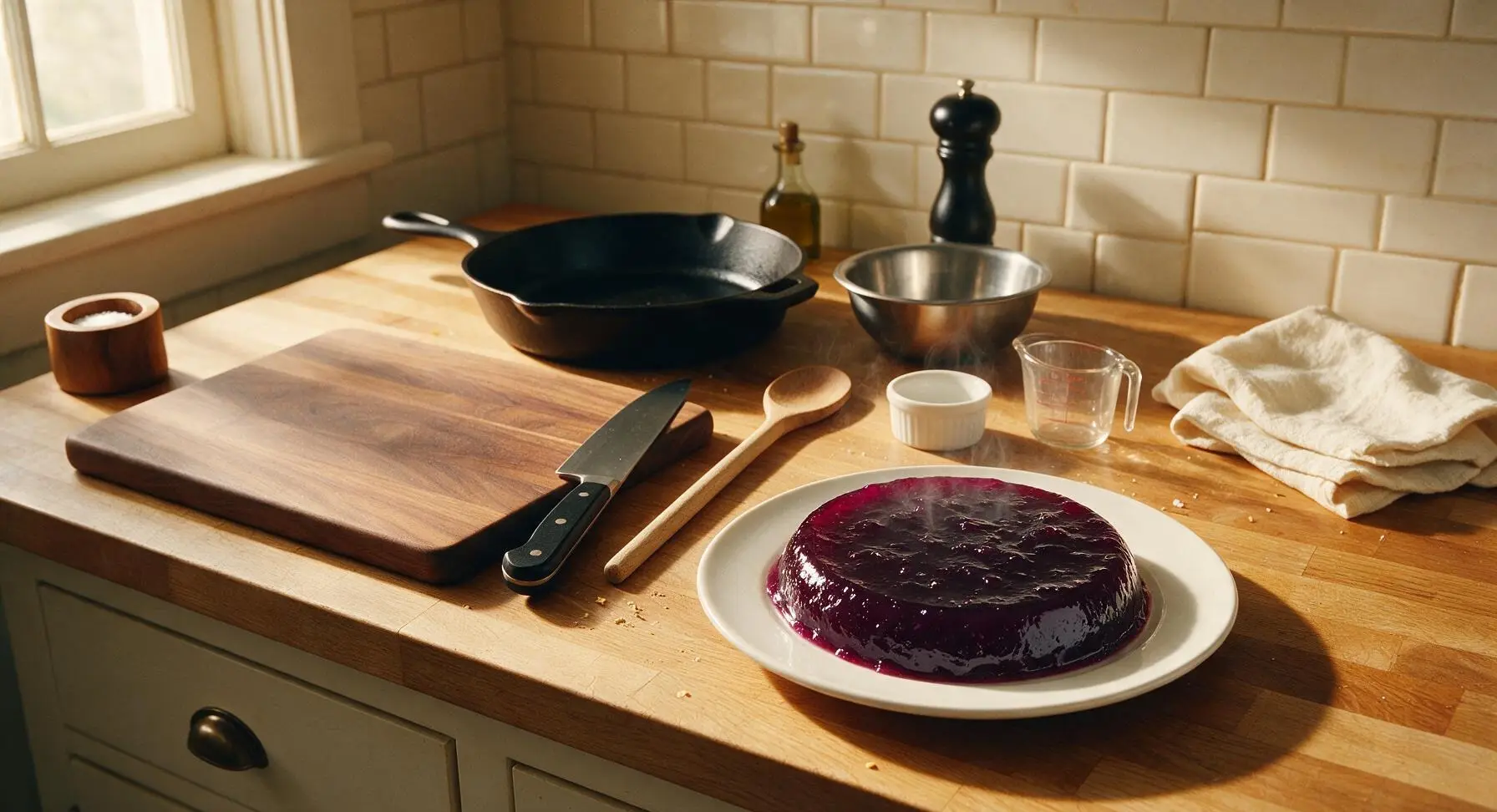
Muscadine Jelly

title 1
Muscadine Jelly
⏱️ cook time 35 minutes
🍽️ servings 64
⚡ Difficulty medium

intro

Jewel-toned, perfectly set old-fashioned muscadine jelly, with a bright sweet-tart flavor native to the American South, ideal for slathering on warm biscuits or toast.

Ingredients
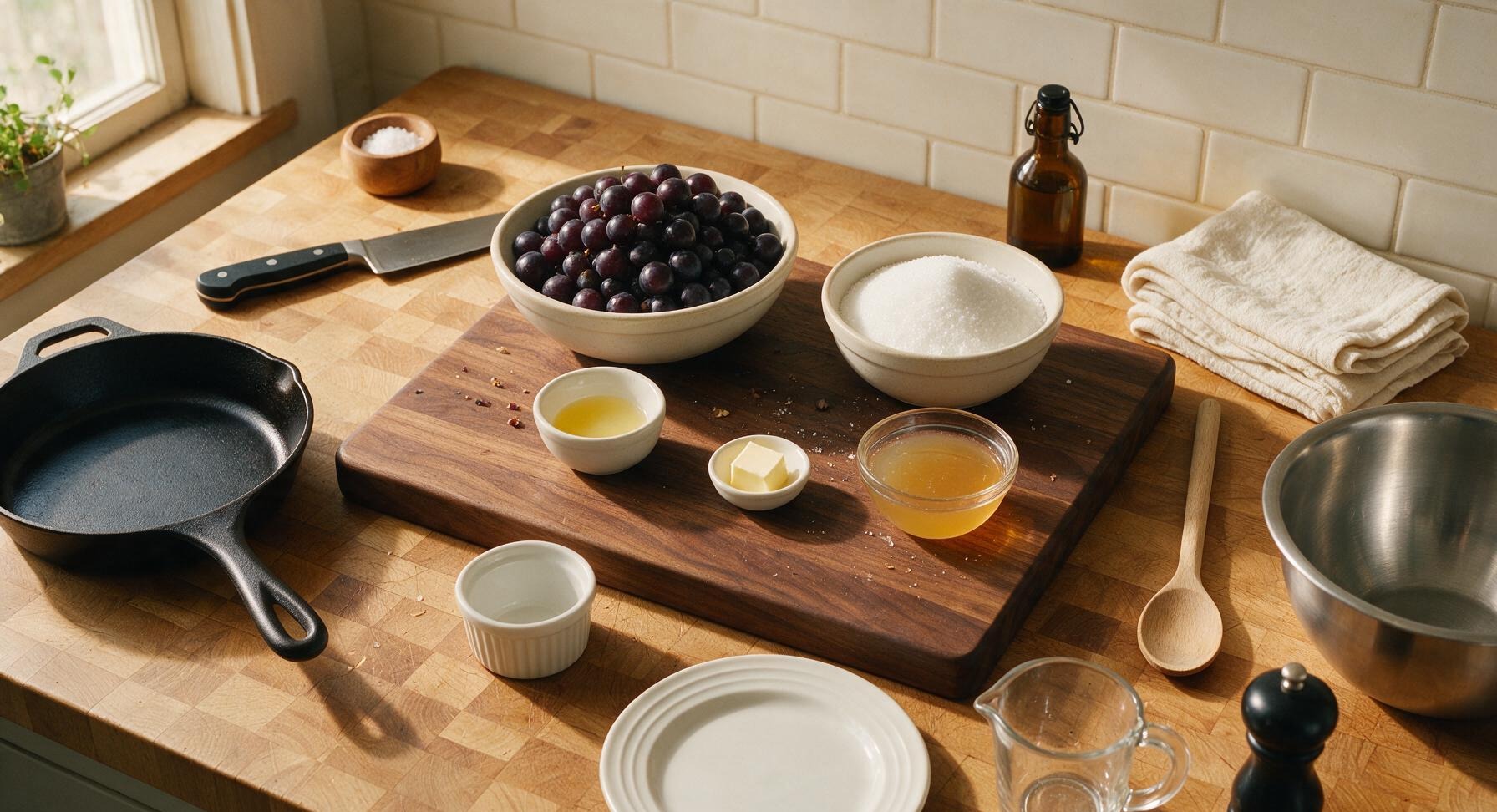
Ripe purple muscadine grapes 1.8kg (4 lbs)
Granulated white sugar 700g (3.5 cups)
Liquid fruit pectin 85ml (3oz pouch)
Fresh lemon juice 15ml (1 tablespoon)
Unsalted butter 5g (1 teaspoon)

Steps

1

Wash and Sort Grapes

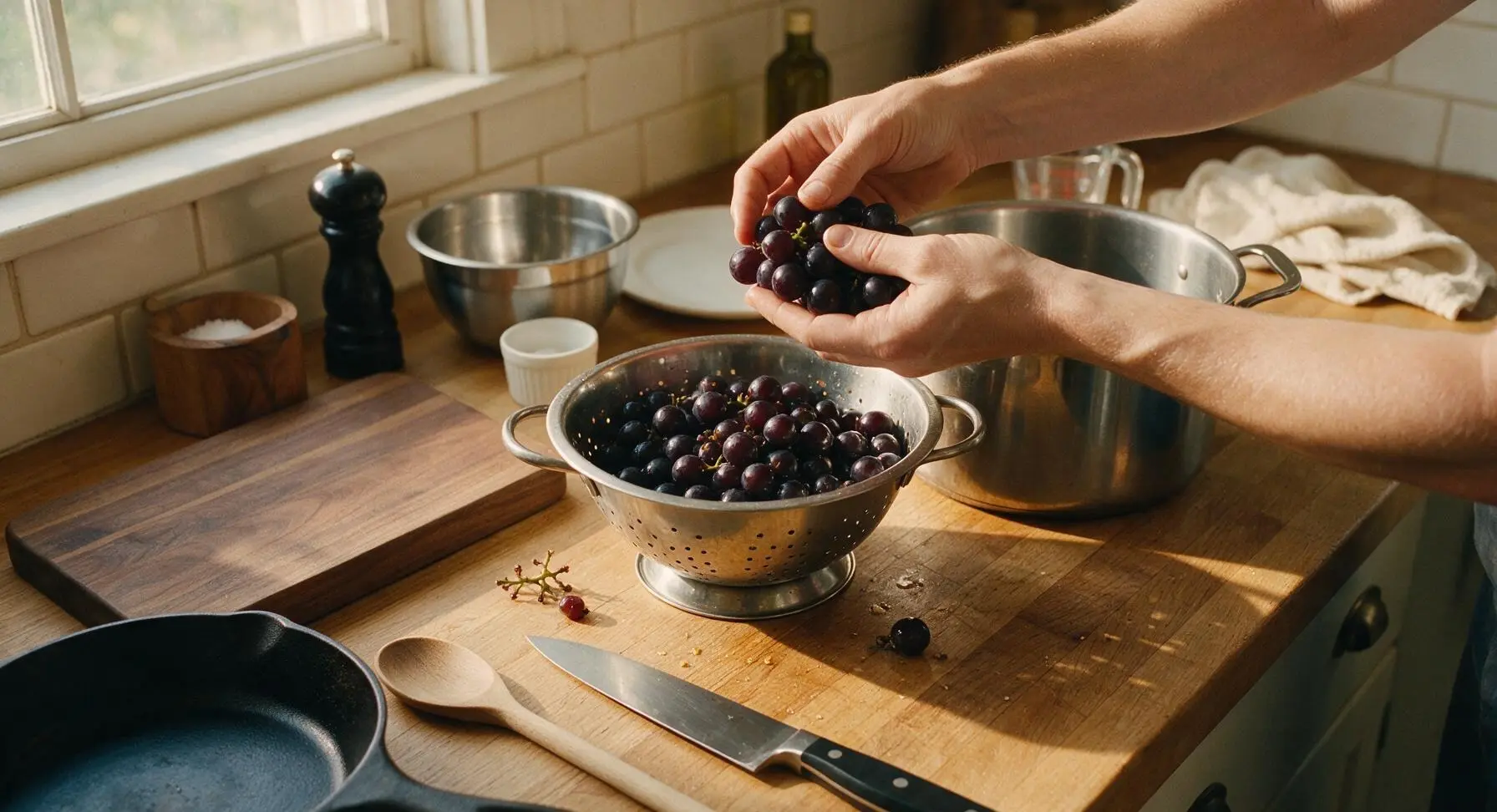
Place 4 lbs (1.8kg) of ripe muscadine grapes in the stainless steel colander, rinse under cool running water for 2 minutes, picking off all attached stems, dried leaves, and soft, overripe, or moldy fruit. Shake the colander gently to drain excess water. Clean grapes should be firm, deep purple, with a glossy, taut skin; discard any damaged fruit.
Step 1
step1:Wash and Sort Grapes
2

Crush and Cook Grapes

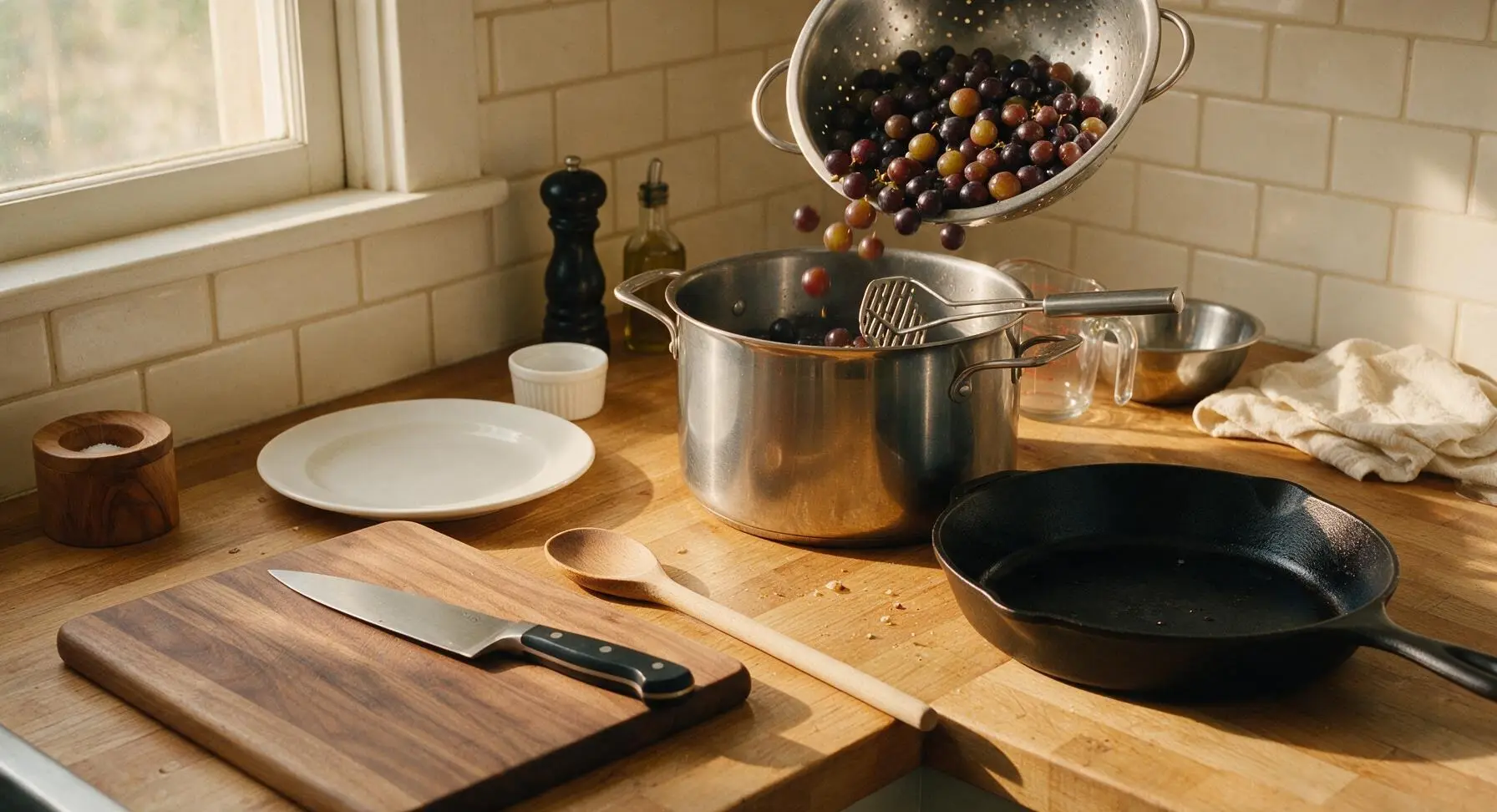
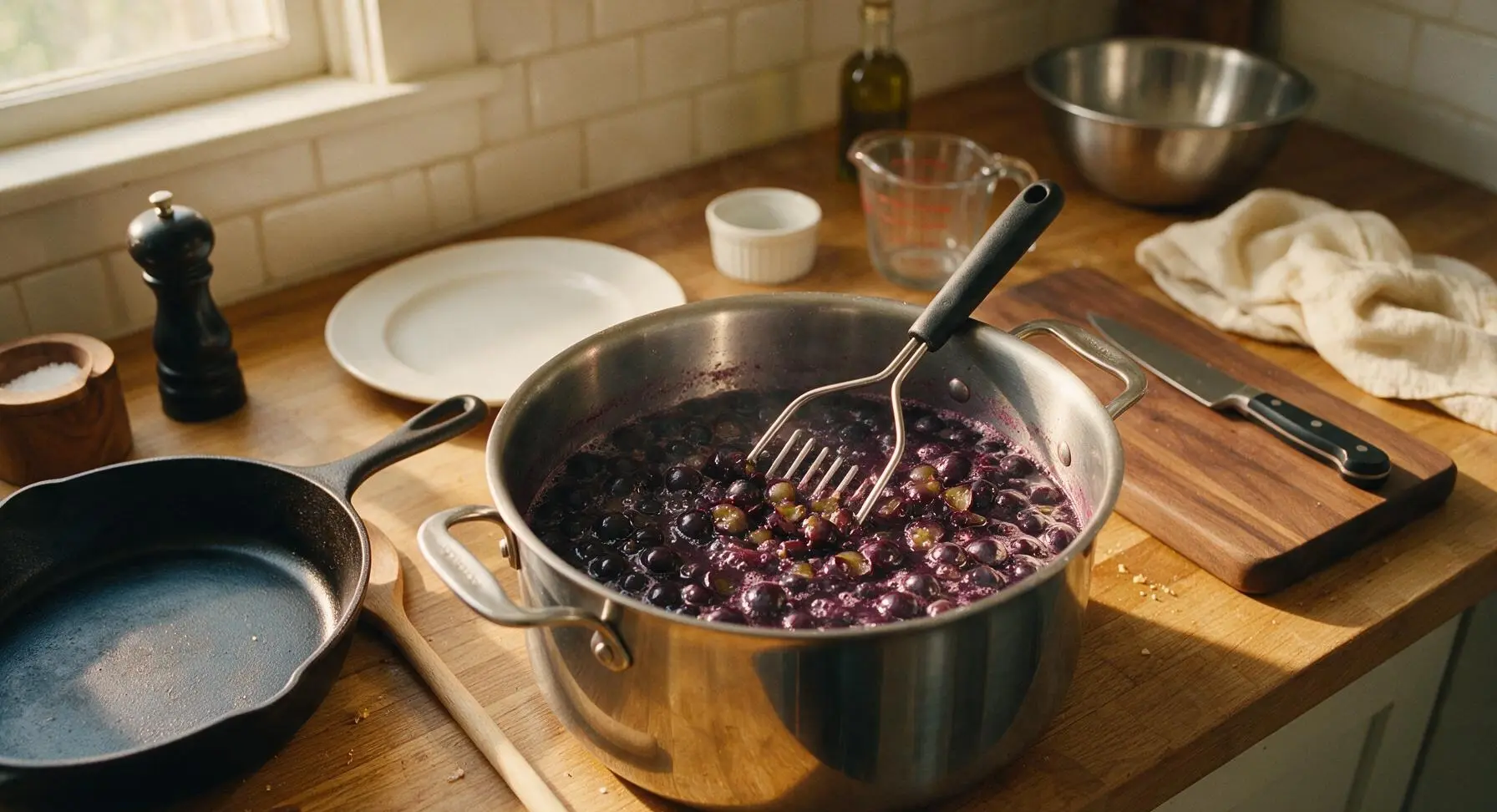
Transfer drained grapes to the 8-quart stainless steel stock pot set over medium heat (350°F/175°C stovetop setting). Use the stainless steel potato masher to crush grapes thoroughly as they heat, releasing their deep purple juice. Bring the mixture to a gentle rolling boil, then reduce heat to low (200°F/95°C), cover, and simmer for 10 minutes, stirring occasionally to prevent sticking to the pot base. Visual cue: grape skins will split completely, and the pot will contain a loose mixture of purple juice, soft pulp, and separated skins.
Step 2
step2:Crush and Cook Grapes
Step 2
step2:Crush and Cook Grapes
3

Strain Clear Juice

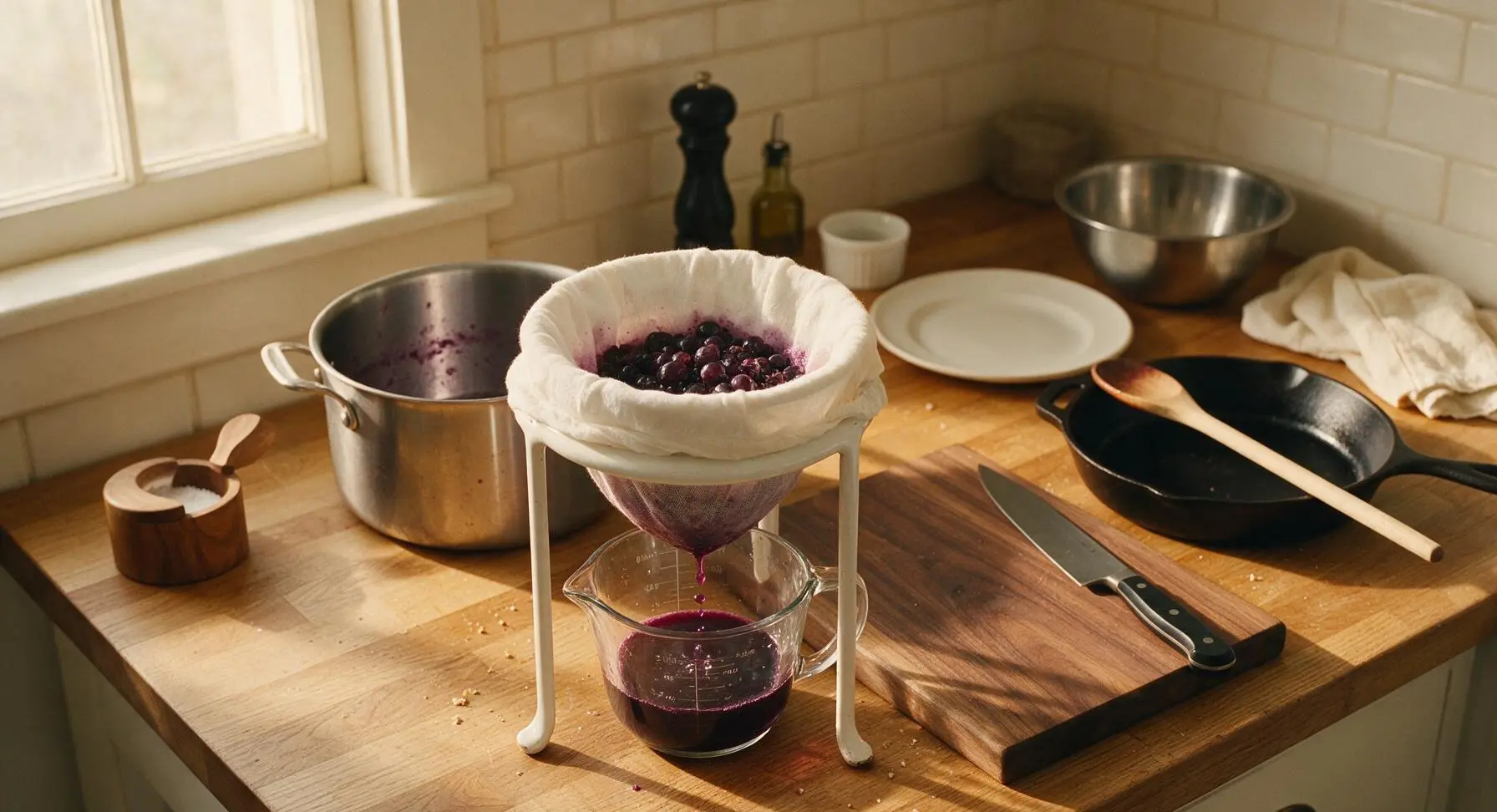
Set up the white enamel jelly strainer stand fitted with the clean muslin straining bag, positioned over the 1-liter clear glass measuring cup. Carefully pour the hot cooked grape pulp and juice into the muslin bag, and allow to drain undisturbed for 2 hours at room temperature. Do not squeeze the bag, as this will cloud the final jelly. You will collect approximately 4 cups (960ml) of clear, transparent deep purple juice; discard the dry pulp remaining in the bag.
Step 3
step3:Strain Clear Juice
4

Combine Juice and Sugar

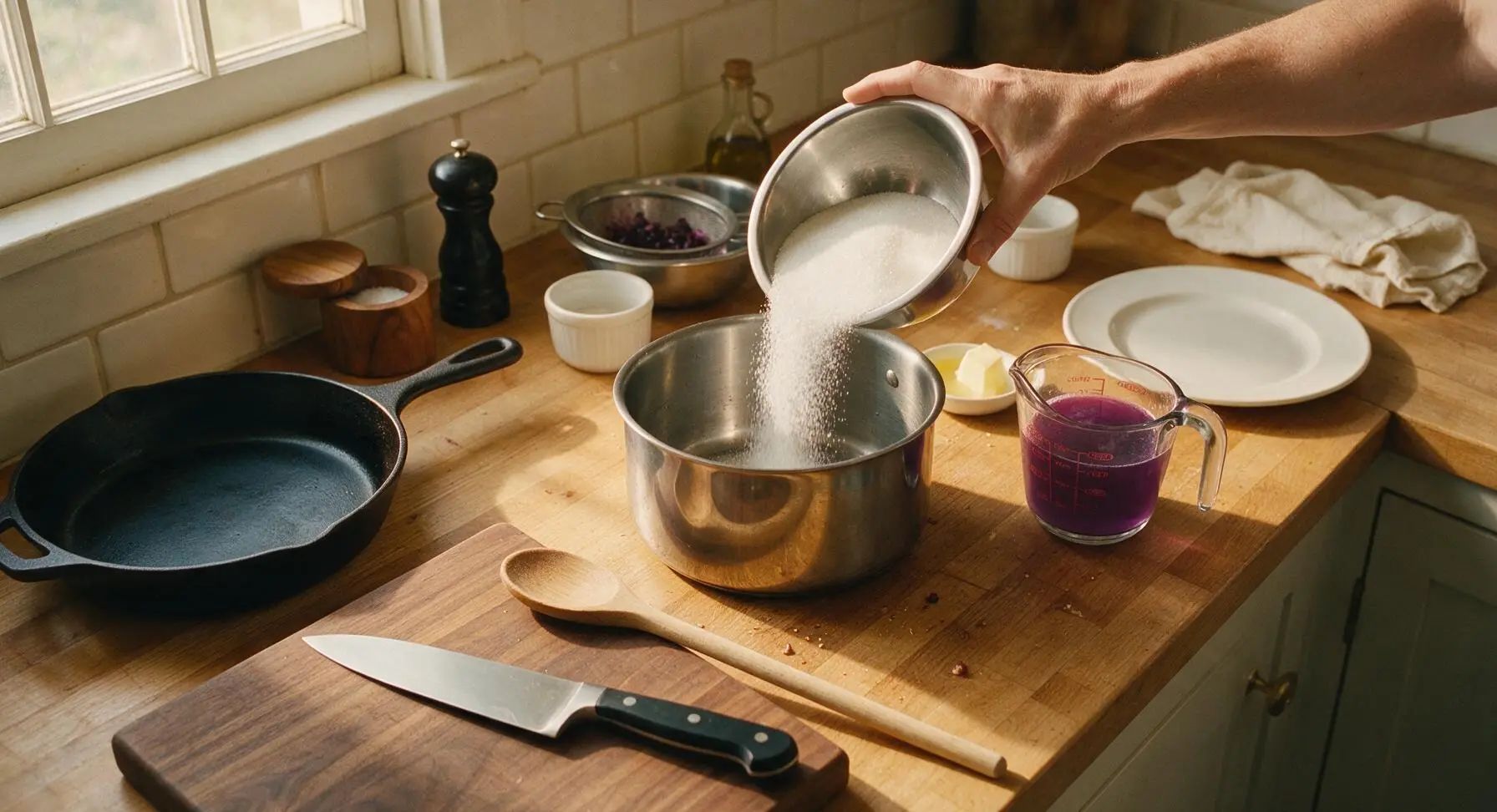
Measure exactly 4 cups of strained muscadine juice, pouring it back into the cleaned, dried stock pot. Add 3.5 cups (700g) granulated sugar, 1 tablespoon (15ml) fresh lemon juice, and 1 teaspoon (5g) unsalted butter. Stir over medium heat until sugar is fully dissolved, approximately 3 minutes. Visual cue: no gritty sugar crystals remain when you run a spoon along the bottom of the pot.
Step 4
step4:Combine Juice and Sugar
5

Boil to Gel Point

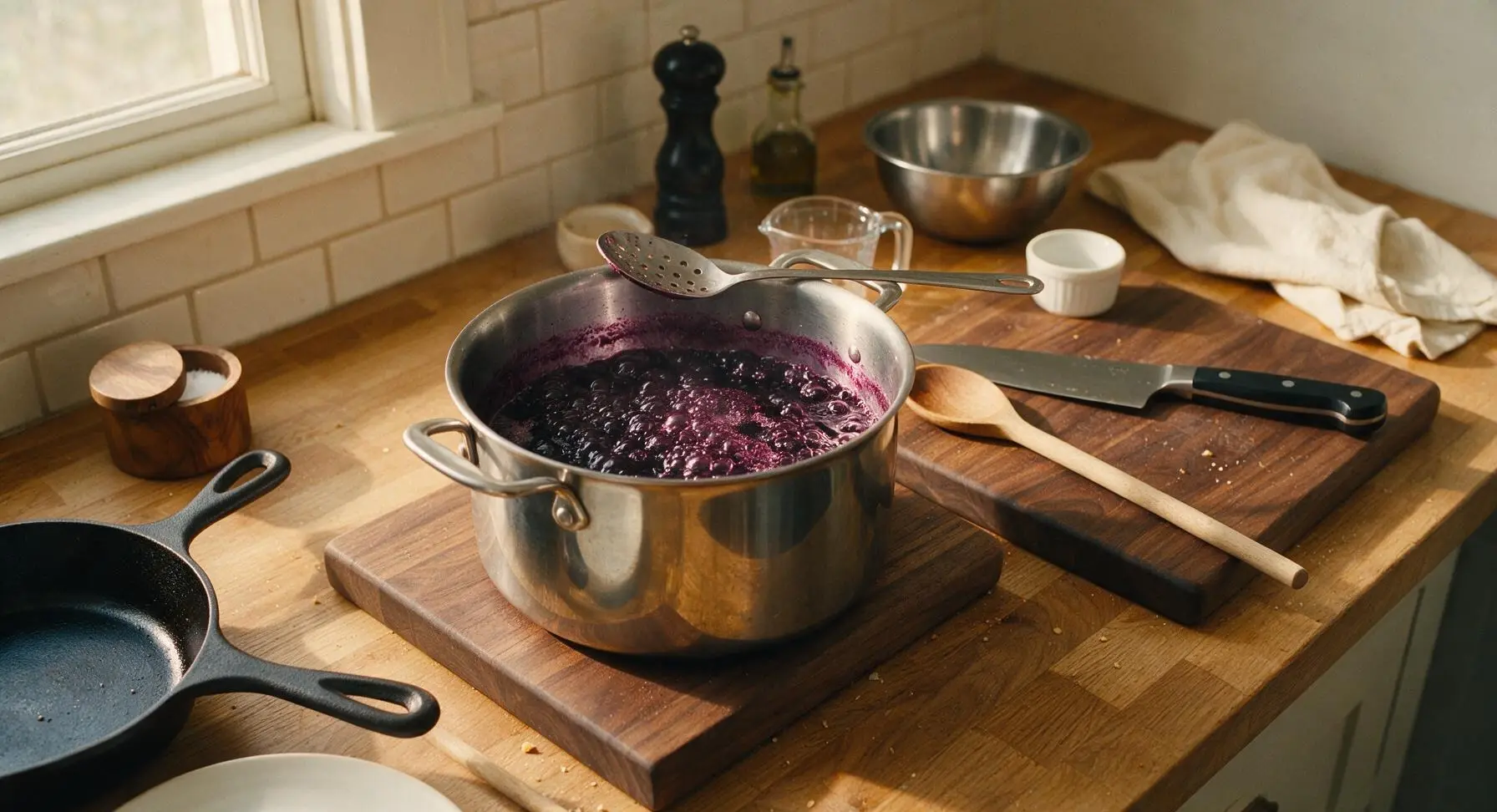
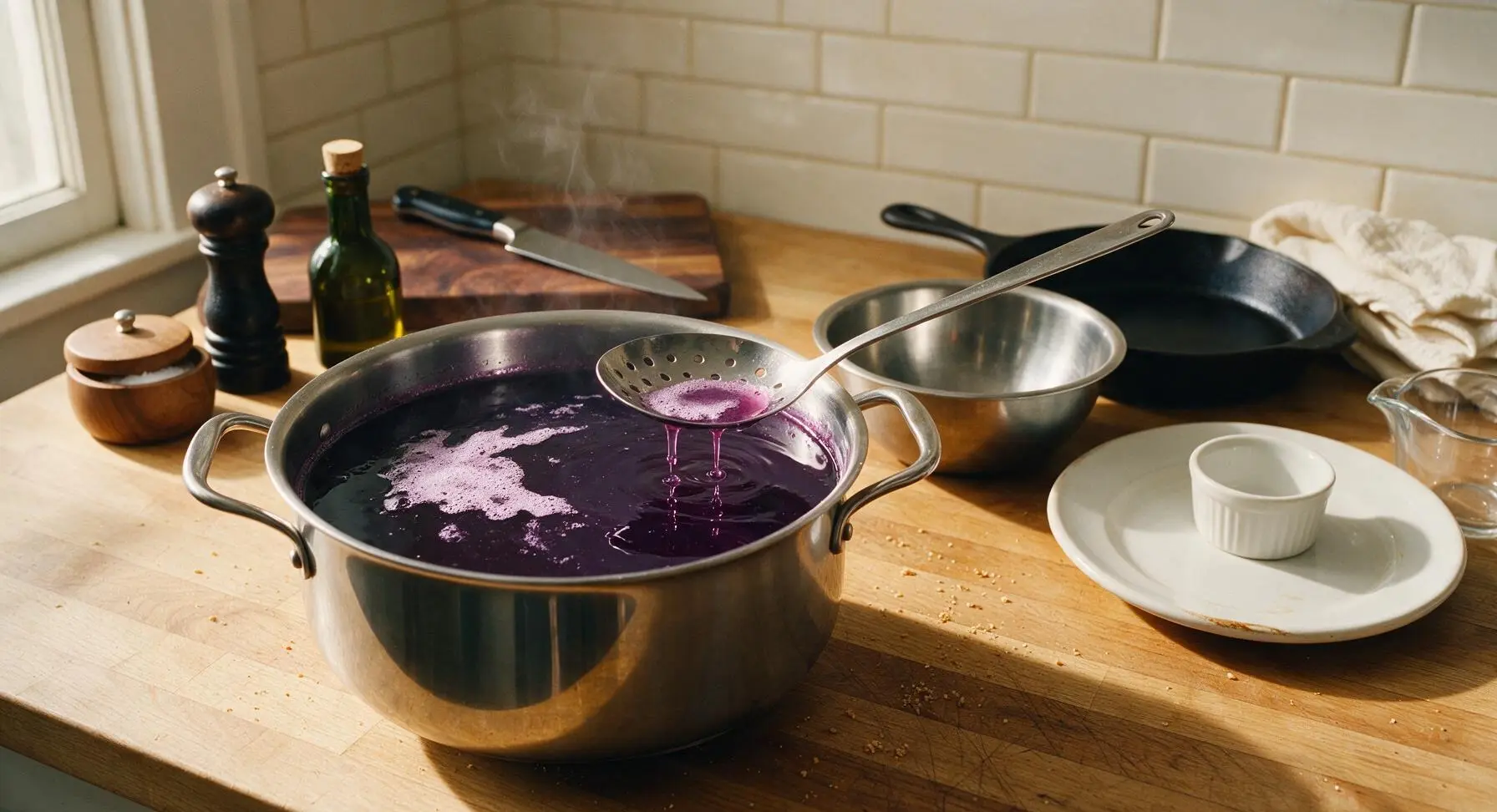
Increase heat to medium-high (400°F/205°C), and bring the juice-sugar mixture to a full rolling boil that cannot be stirred down, stirring constantly to prevent scorching. Once at a sustained rolling boil, pour in the full 3oz (85ml) pouch of liquid pectin, stir continuously, and return to a full rolling boil for exactly 1 minute, then immediately remove the pot from heat. Use the long-handled slotted spoon to skim all pale purple foam from the jelly surface and discard.
Step 5
step5:Boil to Gel Point
Step 5
step5:Boil to Gel Point
6

Test for Proper Set

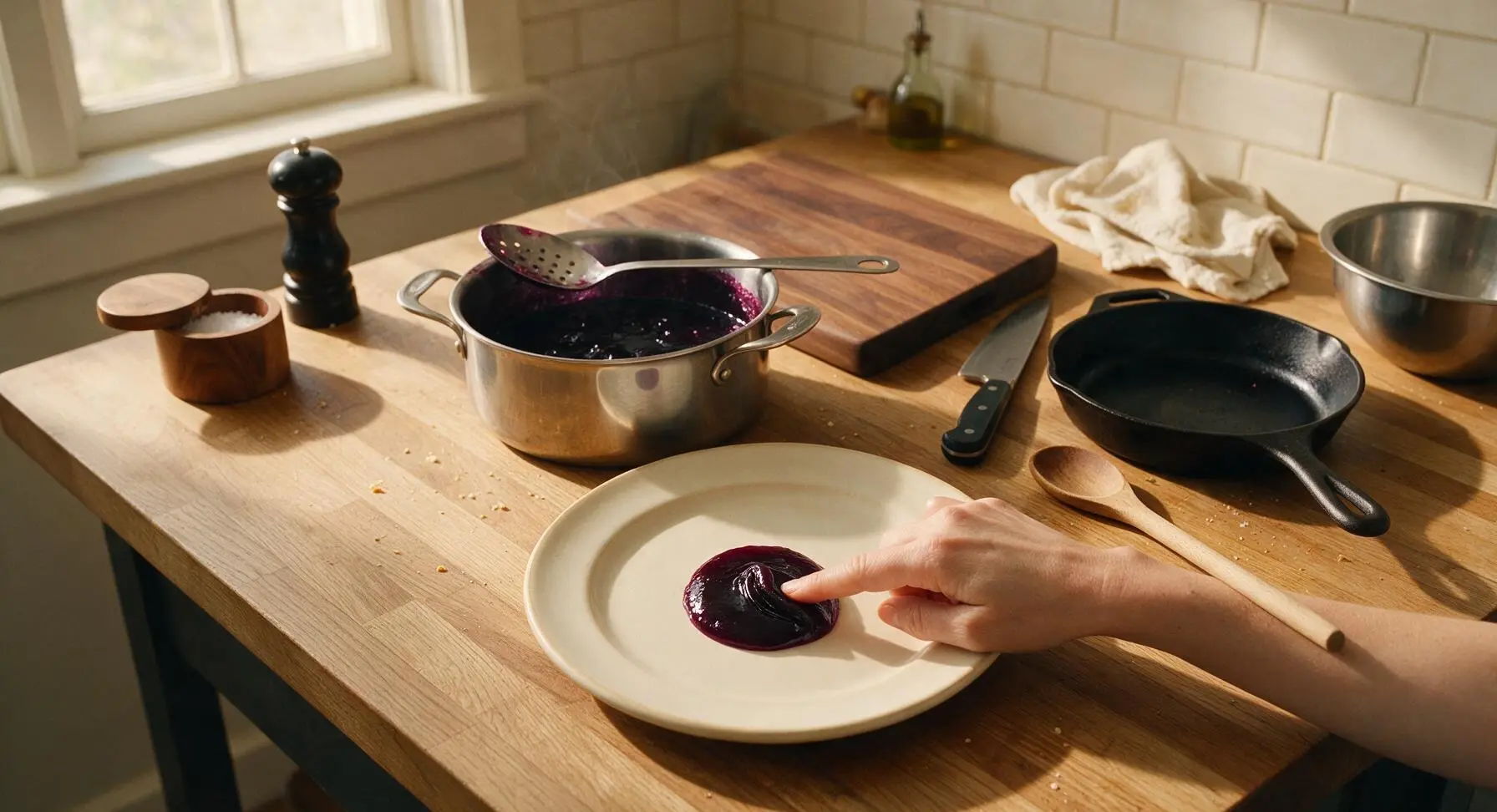
Before jarring, test the jelly set: place 1 teaspoon of hot jelly on a cold plate chilled in the freezer for 10 minutes. Wait 30 seconds, then push the edge of the jelly dollop with your finger. Visual cue: if the jelly wrinkles and holds its shape instead of running freely like thin syrup, it is ready. If it remains runny, return the pot to heat, boil for 30 additional seconds, and retest.
Step 6
step6:Test for Proper Set
7

Fill Hot Jars

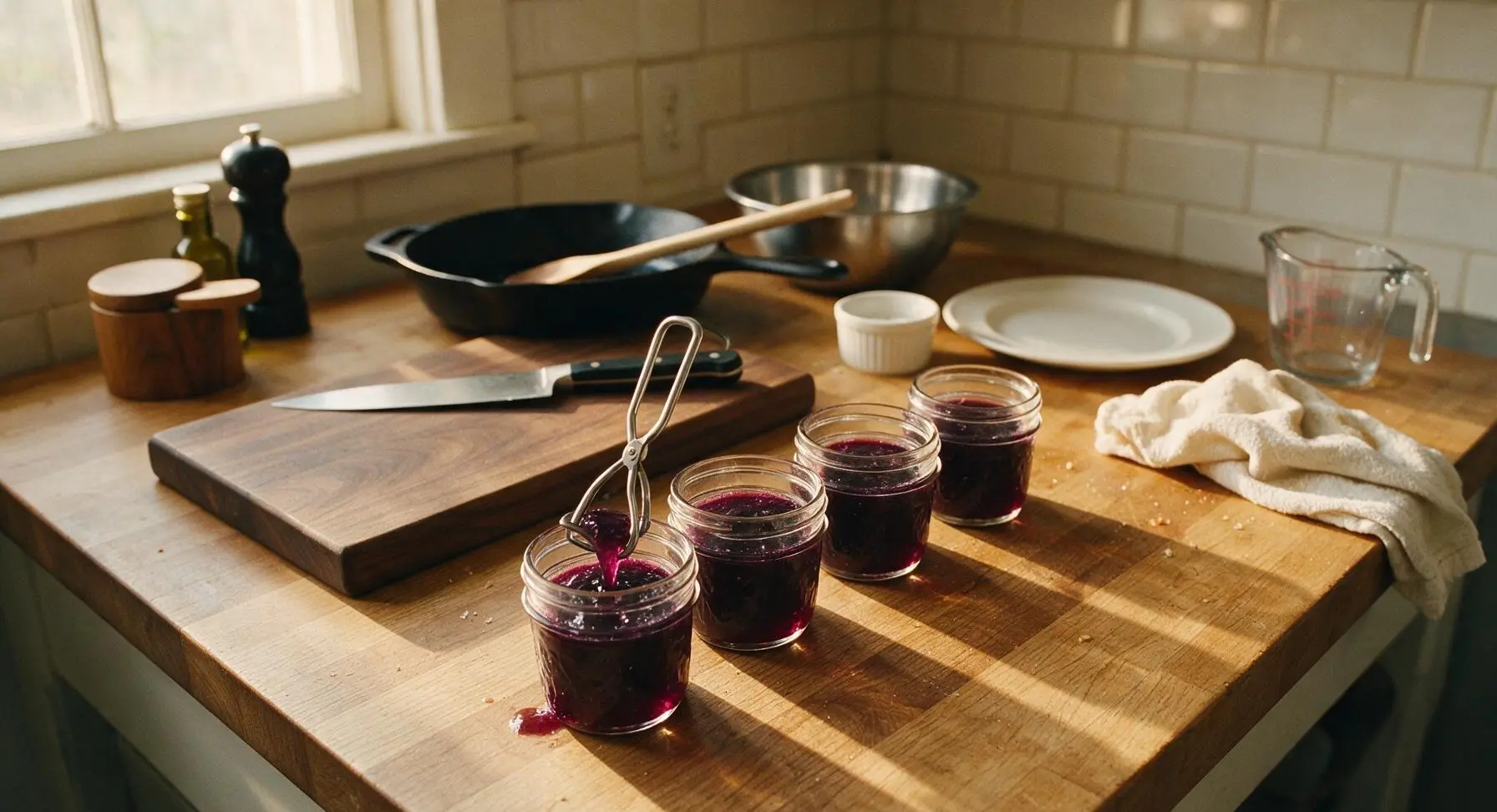
Arrange 4 sterilized half-pint glass canning jars (boiled for 10 minutes prior to use to sterilize) in a row on the counter. Use the stainless steel canning jar lifter to steady each jar, then carefully pour hot jelly into the jars, leaving exactly 1/4 inch (6mm) of headspace below the jar rim. Wipe each jar rim with a damp corner of the fixed linen towel to remove sticky jelly residue, then screw on the gold metal lids and bands until fingertip tight.
Step 7
step7:Fill Hot Jars
8

Process and Cool Jars

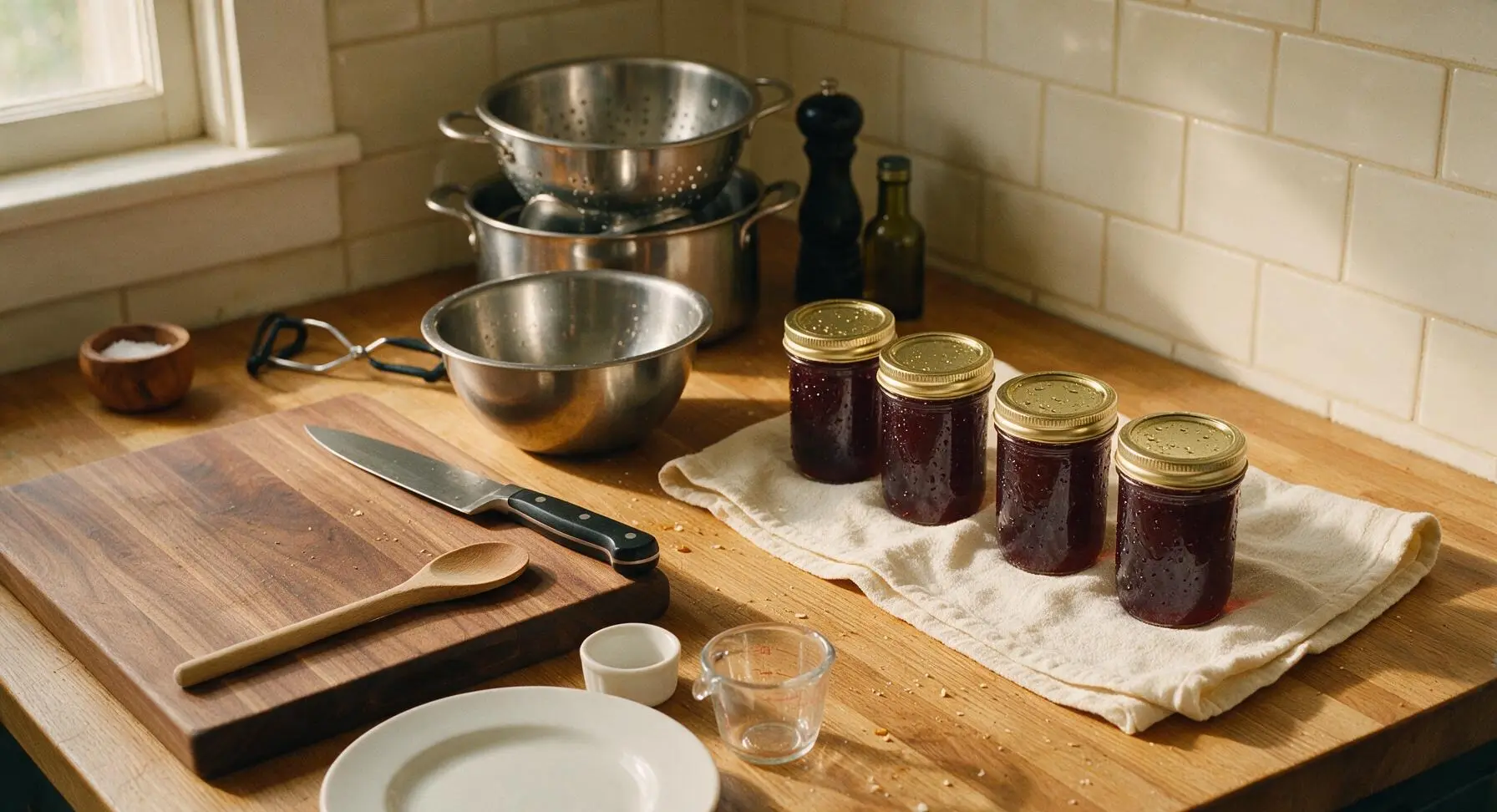
Lower filled, sealed jars into the stock pot of boiling water (used as a water bath canner), ensuring jars are covered by 1 inch (2.5cm) of boiling water. Process for 5 minutes at a full boil, then use the jar lifter to transfer jars upright to the linen towel on the counter to cool undisturbed for 24 hours. Audible cue: you will hear a faint 'pop' from each jar as the vacuum seal forms (lids will curve inward when sealed). The jelly will fully set to a spreadable consistency as it cools.
Step 8
step8:Process and Cool Jars

Tips

1.Avoid squeezing the muslin straining bag to speed up juice collection, even if draining feels slow: squeezing presses tiny pulp particles into the juice, which will turn your jelly cloudy instead of producing the signature clear, jewel-toned finish.
2.Never skip the cold plate set test: natural pectin levels in muscadines vary based on ripeness and growing conditions, so strict recipe timing alone can lead to either runny syrup (under-boiled) or tough, rubbery jelly (over-boiled).
3.The small amount of butter added to the juice reduces surface foam formation by breaking down surface tension, resulting in less skimming work and a clearer final jelly; you can omit it for vegan diets, but expect more foam to skim.
✨ You May Also Like

Breakfast
🍜 United States

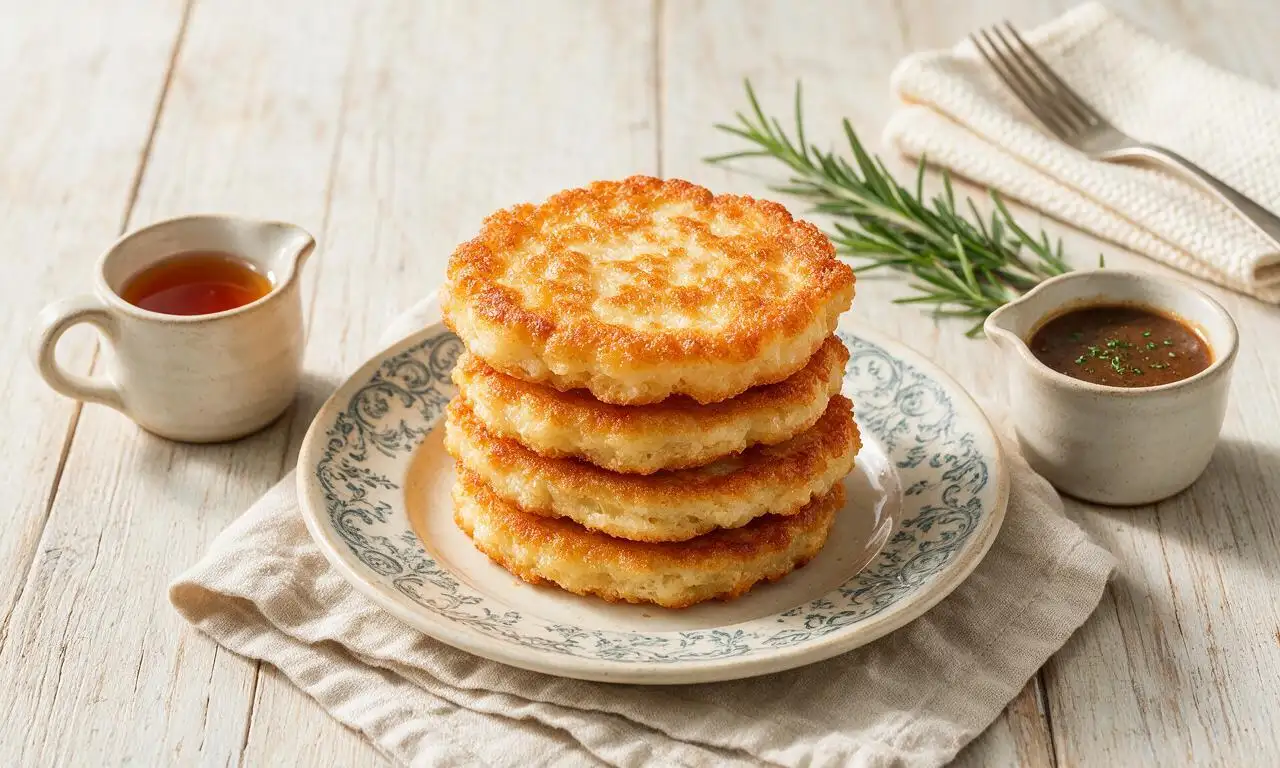
Crisp-edged, fluffy lard griddle cakes are a nostalgic homestyle staple, with rich savoriness from rendered lard, perfect topped with maple syrup or savory gravy.

⏱️ 25 minuteBreakfast ★ 4.8
Breakfast
🍜 United States

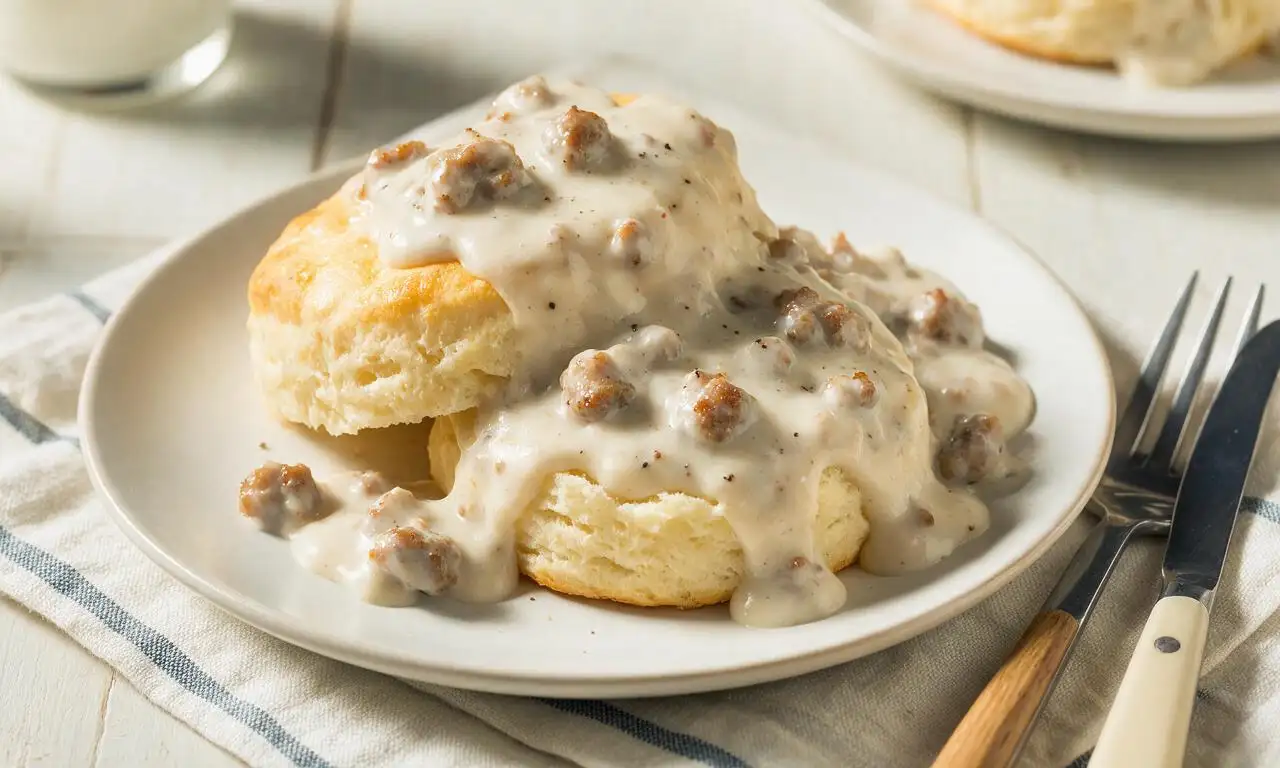
Flaky, buttery homemade buttermilk biscuits smothered in creamy, peppery pork sausage gravy: a beloved, hearty Southern American comfort food classic.

⏱️ 35 minuteBreakfast ★ 4.8
Breakfast
🍜 United States

Golden, custardy brioche stuffed with sweet cream cheese and fresh berries, pan-fried to crisp perfection. An indulgent, cozy breakfast perfect for slow weekend mornings.

⏱️ 30 minuteBreakfast ★ 4.7
Breakfast
🍜 United States

Flaky, buttery Southern-style biscuits stuffed with savory salty country ham, a portable, satisfying classic perfect for casual on-the-go meals.

⏱️ 25 minuteBreakfast ★ 4.8
Breakfast
🍜 United States

Iconic puffy baked pancake popularized in Seattle, with crisp golden edges and soft custardy center, served warm with classic sweet toppings.

⏱️ 35 minuteBreakfast ★ 4.6
Breakfast
🍜 United States

Fluffy, golden pancakes studded with juicy peak-summer mixed berries, drizzled with maple syrup for a bright, comforting, crowd-pleasing family breakfast.

⏱️ 25 minuteBreakfast ★ 4.7

Muscadine Jelly:Frequently Asked Questions

1.Can I use underripe or overripe muscadines for this jelly, or do they need to be perfectly ripe? ▾
Stick to mostly ripe, deep purple muscadines with just a small handful of slightly underripe fruit for the best set and flavor. Overripe muscadines have lower natural pectin and can lead to runny, overly sweet jelly, while fully unripe fruit creates a tart, grassy final product. Skip any muscadines with soft spots, mold, or shriveled skin for the cleanest, brightest taste.
2.Why is unsalted butter included in this jelly recipe? I thought jelly only uses fruit, sugar, and pectin. ▾
That small pat of unsalted butter cuts down on foaming as the jelly boils, which reduces the cloudy, frothy layer you’d otherwise have to tediously skim off the top later. It won’t make your jelly taste buttery or greasy at all—you’ll just get a clearer, jewel-toned final product with way less prep work. Vegan cooks can swap it for a tiny splash of neutral vegetable oil.
3.Do I have to peel and seed muscadines before making jelly? That sounds really tedious. ▾
Good news—you don’t! For this old-fashioned recipe, simmer whole, washed grapes until their skins burst and pulp softens, then strain the juice through a fine-mesh sieve or jelly bag to remove skins, seeds, and tough bits. Don’t squeeze the bag while straining, though, or you’ll end up with cloudy jelly instead of that signature clear, bright purple finish.
4.My jelly turned out runny even after following the recipe—what went wrong? ▾
Runny jelly almost always traces back to one of three common issues: you didn’t bring the jelly to a full, stir-proof rolling boil after adding pectin, you used overripe muscadines with too little natural acid and pectin, or you measured your sugar incorrectly. If it doesn’t set after 24 hours, you can reprocess it with a little extra lemon juice and pectin to fix the texture.
5.Can I cut back on the sugar to make a lower-sugar version of this jelly? ▾
I don’t recommend slashing sugar drastically for this old-fashioned recipe, because sugar doesn’t just sweeten the jelly—it works with pectin to help it set properly, and acts as a preservative to extend shelf life. If you want less sugar, swap in a low-sugar liquid pectin made for reduced-sugar recipes, so you don’t end up with runny, quick-to-spoil jelly.
6.How long do I process jars in a water bath to make this jelly shelf-stable? ▾
Once you fill sterilized half-pint jars with hot jelly, wipe rims clean, and apply lids and bands to fingertip tight, process in a boiling water bath for 10 minutes if you’re at an elevation under 1,000 feet. Add one extra minute of processing time for every 1,000 feet of elevation above that to get a safe, reliable seal that keeps for up to 18 months in a cool, dark pantry.
7.What’s the point of the fresh lemon juice? Can I leave it out? ▾
Don’t skip the lemon juice! It adds a bright, tart kick that balances muscadines’ natural deep, sweet flavor, but more importantly, it boosts the jelly’s acid level to help pectin set firmly and create a safe, shelf-stable final product. Bottled lemon juice works in a pinch, but fresh-squeezed has a brighter, cleaner flavor that makes the muscadine taste really pop.
8.Do I have to use liquid pectin, or can I swap in powdered pectin instead? ▾
Stick to liquid fruit pectin for this exact recipe, because powdered and liquid pectin are added at different points in cooking and require different ratios of sugar and acid to set correctly. If you only have powdered pectin on hand, follow the measurement and add-in instructions on that specific pectin package to avoid soft, runny jelly that never hits that perfect spreadable texture.
9.How do I tell when the jelly is done cooking if I don’t have a candy thermometer? ▾
Use the classic frozen spoon test! Pop a few metal spoons in the freezer before you start cooking, and when you think the jelly is close, dip a cold spoon into the pot, hold it over the pot, and let the jelly run off the edge. If it sheets off the spoon in two thick, merging drops instead of running in a thin, fast stream, it’s done and ready to jar.
10.Can I make this jelly with bronze scuppernong muscadines instead of purple ones? ▾
Absolutely! Bronze muscadines, often called scuppernongs, are the golden, slightly milder cousin of purple muscadines, and they make a delicious, honeyed golden jelly using the exact same ingredient ratios. Just make sure you use fully ripe, unblemished fruit, and add an extra teaspoon of lemon juice to brighten up their milder, sweeter flavor a little.
11.Why is my jelly cloudy instead of the clear jewel tone the recipe mentions? ▾
Cloudy jelly usually comes from one of two small missteps: either you squeezed the jelly bag too hard while straining the grape juice, which pushed tiny bits of pulp and skin sediment through the mesh, or you didn’t skim the foamy top layer of boiling jelly before pouring it into jars. It’s still totally safe to eat, it just won’t have that perfectly clear, glossy, old-fashioned look.
12.How long does muscadine jelly last once I open a jar? ▾
Once you break the seal on a jar, store it in the refrigerator, where it will stay fresh and perfectly spreadable for 3 to 4 weeks. You may notice a tiny bit of separation or thin syrup on top after a couple of weeks—just give the jar a quick stir before spreading, and it will be good as new. If you see any mold or off, fermented smells, toss the jar immediately.
13.Do I need fancy special equipment to make this old-fashioned muscadine jelly? ▾
You don’t need high-end gear, but a few key tools make the process way easier: a large, heavy-bottomed stock pot to prevent boilovers, a fine-mesh jelly bag or cheesecloth-lined sieve for straining, sterilized canning jars with new lids, and a jar lifter to safely pull hot jars out of the water bath. A canning funnel also cuts down on messy rim drips that can break seals.
14.Can I add extra flavors like cinnamon or vanilla without ruining the jelly’s set? ▾
You absolutely can, as long as you add small amounts so you don’t throw off the pectin, sugar, and acid balance. A single cinnamon stick simmered with the grapes (removed before straining) or a teaspoon of pure vanilla extract stirred in right before jarring adds warm, cozy depth that pairs beautifully with muscadine’s bold flavor. Skip adding large amounts of extra liquidy mix-ins, though.
15.Can I use foraged wild muscadines for this recipe? I’ve heard they make great jelly. ▾
Foraged wild muscadines make incredible, extra-flavorful jelly! Just make sure you’re 100% confident identifying muscadine vines—they have distinctive round, lobed leaves, thick woody vines, and grapes grow in small clusters rather than large bunches. Pick fruit from areas not sprayed with pesticides or roadside exhaust, and wash foraged fruit extra well before simmering.
16.Why did my jelly develop sugary crystals on top after a few months in storage? ▾
Those harmless sugar crystals form when undissolved sugar gets stuck to the sides of the pot while boiling, or when you cook the jelly too long at too high a temperature, which breaks down pectin and over-concentrates the sugar. To prevent this, wipe down pot sides with a wet pastry brush as the jelly boils to dissolve any stuck sugar crystals before pouring jelly into jars.
17.What are the best ways to serve this jelly besides slathering it on warm biscuits? ▾
While it’s perfect on warm buttermilk biscuits or buttered toast, don’t sleep on other great uses! Swirl it into oatmeal or plain Greek yogurt, use it as a quick glaze for roasted pork or chicken, dollop it on a charcuterie board alongside sharp cheddar or brie, or stir a spoonful into sparkling water or iced tea for a bright, distinctly Southern fruity twist.

Comments (7)

2 weeks ago

OMG, this jelly tastes exactly like my grandma used to make! I picked a whole bucket of wild muscadines from our property last weekend and was so nervous I’d mess up the set, but the timing instructions were spot on. Slathered it on warm biscuits for Sunday family dinner and everyone went back for seconds. SO good, I already gave two jars to neighbors!

5 days ago

First time ever making jelly of any kind, and I ran into a small issue — my jelly came out a little runnier than I expected even after cooking the full 35 minutes. Did I not squeeze the grapes hard enough when straining? Flavor is incredible though, I’ve been putting it on my morning toast all week!

3 days ago

I had the same problem my first batch! Turns out I didn’t let the pectin come to a full rolling boil that couldn’t be stirred down before adding the sugar. Fixed it on my second go round and it set perfectly, good luck!

2 days ago

Great tip from HomeCookingHawk! Runny jelly is usually from not reaching that full rolling boil, or under-measuring pectin. You can always reprocess runny jars with a little extra pectin if you don’t want to wait for your next batch — we have a quick guide for that linked on our canning resources page!

1 week ago

Brought a jar of this to our neighborhood potluck last weekend and people were practically begging for the recipe! I added a tiny pinch of cinnamon to one batch and it was chef’s kiss, pairs so well with cheese and crackers on a charcuterie board. Total game changer for my fall hosting spread.

5 days ago

Love the cinnamon addition! That sounds like the perfect cozy twist for fall, so glad it was a hit at your potluck — charcuterie boards are one of our favorite unexpected ways to use this jelly too!

yesterday

My kids loved it! I was worried the muscadine flavor would be too tart for them, but the balance of sugar is perfect here. We used it to make peanut butter and jelly sandwiches for their school lunches all week, and even my picky 7 year old asked for seconds. 10/10, will make every muscadine season from now on.

3 days ago

I’ve tried so many old-fashioned muscadine jelly recipes over the years and this one is hands down the best. No weird artificial aftertaste, the cook time is short enough that it doesn’t make my whole kitchen sticky for hours, and the yield is exactly what the recipe says. I canned 8 half-pints last night and they all sealed perfectly on the first try.

2 days ago

So glad you mentioned the yield! I’m planning to make a big batch for holiday gifts this year and was trying to calculate how many muscadines I need to pick. How many pounds of fruit did you end up using to get that 8 half-pints?

2 hours ago

Taste is amazing, but I was surprised this is rated medium difficulty — as a total canning newbie, I definitely struggled with the straining step and ended up with a little bit of sediment in a couple jars. Wish there was a note about how fine the mesh strainer needs to be!

30 minutes ago

Thanks for the honest feedback, Jake! We recommend using a double layer of cheesecloth over a fine-mesh strainer to catch all the tiny seed and skin bits that cause sediment. We’ll add that note to the recipe instructions right away to make it easier for first-time canners!

30 minutes ago

Wait, has anyone tried making this with frozen muscadines? I stashed a bunch in the freezer last month when they were in season for meal prep, and I’m craving this jelly now — don’t want to wait until next year to make a batch!

5 minutes ago

I do it every year! Thaw them first and let them drain a little before cooking, it turns out exactly the same as using fresh. No taste difference at all, I promise!

just now

Great question! Frozen muscadines work perfectly for this recipe — just thaw completely before cooking, and you may need to add 1-2 extra minutes of cook time to account for the extra moisture from thawing. Enjoy!