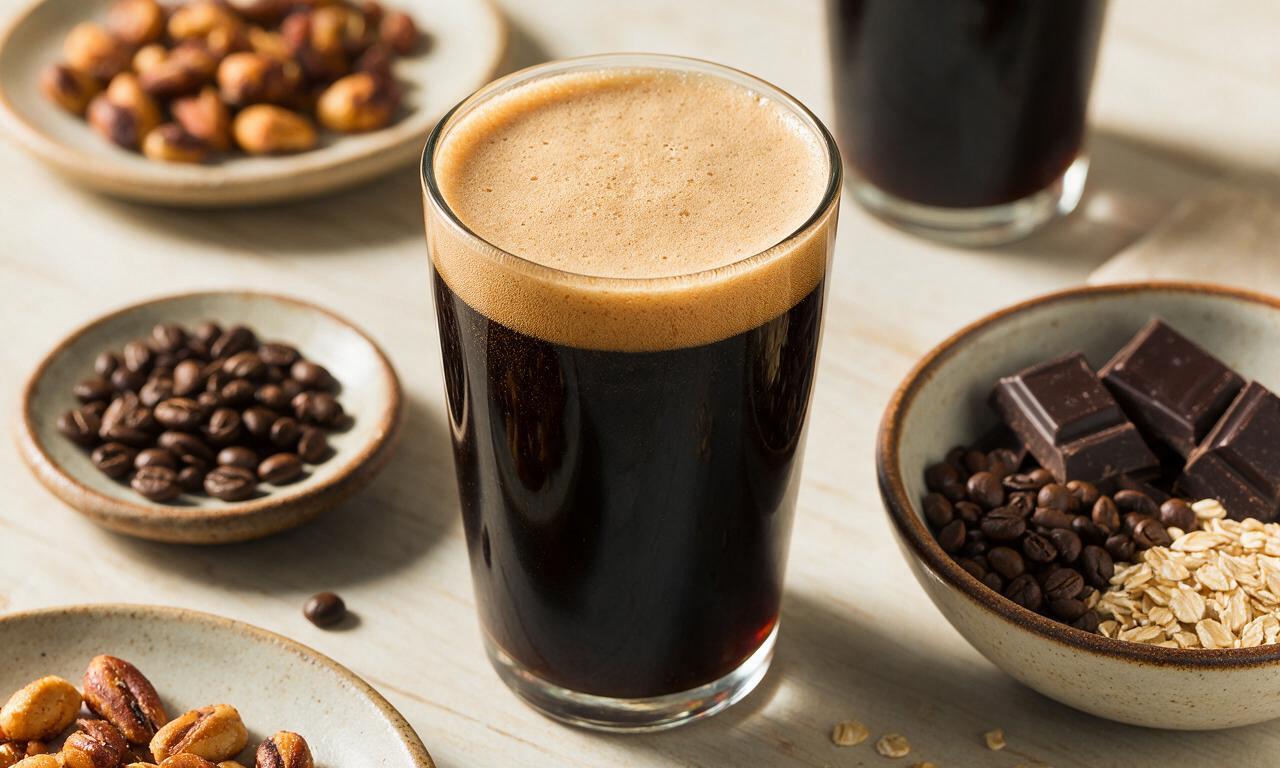
Oatmeal Stout

Oatmeal Stout
⏱️ cook time 2 hours active prep, 24 days total (fermentation & conditioning)
🍽️ servings 8
⚡ Difficulty medium

intro

Velvety, roasty homemade oatmeal stout with dark chocolate and coffee notes, smoothed by flaked oats, perfect for cool autumn sipping with friends.

Ingredients

Crushed Maris Otter pale malt 907 grams (2 lbs)
Flaked rolled oats 227 grams (1 cup packed)
Crushed roasted barley 85 grams (1/3 cup)
Crushed chocolate malt 57 grams (1/4 cup)
East Kent Goldings hop pellets 14 grams (0.5 oz)
British ale yeast (S-04 strain) 1 packet (11 grams)
Corn priming sugar 28 grams (2 tablespoons)
Filtered water 4.5 liters (19 cups)

Steps

1

Mash the grain bill

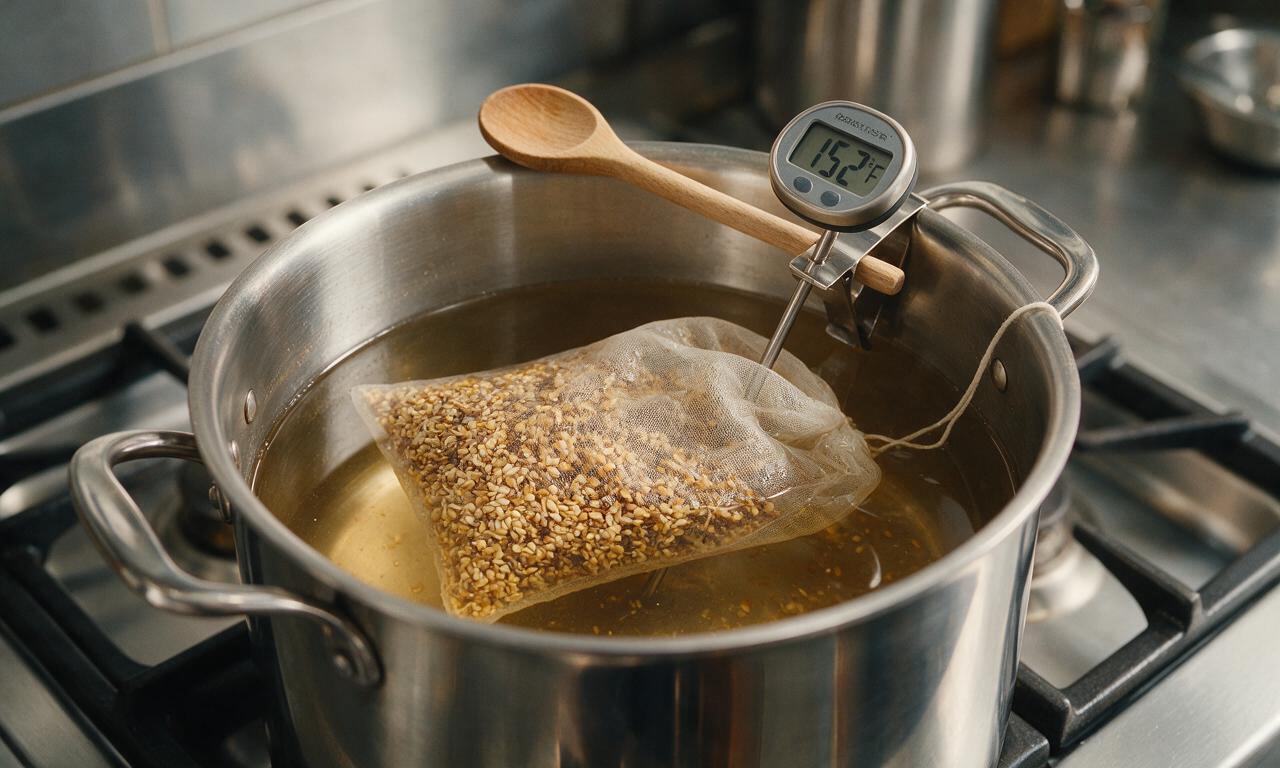
Heat 3 liters (12.7 cups) of filtered water in a large 8L stockpot over medium heat until it reaches 67°C (152°F). Add all crushed grains (Maris Otter, flaked oats, roasted barley, chocolate malt) sealed in a fine-mesh brew bag. Hold the temperature steady at 65–68°C (149–154°F) for 60 minutes, adjusting stovetop heat as needed, and stirring the grain bag every 10 minutes to prevent dry clumps.
Step 1
step1:Mash the grain bill
2

Sparge to collect wort

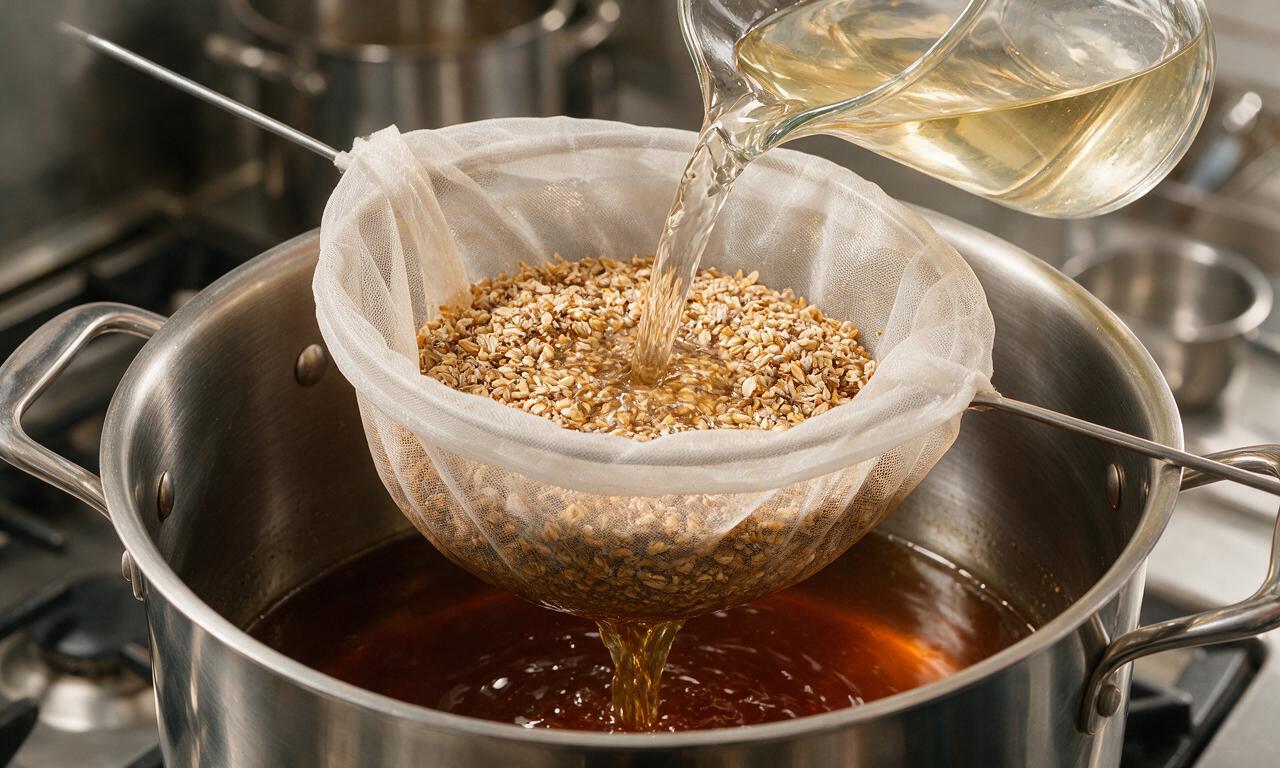
After the 60-minute mash, lift the grain bag out of the pot and suspend it over the opening to drain freely for 2 minutes. Slowly pour 1.5 liters (6.3 cups) of 77°C (170°F) filtered water over the top of the grain bag to rinse residual sugars from the grains, then discard the spent grains. Retain all the dark amber sweet liquid (called wort) in the stockpot.
Step 2
step2:Sparge to collect wort
3

Boil wort with hops

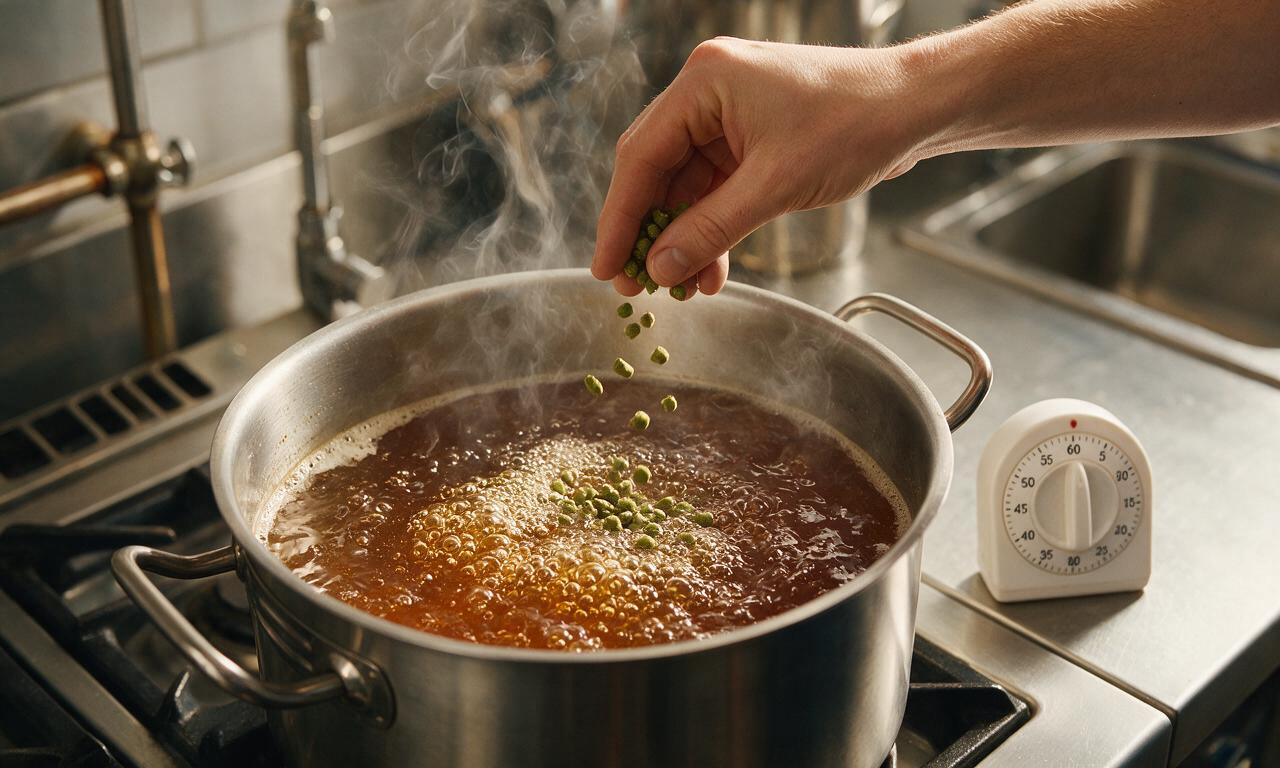
Turn stovetop heat to medium-high to bring the collected wort to a gentle rolling boil, then set a timer for 60 minutes. Add 7 grams (0.25 oz) of East Kent Goldings hops immediately when the boil starts, then add the remaining 7 grams (0.25 oz) of hops during the final 10 minutes of the boil. Keep the pot partially covered to prevent messy boilovers, adjusting heat to maintain a steady but not violent boil.
Step 3
step3:Boil wort with hops
4

Rapidly cool wort

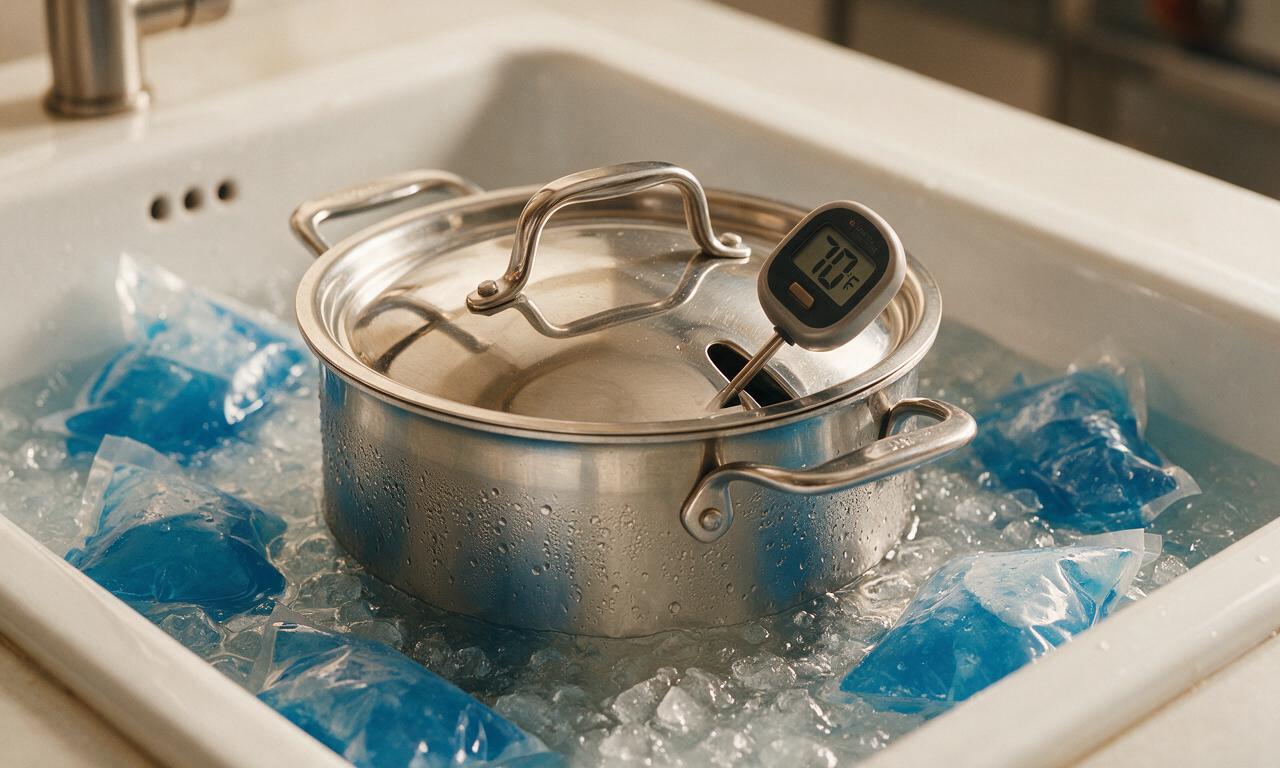
When the 60-minute boil finishes, turn off the heat immediately. Seal the pot with a tight lid and transfer it to a clean kitchen sink filled with cold water and ice packs to create an ice bath. Stir the wort gently every 5 minutes, replacing ice as needed, until the wort temperature drops to 21°C (70°F), which takes approximately 20 minutes. Avoid lifting the lid unnecessarily to prevent airborne bacteria contamination.
Step 4
step4:Rapidly cool wort
5

Pitch yeast to ferment

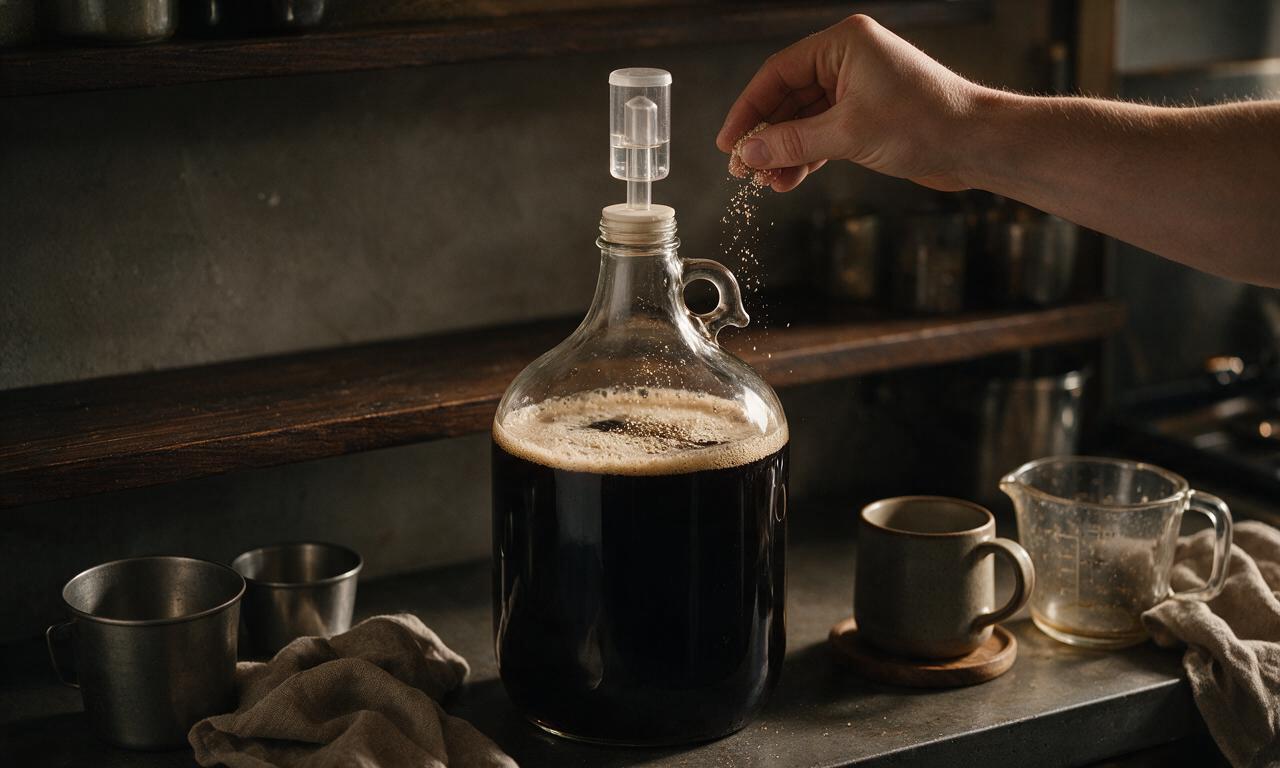
Thoroughly sanitize a 3.8L (1-gallon) glass fermentation jug, airlock, and rubber stopper with food-grade no-rinse brewer sanitizer. Pour the cooled wort into the jug, topping up with small amounts of cool filtered water if needed to reach the 3.8L fill mark. Sprinkle the full 11-gram packet of British ale yeast across the wort surface, seal the jug with the stopper and airlock (fill the airlock halfway with sanitizer), then store the jug in a dark, temperature-stable space held at 18–21°C (65–70°F) for 14 days to ferment.
Step 5
step5:Pitch yeast to ferment
6

Bottle and carbonate stout

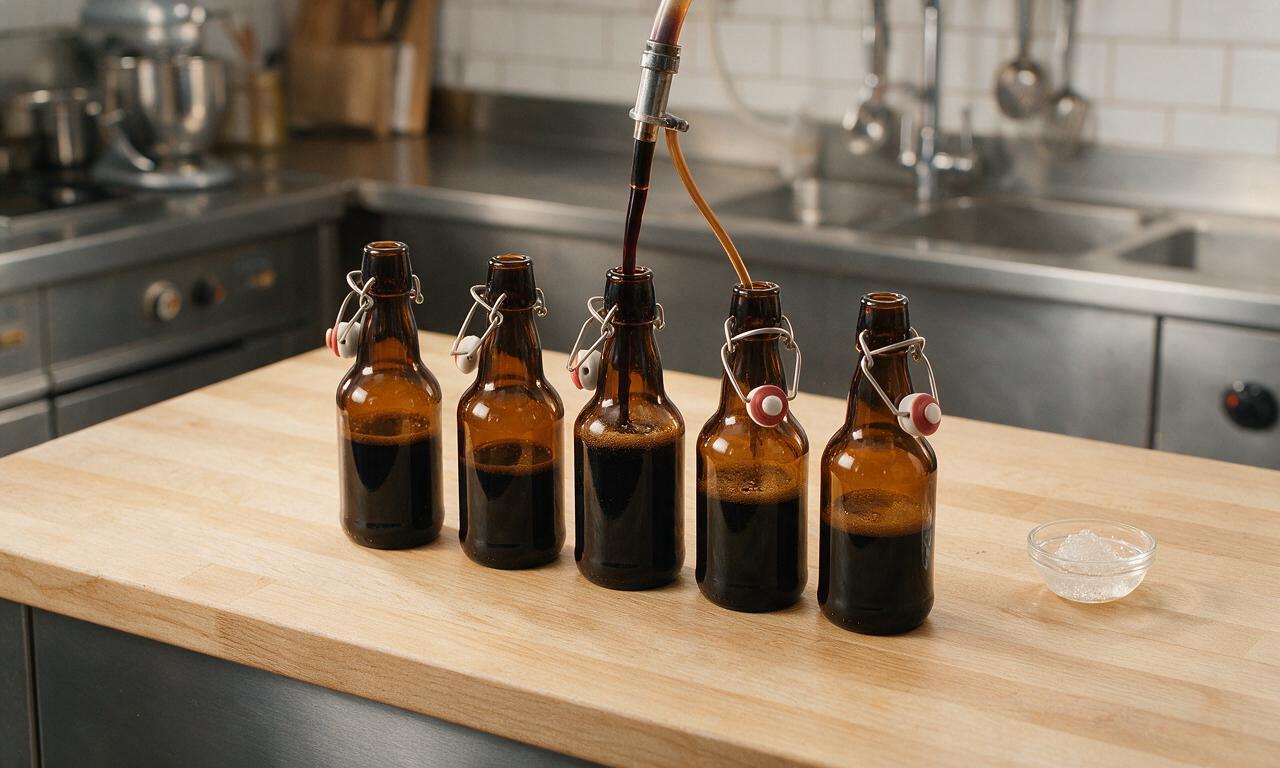
After 14 days of fermentation, sanitize 8 swing-top 473ml (16oz) glass bottles and an auto-siphon. Dissolve 28 grams (2 tablespoons) of corn priming sugar in 60ml (1/4 cup) of boiling water, cool to room temperature, and stir evenly into the fermented stout to trigger natural carbonation. Siphon the stout into bottles, leaving 2.5cm (1 inch) of headspace below each cap, seal tightly, and store at room temperature (20–22°C/68–72°F) for 7 days to carbonate, then chill bottles for 3 days at 4°C (39°F) before serving.
Step 6
step6:Bottle and carbonate stout

Tips

1.Sanitize every piece of equipment that touches cooled wort or fermented beer with no-rinse brewer sanitizer; even trace bacteria can cause sour, off-flavors that ruin a batch.
2.Keep mash temperature steady between 65–68°C (149–154°F); temperatures above 70°C (158°F) create unfermentable sugars that make the stout overly thick and cloyingly sweet.
3.Resist opening fermentation jugs or bottles before conditioning is complete; early exposure to oxygen will cause stale flavors and reduce carbonation.
✨ You May Also Like

Drinks & Beverages
🍜 Mexico

A bright, balanced tequila-based cocktail with zesty fresh lime, smooth orange liqueur, and a signature salt rim, perfect for warm summer sipping.

⏱️ 5 minutesDrinks & Beverages ★ 4.7
Drinks & Beverages
🍜 United States

Thick, creamy, nostalgic classic vanilla milkshake with a rich, smooth texture, topped with whipped cream and a cherry for cool, sweet refreshment.

⏱️ 5 minutesDrinks & Beverages ★ 4.6
Drinks & Beverages
🍜 United States

A bright, golden strong ale with fruity banana-clove notes, subtle hop spice, and soft carbonation, brewed in classic Trappist Tripel tradition.

⏱️ 2 hours aDrinks & Beverages ★ 4.7
Drinks & Beverages
🍜 United States

A frothy, nostalgic American soda fountain treat pairing bubbly cold root beer with creamy vanilla ice cream, perfect for cooling down at warm weather gatherings.

⏱️ 20 minuteDrinks & Beverages ★ 4.9
Drinks & Beverages
🍜 United States

Tart, funky, effervescent American Wild Ale is a complex fruity craft beer brewed with wild yeast, delivering bright, zesty notes perfect for warm-weather sipping.

⏱️ 2 hours aDrinks & Beverages ★ 4.5
Drinks & Beverages
🍜 United States

Bright, bubbly copycat of the iconic American caramel cola, balanced with citrus and warm spice, perfect for sipping ice-cold on hot days.

⏱️ 15 minuteDrinks & Beverages ★ 4.8

Oatmeal Stout:Frequently Asked Questions

1.Why does this recipe call for flaked rolled oats, and can I substitute quick or instant oats instead?
Flaked rolled oats are critical for that signature velvety, silky mouthfeel that makes this oatmeal stout so cozy, as they’re pre-gelatinized and convert smoothly during the mashing process. Skip quick or instant oats—they’re over-processed and will lend a mushy, papery off-flavor. Thick-cut grocery store rolled oats work as a last-minute swap if needed.
2.What’s a good substitute if I can’t find crushed Maris Otter pale malt?
Maris Otter brings a subtle, bready, biscuity base that balances the bold roasty malts in this recipe, but you can swap it 1:1 for domestic 2-row pale malt if it’s hard to find. Add 1/4 teaspoon of light dry malt extract per pound of grain to mimic Maris Otter’s faint honeyed depth so your stout doesn’t taste flat or one-note.
3.How do I prevent the crushed roasted barley and chocolate malt from making my stout taste harsh and ashy?
Those two dark malts are responsible for the recipe’s classic coffee and dark chocolate notes, but they can pull unpleasant astringent, ashy tannins if handled wrong. Keep your mash temperature steady at 152–155°F, and don’t steep these dark malts for longer than 45 minutes to keep flavors smooth, not bitter.
4.Why use East Kent Goldings hop pellets instead of a bolder, more bitter hop variety for this stout?
East Kent Goldings are a traditional, earthy, softly floral hop that complements rather than overpowers the roasty, oaty, chocolate-forward profile of this stout. High-alpha, citrusy hops like Cascade or Citra would clash with the cozy, smooth flavor. If you need a swap, reach for similarly mild, earthy Fuggles hops to keep balance.
5.How long do I need to let this homemade oatmeal stout condition before it’s ready to drink?
This stout hits its best, smoothest flavor after a proper conditioning period that lets roasty notes mellow and the oat texture integrate fully. After primary fermentation finishes, bottle or keg with priming sugar, then hold it at 55–60°F (cool cellar temp) for 3–4 weeks before pouring. It’ll taste even silkier if you can wait a full 6 weeks.
6.Can I add extra coffee or chocolate to amp up those signature flavor notes without ruining the batch?
You absolutely can, as long as you add them at the right stage to avoid off-flavors. Stir in 4–6 oz of cold-brew coffee at bottling to skip harsh, over-extracted coffee bitterness, or add 2–3 oz of unsweetened cacao nibs to secondary fermentation for 3–5 days for rich, deep chocolate flavor without extra sweetness.

Comments (13)

2 weeks ago

First time brewing beer at home and this recipe did NOT disappoint! I was nervous about the medium difficulty rating but the steps were super straightforward, even for a total newbie. That creamy, roasty oat flavor? *Chef’s kiss* Brought a growler to our neighborhood potluck last weekend and everyone was begging for the recipe. SO good.

3 days ago

Quick question before I start this weekend—can I substitute rolled oats for the steel-cut oats the recipe calls for? I have a giant bag of rolled oats in my pantry from meal prep and don’t wanna make a special trip to the store if I don’t have to!

2 days ago

Great question! Rolled oats work just fine as a substitute here, just note they might add a slightly softer, less chewy mouthfeel than steel-cut. I’d recommend toasting them lightly for 10 minutes in the oven before adding to the mash to amp up that nutty oat flavor, you won’t notice a difference!

1 week ago

OMG this is a total game changer for my homebrew setup. I’ve made a dozen stouts before but none have that smooth, velvety finish this one gets from the oats. My wife who swears she “hates dark beer” drank two pints of this at our last family dinner and asked when I’m making another batch. 10/10.

5 days ago

Wait did you do any extra dry hopping? I added a tiny bit of Cascade hops on day 10 of fermentation and it added such a nice subtle citrus kick that paired so well with the roasted malt!

3 days ago

Love that modification! Dry hopping with Cascade is such a fun twist, I’ve tried it with a small amount of East Kent Goldings too for a more earthy, traditional take if you want to switch it up next batch.

5 days ago

Took a chance on this for my partner’s birthday since he’s obsessed with craft stouts, and it turned out way better than the $15 bomber we usually buy from the local brewery. The only heads up I’ll give is to block off the full 2 hours of active prep— I tried to multitask making dinner while mashing and almost burned the grain! Still turned out amazing though.

2 days ago

Wait, the total time says 24 days—has anyone tried rushing the conditioning a little? I’m hosting a game night in 2 weeks and really wanna serve this, but that would cut it 10 days short. Worried it’ll taste off if I crack it early.

yesterday

I did this last batch! It was drinkable at 14 days but definitely had that sharp, young beer taste. If you can keep it at a steady 65 degrees for those two weeks and cold crash it for 48 hours before serving, it’ll be totally fine, just save the last few bottles for the 24 day mark to taste the difference!

2 weeks ago

I messed up the first batch because I misread the fermentation temp range—kept it too warm in my garage and it got that weird fruity off-flavor. Tried again following the temp guide exactly and holy cow, this is better than the oatmeal stout they serve at my favorite pub downtown. Worth the second attempt for sure.

1 week ago

So glad you gave it a second go! Temperature control during primary fermentation makes such a huge difference, especially with stouts where you want that clean roasty profile to shine. If you have a temp-controlled fermentation chamber that’s ideal, but even a cool closet in the house works great for most folks.

5 days ago

Seconding this! I keep my fermenter in a closet in our basement that stays a consistent 62-64 degrees and every batch turns out perfect. First time I left it in the garage in July? Total drain pour, don’t do that lol.

30 minutes ago

Do I need any fancy specialized equipment to make this? I have a basic 5 gallon brew pot and some food grade buckets but don’t have a fancy mash tun or wort chiller yet. Don’t wanna drop a bunch of cash on gear if I can make do with what I have.

5 minutes ago

You can absolutely make this with basic gear! I wrote the recipe to work for folks without a dedicated mash tun—you can use a large insulated cooler with a spigot and a mesh grain bag if you have one, and an ice bath in your kitchen sink works just as well as a wort chiller to bring the temp down quickly after boiling. No fancy upgrades required!

1 week ago

Made this last month and just cracked the first bottle last night. That smooth, chocolatey, almost coffee-like flavor? Insane. Brought a six pack to my buddy’s cookout and everyone was raving, even the guys who only drink light beer said they were shocked how much they liked it. Will be adding this to my regular brew rotation for sure.

yesterday

Has anyone tried adding a vanilla bean to this during conditioning? I love vanilla stouts and feel like that would pair so perfectly with the creamy oat base, but don’t wanna ruin a whole batch if it’s a bad call.

2 hours ago

I did! Split one vanilla bean, scraped the seeds into the secondary fermenter when I moved it over for conditioning, and it was chef’s kiss. Not too overpowering, just that warm, sweet vanilla note that cuts the roasty bitterness perfectly. Highly recommend!

2 weeks ago

I was worried the medium difficulty would be too much for me as someone who’s only ever made kit beer before, but the instructions were so clear and easy to follow! The 24 day wait was torture but so worth it when I took the first sip. Reminds me exactly of the oatmeal stout I had on a trip to Portland a few years back.

1 week ago

How clear did your final beer turn out? I did my first pour last night and it was a little hazy, tastes great but I was expecting that classic dark, almost opaque stout look. Did I do something wrong?

5 days ago

A little haze is totally normal for oatmeal stout! The oats add some protein that can stay in suspension even after conditioning, and it doesn’t impact the flavor at all. If you want it clearer, you can add a small amount of Irish moss during the last 15 minutes of the boil next time to help drop sediment out.

2 hours ago

Can I scale this recipe down to make a 1 gallon test batch first? I live in a tiny apartment and don’t have space for a full 5 gallon setup right now, but really wanna try this before I commit to a bigger batch.

30 minutes ago

Absolutely! All the ingredients scale down perfectly for a 1 gallon batch, just divide all the grain, hop, and yeast measurements by 5. Just keep a close eye on your boil times since a smaller volume can boil over faster, and you’ll still want to give it the full 24 days of fermentation and conditioning for the best flavor.

3 days ago

Game changer. I’ve been brewing for 6 years and this is easily the best stout recipe I’ve ever tried. The ratio of roasted barley to flaked oats is perfect—no harsh burnt taste, just that smooth, creamy mouthfeel that makes oatmeal stouts my favorite. Already sent the link to my whole homebrew club.

5 minutes ago

Wait, is there a way to make a non-alcoholic version of this? My partner and I are cutting back on alcohol this month but we both love rich, creamy stouts, and I’ve been messing around with NA homebrews lately. Would love to adapt this recipe if it works!

just now

I tested an NA adaptation of this last batch! I used a specialized NA ale yeast that doesn’t produce much alcohol, then did a short 3 day primary fermentation before cold crashing for 48 hours. It had all that roasty, oaty flavor, just barely over 0.5% ABV, totally hit the stout craving!

just now

That’s such a great adaptation! I’m actually working on a full NA version of this recipe to post next month, but Sam’s tip is spot on—low-alcohol yeast and a shorter primary will get you 90% of the flavor without the high ABV. Just be extra careful with sanitation since shorter fermentation can leave more sugars for bacteria to grow if you’re not careful.