
Oatmeal Stout
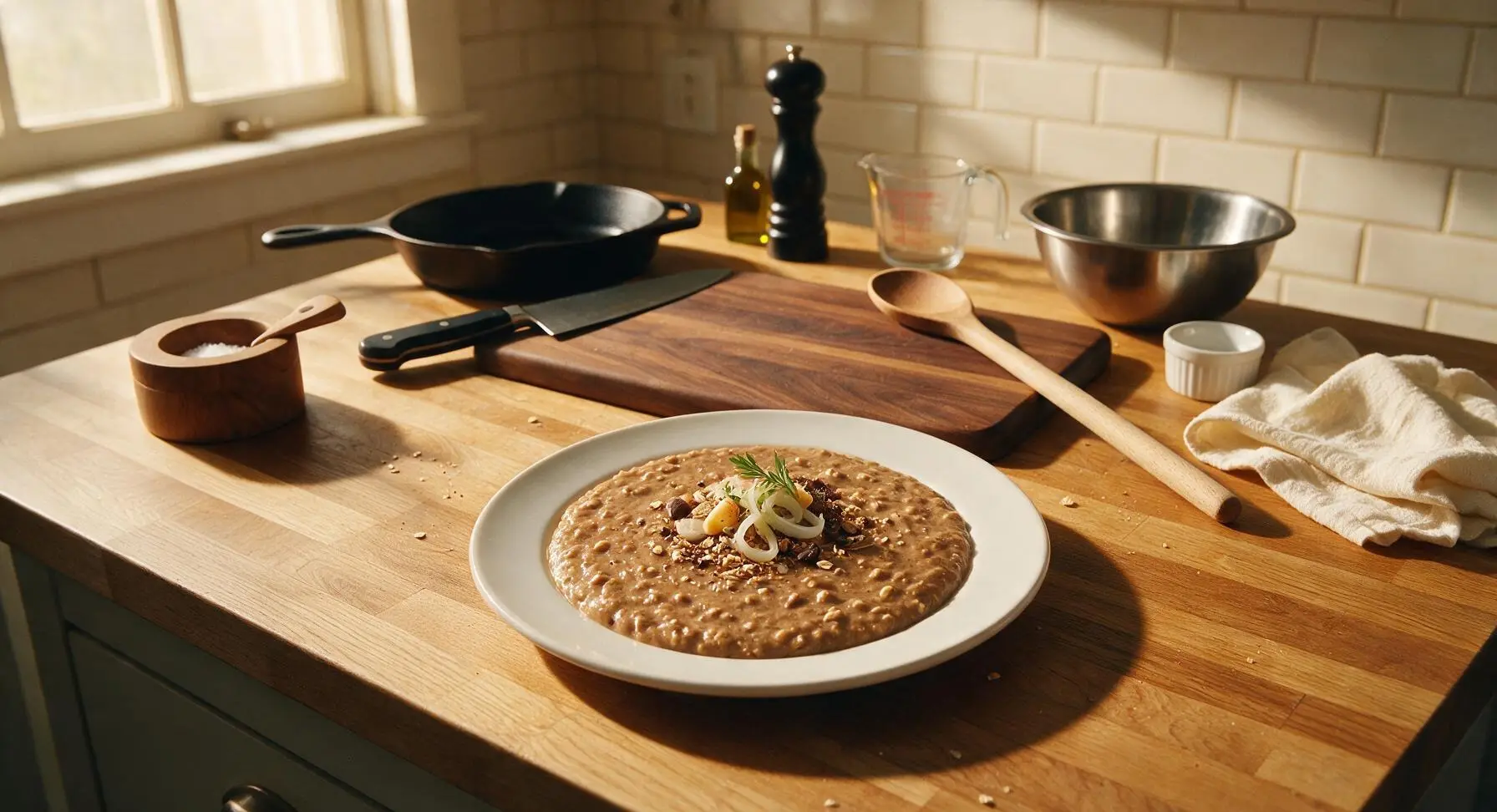
intro
Velvety, roasty oatmeal stout with subtle dark chocolate, coffee, and caramel notes, rounded out by a creamy oat body and smooth, dry finish ideal for cool autumn evenings.
Ingredients
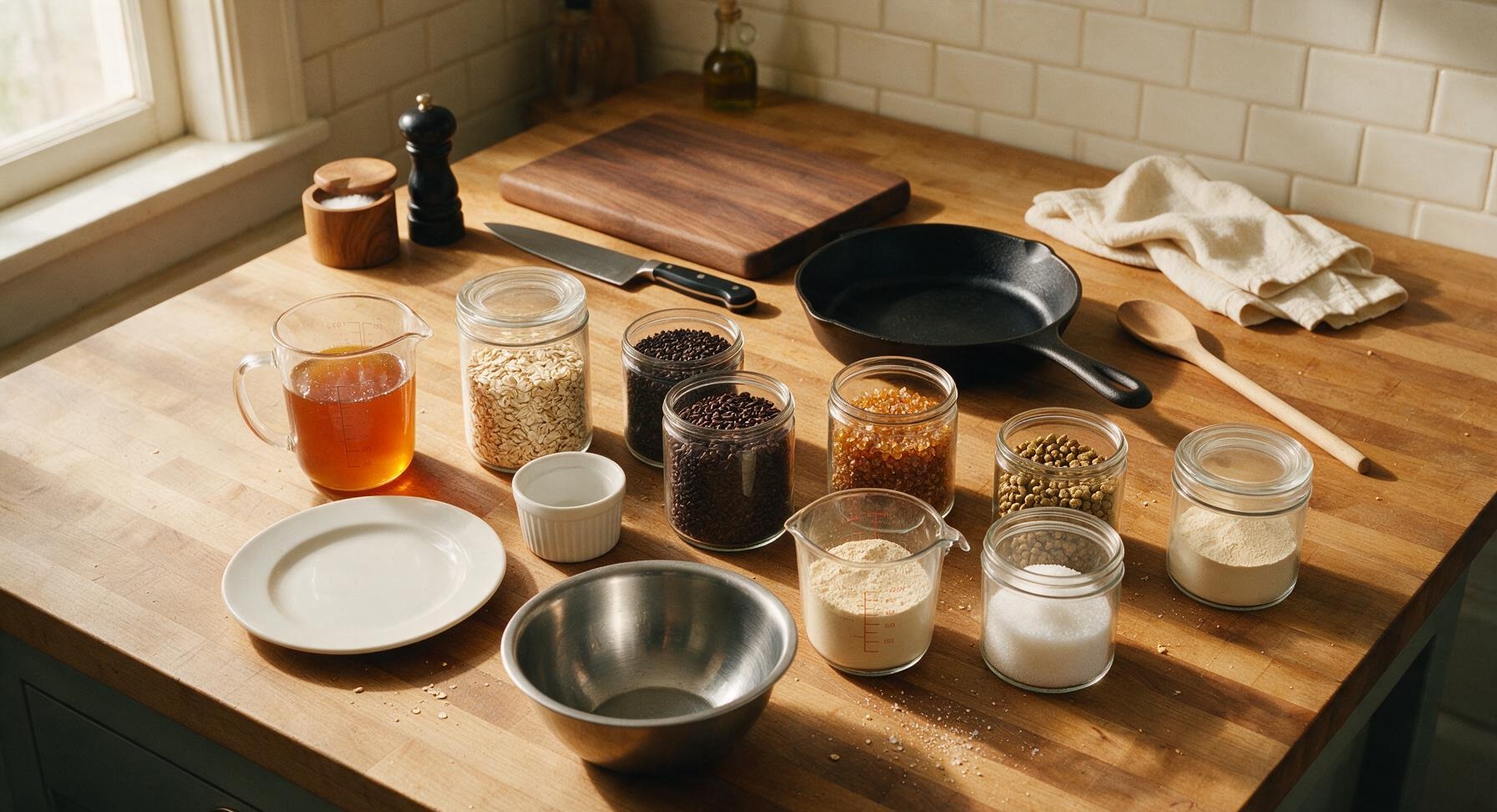
Steps
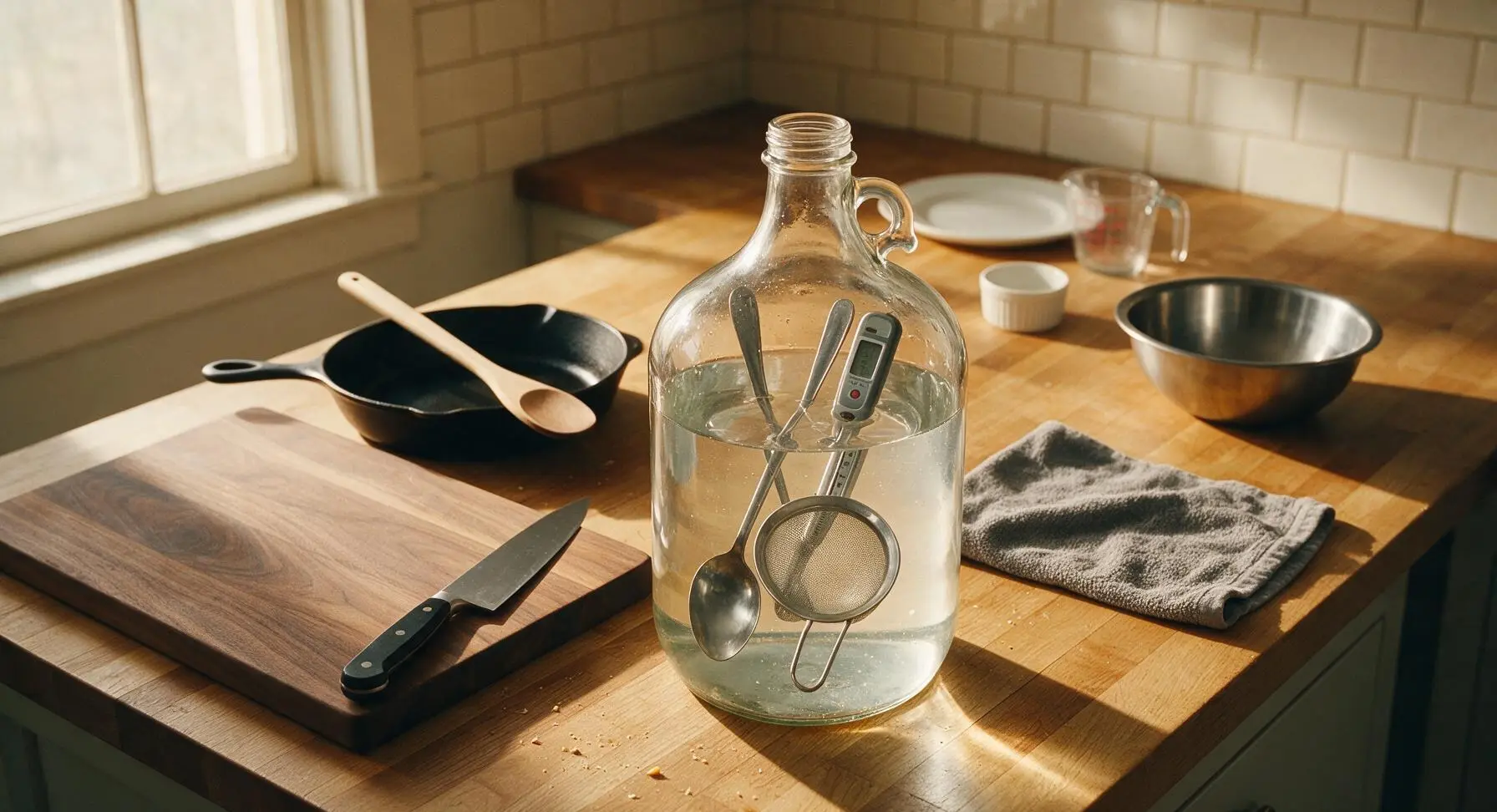
Sanitize Brewing Equipment
First, mix 1 tablespoon of no-rinse brewing sanitizer with 1 gallon of cool water in the 1-gallon glass fermenter. Submerge the stirring spoon, strainer, siphon, and thermometer in the solution for 2 full minutes, then set on the clean heather gray towel to air dry. Every surface that will touch cooled wort must be fully sanitized to prevent off-flavors or bacterial contamination. Visual cue: Sanitized surfaces have a thin, even film of solution with no visible water beads pooling.
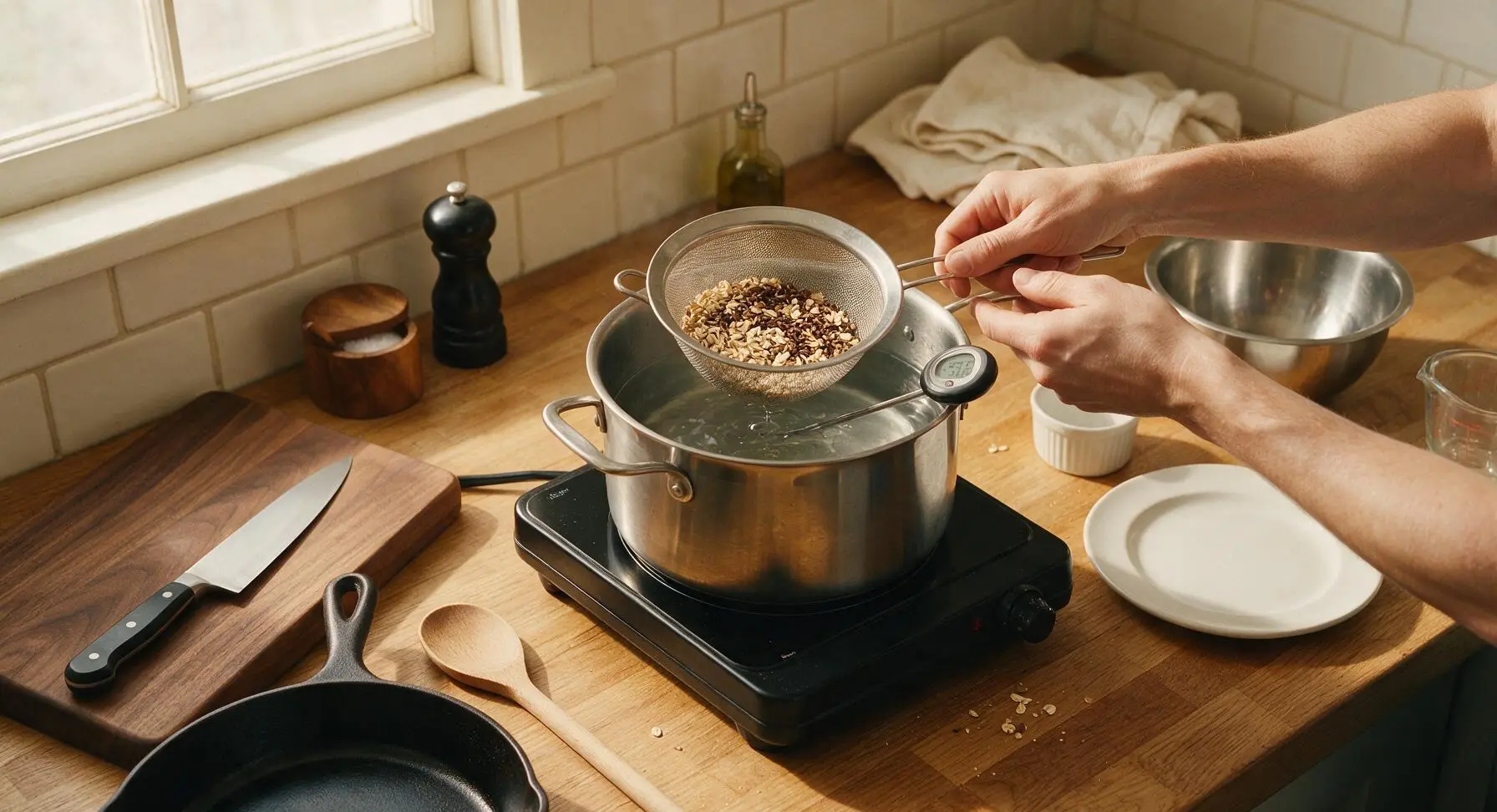
Steep Roasted Grains
Pour 2 quarts of filtered water into the 3-quart stainless steel brew pot set on the matte black portable induction cooktop, and heat to a steady 155°F. Place the rolled oats, roasted barley, chocolate malt, and crystal malt in the fine-mesh strainer, lower into the heated water, and steep for 20 minutes, holding the temperature constant between 150-160°F. Do not boil the grains, as this will extract harsh, bitter tannins. Visual cue: The water darkens to a deep, rich mahogany brown as grain flavors and colors infuse.
Boil Wort and Add Hops
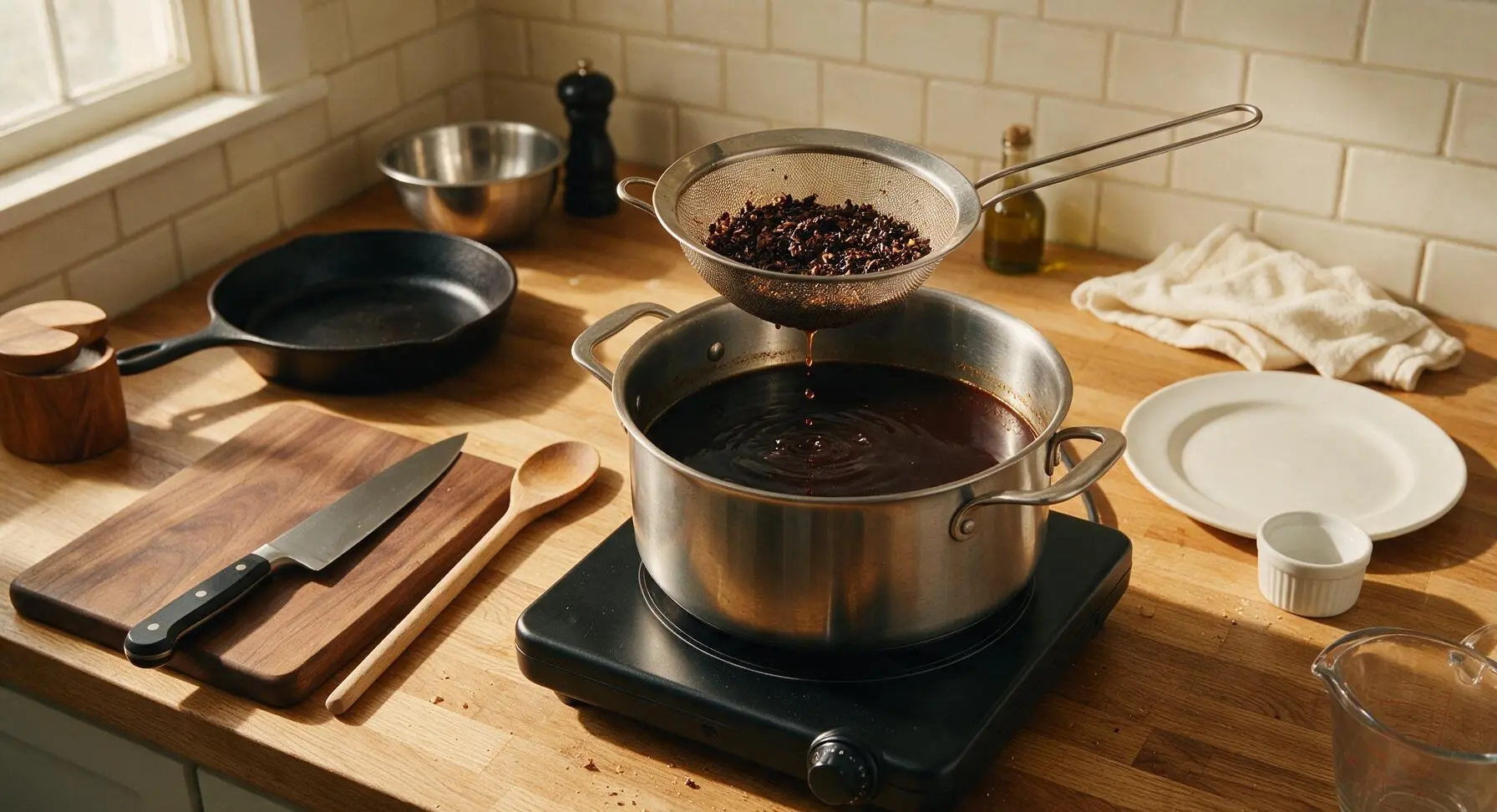
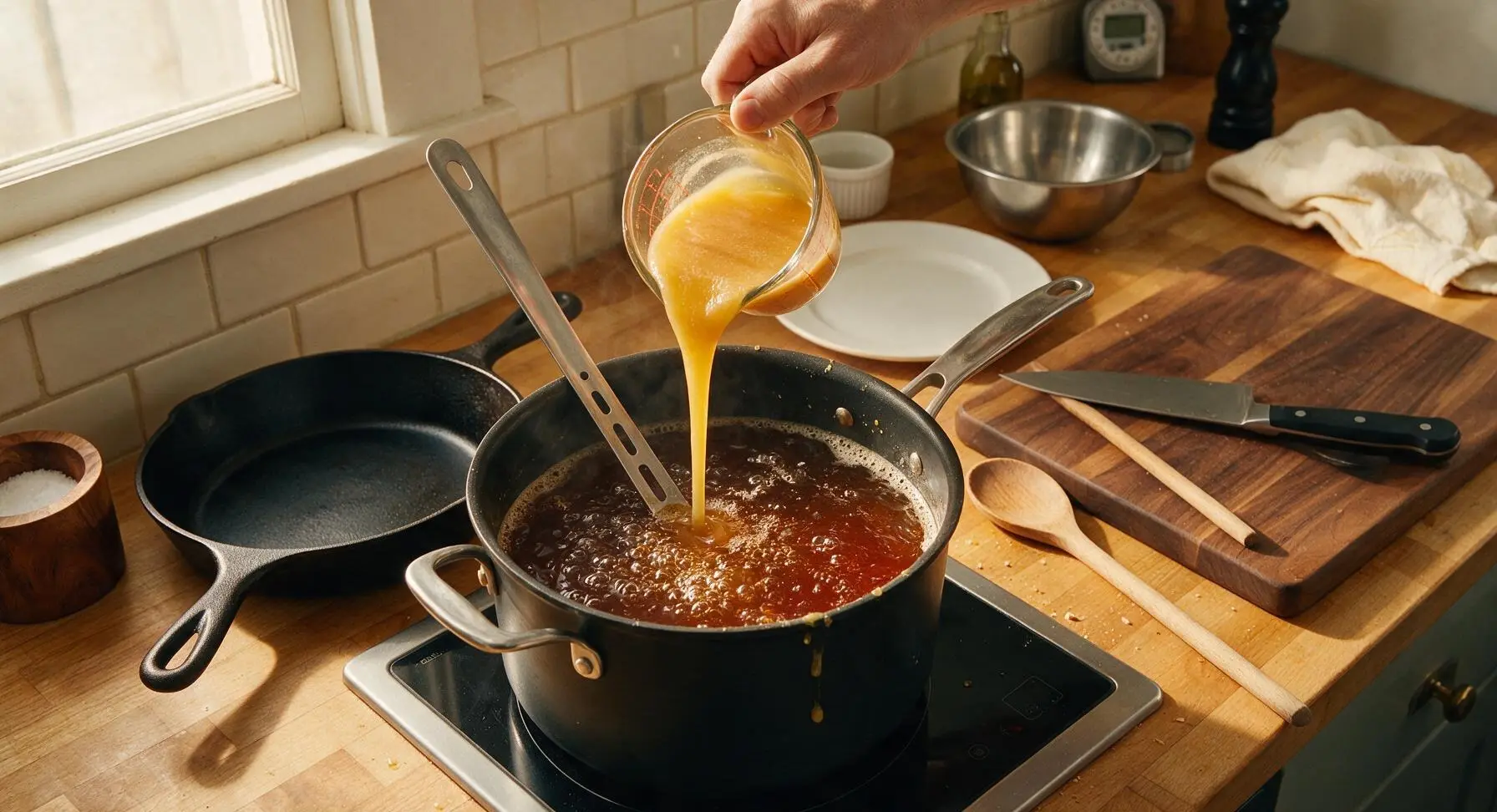
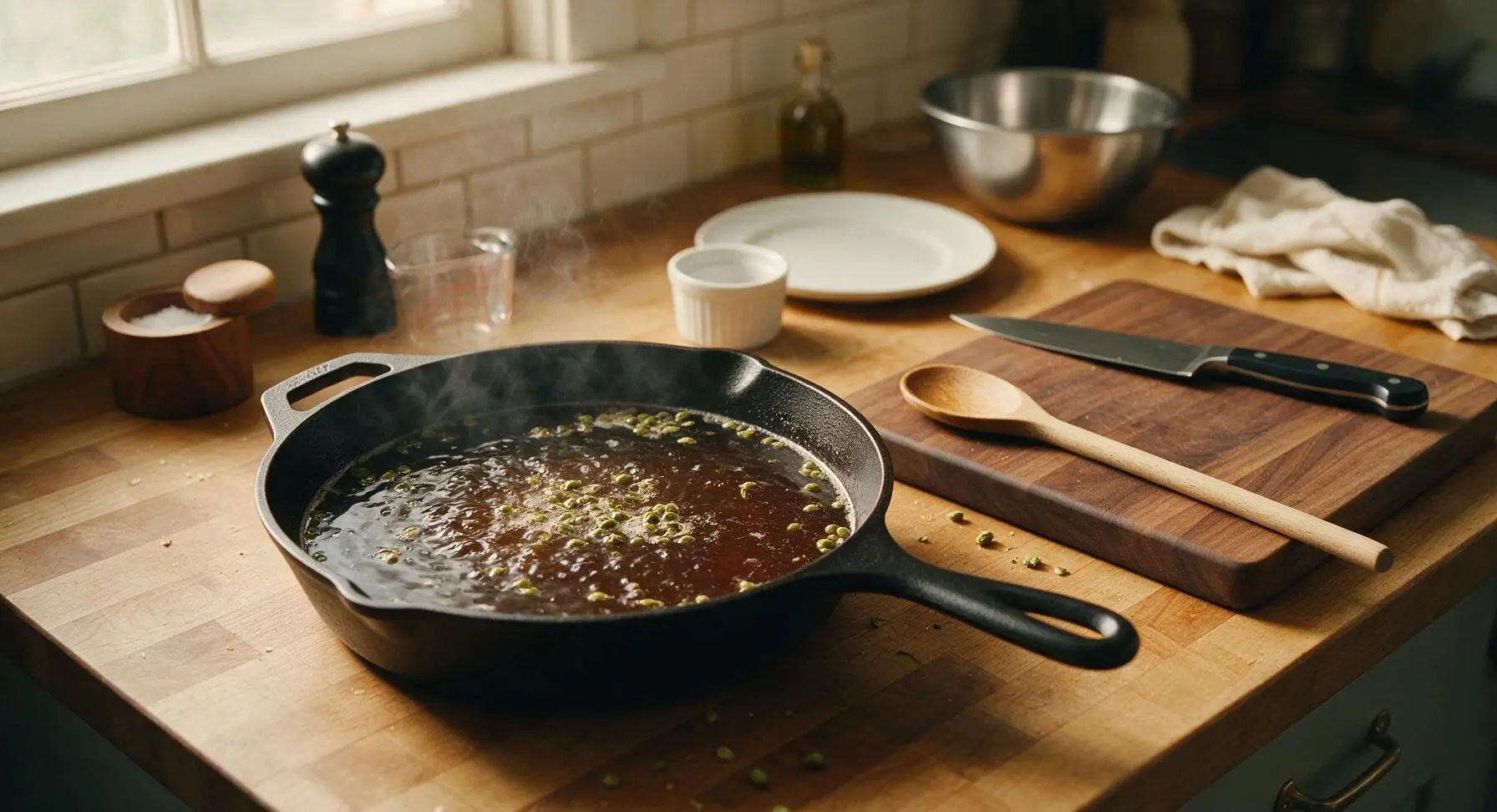
Lift the grain strainer out of the pot and let grains drain fully for 2 minutes—do not squeeze the strainer, as this presses harsh tannins into the wort. Turn the induction burner up to bring the infused liquid (now called wort) to a gentle, rolling boil. Once boiling, stir in all of the pale liquid malt extract with the long stainless steel spoon until fully dissolved, with no sticky clumps remaining. Return the wort to a rolling boil, add 0.3 oz of East Kent Goldings hops, and set a timer for 60 minutes. Maintain a steady rolling boil, adjusting heat as needed to prevent boilovers. Add the remaining 0.2 oz of hops during the final 5 minutes of the boil for bright, earthy aroma. Visual cue: The initial thick, pale foam from the malt extract dissipates after the first 10 minutes of boiling, leaving small, consistent bubbles breaking across the wort surface.
Cool Wort and Pitch Yeast
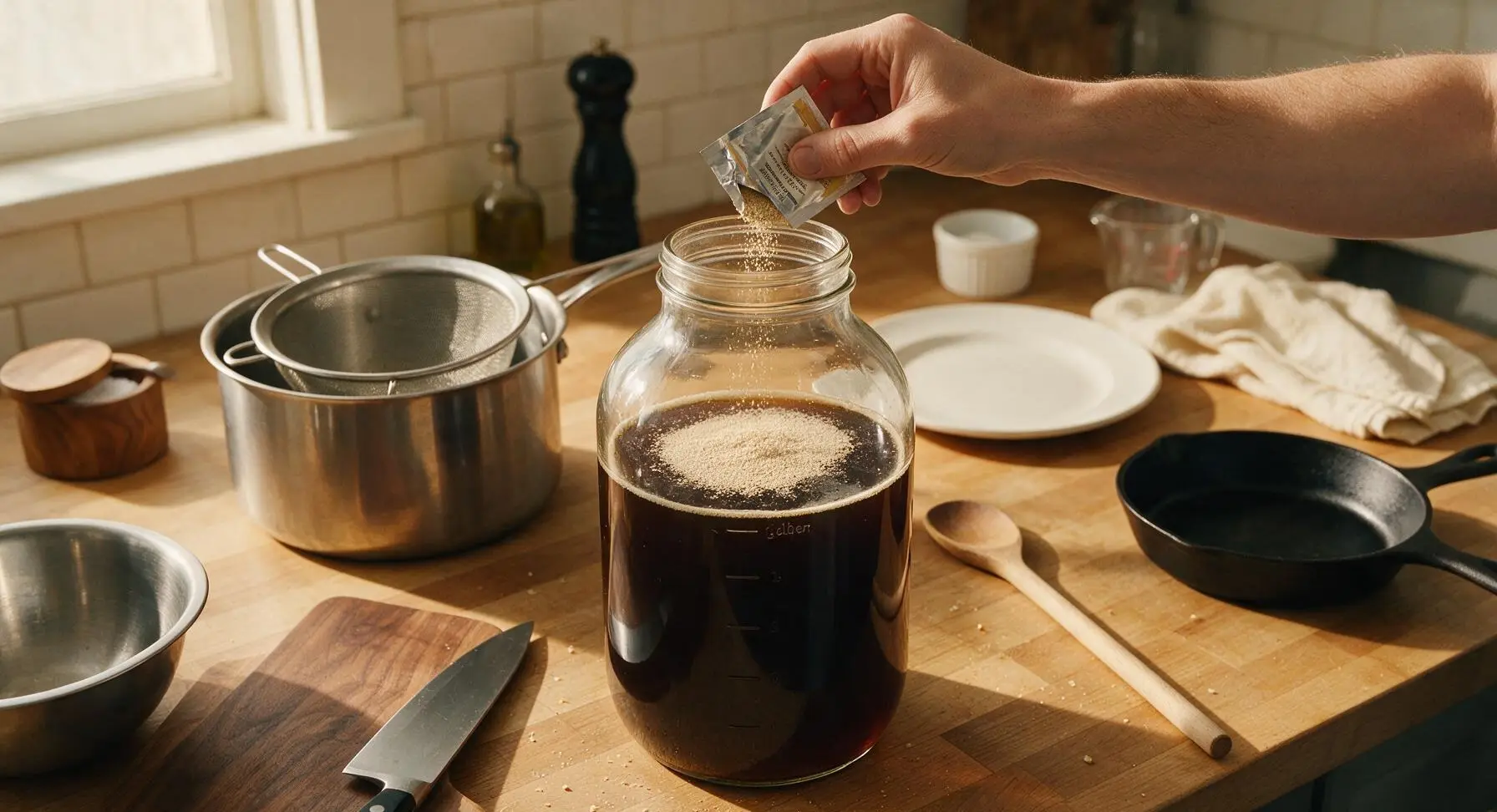
When the 60-minute boil ends, turn off the induction burner. Cover the brew pot with a lid, then set the pot in an ice bath to cool the wort quickly to 70°F, which takes approximately 15 minutes. Once cooled to exactly 70°F, pour the wort through the sanitized fine-mesh strainer into the sanitized 1-gallon fermenter, then top with cool filtered water to reach the 1-gallon graduation mark. Sprinkle the full packet of English ale yeast evenly over the wort surface, then seal the fermenter with an airlock filled halfway with sanitizer solution. Visual cue: The dry yeast forms a thin, pale beige layer across the top of the dark wort before it hydrates and sinks.
Ferment at Room Temperature
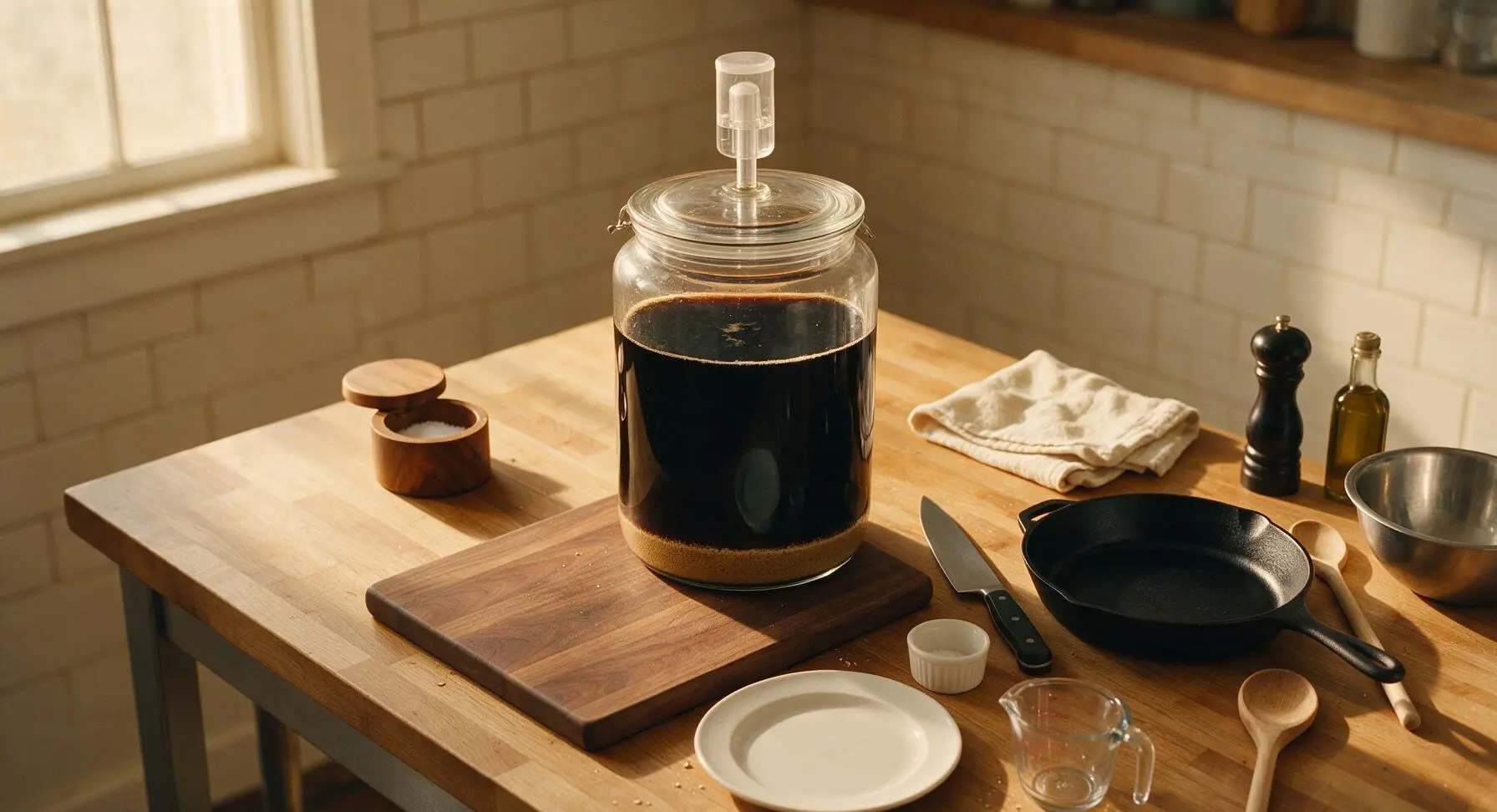
Move the sealed fermenter to a dark, temperature-stable spot held between 65-70°F, out of direct sunlight. Allow the beer to ferment undisturbed for 14 full days. Bubbles will rise through the airlock steadily for the first 3-5 days as active fermentation proceeds, then slow and stop entirely once fermentation is complete. Visual cue: No bubbles pass through the airlock for 48 consecutive hours, the previously cloudy wort is now clear dark beer, and a thin, compact layer of tan yeast sediment has settled at the bottom of the fermenter.
Prime and Bottle Stout
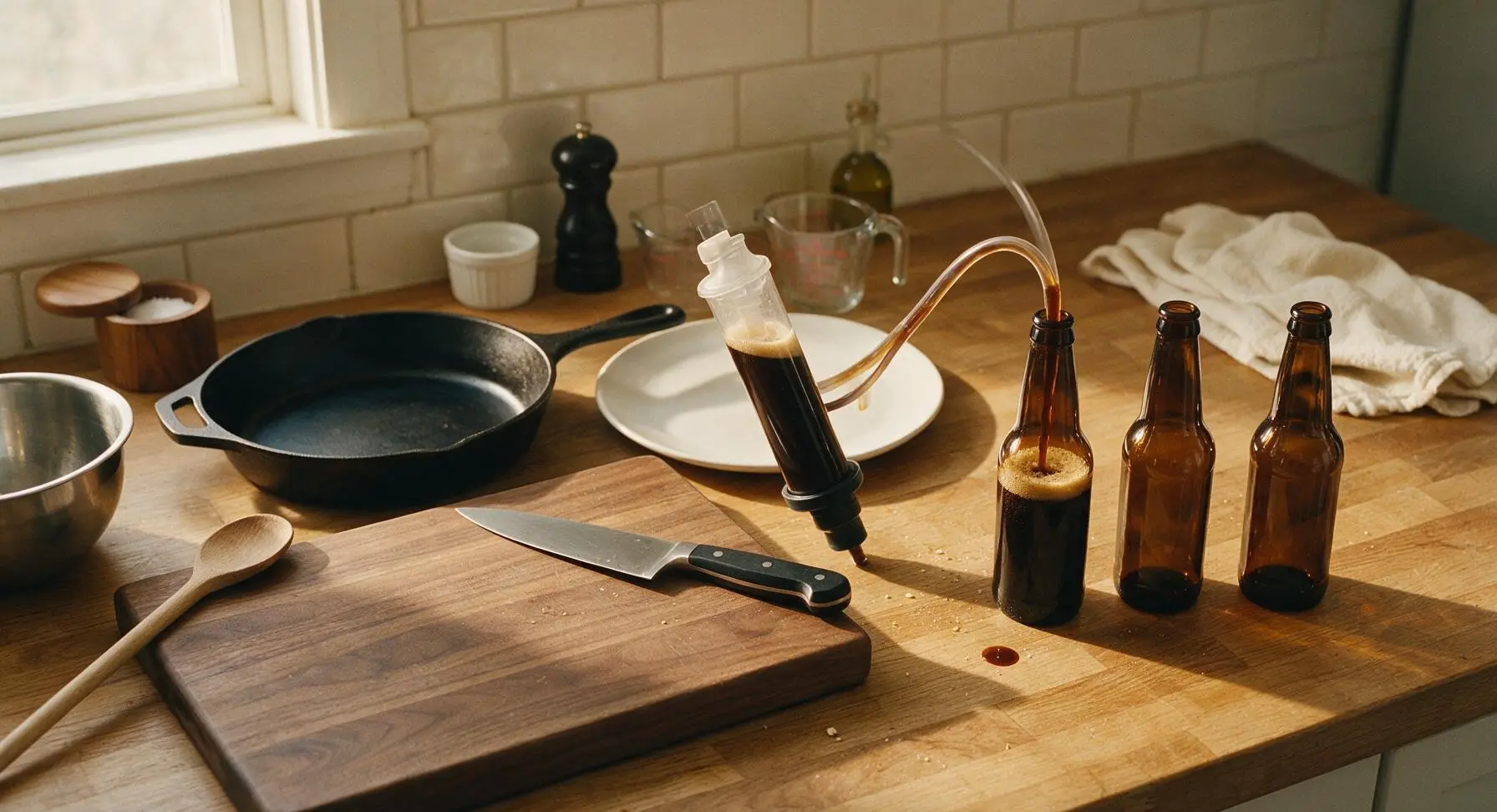
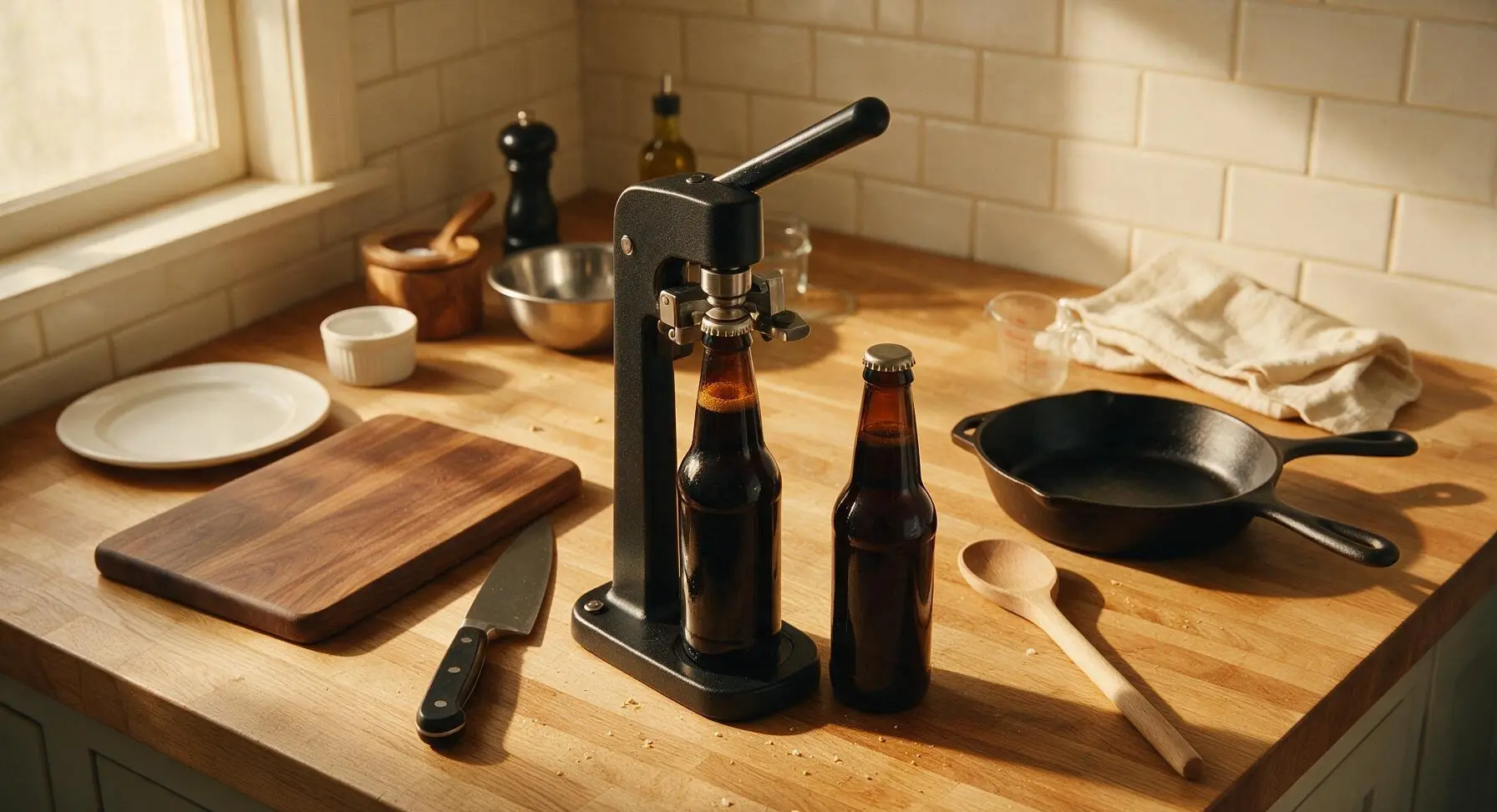
Dissolve 1 oz of corn sugar in ¼ cup of boiling water, cool to room temperature, and add to the bottom of a sanitized container. Gently siphon the clear fermented beer off the top of the yeast sediment into the container, stirring gently to mix the priming sugar evenly throughout the beer (this sugar will create natural carbonation in the bottle). Use the food-grade auto-siphon to fill each sanitized amber 12oz glass bottle, leaving exactly 1 inch of headspace below the bottle rim. Use the matte black bottle capper to crimp a sanitized crown cap onto each bottle, ensuring a tight seal. Visual cue: All bottles are filled to a consistent level, and caps sit flush with no gaps when pressed firmly.
Condition Bottles Before Serving
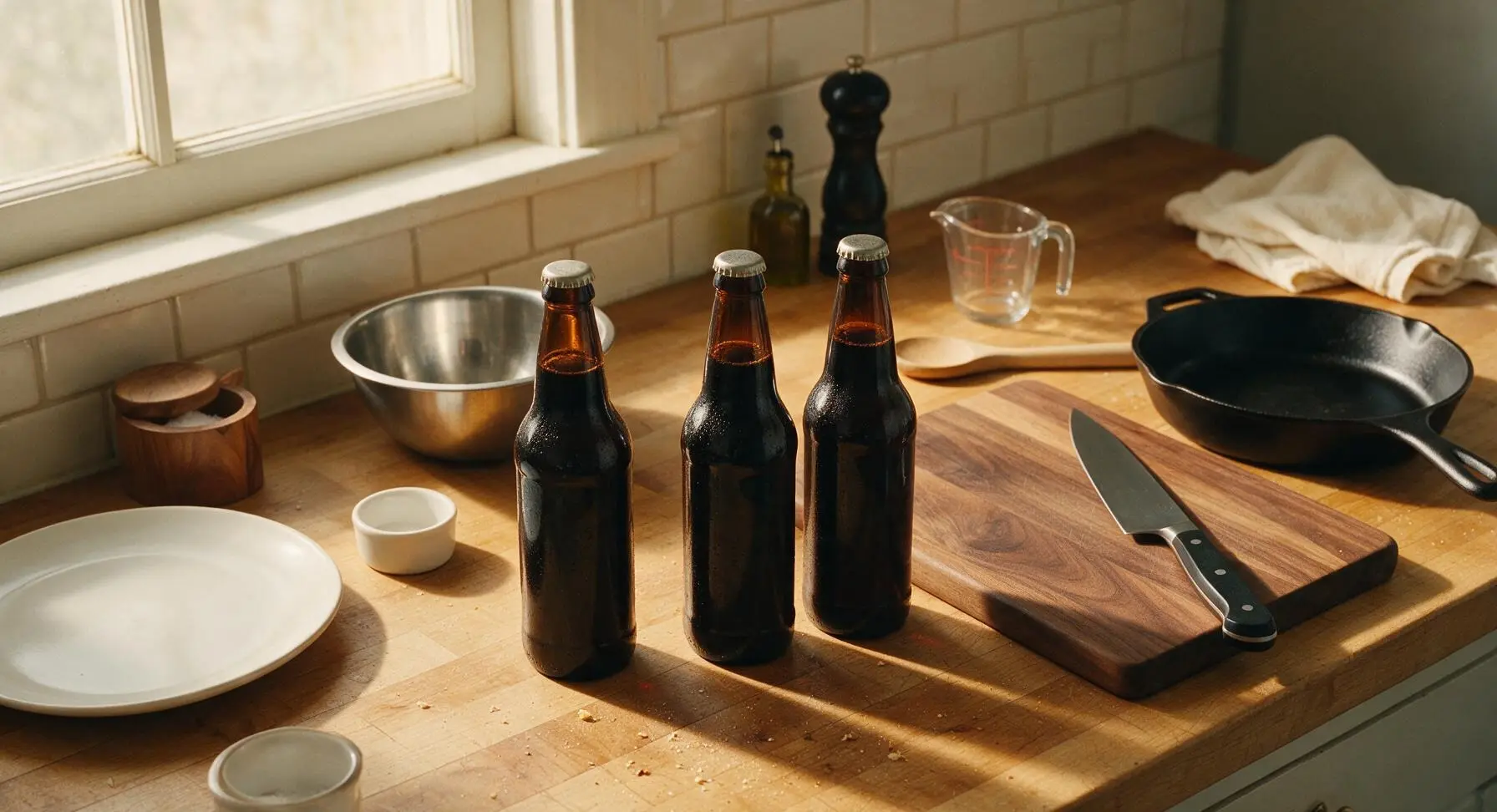
Store the sealed, capped bottles in the same dark, 65-70°F location for 10 days to allow carbonation to develop as the remaining yeast consumes the priming sugar. After 10 days of conditioning, move the bottles to a refrigerator to chill for a minimum of 24 hours before serving. Visual cue: When opened, the beer pours smoothly with a thick, long-lasting tan head, indicating proper carbonation.
Tips
2.Keep fermentation temperatures steady between 65-70°F for the best flavor. Temperatures above 75°F cause the English ale yeast to produce harsh, solvent-like fruity off-flavors that overpower the subtle chocolate, coffee, and oat notes of the stout.
3.When siphoning beer for bottling, leave the last ½ inch of liquid in the fermenter along with the settled yeast sediment. Siphoning this sediment will leave your beer cloudy and add unwanted yeasty, bready flavors to the finished pour.






OMG this oatmeal stout turned out SO good! I was nervous about medium difficulty since I’ve only done basic extract brews before, but the steps were super straightforward. Brought a growler to my friend’s potluck last weekend and everyone was asking for the recipe! The smooth oat finish is *chef’s kiss*.
Game changer for post-hike hangouts! I brewed this last month, let it condition for 3 weeks, and it’s better than most of the local craft oatmeal stouts I buy at the liquor store. I did add a tiny extra splash of vanilla bean at bottling, would the author recommend that for future batches?
My husband is a huge stout fan so I surprised him by brewing this for his birthday! He was shocked how rich and creamy it was, said it tasted way better than the expensive imported stouts he splurges on. We shared a few bottles with our neighbors at our last backyard BBQ and everyone raved. Will absolutely make this again!
Solid base recipe, but I felt like the roast barley note was a little overpowering on my first batch. Did I maybe steep the grains too long? I left them in for 40 minutes instead of the recommended 30 because I got distracted by my dog barking at the mailman.
Brewed this with my 16 year old (supervised, obviously!) for his first ever homebrew project as part of his homeschool science fair project on fermentation. We ended up taking 2nd place! The mouthfeel is perfect, not too heavy, just the right amount of oat creaminess. My only note is I wish the carbonation instructions were a little more specific for people bottling vs kegging.
Wait, can I make this without any fancy homebrew equipment? I only have a big stock pot and some glass jugs I use for sun tea, would that work or do I need to buy a ton of stuff first? I’ve never brewed beer before but this looks so good.
I’ve made this recipe three times now and it’s my go-to house stout! The last batch I swapped 8 oz of the base malt for chocolate malt and added a handful of cold brew coffee at bottling, and it was an absolute hit at my annual fall bonfire. People were lining up to fill their cups.
Made this for our Sunday football watch party and even my buddies who only drink light lager were going back for seconds! It’s smooth enough that people who don’t usually love dark beer enjoy it, but has enough rich roasted flavor that stout fanatics are happy. Total win.
Perfect recipe for a broke grad student! Most homebrew recipes require so many expensive specialty grains, but this one uses accessible, cheap ingredients and doesn’t take forever to make. I did a split batch, half plain and half with a little cocoa powder added, both came out great. Only downside is my roommates keep drinking all my bottles before they’re done conditioning!
I’ve been homebrewing for over 30 years and I have to say, this is one of the best beginner-friendly oatmeal stout recipes I’ve ever come across. The grain bill is perfectly balanced, the mash temp is spot on for that creamy mouthfeel, and the hop addition is just enough to cut the sweetness without being noticeable. Great work putting this together.
Wait, how long does this keep once it’s bottled? I want to brew a big batch to save for my daughter’s high school graduation party in 3 months, will it still taste good then or does it go bad faster than store bought beer?
I brought this to my neighborhood potluck last month and I’m still getting texts asking for the recipe! I was worried it would be too heavy for a summer potluck, but it was such a nice change from all the seltzers and light beers everyone brought. The only change I made was adding a pinch of cinnamon to the mash, it gave it such a cozy little kick.
So happy this recipe is 100% vegan! A lot of stout recipes use honey or isinglass for fining, but this one doesn’t need any of that. It’s perfectly clear, creamy, and has such a rich flavor without any animal products. Served it at my vegan cookout last weekend and every single person loved it, even the non-vegan guests.
Tried this recipe last weekend and my OG was way lower than the target listed. Did I maybe not sparge correctly? I used the exact grain amounts listed, mashed for the full 60 minutes, but my final gravity after fermentation was a little lower than expected too, so the ABV is a bit weaker than I wanted. Any tips?
I don’t even drink beer that often but I wanted to try homebrewing as a new hobby, and this was the first recipe I tried! It was way easier than I expected, the cook time was exactly an hour and 15 minutes like the recipe said, and my stout came out so creamy and delicious. My roommate said it tastes like the fancy $18 four packs we buy at the bodega down the street. Wild!
I was worried brewing in the Arizona heat would mess up fermentation, but I kept my fermenter in a closet with a small temperature control fan and this turned out perfect! It’s so refreshing on cooler desert nights, the rich roasty flavor is perfect for sitting outside after a long day. I’ll be making this on repeat all fall and winter.
Made this for my local homebrew club meeting last week and it got first place in the stout category! The judges loved the smooth oat body and the balanced roasted notes, no harsh bitterness at all. I followed the recipe exactly, no tweaks, and it came out flawless. Can’t wait to try more of your recipes!
Brewed a batch of this to bring on our annual beach camping trip, and it was the perfect nightcap after a long day of surfing and fishing. It’s not too heavy, so even when it’s a little warm out it goes down smooth, and the creamy mouthfeel feels like a treat. 10/10, will be a staple for our trips from now on.