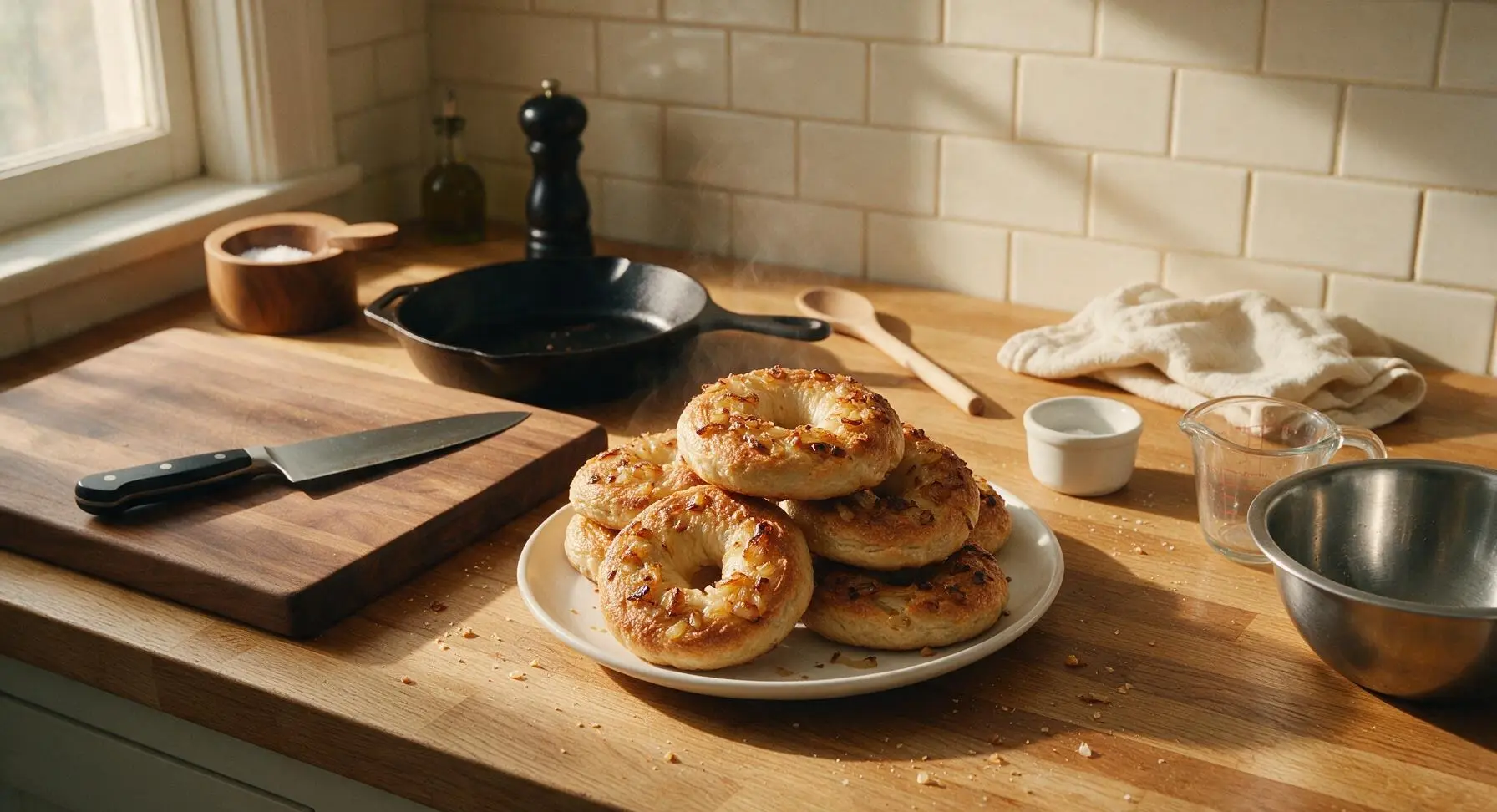
Onion Bagel

title 1
Onion Bagel
⏱️ cook time 25 minutes
🍽️ servings 8
⚡ Difficulty medium

intro

Chewy, crusty bakery-style onion bagels studded with sweet caramelized onion, boiled and baked for authentic deli texture, perfect for topping with cream cheese or packing for outings.

Ingredients
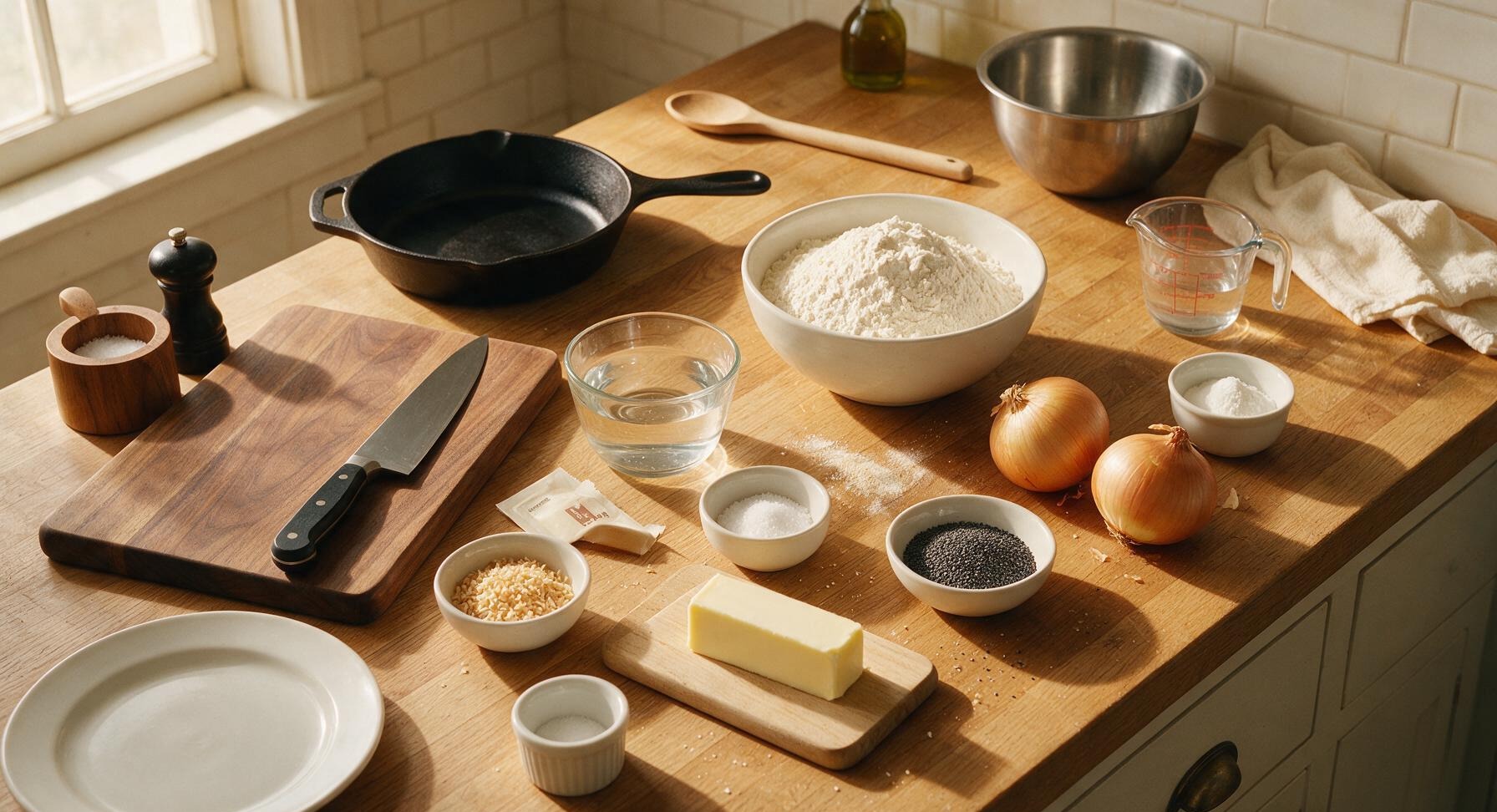
Bread flour 500g
Warm water (43C/110F) 300ml
Active dry yeast 7g (1 standard packet)
Barley malt syrup 15ml (1 tbsp)
Kosher salt 10g (2 tsp)
Yellow onion 2 medium (300g total)
Unsalted butter 15g (1 tbsp)
Dried minced onion 30g (2 tbsp)
Poppy seeds 15g (1 tbsp)
Baking soda 15g (1 tbsp)

Steps

1

Caramelize Fresh Onions

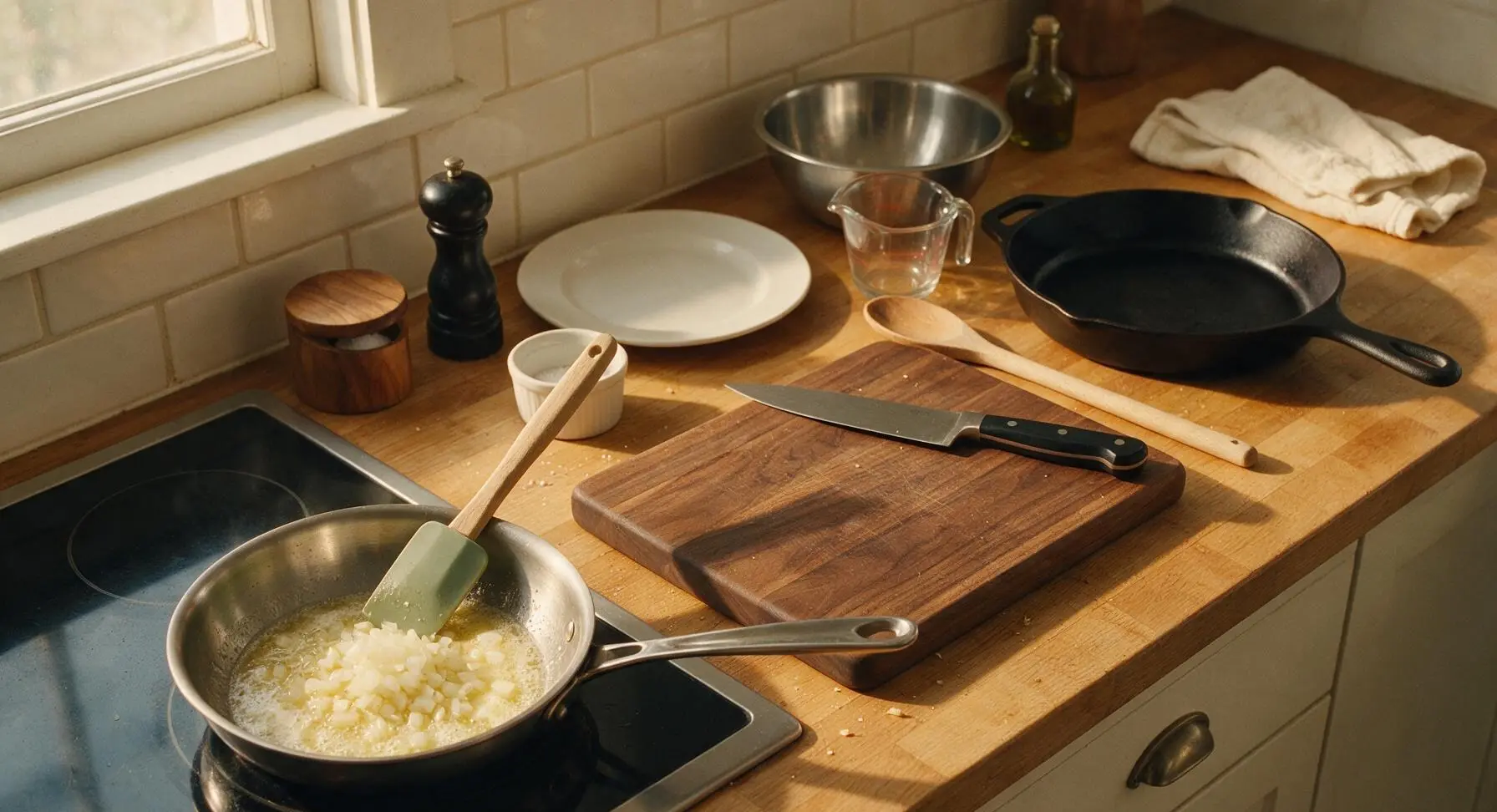
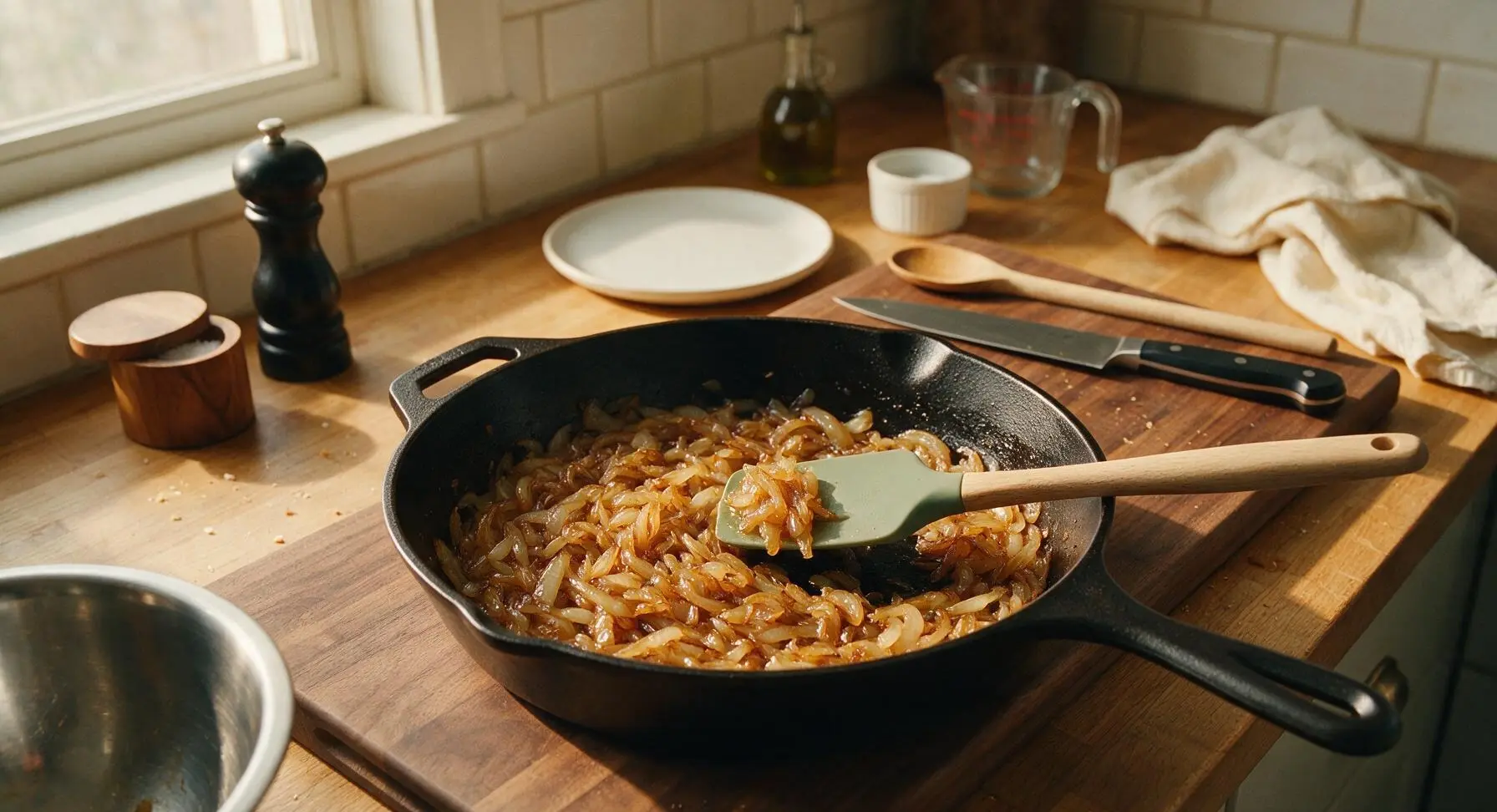
Finely dice one yellow onion into 3mm pieces. Melt 15g unsalted butter in the small stainless steel skillet over medium-low heat on the induction cooktop. Add diced onion, stirring occasionally with the sage silicone spatula, and cook for 12-15 minutes until deep golden, soft, and sweet, with no crisp raw white bits remaining. Set aside to cool completely to room temperature (hot onion will kill yeast when added to dough).
Step 1
step1:Caramelize Fresh Onions
Step 1
step1:Caramelize Fresh Onions
2

Mix Shaggy Dough

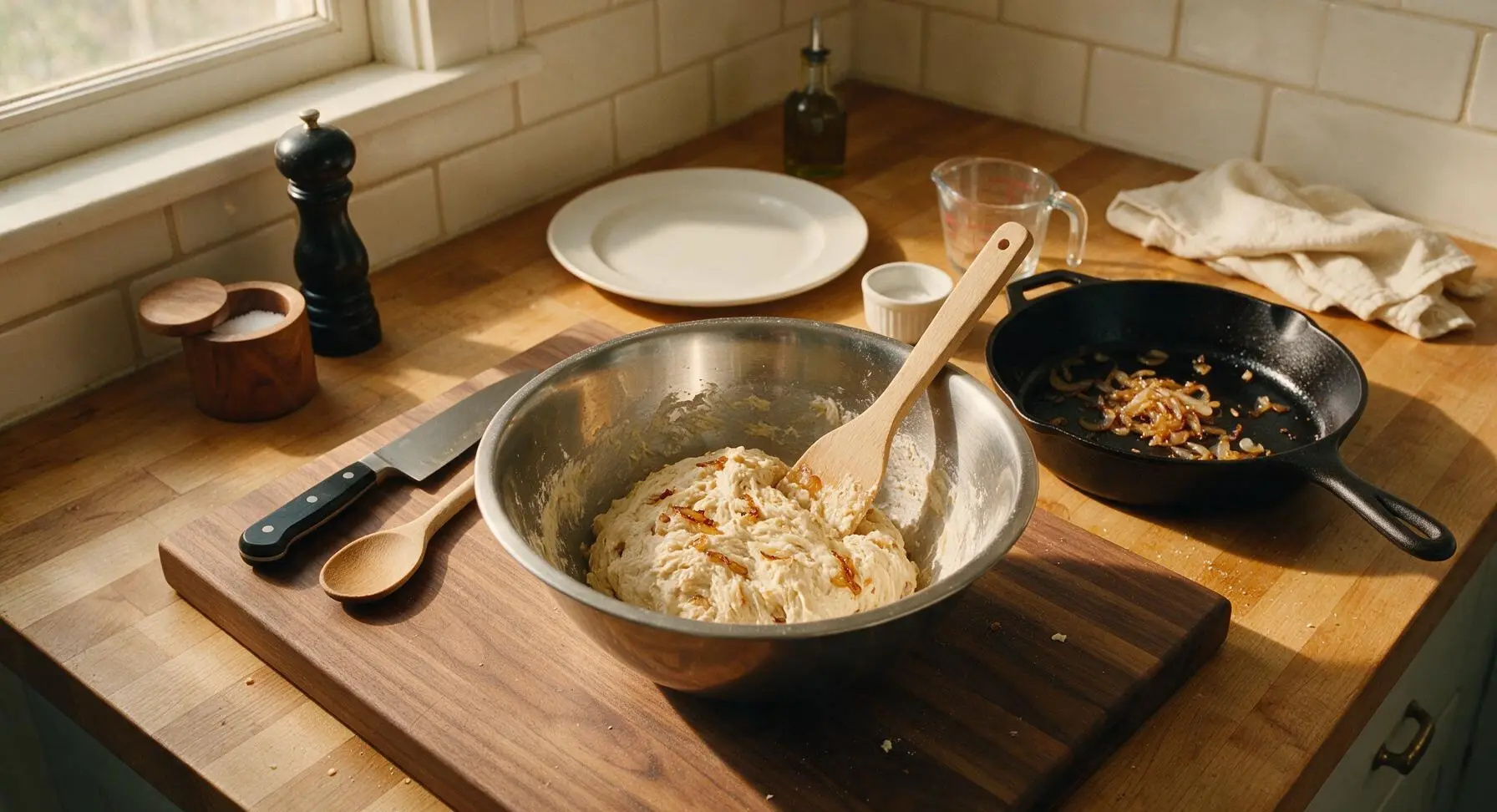
Place the large stainless steel mixing bowl on the maple cutting board. Combine 300ml warm water, 7g active dry yeast, and 5ml (1 tsp) barley malt syrup in the bowl, stir gently with the silicone spatula, and let rest 5 minutes until a foamy layer forms on top (this confirms yeast is active). Add 500g bread flour, 10g kosher salt, and two-thirds of the cooled caramelized onion, stirring until a stiff, shaggy dough forms with no dry flour pockets left at the bottom of the bowl.
Step 2
step2:Mix Shaggy Dough
3

Knead and Proof Dough

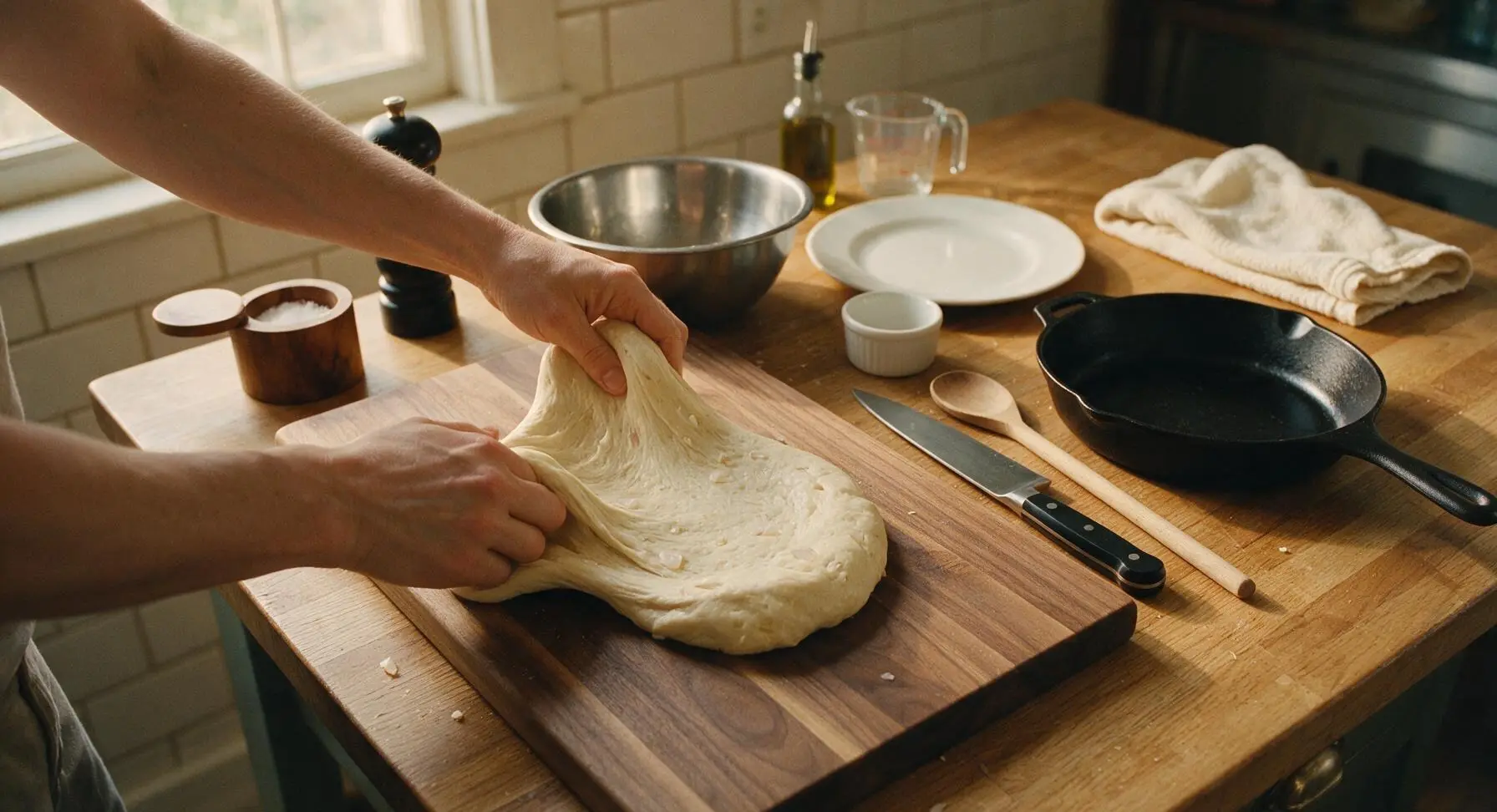
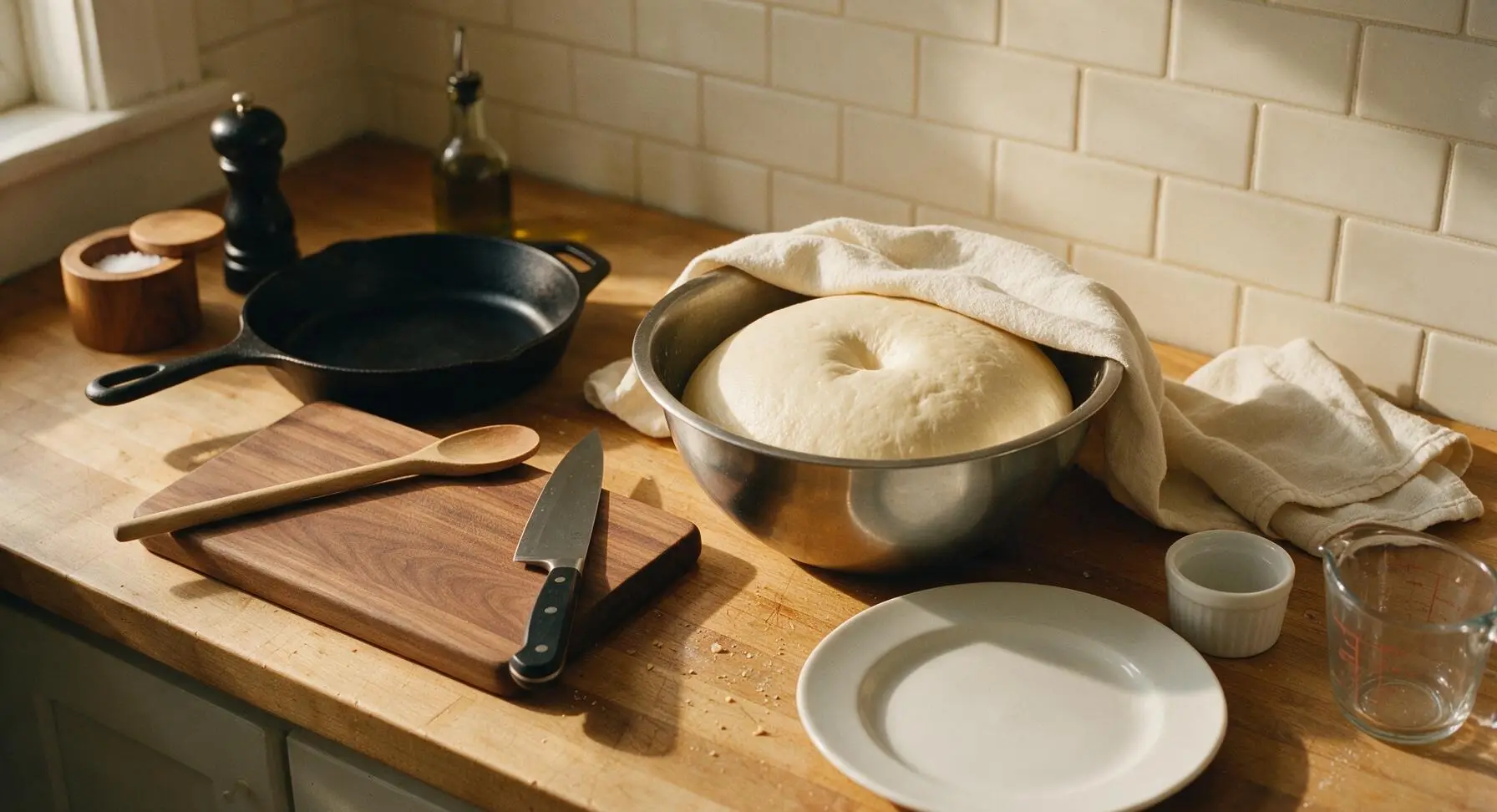
Turn the shaggy dough out onto the maple cutting board (no extra flour is needed, as the stiff dough will not stick). Knead by hand for 8-10 minutes, folding the dough over itself and pushing forward with the heel of your hand, until the dough is smooth, elastic, and springs back slowly when poked. Form into a tight ball, return to the mixing bowl, cover with the cream linen towel, and let rise in a warm spot for 1 hour until doubled in volume.
Step 3
step3:Knead and Proof Dough
Step 3
step3:Knead and Proof Dough
4

Divide and Shape Bagels

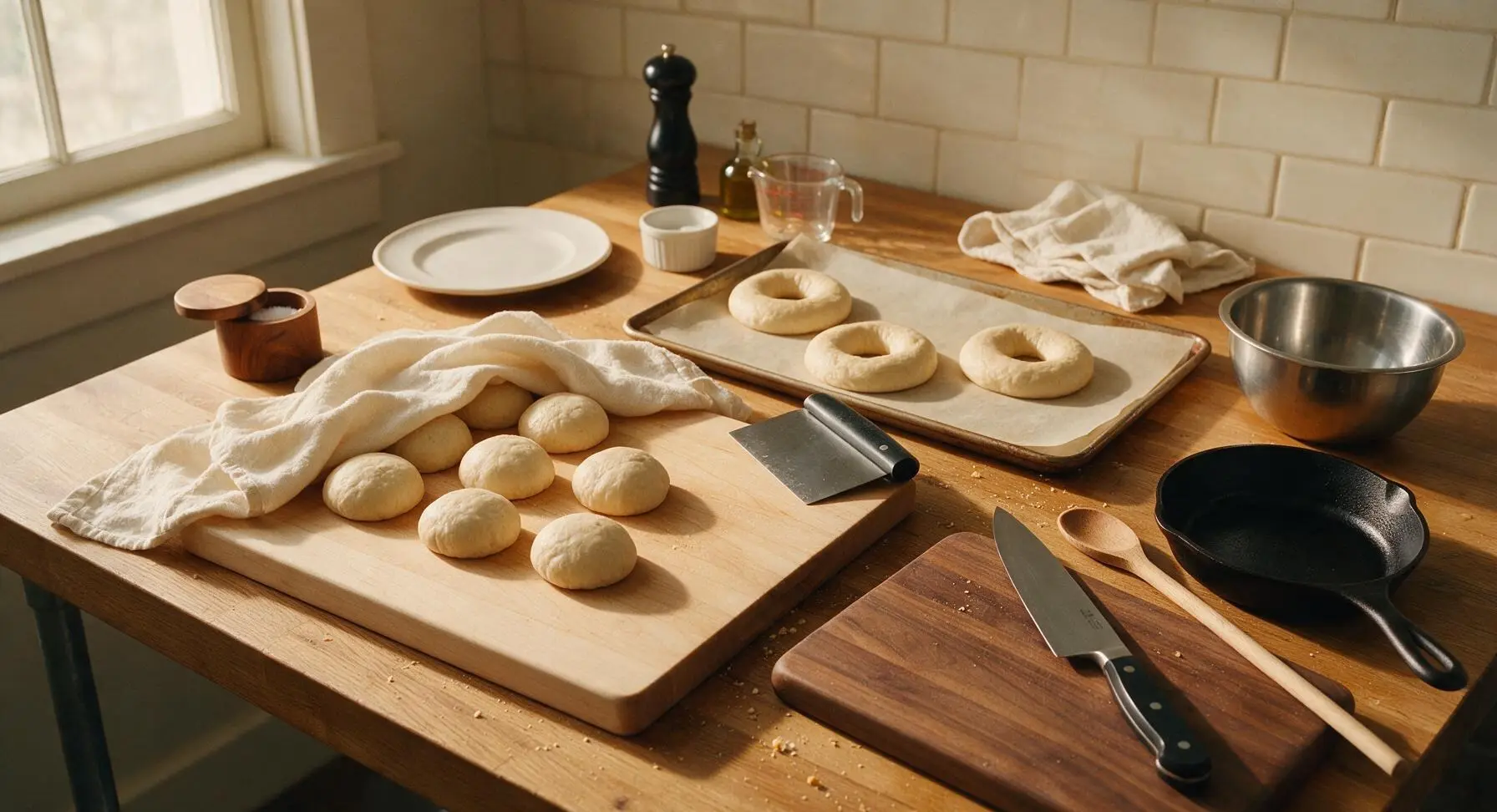
Punch the risen dough firmly to release all trapped air, then turn out onto the maple cutting board. Use the bench scraper to divide the dough into 8 equal pieces, each weighing ~105g for uniform sizing. Roll each piece into a tight, smooth ball, cover with the linen towel, and let rest 10 minutes to relax gluten. Poke a floured finger through the center of each ball, stretching the hole to 5cm wide (the hole will shrink during proofing and boiling, so make it larger than feels natural). Place shaped bagel rings on the parchment-lined baking sheet, cover, and let rest 15 minutes.
Step 4
step4:Divide and Shape Bagels
5

Boil Bagels in Malt Bath

While shaped bagels rest, fill the large 8L stainless steel stock pot with 4L water, and bring to a rolling boil on the induction cooktop. Add the remaining 10ml (2 tsp) barley malt syrup and 15g baking soda, stirring to dissolve. Working in batches of 2-3 bagels at a time (do not crowd the pot), gently drop bagels into the boiling water. Boil for 1 minute per side, flipping with the spider skimmer, until puffed and slightly shiny on the surface.
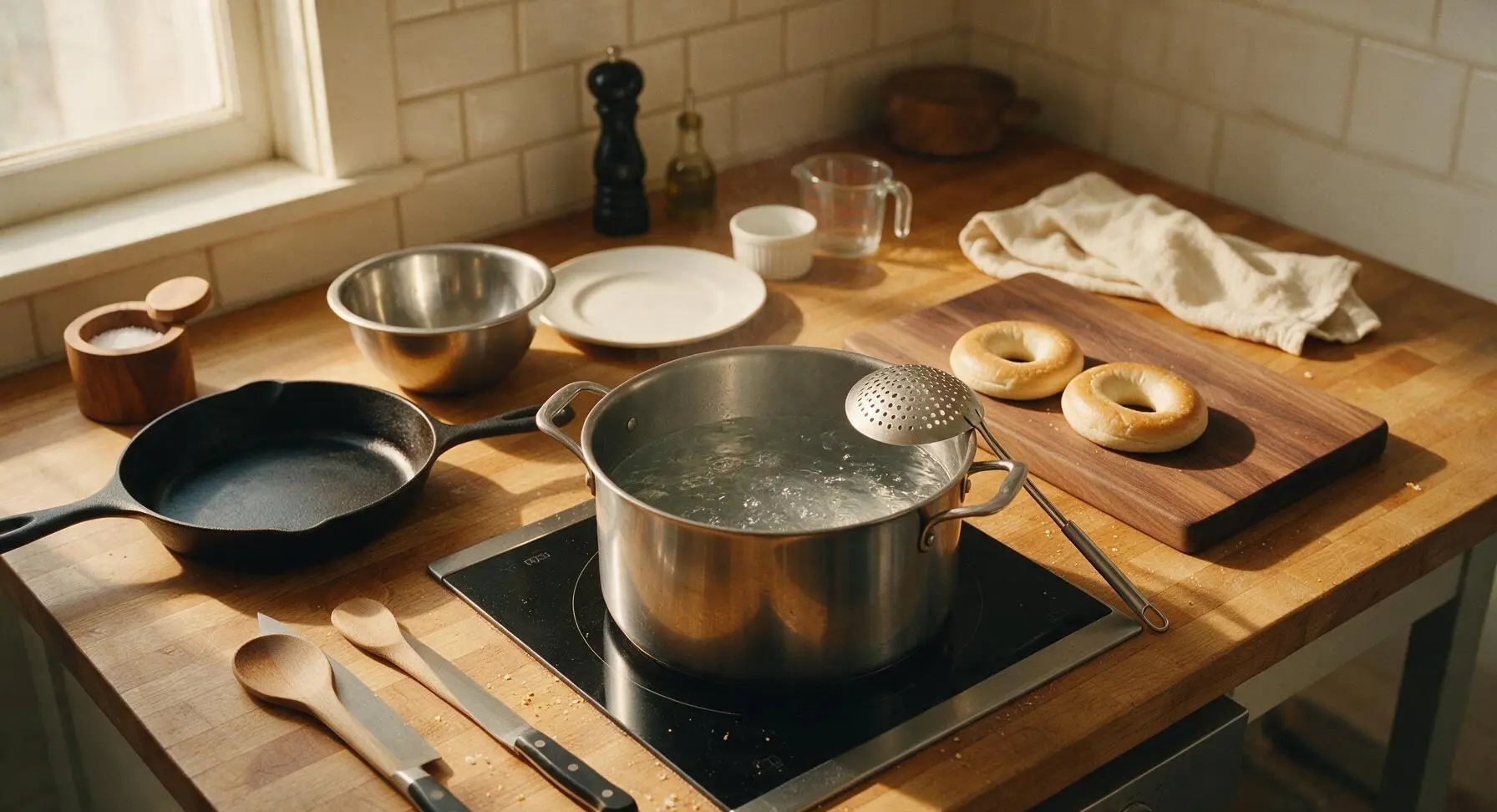
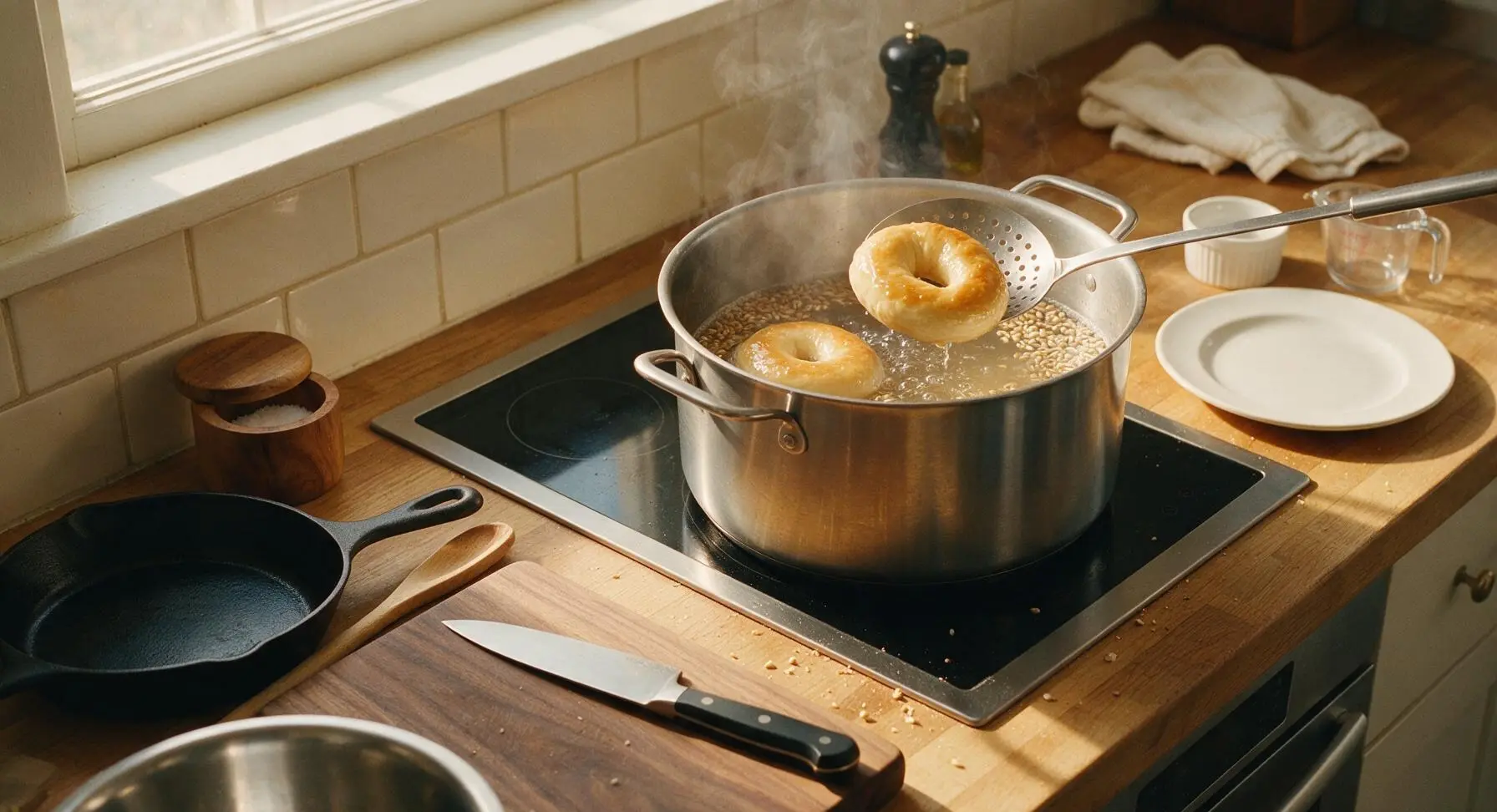
Step 5
step5:Boil Bagels in Malt Bath
Step 5
step5:Boil Bagels in Malt Bath
6

Add Onion Topping

Use the spider skimmer to transfer boiled bagels back to the parchment-lined baking sheet, leaving 2cm of space between each bagel to allow for oven spring. Mix the remaining caramelized onion, dried minced onion, and poppy seeds in the small clear glass ramekin. Use the pastry brush to lightly dab the top of each warm bagel with a thin layer of water (to help toppings adhere), then sprinkle the onion-poppy seed mixture generously over each bagel top, pressing gently so bits do not fall off during baking.
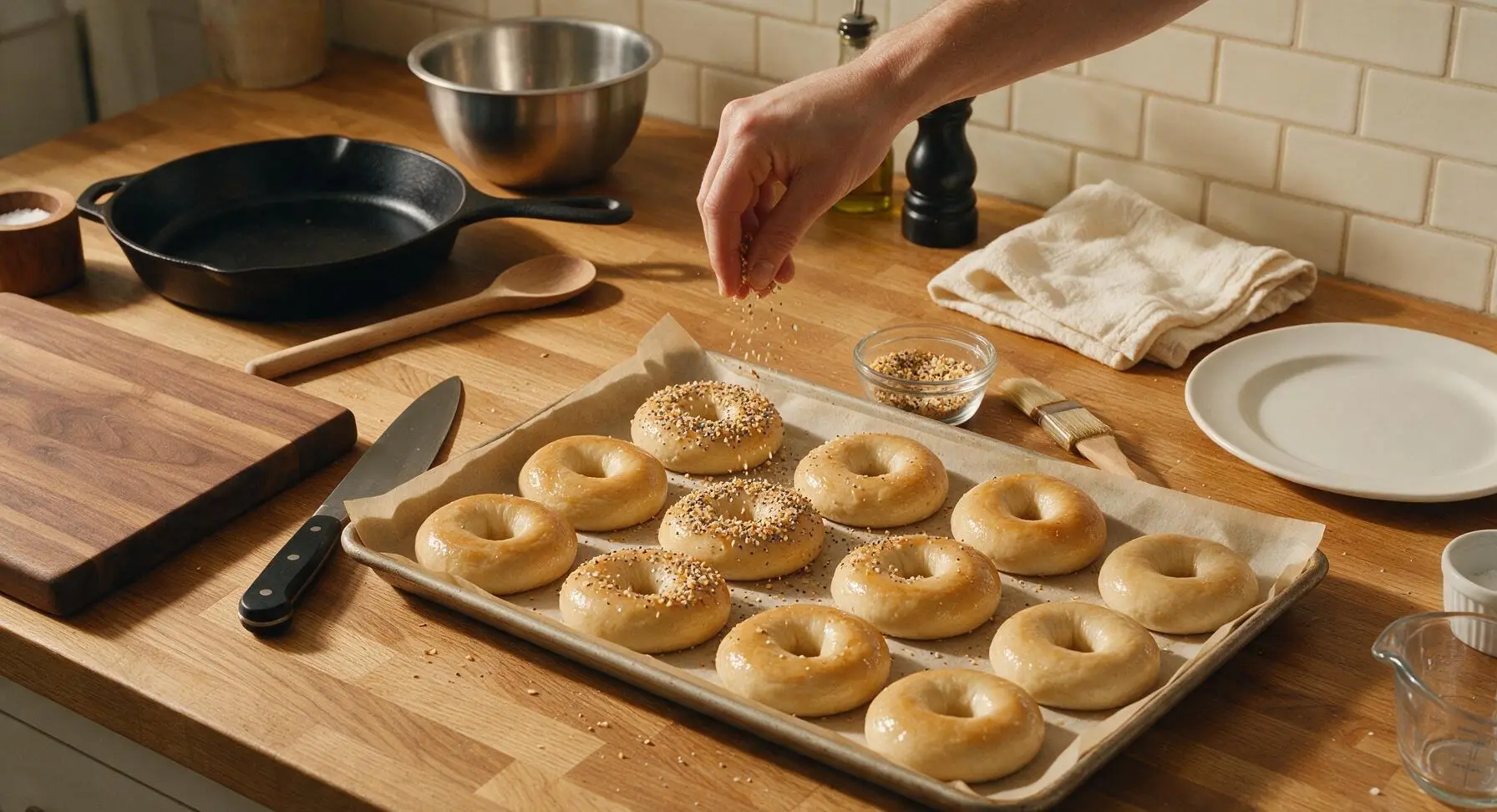
Step 6
step6:Add Onion Topping
7

Bake to Golden Crust

Place the baking sheet on the middle rack of a preheated 220C/425F oven. Bake for 18-20 minutes, rotating the sheet halfway through baking, until bagels are deep golden brown across the crust, with crispy, slightly darkened onion bits on top, and sound hollow when tapped firmly on the bottom. Underbaking will result in a gummy, dense crumb, so do not pull them early.
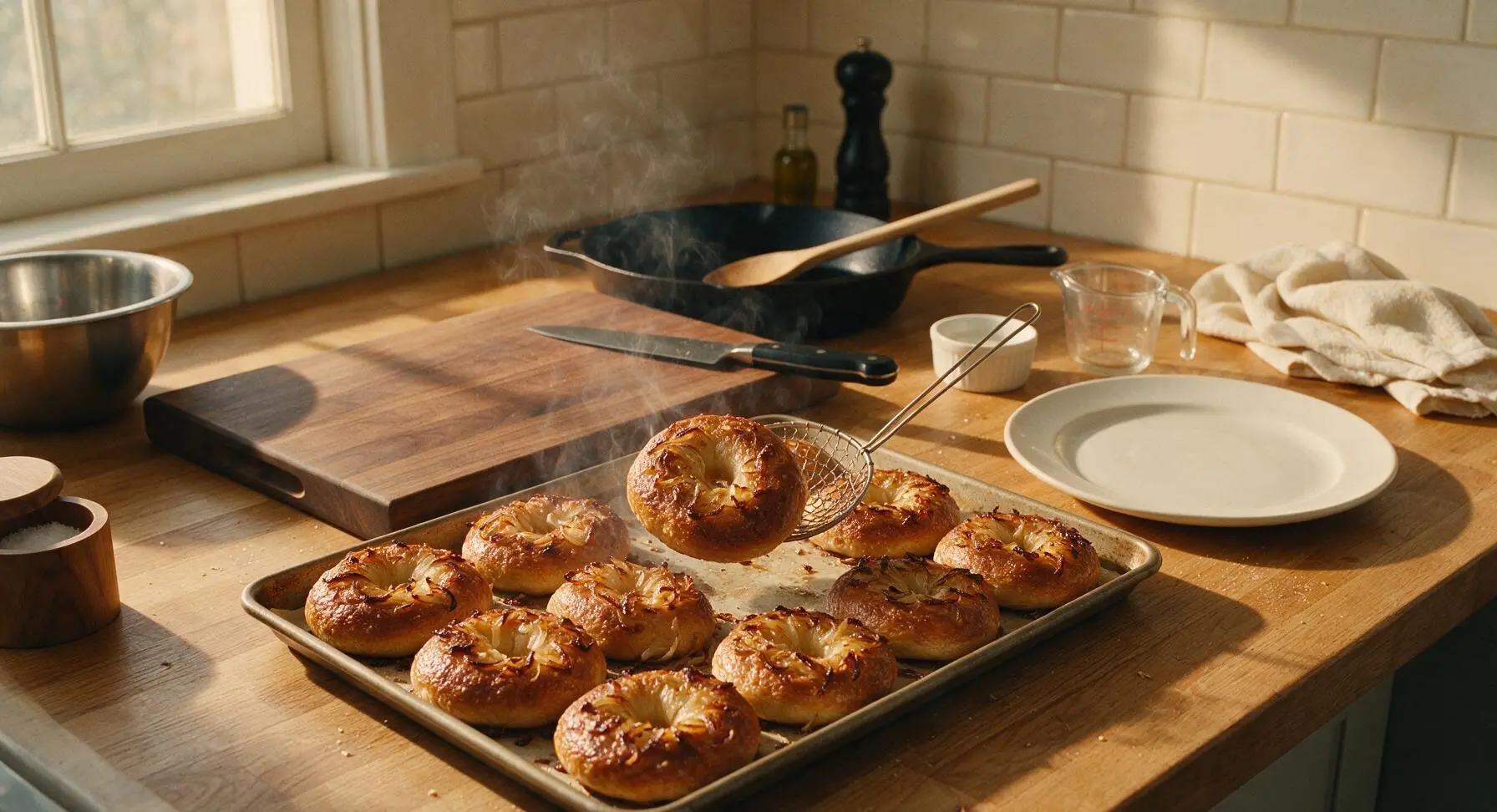
Step 7
step7:Bake to Golden Crust
8

Cool Before Serving

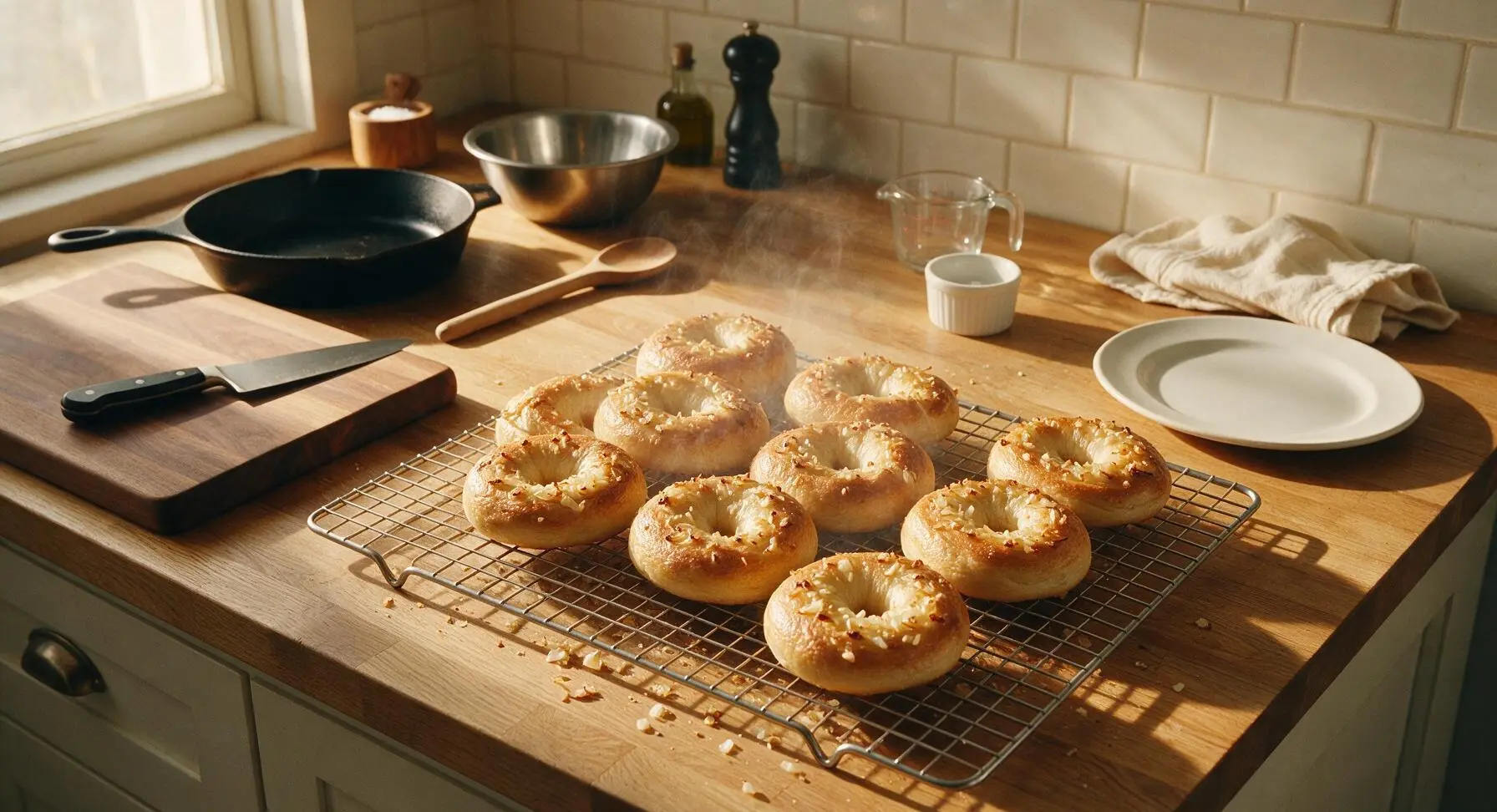
Transfer hot baked bagels to the stainless steel wire cooling rack set on the counter. Let cool for at least 15 minutes before slicing (cutting hot bagels will compress the soft, chewy crumb). Serve plain, or with cream cheese, smoked salmon, sliced tomato, or your favorite bagel toppings.
Step 8
step8:Cool Before Serving

Tips

1.Always use high-protein bread flour for bagels: Its 12-14% protein content develops the strong gluten network needed for the signature chewy, dense crumb and crisp crust that lower-protein all-purpose flour cannot produce.
2.Do not skip the boiling step: The hot malted water gelatinizes surface starches, creating the iconic shiny, chewy bagel crust and controlling oven spring to prevent overly fluffy, bread-like texture.
3.Let caramelized onions cool fully before adding to dough: Hot onions can raise dough temperature enough to kill active yeast, leading to dense, flat bagels that fail to rise properly during proofing and baking.
✨ You May Also Like

Breakfast
🍜 United States

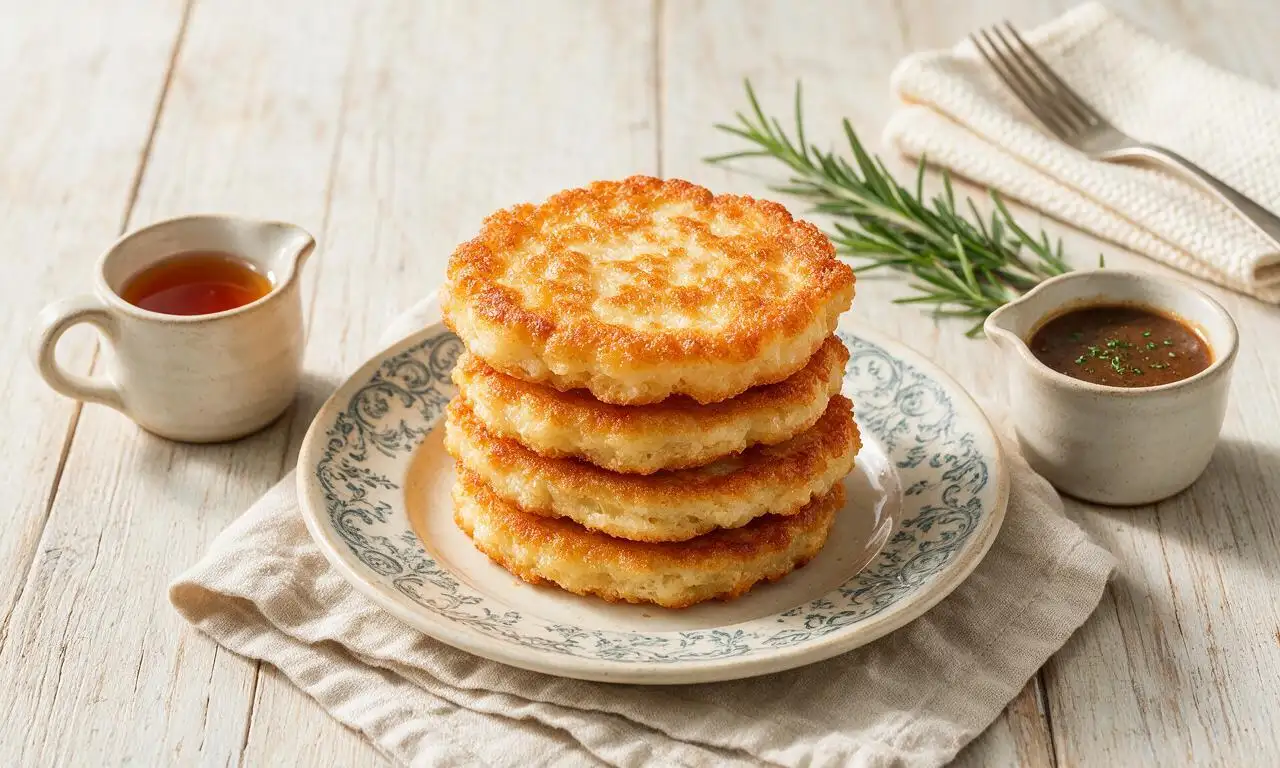
Crisp-edged, fluffy lard griddle cakes are a nostalgic homestyle staple, with rich savoriness from rendered lard, perfect topped with maple syrup or savory gravy.

⏱️ 25 minuteBreakfast ★ 4.8
Breakfast
🍜 United States

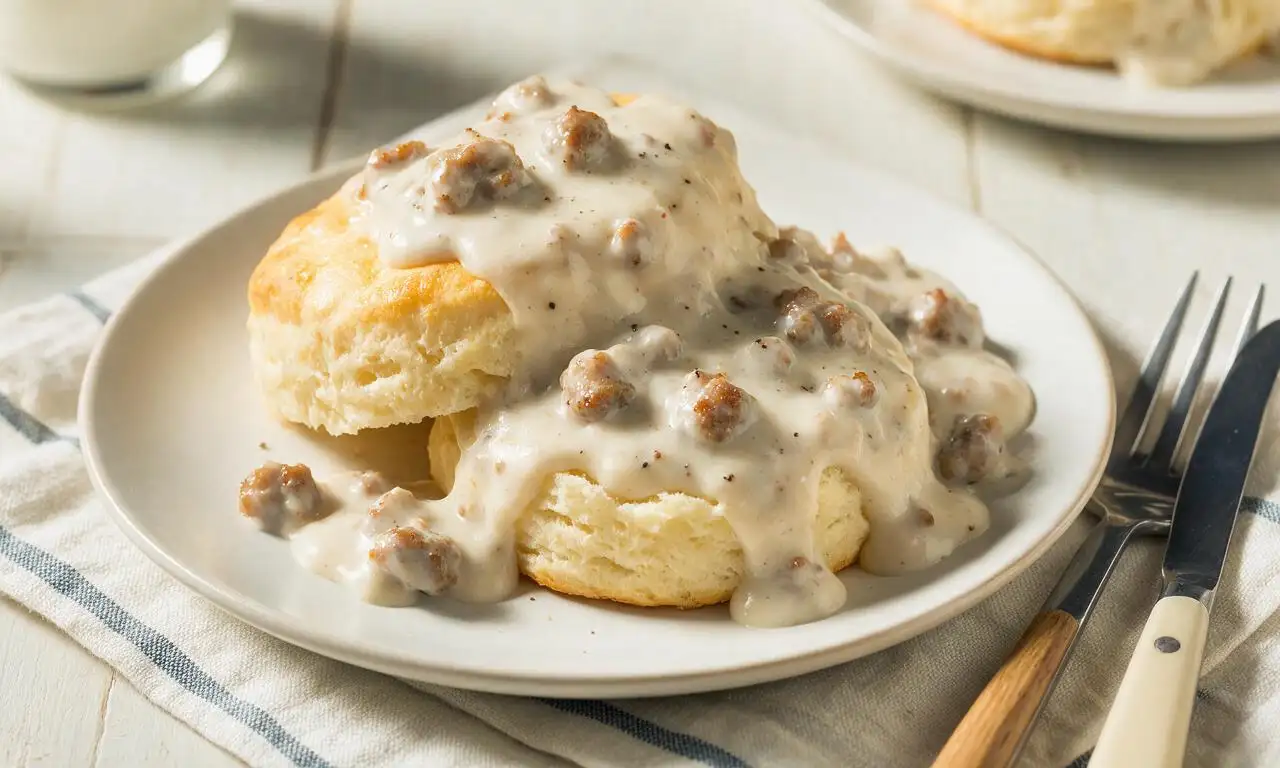
Flaky, buttery homemade buttermilk biscuits smothered in creamy, peppery pork sausage gravy: a beloved, hearty Southern American comfort food classic.

⏱️ 35 minuteBreakfast ★ 4.8
Breakfast
🍜 United States

Golden, custardy brioche stuffed with sweet cream cheese and fresh berries, pan-fried to crisp perfection. An indulgent, cozy breakfast perfect for slow weekend mornings.

⏱️ 30 minuteBreakfast ★ 4.7
Breakfast
🍜 United States

Flaky, buttery Southern-style biscuits stuffed with savory salty country ham, a portable, satisfying classic perfect for casual on-the-go meals.

⏱️ 25 minuteBreakfast ★ 4.8
Breakfast
🍜 United States

Iconic puffy baked pancake popularized in Seattle, with crisp golden edges and soft custardy center, served warm with classic sweet toppings.

⏱️ 35 minuteBreakfast ★ 4.6
Breakfast
🍜 United States

Fluffy, golden pancakes studded with juicy peak-summer mixed berries, drizzled with maple syrup for a bright, comforting, crowd-pleasing family breakfast.

⏱️ 25 minuteBreakfast ★ 4.7

Onion Bagel:Frequently Asked Questions

1.Why do I need to use bread flour instead of all-purpose for these onion bagels? ▾
Bread flour has a 12-14% protein content, far higher than all-purpose flour’s 8-11%, which builds the strong, tight gluten network needed for that signature dense, chewy deli bagel texture. All-purpose flour will produce softer, fluffier bagels that lack the characteristic crusty bite and won’t hold up to heavy schmears of cream cheese well.
2.How do I know my 110°F warm water is the right temperature to activate active dry yeast? ▾
110°F feels like comfortably warm bath water to the touch—never hot enough to sting or burn your wrist. If you don’t have a thermometer, err on the slightly cooler side; water over 120°F will kill active dry yeast, leading to flat, dense bagels that don’t rise properly. You’ll know it works if the yeast foams after 5 minutes mixed with a pinch of malt syrup.
3.Can I substitute another ingredient for barley malt syrup if I don’t keep it on hand? ▾
Barley malt syrup gives bagels their signature subtle malty sweetness and deep, golden baked crust, but if you’re in a pinch, you can swap it for equal parts dark brown sugar or light molasses. Avoid using honey as a 1:1 swap, as it has a bright, floral flavor that doesn’t match classic deli bagels and can make the crust brown too quickly.
4.Why do deli-style bagels need to be boiled before they go in the oven? ▾
Boiling is the secret to that authentic chewy crust and tight, dense crumb. The quick hot water bath gelatinizes starches on the bagel’s exterior, creating a shiny, crisp outer layer that doesn’t over-rise in the oven, locking in that signature chewy texture instead of turning into a soft, generic bread roll. Skipping this step means you’ll end up with round bread rolls, not real bagels.
5.How do I get the caramelized onion toppings to stick instead of falling off the bagels? ▾
First, make sure your caramelized onions are fully cooled and patted very dry with paper towels—excess moisture will make them slide off during boiling or baking. After you pull each bagel out of the boiling water, while the surface is still wet and tacky, press the onion pieces firmly into the top and sides before transferring to the hot baking sheet.
6.How long should I knead the bagel dough to get the perfect chewy texture? ▾
If kneading by hand, aim for 10-12 minutes of firm, consistent kneading; if using a stand mixer with a dough hook, 6-8 minutes on medium-low speed works. The dough is ready when it’s very smooth, tight, and elastic—if you can stretch a small piece thin enough to see light through without tearing, your gluten is fully developed.
7.Can I make these bagels ahead of time for quick breakfasts or day outings? ▾
Absolutely—these sturdy bagels are perfect for prepping ahead. Once fully cooled, store them in an airtight bag at room temperature for up to 3 days, or slice and freeze them for up to 3 months. For outings, pack them pre-sliced with a small container of cream cheese on the side, and they’ll hold their texture perfectly for 4-6 hours without getting soggy.
8.What’s the best way to prep caramelized onions for these bagels so they’re sweet, not bitter? ▾
Slice yellow onions thin, cook them low and slow in a little butter or oil over medium-low heat for 25-30 minutes, stirring occasionally, until they’re deep golden and jammy. Don’t rush the process on high heat—that will burn the edges and leave them bitter. Cool completely, then chop into small, even pieces so they distribute well across each bagel.
9.How do I tell when my shaped bagels are done proofing and ready to boil? ▾
The float test is the most reliable trick for home bakers. After shaping your bagels into rings and letting them rest for 20-25 minutes, drop one gently into a bowl of cool tap water. If it floats to the top within 10 seconds, they’re proofed perfectly and ready to boil. If it sinks, let them rest 5 more minutes and test again.
10.Do I need to add anything extra to the boiling water for the best bagel crust? ▾
Yes! Add 1 tablespoon of barley malt syrup to the boiling water to amp up that classic malty flavor and help the crust develop that deep, shiny golden brown color as it bakes. You can also add a pinch of kosher salt to boost savoriness, just like you would for pasta, but skip baking soda unless you prefer a pretzel-like tang.
11.Why did my last batch of homemade bagels turn out too dense and heavy, not light and chewy? ▾
Dense bagels almost always trace back to one of three issues: your yeast was dead and didn’t rise properly, you under-kneaded the dough so the gluten network wasn’t strong enough to trap air, or you skipped the full proofing step before boiling. Double check your water temp, do the stretch test for gluten, and use the float test before boiling to avoid this.
12.Can I make these deli-style onion bagels without a stand mixer? ▾
Absolutely! Deli bagels were made by hand for decades before stand mixers were common. Mix the dough ingredients in a large bowl until a shaggy mass forms, then turn it out onto a clean, unfloured counter and knead firmly for 10-12 minutes, until smooth and elastic. It’s a bit of an arm workout, but the final chewy texture is identical to mixer-made dough.
13.The recipe calls for kosher salt—can I swap in regular table salt instead? ▾
Kosher salt is ideal because it dissolves evenly into the dough and has a clean, sharp savoriness without any bitter aftertaste. If you only have table salt, use half the amount called for in the recipe—table salt is much finer and denser, so using an equal measurement will make your bagels overly salty and slow down the yeast’s rise.
14.What’s the easiest way to shape bagels into that classic even, round ring? ▾
There are two foolproof methods for home bakers. First, roll each dough portion into a tight 4-inch ball, poke a hole through the center with your thumb, then gently stretch the hole to 2 inches wide, working the dough evenly around the ring. Alternatively, roll each portion into an 8-inch rope, overlap the ends, and press firmly to seal into a ring.
15.Why did my baked bagels come out with a pale, dull crust instead of a shiny golden one? ▾
Pale, dull crust usually means one of two things: you didn’t add malt syrup (or a suitable swap) to the boiling water, so exterior starches didn’t caramelize properly in the oven, or your oven temperature was too low. Make sure your oven is fully preheated to 425°F before baking, and don’t skip the malt in the boil for that glossy deli crust.
16.Can I add other toppings besides caramelized onion to these bagels? ▾
Of course! While caramelized onion is the classic deli topping, you can mix and match after the boiling step while the bagel surface is tacky. Try adding toasted sesame seeds, poppy seeds, dried garlic flakes, coarse sea salt, or everything bagel seasoning alongside the onion. Just pat moist toppings dry so they don’t make the crust soggy as it bakes.
17.How long should I boil each bagel to get the ideal deli-style texture? ▾
Boil each bagel for 1 minute per side, for a total of 2 minutes per bagel, if you want a classic chewy, moderately thick crust. If you love an extra chewy, extra crusty deli-style bagel, you can boil them for up to 2 minutes per side. Any longer than that, and the crust will turn tough and leathery instead of crisp and chewy once baked.
18.Do I need any special baking sheets or liners to make these bagels at home? ▾
For the best crust, bake bagels on a preheated heavy-gauge baking sheet lined with parchment paper lightly dusted with cornmeal, which prevents sticking and adds a subtle, crunchy bottom texture. If you have a baking stone, preheat it on the middle rack and slide the parchment with bagels right onto it for an extra crisp, bakery-style crust.
19.Why did the holes in my bagels shrink or close up completely while they baked? ▾
Closed bagel holes usually happen because you under-proofed the dough, so it puffed up too rapidly in the oven, or you didn’t stretch the initial hole wide enough when shaping. When you shape, aim for a 2-inch wide hole—it will shrink as the dough proofs and bakes. Passing the float test before boiling also prevents excess oven spring that closes the hole.
20.What’s the best way to serve these homemade onion bagels for that classic deli experience? ▾
Let the bagels cool for at least 15 minutes after baking (slicing them hot will squish the chewy crumb!), then slice and toast lightly if you prefer. Slather on a thick schmear of plain cream cheese, add lox and tomato if you’d like, or pile on deli turkey and Swiss for a hearty sandwich. They’re sturdy enough to hold all toppings without getting soggy.

Comments (3)

2 days ago

OMG these are SO good! I’ve been chasing that perfect deli onion bagel taste since I moved away from NYC 3 years ago and this recipe nailed it. I was nervous because bread recipes usually feel intimidating for me (seeing the medium difficulty rating had me sweating a little tbh) but the instructions were super clear and easy to follow. My kids devoured two each for breakfast this morning and asked if we can make them every Sunday moving forward. Total game changer for my weekend meal prep! 10/10

yesterday

Wait did you do the extra dehydrated onion topping step? I skipped that on my first batch and they were good but not quite that authentic deli level, curious if that made the difference for you!

yesterday

So happy you and your kids loved these, Molly! Quick tip for everyone making this recipe: toasting the dried onions for a minute before sprinkling them on right before boiling amplifies that deep, savory deli onion flavor so much—you’ll never go back to plain untoasted dried onions again!

1 week ago

Took these to my neighborhood potluck last weekend and people were practically begging for the recipe before I even left! I added a little extra garlic powder to the dough because my family is obsessed with all things garlic, and they paired perfectly with the chive cream cheese spread I set out on the snack table. Only tiny note is that my first batch boiled a little too long and got a touch chewier and denser than I wanted, so I’ll set a strict timer next time for sure. Still a massive hit, would absolutely make again for our next gathering!

5 days ago

Thanks so much for sharing these at your neighborhood potluck—that makes our whole team’s day! The extra garlic powder add-in sounds absolutely delicious, we might have to test that variation ourselves for a future recipe update. Quick tip for the boiling step: 30-45 seconds per side is the sweet spot to get that classic chewy bagel crust without making the interior too dense, hope that helps for your next batch!

30 minutes ago

Solid recipe, zero notes on the flavor front. I’ve messed around with a handful of homemade bagel recipes over the years and this one is easily top tier. Cook time was exactly 25 minutes for my convection oven, though I did have to let the dough rise an extra 20 minutes because my kitchen stays pretty cold this time of year (shoutout to old Pacific Northwest houses with bad insulation). The onion flavor is perfectly balanced, not overpowering like some weirdly artificial onion bagels you grab at the grocery store bakery. Will be adding these to my regular Sunday meal prep rotation.