
Ordinary Bitter

title 1
Ordinary Bitter
⏱️ cook time 2 hours 30 minutes
🍽️ servings 40
⚡ Difficulty medium

intro

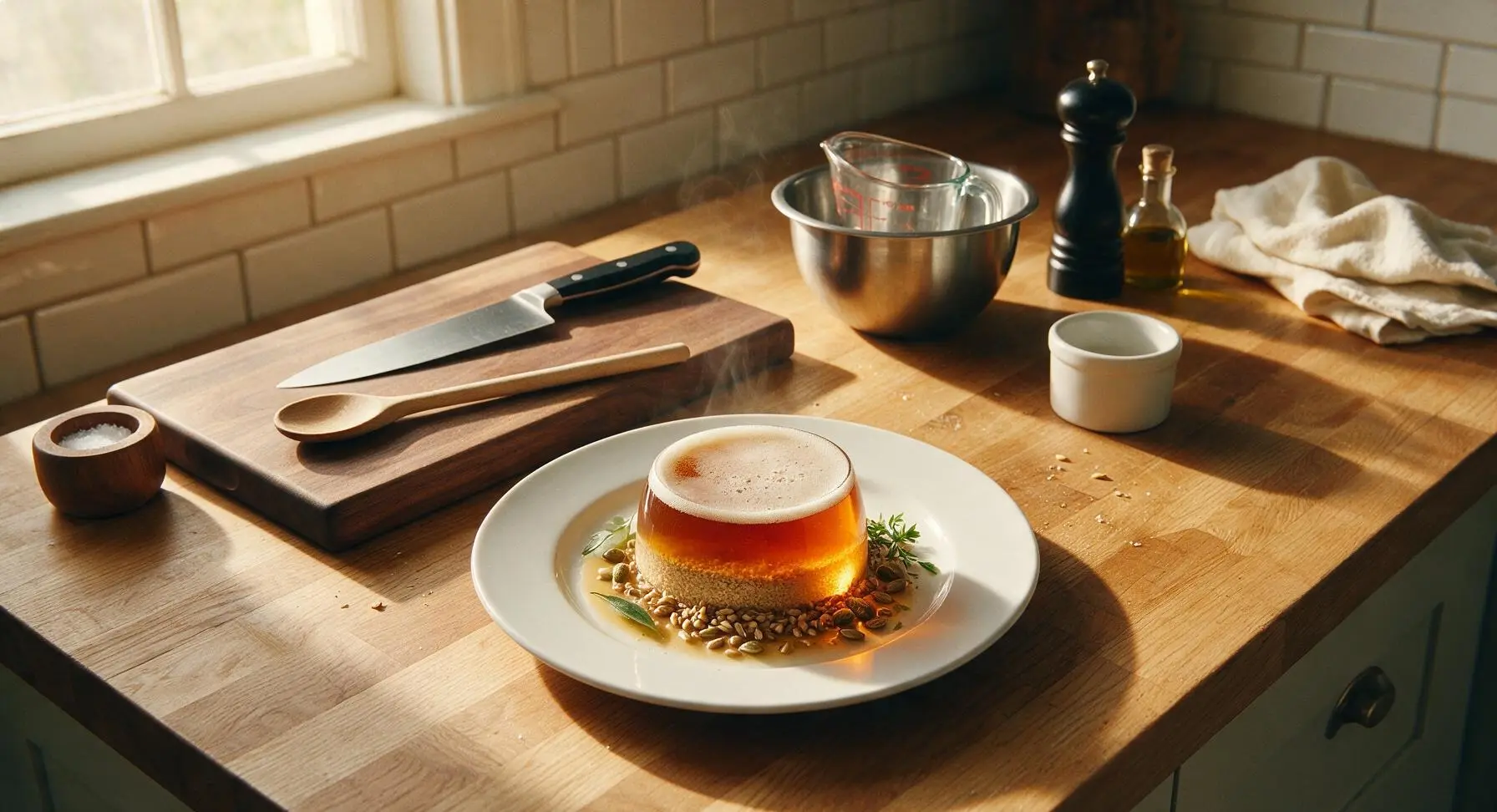
A smooth, low-alcohol classic British session cask ale with bready Maris Otter malt, earthy traditional hop bitterness, and a soft, dry finish made for slow, convivial sipping.

Ingredients
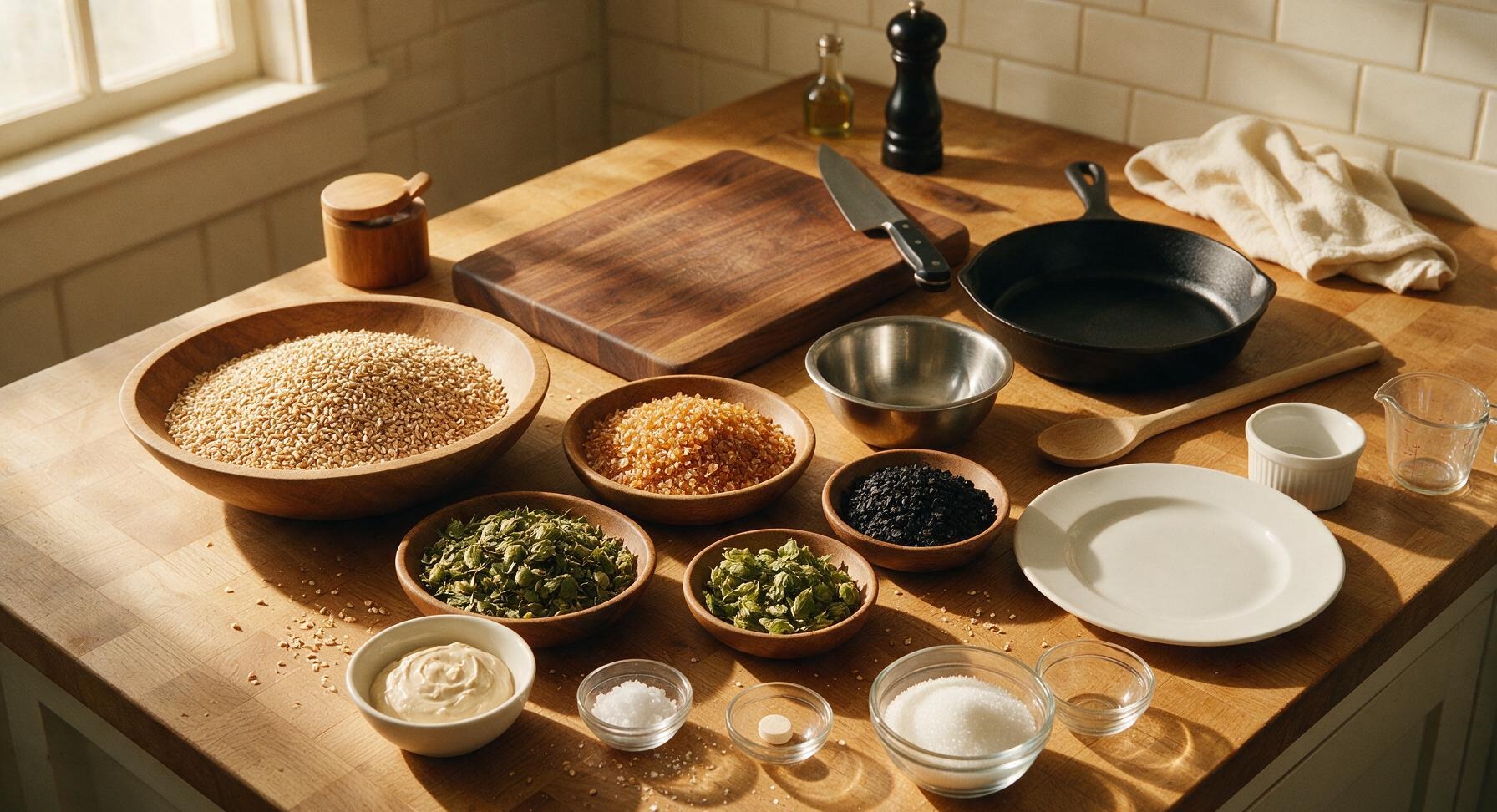
Crushed Maris Otter pale malt 3.5kg
Crushed light crystal malt (15L) 170g
Crushed black patent malt 28g
East Kent Goldings whole leaf hops 42g
Fuggle whole leaf hops 28g
British Whitbread ale yeast (Wyeast 1098) 11g packet
Gypsum (brewing salt) 5g
Campden tablet 1 tablet
Corn sugar (for priming) 113g

Steps

1

Sanitize All Equipment

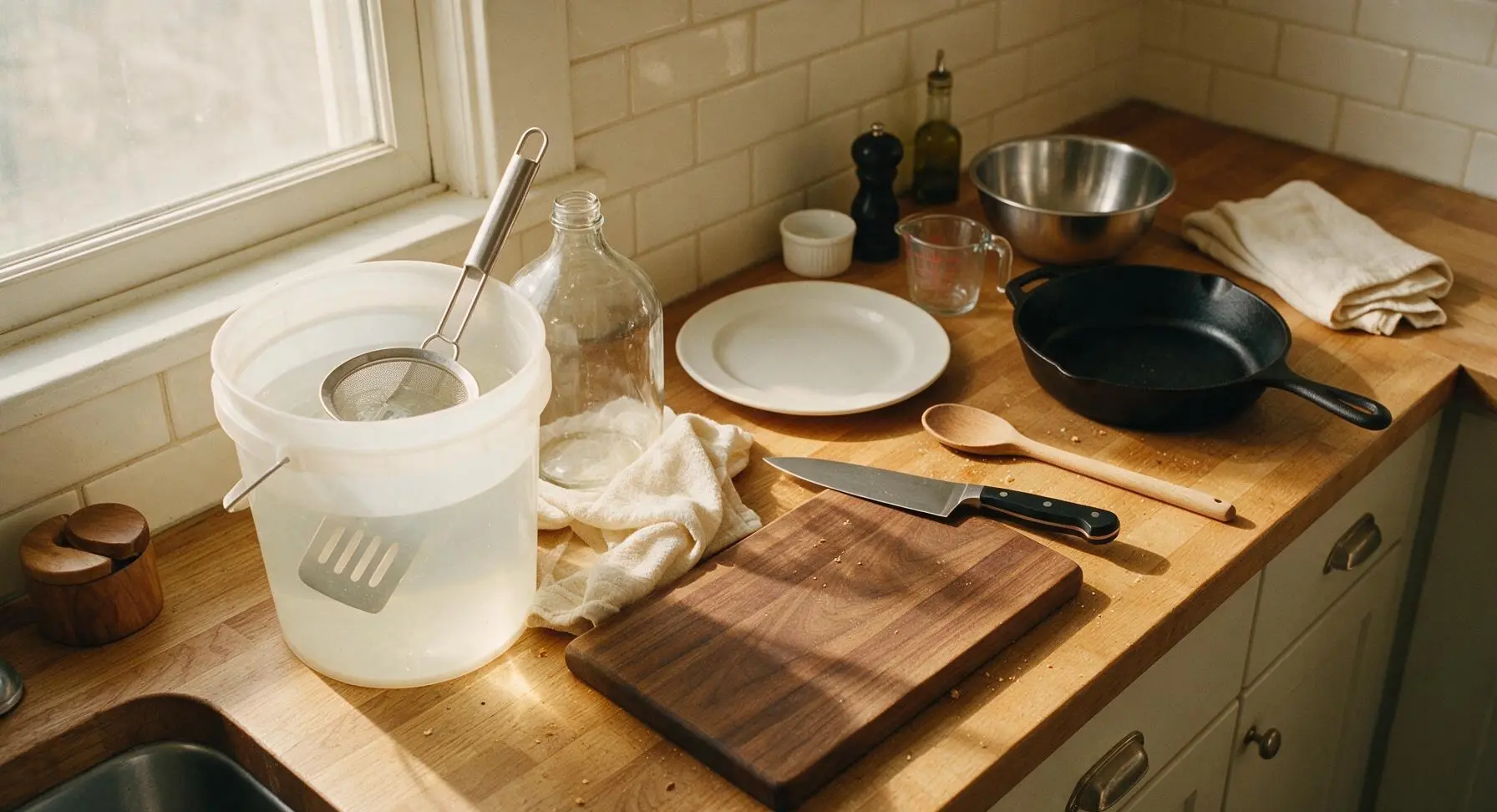
Fill the 19L sanitizer bucket with 15L of cool tap water, mix in 1 tablespoon of no-rinse brewing sanitizer per manufacturer instructions. Submerge all post-boil tools (mash paddle, strainer, carboy, auto-siphon, airlock) for 2 full minutes, then set on the heather-grey tea towel to air dry completely. Ensure no sanitizer pools in tool crevices, as residual sanitizer will kill yeast and ruin fermentation.
Step 1
step1:Sanitize All Equipment
2

Heat Mash Water

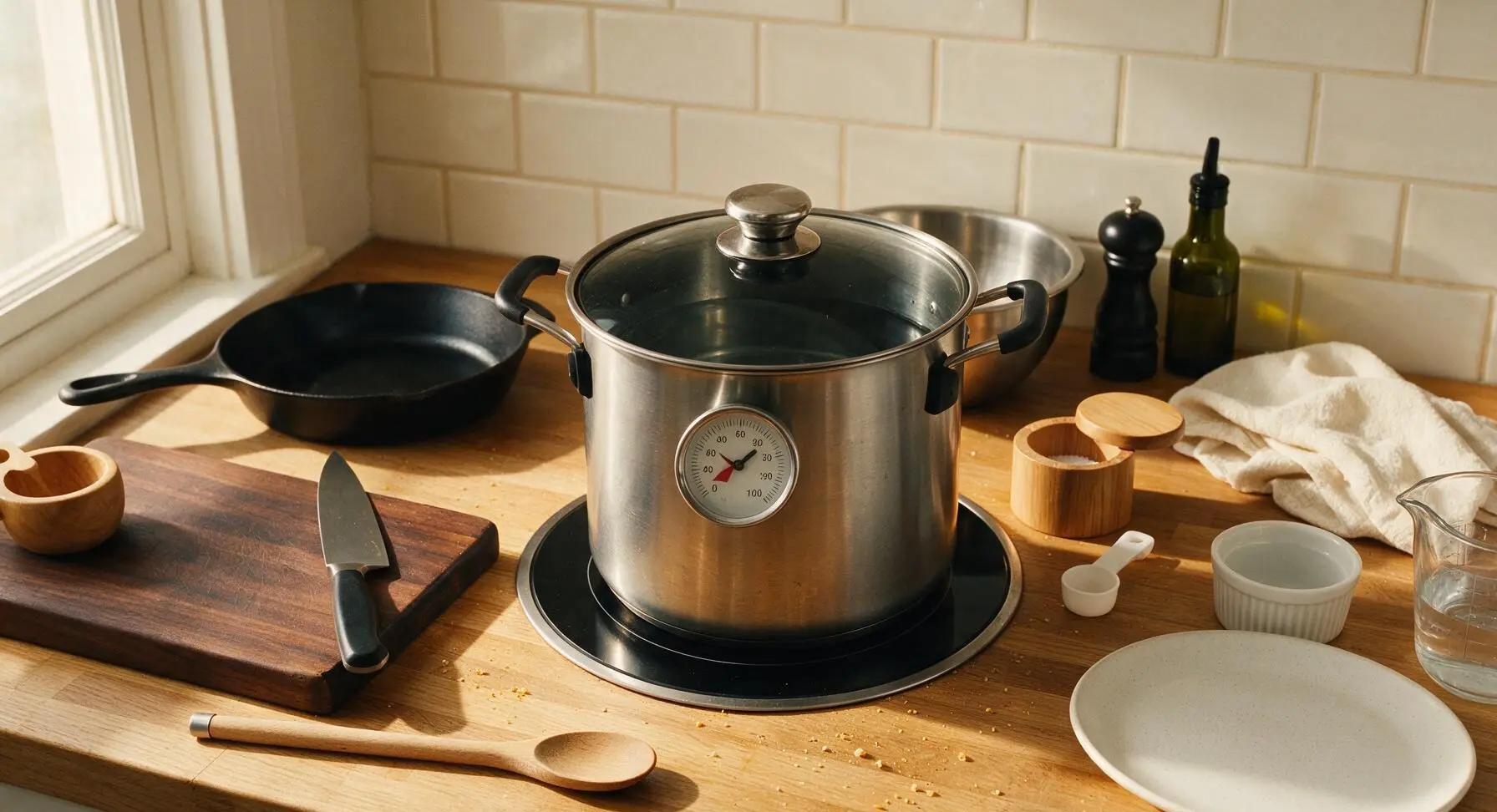
Add 11L of filtered tap water to the stainless steel brew kettle, set on the center induction burner. Stir in 5g gypsum and 1 crushed Campden tablet to adjust mineral profile and remove chlorine from the water. Heat the water to exactly 67C (153F), monitoring temperature with the kettle's built-in thermometer; do not bring to a boil at this stage.
Step 2
step2:Heat Mash Water
3

Mash the Grain Bill

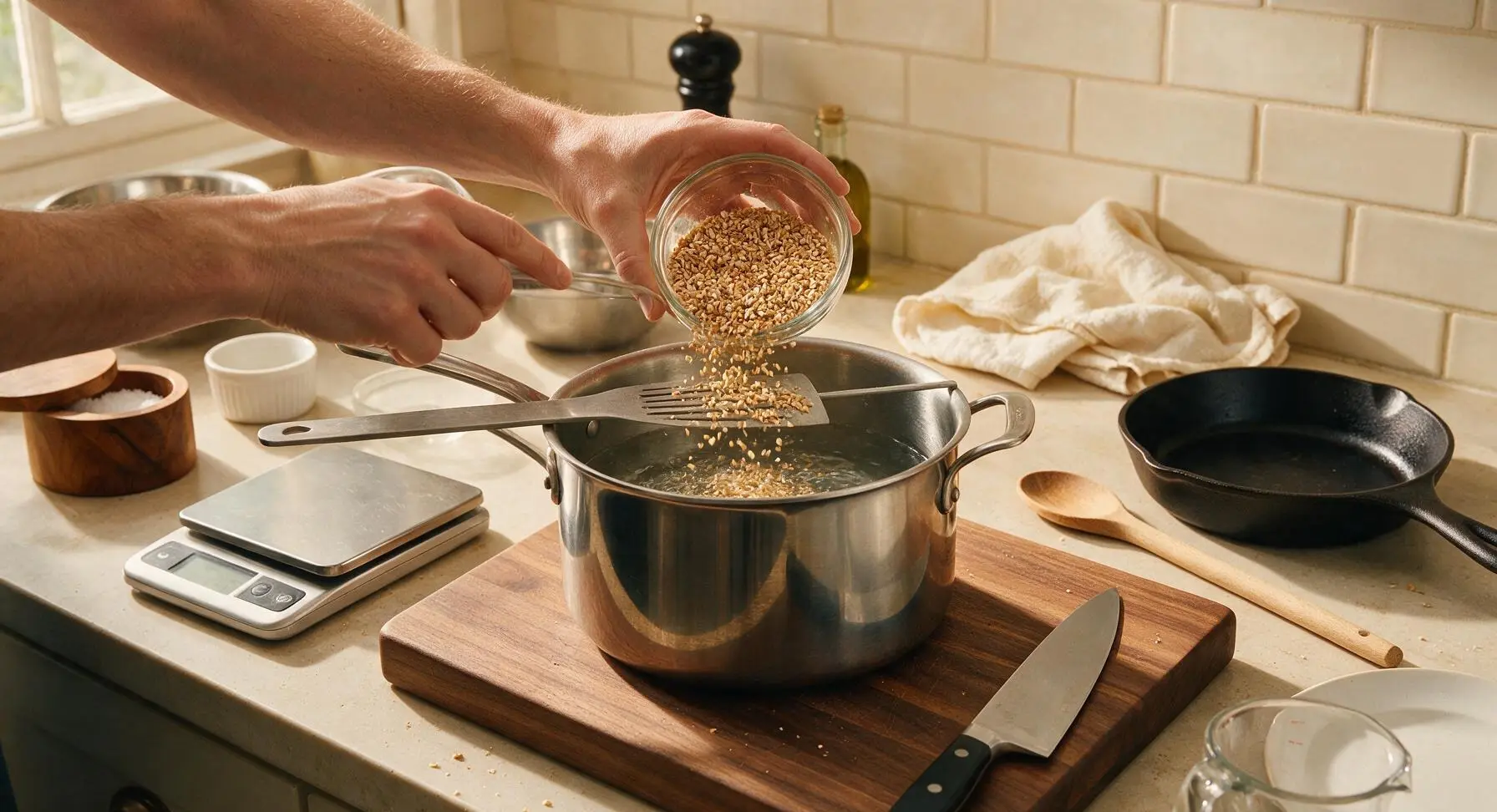
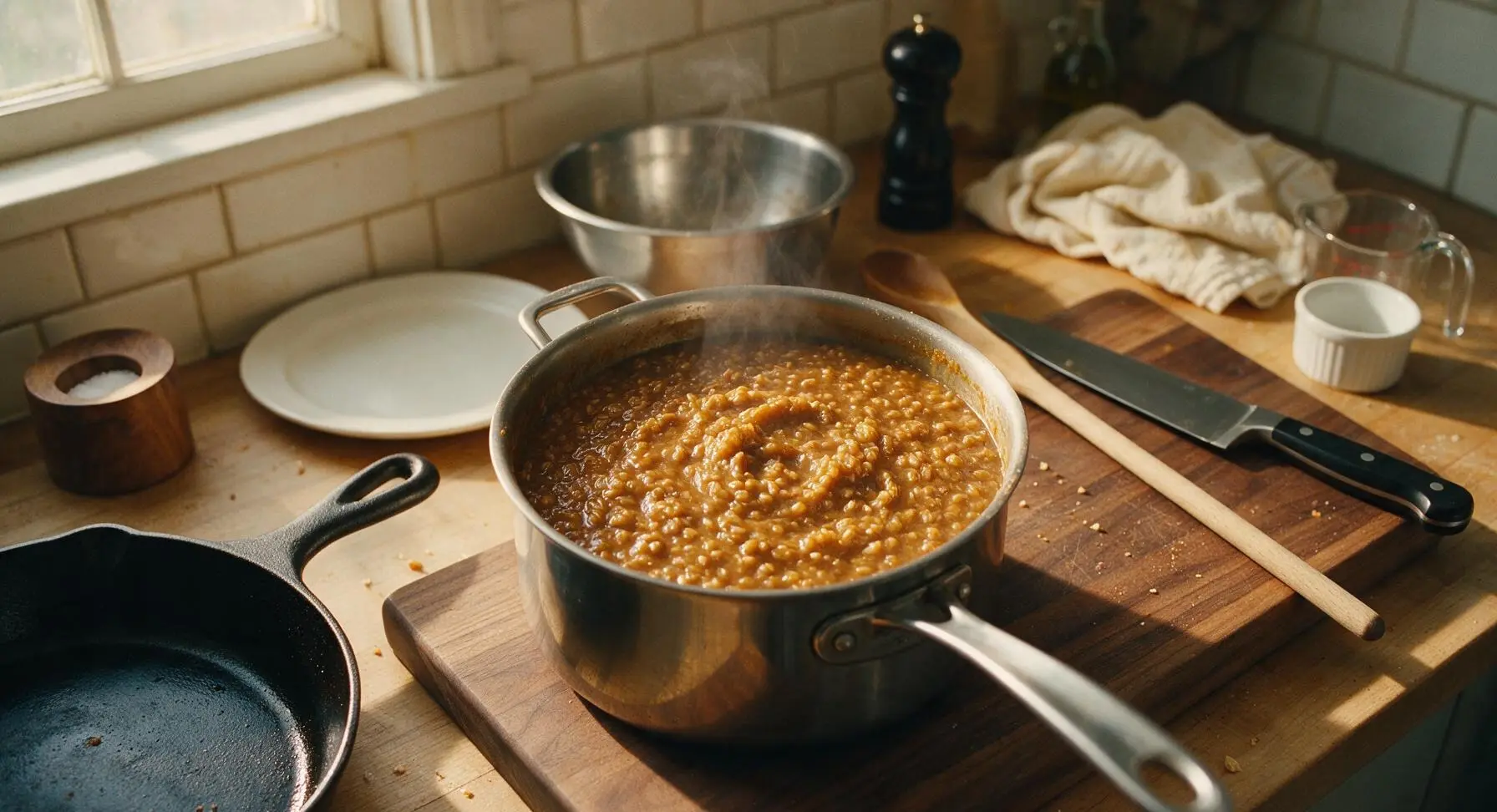
Slowly pour all crushed malts (Maris Otter, crystal 15L, black patent) into the heated water, stirring constantly with the stainless steel mash paddle to break up any dry clumps of grain. Cover the kettle with its lid, hold the mash temperature steady at 67C (153F) for 60 minutes, adjusting burner heat as needed to maintain temperature. The finished mash will smell like sweet, toasty porridge.
Step 3
step3:Mash the Grain Bill
Step 3
step3:Mash the Grain Bill
4

Lauter and Sparge

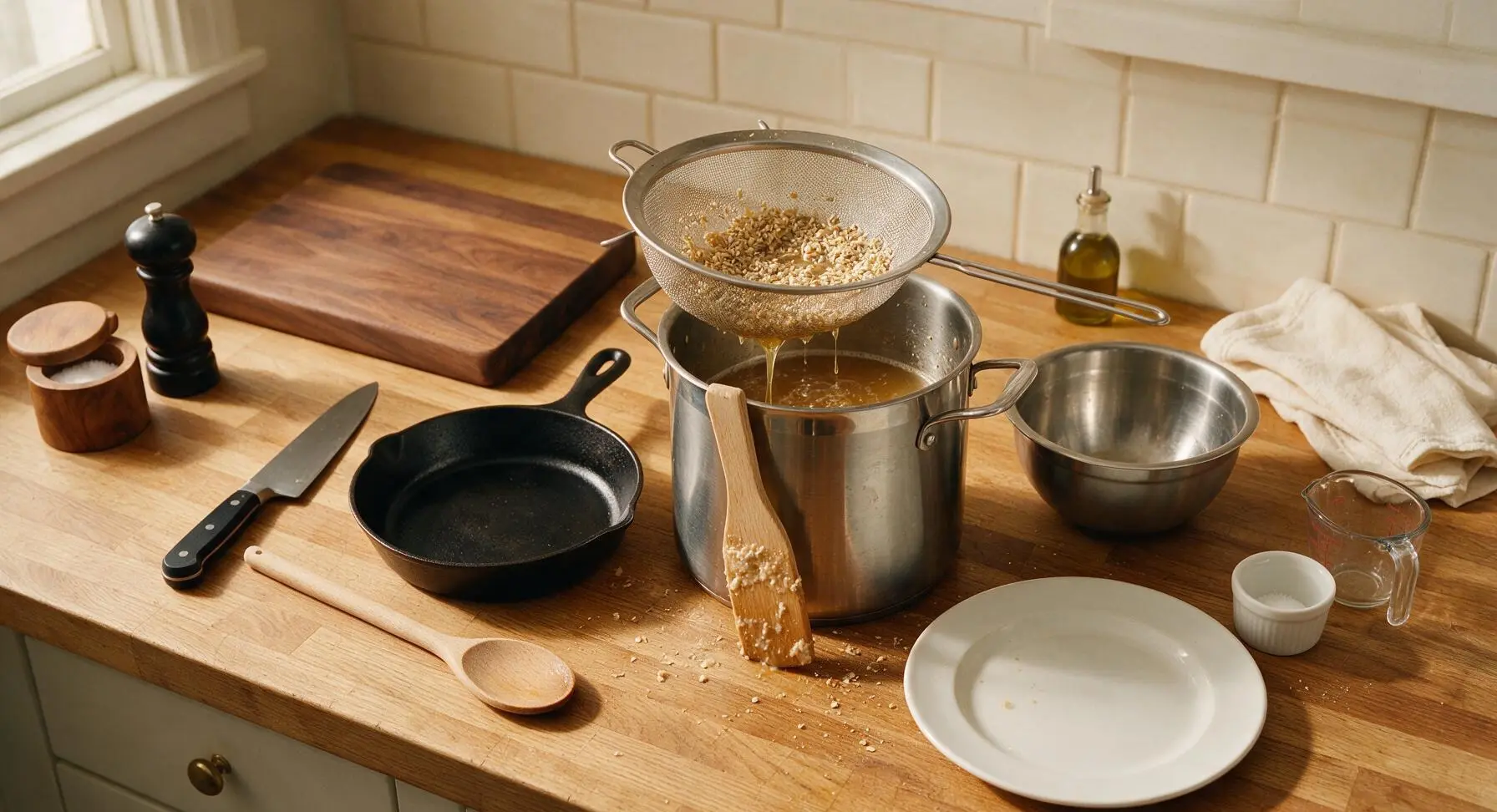
After 60 minutes of mashing, heat the mash to 77C (170F) to halt enzyme activity. Slowly pour 8L of 77C (170F) filtered sparge water over the grain bed to rinse residual sugar from the grains. Drain the sweet, golden wort through the stainless steel mesh strainer back into the kettle, separating the liquid from the spent grain husks. Collect approximately 21L of clear, sweet wort total.
Step 4
step4:Lauter and Sparge
5

Boil and Add Hops

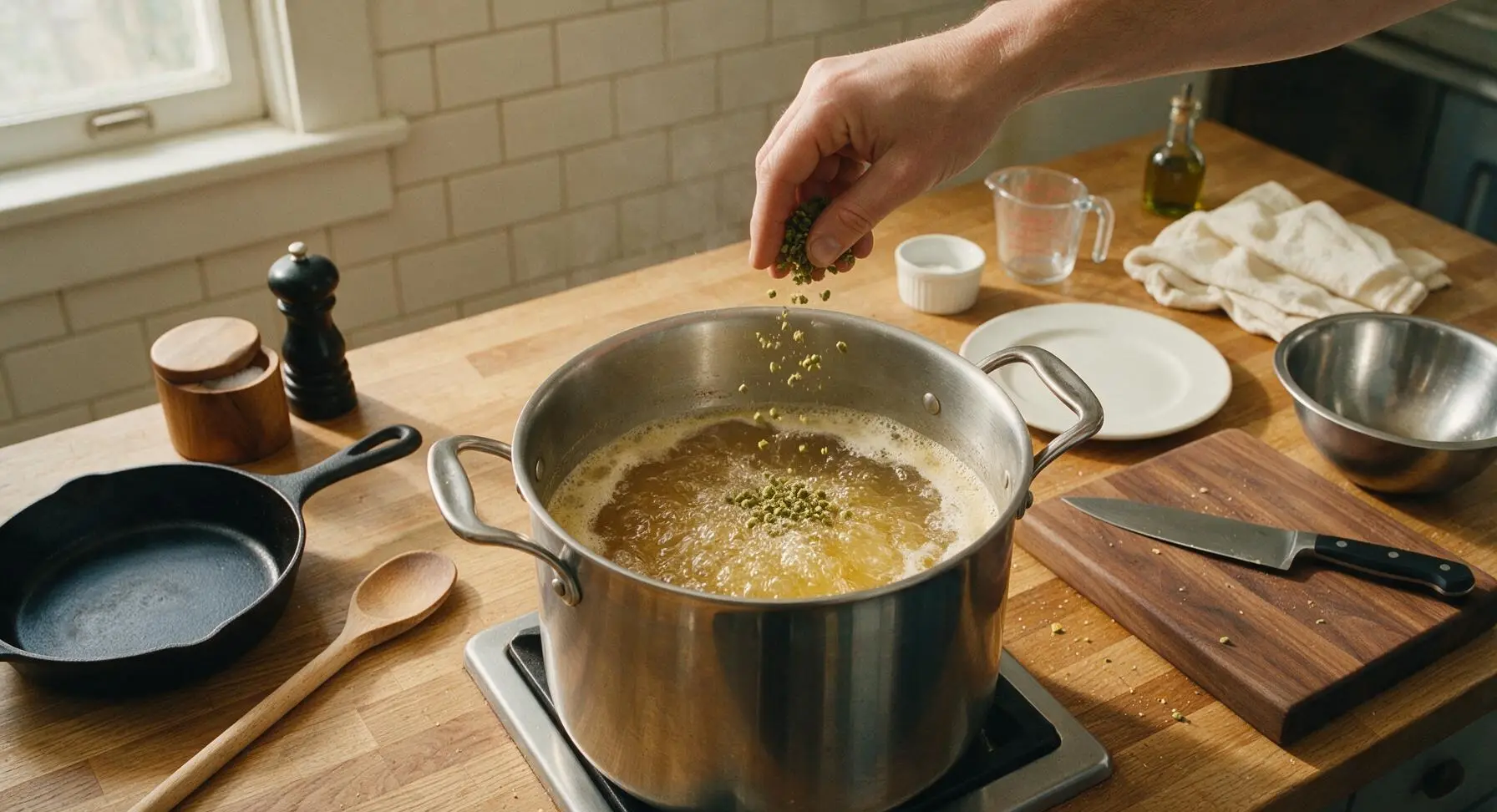
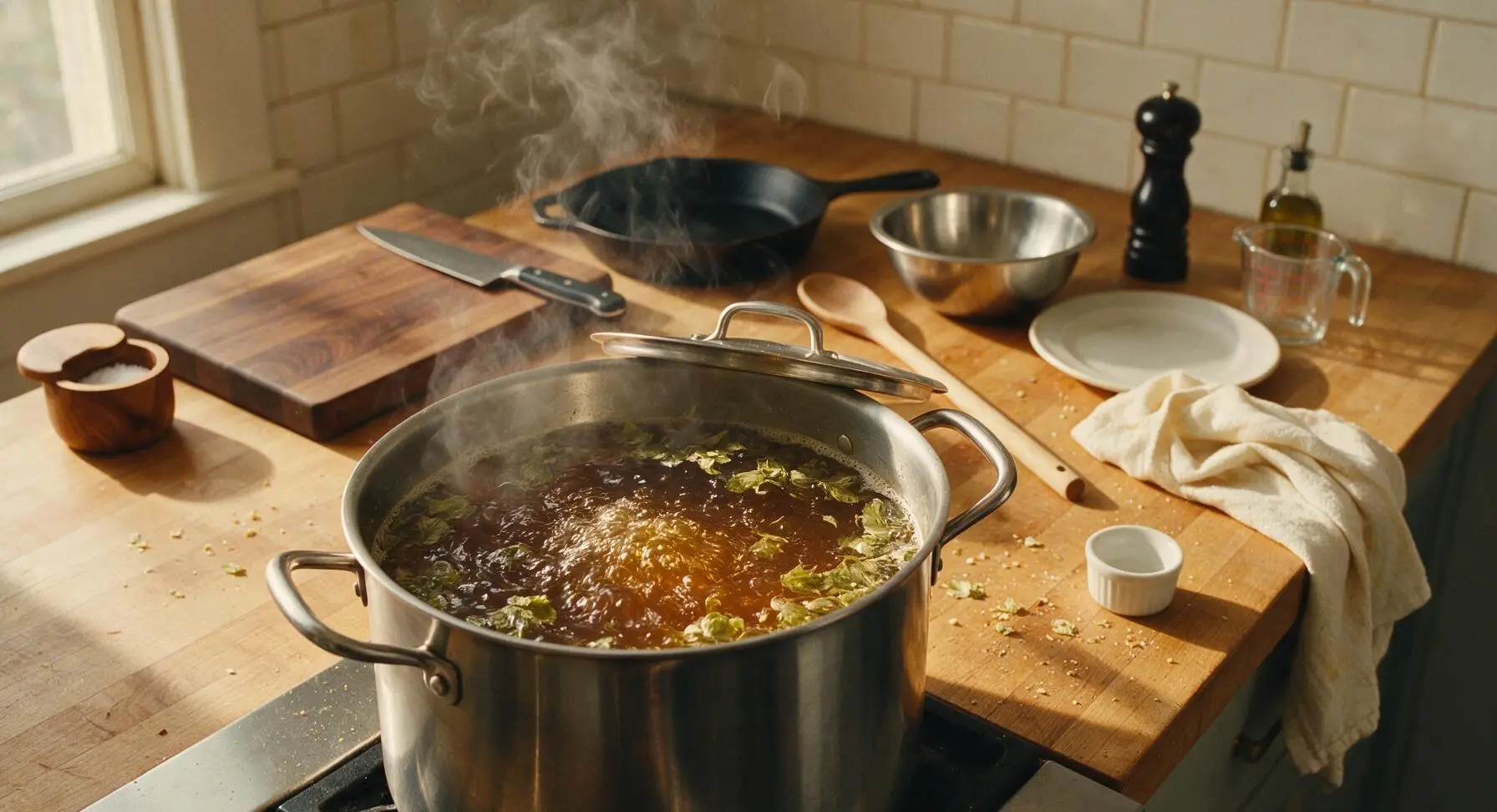
Bring the collected wort to a gentle, rolling boil, adjusting burner heat to prevent boilovers, and hold for a full 60 minutes. At the start of the boil, add 28g of East Kent Goldings hops for bittering. With 15 minutes remaining in the boil, add 14g of Fuggle hops for flavor. At flameout (immediately when heat is turned off), add the remaining 14g East Kent Goldings and 14g Fuggle hops for bright, earthy aroma.
Step 5
step5:Boil and Add Hops
Step 5
step5:Boil and Add Hops
6

Cool and Transfer Wort

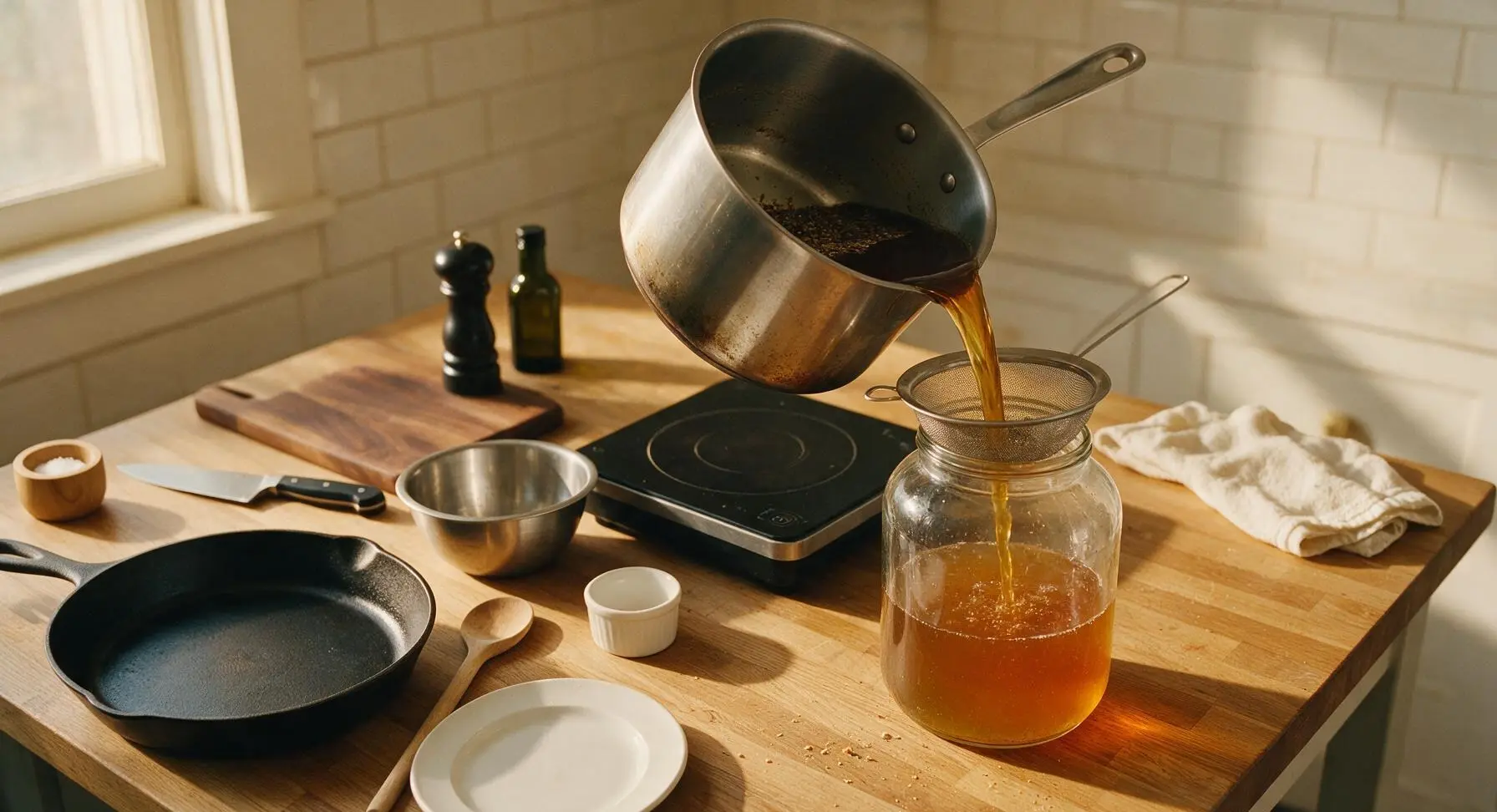
Turn off the induction burner, cover the kettle, and cool the wort as quickly as possible to 20C (68F) using an ice bath (set in the sink just off frame right). Once cooled, pour the wort through the sanitized mesh strainer into the sanitized glass carboy, leaving all dark hop sediment and trub behind in the bottom of the kettle.
Step 6
step6:Cool and Transfer Wort
7

Pitch Ale Yeast

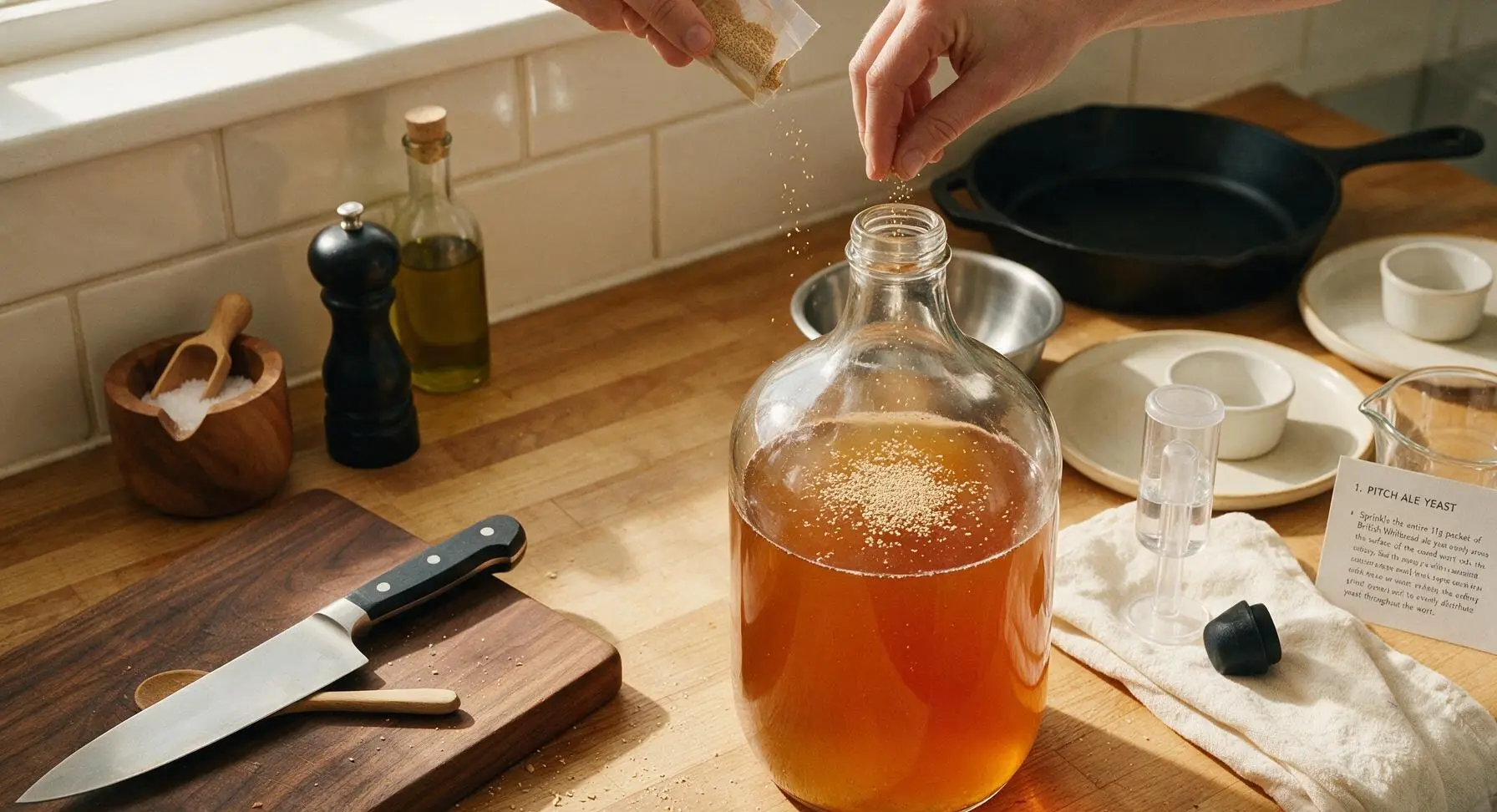
Sprinkle the entire 11g packet of British Whitbread ale yeast evenly across the surface of the cooled wort in the carboy. Seal the carboy neck with a sanitized rubber stopper, insert the 3-piece airlock half-filled with clean cool water, and give the carboy a gentle 10-second swirl to evenly distribute yeast throughout the wort.
Step 7
step7:Pitch Ale Yeast
8

Ferment and Condition

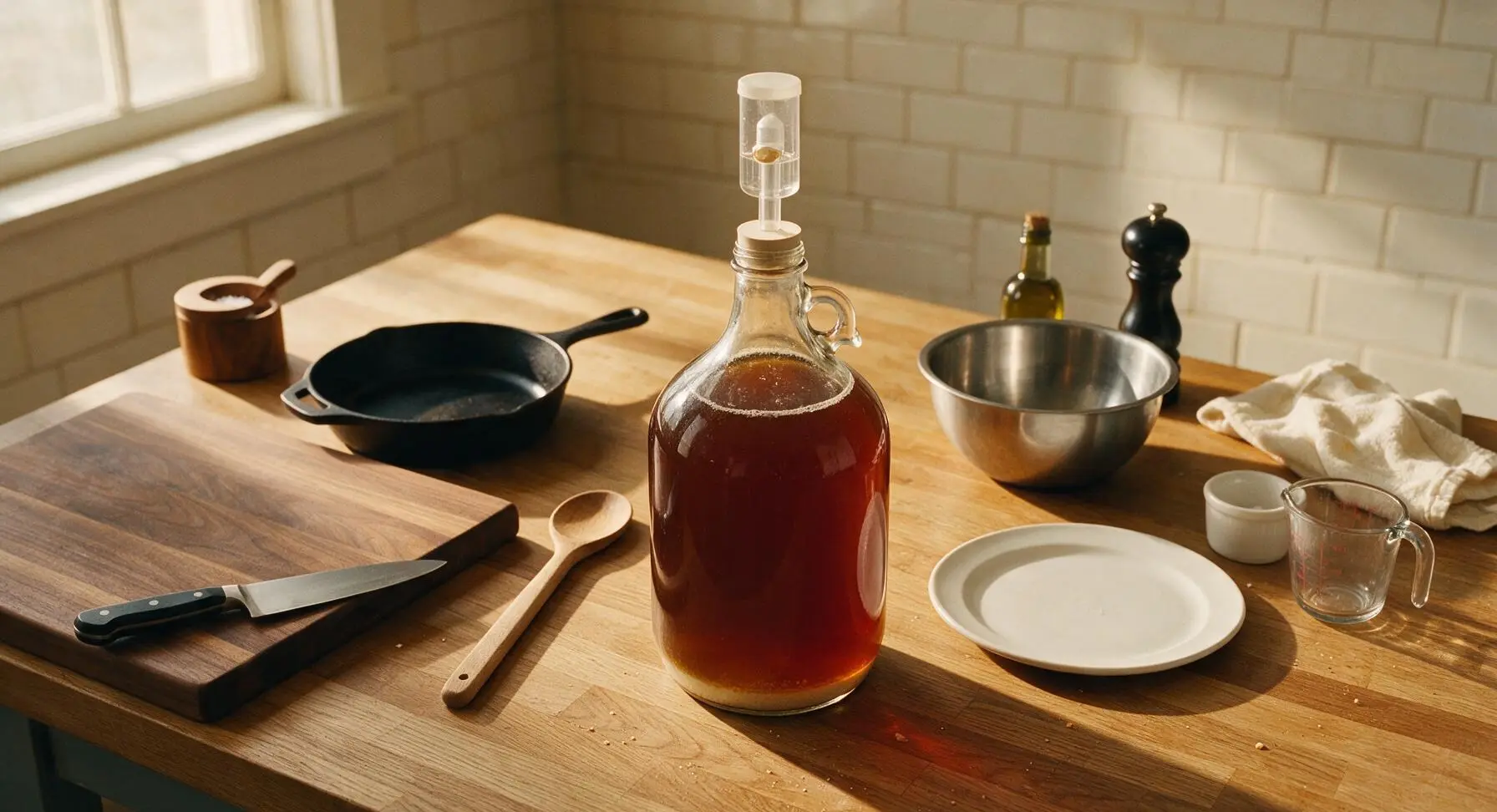
Move the sealed carboy to a dark, temperature-stable space held at 18-20C (65-68F) and leave undisturbed for 14 days. Active fermentation will be visible as steady bubbles rising through the airlock for the first 5-7 days, slowing as yeast converts sugar to alcohol and a pale layer of yeast settles to the bottom of the carboy. Do not disturb the carboy during this time to avoid stirring up sediment.
Step 8
step8:Ferment and Condition
9

Bottle and Serve

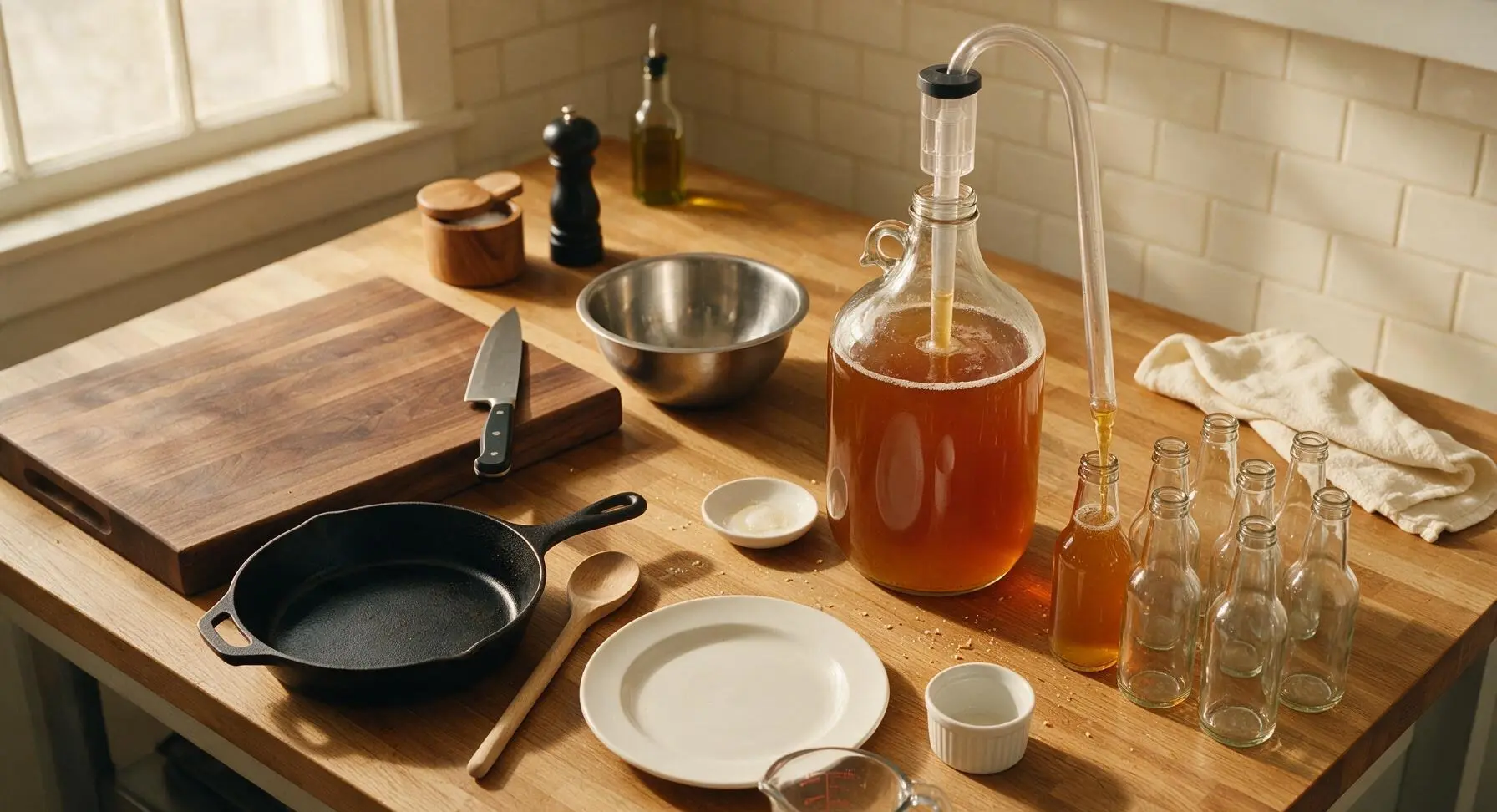
Dissolve 113g corn sugar in 100ml boiling water, cool to 20C, and add to the bottom of a sanitized bottling vessel. Use the sanitized silicone auto-siphon to transfer the finished beer from the carboy onto the priming sugar, mixing gently to distribute evenly. Fill sanitized glass bottles, cap tightly, and let condition at room temperature for 7 additional days to build soft, low cask-style carbonation. Chill bottles to 12C (54F, traditional British cask serving temperature) before pouring slowly into the nonic pint glass, leaving a thin layer of yeast sediment in the bottle.
Step 9
step9:Bottle and Serve

Tips

1.Avoid over-carbonating this beer: Traditional ordinary bitter is served with very soft, low carbonation (1-1.5 volumes CO2) rather than the bright fizz of mass-market lager, so stick strictly to the 113g corn sugar priming amount to replicate the smooth cask mouthfeel.
2.Do not rush fermentation at warm temperatures: Keeping fermentation between 18-20C prevents the British ale yeast from producing harsh fruity or solvent-like off-flavors, resulting in the clean, bready, balanced profile classic to the style.
3.Serve at 12C (54F) rather than ice cold: Over-chilling mutes the delicate bready malt and earthy hop flavors; the slightly cool cellar temperature brings out the beer's subtle balance, just as it would be pulled directly from a British pub cask engine.


✨ You May Also Like

Drinks & Beverages
🍜 Mexico

A bright, balanced tequila-based cocktail with zesty fresh lime, smooth orange liqueur, and a signature salt rim, perfect for warm summer sipping.

⏱️ 5 minutesDrinks & Beverages ★ 4.9
Drinks & Beverages
🍜 United States

Thick, creamy, nostalgic classic vanilla milkshake with a rich, smooth texture, topped with whipped cream and a cherry for cool, sweet refreshment.

⏱️ 5 minutesDrinks & Beverages ★ 4.7
Drinks & Beverages
🍜 United States

A bright, golden strong ale with fruity banana-clove notes, subtle hop spice, and soft carbonation, brewed in classic Trappist Tripel tradition.

⏱️ 2 hours aDrinks & Beverages ★ 4.5
Drinks & Beverages
🍜 United States

A frothy, nostalgic American soda fountain treat pairing bubbly cold root beer with creamy vanilla ice cream, perfect for cooling down at warm weather gatherings.

⏱️ 20 minuteDrinks & Beverages ★ 4.8
Drinks & Beverages
🍜 United States

Tart, funky, effervescent American Wild Ale is a complex fruity craft beer brewed with wild yeast, delivering bright, zesty notes perfect for warm-weather sipping.

⏱️ 2 hours aDrinks & Beverages ★ 4.4
Drinks & Beverages
🍜 United States

Bright, bubbly copycat of the iconic American caramel cola, balanced with citrus and warm spice, perfect for sipping ice-cold on hot days.

⏱️ 15 minuteDrinks & Beverages ★ 4.8

Ordinary Bitter:Frequently Asked Questions

1.What target ABV is authentic for this traditional ordinary bitter? ▾
A true ordinary bitter lands between 3.2% and 3.8% ABV, firmly in session strength. That low alcohol is intentional: it lets you enjoy multiple pints over hours of casual conversation without overwhelming your palate or leading to quick intoxication, and it keeps the finish soft and dry rather than hot or cloying.
2.Can I substitute Maris Otter malt if I can’t find it locally? ▾
You can, but stick to a high-quality British 2-row pale malt as your base to get that signature bready, slightly honeyed base note. Avoid generic American 2-row here—it’s crisper and less bready, which throws off the soft, malt-forward balance. If you must use American 2-row, add 4 oz of lightly toasted pale malt to mimic Maris Otter’s depth.
3.Why do you specify whole leaf East Kent Goldings and Fuggle hops instead of pellets? ▾
Whole leaf hops are traditional for British cask ale, and they contribute softer, more rounded earthy, floral notes than hop pellets, which can read sharper or more concentrated. They also work beautifully for cask dry hopping, creating a gentle, lingering aroma without the harsh grassy bite you can get from overdoing pellet dry hops.
4.How much black patent malt is too much for this recipe? ▾
Stick to a maximum of 1–2 oz of black patent malt for a 5-gallon batch. Any more, and you’ll end up with harsh, ashy burnt flavors instead of the subtle, deep golden-to-light amber color and faint roasty dryness the style calls for. Weigh it carefully—this is a tiny addition that makes a huge difference if overdone.
5.Do I need a real traditional cask to make this beer properly at home? ▾
You don’t need an oak or metal traditional cask to nail this style at home. A 5-gallon corny keg works great if you prime it with roughly 2/3 cup of corn sugar for a full batch and serve it at 50–55°F with very low carbonation, around 1 to 1.2 volumes of CO2, to mimic classic cask texture.
6.What carbonation level is correct for this cask ale? ▾
Skip the bubbly, high-carbonation profile you’d use for an American IPA. Ordinary bitter should sit at 1.0 to 1.2 volumes of CO2—just barely sparkling, with a soft, creamy mouthfeel. Over-carbonating will mute the bready malt notes and make the hop bitterness feel sharp and out of balance with the style’s smooth character.
7.What temperature should I serve this ordinary bitter at? ▾
Serve it between 50 and 55°F, which is slightly warmer than standard fridge temperature. Serving it too cold will mute the bready Maris Otter notes and the subtle earthy, floral character of the Goldings and Fuggle hops, leaving you with a thin, bland beer instead of the rich, sippable pub classic it’s meant to be.
8.What does the 15L light crystal malt add to this recipe? ▾
That small addition of 15L light crystal malt contributes a faint, sweet caramel and toffee note, plus a touch of extra body to keep the beer from feeling thin or watery even at its low session ABV. Stick to light crystal—darker crystal malts add heavy, raisiny sweetness that throws off the dry, clean finish.
9.How long should I condition this bitter before drinking it? ▾
After primary fermentation finishes, condition it for 2 to 3 weeks total: 1 week in secondary (or in your keg/cask) at 55°F cellar temperature to let flavors meld, then 1 to 2 weeks of conditioning at serving temp. Don’t age it for months—this is a fresh, delicate beer meant to be enjoyed young, not cellared.
10.Can I use American hop varieties instead of Goldings and Fuggles? ▾
I don’t recommend it for a traditional version, but if you have to substitute, pick low-alpha, earthy, floral American hops like Willamette or sparingly used Cascade instead of bold, citrusy hops like Citra or Mosaic. Those bright, tropical hops will completely overpower the soft malt balance that makes this style work.
11.Why is this beer supposed to have a dry finish instead of a sweet one? ▾
That dry finish is core to the bitter’s sessionability—if there’s too much residual sugar, the beer will feel cloying after a pint or two, and you won’t get that clean, refreshing pull that makes it perfect for long sessions. The small addition of black patent malt amps up that dryness without adding harsh roast, balancing the faint crystal malt sweetness.
12.What yeast strain works best for this traditional bitter? ▾
Reach for a classic British ale yeast, like Wyeast 1968 London ESB or White Labs WLP002 English Ale, for the most authentic profile. These strains produce faint, subtle stone fruit notes, flocculate well to leave the beer bright and clear, and ferment cleanly at 65–68°F without harsh solvent or overly estery off-flavors.
13.How bitter should this beer actually taste when it’s finished? ▾
Aim for 25 to 35 IBUs, with bitterness that comes across as soft, earthy, and rounded rather than sharp or punchy. The bitterness should balance the light bready malt sweetness, not dominate it—if your first sip makes you pucker, you’ve added too many late-boil hops and thrown off the style’s gentle, approachable balance.
14.Can I bottle this bitter if I don’t have kegging equipment? ▾
Absolutely! Bottle conditioning works perfectly for this style if you don’t have kegging gear. Use 1 level teaspoon of corn sugar per 12-ounce bottle to get that low, soft cask-like carbonation, store bottles at 65°F for 2 weeks to carbonate fully, then chill to serving temp. Skip extra priming sugar, which creates overly bubbly beer that misses the style’s signature smooth mouthfeel.

Comments (4)

3 days ago

OMG this recipe is such a game changer! I’ve been chasing that proper pub bitter flavor for years after a trip to the UK, and this nailed it first try. Brought a growler to our neighborhood potluck last weekend and everyone was begging for the recipe—even my cousin who swears he only drinks IPAs went back for three pours. The 2.5 hour brew day flew by too, way less intimidating than I thought it would be for a medium difficulty recipe! SO good.

2 days ago

Wait did you do any extra dry hopping? I’m tempted to toss a tiny bit of East Kent Goldings in at the end but don’t want to mess up that classic malt balance.

yesterday

So glad it was a hit at your potluck! If you do add extra dry hops, stick to no more than half an ounce of East Kent Goldings to keep that traditional, balanced bitter profile—you don’t want the hop aroma to overpower that lovely biscuity malt base!

1 week ago

Really solid recipe! I brewed this for my weekly family dinner with my in-laws, and even my teen kids who usually turn their nose up at anything that isn’t hard seltzer snuck a couple glasses. My father-in-law who used to live in London said it tasted exactly like the pints he’d get at his local back in the 90s. Knocked off one star only because my first batch came out a touch cloudier than I expected, probably rushed the cold crash a little. Will absolutely make this again for our next game night.

5 days ago

Thanks so much for the feedback! Cloudiness is super common if you cut the cold crash short—next time try giving it a full 48 hours at 34-36°F before racking, and you’ll get that crystal clear classic cask look you’re after. Cheers!

2 days ago

Meal prep for the win! I brewed a double batch of this last Sunday, and it’s the perfect low-ABV session beer to have on tap in my kegerator for after work. Not too heavy, great malt depth, just enough hop bite to keep it interesting. My roommate who’s super new to craft beer loved it so much she asked if we could make it our monthly house brew.

2 hours ago

How long did you let it condition in the keg before tapping? I’m making this for a backyard BBQ next month and trying to nail down my timeline!

5 minutes ago

Just finished the boil for this bad boy! The wort smelled incredible as I was steeping the grains, all that toasty biscuit aroma had my dog hanging around the brew stand the whole time. Will update once it’s carbonated and ready to pour, but so far this recipe has been super easy to follow even with my janky old beginner brew setup. Fingers crossed it turns out as good as everyone else’s batches!



