
Passion Fruit Brined Catfish
intro
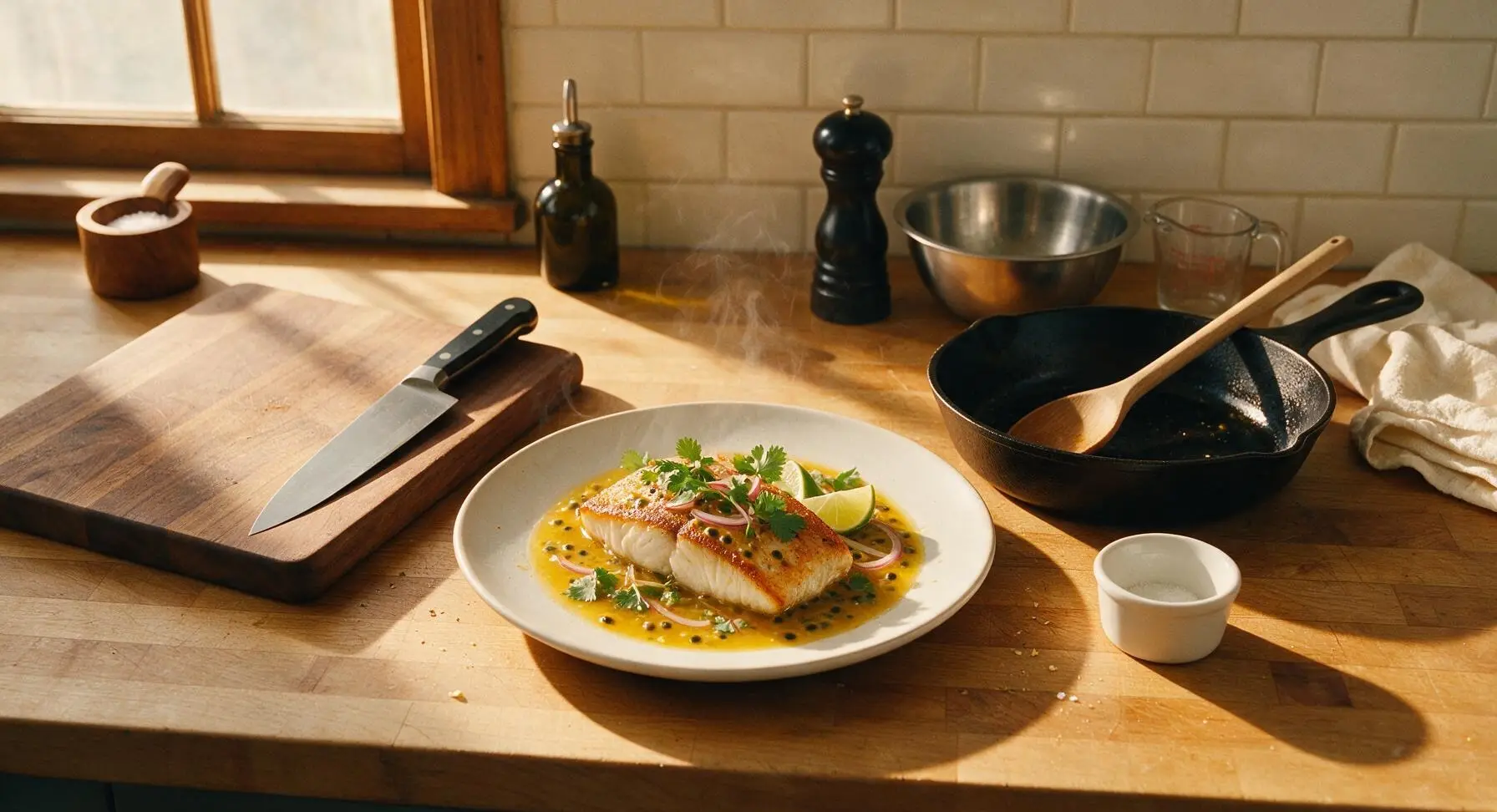
Tangy, aromatic passion fruit brine infuses mild, flaky catfish with bright tropical depth, yielding a crisp-seared, light seafood dinner perfect for warm summer weeknights.
Ingredients
Steps
Mix Passion Fruit Brine
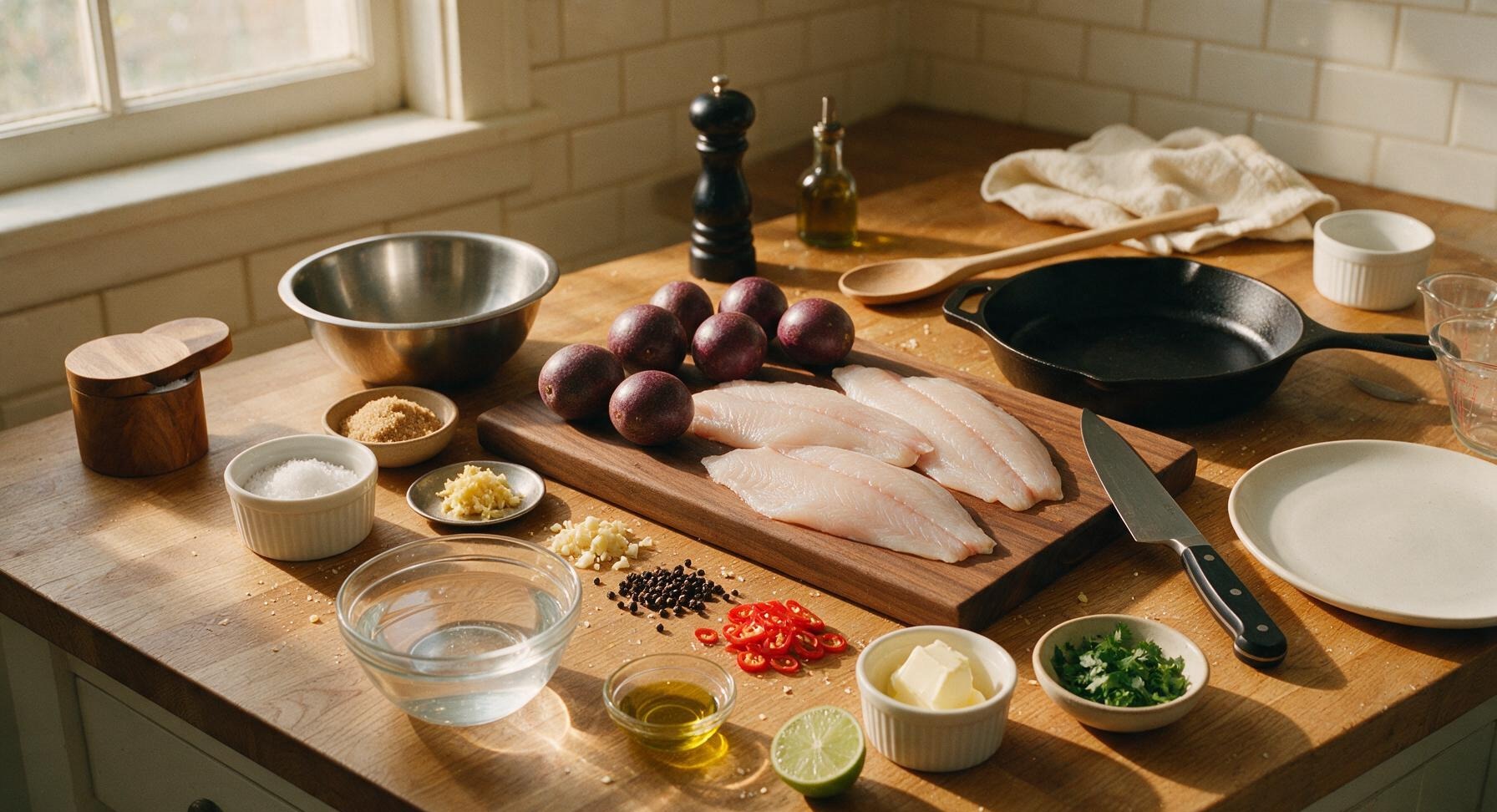
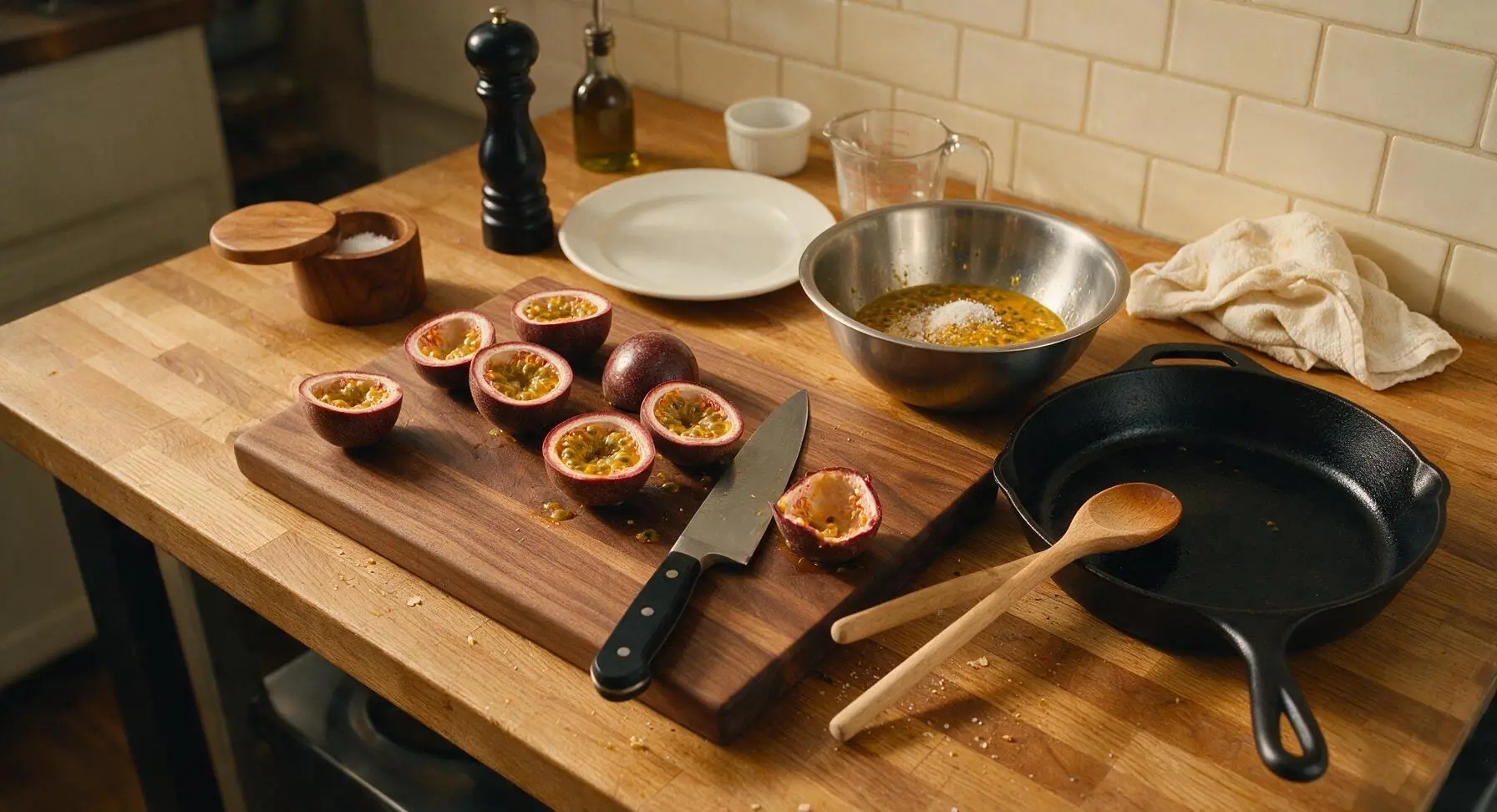
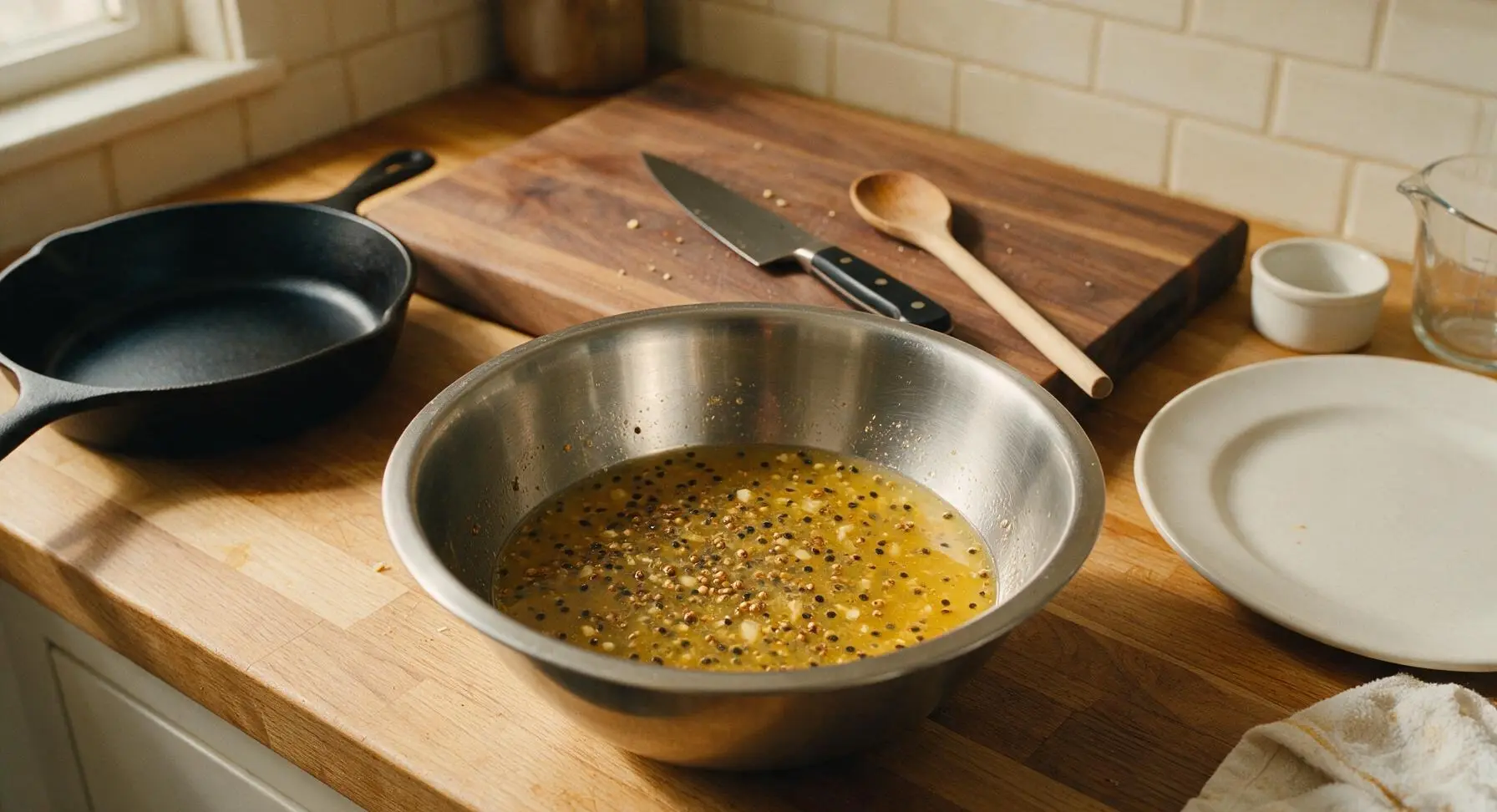
Set the acacia wood cutting board on the center of the counter. Use the chef knife to cut 4 ripe passion fruit in half, then scoop all seedy golden pulp into the medium stainless steel mixing bowl. Add 1/4 cup kosher salt, 2 tablespoons light brown sugar, 1 tablespoon grated fresh ginger, 3 crushed garlic cloves, 1 tablespoon crushed black peppercorns, and 3 cups cold water (measured in the clear glass measuring cup) to the bowl. Stir for 60 seconds until salt and sugar are fully dissolved; the finished brine will be pale golden, flecked with black passion fruit seeds, and smell bright and tart.
Brine the Catfish
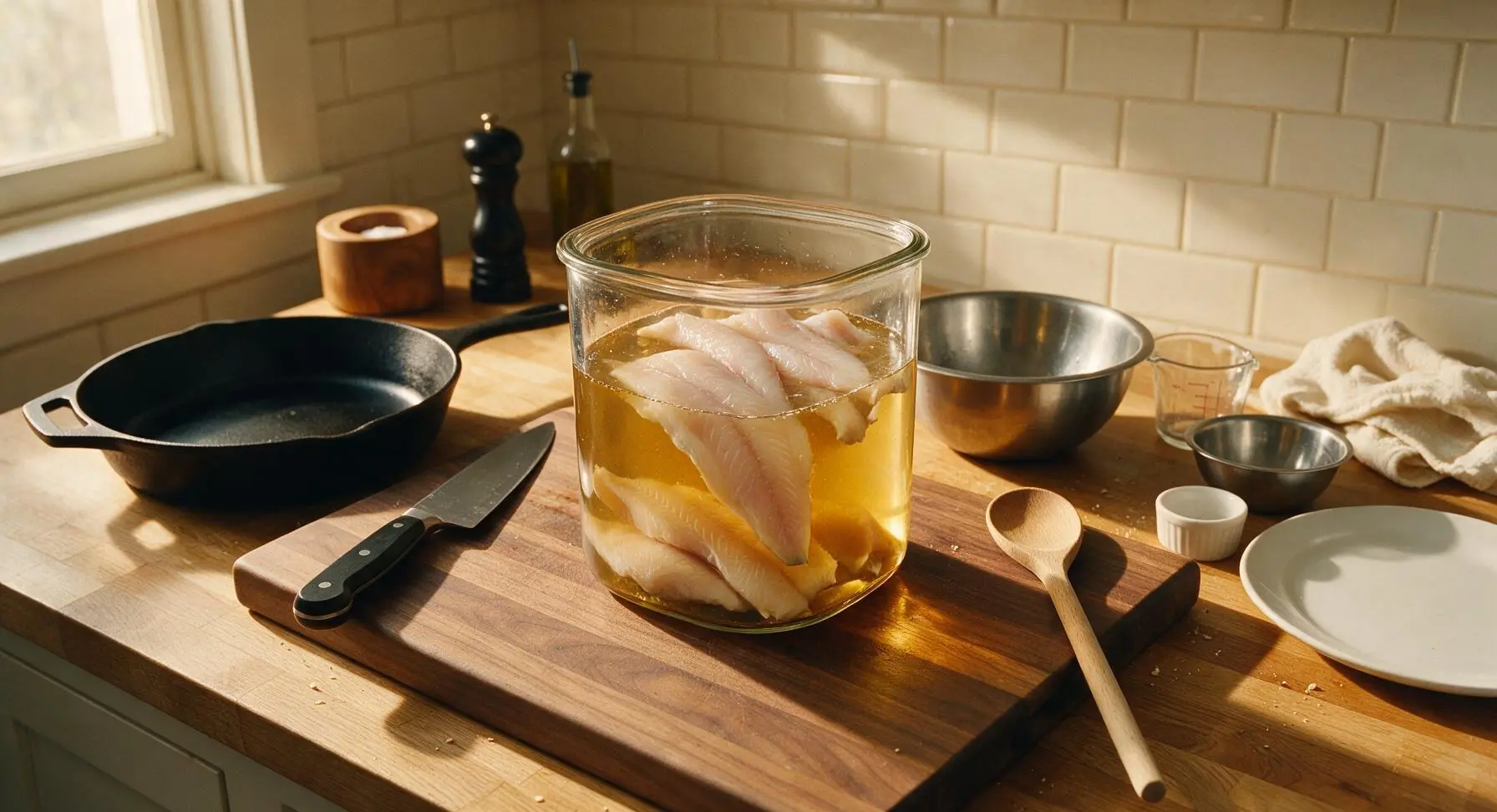
Pour the finished brine into the 2L clear glass storage container. Gently lower the four catfish fillets into the brine, ensuring they are fully submerged (weigh down with a small plate if any parts float above the surface). Seal the container with its tight-fitting lid and refrigerate for exactly 30 minutes; do not brine longer than 40 minutes, as the acid in passion fruit will begin to break down the delicate fish flesh.
Pat Fillets Dry
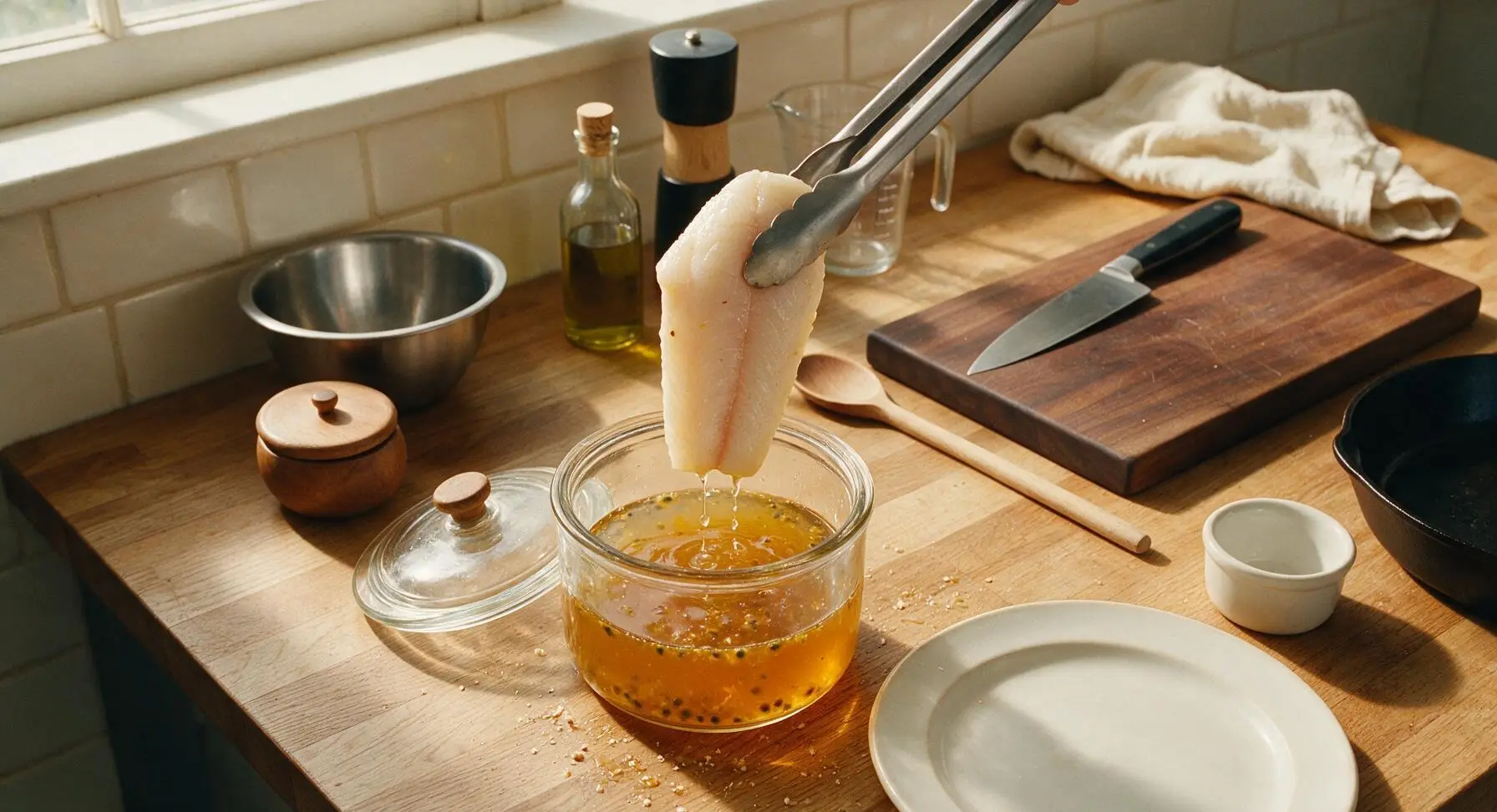
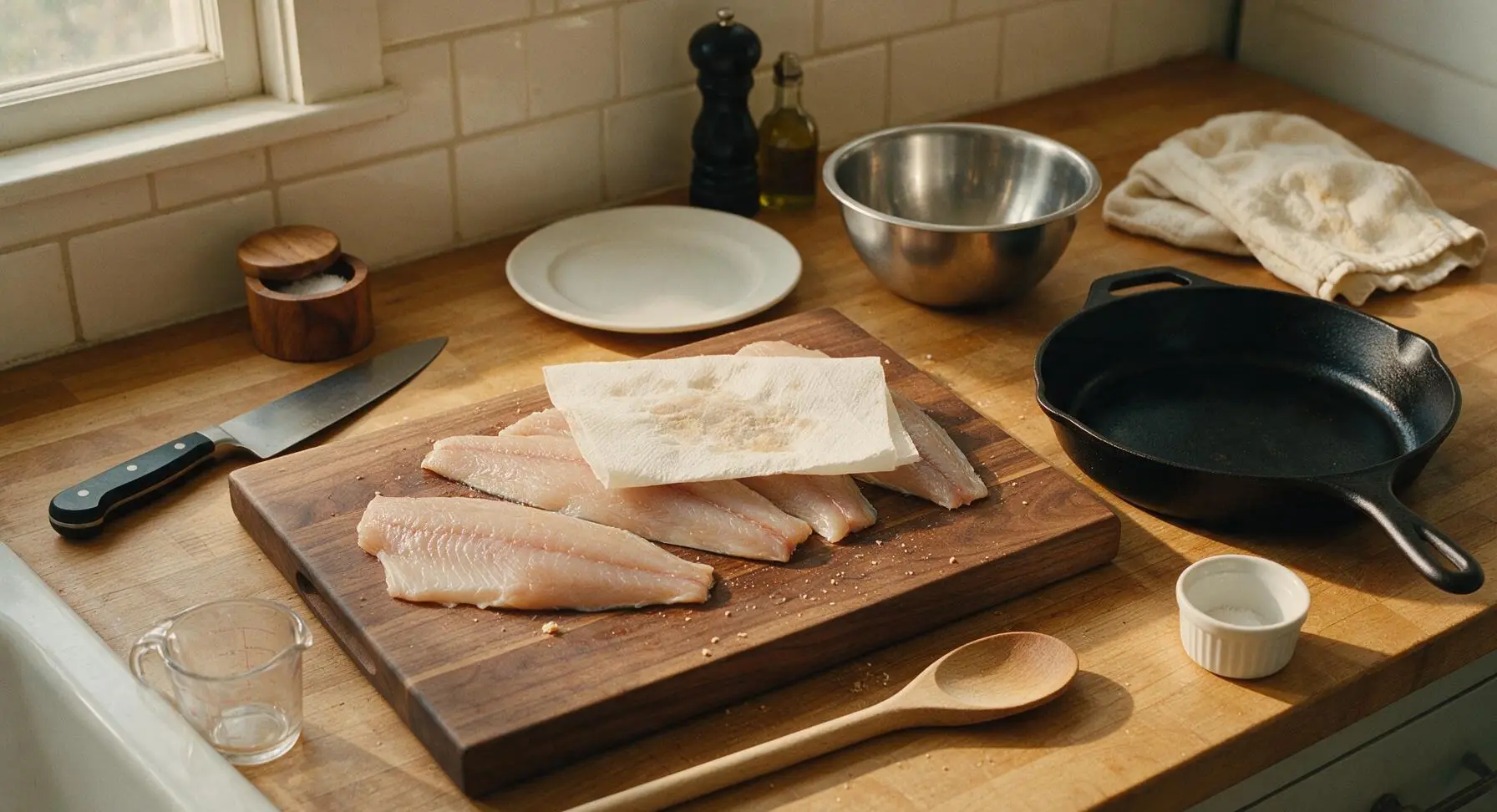
After 30 minutes of brining, use the stainless steel tongs to remove the catfish fillets from the brine, discarding the used brine. Tear 3 sheets of unbleached paper towel from the roll, and pat every surface of the fillets completely dry, pressing firmly to remove all surface moisture. Dry fillets will develop a crisp, golden crust when seared; wet fillets will steam instead of sear.
Heat the Skillet
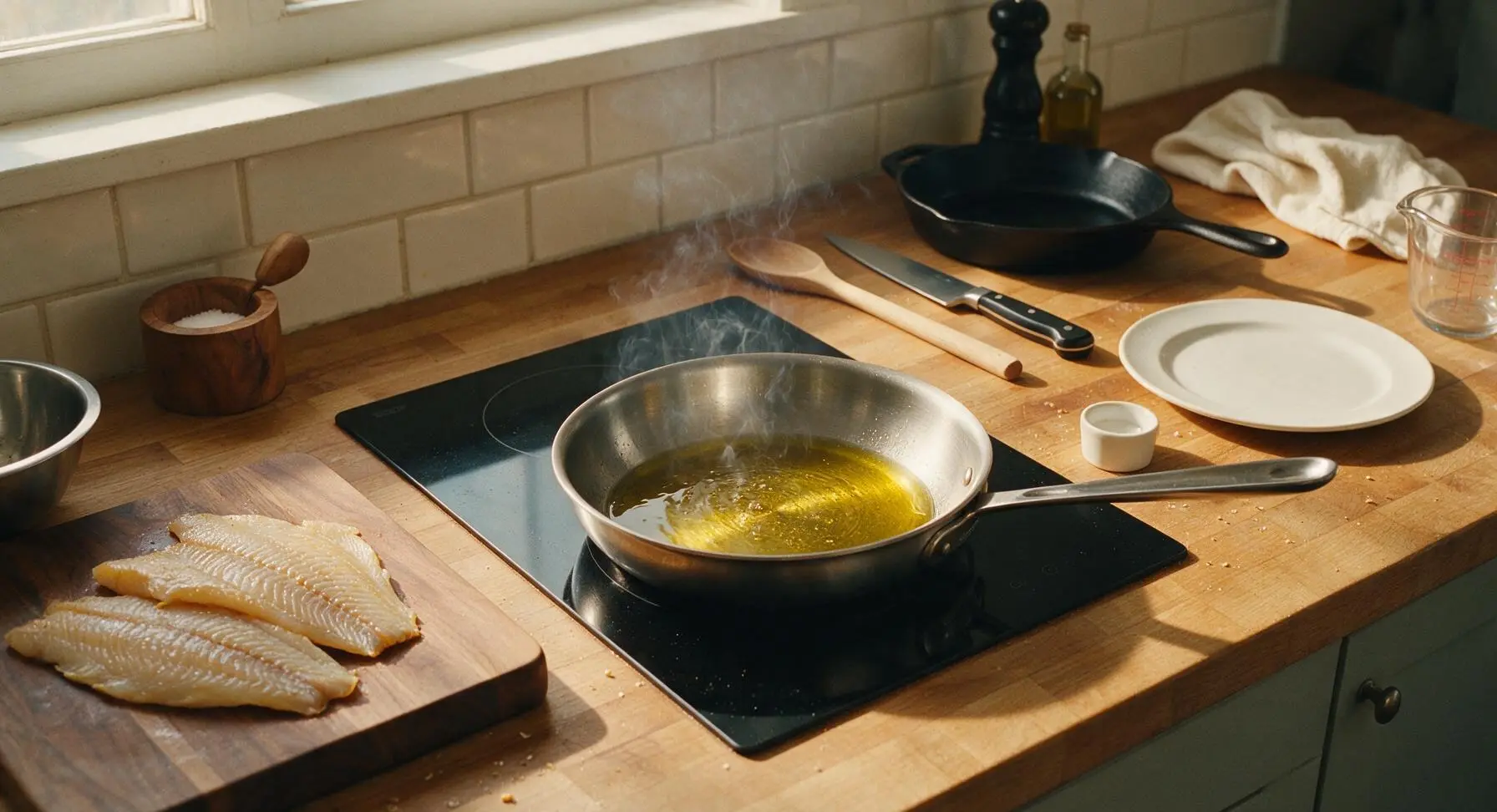
Place the 12-inch heavy-bottomed stainless steel skillet on the flush-mounted induction cooktop, add 1 tablespoon extra-virgin olive oil, and heat over medium-high heat for 3 minutes until the oil shimmers and just begins to send up thin wisps of smoke. Do not let the oil smoke heavily, as this will burn the fish crust before the interior cooks.
Sear Catfish Fillets
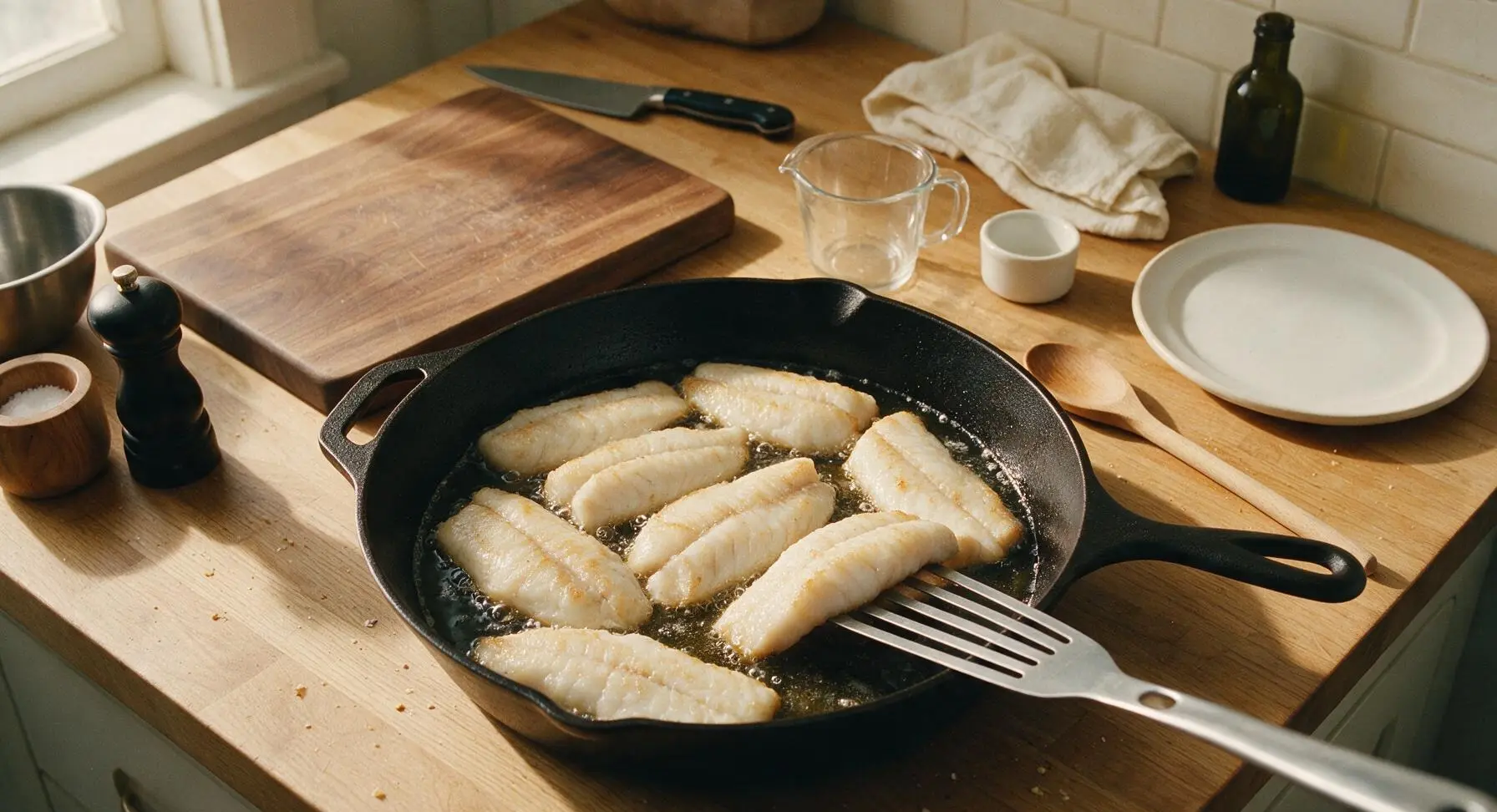
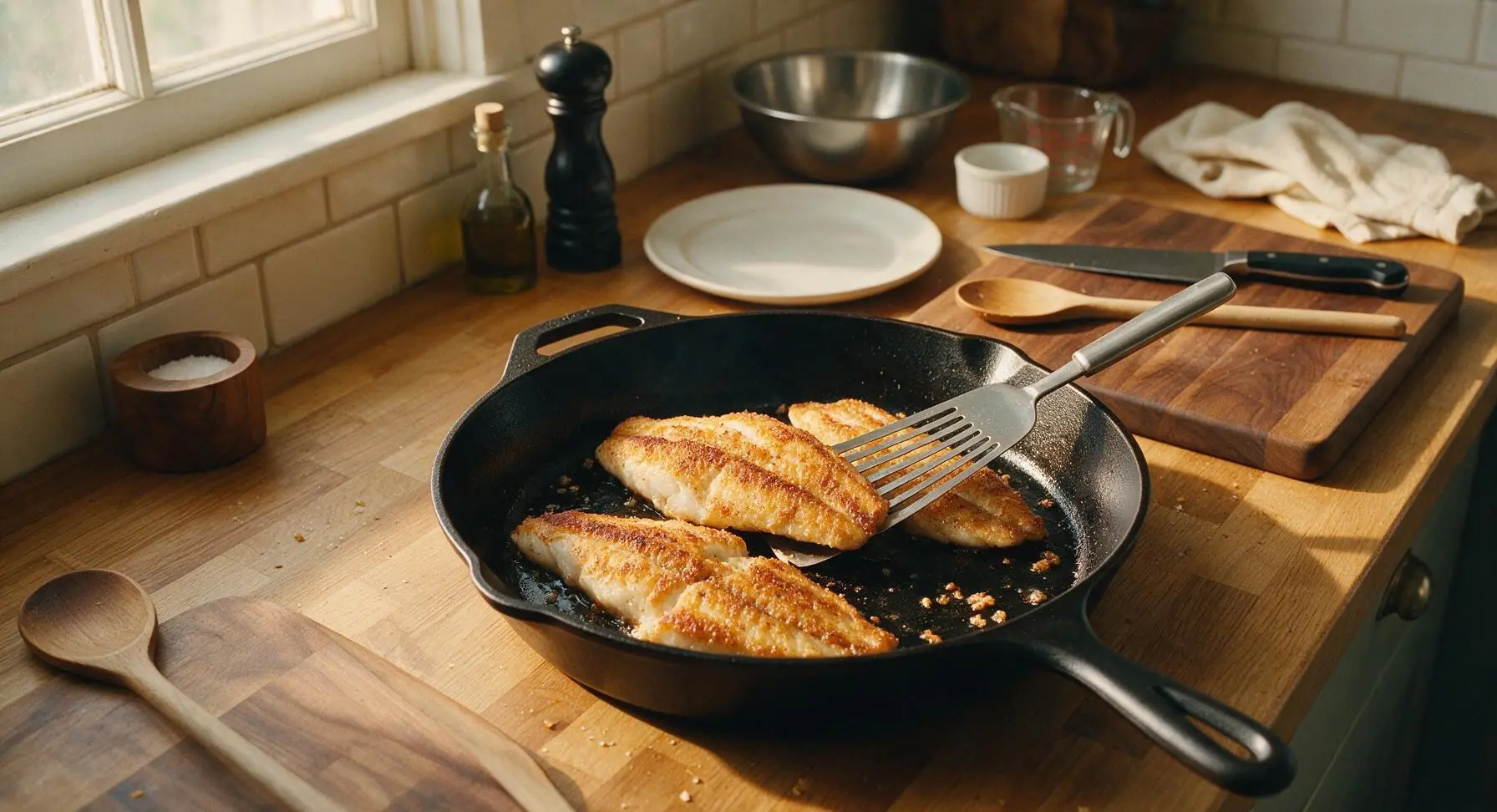
Carefully lay the dried catfish fillets in the hot skillet in a single layer, working in two batches if needed to avoid crowding the pan (crowding causes steaming). Sear for 4 minutes without moving the fillets, until the bottom develops a deep golden, crispy crust. Use the slotted fish spatula to gently flip the fillets, then sear for an additional 3 minutes on the second side, until the flesh flakes easily with a fork and reaches an internal temperature of 145°F (63°C). Transfer seared fillets to a clean plate to rest while making the pan sauce.
Make Pan Sauce
Reduce heat to medium-low. Add 2 tablespoons unsalted butter to the skillet, scraping up the browned fond bits from the pan bottom with the fish spatula as the butter melts. Cut the remaining 2 passion fruit in half, scoop the pulp into the skillet, and stir to combine with the butter and pan drippings using the silicone basting brush. Simmer for 2 minutes until the sauce thickens slightly to a light, syrupy consistency, then turn off the heat.
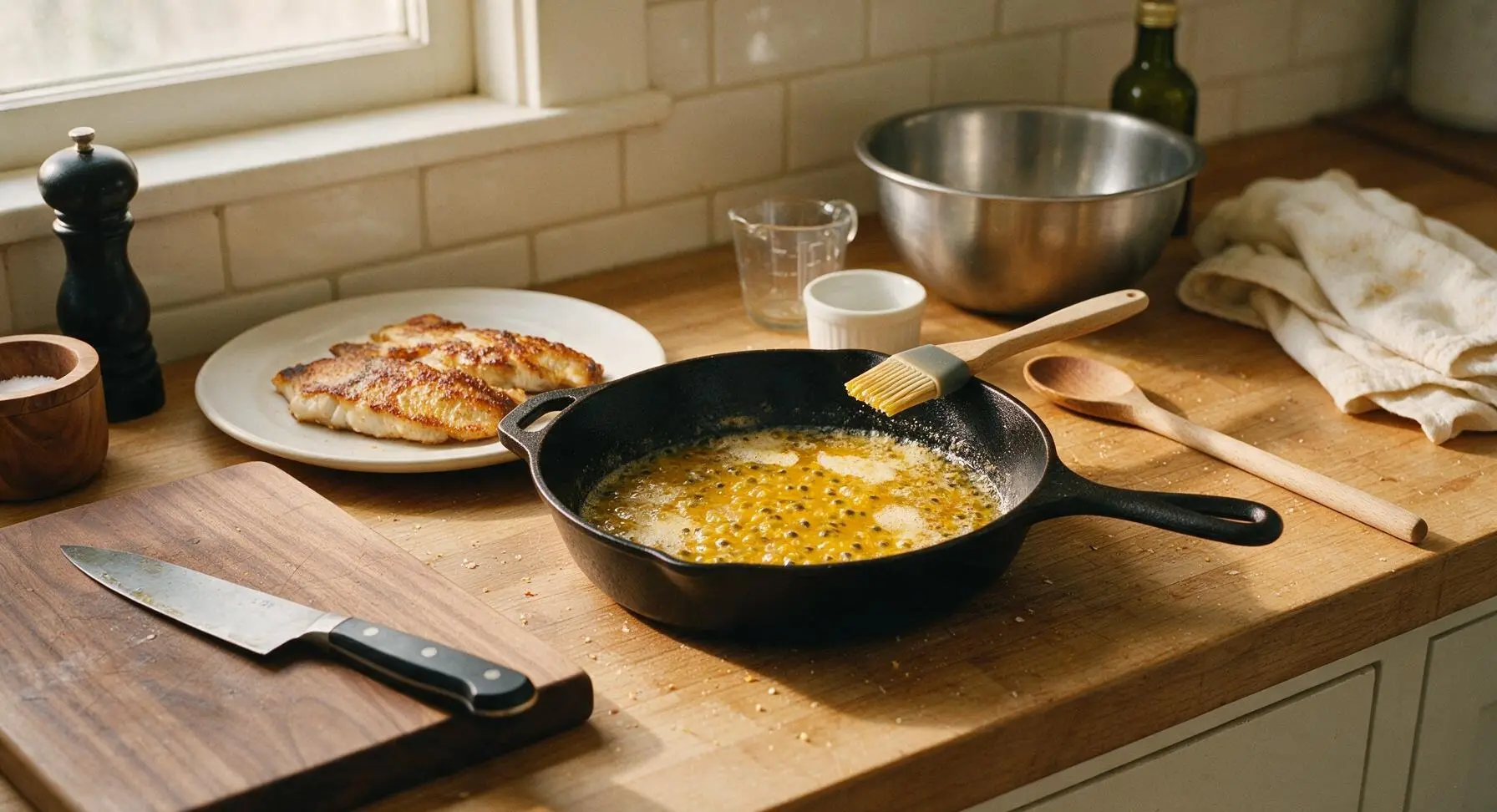
Plate and Garnish
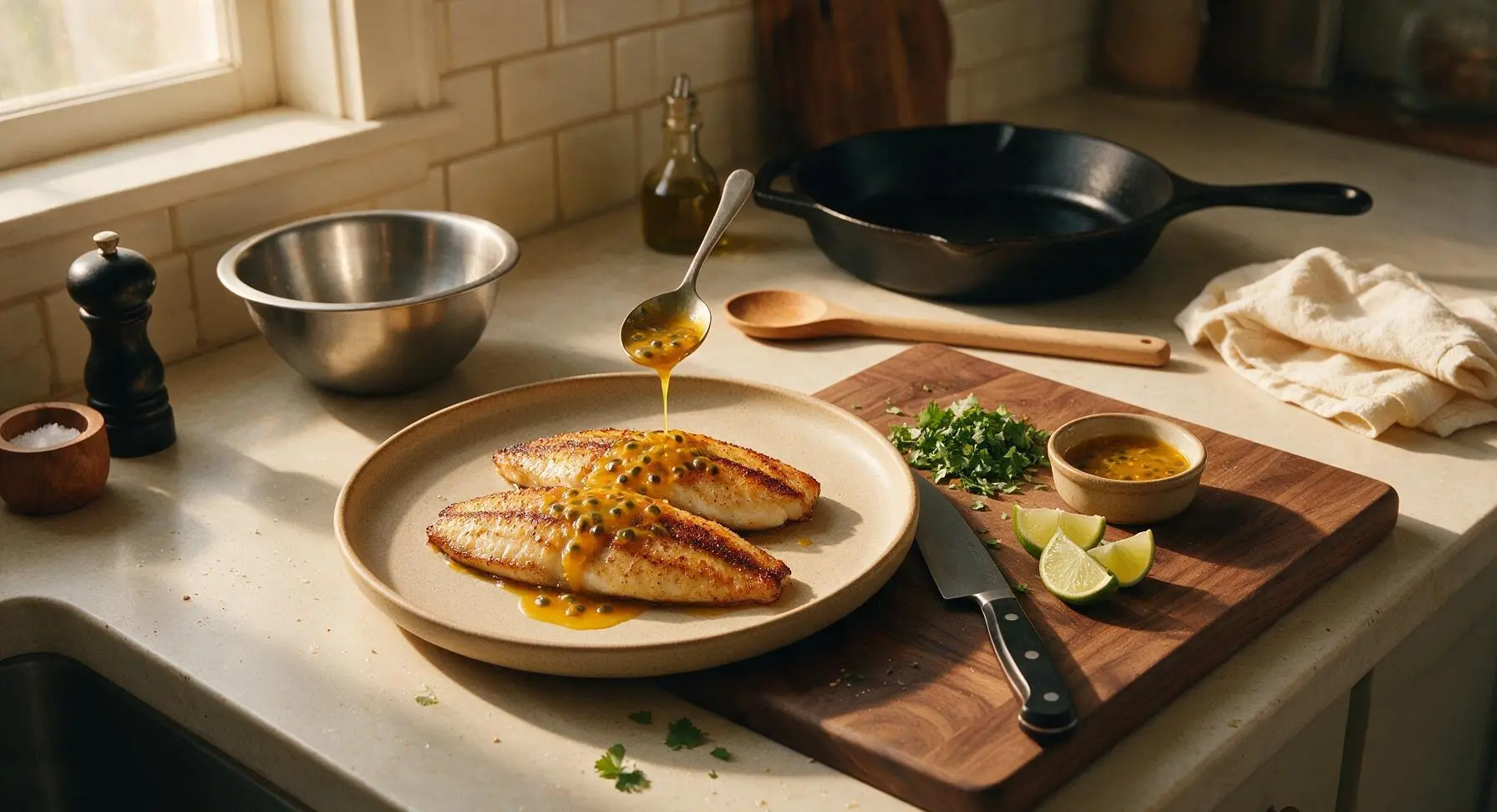
Place two seared catfish fillets on the matte sand-colored ceramic dinner plate. Spoon 2 tablespoons of the warm passion fruit pan sauce over the top of the fillets, letting a small amount pool at the base of the plate. Garnish with chopped fresh cilantro, thinly sliced red chili (if using), and serve with lime wedges on the side, with extra sauce in the small terracotta ramekin. Serve immediately while the fish is hot and the crust is crisp.
Tips
2.Pat fillets completely dry after brining: Any residual surface moisture will cause the fish to steam instead of sear in the hot skillet, preventing the formation of the crisp, golden, flavorful crust that is key to this dish. Press firmly with paper towels to remove all dampness without rubbing off brine seasoning.
3.Stir 1 tablespoon of fresh, uncooked passion fruit pulp into the finished pan sauce right before serving: Cooking passion fruit mutes its bright, tart aroma; adding a small amount of fresh pulp at the end amplifies the tropical flavor and cuts through the richness of the butter in the sauce.
OMG this brine is a total game changer! I’ve always thought catfish was too muddy tasting no matter how I cooked it, but the passion fruit brightness cuts that so perfectly. My kids devoured two fillets each at dinner last night, even my picky 7 year old who usually turns up his nose at any fish. Cook time was exactly 12 minutes like it said, super easy for a weeknight. 10/10 will be making this for our next neighborhood potluck too!
Was skeptical about fruit and catfish at first, ngl, but I made this on my camp griddle last weekend and it was SO good. The brine keeps the fish so juicy, no dry flakes at all, and the passion fruit gives it that little sweet-tart zing you don’t expect. Super easy too, didn’t have to fumble with a bunch of fancy ingredients out at the campsite.
Wow, this was so quick to throw together! I usually save catfish for weekend fish fries because I think it takes forever to prep, but 12 minute cook time? Unbeatable for busy school nights. I did add a little extra chili lime seasoning on top after cooking for a tiny kick, and my husband asked if we can add this to our regular weekly rotation. My only tiny note is I wish the brine had a touch more salt for my taste, but that’s such an easy adjustment next time!
Tried this last night after seeing the recipe pop up on my feed, and WOW, so flavorful! Quick question though— is there a good substitute for fresh passion fruit for folks who can’t find it? I used frozen passion fruit pulp I had stashed in my freezer and it worked great, but my mom wants to make it for her book club and her local grocery store doesn’t carry fresh or frozen passion fruit at all. Would mango puree work as a stand-in, or is that too sweet? It was such a hit with my dinner crew, I know her friends would love it too!
Y’all, I grew up eating fried catfish every Friday night and I was fully convinced nothing could beat my grandma’s recipe… until I tried this brine. The passion fruit adds such a bright, tropical twist that doesn’t overpower the fish at all. I used my cast iron skillet to pan fry it like usual, and the crust got perfectly crispy while the fish stayed flaky. Game. Changer.