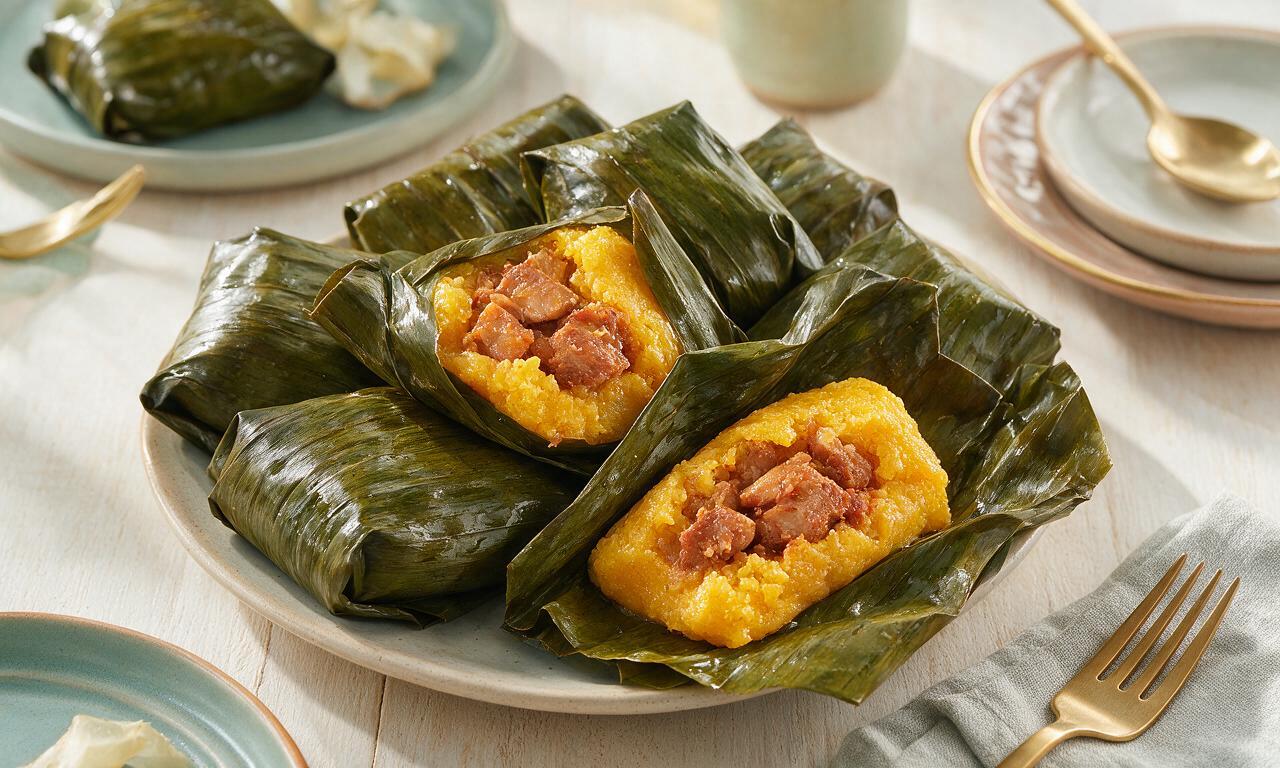
Pastele

Pastele
⏱️ cook time 2 hours
🍽️ servings 4
⚡ Difficulty medium

intro

Tender steamed banana leaf parcels filled with savory seasoned pork and soft golden rice masa, a beloved holiday staple in Filipino and Hawaiian home cooking.

Ingredients

Boneless pork shoulder, diced into 1cm cubes 450 grams (1 lb)
Glutinous rice flour 320 grams (2 2/3 cups)
Banana leaves, cut into 20cm x 15cm pieces 12 large pieces
Yellow sweet potato, peeled and diced into 1cm cubes 150 grams (1 cup diced)
Canned green pigeon peas, drained 120 grams (3/4 cup)
Garlic, minced 4 cloves (12 grams)
Yellow onion, diced 1 medium (150 grams)
Light soy sauce 3 tablespoons (45 ml)
Annatto (atsuete) powder 1 teaspoon (2 grams)
Full-fat coconut milk 240 ml (1 cup)
Neutral cooking oil 2 tablespoons (30 ml)
Low-sodium chicken broth 120 ml (1/2 cup)
Table salt 1 teaspoon (5 grams)
Ground black pepper 1/2 teaspoon (1 gram)

Steps

1

Prepare banana leaf wrappers

Heat 1 tablespoon (15ml) neutral cooking oil in a small pan over medium-low heat (120°C/250°F) for 1 minute. Wipe each 20cm x 15cm banana leaf piece with a clean paper towel to remove surface residue, then quickly pass each leaf over the warm pan for 5 seconds per side to soften and prevent tearing during wrapping. Trim off any thick, rigid central leaf veins with kitchen scissors and set softened leaves aside.
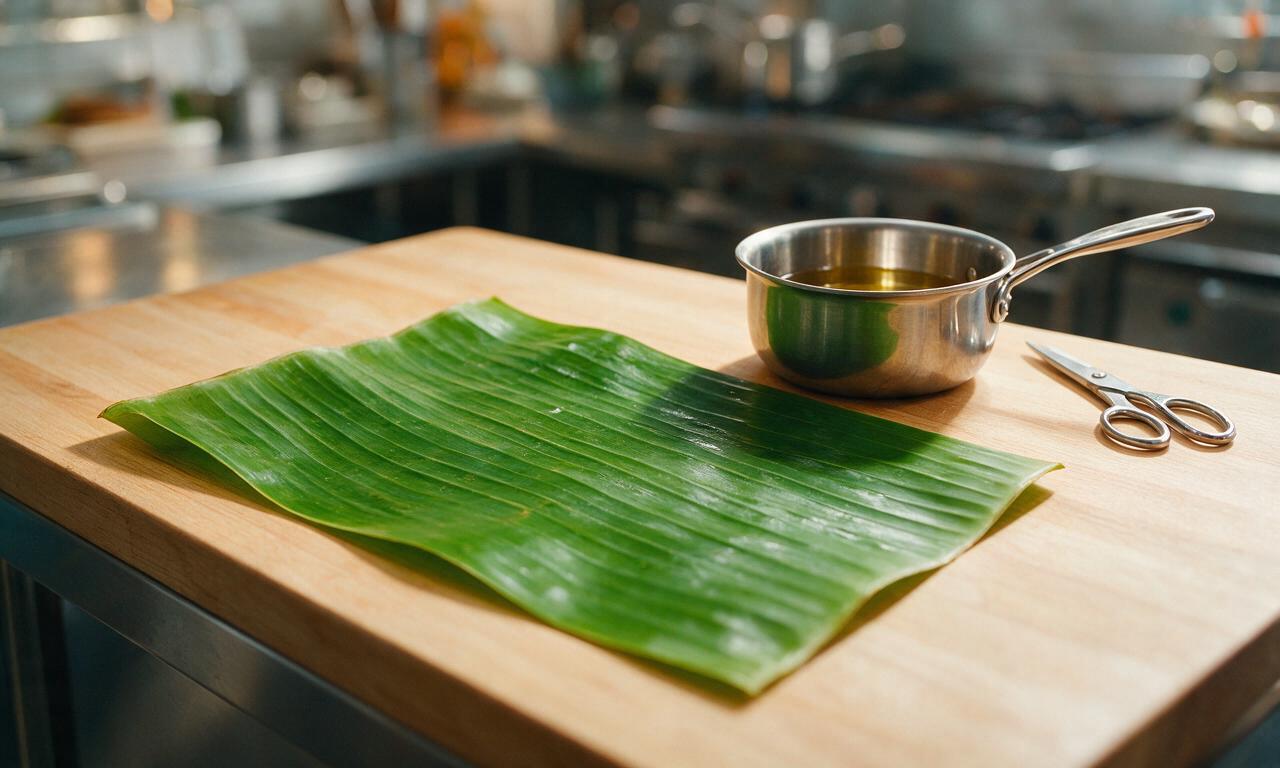
Step 1
step1:Prepare banana leaf wrappers
2

Make savory pork filling

Heat the remaining 1 tablespoon (15ml) cooking oil in a large skillet over medium heat (160°C/325°F). Add 12g minced garlic and 150g diced yellow onion, sauté for 3 minutes until soft and translucent. Add 450g 1cm-diced boneless pork shoulder, cook for 8 minutes, stirring occasionally, until browned on all sides. Stir in 45ml light soy sauce, 1g ground black pepper, 120g drained canned green pigeon peas, and 150g 1cm-diced peeled yellow sweet potato. Pour in 120ml low-sodium chicken broth, reduce heat to low (110°C/230°F), cover, and simmer for 12 minutes until sweet potato is fork-tender and liquid is reduced by half. Set filling aside to cool for 10 minutes before assembling.
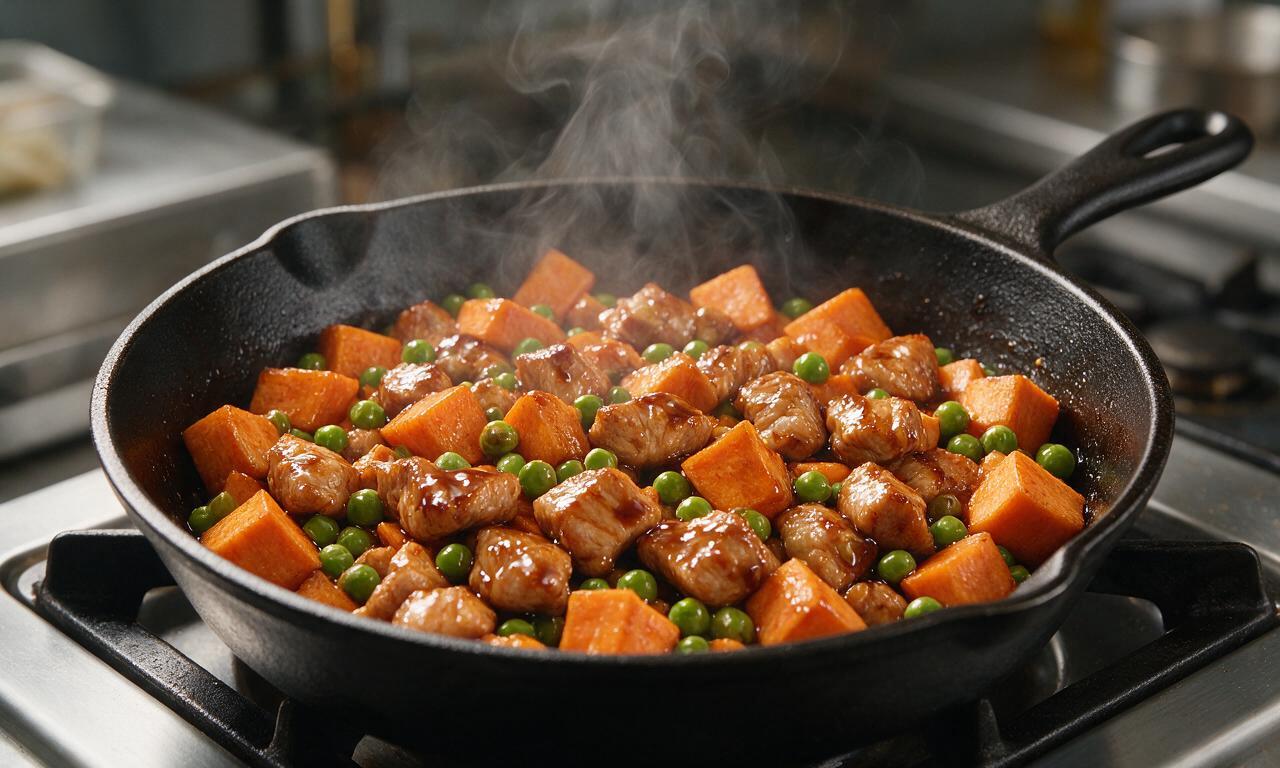
Step 2
step2:Make savory pork filling
3

Mix rice masa dough

In a large ceramic mixing bowl, combine 320g glutinous rice flour, 2g annatto powder, and 5g table salt. Gradually stir in 240ml full-fat coconut milk, mixing with a wooden spoon until a smooth, thick, spreadable dough forms with no dry lumps. The dough should hold its shape when pressed, similar to thick sugar cookie dough; add 1 extra tablespoon (15ml) coconut milk if too crumbly, or 1 extra tablespoon (8g) glutinous rice flour if too sticky to handle.
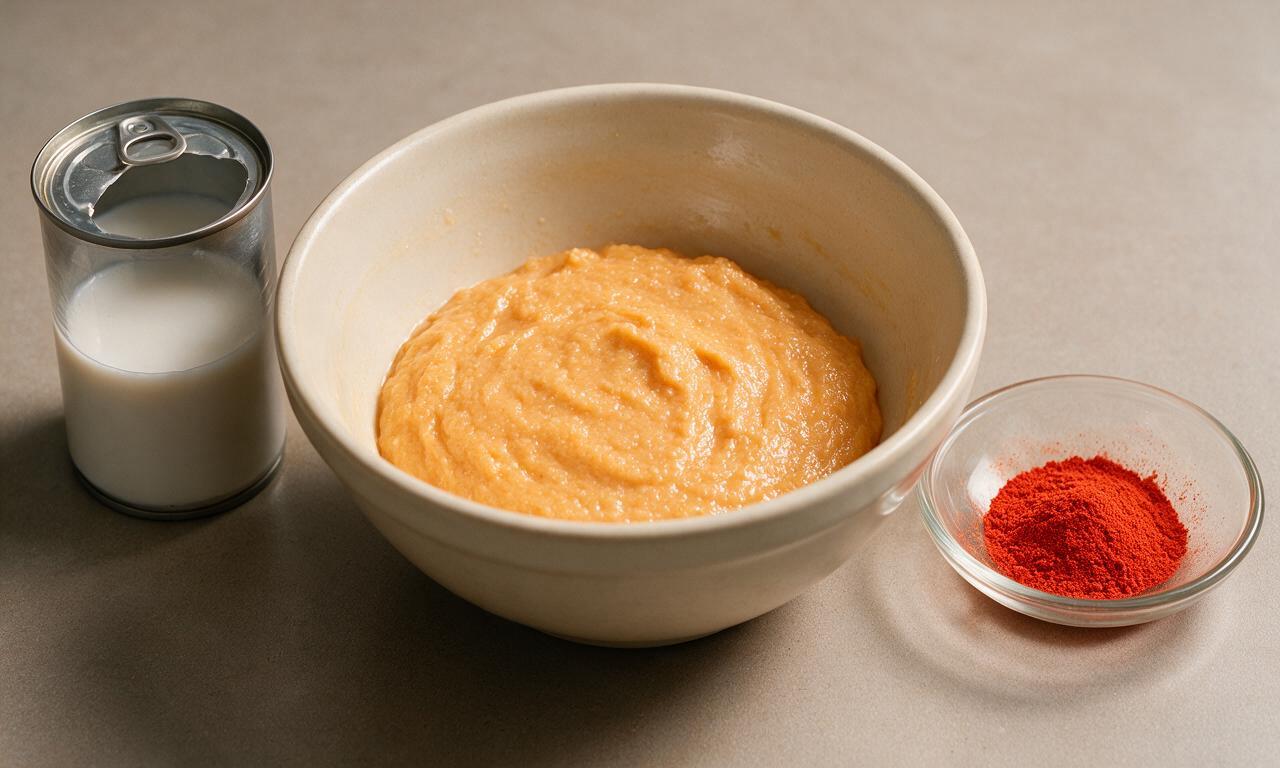
Step 3
step3:Mix rice masa dough
4

Assemble pastele parcels

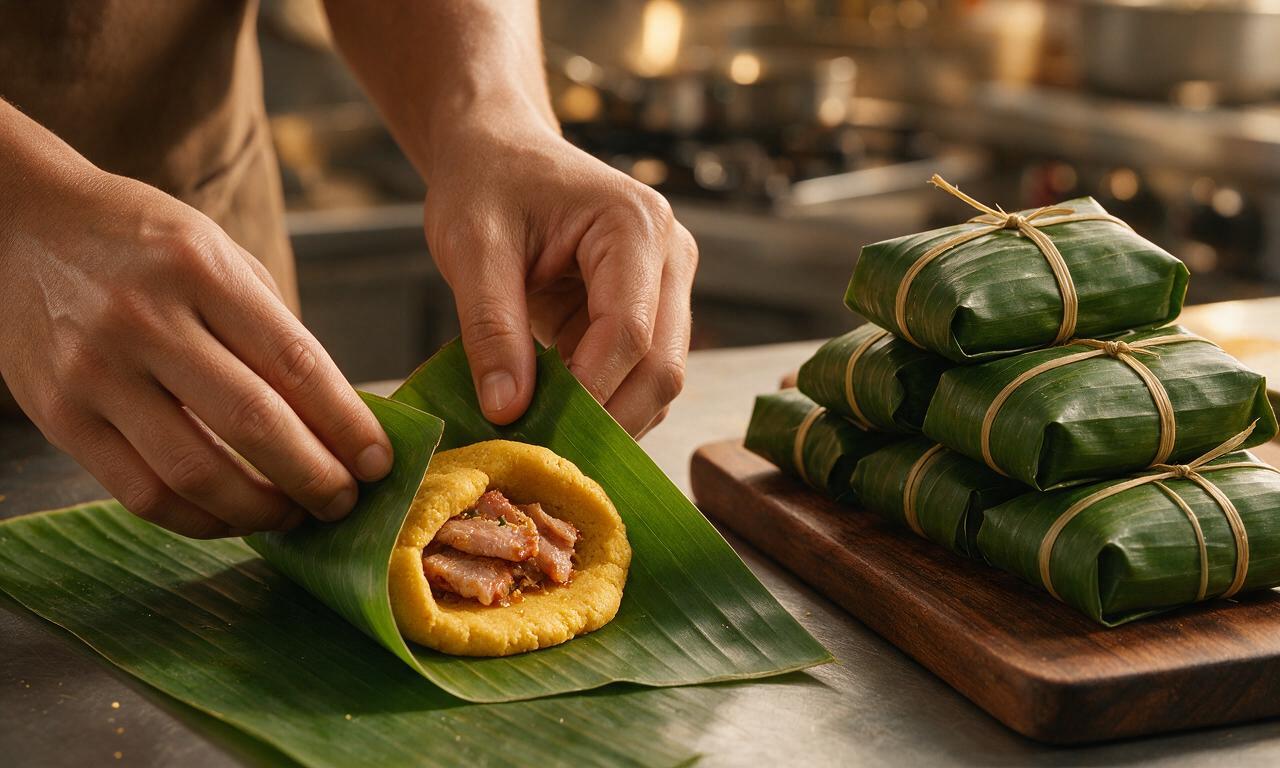
Lay one prepared banana leaf piece flat on a clean work surface, with the glossy side facing up. Spread 2 heaped tablespoons (40g) of rice masa into a 10cm x 8cm oval in the center of the leaf. Place 2 tablespoons (35g) of cooled pork filling directly in the center of the masa oval. Fold the banana leaf in half lengthwise to press the masa around the filling, then fold the open sides of the leaf inward to form a tight, rectangular 10cm x 5cm parcel. Tie each parcel closed with a thin 1cm-wide strip of leftover banana leaf to keep it sealed during steaming.
Step 4
step4:Assemble pastele parcels
5

Steam wrapped pasteles

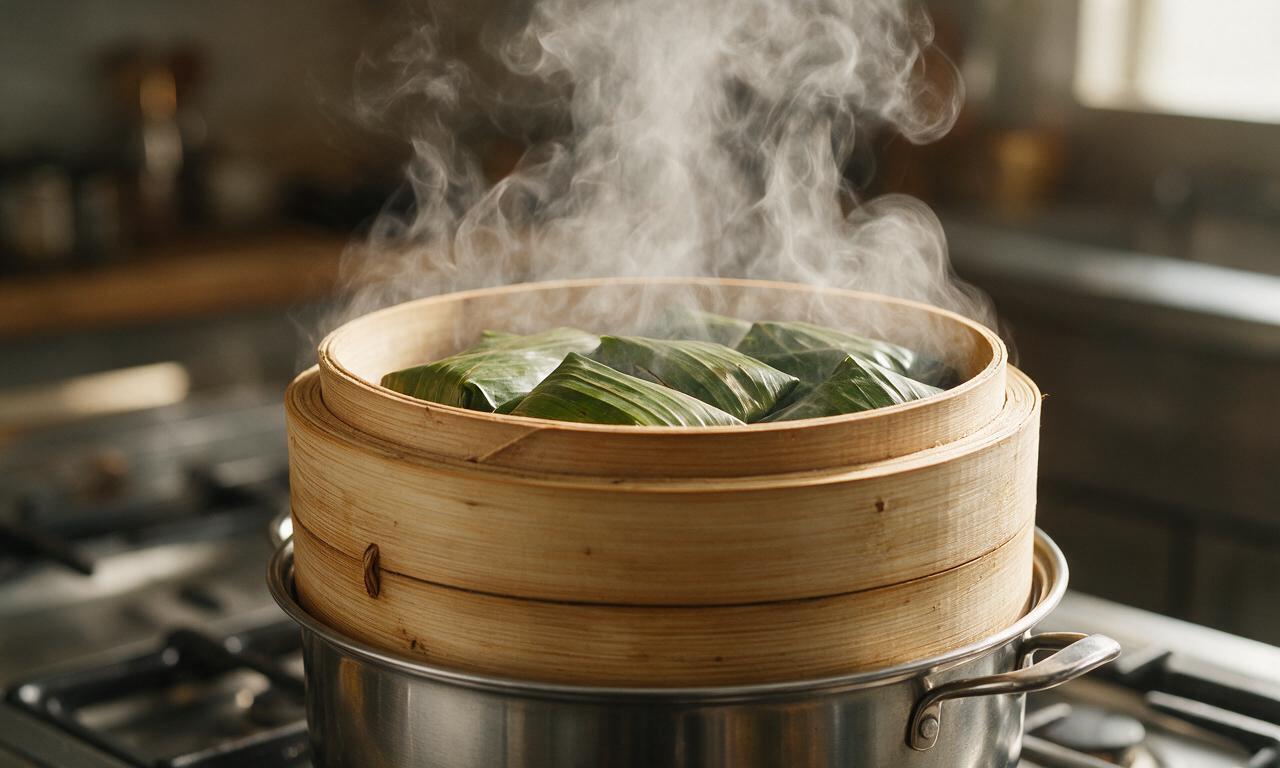
Arrange the wrapped pasteles in a single layer in a bamboo steamer basket set over a pot of rapidly boiling water, ensuring the water level sits 2cm below the bottom of the steamer basket to avoid boiling water touching the parcels. Cover the steamer tightly with a lid, reduce heat to medium to maintain a steady, gentle steam, and cook for 45 minutes. Check the pot water level every 15 minutes, topping up with boiling water as needed to prevent the pot from boiling dry.
Step 5
step5:Steam wrapped pasteles
6

Rest and serve warm

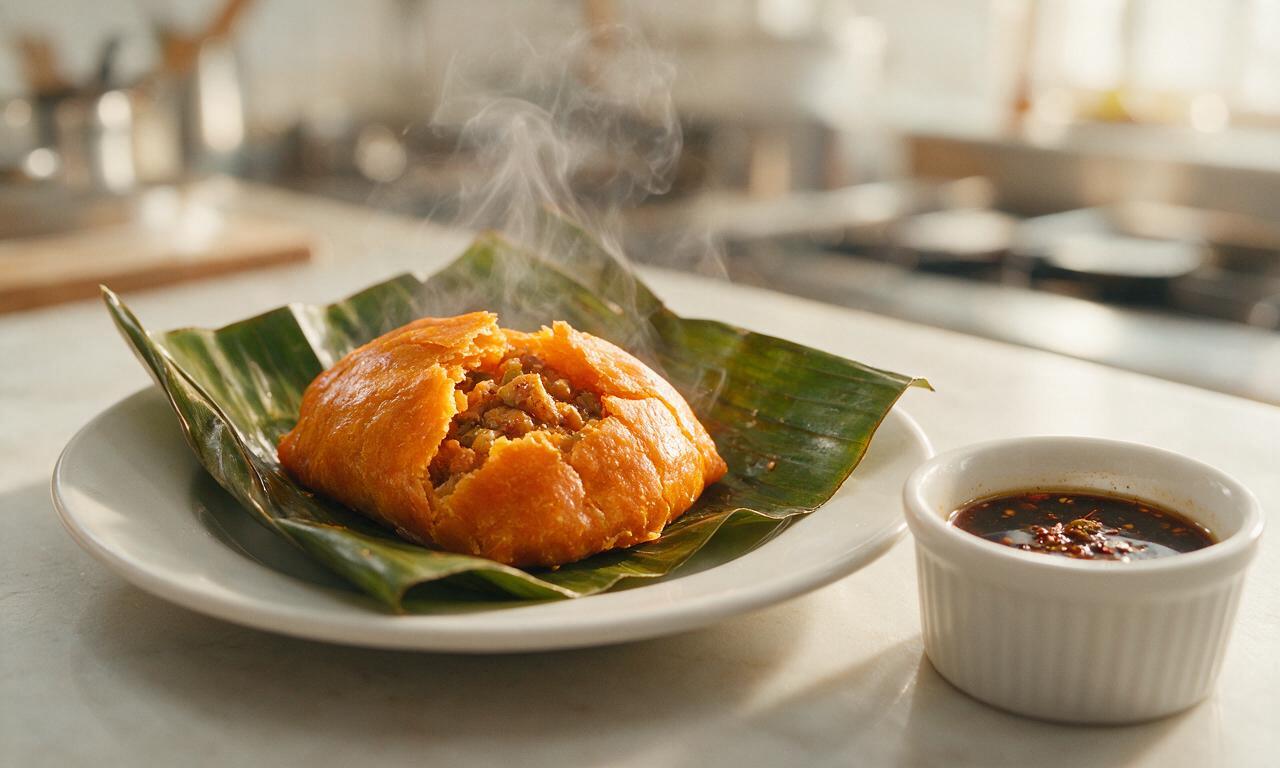
Once steaming is complete, turn off the heat and let the pasteles rest in the covered steamer for 10 minutes to allow the masa to set fully. Carefully unwrap the banana leaves to reveal the firm, golden parcels, and serve warm while soft and fragrant, with a side of spiced vinegar dip if desired.
Step 6
step6:Rest and serve warm

Tips

1.Always soften banana leaves over gentle heat before wrapping—unheated leaves are brittle and will crack, letting masa and filling leak out during steaming.
2.Do not overfill the pasteles, as the glutinous rice masa will expand slightly as it steams; overstuffed parcels will burst open during cooking.
3.If using frozen banana leaves, thaw them completely in the refrigerator for 4 hours before prepping, and pat dry thoroughly to remove excess moisture that can make the masa soggy.
✨ You May Also Like

Main Course
🍜 United Kingdom

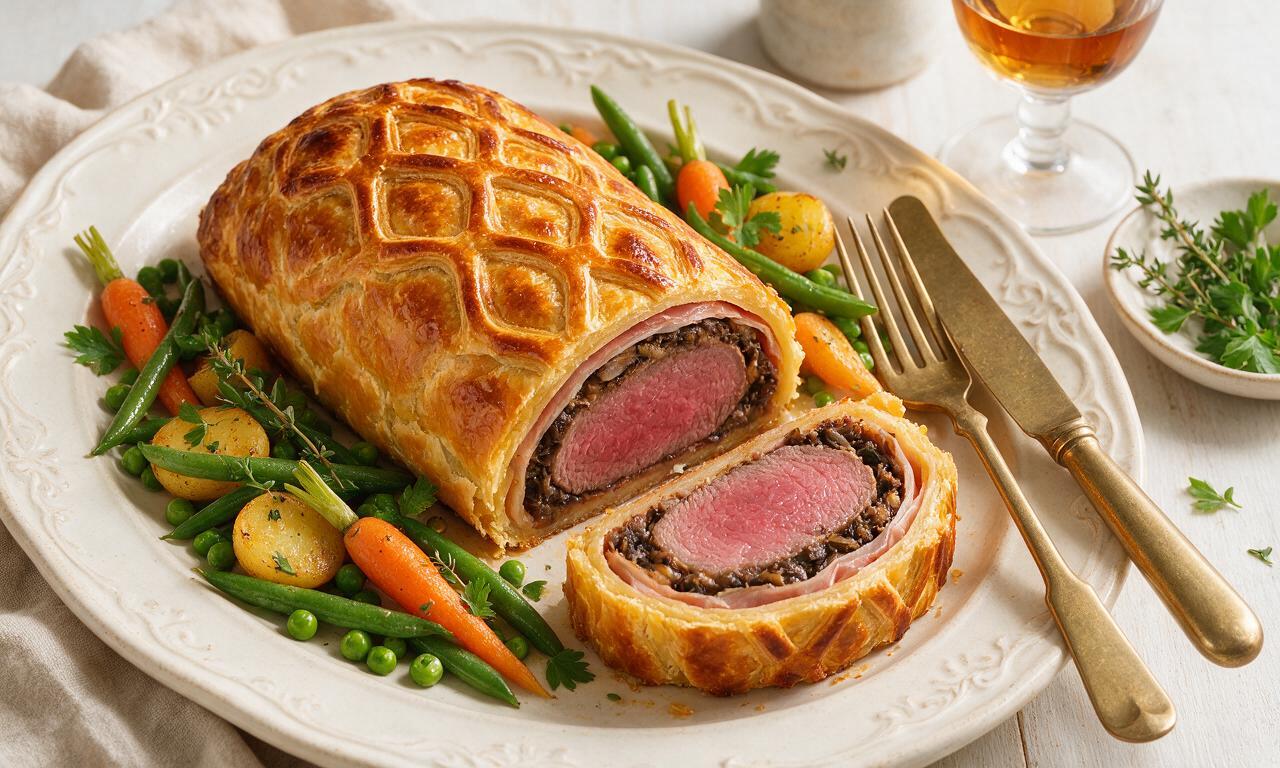
A showstopping classic of tender seared beef, savory mushroom duxelles, and crisp prosciutto wrapped in flaky golden puff pastry, baked to juicy perfection.

⏱️ 2 hours 1Main Course ★ 4.7
Main Course
🍜 India

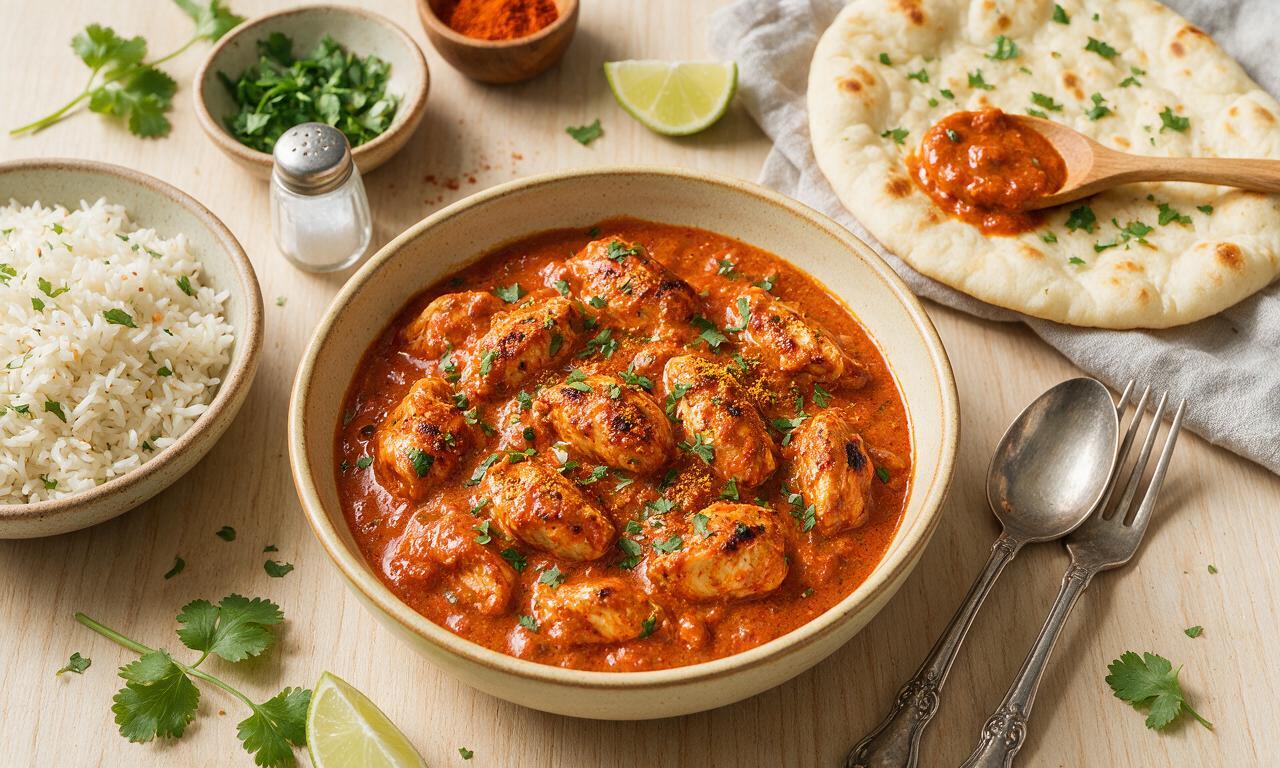
Tender charred marinated chicken simmered in a rich, spiced creamy tomato sauce, this iconic Anglo-Indian curry pairs perfectly with basmati rice or warm naan.

⏱️ 50 minuteMain Course ★ 4.8
Main Course
🍜 Thailand

Classic tangy, sweet, and savory Thai stir-fried rice noodles with shrimp, tofu, and crunchy garnishes, balancing all five core Thai flavor profiles.

⏱️ 30 minuteMain Course ★ 4.6
Main Course
🍜 United Kingdom

Crispy golden beer-battered cod and fluffy double-fried chips, served with tangy tartar sauce and malt vinegar: the timeless, beloved British pub comfort classic.

⏱️ 45 minuteMain Course ★ 4.9
Main Course
🍜 Mexico

Smoky, chile-marinated pork tacos with caramelized pineapple, fresh cilantro, and lime: a beloved classic Mexican street food perfect for casual summer gatherings.

⏱️ 1 hour 45Main Course ★ 4.7
Main Course
🍜 United States

Crunchy Fritos corn chips layered with savory beef chili and melted cheddar, topped with cool, zesty fixings for a beloved, cozy Tex-Mex comfort food.

⏱️ 35 minuteMain Course ★ 4.9

Pastele:Frequently Asked Questions

1.Can I substitute glutinous rice flour with regular rice flour or all-purpose flour if I don’t have it on hand?
I don’t recommend that swap. Glutinous rice flour (often labeled sweet rice flour at US grocery stores) creates the signature soft, chewy, cohesive masa that holds its shape when steamed. Regular white rice flour turns out dry and crumbly, while all-purpose flour makes the masa dense and bready, so stick to glutinous rice flour for authentic results.
2.Do I need to prep the banana leaves before wrapping the pastele?
Absolutely! First, wipe each cut leaf piece with a damp paper towel to remove dust and surface residue. Then, quickly pass each leaf over a low gas flame or hot dry pan for 2 to 3 seconds per side until it softens and brightens. This prevents cracking during folding and releases the leaf’s aromatic, earthy flavor that infuses the parcels as they steam.
3.Can I make the pork filling ahead of time to cut down on prep work?
Definitely! You can cook the seasoned pork shoulder filling up to 3 days in advance, store it in a sealed airtight container in the fridge, and let it rest at room temperature for 20 minutes before assembling. Chilling the filling actually makes portioning easier, as the rendered fat firms up slightly and prevents messy oozing while you wrap.
4.Why is yellow sweet potato included in the masa, and can I skip it?
The diced yellow sweet potato does two key jobs: it adds a subtle natural sweetness that balances the savoriness of the pork, and it gives the masa its signature soft golden hue without artificial food coloring. If you need a swap, equal amounts of diced orange sweet potato work great, though skipping it will leave the masa paler and less flavorful.
5.How long do I steam the pastele, and how do I know they’re fully cooked?
Steam the wrapped parcels over gently boiling water for 45 to 50 minutes, making sure the steamer basket sits above the water line to avoid soggy masa. They’re done when the masa is firm to the touch, no longer sticky when you peel back a small leaf corner, and pulls away cleanly from the leaf without leaving gooey residue.
6.Can I freeze pastele for quick future meals?
These freeze beautifully! For uncooked assembled pastele, wrap each tightly in plastic wrap, store in a labeled freezer bag for up to 3 months, and steam straight from frozen for 70 minutes. For cooked, cooled pastele, they keep for up to 2 months, and reheat well with 15 minutes of steaming or 1 minute in the microwave wrapped in a damp paper towel.
7.What size should I cut the pork and sweet potato to ensure even cooking?
Stick strictly to the recommended 1cm (roughly 3/8 inch) uniform dice for both ingredients. This small, even size ensures the pork cooks through to perfect tenderness without tough chewy bits, the sweet potato softens evenly into the masa, and every bite has a balanced mix of filling and soft masa. Larger chunks will poke through leaves and cook unevenly.
8.I can’t find canned green pigeon peas—what’s a good substitute?
Canned green pigeon peas (often labeled gandules in the Latin food aisle of most US grocery stores) have a mild, nutty, earthy flavor that pairs perfectly with the other ingredients. If you can’t find them, use drained canned small green lentils or frozen sweet green peas. Skip dried pigeon peas, as they require long soaking and cooking that will throw off your recipe timing.
9.How tightly should I wrap the pastele in banana leaves before steaming?
Wrap them snugly, but leave about ¼ inch of empty space inside each parcel to give the glutinous rice masa room to expand as it steams. Wrapping too tight will cause the masa to burst out of leaf seams mid-steam, while wrapping too loose lets water seep in and turn the masa soggy. Secure loose folds with a thin banana leaf strip or kitchen twine.
10.Is Filipino-style savory pastele the same as Puerto Rican pasteles?
While both are savory steamed leaf-wrapped masa dishes, they are distinct. Filipino-style pastele (a beloved holiday staple in Filipino and Hawaiian home cooking) uses glutinous rice flour and sweet potato in its masa for a soft, chewy texture, unlike the grated green plantain and taro base used in traditional Puerto Rican pasteles, and regularly includes green pigeon peas in the filling.
11.What’s the best way to serve pastele, and do I need a dipping sauce?
Serve these warm straight out of the steamer, unwrapped at the table as a handheld snack or holiday side dish. You don’t need a fancy sauce, but many people love pairing them with spiced coconut vinegar or banana ketchup for a bright, tangy contrast to the rich pork and soft masa. Leftovers make a great quick breakfast or portable lunch, too.

Comments (4)

3 days ago

OMG, this recipe is a total game changer! I grew up eating my lola’s savory pastele at every family Christmas party and I’ve been chasing that flavor for years since she passed. I made this for our neighborhood potluck last weekend and every single person came back for seconds, even the folks who’d never tried Filipino food before! The 2 hour cook time is totally worth it, don’t let the medium difficulty scare you off. My kids loved it so much they asked me to make a second batch for their school lunch meal prep this week. SO good.

2 days ago

Wait did you serve it with the traditional white rice on the side? I’m making this for my office potluck next week and want to make sure I pair it right so it’s as big of a hit as yours was!

yesterday

We’re so touched this recipe helped bring back warm memories of your lola — that’s exactly why we love sharing these family-style recipes! Great question from @PotluckQueen99 too: these pair perfectly with steamed white rice, and a side of tangy atchara (pickled papaya) is the perfect bright contrast to the rich, savory filling. Pro tip: make a little extra, they go fast at potlucks!

1 week ago

Really solid recipe! The flavor is spot on, though I will say the difficulty felt a little higher than medium for me as someone who’s never worked with banana leaves before — I had to re-wrap half of my pastele because the leaves cracked when I was folding them. Ended up tasting amazing regardless, I just wish there was a quick tip for softening the leaves evenly before wrapping! I made a big batch on Sunday and it’s held up perfectly for weekday lunches all week.

5 days ago

Thanks so much for the honest feedback! Quick pro tip for the banana leaves: pass them quickly over an open stove flame on low for 2-3 seconds per side, or warm them in the microwave for 10 seconds wrapped in a damp paper towel, to make them super pliable and less likely to crack when folding. So glad the flavor worked out for you even with the wrapping mishaps!

2 weeks ago

Made these for our family game night last week and they were a total hit! I added a handful of raisins to the filling like my mom used to do and the sweet-savory balance was chef’s kiss. My picky 7 year old ate three of them, which is unheard of for him when we try new recipes. 10/10, would make again for our next church potluck.

5 minutes ago

Wait, is this the same pastele that’s similar to tamales? I had a savory filled steamed banana leaf dish at a Filipino festival in St. Pete a few months ago and I’ve been obsessed ever since, I can’t wait to try making this at home! Quick question — can I prep the filling a day ahead to cut down on cook time the day I plan to serve these?

just now

Yes! I prepped the filling last weekend when I made these and kept it in the fridge overnight, it actually tasted even better the next day because all the spices had more time to meld together. Just make sure you let it come to room temp a little before you wrap them in the banana leaves so they steam evenly.