
Pasteles
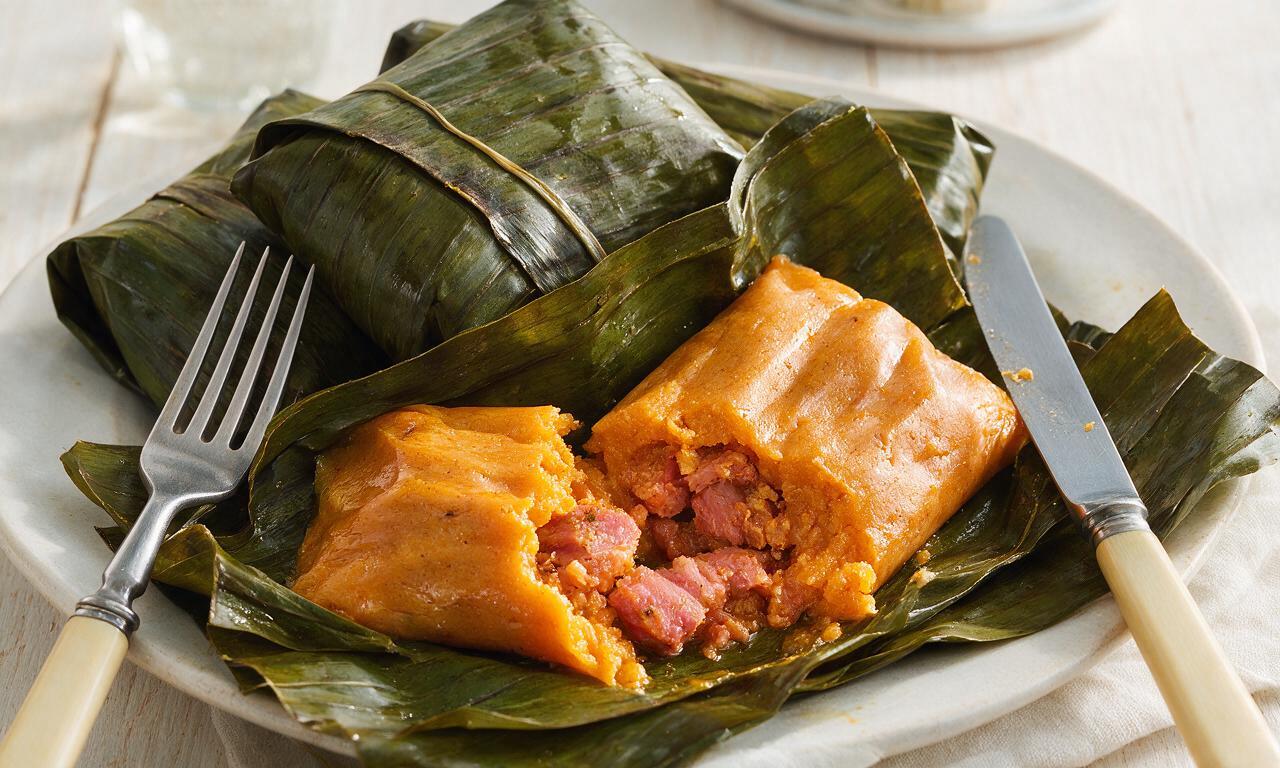
intro
Tender, banana leaf-wrapped steamed parcels of starchy orange masa filled with savory spiced pork, a beloved Filipino Christmas Noche Buena comfort food.
Ingredients
Steps
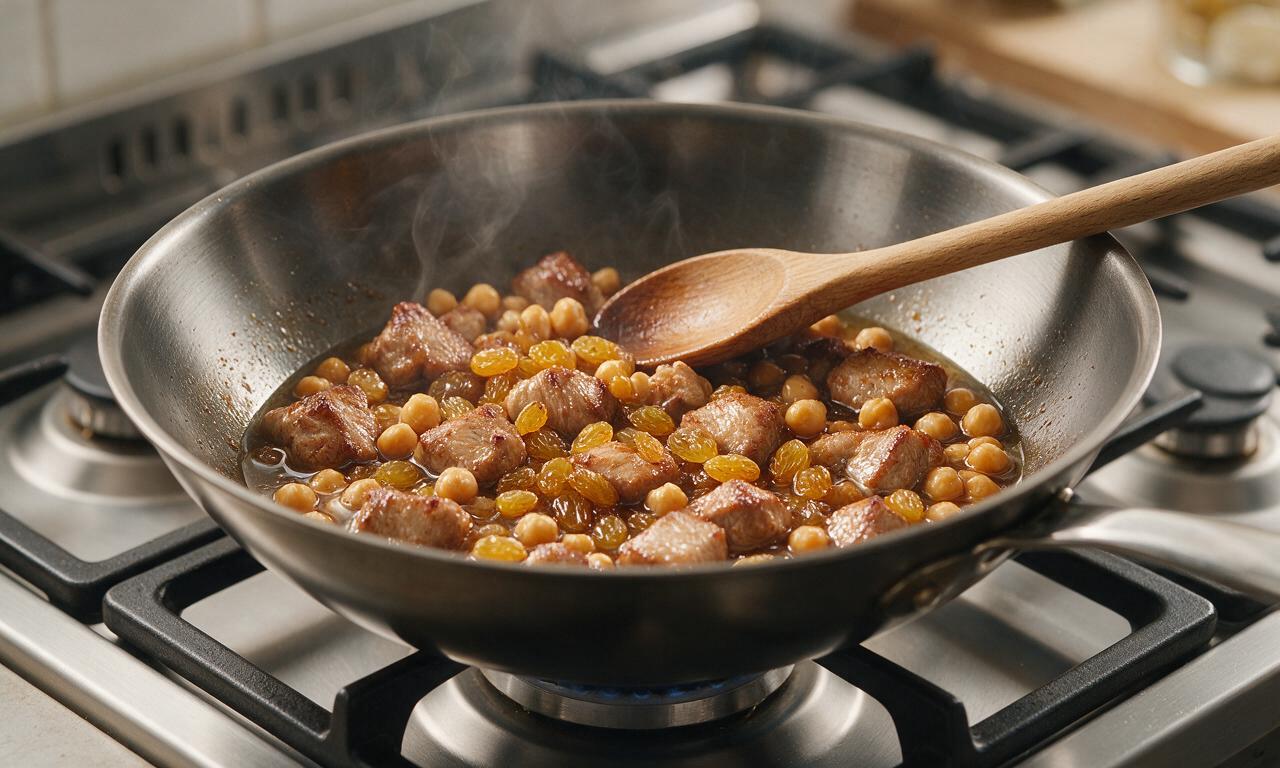
Cook the pork filling
Heat 2 tablespoons neutral cooking oil in a deep sauté pan over medium heat (175°C/350°F). Sauté 6 minced garlic cloves and 1 large diced yellow onion for 3 minutes until soft and fragrant. Add 500g 1cm-cubed pork shoulder, 3 tablespoons soy sauce, 1 teaspoon ground black pepper, and 60g raisins. Cook for 10 minutes, stirring occasionally, until pork is lightly browned on all sides. Add 100ml water, reduce heat to low, cover, and simmer for 25 minutes until pork is fork-tender. Stir in 100g cooked chickpeas, then set the filling aside to cool for 15 minutes before assembling.
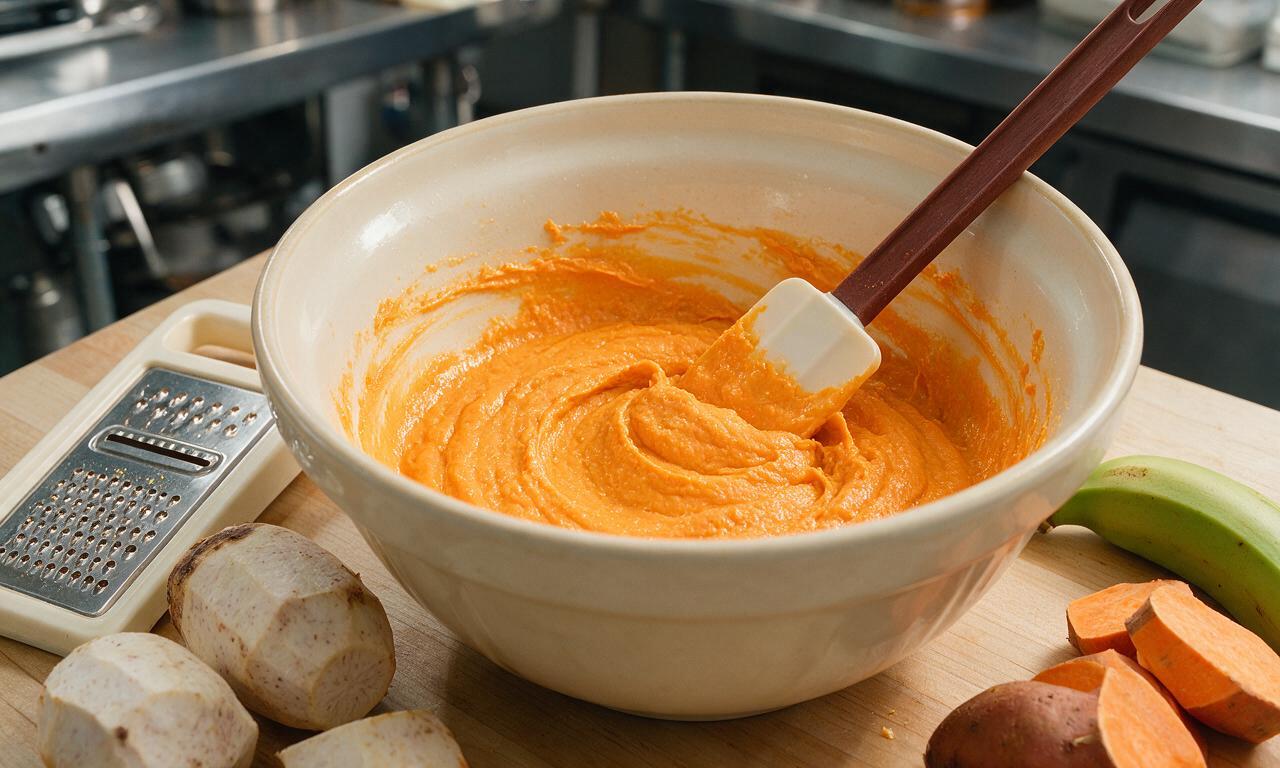
Mix the starchy masa
In a large mixing bowl, combine 600g finely grated green banana, 300g finely grated taro root, 200g finely grated sweet potato, 400ml full-fat coconut milk, 1 tablespoon annatto powder, and 1.5 teaspoons fine table salt. Stir thoroughly for 4 to 5 minutes until the mixture forms a thick, spreadable, uniform bright orange dough with no dry lumps. Adjust consistency if needed: add 2 tablespoons all-purpose flour to thicken if too wet, or 2 extra tablespoons coconut milk to loosen if too stiff.
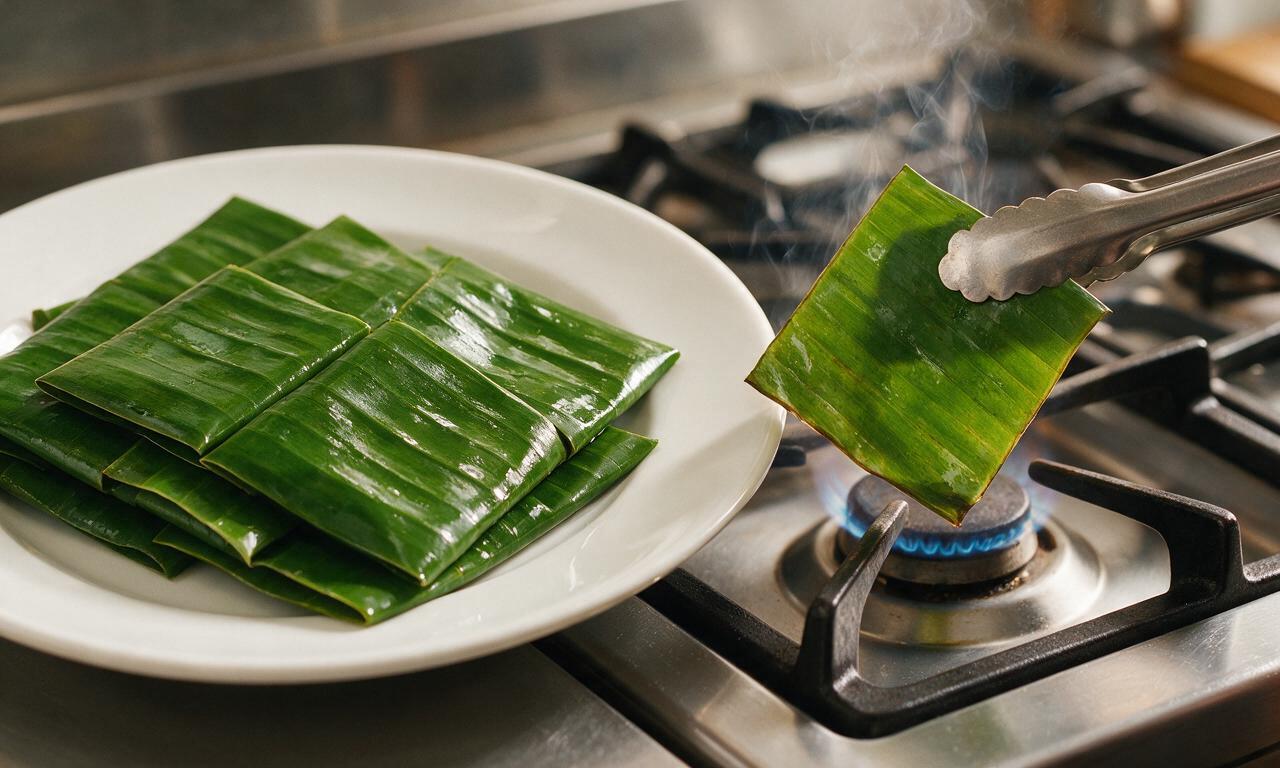
Soften banana leaf wrappers
Cut 8 large banana leaves into 20cm (8-inch) square pieces, trimming off any thick, tough central veins that would prevent clean folding. Hold each leaf piece 10cm over a medium gas flame (or preheated dry cast iron pan) for 5 to 10 seconds per side until the leaf softens, turns glossy, and releases a bright grassy aroma. Set softened leaves on a plate, wiping off any surface moisture with a clean paper towel to prevent sogginess.
Assemble the pasteles
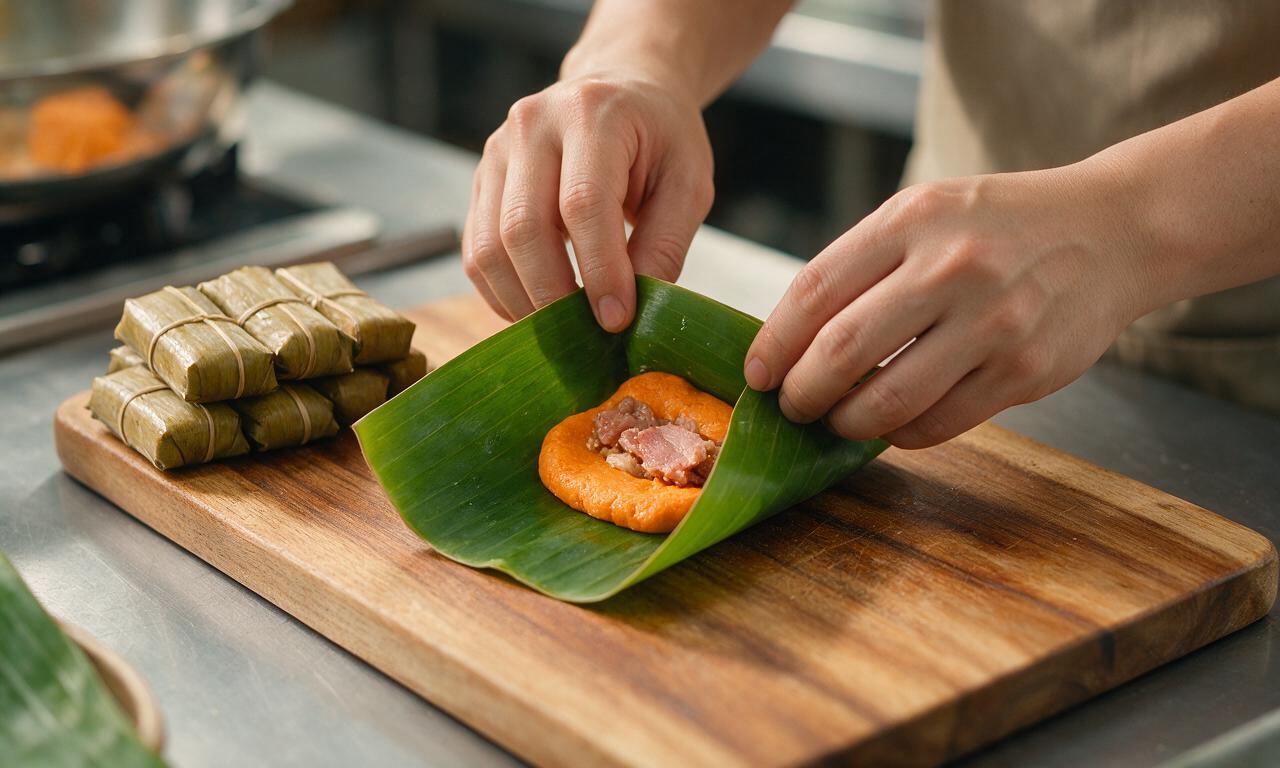
Lay one softened banana leaf square flat on a clean work surface. Scoop ½ cup (120g) of the orange masa onto the center of the leaf, spreading it into a 10cm (4-inch) flat even circle. Place 2 tablespoons (30g) of the cooled pork filling directly in the center of the masa circle. Fold the banana leaf in half to cover the filling, pressing the masa edges together to seal completely, then tuck the two open leaf ends under to form a tight 10cm x 15cm (4x6 inch) rectangular parcel. Tie each parcel securely with cotton kitchen string to prevent opening during steaming.
Steam the wrapped parcels
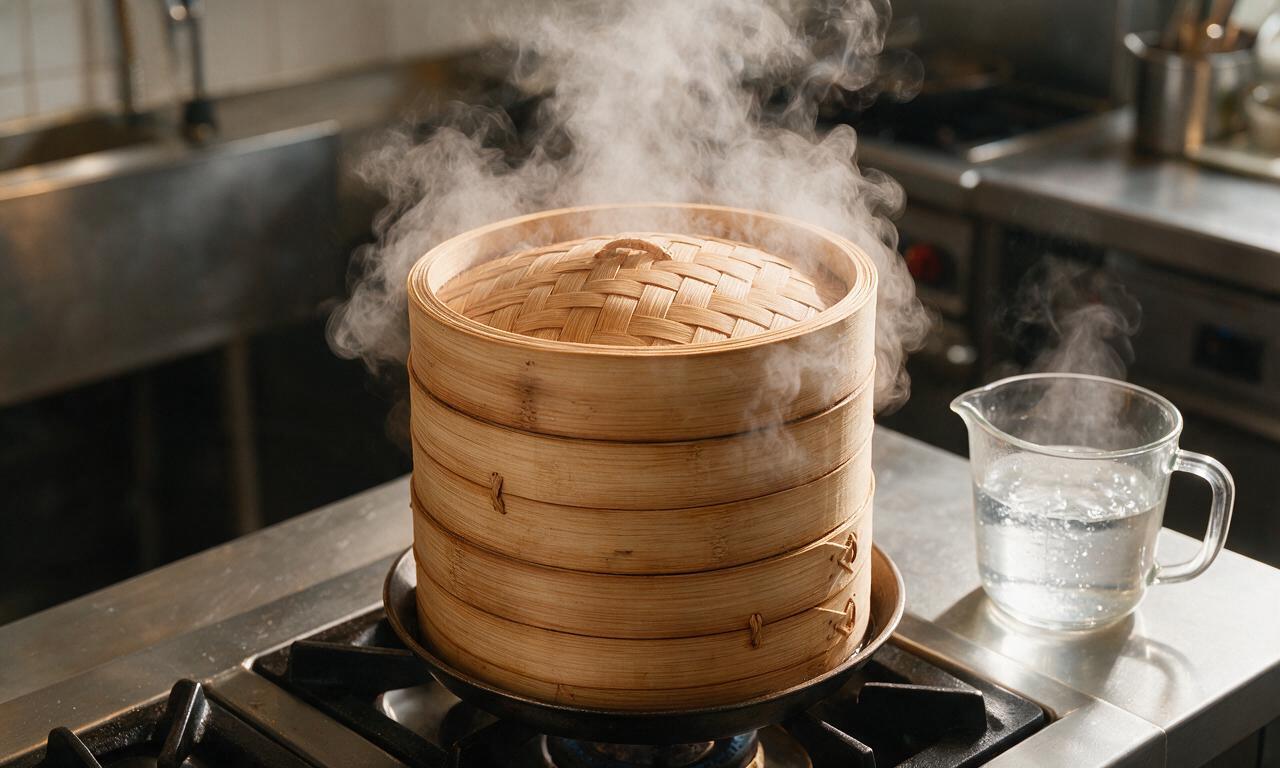
Arrange the tied pasteles in a single layer in a large bamboo steamer set over a pot of rapidly boiling water, ensuring no parcels are submerged in water. Cover the steamer tightly, reduce heat to medium-low to maintain a steady gentle boil, and steam for 60 minutes. Check the water level every 20 minutes, topping up with boiling water as needed to avoid boiling the pot dry. Pasteles are done when the masa is firm to the touch and does not stick to the leaf when peeled back for a doneness check.
Rest and serve warm
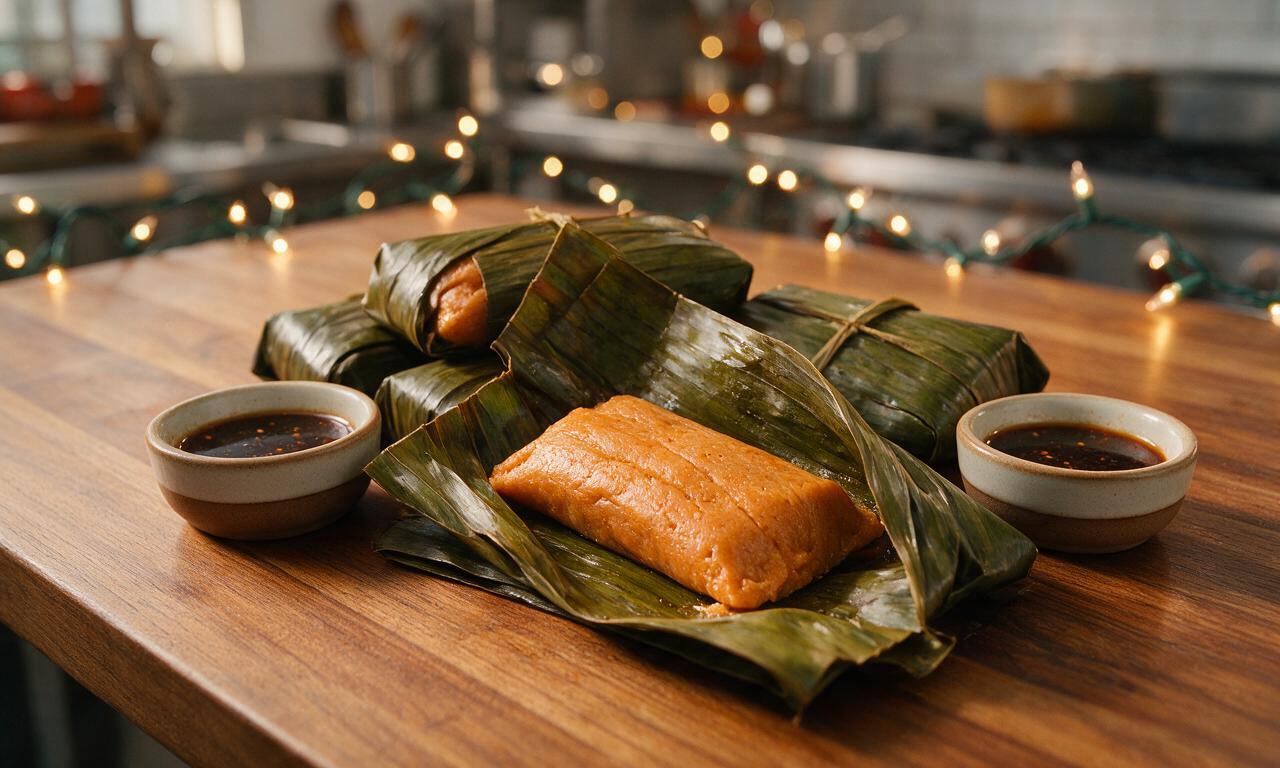
Remove steamed pasteles from the steamer using metal tongs, and let them rest for 10 minutes at room temperature to allow the masa to set fully. Snip off the kitchen string, and serve warm, either partially wrapped in the banana leaf for presentation or fully unwrapped, paired with spiced coconut vinegar or calamansi soy sauce for dipping if desired.
Tips
2.Never skip the step of softening banana leaves over heat; unheated leaves are brittle, crack easily during folding, and will allow masa and filling to leak out into the steamer water.
3.For a traditional festive upgrade, add a thin slice of hard-boiled egg or 1 teaspoon of diced cooked ham to each parcel alongside the pork filling before sealing the masa.
OMG, I made these for my family’s Sunday kamayan feast last weekend and they were the FIRST thing gone! I was a little intimidated by the medium difficulty rating and 2.5 hour cook time but the end result was so worth it. The filling is so savory, and that banana leaf wrap adds the best subtle aroma. 10/10 will make again for our next potluck!
Game changer! I grew up eating these at my lola’s house but never thought I could pull them off at home. The step-by-step instructions were so clear, even though it took me almost 3 hours total because I was going slow to make sure I didn’t mess up the wrapping. My kids loved helping stuff the wraps, even if half the filling ended up on the counter lmao.
Made a double batch on Sunday for meal prep and they reheated perfectly all week! I popped them in the microwave for 2 minutes wrapped in a damp paper towel and they tasted just as fresh as the day I steamed them. Perfect grab-and-go lunch for work, will definitely be adding this to my monthly rotation.
Okay, full transparency: my first batch of the dough was way too sticky and I almost threw in the towel. Did anyone else run into this? I followed the measurements exactly but I wonder if my coconut milk was a different consistency than what the recipe uses?
Brought these to our office potluck yesterday and everyone was begging for the recipe! Multiple people thought I bought them from a local Filipino bakery, which is the highest compliment I could get tbh. Only thing I did different was add a little extra chorizo to the filling because I’m a meat lover, no regrets.
First time making any kind of steamed Filipino dish and I was so nervous! The 2.5 hour cook time felt really long for a weeknight so I saved this for a rainy Saturday, and I’m so glad I did. The only thing I messed up was I didn’t tie the wraps tight enough so a little bit of water got into a couple of them, but even those tasted good.
SO good. Tastes exactly like the pasteles my tita used to make for family reunions when I was a kid. I got a little emotional taking the first bite, ngl. The balance of the sweet, starchy dough and the savory chicken-pork filling is spot on. No notes, perfect recipe.
Has anyone tried making these gluten free? I know glutinous rice flour is naturally GF but I want to make sure I don’t miss any hidden gluten in the filling ingredients! My whole family is coming over for my birthday and I want to make something my celiac sister can eat too.
Wait, is there a way to cut down the cook time a little? 2.5 hours is tough for me to fit in on weeknights, even though these look incredible. I’m wondering if I can prep the filling and dough the night before to save time?
Tried these last weekend after seeing a friend post about them, and wow. I’ve had pasteles from a bunch of local spots around Chicago and these honestly blow most of them out of the water. The hint of garlic and annatto in the dough is *chef’s kiss*. Worth every minute of effort.
I accidentally over-steamed my first batch by 20 minutes because I got wrapped up watching a show, and they were still good? They were a little softer than I expected but the flavor was totally on point. Definitely learned my lesson to set a timer next time, though.
Curious if anyone has tried making these vegan? I’m thinking of swapping the meat for jackfruit and using coconut aminos instead of fish sauce/soy, but I don’t know if the dough needs any adjustments if I skip the meat filling fat?
My husband is Filipino and he’s been deployed for 6 months, so I made these to surprise him when he gets home next week. I tested a batch this weekend and they turned out so good I cried a little. It feels like a little piece of home waiting for him. Can’t wait to see his face when he tries them.
Pro tip: serve these with a side of spicy vinegar dipping sauce, just like they do at the Filipino spot by my apartment. It cuts through the richness of the filling so perfectly, I could eat a dozen of these in one sitting no cap.
I live in a super small town in Ohio with zero Filipino restaurants, so I’ve been craving pasteles ever since I tried them on a trip to LA last year. This recipe was so easy to follow, even without access to super specialty stores— I found frozen banana leaves at my local Walmart and they worked perfectly. So happy I don’t have to wait for a big city trip to eat these now!
I added a handful of shredded cheddar to the filling on a whim because my family loves cheese in everything, and it was such a hit! The salty, melty cheese pairs so well with the annatto dough and savory meat, I don’t know if I’ll make them without it again.