Pasture Raised Scrambled Eggs

title 1
Pasture Raised Scrambled Eggs
⏱️ cook time 5 minutes
🍽️ servings 2
⚡ Difficulty easy

intro

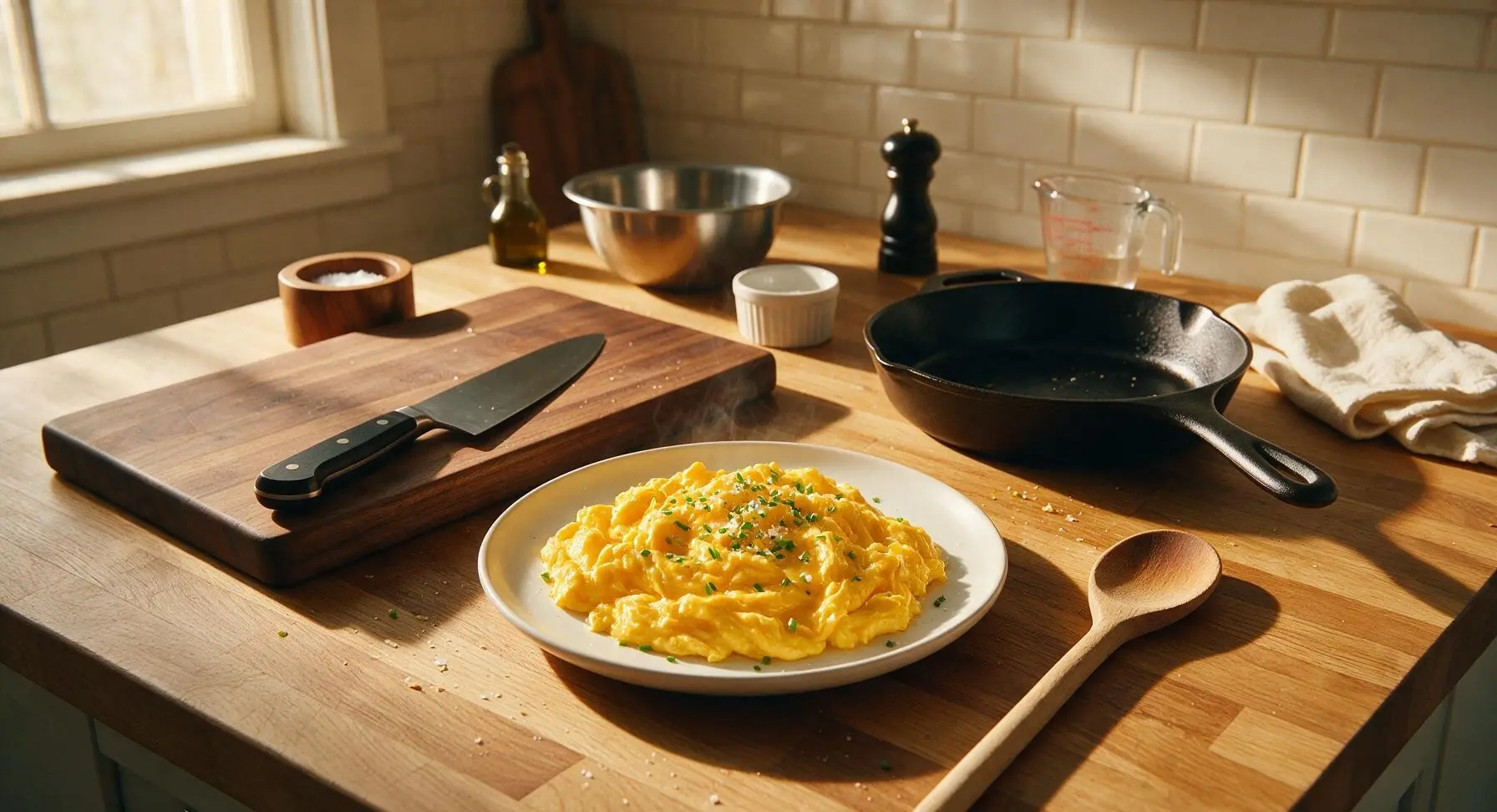
Silky, rich soft-scrambled eggs made with deep-golden pasture-raised eggs, cooked low and slow for tender, melt-in-your-mouth curds, finished with bright chives and flaky salt.

Ingredients
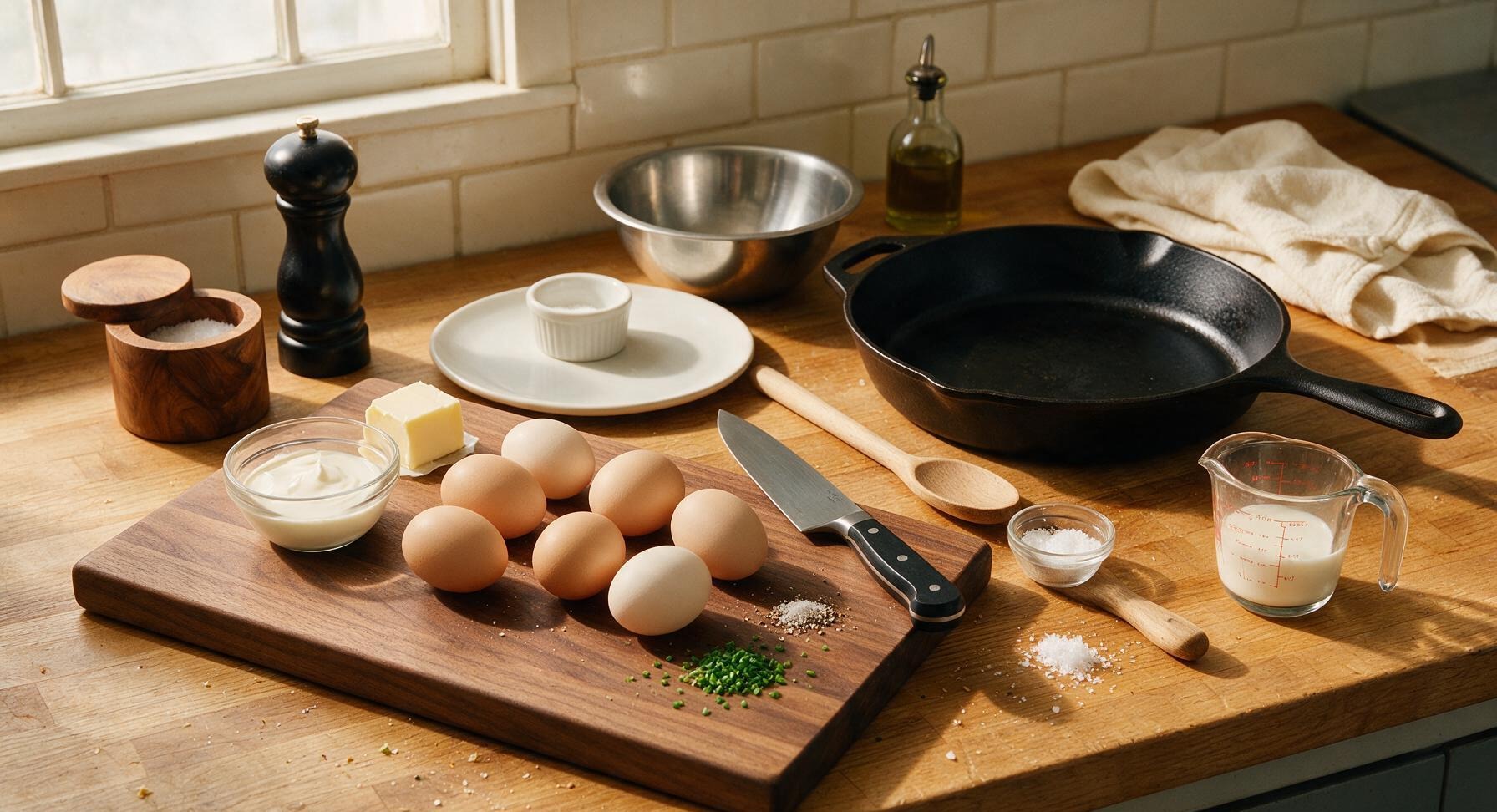
Pasture-raised large eggs 6 (300g)
Unsalted butter 2 tbsp (28g)
Heavy cream 2 tbsp (30ml)
Fine sea salt 1/4 tsp (1.5g)
Freshly ground black pepper 1/8 tsp (0.5g)
Fresh chives 1 tbsp (3g, finely chopped)
Flaky finishing salt 1/4 tsp (1g)

Steps

1

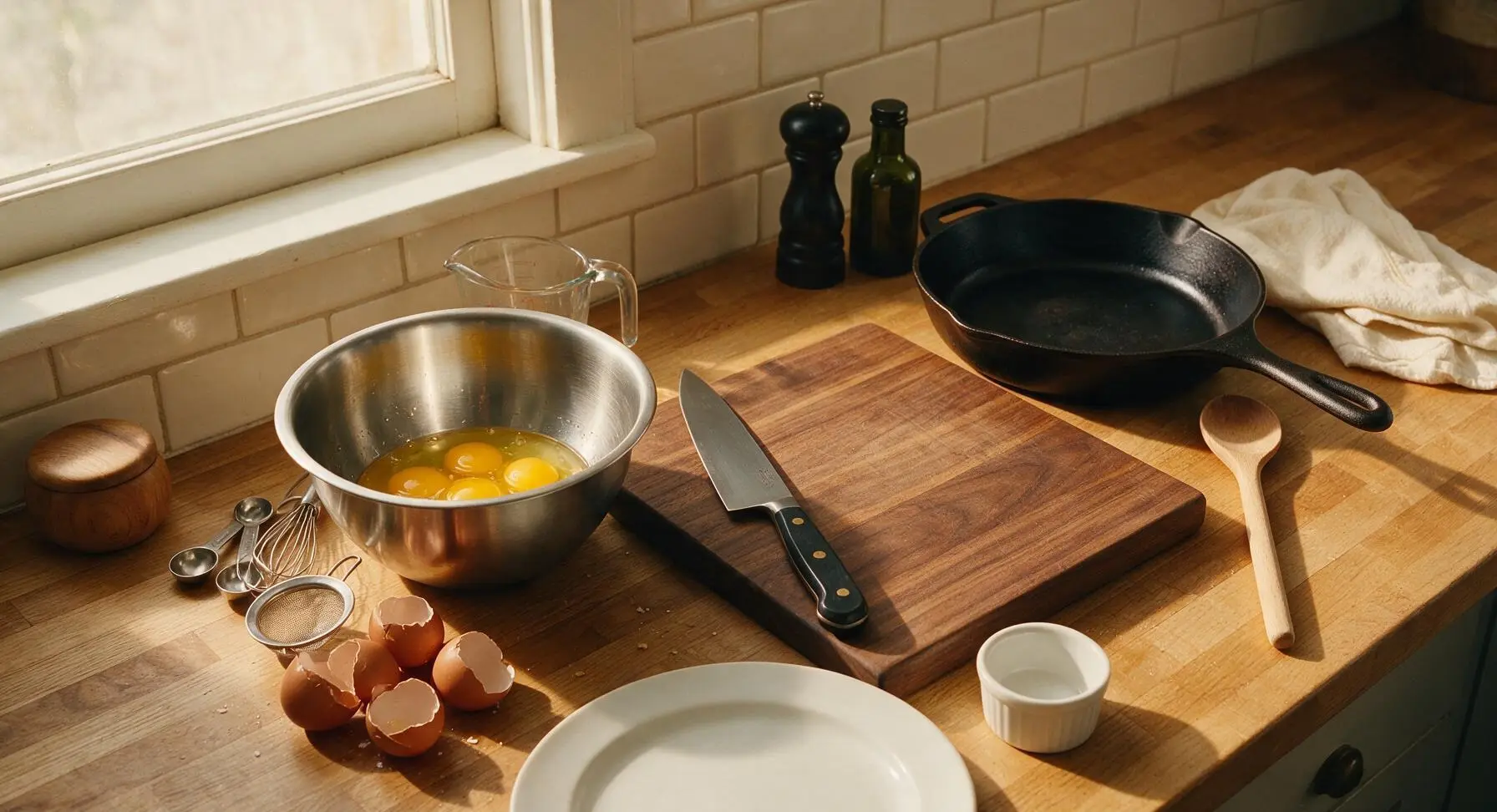
Crack Eggs Into Bowl

Gently crack all 6 pasture-raised eggs into the medium brushed stainless steel mixing bowl, tapping each egg on the counter edge (not the bowl rim) to avoid pushing shell fragments into the mixture. If any small shell pieces fall into the bowl, use an empty half eggshell to fish them out; the shell naturally attracts stray fragments for easy removal. Do not begin mixing yet.
Step 1
step1:Crack Eggs Into Bowl
2

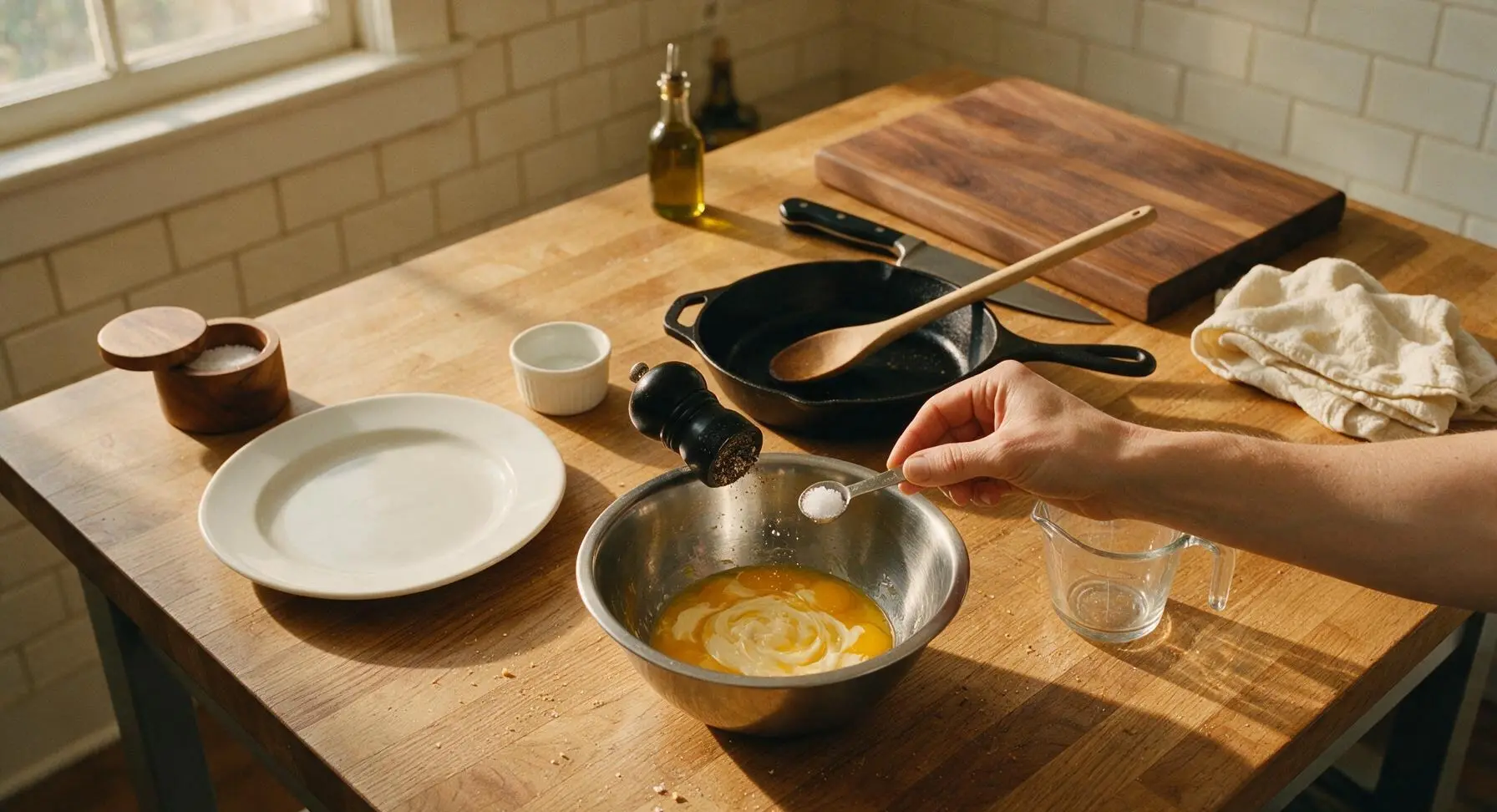
Add Cream and Seasoning

Use the 1-tablespoon measuring spoon from the stainless steel set to add 2 tablespoons of heavy cream from the glass bottle to the egg mixture. Measure 1/4 teaspoon fine sea salt and 1/8 teaspoon freshly ground black pepper, and add them to the bowl as well. Hold off on adding extra salt at this stage, as the flaky finishing salt added at the end will provide bright, salty flavor without over-seasoning.
Step 2
step2:Add Cream and Seasoning
3

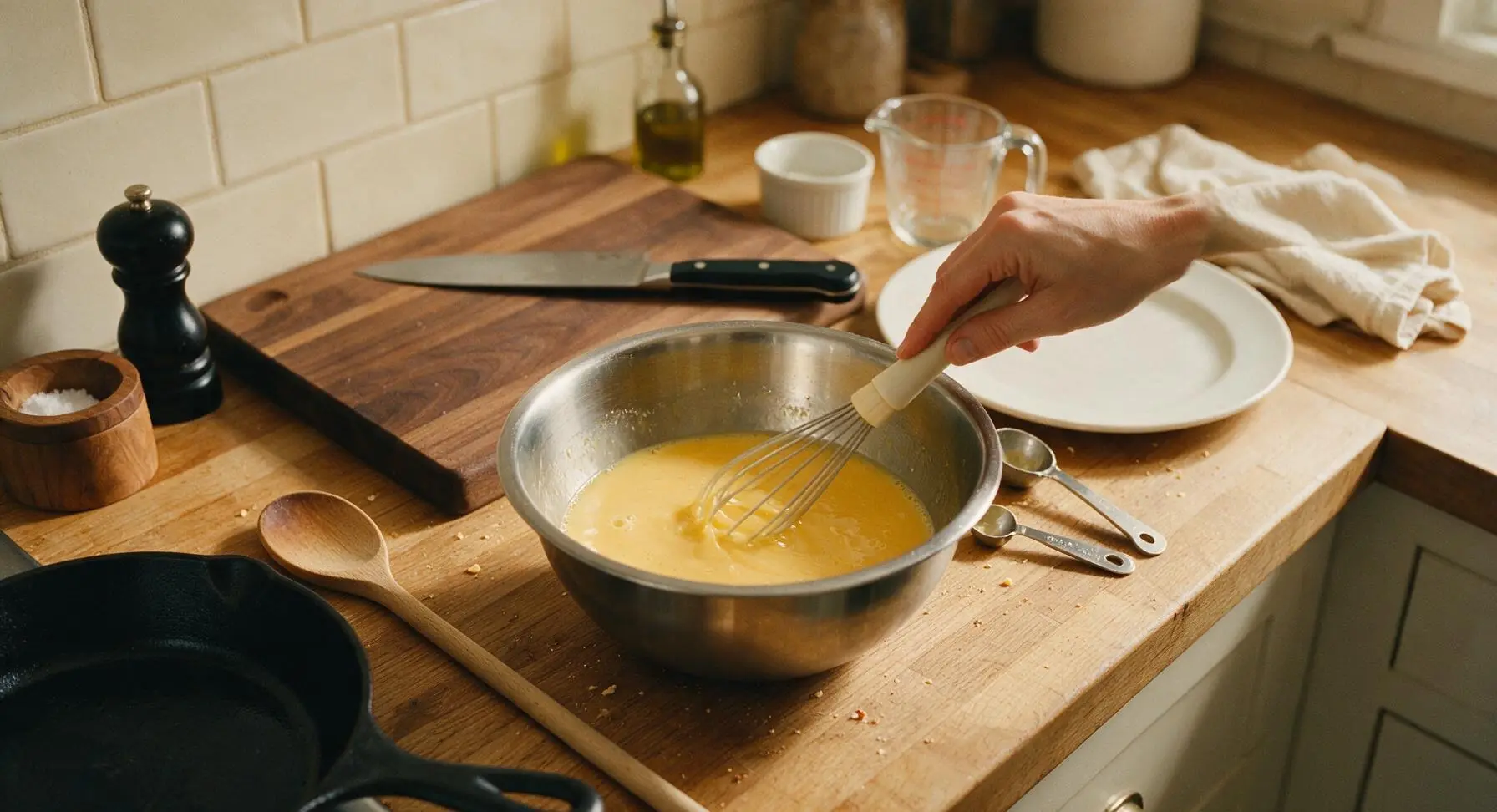
Whisk Gently to Combine

Use the silicone-tipped whisk to slowly stir the egg mixture, mixing just until the yolks, whites, cream, and seasoning are fully incorporated into a uniform pale golden liquid, with no streaks of clear egg white remaining. Do not whisk vigorously or beat air into the eggs; trapped air creates spongy, watery curds instead of the dense, silky texture ideal for soft scrambled eggs. Stop mixing as soon as the mixture is smooth, with no large bubbles on the surface.
Step 3
step3:Whisk Gently to Combine
4

Strain for Smooth Curds

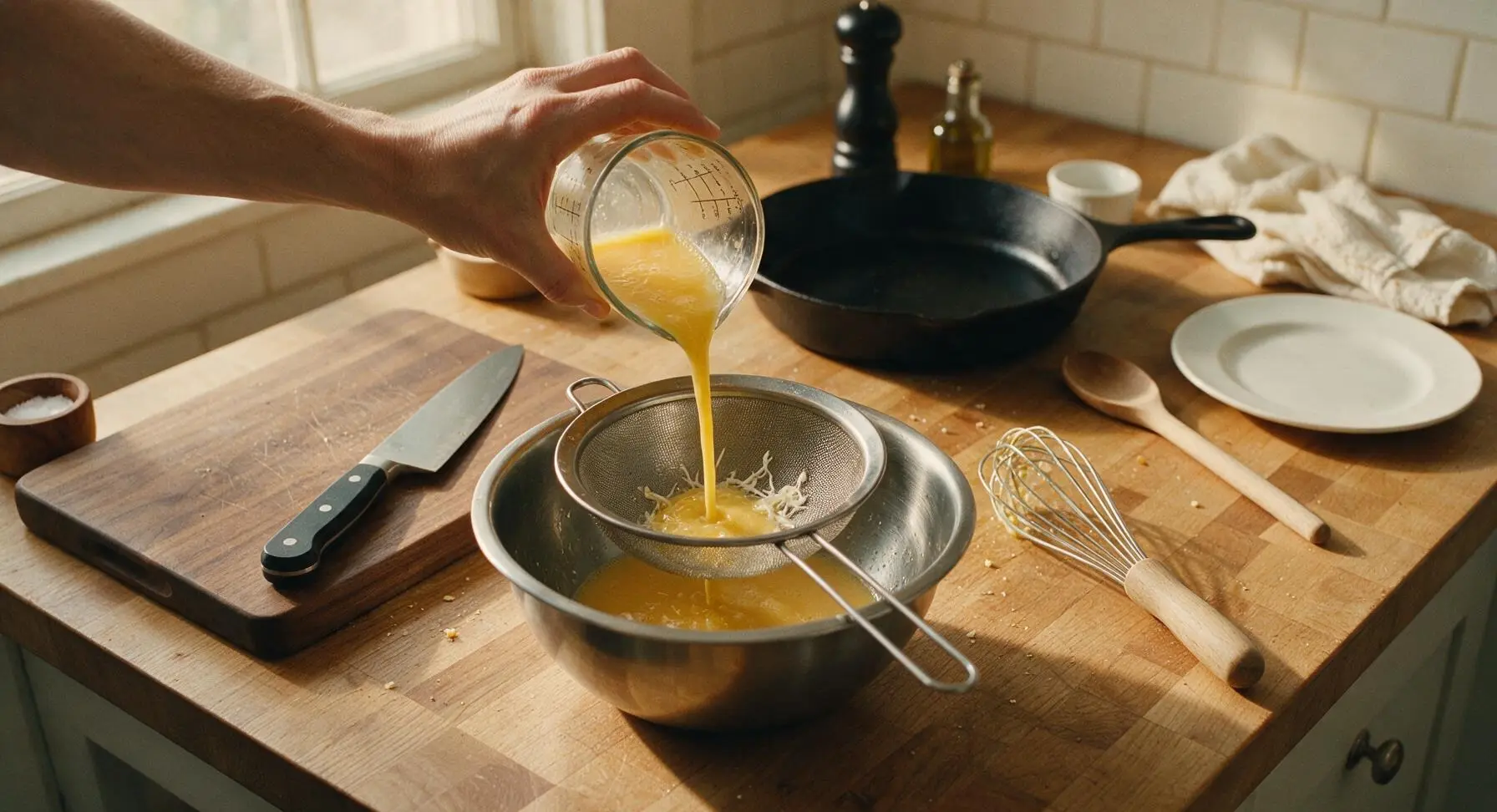
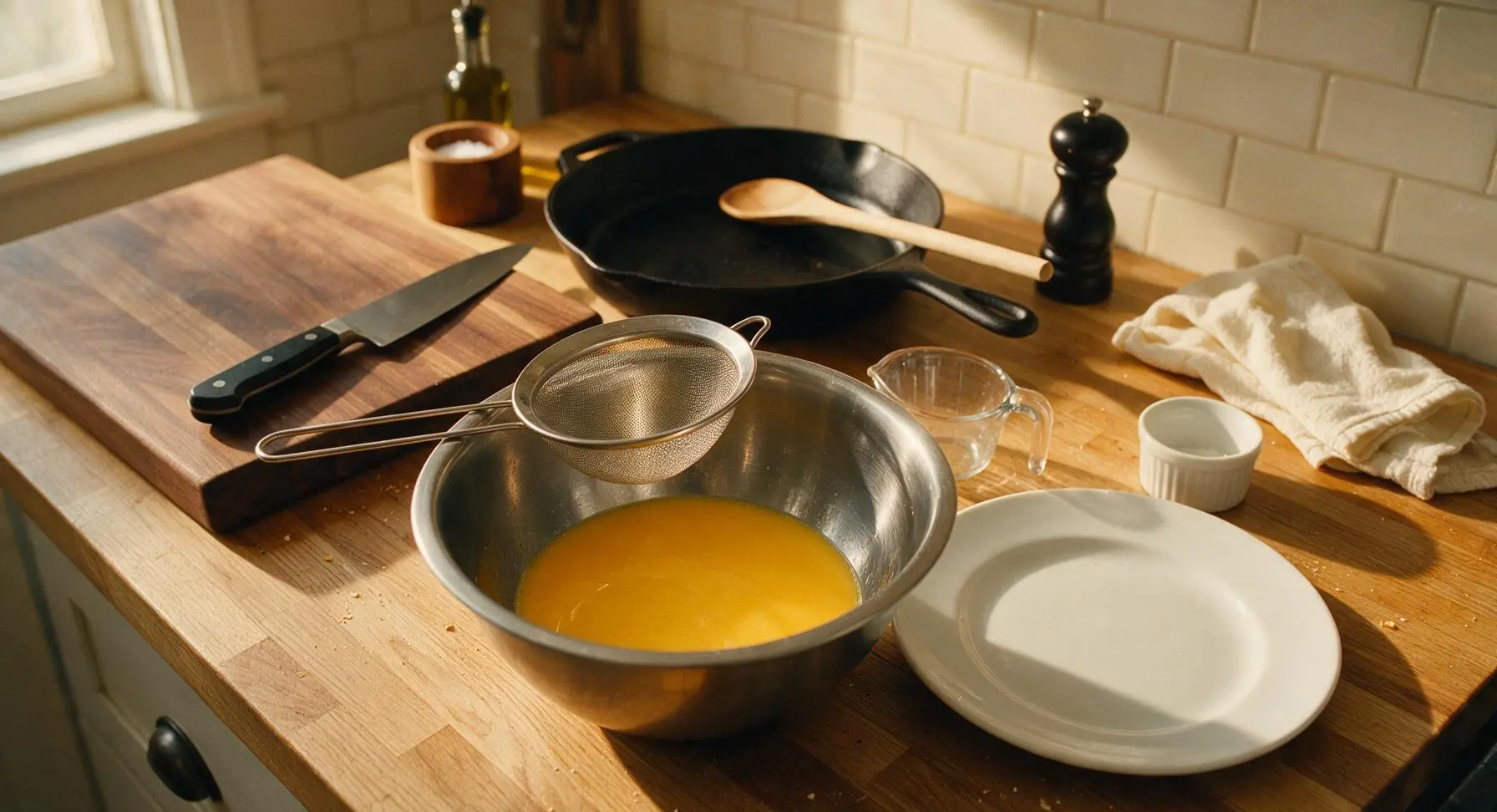
Set the stainless steel fine-mesh sieve over the top of the mixing bowl. Pour the whisked egg mixture through the sieve to catch any stringy chalaza (the clear, ropey egg white attached to the yolk) and any unincorporated shell or egg white bits. Discard the small amount of stringy solids left in the sieve. This step guarantees perfectly smooth, lump-free curds with no rubbery bits.
Step 4
step4:Strain for Smooth Curds
Step 4
step4:Strain for Smooth Curds
5

Melt Butter Over Low Heat

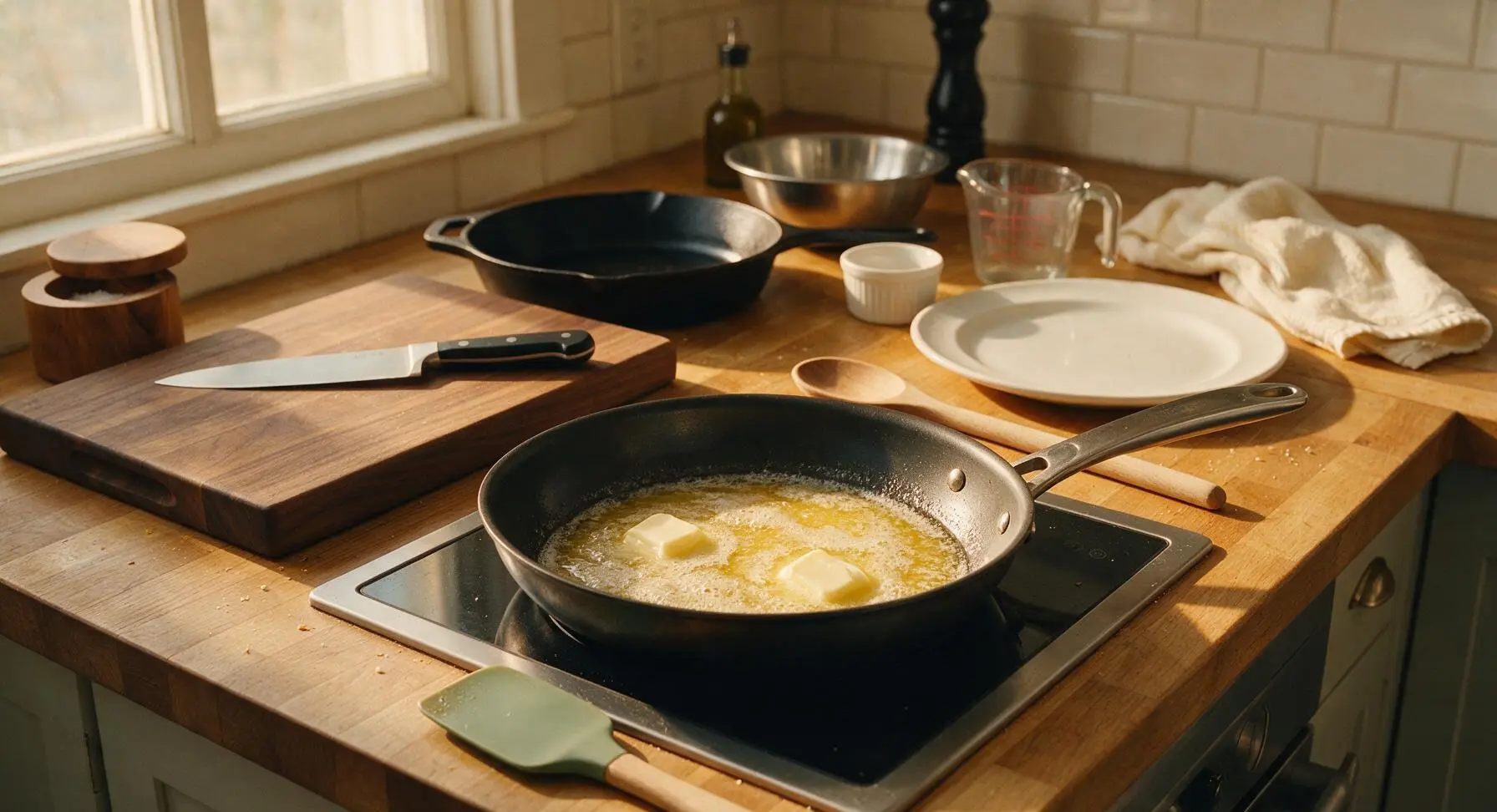
Place the 20cm matte black carbon steel skillet on the center of the inset induction cooktop, and set the heat to the lowest setting (150°F / 65°C). Add both 1-tablespoon pats of unsalted butter to the cold pan, and let it melt slowly until it forms a glossy, foamy pool that coats the pan bottom. The butter should never sizzle, pop, or turn brown; if it does, remove the pan from the heat for 30 seconds to cool slightly before proceeding.
Step 5
step5:Melt Butter Over Low Heat
6

Cook Eggs Low and Slow

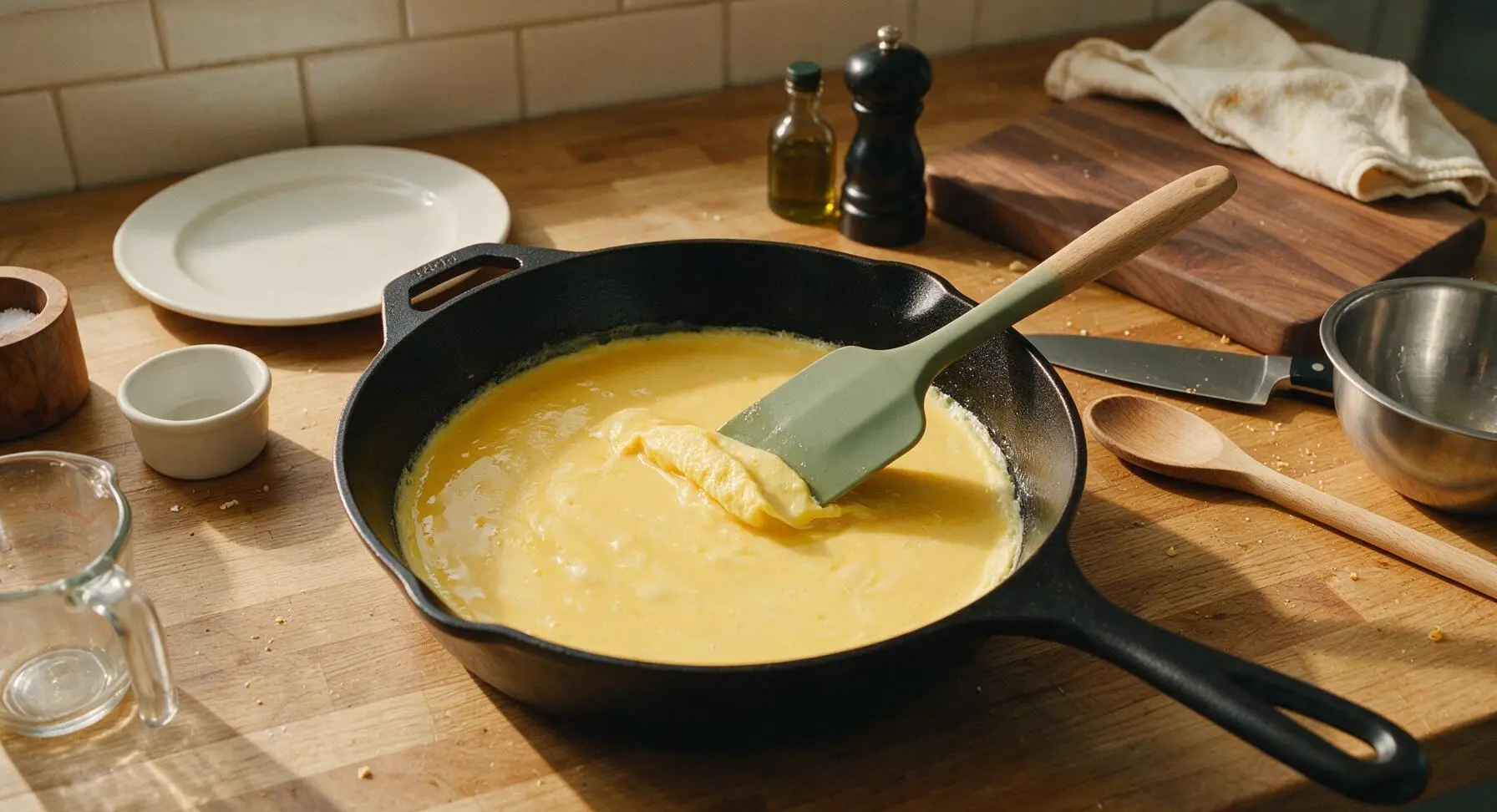
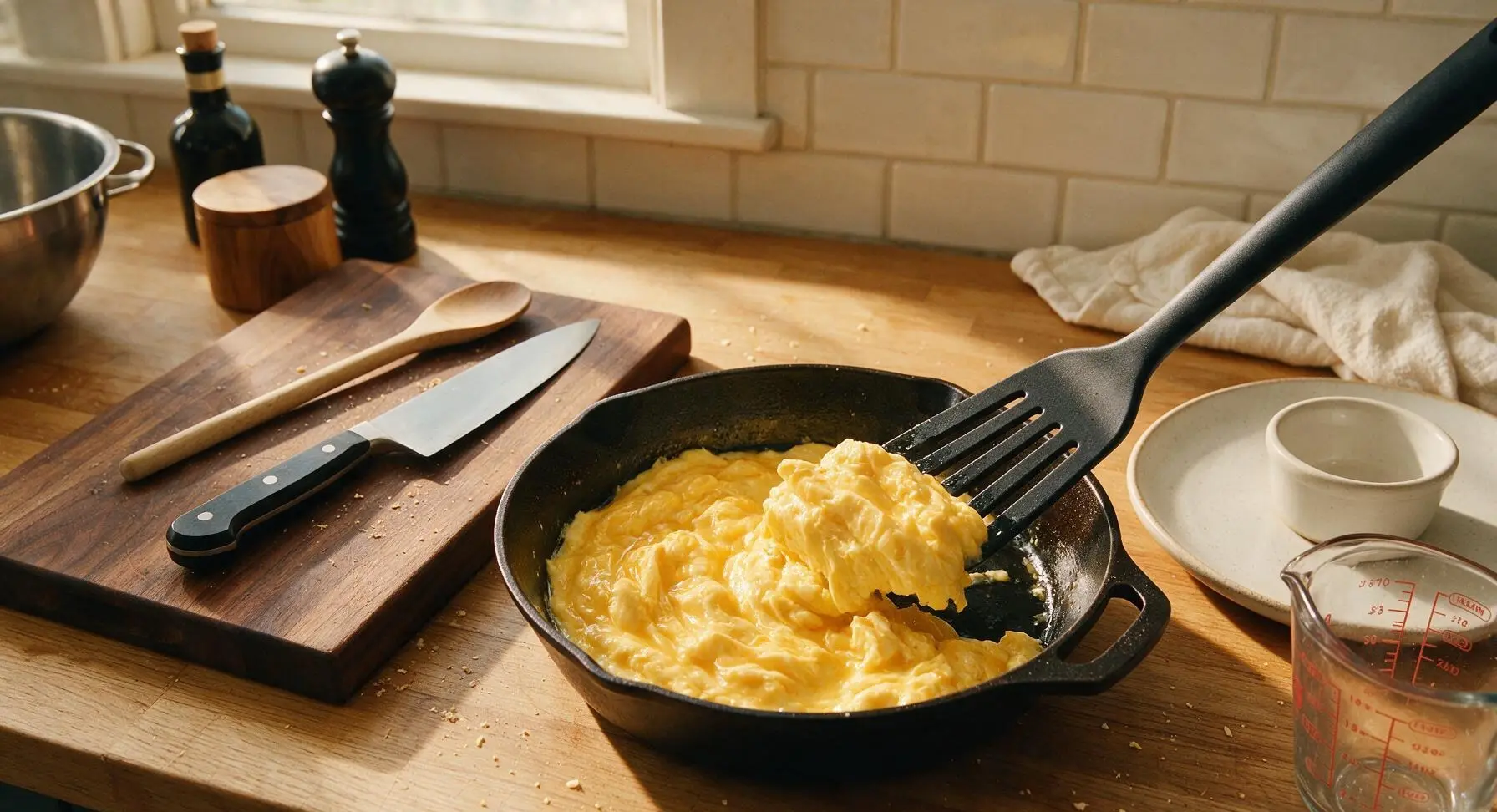
Pour the strained egg mixture into the buttered skillet. Let the eggs sit undisturbed for 15 seconds to allow the first layer of curd to set on the pan bottom. Use the silicone spatula to gently push the set curds from the pan edges toward the center, then tilt the pan to let uncooked, runny egg flow into the empty spaces left by the pushed curds. Repeat this slow push-and-tilt motion every 10-15 seconds for 3 to 4 minutes total, until the eggs form large, soft, moist curds that are just barely set, still glossy and slightly wet-looking with no runny liquid pooling in the pan. Do not stir constantly or scrape the pan aggressively.
Step 6
step6:Cook Eggs Low and Slow
Step 6
step6:Cook Eggs Low and Slow
7

Plate and Finish Eggs

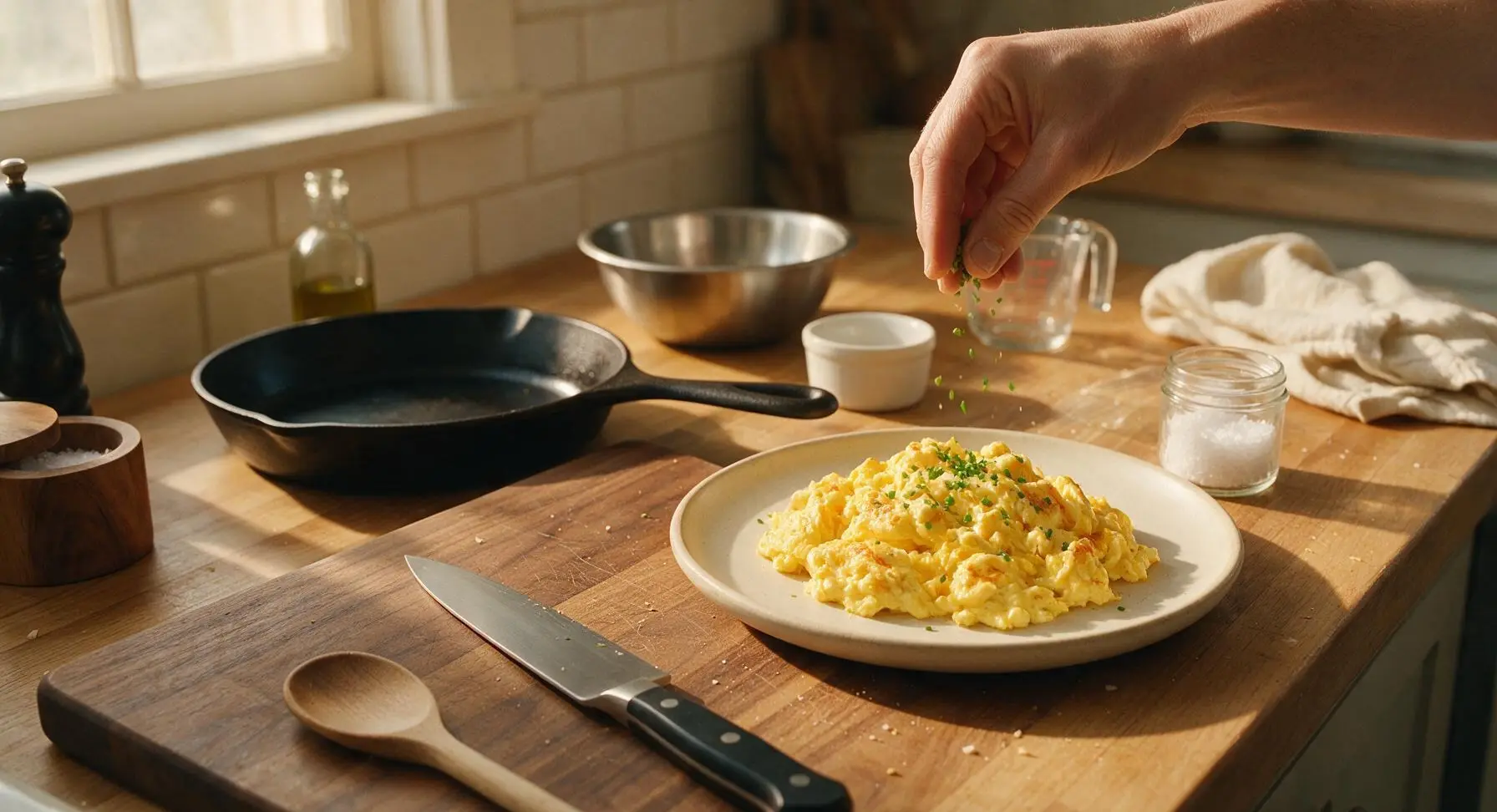
When the eggs are 90% set (still slightly under-done in spots), turn off the heat immediately — residual heat from the pan (called carryover cooking) will finish setting the curds in 60 seconds as you plate. Gently scoop the soft curds onto the matte cream stoneware breakfast plate, mounding them lightly in the center without pressing them down. Sprinkle finely chopped fresh chives over the top, add a light pinch of flaky finishing salt, and one small grind of fresh black pepper. Serve immediately, as scrambled eggs will turn tough and dry if left to sit for more than 2 minutes.
Step 7
step7:Plate and Finish Eggs

Tips

1.Always cook scrambled eggs on the lowest heat possible: high heat causes egg proteins to tighten and seize, resulting in dry, rubbery curds. If your butter sizzles the second it hits the pan, the pan is too hot — let it cool for 30 seconds before adding eggs.
2.Skip the milk or water add-ins: water makes eggs watery, and milk dilutes the rich, eggy flavor of pasture-raised eggs. A small amount of heavy cream adds richness without thinning the curds, creating a velvety texture.
3.Do not over-stir: constant stirring breaks curds into tiny, dry pieces instead of the large, soft, melt-in-your-mouth curds that make luxury scrambled eggs special. Pushing curds gently every 10-15 seconds creates the ideal texture.
✨ You May Also Like

Breakfast
🍜 United States

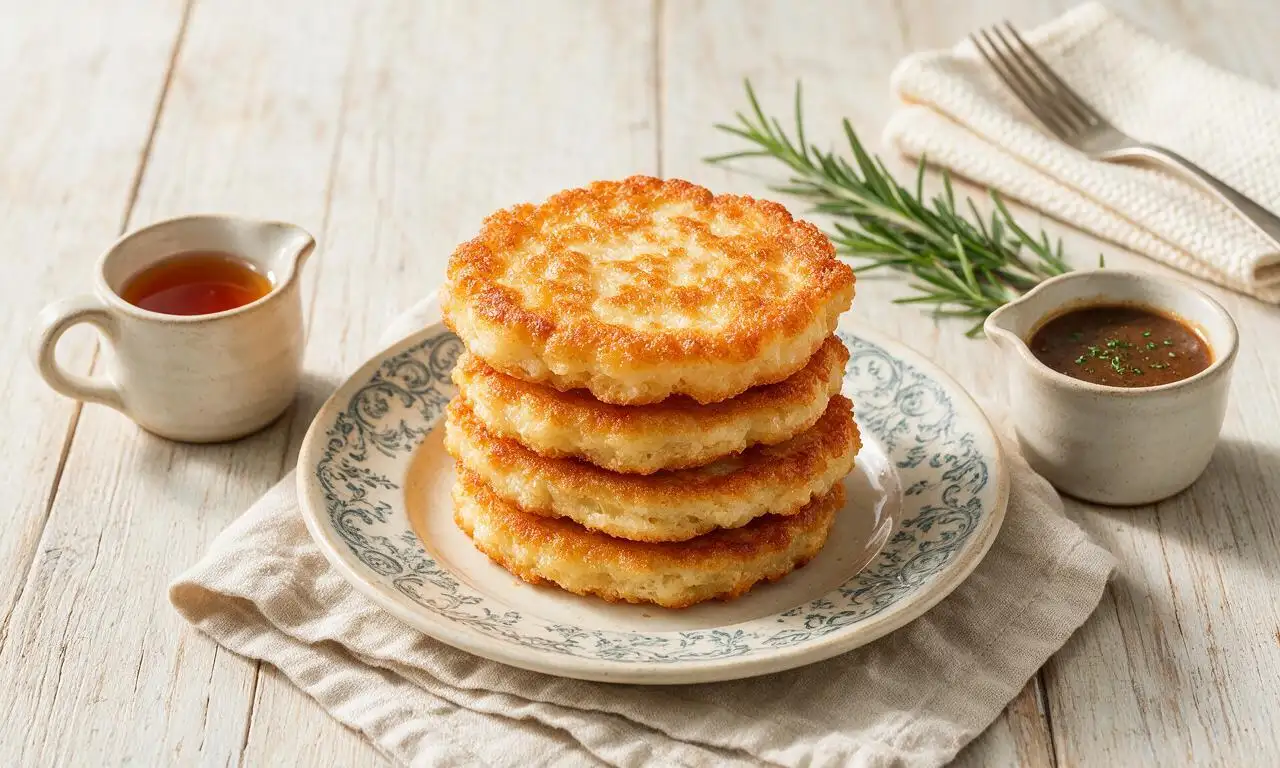
Crisp-edged, fluffy lard griddle cakes are a nostalgic homestyle staple, with rich savoriness from rendered lard, perfect topped with maple syrup or savory gravy.

⏱️ 25 minuteBreakfast ★ 4.8
Breakfast
🍜 United States

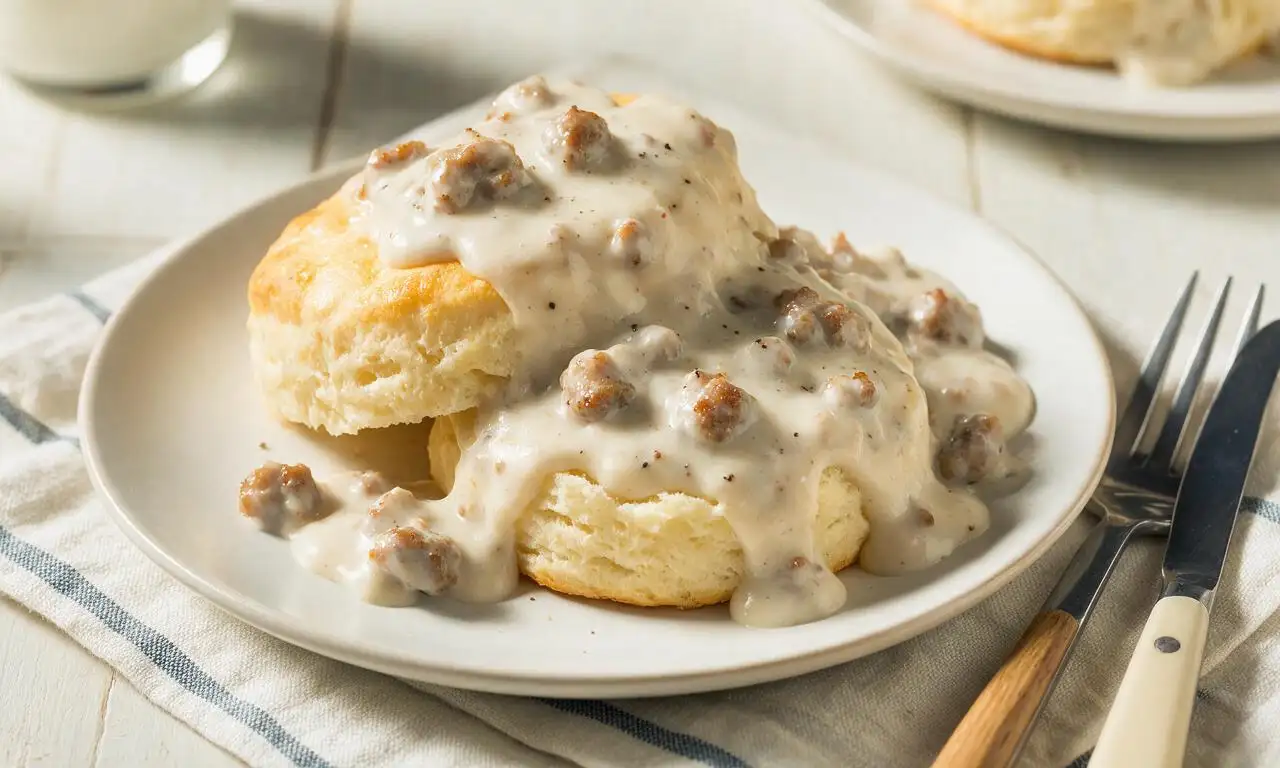
Flaky, buttery homemade buttermilk biscuits smothered in creamy, peppery pork sausage gravy: a beloved, hearty Southern American comfort food classic.

⏱️ 35 minuteBreakfast ★ 4.8
Breakfast
🍜 United States

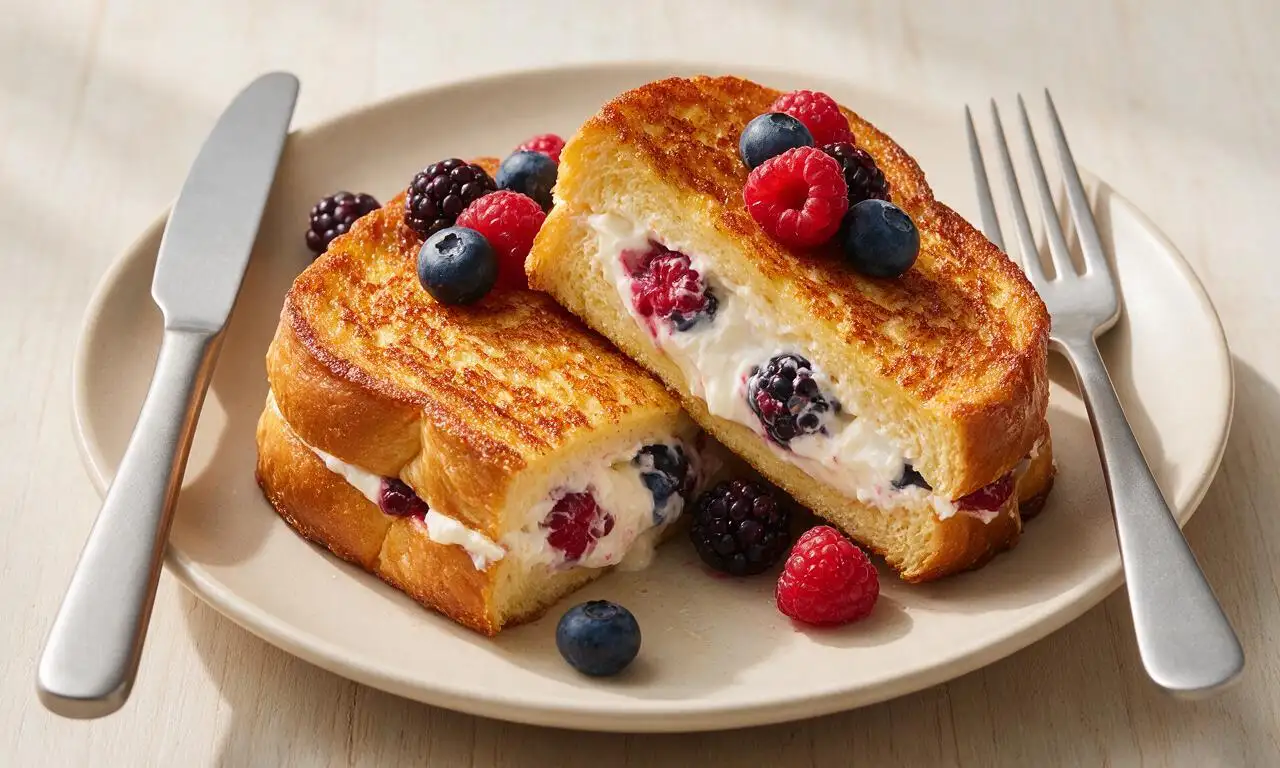
Golden, custardy brioche stuffed with sweet cream cheese and fresh berries, pan-fried to crisp perfection. An indulgent, cozy breakfast perfect for slow weekend mornings.

⏱️ 30 minuteBreakfast ★ 4.7
Breakfast
🍜 United States

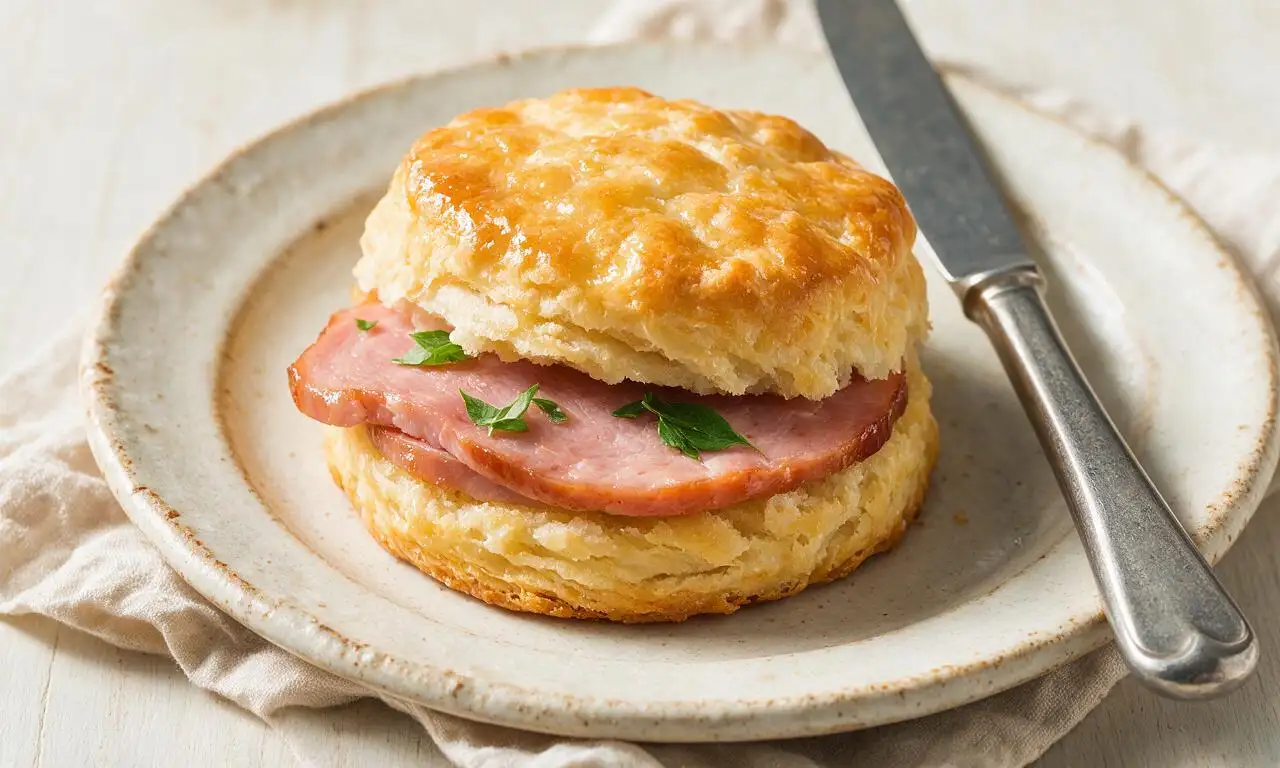
Flaky, buttery Southern-style biscuits stuffed with savory salty country ham, a portable, satisfying classic perfect for casual on-the-go meals.

⏱️ 25 minuteBreakfast ★ 4.8
Breakfast
🍜 United States

Iconic puffy baked pancake popularized in Seattle, with crisp golden edges and soft custardy center, served warm with classic sweet toppings.

⏱️ 35 minuteBreakfast ★ 4.6
Breakfast
🍜 United States

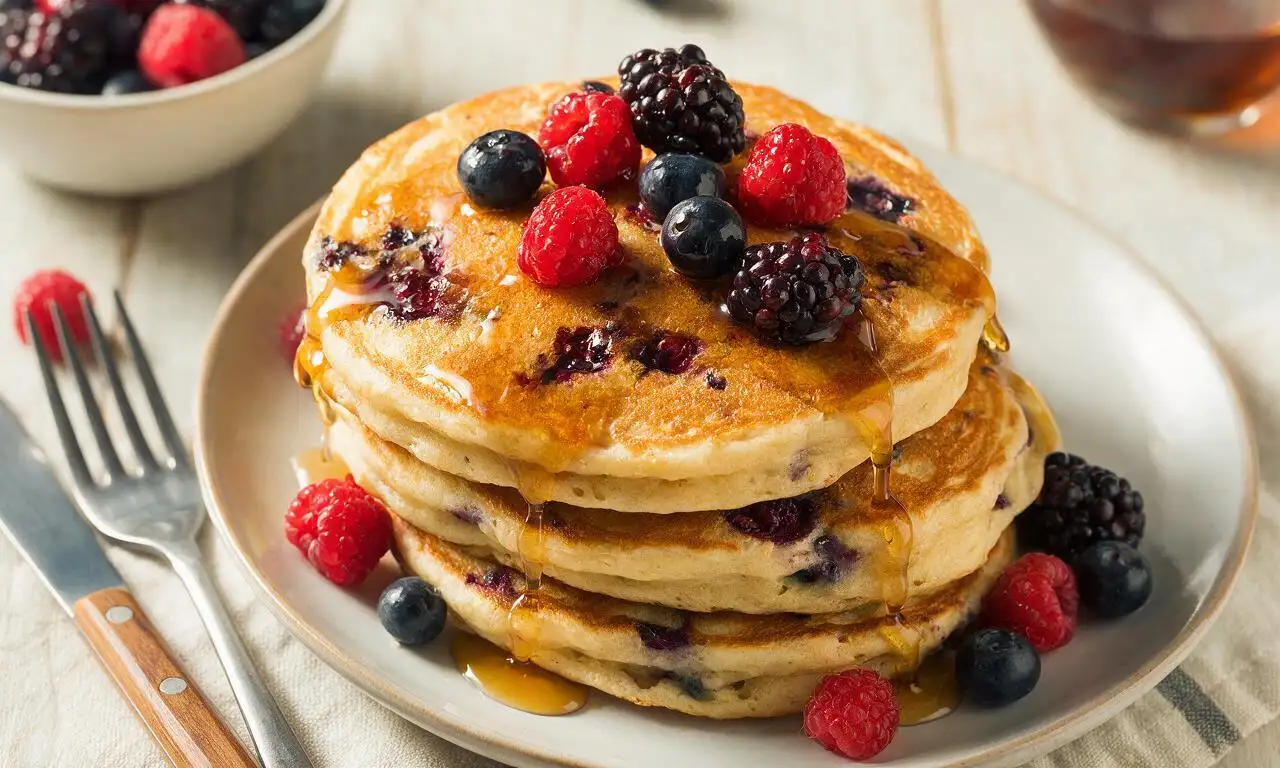
Fluffy, golden pancakes studded with juicy peak-summer mixed berries, drizzled with maple syrup for a bright, comforting, crowd-pleasing family breakfast.

⏱️ 25 minuteBreakfast ★ 4.7

Pasture Raised Scrambled Eggs:Frequently Asked Questions

1.Why use pasture-raised eggs instead of regular eggs for this recipe? ▾
Pasture-raised eggs come from hens that roam open pastures to forage for bugs, grass, and seeds, which gives their yolks a deep golden hue, richer buttery flavor, and higher fat content that creates silkier curds. Conventional eggs work in a pinch, but they won’t deliver that same luxe, melt-in-your-mouth depth this recipe is built to highlight.
2.What heat setting should I use to avoid rubbery, overcooked eggs? ▾
Stick to low to medium-low heat the entire time—high heat is the number one culprit behind tough, rubbery, watery scrambled eggs. Low heat lets eggs set slowly into tender, delicate curds instead of seizing up and squeezing out moisture the second they hit the pan. If your butter sizzles and browns immediately when added, your pan is too hot.
3.Do I have to use heavy cream, or can I swap in other dairy or plant-based milks? ▾
Heavy cream adds velvety fat that coats egg proteins to keep curds extra tender, but it’s not mandatory. Whole milk works for a lighter result, but skip skim or watery plant milks like unsweetened almond milk—they make eggs watery and dilute flavor. If using plant milk, pick a full-fat barista blend oat milk for similar creaminess.
4.How long should I cook the eggs to get that perfect soft-scramble texture? ▾
Plan for 6 to 8 minutes total cook time, stirring gently every 10 to 15 seconds as small curds form. You’ll know they’re done when they’re mostly set but still look slightly wet and glossy on top—they’ll keep cooking for 30 to 60 seconds from residual pan heat after you remove them, so pulling them early avoids dry, crumbly eggs.
5.What type of pan works best for making these scrambled eggs? ▾
A heavy-bottomed nonstick skillet is the most forgiving choice, since it prevents sticking and distributes heat evenly to avoid hot spots that burn curds. If you don’t have nonstick, a well-seasoned carbon steel or cast iron pan works too—just add an extra pat of butter, and skip thin stainless steel that heats unevenly and causes sticking.
6.When is the best time to add salt to the eggs for the best texture? ▾
Salt your eggs 10 to 15 minutes before cooking if you can—early salting breaks down egg proteins slightly to create extra-tender, evenly seasoned curds instead of tight, tough ones. If you’re short on time, salt right as you pour eggs into the pan, but avoid salting halfway through, which causes watery, unevenly seasoned patches.
7.Can I make these scrambled eggs ahead for weekly meal prep? ▾
Soft scrambled eggs are best eaten right off the pan, since they lose that silky texture quickly as they cool, but you can make them for meal prep with a small adjustment. Cook them just slightly softer than you prefer, cool quickly, store in an airtight container for up to 3 days, and reheat in 15-second microwave bursts, stirring between each burst.
8.Why do my scrambled eggs always turn out watery? ▾
Watery eggs almost always trace back to one of three issues: cooking on too-high heat that seizes curds and squeezes out moisture, adding watery mix-ins or thin low-fat dairy instead of heavy cream, or shocking a hot pan with ice-cold eggs straight from the fridge. Letting eggs rest 10 minutes at room temp helps them cook evenly without releasing excess water.
9.Do I need to whisk the eggs really vigorously before cooking? ▾
You don’t need to whisk eggs until they’re frothy—that incorporates too much air, which makes eggs fluffy but dry and spongy instead of dense and silky. Whisk just until whites and yolks are fully combined with no streaks of white left, and stir in heavy cream right before pouring into the pan to avoid over-aerating the mixture.
10.Can I add mix-ins like cheese, veggies, or bacon to this recipe? ▾
Absolutely, just add mix-ins strategically to avoid ruining that soft curd texture. Cook crispy bacon, sautéed veggies, or mushrooms fully first, drain off excess moisture, and set them aside to add during the last 30 seconds of cooking. Add shredded soft cheese right as you take the pan off heat so it melts gently without making eggs greasy.
11.Why finish with flaky salt instead of just using regular table salt? ▾
Fine sea salt blends into eggs as they cook to season curds evenly, but flaky finishing salt adds tiny, crunchy, bright bursts of salt flavor on top that make every bite pop, instead of tasting uniformly salty. It also cuts through the richness of butter and cream to balance the dish, so eggs don’t feel heavy or one-note.
12.Should I use salted or unsalted butter for this recipe? ▾
Unsalted butter is always best for cooking eggs, because it lets you control exactly how much salt goes into the final dish—salted butter has widely varying salt levels across brands, which makes it easy to over-salt your scramble by accident. If you only have salted butter on hand, cut the added fine sea salt by about half to avoid over-seasoning.
13.How many eggs should I plan per person for a serving? ▾
Plan for 2 to 3 large pasture-raised eggs per person for a standard breakfast serving, especially if you’re serving eggs alongside toast, breakfast potatoes, or fruit. If the eggs are the main dish with no heavy sides, bump that up to 3 to 4 per person, since these rich, satisfying curds are more filling than light, fluffy conventional scrambled eggs.
14.Can I make this recipe dairy-free? ▾
You can make a dairy-free version that still has that silky texture by swapping heavy cream for full-fat canned coconut cream (skimmed off the top, no watery liquid) and replacing butter with refined coconut oil or high-quality dairy-free butter made with avocado oil. Skip watery dairy-free creamers, as they’ll make curds thin and watery instead of rich and tender.
15.Why do my curds turn out big and clumpy instead of small and melt-in-your-mouth? ▾
Big, clumpy curds happen when you stir too infrequently, or scrape the pan too hard as eggs set. Use a heatproof silicone spatula to gently push set edges of the egg into the center of the pan every 10 to 15 seconds, letting runny egg flow into the empty space. This creates small, uniform, tender curds instead of large, tough clumps.
16.Should I use room-temperature eggs or cold eggs straight from the fridge? ▾
Room-temperature eggs cook more evenly and form silkier curds, because they don’t drop the pan temperature drastically when poured in, which can cause uneven cooking and stuck-on spots. If you’re short on time, place cold eggs in a bowl of warm tap water for 3 to 5 minutes to take the chill off before cracking, no long wait needed.
17.What’s the best way to add chives for the brightest flavor? ▾
Use fresh chives, not dried, for that bright, mild oniony kick—dried chives have a flat, dusty flavor that doesn’t complement rich eggs well. Snip them into ¼-inch pieces with kitchen scissors right before serving, and toss them on top after you take eggs off the heat, since cooking chives too long makes them bitter and wilted.
18.Can I cook these eggs in the microwave if I don’t have access to a stovetop? ▾
You can get close to that soft scramble texture in the microwave, though it won’t be quite as silky as stovetop. Whisk eggs, cream, and melted butter in a microwave-safe bowl, cook in 20-second bursts on 50% power, stirring gently between bursts, for 2 to 3 minutes total. Stop when they’re slightly glossy, as they’ll keep cooking from residual heat.
19.How do I keep eggs from sticking to the pan even when I use butter? ▾
Sticking usually happens if your pan is too hot, or if you add eggs before butter is fully melted and evenly coated across the pan surface. Melt butter over low heat until it’s foamy but not browned, swirl it to cover the entire pan bottom, then pour in your eggs. Don’t scrape at stuck spots early—eggs will release easily as they set.
20.Is freshly ground black pepper really that different from pre-ground pepper for this recipe? ▾
Freshly ground black pepper has a bright, sharp, slightly fruity flavor that cuts through rich, fatty eggs perfectly, while pre-ground pepper is stale, flat, and often dusty from sitting on shelves for months. Grind it coarse right over finished eggs for little pops of warm spice, instead of stirring it into raw egg mix where its flavor gets muted during cooking.

Comments (15)

2 days ago

OMG these scrambled eggs are SO good! My picky 7 and 9 year old ate every last bite and asked for seconds before I even sat down to eat. Used the pasture raised eggs from our local farmers market like the recipe suggests, and the texture was so fluffy compared to my usual sad rubbery eggs. Total game changer for weekday breakfasts!

30 minutes ago

Quick, easy, no fancy ingredients — exactly what I needed for a fast post-gym breakfast. Cooked these up in 5 minutes flat, threw a little hot sauce on top, and was out the door. Way better than the fast food breakfast sandwich I usually grab on my way to work.

yesterday

I was today years old when I learned I’d been overcooking scrambled eggs my whole adult life? These were so creamy and rich, I didn’t even need to add extra cheese. Perfect for my little weekend brunch spread I hosted for my roommates yesterday, everyone asked for the recipe.

1 week ago

Made these for our early morning trailhead breakfast before a 6 mile hike last weekend. Packed great, kept us full for hours, and didn’t require a ton of cleanup at the campsite. Pro tip: add a sprinkle of everything bagel seasoning on top, chef’s kiss.

5 days ago

Wait, does anyone know if these hold up well for meal prep? I make breakfast for the whole week on Sundays and need something that doesn’t get weird and watery when I reheat it at the office.

3 days ago

Great question! If you slightly undercook them before storing, they reheat perfectly in the microwave in 30 second increments without getting watery or rubbery. I recommend storing them in an airtight container for up to 3 days for best results.

2 hours ago

Bro I can’t even boil water without burning it and these came out perfect first try. 5 minutes, no fancy skills required, and I didn’t set off the smoke alarm in my dorm. Win win.

30 minutes ago

LMAO same, I set off my dorm fire alarm making toast last month so this recipe is basically made for people like us. Tossed a little shredded cheddar in mine last night for a late study snack, hit so hard.

2 weeks ago

I’ve been making scrambled eggs for over 50 years and I have to say, this low and slow method even taught this old dog a new trick! My grandkids said these were the “fluffiest eggs ever” when they visited last weekend.

1 week ago

That makes our day to hear! There’s no better compliment than a grandkid’s stamp of approval, and we love that even folks who’ve been cooking for decades can pick up a little tip from our recipes.

3 days ago

Tried these after picking up a dozen pasture raised eggs from the farmers market downtown, and wow the flavor difference is insane compared to regular grocery store eggs. Paired mine with some avocado and sourdough toast, 10/10 breakfast.

2 days ago

Oh the sourdough pairing is chef’s kiss! I did the same last weekend and added a little red pepper flake, can’t stop making it now.

5 minutes ago

Quick question — do you have to use pasture raised eggs for this to turn out right? I only have regular cage free eggs in my fridge right now and don’t feel like running to the store.

just now

Not at all! Pasture raised eggs give a richer, deeper flavor and brighter yolk color, but the cooking method works exactly the same with any eggs you have on hand. No grocery run needed!

1 week ago

Made these for my partner who’s a total egg snob and he said they were better than the ones we get at our favorite fancy brunch spot downtown. He kept asking what “secret ingredient” I used, spoiler: there is none, just the method from this recipe lmao.

5 days ago

No way, my partner is the exact same way! I’m gonna have to make these this Sunday and see if I can fool him into thinking I got takeout from that overpriced spot we go to.

2 days ago

Saw someone mention meal prep earlier — how long do these last in the fridge? I’m so tired of making separate breakfasts for myself and the kids every single morning before school drop off.

yesterday

I make a big batch every Sunday and they last 3-4 days no problem! Just don’t overcook them initially like Chef mentioned, they reheat so easy. I pack them in the kids’ lunch boxes too, they love them.

2 hours ago

Couldn’t have said it better! 3-4 days in an airtight container is the sweet spot, and they work great for quick breakfast wraps too if you want to change things up for the kids.

30 minutes ago

Tried adding a little crumbled feta and fresh dill to these after surfing this morning and oh my GOD. Game changer. The creamy eggs with the salty feta? Unreal. Best post-surf breakfast I’ve made in months.

5 minutes ago

Feta and dill is such a good call! I did crumbled goat cheese and chives last time I made these and it was so fancy for 5 minutes of work.

just now

That combo sounds incredible! We love seeing all the fun mix-ins folks come up with — feta and dill is going straight into our weekend brunch rotation.

3 days ago

Wait, what heat setting are you supposed to use for these? I tried them last night on medium high and they got a little browned and crispy on the bottom, still edible but not the creamy fluffy texture everyone is talking about.

2 days ago

Oh I made the same mistake first try! You have to use low to medium low heat, and stir them constantly. It takes a tiny bit longer but they come out so creamy, no crispy bits at all.

yesterday

Great catch from HomeCook101! Low and slow is the key here — high heat will make them seize up and get crispy fast. Keep the heat on medium-low, stir gently every few seconds, and pull them off the heat right when they’re just set for that perfect soft texture.

1 week ago

Made these for our church potluck last Sunday and they were gone in 10 minutes! Everyone was asking who brought the fancy eggs, I felt like a professional chef even though it was literally the easiest thing I made all week.

5 days ago

I brought these to our office potluck last month and had the exact same experience! People kept coming up to me asking for the recipe, I felt silly telling them it’s just eggs cooked slow, no fancy tricks.

3 days ago

There’s no better potluck win than a dish that’s easy to make and everyone loves! So glad they were a hit, we’ll be sharing more easy potluck-friendly breakfast recipes soon.

30 minutes ago

I eat scrambled eggs almost every single morning and I can’t believe how much better these are than my usual rushed version. I thought I had scrambled eggs down pat, but this method is next level. 10/10, will be making this every day from now on.

5 minutes ago

Same! I eat eggs every morning too and was so skeptical a recipe could make that much of a difference, but wow. I don’t think I can go back to my old quick high-heat method now.

just now

That’s what we love to hear! Small changes to cooking method make such a huge difference with simple ingredients like eggs. Enjoy your daily perfect scrambled eggs!