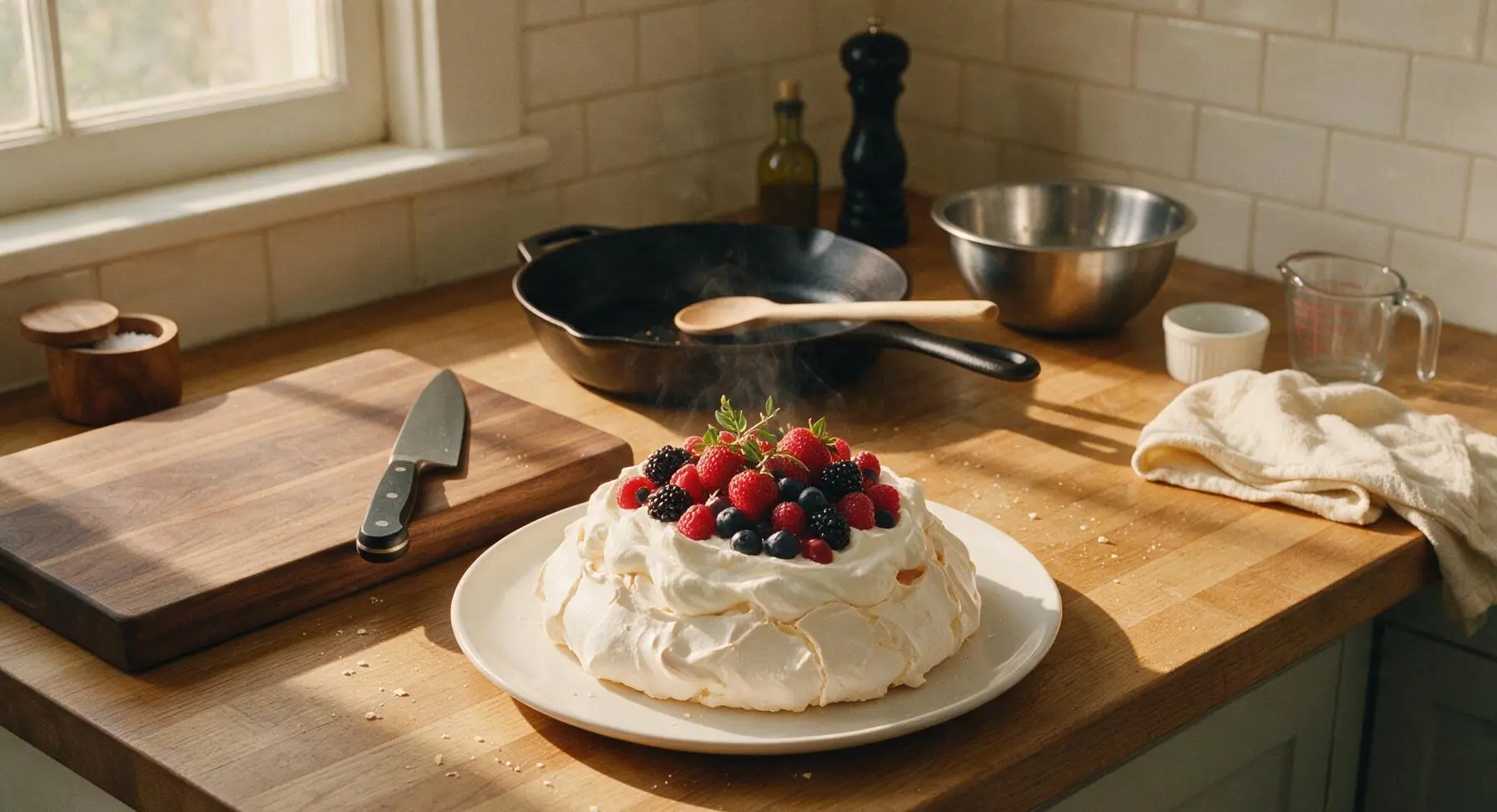
Pavlova

title 1
Pavlova
⏱️ cook time 1 hour 30 minutes
🍽️ servings 6
⚡ Difficulty medium

intro

Crisp, cloud-like meringue with a soft marshmallow center, topped with billowy whipped cream and bright fresh summer berries—light, sweet, and perfectly showstopping for any gathering.

Ingredients
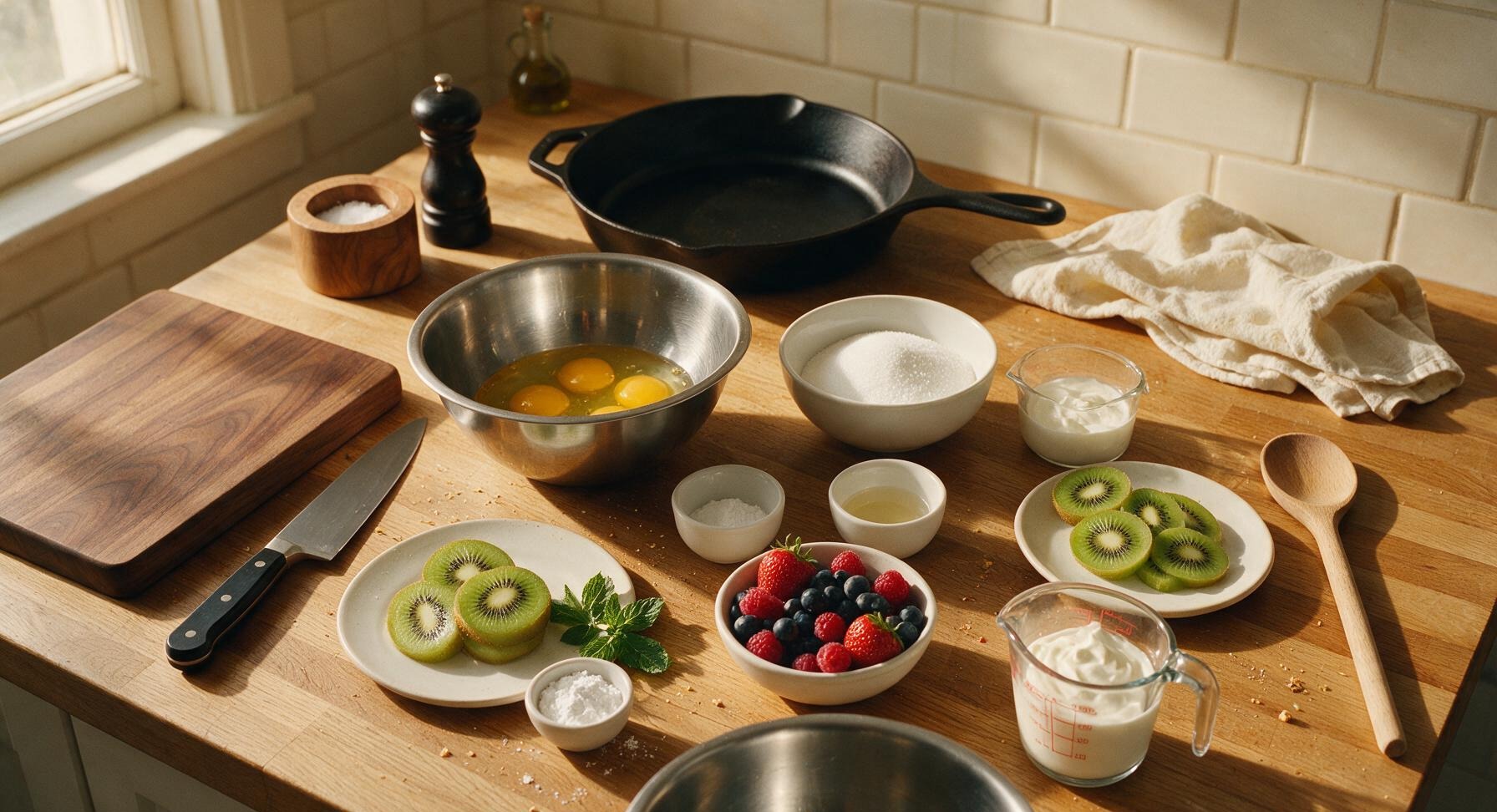
Large egg whites (room temperature) 4 (120g)
Caster (superfine) sugar 200g (1 cup)
Cornstarch 1 teaspoon
White distilled vinegar 1 teaspoon
Pure vanilla extract 1 teaspoon
Heavy whipping cream (chilled) 240ml (1 cup)
Mixed fresh summer berries (strawberries, blueberries, raspberries) 300g (2 cups)
Ripe kiwifruit (peeled, sliced) 1 medium
Powdered (icing) sugar 1 tablespoon
Fresh mint leaves 6-8 leaves

Steps

1

Prep Baking Setup

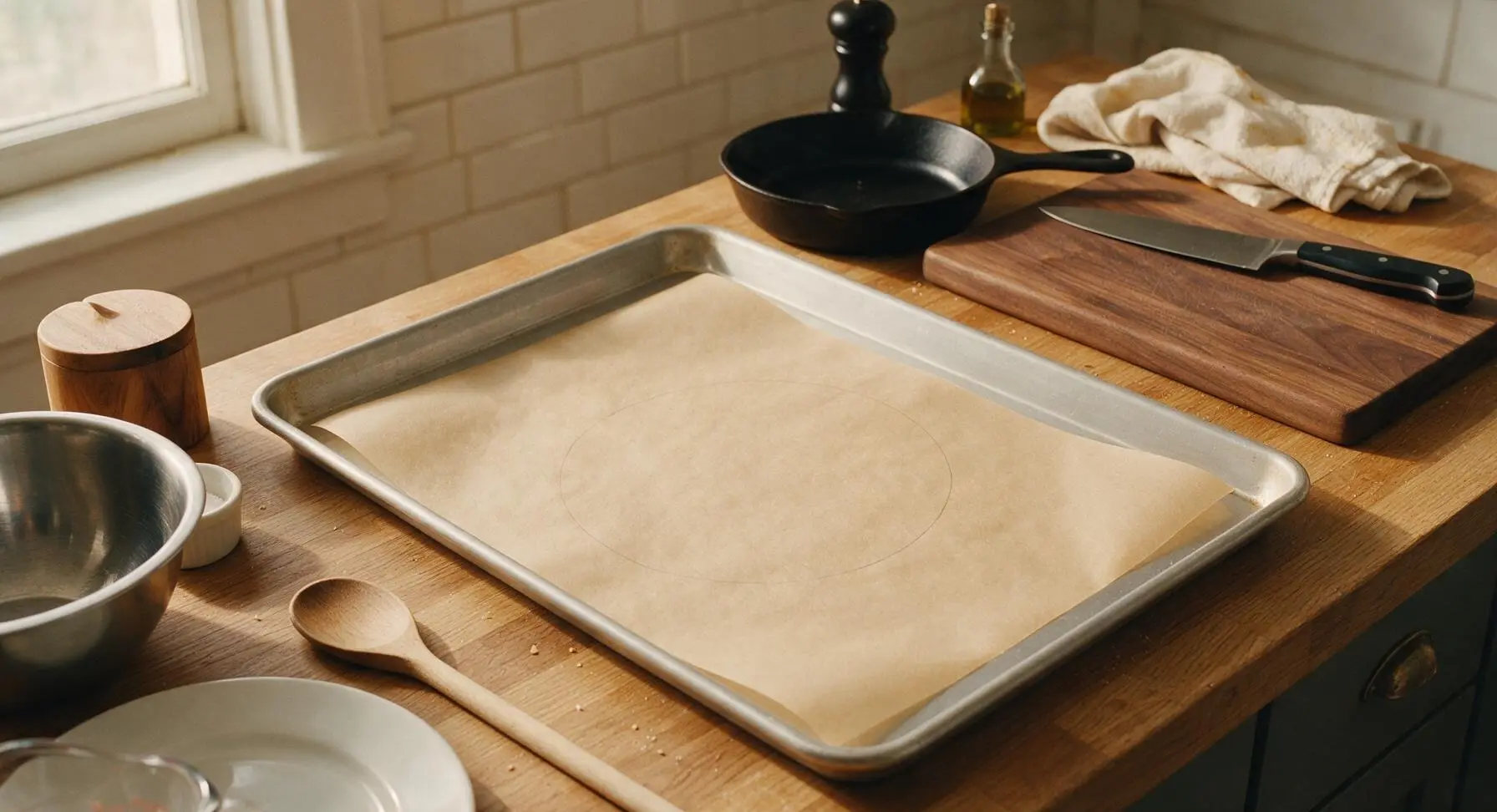
Preheat oven to 120°C (250°F), with convection fan turned off to prevent meringue cracking. Line the large rimmed aluminum baking sheet with unbleached parchment paper. Trace a 20cm (8-inch) circle on the parchment with a pencil, then flip the paper over so the pencil mark faces down (to avoid graphite contact with food) to use as a shaping guide for the meringue.
Step 1
step1:Prep Baking Setup
2

Whip Egg White Base

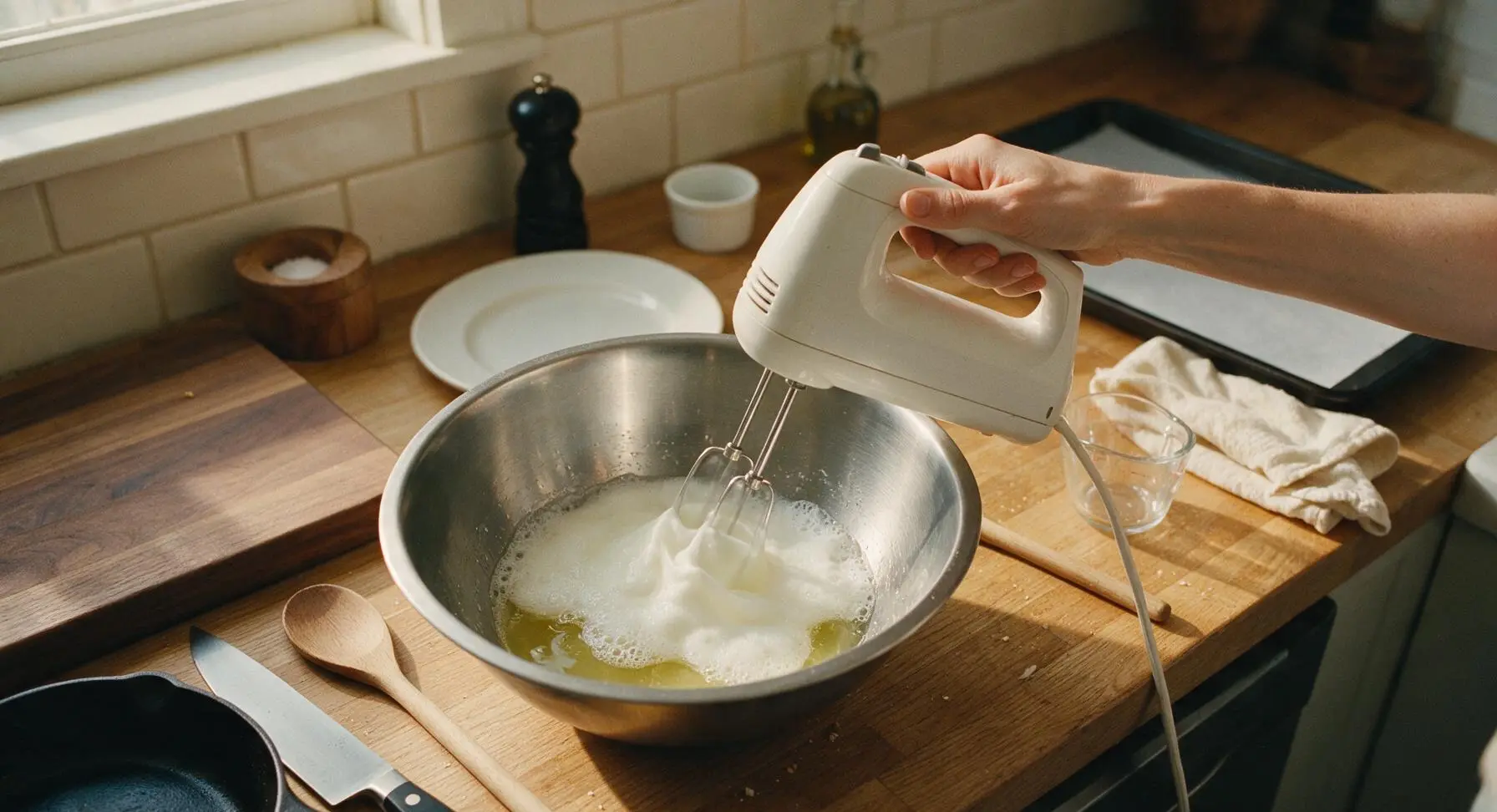
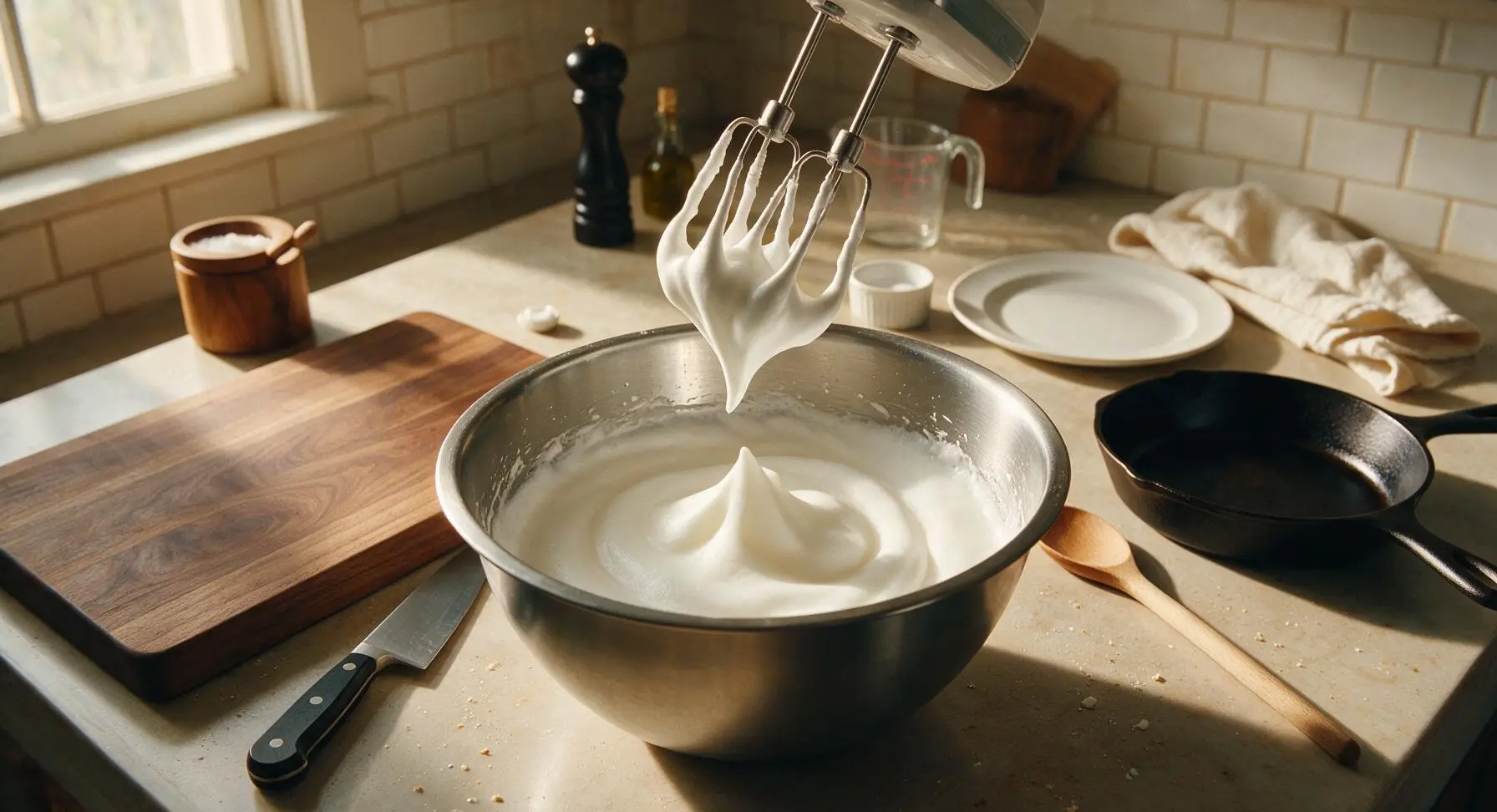
Place the 4 room-temperature egg whites into the large brushed stainless steel mixing bowl. Using the hand-held electric mixer on medium-high speed, whip the egg whites for 2-3 minutes until they form soft, drooping peaks that curl over when the beater is lifted. Stop before reaching stiff peaks, as over-whipping at this stage creates grainy meringue. Visual cue: whites will be fully opaque, foamy, with no runny liquid left at the bottom of the bowl.
Step 2
step2:Whip Egg White Base
Step 2
step2:Whip Egg White Base
3

Add Sugar Gradually

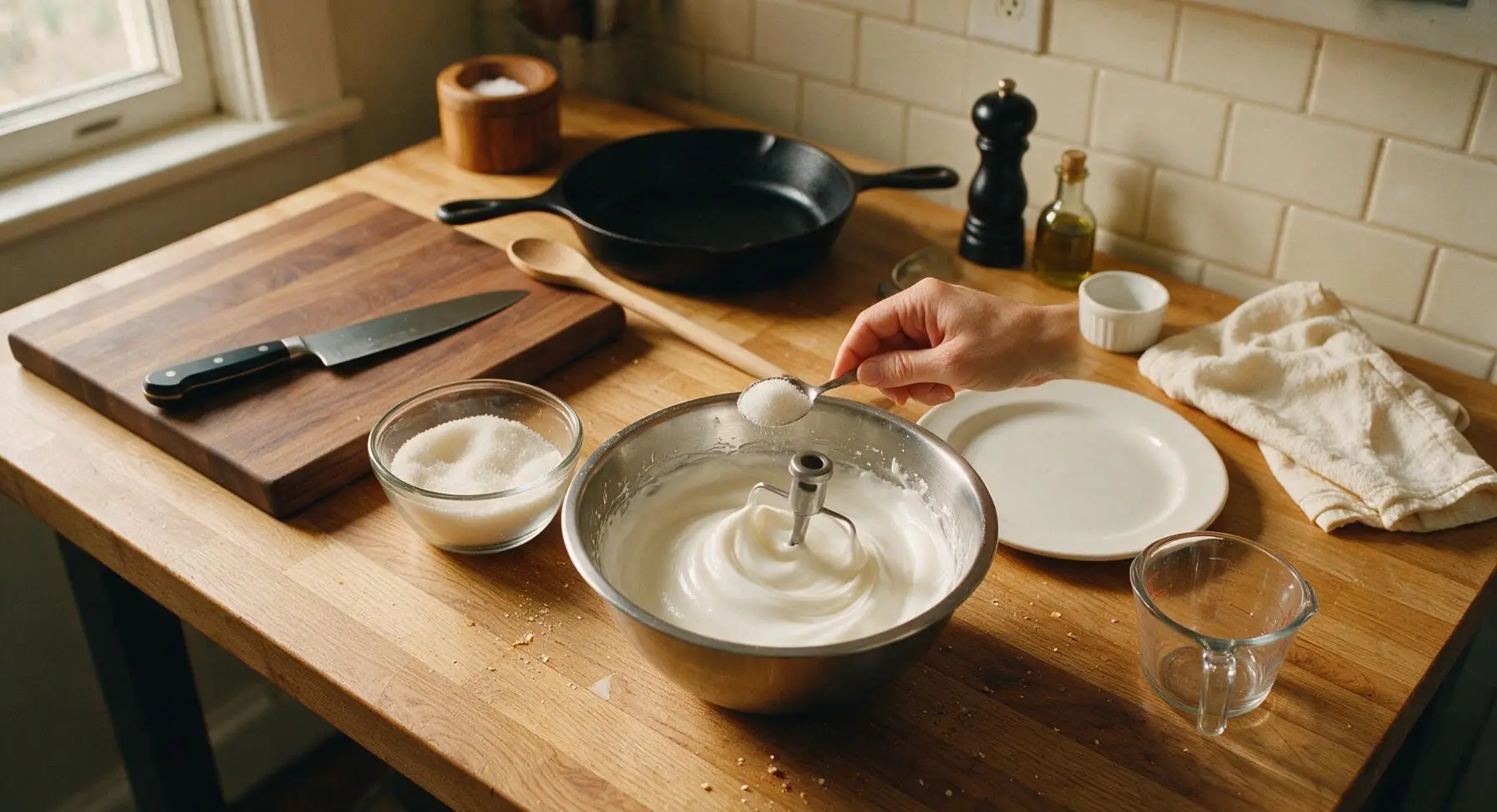
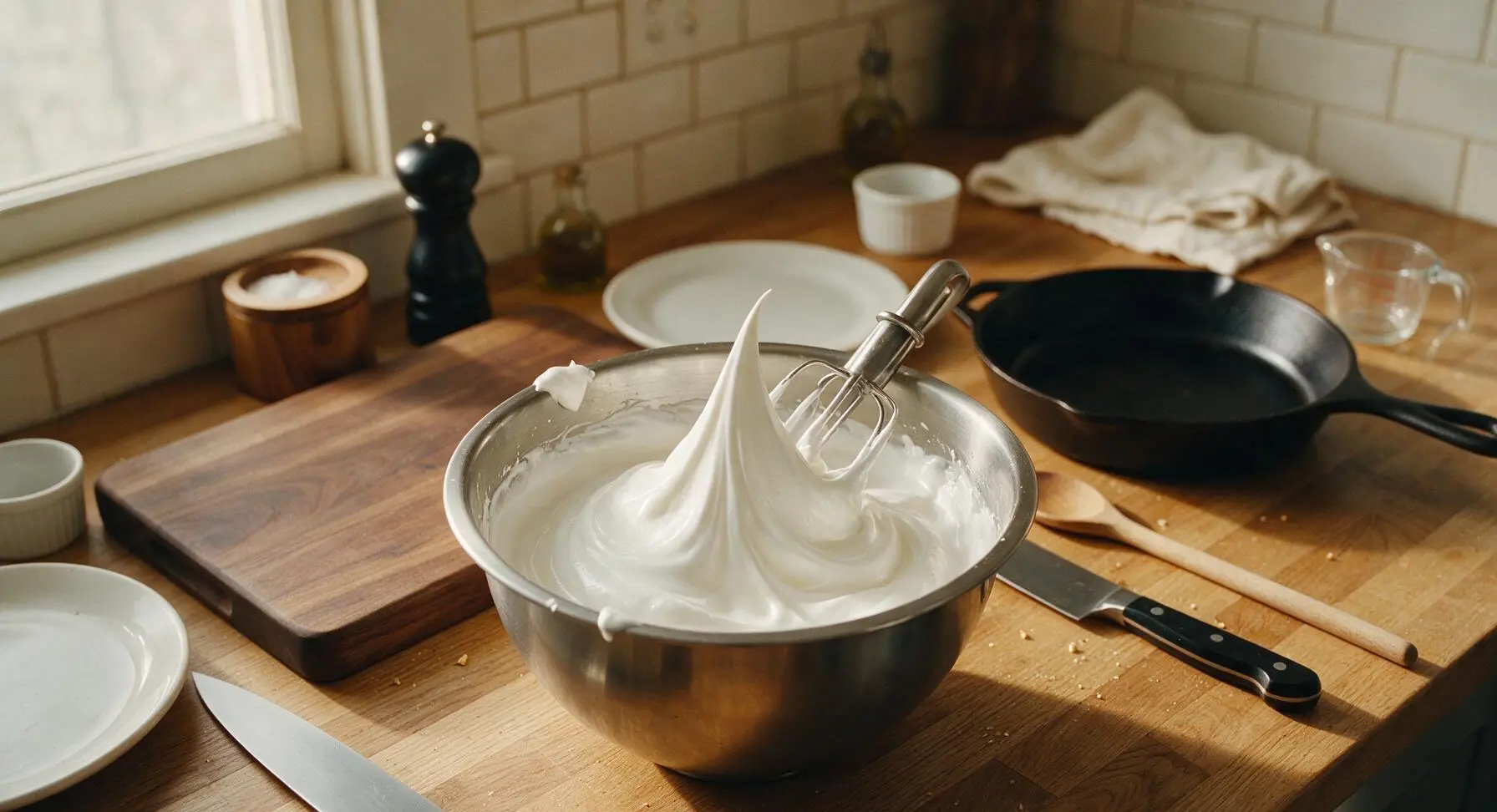
With the mixer running on medium speed, add caster sugar 1 tablespoon at a time, waiting 30 seconds between each addition to let the sugar fully dissolve into the meringue. This process takes 8-10 minutes total. Once all sugar is incorporated, turn the mixer to high and whip for 2 more minutes until the meringue is thick, glossy, and holds stiff, upright peaks that do not curl over. Test doneness by rubbing a small pinch of meringue between your fingers: it should feel completely smooth, with no gritty undissolved sugar.
Step 3
step3:Add Sugar Gradually
Step 3
step3:Add Sugar Gradually
4

Fold in Stabilizers

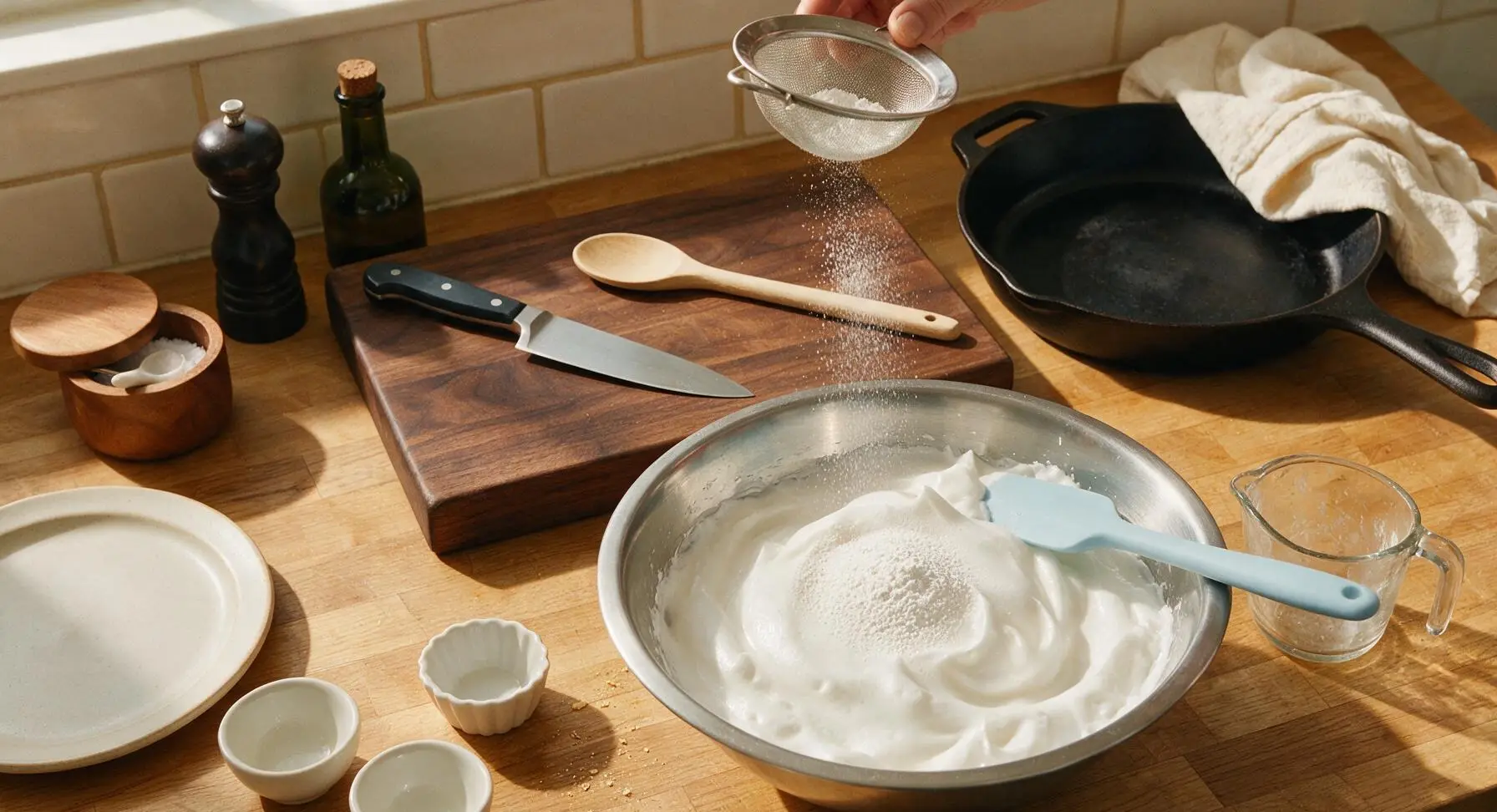
Sift the 1 teaspoon cornstarch evenly over the meringue surface using the fine-mesh stainless steel sieve. Add the 1 teaspoon white vinegar and 1 teaspoon vanilla extract. Use the pale sky blue silicone spatula to gently fold the ingredients into the meringue in 4-5 slow, sweeping turns, taking care not to deflate the trapped air bubbles. Over-folding will cause the meringue to spread and collapse during baking.
Step 4
step4:Fold in Stabilizers
5

Shape Meringue Round

Scoop all the meringue onto the center of the parchment-lined baking sheet, using the traced 20cm circle as a size guide. Use the offset metal spatula to shape the meringue into a tall, even round, building the sides 2-3cm higher than the center to create a shallow well that will hold cream and fruit later. Smooth the sides gently, leaving the top edge slightly textured with soft peaks for rustic visual appeal.
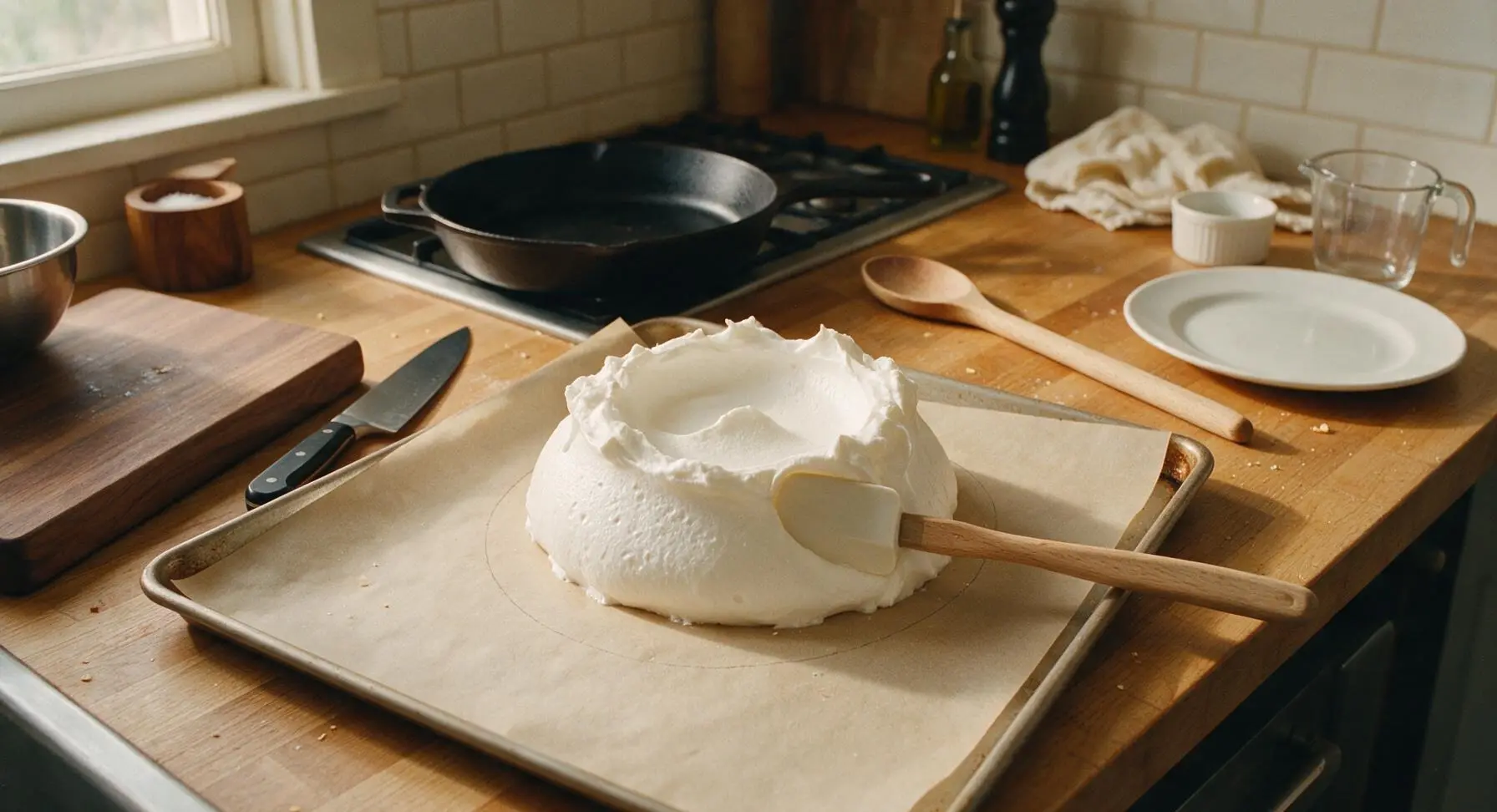
Step 5
step5:Shape Meringue Round
6

Bake and Cool Slowly

Place the baking sheet on the middle oven rack, and bake for 1 hour 30 minutes at 120°C (250°F). Do not open the oven door for the first full hour of baking, as sudden temperature drops cause severe cracking or collapse. Once baking time ends, turn the oven off, crack the door open 2cm, and leave the meringue inside to cool completely for 2 full hours (or overnight) to prevent sinking. Fully cooled meringue will be pale ivory, crisp to the touch on the outside, and lift easily off the parchment paper.

7

Whip Sweetened Cream

Place chilled heavy whipping cream and 1 tablespoon of icing sugar into the clean, dry stainless steel mixing bowl. Use the electric mixer on medium speed to whip the cream for 1-2 minutes until it forms soft, billowy peaks that hold their shape but remain light and spreadable. Do not overwhip to a stiff, buttery consistency, as this will be too heavy for the delicate meringue base.
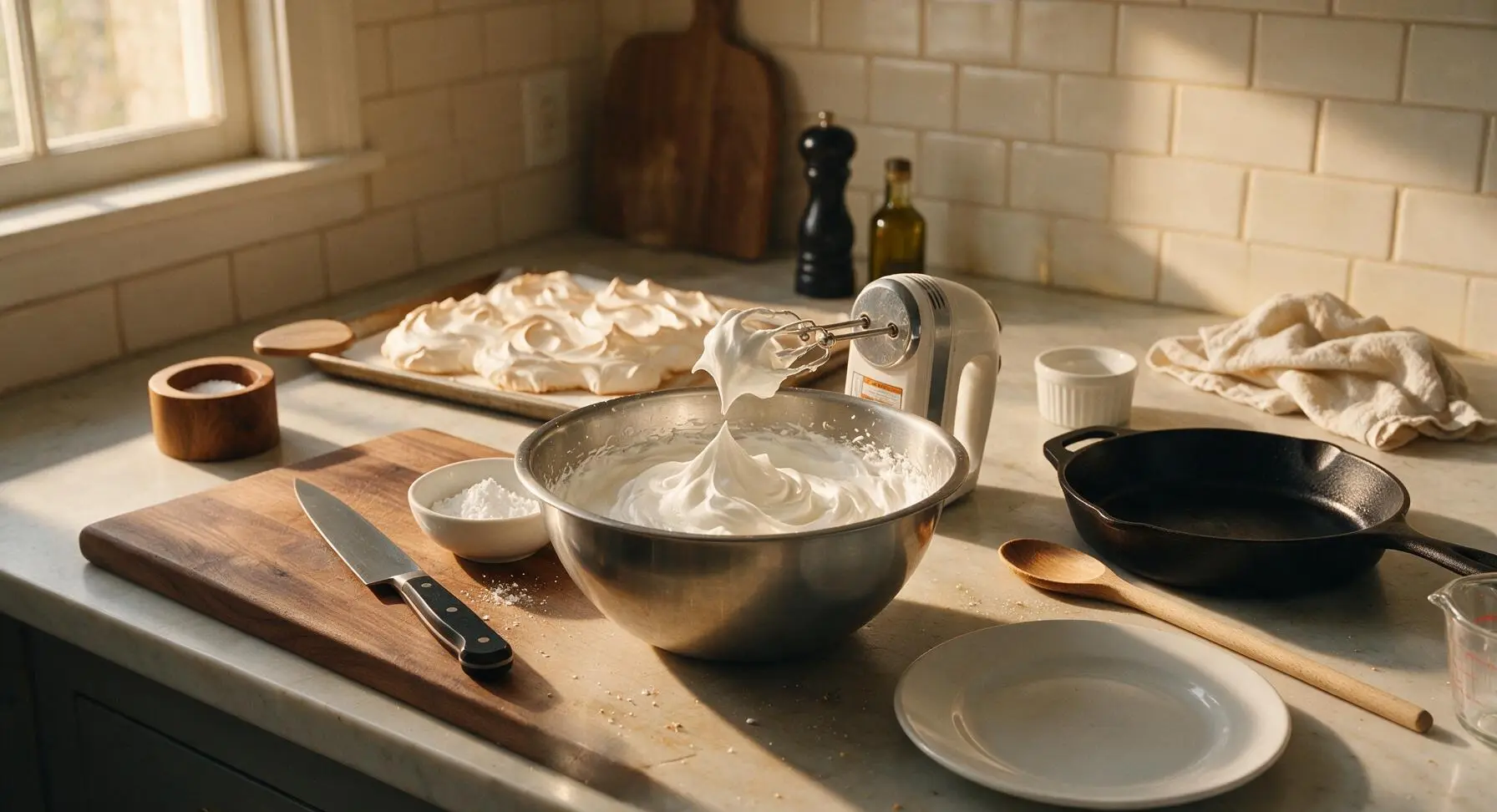
Step 7
step7:Whip Sweetened Cream
8

Assemble and Garnish

Carefully lift the cooled meringue off the parchment paper and transfer it to the center of the round matte white ceramic serving platter. Use the offset spatula to spread the whipped cream evenly into the shallow well on top of the meringue, leaving the crisp meringue edges exposed. Arrange mixed berries and sliced kiwifruit over the cream, tuck fresh mint leaves between the fruit, and dust lightly with remaining icing sugar using the fine sieve. Serve immediately after assembling for best texture.
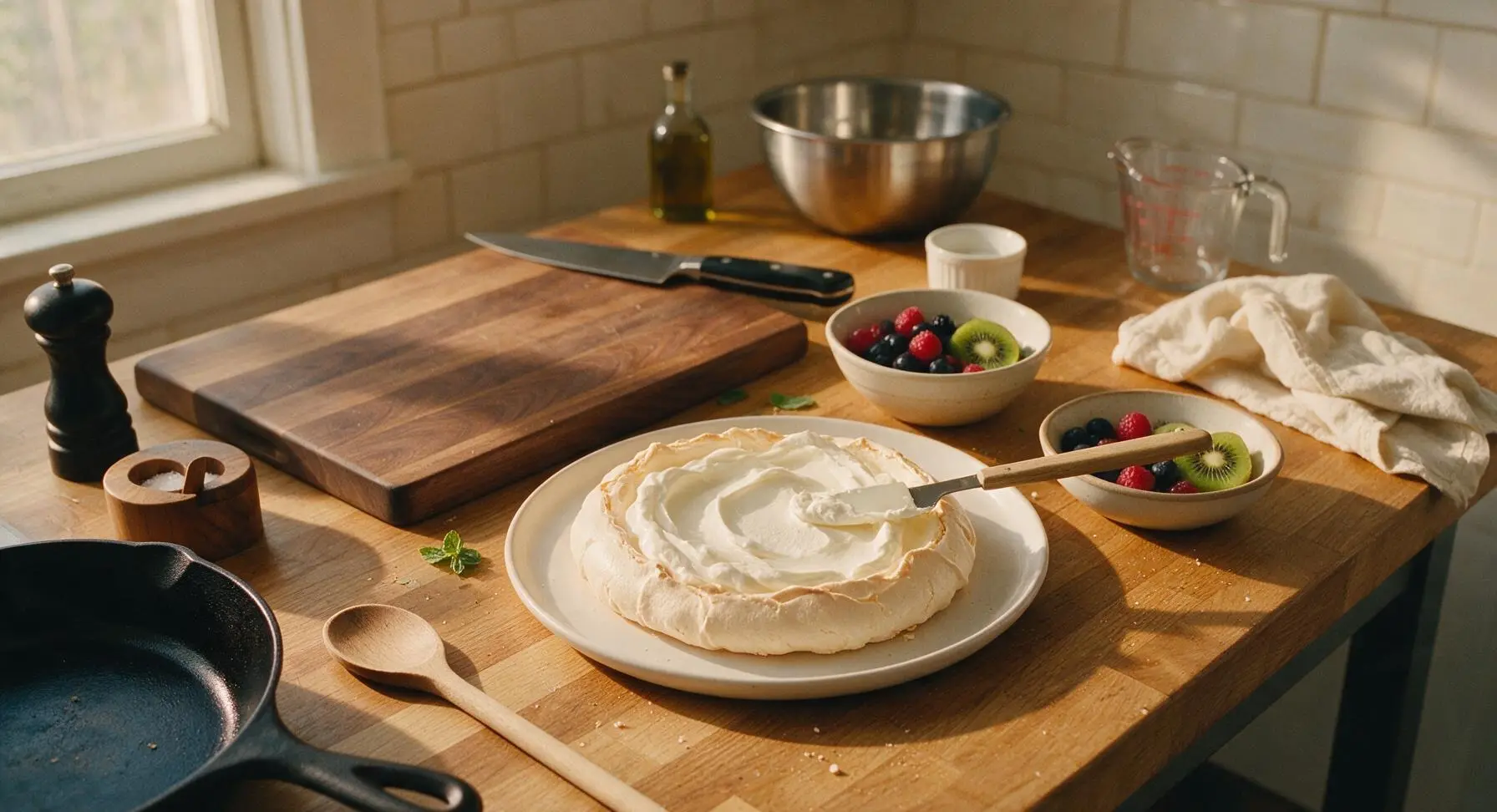
Step 8
step8:Assemble and Garnish

Tips

1.Use room-temperature egg whites for maximum volume: Cold egg whites do not trap air as effectively, leading to a flat, dense meringue that will not rise properly. Separate eggs 30 minutes before baking to let them warm, and ensure no trace of egg yolk falls into the whites—even a tiny drop of fat from yolk will prevent stiff peaks from forming.
2.Avoid opening the oven door early: Sudden temperature drops during the first hour of baking will cause the meringue to crack dramatically or collapse in the center. Slow cooling inside the turned-off, slightly ajar oven prevents thermal shock that leads to sinking or a sticky outer shell.
3.Assemble just before serving: The crisp meringue quickly absorbs moisture from whipped cream and cut fruit, turning soft and soggy if left assembled for more than 30 minutes. Bake the meringue up to 2 days ahead, store it in an airtight container at room temperature, and add cream and toppings right before serving.
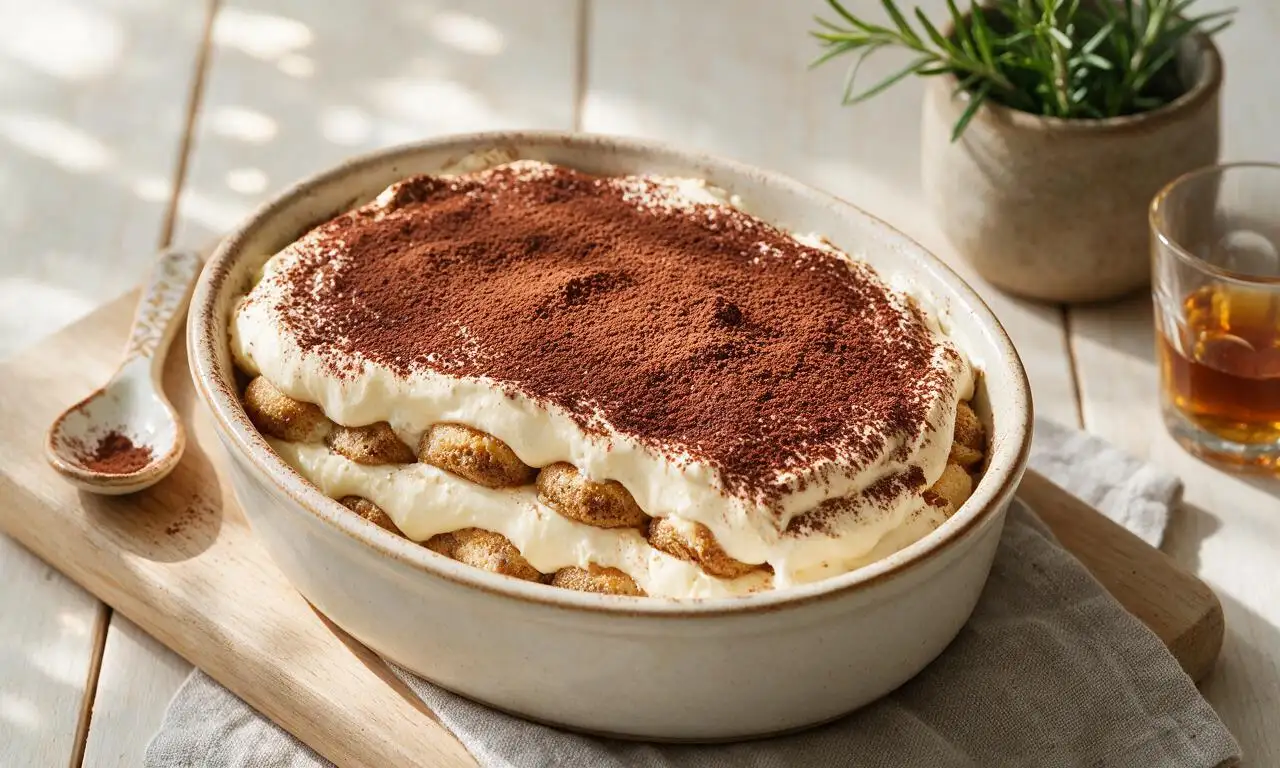
✨ You May Also Like

Desserts & Baking
🍜 Italy

Creamy, coffee-kissed classic Northern Italian no-bake dessert, with layers of rum-spiked mascarpone cream, soft ladyfingers, and a rich cocoa dusting.

⏱️ 4 hours 3Desserts & Baking ★ 4.7
Desserts & Baking
🍜 France

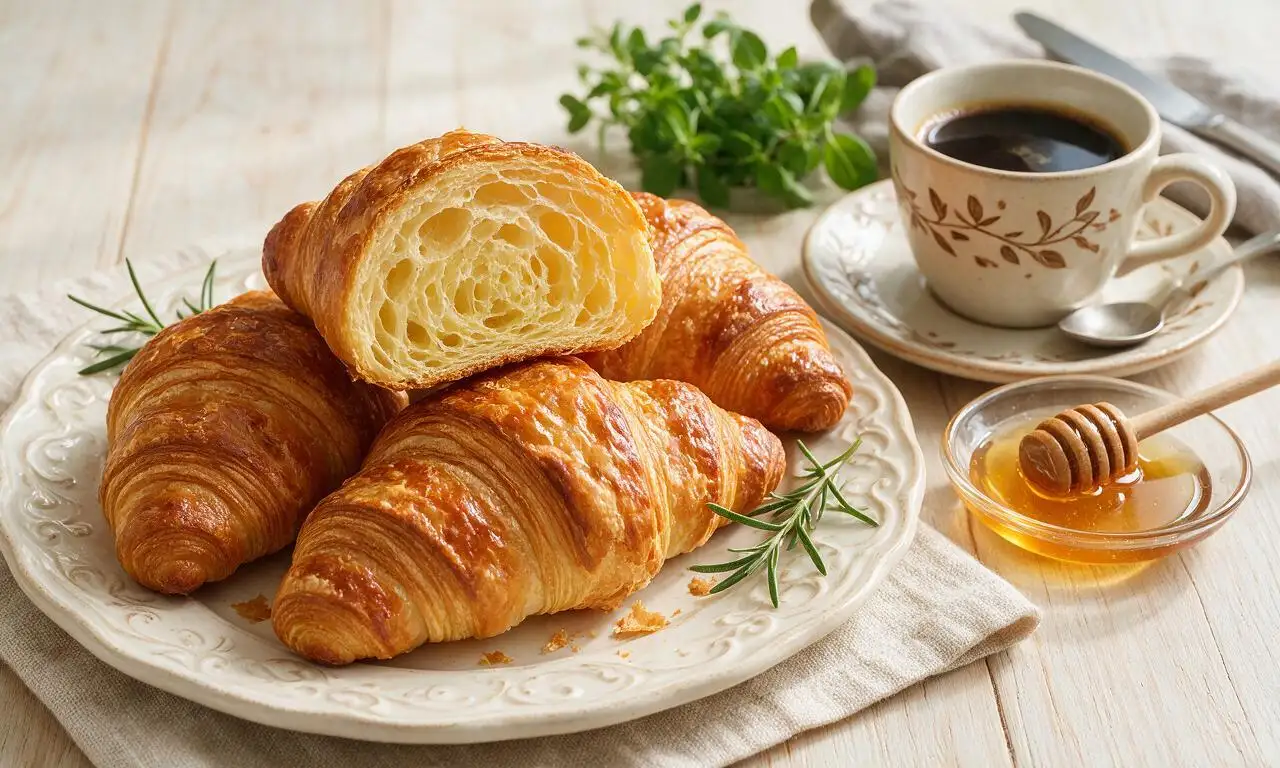
Flaky, shatteringly crisp, buttery French croissants with golden exteriors and soft, airy layered interiors, perfect for pairing with coffee for a special morning treat.

⏱️ 12 hours Desserts & Baking ★ 4.5
Desserts & Baking
🍜 United States

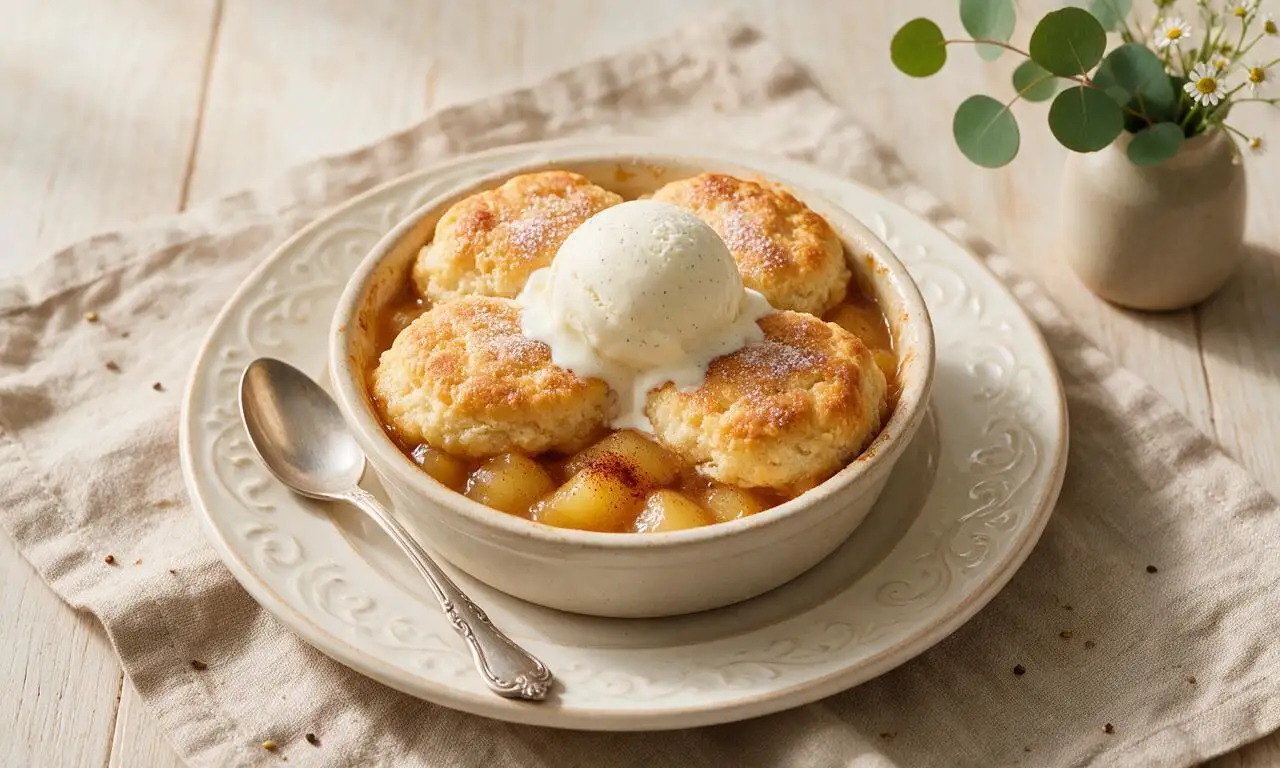
Warm, spiced baked apples topped with a fluffy golden biscuit crust, this cozy dessert pairs perfectly with vanilla ice cream for cool-weather comfort.

⏱️ 55 minuteDesserts & Baking ★ 4.6
Desserts & Baking
🍜 United States

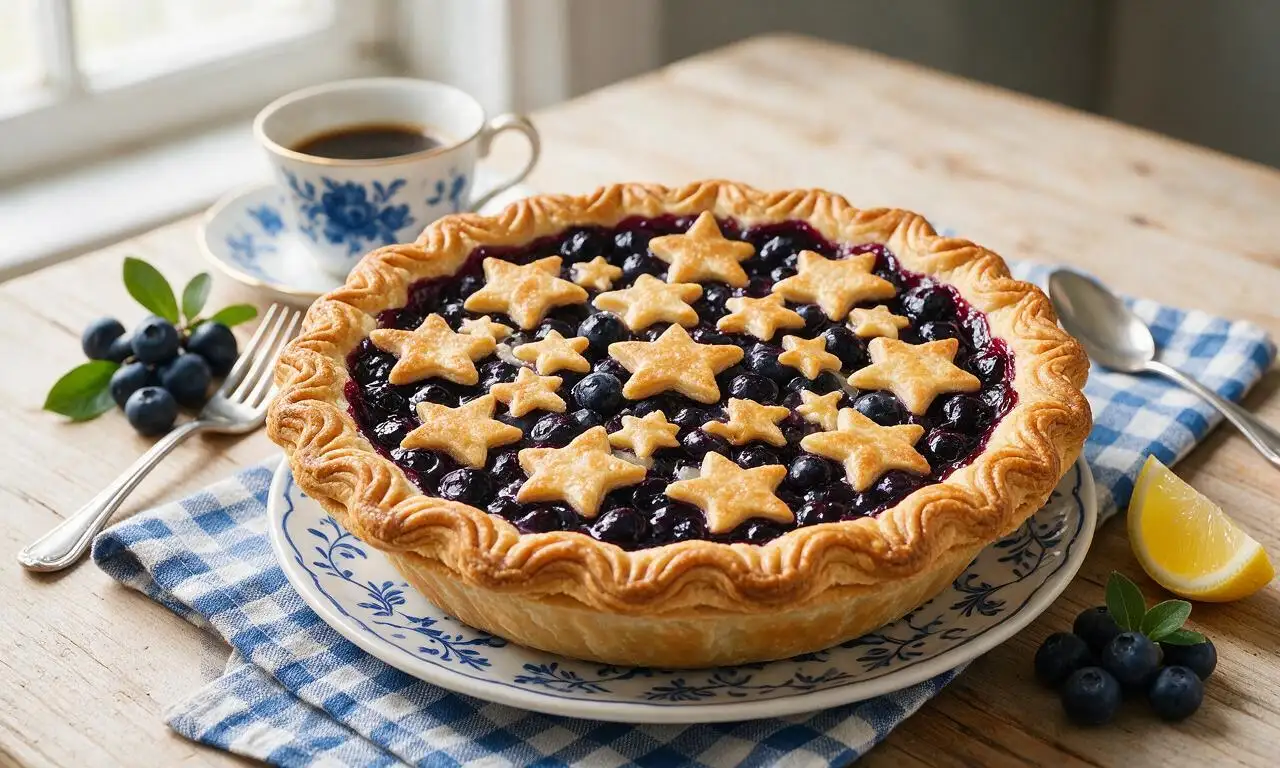
A star-spangled classic American blueberry pie with buttery flaky crust and bright sweet-tart filling, perfect for summer patriotic gatherings.

⏱️ 1 hour 25Desserts & Baking ★ 4.7
Desserts & Baking
🍜 United States

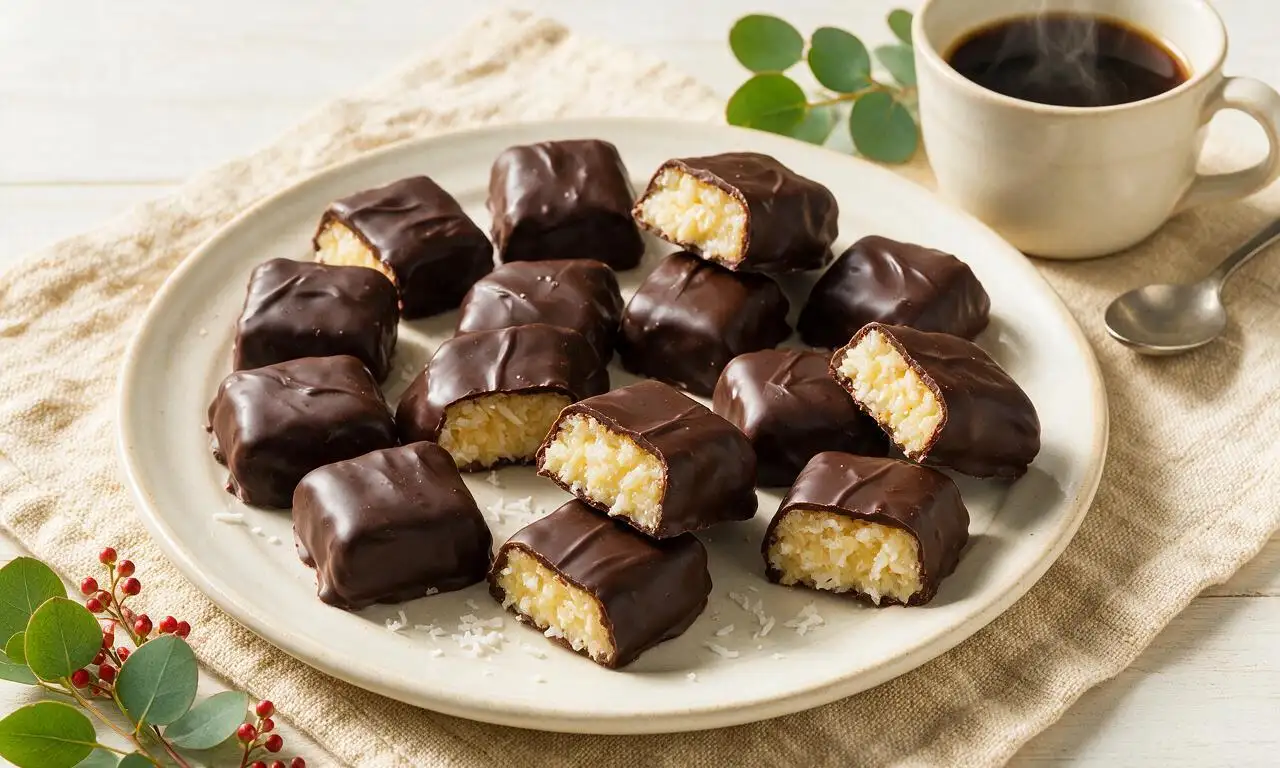
A beloved no-bake regional Maine candy with a chewy coconut-potato center coated in rich dark chocolate, a New England holiday staple since the 1870s.

⏱️ 2 hours 3Desserts & Baking ★ 4.8
Desserts & Baking
🍜 France

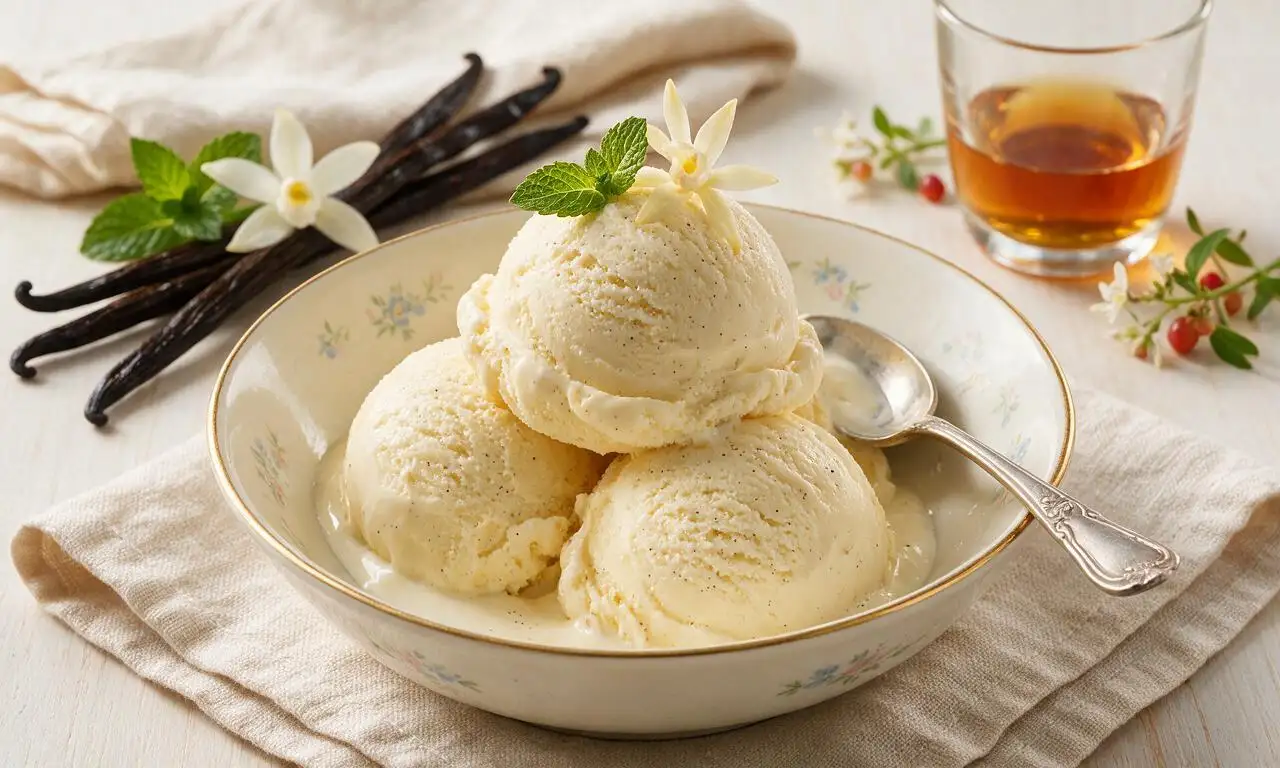
Luxuriously creamy, floral frozen custard made with aromatic Tahitian vanilla beans, boasting a smooth, rich texture that melts slowly on the tongue.

⏱️ 3 hours 3Desserts & Baking ★ 4.5

Pavlova:Frequently Asked Questions

1.Why do my egg whites need to be room temperature for pavlova? ▾
Room-temperature egg whites whip to 2-3 times higher, more stable volume than cold ones, because their proteins are more relaxed to trap air evenly. Cold whites produce denser, less fluffy meringue that’s far more prone to cracking, sagging, or developing a tough, chewy texture instead of that signature crisp shell and soft marshmallow center.
2.Can I use regular granulated sugar instead of caster (superfine) sugar? ▾
You can, but you’ll need to blitz regular granulated sugar in a food processor for 30-60 seconds first to make the grains finer. Coarser granulated sugar takes longer to dissolve into egg whites, which can leave your meringue grainy, cause weeping, or lead to a gritty, uneven crisp shell instead of a smooth, melt-in-your-mouth texture.
3.What’s the purpose of adding white distilled vinegar to the pavlova meringue? ▾
The small amount of white distilled vinegar is a mild acid that stabilizes whipped egg white proteins, helping the meringue hold its tall, fluffy shape without collapsing as it bakes. It also helps create that signature soft, pillowy marshmallow center instead of a uniformly dry, brittle meringue, and you won’t taste it in the finished dessert.
4.Why is cornstarch included in this pavlova recipe? ▾
Cornstarch absorbs excess moisture in the meringue as it bakes and cools, preventing the dreaded "weeping" (syrupy liquid leaking out of the meringue) that can ruin pavlova. It also contributes to that perfect textural contrast: a crisp, dry outer shell and that soft, chewy, marshmallow-like center everyone loves.
5.Why did my pavlova crack really badly while it baked? ▾
Minor surface cracking is totally normal for homemade pavlova, but deep, widespread cracks usually stem from three common issues: overwhipping the egg whites to a dry, clumpy texture, opening the oven door before the meringue is mostly set, or cooling the meringue too quickly by moving it straight from a hot oven to a cold, drafty space.
6.Can I make the pavlova meringue base a day ahead of serving? ▾
Absolutely! Once the meringue base is fully baked and cooled completely, leave it on its parchment-lined baking sheet, wrap it tightly in a double layer of plastic wrap, and store it in a cool, dry spot (skip the fridge—excess moisture will make the crisp shell turn soggy) for up to 24 hours before adding toppings.
7.How long can I keep a fully assembled pavlova before serving? ▾
Fully assembled pavlova is best served within 1 to 2 hours of adding whipped cream and fresh berry toppings. The moisture from the billowy cream and juicy summer fruit will gradually soften the crisp meringue shell over time, leading to a soggy texture that loses that signature crisp-outside, soft-inside contrast.
8.Do I really need to leave the pavlova in the oven to cool slowly? ▾
Yes, slow cooling inside the turned-off oven (prop the door slightly open with a wooden spoon) is key to preventing temperature shock that causes major cracking or collapse. Gradually cooling over 1 to 2 hours lets the meringue set fully, so it holds its tall shape and develops that perfect soft marshmallow center without deflating.
9.What should I do if a tiny bit of egg yolk gets in my whites when separating eggs? ▾
Even a tiny drop of egg yolk (which is fat) can prevent egg whites from whipping to full, stable stiff peaks, so don’t ignore it. Use the edge of a clean, dry eggshell to fish out every last bit of yolk before whipping, and double-check that your mixing bowl and whisk are completely grease-free for the best results.
10.Can I use frozen berries instead of fresh summer berries for the topping? ▾
You can, but you’ll need to thaw them completely first and pat them very dry with paper towels to remove excess released juice, otherwise they’ll run all over the whipped cream and turn the crisp meringue soggy. Fresh, in-season summer berries are always ideal for the brightest, juiciest flavor and firm texture, though.
11.How do I know when I’ve added enough sugar to the meringue? ▾
Stop adding sugar once the meringue forms thick, glossy, stiff peaks that stand straight up when you lift your whisk out of the bowl, and you can’t feel any gritty sugar grains when you rub a small dab of meringue between your fingertips. Undissolved sugar causes weeping and a gritty texture, so add sugar slowly and don’t rush this step.
12.Why is my pavlova chewy all the way through instead of crisp on the outside? ▾
A uniformly chewy meringue usually means it was baked at too high a temperature, or it was exposed to excess humidity while cooling. Pavlova needs a low, gentle oven temperature to dry out the outer shell without overcooking the soft center, and it should be cooled and stored in a dry, low-humidity spot to keep that signature crisp crust.
13.Can I use a different type of vinegar if I don’t have white distilled vinegar? ▾
You can swap in an equal amount of fresh lemon juice or raw unfiltered apple cider vinegar as the stabilizing acid for the meringue, if that’s what you have on hand. Skip strongly flavored vinegars like balsamic, red wine, or malt vinegar, as those will leave a bold, off-flavor that clashes with the light, sweet pavlova.
14.Do I need to use parchment paper to bake the pavlova? ▾
Parchment paper is highly recommended, because it prevents the sticky meringue from bonding to your baking sheet as it bakes and cools, so you can lift the finished base off cleanly without cracking or breaking it. If you don’t have parchment, you can lightly grease a baking sheet and dust it with a thin layer of cornstarch, but parchment is far more reliable.
15.Can I add other toppings besides berries and whipped cream? ▾
Of course! While fresh summer berries and billowy vanilla whipped cream are the classic pairing, you can add thin slices of ripe stone fruit like peaches or nectarines, a drizzle of passion fruit pulp, toasted coconut flakes, shaved white chocolate, or a light lemon curd swirl. Just skip very wet, syrupy toppings that will soak into and soften the crisp meringue shell.

Comments (6)

3 days ago

OMG this pavlova was the star of our 4th of July cookout! I was nervous because I’ve always messed up meringue before, but the step-by-step instructions were so clear. The crispy outside and chewy marshmallow center? *Chef’s kiss* My kids devoured half of it before we even served the burgers! Topped it with fresh strawberries, peaches, and a little mint from my garden, SO good. Will absolutely make this for every summer potluck from now on.

2 days ago

Ugh same, I’ve been scared to try pavlova for years because meringue feels so fussy! How long did you let yours cool in the oven before pulling it out? I always rush that step and ruin things.

yesterday

So happy this was a cookout hit, Liz! Quick note for anyone worried about meringue mishaps: making sure your bowl is totally grease-free and your eggs are room temp makes such a huge difference. Don’t forget to let it cool fully in the turned-off oven too to prevent major cracking!

1 week ago

This is a solid classic pavlova recipe! I’ve been making pavlova for summer family dinners since my kids were little, and this version turned out lovely. I knocked off a star only because the cook time felt a touch long for my oven — mine was perfectly done at 1 hour 10 minutes instead of the full 90, so I’d recommend keeping an eye on it the last 20 minutes if you have a convection oven. Topped it with homemade whipped cream and raspberries from my backyard, my grandkids asked for seconds before they finished their first slice.

5 days ago

Thanks for the great feedback, Carol! Oven temps can vary so much between models, so that’s such a helpful tip for folks with convection ovens. So glad your grandkids enjoyed it — there’s no better compliment than kids asking for seconds!

30 minutes ago

Game changer. I made this for my girlfriend’s birthday dinner last night since she’s been begging for pavlova ever since our trip to New Zealand, and she said it tasted exactly like the ones we had there. I was worried it would be too hard (medium difficulty had me sweating a little, ngl) but the instructions didn’t skip a single step. Pro tip: toss your berries in a tiny bit of lemon zest before topping, it cuts the sweetness perfectly. 10/10, will make again.

5 days ago

Wanted to love this, but my meringue completely collapsed when I pulled it out of the oven. I followed the directions exactly, used room temp eggs, didn’t open the oven door while it baked… total bummer because I was supposed to bring this to a neighborhood block party. Ended up running to the grocery store for a last-minute fruit platter instead. Not sure where I went wrong.

3 days ago

Oh no, that’s the worst! Did you accidentally get any egg yolk in your whites when you separated them? I did that once and my meringue never formed stiff peaks no matter how long I whipped it.

2 days ago

I’m so sorry to hear your meringue collapsed, Tim! That is such a frustrating disappointment, especially when you’re prepping for a party. Even a tiny speck of yolk or a hint of grease on your mixing bowl can prevent meringue from holding its structure — if you give it another go, make sure to wipe your bowl and whisk with a little white vinegar first to cut any leftover grease. Hope you’ll give it another try sometime!

yesterday

My whole family went crazy for this! I’ve been meal prepping little mini pavlovas using this meringue recipe all summer for quick weeknight treats, and they hold up so well in an airtight container for 3-4 days. I top them with whatever fruit I have on hand — last week it was cherries, this week it’s blueberries and whipped coconut cream for my dairy-free sister. Even my picky 7 year old asks for these as an after-school snack, that’s the real win.

2 hours ago

Wait mini pavlovas are such a smart idea! I’ve been making the full big one for parties but never thought to do individual sizes for weekly snacks, I’m stealing that hack!

2 weeks ago

SO good! Brought this to my office summer potluck last week and people were coming up to me for the recipe before I even set the platter down. I was intimidated by the medium difficulty rating at first, but I took it slow and it came out looking like it came from a fancy bakery. The balance of the sweet meringue, tangy whipped cream, and bright summer fruit is unbeatable. Already planning to make it again for my parents’ anniversary next month.