1.Why do I need sashimi-grade ahi tuna for this recipe, and can I use regular grocery store tuna instead?
▾
Sashimi-grade ahi is handled and flash-frozen per FDA food safety rules to eliminate harmful parasites, and held at consistent cold temperatures safe for raw eating. Never use unlabeled regular grocery store tuna—its supply chain isn’t validated for raw consumption, and it carries a higher risk of foodborne illness.
2.Can I make this poke ahead of time, or does it have to be eaten right after mixing?
▾
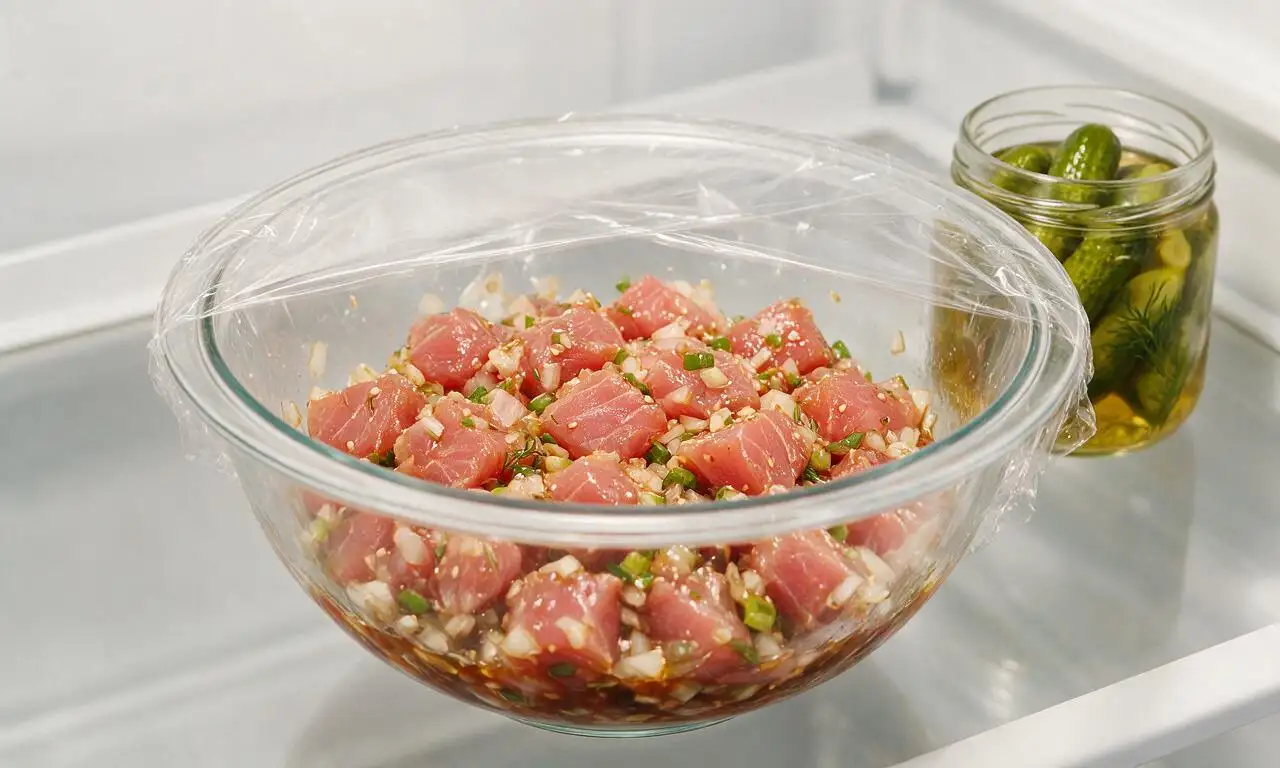
For the best firm texture and bright, fresh flavor, toss and serve classic poke within 1 to 2 hours of prepping. If you need to prep ahead, cube the tuna and keep it sealed on ice, chop your onions separately, and toss everything together right before serving to avoid mushy, overly salty fish.
3.I can’t find sweet Maui onion—what’s a good substitute?
▾
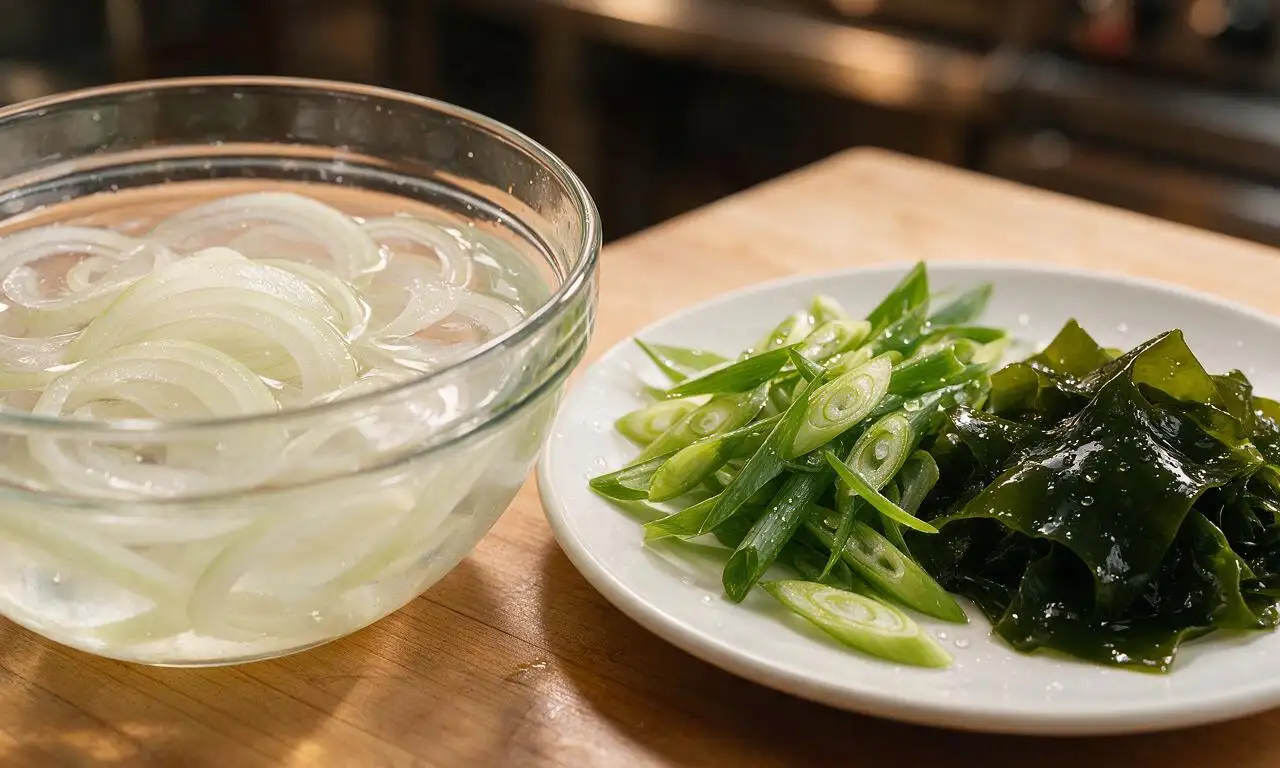
If Maui onions are out of stock, reach for a mild, sweet yellow onion like a Vidalia or Walla Walla as your closest swap. Avoid sharp red, white, or storage yellow onions, as their harsh, pungent bite will overpower the delicate tuna instead of adding that soft, sweet allium note the recipe calls for.
4.Why does the recipe call for low-sodium soy sauce instead of regular?
▾
Regular soy sauce is quite salty, and since poke isn’t cooked, there’s no liquid to dilute that saltiness as it sits with the raw tuna. Low-sodium soy lets you build umami depth without making the final dish overly briny, and it keeps the clean, fresh taste of the ahi front and center instead of masking it.
5.How big should I cut the ahi tuna cubes for classic poke?
▾
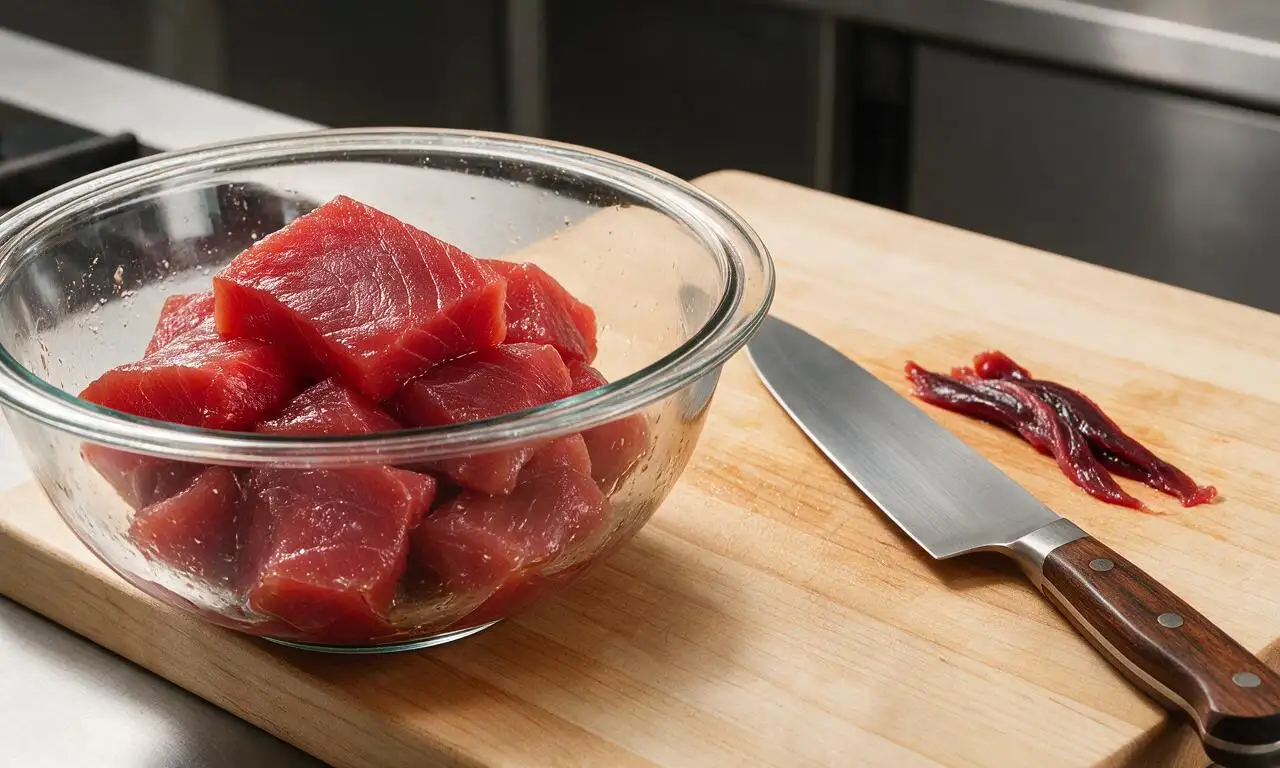
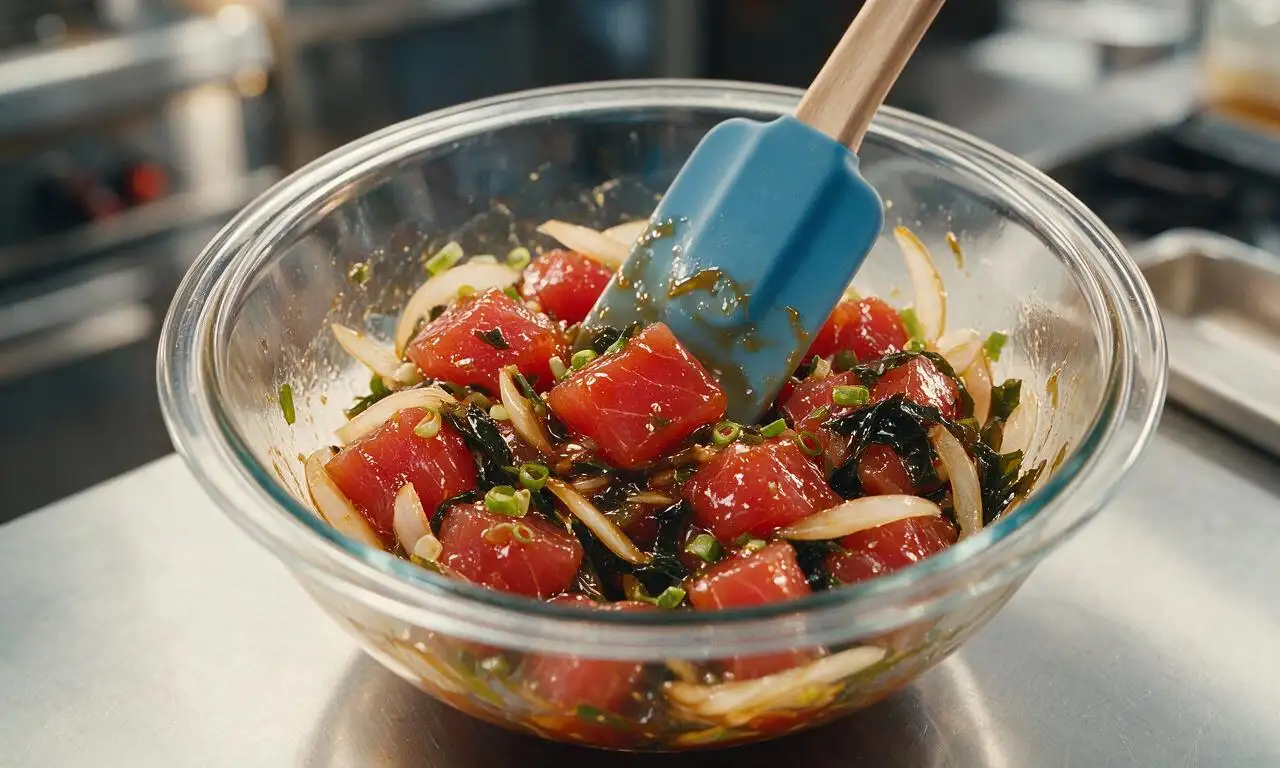
Aim for uniform ½-inch to ¾-inch cubes for the ideal bite. Cutting them too small will make the poke mushy and easy to overcoat in sauce, while chunks larger than 1 inch will be hard to eat in one bite and won’t pick up the balanced seasoning evenly across every piece.
6.Is toasted sesame oil really different from regular sesame oil, and can I swap them?
▾
Toasted sesame oil has a deep, nutty, warm aroma from roasted sesame seeds that is core to classic poke flavor, while plain untoasted sesame oil is neutral and won’t add that signature note. If you don’t have the toasted version, a tiny splash of roasted tahini mixed with neutral canola oil works as a last-minute backup, but the real thing is far better.
7.How long can I store leftover ahi poke in the fridge?
▾
Leftover poke will stay safe to eat for up to 24 hours when stored in a tightly sealed airtight container on the coldest shelf of your fridge, held at 40°F or below. That said, the texture will get noticeably mushier and the flavor saltier over time, so it’s always best to make only as much as you plan to eat in one sitting.
8.Do I need to remove the tough silver skin from the ahi before cubing it?
▾
Absolutely—take 2 to 3 minutes to trim away any silvery connective tissue, dark bloodline, or tough bits from the tuna before cubing. Those parts have a chewy, metallic, off-flavor that will ruin the smooth, buttery texture of the finished poke, even if you nail the seasoning ratio perfectly.
9.Can I add extra mix-ins like avocado or cucumber to this classic recipe?
▾
Of course! Traditional poke is very customizable, though this base recipe sticks to core simple seasonings. Diced firm avocado, seeded cubed cucumber, a sprinkle of toasted sesame seeds, or a pinch of crushed red pepper are all gentle, delicious add-ins that won’t overpower the clean ahi flavor if you want to mix things up.
10.Why is my poke turning out mushy instead of firm?
▾
Mushy poke almost always stems from one of three issues: your tuna wasn’t kept cold enough while prepping, you cut the cubes too small, or you tossed the fish in sauce too far in advance. Salt in the sauce gently breaks down raw fish proteins over time, so keep everything ice-cold and toss right before serving for firm, snappy bites.
11.What’s the best way to serve classic ahi poke?
▾
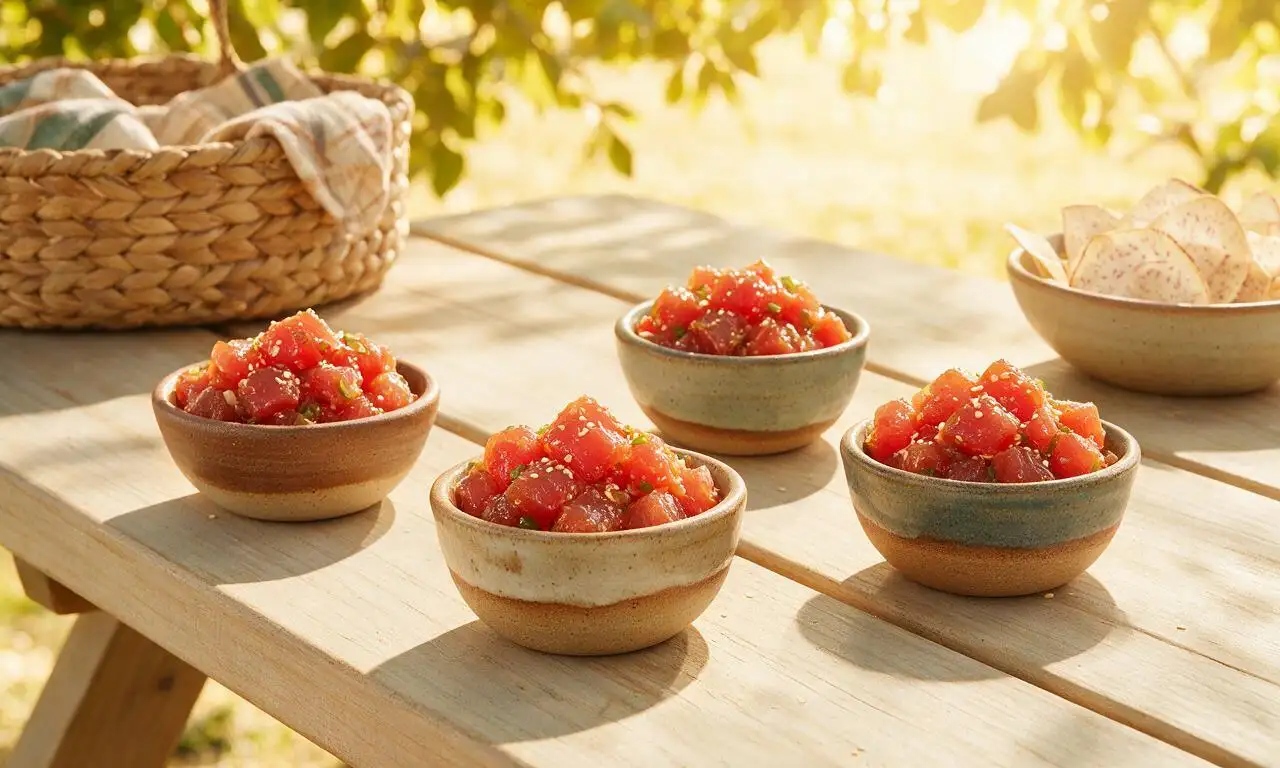
Serve chilled ahi poke as a light appetizer with crispy rice crackers, over a bowl of short-grain sushi rice for a full meal, or tucked into butter lettuce cups for a lower-carb option. Skip serving it directly over warm food, as heat will start to cook the tuna edges and ruin its smooth, buttery texture.
12.Can I use frozen ahi tuna for this recipe if I can’t find fresh?
▾
You absolutely can—most sashimi-grade ahi is actually flash-frozen right on the fishing boat to preserve freshness and meet food safety standards. Just thaw it slowly in the fridge overnight, pat it completely dry with paper towels before cubing, and never thaw it at room temperature to avoid texture breakdown and safety risks.
13.The recipe says to use scallion tops—can I use the white and light green parts of green onions too?
▾
You can, but the dark green scallion tops have a milder, brighter, less sharp allium flavor that pairs better with delicate raw tuna. The white and pale green parts have a sharper, more oniony bite, so if you do use them, chop them very finely and use about half the amount to avoid overpowering the fish.
14.Do I need to add rice vinegar or lime juice to classic ahi poke?
▾
Traditional Hawaiian-style poke doesn’t include added acid like vinegar or citrus, unlike many mainland poke bowl variations. Adding acid will start to cure the raw tuna, giving it a ceviche-like texture over time, so skip it for this classic prep if you want authentic, soft, buttery ahi and simple umami flavor.
15.How much sauce should I use to coat the tuna?
▾
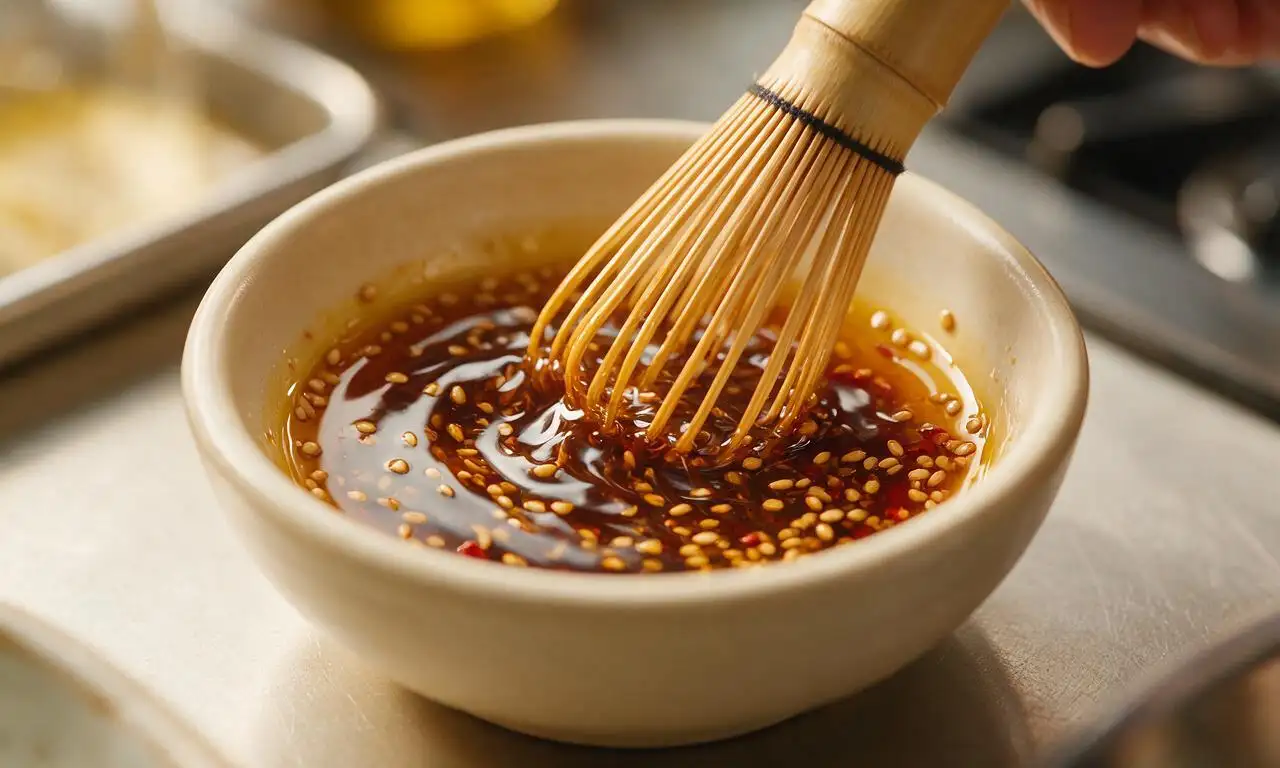
Aim for just enough sauce to lightly coat every cube of tuna, rather than drowning it. For 1 pound of ahi, that’s usually about 3 tablespoons of low-sodium soy and 1 teaspoon of toasted sesame oil—you want to taste buttery fish first, with the nutty, salty seasonings acting as a complement, not the main event.
16.Is there a way to make this recipe if I have a soy allergy?
▾
For a soy-free swap, replace the low-sodium soy sauce with coconut aminos, which has a similar salty-savory, slightly sweet profile that works beautifully with raw ahi. Stick to the same measurement as the soy sauce, and keep the rest of the ingredients the same for a soy-free version that hits all the classic umami notes.
17.I’ve seen poke with kukui nut (inamona) added—do I need that for an authentic dish?
▾
Inamona, or roasted crushed kukui nut, is a traditional Native Hawaiian seasoning that adds a rich, nutty, earthy note to poke, but it’s not required for this simple classic version. If you can find it, a light sprinkle adds wonderful authentic depth, but the core recipe is delicious on its own without specialty add-ins.

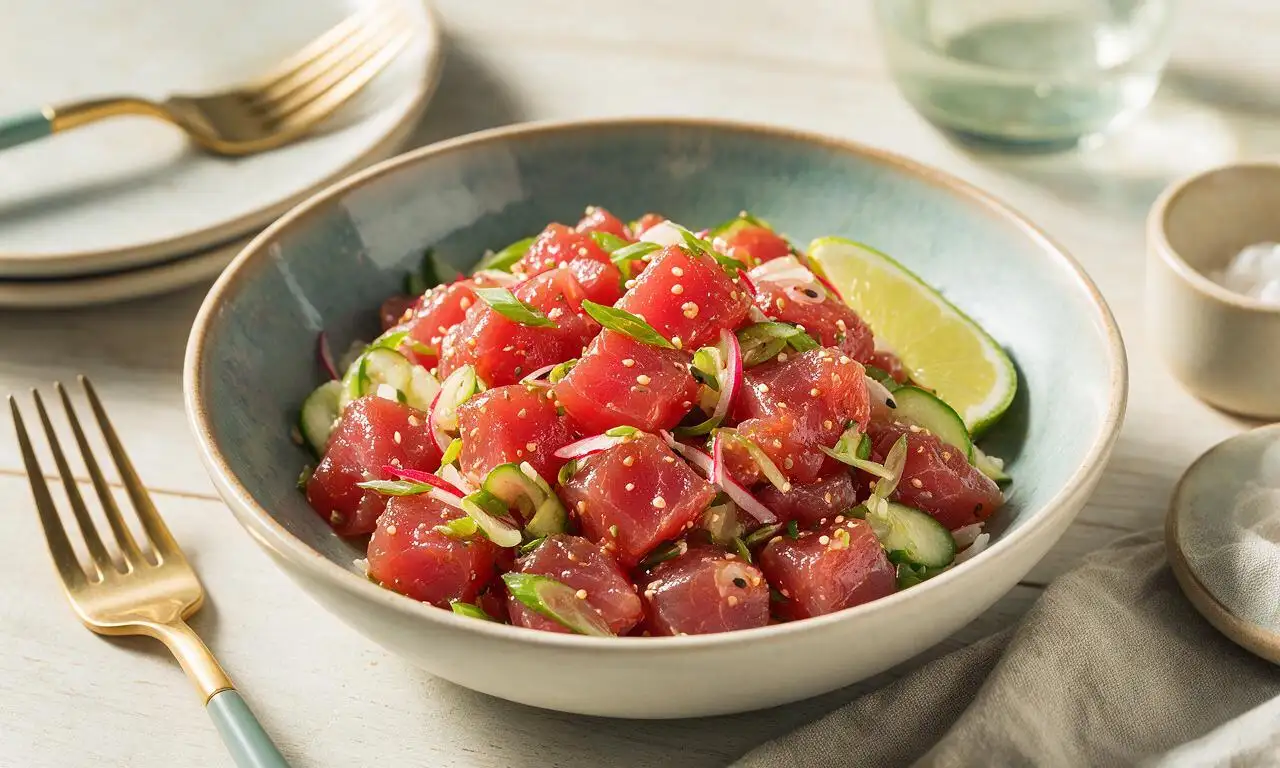
OMG this ahi poke tastes exactly like the stuff I got at a food truck on our last Maui trip! I was so nervous to make raw fish at home but the instructions were so straightforward, no weird fancy ingredients needed. I brought a big bowl to our neighborhood potluck last weekend and people were begging for the recipe before I even left. SO good, will be making this every other week for meal prep from now on!
Game changer for quick weeknight dinners! My kids are super picky and usually turn their nose up at fish, but they devoured this over rice with a little side of edamame. The 35 minute total time is no joke — most of that is just letting it marinate in the fridge while I help the kids with homework, zero actual cooking required. 10/10.
I've never been a huge raw fish fan but my girlfriend begged me to try making this with her. It was actually really good! I cut the soy sauce with a little extra lime because I like things tangier, and added a pinch of red pepper flakes for heat. Only knocking off a star because I had to run to three different stores to find sashimi grade tuna near me. Would make again though.
This is now my go-to meal prep for busy work weeks! I make a big batch on Sunday, portion it out over short grain rice with some cucumber and avocado, and it holds up perfectly for 2 days in the fridge (I wouldn't go longer than that with raw fish, fyi). Saves me so much money instead of buying poke bowls from the spot near my office that charges $18 a pop!
As someone who grew up eating poke at family lūʻaus on Oahu, I'm super picky about what counts as 'authentic' ahi poke. This recipe nails the classic, no frills version — no weird add-ins like mango or cream cheese that a lot of mainland places try to pass off as poke. I added a little extra inamona (roasted kukui nut) like my grandma used to, but the base recipe is perfect as is.
Guys I am the worst cook ever, I burn toast 50% of the time. I decided to try this because there was literally no cooking required and it looked easy. IT TURNED OUT PERFECT. I served it for date night with some crispy wonton chips and my girlfriend thought I ordered takeout from the fancy sushi place downtown. Cannot believe how simple this was.
Really solid high protein, low carb recipe! I swapped the regular soy sauce for coconut aminos to cut down on sodium, and it tasted great. Only thing is I wish the recipe noted how big the ahi cubes should be — I cut mine a little too small first, they were like 1/4 inch instead of 1/2 inch, still tasty but not the texture I was going for. Will adjust next time.
Made this for my friend's backyard tiki party and it was the first dish gone! Everyone kept asking if I bought it from that fancy poke spot in midtown. I added a scoop of masago on top for a little pop of color and crunch, which was chef's kiss. Easy to make ahead, easy to transport, total crowd pleaser.
This recipe is such a great base! I added two chopped serrano peppers, an extra dash of sesame oil, and some thinly sliced jalapeño on top for extra heat, and it was fire. If you love spicy food, do not skip adding fresh chiles, it takes it to a whole new level.
I spent 30 years working in restaurants and I'm always wary of 'simple' raw fish recipes because it's so easy to overcomplicate them or skimp on quality. This is perfectly balanced — the ratio of soy to sesame oil to green onion is exactly right, no extra fluff. Great recipe for new cooks and seasoned pros alike. I'll be adding this to my summer rotation.
Super easy to make in my tiny dorm kitchen! I didn't have any toasted sesame seeds so I left those out, and I wish I had them because I bet they add great crunch, but even without them it was really good. Way cheaper than ordering poke delivery near campus, which is like $20 a bowl after fees. Will definitely make again once I pick up sesame seeds from the bodega.
This was pretty good, but I think I messed up the marinate time? I left it in the fridge for almost an hour like I do with my salmon marinades, and the edges of the tuna got all weird and opaque and kind of mushy. The flavor was great, but the texture was off for me. Might try again but cut the marinate time shorter.
I made this as an appetizer for our Fourth of July cookout when my sister-in-law who doesn't eat cooked seafood showed up last minute. Everyone — even the guys who only eat burgers and hot dogs — were sneaking bites of it. Ended up having to run to the store for more tuna halfway through the party because we ran out so fast. Total hit.
So happy to find a classic poke recipe that's easy to make gluten free! I just swapped the regular soy sauce for gluten free tamari, didn't change anything else, and it tasted exactly like the poke I get at my favorite spot. This is going to be a staple for our summer beach trips, so portable and refreshing.
Made this for our anniversary dinner at home since we don't like crowded restaurants, paired it with some cold sake and seaweed salad. My husband said it was better than the poke we had on our honeymoon in Kauai! I added a little diced mango for sweetness because that's how we like it, don't @ me traditionalists 😂
I run a small food truck in Denver and I tested this recipe for our summer special menu last week. We sold out of ahi poke bowls in 45 minutes on the first day we ran it! The simple, classic flavor is exactly what our customers were asking for, no weird over-the-top toppings needed. Thanks for the solid base recipe!
Loved how simple this recipe was! I used the leftover poke to make poke tacos the next day with corn tortillas, avocado, and a little slaw, and it was chef's kiss. Only reason it's not 5 stars is I wish the recipe had notes for leftover use, but that's just me being nitpicky. Great recipe overall.
I've tried so many homemade poke recipes over the years and this is hands down the best one. The key, per the recipe, is not over-mixing the tuna so the cubes stay intact, right? I used to stir mine way too much and it would turn into a mushy mess, but keeping the cubes whole makes such a big difference in texture. I top mine with pickled ginger, cucumber, avocado, and a drizzle of spicy mayo for the perfect bowl.