1.What is the core purpose of assembling a Polish Wielkanoc Easter Basket?
▾
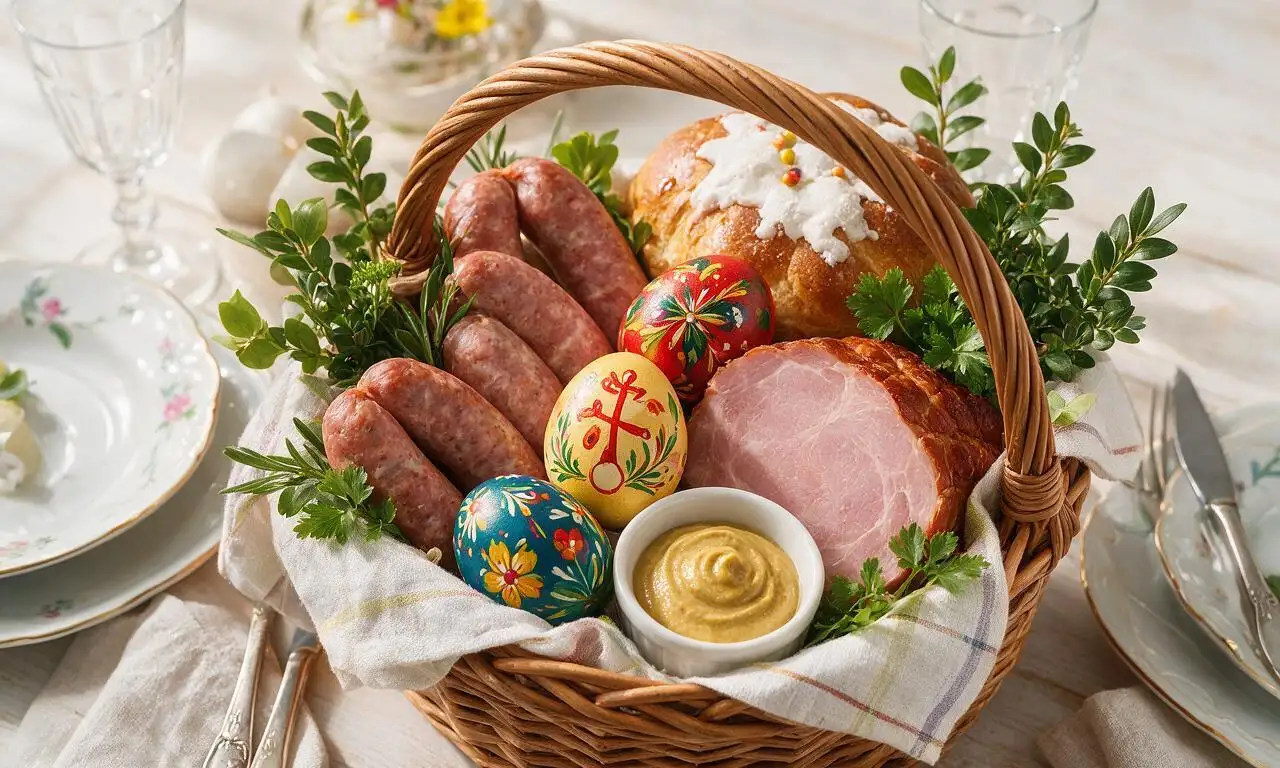
This traditional basket is put together on Holy Saturday to be brought to church for a priest’s blessing, then served as the centerpiece of Easter Sunday family breakfast. Every included food carries specific cultural and religious meaning tied to Christ’s resurrection, Polish heritage, and wishes for health, joy, and prosperity for the whole household in the year ahead.
2.Can I swap traditional ingredients to accommodate dietary restrictions?
▾
You absolutely can adjust ingredients for dietary needs without losing the basket’s meaning! The core symbolic categories (egg, cured meat, bread, bitter element, dairy, sweet treat) are what matter most. For example, swap regular kielbasa for gluten-free smoked sausage, use gluten-free babka, or pick dairy-free butter for a lamb shape for vegan households.
3.What size basket works best for a typical family of four?
▾
A medium woven wicker basket, roughly 12 inches long, 8 inches wide, and 6 inches deep, works perfectly for a family of four. It will hold all your symbolic foods without cramming items so tight they get squished, and it’s easy to carry to church for the Holy Saturday blessing without feeling bulky or unbalanced to transport.
4.What type of lining is traditionally used for the basket?
▾
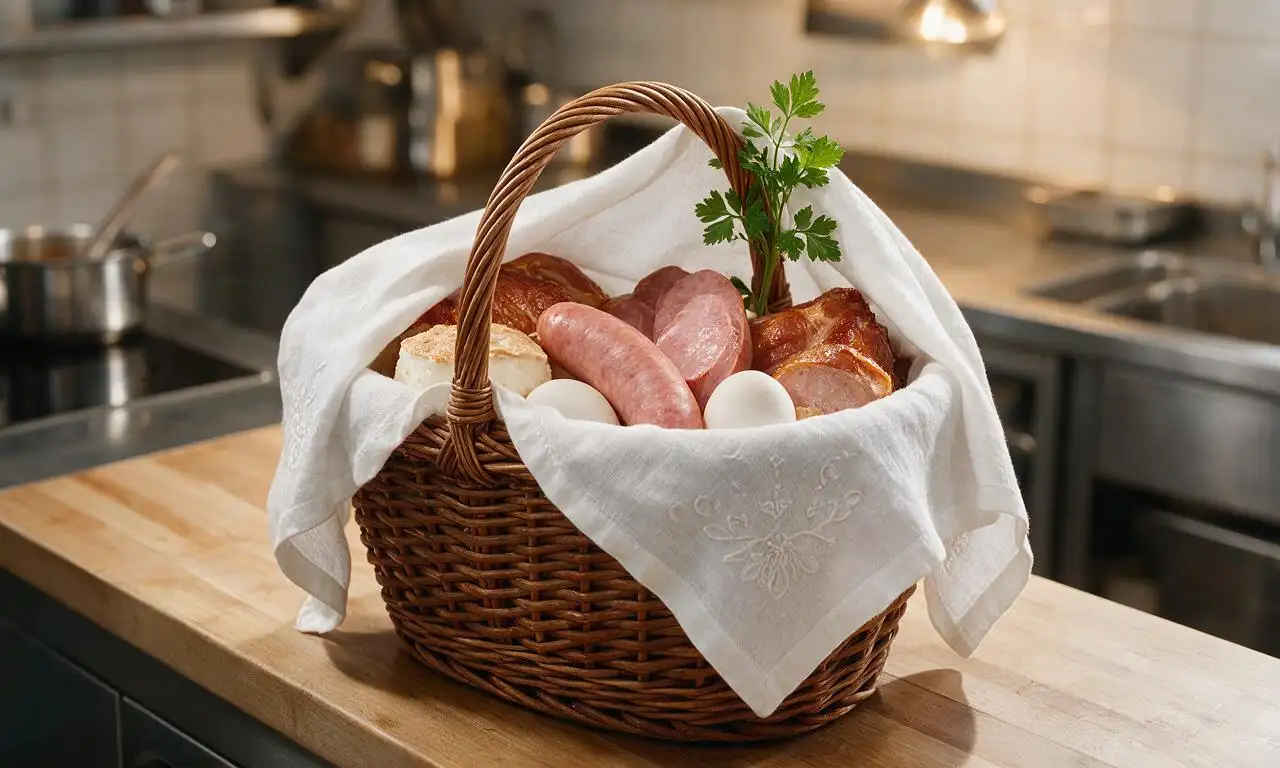
The classic lining is a crisp white linen or cotton cloth, often embroidered with traditional Polish Easter motifs like lambs, pussy willows, or cross designs, to represent Christ’s burial shroud. You can tuck a few sprigs of fresh boxwood or pussy willow around the edges for a festive, traditional pop of green tied to Polish folk custom.
5.Can I make the butter lamb myself instead of buying a pre-made version?
▾
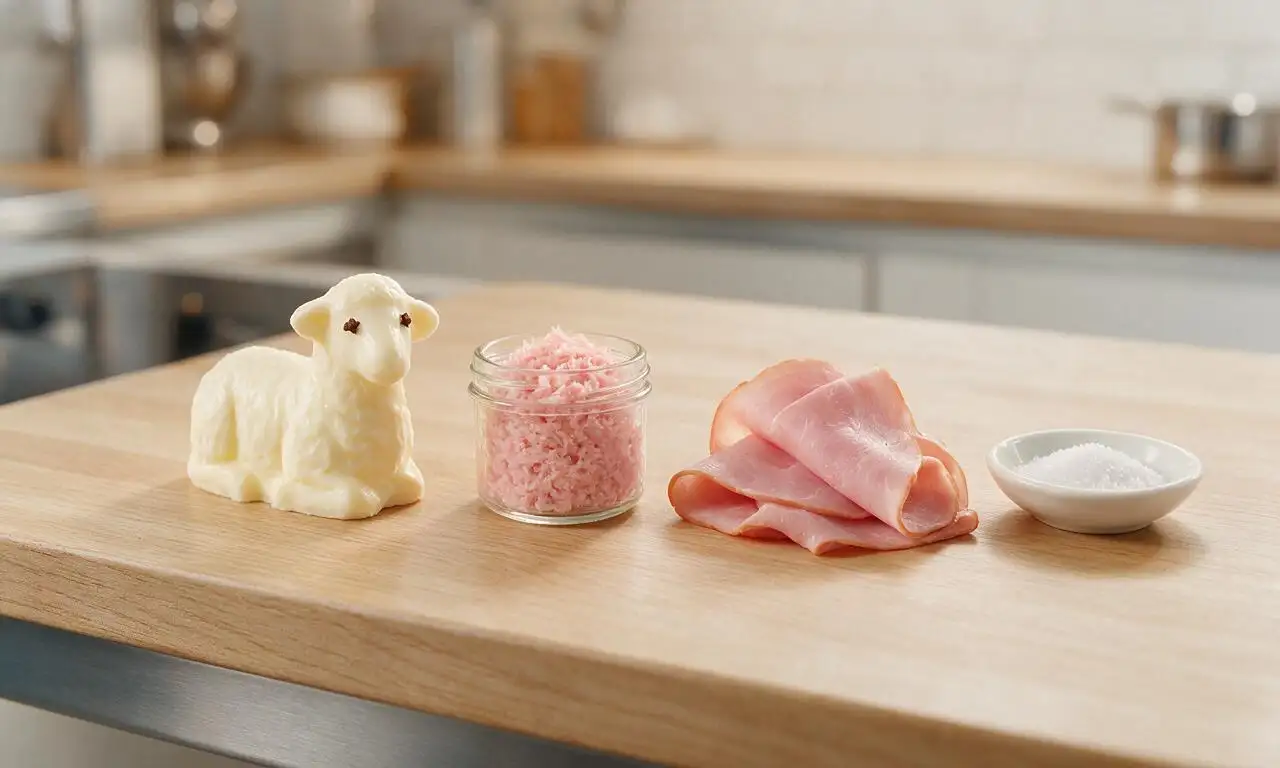
You absolutely can, and it’s a fun, simple project to do with kids! Take softened (not melted) unsalted butter, press it into a small lamb-shaped candy or chocolate mold, chill it until fully firm, then pop it out. Add a single whole clove for an eye, and tuck a tiny red fabric or paper ribbon around its neck for the classic look.
6.Do the eggs have to be intricately decorated pisanki, or will plain dyed eggs work?
▾
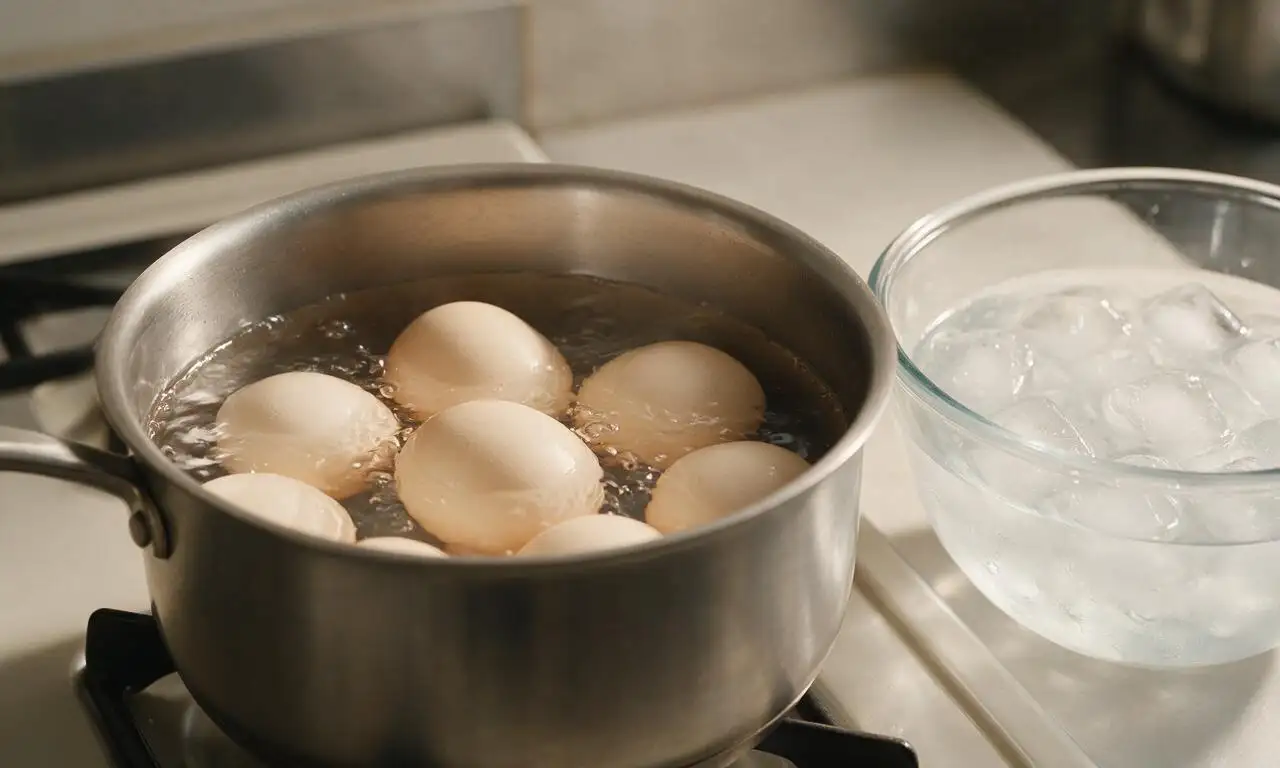
Plain dyed hard-boiled eggs work perfectly if you don’t have time for the intricate wax-resist pisanki decorating process! The egg itself is the core symbol of new life and the resurrection, so even simple solid-color dyed eggs honor the tradition. If you do want to try pisanki, start with simple wax pencil designs for a low-fuss first attempt.
7.How is beet-infused horseradish different from regular prepared horseradish for the basket?
▾
Beet-infused horseradish mixes grated fresh horseradish root with cooked, grated pickled beet, giving it a bright magenta color, slightly sweeter, earthier flavor, and milder bite than sharp plain white horseradish. Both versions are traditional: horseradish symbolizes the bitterness of Christ’s passion, while the beet version adds a nod to the blood of Christ.
8.What style of Polish smoked kielbasa is best to include?
▾
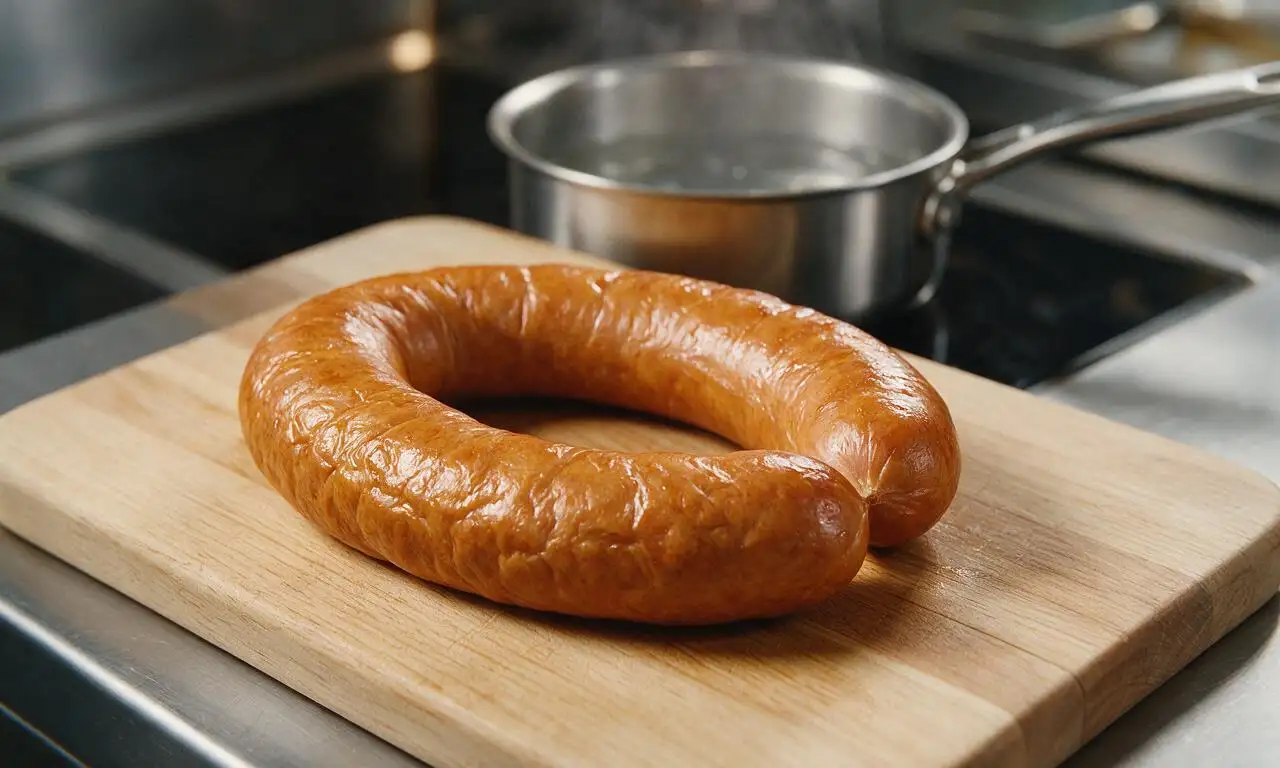
Look for traditional, fully cured double-smoked Polish kielbasa, often labeled wiejska, for the most authentic flavor. It is made with pork, lightly seasoned with garlic and marjoram, and has a firm, snappy casing and deep smoky flavor that holds up well at cool room temperature during the church blessing and before your Easter breakfast.
9.How much sweet babka bread should I include in the basket?
▾
You don’t need a full large babka loaf! A 4 to 6 inch thick slice, or a small mini individual babka, is enough to represent the symbolic sweet bread, which stands for the body of Christ and the joy of the resurrection. Save the rest of the full babka loaf to serve alongside the blessed basket foods at your Easter Sunday breakfast spread.
10.Do I need to cover the basket when bringing it to church for the blessing?
▾
It is traditional to cover the filled basket with a separate white linen or embroidered cloth, often matching the lining, when you bring it to be blessed. This cloth represents the covering of Christ’s tomb, and you can pull it back once the priest has finished the blessing to display your foods before bringing the basket home to share with family.
11.How long can the basket foods sit out at room temperature before they’re unsafe to eat?
▾
Since the basket holds cured kielbasa, hard-boiled eggs, butter, bread, and horseradish, it is safe to hold at cool room temperature (65–70°F) for up to 2 hours total, including travel to and from church and the blessing service. If the service runs longer, tuck a small frozen ice pack under the lining to keep perishables at a safe temperature.
12.Is there a specific traditional order to arrange the foods in the basket?
▾
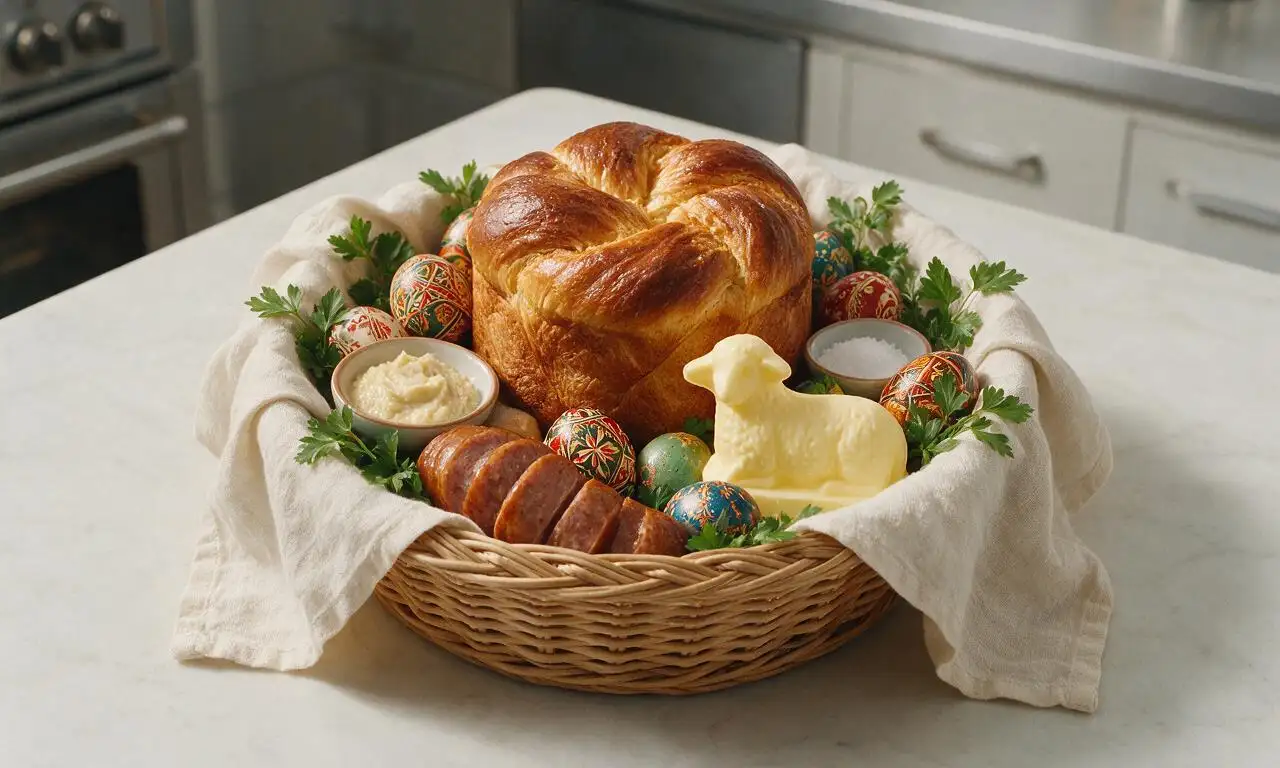
There is no strict mandatory order, but most traditional arrangements place the butter lamb and decorated pisanki eggs near the center as the most prominent symbolic items, with the kielbasa, horseradish, and babka tucked around the sides. Leave a small open spot if you’d like to add a tiny candle or small Easter lamb figurine for an extra traditional touch.
13.Can I add extra non-traditional foods to the basket if they’re special to my family?
▾
Absolutely! Many Polish families add small, meaningful extra items over time, like a small piece of chocolate for joy, a handful of dried fruit for a bountiful harvest, or a favorite family cheese. Just make sure the core symbolic ingredients are present first, so you carry on the core tradition while making it feel personal to your household.
14.Do I have to use hard-boiled eggs for the pisanki, or can I use hollow blown eggs?
▾
Eggs meant to be eaten as part of your Easter breakfast should always be hard-boiled for food safety. If you have intricate, keepsake hollow blown pisanki that you want to display in the basket for decoration, you can tuck those in alongside 1–2 hard-boiled dyed eggs per person that are meant to be shared and eaten at the breakfast table.
15.How should I store leftover blessed foods after Easter breakfast?
▾
Wrap leftover kielbasa tightly and store it in the fridge for up to 1 week to slice for sandwiches or add to soups. Keep leftover babka in an airtight container at room temperature for 3–4 days, store horseradish in a sealed jar in the fridge for up to 2 months, and keep hard-boiled eggs in their shells in the fridge for up to 1 week.
16.Is it disrespectful to assemble the basket if I can’t get it blessed by a priest?
▾
It is not disrespectful at all, especially if you are assembling the basket to honor your Polish family heritage and cannot make it to a Holy Saturday blessing service. Many secular Polish American families assemble the basket as a beloved cultural tradition for Easter breakfast, focusing on family connection and symbolic meaning rather than the formal religious blessing.
17.What’s the traditional way to serve the blessed basket foods on Easter morning?
▾
The traditional Easter breakfast starts with everyone at the table taking a small piece of blessed hard-boiled egg and exchanging warm good wishes for the year ahead. Then slice the kielbasa, set out the butter lamb to spread on slices of babka, and serve the horseradish as a sharp, zesty condiment alongside the meat and bread, shared family-style.
18.Can I assemble the basket the night before Holy Saturday, or do I need to make it the morning of the blessing?
▾
You can prep most components the night before to cut down on morning rush: hard-boil and decorate the eggs, shape the butter lamb, and line your basket ahead of time. Wait to add the babka, kielbasa, and horseradish until the morning of the blessing, so the bread doesn’t go stale and pungent horseradish fumes don’t absorb into milder foods like butter.




OMG I made this for our church’s Polish Easter potluck last weekend and EVERYONE asked for the breakdown! I grew up going to my grandma’s for Swieconka but could never remember the exact traditional items to include, this guide was SO easy to follow even for a total beginner like me. My kids thought the little lamb butter was the coolest thing ever, they kept sneaking bites before the blessing 😂 10/10 will be our go-to every year from now on.
Game changer! I married into a Polish family and have been stressing for weeks about messing up the Easter basket for our first married Swieconka. This was so straightforward, took me barely over an hour to pull everything together, even with shaping the butter lamb. My mother-in-law actually teared up when she saw it, said it looked just like the ones her mom used to make. Absolute win, no notes.
SO good, I used this as a base for our family basket this year and added a little chocolate lamb for my niece since she’s obsessed with all things sweet right now. Super easy to customize to your family’s favorites while still sticking to the core traditional bits. Even my super picky nephew ate a slice of the blessed rye bread without complaining, which is basically a miracle. Only knocked off a star because I wish there was a little note about how to tie the white linen wrap around the basket, I had to look up a quick TikTok tutorial for that, but otherwise it was perfect!
I tested out this recipe over the weekend to prep for our family Easter, and it came together so quick! I was worried this would be a super time-consuming project but the listed cook/prep time was totally spot on, right around an hour and ten minutes just like it said. Brought the test run basket to our local Polish club meetup and everyone said it was totally legit, even the old-timers who’ve been doing this for 60 years. Can’t wait to put together the official basket for the blessing on Holy Saturday with my grandkids!