
pork hock soup
intro
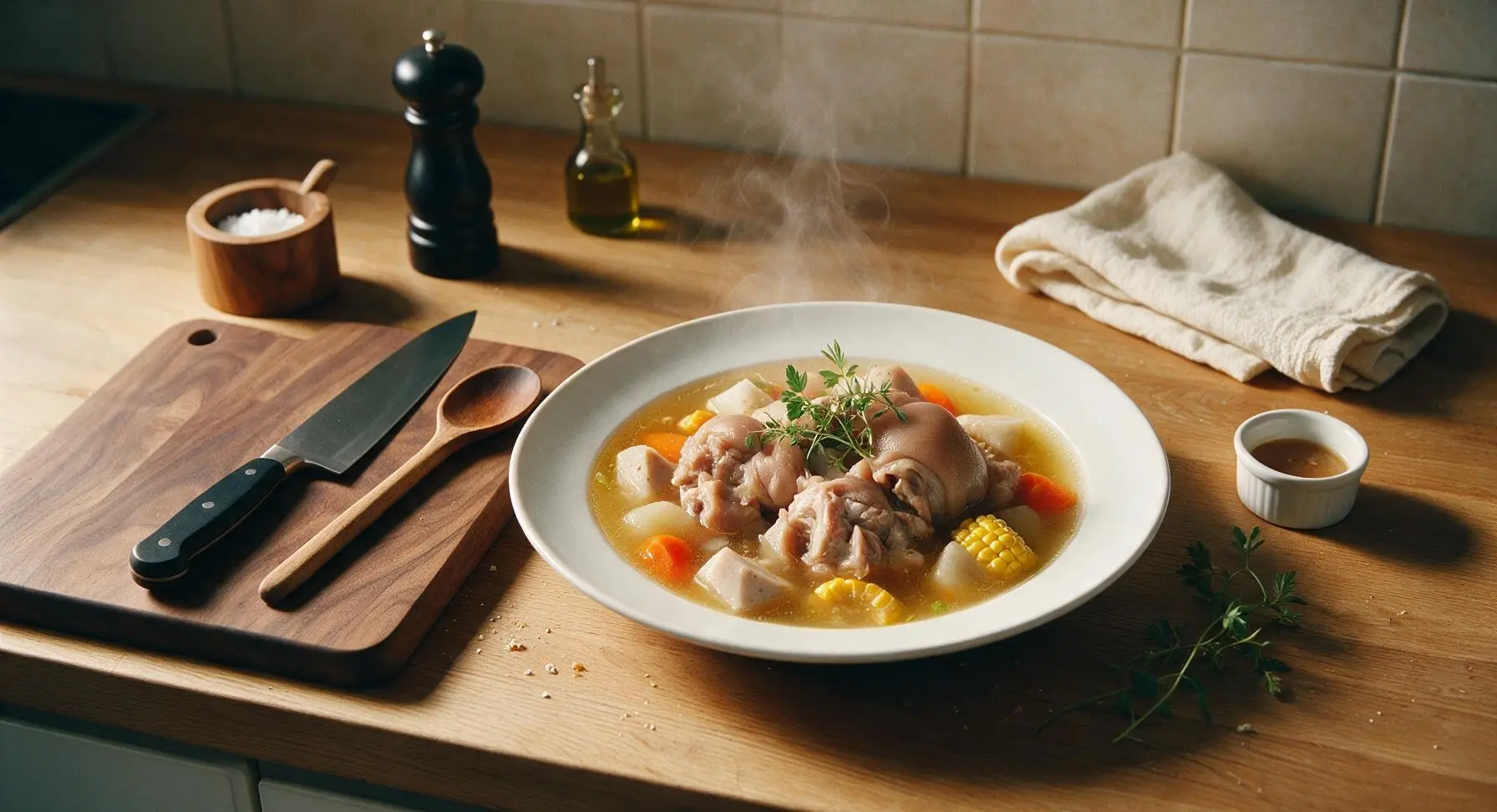
Slow-simmered Cantonese pork hock soup yields crystal-clear golden broth, fall-off-the-bone tender meat, and soft root vegetables, packed with nourishing collagen for cold winter days.
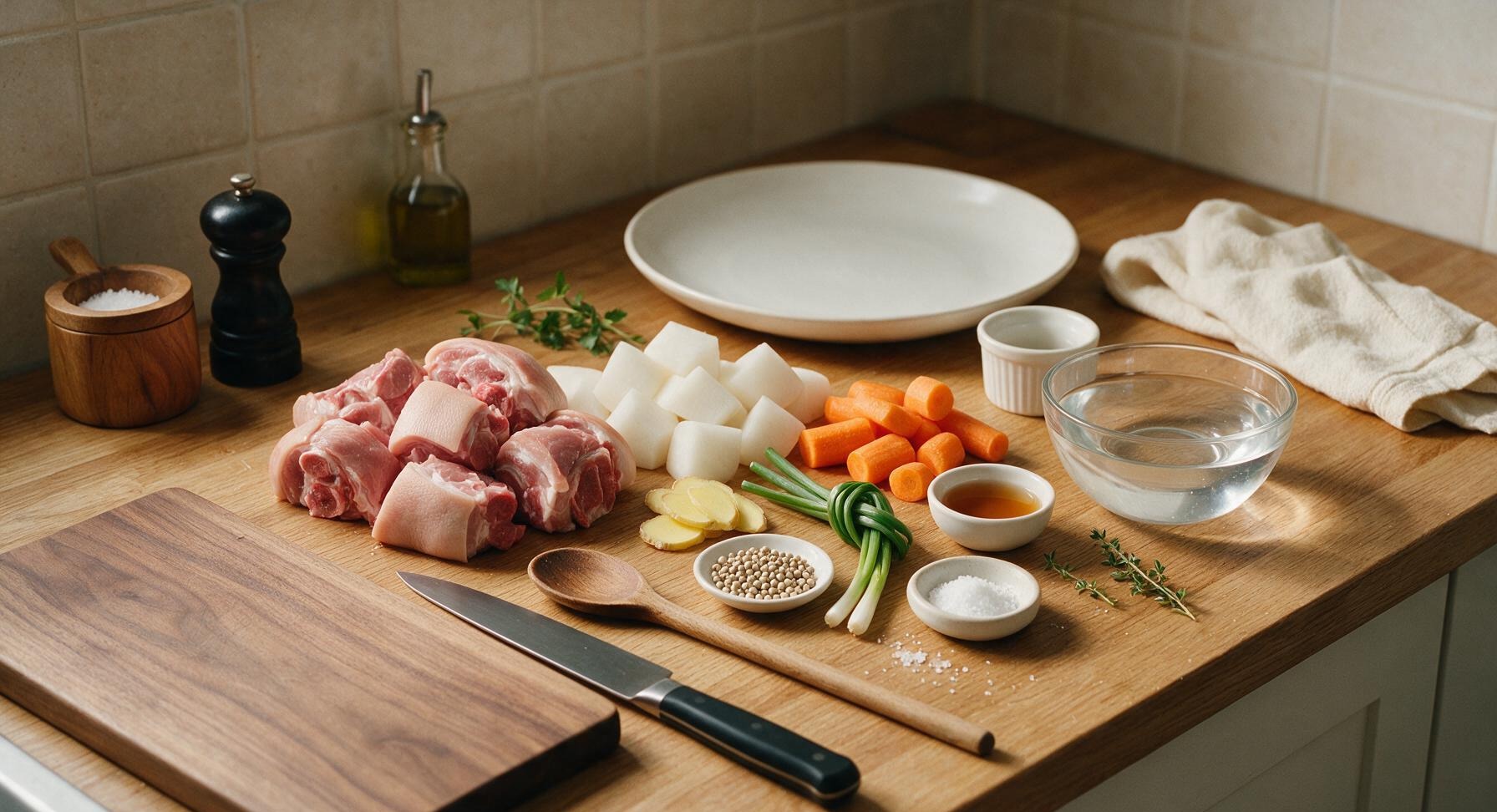
Ingredients
Steps
Blanch the pork hock
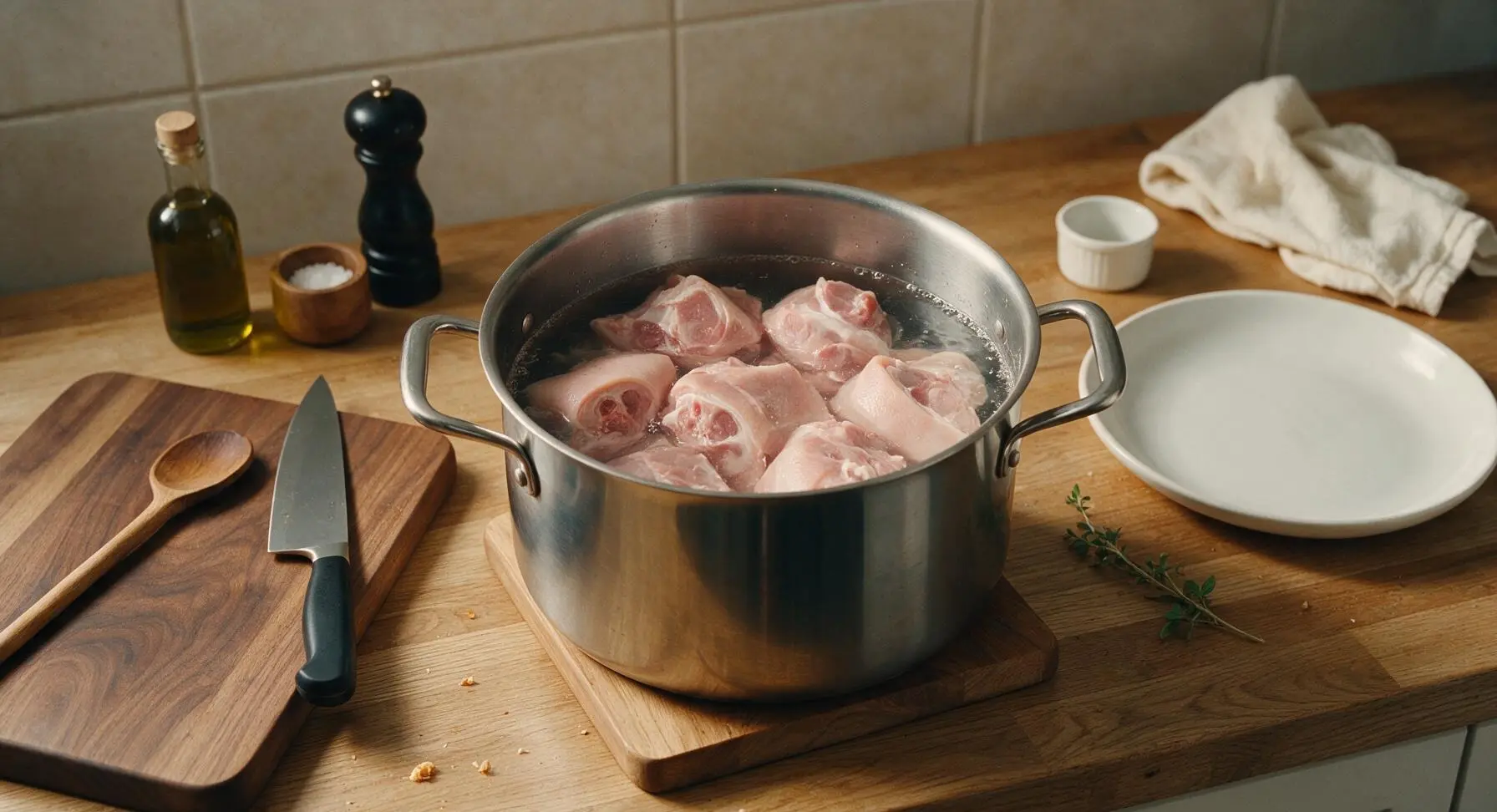
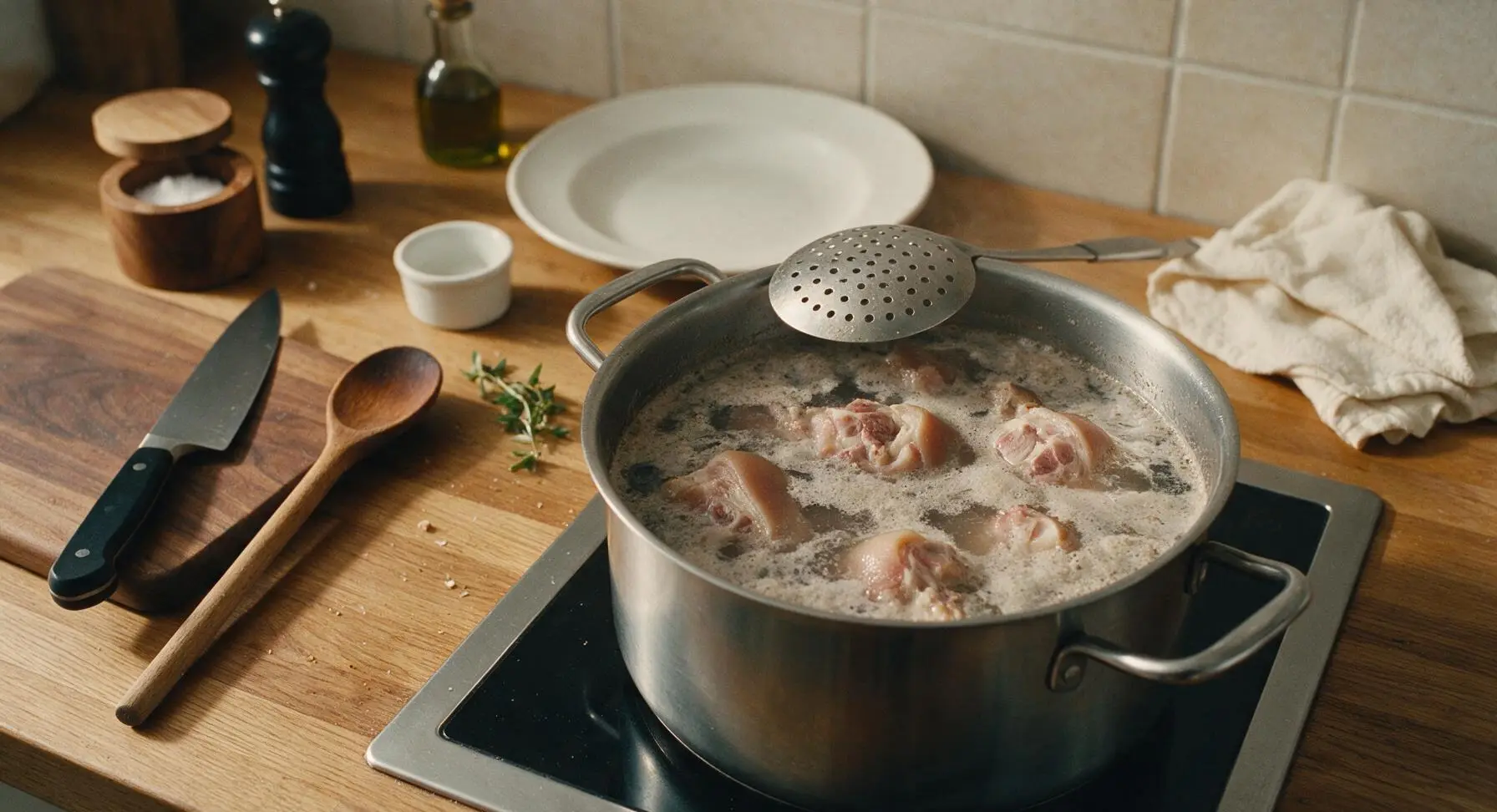
Place cut bone-in skin-on pork hock chunks into the 5L stainless steel stock pot, pour in 1L cold water to fully submerge the meat, add 1 teaspoon fine sea salt and ½ tablespoon Shaoxing wine. Set over medium-high heat, bring to a rolling boil, and cook for 5 minutes. Watch for thick, dull grey scum rising completely to the water surface—this is blood and protein residue that will make broth cloudy and bitter if not removed.
Rinse blanched pork
Turn off the heat, use the slotted skimmer to transfer all pork hock chunks out of the pot, and discard all the cloudy blanching water completely. Rinse each pork chunk under warm running water, gently rubbing the skin and meat surfaces to wash off any clinging scum, until the pork is clean, pale pink, and no foam residue remains. Avoid using cold water for rinsing, as it will shock the meat fibers and result in tough pork.
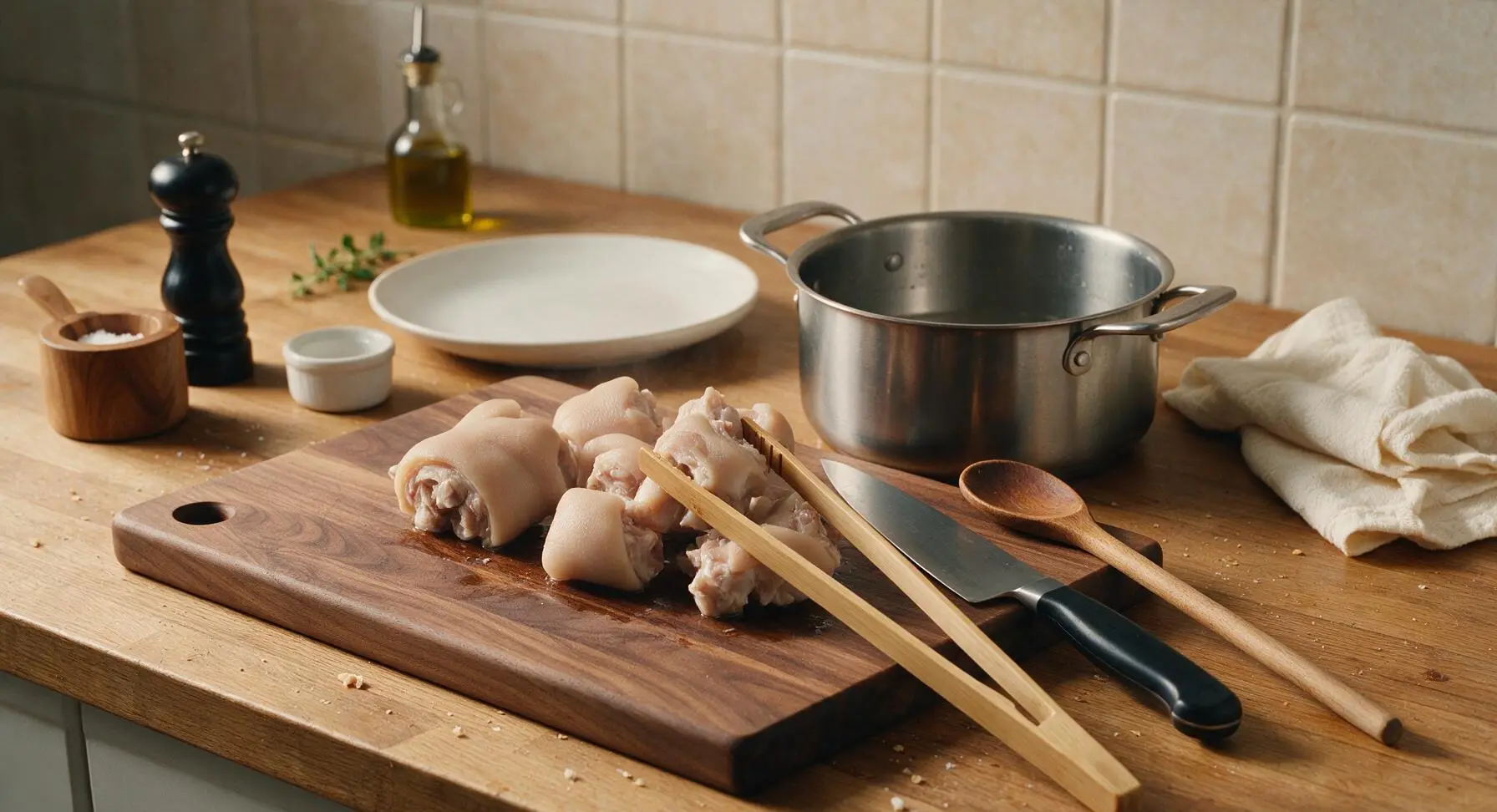
Build the soup base
Return the cleaned pork hock chunks to the empty stock pot, pour in 2L cold water so the water level sits 5cm above the top of the pork. Add the sliced ginger, tied scallion knot, whole white peppercorns, and remaining ½ tablespoon Shaoxing wine. Place the lid loosely on the pot, set over medium heat to bring to a very gentle boil, then immediately turn heat to the lowest stovetop setting.
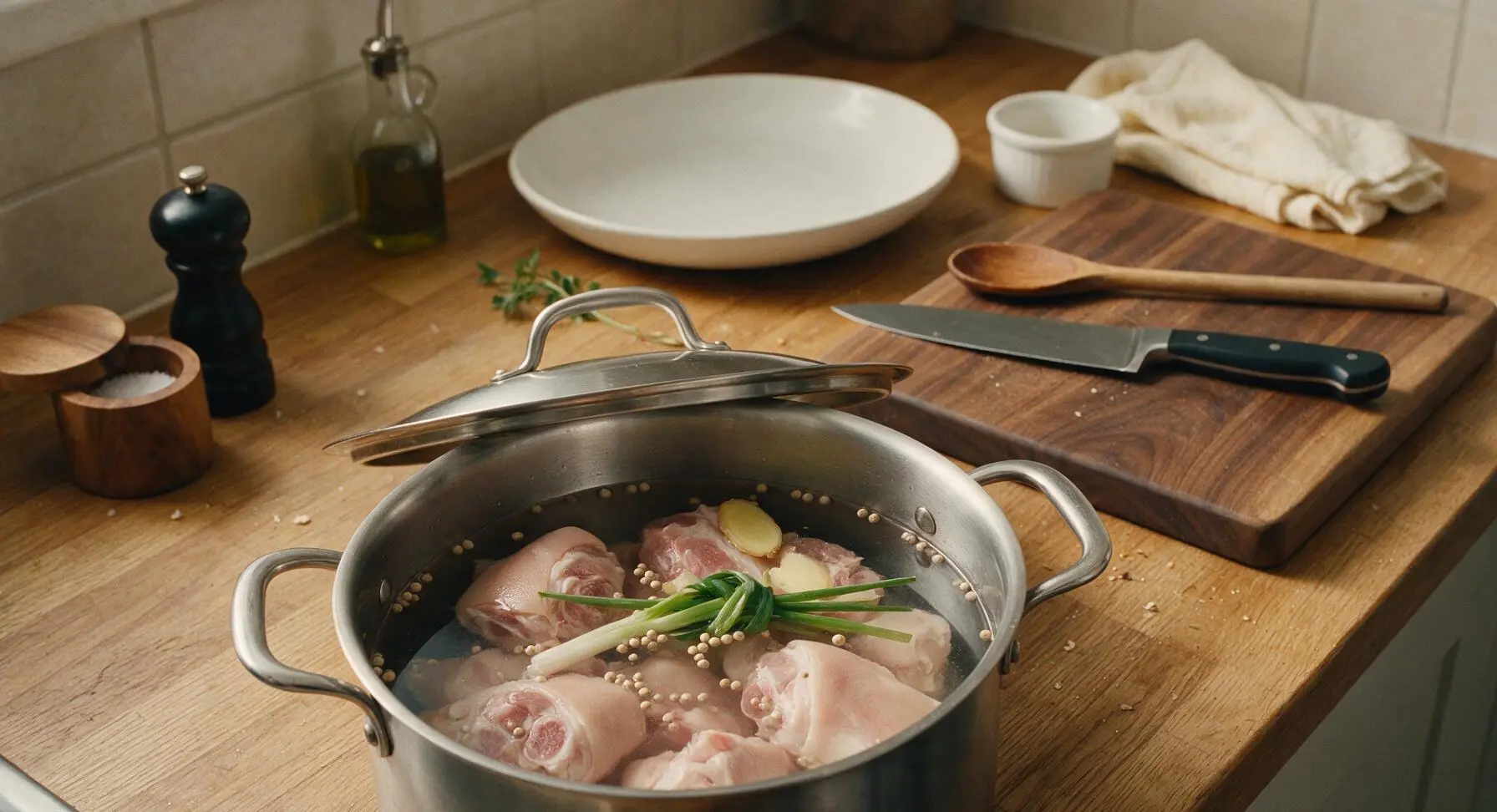
Slow simmer the broth
Cover the pot fully, maintain a low, steady soft simmer for 2 full hours. Avoid lifting the lid frequently or stirring repeatedly, as this releases heat and slows the breakdown of collagen from the pork skin and connective tissue. After 2 hours, the pork skin will jiggle softly when poked, and the broth will turn a pale, clear golden color. If water level drops more than 2cm during simmering, top up only with boiling water to avoid clouding the broth.
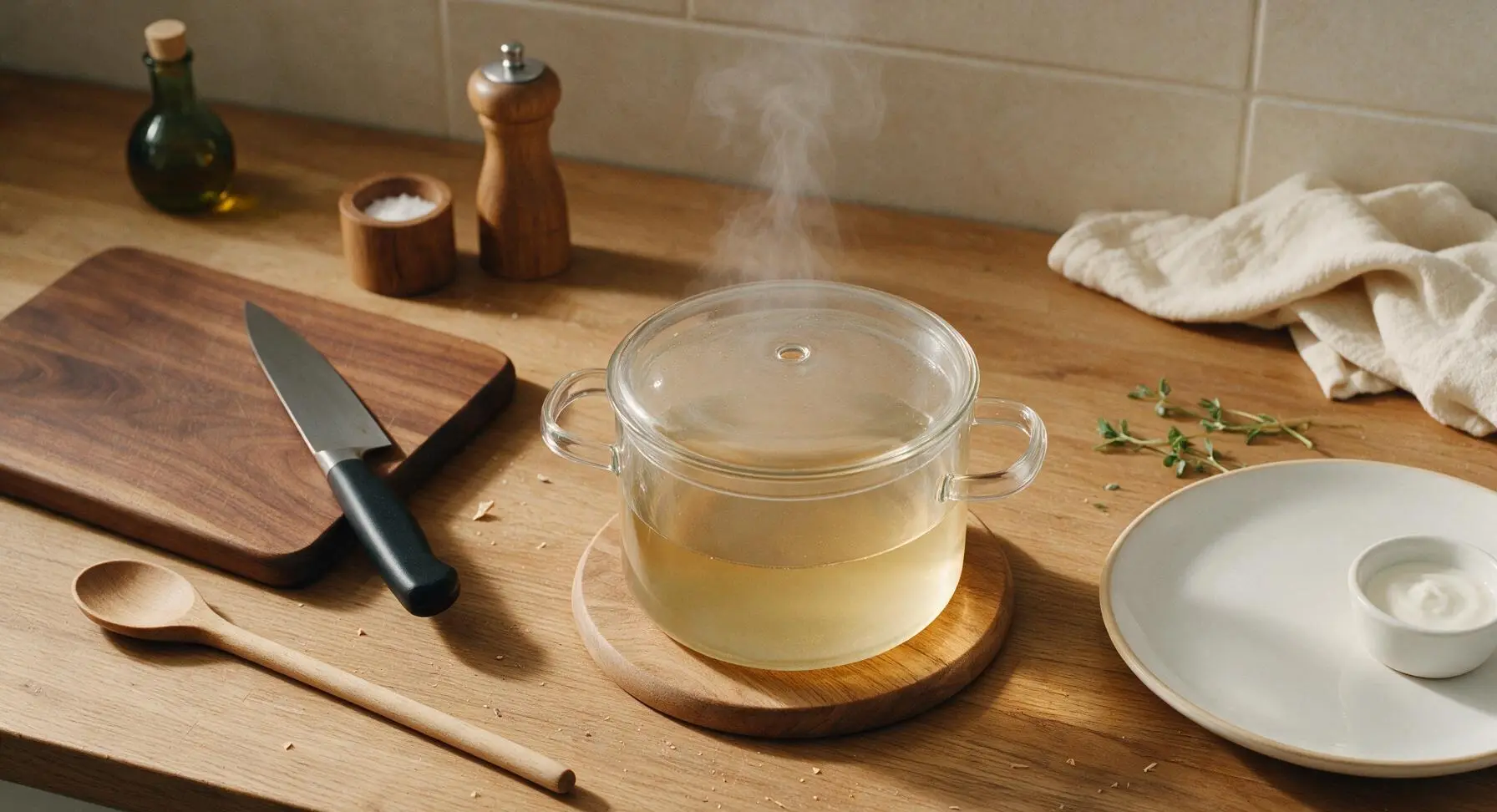
Add root vegetables
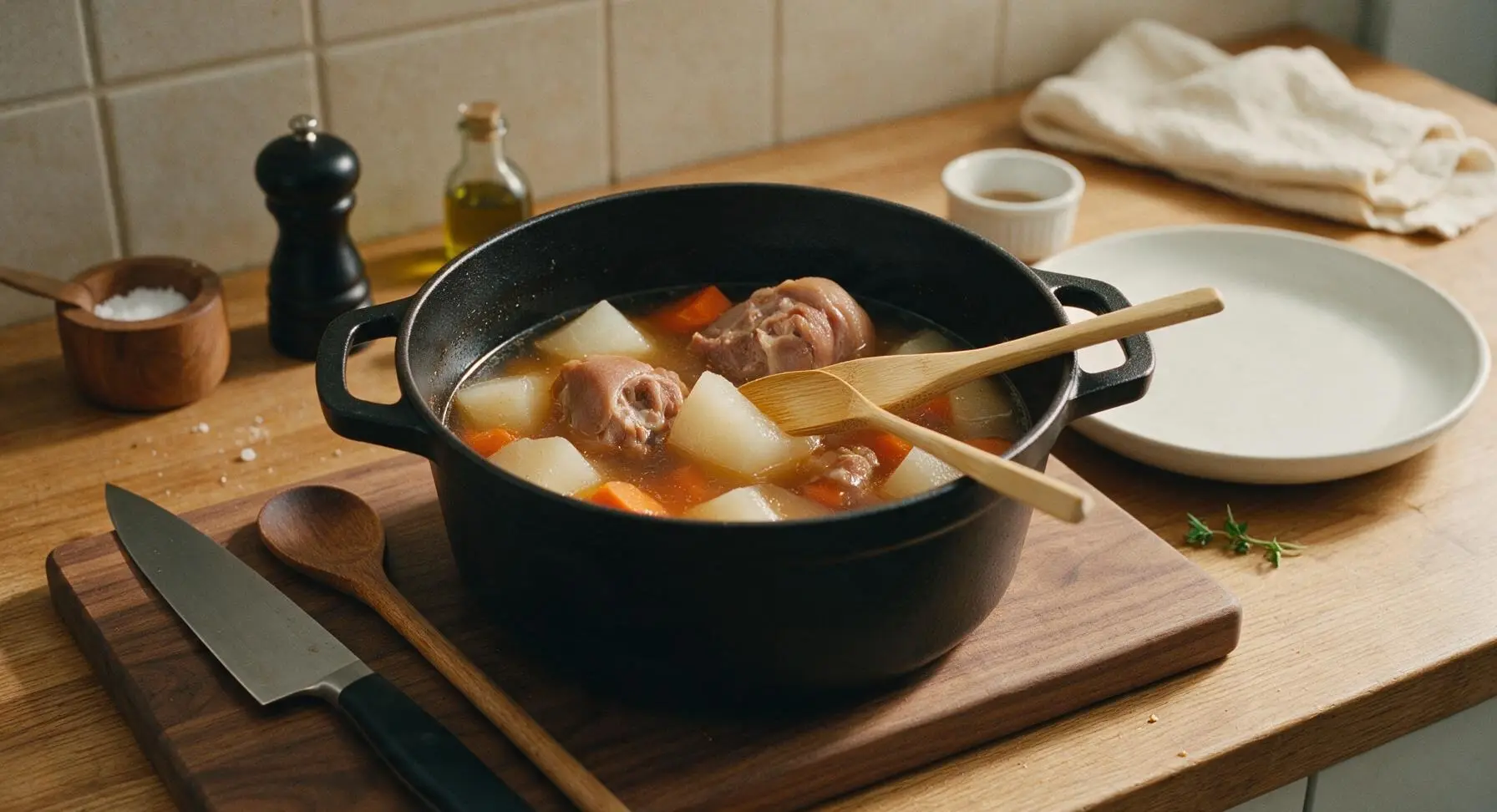
After 2 hours of simmering, lift the pot lid, add the cut daikon and carrot chunks to the pot, and stir gently with the light bamboo spoon to fully submerge the vegetables under the broth. Replace the lid, continue simmering on low heat for 25 minutes, until the daikon and carrot are fork-tender but hold their shape, not mushy or falling apart.
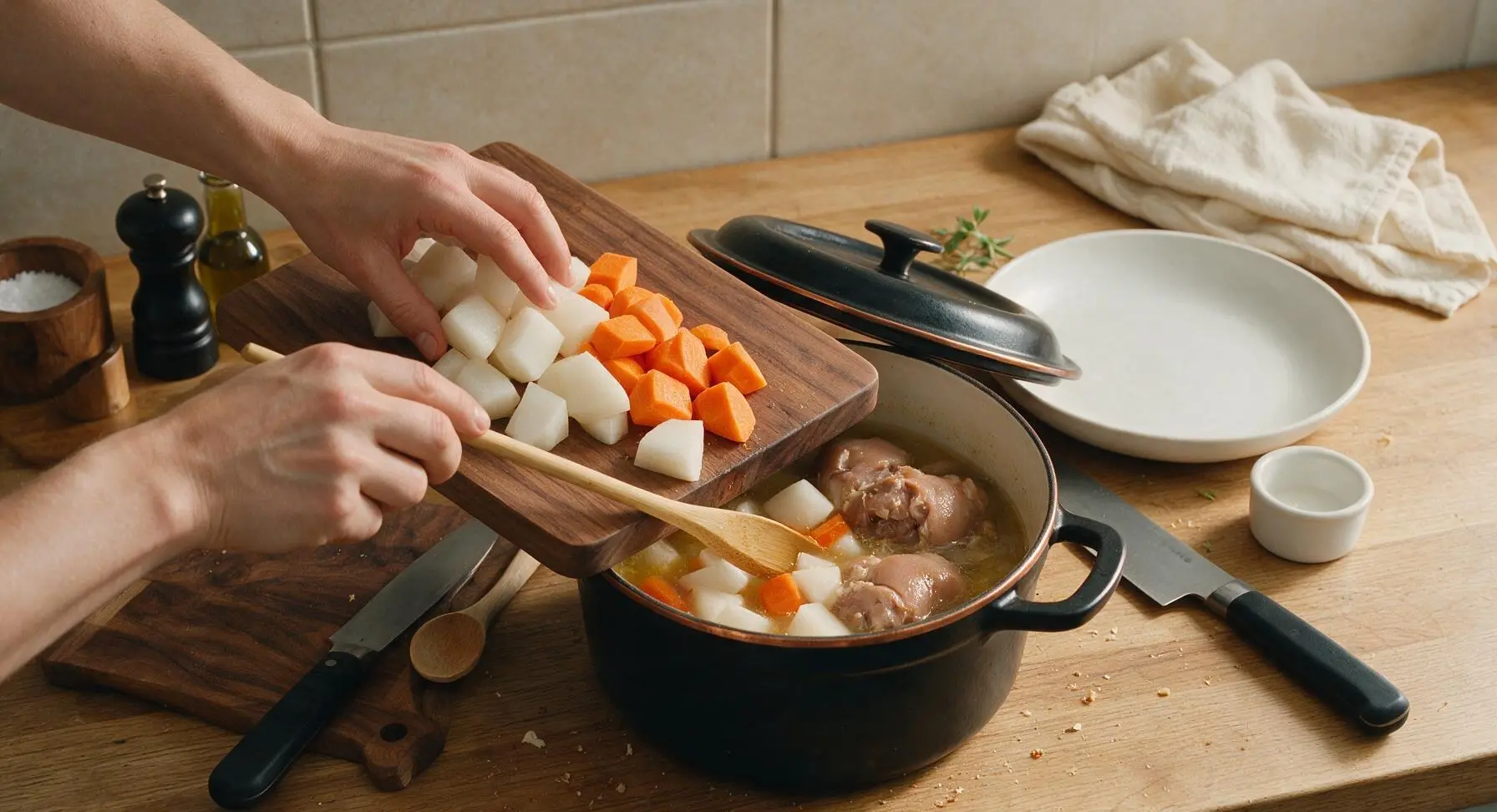
Season the soup
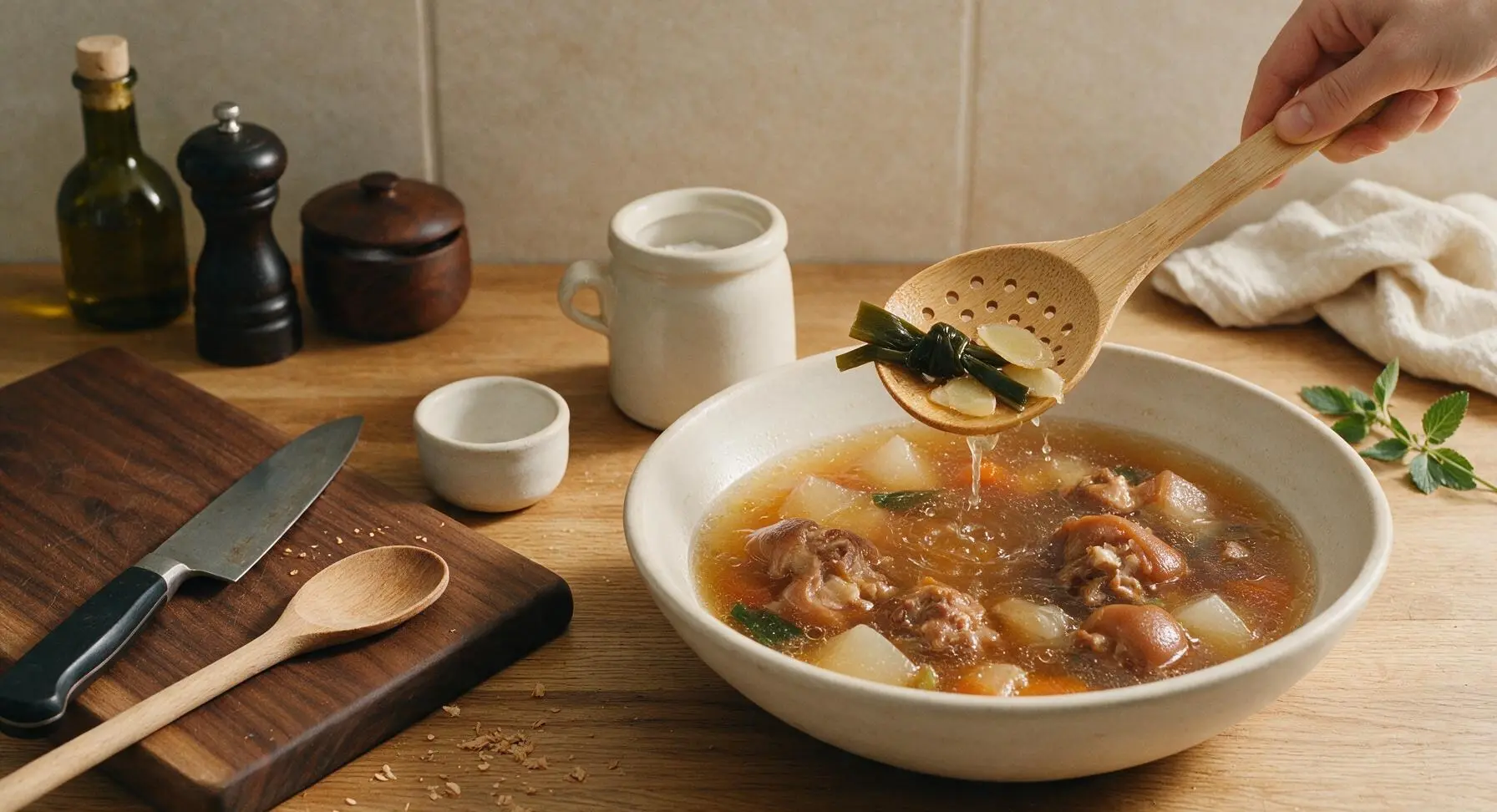
Use the slotted skimmer spoon to remove and discard the wilted scallion knot and softened ginger slices, as they have released all their flavor. Add the remaining 2 teaspoons of fine sea salt, stir gently with the bamboo spoon to fully dissolve, then taste the broth. Adjust salt if needed—the finished broth should taste clean and savory, with a subtle natural sweetness from the pork and vegetables, not overly salty. Turn off the heat.
Ladle and serve
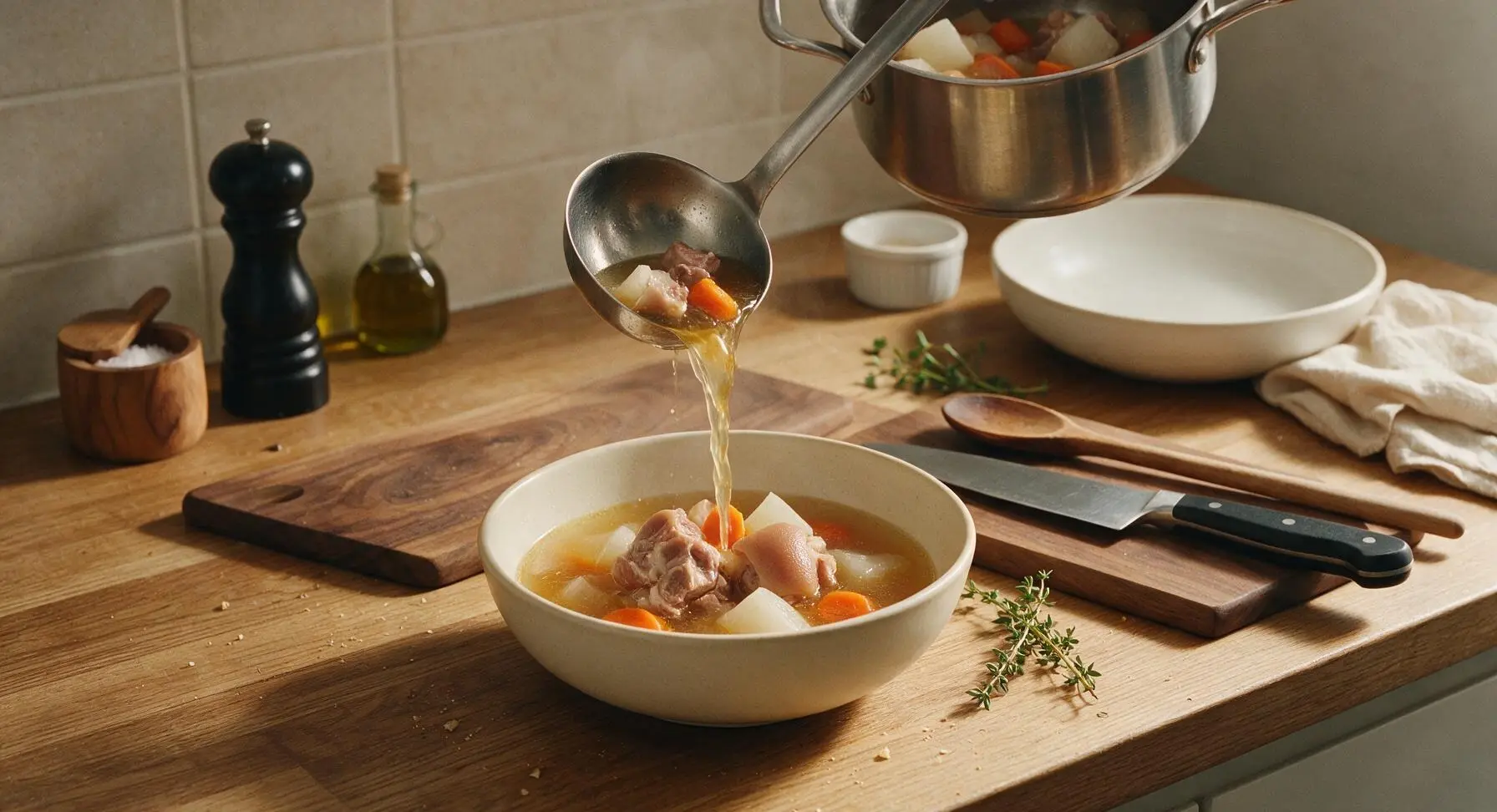
Use the stainless steel soup ladle to portion hot soup into the matte cream deep soup bowls, making sure each serving gets 1-2 pieces of pork hock (including a piece of soft, gelatinous skin for richness), equal amounts of daikon and carrot, and enough broth to fill the bowl ¾ full. Top each bowl with a small sprig of fresh thyme for a bright, herbal garnish. Serve immediately while hot, with matching cream soup spoons.
Tips
2.Keep the soup at a low, gentle simmer rather than a rolling boil for the full cook time: hard boiling emulsifies rendered fat and meat particles into the broth, resulting in a cloudy, greasy soup instead of the light, clean golden broth that defines Cantonese slow-simmered soups.
3.For an extra layer of flavor that cuts through pork richness, add one small rinsed dried tangerine peel (chenpi) to the pot when building the soup base: it adds a subtle bright citrus aroma, reduces greasy mouthfeel, and helps tenderize pork skin faster during the long simmer.





OMG this Cantonese slow-simmered pork hock soup is a total game changer! I made it for our Sunday family dinner tonight and even my super picky 7-year-old asked for a second bowl. The meat was fall-off-the-bone tender after the full 2.5 hour simmer, and the broth was so rich and deeply flavored I barely even needed to add extra seasoning. I was worried it’d be too fussy for a casual family meal, but the steps were straightforward and it came together perfectly. 10/10!
Brought this to my office potluck today and people were literally coming up to ask for the recipe before we even finished eating! I added a handful of goji berries and a couple dried red dates like my grandma used to put in her soups, and the broth had that perfect subtle sweet-savory balance. Only heads up is that it’s definitely a weekend cook since you can’t rush that 2.5 hour simmer, but it’s 100% worth every minute. SO good.
I made a big batch of this earlier this week for meal prep and it’s held up so well for the past few days! The broth actually got even more flavorful after sitting in the fridge for a day or two, and I just tossed in some blanched bok choy when I heated up a bowl for lunch each day. The medium difficulty rating is spot on — you don’t need any fancy chef skills, you just have to be patient with that 2.5 hour slow simmer. Only reason I’m not giving 5 stars is I wish there was a quick note about adjusting salt levels for different taste preferences, but that’s such a tiny nitpick. Will absolutely be adding this to my regular cold-weather rotation.
I’ve been so intimidated to make Cantonese soups at home because I always thought they required super specialized, hard-to-find ingredients, but this recipe was so approachable! I grabbed everything I needed at my local Asian market in 10 minutes, followed the steps exactly, and the end result tasted just like the pork hock soup I order at my go-to dim sum spot. Total win for a random weeknight dinner — I got the simmer going right when I walked in the door from work and it was perfectly ready by dinner time! Can’t wait to make this for my roommates next week.