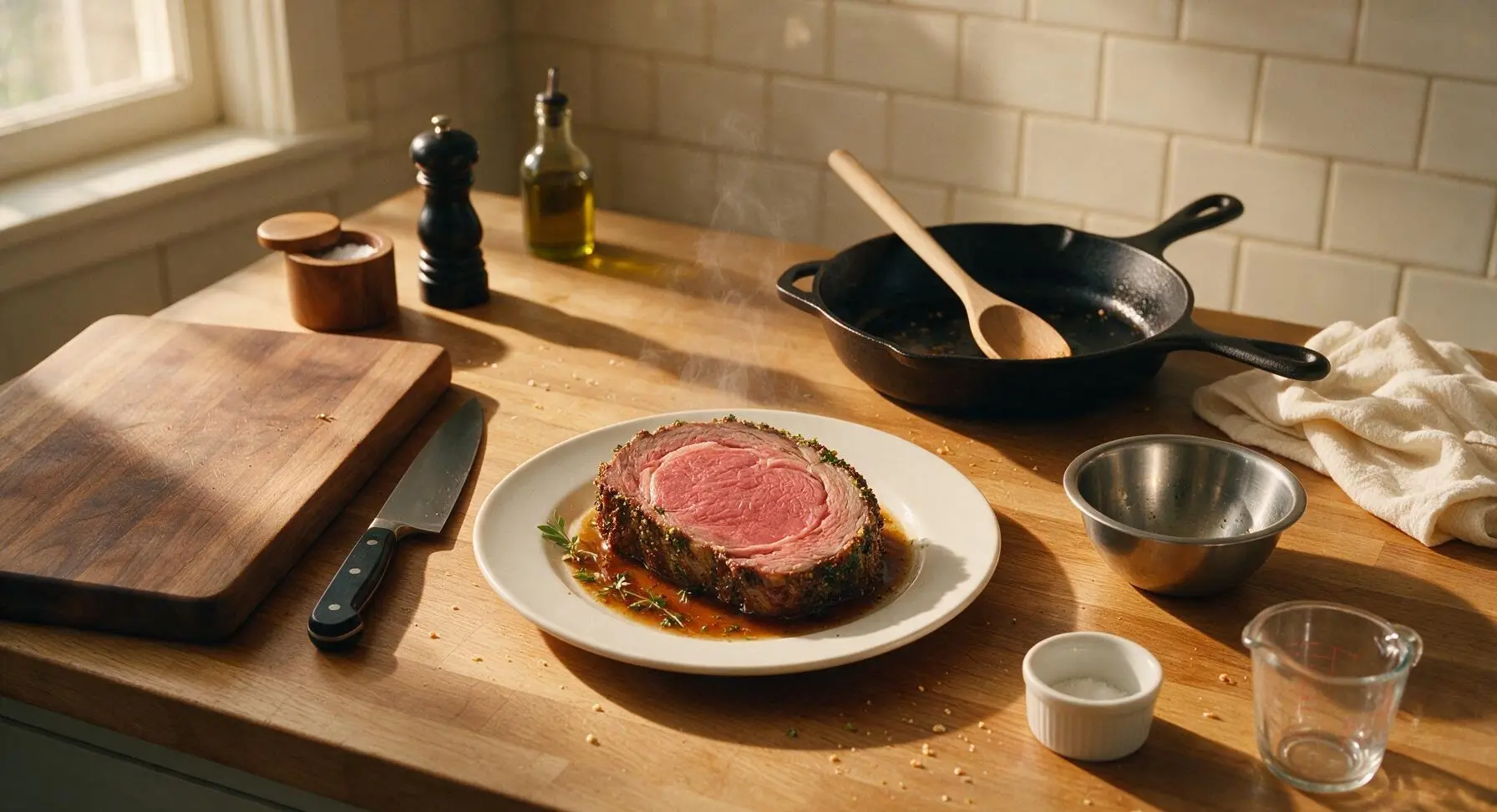
Prime Rib

title 1
Prime Rib
⏱️ cook time 1 hour 45 minutes
🍽️ servings 6
⚡ Difficulty medium

intro

Juicy, tender slow-roasted prime rib with a crisp herb crust, perfectly even medium-rare pink center, and rich pan au jus – the ultimate showstopping holiday centerpiece.

Ingredients
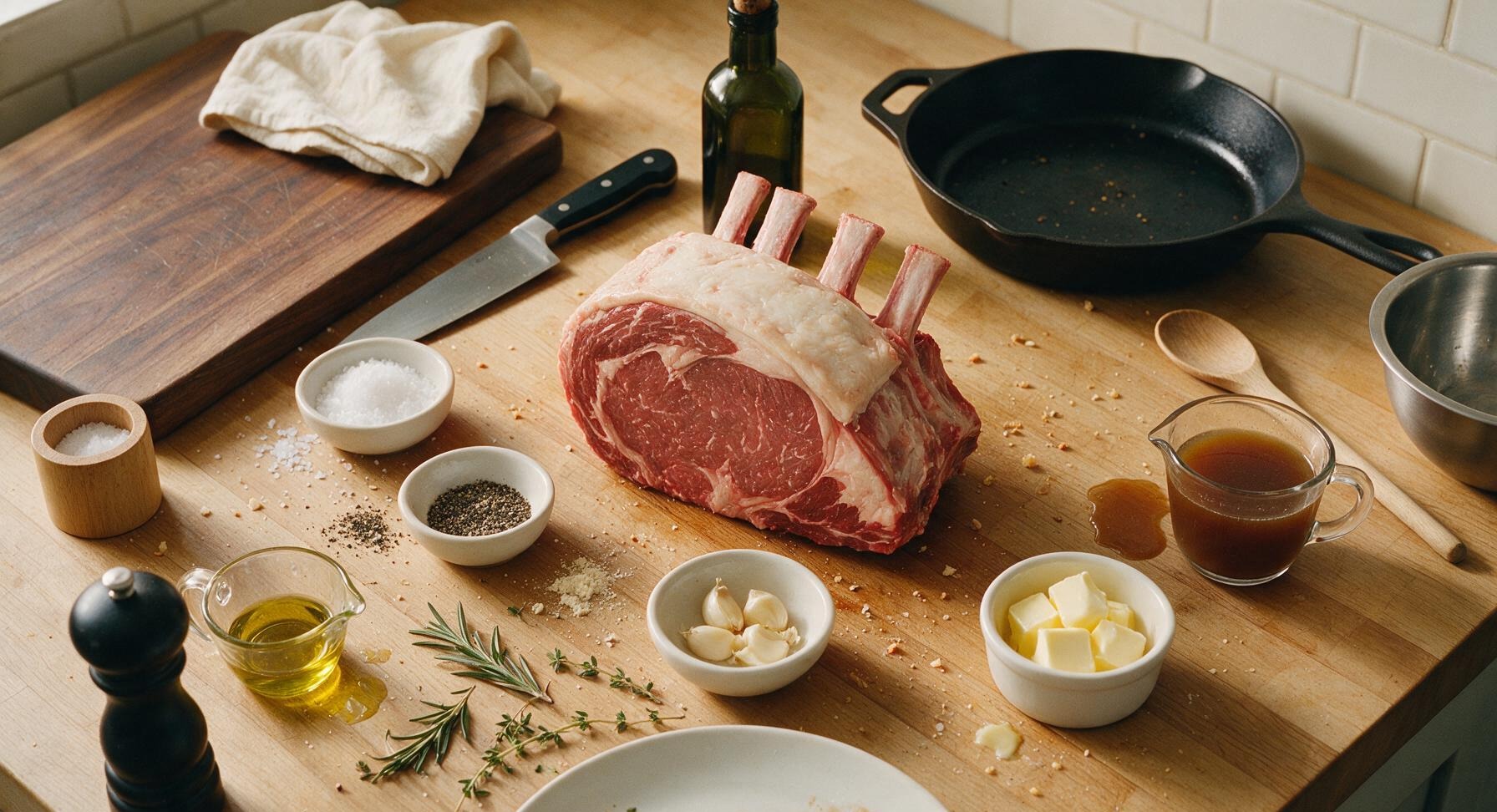
Bone-in 3-rib prime rib roast 2.7kg (6lb)
Kosher salt 3 tbsp
Coarsely ground black pepper 1 tbsp
Garlic powder 1 tsp
Extra-virgin olive oil 60ml (1/4 cup)
Unsalted butter 28g (2 tbsp)
Fresh garlic cloves 4 cloves, crushed
Fresh rosemary sprigs 3 sprigs
Fresh thyme sprigs 4 sprigs
Low-sodium beef broth 240ml (1 cup)

Steps

1

Trim and Temper Roast

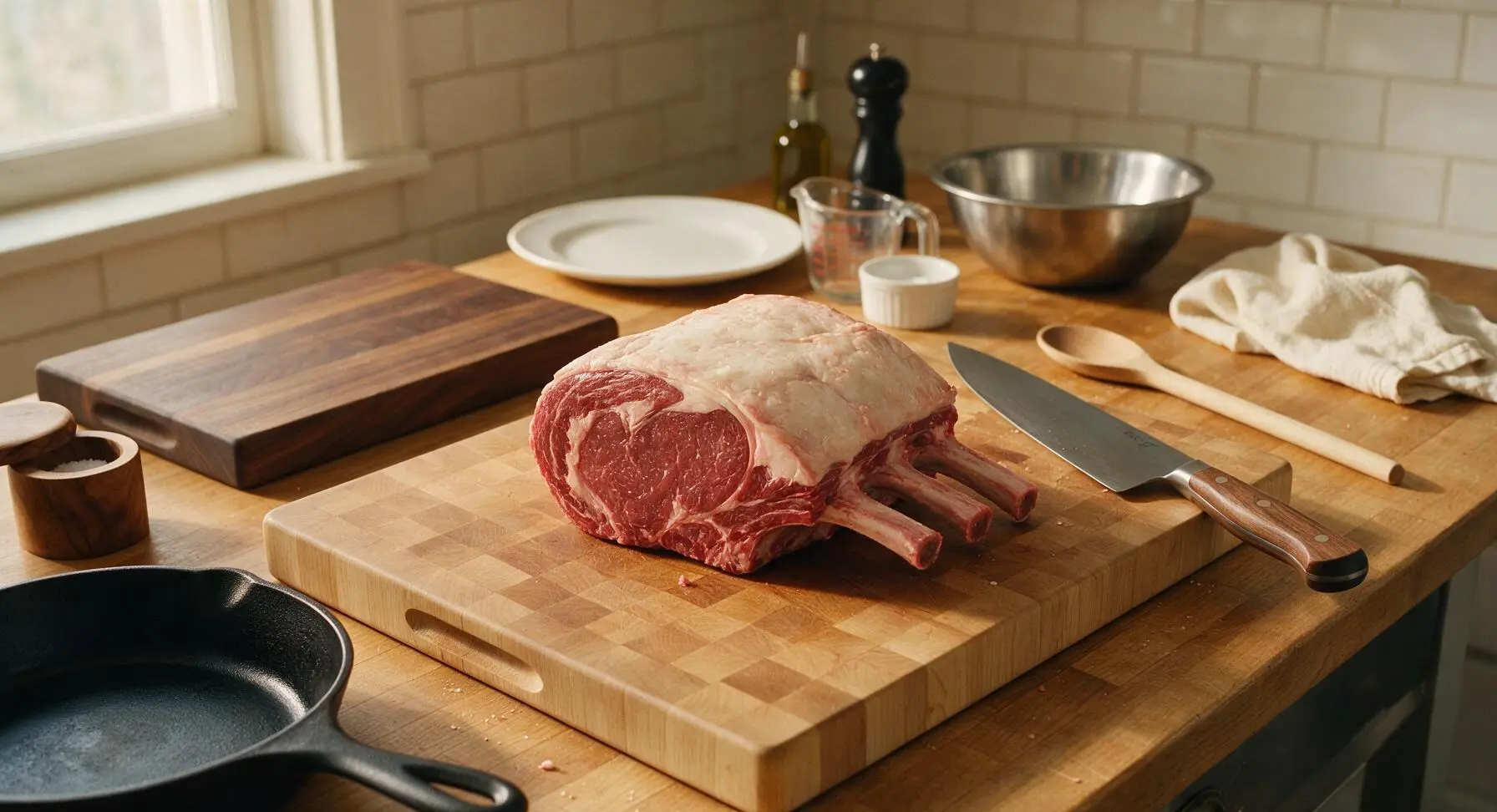
Place the unseasoned bone-in prime rib on the large maple end-grain cutting board. Use the walnut-handled chef knife to trim the thick fat cap to a uniform 6mm (1/4 inch) thickness, cutting away any hard, waxy fat patches or loose silver skin from the exposed meat surface. Pat every surface of the roast completely dry with a corner of the fixed oatmeal linen towel. Leave the roast uncovered on the cutting board to rest at room temperature for 1.5 hours to ensure even cooking throughout; this step eliminates cold spots that cause uneven doneness.
Step 1
step1:Trim and Temper Roast
2

Apply Herb Seasoning

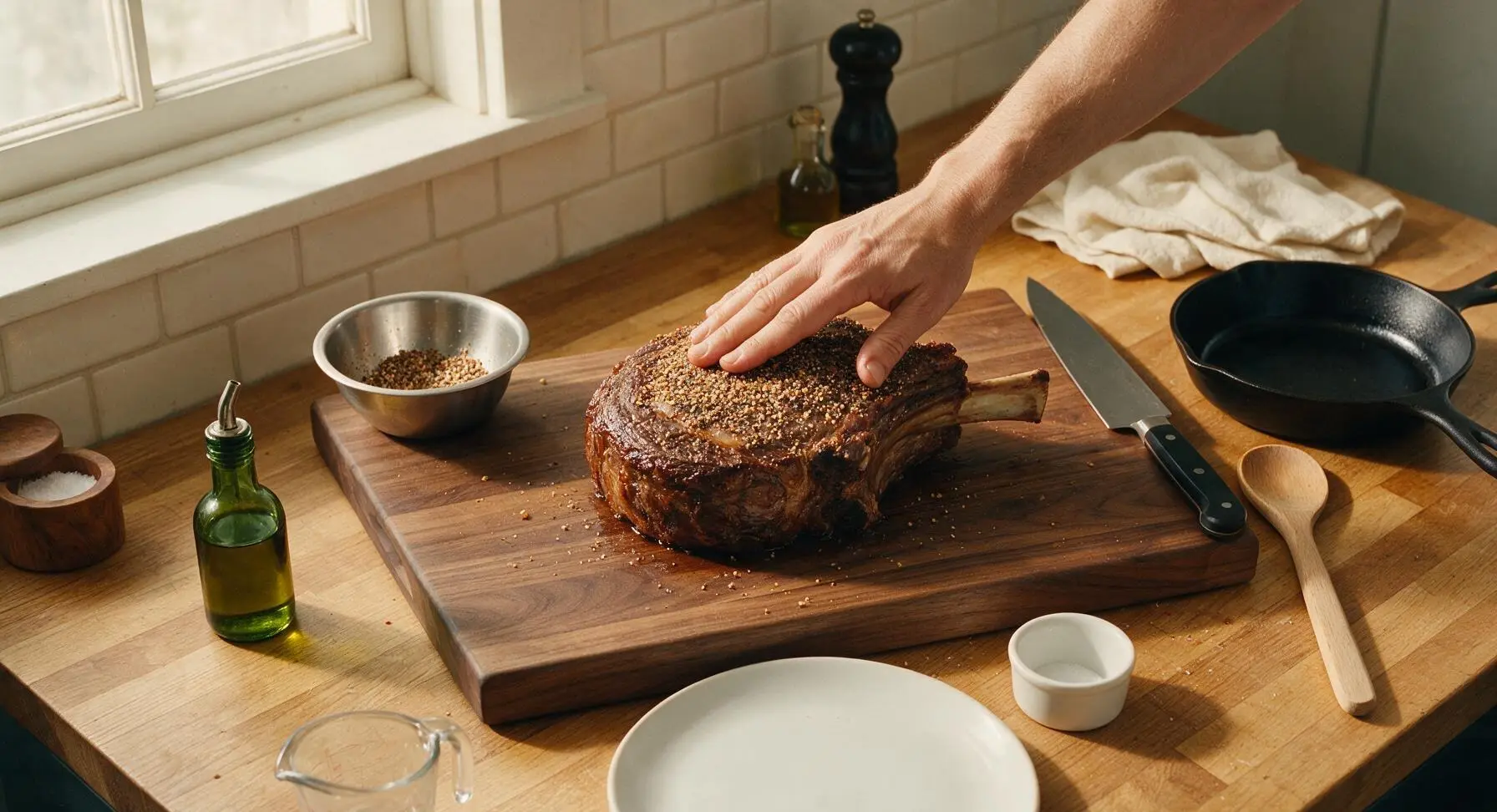
In the small brushed stainless steel mixing bowl, combine 3 tablespoons kosher salt, 1 tablespoon coarsely ground black pepper, and 1 teaspoon garlic powder, stirring to mix evenly. Drizzle 2 tablespoons of olive oil over the entire surface of the room-temperature roast, then rub the spice mixture generously over every side, pressing firmly to help the seasoning adhere to the meat and fat cap. Tuck 2 crushed garlic cloves and half the rosemary and thyme sprigs against the bone side of the roast.
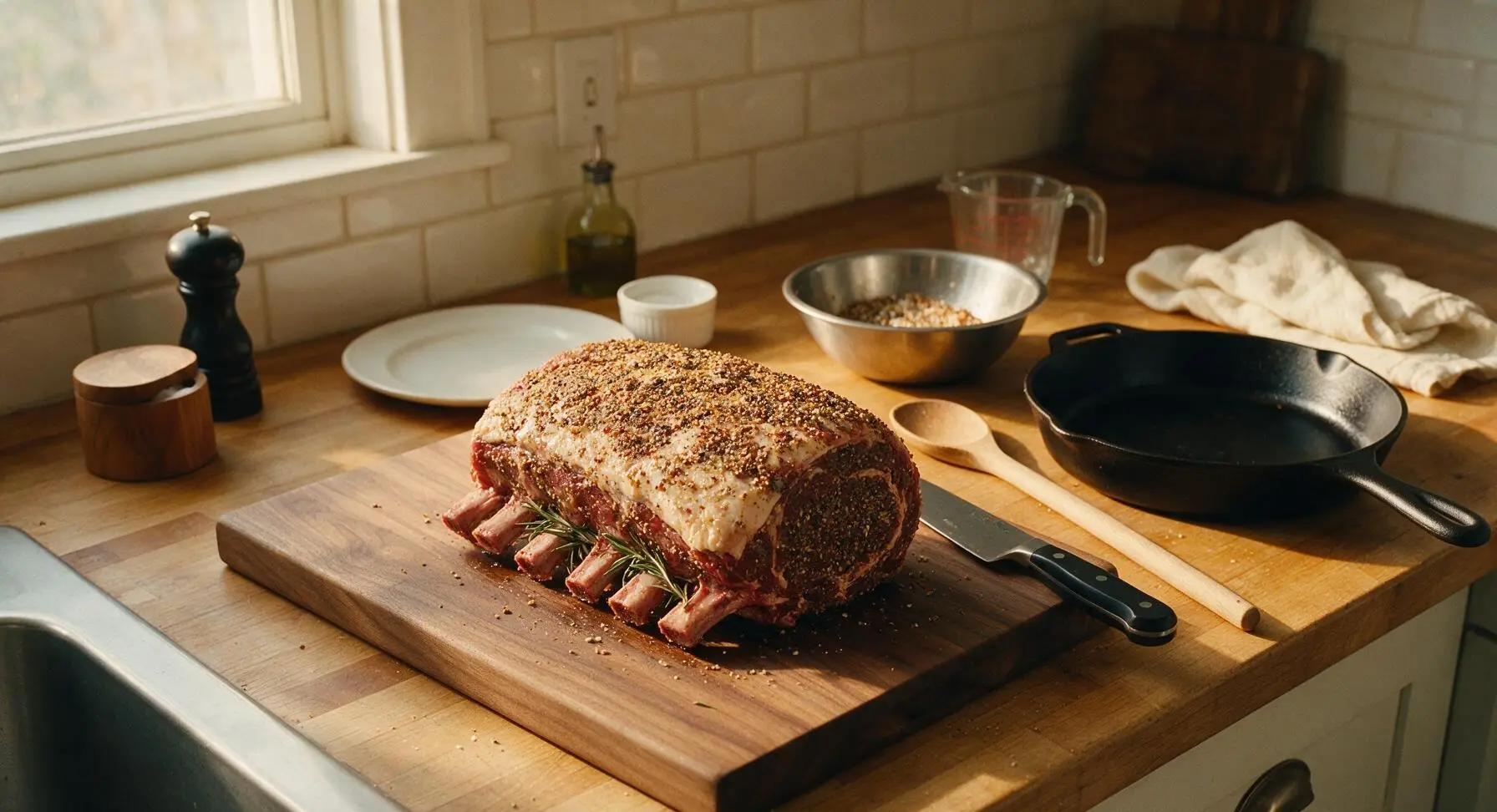
Step 2
step2:Apply Herb Seasoning
Step 2
step2:Apply Herb Seasoning
3

Prep Roasting Pan

Adjust your oven rack to the lower third position, then preheat the oven to 230°C (450°F). Set the flat wire rack insert inside the heavy-gauge stainless steel roasting pan. Scatter the remaining 2 crushed garlic cloves and leftover rosemary and thyme sprigs across the bottom of the pan, then pour 1 cup of low-sodium beef broth into the pan base—this catches drippings to prevent burning and forms the base of your au jus. Lift the seasoned roast from the cutting board and place it bone-side down directly on the wire rack, so the fat cap faces straight up.
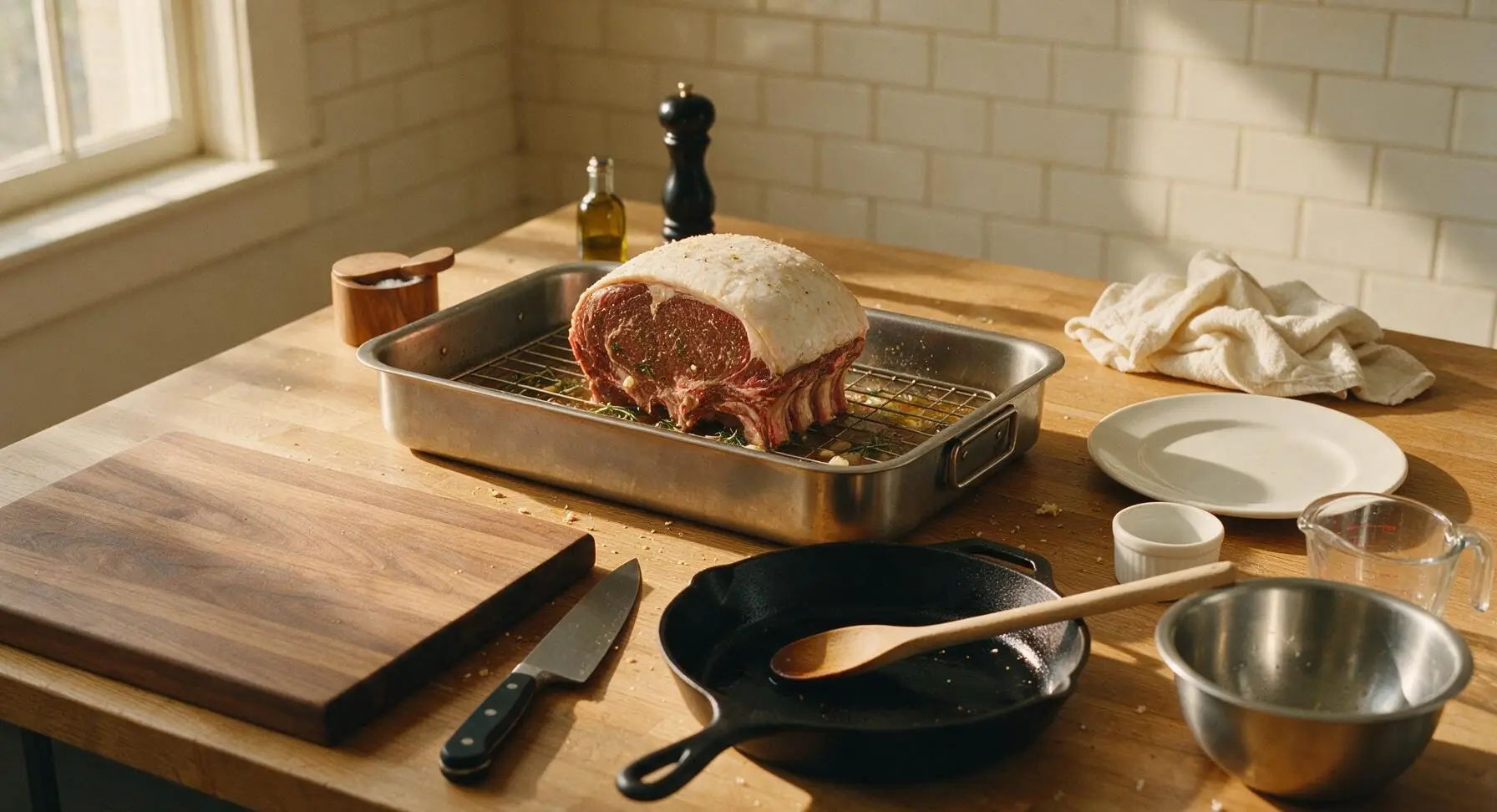
Step 3
step3:Prep Roasting Pan
4

High-Heat Initial Sear

Carefully place the roasting pan on the lower oven rack. Roast at 230°C (450°F) for 20 minutes to develop a deep, caramelized golden-brown crust on the outside of the roast. Do not open the oven door during this initial searing period to maintain consistent high temperature, which is key to a crisp crust.
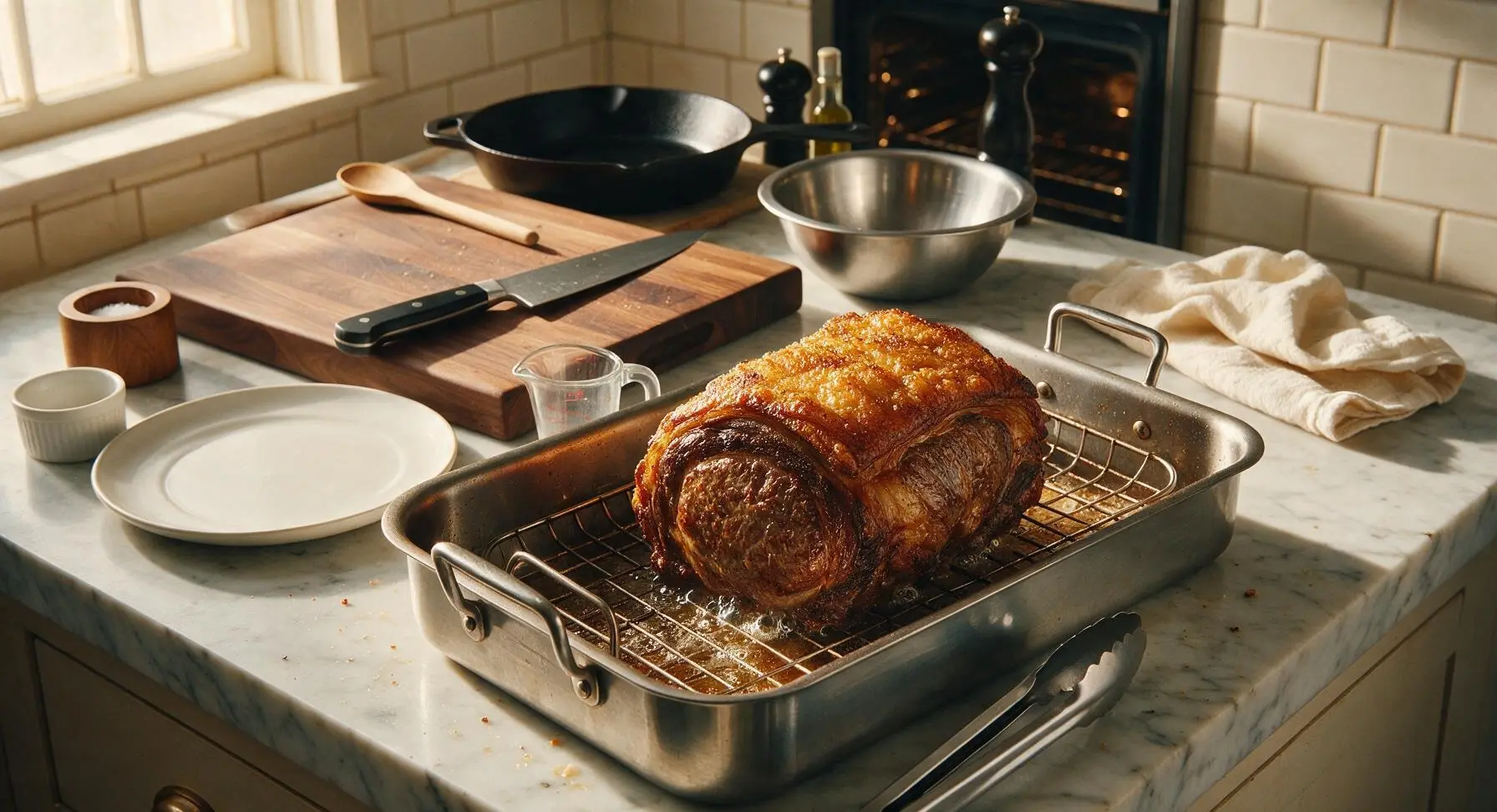
Step 4
step4:High-Heat Initial Sear
5

Slow Roast to Doneness

Close the oven door and reduce the oven temperature to 165°C (325°F), waiting 2 minutes for the temperature to stabilize before continuing to roast. Cook for approximately 1 hour 20 minutes, basting the roast with pan drippings using the silicone basting brush once after 45 minutes of low-temperature cooking. Check doneness by inserting the digital instant-read meat thermometer into the thickest part of the roast (avoid touching bone, which gives a false high reading); remove the roast when the thermometer reads 54°C (130°F) for perfect medium-rare.
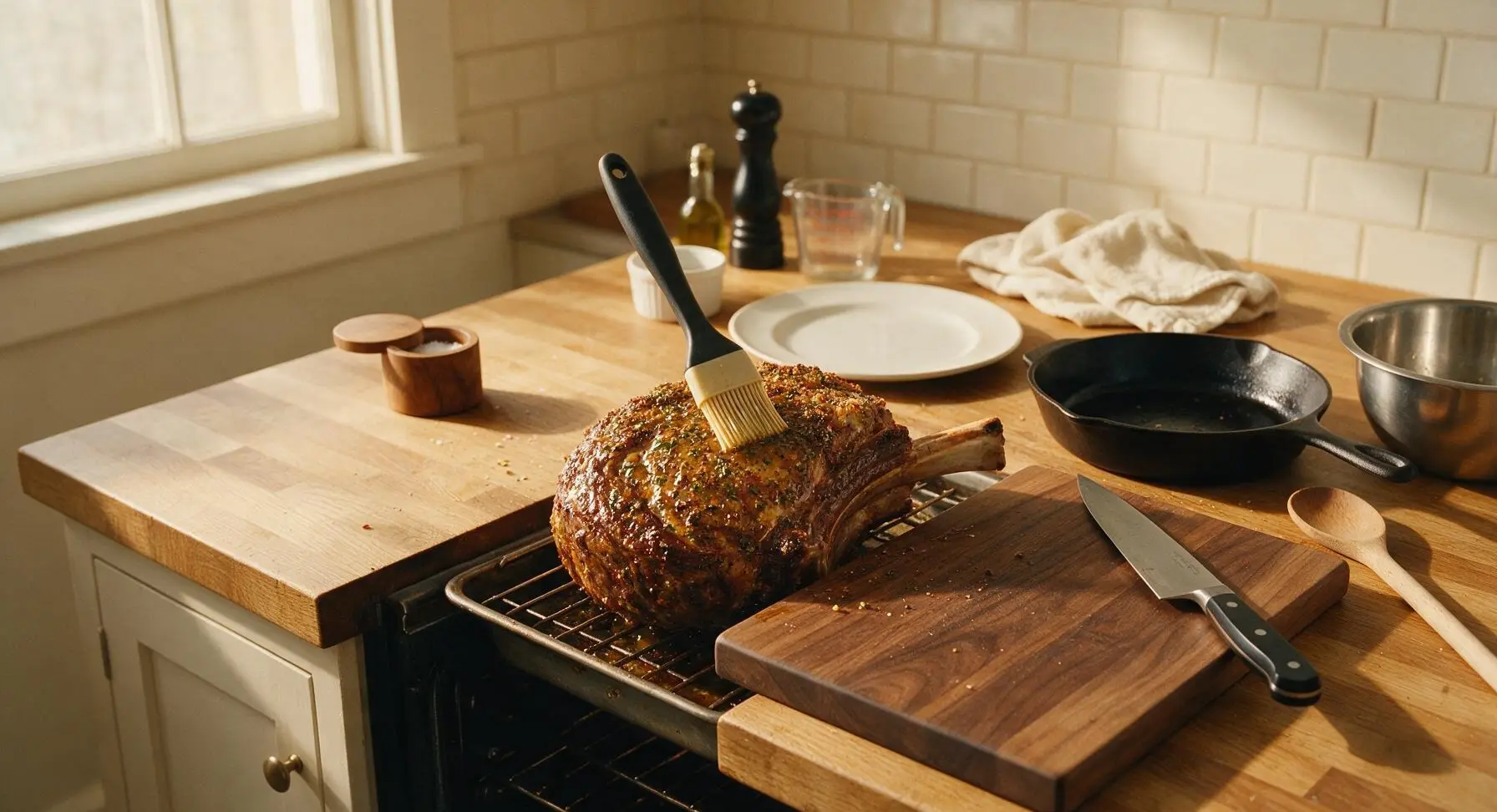
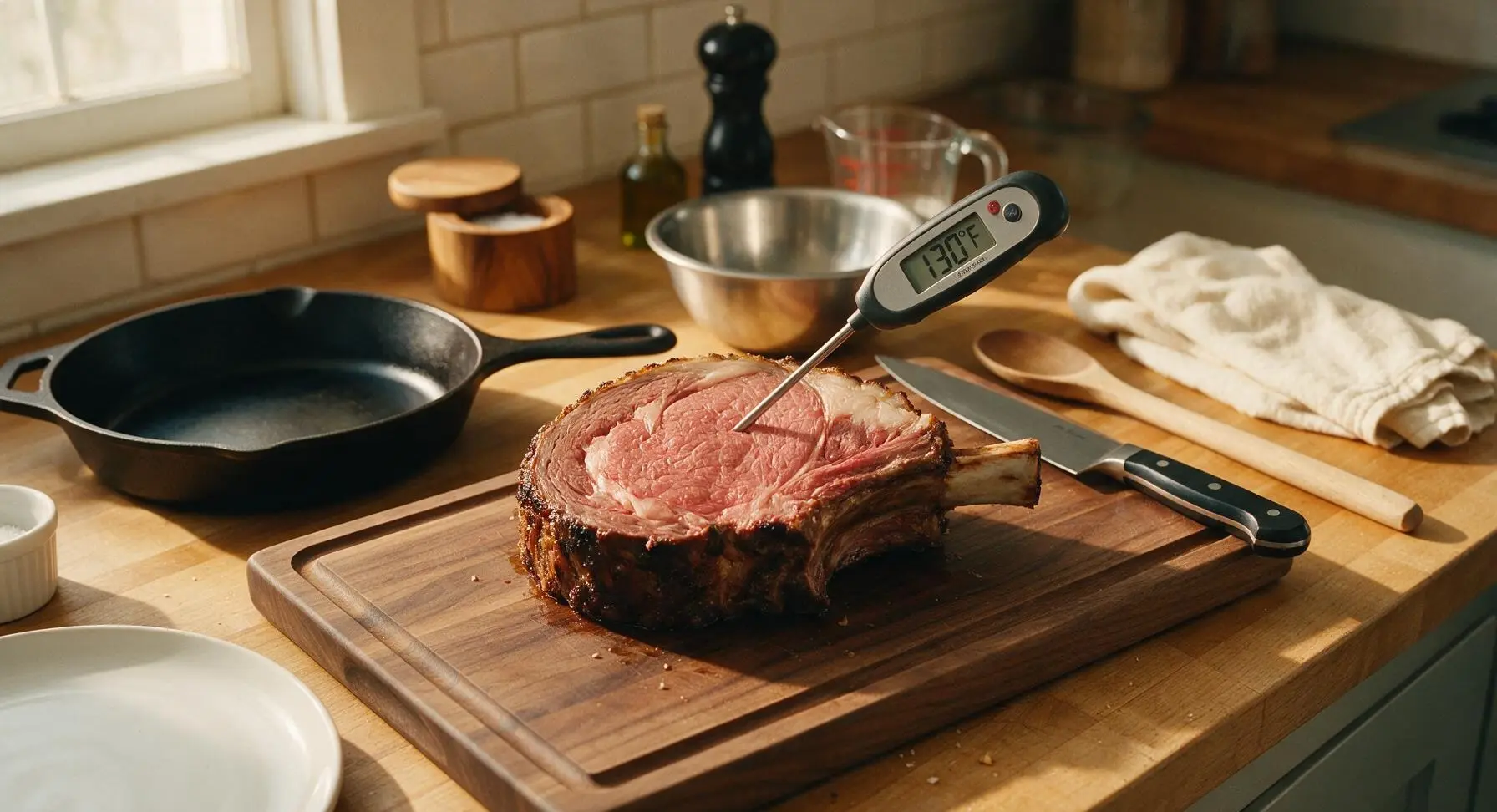
Step 5
step5:Slow Roast to Doneness
Step 5
step5:Slow Roast to Doneness
6

Rest Roast Properly

Once the target internal temperature is reached, use the 12-inch stainless steel tongs to carefully lift the roast from the wire rack and transfer it to the large cream stoneware oval serving platter. Loosely tent the roast with a sheet of heavy-duty aluminum foil (do not wrap tightly, as this will steam the crust), and let it rest for a full 30 minutes at room temperature. During resting, carryover cooking will raise the internal temperature 5-7°C (10-15°F) to a final 60°C (140°F) medium-rare, and juices will redistribute evenly through the meat.
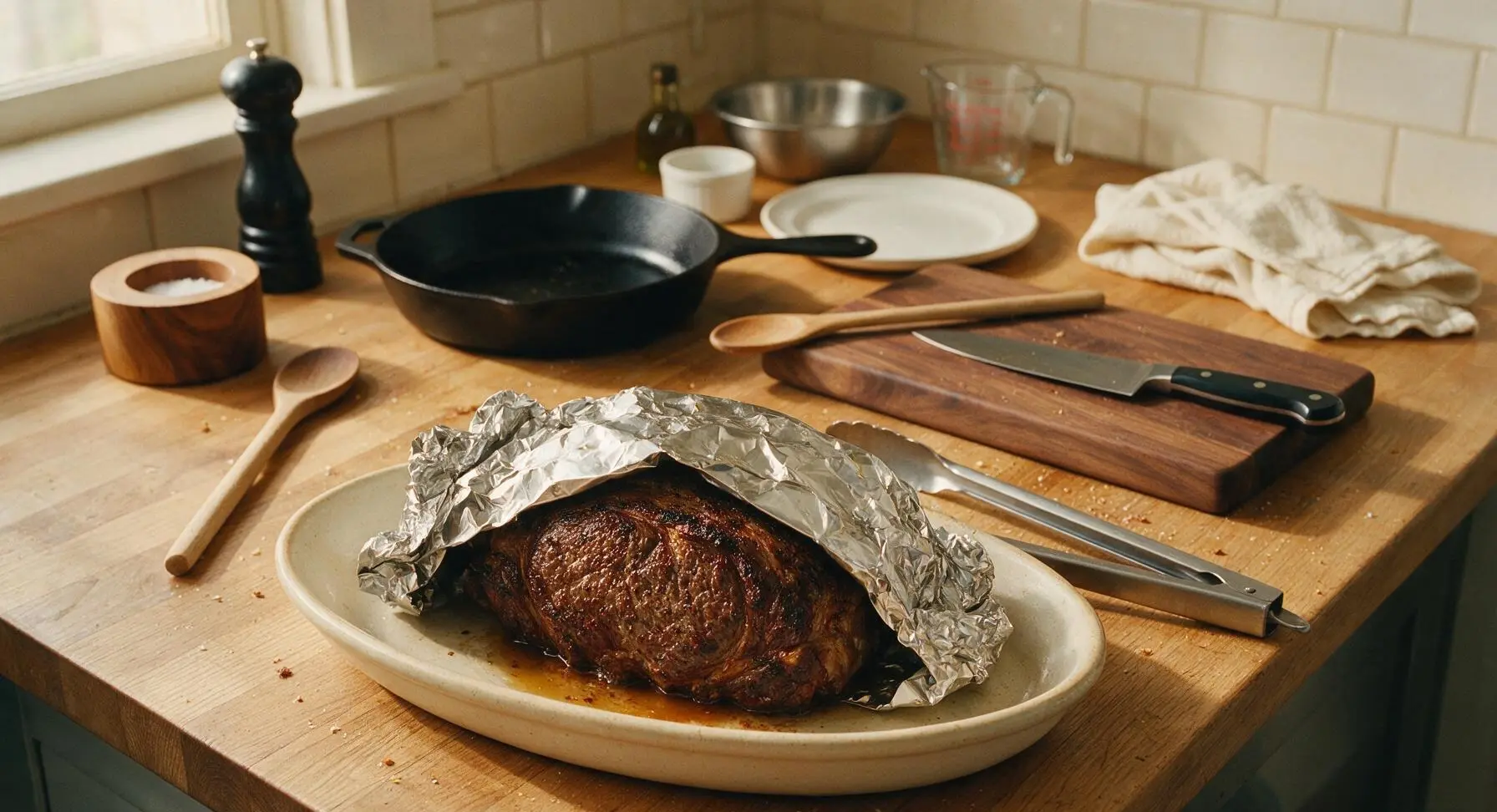
Step 6
step6:Rest Roast Properly
7

Prepare Pan Au Jus

While the roast rests, place the stainless steel roasting pan with all collected drippings, herbs, garlic, and beef broth directly on a stovetop burner over medium heat. Add 2 tablespoons of unsalted butter, stirring with the long beech wood spoon to scrape up all browned flavorful bits (fond) from the pan bottom. Simmer for 5 minutes until the liquid reduces by roughly one third, then skim any excess fat from the surface. Pour the finished au jus into the small white ceramic ramekins for serving.
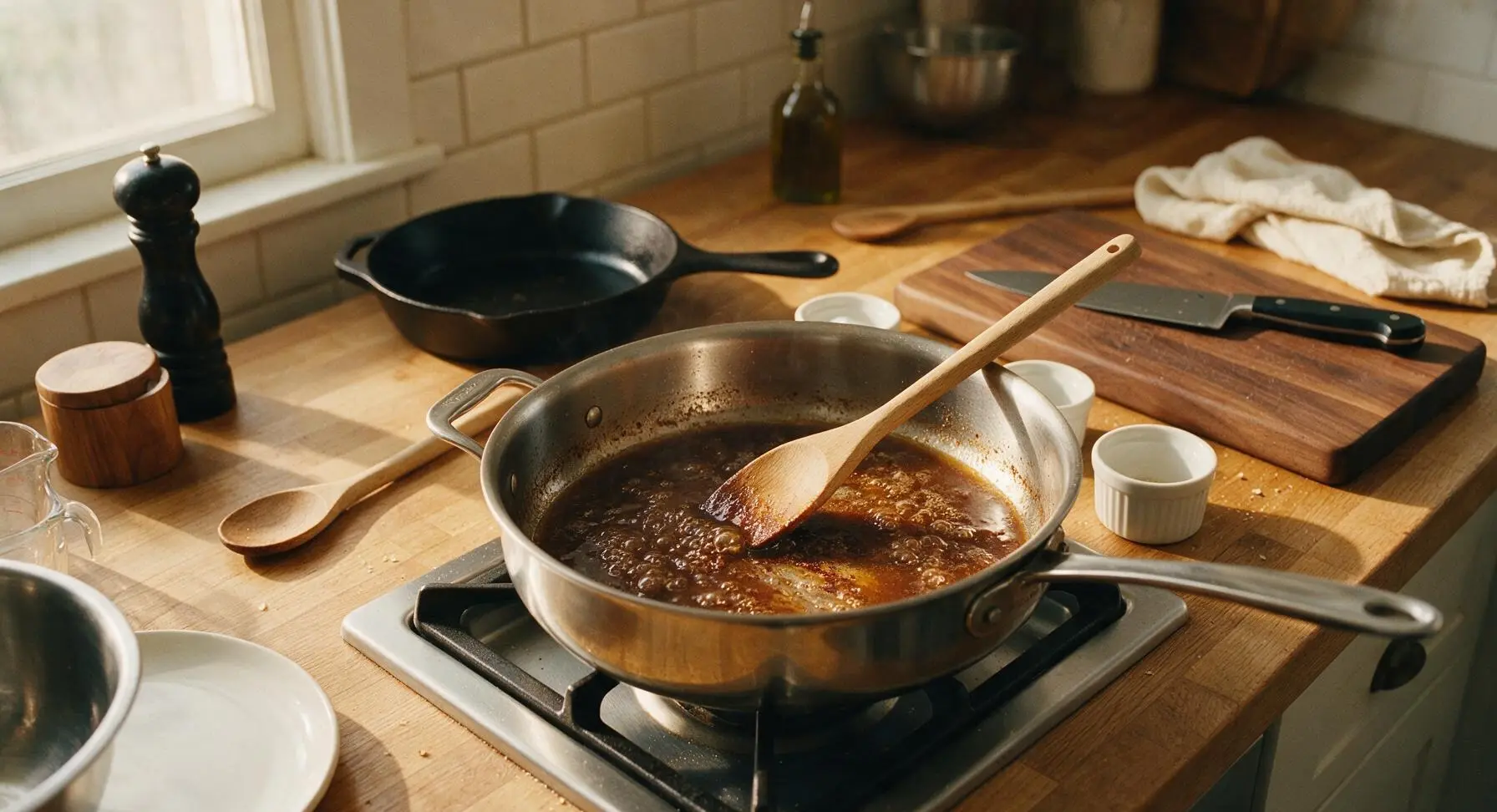
Step 7
step7:Prepare Pan Au Jus
8

Carve and Arrange

After the full 30-minute rest, remove the aluminum foil from the roast. Transfer the roast back to the maple cutting board, and use the walnut-handled chef knife to slice closely along the rib bones to separate them from the meat, then cut the boneless meat into 1.5cm (1/2 inch) thick slices. Fan the slices out on the cream stoneware serving platter, tuck a fresh rosemary sprig at the edge for garnish, and serve alongside the warm ramekins of au jus.
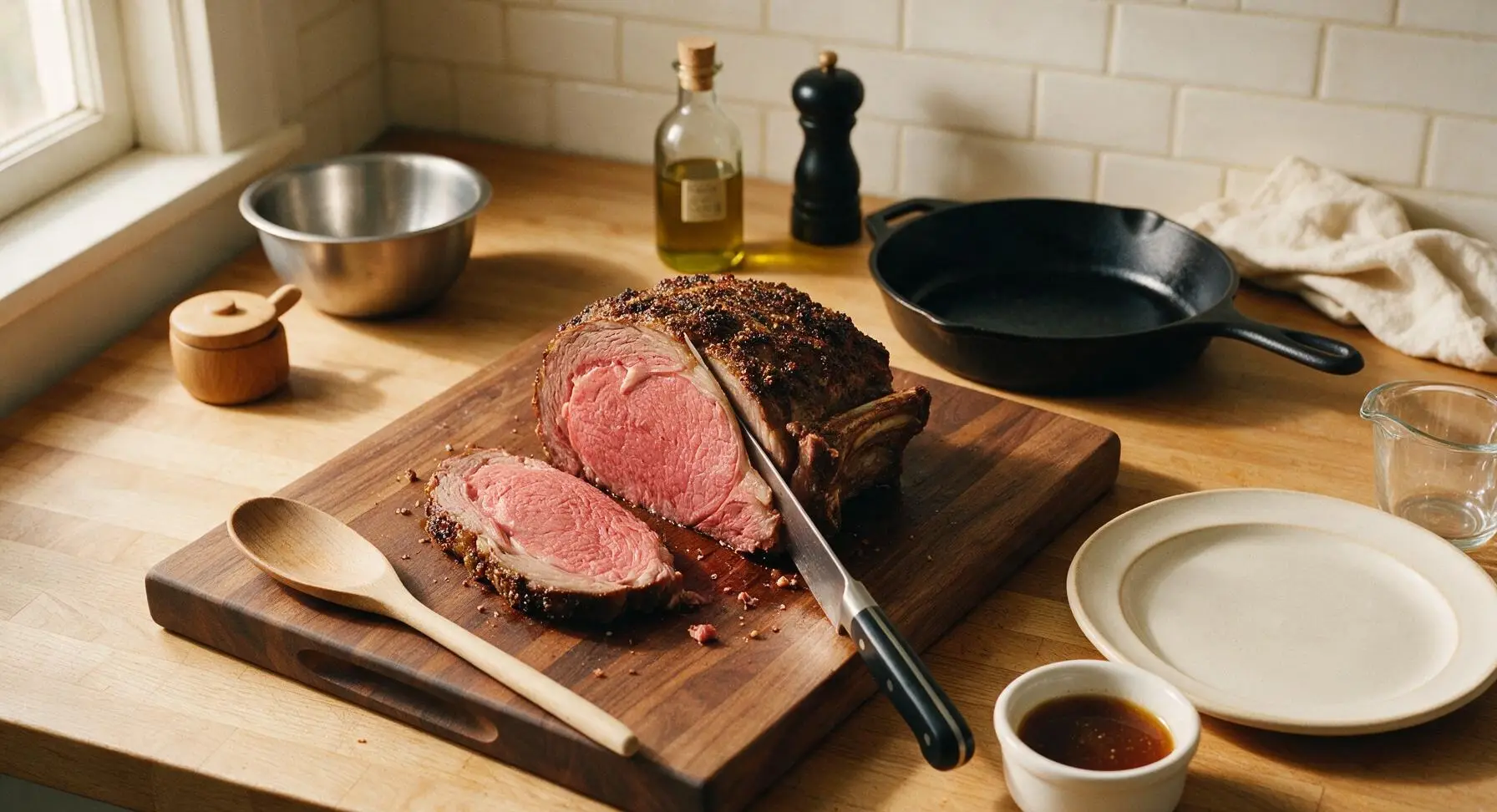
Step 8
step8:Carve and Arrange

Tips

1.Never skip bringing the roast to room temperature before cooking: a cold straight-from-fridge roast will cook unevenly, leading to overcooked gray outer edges and a cold, undercooked center even with careful temperature monitoring.
2.Rely on an instant-read thermometer instead of printed cook time guides: roast shape, individual oven calibration, and bone density all change total cook time, so internal temperature is the only 100% reliable way to achieve perfect medium-rare doneness.
3.Resist the urge to cut into the roast early: the full 30-minute rest period allows muscle fibers to relax and reabsorb juices; cutting too early will cause all flavorful juice to run out onto the platter, leaving the meat dry.
✨ You May Also Like

Main Course
🍜 United Kingdom

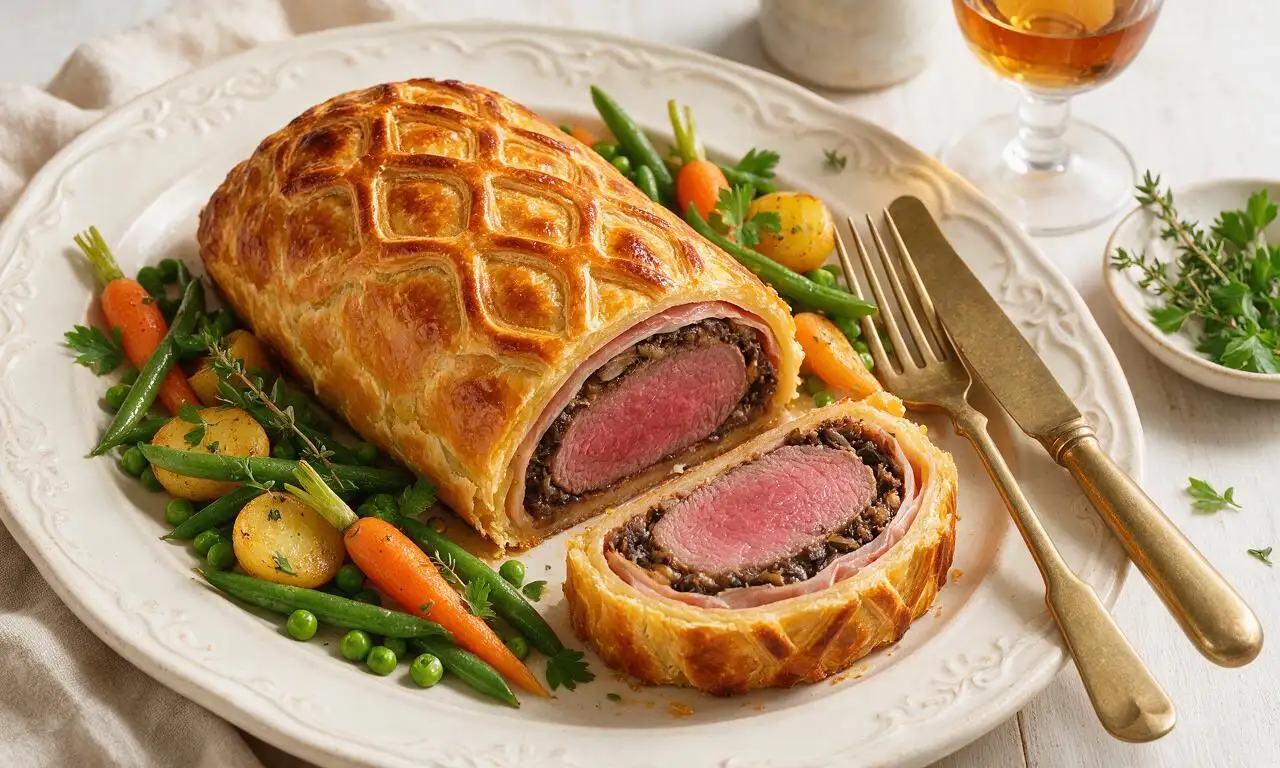
A showstopping classic of tender seared beef, savory mushroom duxelles, and crisp prosciutto wrapped in flaky golden puff pastry, baked to juicy perfection.

⏱️ 2 hours 1Main Course ★ 4.7
Main Course
🍜 India

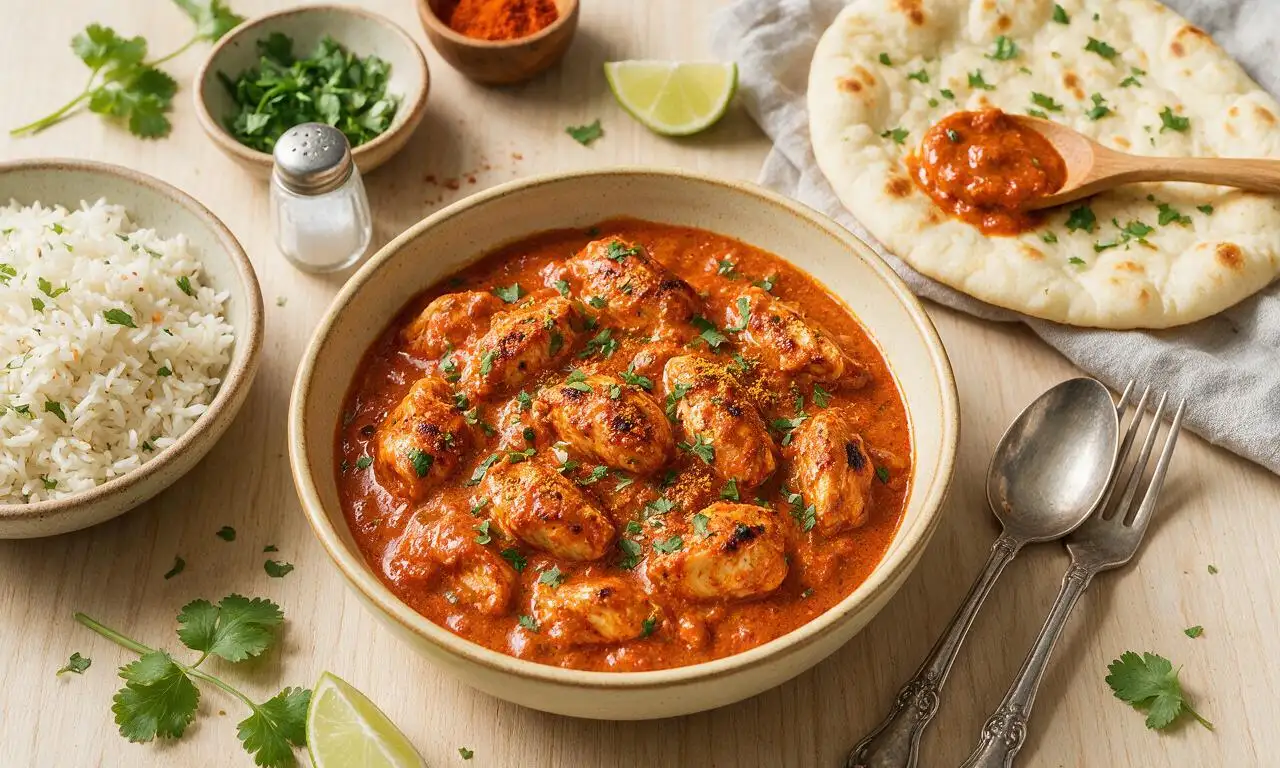
Tender charred marinated chicken simmered in a rich, spiced creamy tomato sauce, this iconic Anglo-Indian curry pairs perfectly with basmati rice or warm naan.

⏱️ 50 minuteMain Course ★ 4.6
Main Course
🍜 Thailand

Classic tangy, sweet, and savory Thai stir-fried rice noodles with shrimp, tofu, and crunchy garnishes, balancing all five core Thai flavor profiles.

⏱️ 30 minuteMain Course ★ 4.5
Main Course
🍜 United Kingdom

Crispy golden beer-battered cod and fluffy double-fried chips, served with tangy tartar sauce and malt vinegar: the timeless, beloved British pub comfort classic.

⏱️ 45 minuteMain Course ★ 4.7
Main Course
🍜 Mexico

Smoky, chile-marinated pork tacos with caramelized pineapple, fresh cilantro, and lime: a beloved classic Mexican street food perfect for casual summer gatherings.

⏱️ 1 hour 45Main Course ★ 4.8
Main Course
🍜 United States

Crunchy Fritos corn chips layered with savory beef chili and melted cheddar, topped with cool, zesty fixings for a beloved, cozy Tex-Mex comfort food.

⏱️ 35 minuteMain Course ★ 4.8

Prime Rib:Frequently Asked Questions

1.Do I need to use a bone-in 3-rib prime rib for this recipe, or is boneless an acceptable substitute? ▾
Bone-in is strongly preferred for deeper, beefy flavor and more even slow cooking, as the bones act as a natural heat buffer to prevent overcooked edges. If you use boneless, reduce total cook time by 15-20% and rely on an instant-read thermometer to track doneness, since you won’t have that insulating bone layer.
2.How far in advance should I salt my prime rib before roasting? ▾
For the juiciest, most evenly seasoned result, salt the roast heavily with kosher salt 12 to 24 hours before cooking, leaving it uncovered on a wire rack in the fridge. This gives salt time to draw out surface moisture that reabsorbs deep into the meat, rather than just seasoning the outermost layer.
3.What oven temperature should I use for slow roasting this prime rib? ▾
Use a steady low 225°F for the bulk of the cook time to promote even, edge-to-edge doneness, so you don’t get a thick band of overcooked gray meat under the crust. Crank the oven to 500°F for the final 10 to 15 minutes to crisp up the pepper and garlic crust right before you pull it out.
4.How do I get that perfectly crisp crust without burning the pepper and garlic seasoning? ▾
First, pat the entire roast completely dry with paper towels before rubbing it with olive oil, garlic powder, salt, and coarse black pepper. Save the high-heat crisping step for the very end of cook time, once the roast is 10°F below your target temp, so the crust sets fast without scorching.
5.What internal temperature should I aim for to get that perfect even medium-rare center? ▾
Pull the roast out of the low-heat slow roast when its thickest point reads 125°F on an instant-read thermometer, before the final high-heat crisp. It will rise 5 to 10°F as it rests, landing you at a perfect 130 to 135°F medium-rare with that soft, consistent pink center everyone loves.
6.Is resting the prime rib really necessary, and how long should I let it sit? ▾
Resting is non-negotiable for juicy results! Let the roast sit loosely tented with foil for 25 to 30 minutes before slicing. This gives hot, tight muscle fibers time to relax and reabsorb all their flavorful juices, so you don’t lose half the roast’s moisture all over your cutting board.
7.Can I add fresh herbs to the rub, or should I stick to the simple salt, pepper, and garlic powder seasoning? ▾
You absolutely can mix finely chopped fresh rosemary, thyme, or sage into the olive oil rub if you’d like! Stick to garlic powder rather than fresh minced garlic for the base, though—fresh garlic burns easily during the long roast and final high-heat blast, turning bitter and unpleasant.
8.My prime rib is still frozen—can I cook it straight from frozen for this recipe? ▾
I don’t recommend cooking a fully frozen prime rib with this slow-roast method, as it will cook extremely unevenly, leaving a raw center and thick band of overcooked gray meat around the edges. Thaw it fully in the fridge for 2 to 3 days first, pat it dry, and season ahead for consistent results.
9.How do I make the rich pan au jus mentioned in the recipe intro? ▾
It’s incredibly easy! After you move the roast to a cutting board to rest, set your roasting pan on the stovetop over medium heat, pour in 1 cup of low-sodium beef broth, and scrape up all the browned, flavorful bits stuck to the pan. Simmer 5 minutes, strain, and serve alongside sliced meat—no thickener needed.
10.Why did my last prime rib have a thick, overcooked gray ring around the edge? ▾
That almost always happens if your oven temperature was too high during the slow roast phase, or if you skipped letting the roast come to room temperature for 1 to 2 hours before cooking. Putting a fridge-cold roast straight in the oven forces outer layers to overcook long before the center warms through.
11.Do I really need to use a roasting rack for this recipe? ▾
A wire roasting rack set inside your pan is highly recommended. It elevates the roast so hot oven air can circulate evenly all the way around it, rather than letting the bottom sit in pooling juices and steam, which would make that side of the crust soggy and lead to uneven doneness.
12.How many people will a 3-rib bone-in prime rib roast feed? ▾
A standard 3-rib bone-in roast weighs roughly 6 to 7 pounds, and will comfortably feed 6 to 8 adults with generous, holiday-sized portions, plus a little leftover for steak sandwiches the next day. If you’re serving lots of rich, filling holiday sides, you can stretch it to cover up to 9 guests without skimping.
13.Can I roast vegetables in the pan with the prime rib while it cooks? ▾
You can, but wait to add root veggies like carrots, potatoes, or onions until the final 45 minutes of cook time! Adding them too early leads to mushy, grease-soaked veggies, and blocks hot air circulation around the roast, which causes uneven cooking and a soggy bottom crust.
14.What’s the best way to store leftover prime rib, and how long will it keep? ▾
Wrap leftover sliced prime rib tightly in plastic wrap or stash it in an airtight container, and keep it in the fridge for up to 4 days. For the best, most tender texture, reheat slices gently in a 250°F oven just until warmed through—skip the microwave, which will turn the tender meat tough and rubbery surprisingly fast.
15.I don’t have kosher salt on hand—can I substitute regular table salt instead? ▾
You can, but you must use half the amount by volume, because table salt is much denser and sharper-tasting than flaky kosher salt. If you use the same volume of table salt as the recipe calls for in kosher salt, your crust will be overly salty, and seasoning won’t distribute evenly across the roast.

Comments (12)

2 days ago

Made this for our Father’s Day cookout last weekend and OMG, it was a total hit! I’ve messed up prime rib twice before by overcooking it, but the slow roast method here had it perfectly medium-rare edge to edge. My brother-in-law kept asking for seconds even after he said he was stuffed. 10/10 will make again for our Christmas dinner too.

3 days ago

SO good! I made this for our regular Sunday family dinner and my kids loved it — they usually turn their noses up at “fancy” meat, but they ate every last bite. The only tweak I made was adding a little extra garlic to the rub, because my household are total garlic fiends. No leftovers at all, which is always the sign of a winner in my book.

1 week ago

As a broke college student who’s never cooked anything fancier than frozen pizza, I was nervous to tackle prime rib for my roommate’s birthday. It was way easier than I thought! The cook time was spot on, no fancy equipment needed. My roommates thought I ordered it from a steakhouse lmao. Total game changer for my dinner party resume.

2 hours ago

Wait, quick question — I’m making this for a potluck next weekend and need to know if I can prep the rub the night before and leave it on the roast in the fridge? Don’t want it to get too salty or dry out! Also, how long do you recommend letting it rest before carving?

30 minutes ago

Great questions! You can absolutely apply the rub the night before and keep the roast covered in the fridge — it actually helps the flavors sink in better! Just be sure to pull it out of the fridge 45 minutes before roasting to take the chill off, and let it rest for a full 20 minutes after cooking before you carve to lock in all the juices. Have fun at the potluck!

5 days ago

Followed the recipe exactly for my first ever prime rib and somehow the edges were well done while the very center was still cold? Did I mess up the oven temp? I used an oven thermometer so I thought it was right, total bummer because I spent a fortune on the cut.

3 days ago

Hey, that happened to me the first time I made this too! Turns out I didn’t let the roast come up to room temp before putting it in the oven. The cold center means the outside cooks way faster before the middle warms up. Give it another shot, it’s worth it!

yesterday

Made this for my in-laws’ visit last week and I’ve been appointed the official holiday cook from now on! The crust was perfectly crispy, the meat was so juicy I didn’t even need au jus (though I made it anyway, obvi). Only thing is I wish I’d bought a bigger roast, everyone went back for thirds.

2 hours ago

That’s what we love to hear! Nothing beats winning over the in-laws with a perfect prime rib. Pro tip for next time: plan for about 1 pound of bone-in prime rib per person so you have enough for seconds (and maybe a little leftover for prime rib sandwiches the next day!)

1 week ago

Has anyone made this with a boneless prime rib instead of bone-in? My grocery store was out of bone-in roasts this week and I don’t want to run all over town for one. Worried it might dry out without the bone.

5 days ago

I did a boneless one last month following this recipe and it came out great! Just tented it with foil a little earlier when the crust got to the color I wanted, and I didn’t notice any difference in juiciness. No dry spots at all!

2 weeks ago

I’ve been making prime rib for 40+ years and I have to say, this slow roast method is foolproof. I used to crank the oven at the end for a sear, but the low and slow start here gives a way more even cook with way less shrinkage. My only note is that people should definitely invest in a good meat thermometer, no more guessing when it’s done!

1 week ago

We couldn’t agree more about the meat thermometer! It’s the single most reliable way to get your perfect doneness every single time, no matter what size roast you’re working with. So glad the method worked for a seasoned pro like you!

30 minutes ago

Making this for my husband’s first birthday as a married couple and I’m low key panicking! We’re having 8 people over, I got a 6 pound bone-in roast — does the cook time listed hold for that size? I’m so scared I’ll undercook it or, worse, overcook it into tough shoe leather.

5 minutes ago

Girl I made a 6 pounder for my husband’s birthday back in April and the cook time was spot on! Just pull it when the internal temp hits 125 for medium rare, let it rest, and you’re golden. He’s gonna lose his mind it’s so good.

just now

You’ve got this! The cook time works great for 5-7 pound roasts, just make sure you’re checking temp at the thickest part of the roast not touching bone, and remember it’ll keep cooking 5-10 degrees while it rests (that’s carryover cooking!). Happy birthday to your husband!

3 days ago

Made this after a long weekend backpacking trip with my trail crew, and let me tell you, after 4 days of trail mix and dehydrated meals, this prime rib tasted like heaven. I did a little horseradish cream on the side that paired perfectly. Already got requests to make it for our post-trip feast next month.

2 days ago

Oh that horseradish cream hack is chef’s kiss! I mix a little sour cream and fresh dill into mine, it cuts the richness of the meat so good. Nothing hits like a big meal after being out on the trail, right?

yesterday

Y’all are making me want to add horseradish cream to my prime rib spread this Sunday! I usually just stick to plain au jus, but that combo sounds way too good to pass up.

5 days ago

Wait a second, I have a tiny apartment oven that runs super hot — does anyone have tips for adjusting for that? I usually have to turn all my recipes down by 25 degrees or the edges burn. Don’t want to ruin the $80 roast I bought for our holiday dinner!

3 days ago

My old apartment oven was the same way! I turned it down 25 degrees like you usually do and kept my oven thermometer in there the whole time, came out perfect. Just check the temp a little earlier than the recipe says so you don’t overshoot.

2 days ago

Great tip from Ty! Oven calibration varies so much from unit to unit, so an oven thermometer is your best friend here. If you know yours runs hot, lowering the temp 25 degrees is a smart call, and start checking internal temp about 20 minutes earlier than the listed cook time to account for it. You’ve got this!

1 week ago

As someone eating low-carb, it’s so hard to find showstopper holiday recipes that don’t have a million hidden carbs, and this one is perfect! No sugary glazes, no weird fillers, just straight up flavorful, juicy meat. My non-keto family didn’t even miss the usual carby sides, that’s how good it was. Game changer for my holiday meal rotation.

5 days ago

Yesss so glad someone else mentioned the keto angle! I brought this to my low-carb potluck last month and everyone was begging for the recipe. I served it with roasted Brussels sprouts and buttered mushrooms, total feast.

3 days ago

We love that this recipe works for so many different eating styles! No fancy add-ins needed, just good quality meat and simple seasonings. So glad it was a hit with your whole family, even the non-keto folks!