
Red IPA

title 1
Red IPA
⏱️ cook time 2 hours 30 minutes
🍽️ servings 16
⚡ Difficulty medium

intro

A balanced, ruby-hued American Red IPA with toasty caramel malt notes, bright citrus-pine hop bite, and a crisp dry finish, perfect for pairing with grilled autumn fare.

Ingredients
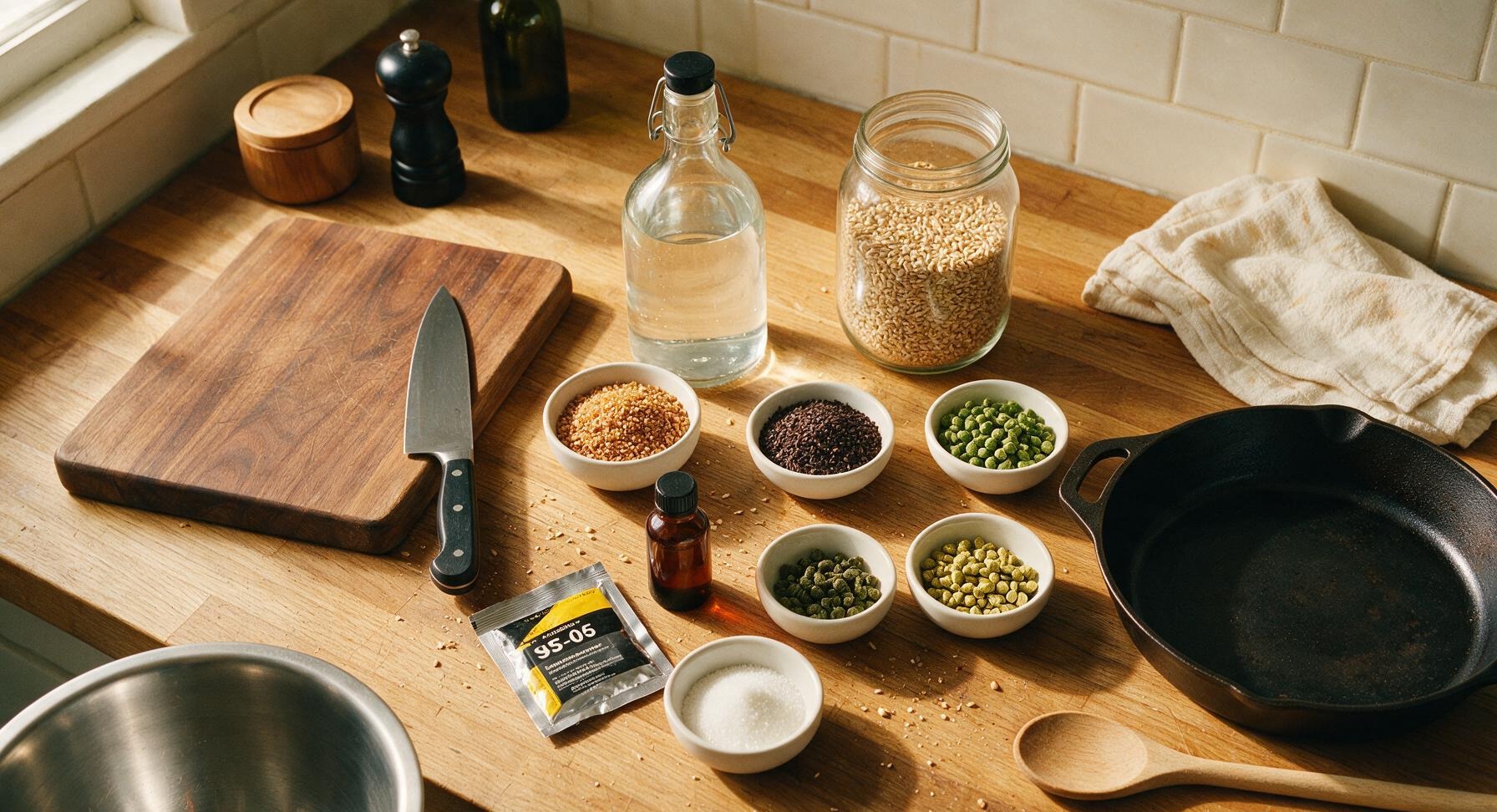
Filtered chlorine-free brewing water 2.5 gallons
Crushed 2-row pale malt 1.8kg (4 lbs)
Crushed caramel 60L malt 140g (5 oz)
Crushed dark roasted barley 25g (1 oz)
Cascade hop pellets 14g (0.5 oz)
Centennial hop pellets 21g (0.75 oz)
Simcoe hop pellets 14g (0.5 oz)
US-05 American ale yeast 1 packet (11g)
No-rinse brewing sanitizer 15ml
Corn priming sugar 50g (1.75 oz)

Steps

1

Sanitize Brewing Equipment

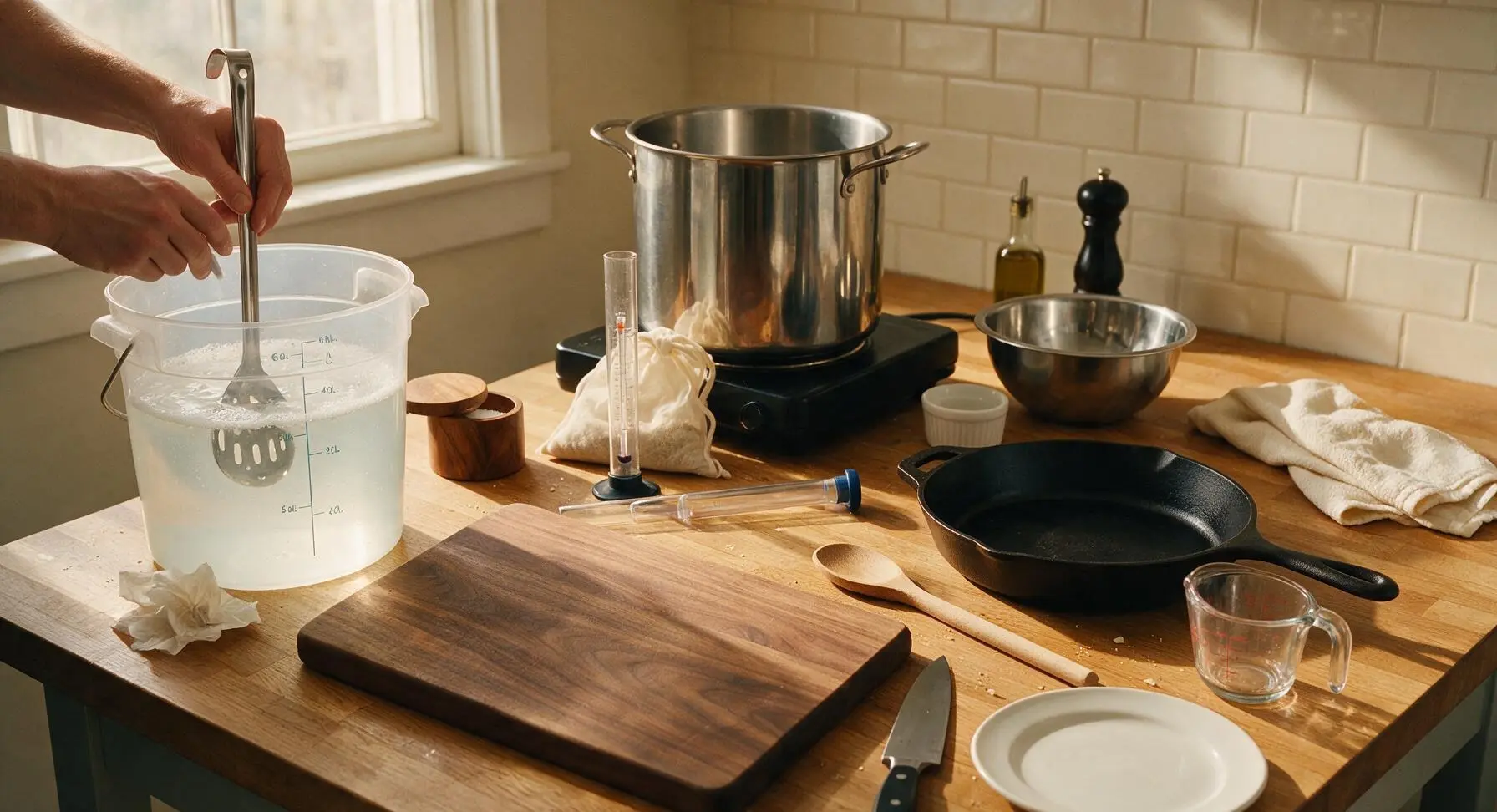
Mix 15ml no-rinse sanitizer with 4L cool water in the translucent 6L sanitizer bucket. Submerge the mash spoon, grain bag, hydrometer jar, auto-siphon, and fermentation bucket lid for 2 minutes, then shake off excess solution. Ensure every surface that will touch cooled wort is fully sanitized to prevent off-flavors or infection. The kettle does not need sanitizing, as it will be used for boiling.
Step 1
step1:Sanitize Brewing Equipment
2

Mash the Grain Bill

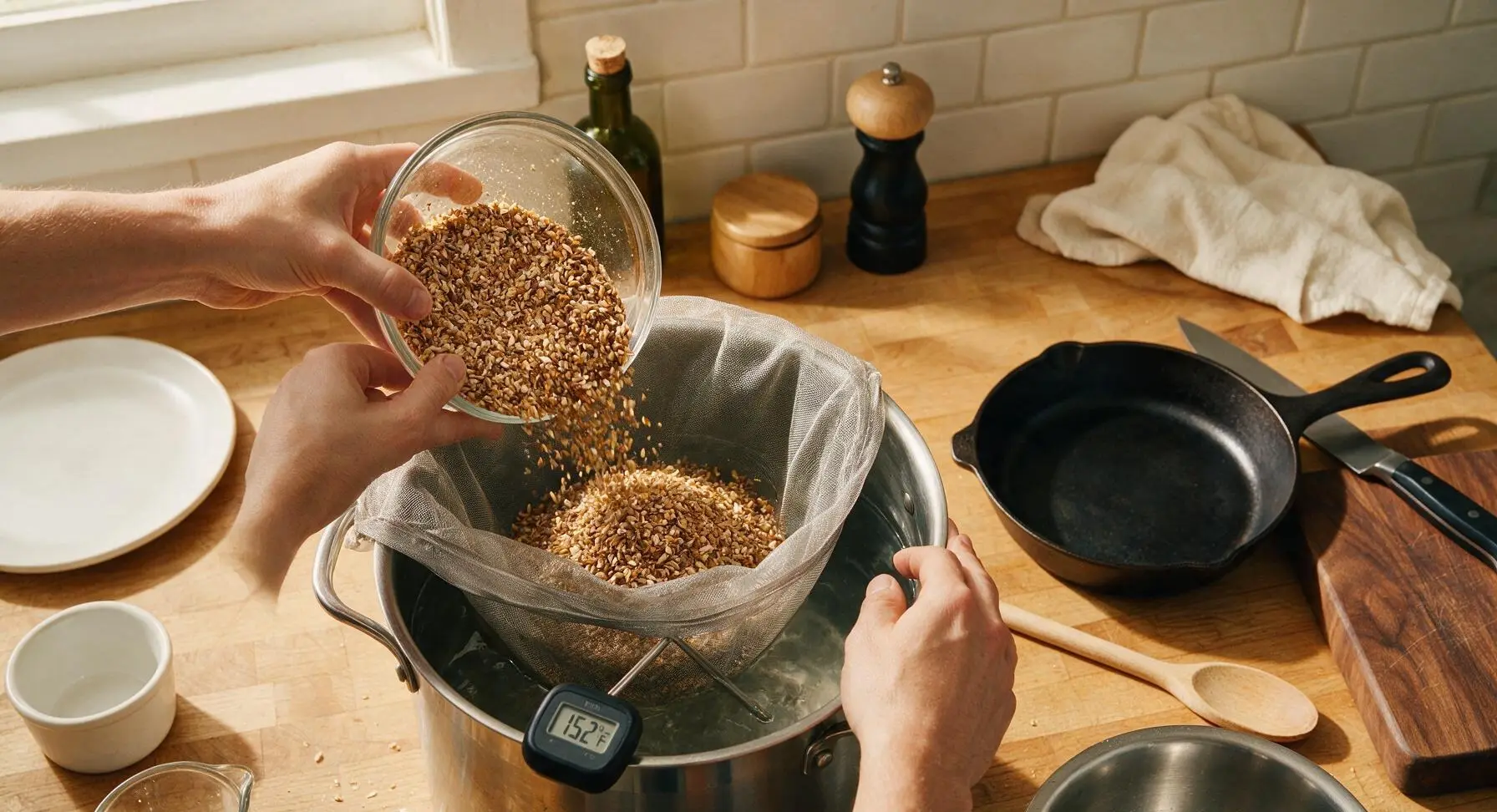
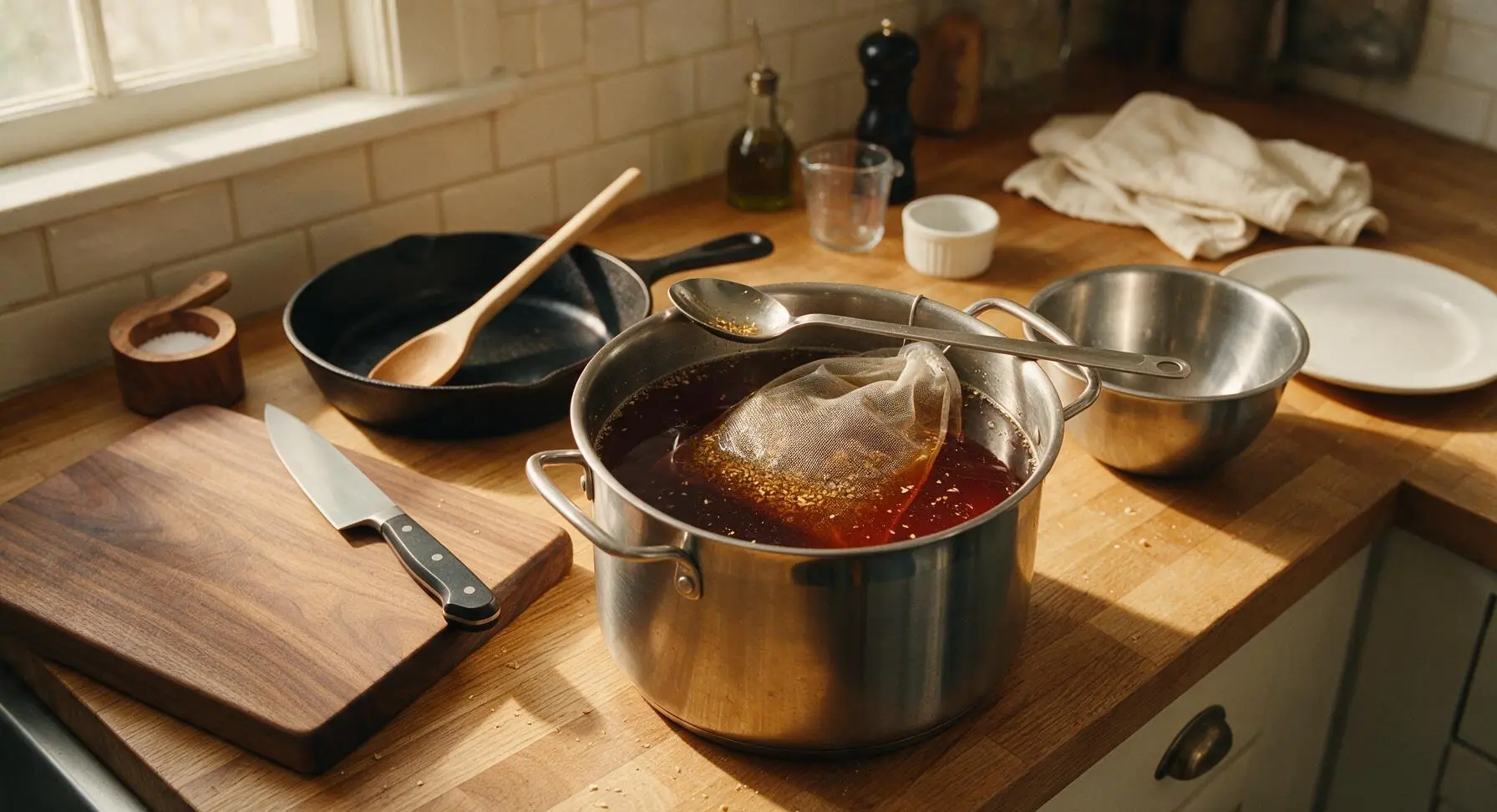
Heat 1.4 gallons of filtered water in the brew kettle to 152°F (67°C), checking temperature with the digital thermometer attached to the kettle side. Place the stainless steel mesh grain bag into the kettle, then pour all crushed 2-row, caramel 60L, and roasted barley into the bag. Stir gently with the mash paddle to break up dry clumps, then hold temperature steady at 150-155°F (66-68°C) for 60 minutes. The wort will turn a deep amber-red color as sugars extract from the grains.
Step 2
step2:Mash the Grain Bill
Step 2
step2:Mash the Grain Bill
3

Sparge and Heat Wort

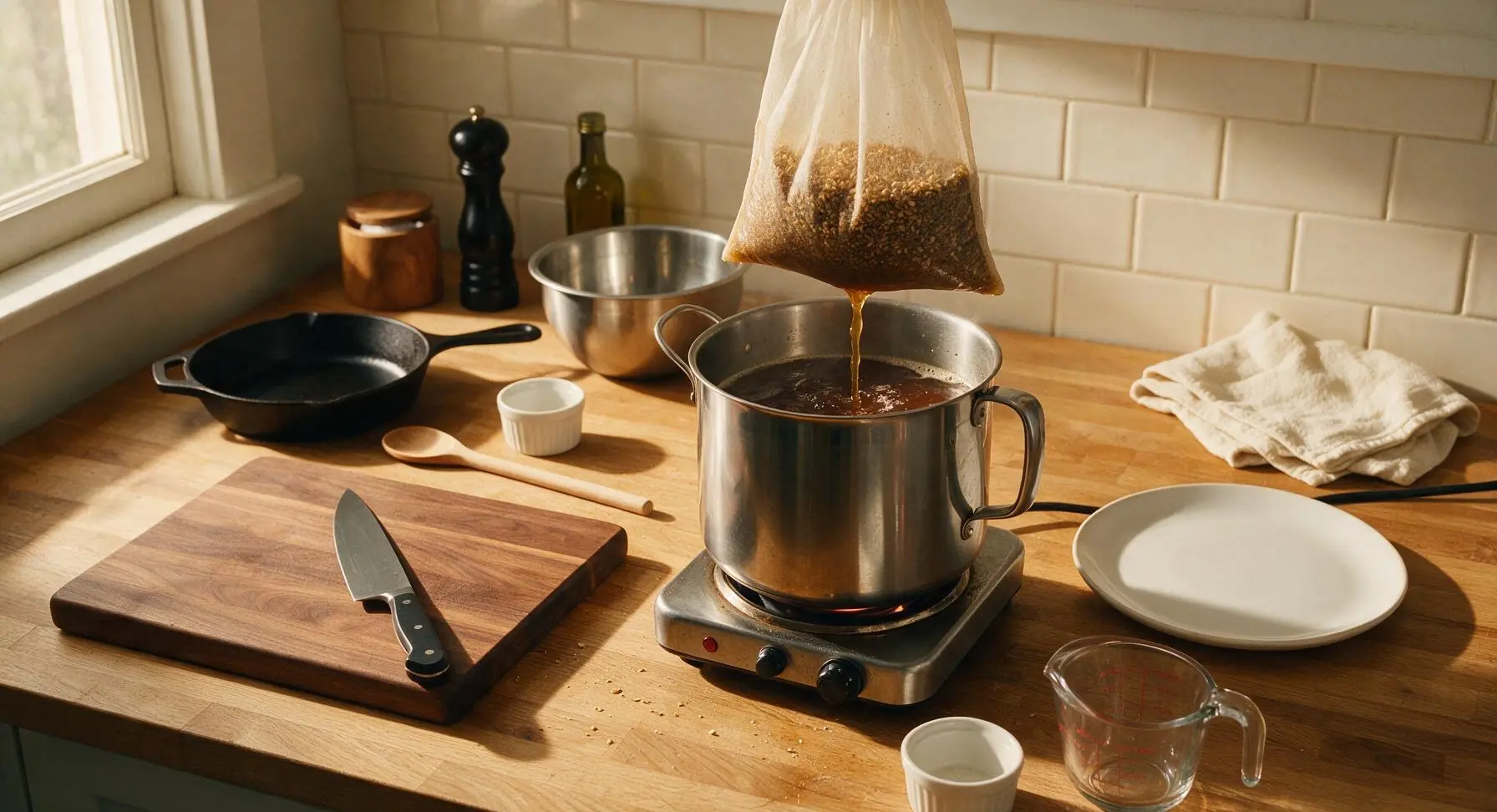
After 60 minutes of mashing, carefully lift the grain bag out of the kettle, letting all sweet wort drain back into the pot (do not squeeze the bag, as this adds harsh astringency). Slowly pour 0.4 gallons (1.5L) of 170°F (77°C) filtered water over the grain bag to rinse remaining sugars from the grains, then discard the spent grains. Turn the hot plate to high, and bring the collected wort to a rolling, steady boil.
Step 3
step3:Sparge and Heat Wort
4

Add Hops on Schedule

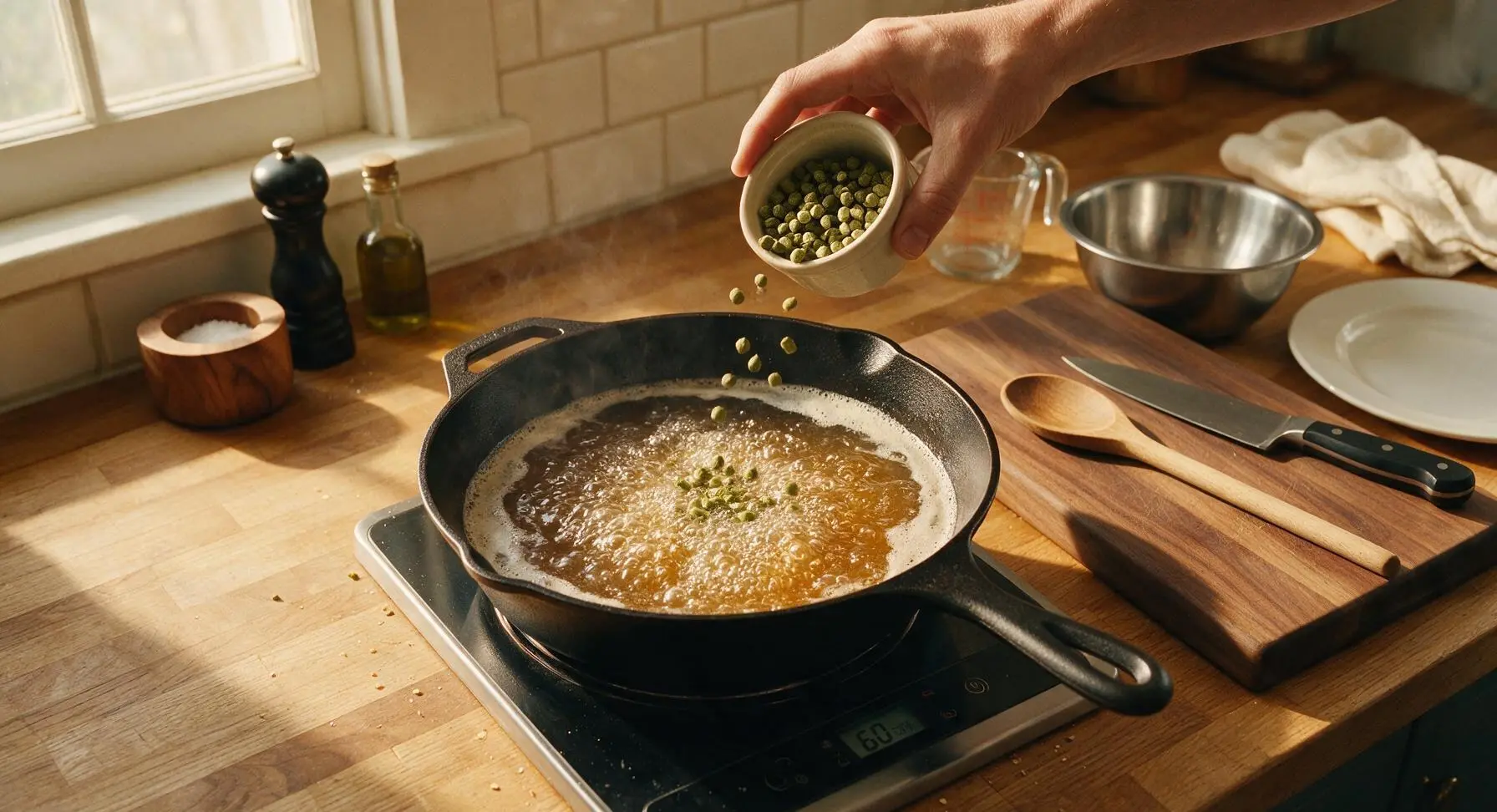
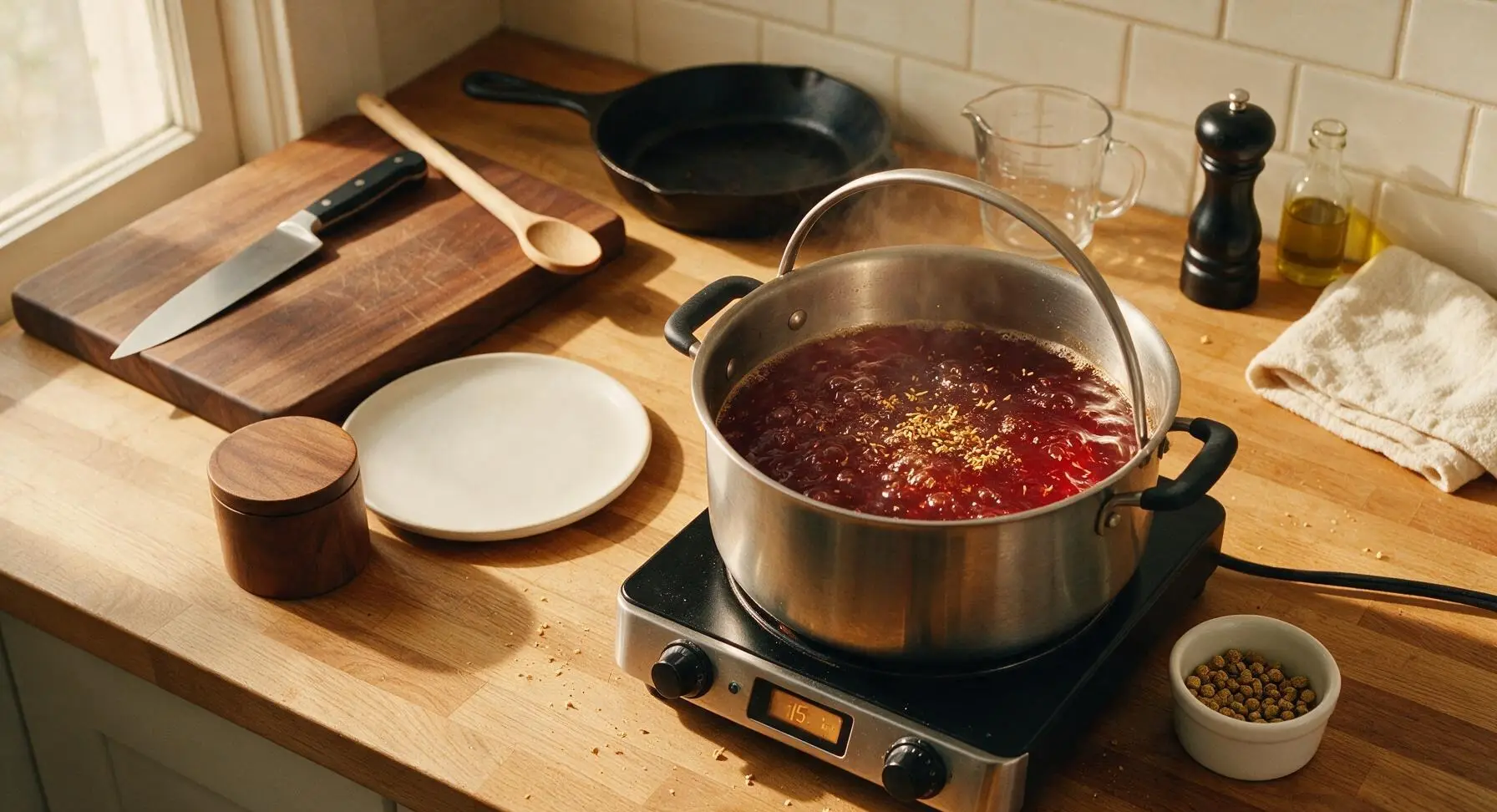
Once the wort reaches a rolling boil, set a timer for 60 minutes. Add all 14g of Cascade hop pellets immediately at the start of the boil (these add balancing bitterness, ~45 IBUs). When 15 minutes remain on the timer, add half the Centennial hops (10.5g) for bright citrus flavor. When the timer goes off (end of 60 minute boil), turn off the heat, add the remaining 10.5g of Centennial hops for aroma, and put the kettle lid on. Watch for boil-overs during the first 10 minutes of boiling, adjusting heat as needed.
Step 4
step4:Add Hops on Schedule
Step 4
step4:Add Hops on Schedule
5

Cool Wort and Pitch Yeast

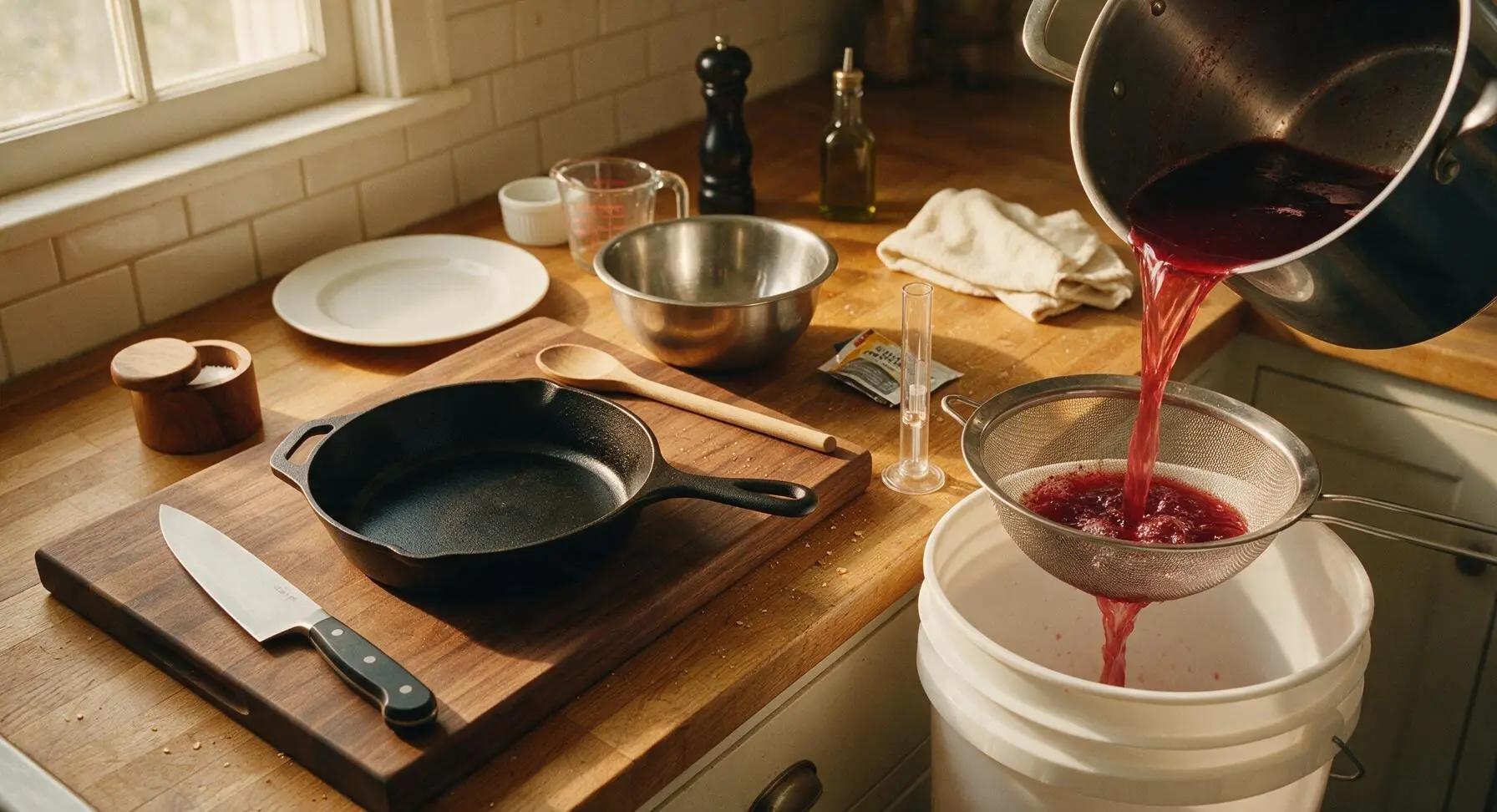
Place the closed kettle in an ice bath in a clean sink to cool the wort rapidly to 70°F (21°C) (this takes approximately 20 minutes). Once cooled, pour the wort through a fine strainer into the sanitized 5-gallon fermentation bucket, then top up with filtered water to reach a total 2-gallon volume. Sprinkle the entire packet of US-05 yeast over the wort surface, then seal the bucket lid tightly and insert the water-filled airlock. The initial wort will smell sweet, hoppy, and slightly bready.
Step 5
step5:Cool Wort and Pitch Yeast
6

Ferment and Dry Hop

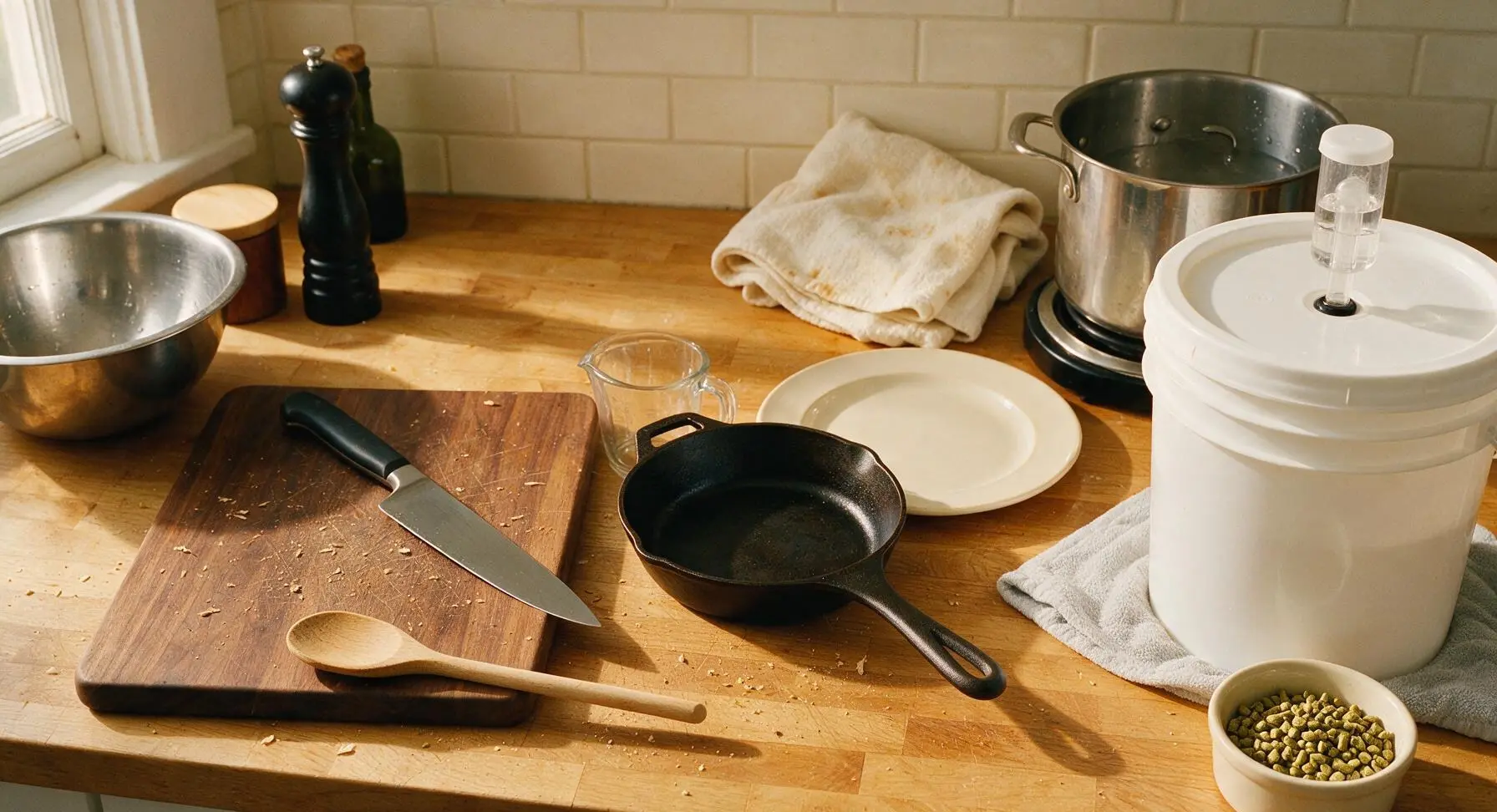
Store the sealed fermentation bucket in a dark, temperature-stable space held at 65-70°F (18-21°C) for 7 days. Active fermentation will be visible as bubbles passing through the airlock every 10-20 seconds for the first 3-4 days. After 7 days, when bubbling slows to one bubble every few minutes, sanitize the bucket lid opening, add all 14g of Simcoe hop pellets directly to the fermenter for bright pine-resin aroma, then re-seal the lid and let rest for an additional 3 days at the same temperature.
Step 6
step6:Ferment and Dry Hop
7

Bottle for Carbonation

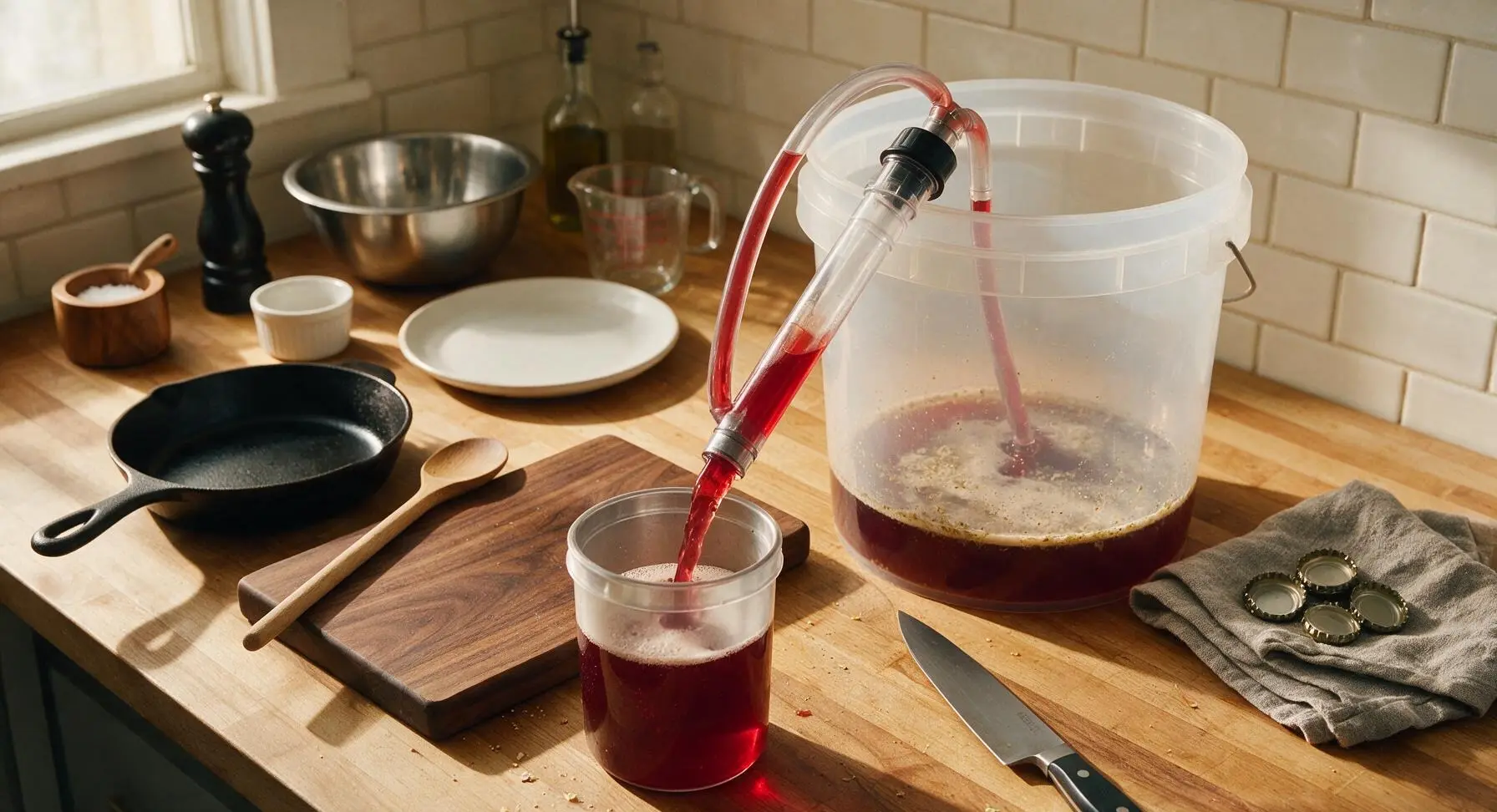
After 10 total days of fermentation, siphon the clear, ruby-red beer off the hop and yeast sediment into a clean, sanitized bottling vessel. Dissolve 50g of corn priming sugar in 1/2 cup of boiled, cooled water, then mix gently into the beer to create natural carbonation. Fill sanitized 12oz beer bottles, cap tightly, and store in a dark 65-70°F space for 2 weeks to carbonate fully before chilling to 45°F (7°C) for serving.
Step 7
step7:Bottle for Carbonation

Tips

1.Always use chlorine-free filtered or spring water for brewing: chlorine in municipal tap water reacts with malt phenols during fermentation to create harsh, plastic-like off-flavors that cannot be removed once they develop.
2.Never squeeze the mesh grain bag after mashing: squeezing presses bitter, astringent tannins from grain husks into the wort, creating a dry, puckering aftertaste that masks the beer's smooth caramel malt and bright hop flavors.
3.Keep fermentation temperatures steady between 65-70°F (18-21°C): temperature swings above 75°F cause yeast to produce harsh, solvent-like fusel alcohols, while temperatures below 60°F can stall fermentation entirely and leave unpleasantly sweet, under-attenuated beer.


✨ You May Also Like

Drinks & Beverages
🍜 Mexico

A bright, balanced tequila-based cocktail with zesty fresh lime, smooth orange liqueur, and a signature salt rim, perfect for warm summer sipping.

⏱️ 5 minutesDrinks & Beverages ★ 4.9
Drinks & Beverages
🍜 United States

Thick, creamy, nostalgic classic vanilla milkshake with a rich, smooth texture, topped with whipped cream and a cherry for cool, sweet refreshment.

⏱️ 5 minutesDrinks & Beverages ★ 4.7
Drinks & Beverages
🍜 United States

A bright, golden strong ale with fruity banana-clove notes, subtle hop spice, and soft carbonation, brewed in classic Trappist Tripel tradition.

⏱️ 2 hours aDrinks & Beverages ★ 4.5
Drinks & Beverages
🍜 United States

A frothy, nostalgic American soda fountain treat pairing bubbly cold root beer with creamy vanilla ice cream, perfect for cooling down at warm weather gatherings.

⏱️ 20 minuteDrinks & Beverages ★ 4.8
Drinks & Beverages
🍜 United States

Tart, funky, effervescent American Wild Ale is a complex fruity craft beer brewed with wild yeast, delivering bright, zesty notes perfect for warm-weather sipping.

⏱️ 2 hours aDrinks & Beverages ★ 4.4
Drinks & Beverages
🍜 United States

Bright, bubbly copycat of the iconic American caramel cola, balanced with citrus and warm spice, perfect for sipping ice-cold on hot days.

⏱️ 15 minuteDrinks & Beverages ★ 4.8

Red IPA:Frequently Asked Questions

1.Why does this recipe specifically call for chlorine-free brewing water? ▾
Chlorine (and chloramine, common in municipal tap water) reacts with natural phenols in malt to create harsh, band-aid or plastic-like off-flavors that ruin this IPA’s bright, clean profile. If you don’t have a filtered system, add one crushed campden tablet per 5 gallons of tap water 20 minutes before brewing to neutralize those compounds. Skip distilled water, as it lacks trace minerals that make malt and hop flavors pop.
2.What gives this homemade red IPA its signature ruby-red color? ▾
That rich, clear ruby hue comes from the measured combination of caramel 60L malt and the small dose of dark roasted barley in the grain bill. Resist the urge to add extra dark malt for a deeper color, though—too much roasted barley adds harsh, ashy bitter notes that overpower bright Cascade hop character and toasty caramel balance. Strain wort well post-mash to keep color bright, not murky.
3.Can I use whole Cascade hops instead of the recommended hop pellets? ▾
Absolutely! Whole Cascade hops work beautifully here, though you’ll need to use about 15% more by weight than the listed pellet measurement to account for their lower surface area and higher wort absorption. Note that whole hops leave more trub (sediment) in the boil kettle, so give wort 10 extra minutes to settle before racking to avoid carrying excess gunk that muddles clean hop flavor.
4.Why is this IPA supposed to have a crisp, dry finish instead of a sweet, malty one? ▾
That crisp, dry finish is what makes this red IPA so food-friendly, especially with fatty, charred grilled autumn fare like brats, roasted squash, or smoked ribs. If your test batch turns out overly sweet, you likely didn’t let your mash convert fully, or used a low-attenuation yeast. Stick to a clean American ale yeast with 73-78% attenuation to hit that dry target without thinning malt body.
5.How do I avoid harsh, astringent flavors from the dark roasted barley? ▾
Harsh astringency from dark malt happens when you steep roasted grains at too high a temperature, or pour sparge water over 170°F directly onto the grain bed. For this recipe, add crushed dark roasted barley during the last 15 minutes of the mash instead of the full 60-minute steep, and keep sparge water between 165-168°F to extract smooth, toasty roast notes without mouth-drying astringency.
6.What Cascade hop addition schedule gives the best citrus-pine hop bite? ▾
To get that signature bright, fresh citrus-pine Cascade bite without harsh grassy notes, split your hop pellets into three additions: 60% for a 60-minute bittering addition, 25% for a 15-minute flavor addition, and the remaining 15% for a 5-minute aroma addition at the end of the boil. This balances smooth, clean bitterness with bright, fresh hop aroma that doesn’t cook off during the long boil.
7.What can I use as a substitute if I don’t have caramel 60L malt? ▾
If you don’t have caramel 60L malt, you can swap it for a blend of 75% caramel 40L and 25% caramel 80L to hit the same toasty, light caramel sweetness and ruby hue. Avoid using extra-dark caramel malts (120L or higher) as a straight swap, as they add heavy, raisin-like burnt sugar notes that throw off the beer’s balance and make it too heavy for a crisp, dry IPA.
8.How long should I ferment this red IPA for the best, most balanced flavor? ▾
For the cleanest, most balanced flavor, ferment this IPA at 67-70°F (the ideal range for American ale yeast) for 7 to 10 days, until hydrometer gravity readings hold steady for two consecutive days. After primary fermentation, cold condition it for 3 to 5 days at 40°F to help sediment drop out, resulting in a clearer, crisper pour without dulling bright Cascade hop aroma.
9.Why does the recipe call for crushed malt instead of whole, uncrushed grain? ▾
Crushing malt cracks open the hard, starchy inner kernel so hot mash water can access and convert those starches into fermentable sugar. If you use uncrushed malt, you’ll get minimal sugar extraction, resulting in weak, low-alcohol beer with barely any malt flavor. Don’t over-crush to a fine powder, though—too many fine particles create hazy, astringent wort that’s hard to strain cleanly.
10.What ABV does this recipe produce, and can I adjust it easily? ▾
When brewed to the standard grain bill, this red IPA lands at a very approachable 6.2-6.5% ABV, strong enough to stand up to hearty grilled autumn food but not so heavy you can’t enjoy a couple at a backyard cookout. If you want a slightly stronger batch, add up to 8 ounces of extra crushed 2-row pale malt during the mash to boost ABV without throwing off the recipe’s delicate flavor balance.
11.How should I store the finished beer to keep that bright hop flavor fresh? ▾
Cascade hop flavor and aroma fades quickly when exposed to heat, oxygen, and UV light, so store your finished, bottled or kegged beer in a cool, dark space at 45-55°F. When stored properly, the bright citrus-pine notes stay vibrant for 3 to 4 months; after that, hop character mellows into softer, malt-forward flavors. Never store bottles in direct sun, which causes skunky off-flavors in as little as a few hours.
12.The recipe mentions pairing with grilled autumn fare—what are the best specific matches? ▾
This red IPA’s balance of toasty caramel, bright pine-citrus hop bite, and dry finish makes it incredibly versatile for fall meals. It pairs perfectly with charred bratwurst with caramelized onions, smoked pork ribs, roasted butternut squash with brown butter, sharp cheddar burgers, and spiced grilled apple slices. The carbonation and hop bite cut through rich, fatty foods, while malt notes complement warm, toasty autumn flavors.

Comments (5)

3 days ago

OMG, this red IPA turned out SO good! I brewed a batch for my annual neighborhood potluck last weekend and everyone was begging for the recipe. The caramel malt balance with that citrusy Cascade hop kick is total game changer. Even my brother-in-law who swears he only drinks commercial IPAs said it’s better than most he’s bought at the liquor store. Total cook time was spot on too, didn’t drag on like some homebrew recipes I’ve tried. 10/10 will brew again!

2 days ago

Wait did you stick to the hop stand temp the recipe calls for? I’m nervous to mess that step up, this is my first time making a red IPA instead of my go-to pale ale!

2 days ago

So glad this was a hit at your potluck! Quick tip for anyone with questions about the hop stand—wait until the wort cools to 170-180F before adding those aroma hops, that way you lock in bright citrus notes without burning off the delicate hop oils. Don’t rush that cool down step!

1 week ago

Really solid recipe! I made this last Sunday for our family dinner watch party and my husband and teenage sons loved it. I knocked a star off only because I found the 2.5 hour cook time stretched to almost 3 hours for me since I’m still getting used to my new brew kettle, but the end result was totally worth it. That deep amber color is gorgeous, and the malt sweetness doesn’t get overpowered by the hops at all.

5 days ago

Thanks so much for giving the recipe a try! It’s totally normal for cook times to run 20-30 minutes long when you’re breaking in new equipment, especially when you’re waiting for that full rolling boil for the bittering hop addition. So glad your family enjoyed the final pour!

just now

Just popped my wort into the fermenter following this recipe and OMG the smell is unreal! Toasty caramel, bright pine hops, exactly what I want out of a red IPA. Will update once it’s carbonated in a couple weeks, but so far this seems foolproof even for a medium-difficulty brew.

2 weeks ago

Game changer of a homebrew recipe! I’ve tried a handful of red IPA recipes online before and they always come out too malty, too sweet, or way too bitter, but this one hits that perfect middle ground. Brought a growler of it to my buddy’s cookout last Saturday and everyone was raving. Even used a little extra Centennial hop on my last batch for a bigger citrus punch and it worked like a charm.

1 week ago

Oh the extra Centennial addition sounds chef’s kiss! I’ve got a batch fermenting right now, might toss a half ounce in when I dry hop this weekend to test that out. Thanks for the tip!

2 days ago

First time making an IPA of any kind, and this was mostly a success! My only issue is that my final ABV came out a little lower than the recipe notes said it would, around 5.8% instead of 6.5%. Flavor is still on point though—nice roasty backbone, bright hop finish, my roommates loved it. Definitely making it again, just need to figure out where I went wrong with the efficiency.

yesterday

I had that same issue my first batch! Turned out my mash temp was running 5 degrees too high, which messed with sugar conversion. Definitely calibrate your thermometer before your next brew day, that totally fixed the problem for me!

2 hours ago

So glad the flavor profile worked out for you! Lower than expected ABV is super common for homebrewers, especially on medium-difficulty recipes where mash efficiency can make a big difference. A slightly longer mash rest (15 extra minutes) and a consistent grain crush will help you hit that target ABV on your next batch. Cheers!



