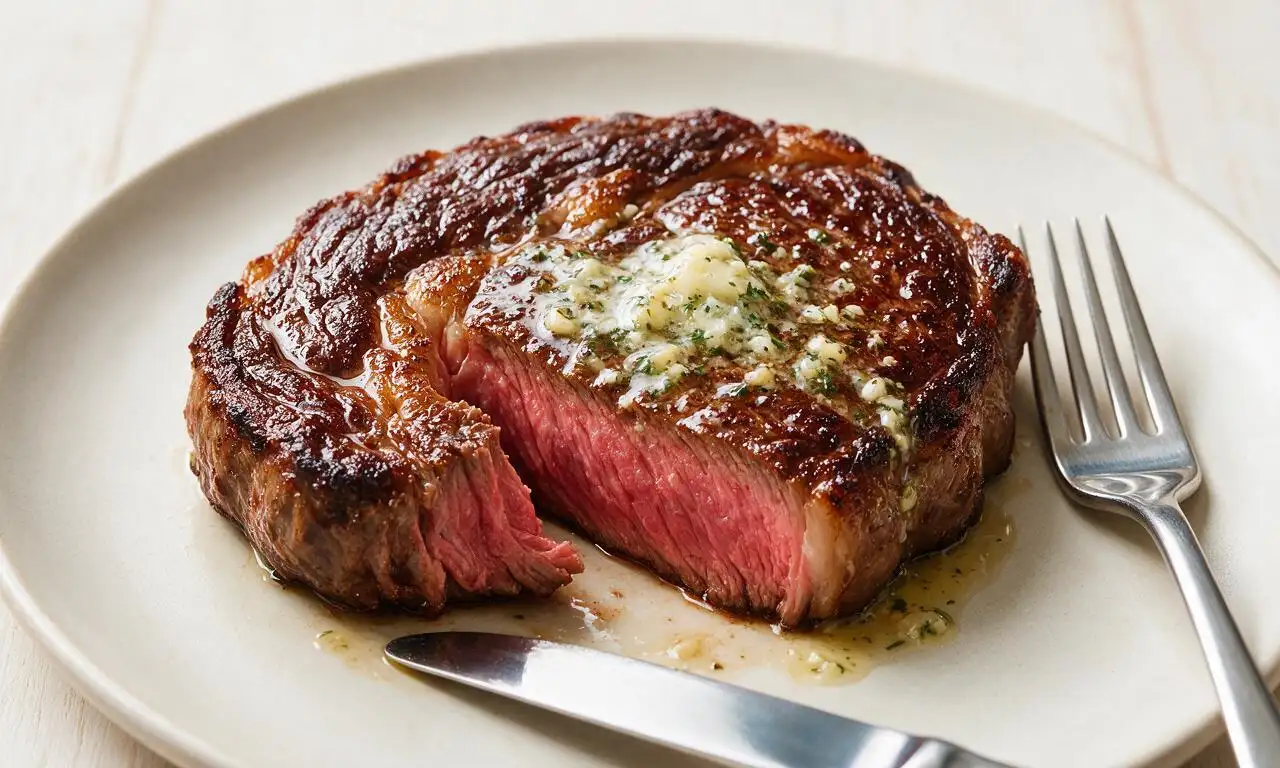
Rib Eye Steak

title 1
Rib Eye Steak
⏱️ cook time 25 minutes
🍽️ servings 4
⚡ Difficulty medium

intro

Juicy, deeply crusted rib eye steak basted with garlic-herb butter, cooked to tender medium-rare for a restaurant-quality date night meal at home.

Ingredients

Boneless rib eye steak (2.5cm thick) 4 pieces (225g each)
Kosher salt 2 teaspoons
Freshly ground black pepper 1 teaspoon
Avocado oil (high smoke point) 2 tablespoons
Unsalted butter 3 tablespoons
Garlic cloves, crushed 4 whole
Fresh rosemary sprigs 2 sprigs
Fresh thyme sprigs 4 sprigs

Steps

1

Prep and season steaks

Remove boneless rib eye steaks from the refrigerator 40 minutes before cooking to bring them to a consistent room temperature (18-20°C/65-68°F surface temp). Pat all surfaces (including the fat cap) completely dry with paper towels, then season every side evenly with 2 teaspoons kosher salt and 1 teaspoon freshly ground black pepper, pressing the seasoning gently to adhere to the meat.
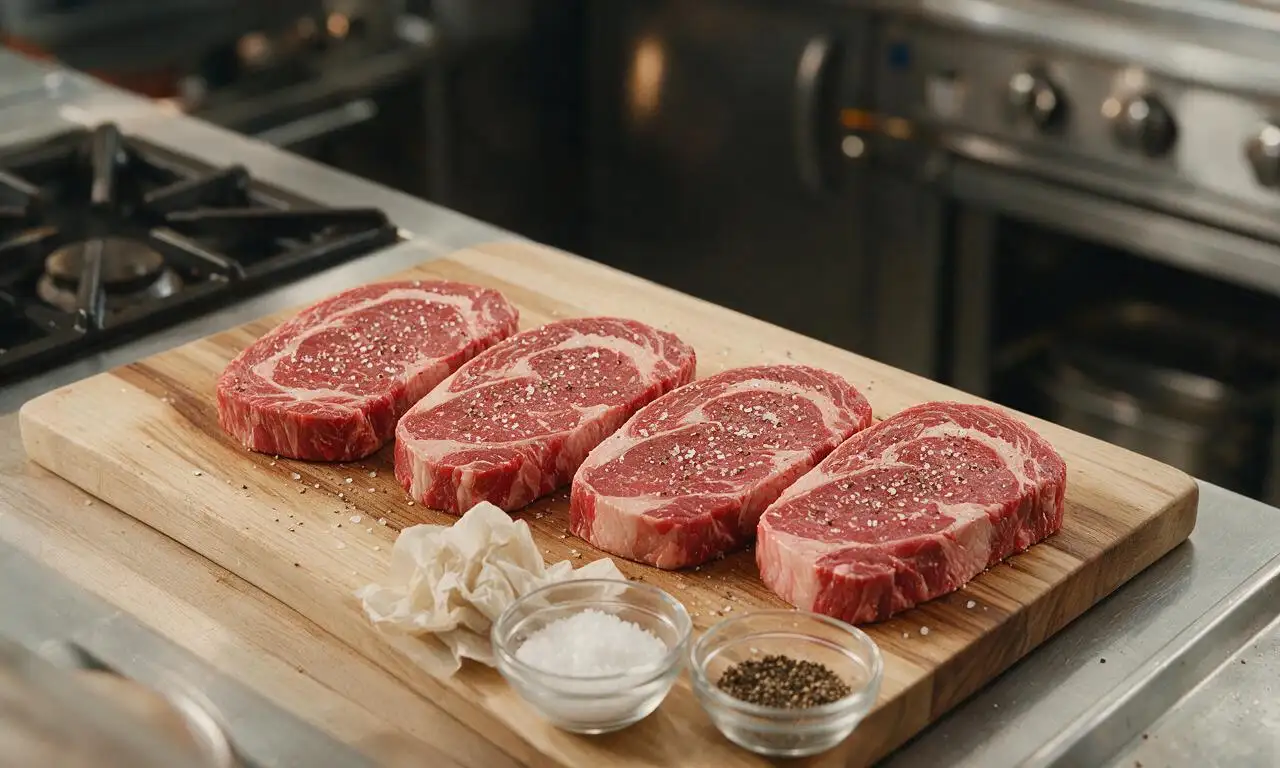
Step 1
step1:Prep and season steaks
2

Preheat cast iron skillet

Place a heavy 12-inch cast iron skillet on the stovetop over medium-high heat. Add 2 tablespoons of avocado oil, and heat for 3-4 minutes until the oil shimmers across the pan surface and releases thin, faint wisps of smoke. Do not leave the pan unattended to prevent oil overheating or burning.
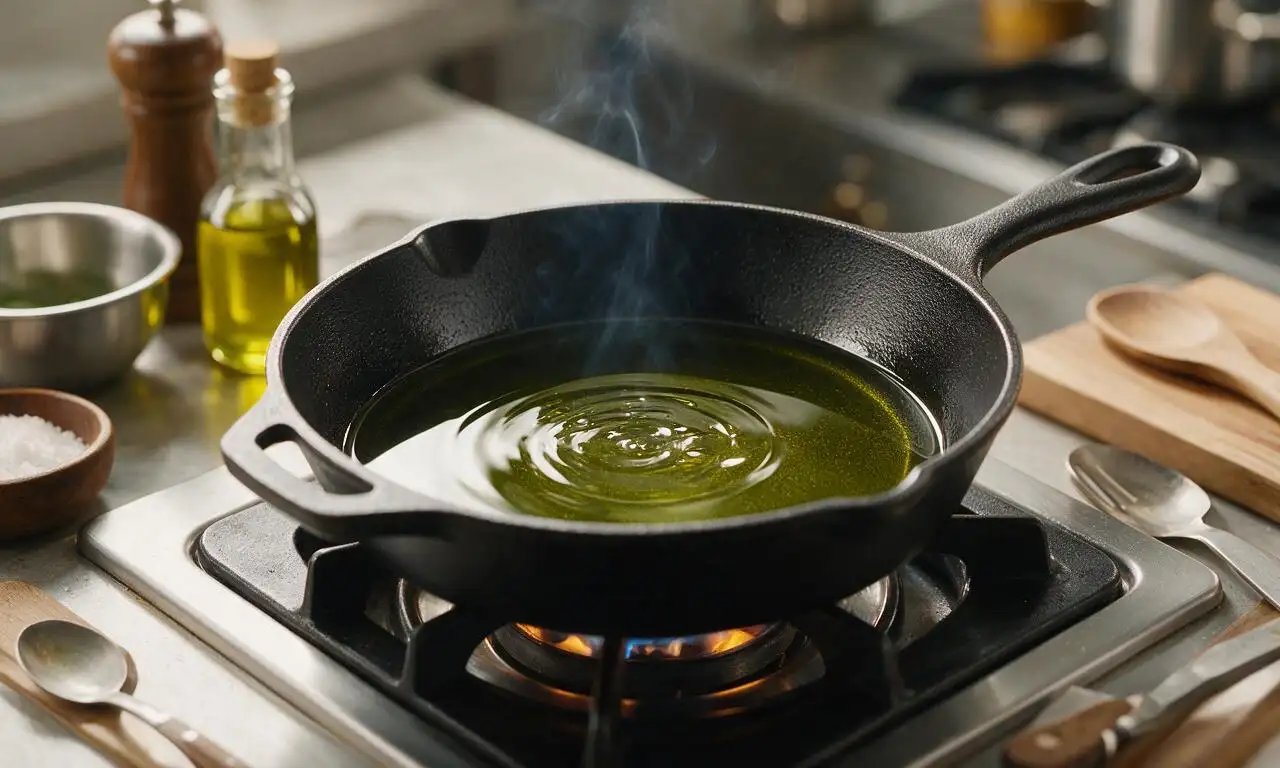
Step 2
step2:Preheat cast iron skillet
3

Sear first steak side

Carefully lower the steaks into the hot pan one at a time, laying them away from your body to avoid hot oil splatters. Cook in 2 batches if your pan is too small to hold all 4 steaks with 2cm of space between each (overcrowding causes steaming instead of a crisp sear). Sear undisturbed for 3 full minutes on medium-high heat, until a deep, golden-brown, crispy crust forms across the entire bottom surface.
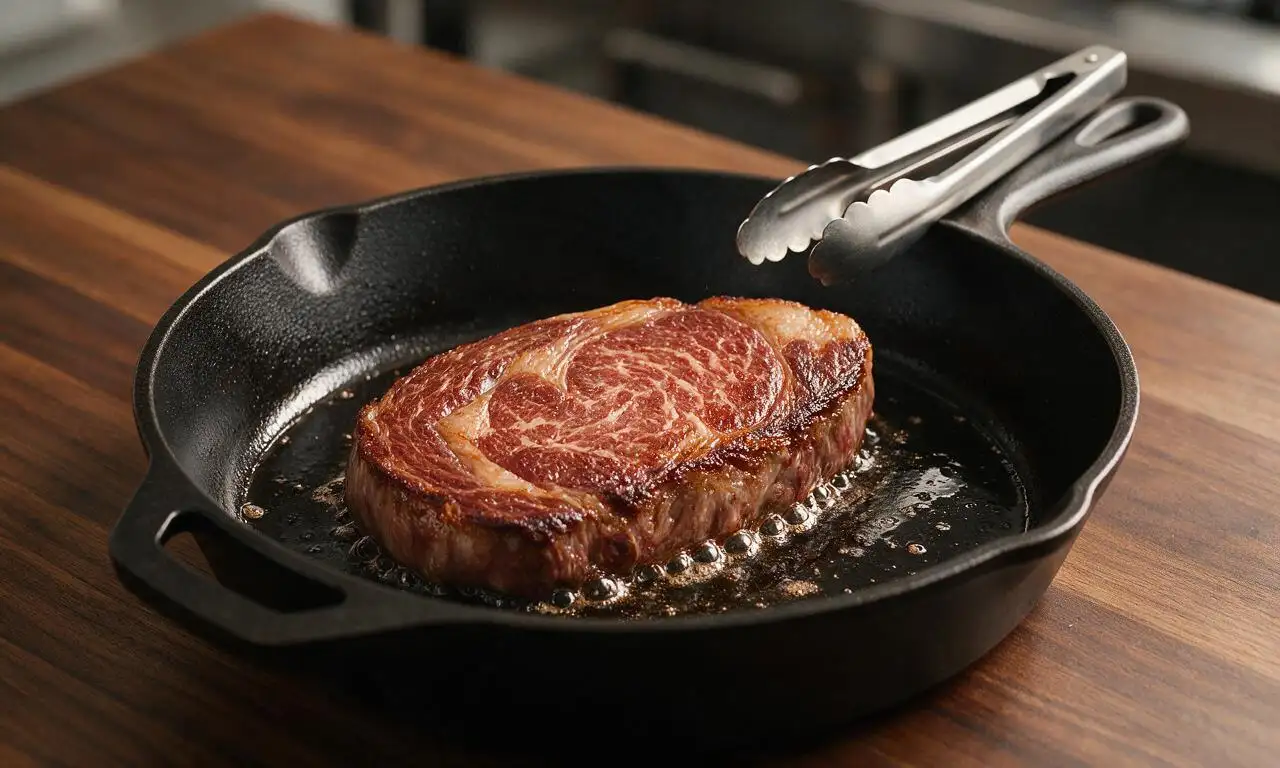
Step 3
step3:Sear first steak side
4

Sear edges and reverse side

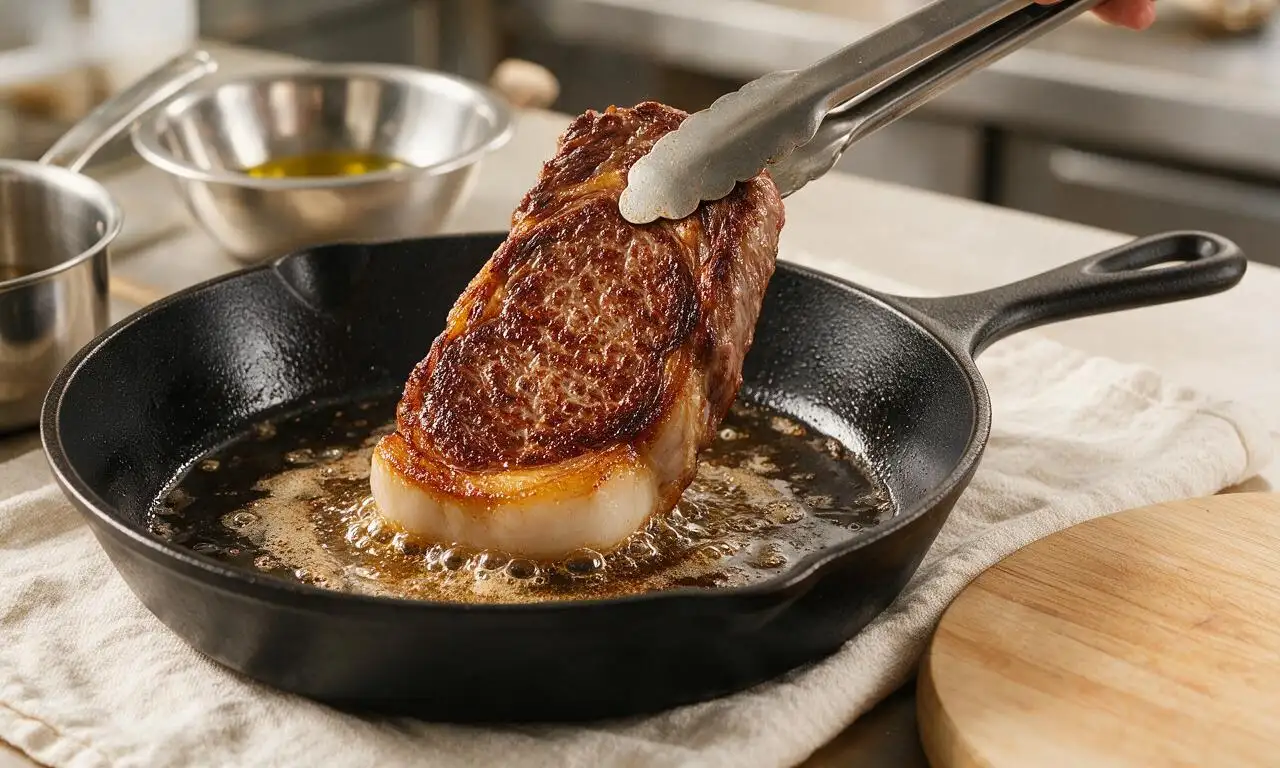
Use long-handled tongs to flip each steak, then hold each steak upright on its fatty edge to render the fat cap for 1 minute per edge. Lay the steaks flat again and sear the reverse side for 2.5 minutes, until a matching dark crust forms, and an instant-read thermometer inserted into the thickest part reads 46°C/115°F (for final medium-rare doneness).
Step 4
step4:Sear edges and reverse side
5

Butter baste with aromatics

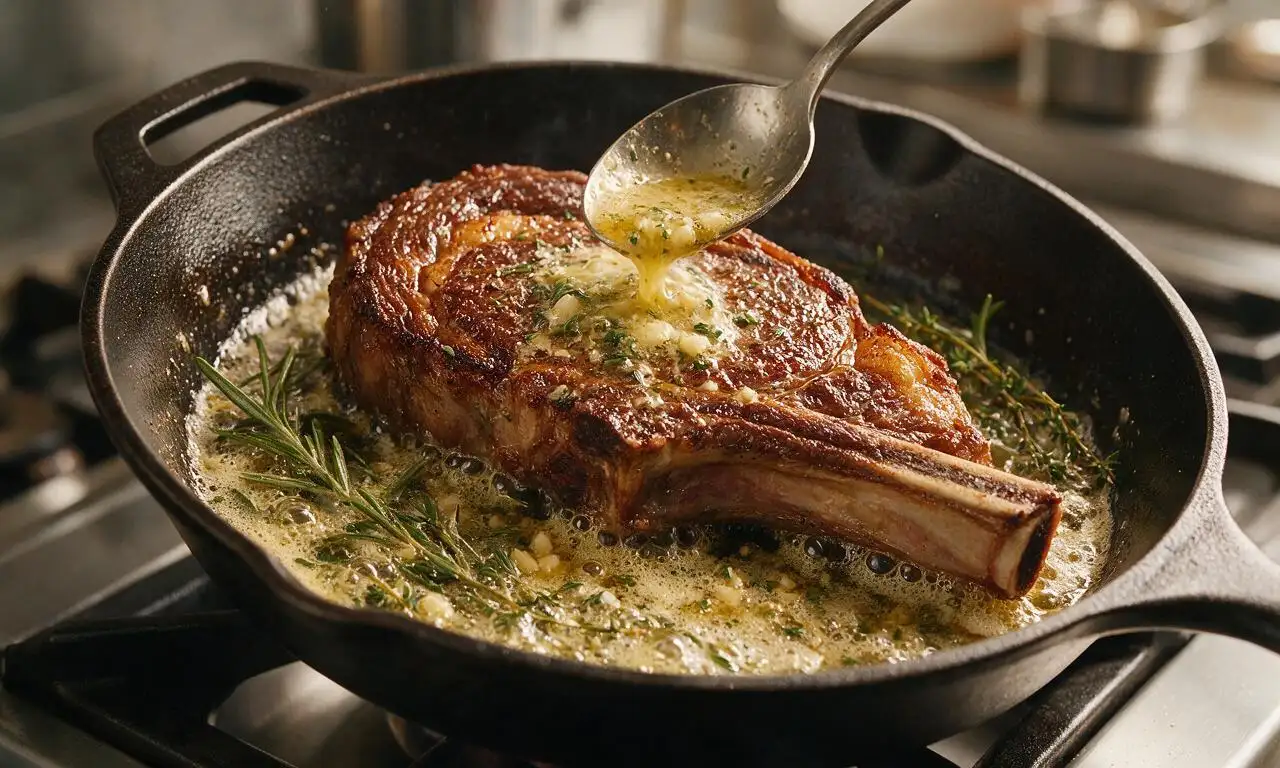
Reduce stovetop heat to medium-low. Add 3 tablespoons unsalted butter, 4 crushed garlic cloves, 2 rosemary sprigs, and 4 thyme sprigs to the pan. Tilt the pan slightly to pool the melted, foaming herb butter on one side, then use a large metal spoon to continuously scoop the hot butter over the top of the steaks for 2 minutes, until the internal steak temperature reaches 52°C/125°F.
Step 5
step5:Butter baste with aromatics
6

Rest steaks before serving

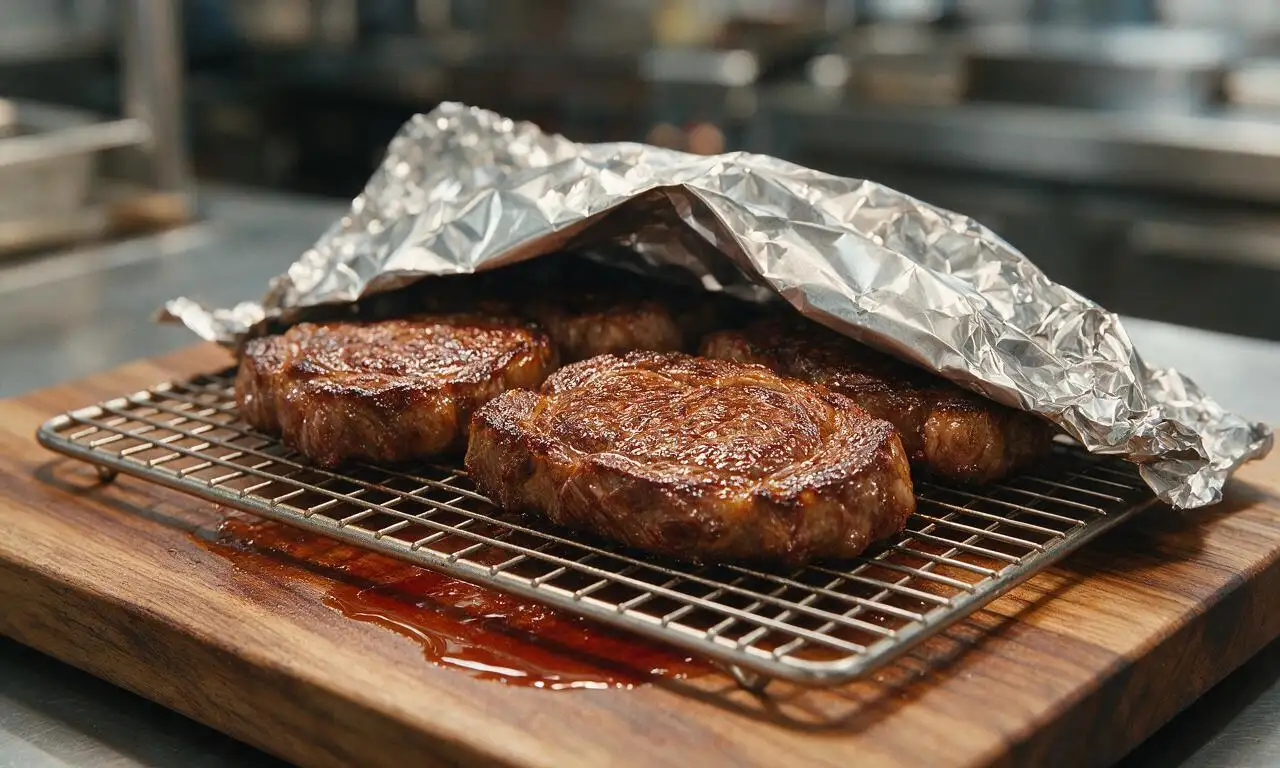
Transfer the cooked steaks to a wire rack set over a wooden cutting board, tent loosely with a small sheet of aluminum foil, and let rest for 8 full minutes. This allows the muscle fibers to relax and redistribute juices, so every bite is juicy instead of having juices run out onto the plate when cut.
Step 6
step6:Rest steaks before serving

Tips

1.Always pat steak surfaces completely dry before searing: surface moisture prevents the Maillard reaction, the chemical process that creates the deep, savory, crispy crust that makes steakhouse steak taste special.
2.Use an instant-read meat thermometer for perfect doneness every time: carryover cooking will raise the steak’s internal temperature by 3-5°C/5-9°F while resting, so pull steaks just before they hit your target final temp (54-57°C/130-135°F final for medium-rare).
3.Avoid pressing down on the steaks with tongs or a spatula while searing, as this squeezes out flavorful fat and juices from the meat, leading to dry, less tasty results.
✨ You May Also Like

Main Course
🍜 United Kingdom

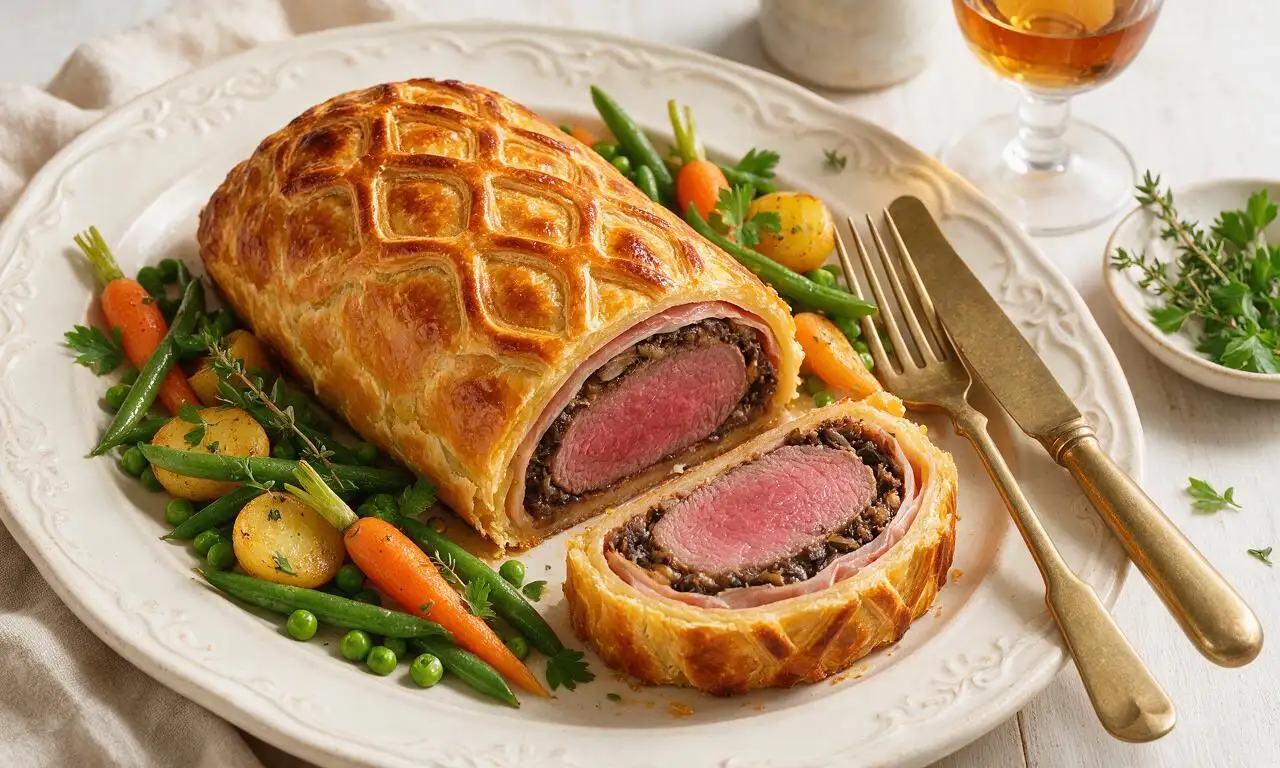
A showstopping classic of tender seared beef, savory mushroom duxelles, and crisp prosciutto wrapped in flaky golden puff pastry, baked to juicy perfection.

⏱️ 2 hours 1Main Course ★ 4.7
Main Course
🍜 India

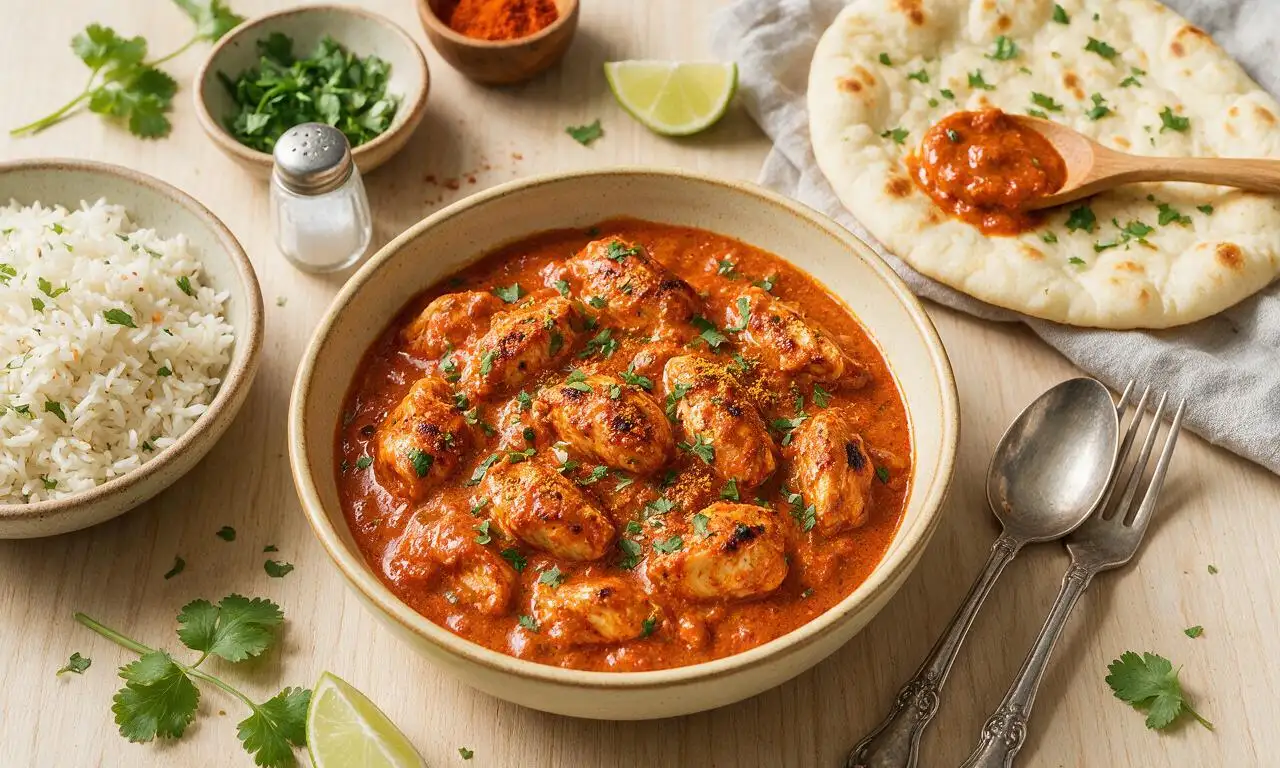
Tender charred marinated chicken simmered in a rich, spiced creamy tomato sauce, this iconic Anglo-Indian curry pairs perfectly with basmati rice or warm naan.

⏱️ 50 minuteMain Course ★ 4.6
Main Course
🍜 Thailand

Classic tangy, sweet, and savory Thai stir-fried rice noodles with shrimp, tofu, and crunchy garnishes, balancing all five core Thai flavor profiles.

⏱️ 30 minuteMain Course ★ 4.5
Main Course
🍜 United Kingdom

Crispy golden beer-battered cod and fluffy double-fried chips, served with tangy tartar sauce and malt vinegar: the timeless, beloved British pub comfort classic.

⏱️ 45 minuteMain Course ★ 4.7
Main Course
🍜 Mexico

Smoky, chile-marinated pork tacos with caramelized pineapple, fresh cilantro, and lime: a beloved classic Mexican street food perfect for casual summer gatherings.

⏱️ 1 hour 45Main Course ★ 4.8
Main Course
🍜 United States

Crunchy Fritos corn chips layered with savory beef chili and melted cheddar, topped with cool, zesty fixings for a beloved, cozy Tex-Mex comfort food.

⏱️ 35 minuteMain Course ★ 4.8

Rib Eye Steak:Frequently Asked Questions

1.How thick should my rib eye be to get a perfect seared crust without overcooking the center? ▾
Aim for a 1-inch (2.5cm) thick boneless rib eye, as called for in the recipe. Thinner steaks cook through too quickly to build that deep, crispy, savory crust, while cuts thicker than 1.5 inches will likely stay too rare in the center by the time the crust forms, requiring extra oven time to reach medium-rare.
2.Why do you recommend avocado oil instead of olive oil for searing? ▾
Avocado oil has a high 520°F smoke point, meaning it won’t burn or turn bitter when you heat the pan to the high temperature needed to build that signature rich steak crust. It also has a neutral flavor that won’t compete with the natural beef taste or the garlic-herb butter you’ll use for basting at the end.
3.How far in advance should I season my rib eye before cooking? ▾
For the juiciest, most evenly seasoned result, salt your steak with kosher salt 45 minutes to 24 hours before cooking, then add a generous grind of fresh black pepper right before searing. Let salted steak rest uncovered on a wire rack in the fridge; if short on time, salt right before searing, since salting 10-30 minutes early draws out moisture that prevents a crisp crust.
4.What internal temperature means my steak is done to perfect medium-rare? ▾
Pull your rib eye from the pan when it hits 130°F on an instant-read thermometer inserted into the thickest part, away from fat or bone. It will rise 3-5°F as it rests (called carryover cooking) to land at a perfect 135°F, with a warm, pink, tender center and no cool raw spots.
5.Do I really need to let my steak come to room temperature before searing? ▾
You don’t need to let it sit out for a full hour to reach full room temperature, but 20-30 minutes on the counter takes the sharp chill off. This helps the steak cook more evenly, so you don’t get a thick band of overcooked gray meat under the crust before the center hits your target doneness.
6.Why is butter added at the end of searing instead of at the start? ▾
Unsalted butter has a low smoke point, so adding it at the start would cause it to burn and turn bitter before you can build a proper steak crust. Adding it in the last 2-3 minutes of cooking lets you baste the steak with nutty, garlic-herb infused butter without that acrid, burnt aftertaste.
7.How long should I rest the steak after cooking, and why is that step important? ▾
Let your seared rib eye rest for 5-7 minutes, tented loosely with foil, before slicing. As steak cooks, muscle fibers tighten and push moisture toward the center; resting lets those fibers relax and reabsorb juice, so every bite is juicy instead of having liquid run all over your plate.
8.Can I use a bone-in rib eye for this recipe instead of boneless? ▾
Absolutely! A bone-in rib eye adds extra rich, beefy flavor, but you’ll need to add 1-2 minutes of total cook time to account for the bone slowing heat transfer. Keep the cut 1 inch thick, and take your temperature reading next to (not touching) the bone for accurate doneness.
9.What type of pan works best for pan-searing rib eye? ▾
A heavy-bottomed cast iron skillet or carbon steel pan works best, as they hold high, even heat without hot spots that can burn patches of your crust. Avoid thin, lightweight nonstick pans—most can’t handle high searing heat without warping, and won’t build that deep, crispy, flavor-packed browned crust.
10.How do I avoid setting off my smoke alarm when searing steak at home? ▾
Turn your overhead range vent on high 5 minutes before heating the pan, and crack a nearby window for cross ventilation first. Stick to the recommended high-smoke-point avocado oil, wait to add butter until the final few minutes, and don’t let the oil reach full, billowing smoke before adding the steak.
11.I don’t have avocado oil—what are good substitutes for searing? ▾
Reach for any other neutral, high-smoke-point oil you have on hand: refined safflower, refined canola, or grapeseed oil all work great, with smoke points above 450°F that can handle searing heat. Skip unrefined oils like extra-virgin olive oil or toasted sesame oil, as they burn quickly and add off-flavors.
12.What’s the best way to slice the finished rib eye for serving? ▾
Always slice your rested rib eye against the grain in ½-inch thick slices to shorten the long, tough muscle fibers and make every bite as tender as possible. You can trim a small section of the chewy outer fat cap if you prefer, but leaving a little adds rich, savory depth to each bite.

Comments (3)

2 days ago

OMG, this recipe is a total game changer! I’ve messed up pan-seared ribeyes so many times before—either they were overcooked and tough, or I never got that perfect crispy crust without smoking up my entire kitchen. Followed the instructions to a T, used my old cast iron, let the steak rest the full 5 minutes like it said, and my whole family went crazy for it. My 10-year-old said it was better than the fancy steakhouse we went to for his birthday last month! 10/10, will be making this every other Sunday for family dinner from now on.

yesterday

Wait, did you use regular vegetable oil or the high-smoke point oil the recipe mentions? I tried a pan sear last week and my smoke alarm went off so bad my next-door neighbor knocked to check if our house was on fire lmao

yesterday

So glad the whole family loved it, Mike! Quick tip for anyone running into smoke issues: make sure you’re using an oil with a high smoke point like avocado or canola, and pat your steak completely dry with paper towels before it hits the pan—that’s the secret to that crave-worthy crust without all the excess smoke!

2 hours ago

SO good! I was worried this would be too fussy for a quick weeknight meal since I usually only save steak for weekend cookouts, but 25 minutes total cook time? No joke, it delivered. I tossed together a quick side salad while the steak rested, and the whole meal was done faster than waiting for takeout delivery. Only tiny tweak: I added a little extra garlic butter to the pan at the end because I’m a total garlic fiend, zero regrets. Will absolutely be adding this to my weekly meal rotation.

30 minutes ago

Love that you customized it with extra garlic butter, Jess! That’s one of my favorite little go-to tweaks too—there’s honestly no such thing as too much garlic butter paired with a good ribeye. So happy this recipe fits into your busy weeknight routine!

1 week ago

Solid recipe, turned out great on my first try! Quick heads up for new cooks: if you’re used to cooking thinner cuts of steak, make sure you don’t forget to lower the heat after the initial high-temp sear— I almost charred the outside in the first minute because I left the burner cranked to max. Ended up with a perfect medium-rare after adjusting, paired it with roasted asparagus for a date night in with my partner, and they were totally impressed. No complaints here, will make again!