Ribeye Steak

title 1
Ribeye Steak
⏱️ cook time 12 minutes
🍽️ servings 2
⚡ Difficulty medium

intro

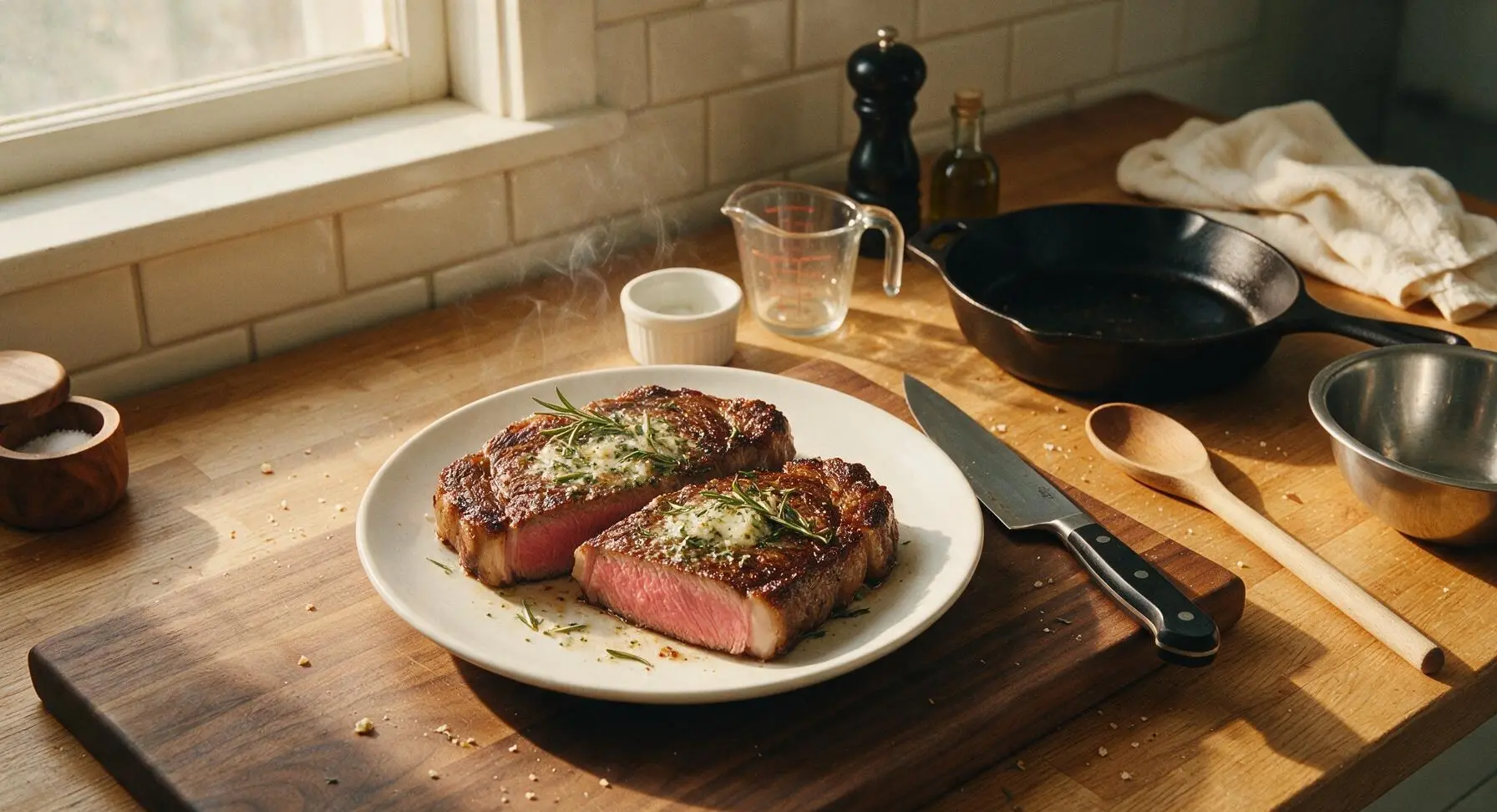
Perfectly seared juicy ribeye with a crisp salty crust, fragrant rosemary-garlic butter, and tender pink melt-in-your-mouth center—restaurant-quality results at home for two.

Ingredients
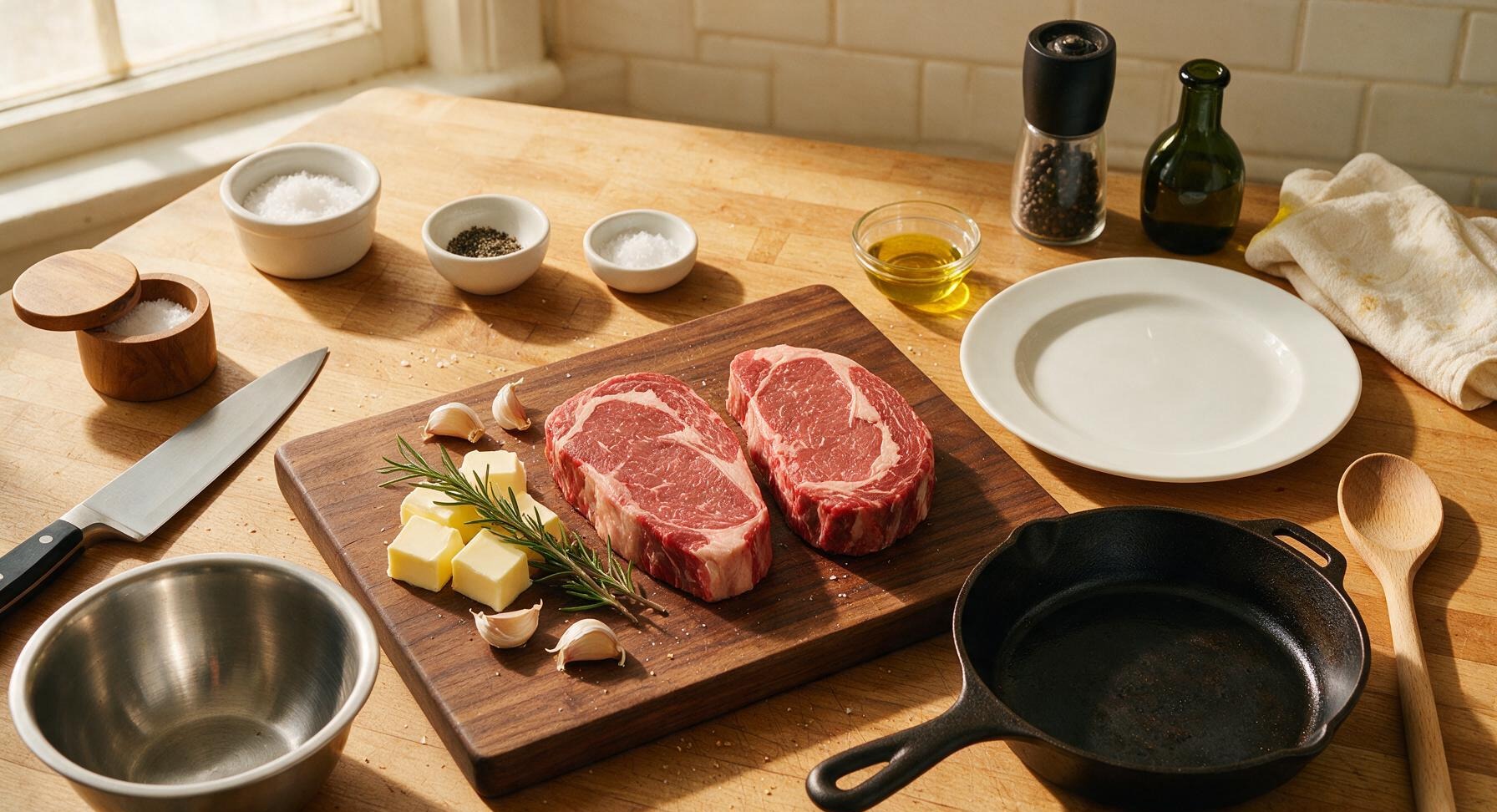
Boneless ribeye steak 2 (1.5-inch thick, 12oz / 340g each)
Unsalted butter 4 tbsp (56g)
Fresh rosemary 2 sprigs
Garlic cloves 4, lightly crushed
Kosher salt 2 tsp
Freshly cracked black pepper 1 tsp
Flaky sea salt 1/2 tsp, for finishing
Avocado oil (high smoke point) 1 tbsp

Steps

1

Temper and Dry Steaks

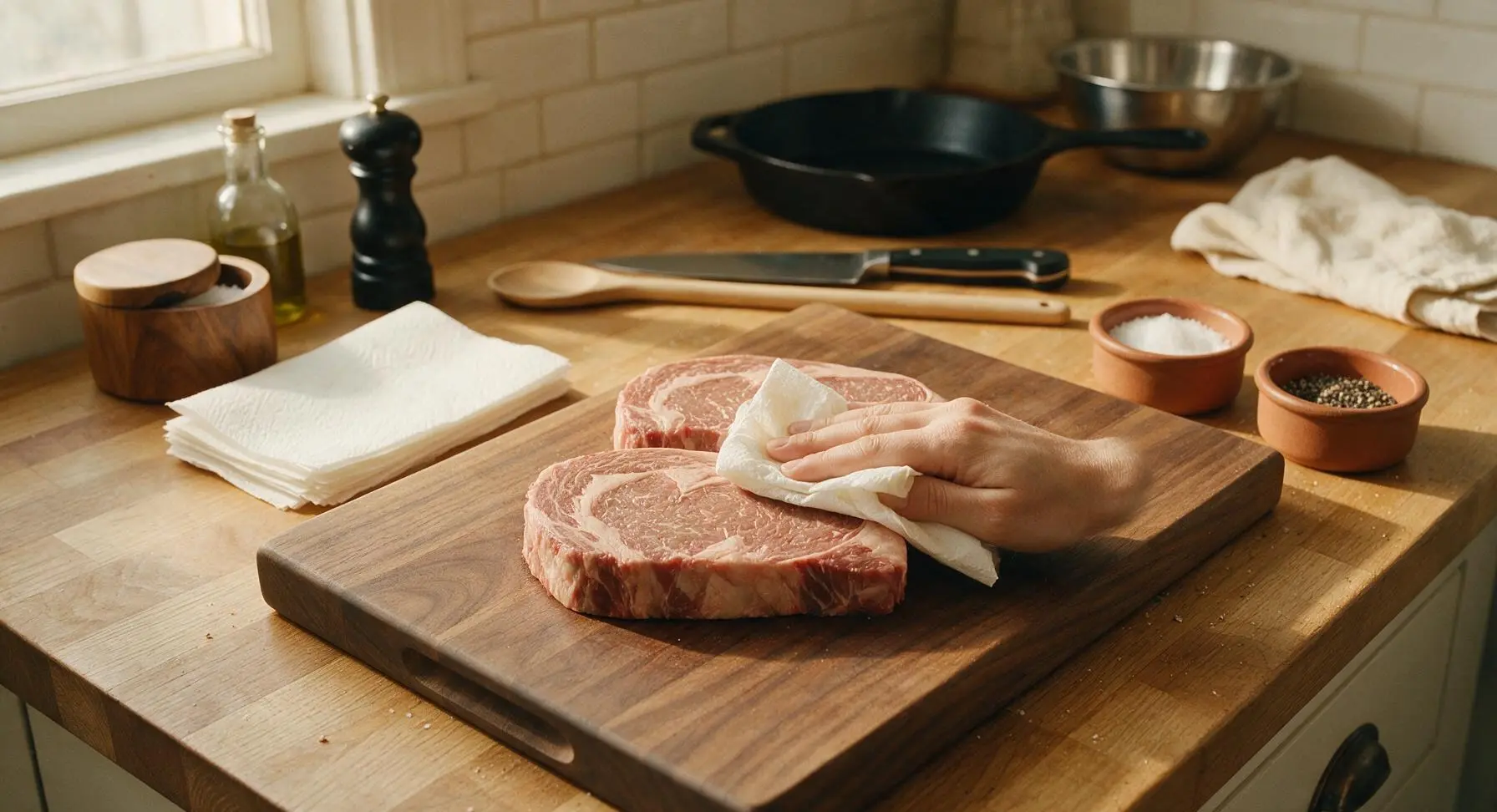
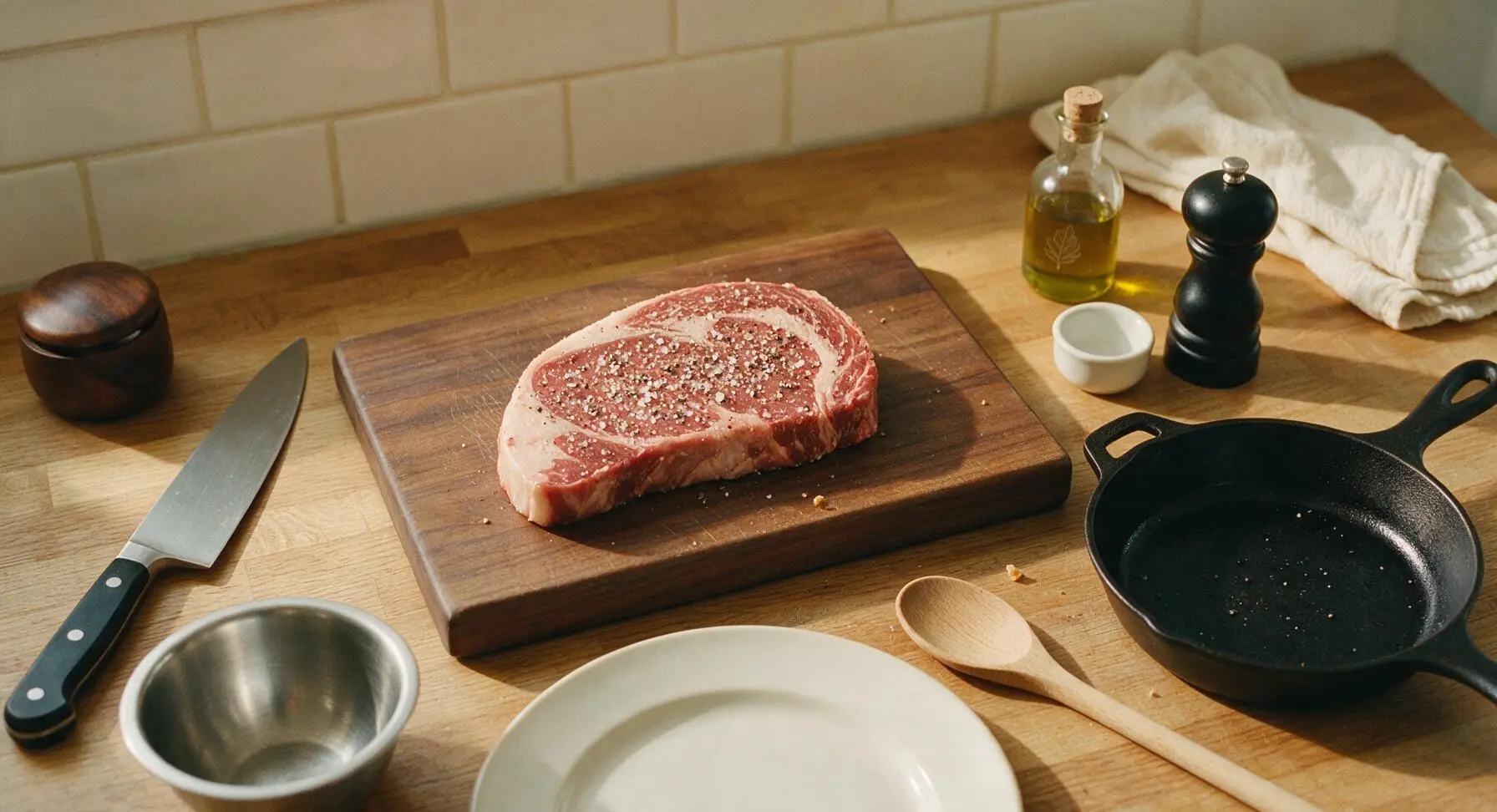
Remove ribeye steaks from the refrigerator 40 minutes before cooking to bring to room temperature, which ensures even cooking across the thick cut without overcooking the outer layers. Use 3 stacked paper towel sheets to pat every surface of the steaks completely dry, paying extra attention to the fatty edges, as any residual surface moisture will prevent a crisp, deep brown sear. Season all sides (top, bottom, edges) evenly with 2 tsp kosher salt and 1 tsp cracked black pepper, pressing the seasoning gently into the meat so it adheres fully.
Step 1
step1:Temper and Dry Steaks
Step 1
step1:Temper and Dry Steaks
2

Preheat Skillet Properly

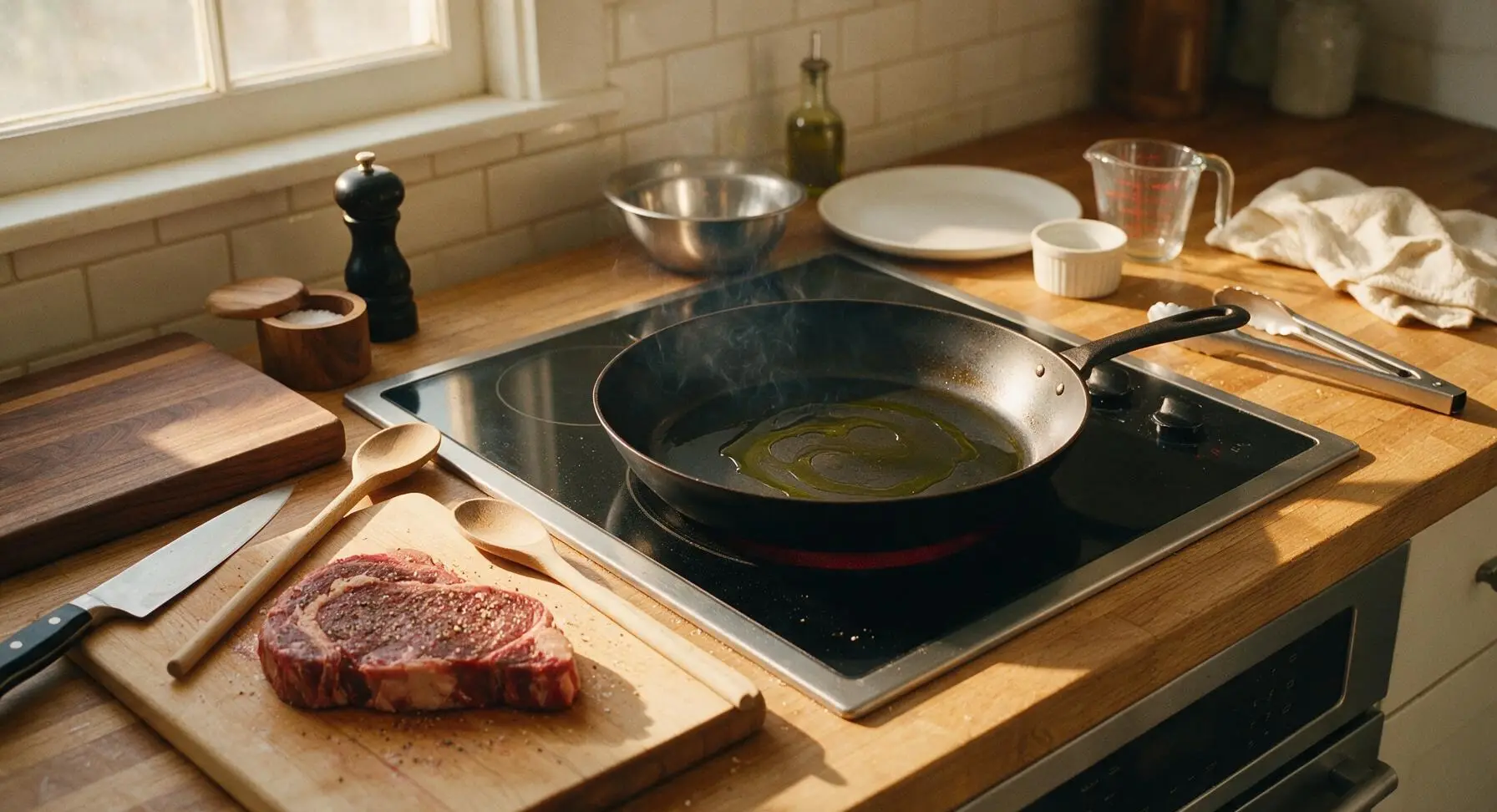
Place the 12-inch carbon steel skillet on the flush induction burner set to high heat. Add 1 tbsp avocado oil, and heat until the oil is shimmering and just beginning to send up thin wispy trails of smoke, approximately 3 minutes. This high heat ensures the pan is hot enough to create an instant Maillard reaction crust without the steaks sticking to the pan surface.
Step 2
step2:Preheat Skillet Properly
3

Sear First Side Deeply

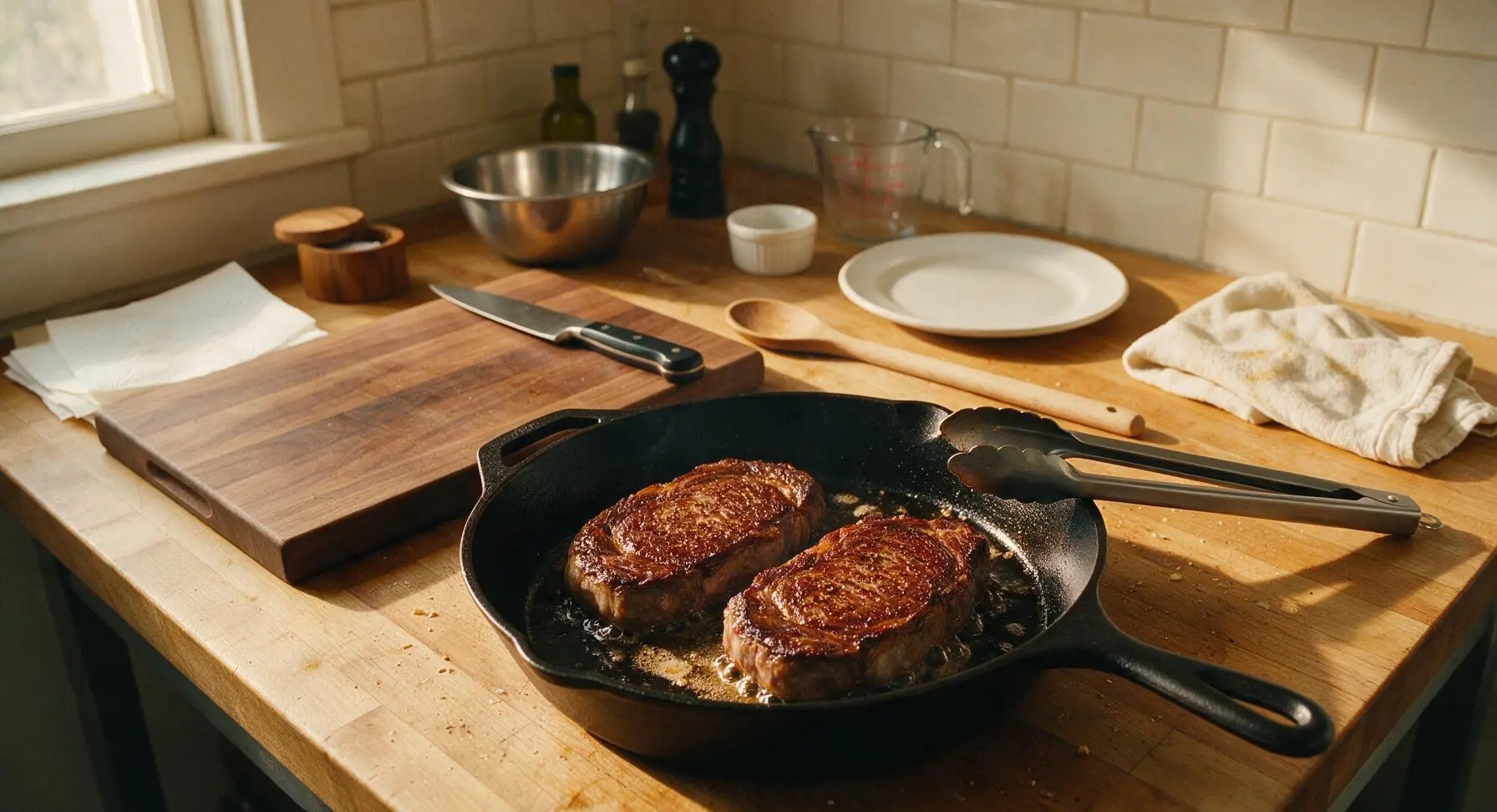
Using the stainless steel tongs, carefully lay both steaks in the skillet away from your body to avoid hot oil splatter, leaving 2cm of space between them for air flow. Do not move, press, or lift the steaks for exactly 3 minutes. The surface in contact with the pan will develop a deep, rich mahogany-brown crisp crust across the entire contact area.
Step 3
step3:Sear First Side Deeply
4

Flip and Sear Edges

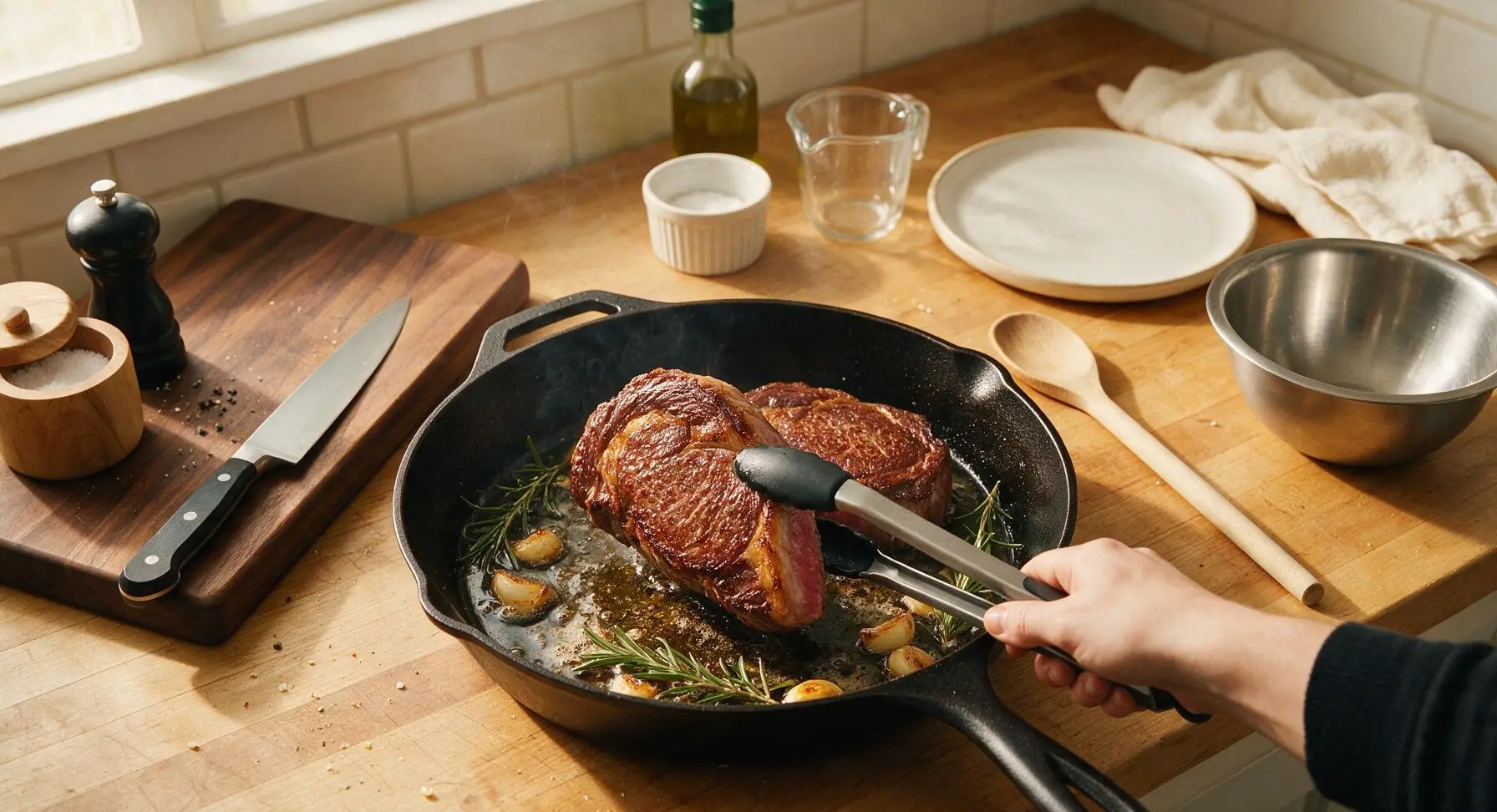
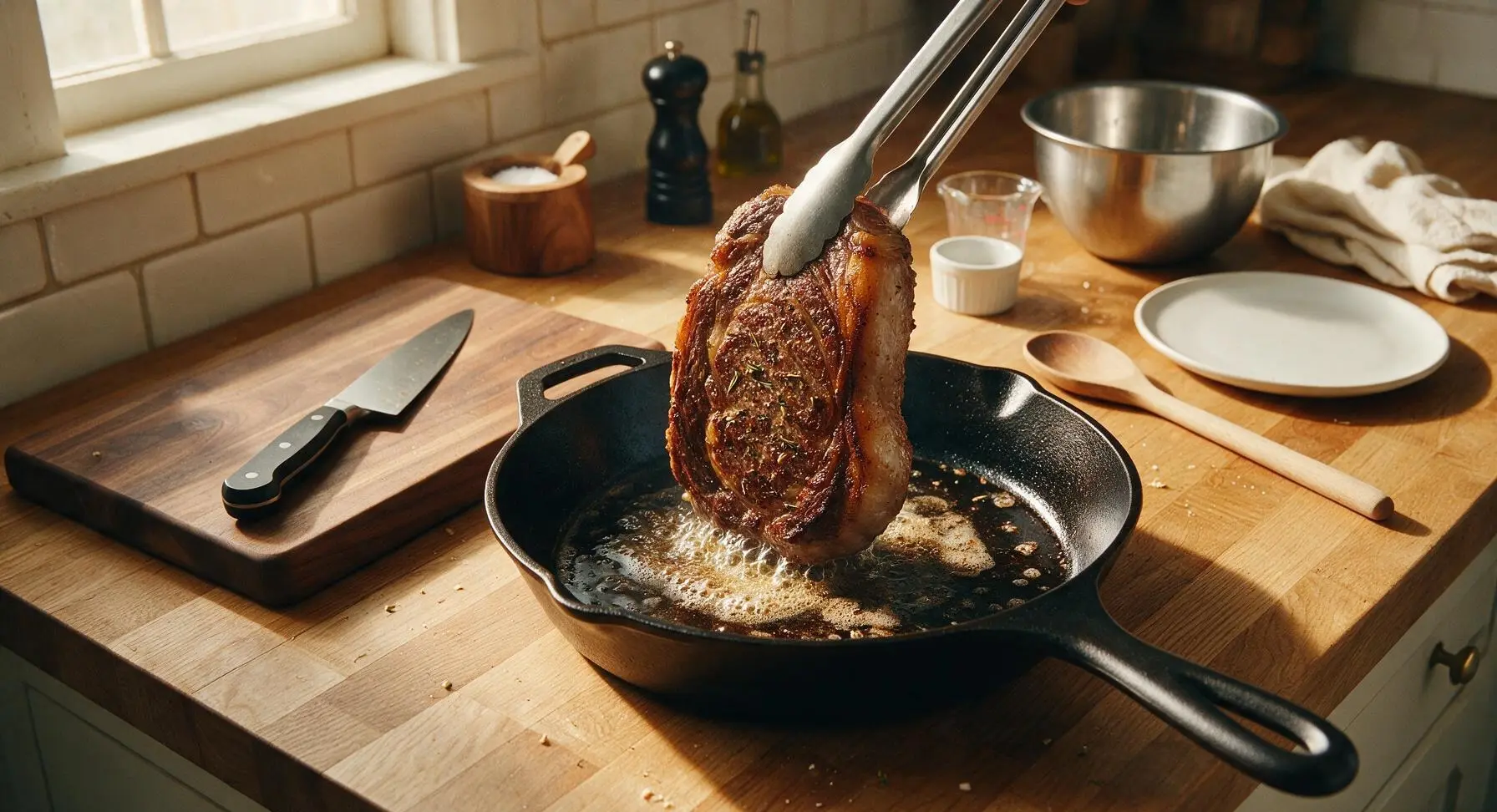
After 3 minutes, use the tongs to flip both steaks to the second side. Sear without moving for another 2.5 minutes, until the second side develops the same deep brown crisp crust. Use the tongs to hold each steak upright and sear all 4 side edges for 30 seconds total, rendering the edge fat until it is crisp and golden, no soft white raw fat remaining.
Step 4
step4:Flip and Sear Edges
Step 4
step4:Flip and Sear Edges
5

Baste with Herb Butter

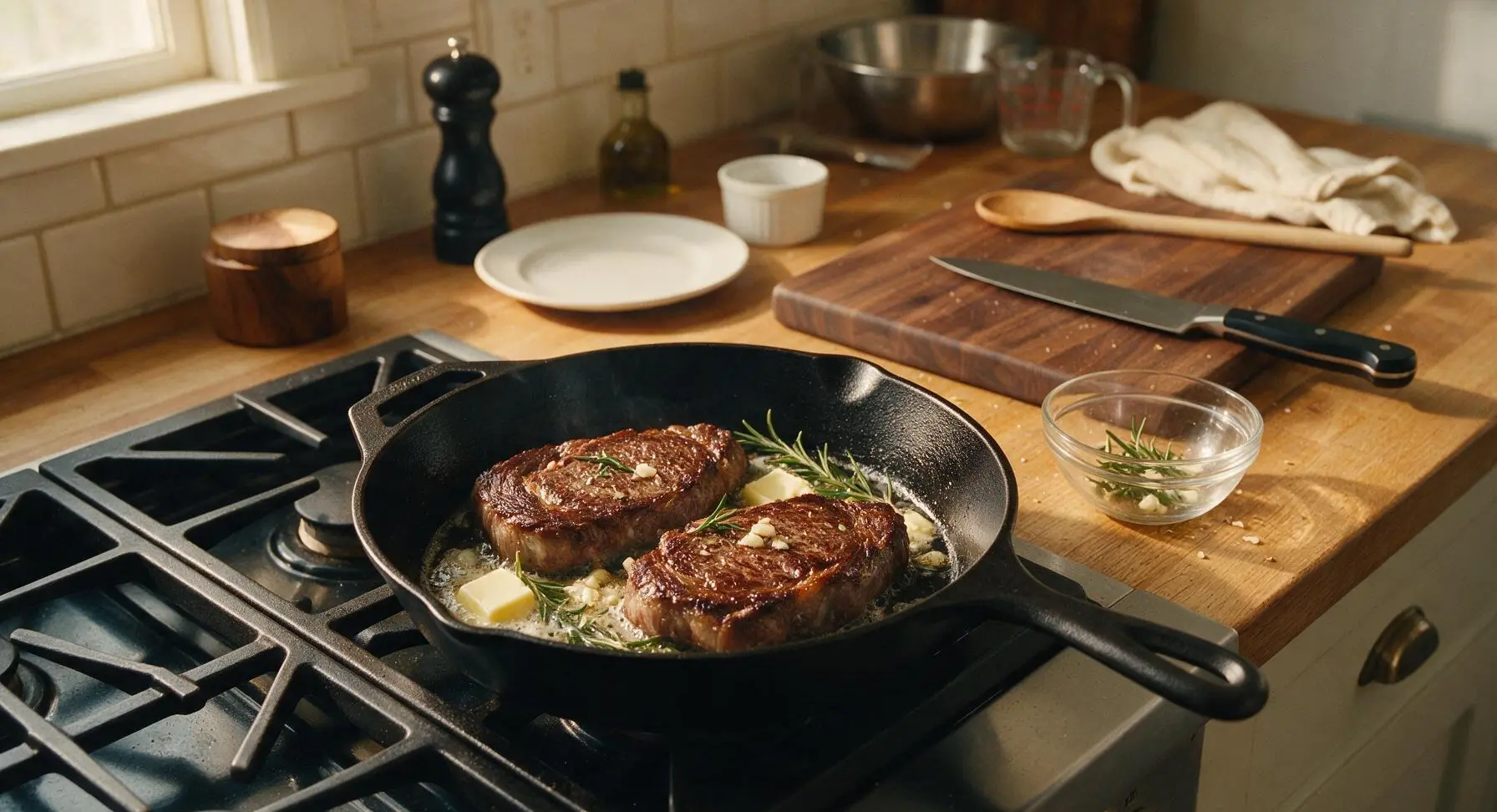
Reduce heat to medium-low. Add the 4 tbsp unsalted butter, 2 rosemary sprigs, and 4 lightly crushed garlic cloves to the skillet between the two steaks. Tilt the pan slightly so the melted butter pools at one edge, and use the stainless steel basting spoon to continuously spoon the frothy, fragrant butter over the tops of the steaks for 3 full minutes. The butter will turn a light golden nutty brown, infused with rosemary and garlic aroma as it bastes.
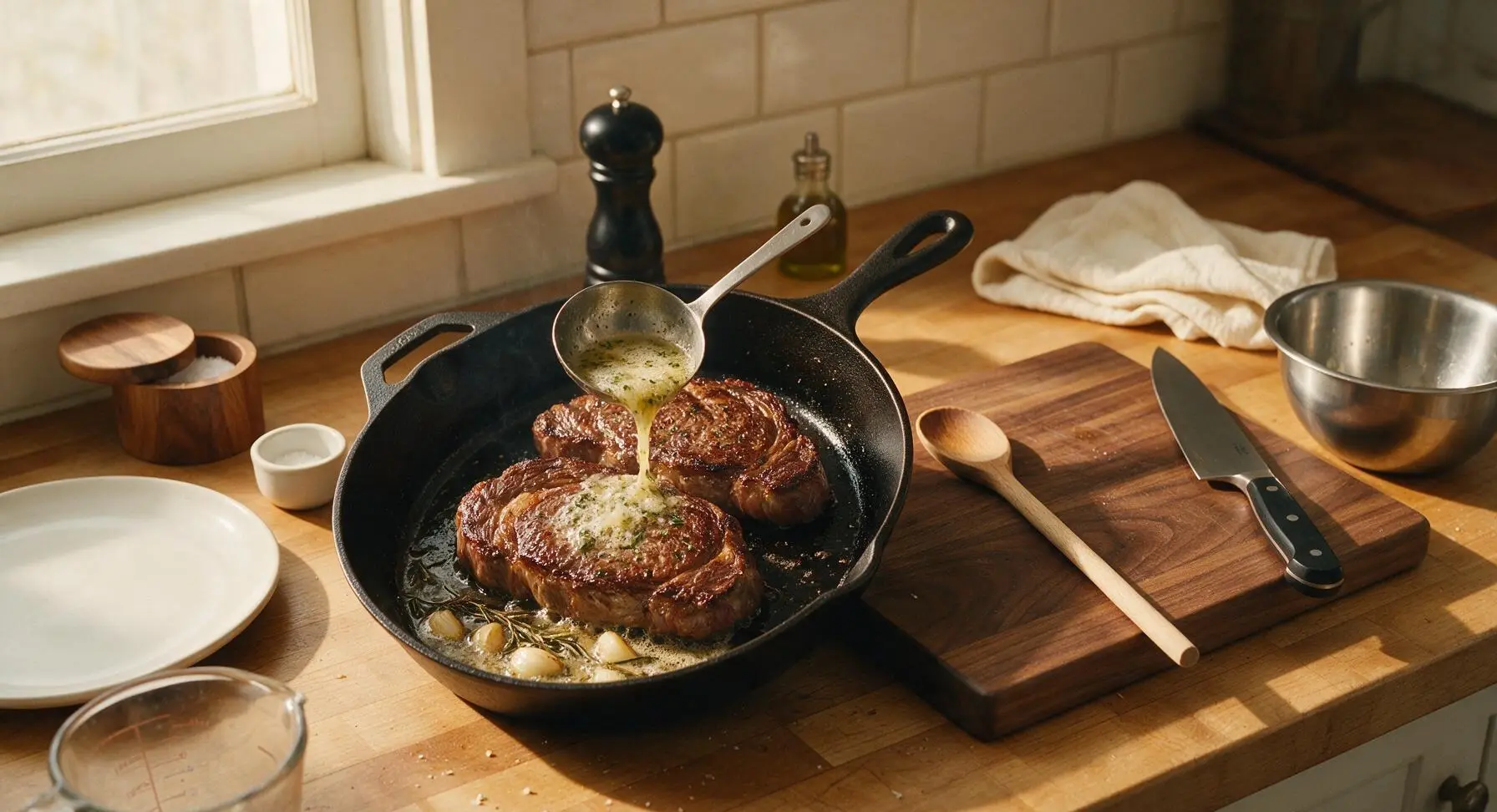
Step 5
step5:Baste with Herb Butter
Step 5
step5:Baste with Herb Butter
6

Check Internal Temperature

Insert the instant-read meat thermometer horizontally into the thickest part of each steak, avoiding any large fat deposits or the pan surface. Remove the steaks from the pan when the internal temperature reads 125°F (52°C) for medium-rare. Carryover cooking will raise the internal temperature 5°F as the steaks rest, resulting in a perfect 130°F (54°C) final temperature with a warm, juicy pink center.
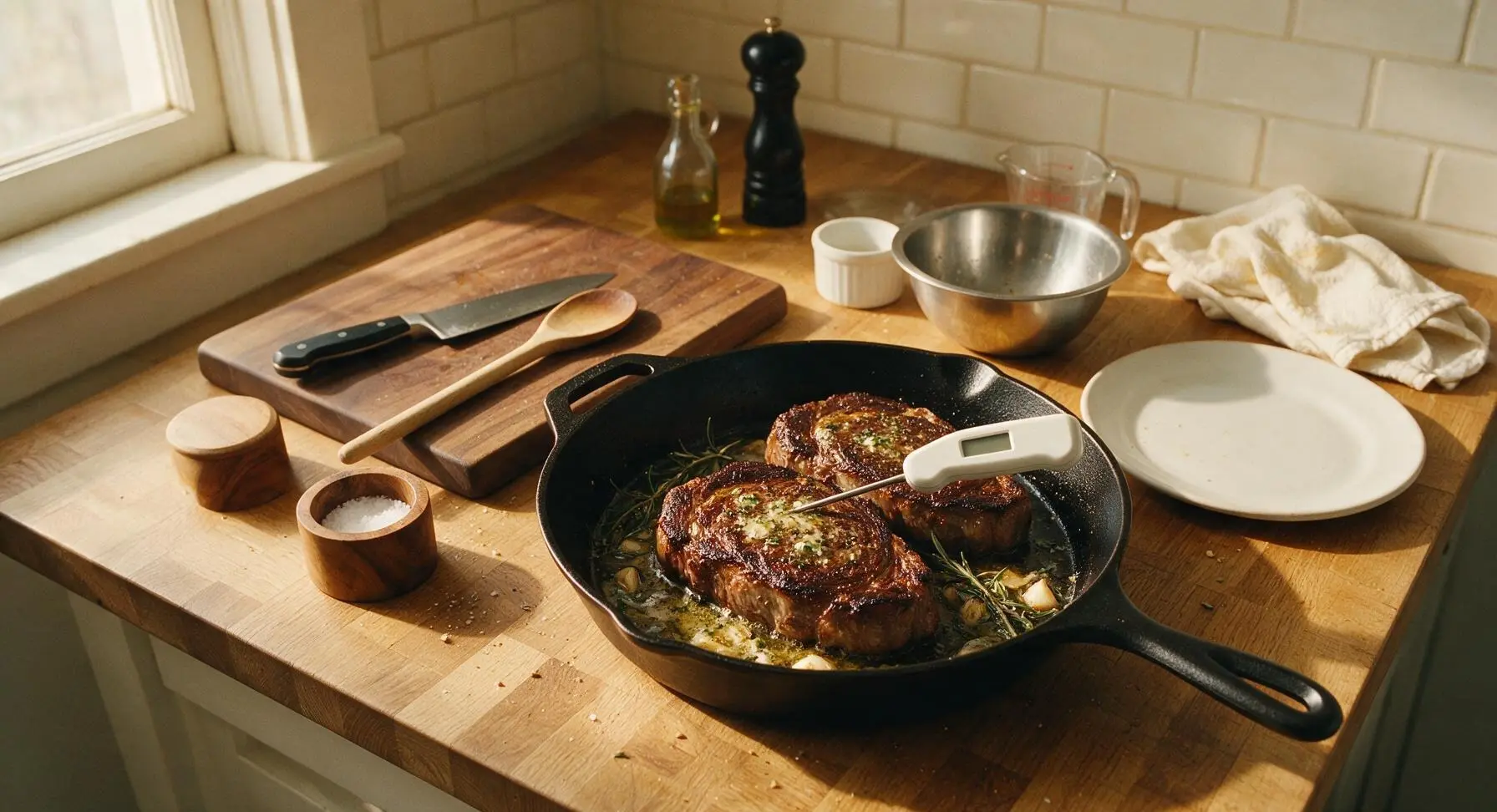
Step 6
step6:Check Internal Temperature
7

Rest Steaks Before Slicing

Transfer the cooked steaks back to the maple cutting board, tent loosely with a small sheet of aluminum foil, and let rest for 10 full minutes. Resting allows the tight, hot muscle fibers to relax and reabsorb their juices, ensuring no flavorful liquid runs out when the steaks are sliced.
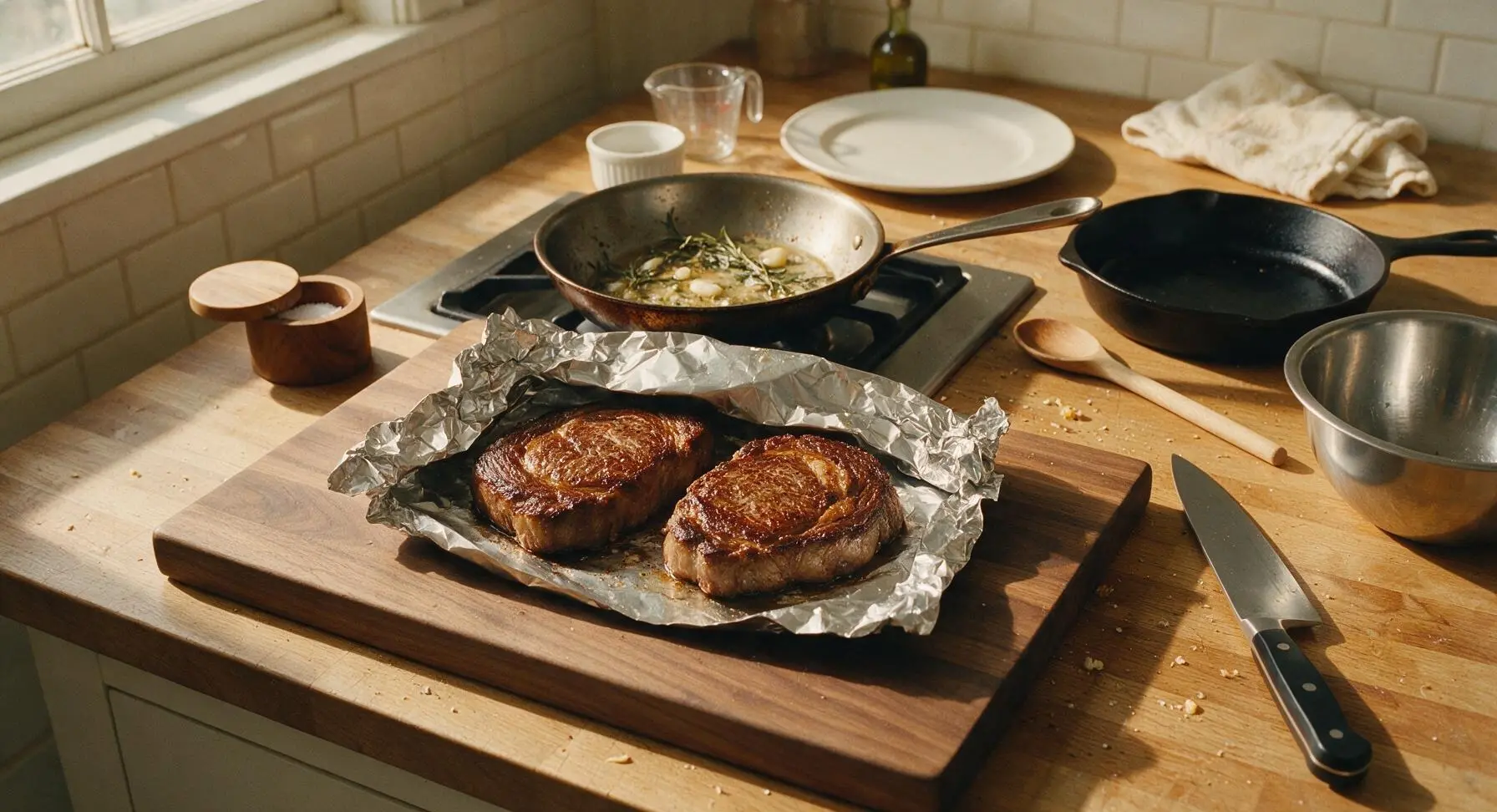
Step 7
step7:Rest Steaks Before Slicing
8

Slice and Plate Steaks

After 10 minutes of resting, discard the foil tent. Use the chef knife to slice the steaks against the grain into 1/2-inch thick slices. Arrange the slices fanned in an arc across the matte ivory ceramic dinner plate, spoon 1 tsp of the reserved herb pan butter over the top, and finish with a light sprinkle of flaky sea salt. Tuck a fresh rosemary sprig on the plate for garnish.
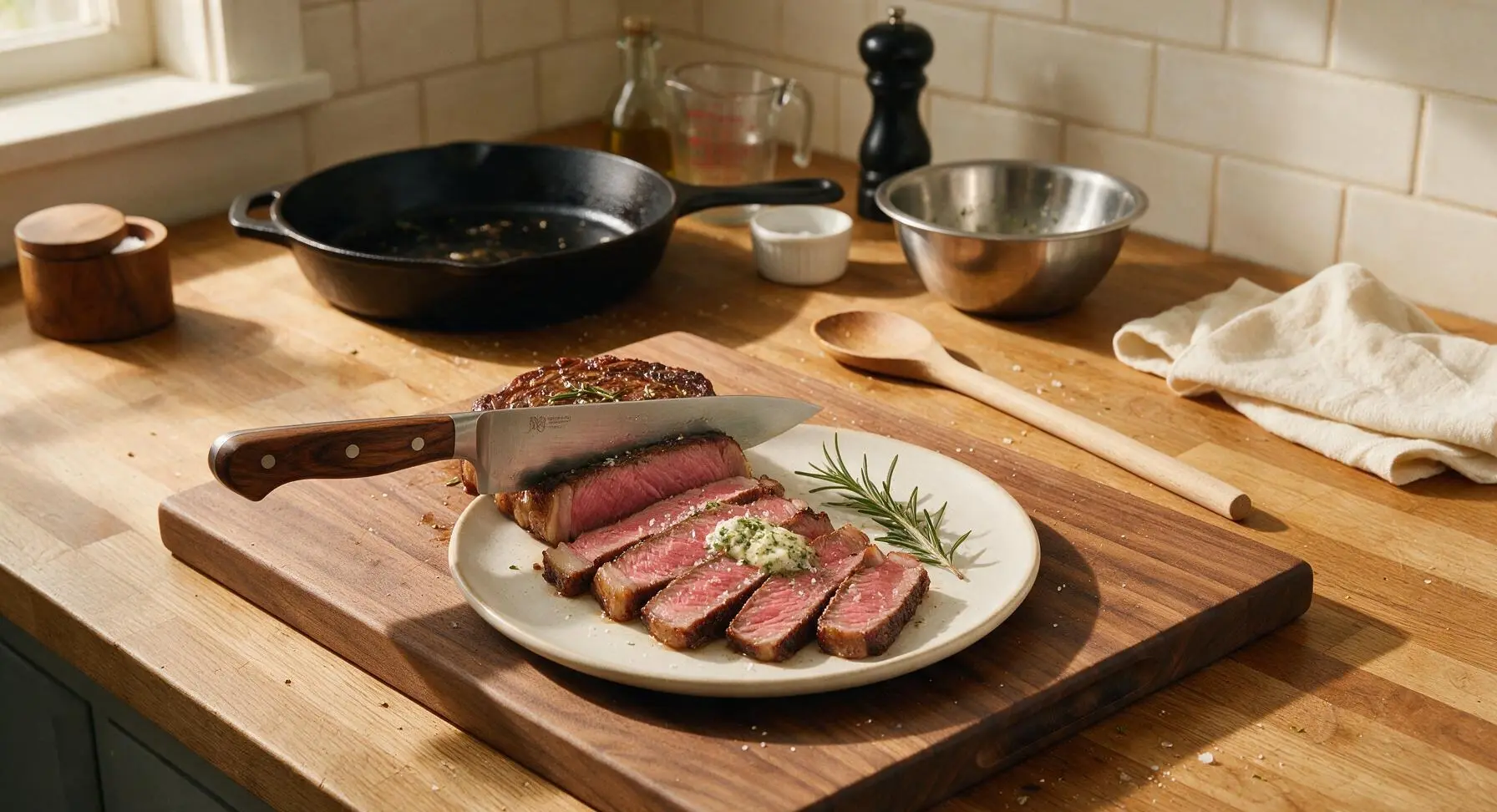
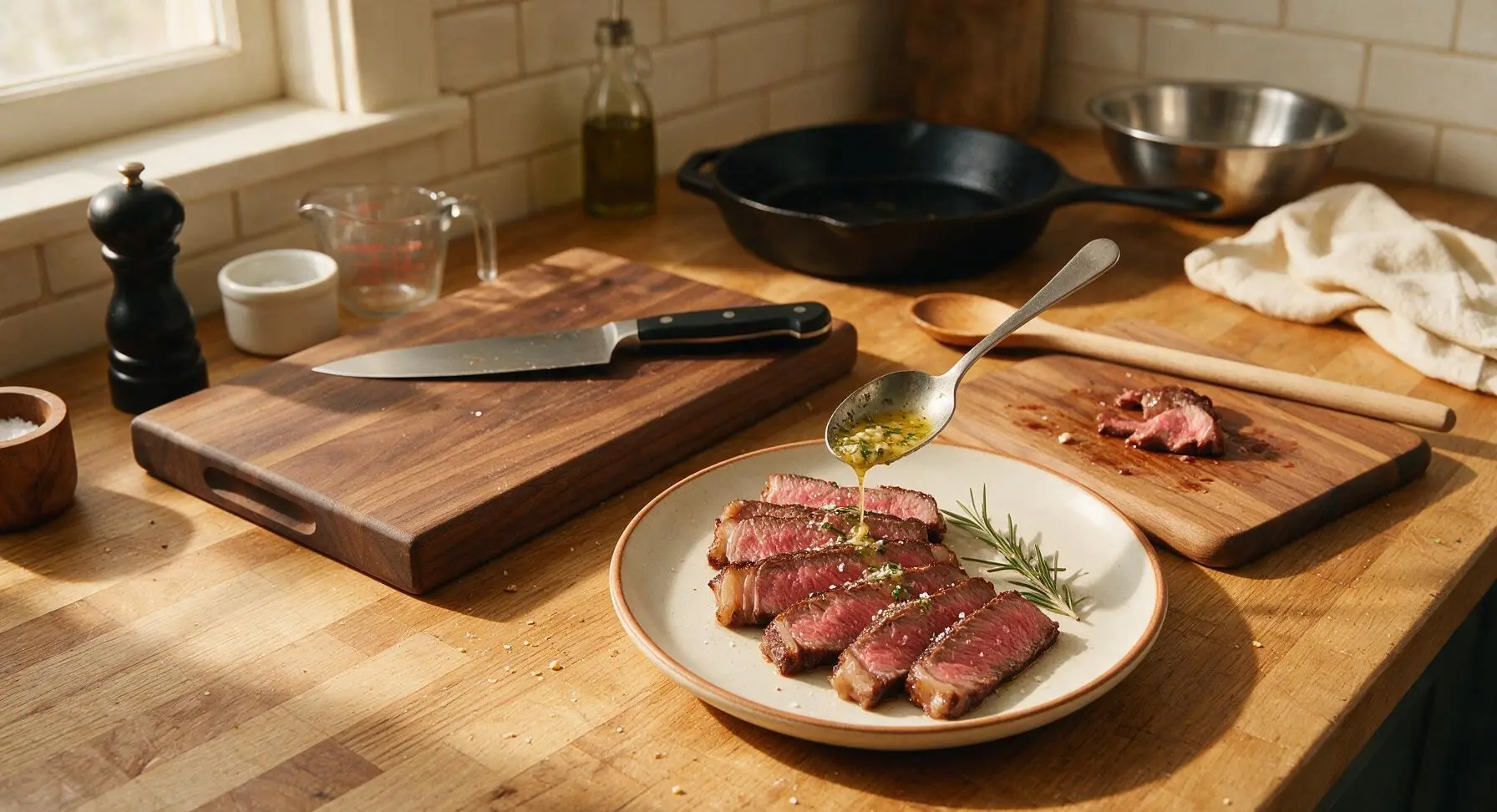
Step 8
step8:Slice and Plate Steaks
Step 8
step8:Slice and Plate Steaks

Tips

1.Never cook cold steak straight from the refrigerator: a cold center will require longer cooking to reach target temperature, leading to an overcooked gray outer layer before the middle warms through; 40 minutes at room temperature ensures even doneness from edge to edge.
2.Do not move, press, or poke steaks while searing: constant lifting or squeezing prevents consistent pan contact, which stops the Maillard reaction from forming that deep, nutty, crisp crust that gives restaurant steak its signature rich flavor.
3.Skip the urge to slice steak immediately after cooking: cutting into hot, just-cooked meat causes all the juicy, flavorful liquid to run out onto the plate instead of staying trapped in the relaxed muscle fibers, leading to dry steak even if you cooked it to the perfect temperature.
✨ You May Also Like

Main Course
🍜 United Kingdom

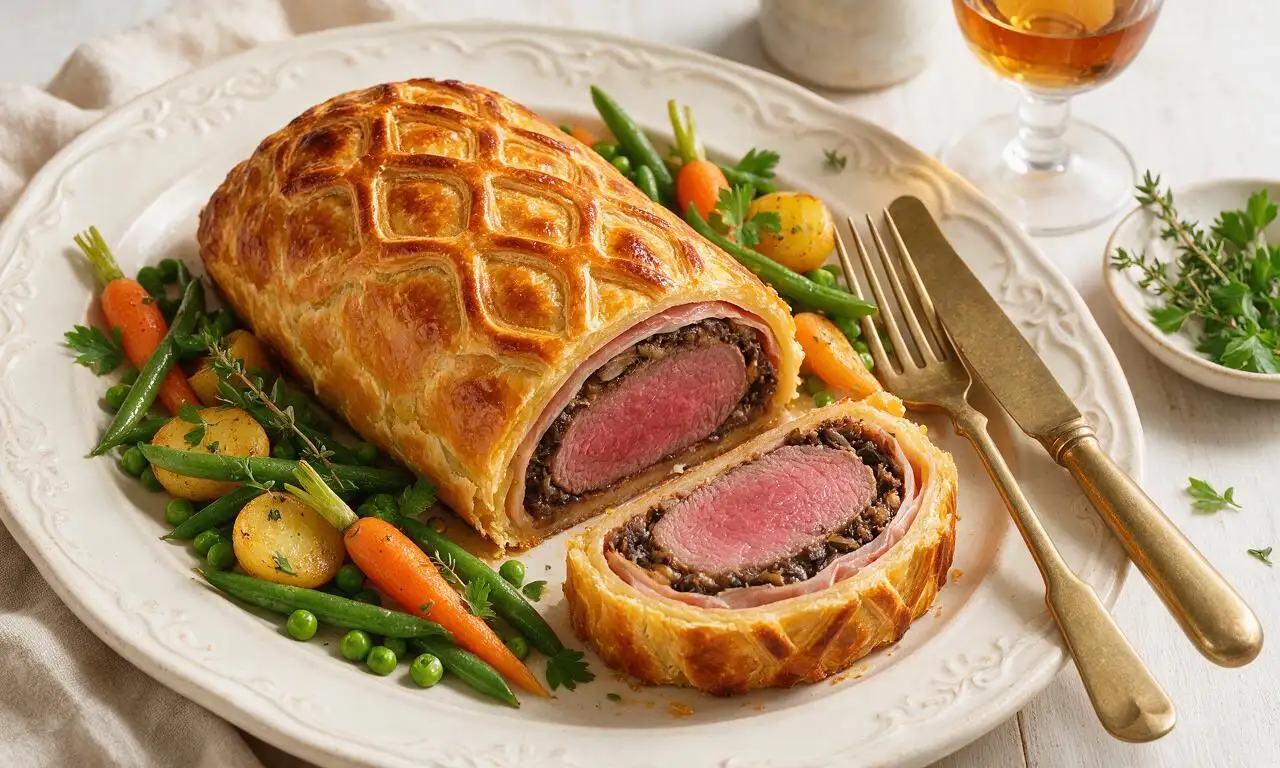
A showstopping classic of tender seared beef, savory mushroom duxelles, and crisp prosciutto wrapped in flaky golden puff pastry, baked to juicy perfection.

⏱️ 2 hours 1Main Course ★ 4.7
Main Course
🍜 India

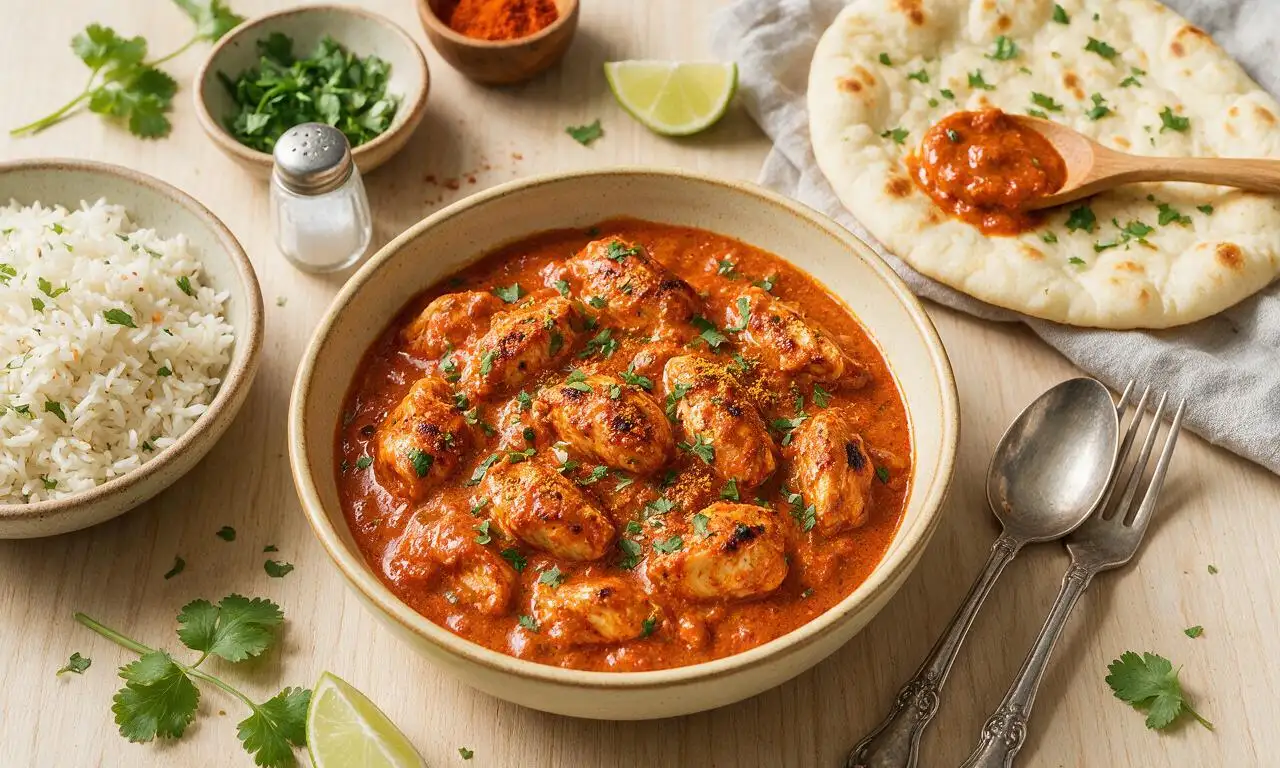
Tender charred marinated chicken simmered in a rich, spiced creamy tomato sauce, this iconic Anglo-Indian curry pairs perfectly with basmati rice or warm naan.

⏱️ 50 minuteMain Course ★ 4.6
Main Course
🍜 Thailand

Classic tangy, sweet, and savory Thai stir-fried rice noodles with shrimp, tofu, and crunchy garnishes, balancing all five core Thai flavor profiles.

⏱️ 30 minuteMain Course ★ 4.5
Main Course
🍜 United Kingdom

Crispy golden beer-battered cod and fluffy double-fried chips, served with tangy tartar sauce and malt vinegar: the timeless, beloved British pub comfort classic.

⏱️ 45 minuteMain Course ★ 4.7
Main Course
🍜 Mexico

Smoky, chile-marinated pork tacos with caramelized pineapple, fresh cilantro, and lime: a beloved classic Mexican street food perfect for casual summer gatherings.

⏱️ 1 hour 45Main Course ★ 4.8
Main Course
🍜 United States

Crunchy Fritos corn chips layered with savory beef chili and melted cheddar, topped with cool, zesty fixings for a beloved, cozy Tex-Mex comfort food.

⏱️ 35 minuteMain Course ★ 4.8

Ribeye Steak:Frequently Asked Questions

1.How thick should my ribeye be for the best pan-seared results? ▾
Aim for a 1.5 to 2-inch thick boneless ribeye for ideal results—this thickness lets you build a deep, crisp salty crust without overcooking the tender pink center. Thinner cuts (under 1 inch) will cook through too quickly before you get that signature restaurant-quality sear, leaving you with dry, gray edges and no melt-in-your-mouth middle.
2.Do I really need to bring my steak to room temperature before searing? ▾
Absolutely—let your steak rest on the counter for 30 to 45 minutes (don’t leave it out longer than 2 hours for food safety) before cooking. A cold steak drops pan temperature sharply when it hits the heat, leading to uneven cooking, a weak, pale crust, and a center that stays underdone while edges overcook. Pat it fully dry with paper towels right before searing for extra crunch.
3.What kind of pan works best for searing ribeye? ▾
Reach for a heavy-bottomed cast iron skillet or carbon steel pan first—they hold heat incredibly evenly and get hot enough to build that perfect crisp, salty crust without random hot spots. If you don’t own those, a thick stainless steel pan works too. Skip non-stick pans entirely; they can’t safely handle the high searing heat without damaging the coating or releasing unpleasant fumes.
4.How much kosher salt should I use, and when should I salt the steak? ▾
For that restaurant-style crust and evenly seasoned bite, use 1 teaspoon of kosher salt per pound of steak, applied evenly to all sides (including the fat cap!) 40 minutes to 24 hours before cooking. Salting early draws out surface moisture that then reabsorbs into the meat, tenderizing it and building deeper flavor, instead of letting moisture pool and ruin your sear right before cooking.
5.Why does my steak never get that crisp, brown crust when I pan-sear it? ▾
The two biggest culprits are a wet steak surface and a pan that’s not hot enough. Always pat your steak bone-dry with paper towels before it hits the pan, and wait until your pan is just starting to smoke lightly before adding the steak. Don’t move the steak for the first 3 to 4 minutes of searing—flipping too early breaks contact and stops that crisp, brown Maillard reaction crust from forming.
6.When do I add the butter, rosemary, and garlic so they don’t burn? ▾
Wait to add the unsalted butter, lightly crushed garlic cloves, and fresh rosemary sprigs until the last 2 to 3 minutes of cooking. Butter has a low smoke point, so adding it early will make it turn bitter, burn the garlic to a crisp, and ruin that warm, herbal flavor. Once added, tilt the pan and spoon the fragrant melted butter over the steak repeatedly to baste it evenly.
7.How do I know when my ribeye is done to medium-rare without cutting into it? ▾
The most reliable, no-guess method is to use an instant-read meat thermometer inserted into the thickest part of the steak (away from fat) to hit 130–135°F for medium-rare, ribeye’s ideal doneness. If you don’t have a thermometer, use the touch test: a perfect medium-rare steak has the same soft, springy give as the fleshy pad at the base of your relaxed thumb.
8.How long should I let the steak rest after cooking, and why does that matter? ▾
Let your steak rest for 5 to 7 minutes after you take it out of the pan, tented loosely with a small piece of foil to hold in gentle heat. Resting lets the tight, hot muscle fibers relax and reabsorb all the juicy, flavorful juices pushed to the surface during cooking, so those juices don’t all run out onto your plate the second you slice into the steak.
9.Can I use dried rosemary or garlic powder instead of fresh? ▾
Fresh rosemary and whole garlic cloves give the brightest, most fragrant flavor for that basting butter, but you can substitute in a pinch. Use 1 teaspoon of crumbled dried rosemary per 1 tablespoon of fresh, and mix ¼ teaspoon of garlic powder into your pre-sear salt rub instead of adding powdered garlic to hot butter, where it will burn instantly and turn bitter.
10.Should I trim the fat cap on my ribeye before cooking? ▾
Don’t trim the fat cap off entirely! Leave a ¼-inch thick layer of fat on the edge of the ribeye, and render it first by standing the steak up on its fat edge against the hot pan for 2 to 3 minutes before searing the flat sides. That rendered fat adds rich, beefy flavor, keeps the steak juicy, and boosts that perfect crisp crust. Just trim any extra thick, hard fat chunks that won’t render down easily.
11.What heat setting should I use on my stove to sear the steak? ▾
Start with medium-high heat on a gas or electric stove to properly preheat your pan—you’ll know it’s ready when a drop of water dances across the surface and evaporates in 1 to 2 seconds before you add the steak. Don’t crank the burner to full high; that will burn the outside of the steak before the center cooks, and cause the basting butter and garlic to scorch fast.
12.How many times should I flip the steak while searing? ▾
The old “flip only once” rule is a total myth! After the initial 3 to 4 minute sear on the first side to build that solid crust, you can flip the steak every 2 minutes for the rest of the cook time. Regular flipping helps both sides cook evenly, reduces the chance of burnt, overcooked edges, and still gives you that deep, crisp, salty crust you want.
13.Can I use salted butter instead of unsalted for the basting step? ▾
You can use salted butter in a pinch, but unsalted butter gives you full control over the final salt level of your steak for a perfectly seasoned bite. If you do use salted butter, cut back by about ¼ teaspoon of kosher salt per steak during pre-seasoning, so the final dish doesn’t end up overly salty. You can always top the finished steak with a tiny pinch of flaky salt if it needs a little boost.
14.What should I do if my garlic starts to burn while I’m basting? ▾
If you notice your garlic turning dark brown or smelling sharp and bitter mid-baste, fish the garlic pieces and rosemary out of the pan immediately with tongs, then turn the heat down slightly. Light golden garlic is sweet and fragrant, but burnt garlic adds a harsh, acrid flavor that overpowers the steak. Add a fresh crushed garlic clove and small rosemary sprig for the last 30 seconds to refresh the flavor if needed.
15.Is this recipe sized right to serve two people, or should I make adjustments? ▾
One 1.5 to 2-inch thick boneless ribeye (1.5 to 2 pounds total) makes two generous, restaurant-sized servings, especially when sliced against the grain before serving to split easily. If you’re serving heartier appetites or pairing with light sides like a simple green salad, grab two smaller 1.25-inch ribeyes instead, shaving a minute off total cook time to hit perfect medium-rare.
16.Why should I slice the steak against the grain, and how do I do that correctly? ▾
Ribeye has long, visible muscle fibers running across its surface—slicing against the grain means cutting perpendicular to those fibers, not parallel to them. This snips those long, chewy fibers into short, tender pieces, so every bite has that melt-in-your-mouth texture you want, instead of tough, stringy bites. Slice your rested steak into ½-inch thick pieces, angling your knife slightly for wider, extra-tender slices.

Comments (5)

2 hours ago

OMG this was the best ribeye I’ve made at home, hands down! I was so nervous to cook steak for my husband’s birthday dinner but the 12 minute cook time was so easy to follow. The rosemary garlic butter basting step? Total game changer. My husband said it tasted better than the steakhouse we went to for our anniversary last month! We paired it with roasted asparagus and garlic mashed potatoes for the perfect at-home date night. Will absolutely be making this every other week from now on.

30 minutes ago

Wait did you use a cast iron skillet for this? I’ve been using a regular non-stick pan and my steaks never get that perfect crispy crust, wondering if that’s my issue!

5 minutes ago

So happy to hear this was a hit for your husband’s birthday! A cast iron skillet is ideal for that crispy, golden crust since it holds heat really evenly, but a heavy-bottomed stainless steel pan works great too — just make sure it’s screaming hot before you lay the steak down to get that perfect sear.

yesterday

Made this for Sunday family dinner and my two super picky teen boys went back for seconds! I was worried the rosemary would be too strong for them but the flavor was so perfectly balanced. I did add a little extra garlic because we are total garlic fiends in this house, zero regrets. Even my mother-in-law who criticizes literally everything I cook asked for the recipe! SO good.

2 hours ago

Love that the whole crew (even your picky teens and mother-in-law!) approved! Extra garlic is always a great call in my book — there’s no such thing as too much when it comes to garlic and steak 😊

3 days ago

Great recipe overall! Cook time was spot on for my 1.5 inch thick ribeye, came out perfect medium rare just like I wanted. My only quick tip is that I’d suggest turning the heat down a touch when you add the garlic and rosemary so the garlic doesn’t burn — I almost ended up with a slightly bitter taste because I left the pan on high too long once I added the herbs. I made a couple extra steaks to bring to my neighborhood potluck last weekend and everyone raved, even with my tiny garlic mishap! Will definitely make again now that I know that little adjustment!

1 week ago

I’ve always been intimidated to make steak at home because I thought you needed a fancy outdoor grill, but this pan-seared method is unreal! I grabbed a nicely marbled ribeye from my local butcher, followed the directions exactly, and it turned out perfect medium-rare. Served it with a side of creamed spinach and crispy fries and it felt like a fancy steakhouse meal for a fraction of the price. 10/10, no notes.

5 days ago

Wait how thick was your steak? I bought a 2-inch thick cut last time I tried a pan-sear method and it was totally raw in the middle after 12 minutes, wondering if I need to adjust cook time for thicker cuts!

2 weeks ago

I meal prepped these steaks on Sunday to eat for lunches throughout the work week and they held up so much better than I expected! I let them rest a full 10 minutes before slicing against the grain, stored them in airtight glass containers, and they were still juicy and tender when I reheated them quick in a cast iron pan at work. The rosemary garlic flavor is so rich it doesn’t even need extra steak sauce. This is going straight into my regular meal prep rotation!

1 week ago

Wait how do you reheat them without making them tough? I tried meal prepping steak once before and it turned into rubbery shoe leather by day 2, would love your trick!

3 days ago

So stoked this works for your meal prep! For anyone reheating steak meal prep, we recommend a quick sear in a hot pan for 30-60 seconds per side, or wrapping it in foil and warming in a 300°F oven for 5 minutes — that keeps it juicy instead of rubbery. Avoid microwaving if you can, it tends to overcook the meat fast!