
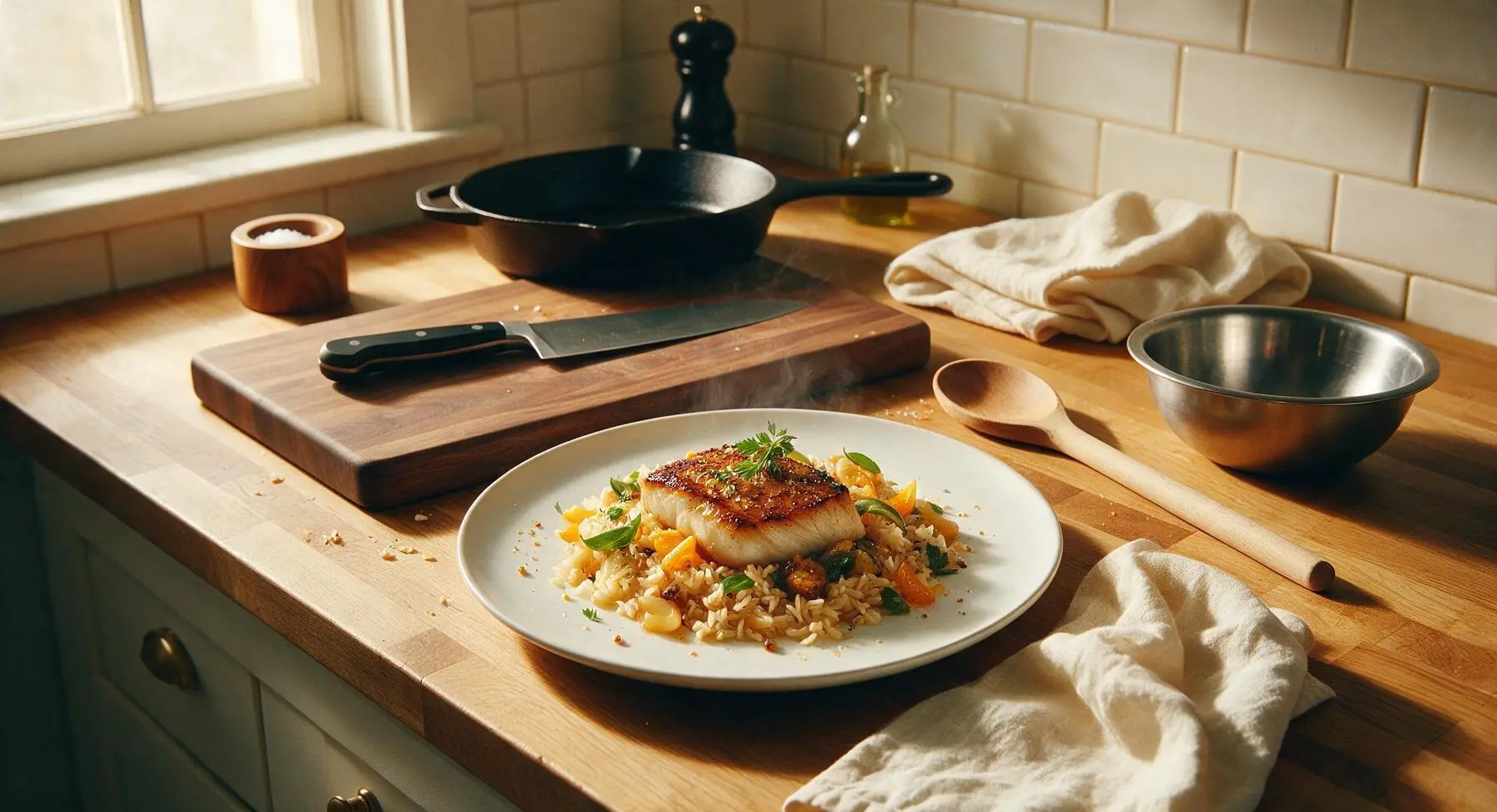
Rum Barrel Aged IPL

title 1
Rum Barrel Aged IPL
⏱️ cook time 1 hour 45 minutes
🍽️ servings 10
⚡ Difficulty medium

intro

Bright, crisp India Pale Lager aged on rum barrel oak, with warm vanilla, caramel rum notes, zesty citrus hops, and a smooth finish ideal for slow sipping.

Ingredients
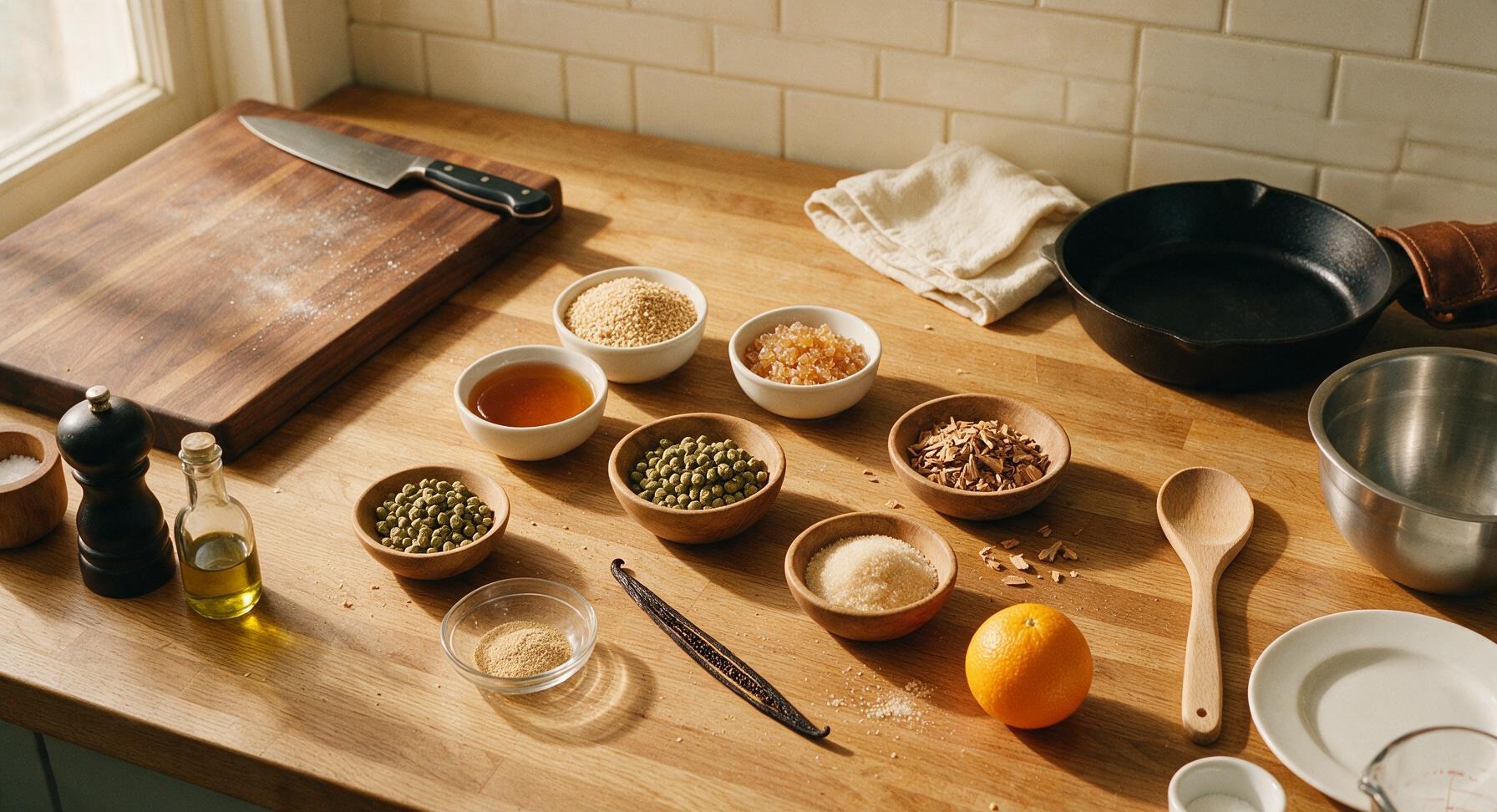
Light Pilsen dried malt extract 1.2 lbs
Crushed crystal malt (20L) 4 oz
Cascade hop pellets 0.5 oz
Centennial hop pellets 0.3 oz
Medium-toast rum barrel-aged oak chips 1 oz
Dry lager yeast 1 (5g) packet
Corn sugar (for priming) 2 oz
Vanilla bean (split) 1/2 bean
Fresh navel orange (for zest) 1 small

Steps

1

Sanitize Brewing Gear

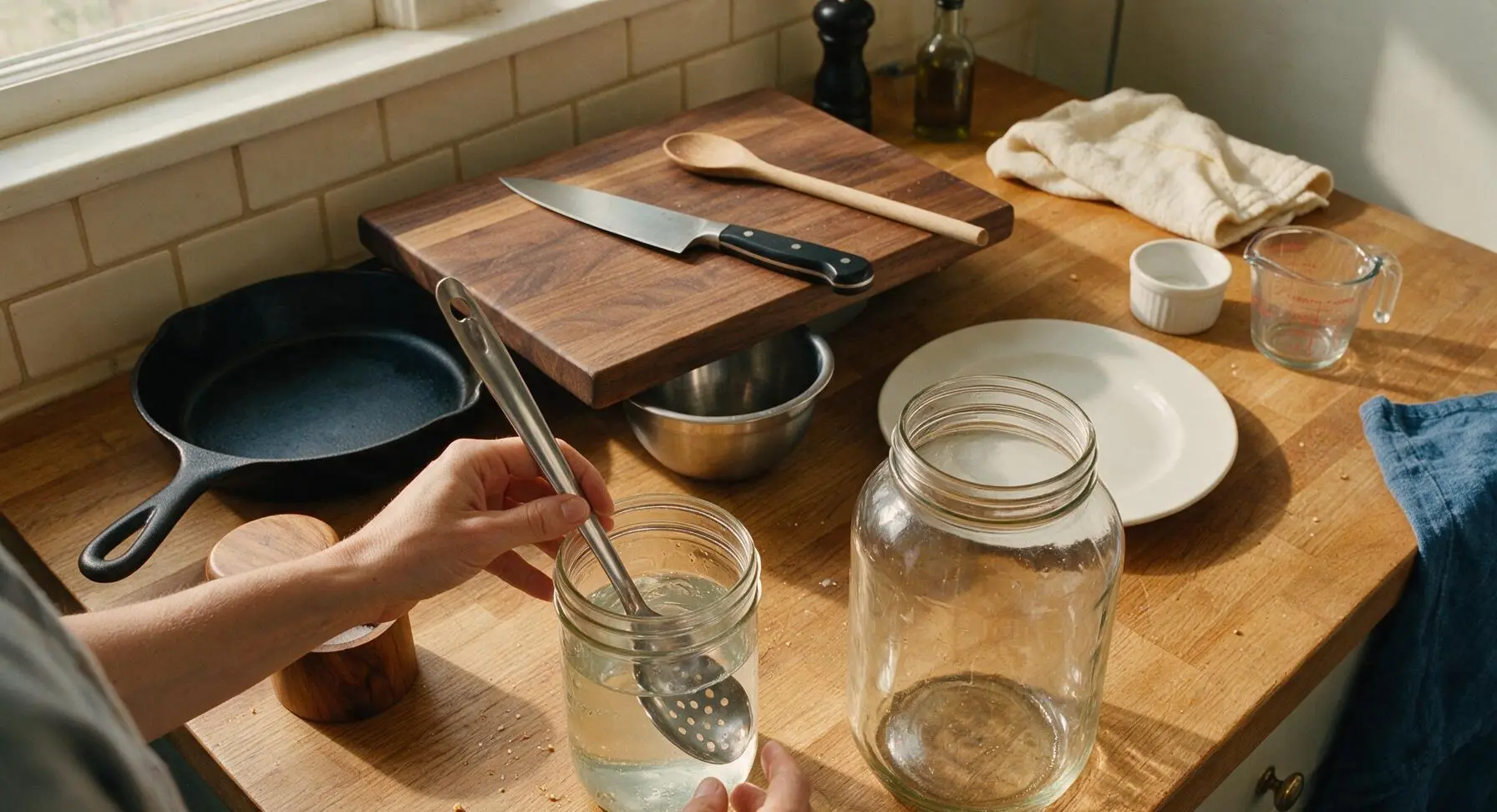
Mix no-rinse brewing sanitizer in the 1-quart mason jar per package directions. Submerge the stirring spoon, strainer, tongs, siphon, airlock, and fermenter opening for 60 seconds, then set on the clean counter to air dry. All surfaces that touch cooled wort must be fully sanitized to prevent off-flavors or contamination. Look for no remaining suds on equipment before use.
Step 1
step1:Sanitize Brewing Gear
2

Steep Crystal Malt

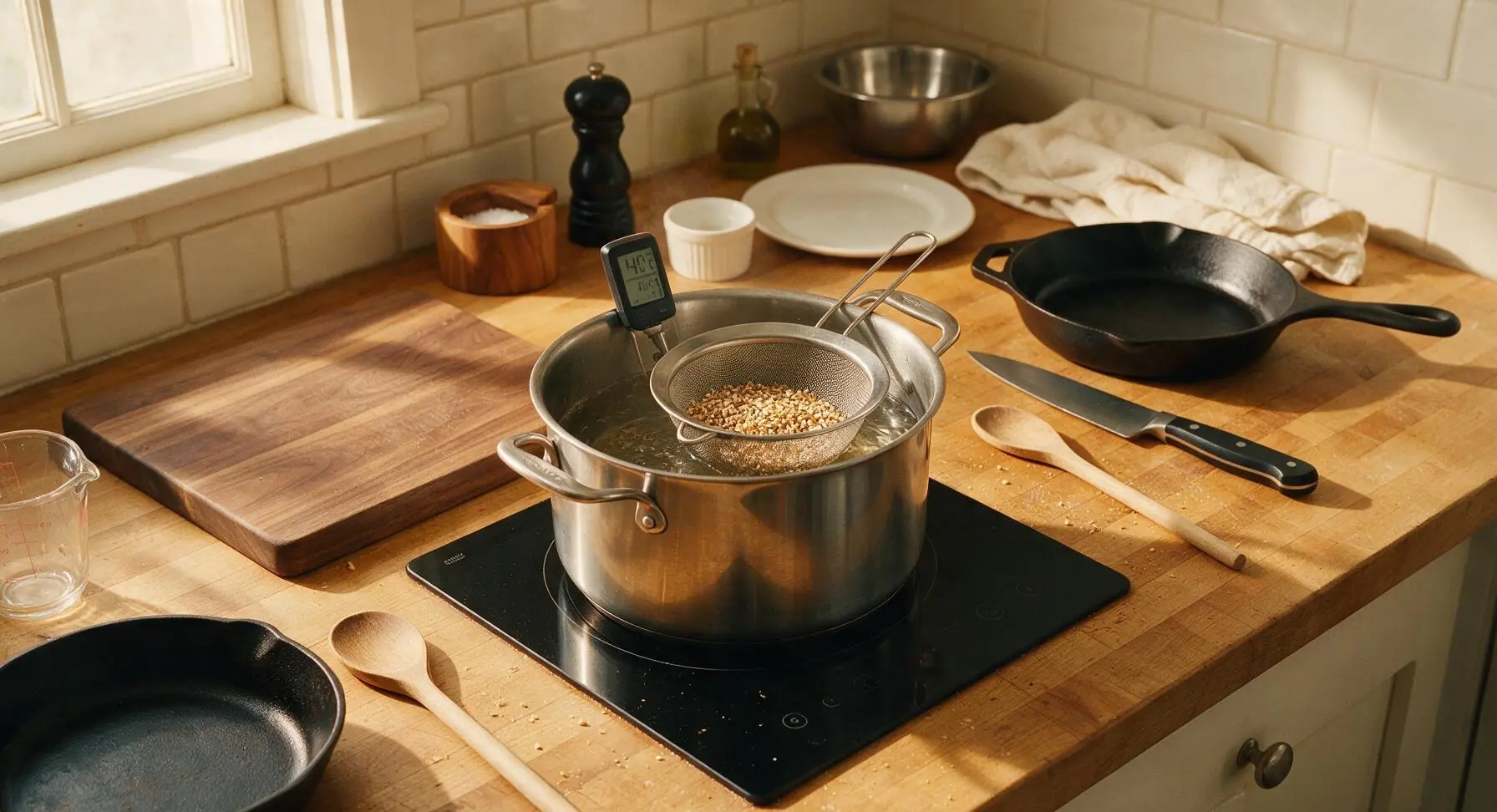
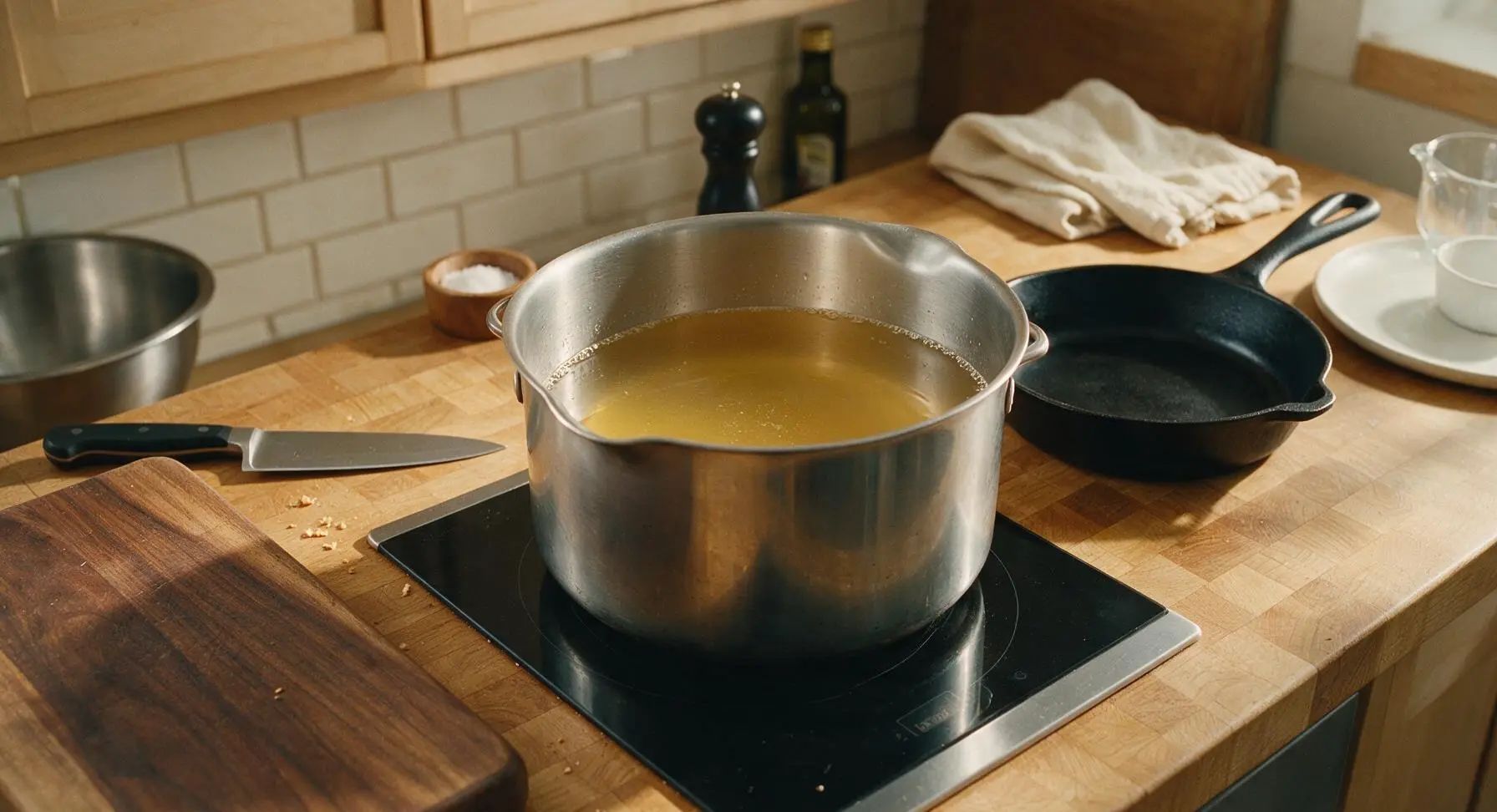
Place 4 oz crushed crystal malt in the fine mesh stainless steel strainer, lower into 3 quarts of cold water in the 5-quart stainless steel brew pot set on the induction cooktop. Heat water to 155°F, hold temperature steady for 20 minutes, then lift the strainer to let all liquid drain back into the pot. The resulting wort will be a pale golden amber with a light, sweet biscuit aroma.
Step 2
step2:Steep Crystal Malt
Step 2
step2:Steep Crystal Malt
3

Boil and Add Hops

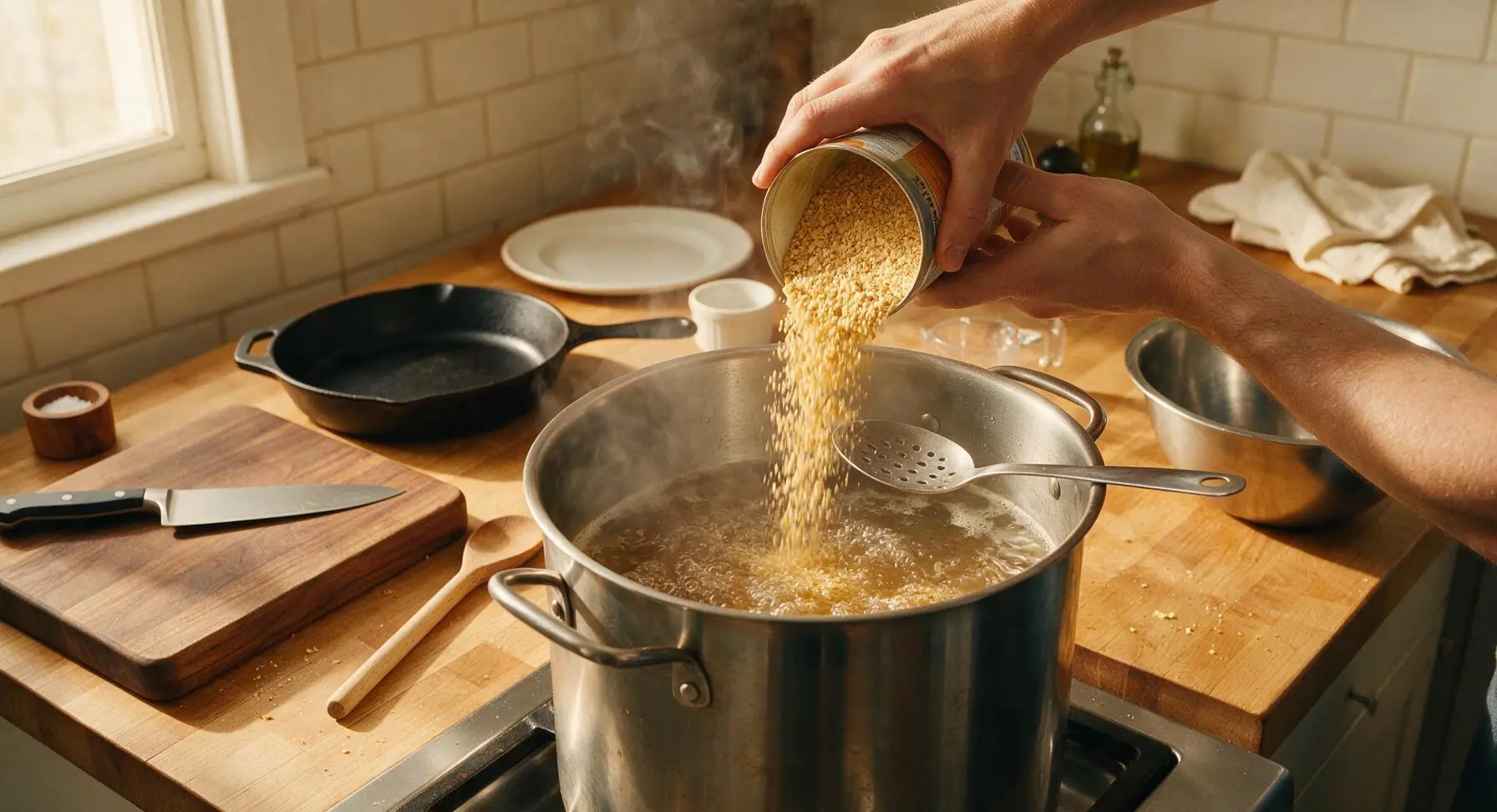
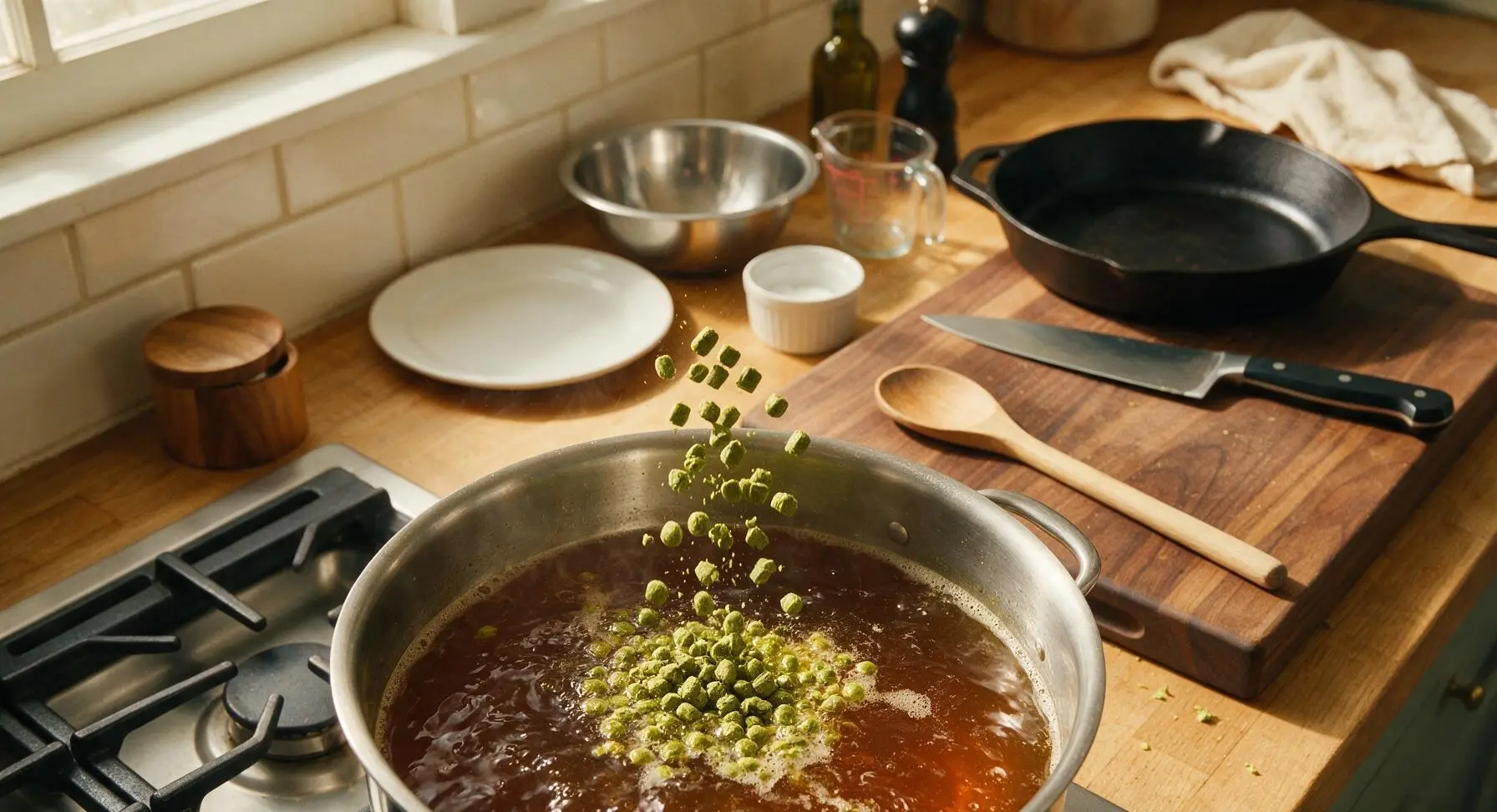
Bring the wort to a gentle rolling boil. Stir in 1.2 lbs light Pilsen dried malt extract with the slotted spoon until fully dissolved, with no dry clumps remaining. Add 0.3 oz Cascade hops at the start of the 60-minute boil for clean bitterness. With 15 minutes left in the boil, add the remaining 0.2 oz Cascade hops for flavor. With 1 minute left in the boil, add all 0.3 oz Centennial hops and the split half vanilla bean for bright citrus aroma and soft vanilla depth. Adjust heat as needed to maintain a steady boil without boilovers.
Step 3
step3:Boil and Add Hops
Step 3
step3:Boil and Add Hops
4

Cool and Pitch Yeast

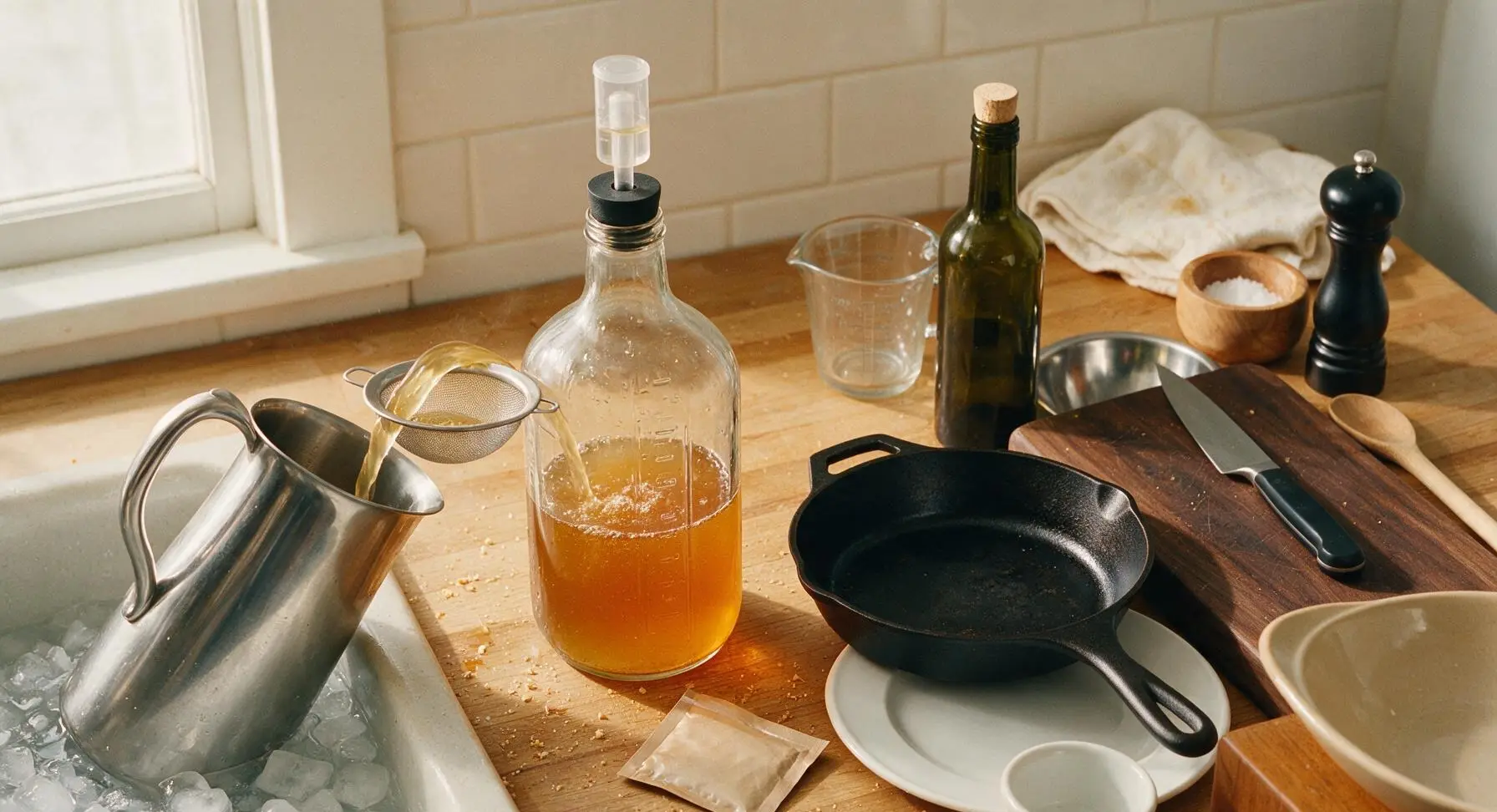
After the 60-minute boil is complete, remove the pot from the induction cooktop. Set the pot in an ice bath in the adjacent sink until the wort cools to exactly 65°F, approximately 20 minutes. Pour the cooled wort through the fine mesh strainer into the sanitized 1-gallon glass fermenter, top up with cold filtered water to reach the 1-gallon volume mark. Sprinkle the entire 5g packet of dry lager yeast over the wort surface, then seal the fermenter with the drilled rubber stopper and sanitizer-filled airlock. The wort will appear hazy golden at this stage.
Step 4
step4:Cool and Pitch Yeast
5

Ferment the IPL

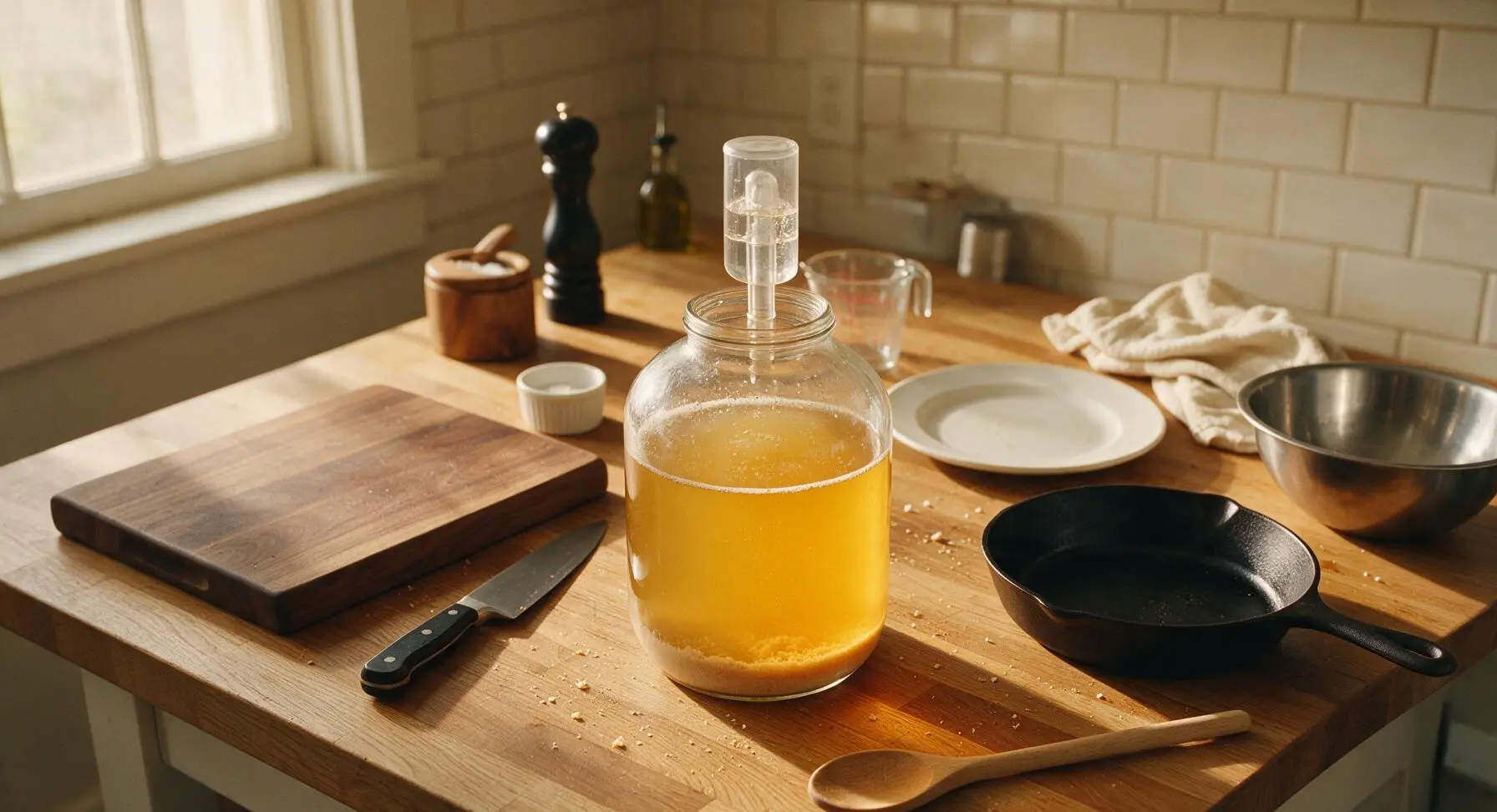
Move the sealed fermenter to a dark, temperature-stable space held between 60-65°F for 2 weeks of primary fermentation. Consistent bubbles will rise through the airlock every few seconds for the first 3-7 days as yeast converts sugar to alcohol, slowing to one bubble every minute or less once fermentation finishes. The beer will clarify slightly over this time, with a thin layer of pale tan yeast sediment settled at the bottom of the fermenter.
Step 5
step5:Ferment the IPL
6

Add Rum Oak Chips

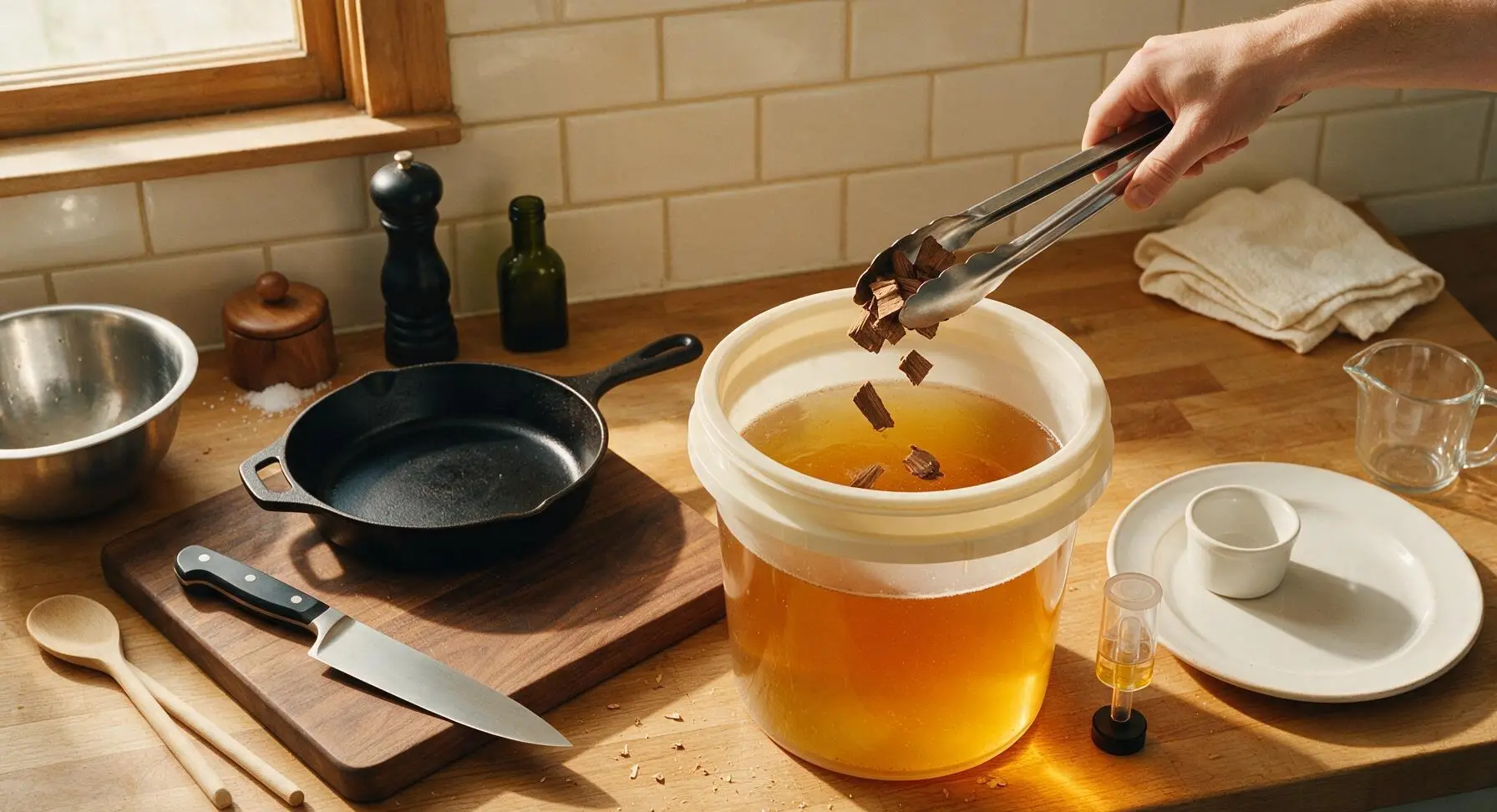
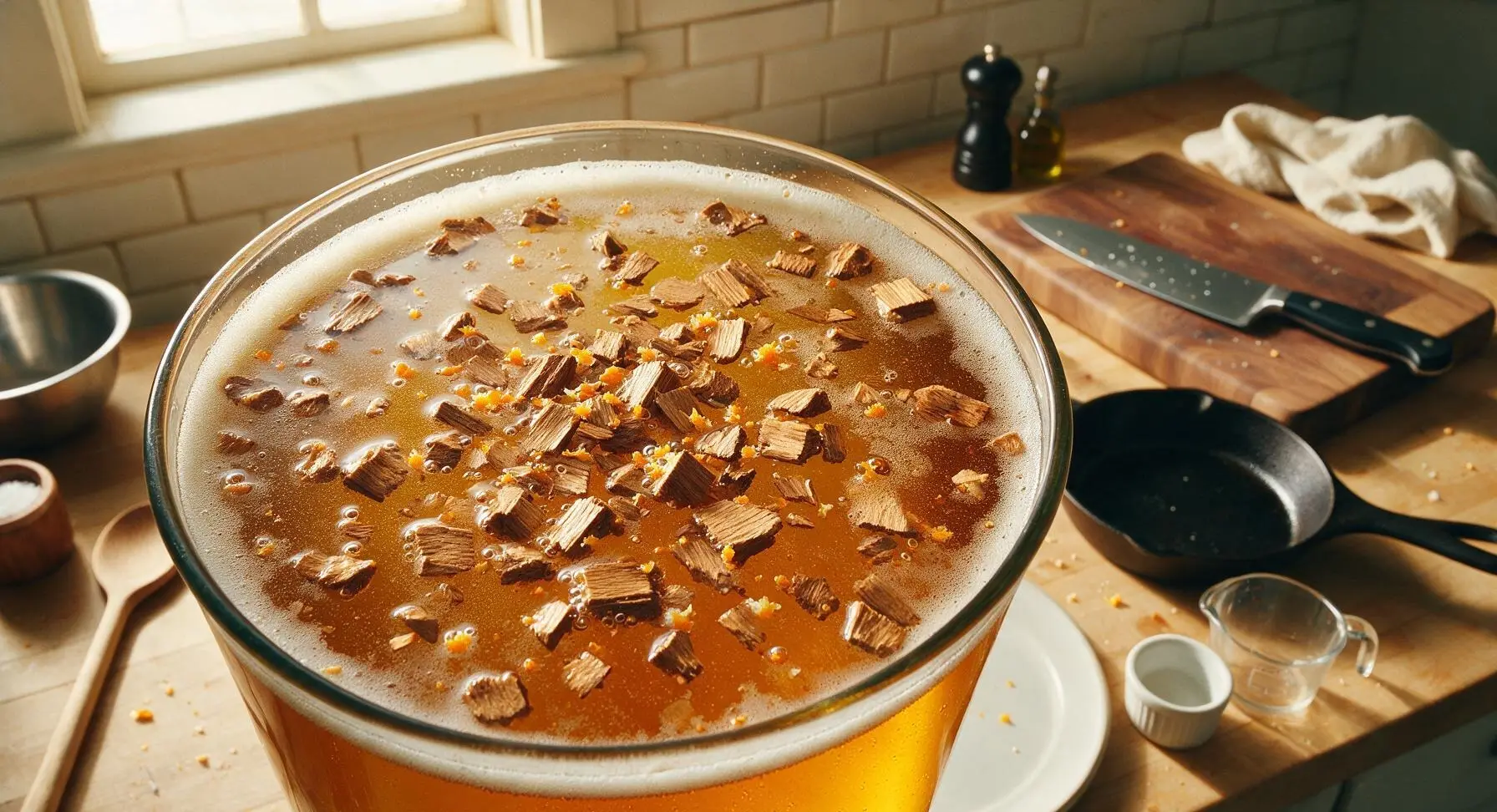
Sanitize 1 oz of medium-toast rum barrel-aged oak chips by soaking in 2 oz boiling water for 10 minutes, then drain fully. Use sanitized tongs to carefully add the drained oak chips and 1 tsp fresh orange zest to the fermenter, then re-seal the airlock. Let the beer age on the oak for 7-10 days at 60°F, pulling a 1oz sample with the auto-siphon every 2 days to taste, stopping aging when rum, vanilla, and oak notes are balanced and not overpowering the hop character.
Step 6
step6:Add Rum Oak Chips
Step 6
step6:Add Rum Oak Chips
7

Bottle for Carbonation

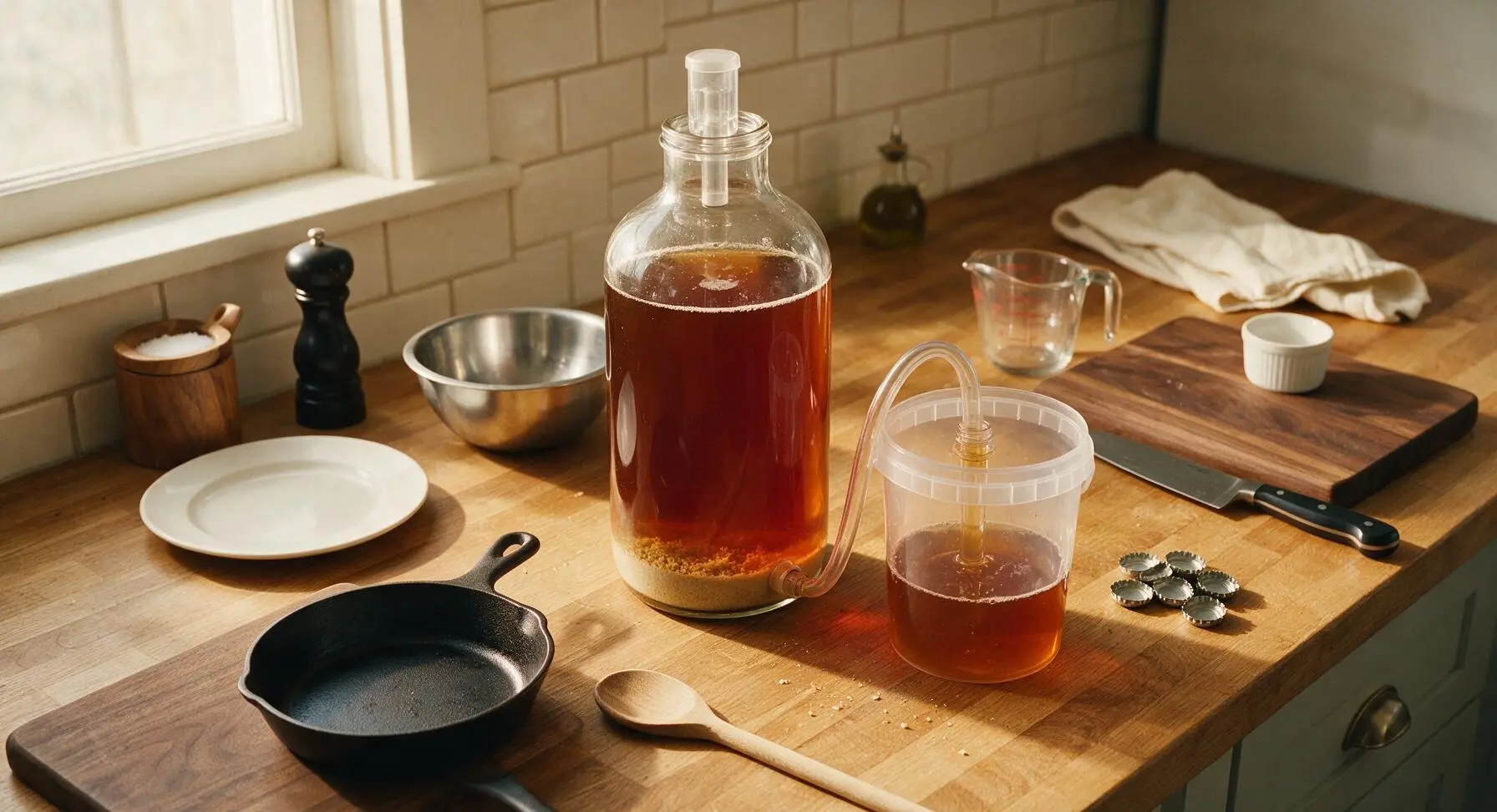
Once oak aging is complete, dissolve 2 oz corn sugar in 1/4 cup boiling water, cool to room temperature, and pour into the sanitized 1-gallon PET bottling bucket. Use the auto-siphon to gently transfer the beer off the yeast sediment into the bottling bucket, stirring slowly to mix evenly with the sugar solution. Fill sanitized 12oz glass bottles to 1 inch below the rim, crimp on metal bottle caps tightly, and store at 68-72°F for 2 weeks to allow natural carbonation to develop.
Step 7
step7:Bottle for Carbonation
8

Chill and Pour

After carbonation is complete, chill bottles for 48 hours at 40°F before serving. Pour slowly into the tulip beer glass held at a 45-degree angle, leaving the last 1/4 inch of yeast sediment in the bottle to avoid cloudiness. Garnish with a thin twist of orange peel, expressing the citrus oils over the foam before placing the peel on the rim.
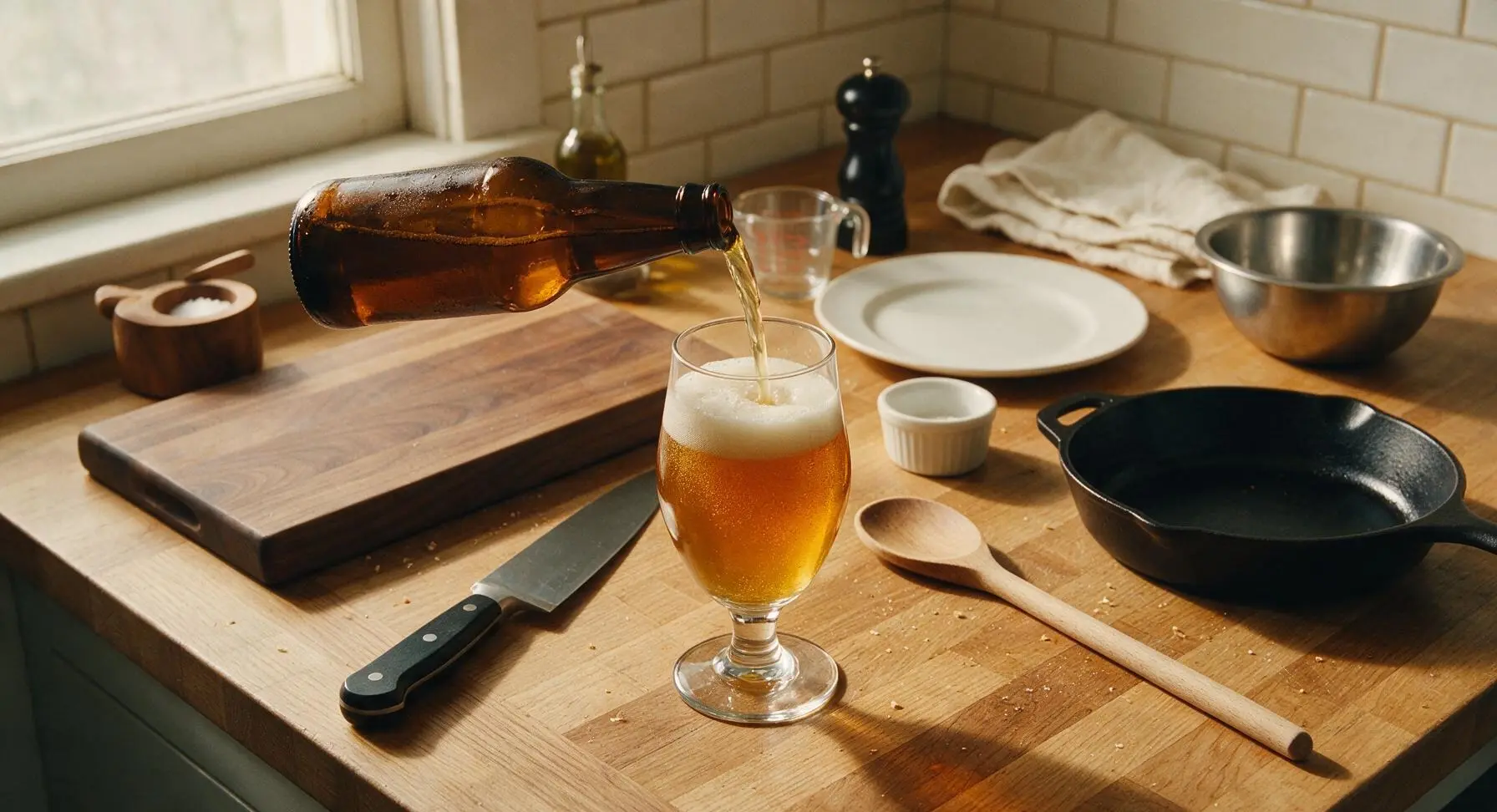
Step 8
step8:Chill and Pour

Tips

1.Taste your beer frequently during oak aging: Rum barrel chips can quickly over-extract harsh, woody tannins if left in contact for longer than 10 days, which will overpower the bright citrus hop character that defines an IPL. Stop aging as soon as you pick up smooth vanilla and subtle rum notes.
2.Keep fermentation temperatures consistent: Temperatures above 70°F will cause the lager yeast to produce harsh, solvent-like fruity off-flavors that clash with the smooth barrel notes, while temperatures below 55°F will cause the yeast to go dormant and stall fermentation entirely.
3.Avoid adding straight rum directly to the fermenter: Pre-infused rum barrel oak chips deliver authentic, smooth rum flavor without the high alcohol content that can kill active yeast, leading to flat, under-carbonated beer.


✨ You May Also Like

Drinks & Beverages
🍜 Mexico

A bright, balanced tequila-based cocktail with zesty fresh lime, smooth orange liqueur, and a signature salt rim, perfect for warm summer sipping.

⏱️ 5 minutesDrinks & Beverages ★ 4.9
Drinks & Beverages
🍜 United States

Thick, creamy, nostalgic classic vanilla milkshake with a rich, smooth texture, topped with whipped cream and a cherry for cool, sweet refreshment.

⏱️ 5 minutesDrinks & Beverages ★ 4.7
Drinks & Beverages
🍜 United States

A bright, golden strong ale with fruity banana-clove notes, subtle hop spice, and soft carbonation, brewed in classic Trappist Tripel tradition.

⏱️ 2 hours aDrinks & Beverages ★ 4.5
Drinks & Beverages
🍜 United States

A frothy, nostalgic American soda fountain treat pairing bubbly cold root beer with creamy vanilla ice cream, perfect for cooling down at warm weather gatherings.

⏱️ 20 minuteDrinks & Beverages ★ 4.8
Drinks & Beverages
🍜 United States

Tart, funky, effervescent American Wild Ale is a complex fruity craft beer brewed with wild yeast, delivering bright, zesty notes perfect for warm-weather sipping.

⏱️ 2 hours aDrinks & Beverages ★ 4.4
Drinks & Beverages
🍜 United States

Bright, bubbly copycat of the iconic American caramel cola, balanced with citrus and warm spice, perfect for sipping ice-cold on hot days.

⏱️ 15 minuteDrinks & Beverages ★ 4.8

Rum Barrel Aged IPL:Frequently Asked Questions

1.How long should I age this IPL on the rum barrel-aged oak chips to hit the perfect flavor balance? ▾
Aim for 7–14 days of contact time at 60–65°F right after primary fermentation wraps. Pull a 4-oz sample every 3 days starting at day 7, and remove the chips once you pick up smooth vanilla and subtle rum caramel, before harsh woody astringency kicks in and overpowers the bright citrus hop notes.
2.Can I use fresh rum barrel staves if I don’t have medium-toast rum barrel-aged oak chips? ▾
Absolutely! Use 1 oz of rough-sanded medium-toast rum barrel staves per 5-gallon batch to expose fresh wood grain. Pre-soak staves in 2 oz of dark rum for 48 hours before adding to secondary to amp up warm rum notes, and sample regularly just like you would with chips to avoid over-oaking.
3.What makes this recipe an IPL instead of a standard hoppy IPA? ▾
Unlike IPAs, which use top-fermenting ale yeast fermented at warmer temperatures, this IPL uses clean, bottom-fermenting lager yeast fermented at 50–55°F then cold-conditioned. That creates the bright, crisp, smooth base that lets both citrus hops and warm rum oak shine without fruity ale yeast esters getting in the way.
4.Do I need to use a secondary fermenter for the oak aging step? ▾
It’s not strictly required, but it’s highly recommended. Racking beer off primary trub after 2 weeks of fermentation before adding oak prevents off-flavors from breaking down dead yeast and sediment, keeps the finish crisp, and makes it easy to pull chips once you hit your ideal oak and rum flavor balance.
5.How much 20L crushed crystal malt should I use to avoid making the beer too cloyingly sweet? ▾
Stick to 4–6 oz of crushed 20L crystal malt per 5-gallon batch, steeped at 150–155°F for 20 minutes before adding your dried malt extract. That amount adds soft caramel depth to complement rum notes without heavy sweetness, so zesty Cascade and Centennial hop bite still cuts through cleanly.
6.What hop schedule works best to keep citrus hop character bright against the oak and rum notes? ▾
Add 70% of your Cascade and Centennial pellets in the last 10 minutes of the boil, plus a 1 oz dry hop addition 3 days before bottling or kegging. That locks in bright grapefruit, lemon, and pine notes without harsh, grassy hop bite that would clash with smooth vanilla and warm rum oak flavors.
7.Can I substitute light liquid Pilsen malt extract for the light Pilsen dried malt extract? ▾
Definitely! Swap dried Pilsen malt extract 1:1 for liquid Pilsen malt extract if that’s what you have on hand. Just note liquid extract creates a slightly softer, rounder malt base, so add an extra 0.5 oz of Centennial hops at knockout to keep that zesty citrus balance front and center.
8.How long will this rum barrel-aged IPL stay fresh after I bottle it? ▾
When stored in a cool, dark spot at 50–55°F, it will hold peak flavor for 4–6 months. Oak and rum notes will mellow slightly over time, but bright hop character fades faster than malt and wood flavors, so aim to drink most of your batch within that window for the best balance.
9.What carbonation level is ideal for this sippable rum barrel-aged IPL? ▾
Aim for 2.4–2.6 volumes of CO2 if you’re kegging, or use 3.5 oz of corn sugar for priming if bottling. That moderate, crisp carbonation lifts zesty citrus hop aromas, cuts through subtle caramel and rum sweetness, and keeps the finish smooth enough for slow sipping as the recipe intends.
10.I don’t have Centennial hop pellets—what’s a good substitute that won’t throw off the flavor? ▾
Swap Centennial 1:1 for Citra, Amarillo, or even extra Cascade if that’s all you have on hand. Stick to hops with bright citrus (grapefruit, lemon) and subtle pine notes to match the original profile; avoid heavy tropical, stone-fruit forward hops, as those clash with warm oaky rum and vanilla notes.
11.Will the residual rum on the rum barrel-aged oak chips add a noticeable amount of alcohol? ▾
Residual rum on pre-treated rum barrel oak chips adds less than 0.1% ABV to a standard 5-gallon batch, so it’s totally negligible. If you want a more prominent rum kick, soak chips in 2–3 oz of dark rum for 24 hours before adding, which bumps ABV by roughly 0.3% and amplifies warm caramel-rum flavor.
12.What temperature should I serve this IPL at to get the full range of flavors? ▾
Serve it at 45–50°F, a touch warmer than your standard crisp mass-market lager. That temperature lets warm vanilla, caramel rum, and subtle oak notes come forward without being muted, while still keeping bright citrus hop character and the crisp lager finish refreshing for slow sipping.
13.How do I sanitize oak chips without introducing off-flavors or bacteria to my batch? ▾
Never boil the chips—high heat leaches harsh, bitter wood tannins that ruin the smooth profile. Instead, sanitize them by soaking in a small amount of food-grade no-rinse sanitizer for 10 minutes, or baking them at 200°F for 10 minutes on a clean tray, before adding to your fermenter.
14.Is cold conditioning really necessary for this recipe, and how long should I do it? ▾
It’s absolutely key for that signature smooth IPL finish! After oak aging wraps, drop the fermenter temperature to 35–40°F and hold it there for 2–3 weeks before bottling or kegging. This lets yeast and sediment settle, softens sharp hop bite, and melds rum, oak, and citrus flavors into one cohesive sip.
15.What can I do if I left the oak chips in too long and the beer tastes overly woody or astringent? ▾
Don’t panic! Balance excess oak astringency by adding a small 0.25–0.5 oz dry hop addition of Cascade 3 days before bottling to amp up citrus brightness, or blend the over-oaked batch 1:1 with a small batch of un-oaked crisp Pilsner base to dilute harsh wood notes back to balance.

Comments (5)

3 days ago

OMG this rum barrel aged IPL was an absolute game changer for our last backyard cookout! I aged it for 6 weeks on used rum barrel chips instead of a full barrel (apartment life problems, am I right?) and the vanilla + rum notes paired so perfectly with the crisp lager hop bite. My buddies kept asking for refills all night, zero leftovers. 10/10 would brew again.

2 days ago

So stoked this was a hit at your cookout, Jake! The used rum barrel chip hack is genius for small spaces — I’ve had great results soaking the chips in spiced rum for 24 hours first to amp up that flavor if you want to try that next batch!

1 day ago

Wait the chip hack is such a good call! I’ve been putting off trying this recipe because I don’t have space for a full barrel, definitely gonna pick up some chips this weekend to test it out. Did you use American oak or French oak chips?

1 week ago

Tried this last weekend for my husband’s birthday, he’s a total craft beer nerd and lost his mind over how close this tasted to the expensive barrel aged stuff we buy at the local bottle shop! Only note: I found the 1 hour 45 minute cook time was spot on, but make sure you don’t rush the lagering phase if you want that super clean finish. SO good, already planning to make a double batch for our fall potluck.

5 days ago

Happy birthday to your husband! Great call out on the lagering phase — rushing that step is the #1 mistake new homebrewers make with this recipe, so I’m glad you emphasized that. A double batch for the potluck is gonna make you the most popular person there, no contest.

30 minutes ago

Solid recipe, medium difficulty is no joke though! I messed up the first dry hop addition because I got distracted helping my kids with their homework, but even with that mistake it turned out way better than my last attempt at an IPL. My younger kids loved helping me sanitize the bottles too, said it felt like a fun science experiment, and even my teen snuck a tiny sip and said it was way smoother than the stuff I usually make. Wouldn’t recommend this for total first-time brewers, but if you’ve got a couple batches under your belt it’s totally doable.

2 hours ago

I don’t even homebrew that often but this recipe was so easy to follow! I brought a growler of this to my family dinner last Sunday and even my dad who only drinks cheap macro lager was raving about it. The rum flavor isn’t overpowering at all, just a nice warm hint at the end of each sip. Game changer for casual get togethers!

5 minutes ago

So glad you said that! I’m also a casual brewer and was intimidated by the medium difficulty tag, this makes me way more confident to give it a shot. Did you use a traditional lager yeast or did you go with a hybrid for a faster ferment?

2 weeks ago

Made this for our annual camping trip last month and it was chef’s kiss. Only heads up: if you’re barrel aging, make sure you taste it every few days so it doesn’t get too oaky! I left mine on a little too long my first test batch and the oak overpowered the hops, but the second batch I pulled at 4 weeks and it was perfect. Already added this to my regular brew rotation.

1 week ago

Such an important tip! Tasting regularly during the aging phase is so key — everyone’s barrel (or chip) saturation is different, so there’s no one-size-fits-all timeline. So stoked this made the camping trip cut, that sounds like the perfect outdoor sip.

3 days ago

Wait this is exactly the mistake I made on my first run! Left it on oak chips for 8 weeks and it tasted like I was drinking a straight rum barrel, not a beer. Gonna retry next month with the 4 week timeline, thanks for the heads up!



