
Rye Pale Ale

title 1
Rye Pale Ale
⏱️ cook time 1 hour 45 minutes
🍽️ servings 8
⚡ Difficulty medium

intro

Spicy, citrus-kissed rye pale ale with a crisp bready backbone, balanced caramel sweetness, and bright hoppy finish, ideal for sipping alongside grilled backyard fare.

Ingredients
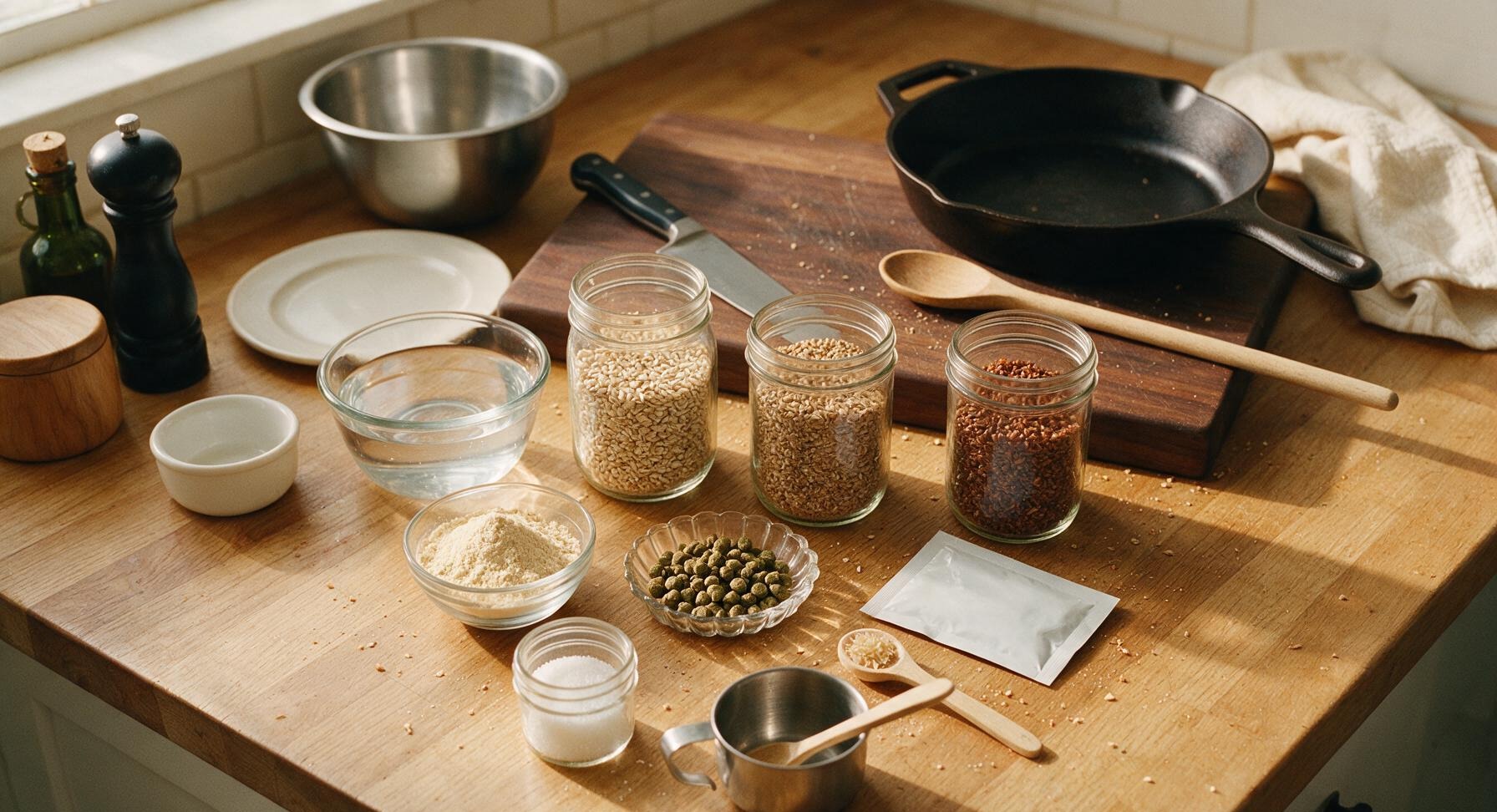
Filtered brewing water 4L
Milled 2-row pale malt 800g
Milled rye malt 300g
Milled caramel 60L malt 100g
Light dry malt extract 200g
Cascade hop pellets 15g
American ale yeast (US-05) 5g (1 packet)
Irish moss (fining agent) 0.5g (1/4 tsp)
Corn priming sugar 25g

Steps

1

Sanitize All Equipment

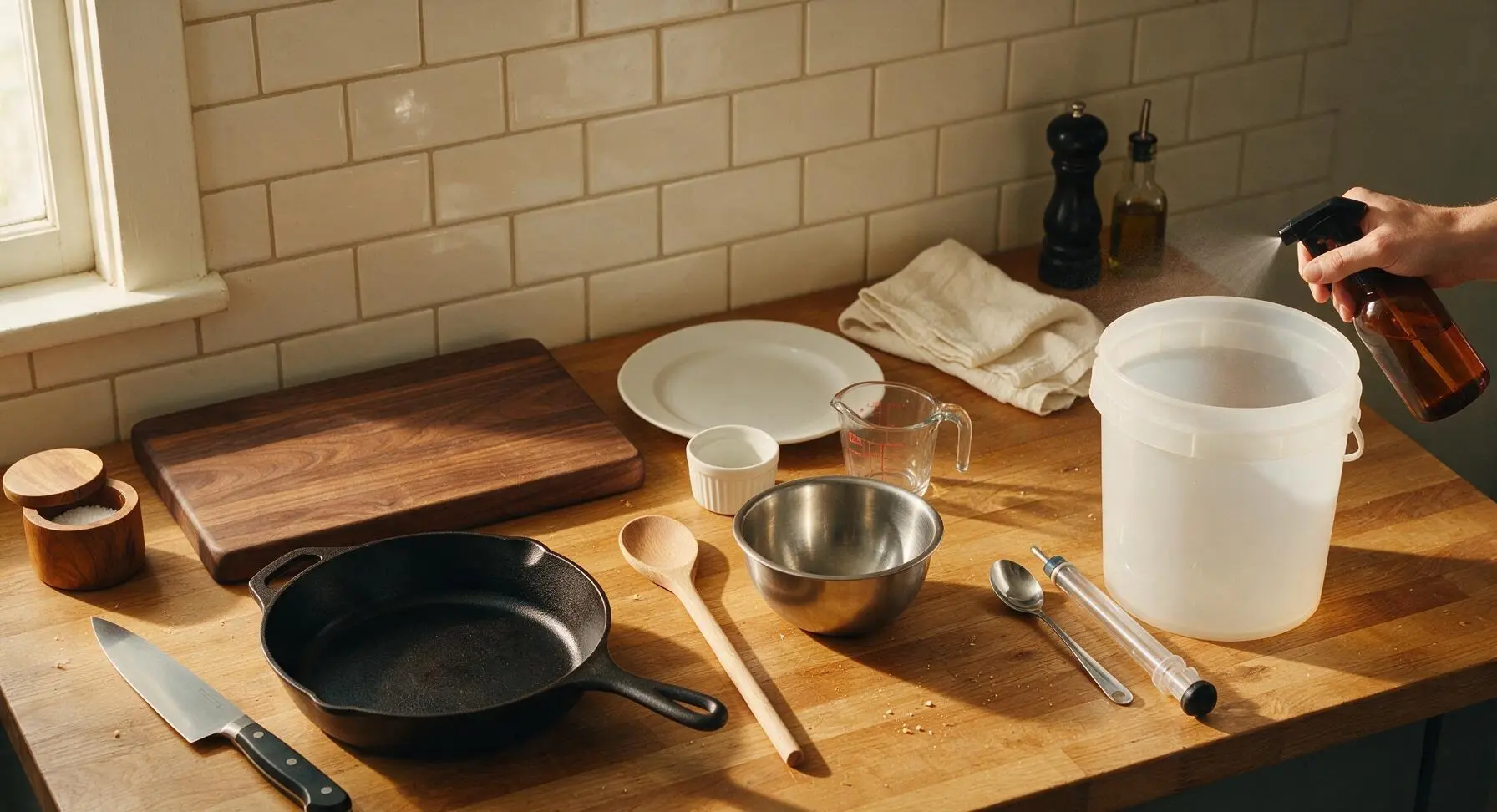
First, spray all surfaces that will touch cooled wort (fermentation bucket interior, lid, airlock, auto-siphon, stirring spoon) with the no-rinse sanitizer from the amber spray bottle. Let sit for 60 seconds, then drain excess; do not wipe dry. Ensure no residual soap or debris remains on any surface, as this can cause off-flavors or bacterial infection.
Step 1
step1:Sanitize All Equipment
2

Steep the Milled Grains

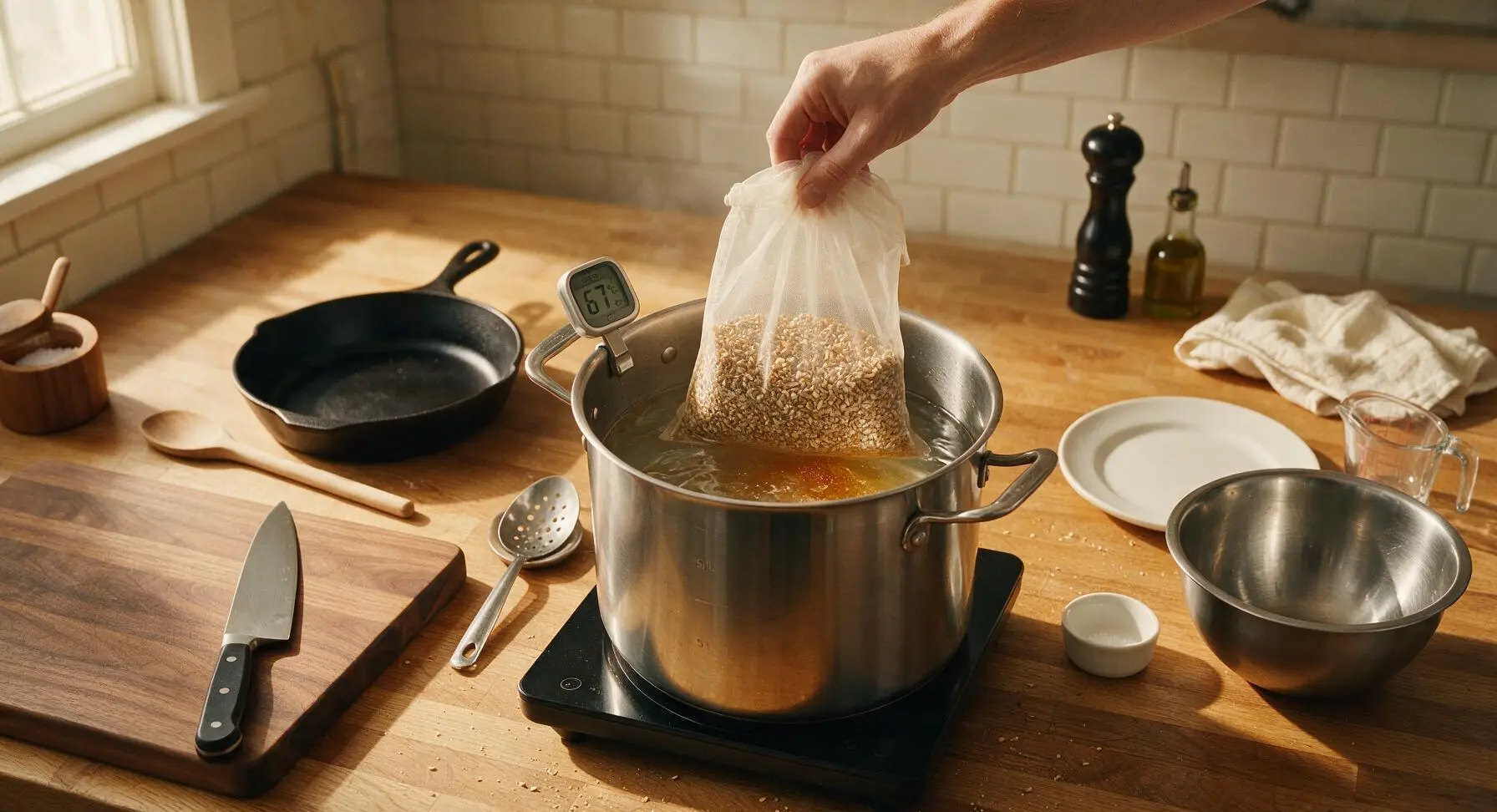
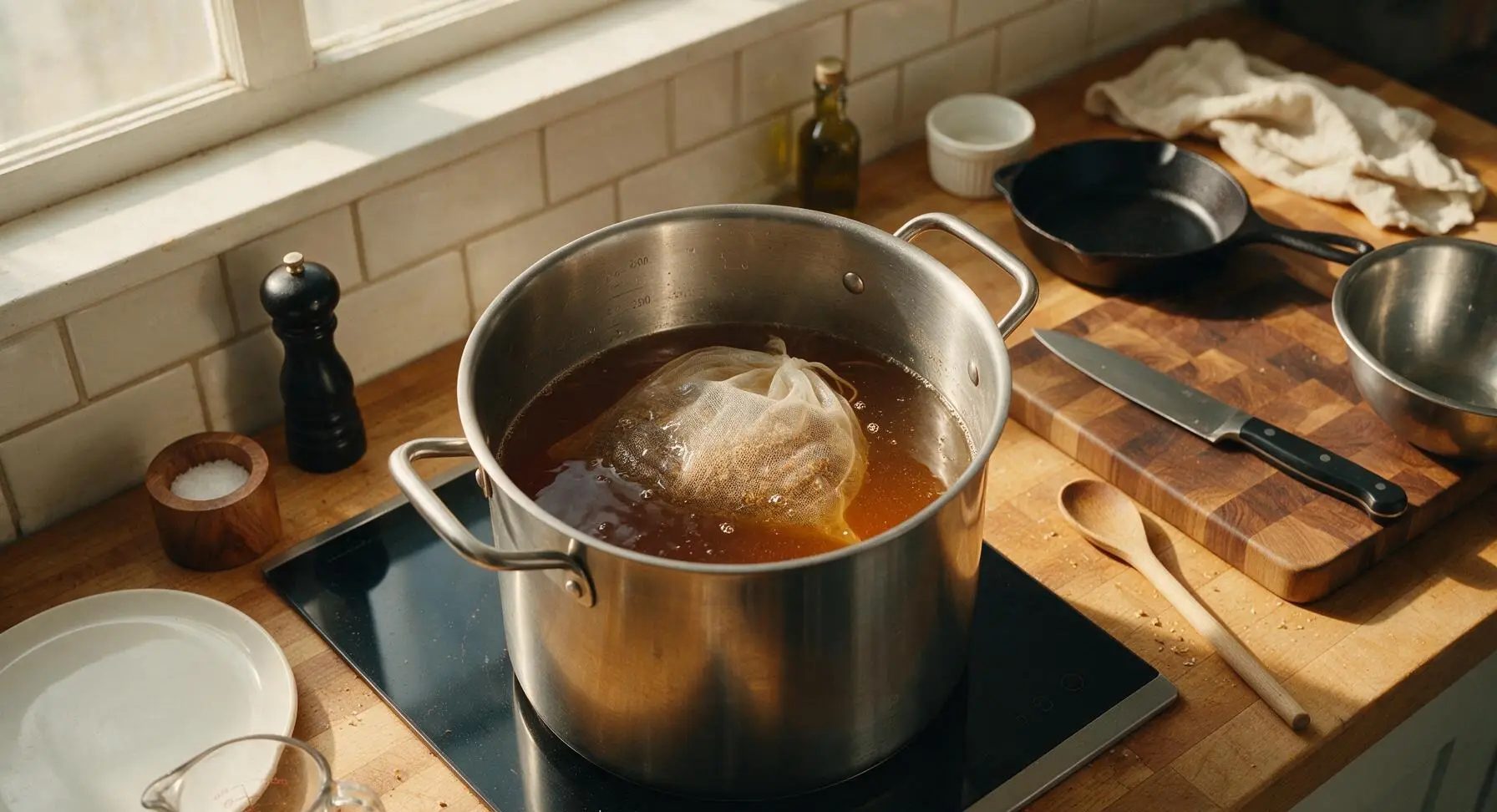
Fill the 5L stainless steel brew pot with 3L of filtered water, heat on the induction cooktop to 67°C (153°F). Combine all milled grains (2-row pale, rye, caramel 60L) in the nylon mesh grain bag, tie the drawstring loosely, and submerge fully in the heated water. Cover the pot, hold temperature steady at 65–68°C for 45 minutes. The clear water will deepen to a rich amber as grain sugars and flavors leach into the liquid (now called wort).
Step 2
step2:Steep the Milled Grains
Step 2
step2:Steep the Milled Grains
3

Remove Grains, Add Extract

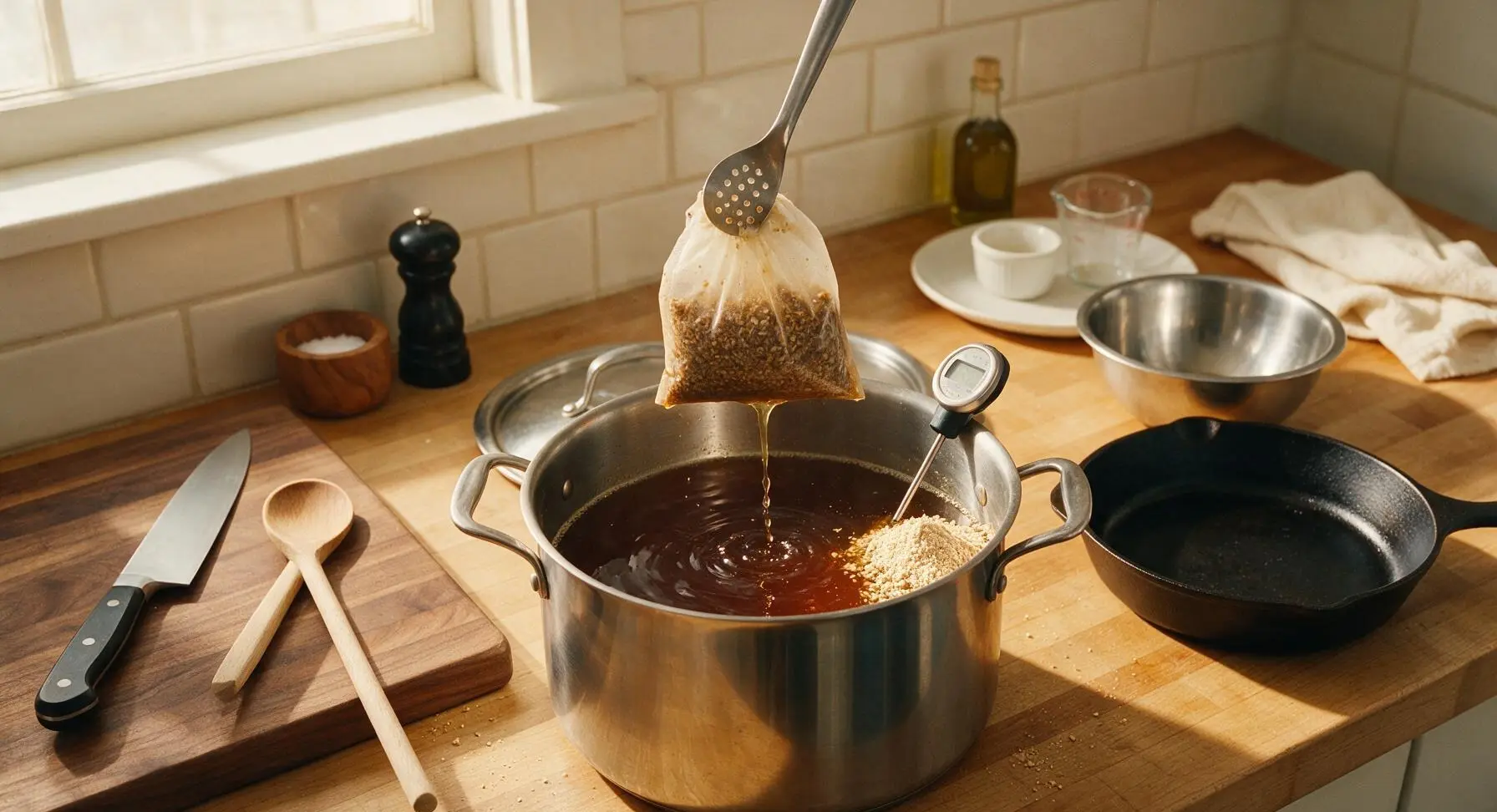
After 45 minutes of steeping, lift the grain bag out of the wort with the slotted stainless steel spoon, hold it above the pot to drain for 2 minutes (do not squeeze the bag). Discard spent grains, then stir the light dry malt extract into the hot wort until fully dissolved with no dry clumps remaining. Top up with additional filtered water to reach 3.5L total wort volume in the pot.
Step 3
step3:Remove Grains, Add Extract
4

Boil Wort, Add Hops

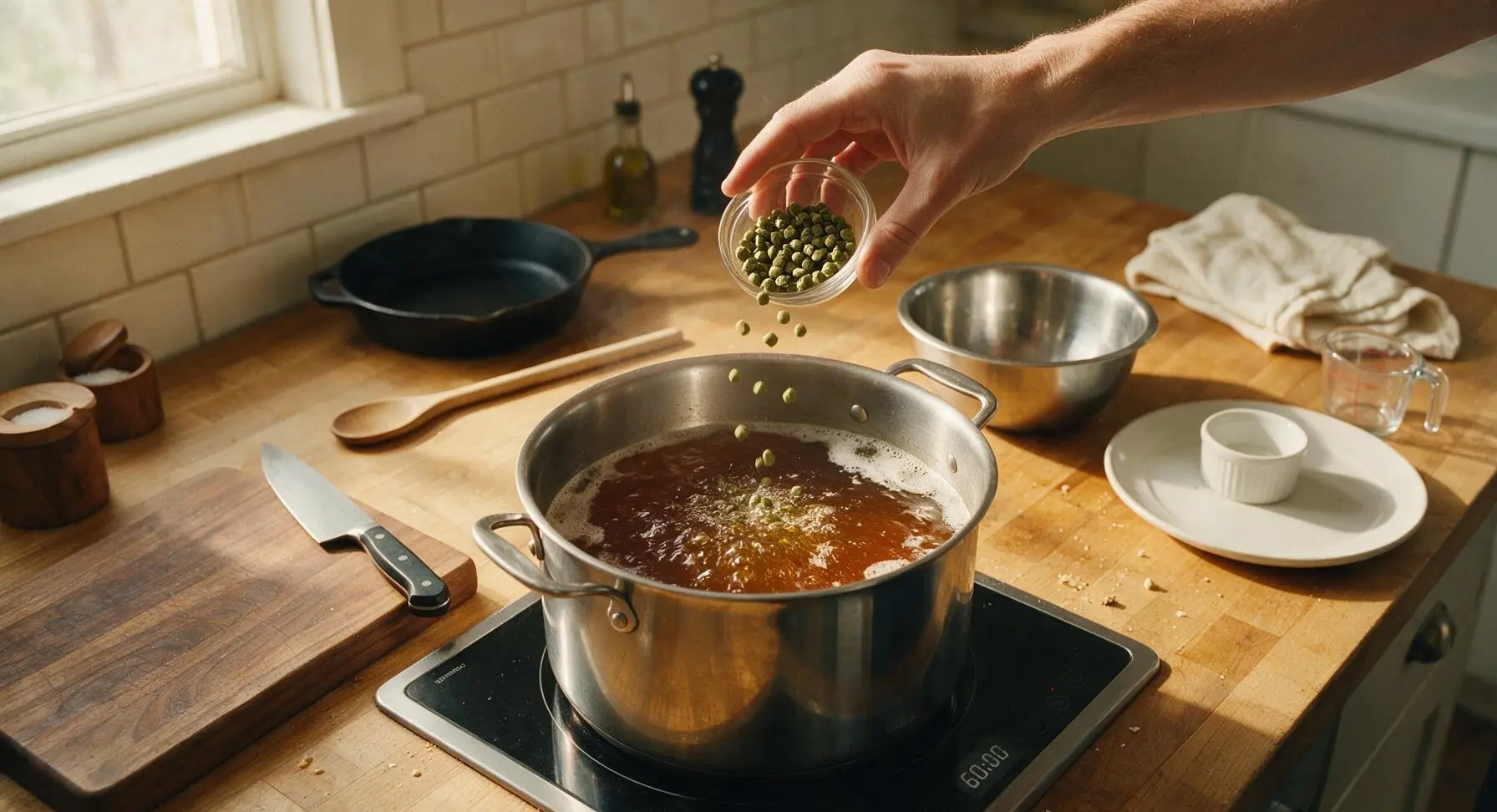
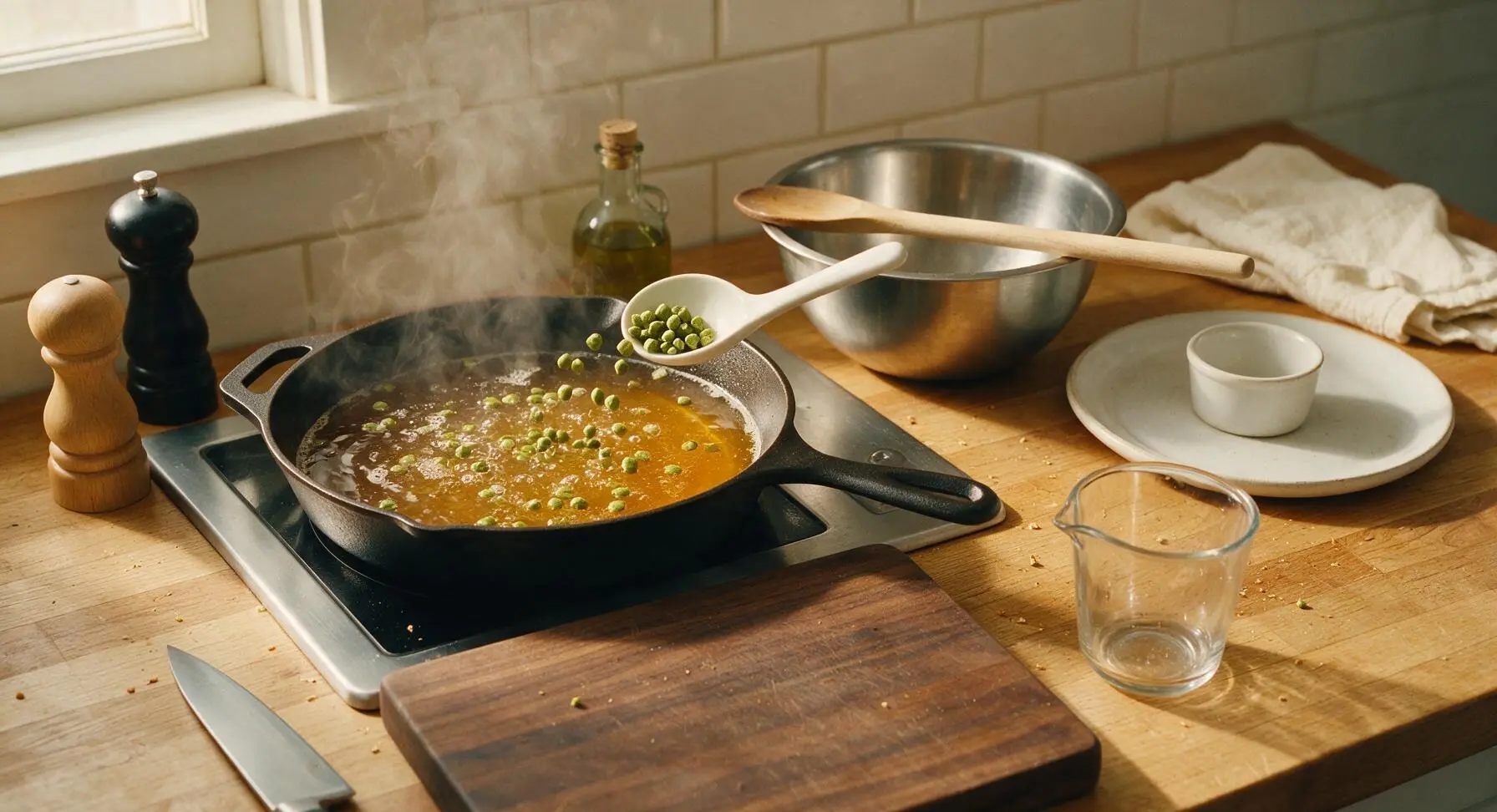
Turn the induction cooktop to high, bring the wort to a gentle rolling boil, adjusting heat as needed to prevent boilovers. Once a steady boil is reached, set a 60-minute timer: add 7g of Cascade hop pellets immediately (bittering addition), add 0.5g Irish moss and 5g of Cascade hops with 15 minutes remaining, then turn off heat and add the final 3g of Cascade hops when the timer hits zero. Stir gently after each addition.
Step 4
step4:Boil Wort, Add Hops
Step 4
step4:Boil Wort, Add Hops
5

Cool Wort, Transfer

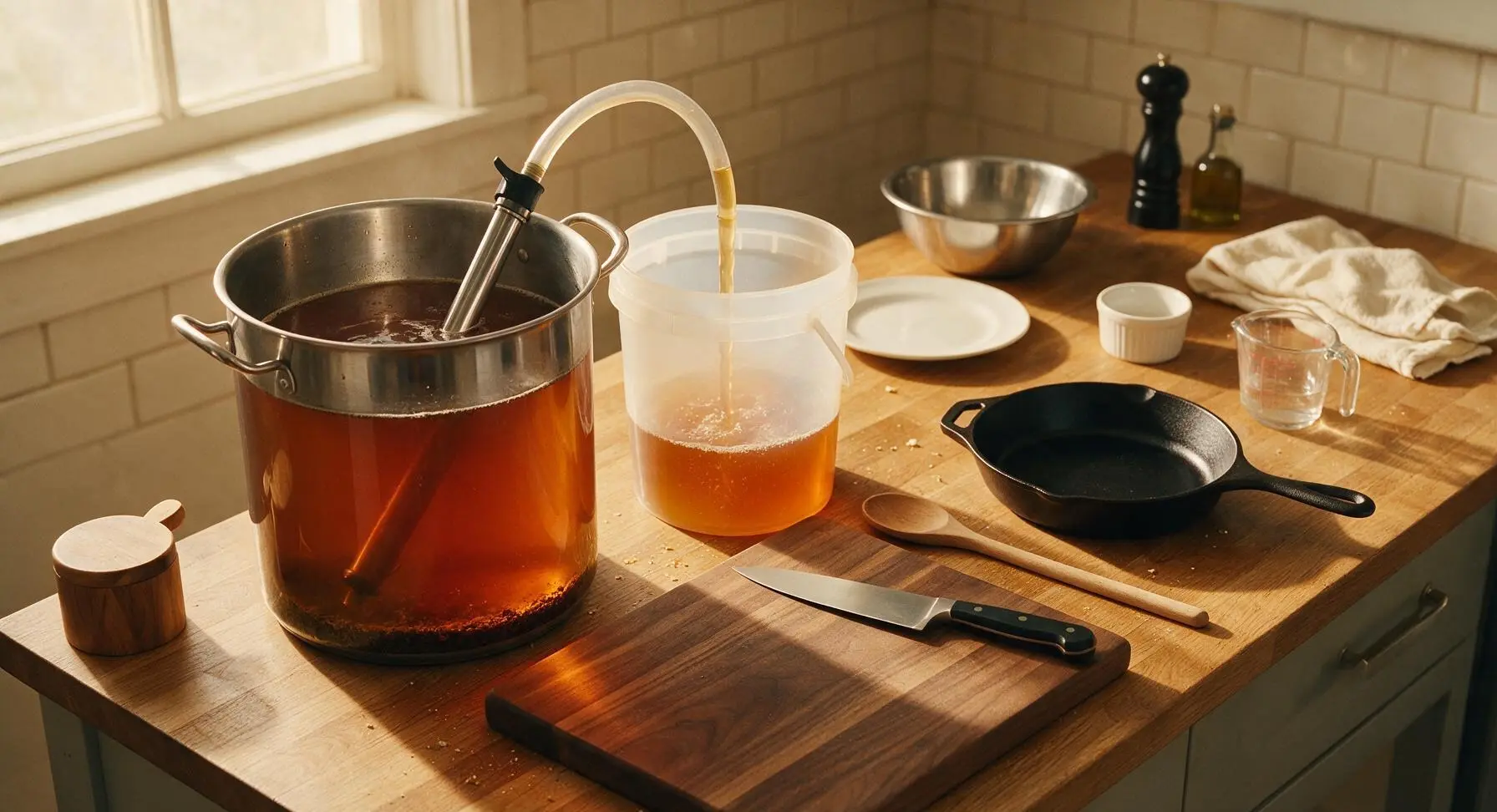
After the final hop addition, cover the pot and place it in an ice water bath to cool wort rapidly to 21°C (70°F), approximately 20 minutes. Keep the lid on during cooling to reduce contamination risk. Once cooled, use the sanitized stainless steel auto-siphon to transfer wort into the sanitized fermentation bucket, leaving the thick layer of hop sediment (trub) at the bottom of the brew pot.
Step 5
step5:Cool Wort, Transfer
6

Pitch Yeast, Seal

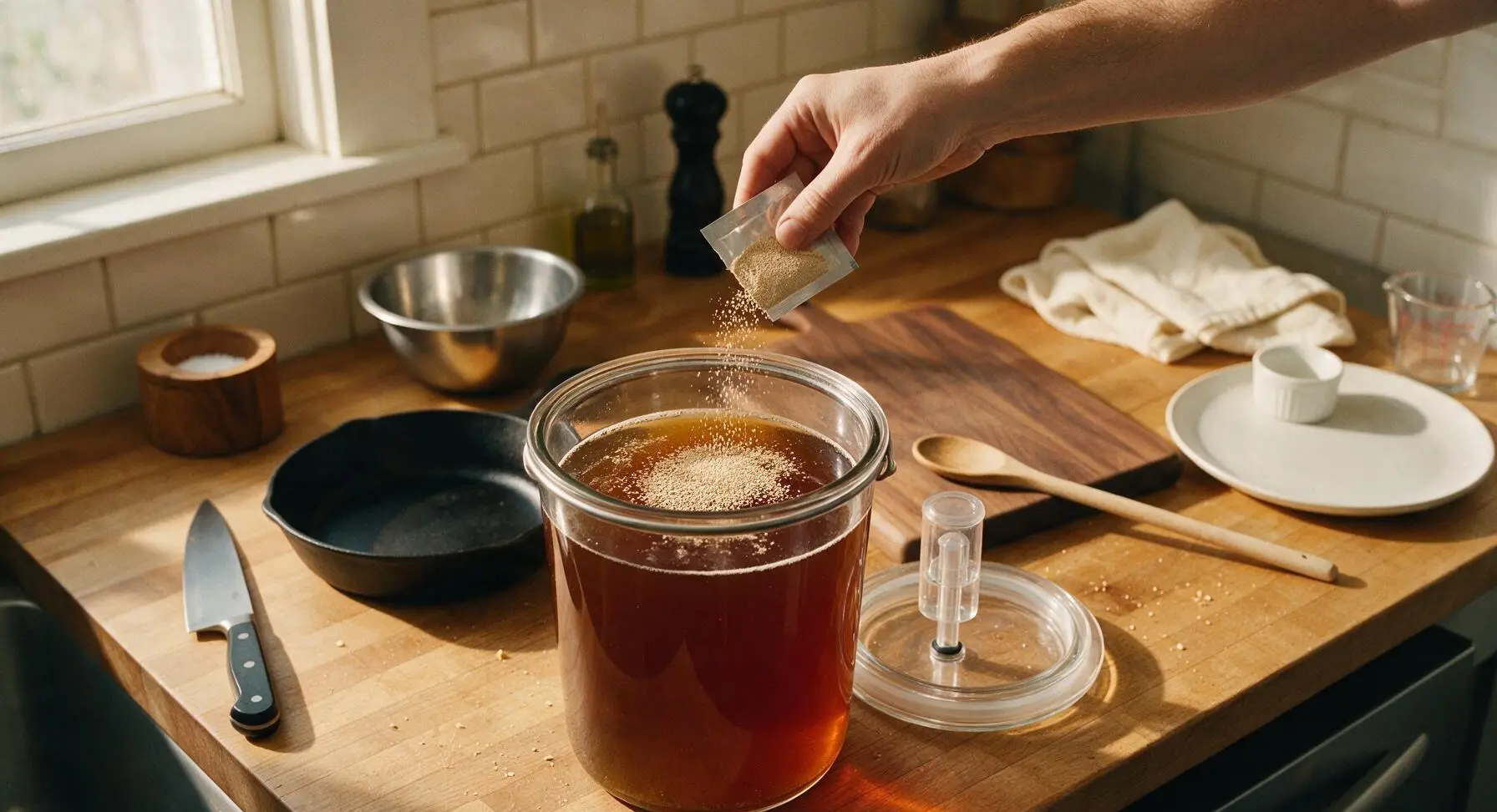
Sprinkle the full 5g packet of American ale yeast evenly across the surface of the cooled wort in the fermentation bucket. Seal the bucket tightly with the sanitized lid, fill the 3-piece airlock halfway with sanitizer solution, and insert it into the lid’s drilled hole. Store the sealed bucket in a dark, temperature-stable area held at 18–22°C (65–72°F) for 2 weeks, until fermentation completes (no bubbles pass through the airlock for 3 consecutive days).
Step 6
step6:Pitch Yeast, Seal
7

Carbonate and Chill

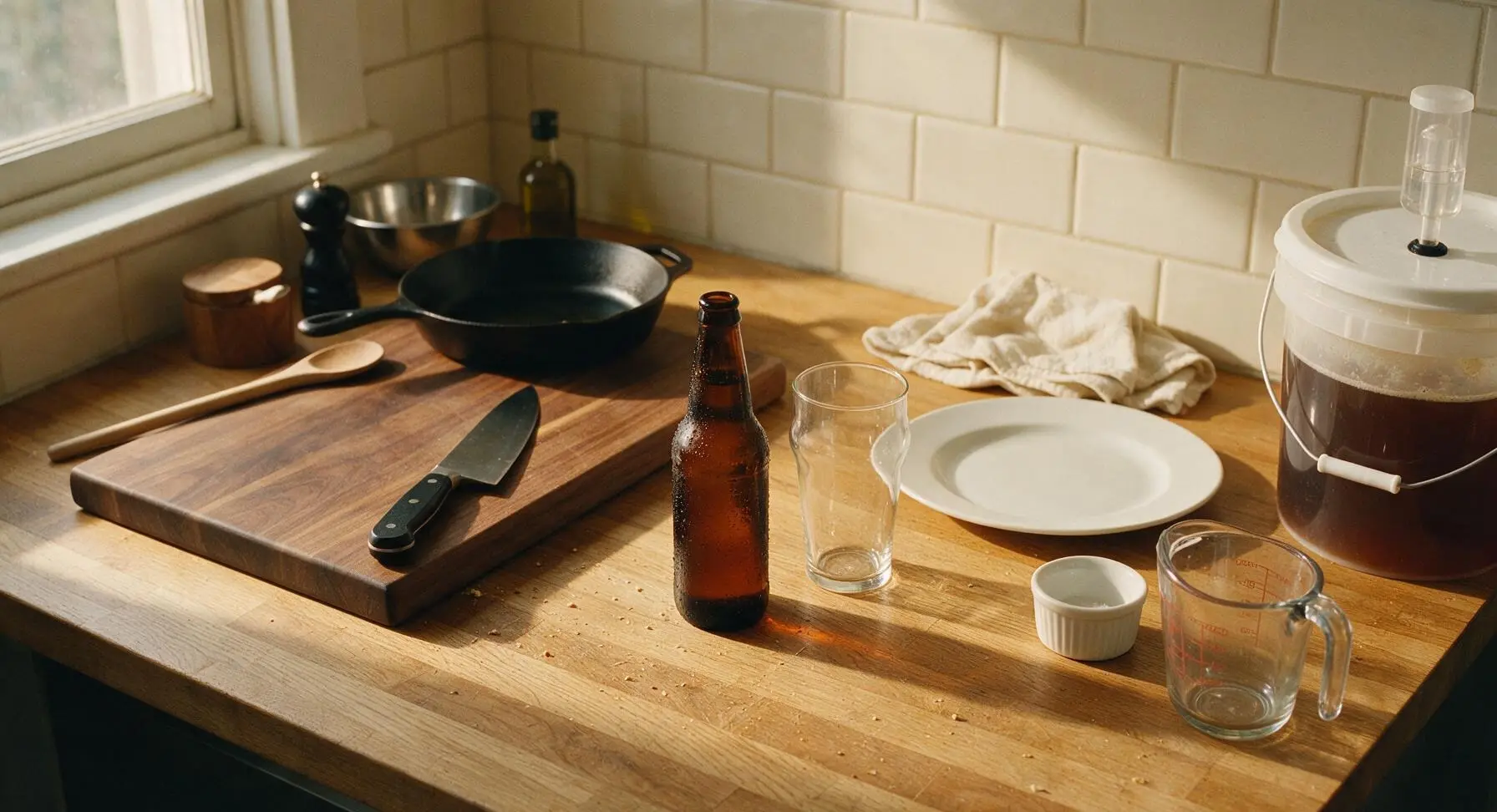
Once fermentation is complete, dissolve 25g of corn priming sugar in 50ml of boiling water, cool, and add to a sanitized bottling vessel. Siphon finished beer onto the priming sugar, stir gently to distribute evenly, then fill sanitized 12oz glass bottles and cap tightly. Let bottles condition at 20°C (68°F) for 2 weeks to build natural carbonation, then chill for 24 hours at 4°C (40°F) before serving.
Step 7
step7:Carbonate and Chill

Tips

1.Never squeeze the nylon grain bag after steeping: applying pressure to soaked grains extracts harsh, astringent tannins that create an unpleasant dry, bitter aftertaste; simply let the bag drain naturally over the pot for 2 minutes instead.
2.Hold steeping temperature strictly between 65–68°C (149–154°F): this temperature range optimizes starch conversion in the grains, producing a balanced beer with medium body and 5–5.5% ABV, rather than a thin, weak or overly thick, cloyingly sweet final product.
3.Cool boiling wort as quickly as possible to 21°C (70°F) before adding yeast: rapid cooling reduces risk of airborne bacterial contamination, encourages formation of a compact protein sediment (cold break) for clearer beer, and prevents off-flavors from hot wort sitting exposed for long periods.


✨ You May Also Like

Drinks & Beverages
🍜 Mexico

A bright, balanced tequila-based cocktail with zesty fresh lime, smooth orange liqueur, and a signature salt rim, perfect for warm summer sipping.

⏱️ 5 minutesDrinks & Beverages ★ 4.9
Drinks & Beverages
🍜 United States

Thick, creamy, nostalgic classic vanilla milkshake with a rich, smooth texture, topped with whipped cream and a cherry for cool, sweet refreshment.

⏱️ 5 minutesDrinks & Beverages ★ 4.7
Drinks & Beverages
🍜 United States

A bright, golden strong ale with fruity banana-clove notes, subtle hop spice, and soft carbonation, brewed in classic Trappist Tripel tradition.

⏱️ 2 hours aDrinks & Beverages ★ 4.5
Drinks & Beverages
🍜 United States

A frothy, nostalgic American soda fountain treat pairing bubbly cold root beer with creamy vanilla ice cream, perfect for cooling down at warm weather gatherings.

⏱️ 20 minuteDrinks & Beverages ★ 4.8
Drinks & Beverages
🍜 United States

Tart, funky, effervescent American Wild Ale is a complex fruity craft beer brewed with wild yeast, delivering bright, zesty notes perfect for warm-weather sipping.

⏱️ 2 hours aDrinks & Beverages ★ 4.4
Drinks & Beverages
🍜 United States

Bright, bubbly copycat of the iconic American caramel cola, balanced with citrus and warm spice, perfect for sipping ice-cold on hot days.

⏱️ 15 minuteDrinks & Beverages ★ 4.8

Rye Pale Ale:Frequently Asked Questions

1.What makes this rye pale ale different from a standard American pale ale? ▾
Unlike a standard American pale ale that relies solely on 2-row pale malt for its soft, clean base, this version uses rye malt to add a distinct peppery, spicy edge, paired with subtle caramel sweetness from 60L caramel malt. It has a crisper, more complex bready backbone that holds up beautifully to bold grilled fare, without losing that classic bright hoppy pale ale finish.
2.Can I substitute rye malt if I don’t have it on hand for this recipe? ▾
If you don’t have rye malt, you can swap in an equal amount of 2-row pale malt plus ½ teaspoon of food-grade rye bread extract per 5-gallon batch for a hint of that signature spicy note, but you’ll lose rye’s distinct dry, peppery bite. Avoid heavily roasted rye, as that adds harsh, bitter notes that throw off the beer’s balanced profile.
3.How much rye malt is too much, to avoid a gummy, hard-to-sparge mash? ▾
For this balanced profile, cap rye malt at 20% of your total grain bill. Rye has no protective husk material, so higher percentages create a thick, gummy mash that is prone to stuck sparges on brew day. The recipe’s ratio delivers that signature spicy rye character without causing frustrating equipment issues or making the beer taste overly sharp and dry.
4.Why does the recipe specify filtered brewing water instead of regular tap water? ▾
Unfiltered tap water often contains chlorine, chloramine, or high iron levels that create off-flavors—think plastic-like, metallic, or harshly medicinal notes—that mute the bright citrus hops and smooth bready malt character of this ale. Filtered water has a neutral mineral profile that lets rye spice, caramel sweetness, and hop brightness shine through without unwanted distractions.
5.What hop varieties work best to complement this beer’s malt profile? ▾
Stick to bright, citrus-forward American hops like Cascade, Centennial, Citra, or Mosaic to pair perfectly with this recipe. Use late-boil or dry hop additions to highlight grapefruit, orange, and pine notes that cut through rye’s spice and complement soft caramel sweetness, without adding harsh early-boil bitterness that clashes with rye’s peppery bite.
6.Can I make this recipe without a full all-grain setup, using the listed light dry malt extract? ▾
Absolutely! This recipe is designed to work for partial-mash and extract-only brewers too. Steep your milled rye and caramel 60L malts in 150–155°F filtered water for 30 minutes, strain the liquid, then stir in the light dry malt extract before bringing to a boil for hop additions. It cuts brew day time without sacrificing that signature rye and caramel backbone.
7.What target ABV keeps this rye pale ale sessionable for backyard cookouts? ▾
Aim for a final ABV between 5.2% and 5.8% to keep this beer sessionable enough for all-day sipping at backyard gatherings. That strength is high enough to carry the rye spice, caramel sweetness, and bright hop flavor, but low enough that you can enjoy a couple glasses alongside grilled fare without feeling overly weighed down.
8.Why use caramel 60L malt instead of a lighter or darker caramel malt? ▾
Caramel 60L strikes the perfect balance of sweet, toasty, light toffee flavor without adding the heavy, raisin-like, burnt sugar notes you get from darker caramel malts (like 120L), or the faint, unremarkable sweetness of very light caramel malts. It adds just enough rounded sweetness to balance rye’s dry spice and hop bitterness.
9.How do I keep rye spice from overpowering the other flavors in the finished beer? ▾
Stick to the recipe’s recommended rye malt ratio (roughly 10–15% of your total grain bill) and avoid over-adding spicy, earthy hops that compete with rye’s peppery profile. The soft caramel sweetness, bready pale malt base, and bright citrus hop notes will keep rye’s spice as a complementary layer, not the overwhelming star of the beer.
10.How long should I condition this rye pale ale for the best possible flavor? ▾
After primary fermentation finishes, condition the beer for 10–14 days at 60–65°F (cool cellar temperature) to let sharp rye spice mellow, hop flavors integrate, and caramel notes smooth out. You can drink it earlier if you’re eager, but that two-week window eliminates harsh “green beer” flavors and lets that crisp, balanced finish fully develop.
11.What other food pairings work with this beer, besides grilled backyard fare? ▾
While it’s a natural match for grilled burgers, brats, and charred veggies, this beer also pairs beautifully with sharp cheddar, spicy smoked sausage, crispy fried chicken, or even citrus-glazed salmon. The rye’s spice cuts through rich, fatty foods, the caramel sweetness complements smoky notes, and the bright hop finish cleanses your palate between bites.
12.What mash temperature creates that crisp, bready backbone the recipe mentions? ▾
Hold your mash at 152–154°F for 60 minutes to get that ideal balance of crisp, fermentable wort and enough unfermented dextrins to create that soft, bready backbone. Mashing over 156°F will make the beer feel heavy and cloying, while mashing under 150°F will make it overly thin and dry, muting the caramel and bready notes.
13.Can I add fruit to this recipe to play up its bright citrus notes? ▾
Absolutely! A small addition of fresh grapefruit or orange zest (about 2–3 ounces per 5-gallon batch, added in the last 5 minutes of the boil or during dry hopping) amplifies the beer’s natural citrus kiss without overpowering rye spice or caramel sweetness. Skip heavy, sweet fruits like mango or peach, as they clash with rye’s peppery, dry character.
14.Why did my last batch taste astringent, and how do I fix that next time? ▾
Astringent, dry, puckering flavors usually come from over-sparging your grain bed—using water over 170°F, or sparging too long—which pulls harsh tannins from grain husks, a common issue when brewing with rye. Next batch, keep sparge water under 168°F, stop sparging when wort gravity hits 1.010, and avoid squeezing your grain bag for a smoother finish.

Comments (6)

2 weeks ago

OMG, this rye pale ale recipe is a total game changer! I brewed a batch for our backyard cookout last weekend and everyone was raving about that subtle spicy kick from the rye. Way better than the store-bought pale ales I usually grab for potlucks. The 1 hour 45 minute cook time was totally manageable even as someone who’s only been homebrewing for 6 months. 10/10 would make again!

1 week ago

Wait, did you adjust the hop amount at all? I’m thinking of adding a little extra Citra for that citrus zing, not sure if it’ll mess with the rye balance

5 days ago

Great question! You can absolutely add an extra half ounce of Citra during the last 15 minutes of the boil for that bright citrus note without overpowering the rye’s peppery flavor — just be careful not to overdo it so the rye still shines through!

3 days ago

SO good! I was worried this would be too advanced for me since it’s marked medium difficulty, but the step-by-step instructions were super easy to follow. My husband is a total craft beer snob and he said this rivals the rye pale ale at our favorite local brewery. Already prepping to make a second batch for our fall tailgate!

2 days ago

So glad you and your husband loved it, Sarah! For the tailgate batch, you might want to let it condition an extra 3-4 days in the bottle to get that extra crisp, carbonated bite that’s perfect for game day sipping.

yesterday

Tried this last night, followed the recipe exactly except I accidentally used a little too much rye malt, and it still turned out pretty great! Next time I’ll stick to the exact measurements to get that perfect balance, but even my mistake didn’t ruin it. Super solid recipe for anyone looking to dip their toes into rye beers.

5 days ago

Brought a growler of this to our neighborhood block party last week and people were asking me for the recipe left and right! The rye adds such a nice depth that regular pale ales are missing. Only heads up: make sure you give yourself enough time for the fermentation step after the cook time, I almost cut that short my first go around.

3 days ago

Oh thanks for the heads up about fermentation! I was planning to rush a batch for my brother’s birthday next weekend, I would’ve totally messed that up

2 days ago

Same! I tried to rush fermentation on my first batch and it came out super flat, totally not worth it. Patience pays off big time with this one!

2 hours ago

Meh, this was solid but I felt like the hop profile was a little too mild for my taste. I love super bitter, punchy IPAs so maybe that’s just my preference, but the rye flavor was on point. I’ll probably tweak the hop schedule next time I make it to amp up that bitterness.

30 minutes ago

Totally get that! I’m also a hop head, so I added an extra ounce of Cascade hops at whirlpool and it gave it that extra bitter kick I wanted without throwing off the rye flavor. Would recommend!

just now

This is my new go-to weekend brew! It’s straightforward enough that I can knock out the 1 hour 45 minute cook time on a Saturday morning while I’m making pancakes for the kids, and then just let it do its thing fermenting. My kids loved getting to stir the grain bill and smell the hops while I was brewing, they keep asking when the “special daddy soda” will be ready to try when they’re older. SO good, already recommended it to my homebrew club.



