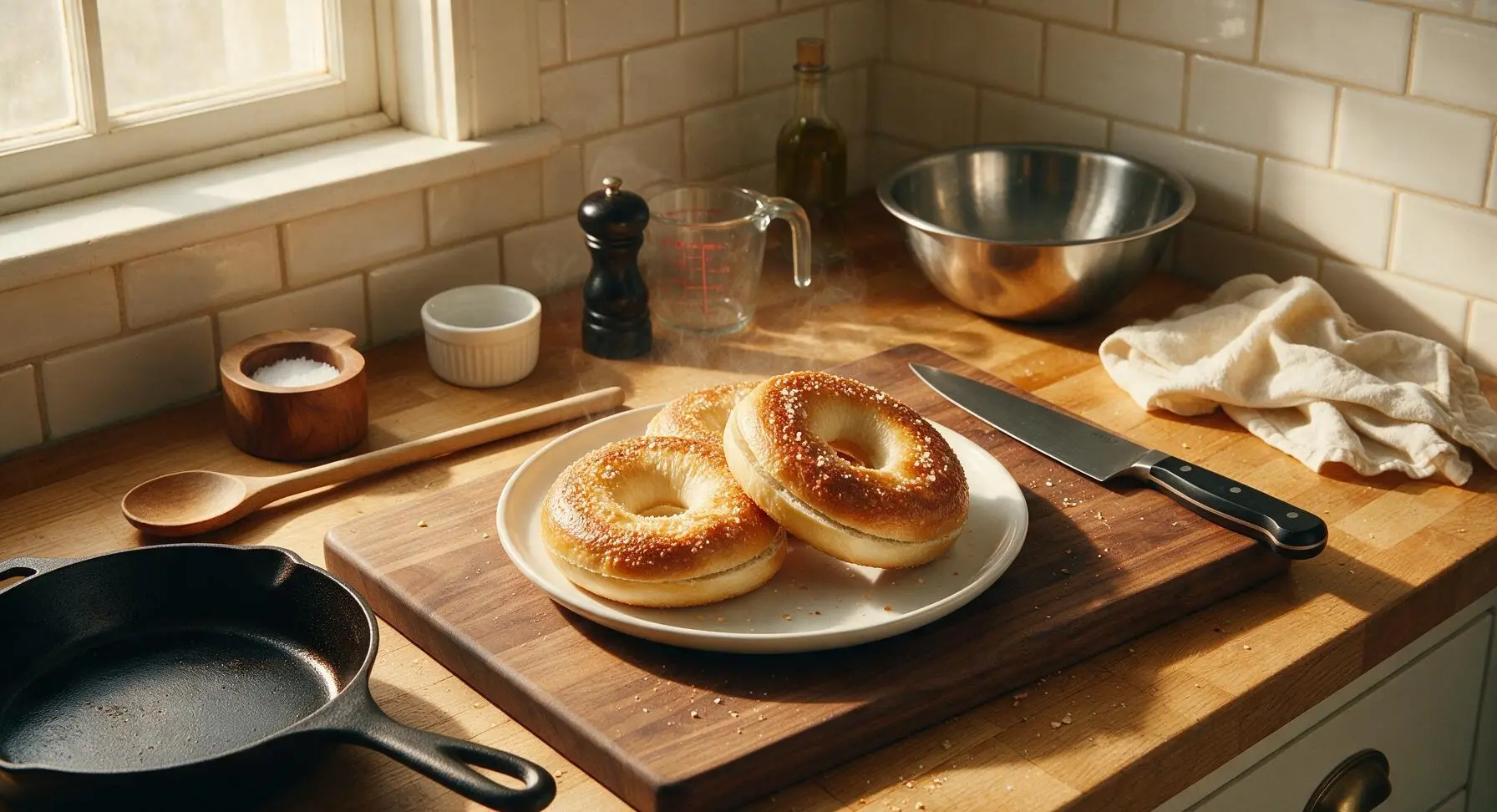
Salt Bagel

title 1
Salt Bagel
⏱️ cook time 25 minutes
🍽️ servings 8
⚡ Difficulty medium

intro

Chewy, golden New York-style salt bagels with a crisp, salt-crusted exterior and dense, soft interior, perfect for topping with cream cheese or packing for a spring picnic.

Ingredients
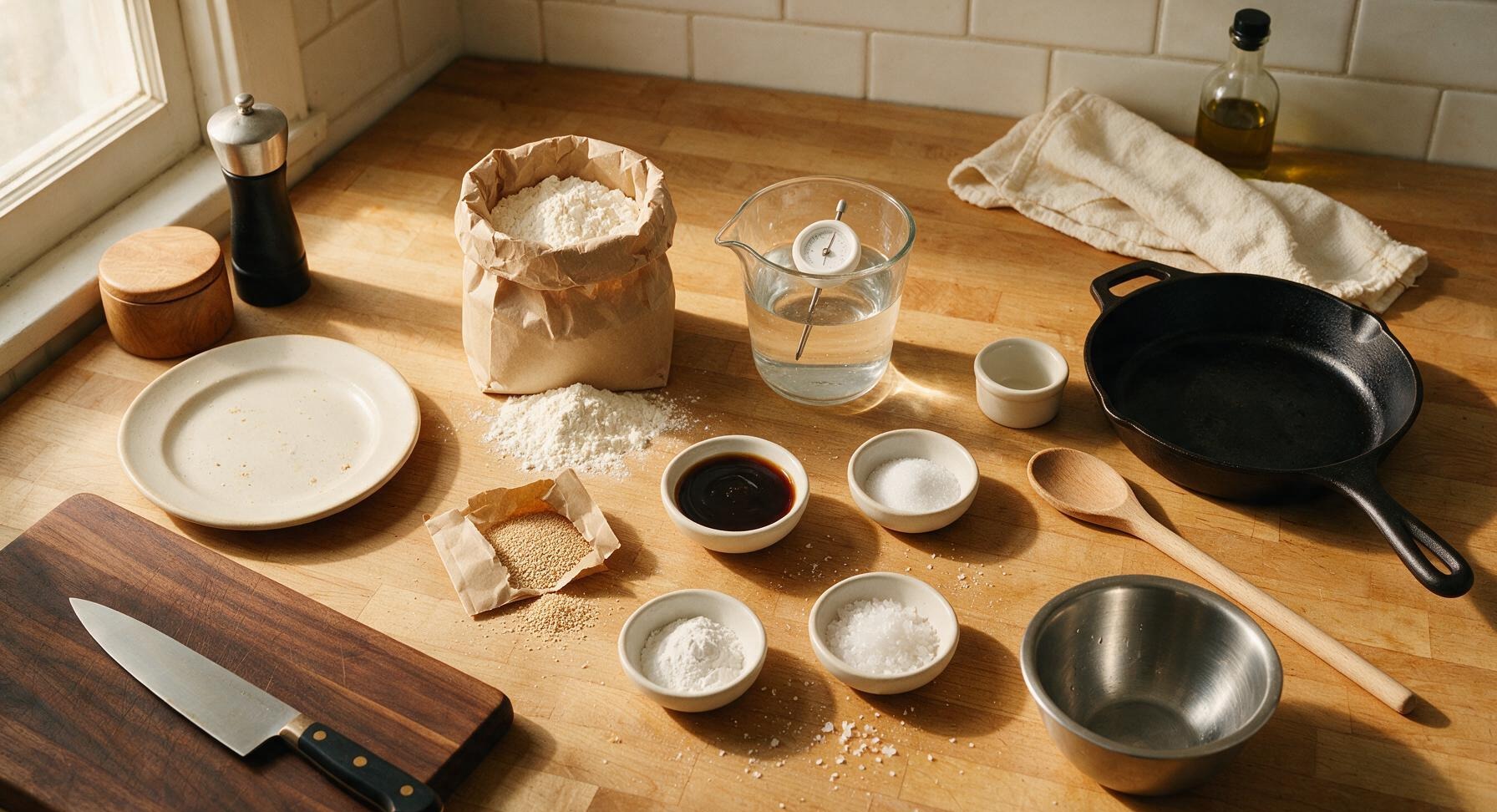
High-gluten bread flour 500g
Warm water (105-110°F) 300ml
Active dry yeast 7g (1 standard packet)
Barley malt syrup 15ml (1 tbsp)
Fine sea salt (for dough) 10g (2 tsp)
Coarse flaky sea salt (for topping) 30g (2 tbsp)
Baking soda (for boiling water) 15g (1 tbsp)

Steps

1

Mix Bagel Dough

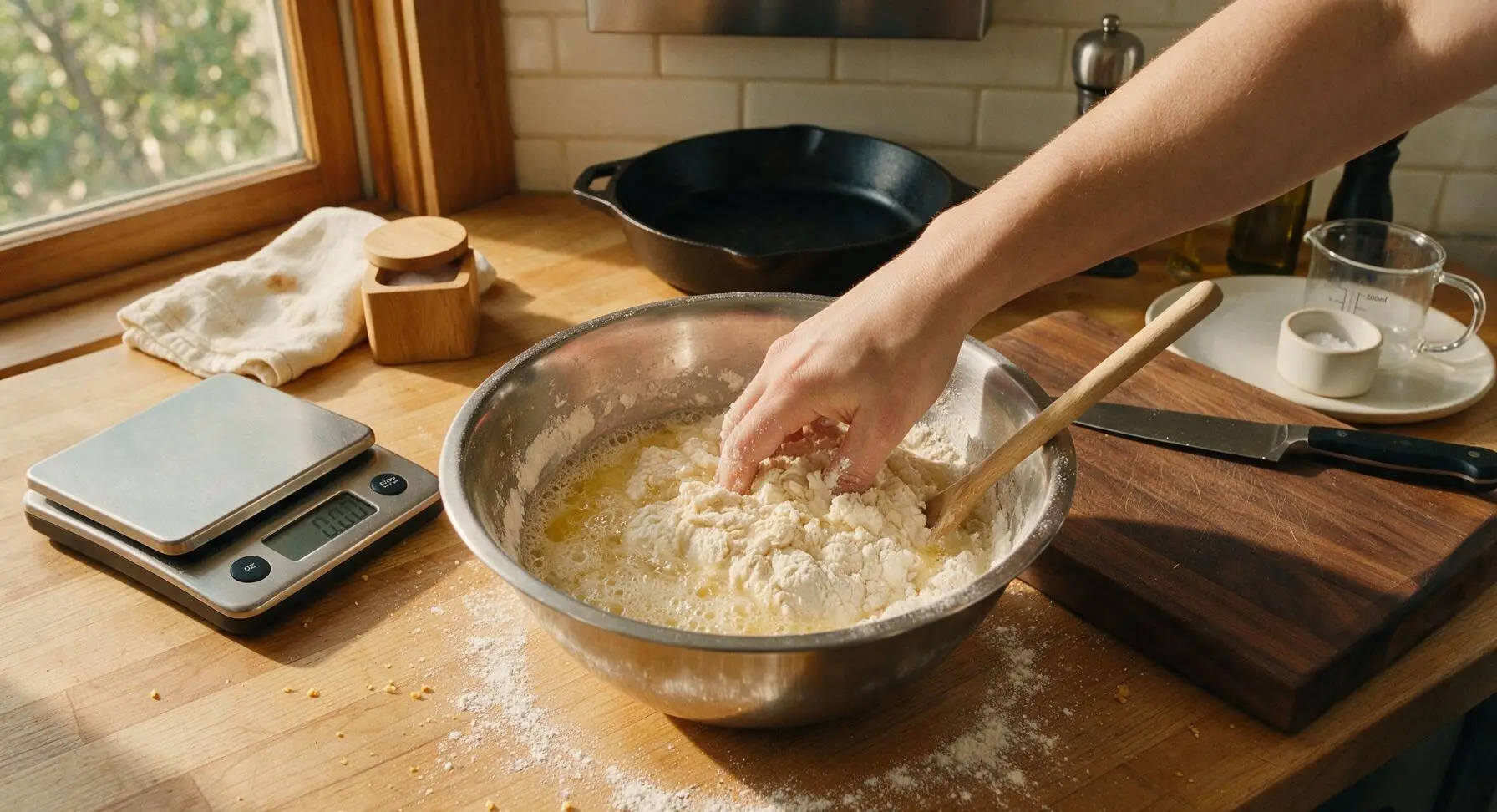
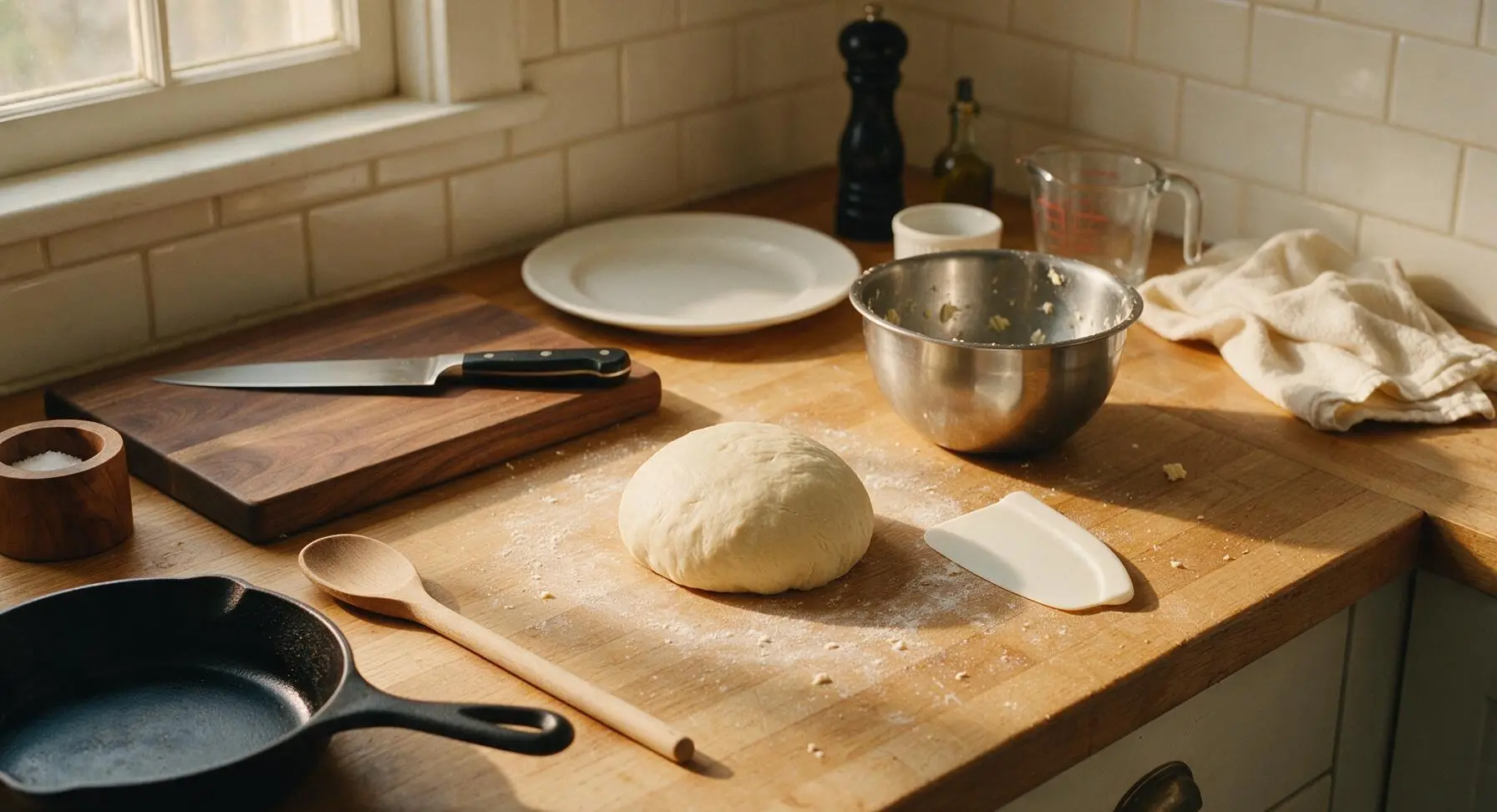
In the large stainless steel mixing bowl, combine 300ml warm water (105–110°F, warm to the touch but not hot), 7g active dry yeast, and 5ml (1 tsp) barley malt syrup. Stir gently and let rest 5 minutes until the surface looks foamy, confirming the yeast is active. Add 500g high-gluten bread flour and 10g fine sea salt, stirring by hand until a shaggy, stiff dough forms. Lightly dust the clean counter with a pinch of flour from the flour crock, turn the dough out, and knead for 10 minutes until the dough is smooth, elastic, and no longer sticky, bouncing back slowly when poked with a floured finger.
Step 1
step1:Mix Bagel Dough
Step 1
step1:Mix Bagel Dough
2

Let Dough Rise

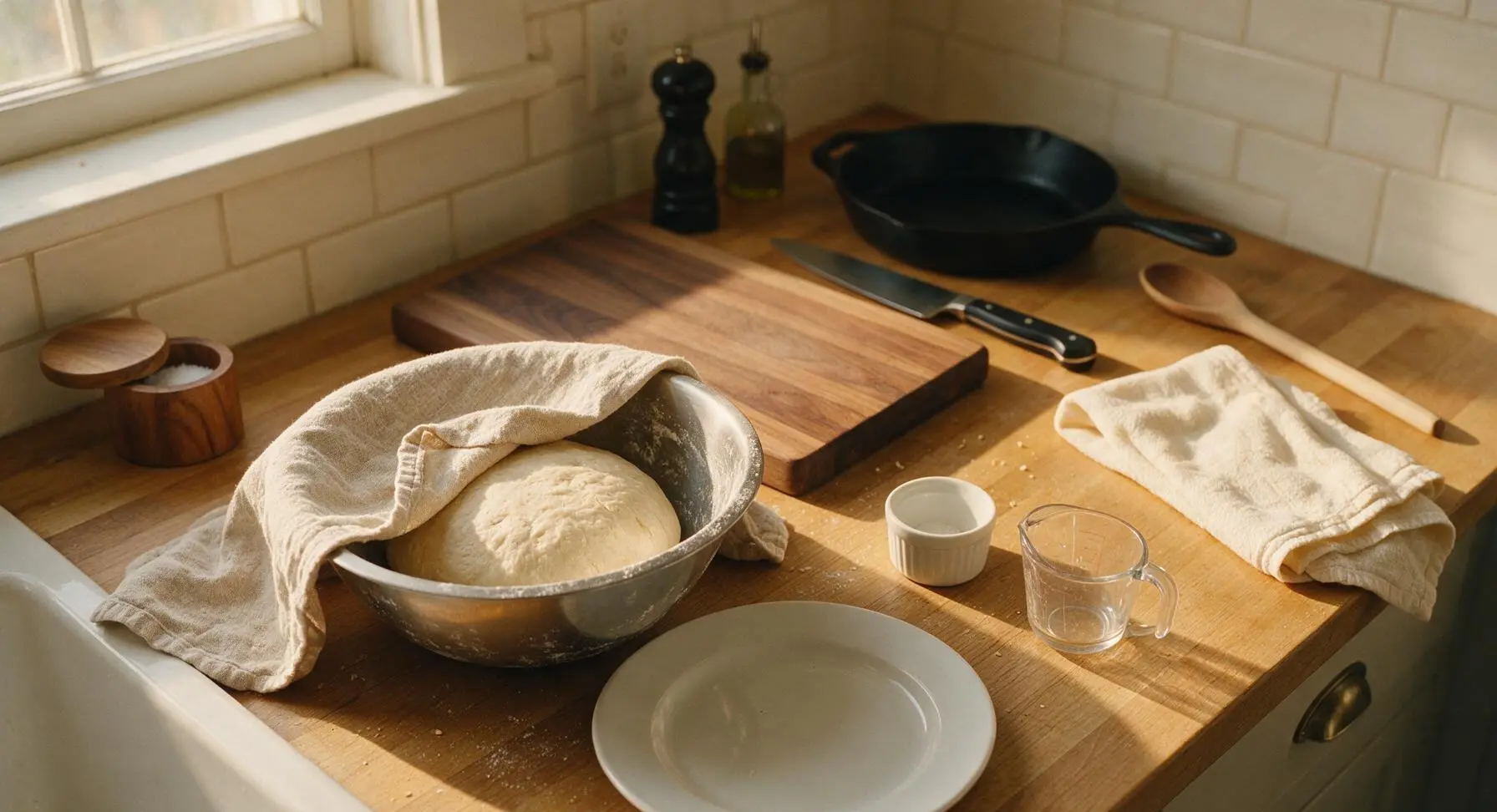
Lightly dust the interior of the large mixing bowl with flour, place the kneaded dough ball back inside, and drape the oatmeal linen tea towel tightly over the bowl top. Let the dough rise in a warm, draft-free spot on the counter for 1 hour, until it has doubled in size and leaves a slow-rebounding indent when pressed with a floured finger. Return the tea towel to its stored top-right position after removing it from the bowl post-rise.
Step 2
step2:Let Dough Rise
3

Shape Bagel Rounds

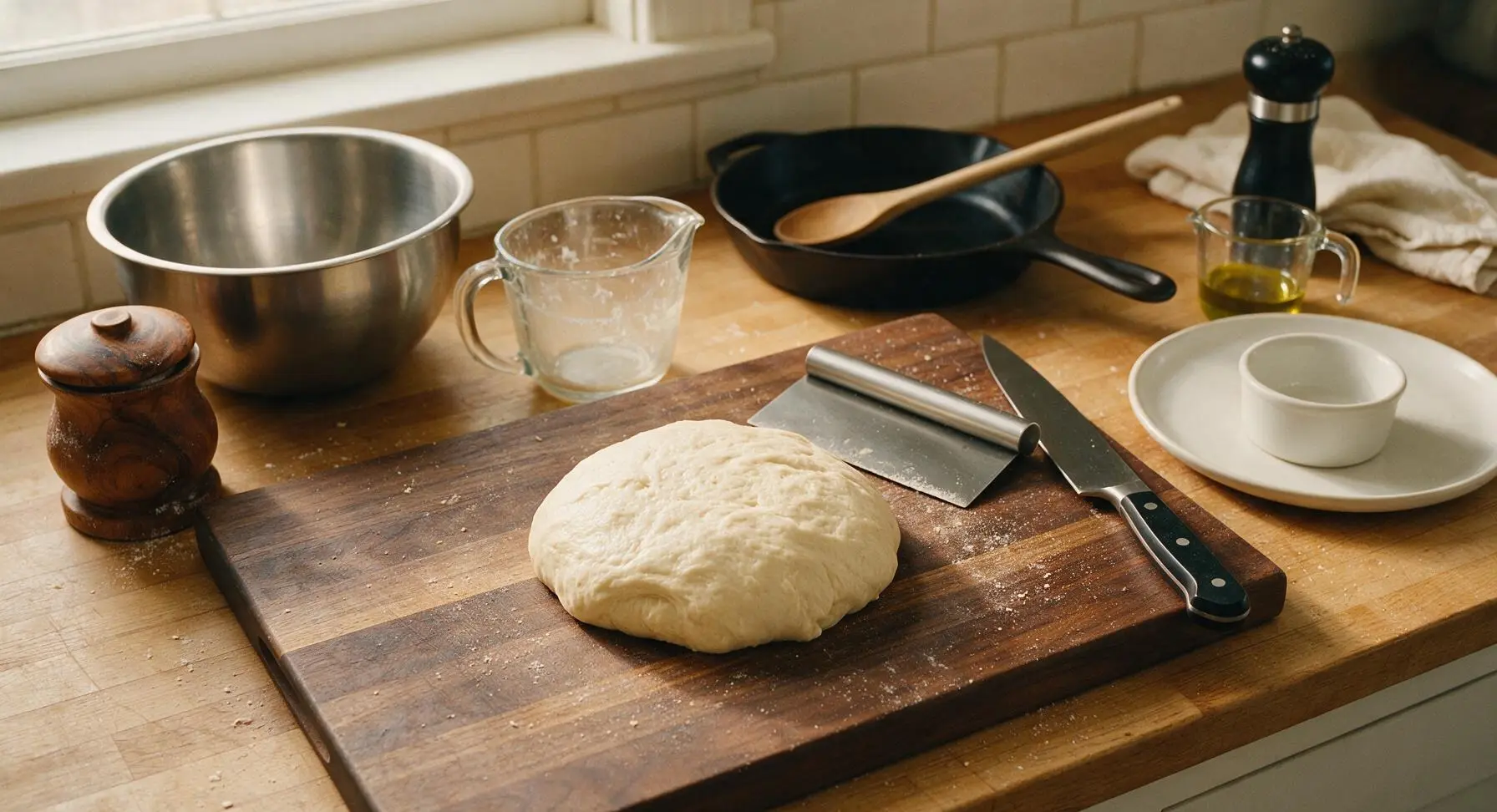
Once doubled, turn the risen dough out onto the lightly floured counter. Use the dough scraper to divide the dough evenly into 8 equal pieces (each ~100g). Roll each piece into a tight, smooth ball, then poke a floured finger through the center of each ball to create a 5cm (2 inch) hole. Stretch the hole slightly to form a uniform ring, ensuring the dough around the ring is even in thickness all the way around. Place shaped bagels on a sheet of unbleached parchment paper, cover again with the linen towel, and let rest for 15 minutes while you prep the boiling water.
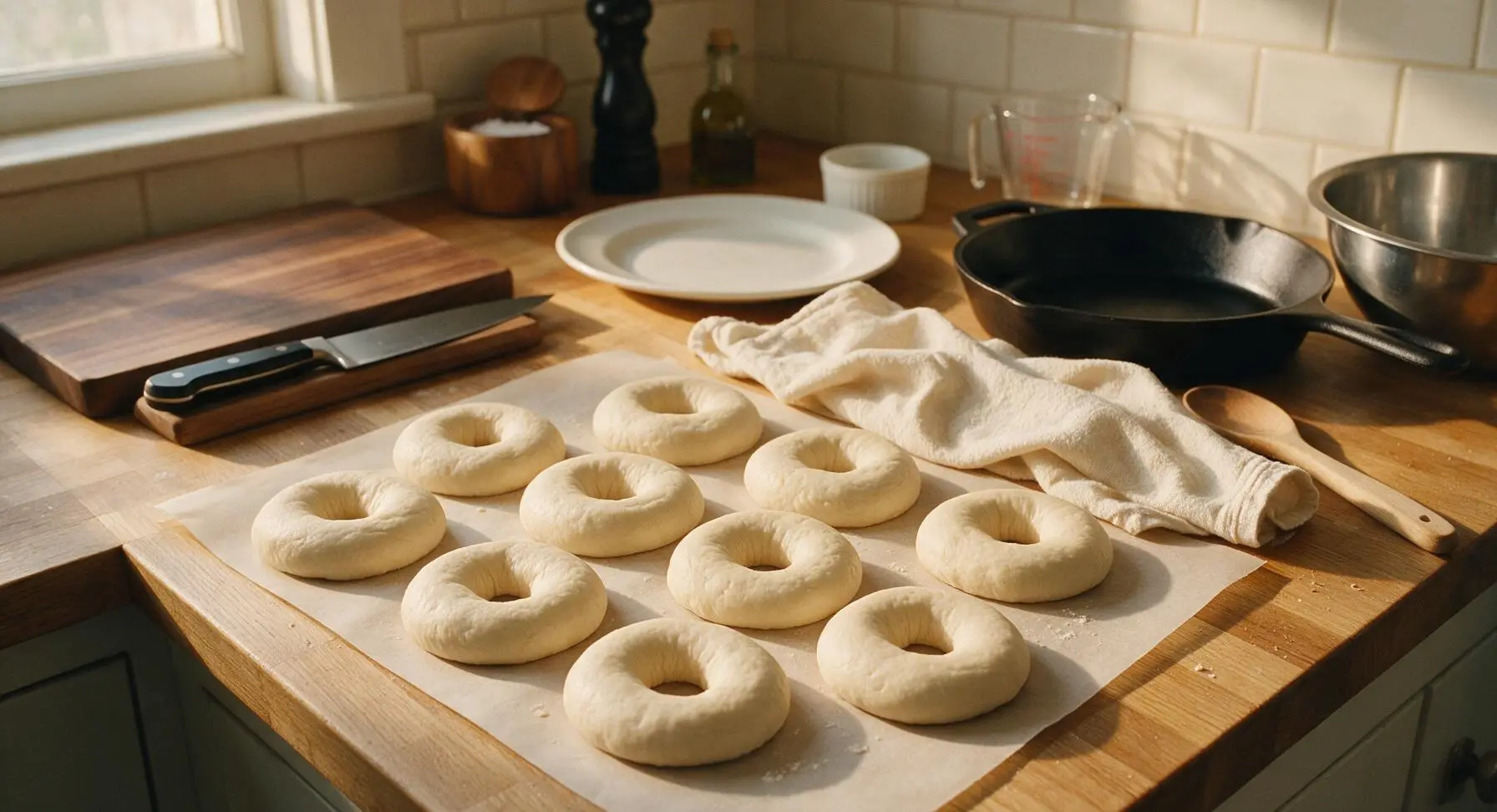
Step 3
step3:Shape Bagel Rounds
Step 3
step3:Shape Bagel Rounds
4

Boil Bagel Rings

Set the matte black portable induction burner on the rear section of the counter, place the 6L stainless steel stock pot on top, and fill the pot with 4L of water. Bring water to a rolling boil over high heat, then add the remaining 10ml (2 tsp) barley malt syrup and 15g baking soda, stirring to dissolve. Working 2-3 bagels at a time (do not crowd the pot), drop the rested bagels into the boiling water. Boil for 1 minute per side, flipping gently with the spider strainer, until the bagels are slightly puffed and pale on both sides. Remove boiled bagels with the slotted spider strainer, letting excess water drain off for 10 seconds before placing them back on the parchment-lined surface.
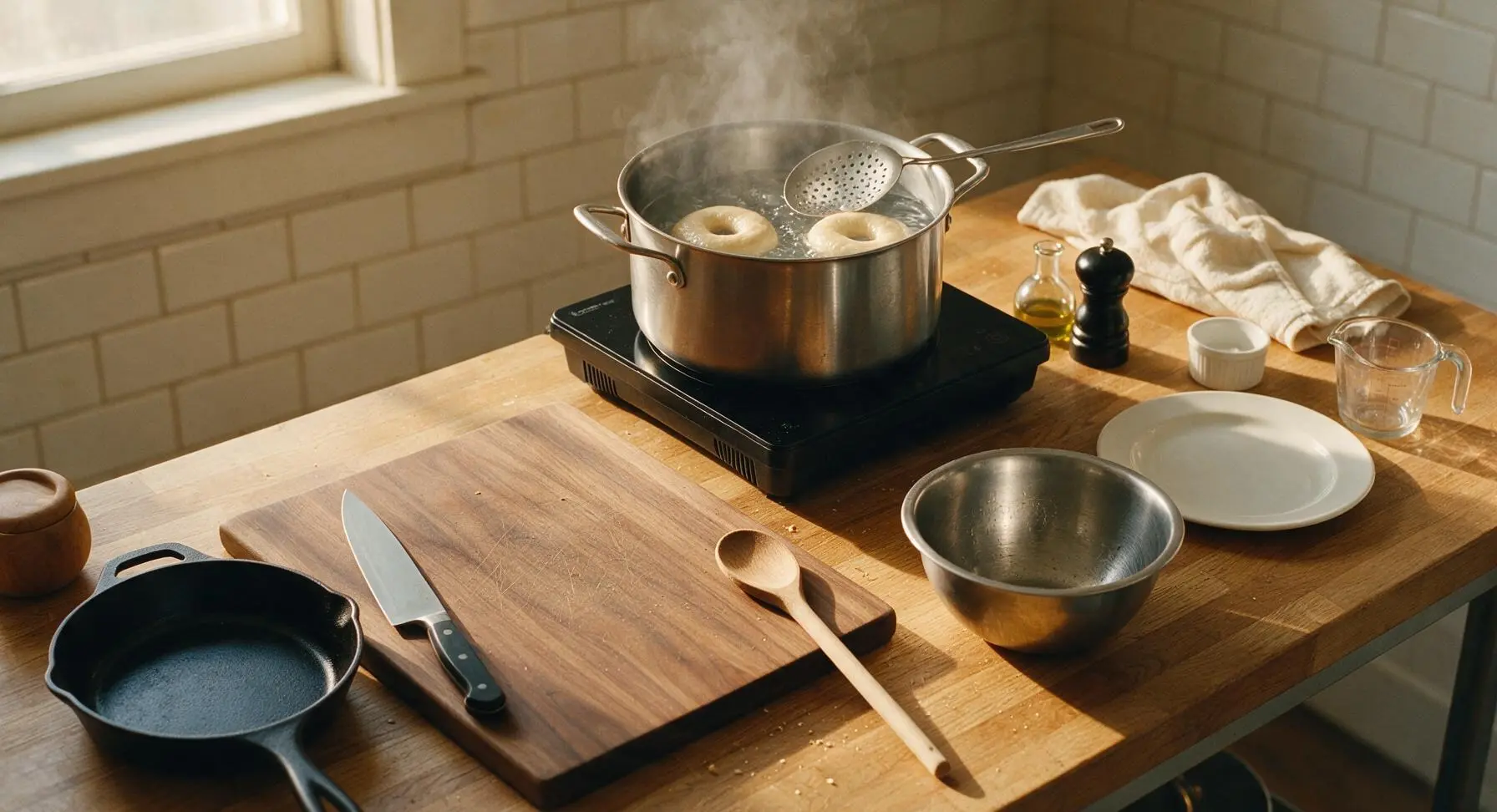
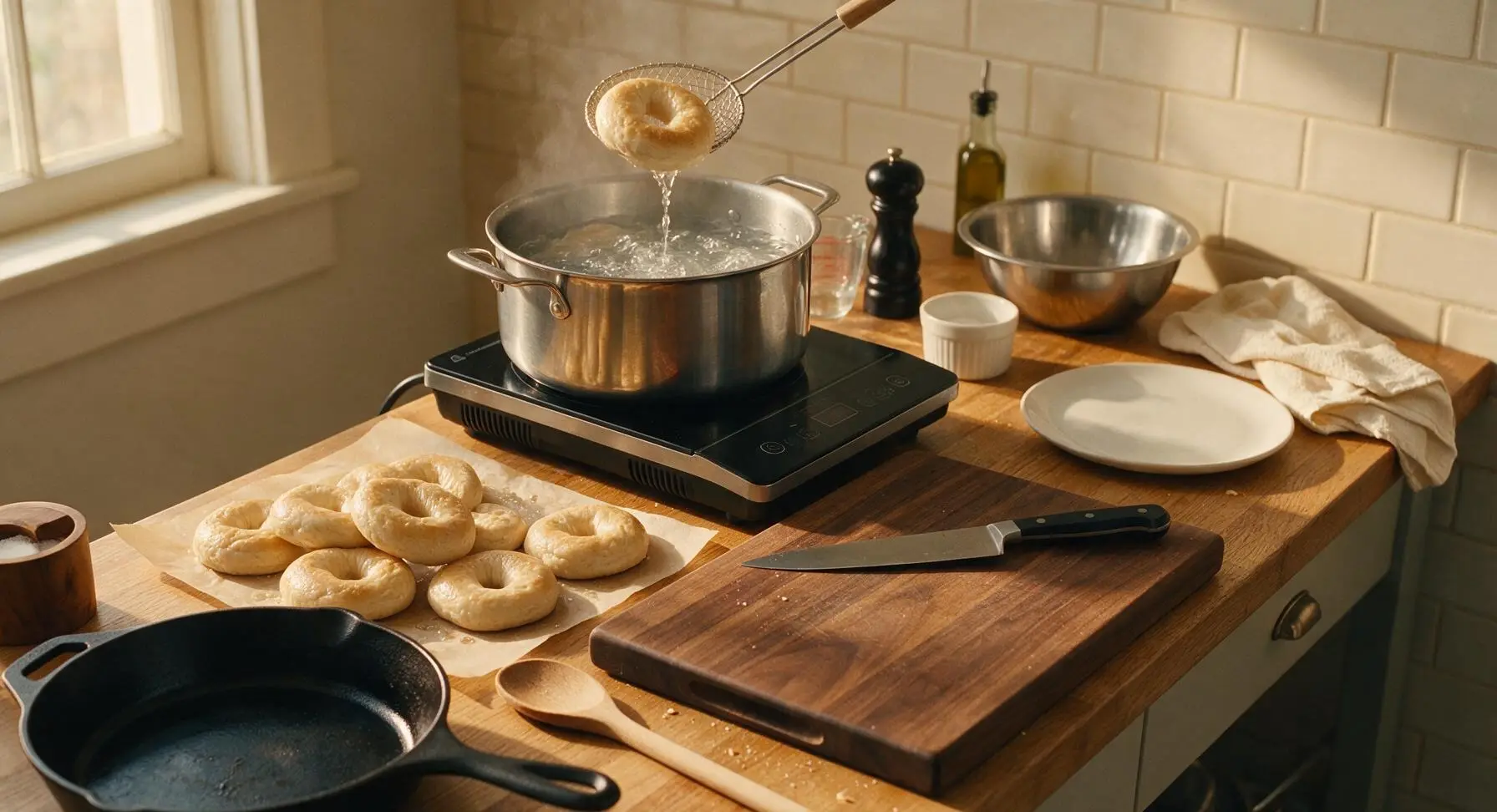
Step 4
step4:Boil Bagel Rings
Step 4
step4:Boil Bagel Rings
5

Top with Coarse Salt

While the boiled bagels are still damp and warm (immediately after removing from water), sprinkle the tops generously with the coarse flaky sea salt from the cream ceramic ramekin, pressing the salt crystals very gently to help them adhere to the dough surface. Do not let the bagel surface dry before adding salt, or the salt will fall off during baking.
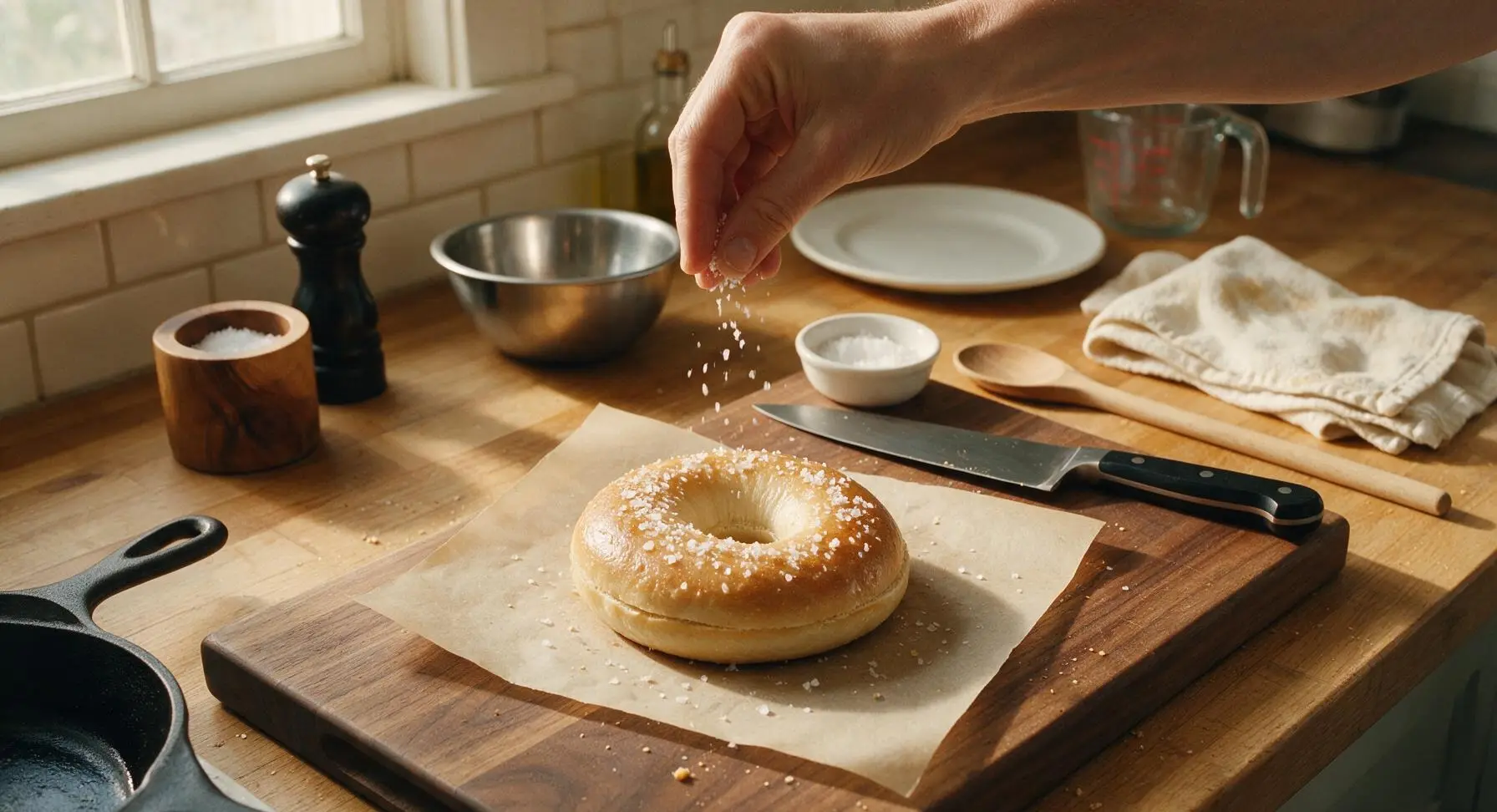
Step 5
step5:Top with Coarse Salt
6

Bake Salt Bagels

Arrange the salt-topped bagels 5cm (2 inches) apart on the parchment-lined large rimmed baking sheet. Bake at 220°C (425°F) for 20–22 minutes, rotating the sheet halfway through baking, until the bagels are a deep, even golden brown all over, with a crisp crust and visible salt crystals glistening on top. Fully baked bagels will reach an internal temperature of 93°C (200°F).
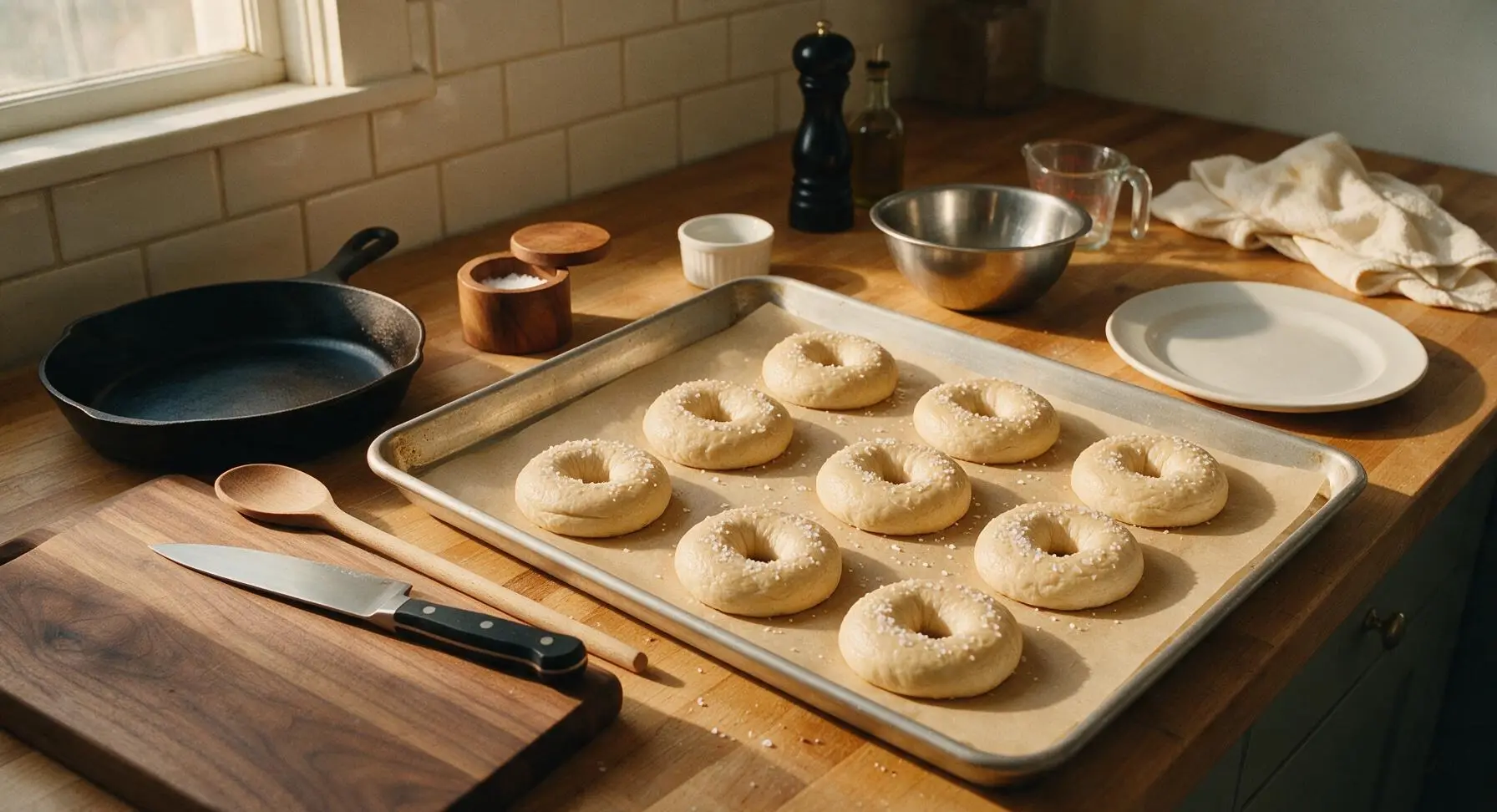
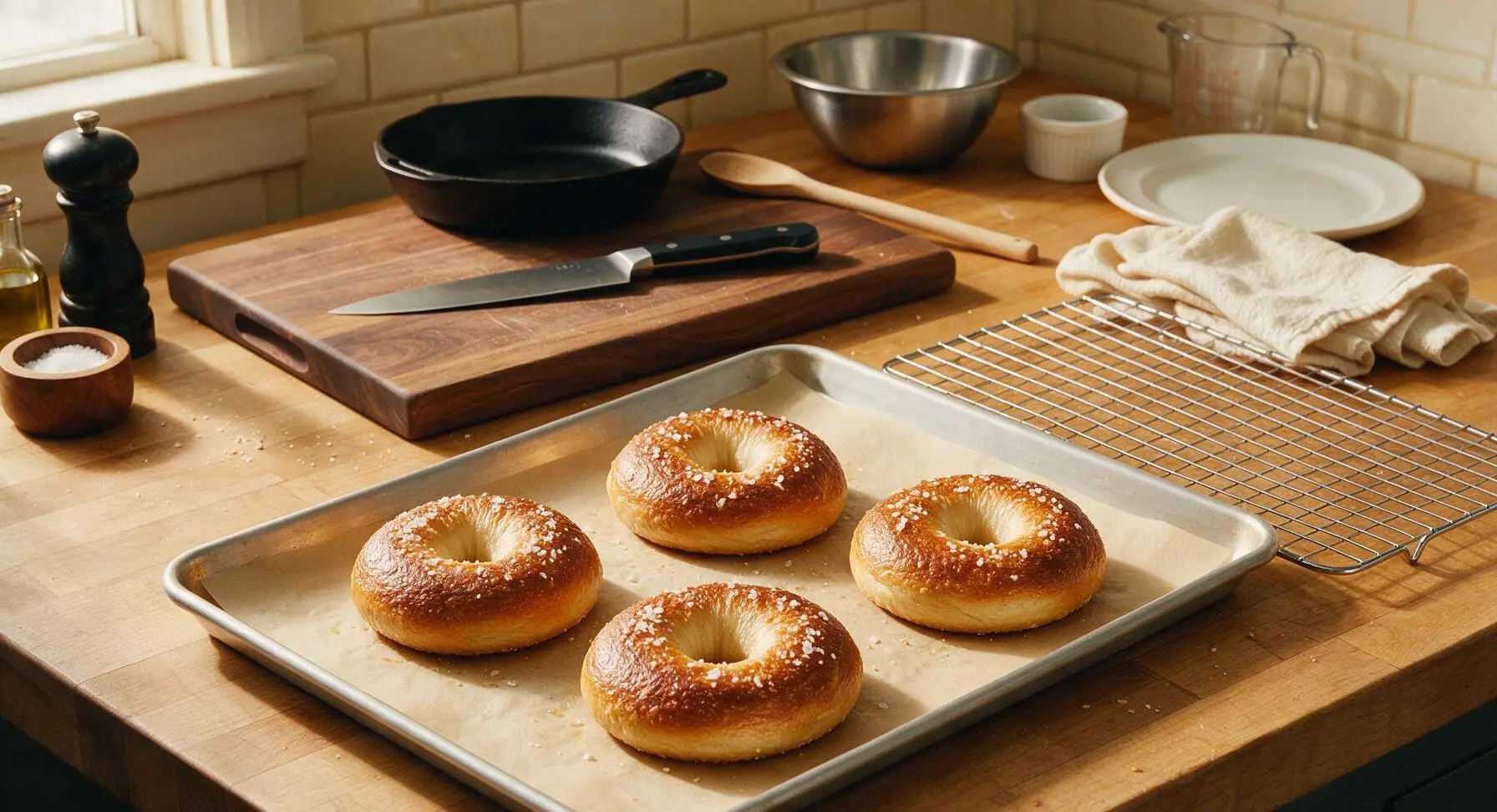
Step 6
step6:Bake Salt Bagels
Step 6
step6:Bake Salt Bagels
7

Cool and Serve

Transfer the baked bagels from the baking sheet to the chrome wire cooling rack, and let cool for 10 minutes before serving. Arrange cooled bagels on the terracotta serving platter, and serve sliced with cream cheese, lox, butter, or your favorite bagel toppings. Leftover bagels will keep stored in an airtight bag at room temperature for 3 days, or frozen for up to 1 month.
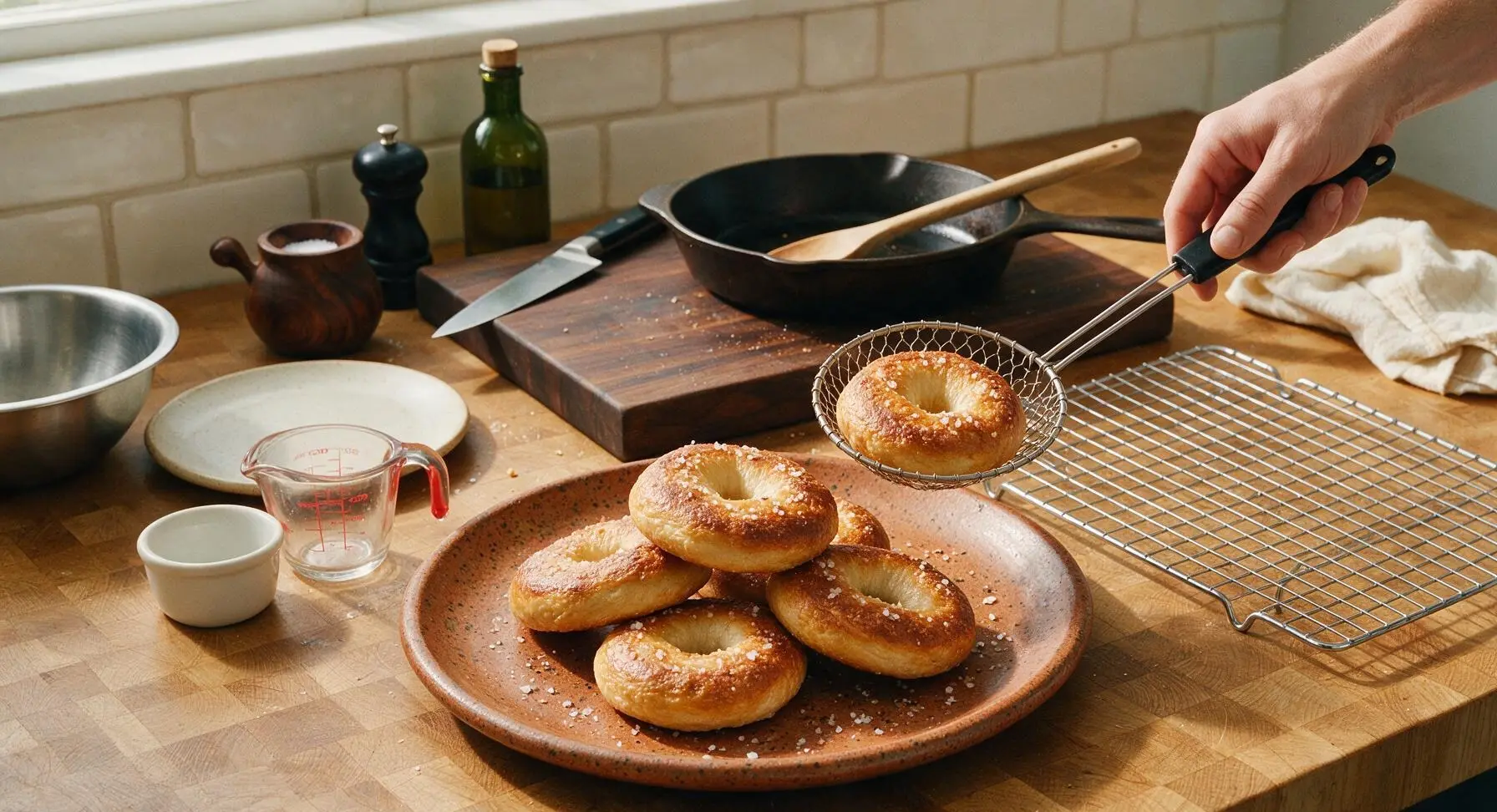
Step 7
step7:Cool and Serve

Tips

1.Use high-gluten bread flour (12-14% protein content) instead of all-purpose flour: the higher protein level develops more gluten during kneading, creating the signature dense, chewy crumb New York-style salt bagels are known for, rather than a soft, generic bread texture.
2.Do not skip the boiling step or omit baking soda from the water: the hot alkaline water gelatinizes the starches on the dough surface, creating a shiny, crisp crust that locks in the bagel’s shape and prevents it from puffing too much in the oven, keeping the interior chewy rather than fluffy.
3.Apply coarse salt immediately after removing bagels from the boiling water: the damp, tacky dough surface acts like glue to hold salt crystals in place. If you wait even 60 seconds for the surface to dry, most of the salt will fall off during baking or handling, leaving you with a plain bagel instead of a properly salted one.

✨ You May Also Like

Breakfast
🍜 United States

Crisp-edged, fluffy lard griddle cakes are a nostalgic homestyle staple, with rich savoriness from rendered lard, perfect topped with maple syrup or savory gravy.

⏱️ 25 minuteBreakfast ★ 4.8
Breakfast
🍜 United States

Flaky, buttery homemade buttermilk biscuits smothered in creamy, peppery pork sausage gravy: a beloved, hearty Southern American comfort food classic.

⏱️ 35 minuteBreakfast ★ 4.8
Breakfast
🍜 United States

Golden, custardy brioche stuffed with sweet cream cheese and fresh berries, pan-fried to crisp perfection. An indulgent, cozy breakfast perfect for slow weekend mornings.

⏱️ 30 minuteBreakfast ★ 4.7
Breakfast
🍜 United States

Flaky, buttery Southern-style biscuits stuffed with savory salty country ham, a portable, satisfying classic perfect for casual on-the-go meals.

⏱️ 25 minuteBreakfast ★ 4.8
Breakfast
🍜 United States

Iconic puffy baked pancake popularized in Seattle, with crisp golden edges and soft custardy center, served warm with classic sweet toppings.

⏱️ 35 minuteBreakfast ★ 4.6
Breakfast
🍜 United States

Fluffy, golden pancakes studded with juicy peak-summer mixed berries, drizzled with maple syrup for a bright, comforting, crowd-pleasing family breakfast.

⏱️ 25 minuteBreakfast ★ 4.7

Salt Bagel:Frequently Asked Questions

1.Why do I need high-gluten bread flour instead of all-purpose flour for these bagels? ▾
High-gluten bread flour has 12–14% protein, which builds the tight, chewy crumb and sturdy structure classic New York bagels are known for. All-purpose flour has lower protein, which produces softer, less structured bagels that may fall apart during boiling. If you can’t find high-gluten flour, add 1 tablespoon of vital wheat gluten per cup of regular bread flour as a substitute.
2.What temperature should my warm water be to properly activate the yeast, and why does that matter? ▾
Aim for exactly 105–110°F, as noted in the ingredient list. Water hotter than 120°F will kill active dry yeast, leading to dense, unrisen bagels, while water too cold won’t wake yeast enough to drive a good rise. Test with an instant-read thermometer to take the guesswork out, especially if you don’t have a temperature-controlled tap.
3.Can I substitute honey or maple syrup for barley malt syrup if I don’t have it on hand? ▾
Barley malt syrup gives NY bagels their signature subtle malty sweetness and helps create that shiny golden crust, but you can swap in dark brown sugar or honey in a 1:1 ratio in a pinch. Skip light maple syrup, as its flavor is too mild and won’t replicate that classic, recognizable bagel taste you’re going for.
4.Why do traditional New York bagels get boiled before baking, anyway? ▾
Boiling sets the outer crust early in the cooking process, which stops bagels from over-puffing in the oven and creates that signature chewy, dense crumb and crisp, shiny exterior. Skipping the boil will leave you with something closer to a round dinner roll with a soft crust, not a true NY-style bagel.
5.How long should I knead the bagel dough to get the right texture? ▾
Knead for 8–10 minutes on medium-low speed in a stand mixer, or 10–12 minutes by hand, until the dough is very smooth, tight, elastic, and pulls cleanly away from the bowl sides. Under-kneaded dough produces lumpy, flat bagels with an uneven crumb, so don’t cut this important step short to save time.
6.How do I know when the first rise of the dough is fully done? ▾
Let dough rise in a warm, draft-free spot (around 75°F is ideal) for 1–1.5 hours, until it doubles in size. It’s ready when it springs back slowly after a floured finger poke, leaving a small indent that doesn’t immediately fill in. If the indent pops right back it needs more time; if it deflates fully, it’s over-risen.
7.What’s the right way to shape bagels so they don’t lose their hole while cooking? ▾
After dividing dough into equal portions, roll each into a tight ball, then poke a floured finger through the center to make a 2-inch hole. Stretch the ring gently so the hole is slightly larger than you think it needs to be, since the dough will shrink and puff during the second rise, boil, and bake.
8.Do I really need to do a second rise after shaping the bagels? ▾
Yes! The 20–30 minute second rise (called proofing) after shaping lets the gluten relax a bit so bagels stay light inside instead of turning into tough, dense pucks. You’ll know they’re ready when they float to the top of a bowl of cold water within 10 seconds of being dropped in.
9.What should I add to the boiling water for authentic NY bagel flavor? ▾
Add 1 tablespoon of barley malt syrup to boiling water to amp up that signature malty flavor and boost crust browning, plus a pinch of salt. If you want extra shine without handling harsh lye, add 1 teaspoon of baking soda per quart of water as a safe, easy home substitute.
10.How long should I boil each bagel for the perfect texture? ▾
Boil each bagel for 1 minute per side for a moderately chewy crust, or 2 minutes per side if you love an extra thick, extra chewy classic NY bagel crust. Don’t overcrowd the pot—boil 2–3 bagels at a time so the water stays at a rolling boil, which prevents soggy crusts.
11.What kind of salt works best for the outer crust topping, and when do I apply it? ▾
Use coarse, flaky sea salt or pretzel salt for the top, not the fine sea salt mixed into the dough—fine salt dissolves too quickly on the wet crust and leaves an overly salty bite. Sprinkle salt generously right after pulling bagels out of the boil, before baking, so it sticks firmly.
12.Why did my bagels come out flat and spread too much during baking? ▾
This usually stems from one of three common issues: you under-kneaded the dough so it lacked enough structure, you skipped the second proof so the dough was too tight, or your boil water wasn’t at a full rolling boil, so bagels absorbed excess moisture while sitting in warm water.
13.What oven temperature do I need to get that crisp golden crust? ▾
Preheat your oven to 425°F, and use a baking stone or heavy preheated baking sheet if you have one. The high, even heat mimics the professional deck ovens used in NY bagel shops, creating a fast bake that sets the crust quickly and yields that perfect soft, chewy interior. Bake 20–25 minutes until deep golden.
14.Can I make these bagels ahead of time and freeze them for later? ▾
Absolutely! Let baked bagels cool completely to room temperature first, then wrap them individually in plastic wrap and store in a freezer-safe bag for up to 3 months. When you’re ready to eat, toast them straight from the freezer—no thawing needed, and they’ll taste almost as fresh as baking day.
15.My last batch of bagels came out too hard and tough—what did I do wrong? ▾
Tough bagels usually come from over-boiling, baking at too low a temperature for too long, or using too little water in the dough, leading to a stiff, dry mixture. Next time, stick to the 1–2 minute per side boil time, confirm your oven is fully preheated, and check that your mixed dough is soft, not stiff.
16.Do I have to use active dry yeast, or can I use instant yeast instead? ▾
You can absolutely swap in instant yeast at a 3:4 ratio—use ¾ teaspoon of instant yeast for every 1 teaspoon of active dry yeast the recipe calls for. You don’t need to proof instant yeast in warm water first; mix it straight in with dry ingredients to cut down on total prep time.
17.How do I keep the salt topping from falling off the bagels after they bake? ▾
The key is to apply salt right after you pull bagels from the boiling water, when the surface is still wet and starchy, so salt grains adhere as the bagel dries going into the oven. If you wait until the surface is dry to add salt, most will slide off during baking or when you take your first bite.
18.People say NY bagels taste different because of the city’s water—can I replicate that at home? ▾
New York City tap water is soft, with low mineral content, which produces a softer, chewier gluten structure. If you have very hard tap water at home, mimic that effect by adding ¼ teaspoon of distilled white vinegar per cup of tap water, or use bottled low-mineral spring water for your dough.
19.How long do these bagels stay fresh after baking, and how should I store them? ▾
Freshly baked salt bagels stay chewy and fresh for 2–3 days stored in a paper bag at room temperature. Don’t store them in an airtight plastic bag, as that traps moisture and turns the crisp crust soggy. If you won’t eat them within 3 days, freeze them for longer storage instead of leaving them on the counter.
20.Can I add other toppings along with the salt, like sesame seeds or everything bagel seasoning? ▾
Of course! While these are classic salt bagels, you can mix coarse salt with sesame seeds, poppy seeds, dried garlic, dried onion, or caraway seeds to make everything bagels, or swap salt entirely for other dry toppings if you prefer. Apply all toppings right after boiling, just like the salt, so they stick well.

Comments (8)

3 days ago

OMG, I’ve been chasing that perfect NYC bodega salt bagel taste since I moved upstate 3 years ago and THIS IS IT. The crust is perfectly chewy, the salt topping is just the right amount (not so much it burns your tongue like some corner spots!) and my whole family devoured the first batch I made on Sunday. Total game changer for weekend brunch, already planning to make a double batch for our neighborhood potluck next weekend!

2 days ago

Wait did you add the barley malt to the boiling water? I tried skipping it last time I made bagels and mine came out too bready and dense, curious if that made the difference for you!

2 days ago

So glad you loved the recipe! For what it’s worth, the barley malt in the boiling water is non-negotiable for that classic chewy crust and deep, toasty bagel flavor—don’t skip it! If you don’t have barley malt on hand, a tiny bit of honey works in a pinch, but barley malt is always best for that authentic NY taste.

5 days ago

These were really tasty! My only small issue is that the coarse salt slid off half my bagels when I transferred them from the boiling pot to the baking sheet, so I ended up with a handful of plain ones. The chew was totally spot on though, and my kids loved them slathered with strawberry cream cheese for breakfast before school this week. Will definitely make again, just need to nail the topping application next time.

3 days ago

Thanks for the honest feedback, Mia! A quick trick to keep the salt from sliding off: after you pull the bagels out of the boiling water, let them drain on a wire rack for 15-20 seconds before adding toppings, so excess water drips off. The slightly damp (not sopping wet) surface will help the coarse salt stick perfectly every time!

1 week ago

SO good! I made these for my weekly meal prep for post-hike breakfasts and they held up perfectly all 5 days in the fridge. Toasted one up this morning with scrambled eggs and avocado and it tasted exactly like the salt bagels I used to grab on my way to work when I lived in Brooklyn. 10/10, no notes, will be a staple in my rotation from now on.

2 days ago

Flavor was great, but man this felt way more hands-on than I expected for a medium difficulty recipe? Maybe I’m just a terrible baker, lol. My first batch came out a little lumpy and uneven, and I burned the bottoms a tiny bit because my oven runs hotter than the dial says. The taste was dead on for NY bagels though, so I’ll give it another shot when I have a free Saturday with no plans.

1 day ago

Oh I had the exact same issue with burnt bottoms on my first try! I moved my baking sheet up one rack from the middle position and put a baking stone under it to distribute heat more evenly, total game changer for my second batch!

1 day ago

Thanks for giving the recipe a go! Oven temperature variation is so common across different models, so we always recommend checking with an inexpensive oven thermometer if you can—even 35 degrees too hot can burn those bagel bottoms fast. Bev’s rack tip is perfect, too! Don’t get discouraged, lumpy homemade bagels taste just as good as perfectly shaped bakery ones, promise.

yesterday

I was so skeptical I could make real NY style salt bagels in my tiny LA apartment oven but these blew my mind. Took them to my book club potluck last night and every single person was asking me for the recipe! The coarse salt topping is chef’s kiss, not too overpowering, just that perfect salty kick to cut through plain cream cheese.

2 hours ago

Wait did you use a baking stone or just a regular rimmed baking sheet? I’ve been dying to try these but don’t have any fancy specialty baking equipment!

2 weeks ago

Made a double batch of these to bring to my college football tailgate last weekend and they were a total hit! People were piling on lox, cream cheese, even bacon, egg and cheese on them. Chewy, salty, perfect texture. I was worried they’d turn out too dense since I’ve messed up bagel recipes before, but the step-by-step instructions were super clear even for a casual baker like me.

30 minutes ago

Just pulled my first batch out of the oven and they smell incredible! Only reason I’m not giving 5 stars is I wish the recipe noted how long you should let the shaped dough rest before boiling—mine puffed up a little more than I expected, but they still look great. Can’t wait to bite into one once they cool down a little.

5 minutes ago

Thanks for the great feedback, Nate! We recommend letting shaped bagels rest for 15-20 minutes at room temperature before boiling—we’ll add that note more prominently in the recipe instructions to make it clearer! Hope they taste as good as they smell when you dig in.

2 hours ago

Absolute game changer. I grew up on Long Island and have been complaining for 10 years that you can’t get a real salt bagel anywhere in Florida. I made these yesterday and my husband thought I drove 2 hours to the closest NY-style deli to pick them up! The chew, the salt level, everything is dead on. I already have dough proofing for a second batch this week.

30 minutes ago

Fellow Long Island expat here! I’ve been scared to try homemade bagels because I was convinced they’d never measure up to the ones from my hometown deli, but your comment just sold me. Adding all the ingredients to my grocery list tonight!

5 minutes ago

That’s the highest compliment we could get, Jess! There’s nothing quite like a classic NY salt bagel, and we’re so stoked you didn’t have to drive hours to get that familiar taste. Enjoy that second batch!