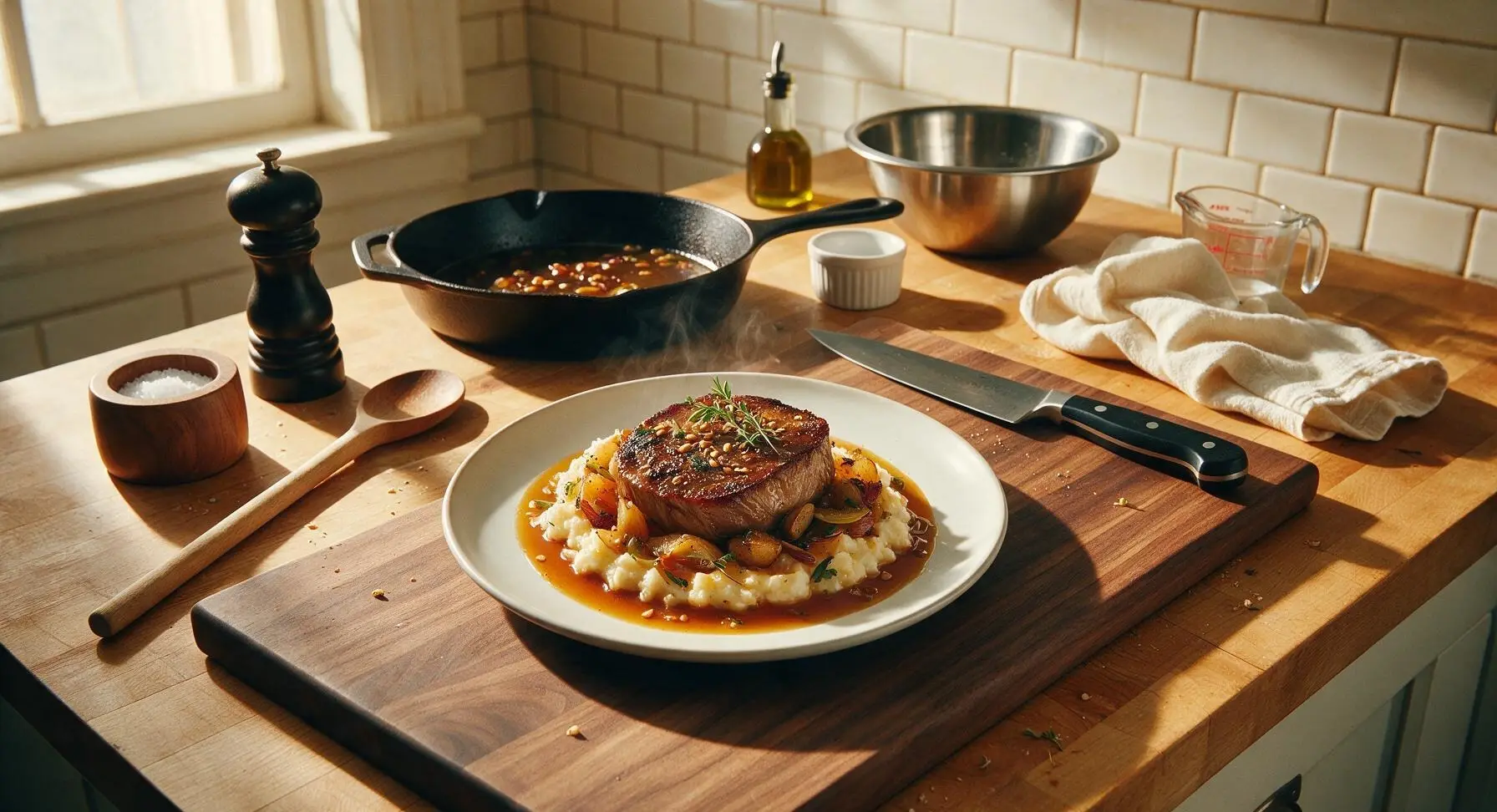
Scottish Export

title 1
Scottish Export
⏱️ cook time 1 hour (plus 14 days passive fermentation and carbonation)
🍽️ servings 8
⚡ Difficulty medium

intro

Smooth, copper-hued Scottish Export (80/-) ale, with toasty malt, subtle caramel, and soft earthy hop notes. This accessible small-batch homebrew delivers classic Scottish pub character with minimal equipment.

Ingredients
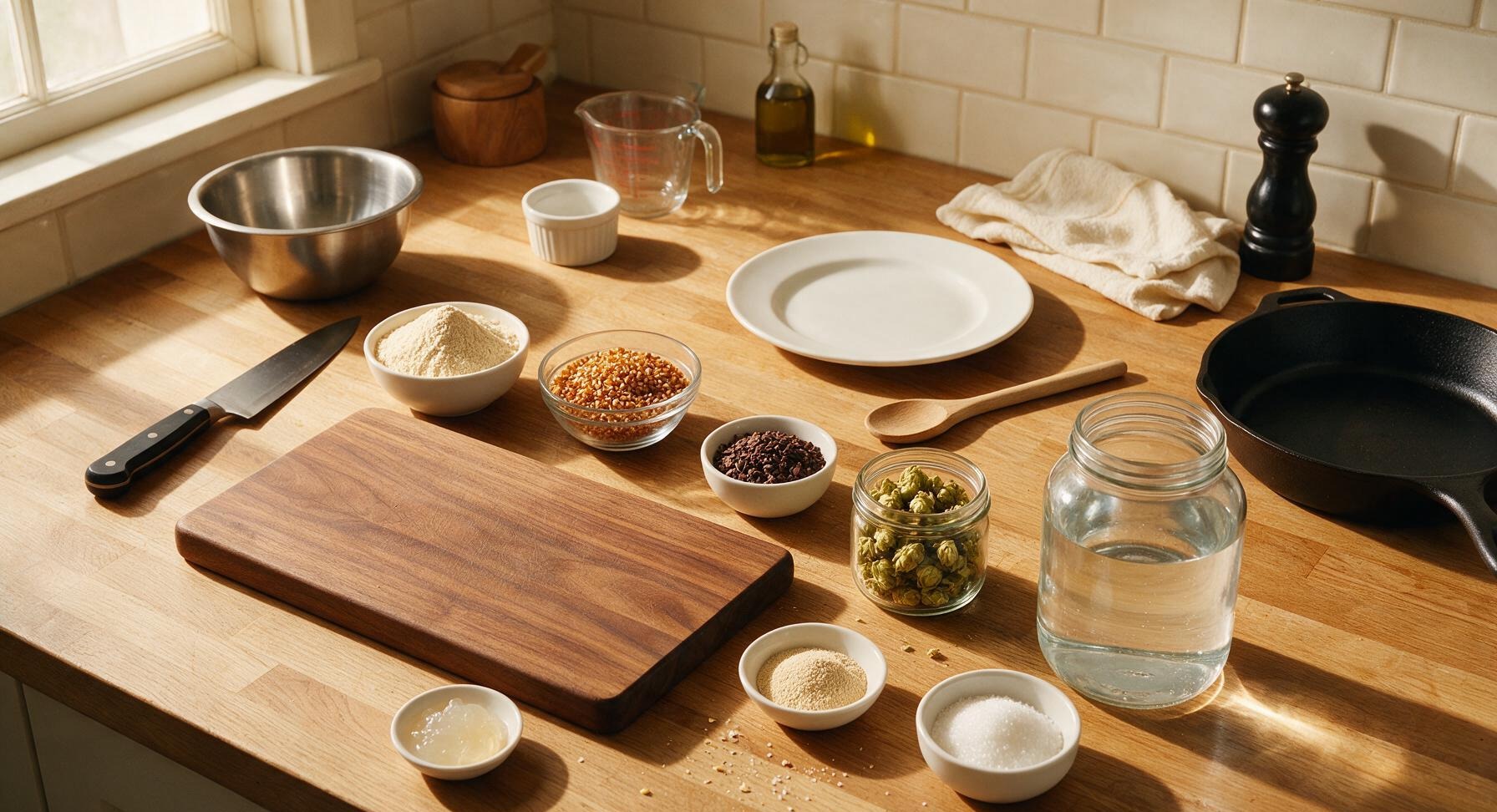
Pale dry malt extract 1kg (2.2lbs)
Crushed crystal malt (60L) 113g (4oz)
Crushed chocolate malt 14g (0.5oz)
Whole leaf East Kent Goldings hops 14g (0.5oz)
Dry Scottish ale yeast 5g (1 packet)
Corn sugar (priming) 28g (1oz)
Irish moss (clarifier) 2g (1 tsp)
Filtered cold water 4L (1 gallon)

Steps

1

Steep Crushed Specialty Grains

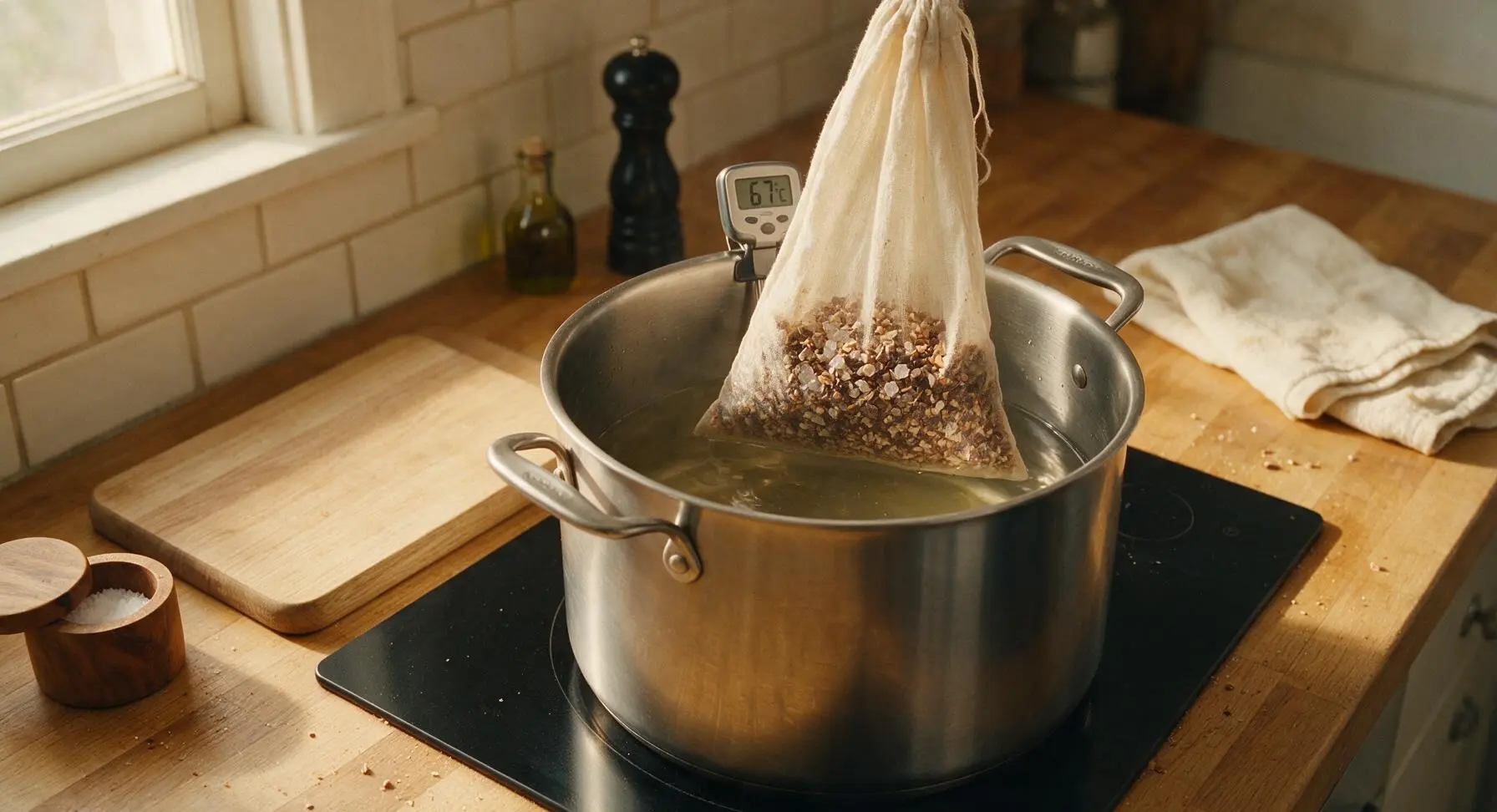
Pour 3L of filtered water into the 2-gallon brushed stainless steel stock pot set on the matte black induction cooktop over medium heat, warming until the digital instant-read thermometer clipped to the pot edge reads 67C (153F). Add crushed crystal malt and chocolate malt to the unbleached cotton muslin steeping bag, tie the drawstring loosely, and submerge fully in the heated water. Cover the pot with its lid, remove from heat, and steep for 20 minutes. The water will deepen to a rich amber-red color as sweet malt sugars and toasty flavors extract from the grains.
Step 1
step1:Steep Crushed Specialty Grains
2

Add Base Malt Extract

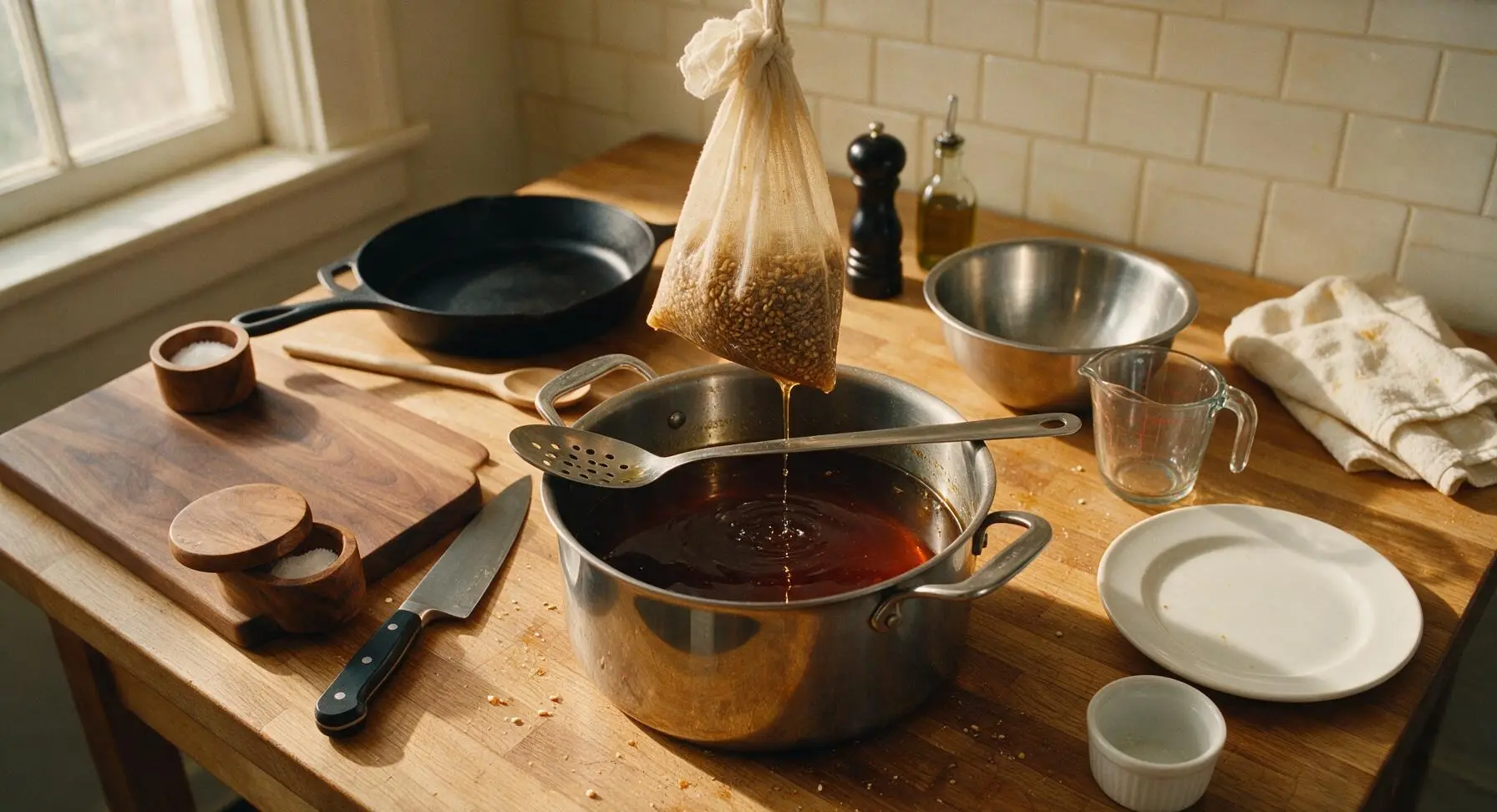
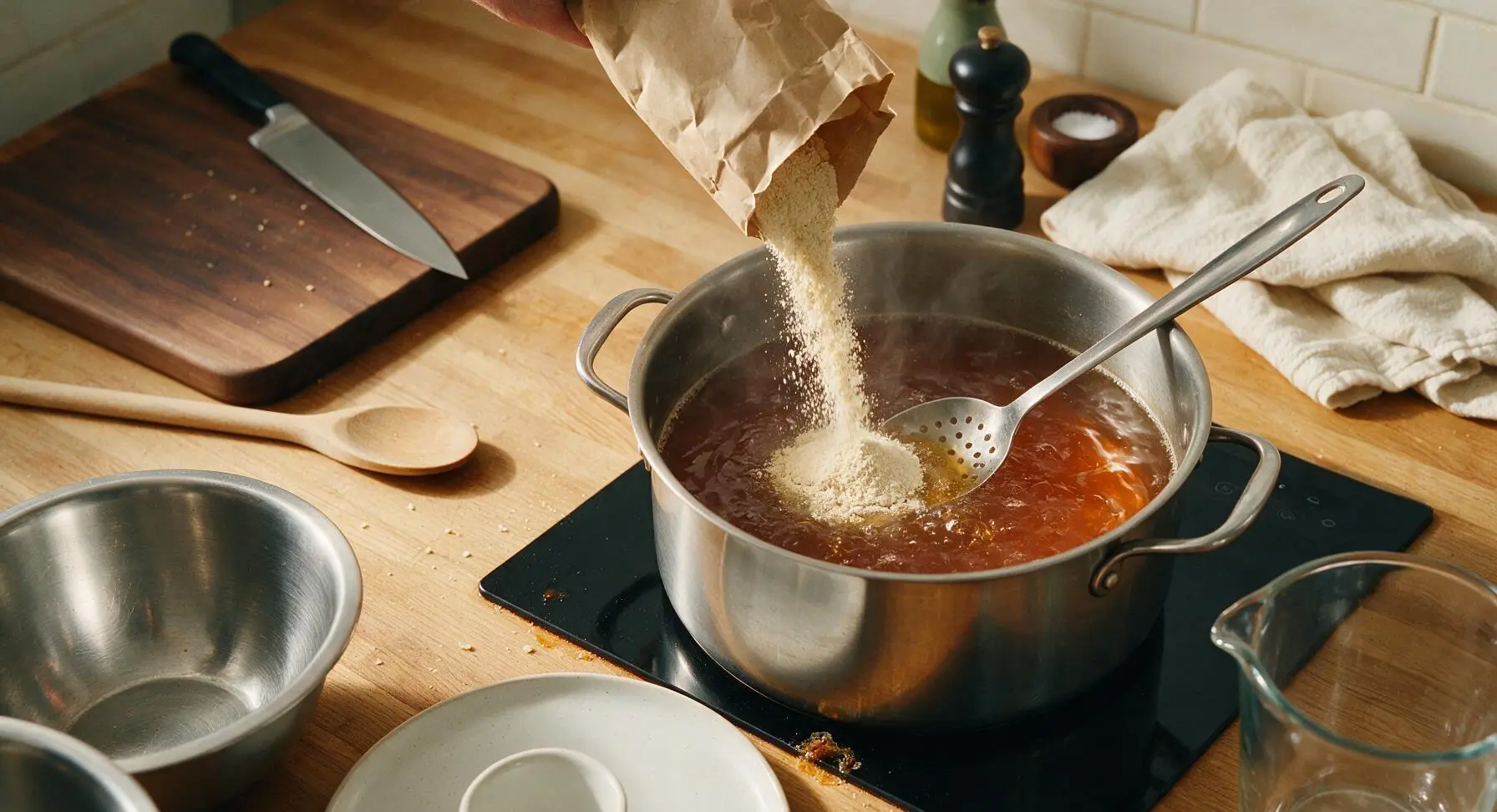
After 20 minutes of steeping, lift the muslin grain bag out of the pot, letting it drain fully over the liquid (do not squeeze the bag, as this releases harsh, astringent tannins). Turn the induction cooktop to high heat, bringing the amber steep water to a gentle rolling boil. Once boiling, slowly pour in the full 1kg of pale dry malt extract, stirring constantly with the long slotted stainless steel spoon until all powder is fully dissolved with no dry clumps. Return the now-copper wort to a steady rolling boil, adjusting heat as needed to prevent boil-overs.
Step 2
step2:Add Base Malt Extract
Step 2
step2:Add Base Malt Extract
3

Add Bittering Hops

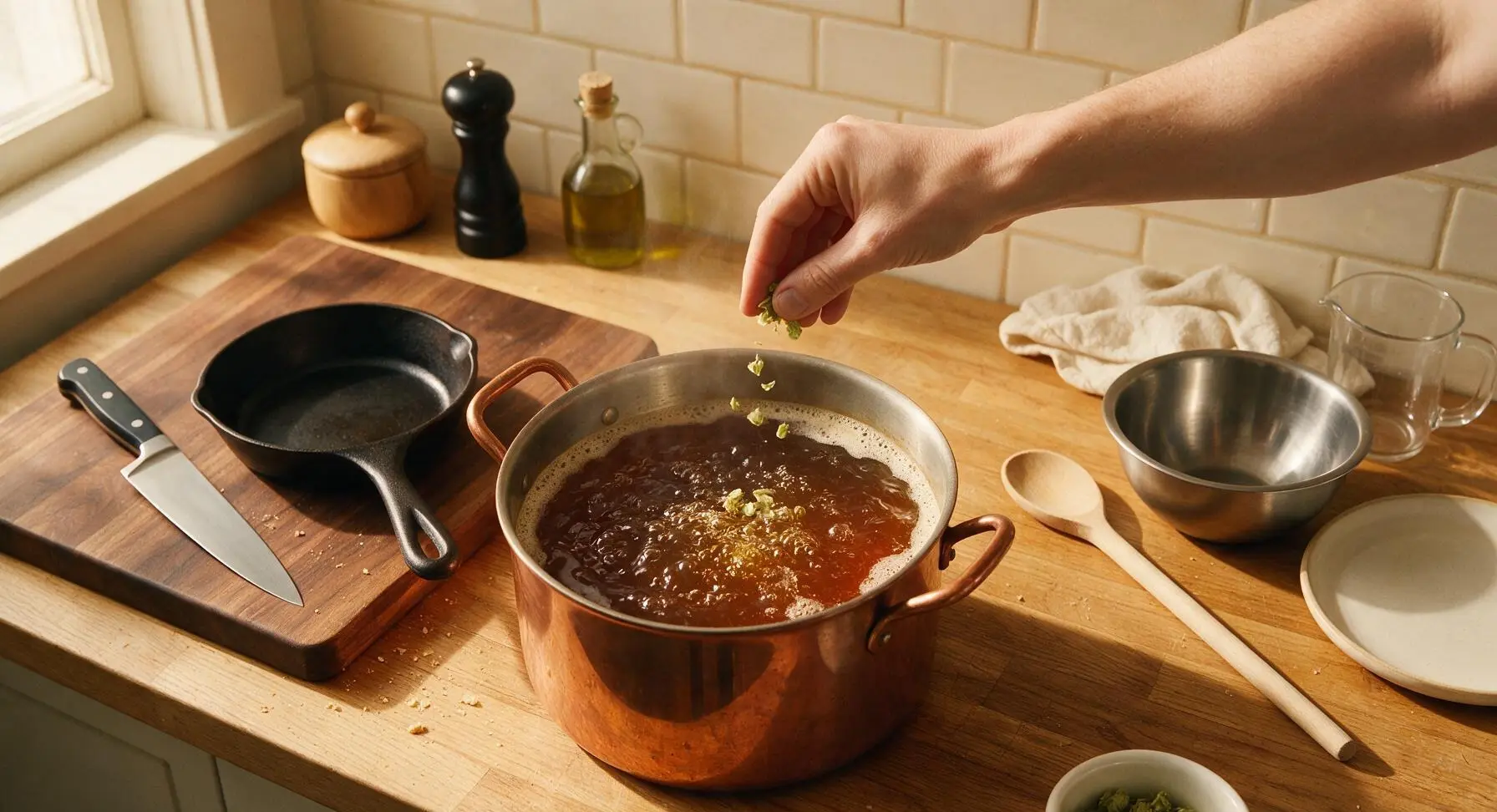
Once the wort holds a steady rolling boil, add 7g (half the total amount) of East Kent Goldings hops directly from the terracotta ramekin into the pot. Set a timer for 45 minutes of continuous gentle boil, adjusting heat to keep the boil consistent but not violent. Stir briefly if light tan foam rises close to the pot rim to prevent messy boil-overs. The air will carry warm, bready malt and subtle earthy hop aromas as the boil progresses.
Step 3
step3:Add Bittering Hops
4

Add Late Hops And Clarifier

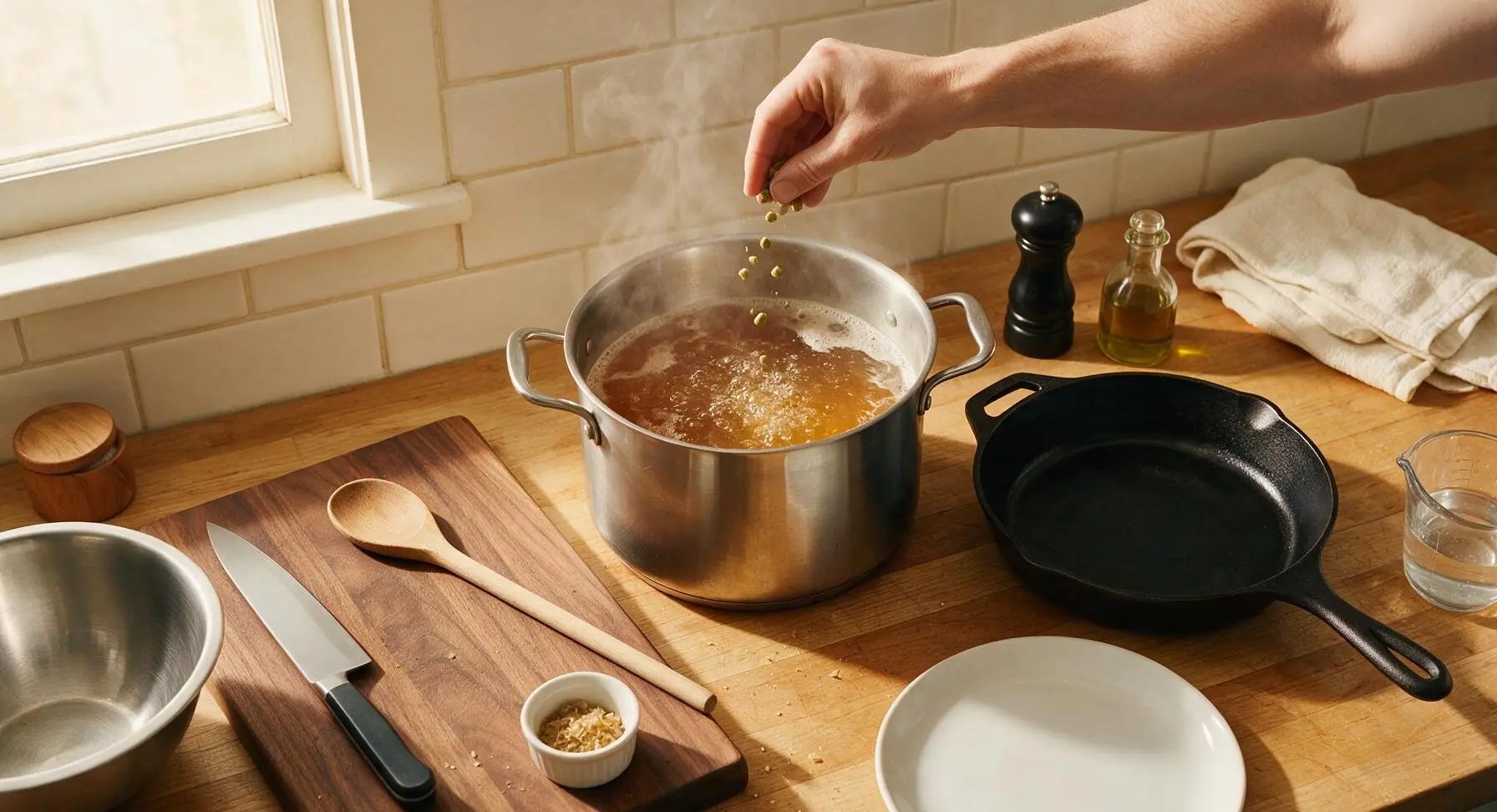
When 45 minutes of the boil have elapsed (15 minutes remaining in the total 60-minute boil), stir 1 teaspoon of Irish moss into the wort to help proteins clump and create a clear final beer. When 55 minutes of the boil have elapsed (5 minutes remaining), add the final 7g of East Kent Goldings hops to the wort for bright, floral, earthy aroma. Adding these hops late in the boil preserves their delicate flavor, as long boiling destroys aromatic hop oils.
Step 4
step4:Add Late Hops And Clarifier
5

Cool And Strain Wort

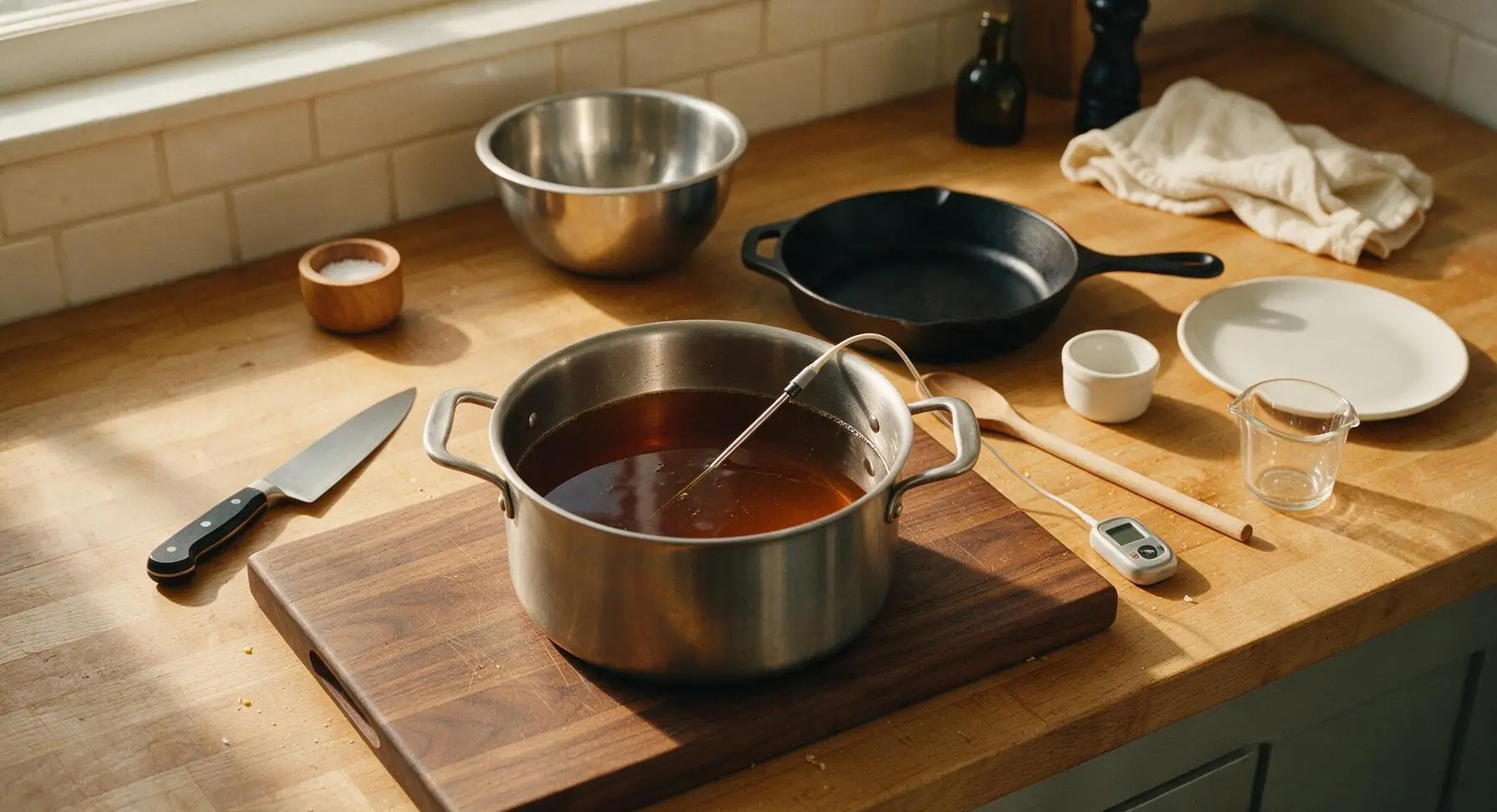
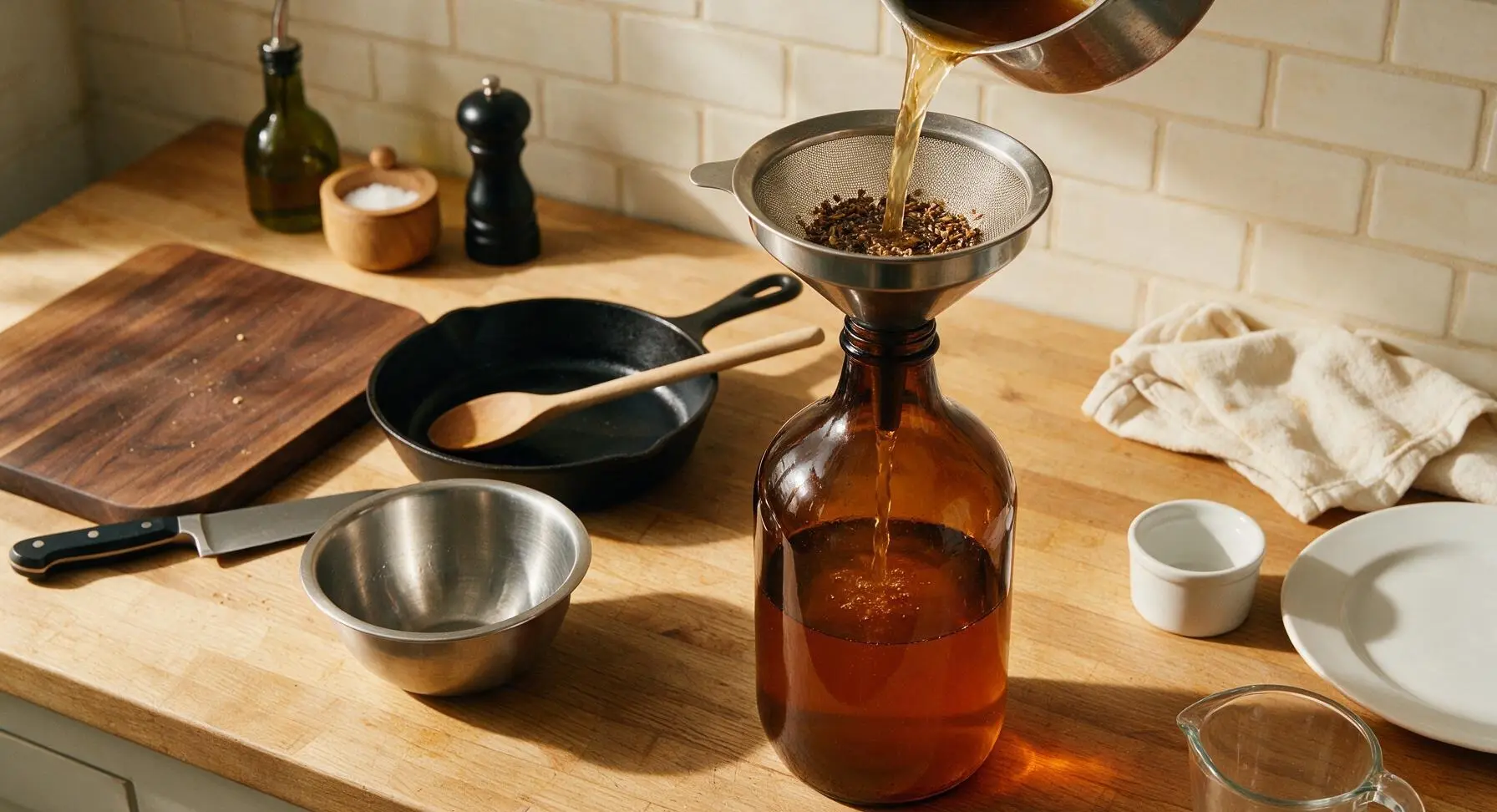
After the full 60-minute boil, turn off the induction cooktop. Move the stock pot to a sink of ice water to cool the wort quickly to 21C (70F), approximately 20 minutes, to reduce risk of contamination. Set the stainless steel funnel in the neck of the 1-gallon amber glass fermentation jug, resting the fine-mesh stainless steel strainer on top of the funnel. Pour the cooled wort through the strainer to catch spent hops and grain debris, then top the jug with filtered cold water to reach the 1-gallon volume mark if needed. Seal the jug neck with its rubber stopper temporarily.
Step 5
step5:Cool And Strain Wort
Step 5
step5:Cool And Strain Wort
6

Pitch Yeast And Seal

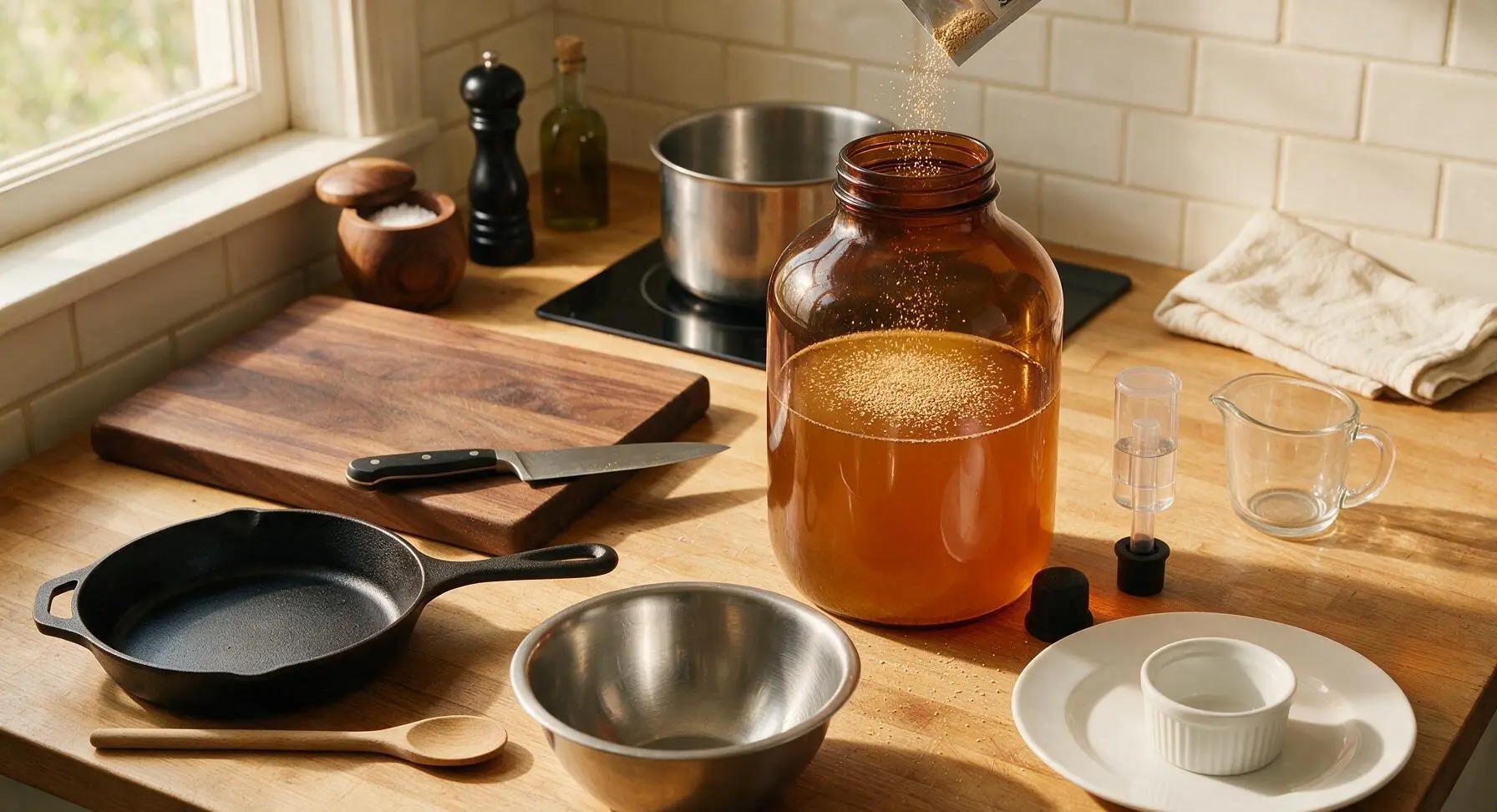
Remove the rubber stopper from the fermentation jug, and sprinkle the full 5g packet of dry Scottish ale yeast evenly across the surface of the cooled, strained wort. Do not stir the yeast in, as it will hydrate and activate on its own. Fill the three-piece airlock halfway with clean cool water, then press the airlock firmly into the rubber stopper to create an airtight seal. Move the jug to a dark, consistently cool spot (18-20C / 65-68F) to ferment for 10 days, until bubbling in the airlock stops completely and the beer clears.
Step 6
step6:Pitch Yeast And Seal
7

Bottle For Carbonation

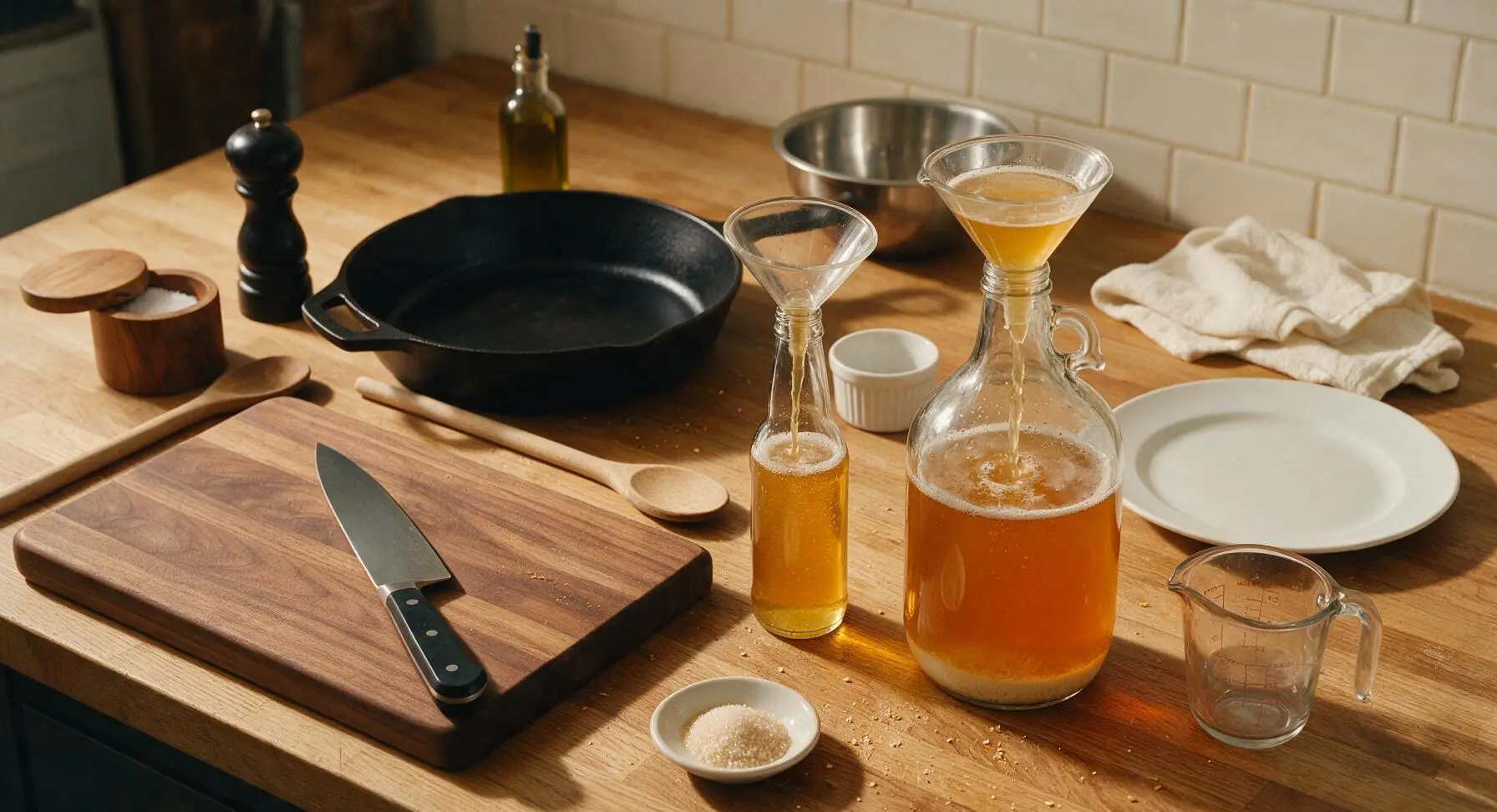
Once fermentation is complete (no airlock bubbles for 48 consecutive hours, clear beer with a thin layer of pale yeast sediment settled at the jug bottom), dissolve 28g of corn sugar in 50ml of boiling water, cool completely, and stir very gently into the beer to provide sugar for natural carbonation. Pour the beer carefully through the funnel into clean, sanitized 12oz glass bottles, leaving 2cm of headspace at the top of each bottle, and cap tightly. Store bottles in the same cool dark spot for 4 days to build carbonation, then chill for 24 hours before serving.
Step 7
step7:Bottle For Carbonation

Tips

1.Sanitize every tool, funnel, jug, and bottle that touches cooled wort or beer with a no-rinse brewing sanitizer before use. Wild bacteria or ambient yeast will create sour, off-flavors that ruin the smooth, malty profile of traditional Scottish Export.
2.Never squeeze the muslin grain bag after steeping: pressing the wet grains releases harsh tannins that make the finished beer taste dry, bitter, and astringent, rather than soft and caramel-forward. Let the bag drain naturally for 2 minutes instead.
3.Keep fermentation temperatures steady between 18-20C (65-68F). Scottish ale yeast produces unwanted fruity, solvent-like off-flavors at temperatures above 21C (70F), which masks the classic toasty, bready malt character that defines the style.
✨ You May Also Like

Drinks & Beverages
🍜 Mexico

A bright, balanced tequila-based cocktail with zesty fresh lime, smooth orange liqueur, and a signature salt rim, perfect for warm summer sipping.

⏱️ 5 minutesDrinks & Beverages ★ 4.9
Drinks & Beverages
🍜 United States

Thick, creamy, nostalgic classic vanilla milkshake with a rich, smooth texture, topped with whipped cream and a cherry for cool, sweet refreshment.

⏱️ 5 minutesDrinks & Beverages ★ 4.7
Drinks & Beverages
🍜 United States

A bright, golden strong ale with fruity banana-clove notes, subtle hop spice, and soft carbonation, brewed in classic Trappist Tripel tradition.

⏱️ 2 hours aDrinks & Beverages ★ 4.5
Drinks & Beverages
🍜 United States

A frothy, nostalgic American soda fountain treat pairing bubbly cold root beer with creamy vanilla ice cream, perfect for cooling down at warm weather gatherings.

⏱️ 20 minuteDrinks & Beverages ★ 4.8
Drinks & Beverages
🍜 United States

Tart, funky, effervescent American Wild Ale is a complex fruity craft beer brewed with wild yeast, delivering bright, zesty notes perfect for warm-weather sipping.

⏱️ 2 hours aDrinks & Beverages ★ 4.4
Drinks & Beverages
🍜 United States

Bright, bubbly copycat of the iconic American caramel cola, balanced with citrus and warm spice, perfect for sipping ice-cold on hot days.

⏱️ 15 minuteDrinks & Beverages ★ 4.8

Scottish Export:Frequently Asked Questions

1.What does the ‘80/-’ in Scottish Export 80/- Ale actually mean? ▾
The ‘80/-’ refers to a historic 19th-century Scottish beer pricing system, where the shilling value denoted a beer’s strength and associated tax rate. This export-strength brew lands at an approachable 4.8-5.2% ABV, heartier than lighter 60/- session ales but less boozy than strong wee heavy styles.
2.Do I need a professional all-grain brewing setup to make this recipe? ▾
Not at all! This recipe is built for small-batch extract brewing, so you only need a 5-gallon stock pot, food-grade fermenting bucket, airlock, siphon, and basic bottling supplies. You don’t need fancy mash tuns or temperature-controlled conical fermenters to nail that classic Scottish pub character.
3.Can I substitute pellet hops for the whole leaf East Kent Goldings called for? ▾
Absolutely! If you don’t have whole leaf East Kent Goldings, use the same weight of pelletized East Kent Goldings—just note pellets absorb less wort and deliver slightly sharper bitterness, so you can cut the measured amount by 10% if you prefer that softer, traditional hop profile.
4.Why does this recipe use dry Scottish ale yeast instead of liquid yeast? ▾
Dry Scottish ale yeast is ideal here for two key reasons: it’s extremely forgiving for new homebrewers, with high tolerance for slight temperature swings, and it ferments cleanly with the subtle soft fruity notes of traditional pub ale, no pre-ferment starter required unlike most liquid yeast strains.
5.How do I get that signature smooth copper color without harsh roasted flavor? ▾
Stick to the measured small amounts of 60L crystal and chocolate malt, and steep them (don’t boil them!) at 150-155°F for 20-30 minutes before adding your malt extract. Steeping too hot, boiling grains, or adding extra chocolate malt will create ashy, bitter notes instead of that smooth toasty hue.
6.What ABV should I expect from this recipe, and how do I hit it consistently? ▾
When brewed correctly, this recipe lands right at 5% ABV, which is spot-on for classic 80/- export. To hit that mark consistently, fully dissolve all pale dry malt extract so no sugar gets stuck to the pot bottom, and let fermentation run its full course before bottling instead of cutting it short.
7.How long do I need to ferment this ale before it’s ready to drink? ▾
Plan for 2 weeks of primary fermentation at 65-68°F, followed by 2 weeks of bottle conditioning at room temperature to build carbonation and mellow flavors. Unlike fresh-focused IPAs, this ale gets smoother and more balanced if you let it rest an extra 1-2 weeks in the bottle post-conditioning.
8.I don’t have 60L crystal malt on hand—what’s a good substitute? ▾
If you can’t find 60L crystal malt, swap it for an equal amount of 40L crystal malt plus a tiny pinch (about 1/8 of the original crystal weight) of extra chocolate malt to make up for missing caramel depth. Avoid dark crystal malts over 80L, as they add harsh, raisiny, overly sweet notes that don’t fit the style.
9.Why is this recipe so much lower in hops than typical American ale recipes? ▾
Traditional Scottish 80/- ale is intentionally malt-forward, with hops only used to add subtle balancing bitterness and soft earthy notes, not to be a star flavor. This low hop rate reflects historic Scottish brewing, where imported hops were costly, so brewers used just enough to cut malt sweetness.
10.Can I add honey, heather, or other traditional Scottish add-ins to this recipe? ▾
You absolutely can, but keep add-ins very subtle to stay true to the style! If adding heather or honey, use no more than 4 ounces of honey or 1 tablespoon of dried heather, added in the last 5 minutes of the boil. Too much of either will overpower the soft malt profile that makes 80/- so approachable.
11.How do I avoid harsh, bitter off-flavors in my finished brew? ▾
The most common causes of harsh off-flavors in this recipe are boiling crushed specialty grains or scorching your malt extract. Keep grain steep temperatures below 160°F, stir constantly once you add dry malt extract to prevent sticking, and avoid a violent rolling boil that can excessively caramelize sugars.
12.What’s the ideal serving temperature for this 80/- ale to get the best flavor? ▾
Skip the ice-cold serving temp you’d use for a light lager! This ale shines when served at 45-50°F, cool enough to be refreshing but warm enough to let toasty malt, soft caramel, and subtle earthy hop notes come through. Serving it too cold will mute all those classic pub flavors you worked to build.
13.Do I need to do a secondary fermentation for this recipe? ▾
You don’t need a secondary fermenter for this recipe at all. The dry Scottish ale yeast flocculates (settles) really well after two weeks in primary, so you won’t get off-flavors from leaving beer on the yeast cake in that window. Skipping secondary also cuts down on oxidation risk that causes stale, papery flavors.
14.How much priming sugar do I need when bottling to get the right carbonation? ▾
Aim for 2.2 to 2.3 volumes of CO2, the soft, gentle carbonation level of traditional cask-style Scottish ale. That translates to 3/4 cup of corn sugar (dextrose) for a 5-gallon batch, dissolved in a small amount of boiled water and mixed evenly with finished beer right before siphoning into bottles.
15.How long will this homebrew stay fresh if I store it correctly? ▾
Stored in a cool, dark spot away from direct sunlight and temperature swings, this ale will stay fresh and drinkable for up to 6 months after bottling. It actually tastes best 4-8 weeks after bottling, as malt flavors smooth out and any faint fermentation off-notes dissipate during that rest period.

Comments (14)

2 weeks ago

OMG, this 80/- ale turned out SO good! I was nervous about nailing that classic malty Scottish profile without it tasting too sweet, but the ratios here are perfect. Brought a growler to our neighborhood potluck last weekend and everyone was asking for the recipe. Total game changer for my homebrew lineup!

1 week ago

Dude same! I brought mine to a game night with my buddies and they thought I bought it from a fancy local brewery. How long did you let yours condition after carbonation?

1 week ago

So stoked to hear this was a hit at your potluck! For anyone wondering, if you can hold out an extra 3-5 days after carbonation hits, the malt flavors smooth out even more for that classic authentic finish.

5 days ago

First time trying a Scottish style ale, and I was worried the medium difficulty would be too much for me since I’ve only done 3 extract batches so far. The step-by-step instructions were so clear, though! My only tiny note is I wish there was a note on what yeast strain works best for people who can’t find the exact one listed.

3 days ago

Thanks so much for the honest feedback! A great substitute if you can’t find the listed Scottish ale yeast is a clean American ale yeast like US-05, just ferment 2 degrees cooler than the recommended temp to keep those fruity esters muted. Cheers!

1 week ago

Made this for my father-in-law’s birthday dinner since he’s obsessed with Scottish imports, and he swore it tasted better than the stuff he orders from specialty import shops. 10/10 will be making this on regular rotation for family dinners and camping trips.

3 days ago

Wait, 1 hour of active time and then just waiting for fermentation? That’s way less work than I thought a traditional Scottish export would be! I’ve been stressing about what to bring to our annual fall block party, and this is gonna be perfect.

2 days ago

Do it! I made a double batch for my block party last month and people were lining up to fill their cups. Just make sure you give it the full 14 days, don’t rush the carbonation!

2 days ago

My husband and I have been experimenting with homebrewing for date nights, and this one is our new favorite! It’s malty, not overly bitter, and even my teen kids snuck a tiny sip and said it smelled like the fancy beer we get at restaurants. Only hiccup was my first gravity reading was a little off, but we adjusted and it turned out fine.

yesterday

Oh I love that you guys do brew days for date night! My partner and I do the same, we’ve been looking for a recipe that’s not too hoppy since they hate IPAs. Adding this to our list!

2 hours ago

Love that brew date nights are a thing! If you prefer less bitter, you can cut the late hop addition by 25% for an even smoother, malt-forward sip that’ll be perfect for you two.

yesterday

Was skeptical that a homebrew recipe could nail that rich, toasty 80/- flavor I love from the pubs I visited in Edinburgh a few years back, but wow. Tasted exactly like what I remembered, minus the expensive plane ticket. Already ordered ingredients for a second batch.

30 minutes ago

Help! I’m on day 3 of fermentation and it’s bubbling way slower than the IPAs I’ve made before. Did I mess up my yeast pitch? I’m panicking a little because I was gonna serve this at my Halloween party.

5 minutes ago

No need to panic! Scottish ales ferment slower and cooler than hop-forward IPAs, so slower bubbling is totally normal. As long as you hit your target pitch rate and temp, you’re right on track — give it a few more days and take a gravity reading before you worry.

1 week ago

This recipe is a total game changer for people who don’t love super bitter, hop-bomb beers. I brought a six pack to my office potluck last week and even the people who only drink light lagers were raving about how smooth and easy to drink it was.

5 days ago

Same here! I usually stick to super light beers because craft stuff is too hoppy for me, and this was so smooth I could drink two pints no problem. Definitely adding this to my brew list.

2 weeks ago

Tweaked the recipe a tiny bit to add a touch of peated malt for a little smoky kick, and wow, that took it over the top! The base recipe is so solid it’s easy to adjust to your taste without ruining that classic 80/- profile. My whole tailgate crew went crazy for it.

1 week ago

Oh that peated malt addition sounds chef’s kiss! How much did you add? I don’t want to overdo it and make it taste like a campfire.

1 week ago

Love that customization! For folks who want to try that smoky twist, 2-4 oz of peated malt in the mash is the sweet spot — enough for a subtle campfire note without overpowering that classic bready malt flavor.

2 hours ago

SO good. I’ve tried three other 80/- recipes online and they all came out too thin or cloyingly sweet, but this one hits that perfect balance of toasty, caramel, and just enough hop bite to keep it from being heavy. 10/10 no notes.

3 days ago

Love that this recipe doesn’t call for a million fancy, expensive specialty grains. I was able to grab everything I needed from my local homebrew shop for under $30 for a 5 gallon batch, which is way cheaper than buying imported Scottish ale by the six pack.

2 days ago

Right?! I’ve been putting off trying Scottish ales because I thought I’d need a ton of weird ingredients, but this was so budget friendly. Tastes way more expensive than it was to make!

5 days ago

Ugh, I think I rushed my fermentation and bottled too early, so my first batch came out a little flat. It still tasted great, just no fizz. Gonna give it another go this weekend and make sure I wait the full 14 days like the recipe says, because the flavor was chef’s kiss even when it was flat.

3 days ago

I did the exact same thing my first time! I was so excited to try it I bottled 2 days early, and I just had to leave the bottles in the closet an extra week and they carb-ed up perfectly. No need to dump it!

2 days ago

So glad you loved the flavor even with the carbonation hiccup! As the other commenter said, if your bottles are undercarbed, just store them at room temp for a few extra days — the yeast will keep doing its thing. You’ve got this for round two!

1 week ago

Made a batch of this for our college football tailgate a couple weeks ago, and it was the perfect drink for crisp fall weather. Not too heavy, great malty flavor, and it went so good with the brats and burgers we grilled. My buddies already asked me to make another batch for the homecoming game.

5 days ago

Brats and this ale? That sounds like the perfect tailgate combo. I’m making this for our homecoming tailgate next month, can’t wait to pair it with our usual spread!

just now

The caramel notes in this are unreal! I was worried it would be too sweet, but the small hop addition balances it perfectly. I shared a couple bottles with my next door neighbor who is a retired brewmaster, and he said it was one of the best homebrews he’s tried all year. Total win!