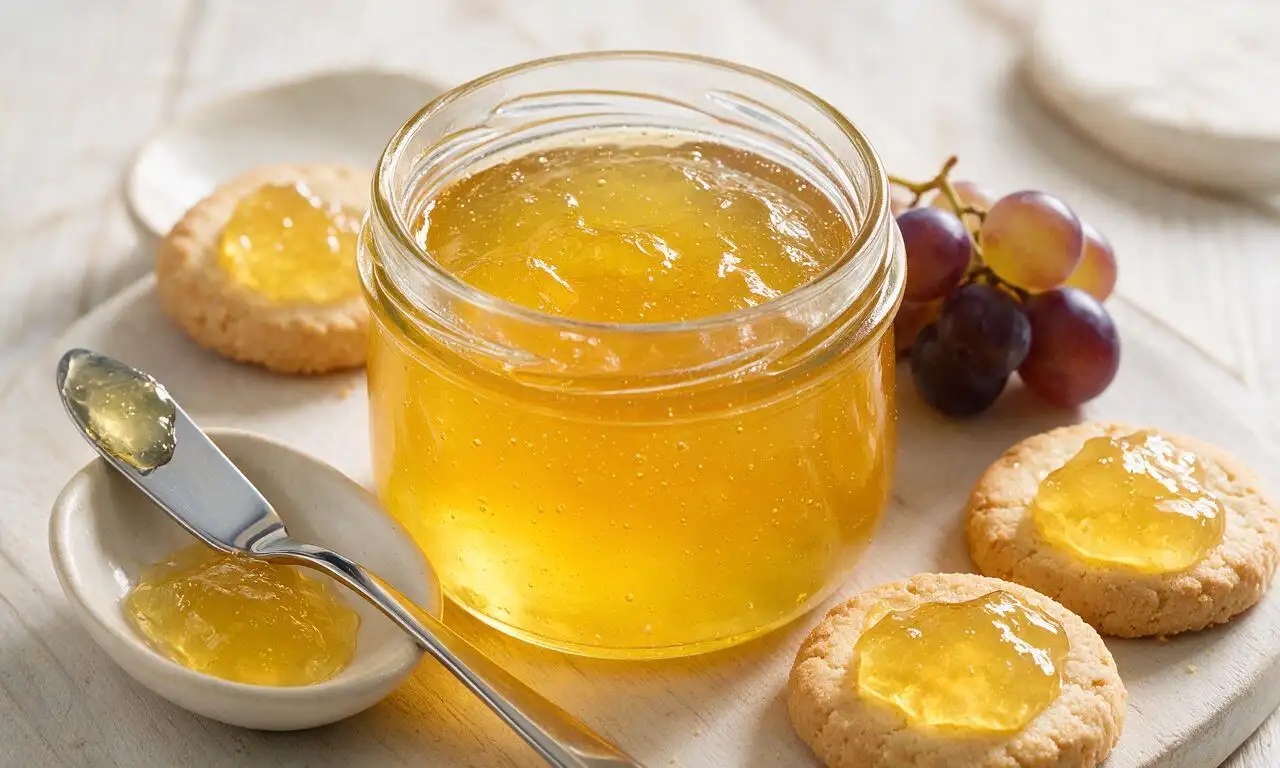
Scuppernong Jelly

title 1
Scuppernong Jelly
⏱️ cook time 1 hour 10 minutes
🍽️ servings 32
⚡ Difficulty easy

intro

Sweet, floral golden scuppernong jelly is a beloved Southern American fruit preserve, perfect for slathering on biscuits, toast, or pairing with cheese and cured meats.

Ingredients

Fresh scuppernong grapes 1.8 kg (4 lbs, approx 8 cups whole)
Granulated sugar 700 g (3.5 cups)
Fresh lemon juice 60 ml (1/4 cup)
Regular powdered fruit pectin 49 g (1 1.75-oz box)
Unsalted butter 5 g (1 tsp)

Steps

1

Prep and wash grapes

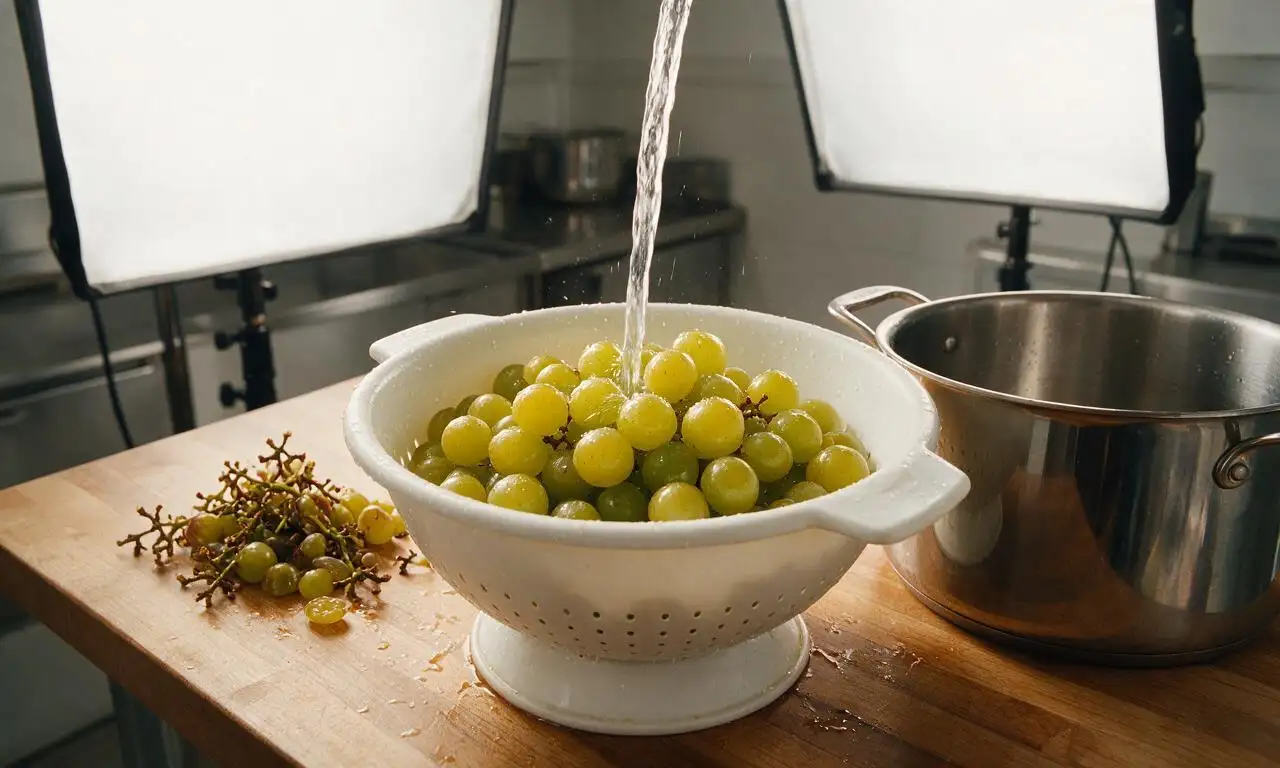
Rinse 1.8 kg (4 lbs) of fresh, ripe scuppernong grapes under cool running water, discarding any bruised, moldy, or unripe hard fruit, plus all attached stems. Place cleaned grapes in a large, heavy-bottomed stockpot, and crush them gently with a potato masher to release their initial juices; you do not need to fully break every grape skin, and no extra water is needed at this stage.
Step 1
step1:Prep and wash grapes
2

Cook and strain juice

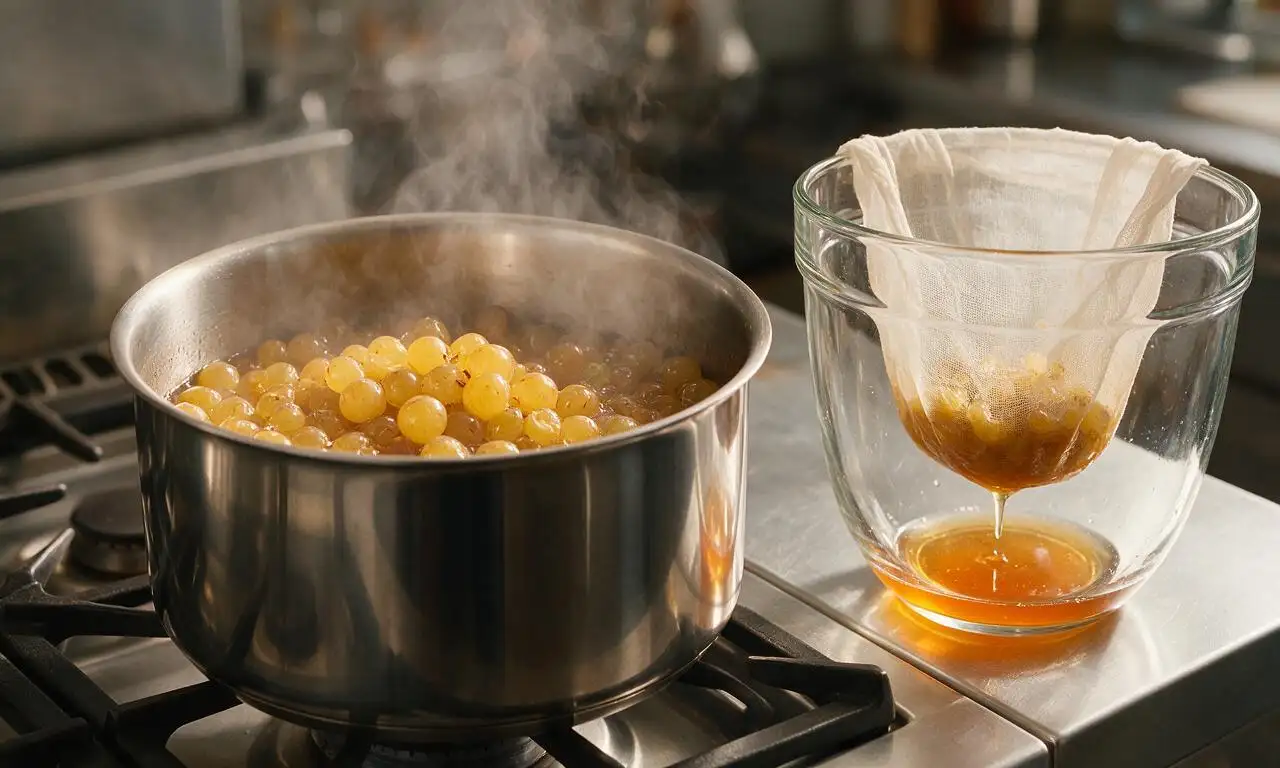
Place the stockpot of crushed grapes over medium heat, bring to a gentle rolling simmer, then reduce heat to medium-low to maintain a steady bubble for 10 minutes, stirring occasionally with a wooden spoon to prevent fruit from sticking to the pot bottom. Remove from heat, pour the cooked grape mixture through a fine-mesh jelly bag or double layer of cheesecloth set over a large heatproof bowl, and let it drain undisturbed for 20 minutes to collect clear juice; do not squeeze the bag, as this will make the final jelly cloudy. You should yield roughly 950 ml (4 cups) of pale amber scuppernong juice.
Step 2
step2:Cook and strain juice
3

Mix jelly base

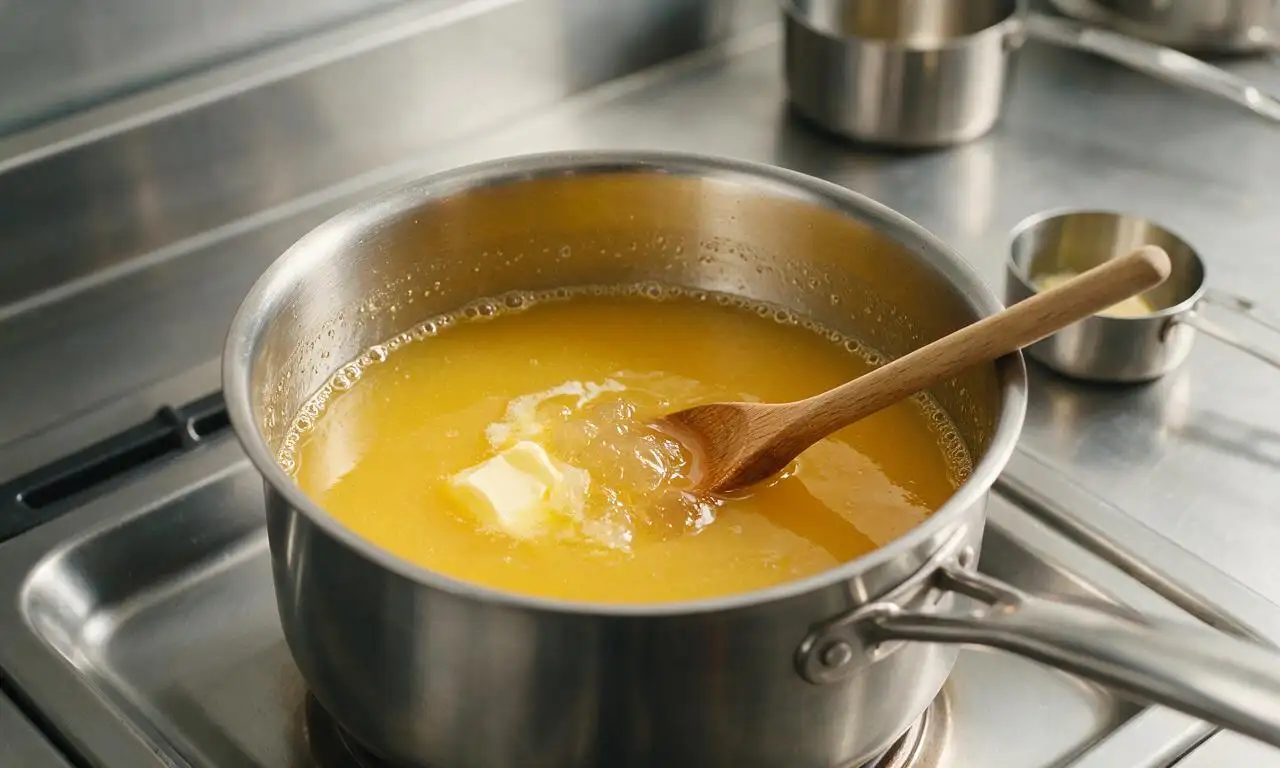
Measure 950 ml (4 cups) of the collected strained scuppernong juice back into the cleaned heavy-bottomed stockpot, stir in 60 ml (1/4 cup) fresh lemon juice, 49 g (1 1.75-oz box) of regular powdered fruit pectin, and 5 g (1 tsp) unsalted butter to reduce surface foaming during boiling. Stir the mixture continuously over medium-high heat until it reaches a full, rolling boil that cannot be stirred down, which takes roughly 6-8 minutes.
Step 3
step3:Mix jelly base
4

Boil to set point

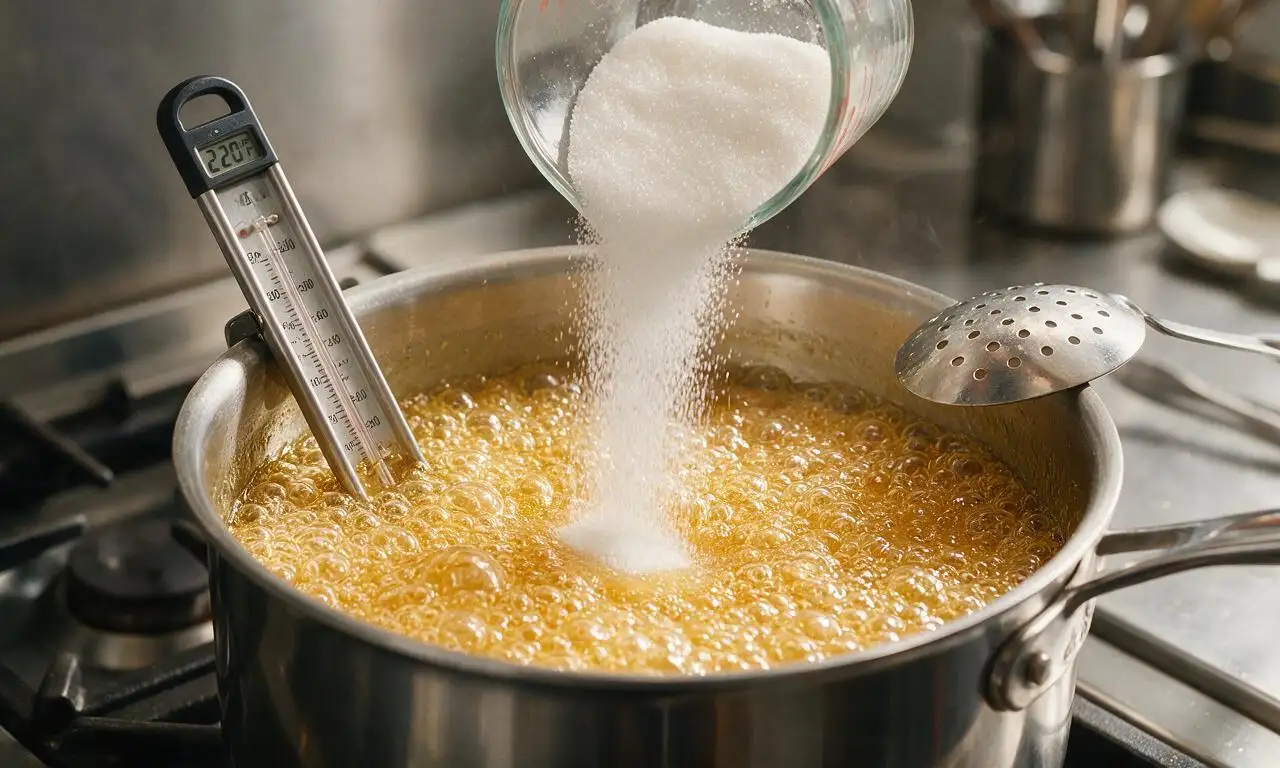
Once the pectin mixture reaches a stir-proof rolling boil, pour in all 700 g (3.5 cups) of granulated sugar at once, stirring constantly to fully dissolve the sugar without clumping. Return the mixture to a full rolling boil, and boil hard for exactly 1 minute, starting your timer as soon as the uninterrupted boil resumes. Skim any pale white foam off the top of the jelly with a slotted metal spoon if needed for a clear final product.
Step 4
step4:Boil to set point
5

Fill sterilized jars

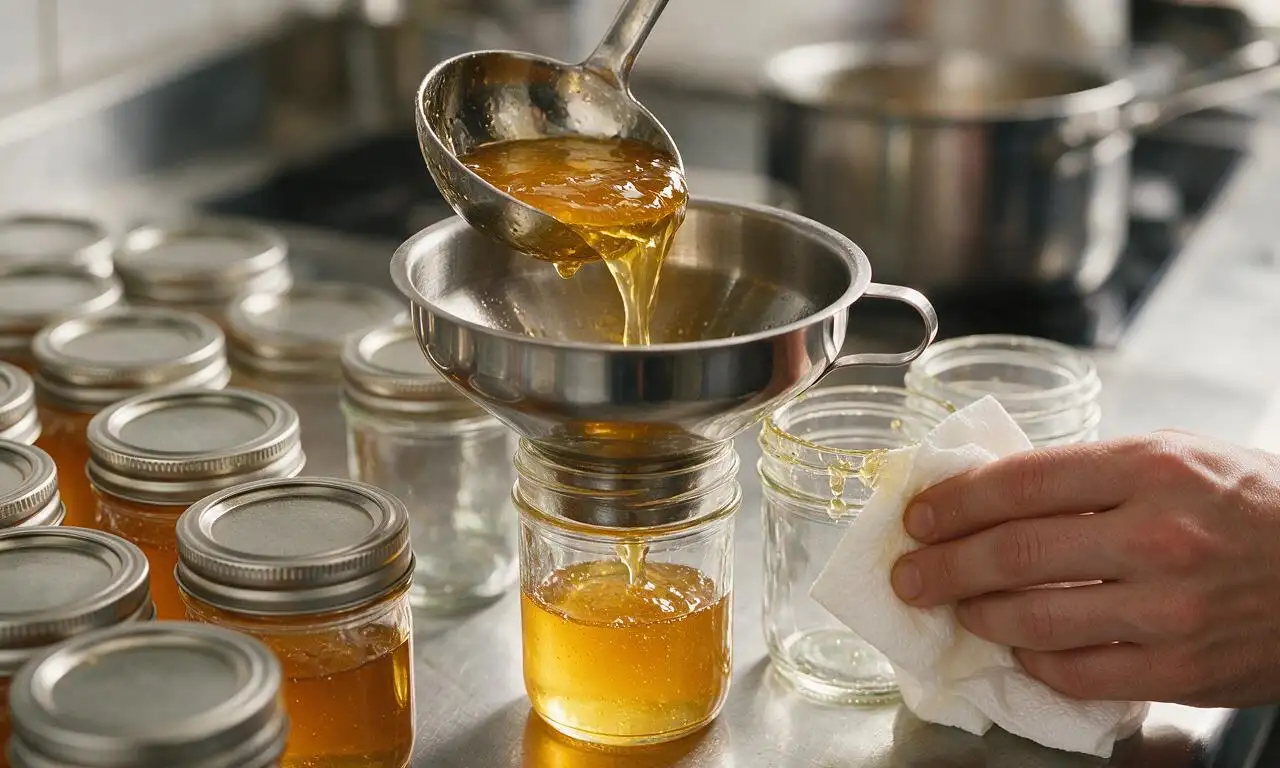
Remove the pot from heat immediately after the 1-minute hard boil. Carefully ladle or pour the hot jelly into pre-sterilized 240 ml (8-oz) glass canning jars, leaving exactly 6 mm (1/4 inch) of headspace between the jelly and the jar rim. Wipe each jar rim clean with a damp paper towel to remove any sticky jelly residue, then secure new, unused canning lids and screw bands until they are fingertip-tight—do not over-tighten, as this prevents proper air escape during processing.
Step 5
step5:Fill sterilized jars
6

Process and set jelly

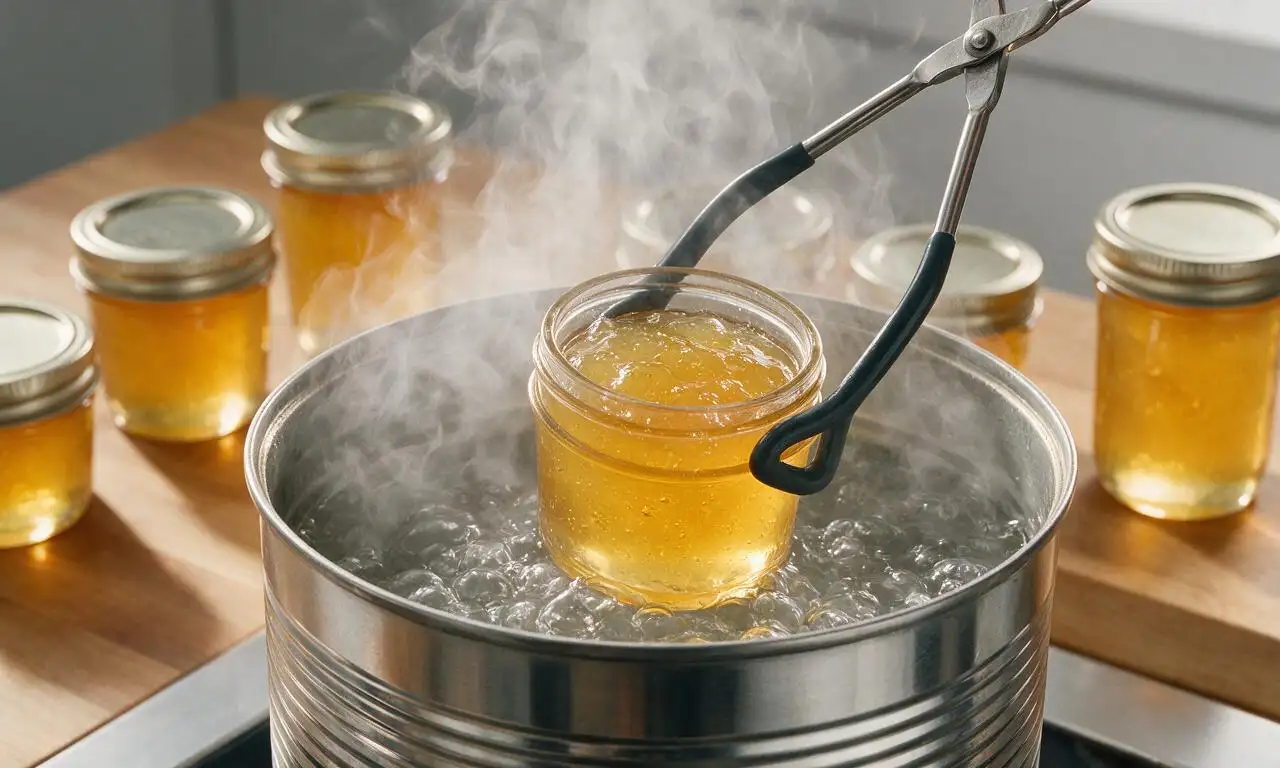
Place the filled, sealed jars in a boiling water canner, ensuring they are fully covered by 2.5 cm (1 inch) of rapidly boiling water, and process for 5 minutes at a full rolling boil for altitudes under 1000 feet (add 1 minute of processing time per additional 1000 feet of elevation). Turn off the heat, lift jars out with canning tongs, and set them on a wire cooling rack on the countertop to cool undisturbed for 12-24 hours; during this time, lids will make a sharp popping sound as they form a vacuum seal, and the jelly will set to a soft, spreadable consistency.
Step 6
step6:Process and set jelly

Tips

1.Never squeeze the jelly bag or cheesecloth when straining grape juice, as this forces fine fruit pulp into the liquid and results in cloudy, hazy jelly instead of the signature clear, bright golden appearance of classic scuppernong jelly.
2.If you don’t have a candy thermometer to check the 220°F (104°C) set point, place a small ceramic plate in the freezer before you start cooking; drop a 1/4 tsp dollop of hot jelly on the cold plate, wait 30 seconds, and if the jelly wrinkles when you nudge it with your finger, it is ready to jar.
3.Always use brand-new, unused metal canning lids for sealing; reused lids will not form a reliable airtight vacuum seal, which can lead to mold growth or spoiled jelly during pantry storage. Properly sealed jars will keep for up to 1 year in a cool, dark place.
✨ You May Also Like

Breakfast
🍜 United States

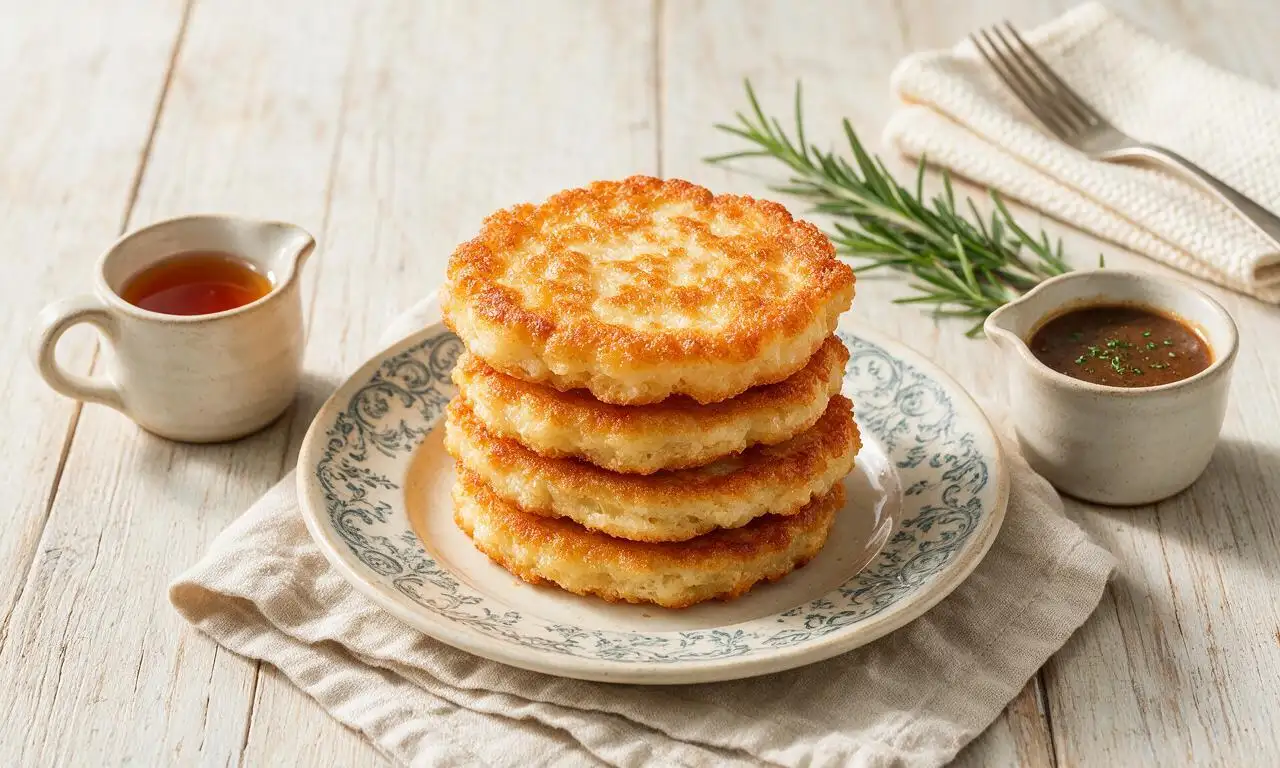
Crisp-edged, fluffy lard griddle cakes are a nostalgic homestyle staple, with rich savoriness from rendered lard, perfect topped with maple syrup or savory gravy.

⏱️ 25 minuteBreakfast ★ 4.8
Breakfast
🍜 United States

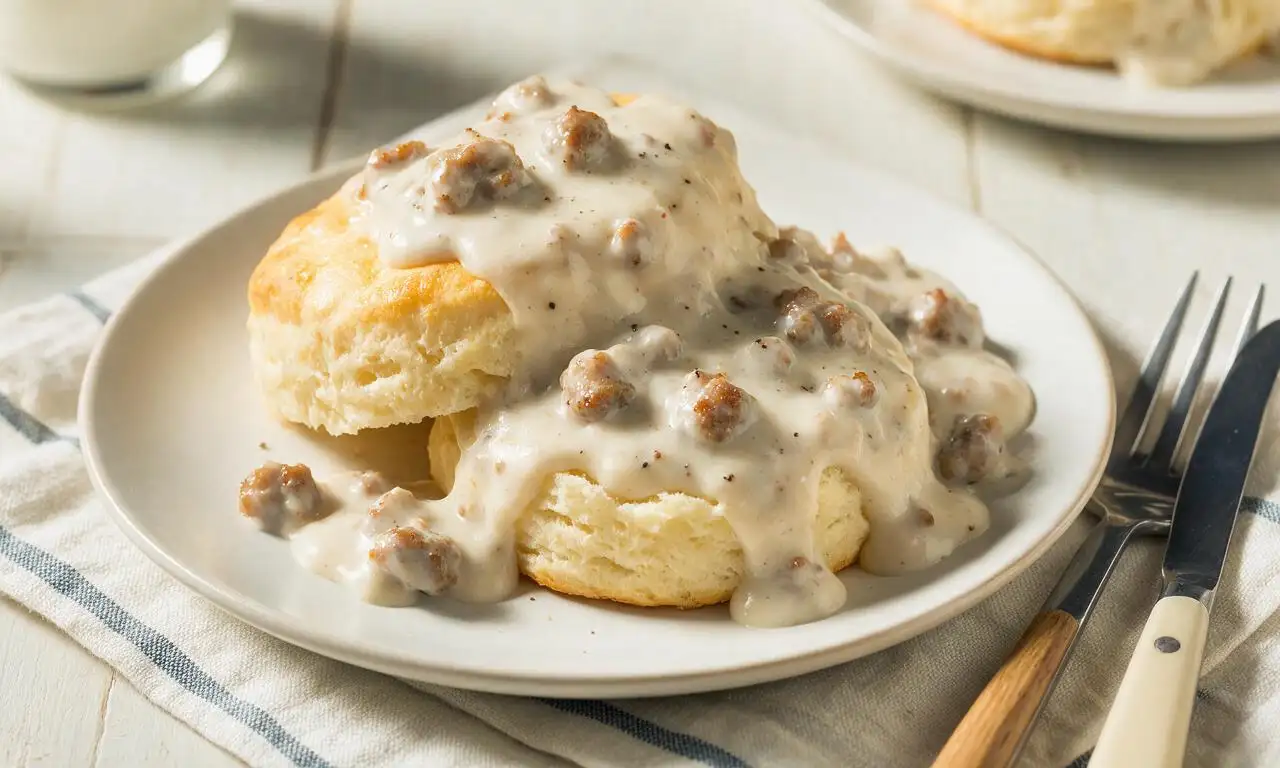
Flaky, buttery homemade buttermilk biscuits smothered in creamy, peppery pork sausage gravy: a beloved, hearty Southern American comfort food classic.

⏱️ 35 minuteBreakfast ★ 4.8
Breakfast
🍜 United States

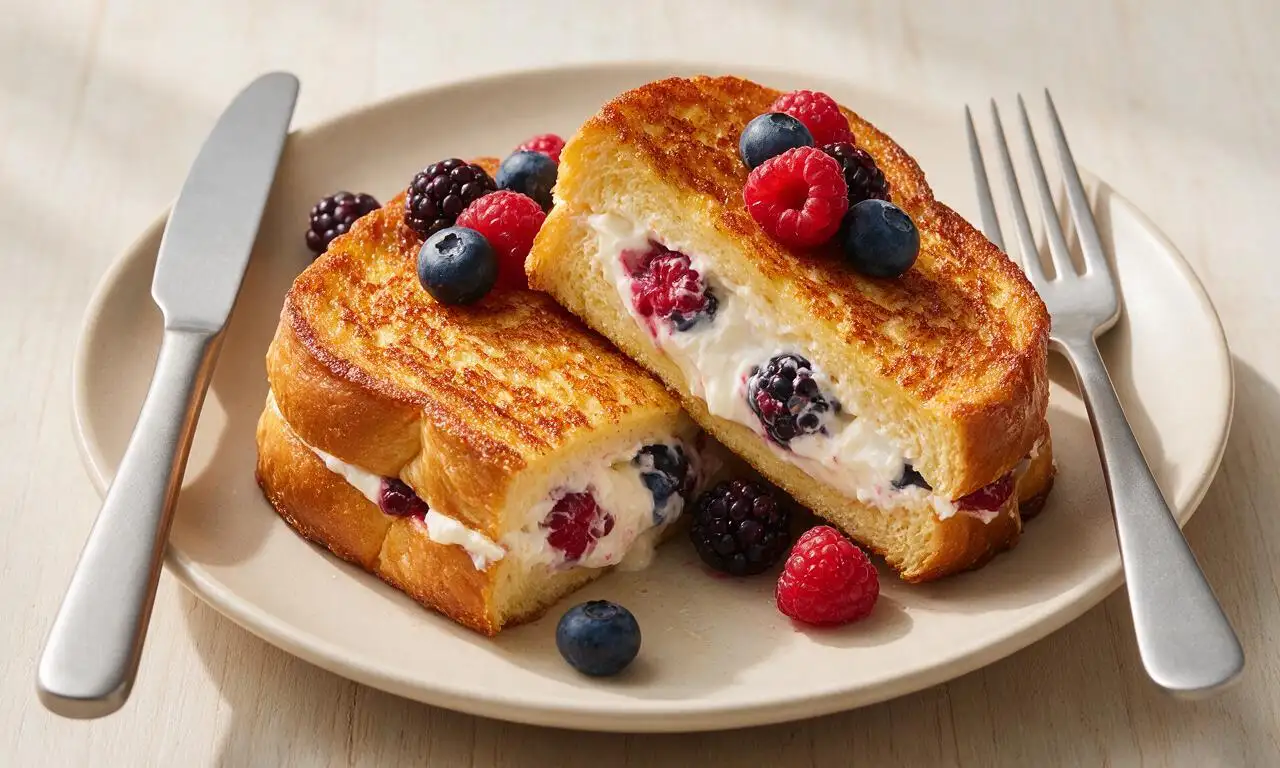
Golden, custardy brioche stuffed with sweet cream cheese and fresh berries, pan-fried to crisp perfection. An indulgent, cozy breakfast perfect for slow weekend mornings.

⏱️ 30 minuteBreakfast ★ 4.7
Breakfast
🍜 United States

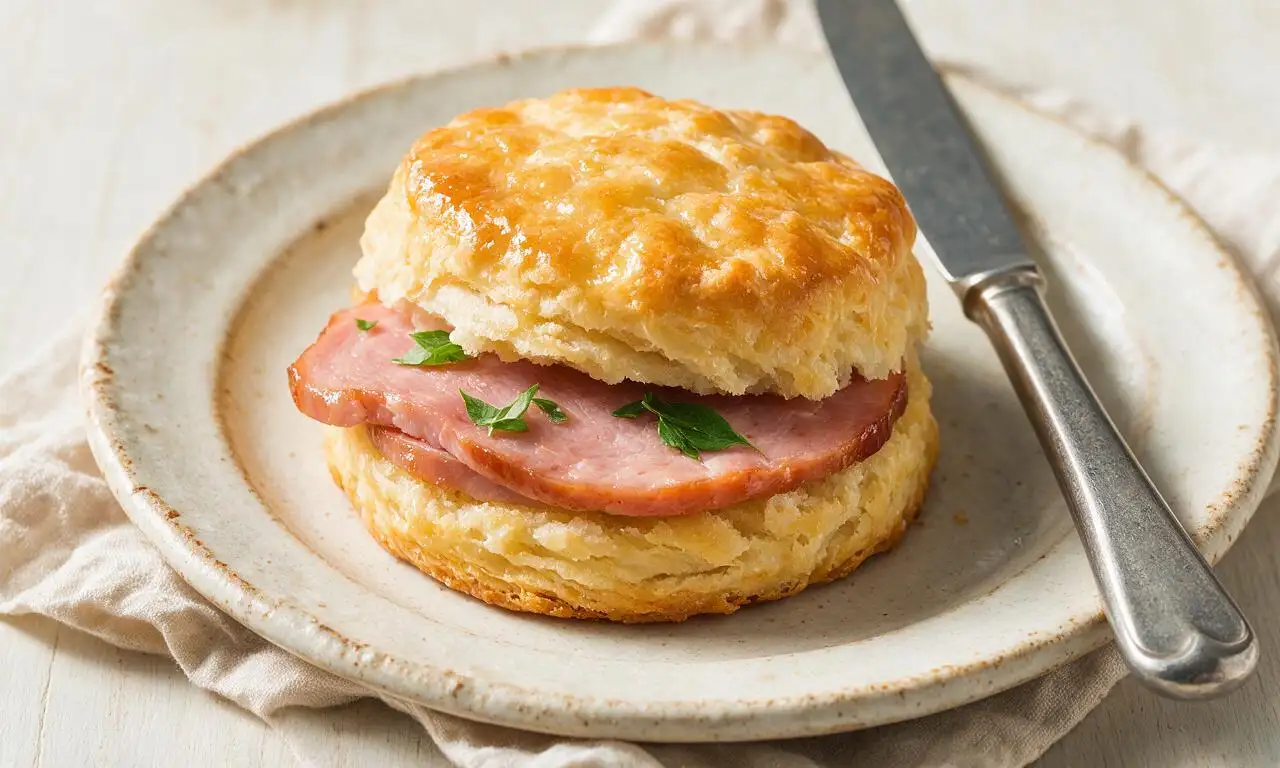
Flaky, buttery Southern-style biscuits stuffed with savory salty country ham, a portable, satisfying classic perfect for casual on-the-go meals.

⏱️ 25 minuteBreakfast ★ 4.8
Breakfast
🍜 United States

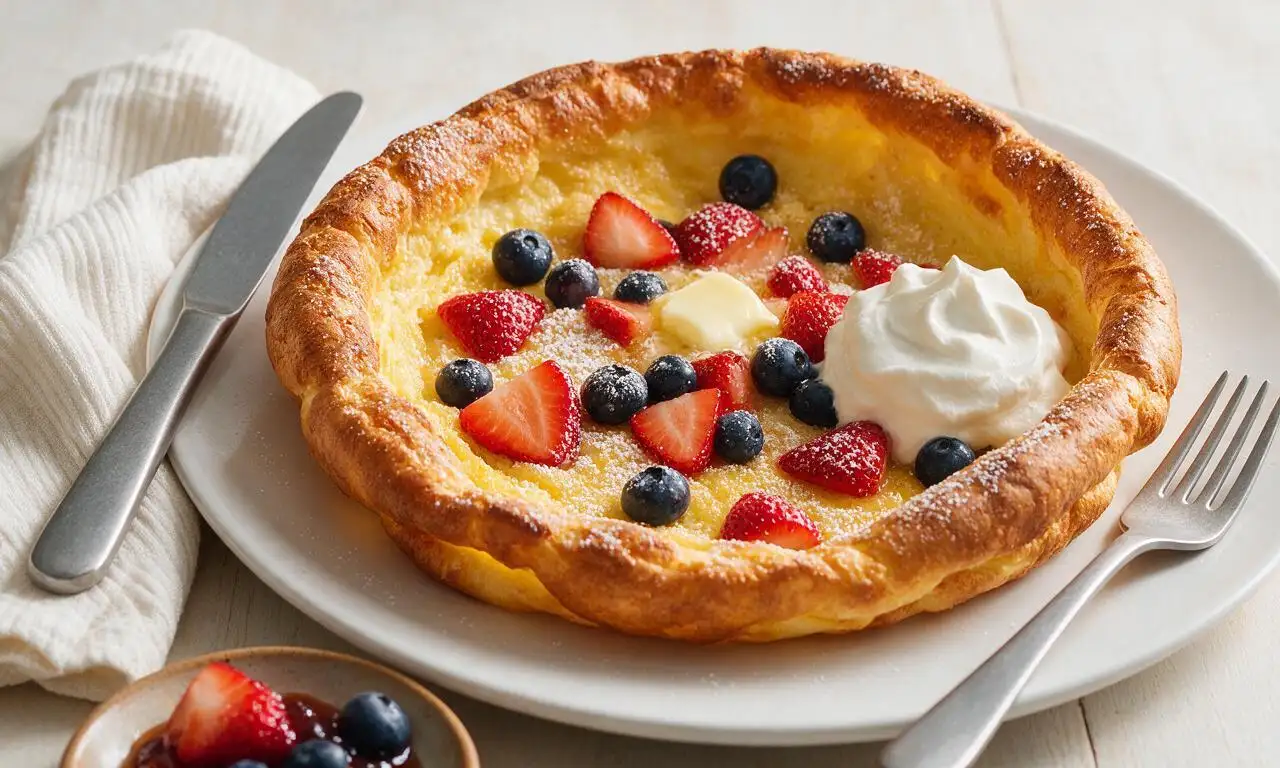
Iconic puffy baked pancake popularized in Seattle, with crisp golden edges and soft custardy center, served warm with classic sweet toppings.

⏱️ 35 minuteBreakfast ★ 4.6
Breakfast
🍜 United States

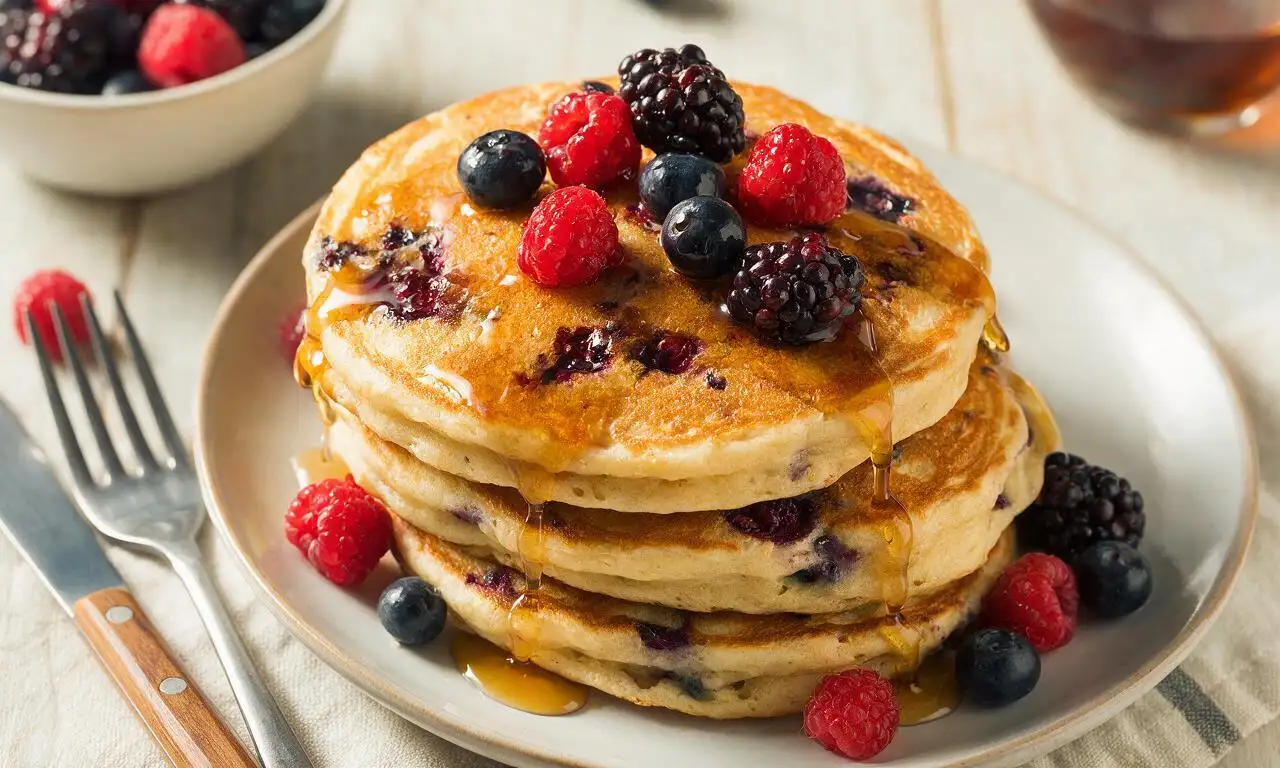
Fluffy, golden pancakes studded with juicy peak-summer mixed berries, drizzled with maple syrup for a bright, comforting, crowd-pleasing family breakfast.

⏱️ 25 minuteBreakfast ★ 4.7

Scuppernong Jelly:Frequently Asked Questions

1.What are scuppernong grapes, and can I use a substitute if I can’t find fresh ones? ▾
Scuppernongs are a golden, thick-skinned variety of muscadine grape native to the American South, prized for their honeyed, floral, slightly tart flavor. If fresh scuppernongs are out of season, frozen unsweetened scuppernong pulp works as a perfect 1:1 substitute, but skip other table grapes—they won’t deliver that classic signature taste.
2.Do I have to peel and seed scuppernongs before making the jelly? ▾
You don’t need to peel or seed scuppernongs ahead of cooking! Simmer washed, whole grapes for 10 to 15 minutes until they fully burst, then strain the cooked pulp through a fine-mesh jelly bag or double layer of cheesecloth to catch skins, seeds, and tough fibers for a perfectly clear, smooth final jelly.
3.Why is unsalted butter included in this jelly recipe? I thought jelly was just fruit and sugar! ▾
That small pat of unsalted butter cuts down on the surface foam that forms when you boil the fruit, sugar, and pectin mixture. Without it, you’ll end up with cloudy, bubbly residue floating on top of your set jelly that ruins its smooth texture and clear look; you only need 1/2 a teaspoon to get the job done.
4.Can I cut back on the sugar to make a lower-sugar version of this jelly? ▾
Regular powdered pectin relies on a specific ratio of sugar to acid to set properly, so cutting sugar arbitrarily will leave you with runny, un-set jelly. If you want a lower-sugar version, swap the regular pectin for a low- or no-sugar pectin formulated to set with less sweetener, and follow the ratio guidelines on that pectin’s packaging.
5.How do I tell when the jelly is done cooking and ready to pour into jars? ▾
The most reliable home test is the classic sheet test: Dip a cold metal spoon into the boiling jelly, hold it above the pot, and let the liquid drip. If the drops merge and hang off the spoon edge in a single thick sheet instead of dripping in thin, separate streams, it’s ready to pull off the heat and pour into prepared, sterilized jars.
6.Do I need to use a boiling water bath canner to store this jelly long-term? ▾
If you plan to store sealed jars on the pantry shelf for up to 18 months, yes, a 10-minute boiling water bath (adjusted for your altitude) is required to create a safe, airtight seal that prevents spoilage. If you’ll eat all the jelly within 3 weeks, you can skip canning and store sealed jars straight in the fridge.
7.My jelly turned out runny even after I followed the recipe—what went wrong? ▾
Runny jelly almost always traces back to one of three common issues: you didn’t cook the pectin mixture to a full, stir-proof rolling boil, you used overripe scuppernongs which have lower natural acid content, or you mismeasured pectin or sugar. You can reprocess runny jars with a touch of extra pectin and lemon juice to fix the set.
8.Can I make this jelly with dark purple muscadine grapes instead of golden scuppernongs? ▾
You absolutely can! Dark purple muscadines are a close relative of scuppernongs, with similarly thick skins and bold, fruity flavor, though they’ll produce a deep purple jelly instead of the classic golden shade. Just stick to the same ingredient ratios, and strain extra carefully to remove all tough seed and skin residue.
9.Why is fresh lemon juice required for this recipe? Scuppernongs are already pretty tart! ▾
Even tart scuppernongs vary in natural acid content depending on ripeness and growing conditions, and consistent acid levels are critical for pectin to form a firm, reliable gel. The lemon juice also brightens the jelly’s sweet, floral flavor, balancing the sugar so the final preserve doesn’t taste cloyingly one-note.
10.How long does homemade scuppernong jelly stay fresh once I open a jar? ▾
Once you break the seal on a jar, store it in the refrigerator where it will stay fresh and hold its firm set for 3 to 4 months. If you notice any off, fermented smells, visible mold, or a slimy texture on the jelly surface, throw it out immediately—these are clear signs of spoilage that mean it’s unsafe to eat.
11.Can I double this recipe to make a bigger batch of jelly at once? ▾
I don’t recommend doubling jelly recipes, especially if you’re new to home preserving. Larger batches take far longer to come to a full rolling boil, which can break down pectin and lead to weak, runny set, and it’s much harder to get consistent acid and sugar distribution. Stick to single batches for reliable, consistent results every time.
12.What kind of jars should I use for canning this scuppernong jelly? ▾
Use standard, food-safe glass canning jars with new, unused two-part lids (a flat lid with a rubber seal and a screw band) for best results. Don’t reuse old commercial jam jars for long-term canning—their glass is often thinner, and their lids won’t form a reliable, airtight seal even if they seem to twist on securely.
13.My finished jelly has little chewy bits in it—what caused that? ▾
Those chewy bits are almost always small pieces of grape skin or seed that slipped through your strainer, usually if you squeezed the jelly bag too hard while draining the cooked pulp. To avoid this, let pulp drain naturally without squeezing the bag, and line your strainer with a double layer of cheesecloth if your mesh has larger holes.
14.What are the best ways to serve scuppernong jelly besides spreading it on biscuits? ▾
This sweet, floral jelly is incredibly versatile beyond biscuit spreads! It pairs beautifully with sharp cheddar, creamy brie, and salty cured meats on a charcuterie board, makes a bright glaze for roasted pork or chicken, swirls perfectly into oatmeal or yogurt, and works great as a filling for thumbprint cookies or hand pies.
15.I see white foam on top of my jelly right after pouring it into jars—can I fix that? ▾
You absolutely can! If you spot foam right after pouring the hot jelly into jars, simply skim it off the top of each jar with a small, clean spoon before applying lids. The foam is totally harmless, but it creates cloudy, bubbly patches in the finished jelly that look unappealing, so skimming leaves you with perfectly clear, golden jelly once it sets.

Comments (8)

3 days ago

OMG I’ve been looking for a no-fuss scuppernong jelly recipe forever! My grandma used to make it every fall when we visited her in north Georgia and I’ve been chasing that flavor for years. This was SO easy, even for someone who burns toast half the time lmao. Set perfectly after 24 hours, tastes exactly like I remember. Brought a jar to our church potluck last Sunday and people were begging for the recipe!

2 days ago

Wait did you use wild scuppernongs or the ones from the grocery store? I have a patch growing in my backyard but I never know if they’re ripe enough to pick!

yesterday

So happy it brought back those sweet grandma memories, Jill! For wild scuppernongs, wait until they’re fully deep purple/gold (depending on your variety) and slip easily off the vine when you tug gently—they’ll have that signature sweet, musky aroma when they’re perfect for jelly!

1 week ago

Game changer! I foraged a ton of scuppernongs on a day hike outside Asheville last weekend and had zero clue what to do with them. Stumbled on this recipe, threw it together on a lazy Sunday, and wow. The jelly is so bright, not cloyingly sweet like the store-bought grape jelly I grew up on. Slathered it on homemade biscuits this morning and my roommate ate half the jar in one sitting lmao.

5 days ago

Love that you used foraged scuppernongs, Mike! Foraged fruit makes the absolute best jelly because it’s grown wild without extra sprays, just that pure, intense flavor. Pro tip: try a dollop of this on a charcuterie board with sharp cheddar next—total crowd pleaser!

2 days ago

My kids loved it!! I was worried making jelly would be a whole complicated production with special equipment, but this recipe was so straightforward I even let my 8 year old help stir (supervised, obviously). We used scuppernongs from the farmers market down the street and the jelly came out perfectly glossy and sweet. We’ve been putting it on peanut butter sandwiches all week for school lunches, total meal prep win.

2 weeks ago

Pretty solid base recipe, but I dialed back the sugar by 1/4 cup because my scuppernongs were extra ripe and super sweet on their own. Turned out great, set nice and firm without being rubbery. Only note: make sure you don’t skip straining the juice twice if you want that perfectly clear jelly, I learned that the hard way my first time canning years ago.

1 week ago

Wait how long do you process the jars for if you’re canning them for shelf storage? I’m super new to water bath canning and I’m terrified of messing up the seal!

5 days ago

Great call adjusting the sugar to match your fruit’s ripeness, Carl! For water bath canning, process half-pint jars for 10 minutes at a rolling boil (adjust time for altitude if you’re above 1,000 feet!) and let them sit undisturbed for 12 hours to check seals. You’ve got this!

yesterday

Y’all I never thought to put scuppernong jelly on smoked pork ribs but my cousin suggested it after she made this recipe and HOLY COW. The sweet, fruity jelly cut through the smoky, salty pork so perfectly, I’ll never use regular BBQ sauce again for ribs. Who knew jelly could be such a versatile pantry staple?!

2 hours ago

Wait that sounds insane, do you warm it up first before brushing it on the ribs or just slather it straight from the jar?

5 days ago

I grew up in NYC and had literally never heard of scuppernongs until I visited a friend’s farm in upstate New York last month. She gave me a big bag of them and told me to make jelly, so I found this recipe. It was so easy even with my tiny apartment kitchen! The jelly has this unique, almost floral grape flavor that’s way better than the Concord jelly I buy at the bodega. 10/10, will make again next year if I can get my hands on more scuppernongs.

30 minutes ago

Wait help! I followed the recipe exactly but my jelly didn’t set at all, it’s still totally runny after 48 hours in the fridge. Did I do something wrong? I used the pectin the recipe called for, measured the sugar exactly, let it boil for the right amount of time… I’m so sad, I had picked so many scuppernongs from my aunt’s yard!

5 minutes ago

Oh no, sorry to hear your jelly didn’t set, Jess! This happens sometimes if the pectin is a little old (it loses potency after the best-by date!) or if the fruit was extra, extra juicy. No need to toss it! You can reprocess it by pouring it back into a pot, adding a fresh batch of pectin, bringing it back to a rolling boil for 1 minute, then rejarring it. It’ll set up perfectly, I promise!

2 days ago

Made this for our family Sunday dinner last weekend, served it alongside warm buttermilk biscuits and country ham, and everyone went back for seconds. SO good! I even sent a jar home with my mom and she called me the next day to say she ate half of it straight from the jar with a spoon lmao. So easy to make, I’ll definitely be adding this to our regular fall recipe rotation.

yesterday

Wait this sounds like the perfect Sunday spread! Did you add any lemon juice to the jelly like some recipes call for, or just follow the recipe as written?

30 minutes ago

Nothing beats a classic Sunday supper spread with fresh biscuits and ham, Sara! So glad your whole family loved it—this jelly is made for those kinds of cozy, memorable meals.