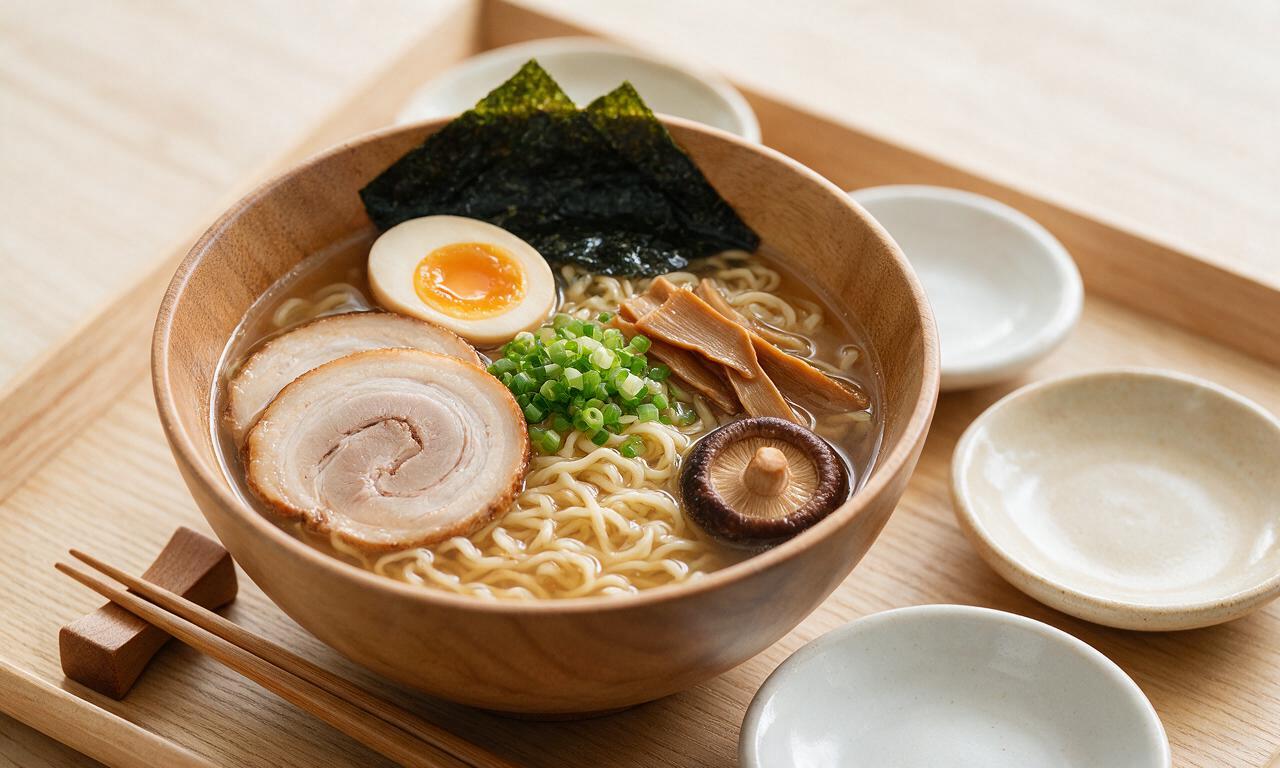
Shio Ramen

Shio Ramen
⏱️ cook time 45 minutes
🍽️ servings 4
⚡ Difficulty medium

intro

Light, clear salt-seasoned ramen with springy noodles, umami broth, and classic toppings—a bright, comforting one-bowl Japanese noodle meal.

Ingredients

Fresh ramen noodles 800g
Low-sodium chicken stock 1800ml (7.5 cups)
Sliced braised pork chashu 200g
Fine sea salt 2 tbsp
Mirin 1 tbsp
Cooking sake 1 tbsp
Fresh ginger (grated) 2 tsp
Fresh garlic (grated) 1 tsp
Kombu dashi powder 1 tbsp
Toasted sesame oil 1 tsp
Large eggs 4 count
Fermented bamboo shoots (menma) 120g
Green onions (negi, thinly sliced) 4 stalks
Roasted nori sheets (cut into 5cm strips) 4 full sheets
Toasted white sesame seeds 1 tbsp

Steps

1

Prepare the shio tare

In a small saucepan over medium-low heat, combine 2 tbsp fine sea salt, 1 tbsp mirin, 1 tbsp cooking sake, 2 tsp grated ginger, 1 tsp grated garlic, 1 tbsp kombu dashi powder, and 60ml (1/4 cup) of the chicken stock. Stir continuously for 3 minutes until salt and dashi fully dissolve; do not bring the mixture to a rolling boil. Remove from heat and set aside.
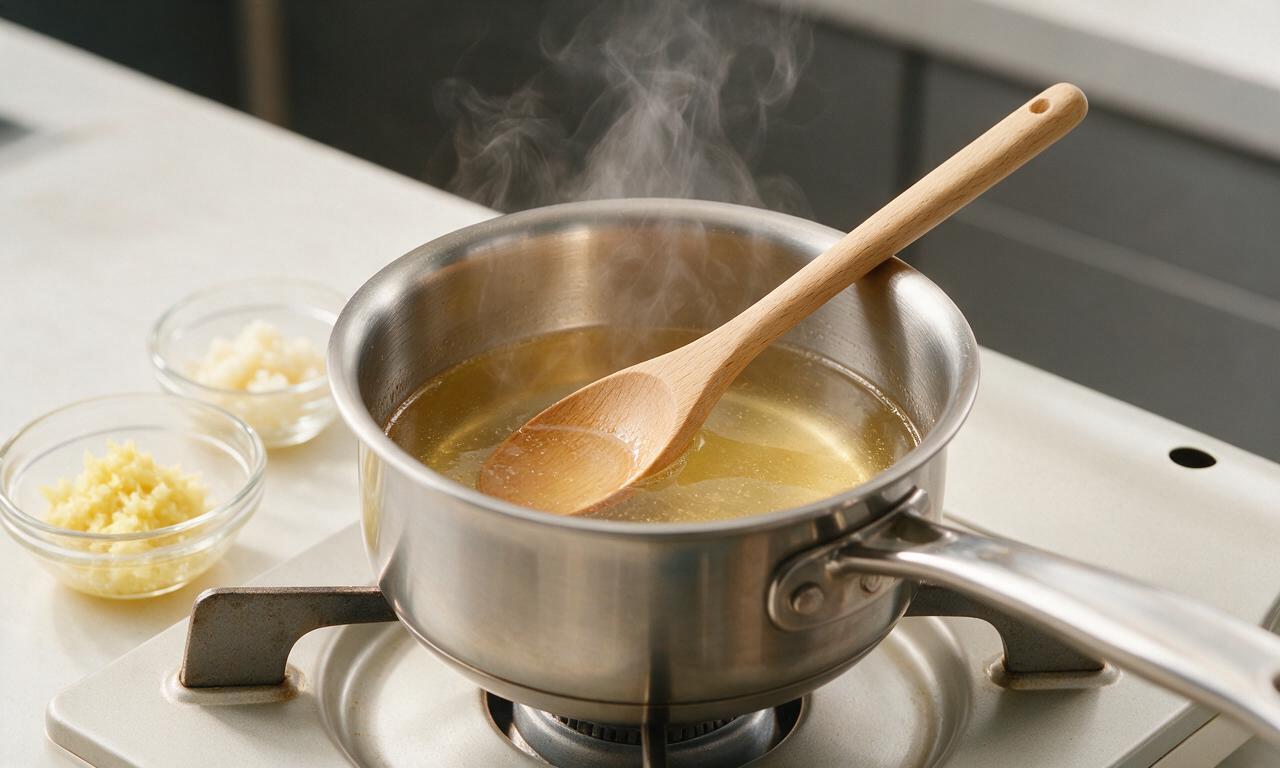
Step 1
step1:Prepare the shio tare
2

Simmer the soup broth

Pour the remaining 1740ml chicken stock into a large stockpot over medium heat. Bring to a gentle simmer (small bubbles breaking at the surface, ~90°C/194°F), then stir in the prepared shio tare and 1 tsp toasted sesame oil. Reduce heat to low, cover, and hold at a steady simmer for 10 minutes to meld flavors; do not boil rapidly, as this will cloud the broth and make the salt taste harsh.
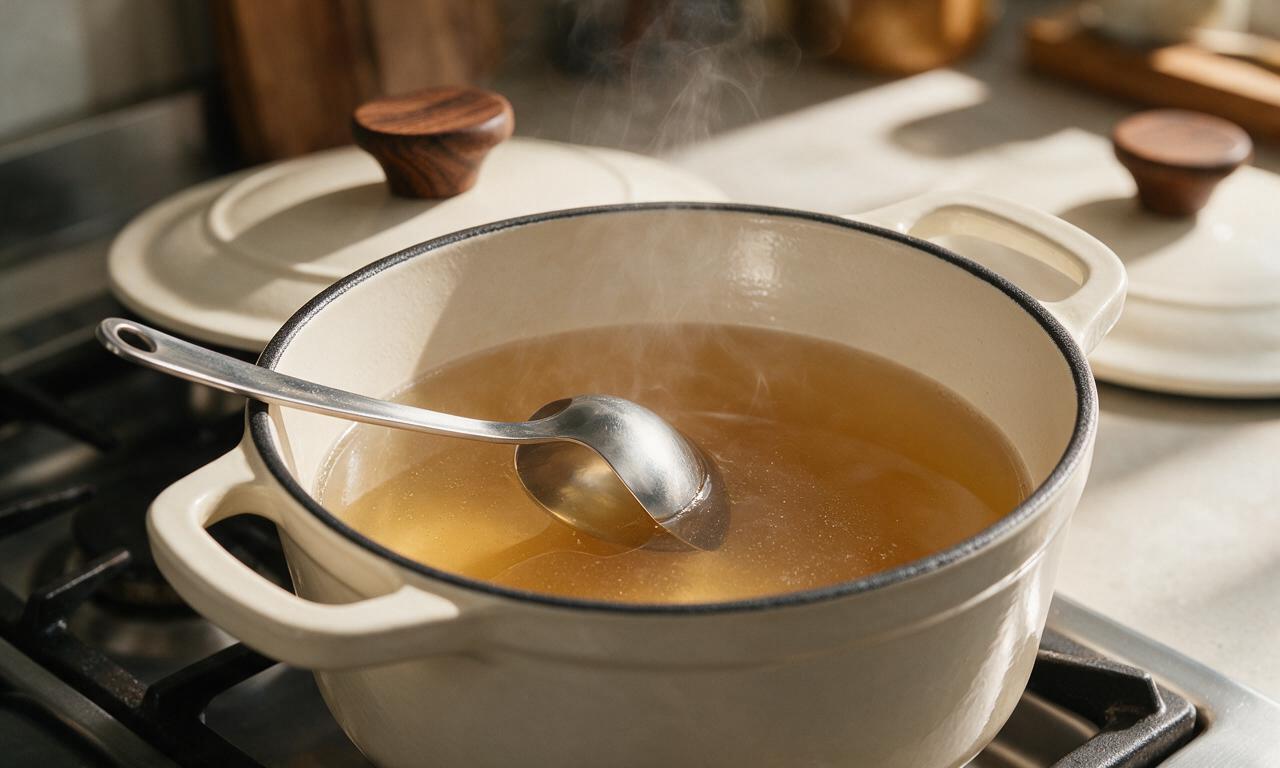
Step 2
step2:Simmer the soup broth
3

Cook soft-boiled eggs

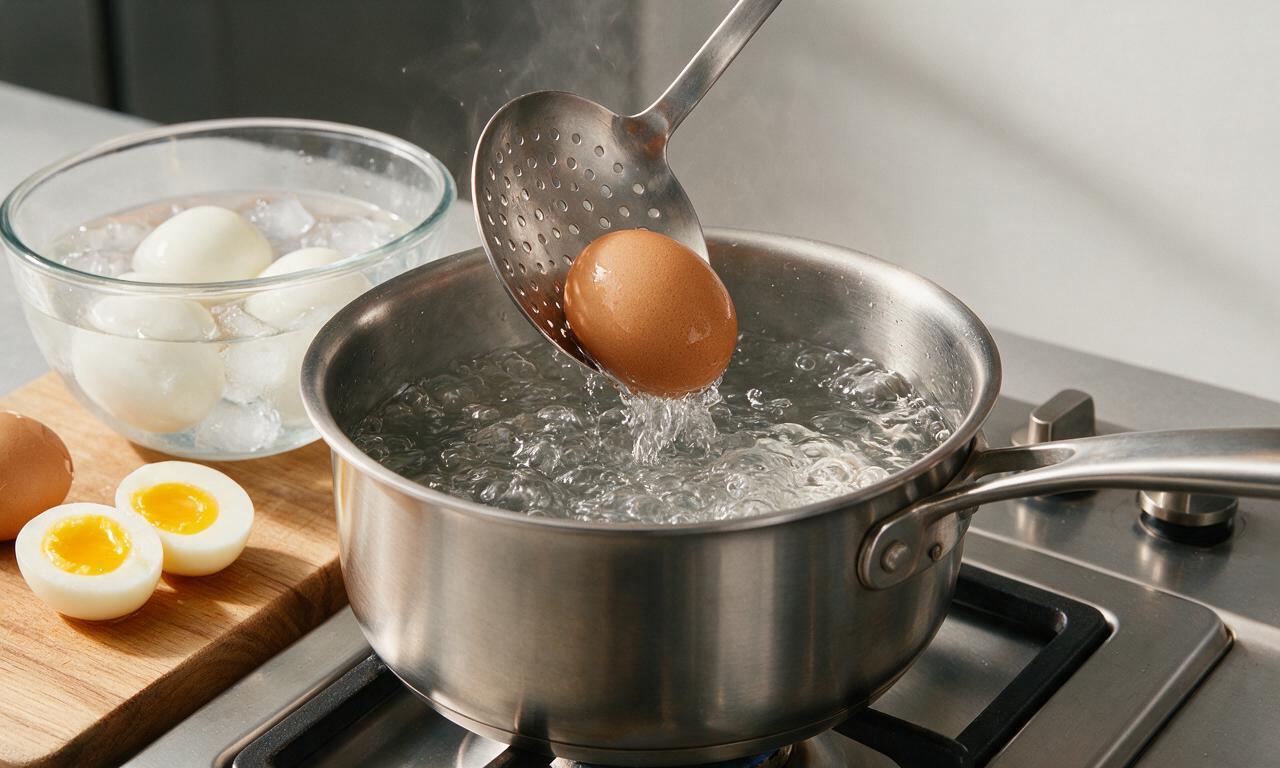
Bring a small pot of water to a rolling boil over high heat. Gently lower 4 room-temperature large eggs into the water with a slotted spoon, set a timer for 6 minutes 30 seconds. When the timer elapses, immediately transfer eggs to an ice water bath for 5 minutes to stop cooking, then peel and slice each in half lengthwise to reveal runny, golden yolks.
Step 3
step3:Cook soft-boiled eggs
4

Boil the ramen noodles

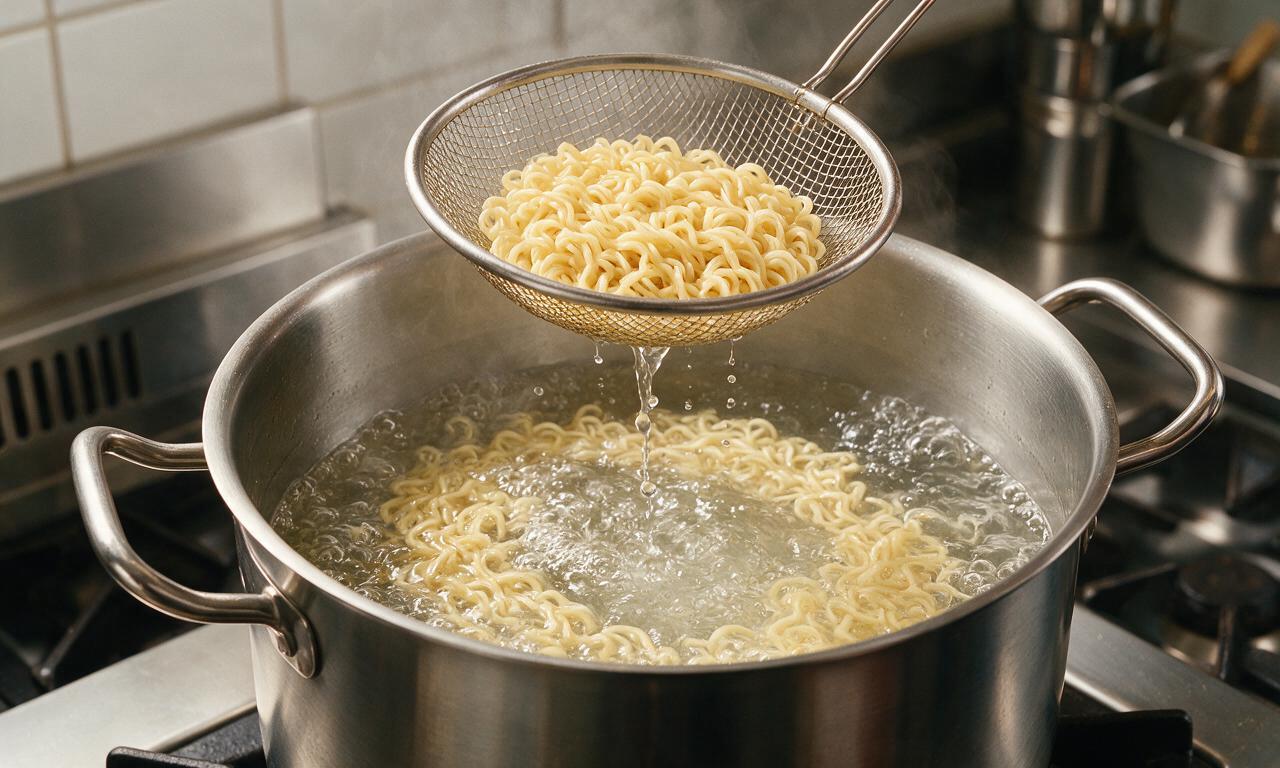
Bring a separate large pot of unsalted water to a rolling boil over high heat. Add 800g fresh ramen noodles, stirring immediately with chopsticks to prevent sticking, and cook for exactly 2 minutes (noodles should be springy with a slight firm bite at the center, no mushy texture). Drain noodles thoroughly, shaking off excess water, and divide evenly between 4 deep 1L ramen bowls.
Step 4
step4:Boil the ramen noodles
5

Warm the chashu pork

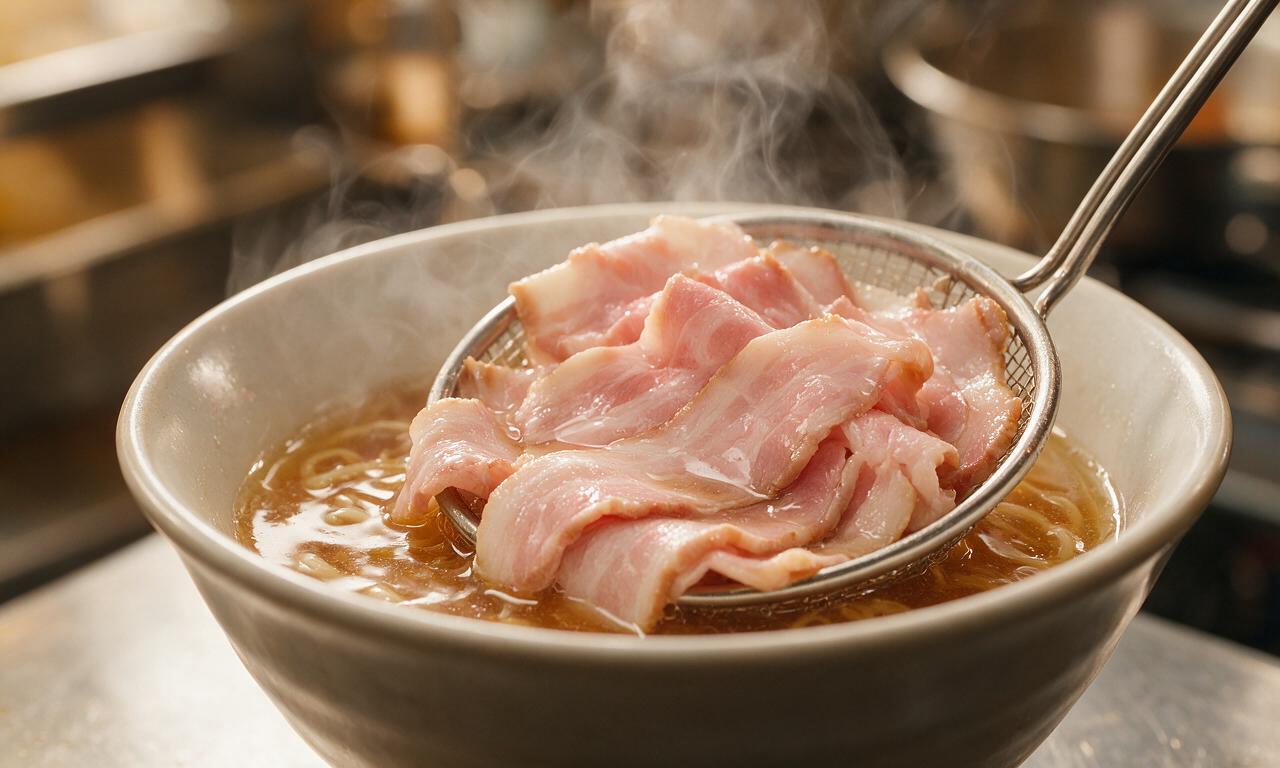
Keep the shio broth at a low simmer, then add 200g sliced braised pork chashu to the broth and warm for 1 minute, until the slices are heated through and tender. Do not overcook the chashu, as this will make it tough and dry.
Step 5
step5:Warm the chashu pork
6

Assemble the ramen bowls

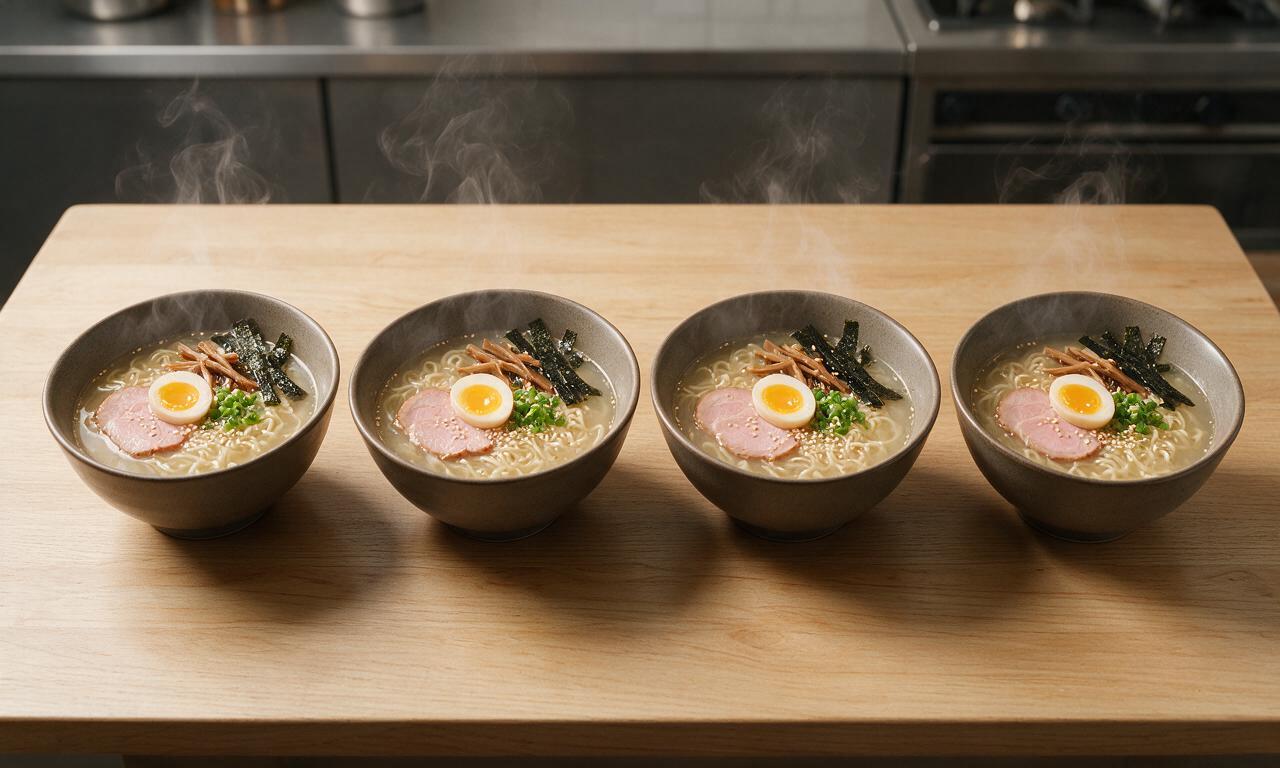
Ladle 435ml (1 3/4 cups) of hot shio broth over the noodles in each bowl. Arrange toppings evenly per serving: 50g warmed chashu slices, 30g menma, 2 soft-boiled egg halves, a 1 tbsp sprinkle of thinly sliced green onion, 2 nori strips leaning against the inner bowl edge, and a 3/4 tsp sprinkle of toasted white sesame seeds. Serve immediately while hot.
Step 6
step6:Assemble the ramen bowls

Tips

1.Do not boil the shio broth rapidly after adding the salt tare, as high heat will create a harsh, bitter salt flavor and cloud the light, clear broth that defines classic shio ramen.
2.Fresh ramen noodles cook far faster than dried wheat noodles—stick to the exact 2-minute cook time to avoid mushy noodles, and never add salt to the noodle water, as the broth is already properly seasoned.
3.For the easiest soft-boiled egg peeling, use eggs that are 3-5 days old rather than freshly laid eggs, and shock them fully in ice water immediately after boiling to separate the shell membrane from the egg white.

✨ You May Also Like

Main Course
🍜 United Kingdom

A showstopping classic of tender seared beef, savory mushroom duxelles, and crisp prosciutto wrapped in flaky golden puff pastry, baked to juicy perfection.

⏱️ 2 hours 1Main Course ★ 4.7
Main Course
🍜 India

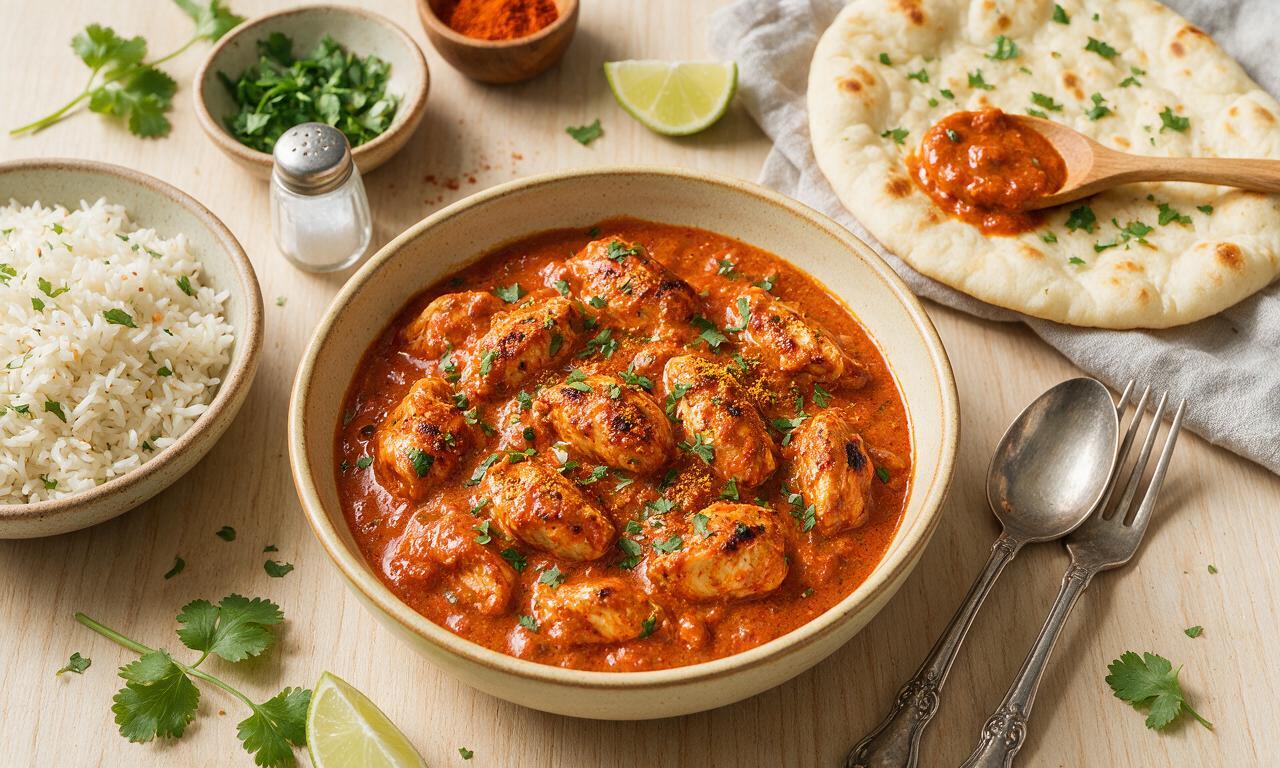
Tender charred marinated chicken simmered in a rich, spiced creamy tomato sauce, this iconic Anglo-Indian curry pairs perfectly with basmati rice or warm naan.

⏱️ 50 minuteMain Course ★ 4.8
Main Course
🍜 Thailand

Classic tangy, sweet, and savory Thai stir-fried rice noodles with shrimp, tofu, and crunchy garnishes, balancing all five core Thai flavor profiles.

⏱️ 30 minuteMain Course ★ 4.6
Main Course
🍜 United Kingdom

Crispy golden beer-battered cod and fluffy double-fried chips, served with tangy tartar sauce and malt vinegar: the timeless, beloved British pub comfort classic.

⏱️ 45 minuteMain Course ★ 4.9
Main Course
🍜 Mexico

Smoky, chile-marinated pork tacos with caramelized pineapple, fresh cilantro, and lime: a beloved classic Mexican street food perfect for casual summer gatherings.

⏱️ 1 hour 45Main Course ★ 4.7
Main Course
🍜 United States

Crunchy Fritos corn chips layered with savory beef chili and melted cheddar, topped with cool, zesty fixings for a beloved, cozy Tex-Mex comfort food.

⏱️ 35 minuteMain Course ★ 4.9

Shio Ramen:Frequently Asked Questions

1.What makes shio ramen different from other common ramen styles like shoyu or miso?
Shio is the oldest traditional ramen style, distinguished by its clear, light broth seasoned primarily with fine sea salt, rather than soy sauce (shoyu) or fermented soybean paste (miso). It has a bright, clean umami profile that doesn’t weigh you down, letting the subtle notes of chicken stock and fresh noodle texture take center stage instead of bold, heavy fermented seasonings.
2.Can I use dried ramen noodles instead of fresh ones for this recipe?
You can absolutely substitute dried ramen noodles if fresh options are hard to find, just adjust your cooking time accordingly. Dried noodles usually take 2-3 minutes longer to cook than fresh, and you should still aim for that signature springy, al dente bite. Skip any seasoning packets that come with dried instant noodles, as they’ll clash with the light, clean shio broth flavor.
3.Why does this recipe specify low-sodium chicken stock instead of regular?
Low-sodium chicken stock gives you full control over the final salt level of your shio broth, which is critical because fine sea salt is the core seasoning for this style. Regular stock often has added salt that can push the final bowl over into overly salty territory once you add mirin, chashu, and brined toppings, leaving you no room to adjust flavor to your taste.
4.How do I keep my shio broth clear instead of turning cloudy?
For that signature crystal-clear shio broth, keep your stock at a gentle, bare simmer rather than a rolling boil once you combine the chicken stock and seasonings. A hard boil agitates fat and protein particles into the liquid, making it murky. Skim any small bits of foam or fat that rise to the surface as it warms, and avoid stirring too vigorously while heating.
5.What role does mirin play in the broth, and what’s a good substitute if I don’t have it?
Mirin adds a subtle, rounded sweet depth that balances the sharpness of sea salt and boosts the broth’s overall umami, without making it taste sugary. If you don’t have mirin, mix 1 teaspoon of granulated sugar with 2 teaspoons of dry sherry or unseasoned rice vinegar for every tablespoon of mirin called for, to mimic that mild sweet-savory balance.
6.How long should I cook fresh ramen noodles for the best texture?
Fresh ramen noodles cook extremely quickly, usually 1.5 to 2.5 minutes total in rapidly boiling water—no need to salt the water, since your broth will have all the seasoning you need. Give them a gentle stir right after dropping them in to prevent sticking, and pull them when they have a springy, firm bite; they’ll keep cooking briefly once added to hot broth.
7.Should I rinse my ramen noodles after cooking them?
Skip rinsing your fresh ramen noodles after cooking! Rinsing washes off the thin starchy coating that helps the light shio broth cling to every strand, which makes for a more flavorful bite. Just drain them well immediately after cooking, and portion them straight into warm serving bowls to keep them from sticking together as you prep toppings.
8.How thick should I slice my braised chashu pork for topping?
Slice your braised chashu pork into ¼-inch thick slices for the ideal shio ramen topping—thick enough to have that tender, melt-in-your-mouth braised texture, but thin enough that it warms through quickly when laid on top of hot broth. For extra depth, you can quickly sear slices lightly on one side before adding them for a subtle caramelized edge.
9.Can I make the shio broth ahead of time for meal prep?
Absolutely! Shio broth stores beautifully for meal prep. Let it cool completely after seasoning, then store it in an airtight container in the fridge for up to 4 days, or freeze for up to 3 months. Wait to do a final salt adjustment until you reheat it, since flavors concentrate as it chills, and you don’t want an over-salted bowl.
10.What classic toppings pair best with this light shio ramen besides chashu?
Stick to light, bright toppings that complement the clean broth rather than overpowering it: soft-boiled marinated ramen eggs, thinly sliced green onion, blanched bamboo shoots, crisp bean sprouts, and toasted nori strips are all classic choices. Skip heavy, spicy toppings that will mask the broth’s delicate, salty umami flavor.
11.Why does my shio broth taste flat even after I add salt?
If your shio broth tastes flat, it’s usually missing the small umami balance from mirin, or your salt isn’t evenly dissolved. Start with a tiny extra splash of mirin to round out the flavor, then add pinches of fine sea salt a little at a time, tasting after each addition. Always taste when the broth is at serving temperature, since cold broth tastes less salty than hot.
12.Is it worth warming my ramen bowls before assembling the dish?
Warming your serving bowls is a small step that makes a huge difference in your final bowl! Cold bowls will drop the broth’s temperature instantly, making your noodles overcook faster and dulling the bright, clean flavor of the shio base. Just swish a little hot water in each bowl for 30 seconds and pour it out right before adding noodles and broth.
13.Can I use a different protein if I don’t have braised pork chashu?
If you don’t have braised pork chashu, opt for mild, tender proteins that won’t overpower the light broth: thinly sliced seared chicken breast, poached shrimp, or pan-seared firm tofu all work beautifully. Just avoid heavily seasoned or crispy proteins like fried chicken or spicy sausage, which will throw off the broth’s delicate, balanced flavor profile.
14.How do I keep my ramen noodles from getting soggy in the broth?
To keep fresh ramen noodles springy instead of soggy, make sure your broth is at a rolling simmer when you pour it over just-drained noodles, and serve immediately. Don’t let noodles sit in hot broth for more than 2-3 minutes before eating. If packing leftovers, store noodles, broth, and toppings separately, and combine only when ready to reheat and eat.

Comments (10)

2 days ago

OMG this shio ramen was a total game changer for our weekly family dinner! I was so intimidated to make homemade ramen at first, but the steps were way more straightforward than I thought. The clear, salty broth is SO good, even my super picky 7 year old asked for seconds. I topped ours with soft boiled eggs, corn, and sliced chashu I had leftover from last weekend. 10/10 will make again!

yesterday

So glad your whole family loved it! Leftover chashu is such a perfect topping hack, thanks for sharing that tip with other cooks 😊

5 days ago

Tried this last night for a potluck with my roommates, everyone went crazy for it! Only note: I found the broth a little lighter on salt than I prefer for shio, so I added a tiny extra pinch of sea salt and a splash of mirin to bump up the flavor. Cook time took me closer to an hour total because I prepped all the toppings from scratch, but totally worth it.

3 days ago

Same! I added a little extra white pepper too and it hit exactly the spot I was craving, thanks for the salt tip I almost thought I messed up the broth!

2 days ago

Great call adjusting the salt to taste! Shio ramen’s salt level can vary a lot based on the broth base you use, so tasting as you go is always the best move. So glad you and your roommates enjoyed it!

1 week ago

Meal prepped this on Sunday for work lunches all week and it held up way better than I expected! I stored the broth and noodles separately so the noodles didn’t get mushy, and just added fresh toppings each day when I heated it up. Saved me so much money instead of ordering ramen takeout every week. Will definitely be adding this to my regular rotation.

30 minutes ago

Super excited to try this recipe! Quick question though: is there a good substitute for kombu if I can’t find it at my local grocery store? The closest Asian market is 40 minutes from my house and I don’t have time to drive there this weekend, and I don’t want to skip it and make the broth taste flat.

5 minutes ago

Great question! If you can’t find kombu, you can use a small strip of dried wakame or add a 1/4 teaspoon of kelp powder (often sold in the spice aisle of regular grocery stores) to get that same deep umami base. Just be sure not to overdo it, you can always add a little more as you taste!

yesterday

Made this for my partner’s birthday since shio is their favorite ramen, and they said it was better than the ramen shop we go to downtown! I made the hand-pulled noodle recipe linked on your site to go with it, and the combo was unreal. Only oopsie: I overcooked my soft boiled eggs by 2 minutes so the yolks weren’t runny, but that was totally my bad, not the recipe’s fault.

2 hours ago

Pro tip for the soft boiled eggs: ice bath them immediately after boiling for exactly 6 minutes, the yolks come out perfectly jammy every time! I made this last week and messed up the eggs my first try too lol.

30 minutes ago

That’s such a sweet birthday meal, I’m sure your partner loved it! And hand-pulled noodles with this broth? *Chef’s kiss* Thanks for the great egg tip too, that ice bath step is non-negotiable for perfect jammy yolks!

2 weeks ago

I’ve tried three different homemade shio ramen recipes this month and this one is by far the most authentic tasting! The balance of salt, umami, and that little hint of ginger in the broth is exactly what I’ve been trying to replicate from my favorite ramen spot when I lived in Tokyo. So happy I found this!

1 week ago

Right?! I was skeptical I could get that authentic light shio broth at home too, this recipe nails it. I add a tiny pat of butter on top when serving like they do at my old neighborhood shop, it’s chef’s kiss.

3 days ago

Super doable even in my tiny dorm kitchen! I used a cheap electric hot pot to make the broth, pre-cooked chashu from the Asian market near campus, and instant noodles I had in my pantry when I ran out of fresh ones, and it still slapped. Way better than dining hall ramen for sure, and way cheaper than takeout. My roommate already asked for the link.

2 hours ago

Wait, the cook time says 45 minutes, is that including prep for toppings? I’m making this for a dinner party on Saturday and need to time it right so everything’s hot when guests show up. I’m planning to do bamboo shoots, narutomaki, green onions, soft eggs, and nori as toppings.

30 minutes ago

I made this for a dinner party last month! The 45 minutes is mostly active cook time for the broth, I prepped all my toppings the night before so day of I just had to make the broth and cook the noodles, it made timing so much easier.

5 minutes ago

Great question! The 45 minute cook time is for the broth and noodle cook time, not including topping prep. Prepping toppings ahead like the soft boiled eggs and sliced veggies is a great hack to cut down on day-of stress, hope your dinner party goes great!

5 minutes ago

I was worried this would be too fancy for my kids who only eat plain buttered noodles half the time, but they devoured it! I let them pick their own toppings (they went ham on the corn and extra sesame seeds, skipped the green onions obviously) and it made them way more willing to try something new. Next time I’m going to add a little spicy chili oil on the side for me and my wife.

just now

Really solid base recipe! I loved the broth, but I wish the recipe had more specific notes on how much salt to add if you’re using homemade chicken stock vs store bought. I used low sodium store bought stock and ended up undersalting at first, but once I adjusted it turned out great. Would make again for sure.

just now

Thanks so much for the honest feedback! That’s a great point about salt varying between homemade and store bought stock— I’ll add a note to the recipe reminding folks to taste and adjust salt levels gradually if using low-sodium stock. Glad it turned out great once you adjusted it!