1.Can I use frozen shrimp instead of fresh for this recipe?
▾
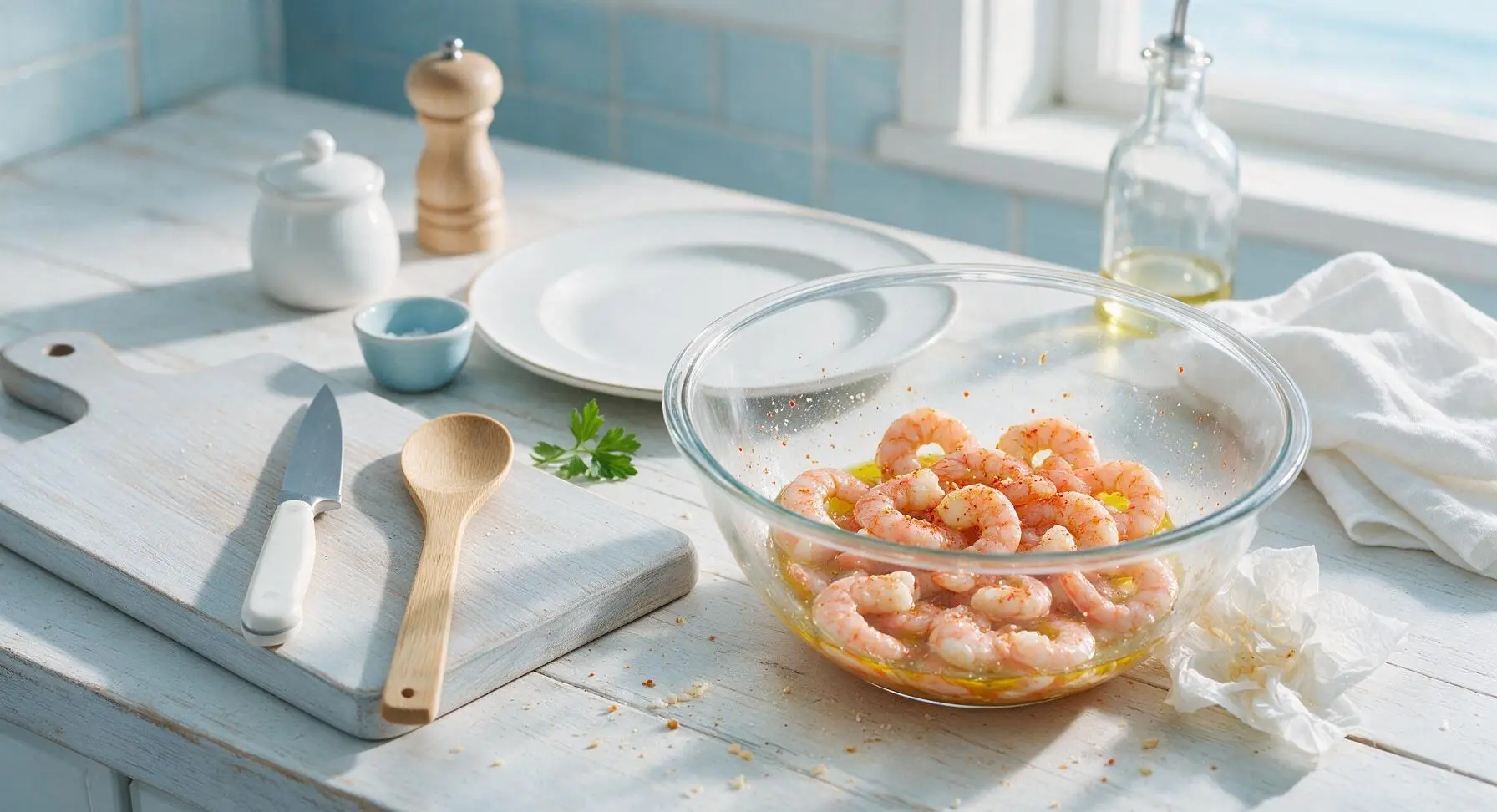
Yes, absolutely! Thaw frozen shrimp completely first, then pat very dry with paper towels before tossing in the lemon-garlic marinade—excess moisture will make shrimp steam instead of roast and turn soggy. Opt for 16/20 count large frozen shrimp for the same juicy, substantial bite as fresh, and keep tails on for easy handling if you prefer.
2.Do I need to parboil the baby Yukon gold potatoes before roasting?
▾
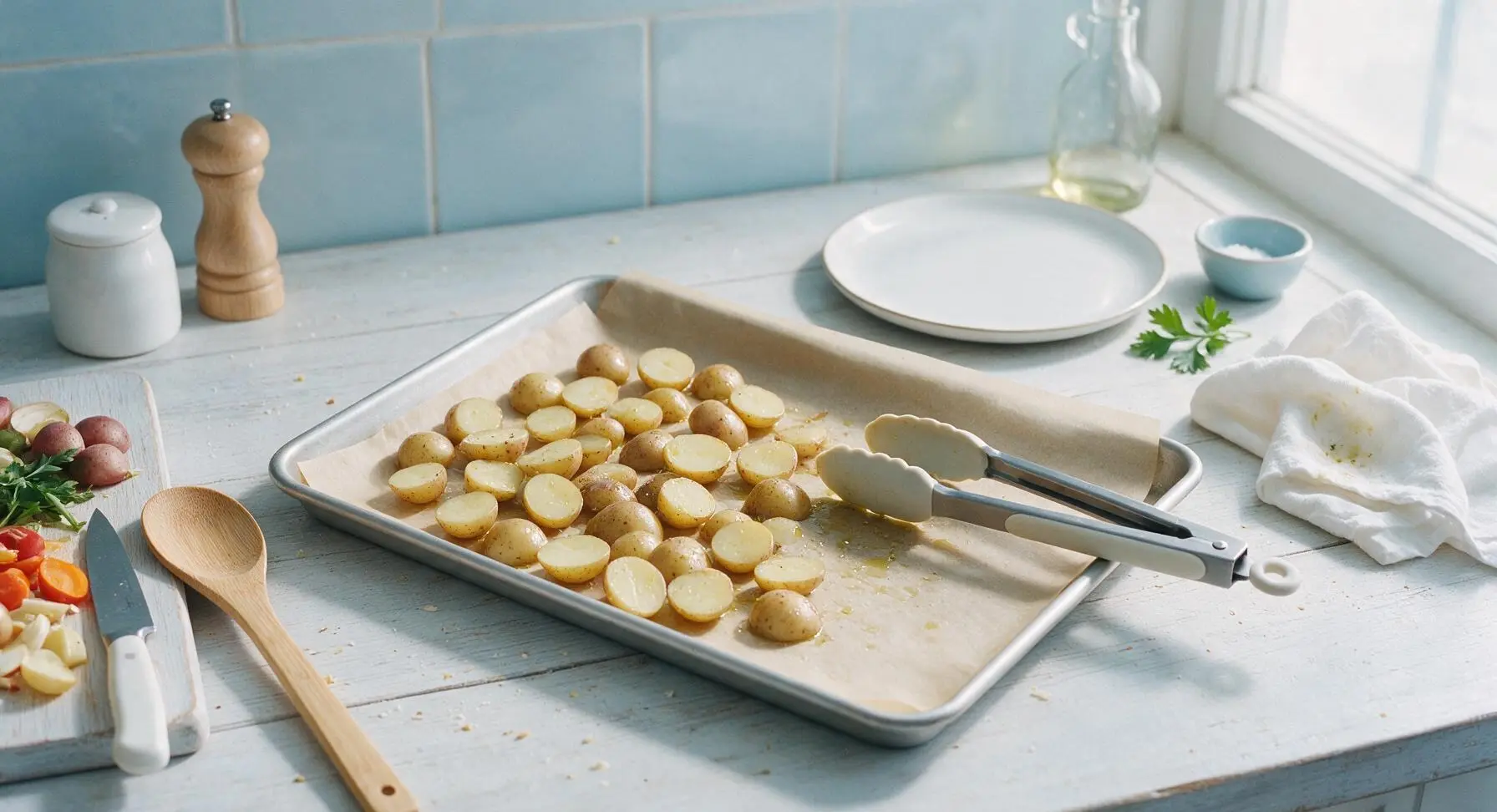
Parboiling is highly recommended for consistent, even texture. Cut potatoes into 1-inch chunks, boil in salted water for 7-8 minutes until just fork-tender, then drain and toss with oil before adding to the sheet pan. This cuts down roast time so potatoes finish at the same rate as faster-cooking shrimp and veggies, with no raw, hard centers.
3.Can I swap the asparagus for a different vegetable if I don’t have it on hand?
▾
Definitely! Great swaps include trimmed green beans, 1-inch broccoli florets, chopped zucchini, or sugar snap peas. Just adjust roast time as needed: denser veggies like broccoli go in with the potatoes, while softer, quick-cooking picks like zucchini get added during the last 10 minutes to avoid turning mushy. Toss with a pinch of extra salt when adding to keep flavor balanced.
4.How do I keep the shrimp from getting rubbery and overcooked?
▾
The key is temperature and timing! Roast at 425°F, and only add shrimp to the sheet pan during the final 8-10 minutes of cook time. Shrimp are done the second they turn opaque pink and curl into a loose “C” shape—tight, coiled “O” shapes mean they’re overcooked. Patting shrimp dry before seasoning also helps them sear slightly instead of steaming for better texture.
5.What size sheet pan should I use for this recipe?
▾
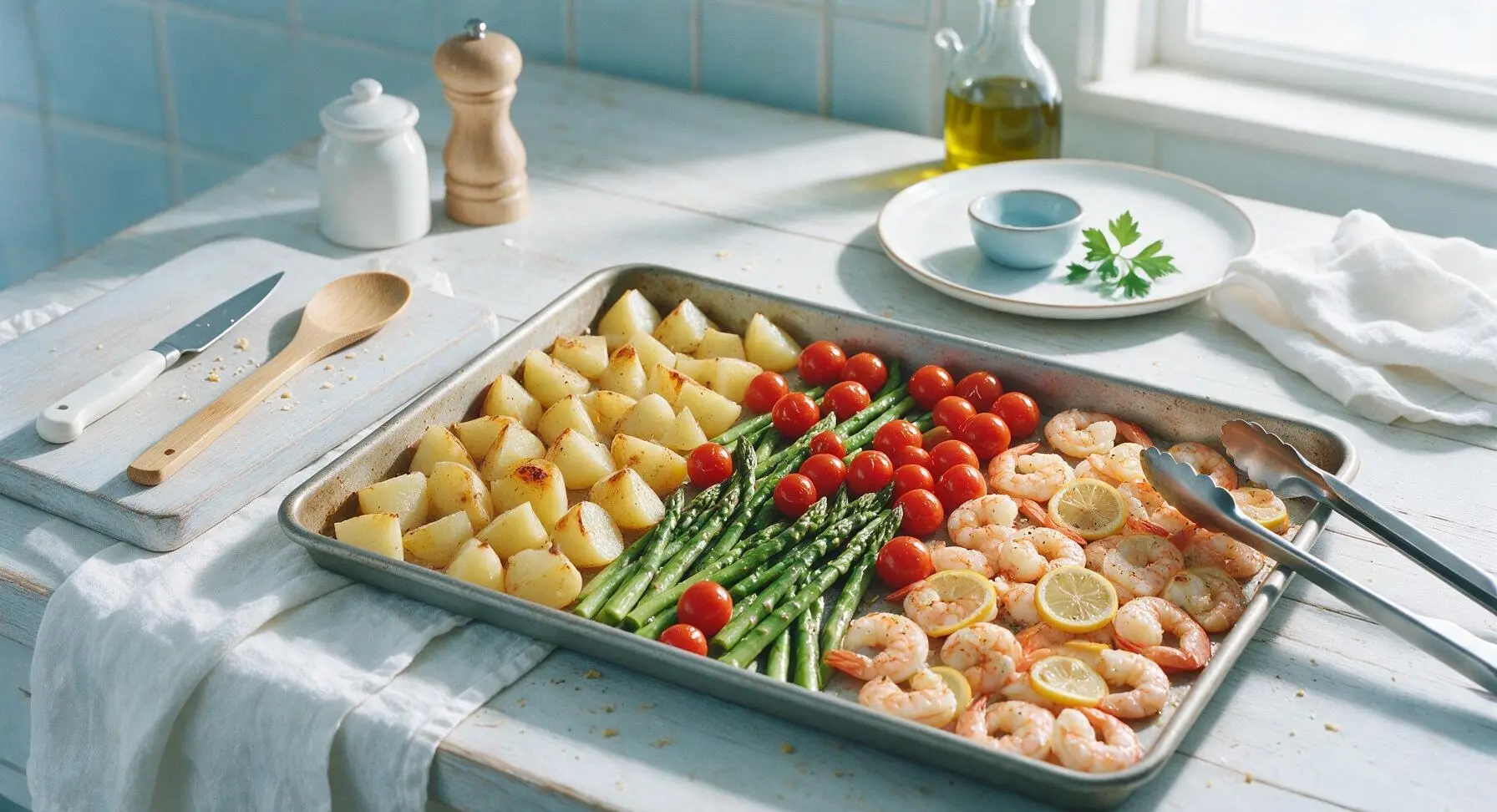
Use a standard 18x13-inch half-sheet pan for best results. It gives every ingredient enough space to roast instead of steam—if ingredients are crowded too close together, they’ll release excess moisture and turn soggy instead of developing delicious, slightly caramelized roasted edges. If you only have smaller pans, split the recipe across two pans to keep ingredients in a single, even layer.
6.Can I prep this meal ahead of time for busy weeknights?
▾
You can do most prep 1-2 days in advance! Chop potatoes, trim asparagus, mince garlic, and mix the lemon-garlic marinade, storing each component separately in airtight fridge containers. Wait to toss shrimp in marinade until 15 minutes before cooking; don’t marinate shrimp longer than 30 minutes total, as lemon acid will break down delicate shrimp meat and make it mushy.
7.Why are my roasted cherry tomatoes bursting all over the pan?
▾
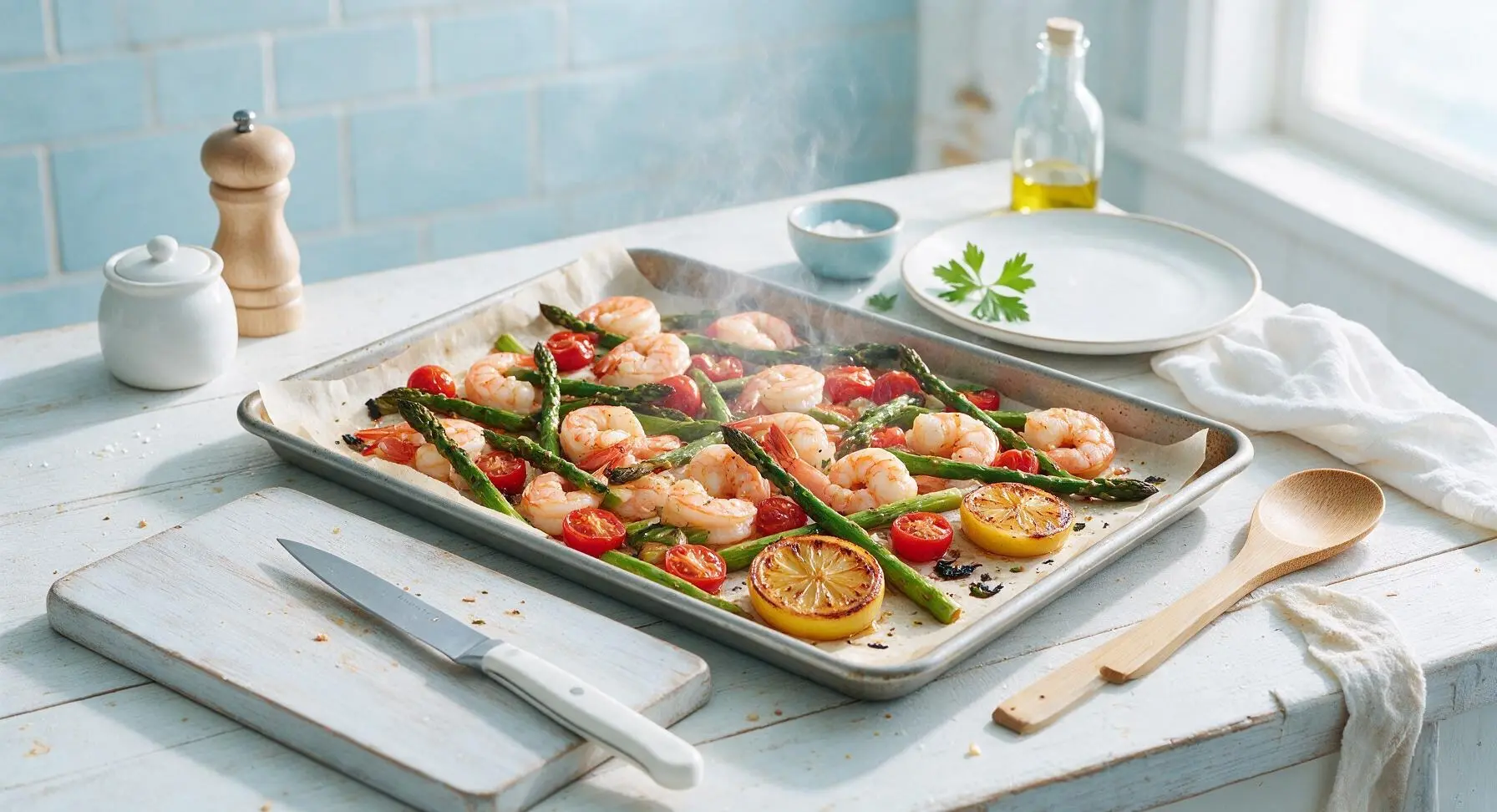
A little bursting is totally normal and actually adds delicious, sweet tomato juice to the pan, but if you want to minimize mess, pierce each cherry tomato once with a sharp knife before adding it to the pan. Add tomatoes during the last 12 minutes of cook time too, so they soften and release just a little juice instead of cooking down into a mushy, spread-out mess.
8.Should I line my sheet pan with foil or parchment paper for easier cleanup?
▾
Parchment paper is the best pick here! It prevents sticking, cuts cleanup down to almost zero, and won’t react with the lemon juice in the marinade the way reactive foil can sometimes leave a faint metallic taste. If you use foil, give it a light coat of nonstick spray first, and avoid letting acidic marinade sit on bare foil for long before roasting.
9.Can I add other proteins to this sheet pan dinner to make it more filling?
▾
Absolutely! If you want to bulk up the meal, add 1-inch chunks of boneless, skinless chicken thigh when you add the parboiled potatoes to the oven—they cook in 20-22 minutes, perfectly lining up with total roast time. For a smoky twist, add sliced andouille sausage when you add the asparagus, so it crisps up without overcooking. Confirm chicken hits 165°F for food safety.
10.What’s the best way to make the lemon-garlic flavor more pronounced?
▾
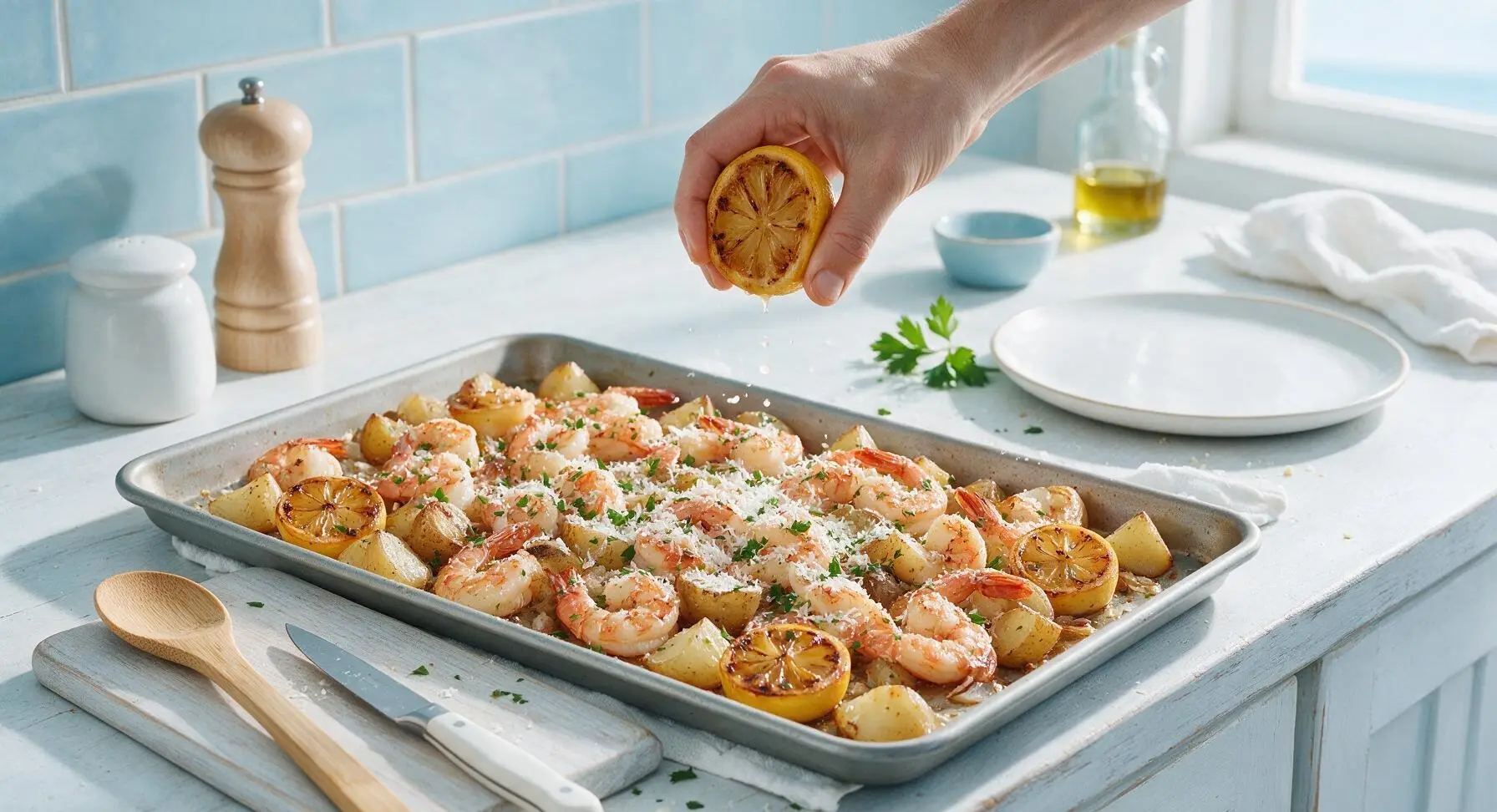
Boost flavor in three easy ways: First, sauté half the minced garlic in a little olive oil for 30 seconds before tossing it into the marinade to mellow out harsh raw garlic bite. Second, add a teaspoon of lemon zest to the marinade, not just juice, for bright, concentrated citrus flavor. Third, finish the pan with a squeeze of fresh lemon right as it comes out of the oven.
11.My asparagus always comes out either mushy or undercooked—what am I doing wrong?
▾
First, make sure you’re using thin, pencil-thin asparagus spears for this recipe; thick, woody asparagus takes far longer to cook and won’t hit that crisp-tender sweet spot. Trim the tough woody ends off, then add spears to the pan during the last 12 minutes of roast time. If your asparagus is extra thick, slice it in half lengthwise first so it cooks evenly.
12.Can I make this recipe without potatoes for a lower-carb version?
▾
Of course! Skip the potatoes entirely and swap in extra low-carb veggies like cauliflower florets, halved Brussels sprouts, or bell pepper strips. Roast the denser low-carb veggies for 15 minutes first at 425°F, then add asparagus, tomatoes, and shrimp for the final 8-10 minutes. Drizzle with an extra teaspoon of olive oil to help soak up that bright lemon-garlic flavor.
13.What oven temperature works best for this sheet pan dinner?
▾
425°F (220°C) is the sweet spot! It’s hot enough to get golden, slightly crispy edges on the potatoes and veggies, but not so hot that the garlic burns and turns bitter before the shrimp finish cooking. Make sure your oven is fully preheated before putting the pan in—starting in a cold oven leads to soggy, unevenly cooked ingredients that steam instead of roast.
14.How do I prevent the garlic from burning and turning bitter?
▾
Burnt garlic happens fast, so follow two simple rules: First, don’t add minced garlic directly to the hottest part of the pan for the full cook time—toss it with oil and ingredients instead of sprinkling it bare on the pan surface. Second, hold off on adding any garlic-coated shrimp until the final 8 minutes of cooking, since shrimp cook so quickly.
15.Can I use pre-cooked shrimp to cut down on cook time?
▾
You can, but adjust your approach to avoid rubbery shrimp! Pre-cooked shrimp only need to warm through, so toss them in the lemon-garlic mixture and add them to the pan during the last 2-3 minutes of roasting, just long enough to heat them up. Don’t leave them in for the full raw shrimp cook time, or they’ll overheat, turn tough, and lose their juicy texture.
16.What additions or sides pair well with this dinner?
▾
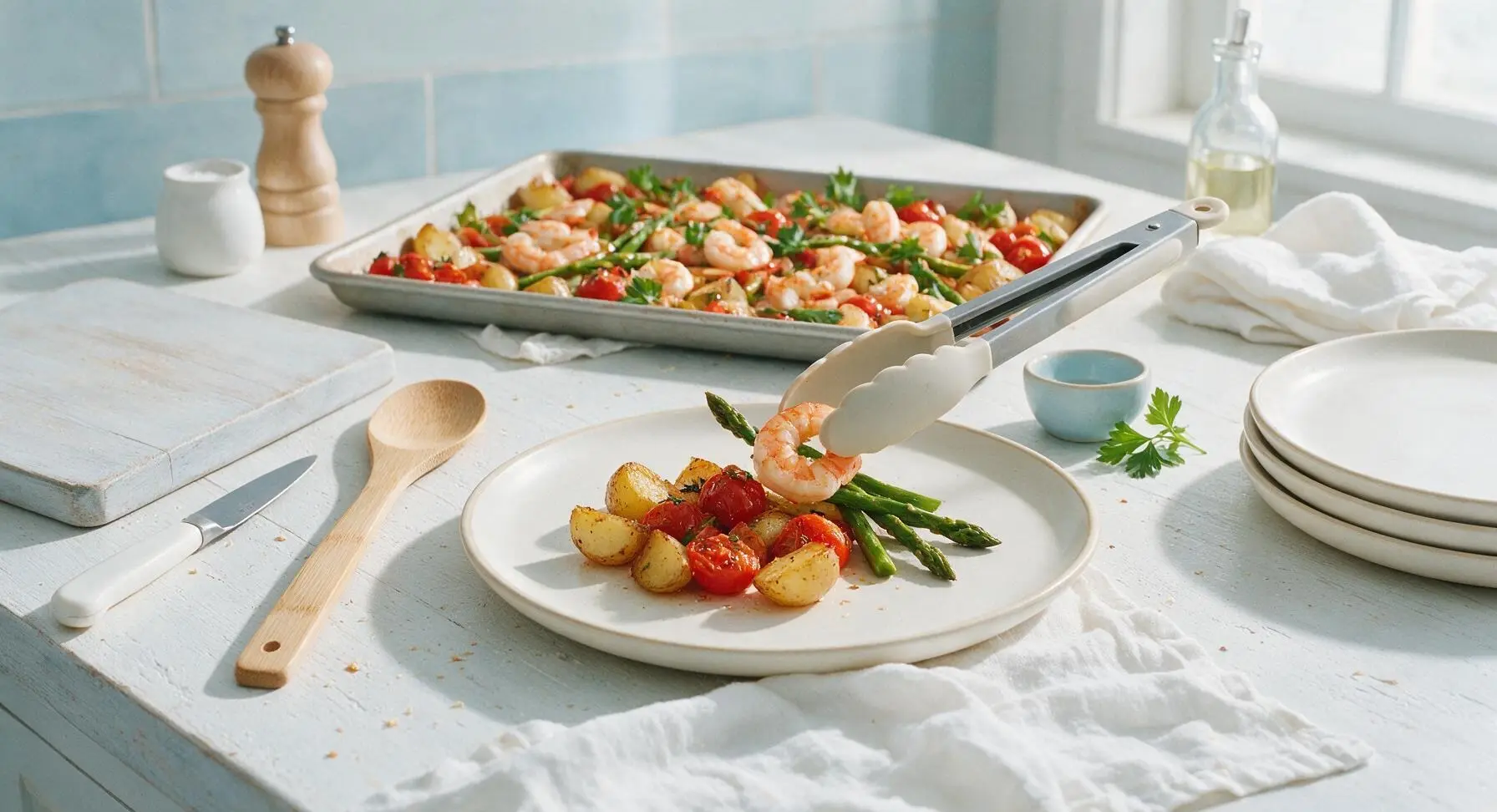
This meal is pretty complete on its own, but great add-ons include a sprinkle of crumbled feta or grated parmesan right after roasting, crusty bread to soak up the lemon-garlic pan juices, or a simple arugula salad tossed with light vinaigrette. If you want a little heat, add a pinch of red pepper flakes to the marinade for a subtle, warm kick that pairs perfectly with briny shrimp.
17.How long do leftovers keep, and what’s the best way to reheat them?
▾
Leftovers will keep in an airtight container in the fridge for up to 3 days. For best texture, reheat in a 375°F oven on a small baking sheet for 5-7 minutes until shrimp are just warmed through—microwaving will make shrimp rubbery and turn veggies mushy fast. Note that roasted potatoes will crisp back up nicely in the oven, while asparagus may soften slightly more on reheat.
18.Do I need to leave the shrimp tails on, or can I remove them before cooking?
▾
Tails are totally optional! Leaving them on adds a little extra visual appeal and makes for easy finger-food handling if you’re serving this for a casual gathering, but you can absolutely peel them completely before cooking if you prefer no-fuss, fork-only eating. If you remove tails, save them in the freezer to make homemade seafood stock for soups and risottos later.
19.Why are my potatoes not getting crispy on the outside?
▾
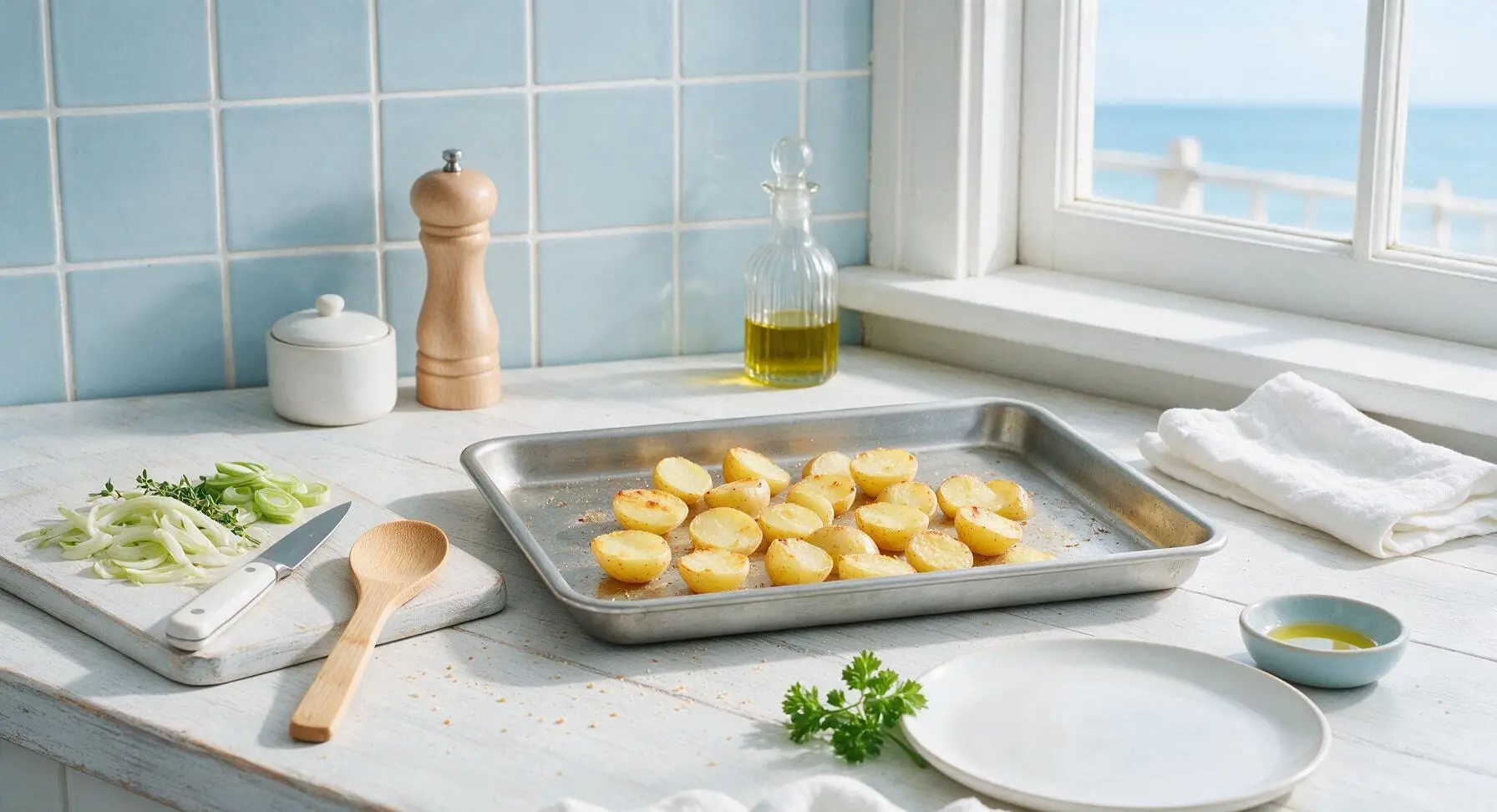
Soggy potatoes usually come down to two common issues: crowding the pan, or not drying them well after parboiling. After draining parboiled potatoes, let them air dry for 2 minutes, then give the colander a gentle shake to rough up the starchy edges a little—those fuzzy edges crisp up beautifully. Toss with a thin coat of oil and arrange cut-side down on the pan for maximum crispy contact.
20.Can I make this recipe on the grill instead of in the oven for summer meals?
▾
Definitely! Use a grill-safe sheet pan or grill basket set over medium-high grill heat (around 425°F, same as the oven). Follow the same layering order: parboiled potatoes first, then asparagus and tomatoes, then shrimp for the final 8 minutes. Keep the grill lid closed between checks to maintain consistent heat, and toss ingredients halfway through for light smoky char on all sides.

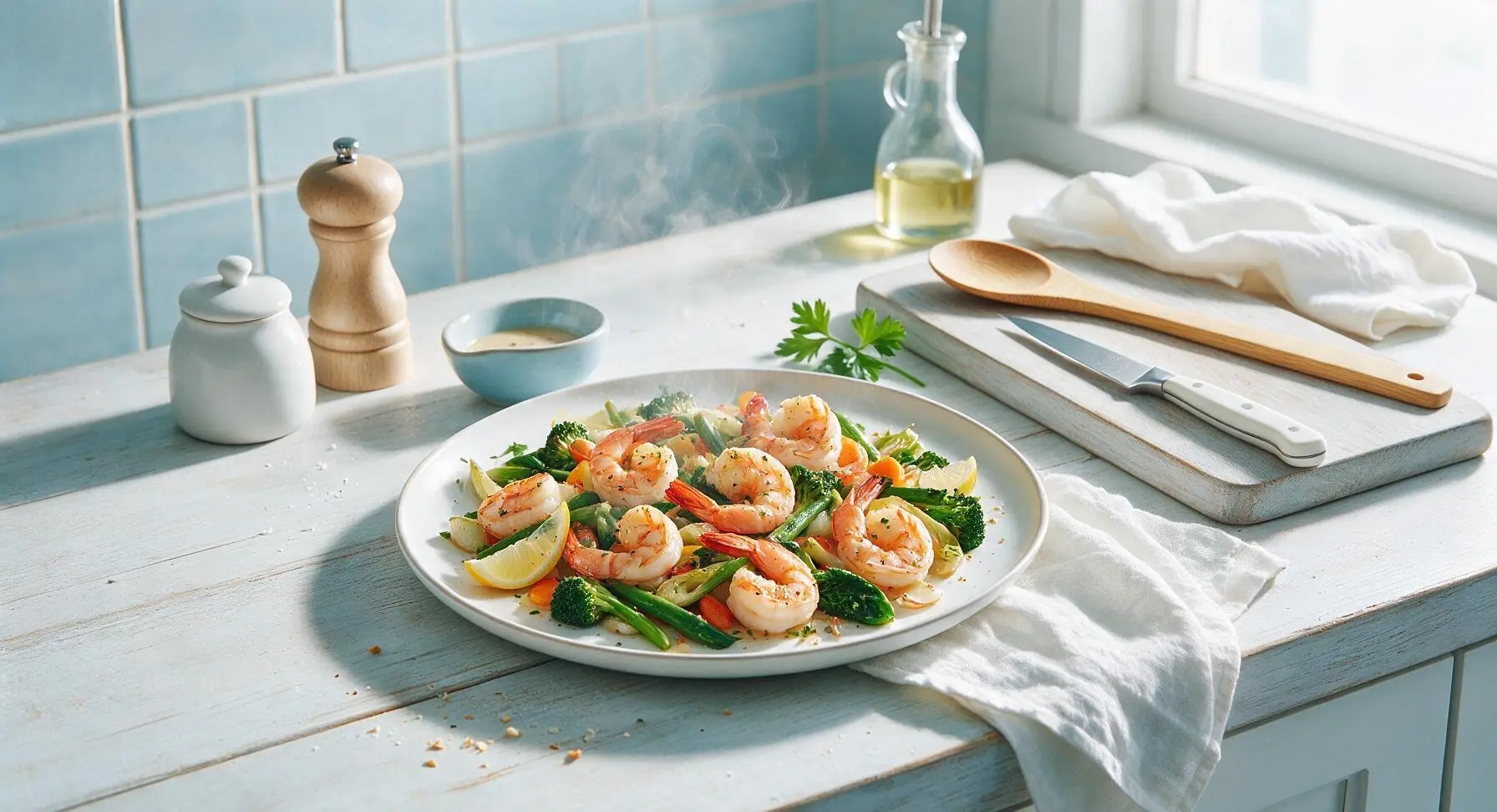
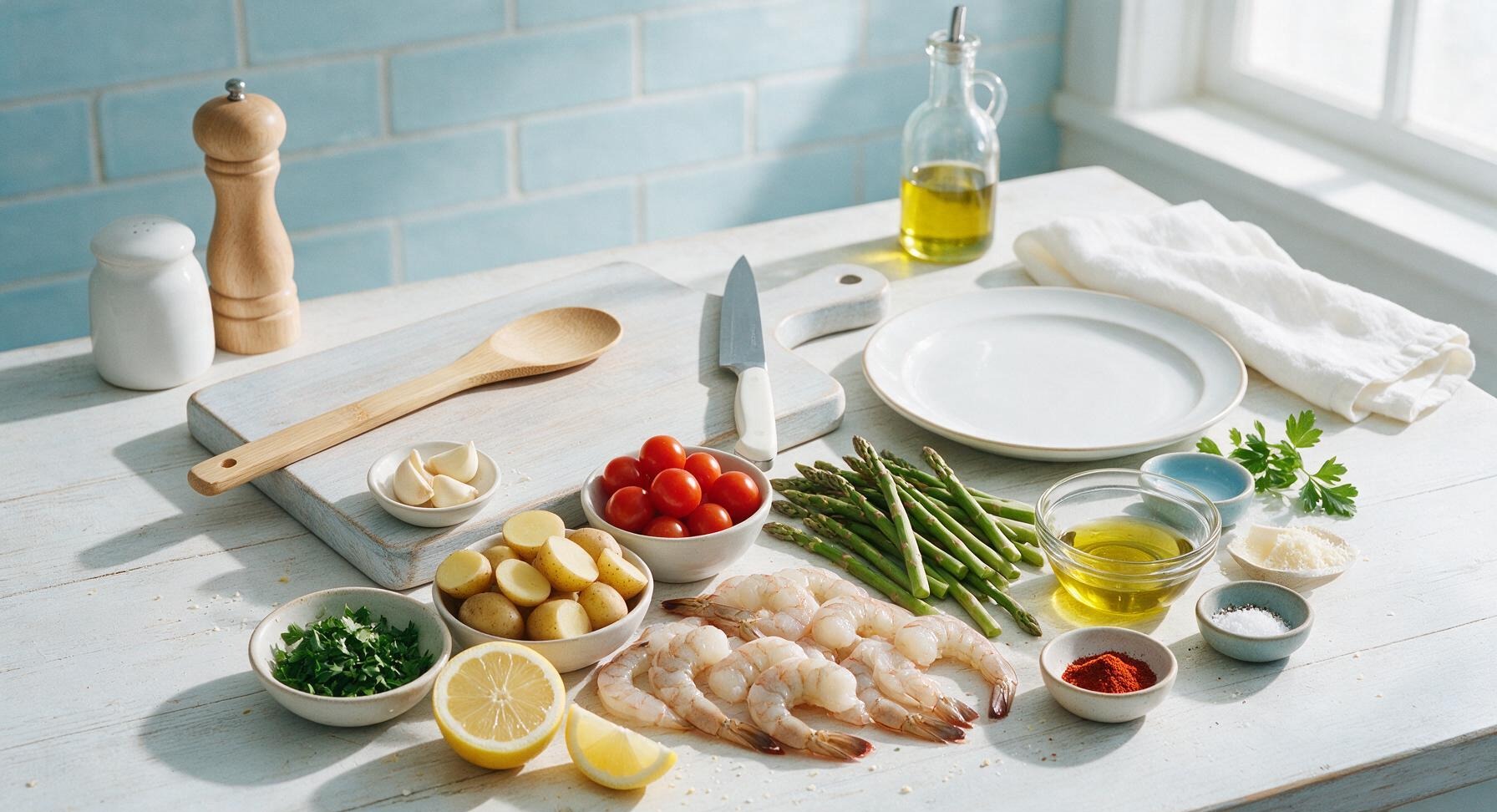
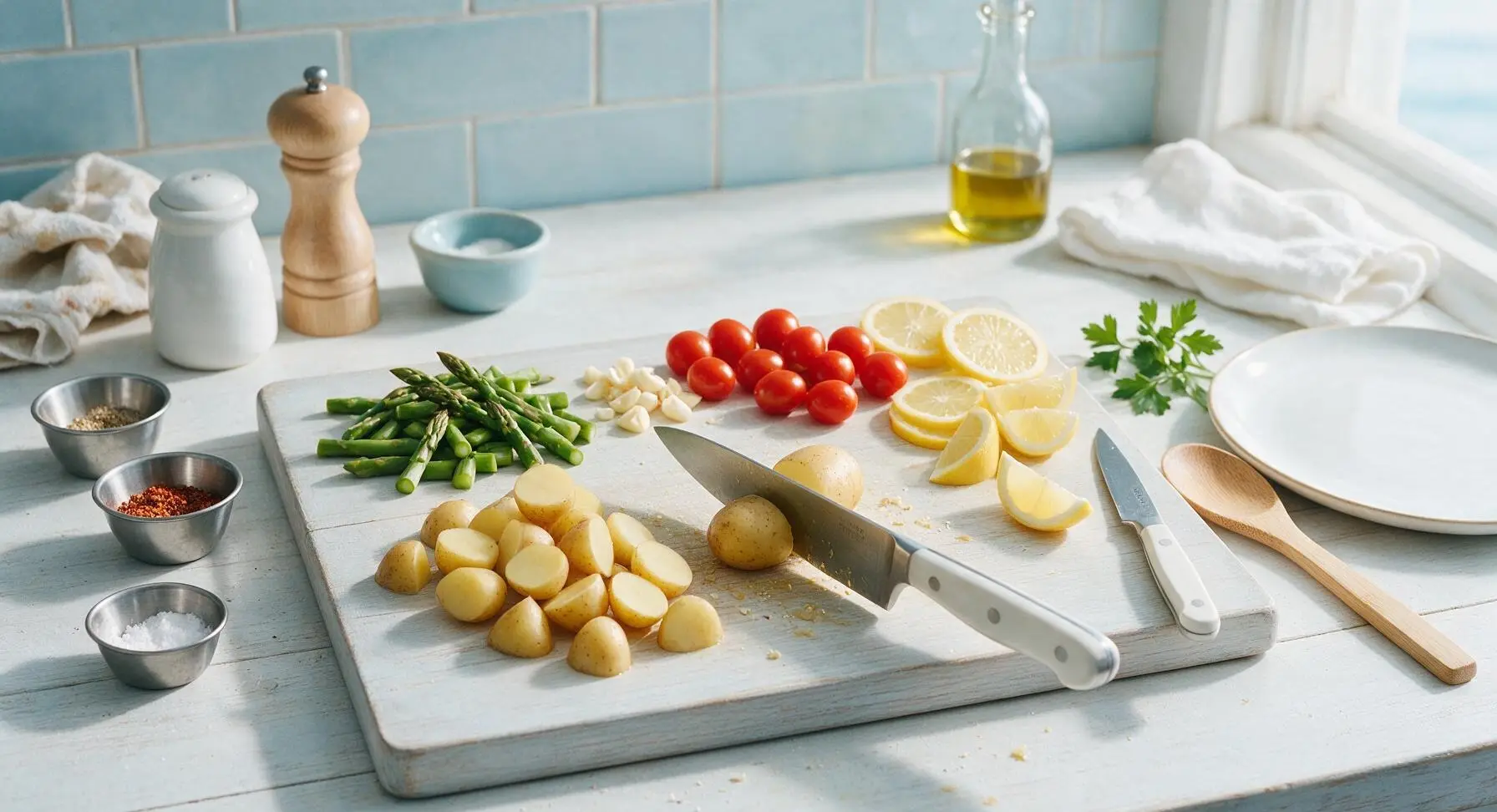
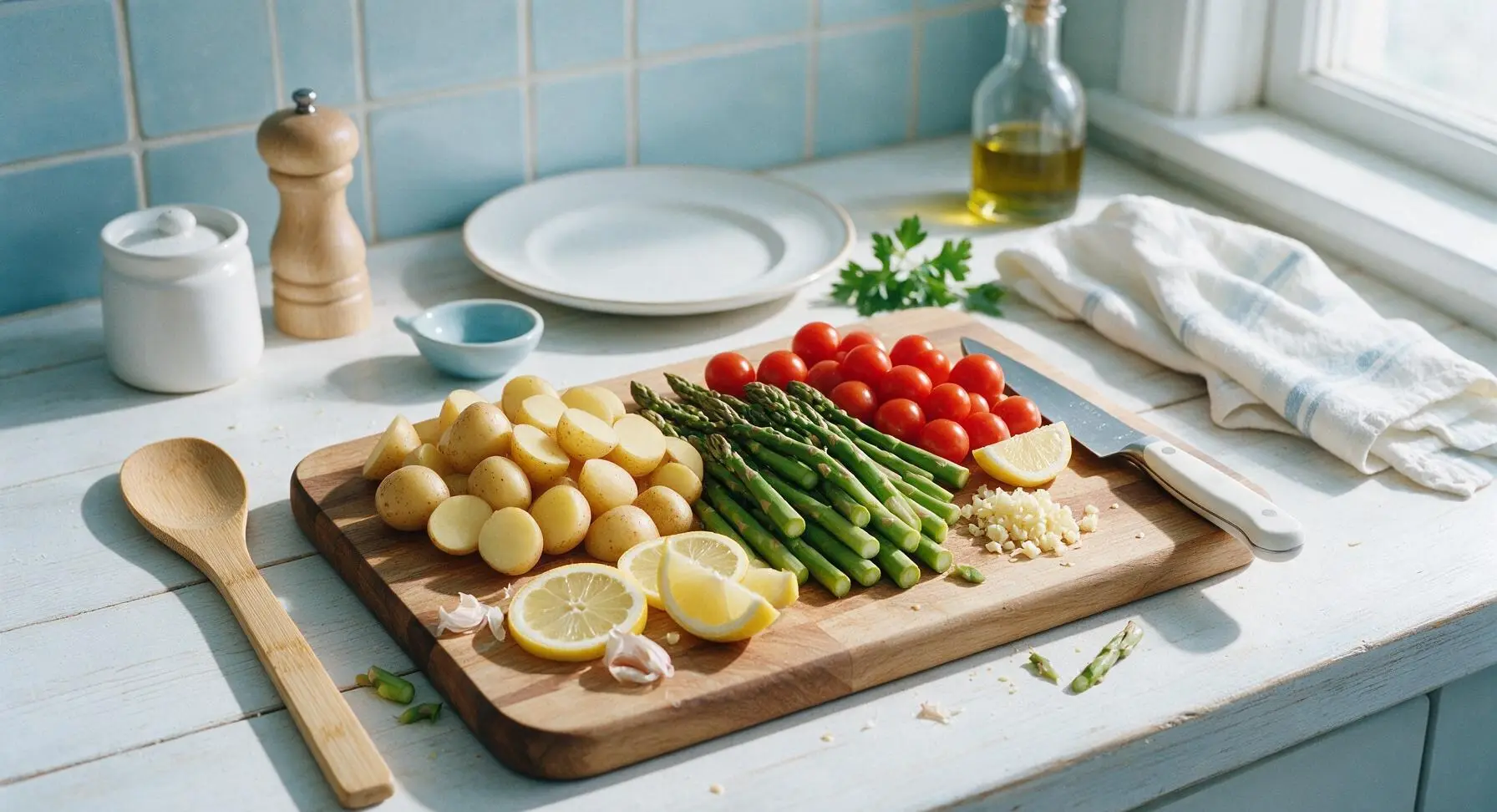


OMG this was such a game changer for our chaotic weeknight family dinner! I tossed in extra broccoli and cherry tomatoes like the recipe tip suggested, and it was done SO fast — 15 minutes is no joke, I didn’t even have time to set the table before it was ready. My 7 and 9 year old devoured the shrimp and asked for seconds, which never happens when I make seafood. 10/10 will be adding this to our regular meal prep rotation!
Brought this to our neighborhood block party potluck last weekend and everyone was hounding me for the recipe before I even finished my first serving! I squeezed a little extra fresh lemon over top right before serving and sprinkled some red pepper flakes for a tiny kick, absolute chef’s kiss. Only regret is I didn’t make a double batch because the whole pan was gone in 10 minutes flat.
As someone who can barely boil boxed mac and cheese without burning it, this recipe was so easy I actually felt like a functional adult making dinner! No fancy ingredients, no million complicated steps, just toss everything on a sheet pan and pop it in the oven. Served it over some microwaved white rice and it was SO good, way better than the greasy takeout shrimp I almost ordered instead.