Soybean Paste Stew Ribs

title 1
Soybean Paste Stew Ribs
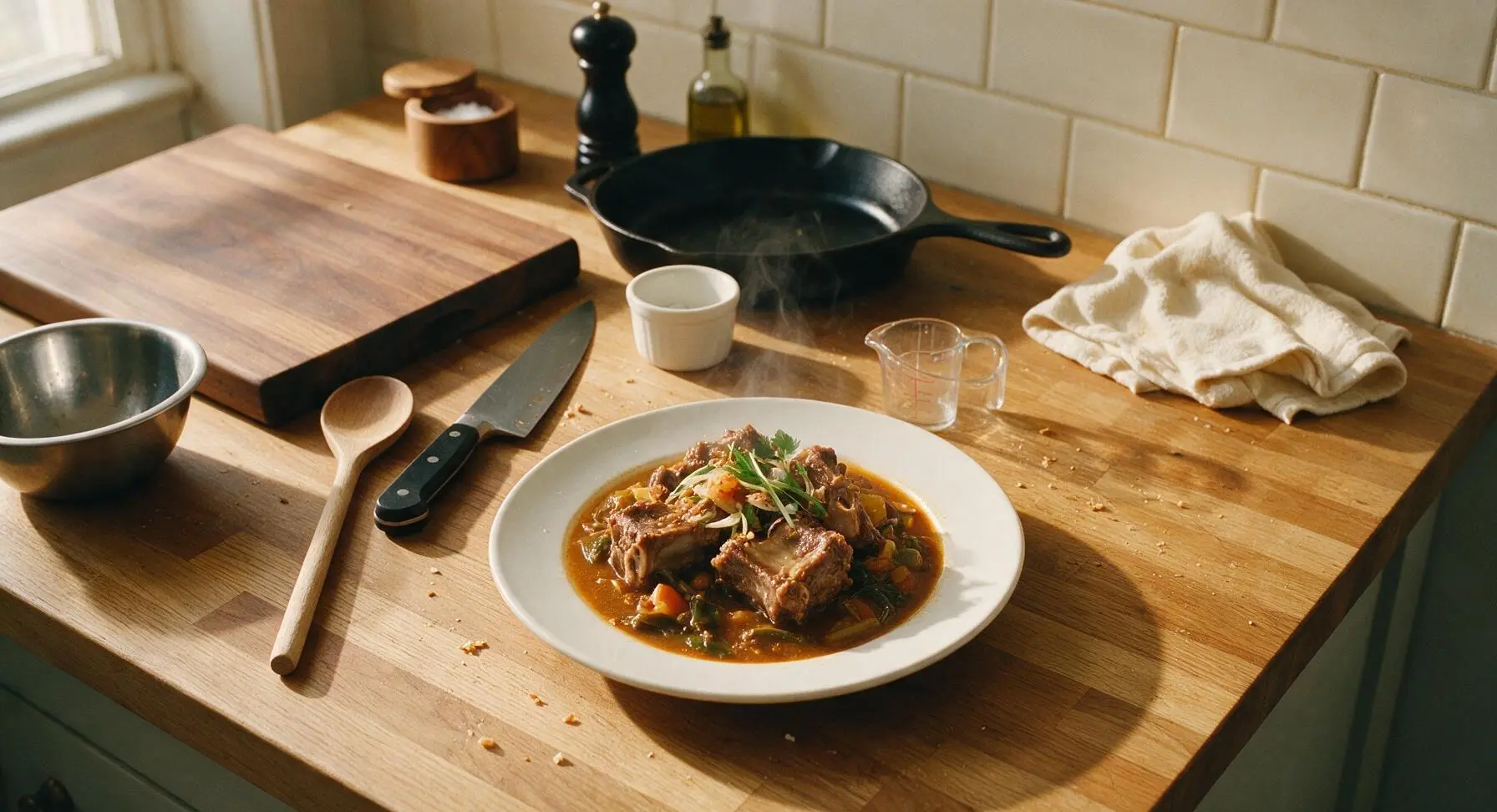
⏱️ cook time 1 hour 15 minutes
🍽️ servings 4
⚡ Difficulty medium

intro

Tender fall-off-the-bone pork ribs simmered in umami-rich fermented soybean paste with earthy vegetables, delivering deep, cozy savory comfort in every warm, nourishing spoonful.

Ingredients
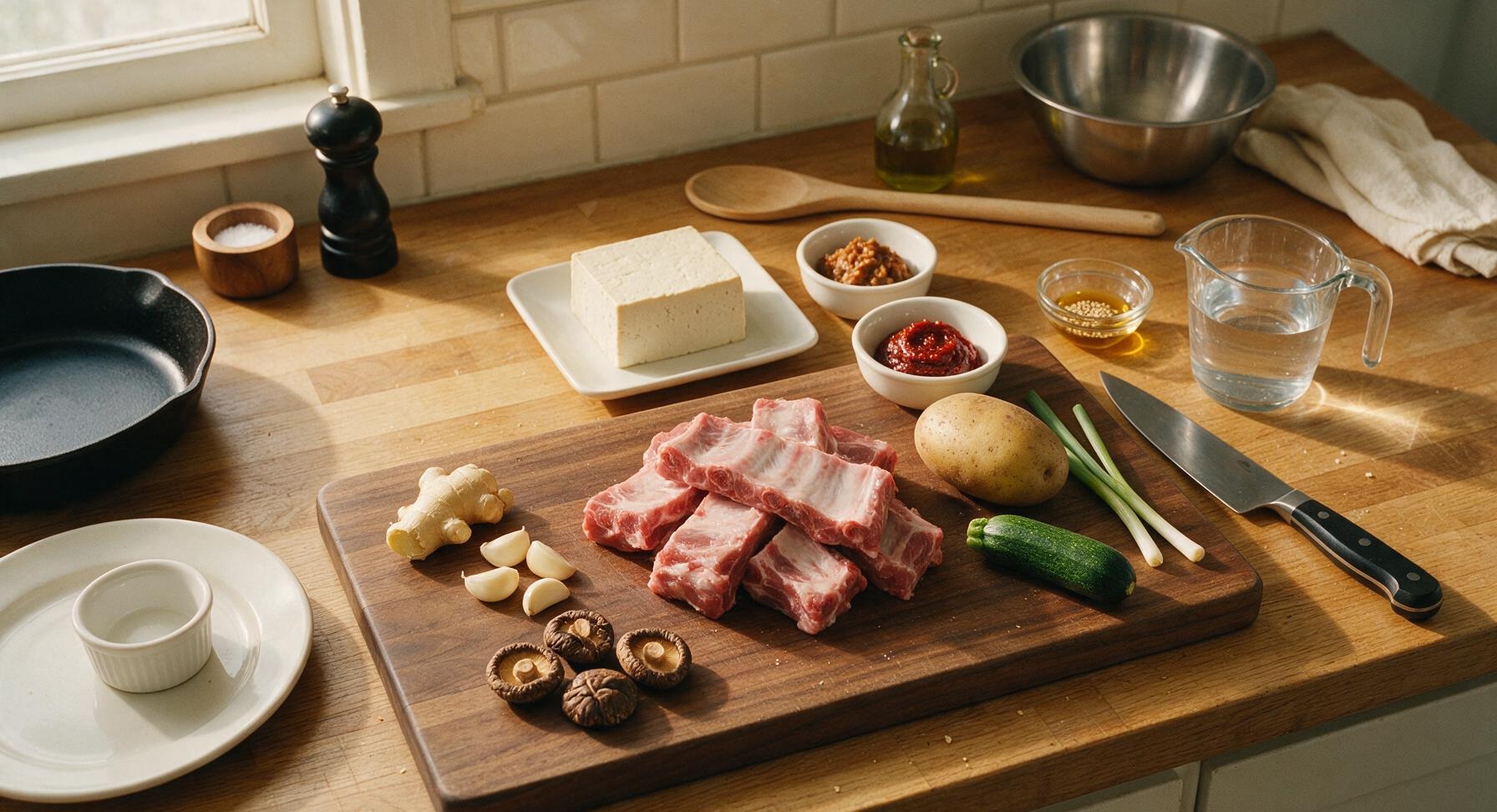
Pork back ribs 800g
Fermented soybean paste (doenjang) 3 tbsp
Gochujang (Korean chili paste) 1 tsp
Garlic cloves 4 pieces (15g)
Fresh ginger 20g (1 thumb-sized piece)
Russet potato 200g (1 medium)
Zucchini 150g (1 small)
Dried shiitake mushrooms 4 pieces (rehydrated)
Medium-firm tofu 300g
Scallions 2 stalks
Toasted sesame oil 1 tsp
Cold water 1.2L

Steps

1

Trim and portion ribs

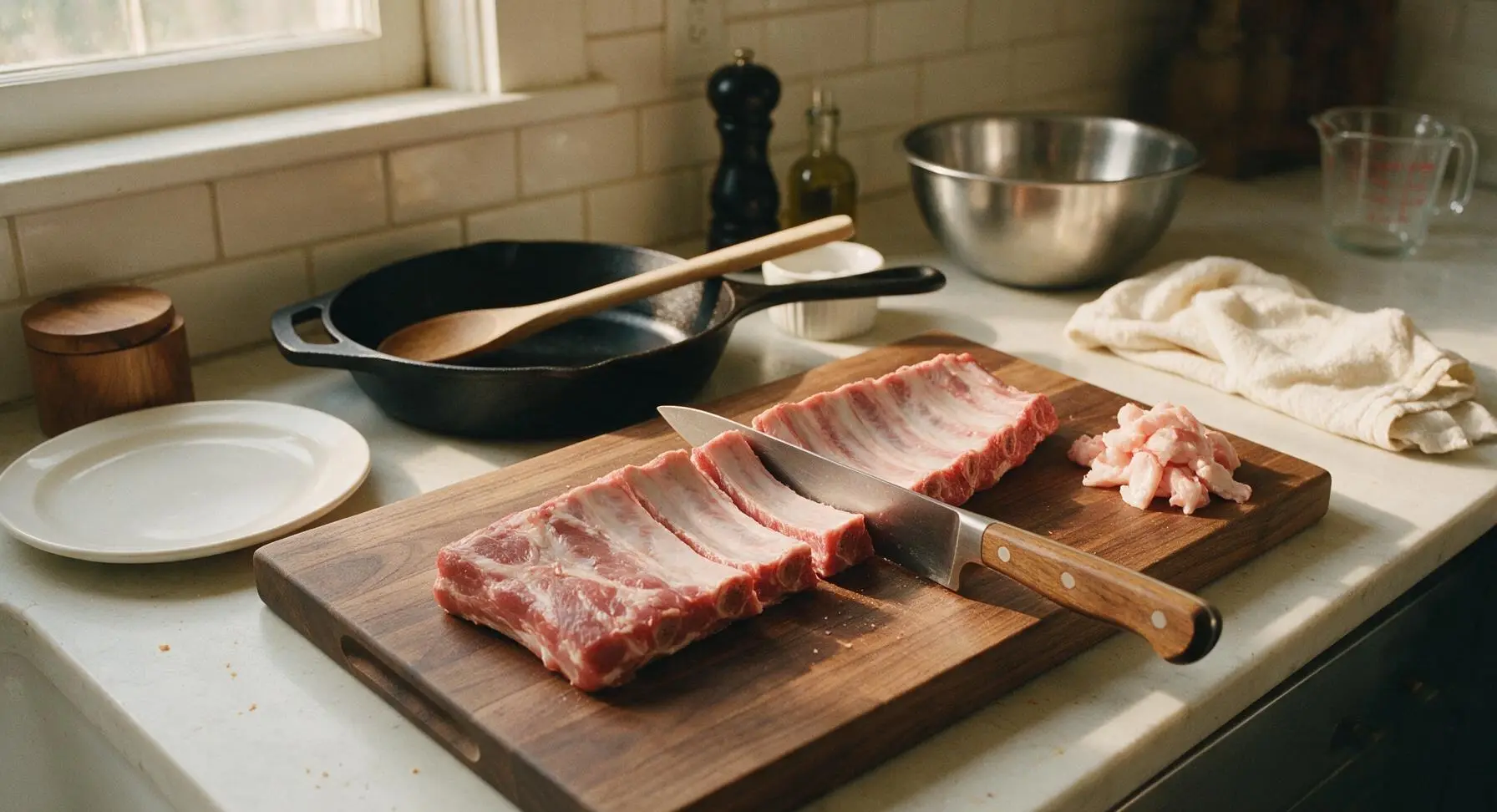
Place the raw rack of pork ribs on the walnut cutting board. Use the chef knife to cut between the bones into 5cm individual rib pieces, trimming any excess loose fat or silver skin from the meat. Pat the rib pieces dry lightly with a corner of the linen towel. Cut pieces to uniform size to ensure even cooking throughout the stew.
Step 1
step1:Trim and portion ribs
2

Blanch ribs for clarity

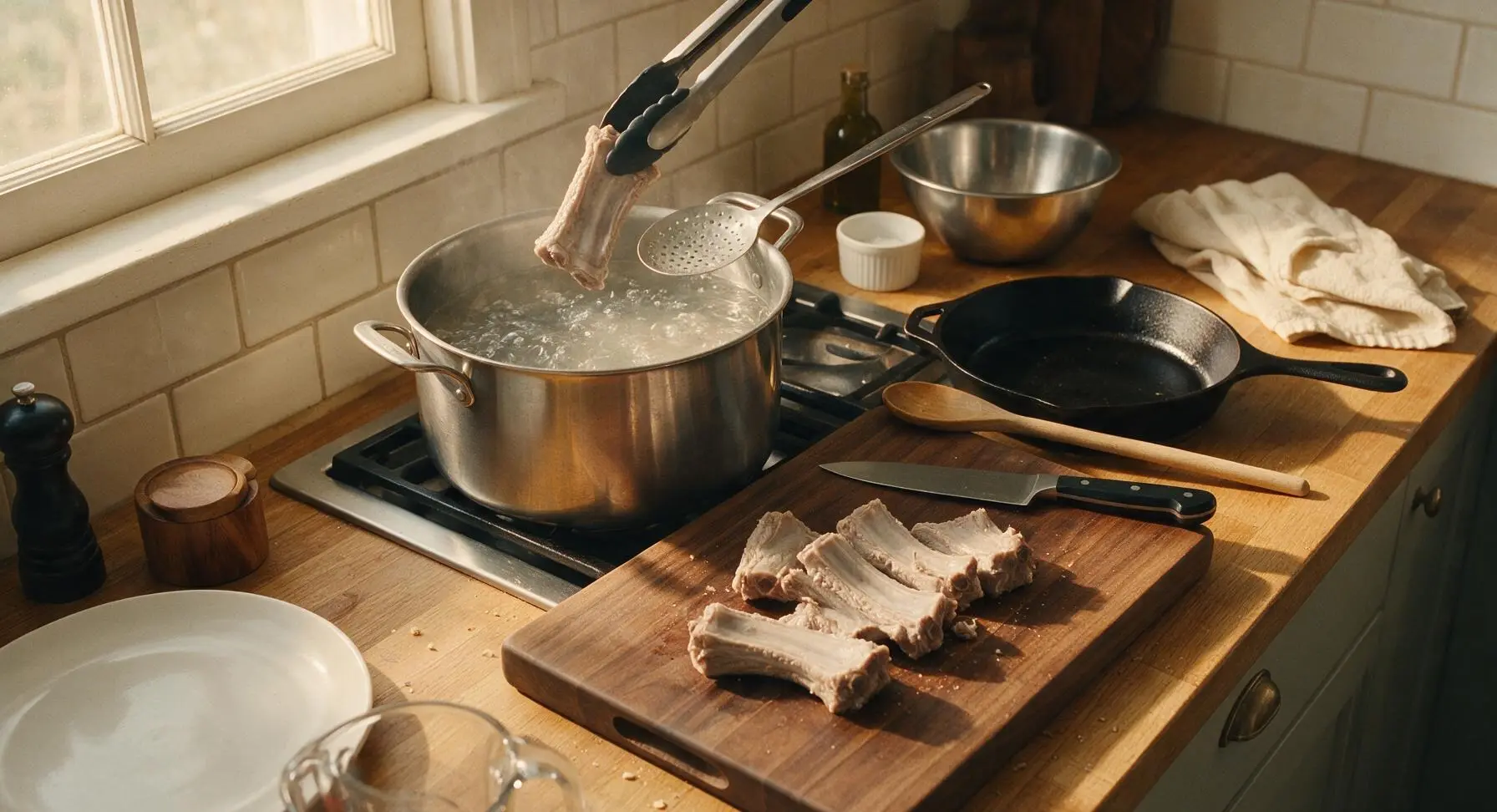
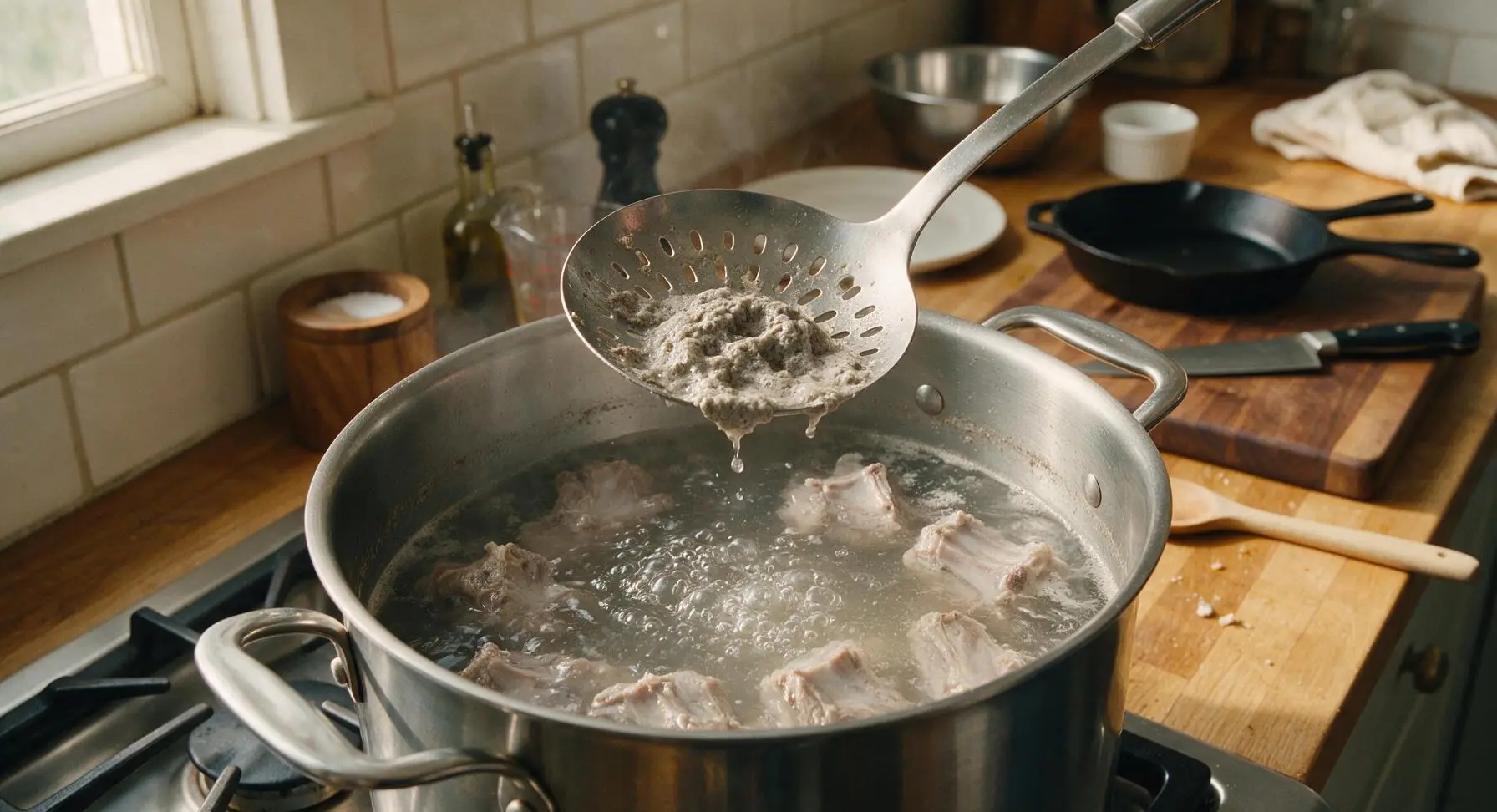
Place the 6L stainless steel stock pot on the back stovetop, fill with 800ml of cold water, and bring to a rolling boil over high heat (100C/212F). Carefully add cut rib pieces to the boiling water, and blanch for 7 minutes, using the slotted skimmer to remove all grey foamy scum that rises to the surface. The water will turn slightly cloudy, and ribs will turn pale grey on the outside when blanching is complete.
Step 2
step2:Blanch ribs for clarity
Step 2
step2:Blanch ribs for clarity
3

Rinse ribs and reset pot

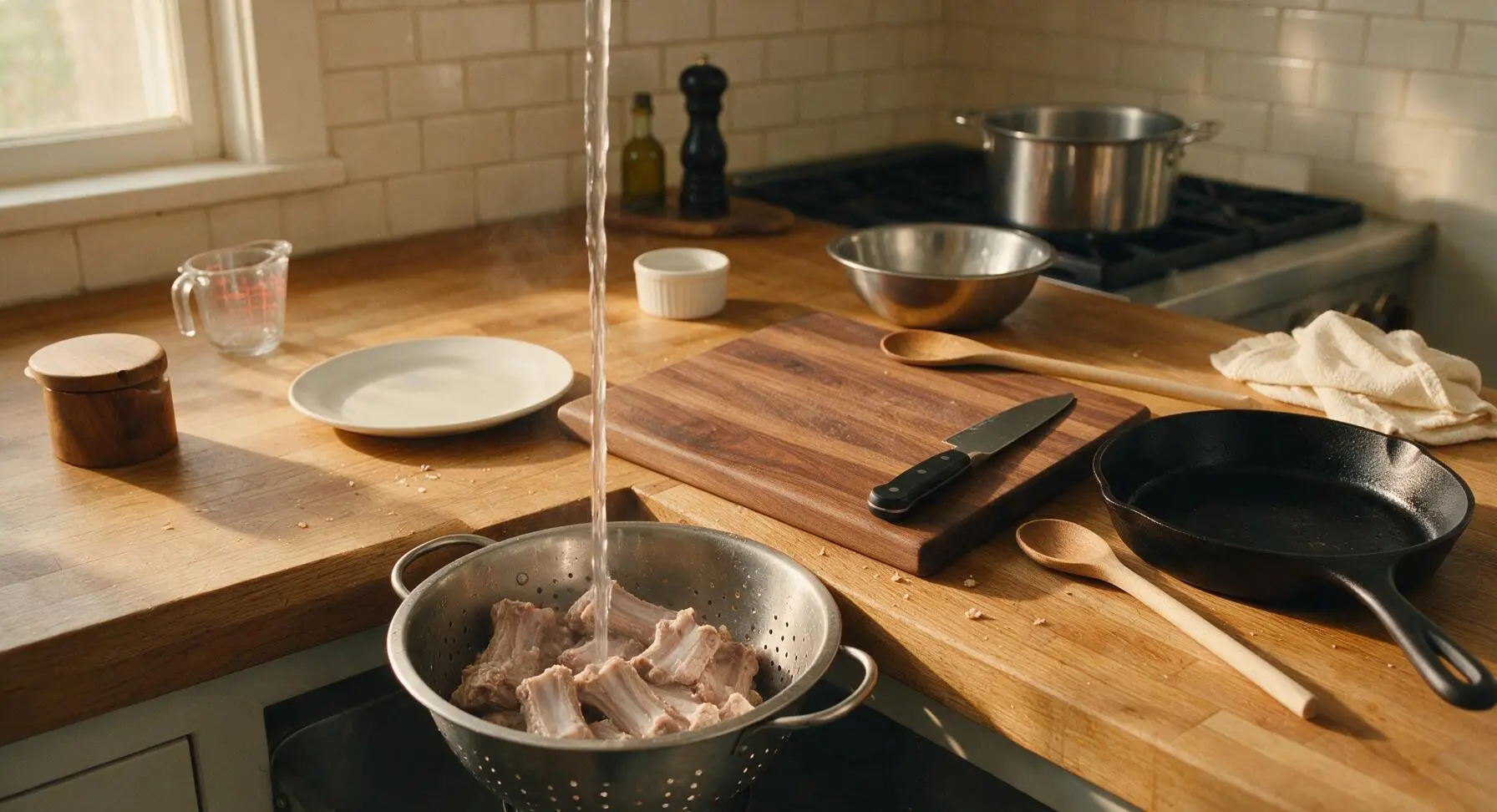
Use the tongs to transfer all blanched ribs to the stainless steel colander, rinse under warm running water for 1 minute to wash off any remaining grey scum from the meat surface. Discard the cloudy blanching water, rinse the stock pot thoroughly to remove any stuck residue, and return it to the stovetop. Cleaned ribs will have pale, opaque meat and no foamy residue on their surface.
Step 3
step3:Rinse ribs and reset pot
4

Mix seasoned paste base

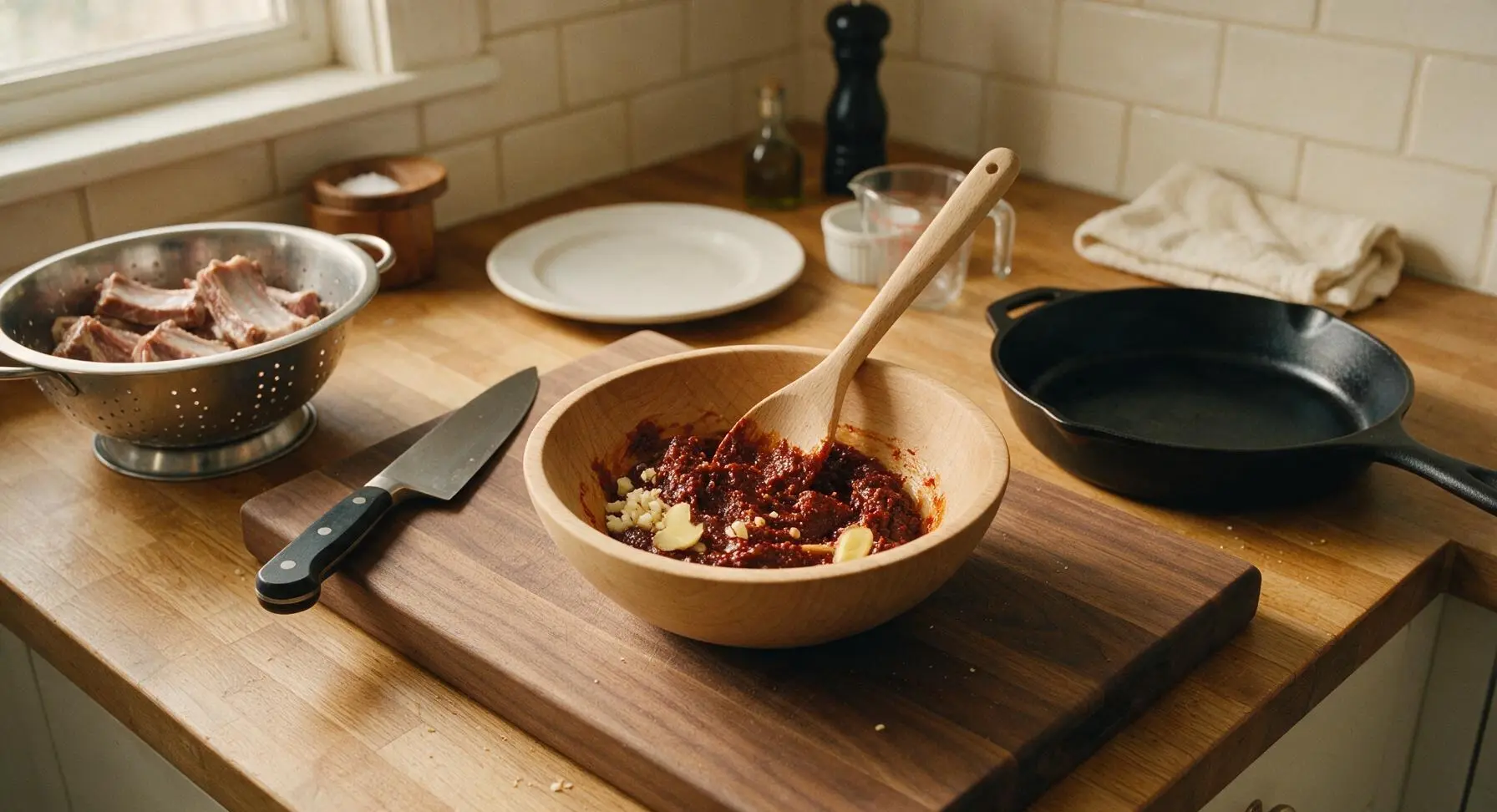
Add the 3 tablespoons of fermented soybean paste, 1 teaspoon of gochujang, minced garlic, and sliced ginger to the small beech wood mixing bowl. Use the tip of the wooden stirring spoon to mix ingredients into a smooth, uniform deep reddish-brown paste, breaking up any large clumps of soybean paste so no dry lumps remain. This ensures the paste dissolves evenly in the stew instead of clumping.
Step 4
step4:Mix seasoned paste base
5

Simmer ribs until tender

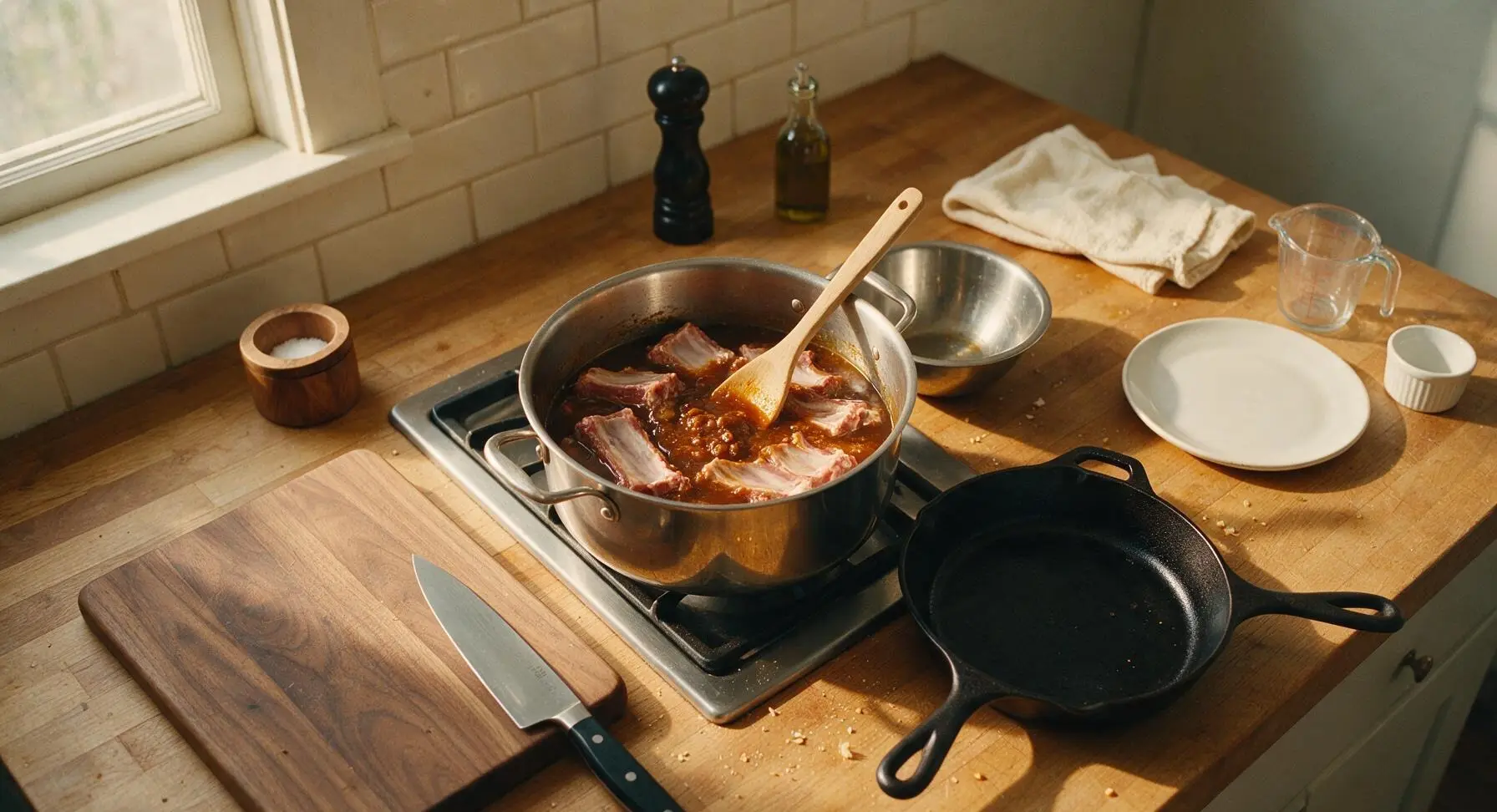
Return cleaned ribs to the rinsed stock pot, pour in 1.2L of cold water, and stir in the mixed soybean paste base until fully dissolved. Bring the pot to a gentle boil over medium-high heat, then reduce heat to medium-low to maintain a soft, steady simmer (90C/195F), cover with the pot lid, and cook for 50 minutes. Ribs will be fork-tender, with meat starting to pull away from bone edges when done.
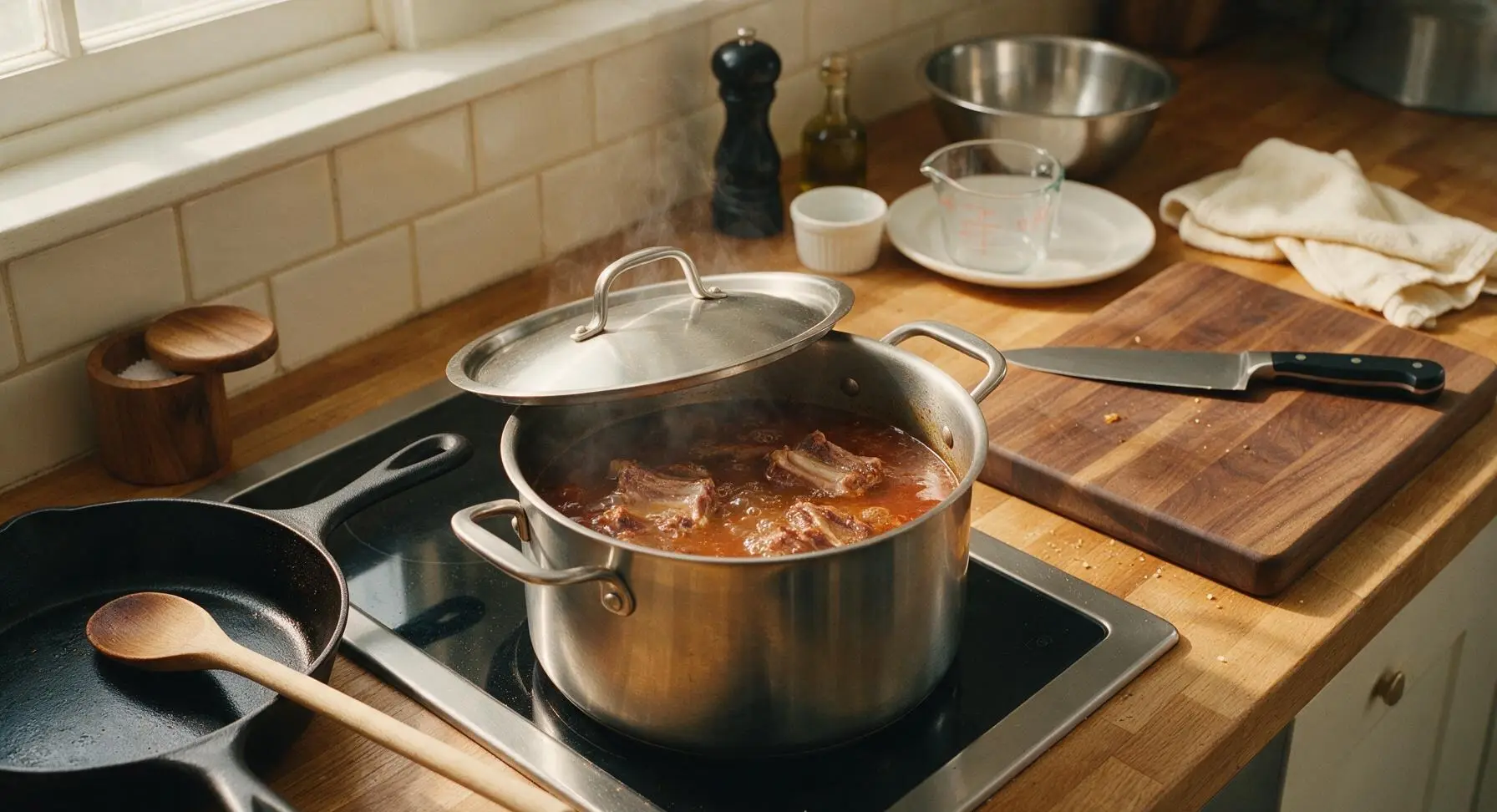
Step 5
step5:Simmer ribs until tender
Step 5
step5:Simmer ribs until tender
6

Add firm vegetables first

After 50 minutes of simmering, remove the pot lid, add potato chunks and rehydrated shiitake mushrooms to the broth, stirring gently with the wooden spoon to submerge them fully. Cover again and simmer for an additional 12 minutes over medium-low heat. Potatoes will be almost tender when pierced with a fork, and mushrooms will have softened and released earthy flavor into the broth.
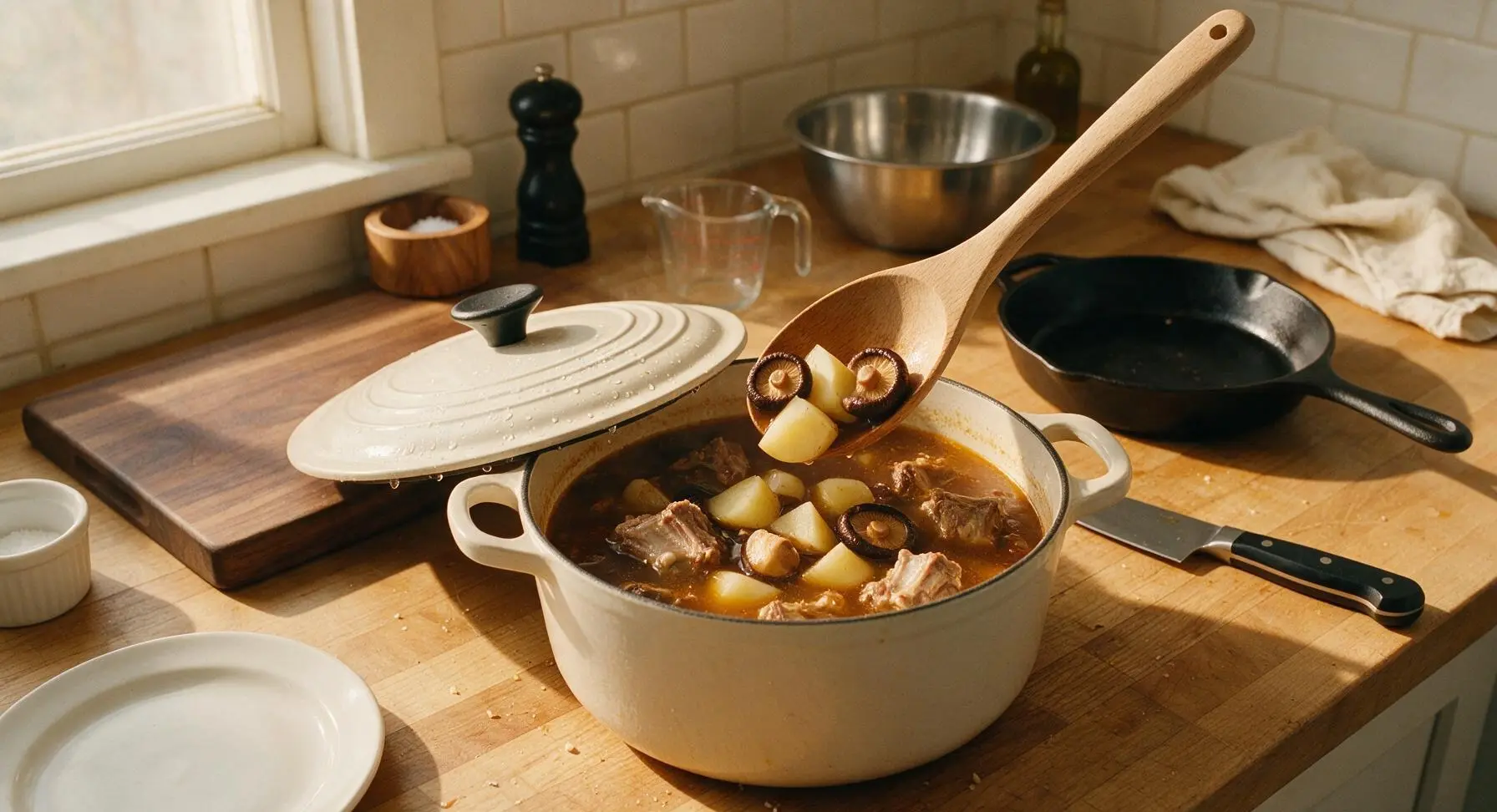
Step 6
step6:Add firm vegetables first
7

Add tofu and zucchini

After potatoes have simmered 12 minutes, add zucchini half-moons and cubed medium-firm tofu to the pot, stirring very gently to avoid breaking the soft tofu. Simmer uncovered for an additional 6 minutes, until zucchini is bright green and tender-crisp, and tofu is heated through. Do not boil vigorously at this stage, as it will break up tofu and make zucchini mushy.
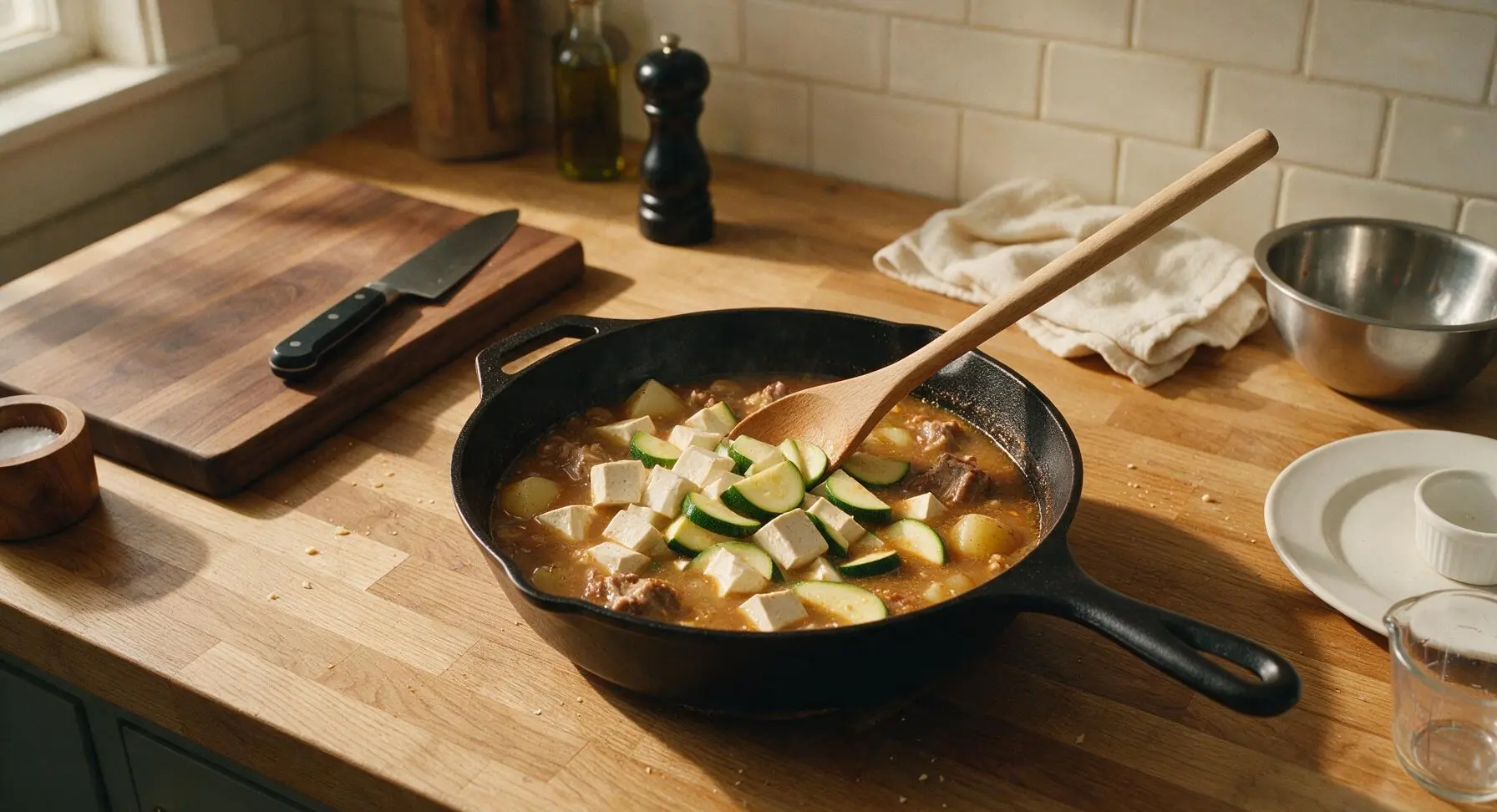
Step 7
step7:Add tofu and zucchini
8

Finish with scallion oil

Turn off the heat, taste the broth, and adjust salt only if needed (fermented soybean paste is usually salty enough on its own). Drizzle 1 teaspoon of toasted sesame oil over the top of the stew, and sprinkle with chopped fresh scallions. Let the stew rest for 2 minutes off heat to allow flavors to meld before serving.
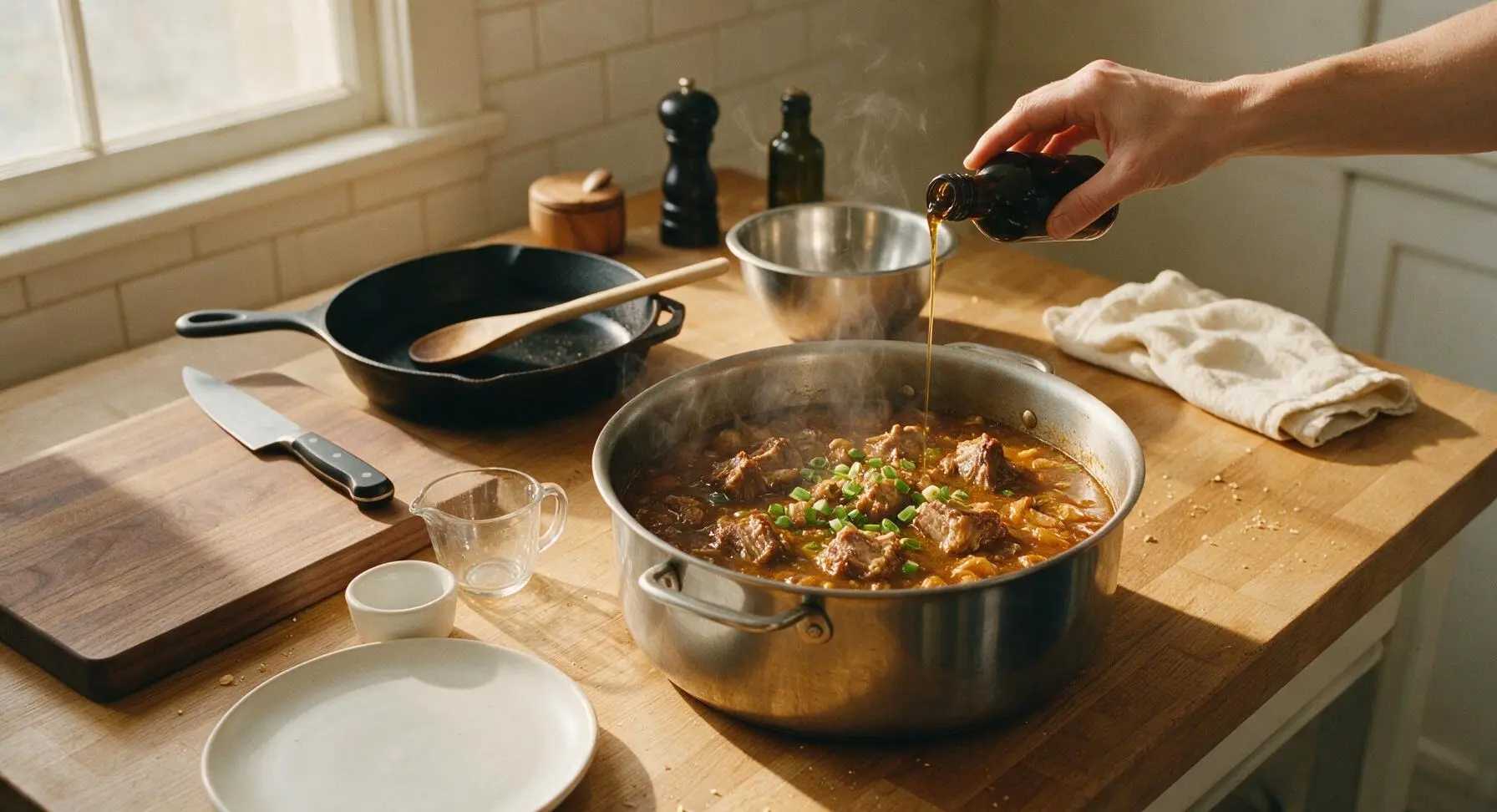
Step 8
step8:Finish with scallion oil

Tips

1.Do not skip blanching the ribs: this step removes residual blood and surface impurities that would make the stew broth cloudy and lend a bitter, gamey aftertaste, resulting in a cleaner, brighter umami flavor in the finished dish.
2.Add delicate tofu and zucchini only in the final 6 minutes of cooking: extended simmering will cause tofu to break apart into mushy crumbs and turn zucchini grey and limp, ruining the pleasant textural contrast between tender ribs, soft potato, and tender-crisp vegetables.
3.Avoid boiling the stew vigorously after adding the soybean paste: a hard boil will make the fermented paste taste bitter and cause the broth to become overly thick and cloudy; maintain a soft, steady simmer for the smoothest, most well-rounded flavor.
✨ You May Also Like

Soups & Stews
🍜 Japan

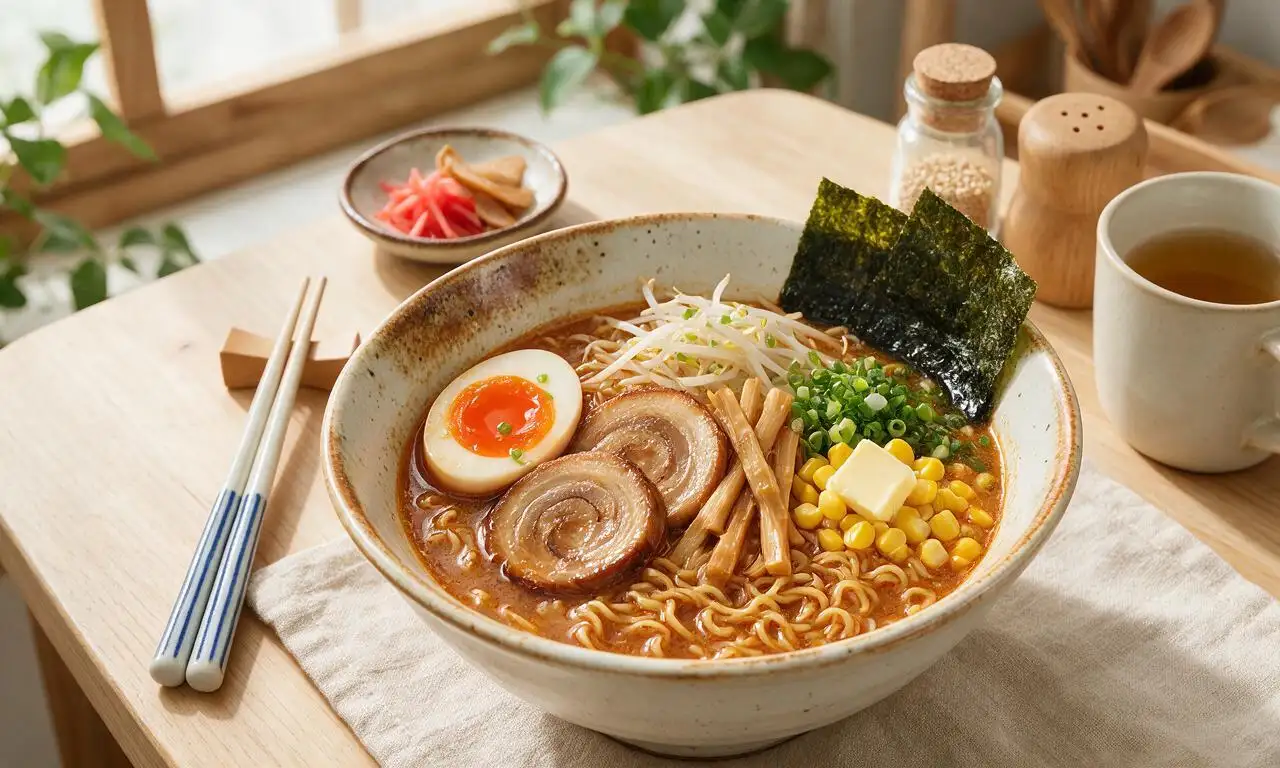
Rich, umami-dense Hokkaido-style miso ramen with chewy noodles, savory fermented broth, and classic toppings, a cozy, deeply satisfying warm meal.

⏱️ 45 minuteSoups & Stews ★ 4.5
Soups & Stews
🍜 United States

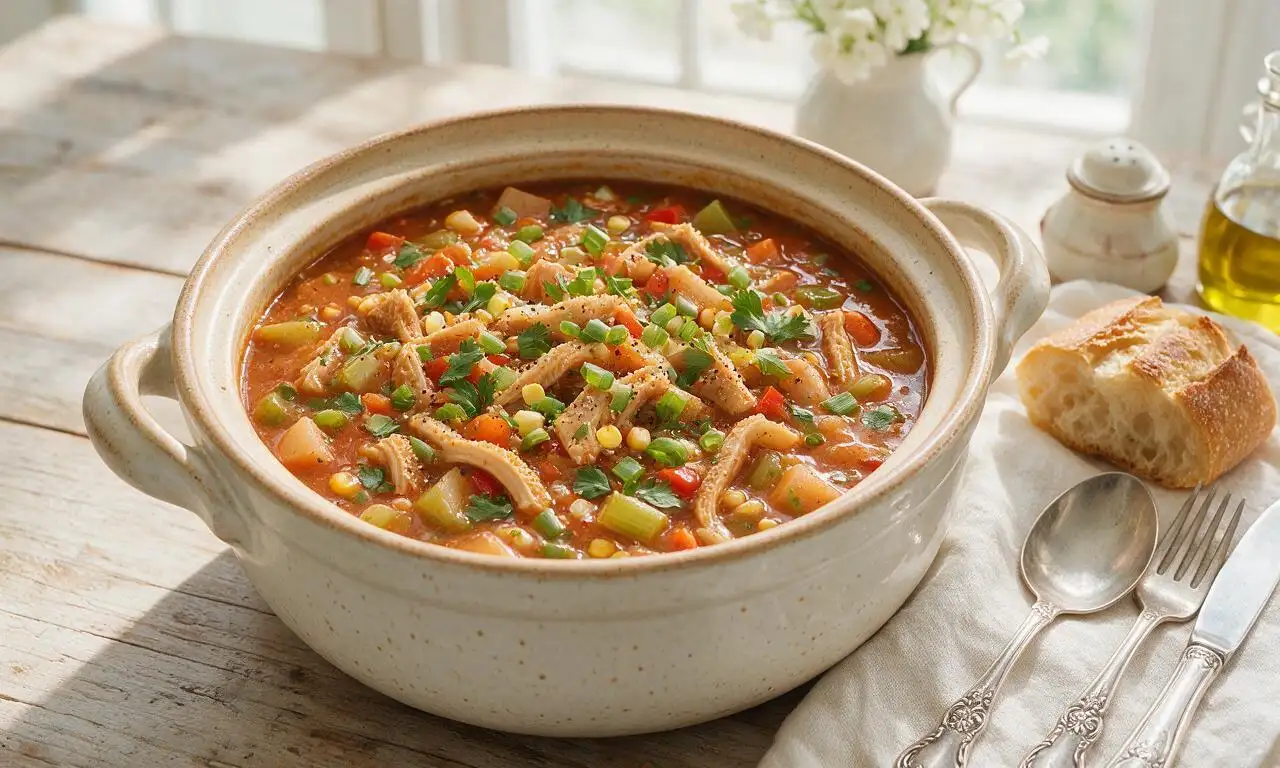
A hearty, peppery tripe and root vegetable stew with colonial Philadelphia roots, thick, warming, and packed with bold savory flavor for cold winter days.

⏱️ 2 hours 3Soups & Stews ★ 4.6
Soups & Stews
🍜 Mexico

Hearty, warming red pork posole loaded with tender hominy, slow-simmered in a rich smoky chile broth, served with zesty fresh garnishes for a deeply comforting, satisfying meal.

⏱️ 2 hours 3Soups & Stews ★ 4.7
Soups & Stews
🍜 United States

Warm, soothing classic chicken noodle soup loaded with tender chicken, soft egg noodles, and savory veggies, perfect for chasing chills and feeding the whole family.

⏱️ 40 minuteSoups & Stews ★ 4.9
Soups & Stews
🍜 France

Deeply savory caramelized onion broth topped with crusty bread and bubbly melted Gruyère, a timeless French bistro comfort food ideal for cold days.

⏱️ 1 hour 25Soups & Stews ★ 4.8
Soups & Stews
🍜 United States

Hearty, briny Maryland crab soup loaded with sweet blue crab, tender summer vegetables, and zesty Old Bay, a beloved Chesapeake Bay coastal comfort staple.

⏱️ 55 minuteSoups & Stews ★ 4.9

Soybean Paste Stew Ribs:Frequently Asked Questions

1.Can I use pork spare ribs instead of back ribs for this stew? ▾
Absolutely! Spare ribs are slightly fattier and richer than back ribs, so they work beautifully here. Just trim any large chunks of excess hard fat, and add 10 minutes of low simmer time if they’re cut thicker than standard back ribs. Be sure to pat ribs dry before searing to help them lock in flavor as they cook.
2.What’s a good substitute for doenjang (fermented soybean paste) if I can’t find it? ▾
Your closest stand-in is a 3:1 mix of mild white miso paste and low-sodium soy sauce, which mimics doenjang’s salty, umami depth. Skip sweet or dark red miso, as those will throw off the stew’s earthy, savory balance. Always taste the broth before adding extra salt, since miso and soy are both naturally high in sodium.
3.How do I get fall-off-the-bone tender ribs without making the meat mushy? ▾
The key is to avoid a rolling boil at all costs. After searing ribs to build surface flavor, keep the stew at a gentle, low simmer for 45 to 55 minutes. A hard boil will make outer meat stringy and tough before connective tissue breaks down. Test doneness by poking a fork into the thickest rib—it should slide in with light pressure.
4.Can I make this stew in a slow cooker instead of on the stovetop? ▾
You sure can! First, sear the ribs and sauté garlic and ginger to build deep flavor, then transfer all base ingredients to your slow cooker. Cook on LOW for 6 hours, or HIGH for 2.5 to 3 hours. Hold off on adding soft veggies like zucchini or tofu until the last 30 minutes of cook time to keep them from turning mushy.
5.How spicy will this stew be with the listed amount of gochujang? ▾
The small portion of gochujang adds warm, subtle depth rather than searing heat—expect a gentle tingle, not a burn-your-mouth kick. If you’re very sensitive to spice, cut the gochujang amount in half, or swap it for a pinch of sweet smoked paprika to keep the rich, warm hue without any added heat.
6.Do I really need to blanch the ribs before simmering them? ▾
I highly recommend a quick 3-minute blanch in boiling water with a slice of ginger, followed by a cold water rinse, to remove residual blood and surface scum. This simple step keeps your stew broth clear instead of cloudy, cuts down on any gamey aftertaste, and only adds a few minutes to your total prep time for a much cleaner flavor.
7.What other vegetables work well in this stew if I don’t have a pre-set mix? ▾
Stick to sturdy, earthy veggies that hold up to long simmering: cubed russet potato, daikon radish, carrot, yellow onion, and napa cabbage are all ideal. Add softer picks like zucchini, shiitake mushrooms, or cubed firm tofu in the last 20 minutes of cooking so they don’t disintegrate into the broth.
8.How long do leftovers stay good, and can I freeze this stew? ▾
Stored in a sealed airtight container, leftovers keep for 3 to 4 days in the fridge, and freeze well for up to 3 months. The flavor actually deepens after a day in the fridge as the fermented pastes meld with the rib meat. Thaw frozen portions in the fridge overnight, and reheat gently on low with a splash of water if the broth is too thick.
9.How do I keep the stew from turning out too salty? ▾
Doenjang varies widely in sodium content across brands, so start with 2 tablespoons instead of the full 3, stir to fully dissolve it, then taste before adding more. If you accidentally over-salt the broth, toss in a peeled, cubed raw potato and simmer 10 extra minutes—it will absorb excess salt without throwing off the umami balance.
10.Can I swap pork ribs for beef ribs in this recipe? ▾
Bone-in beef short ribs work beautifully here, you’ll just need to adjust cook time. Beef short ribs have denser connective tissue than pork, so simmer them for 75 to 90 minutes on low (or 8 hours on slow cooker LOW) for that same pull-apart tenderness. Add an extra half tablespoon of doenjang to match beef’s richer, deeper flavor.
11.Do I need to remove the thin membrane on the back of the ribs? ▾
Definitely. That tough, papery silver membrane on the bone side of the ribs won’t break down during simmering, and it leaves an unpleasantly chewy, rubbery texture. Slide a butter knife under the membrane at one end, grip it with a paper towel for traction, and pull it off in one smooth sheet before cutting ribs into pieces.
12.What’s the best way to serve this stew for a full meal? ▾
Serve it piping hot in deep, wide bowls, alongside steamed short-grain white rice to soak up the savory broth, and a small side of tangy kimchi for bright contrast. Top each bowl with a sprinkle of toasted sesame seeds and a tiny drizzle of toasted sesame oil right before serving to add a nutty, aromatic finish that ties all the flavors together.

Comments (3)

2 days ago

OMG this soybean paste stew ribs recipe was a total game changer for our Sunday family dinner! I was a little nervous because I’ve never cooked with soybean paste before, but the ribs came out fall-off-the-bone tender and the broth was so rich and savory. My kids went back for seconds, even my picky 7-year-old! I served it over steamed rice with some quick pickled cucumbers on the side, 10/10 would make again. Wait, quick question—can I prep this the night before for a potluck next weekend?

yesterday

I prepped the rib marinade and chopped all my veggies the night before when I made this for my office potluck last month! It tasted even better after the flavors sat overnight, just wait to add the zucchini and tofu until right before you reheat it so they don’t get mushy :)

yesterday

So happy your family loved the recipe! Great tip from PotluckQueen99 too—you can absolutely prep the components ahead of time. If you’re transporting it for the potluck, keep the stew warm in a slow cooker on the low setting to keep the ribs perfectly tender. Enjoy!

yesterday

Took a stab at this soybean paste stew ribs recipe last night for my roommate’s birthday dinner, and honestly it was way easier than I thought it would be for a medium difficulty recipe! Cook time was exactly as listed too, no weird hidden steps. The ribs came out juicy and flavorful, and the only swap I made was adding a handful of enoki mushrooms at the end because I had them in the fridge, and it slapped. SO good, I’ll be adding this to my regular weeknight rotation even though it takes a little over an hour.

2 hours ago

Love the enoki mushroom swap! That’s such a tasty addition that adds great texture to the stew. So glad it worked out for the birthday dinner—nothing beats sharing a warm, hearty meal with the people you live with!

1 week ago

Made a big batch of this soybean paste stew ribs on Sunday for my weekly meal prep, and it held up perfectly all week in the fridge! The flavors got deeper every day, which was such a nice surprise. I was worried the ribs would get tough when I reheated them in the microwave, but they stayed juicy and pulled right off the bone. Only note for other meal preppers: portion it out without the rice so the rice doesn’t get soggy, trust me. Will absolutely be making this once a month when the weather cools down, it’s the perfect cozy cold-weather meal.