Squid Luau

Squid Luau
⏱️ cook time 50 minutes
🍽️ servings 4
⚡ Difficulty medium

intro

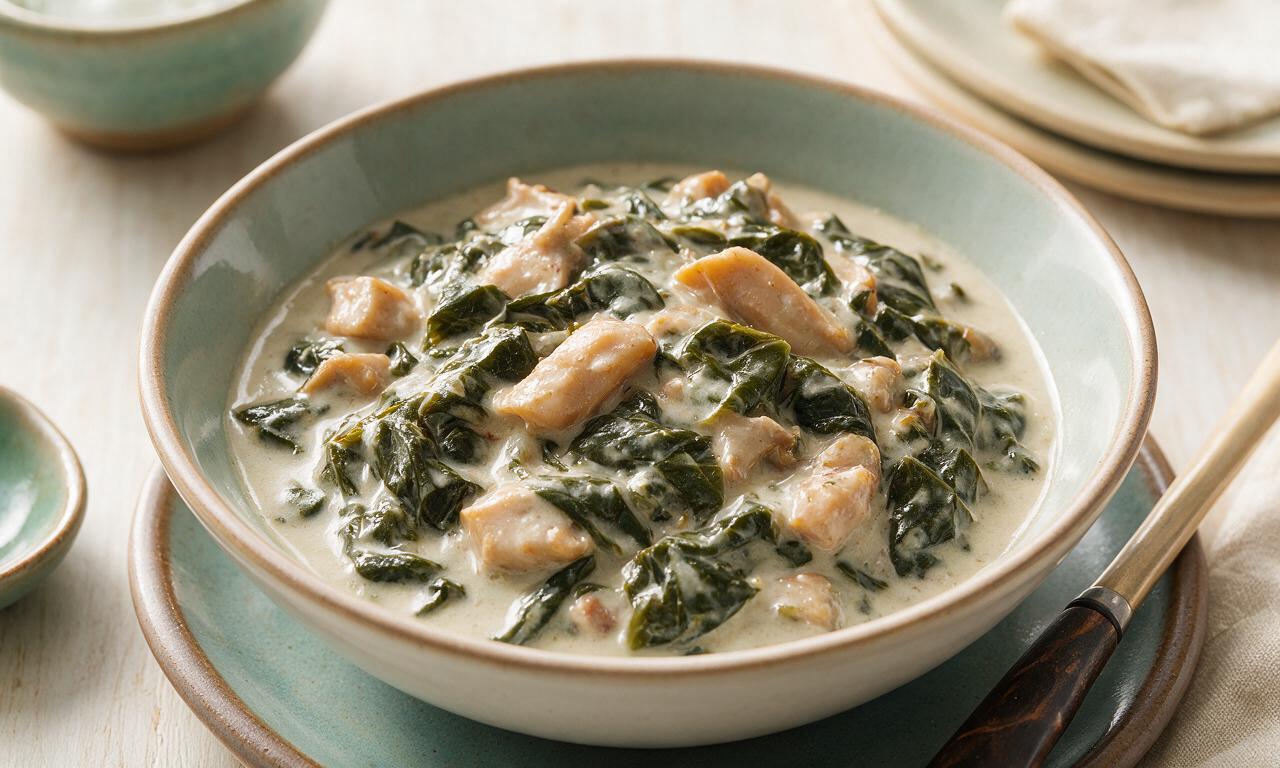
Creamy, comforting Hawaiian classic with tender squid, earthy taro leaves, and rich coconut milk, delivering warm island flavor in every bite.

Ingredients

Cleaned fresh squid (tubes and tentacles) 450 grams (1 lb)
Fresh young taro leaves 450 grams
Full-fat canned coconut milk 400 ml (1 standard can)
Yellow onion 150 grams (1 medium, diced)
Fresh garlic 10 grams (3 cloves, minced)
Fresh ginger 15 grams (1 tablespoon, grated)
Alaea Hawaiian sea salt (or kosher salt) 5 grams (1 teaspoon)
Filtered water 120 ml (1/2 cup)
Freshly ground black pepper 1 gram (1/4 teaspoon)

Steps

1

Prep all ingredients

Pat cleaned squid dry with paper towels, cut tubes into 2.5cm (1-inch) rings, leave tentacles whole, and refrigerate until needed. Remove tough fibrous stems from taro leaves, tear leaves into 5cm (2-inch) pieces, and rinse thoroughly under cold running water to wash away dirt. Dice the yellow onion, mince garlic, grate fresh ginger, and measure all remaining ingredients to set up for smooth cooking.
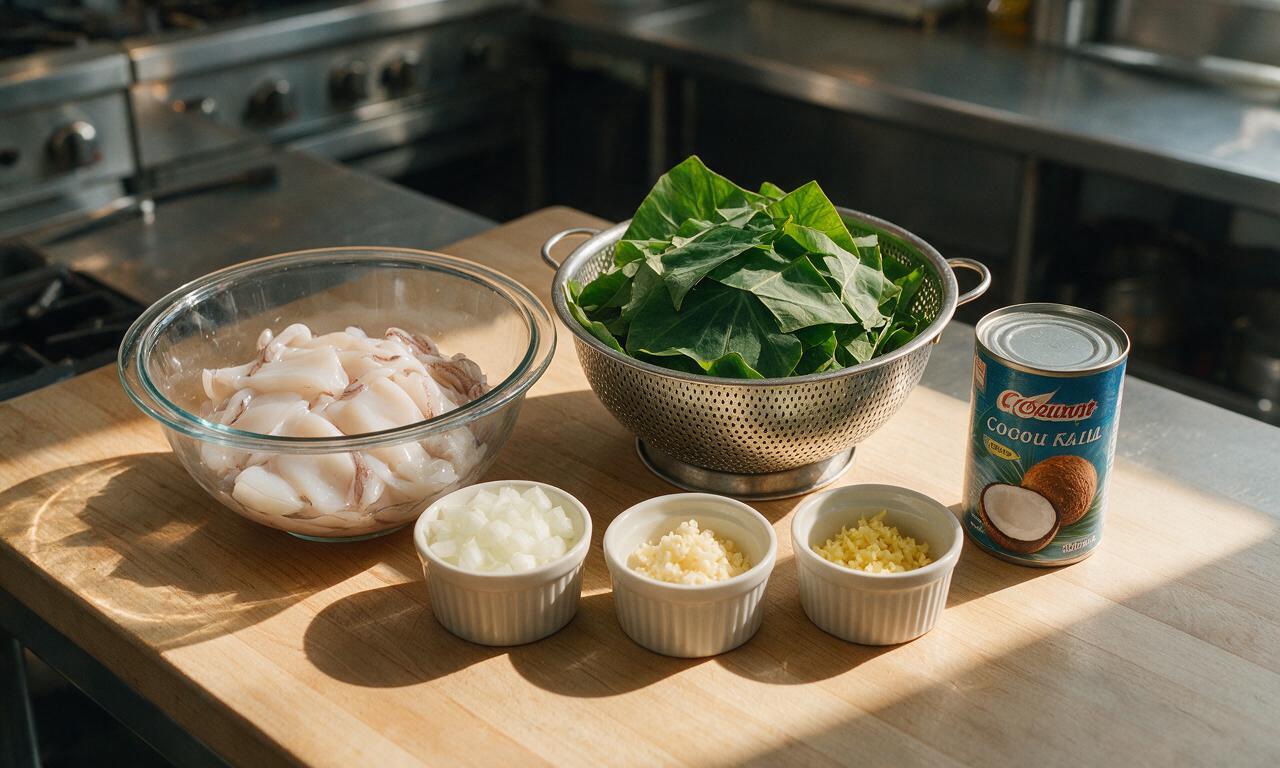
Step 1
step1:Prep all ingredients
2

Simmer taro leaves fully

Place rinsed taro leaves and 120ml filtered water in a large heavy-bottomed stockpot set over medium heat (stovetop setting 4/10). Bring to a gentle simmer, then cover, reduce heat to medium-low (setting 3/10), and cook for 20 minutes, stirring every 5 minutes, until leaves are completely wilted and tender with no crisp sections remaining. Undercooked taro leaves contain irritating calcium oxalate crystals, so do not rush this step.
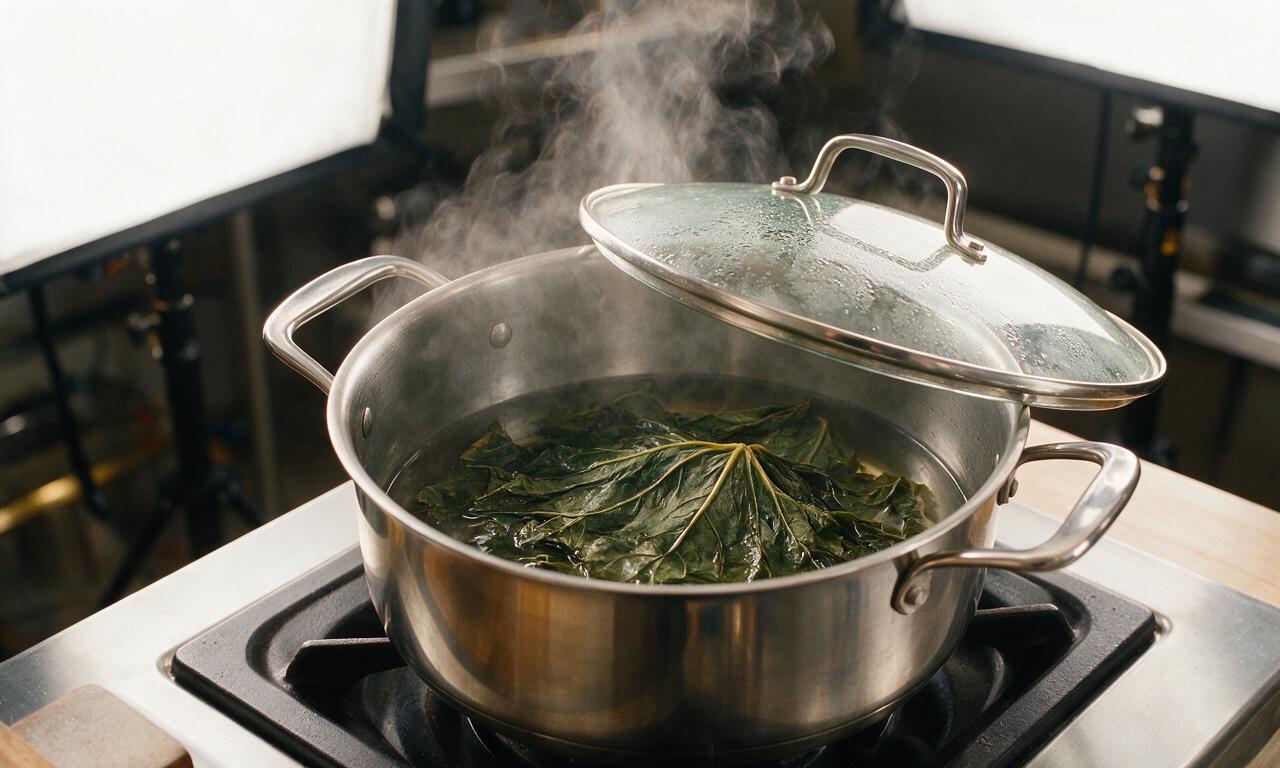
Step 2
step2:Simmer taro leaves fully
3

Sauté aromatic base

Push cooked taro leaves to the outer edges of the pot to create a well in the center. Scoop 2 tablespoons (30ml) of the thick coconut cream from the top of the coconut milk can into the well, then turn heat to medium (setting 4/10). Add diced onion, minced garlic, and grated ginger to the coconut cream, sauté for 3 minutes until onion is soft and translucent, stirring frequently to avoid burning. Mix the cooked aromatics evenly into the taro leaves.
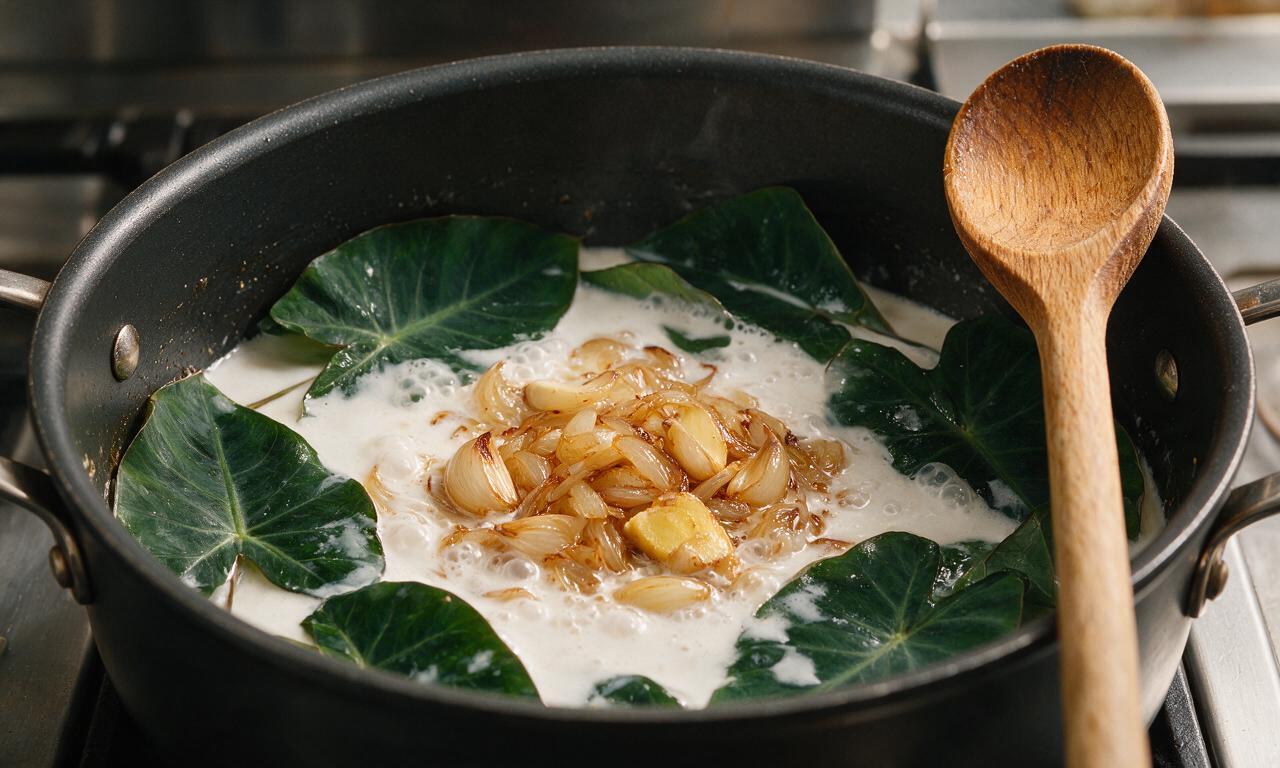
Step 3
step3:Sauté aromatic base
4

Simmer coconut milk mixture

Pour the remaining 370ml of coconut milk into the pot, add 1 teaspoon alaea salt and 1/4 teaspoon black pepper, and stir to fully combine all ingredients. Bring the mixture to a low, gentle simmer over medium-low heat (setting 3/10), then cover and cook for 10 minutes, stirring every 3 minutes to prevent the coconut milk from scorching on the pot bottom.
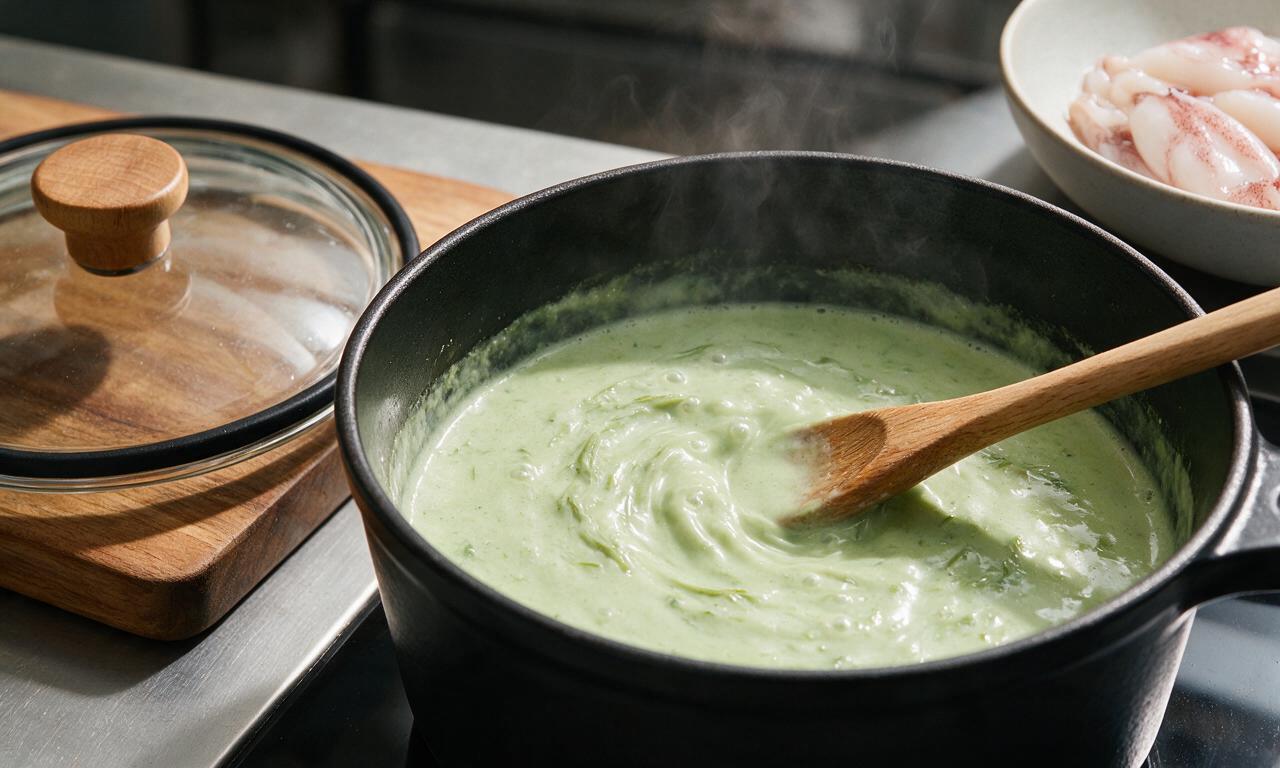
Step 4
step4:Simmer coconut milk mixture
5

Cook squid to tenderness

Adjust heat to medium (setting 4/10), then add the prepped squid rings and tentacles to the pot, stirring gently to fully submerge all squid in the creamy mixture. Cover and cook for exactly 5 minutes, stirring once at the 2.5 minute mark, until squid is opaque white and just tender. Do not cook longer than 6 minutes, as high heat or extended cooking will turn squid rubbery and tough.
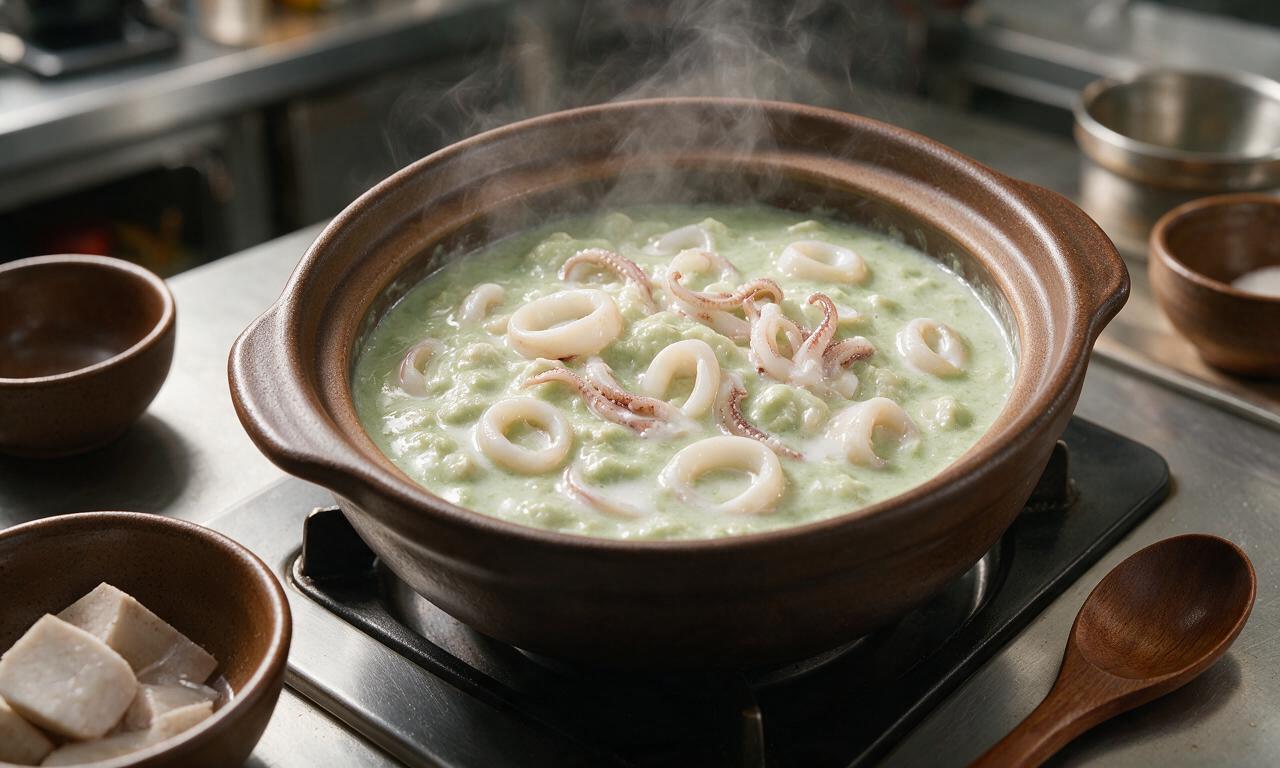
Step 5
step5:Cook squid to tenderness
6

Rest and serve hot

Taste the dish and adjust seasoning with up to 1/4 teaspoon extra salt if desired, then turn off the heat. Cover the pot and let the squid luau rest for 2 minutes to allow flavors to meld. Serve hot in shallow bowls, paired with steamed white rice if desired.
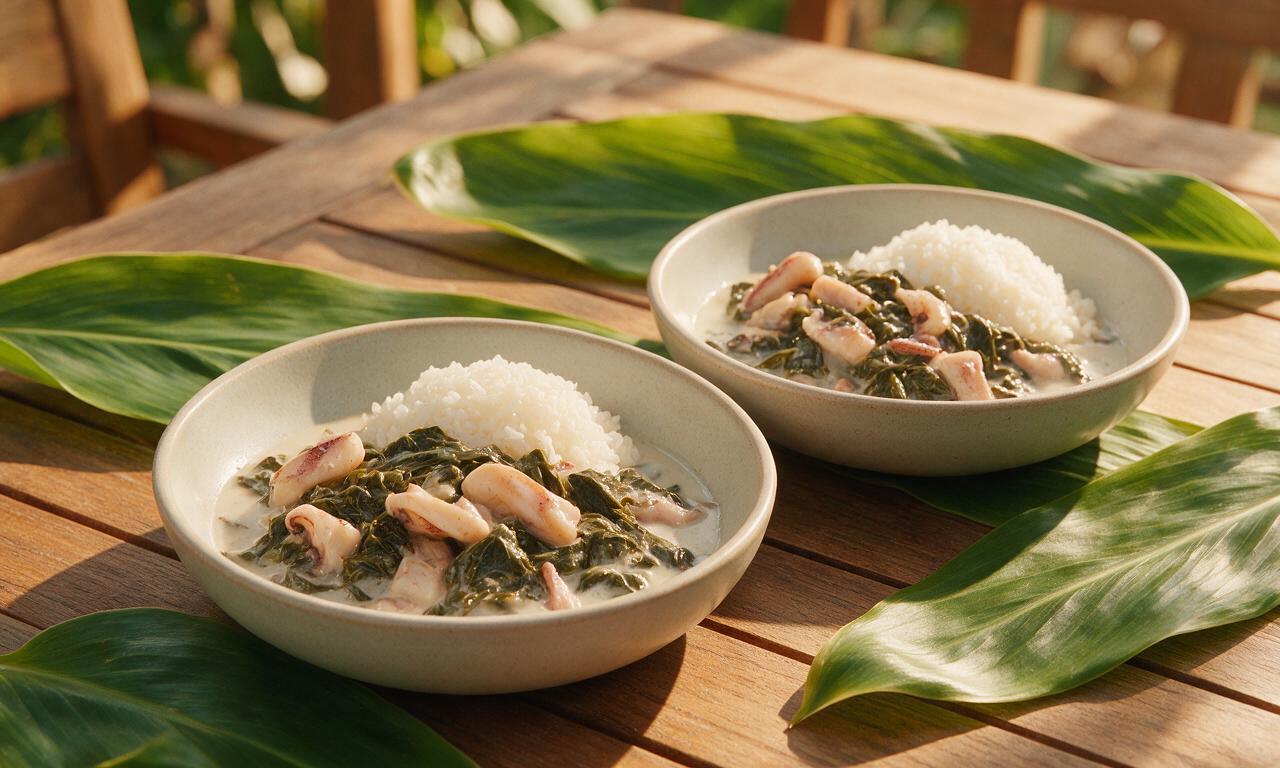
Step 6
step6:Rest and serve hot

Tips

1.Always cook taro leaves for the full recommended time: undercooked leaves contain sharp calcium oxalate crystals that cause an itchy, uncomfortable sensation in the mouth and throat.
2.Avoid boiling the dish rapidly after adding squid: squid cooks very quickly, and high heat or overcooking will turn it chewy and rubbery instead of tender.
3.If fresh taro leaves are hard to find, you can use thawed frozen taro leaves, but add 5 minutes to the initial simmer time to ensure they are fully tender and free of irritating crystals.
✨ You May Also Like

Main Course
🍜 United Kingdom

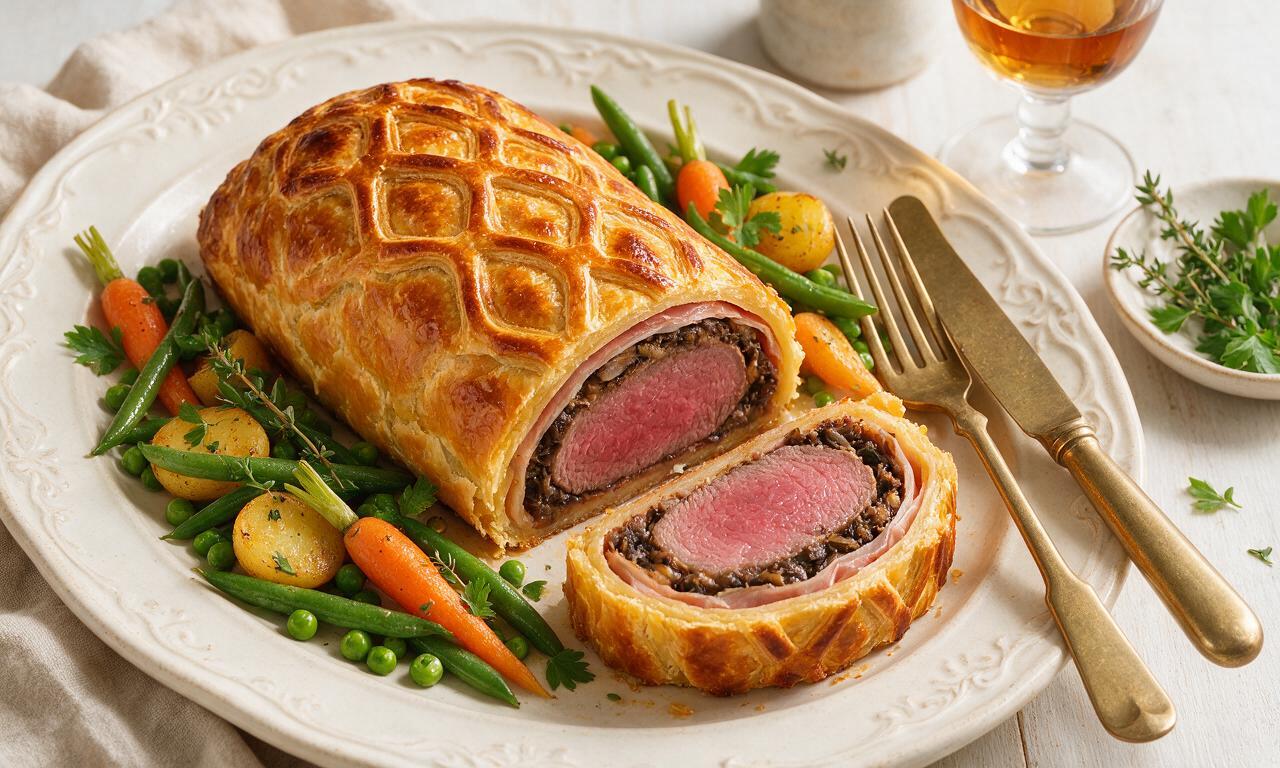
A showstopping classic of tender seared beef, savory mushroom duxelles, and crisp prosciutto wrapped in flaky golden puff pastry, baked to juicy perfection.

⏱️ 2 hours 1Main Course ★ 4.7
Main Course
🍜 India

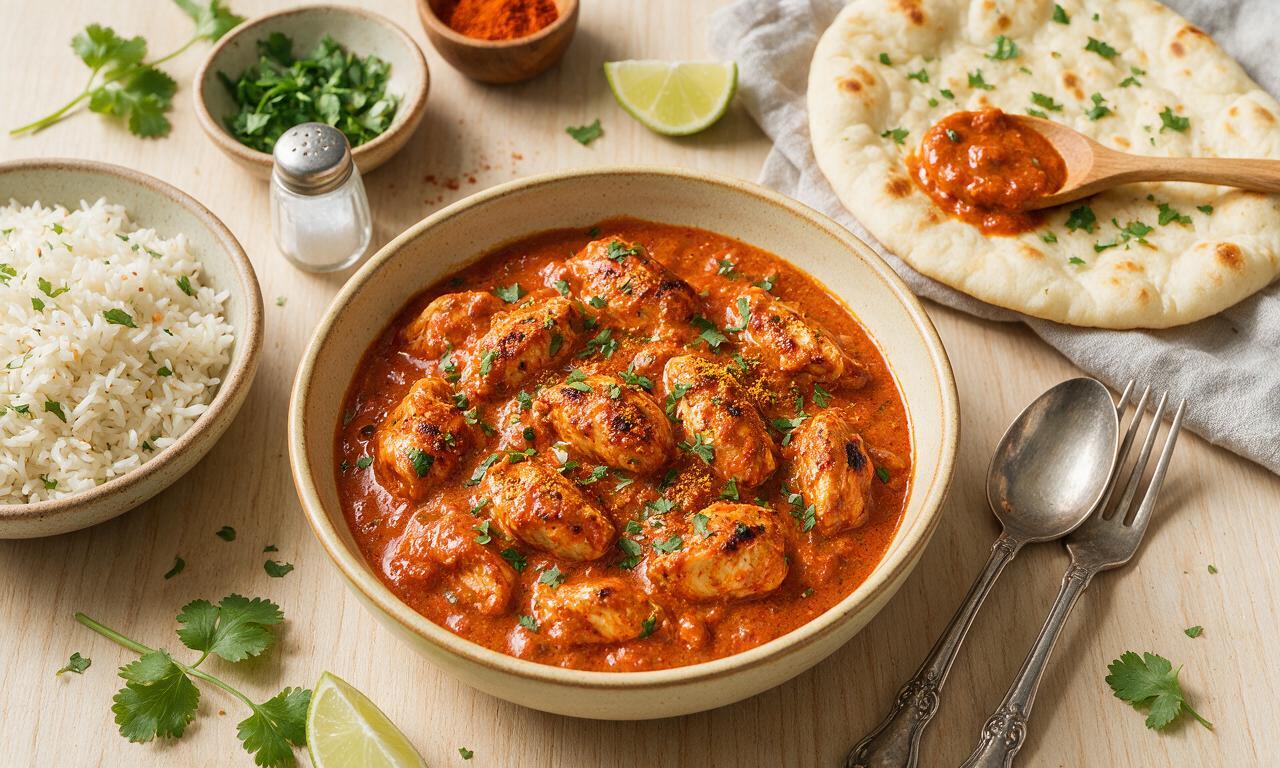
Tender charred marinated chicken simmered in a rich, spiced creamy tomato sauce, this iconic Anglo-Indian curry pairs perfectly with basmati rice or warm naan.

⏱️ 50 minuteMain Course ★ 4.8
Main Course
🍜 Thailand

Classic tangy, sweet, and savory Thai stir-fried rice noodles with shrimp, tofu, and crunchy garnishes, balancing all five core Thai flavor profiles.

⏱️ 30 minuteMain Course ★ 4.6
Main Course
🍜 United Kingdom

Crispy golden beer-battered cod and fluffy double-fried chips, served with tangy tartar sauce and malt vinegar: the timeless, beloved British pub comfort classic.

⏱️ 45 minuteMain Course ★ 4.9
Main Course
🍜 Mexico

Smoky, chile-marinated pork tacos with caramelized pineapple, fresh cilantro, and lime: a beloved classic Mexican street food perfect for casual summer gatherings.

⏱️ 1 hour 45Main Course ★ 4.7
Main Course
🍜 United States

Crunchy Fritos corn chips layered with savory beef chili and melted cheddar, topped with cool, zesty fixings for a beloved, cozy Tex-Mex comfort food.

⏱️ 35 minuteMain Course ★ 4.9

Squid Luau:Frequently Asked Questions

1.Why do my mouth and throat feel itchy after eating taro leaves in squid luau?
That irritation comes from sharp calcium oxalate crystals in undercooked taro leaves. To avoid this, simmer leaves covered for a full 45 minutes before tasting, and avoid lifting the lid to stir early—escaping steam can carry these irritants too. Fully cooked leaves are completely safe, with zero stinging or itchy aftertaste.
2.Can I substitute fresh taro leaves if I can’t find them locally?
Frozen packaged young taro leaves from Asian or Polynesian grocery stores work perfectly as a swap. Thaw them first and squeeze out all excess moisture before cooking to avoid a watery dish. Skip swapping in spinach—it has a milder, grassier flavor, turns mushy fast, and won’t deliver that signature earthy taro depth.
3.How do I keep squid tender instead of rubbery in this dish?
Squid turns rubbery when cooked over high, rolling heat. Cut tubes into ½-inch rings, then add them to the gently simmering coconut sauce and keep heat steady at medium-low. If you accidentally overcook squid to a tough texture, just keep it simmering 20 more minutes—it will relax and turn tender again.
4.Do I have to use full-fat coconut milk, or will light coconut milk work?
Full-fat canned coconut milk is non-negotiable for the authentic, rich, creamy texture of classic squid luau. Light coconut milk is cut with added water and stabilizers, leading to a thin, watery sauce that is prone to curdling during long simmers, with a flat, less indulgent flavor that misses the mark.
5.Can I make squid luau ahead of time for a potluck or party?
Absolutely! This dish actually tastes better the next day, as the coconut milk fully infuses with garlic, onion, and earthy taro notes. Let it cool completely, store in an airtight container in the fridge for up to 3 days, and reheat gently on low stovetop, stirring occasionally, to avoid curdling or rubbery squid.
6.What’s the best way to prep fresh squid for this recipe?
If using whole fresh squid, pull the head away from the tube, remove the clear, plastic-like quill from inside the tube, and peel off the thin purple outer membrane. Rinse well, pat dry, cut tubes into ½-inch rings, and leave tentacles whole after discarding the hard, beak-like piece at the tentacle cluster’s center.
7.Are there traditional add-ins to boost the authentic Hawaiian flavor?
A pinch of flaky red alaea (Hawaiian sea salt) and a teaspoon of finely minced fresh ginger add classic local depth without overpowering the core flavors. Many home cooks also toss in a small handful of shredded cooked kalua pork for extra savoriness, though keep additions light so taro and coconut stay the star.
8.How do I prevent coconut milk from curdling while cooking?
Keep stovetop heat at medium-low once you add coconut milk, and never bring the dish to a hard, rolling boil. Stir gently every few minutes as it simmers, and hold off on adding acidic ingredients like lime juice until the very end of cooking, as acid will cause coconut fat to separate and curdle.
9.Can I use frozen squid instead of fresh for this dish?
Frozen squid works perfectly here, and is often more reliably tender than fresh squid that has sat on a fish counter for multiple days. Thaw it overnight in the fridge, then pat it completely dry with paper towels before adding to the pot, so excess water doesn’t thin out the rich coconut sauce.
10.How long do taro leaves need to cook to be fully safe to eat?
Young taro leaves need a minimum of 45 minutes of covered, gentle simmering to fully break down the irritating calcium oxalate crystals that cause mouth and throat discomfort. Don’t taste test early—even partially cooked leaves can leave a lingering, unpleasant stinging sensation on your tongue.
11.What sides pair best with squid luau for a traditional Hawaiian meal?
Serve it alongside steamed white rice or poi for a classic local plate, and pair it with lomi lomi salmon, creamy Hawaiian macaroni salad, and kalua pork for a full luau spread. The mild, starchy sides cut through the rich coconut sauce, balancing earthy taro and tender squid for a well-rounded meal.
12.My finished squid luau turned out watery—what went wrong, and how do I fix it?
Watery luau usually comes from skipping the step of squeezing excess moisture out of thawed taro leaves, using light coconut milk, or adding squid that hasn’t been patted fully dry. To fix it, simmer the dish uncovered for 5 to 10 minutes on low heat, stirring gently, until excess water evaporates and the sauce coats a spoon thickly.
13.Do I need to remove the stems from taro leaves before cooking?
Trim off the thick, fibrous lower stems from fresh or thawed taro leaves, as they stay chewy even after long simmering and hold higher concentrations of irritating oxalate crystals. You can leave the thin, tender upper stems attached to the leaf blade, as those will soften fully during cooking for a pleasant, subtle texture.

Comments (3)

3 days ago

OMG I made this for my family’s backyard luau-themed potluck last weekend and everyone was begging for the recipe! I was low-key nervous about prepping the taro leaves right so they wouldn’t leave that itchy tingly feeling on your tongue, but following the 50 minute cook time exactly worked perfectly. The squid was so tender, not rubbery at all, and that creamy coconut base? *Chef’s kiss* SO good, my kids loved it—even my picky 7 year old went back for a second helping. Total game changer for our usual summer cookout rotation!

2 days ago

Wait quick question—did you use fresh or frozen taro leaves? My local Asian market only has frozen and I’m worried it won’t have that same authentic taste!

yesterday

Great question! Frozen taro leaves work perfectly for this recipe—just make sure to thaw them completely and squeeze out any excess water before adding them to the pot to keep the texture and flavor spot on. So stoked you’re excited to try it!

1 week ago

I was so skeptical about making squid at home because I always overcook it until it’s chewy rubber, but this recipe was totally foolproof! I prepped a big batch on Sunday for my weekly meal prep and it held up so well all week for work lunches. The only small swap I made was adding a tiny extra splash of coconut milk because I’m obsessed with that rich, creamy flavor. Will absolutely be making this again soon—already sent the link to my cousin who’s been missing Hawaiian food since she moved back from Oahu!

5 days ago

Love that extra coconut milk swap, that’s such a tasty customization! So happy the cook method helped you get perfectly tender squid—thanks so much for sharing the tip with other readers!

2 hours ago

Tried this last night for date night with my partner and it transported us straight back to our Maui trip last spring! The flavor is so spot on, I couldn’t believe I pulled it off in my own tiny apartment kitchen. The medium difficulty rating was totally fair—definitely don’t rush the step where you simmer the taro leaves low and slow, that’s what keeps them from being itchy and makes all the flavor come together. 10/10, already planning to make this for our next dinner party with friends!