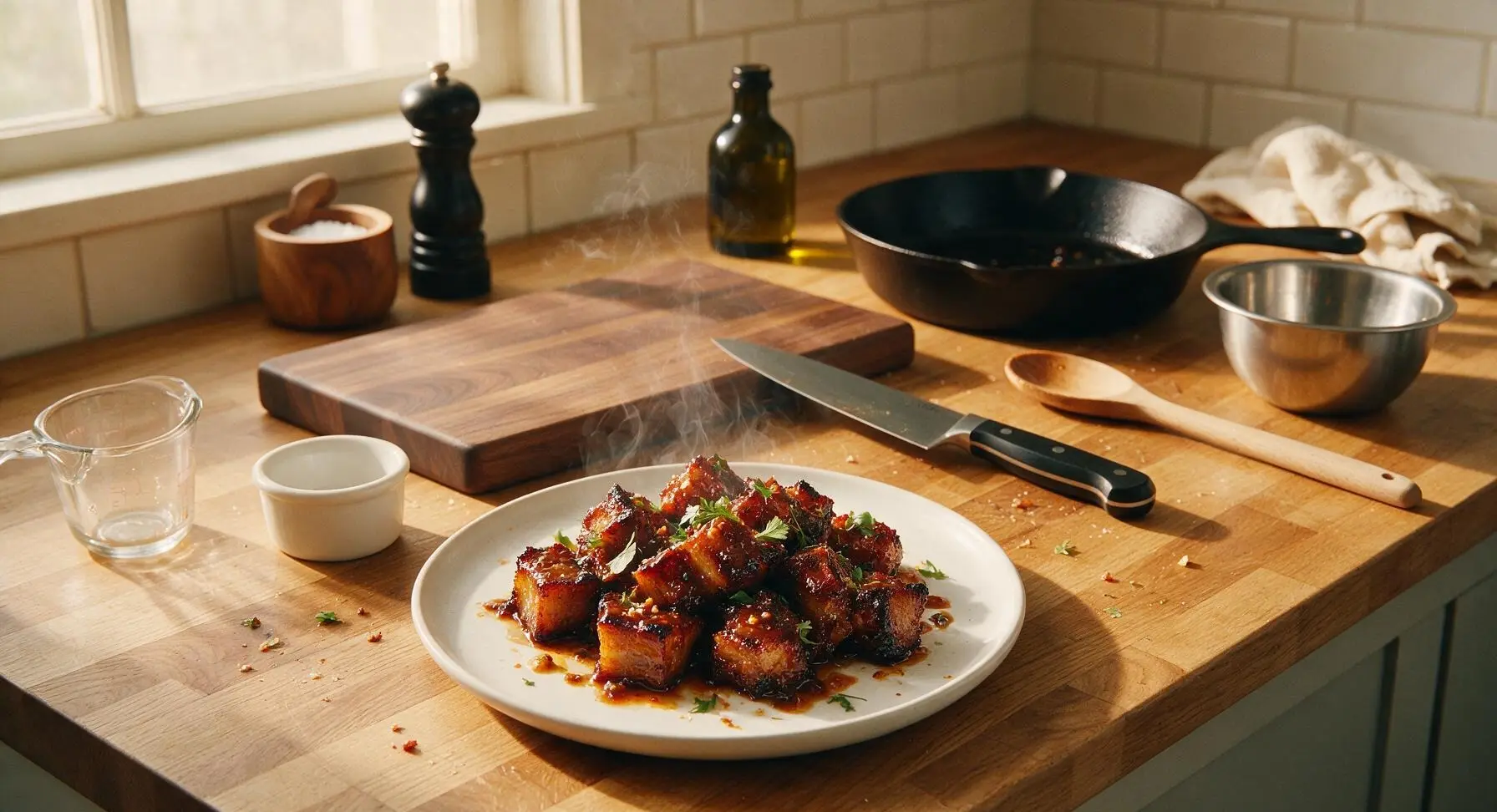
Ssamjang Burnt Ends

title 1
Ssamjang Burnt Ends
⏱️ cook time 2 hours 15 minutes
🍽️ servings 4
⚡ Difficulty medium

intro

Sticky, umami-packed pork belly burnt ends coated in savory-spicy ssamjang glaze, with crisp caramelized edges—perfect for wrapping in perilla leaves or eating straight off the toothpick.

Ingredients
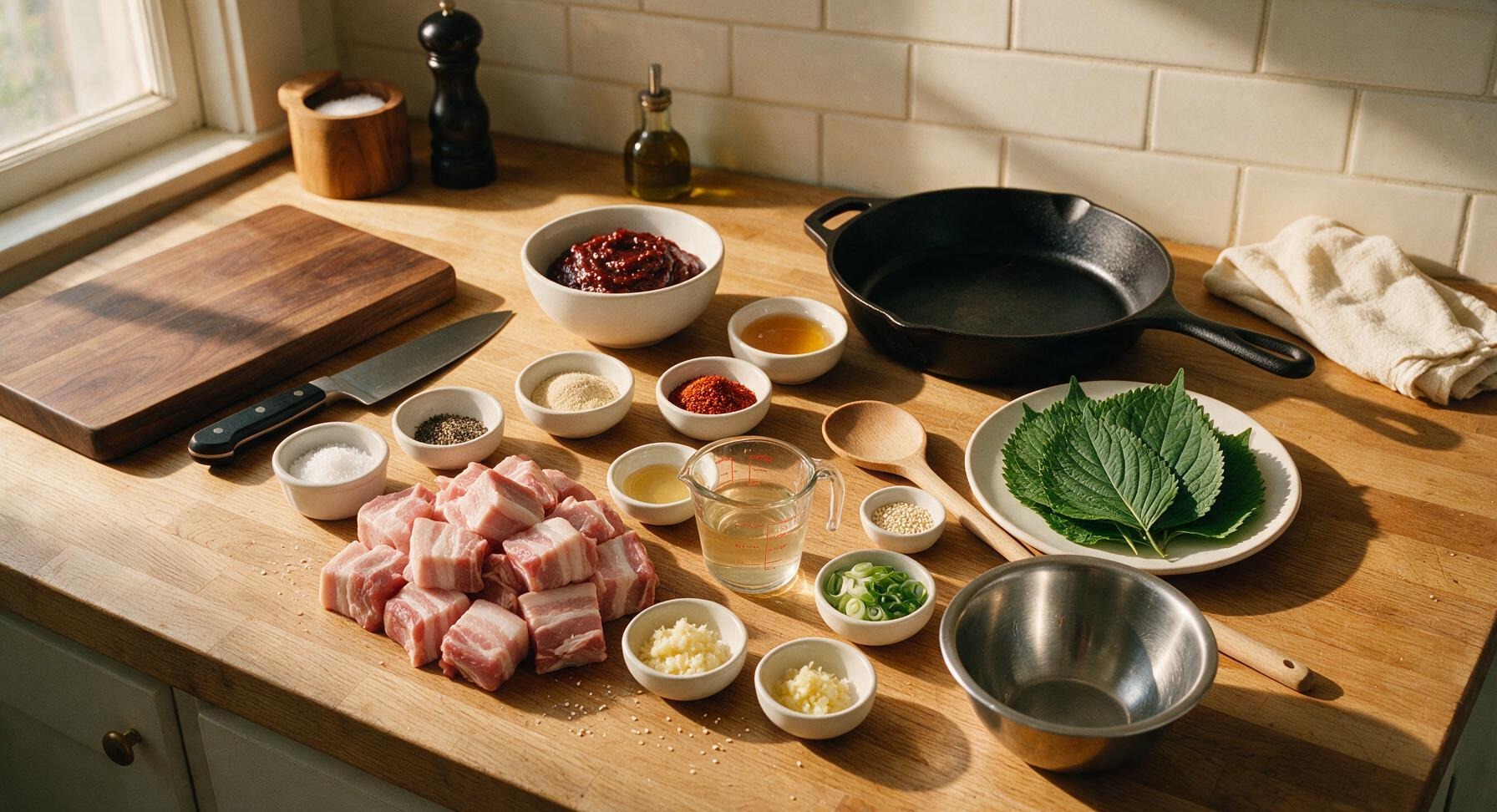
Skinless pork belly 1.5kg, trimmed
Kosher salt 1 tbsp
Freshly ground black pepper 1 tsp
Garlic powder 1 tsp
Gochugaru (Korean chili flakes) 1 tsp
Ssamjang (fermented soybean & chili paste) 1/2 cup
Raw honey 2 tbsp
Unseasoned rice vinegar 1 tbsp
Toasted sesame oil 1 tsp
Fresh garlic 3 cloves, finely grated
Fresh ginger 1 tsp, finely grated
Green onions 2 stalks, green parts thinly sliced
Toasted white sesame seeds 1 tsp, for garnish
Perilla leaves 8 whole leaves, for serving

Steps

1

Cube Pork Belly Evenly

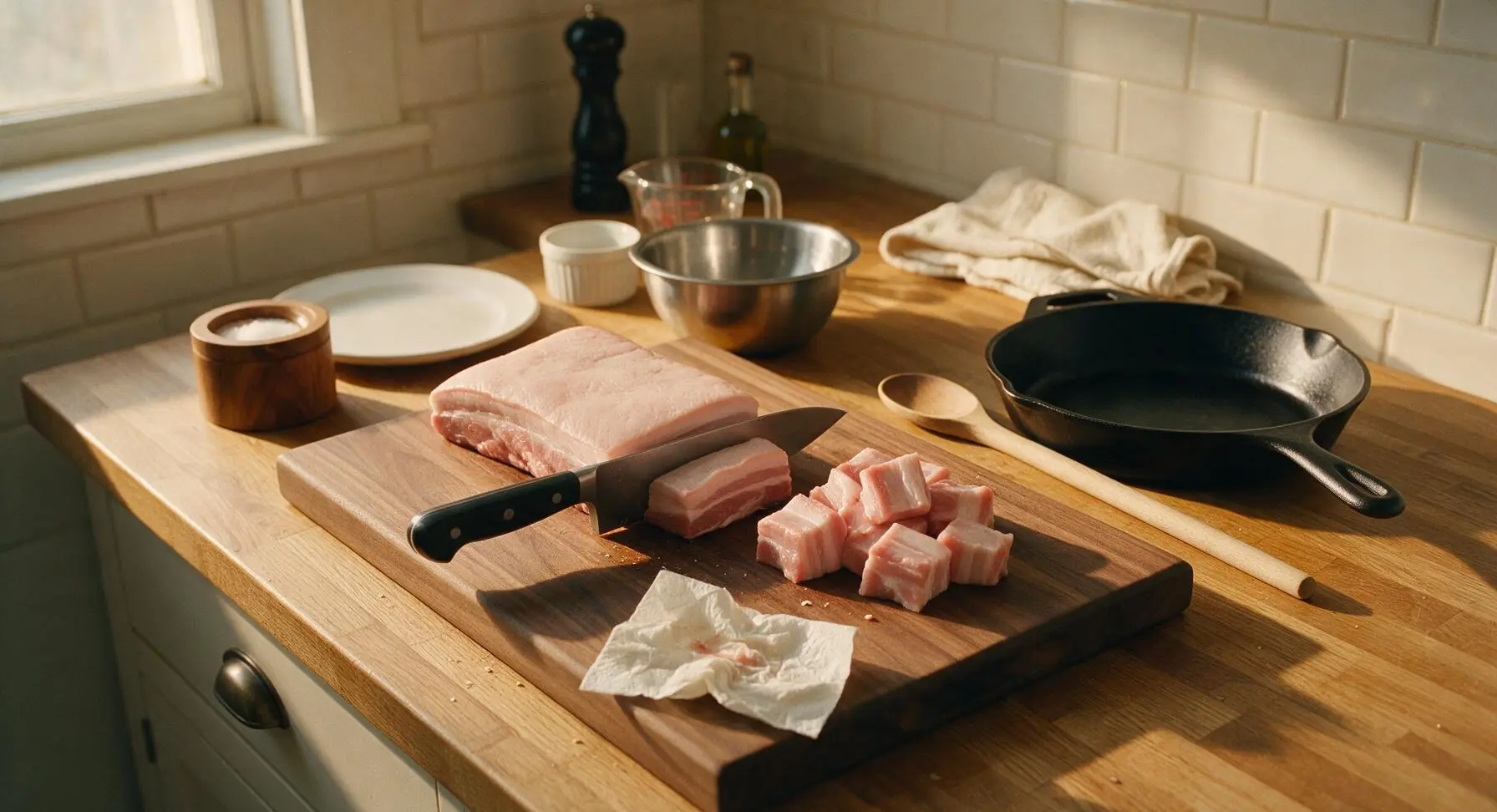
Place the whole skinless pork belly block on the centrally positioned maple cutting board. Use the 8-inch chef knife to trim any thick, loose hard fat deposits from the meat edges, then cut the pork into perfectly uniform 4cm (1.5 inch) cubes. Pat all cubes completely dry on all sides using sheets from the natural brown paper towel roll; dry surfaces ensure rub adheres properly. Set dried cubes aside on a clear corner of the cutting board.
Step 1
step1:Cube Pork Belly Evenly
2

Apply Dry Spice Rub

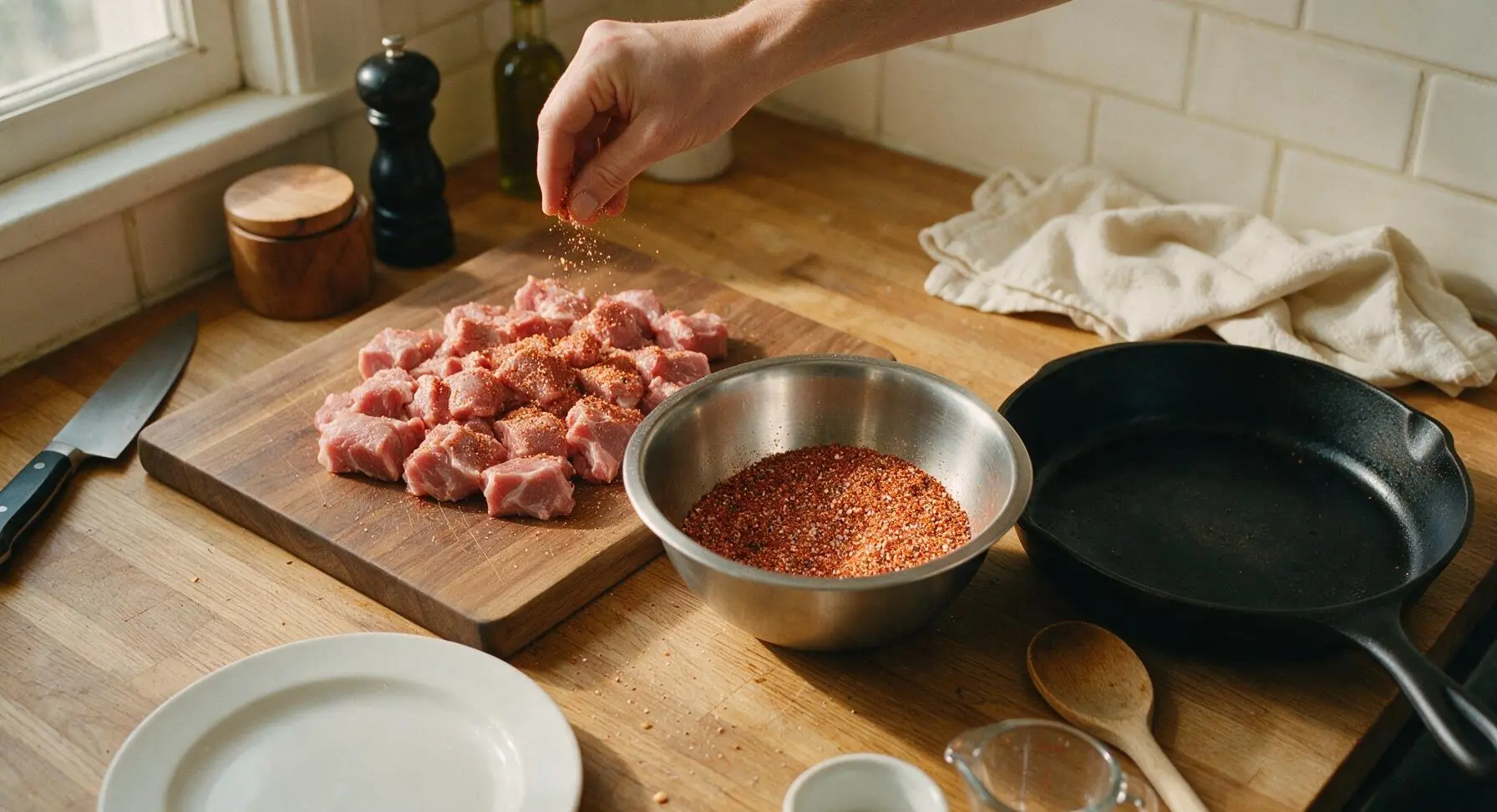
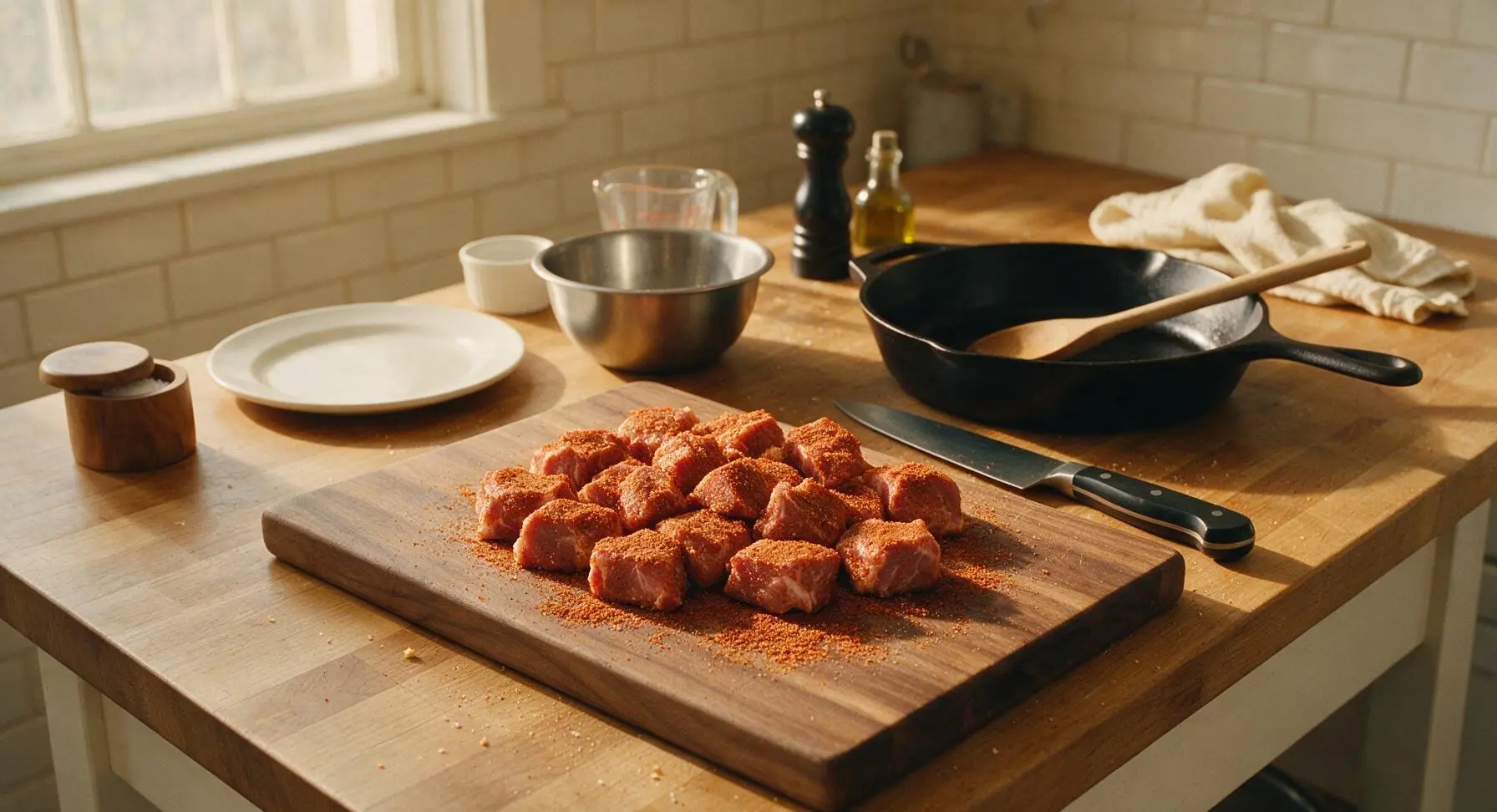
In the small brushed stainless steel mixing bowl, combine 1 tbsp kosher salt, 1 tsp freshly ground black pepper, 1 tsp garlic powder, and 1 tsp gochugaru. Stir until evenly blended with no visible clumps of spice. Add the dried pork cubes to the bowl, toss gently until every cube has a light, even coating of spice on all surfaces. Tap off excess rub from each cube before returning them to the cutting board, to avoid overly salty, hard crusts during cooking.
Step 2
step2:Apply Dry Spice Rub
Step 2
step2:Apply Dry Spice Rub
3

Smoke Cubes Until Tender

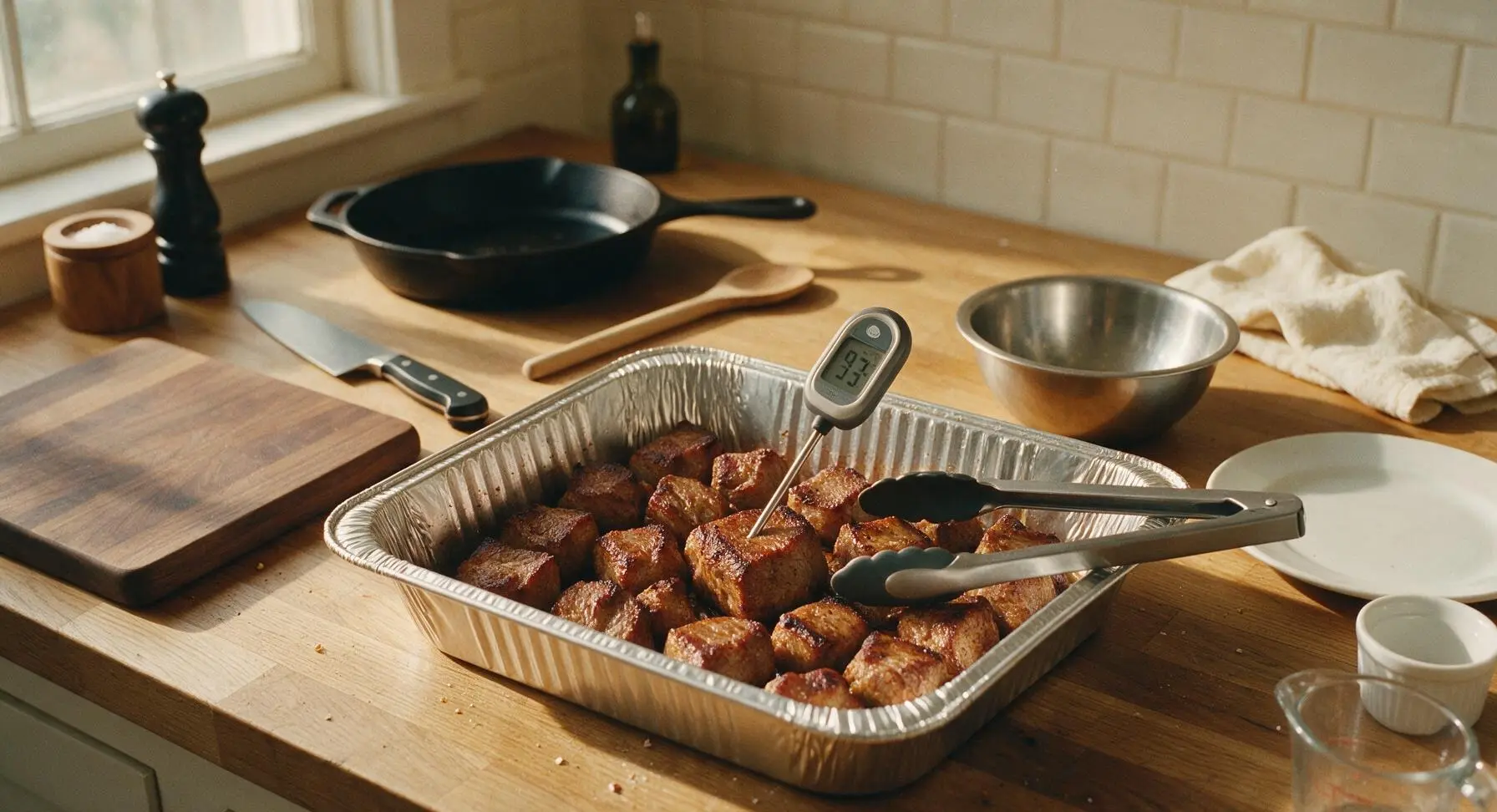
Arrange the seasoned pork cubes in a single layer in the heavy-gauge aluminum foil pan, leaving 1cm of space between each cube to allow smoke to circulate around all sides. Place the pan on a preheated smoker (or indirect-heat gas grill) set to 120C (250F), using apple or oak wood for mild smoke. Cook for 1 hour 45 minutes, until cubes are deep golden brown, give slightly when squeezed gently with tongs, and reach an internal temperature of 93C (200F) when probed with the digital instant-read thermometer. Do not flip or stir cubes during this initial cook stage.
Step 3
step3:Smoke Cubes Until Tender
4

Whisk Ssamjang Glaze

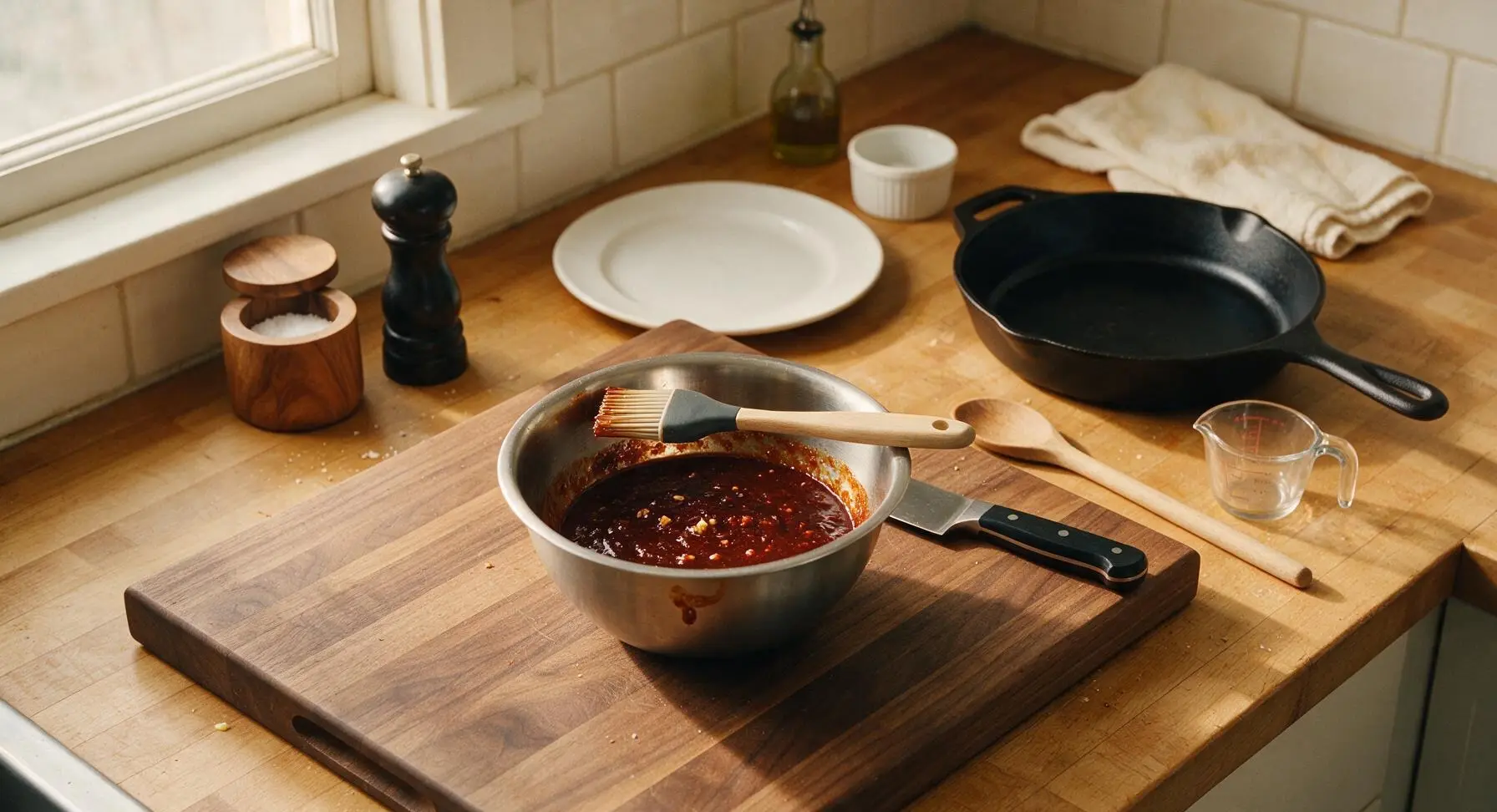
While the pork smokes, prepare the glaze in the medium brushed stainless steel mixing bowl: combine 1/2 cup ssamjang, 2 tbsp raw honey, 1 tbsp unseasoned rice vinegar, 1 tsp toasted sesame oil, 3 cloves finely grated garlic, and 1 tsp finely grated fresh ginger. Whisk until completely smooth, with no remaining lumps of ssamjang. The glaze should be thick but spreadable, similar to classic barbecue sauce consistency; stir in 1/2 tsp of water if too thick to brush easily.
Step 4
step4:Whisk Ssamjang Glaze
5

Toss Cubes in Glaze

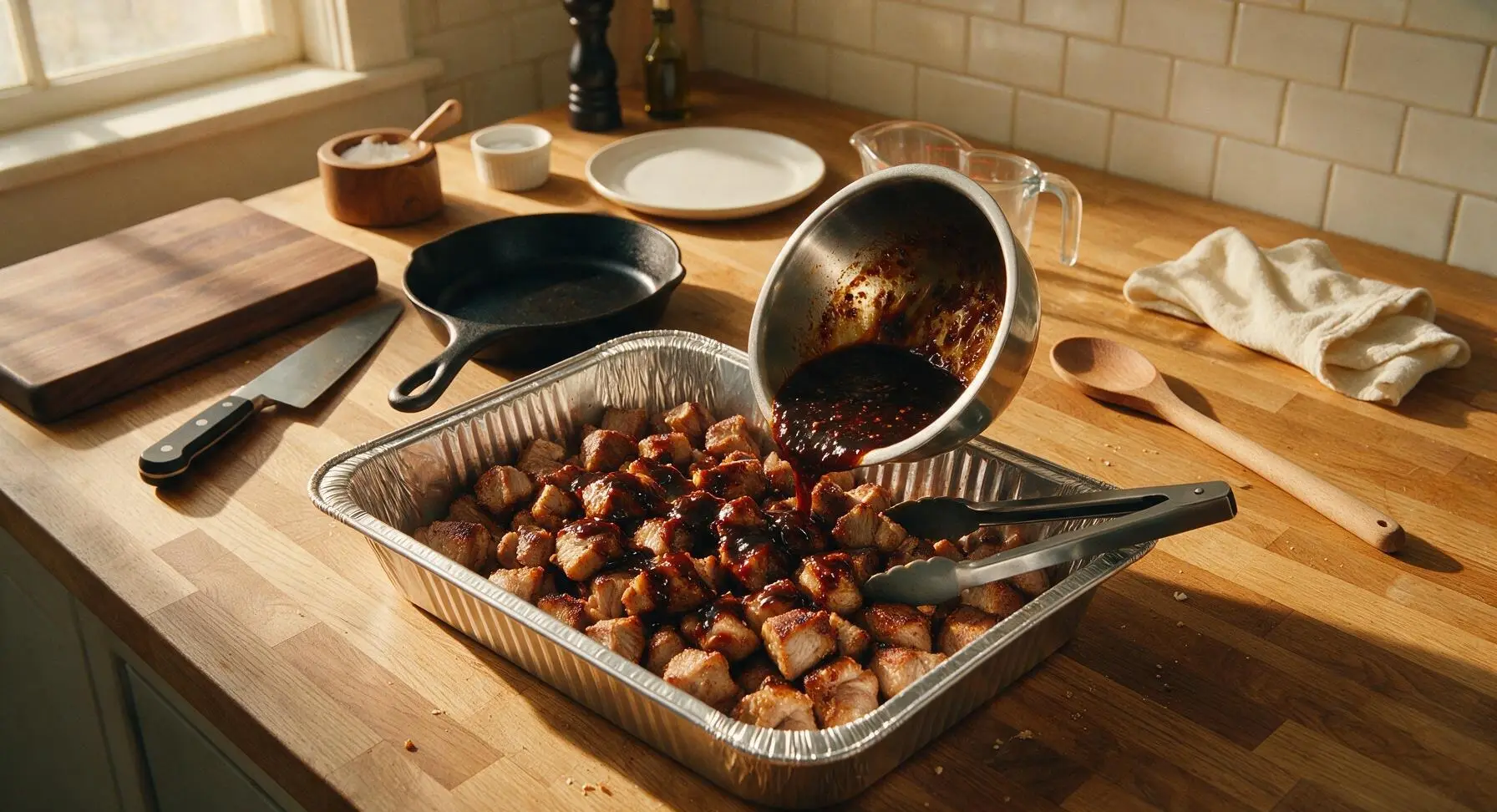
Once the pork cubes reach 93C (200F), carefully remove the foil pan from the heat and return it to the counter. Pour 3/4 of the prepared ssamjang glaze over the hot pork cubes, using the silicone-tipped tongs to toss gently until every cube is fully coated in glossy glaze. Reserve the remaining 1/4 of the glaze in the mixing bowl for basting during the final cook stage.
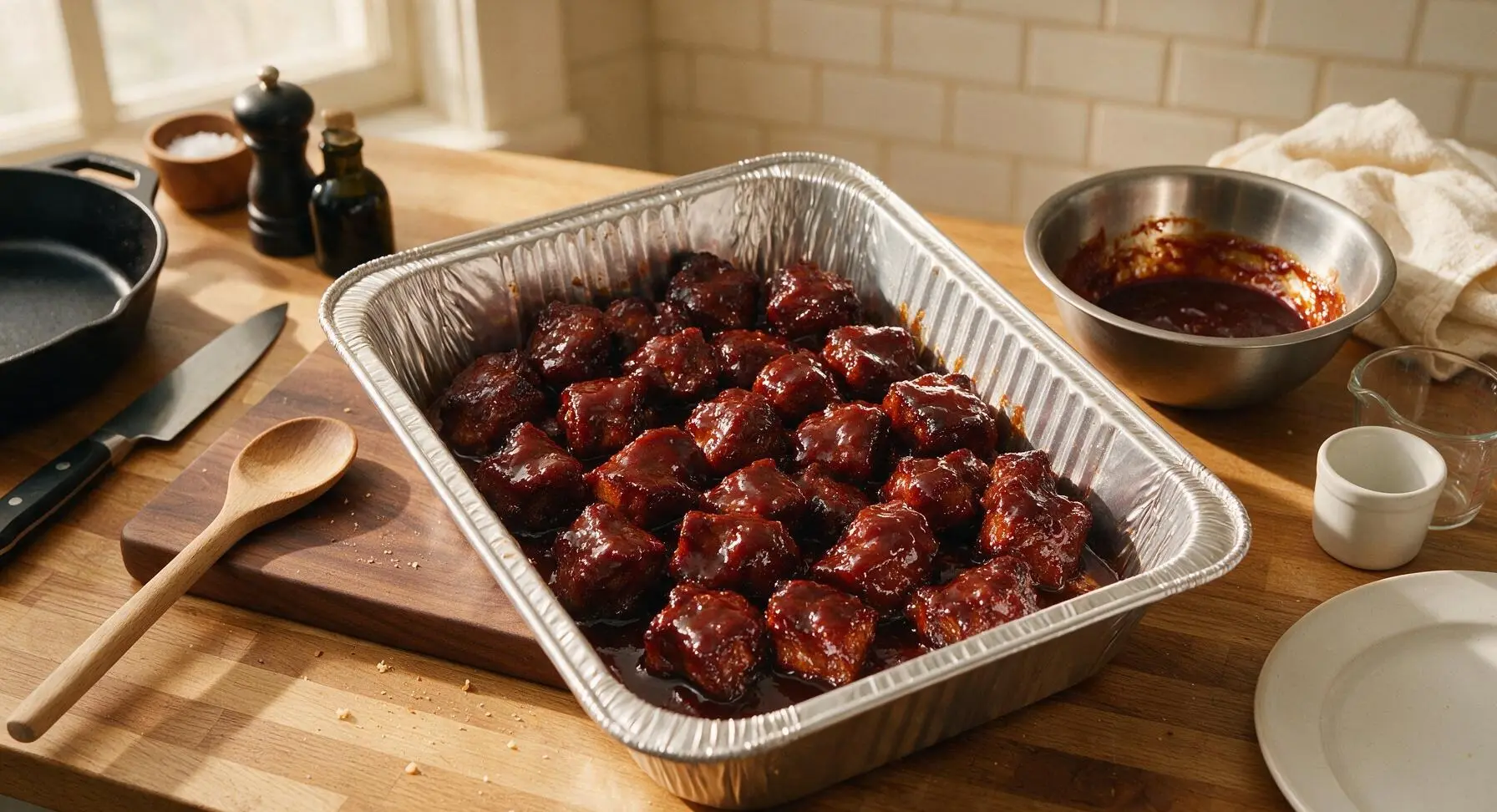
Step 5
step5:Toss Cubes in Glaze
Step 5
step5:Toss Cubes in Glaze
6

Caramelize Glazed Cubes

Return the foil pan of glazed pork cubes to the smoker/grill, increase the cooking temperature to 175C (350F), and cook for an additional 25-30 minutes. Use the basting brush to coat cubes with the reserved remaining glaze every 10 minutes, until the glaze is sticky, bubbly, and slightly charred at cube edges, and pork reaches an internal temperature of 96C (205F). Watch closely during the final 10 minutes, as the honey in the glaze will burn quickly if left unattended.
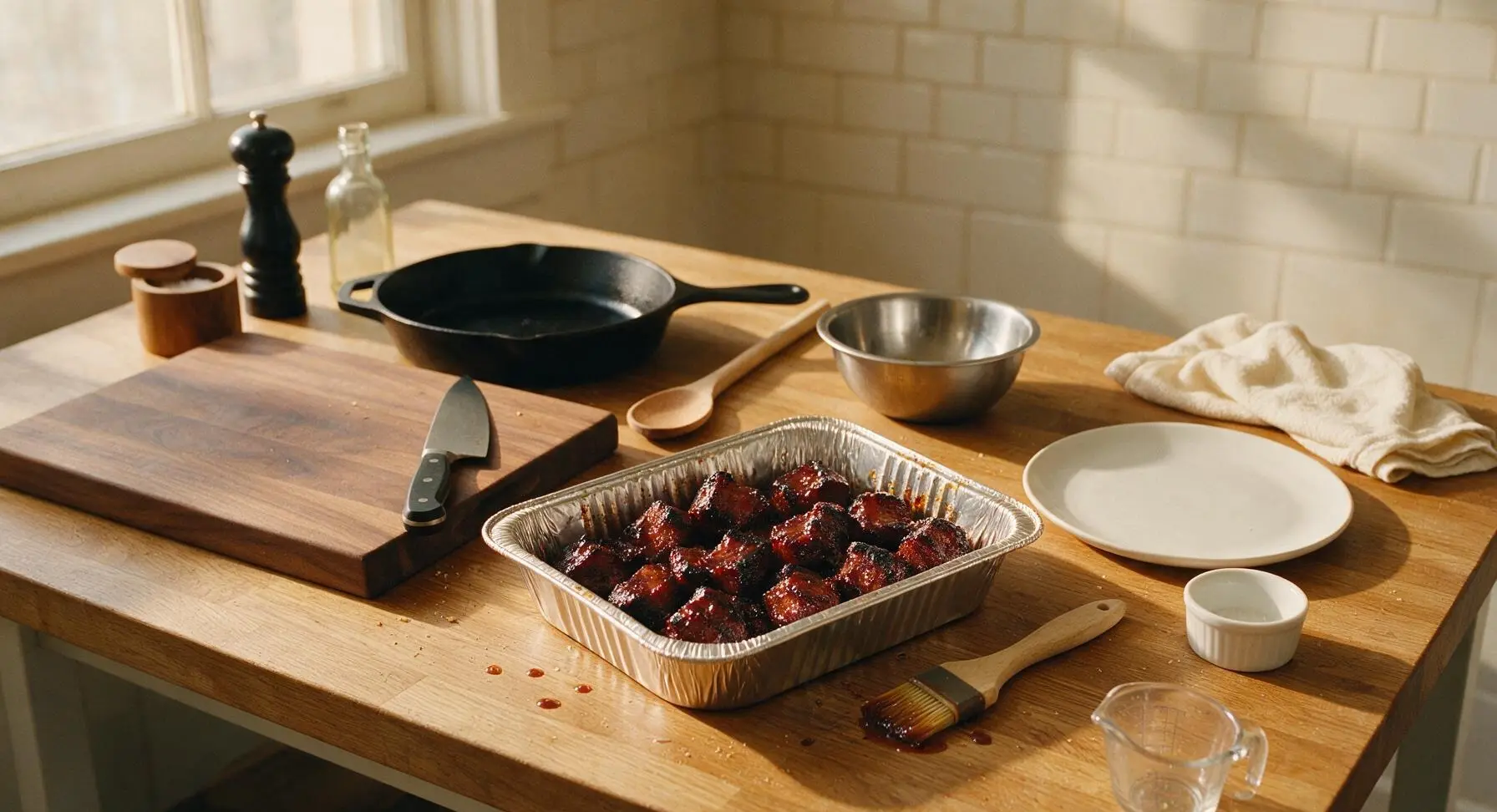
Step 6
step6:Caramelize Glazed Cubes
7

Plate and Garnish

Use the tongs to transfer the hot glazed burnt ends to the matte charcoal gray ceramic serving platter, piling them loosely in the center. Sprinkle the top evenly with 1 tsp toasted white sesame seeds and thinly sliced green onion tops. Tuck 8 whole perilla leaves around the platter rim for serving, and serve immediately while the glaze is hot and sticky.
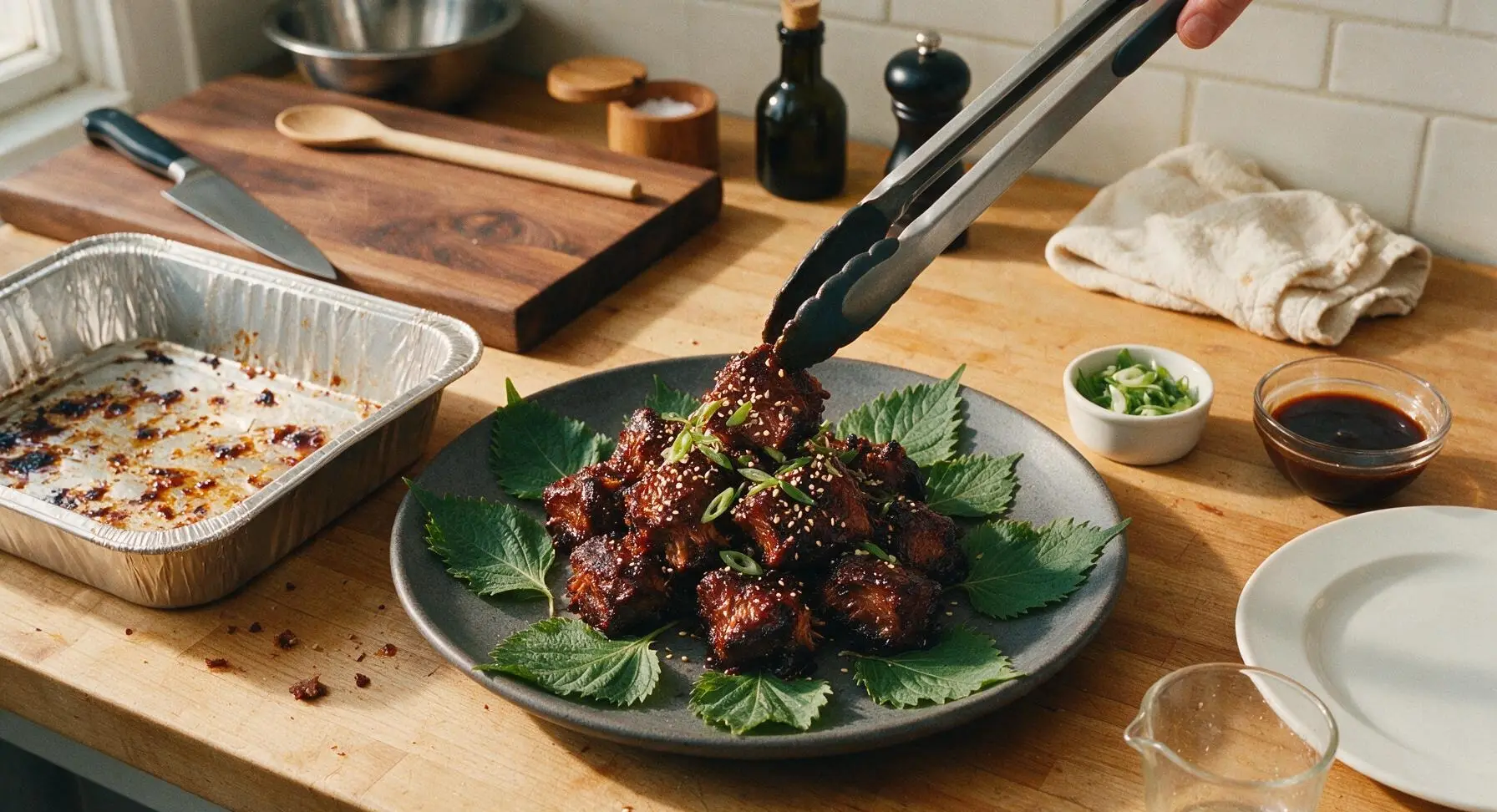
Step 7
step7:Plate and Garnish

Tips

1.Pat pork belly completely dry with paper towels before applying the dry rub: excess surface moisture prevents the spice rub from adhering properly and stops a crisp, flavorful bark from forming during the initial smoke stage.
2.Cut pork belly into perfectly uniform 4cm (1.5 inch) cubes: unevenly sized pieces cook at different rates, leading to burnt smaller cubes and under-tender larger cubes that fail to absorb the ssamjang glaze evenly.
3.If using a standard gas grill instead of a dedicated smoker, place a small foil packet of soaked apple wood chips directly on the heat deflector to add gentle smoke flavor, and keep the pork on the indirect heat side to prevent the honey in the glaze from burning too quickly.
✨ You May Also Like

BBQ & Grilling
🍜 United States

Tender, melt-in-your-mouth beef brisket with a crisp, spiced bark, slow-smoked to deep smoky perfection, the iconic centerpiece of Texas backyard barbecue.

⏱️ 12 hours BBQ & Grilling ★ 4.4
BBQ & Grilling
🍜 Korea

Tender, sweet-savory marinated beef short ribs, a beloved Korean BBQ staple with caramelized, slightly charred edges and deep umami flavor, perfect for outdoor summer gatherings.

⏱️ 4 hours 2BBQ & Grilling ★ 4.8
BBQ & Grilling
🍜 United States

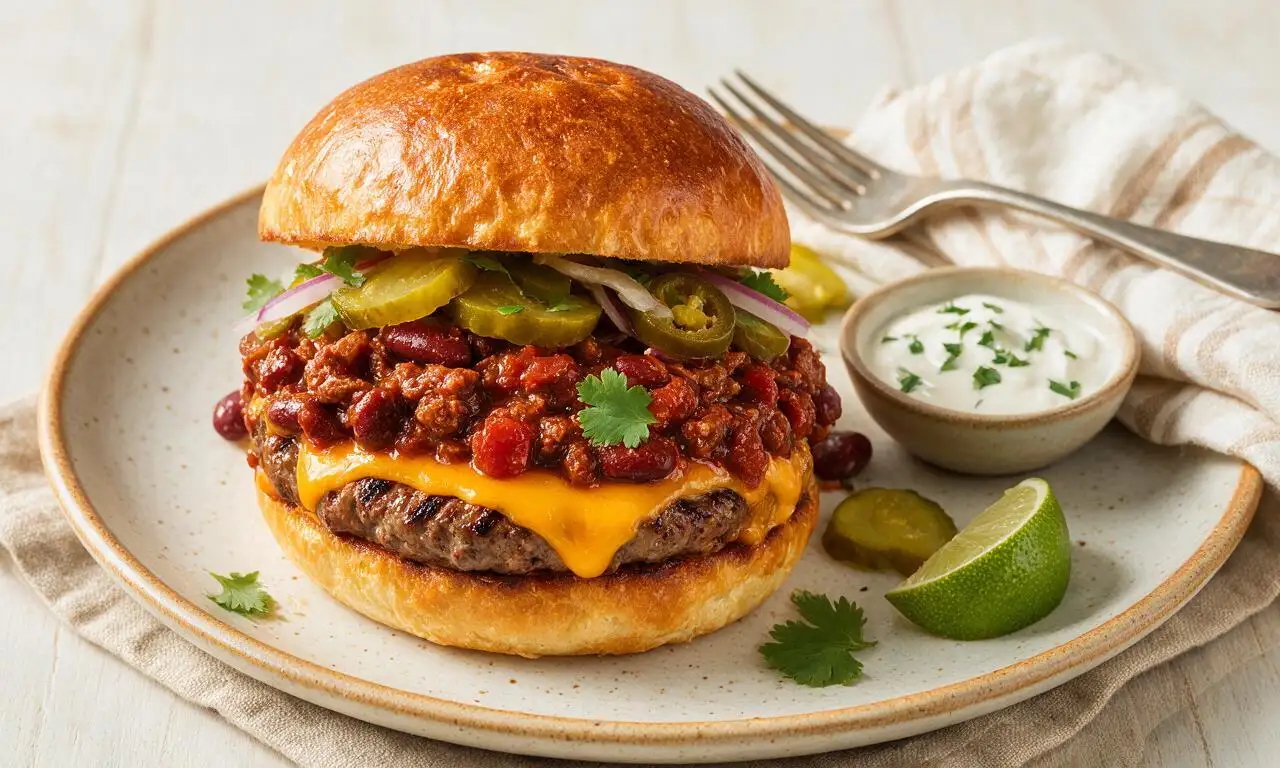
Juicy grilled beef patties topped with smoky homemade chili, melted cheddar, and tangy pickles on toasted brioche buns for a hearty, flavor-packed handheld meal.

⏱️ 40 minuteBBQ & Grilling ★ 4.7
BBQ & Grilling
🍜 United States

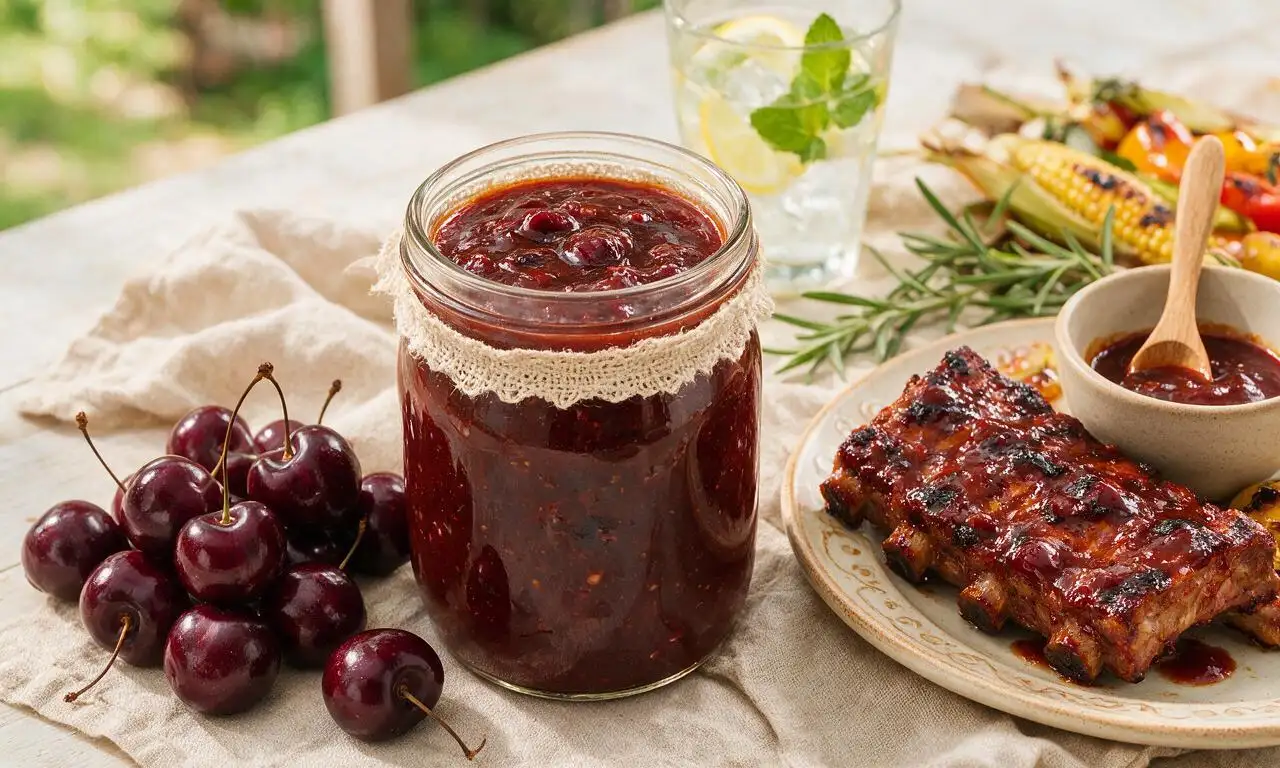
A sweet, smoky, tangy BBQ sauce brightened with peak-season dark cherries, ideal for glazing grilled ribs, chicken, pork, or summer roasted veggies.

⏱️ 35 minuteBBQ & Grilling ★ 4.7
BBQ & Grilling
🍜 United States

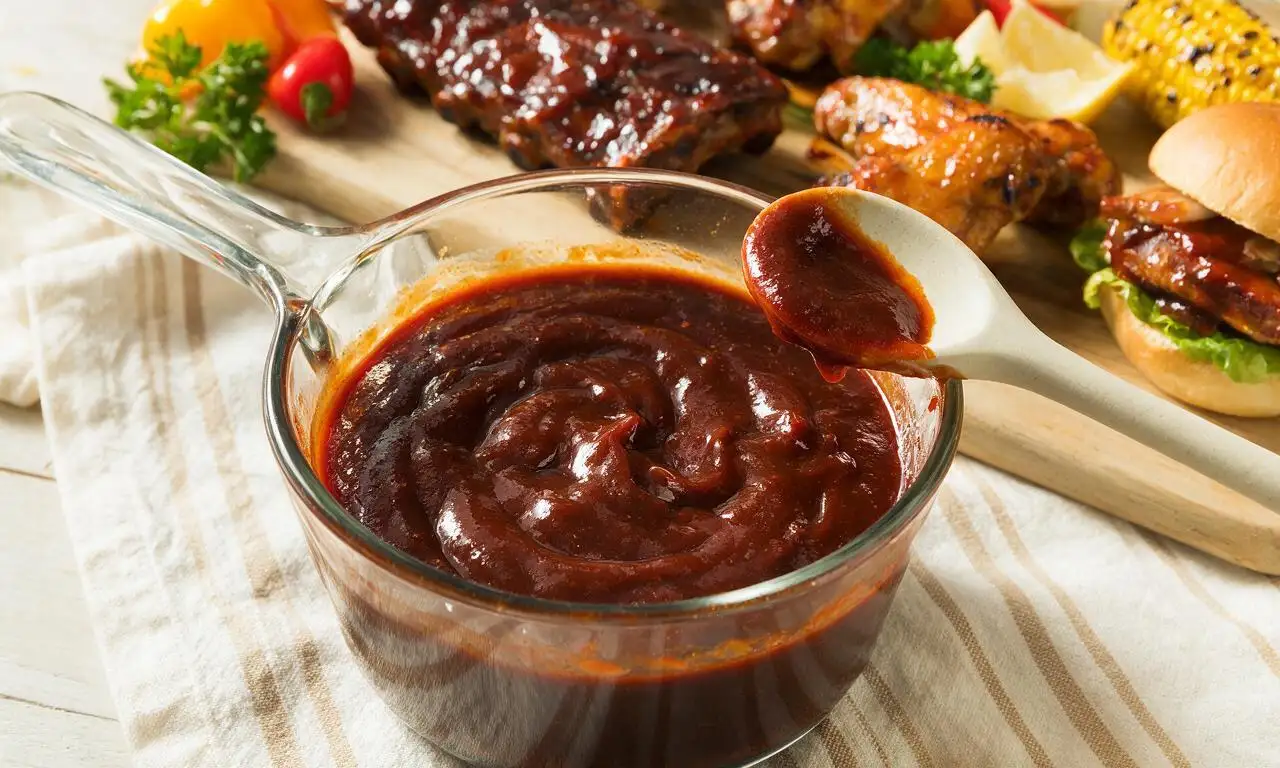
Rich, smoky, slightly sweet homemade bourbon BBQ sauce with deep caramel notes, ideal for glazing grilled ribs, chicken, and burgers at cookouts.

⏱️ 25 minuteBBQ & Grilling ★ 4.7
BBQ & Grilling
🍜 United States

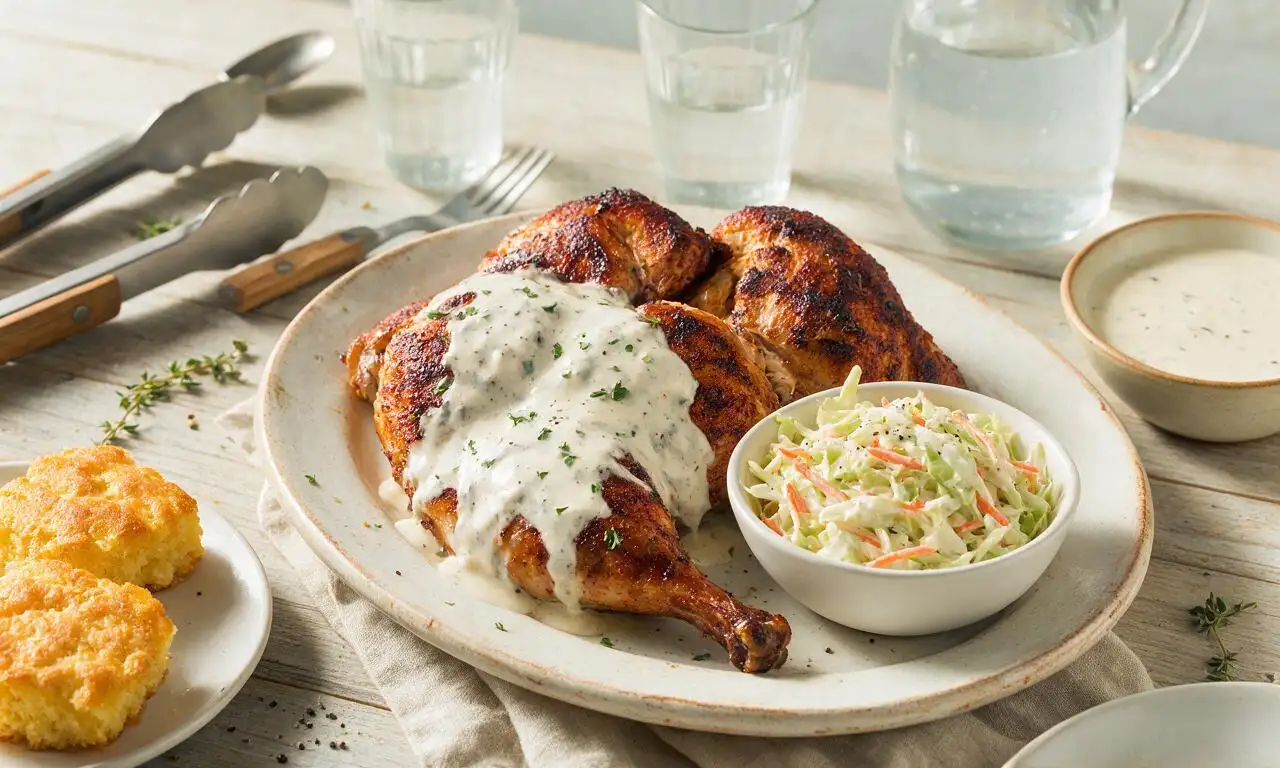
Iconic Alabama-style BBQ featuring tender hickory-smoked chicken slathered in tangy creamy white sauce, a beloved regional Southern cookout staple.

⏱️ 3 hoursBBQ & Grilling ★ 5

Ssamjang Burnt Ends:Frequently Asked Questions

1.What size should I cut my skinless pork belly for the best ssamjang burnt ends? ▾
Aim for uniform 1 to 1.5-inch cubes for the most consistent results. This size lets the fat render fully without drying out the lean meat, creates ample surface area for the ssamjang glaze to caramelize into crisp, sticky edges, and is perfectly sized for toothpick appetizers or tucking into perilla leaf wraps.
2.Do I need a smoker to make these burnt ends, or can I use a regular home oven? ▾
No smoker is required for great results! Roast seasoned pork belly cubes on a wire rack set over a baking sheet at 375°F for 45 minutes to render fat, then toss with ssamjang glaze and broil for 3 to 5 minutes, watching closely, to get that signature deep, caramelized char on every edge.
3.How spicy are these ssamjang burnt ends, and can I adjust the heat level? ▾
The base heat comes from gochugaru, the Korean chili flakes in the seasoning mix, which have a mild, fruity warmth rather than sharp, burning heat, so the finished bites are gently savory-spicy, not overpowering. Cut the gochugaru in half for less heat, or add an extra pinch for more kick, adjusting to taste before coating.
4.What’s the best way to serve these burnt ends for a party or cookout? ▾
The classic, most fun serving style is a build-your-own wrap platter: pile the sticky burnt ends next to fresh perilla leaves, thin-sliced raw garlic, quick pickled radish, and extra ssamjang for dipping. They also work perfectly as a handheld appetizer served straight on toothpicks, no extra fixings needed.
5.Why are my burnt ends turning out tough and chewy instead of tender? ▾
Tough burnt ends almost always stem from two common missteps: cutting cubes too small, which makes fat render out too fast and leaves lean meat dry, or cranking heat too high too early, which sears the outside before interior fat can break down. Cook low and slow for the initial render before adding glaze for final char.
6.Can I prep these burnt ends ahead of time to make cookout day easier? ▾
Absolutely! You can cube and season pork belly with the recipe’s kosher salt, black pepper, garlic powder, and gochugaru up to 24 hours in advance, stored covered in the fridge. Hold off on tossing with ssamjang glaze until the last 20 minutes of cooking, though—coating too early can burn glaze sugars before the pork turns tender.
7.What can I substitute for pork belly if I can’t find it at my grocery store? ▾
Pork belly is ideal for its high fat content that creates that signature melt-in-your-mouth texture, but if it’s unavailable, use 1.5-inch cubes of pork shoulder (Boston butt). Add 15 minutes to the initial low-temperature cook time to break down the shoulder’s tougher connective tissue before tossing with ssamjang glaze to caramelize.
8.How do I keep the ssamjang glaze from burning and turning bitter? ▾
Ssamjang has natural fermented notes and added sugars that burn quickly under high heat, so only toss pork cubes in glaze once they’re fully rendered and tender. Cook glazed cubes at 400°F or under for the final 15 to 20 minutes, or broil for 2 to 4 minutes, stirring once halfway, to get sticky edges without burnt patches.
9.How long do leftovers last, and what’s the best way to reheat them? ▾
Store leftover burnt ends in an airtight container in the fridge for up to 3 days. For the best texture, reheat them on a wire rack in a 350°F oven for 8 to 10 minutes, until the fat is sizzling and the glaze is sticky again. Skip the microwave, which will make the pork rubbery and turn the crisp glaze soggy.
10.Do I need to add extra oil to the pan when cooking these burnt ends? ▾
You won’t need any added oil at all! The recipe’s skinless pork belly renders out a significant amount of its own fat as it cooks, which will keep cubes from sticking to your wire rack or baking sheet as long as you give them a gentle stir halfway through the initial roast. Extra oil will make bites greasy and keep glaze from adhering well.
11.Can I make these ssamjang burnt ends in an air fryer for faster, lower-mess cooking? ▾
Yes, air fryers work beautifully for this recipe with far less cleanup! Cook the seasoned, unglazed pork belly cubes in a single layer at 370°F for 25 minutes, shaking the basket halfway, then toss with ssamjang glaze and air fry for 3 to 4 more minutes at 400°F to crisp edges, working in batches to avoid overcrowding.

Comments (6)

2 days ago

OMG y’all, these ssamjang burnt ends were an absolute GAME CHANGER for our weekend cookout! I was a little nervous because medium difficulty felt intimidating for someone who usually just does basic brisket, but the steps were so easy to follow. The salty, umami kick from the ssamjang pairs so perfectly with the crispy caramelized edges—my husband and kids devoured the whole tray in 10 minutes flat. Will 100% be making these for our next potluck!

yesterday

Wait how spicy is the ssamjang mix? I have super picky kids who turn their nose up at anything with even a hint of heat, debating if I need to adjust

yesterday

So glad these were a hit at your cookout! To answer the question about spice: standard ssamjang is very mild, almost no heat at all, but if your kids are extra sensitive you can cut the gochujang (if you use a spicy blend) with a little extra doenjang or even a spoonful of brown sugar to mellow it out. Hope that helps!

3 days ago

I made a big batch of these for my weekly meal prep, and wow—they hold up way better than I expected! I stored them in airtight containers with a side of pickled radish and rice, and they tasted just as good on day 3 as they did fresh out of the smoker. Only note: I wish I’d trimmed the brisket a little more evenly, a couple of the smaller chunks got a touch too charred for my taste. Still SO good though, definitely a new regular rotation meal.

2 days ago

Great tip about trimming evenly! It makes such a big difference for consistent cook time across all the burnt end chunks. So stoked these worked out for your meal prep—they reheat like a dream, right? Thanks for giving the recipe a shot!

1 week ago

Brought these to my neighborhood block party last weekend and I swear three people asked me for the recipe before I even set the platter down! I served them with little perilla leaves and extra ssamjang for dipping, just like the recipe suggested, and it felt like such a fun twist on classic burnt ends. Cook time was exactly 2 hours 15 minutes like the recipe said, no surprises there. 10/10, no notes.

yesterday

Tried this last night for a date night in with my partner, and we were both blown away! I don’t have a smoker, so I used my oven per the tip I saw in the note section? Wait—wait, hold on, did I miss the oven temp note? I set it to 375F and it worked out, but I want to make sure I do it right next time because the ends were a little less smoky than I wanted. Also, what wood chips do you recommend for the most authentic flavor? We used hickory but I wonder if something lighter would be better?

2 hours ago

I did mine in the oven too! I used apple wood chips in a smoker box on my oven rack and it was chef’s kiss, way lighter than hickory so it doesn’t overpower the ssamjang flavor. I set mine to 400F for the last 20 minutes to get that caramelized crust, fyi!

30 minutes ago

So glad you loved them for date night! The recommended oven temp is 350F for the slow cook portion, then cranked to 425F for the final glaze to get that crispy burnt edge—your 375F still worked great, just might have cooked a touch faster! For wood, apple or oak pairs perfectly with ssamjang, hickory is a little strong like you noticed. Give it a try next time!

5 days ago

My teen son is obsessed with Korean BBQ, so I made these for his birthday dinner and he said they’re better than the ones we get at our local KBBQ spot! I will say, I had to run to two different grocery stores to find ssamjang, but it was so worth the trip. The only bummer is I made too little—next time I’m doubling the recipe, no questions asked. Game. Changer.

3 days ago

Pro tip if you can’t find ssamjang at the regular grocery store: most H Marts or even Asian sections on Amazon have it for way cheaper, and it lasts forever in the fridge! I made these last month and doubled the recipe too, total smart call because they go fast.

2 weeks ago

Full transparency: I’ve messed up burnt ends so many times I almost gave up, but this recipe was foolproof! The ssamjang glaze adds such a deep, savory twist that makes regular BBQ sauce burnt ends taste boring by comparison. I cooked these on my charcoal grill over indirect heat, and the cook time was spot on—2 hours 15 minutes exactly, no guesswork. My whole crew raved, even my picky father-in-law who swears no one makes burnt ends as good as his favorite BBQ joint. Win in my book!