Standing Rib Roast (Prime Rib)

title 1
Standing Rib Roast (Prime Rib)
⏱️ cook time 2 hours 30 minutes
🍽️ servings 6
⚡ Difficulty medium

intro

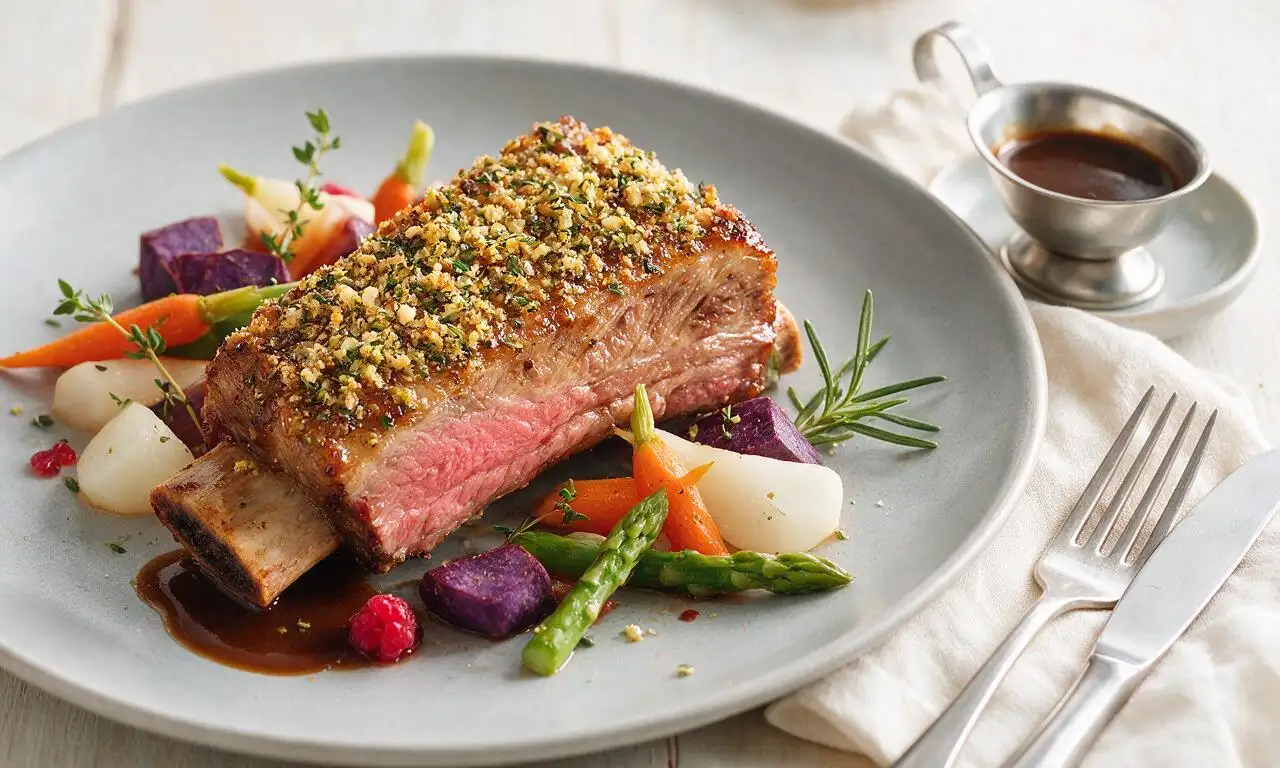
Juicy, tender slow-roasted prime rib with a crisp herb crust, served perfectly pink as a showstopping, indulgent holiday centerpiece.

Ingredients

Standing rib roast (3-bone, surface fat trimmed to 6mm thickness) 3 kg (approx 6.6 lbs)
Kosher salt 3 tablespoons
Freshly cracked black pepper 1 tablespoon
Garlic powder 2 teaspoons
Fresh rosemary (finely chopped) 2 tablespoons
Fresh thyme (finely chopped) 1 tablespoon
Unsalted butter (melted) 60 ml (1/4 cup)
Dijon mustard 2 tablespoons

Steps

1

Prep and season roast

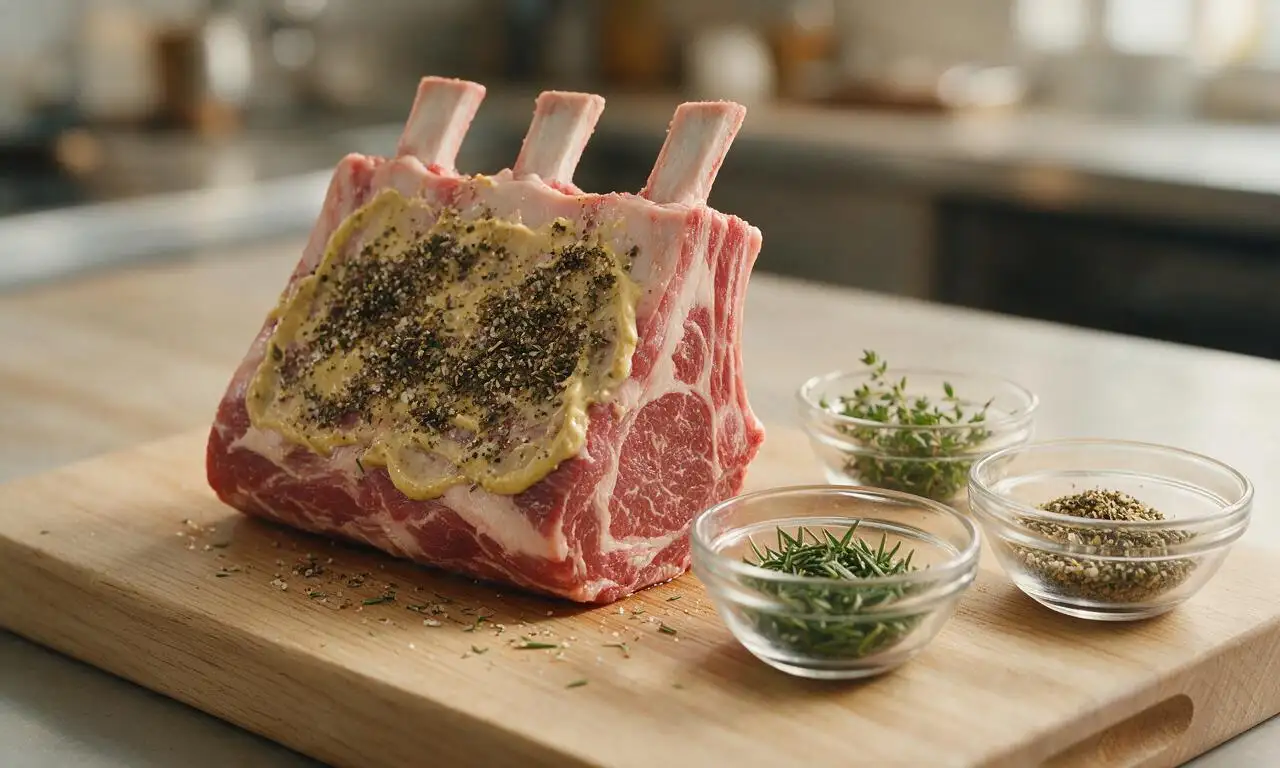
Remove the 3kg standing rib roast from the refrigerator 2 hours before cooking to bring it to even room temperature, which prevents uneven cooking. Pat all surfaces completely dry with paper towels. In a small bowl, mix 3 tablespoons kosher salt, 1 tablespoon freshly cracked black pepper, 2 teaspoons garlic powder, 2 tablespoons finely chopped rosemary, and 1 tablespoon finely chopped thyme. Rub every surface of the roast (including the bone side) evenly with 2 tablespoons Dijon mustard, then press the herb-spice mixture firmly into the meat to create a thick, uniform coating.
Step 1
step1:Prep and season roast
2

Sear roast at high heat

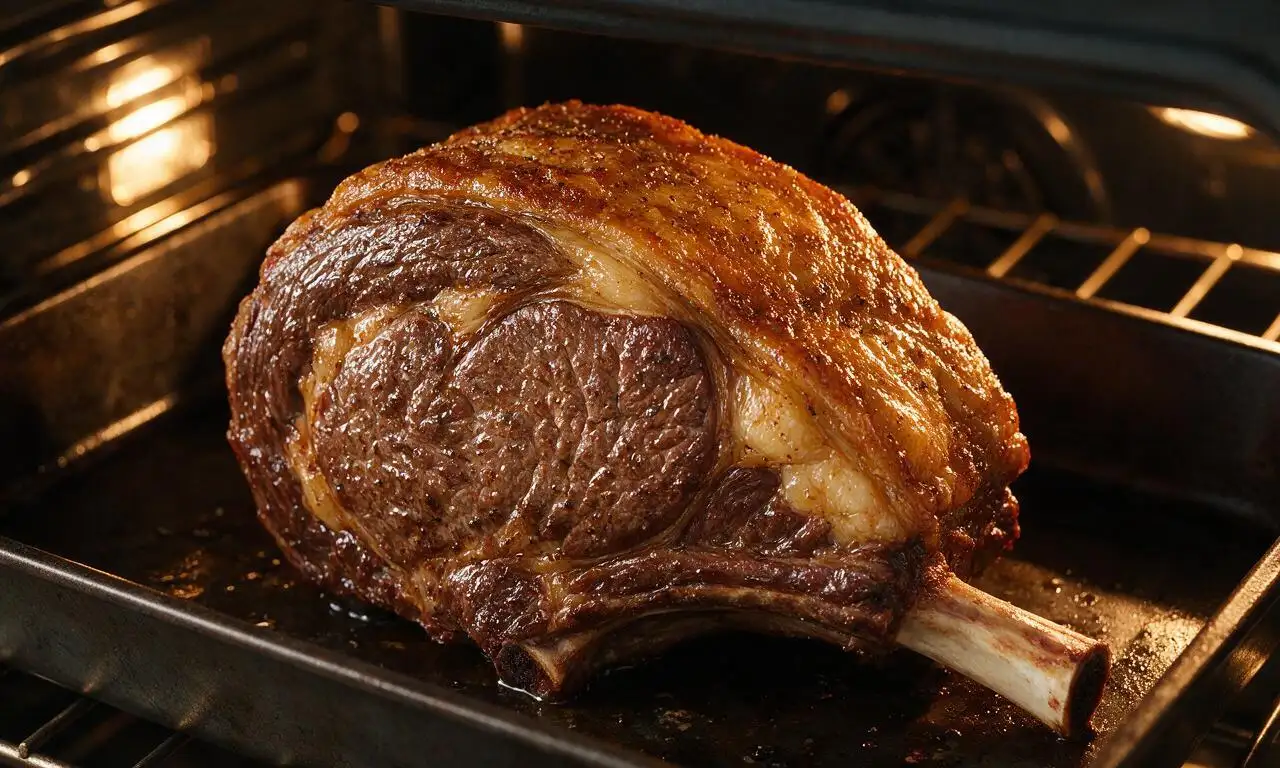
Adjust your oven rack to the lower third position, then preheat the oven to 230°C (450°F). Place the seasoned roast bone-side down (the bones act as a natural roasting rack, no extra rack needed) in a heavy-gauge metal roasting pan. Roast uncovered at 230°C (450°F) for 25 minutes to develop a deep golden, crisp herb crust on the exterior of the meat.
Step 2
step2:Sear roast at high heat
3

Baste and reduce heat

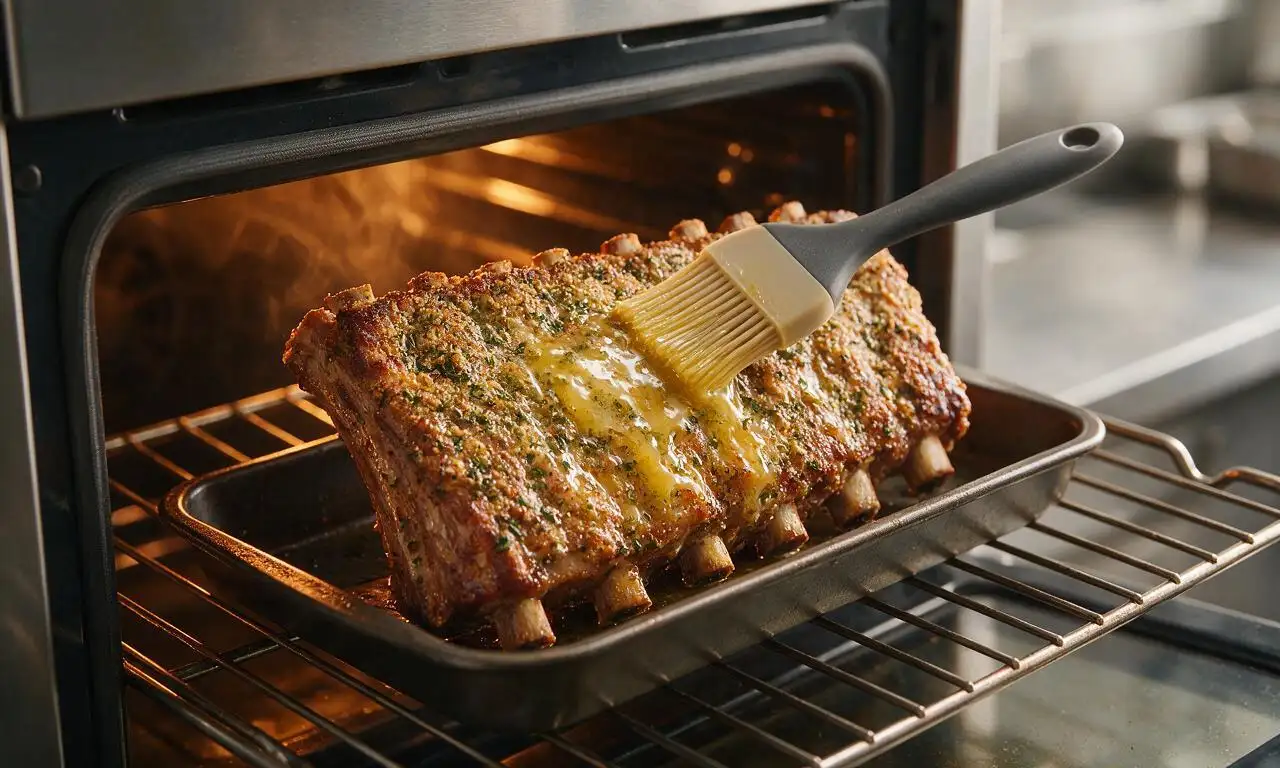
After the 25-minute high-heat sear, carefully pull the oven rack out slightly (do not remove the roast from the pan) and brush the entire exposed surface of the roast evenly with 60ml melted unsalted butter. Close the oven door fully, then reduce the oven temperature to 120°C (250°F) to begin slow roasting.
Step 3
step3:Baste and reduce heat
4

Roast to target temperature

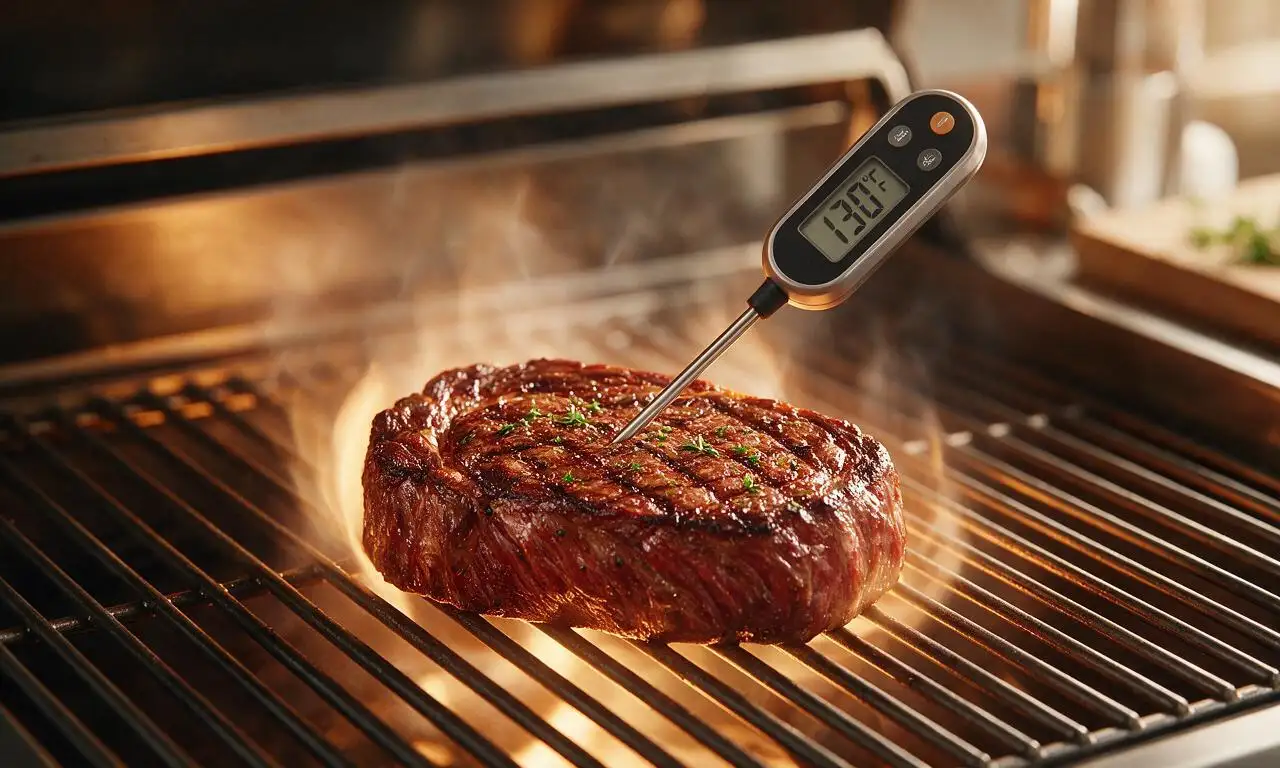
Continue slow-roasting the beef at 120°C (250°F) for approximately 1 hour 40 minutes. Check doneness by inserting an instant-read meat thermometer into the thickest part of the roast, making sure the probe does not touch bone or fat; the roast is ready to remove when the thermometer reads 54°C (130°F) for medium-rare. Note that cook time may vary by 10-15 minutes based on roast shape and oven calibration, so always rely on internal temperature rather than fixed timing.
Step 4
step4:Roast to target temperature
5

Rest cooked roast properly

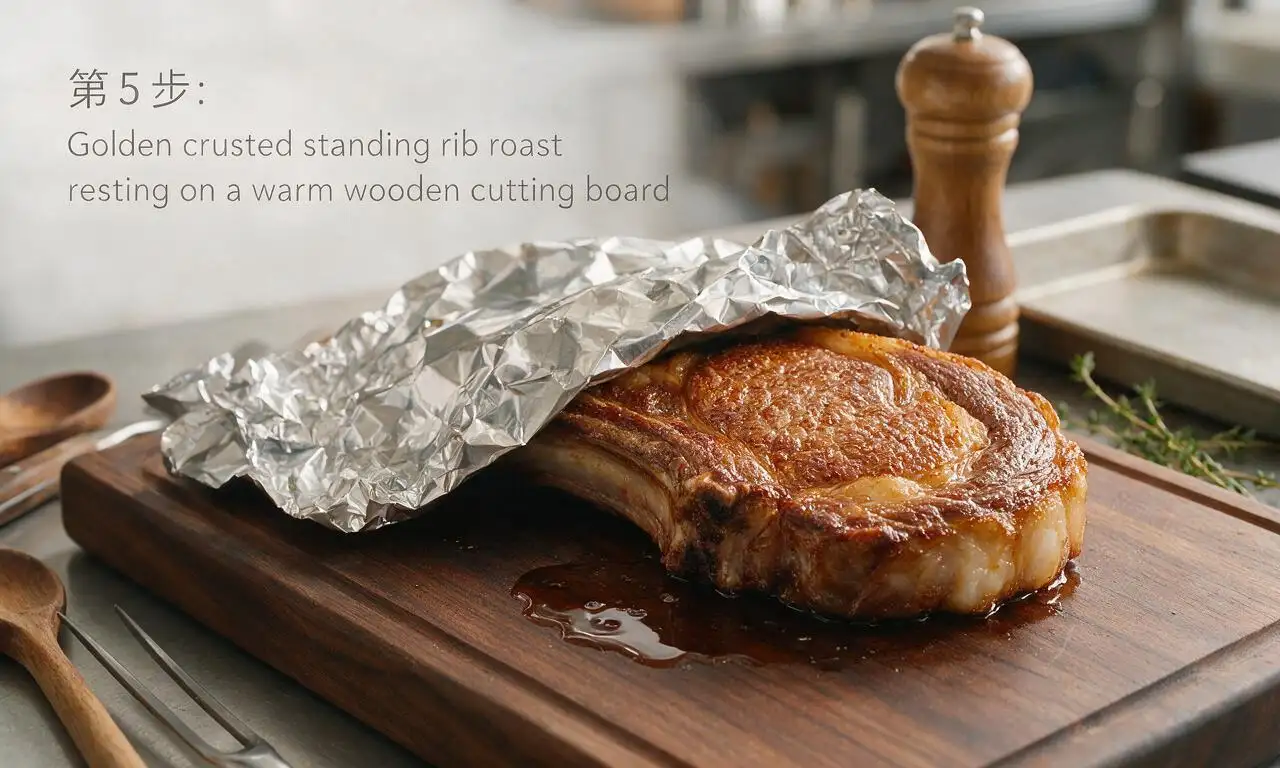
Once the roast reaches the target internal temperature, carefully transfer it from the roasting pan to a clean wooden cutting board. Tent the roast loosely with a sheet of aluminum foil to trap gentle heat, and let it rest undisturbed for 30 full minutes. During resting, carryover cooking will raise the internal temperature 3-5°C (5-10°F) to a perfect 57-60°C (135-140°F) for medium-rare, and meat juices will redistribute to prevent runoff when slicing.
Step 5
step5:Rest cooked roast properly
6

Slice and serve roast

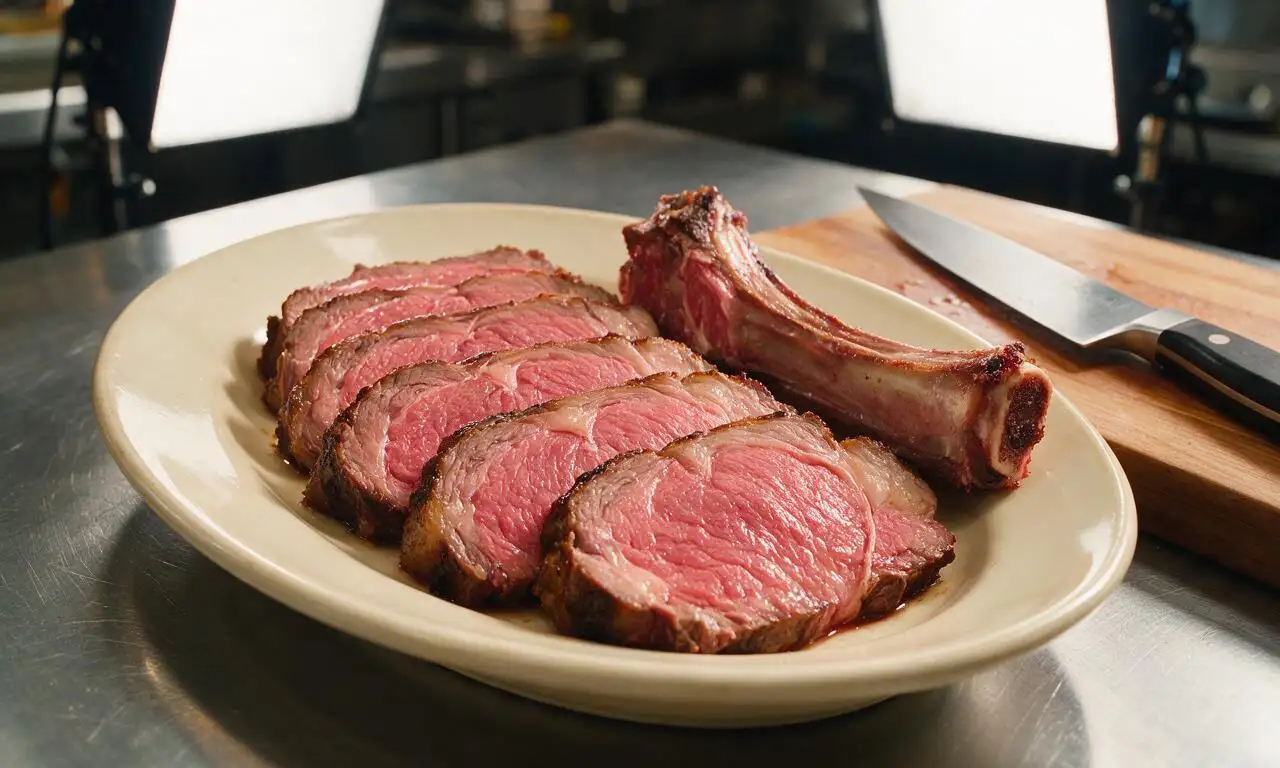
After resting, remove the foil tent. Hold the roast steady by the exposed rib bones, and use a long, sharp carving knife to first slice between each bone to separate them, then slice the boneless meat across the grain into 2cm (3/4 inch) thick slices. Arrange slices on a warm platter, drizzle with collected pan juices if desired, and serve immediately.
Step 6
step6:Slice and serve roast

Tips

1.Never skip bringing the roast to room temperature before cooking—cold meat will cook unevenly, leading to a well-done outer layer and rare, undercooked center.
2.Do not wrap the roast tightly in foil during resting, as this will trap too much steam and make the crisp crust soggy; a loose tent is all you need to retain heat.
3.For best results, avoid cooking prime rib past medium-rare (60°C/140°F final temp after resting), as higher temperatures will render out too much fat and leave the meat tough and dry.
✨ You May Also Like

Main Course
🍜 United Kingdom

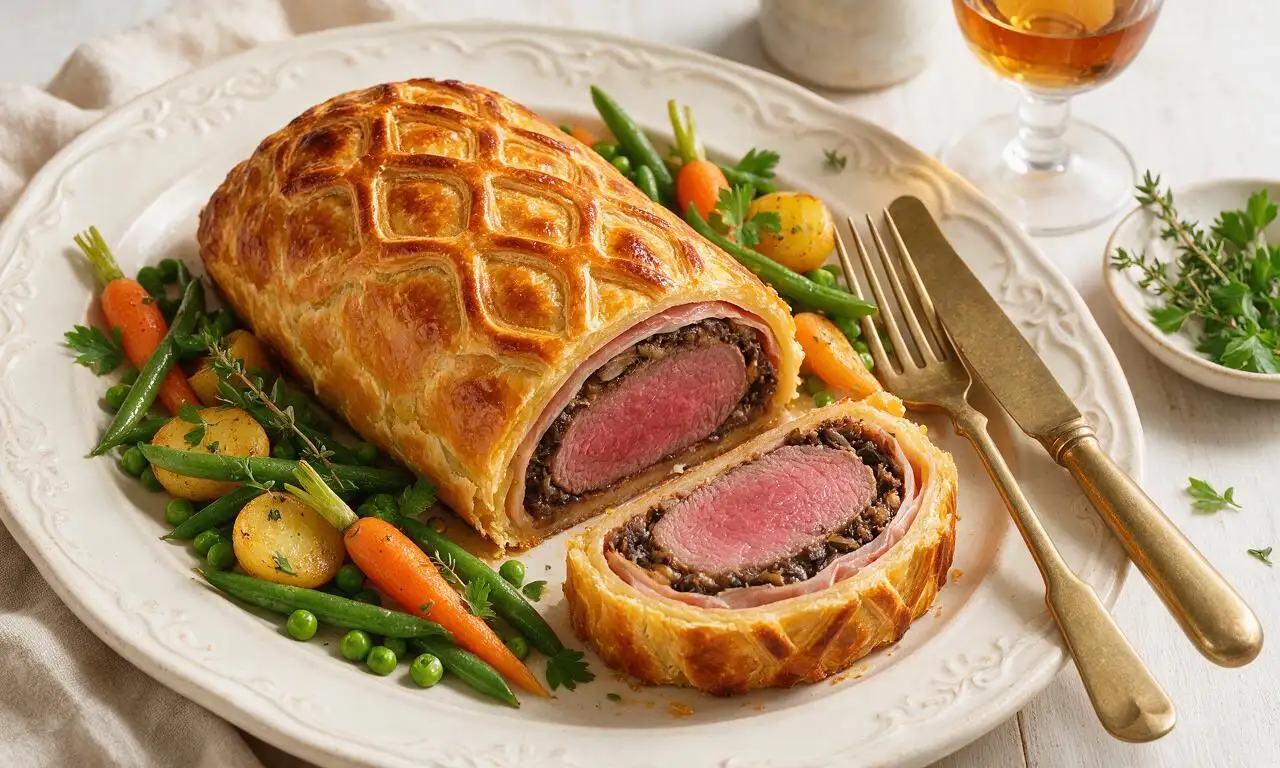
A showstopping classic of tender seared beef, savory mushroom duxelles, and crisp prosciutto wrapped in flaky golden puff pastry, baked to juicy perfection.

⏱️ 2 hours 1Main Course ★ 4.7
Main Course
🍜 India

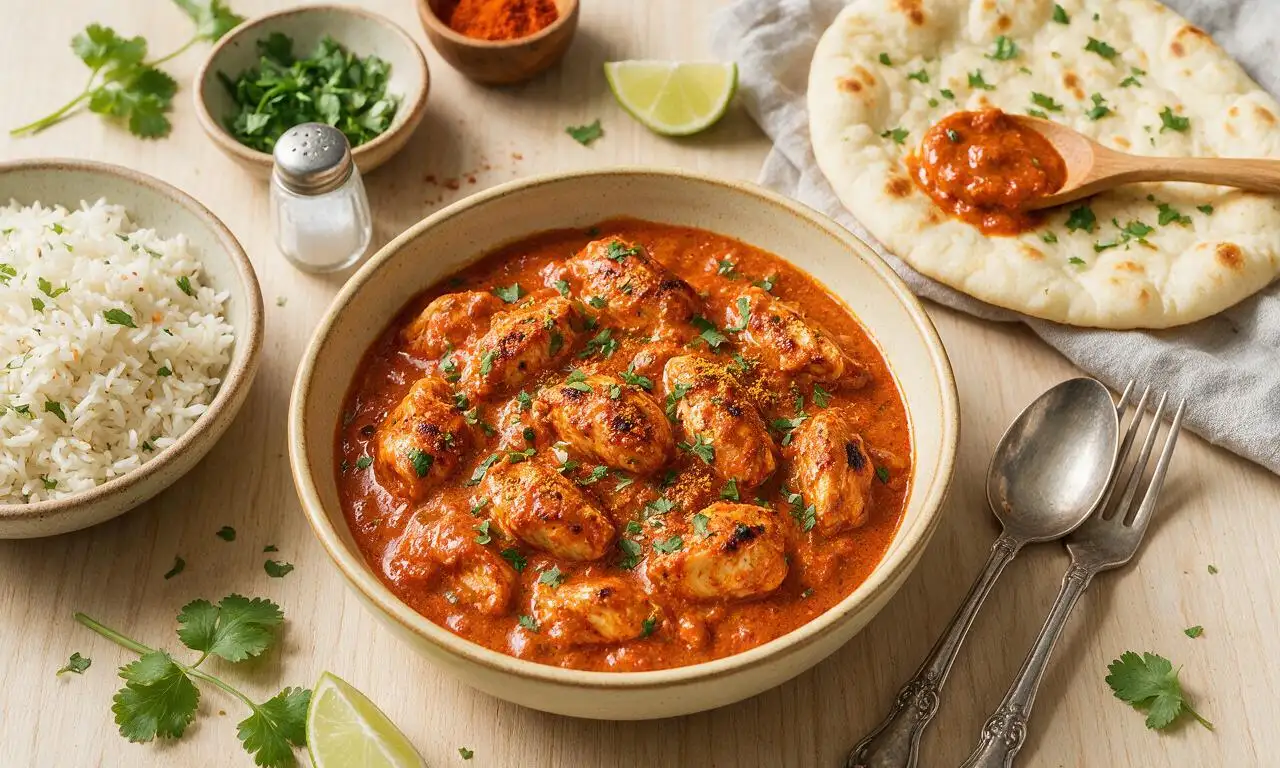
Tender charred marinated chicken simmered in a rich, spiced creamy tomato sauce, this iconic Anglo-Indian curry pairs perfectly with basmati rice or warm naan.

⏱️ 50 minuteMain Course ★ 4.6
Main Course
🍜 Thailand

Classic tangy, sweet, and savory Thai stir-fried rice noodles with shrimp, tofu, and crunchy garnishes, balancing all five core Thai flavor profiles.

⏱️ 30 minuteMain Course ★ 4.5
Main Course
🍜 United Kingdom

Crispy golden beer-battered cod and fluffy double-fried chips, served with tangy tartar sauce and malt vinegar: the timeless, beloved British pub comfort classic.

⏱️ 45 minuteMain Course ★ 4.7
Main Course
🍜 Mexico

Smoky, chile-marinated pork tacos with caramelized pineapple, fresh cilantro, and lime: a beloved classic Mexican street food perfect for casual summer gatherings.

⏱️ 1 hour 45Main Course ★ 4.8
Main Course
🍜 United States

Crunchy Fritos corn chips layered with savory beef chili and melted cheddar, topped with cool, zesty fixings for a beloved, cozy Tex-Mex comfort food.

⏱️ 35 minuteMain Course ★ 4.8

Standing Rib Roast (Prime Rib):Frequently Asked Questions

1.What purpose does the 6mm (1/4-inch) trimmed fat cap serve for my standing rib roast? ▾
That ¼-inch (6mm) fat cap is key for juicy, flavorful results! As it slow roasts, the fat renders gradually to baste the meat from the outside in, lock in moisture, help build that crisp herb crust, and add rich beefy flavor without making the final dish greasy. Trimming it too close will lead to dry, bland outer meat.
2.How far in advance should I salt my prime rib for the best, most even seasoning? ▾
For juicier, evenly seasoned meat, salt it heavily with kosher salt 12 to 24 hours before roasting, leaving it uncovered on a wire rack in the fridge. This gives salt time to draw out surface moisture that dissolves the salt, then reabsorbs deep into the meat for tender, well-seasoned results from edge to edge.
3.Do I really need to bring my prime rib to room temperature before putting it in the oven? ▾
Absolutely! Pull your roast out of the fridge 1.5 to 2 hours before roasting so it comes to a cool, consistent room temperature (around 60°F). This cuts down on uneven cooking, so you won’t end up with a thick band of overcooked gray meat around the edges while the center stays underdone.
4.What oven temperature works best for slow-roasting prime rib to get that perfect pink center? ▾
Stick to a low, steady 325°F conventional oven (300°F for convection) for even slow roasting. This gentle heat cooks the meat gradually without seizing up muscle fibers, lets the rosemary-garlic crust crisp as fat renders, and delivers consistent rosy pink medium-rare instead of a tough, overcooked outer layer.
5.How do I keep the herb crust crisp instead of soggy while the roast cooks? ▾
Pat the roast completely dry with paper towels before applying your black pepper, garlic powder, and chopped fresh rosemary rub, and make sure your oven is fully preheated before adding the roast. Skip basting with pan drippings during cooking, as that will moisten the crust and turn it soft instead of crisp.
6.What internal temperature should I pull my prime rib at to get that juicy, perfect pink doneness? ▾
For classic medium-rare, the gold standard for prime rib, pull the roast when the thickest center hits 125°F on an instant-read thermometer. Remember, it will carryover cook 5 to 10°F as it rests, landing you at a perfect 130–135°F rosy, juicy finish without being under or overdone.
7.How long do I need to let my prime rib rest before slicing, and why is that step so important? ▾
Let your roast rest for 20 to 30 minutes, tented loosely with foil, before slicing. As meat cooks, juices get pushed toward the hot center; resting lets those juices redistribute evenly throughout the roast, so you won’t lose a flood of tasty juice all over your cutting board when you slice in.
8.Can I use dried rosemary instead of fresh for the herb crust if I don’t have fresh on hand? ▾
You absolutely can, but adjust the amount since dried rosemary is far more concentrated and woody-tasting than fresh. Use 1 teaspoon of crumbled dried rosemary for every 1 tablespoon of fresh chopped rosemary the recipe calls for, and rub it in well so it sticks to the fat cap instead of falling off mid-roast.
9.Why does the recipe call for kosher salt instead of regular table salt for seasoning? ▾
Kosher salt has large, flaky crystals that are easy to spread evenly across the fat cap and meat, so you won’t end up with random overly salty patches. Table salt is much finer and denser, so if you swap it 1:1 you’ll overseason by almost double; if you must use it, cut the salt amount in half.
10.Do I need to sear the roast first before slow roasting to get a good, crisp crust? ▾
You don’t need to! The ¼-inch fat cap, dry rosemary-pepper-garlic rub, and steady low oven heat will build a perfectly crisp, flavorful crust as the roast cooks. A pre-sear adds extra work and can cause uneven cooking if you don’t let the roast cool back down before starting the slow roast.
11.How do I keep the garlic powder in the rub from burning and turning bitter during the long roast? ▾
Stick to the recipe’s low 325°F oven temperature, and double check you’re using garlic powder, not heat-sensitive fresh garlic paste or coarse granulated garlic, for the rub. Mix the garlic powder evenly with the pepper and rosemary before applying, so no concentrated clumps sit directly on the fat cap to burn.
12.How many people will a 3-bone standing rib roast feed for a holiday meal? ▾
A standard 3-bone standing rib roast weighs 7 to 8 pounds, and will comfortably feed 6 to 8 people with generous, holiday-sized portions, plus a little leftover for prime rib sandwiches the next day. If you’re serving lots of heavy sides, you can stretch it to 9 people by cutting slightly thinner slices.
13.What’s the best way to slice prime rib so it stays tender after resting? ▾
Use a long, sharp carving knife, and slice against the grain of the meat into ½-inch to ¾-inch thick slices, cutting cleanly in one smooth pass instead of sawing back and forth. Leave the bones attached while the roast rests to lock in moisture, then slice meat away from the rib rack in one piece before portioning.
14.My roast is done way earlier than my guests are ready—how do I hold it without overcooking? ▾
Once the roast hits your target pull temperature, wrap it tightly in two layers of foil and set it in an un-iced cooler or a 170°F warming drawer. It will hold at a safe, perfect serving temperature for up to 2 hours without overcooking or drying out, so you don’t have to rush your holiday timeline.
15.Can I cook vegetables in the pan under the prime rib while it roasts for an easy one-pan meal? ▾
You can, but don’t set them directly in the pan under the roast for the full cook time, as rendered fat will make them soggy. Instead, set veggies on a lower rack, or add them to the roasting pan for the last 45 minutes of cook time for crisp, beef-fat infused sides that don’t ruin your roast crust.
16.What do I do if the center of my roast is more rare than I want after it finishes resting? ▾
Don’t panic! First, slice off and set aside any portions that are already at your preferred doneness. Pop the remaining underdone section back in a 400°F oven for 5 to 10 minutes, or sear individual slices on a hot cast iron pan for 1 to 2 minutes per side, until it hits your ideal doneness.

Comments (7)

2 days ago

OMG I made this for our Christmas family dinner last weekend and every single person went back for seconds! I was so nervous about nailing prime rib because it’s such a pricy cut, but this recipe was so straightforward even for someone who only roasts things a couple times a year. Came out perfectly medium-rare all the way through, that herb crust is a total game changer. SO good.

yesterday

Wait did you let it rest the full time the recipe says? I’m making this for New Year’s and I always skip resting and end up with juice all over my plate 😅

2 hours ago

Great question, Jake! Definitely don’t skip that 20-30 minute rest time — it lets all those juicy flavors redistribute through the meat instead of running out when you slice. If you’re tight on oven time, you can tent it loosely with foil while it rests to keep it warm!

5 days ago

Really solid prime rib recipe! Cook time was almost spot on for my 4lb roast, I just had to add 10 extra minutes because my oven runs a little cool. My only note is I wish it had a little more guidance on how to pick the right roast at the grocery store — I accidentally grabbed one with way too thick of a fat cap and had to trim a ton off before rubbing. Flavor was incredible though, my wife and kids loved it.

3 days ago

Thanks so much for the honest feedback, Tyler! That’s such a great point about selecting the roast — I just added a quick note at the top of the recipe about looking for a roast with a 1/4 inch thick fat cap for the best results, no extra trimming needed. So glad your family enjoyed the final flavor!

1 week ago

Made this for my husband’s birthday dinner and he said it was better than the prime rib we got at the fancy steakhouse downtown for our anniversary! I prepped the herb rub the night before to save time, which made the whole process so low stress on the actual day. Served it with horseradish cream and roasted garlic mashed potatoes, 10/10 will be making this for every special occasion from now on.

2 weeks ago

Took this to my neighborhood potluck last weekend and people were hovering around the platter before I even set it down! I was worried cooking for 12 people would be a nightmare but the cook time guide for a 7lb roast was perfect, no guesswork needed. Got like 8 people asking for the recipe before I left.

1 week ago

Wait did you cook it at the high temp first then lower? I’ve seen recipes that do that and some that keep it low the whole time, curious how this one works!

5 days ago

Yep! Seared it at 500°F for 15 minutes just like the recipe says then dropped the oven temp down to 325, came out with that crispy herby crust and perfect evenly pink center the whole way through. No constant temp fiddling needed, just stuck a meat thermometer in and pulled it when it hit 130°F internal like the guide says!

yesterday

Total game changer! I used to be so intimidated by standing rib roast I’d only ever buy pre-cooked ones from the grocery store for holidays. This recipe broke every step down so simply, I didn’t mess up a single thing. My teen son who lives for fast food ate three slices and asked when we’re making it again. Worth every penny for the meat.

2 hours ago

That makes our day to hear, Jessie! Prime rib feels super fancy but it’s actually so doable once you have a reliable temperature guide, no fancy culinary school skills required. So glad your son gave it his seal of approval too!

3 days ago

Meal prepped a smaller 3lb roast using this recipe for the week and it’s been the best work lunches I’ve ever had! Sliced it thin for sandwiches a couple days, had it with roasted veggies for dinner one night, even chopped up the end bits to add to a breakfast hash. Way better than my usual boring chicken meal prep, will absolutely be doing this monthly.

30 minutes ago

I’ve heard such amazing things about this recipe and I’m making it for my in-laws visiting this weekend — quick question: I don’t have fresh rosemary on hand, can I use dried without messing up the herb crust? I already have the roast thawing in the fridge and don’t have time to run to the grocery store!

5 minutes ago

Hi Sophia! Dried rosemary works totally fine here, just use 1/3 the amount the recipe calls for since dried herbs are way more concentrated than fresh. It will still taste incredible, no extra trip to the store needed. Hope your in-laws love the roast!