
Suyuk Ribs
intro
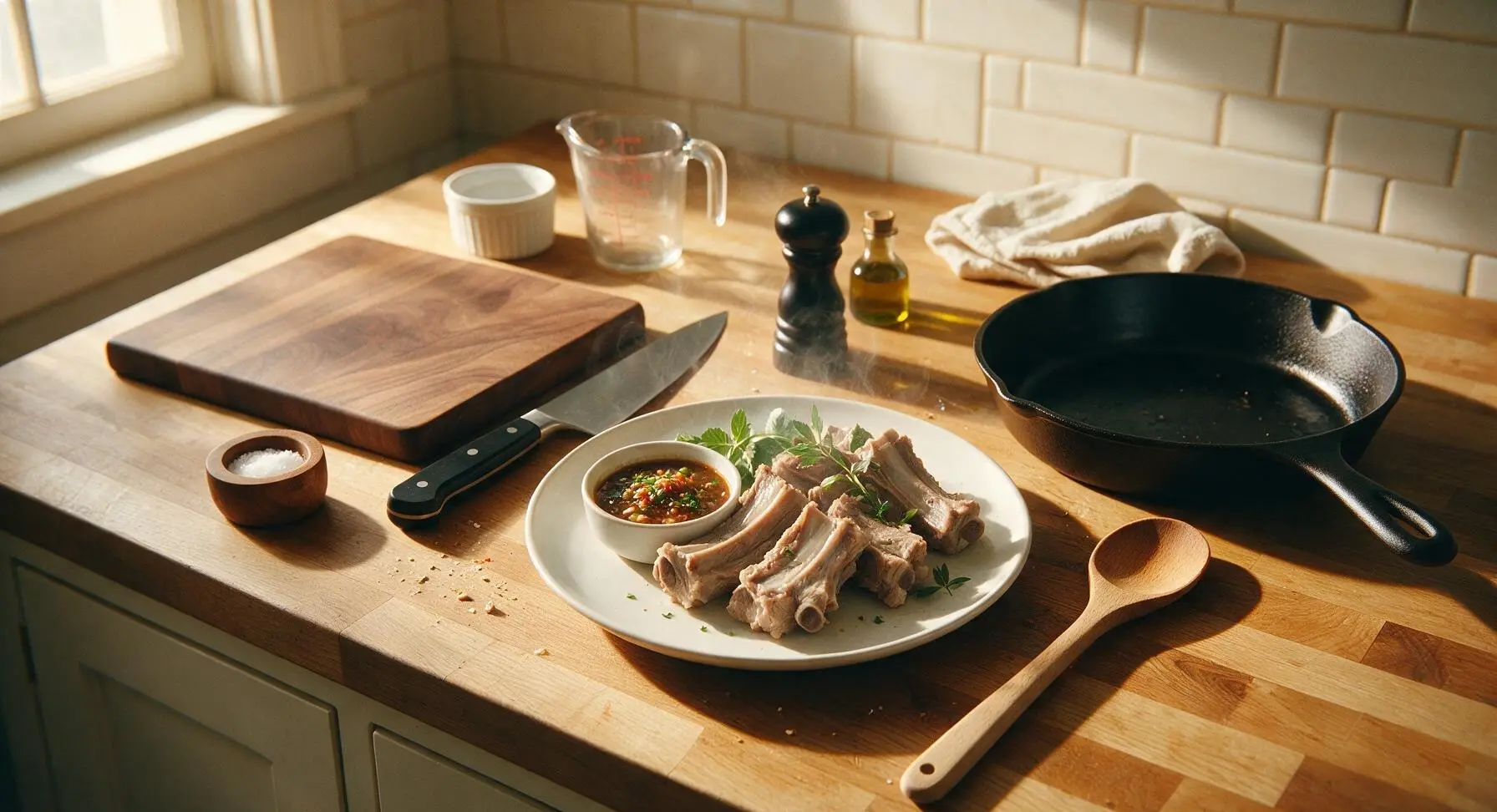
Tender, subtly aromatic boiled pork ribs, a classic Korean suyuk preparation, served with savory ssam dipping sauce for light, comforting, shareable family meals.
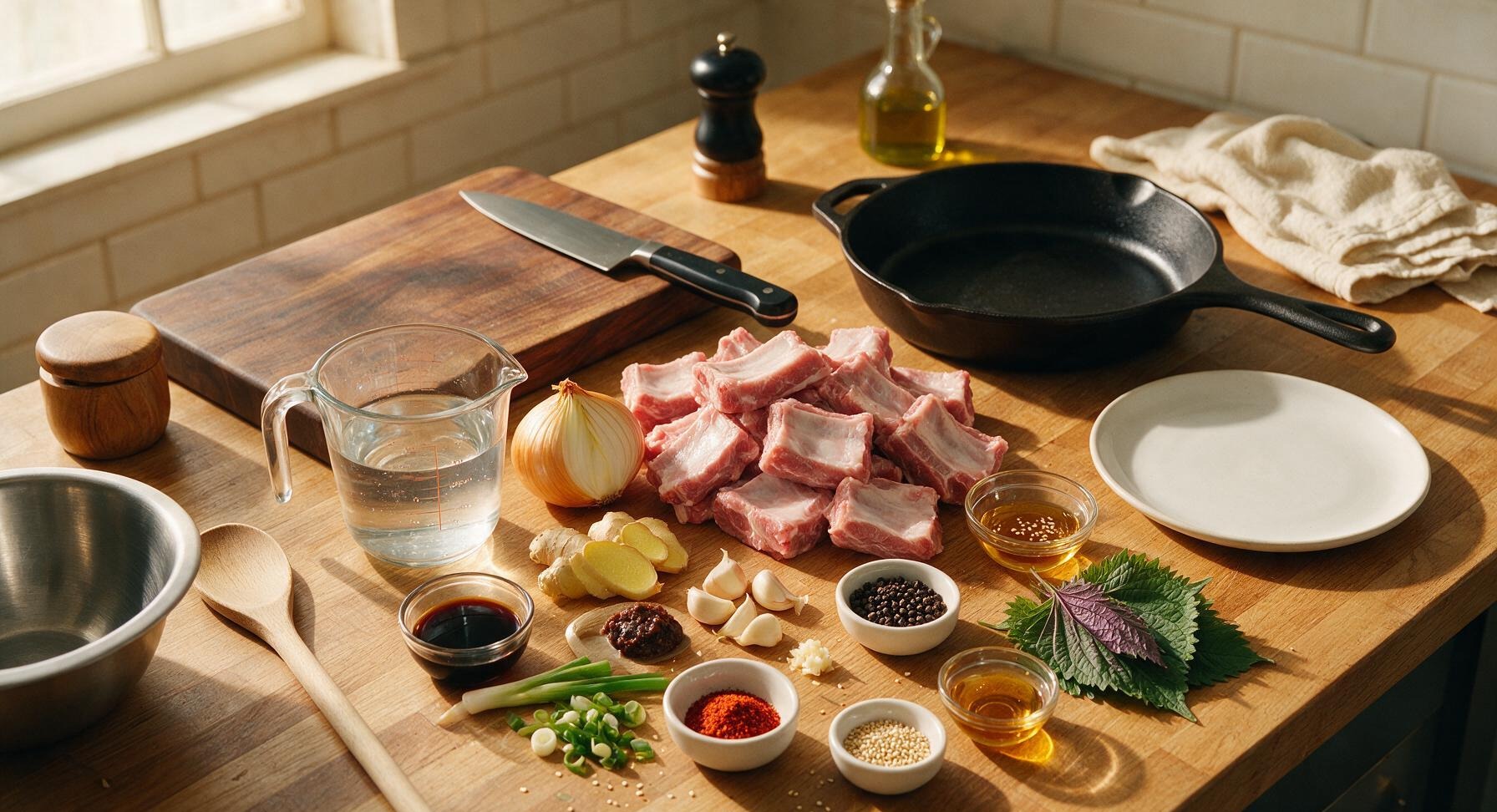
Ingredients
Steps
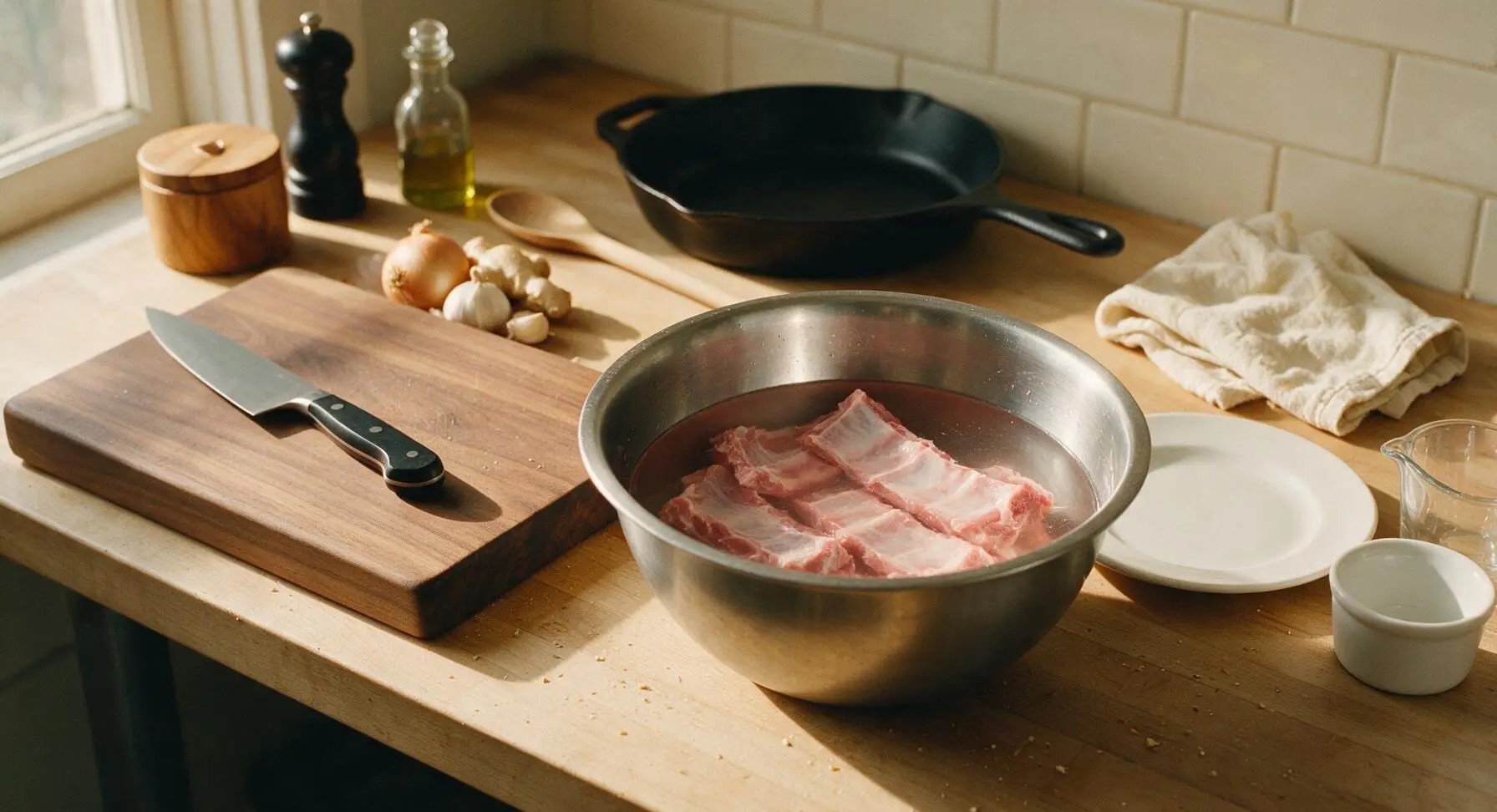
Soak ribs to remove blood
Place the pre-cut pork spare ribs in the medium stainless steel mixing bowl, cover completely with cold tap water, and let soak for 30 minutes at room temperature. Change the water once after the first 15 minutes, until the water runs completely clear with no pink tinge. This inactive step draws out excess blood from the ribs to prevent cloudy broth and gamey flavor, with no active work required.
Prep boiling aromatics
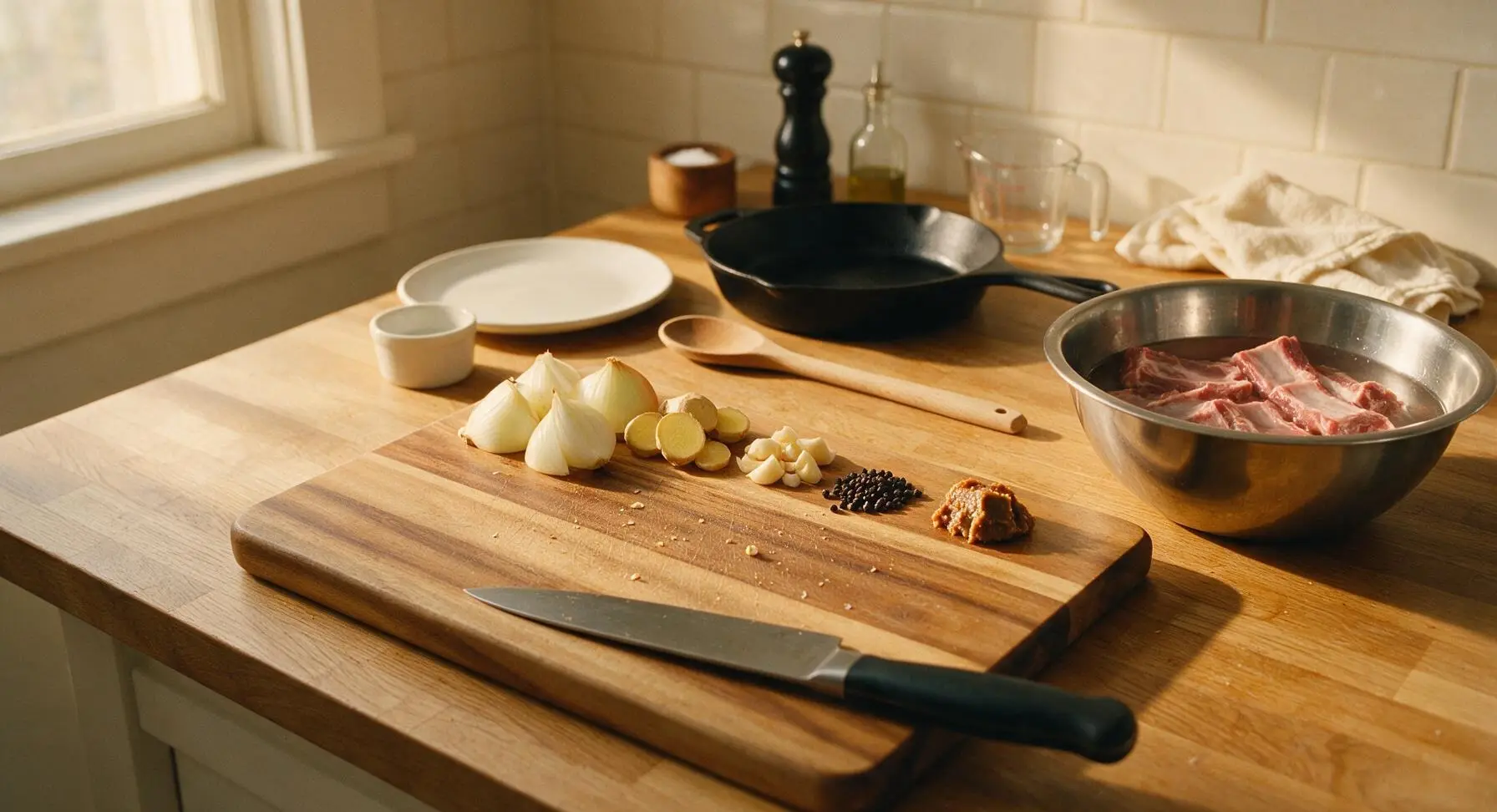
While ribs soak, use the 8-inch chef knife on the acacia cutting board to quarter the yellow onion, slice ginger into 1cm thick unpeeled rounds, and lightly crush 8 garlic cloves with the flat of the knife blade. Measure out 1 teaspoon whole black peppercorns and 2 tablespoons doenjang, and arrange prepped ingredients in small piles on the edge of the cutting board within easy reach of the stovetop.
Blanch ribs to remove scum
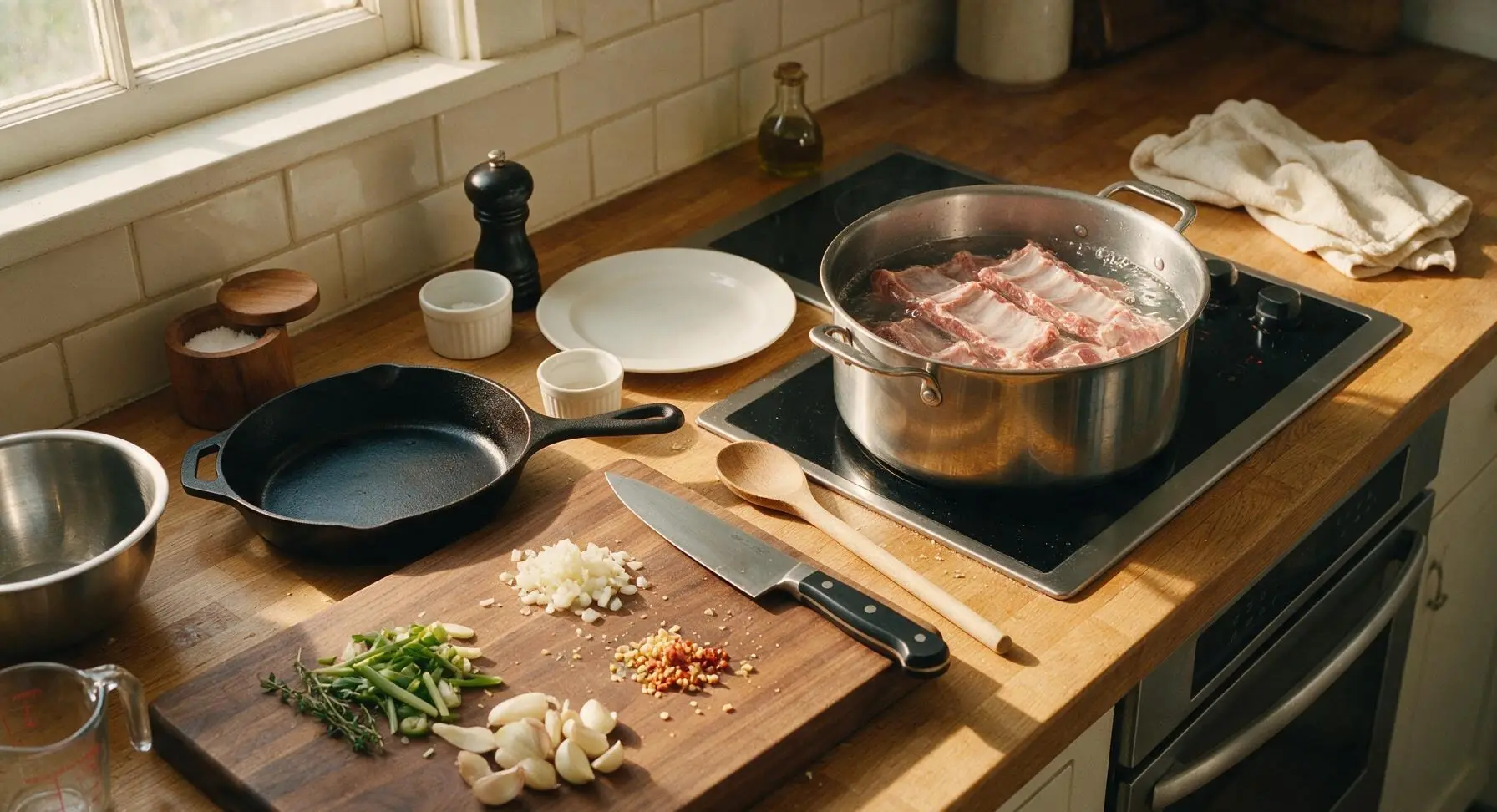
Drain all water from the soaked ribs, then transfer ribs to the 8L stainless steel stock pot. Cover ribs with 3L cold water, place the pot on the back-right induction burner, and bring to a rolling boil over high heat (approximately 10 minutes). Once at a full boil, cook for 5 minutes, until thick, gray, foamy scum rises completely to the water surface.
Simmer ribs with aromatics
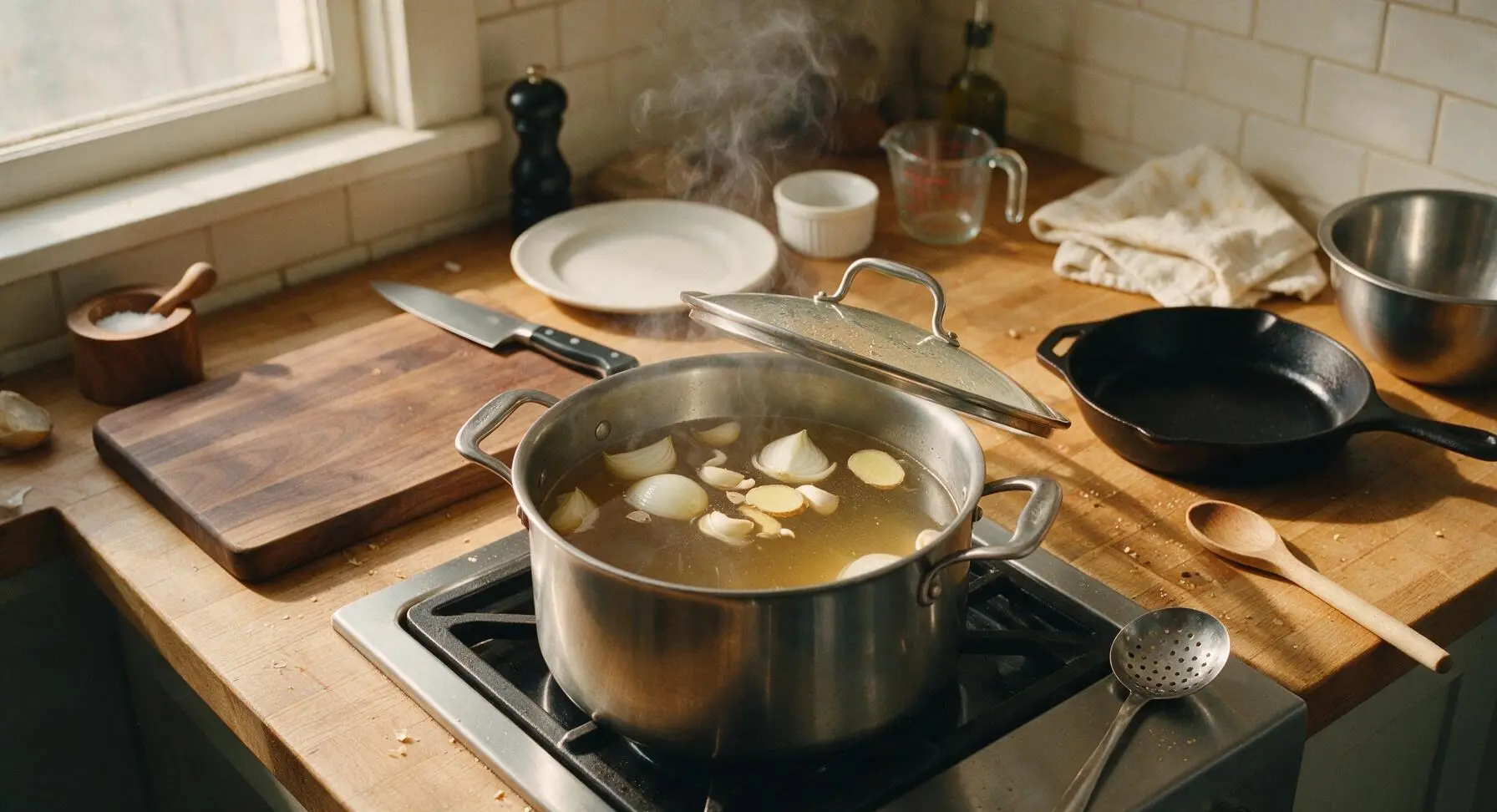
Use the skimmer ladle to thoroughly remove all gray scum from the boiling water, discarding the scum down the kitchen sink drain. Add the quartered onion, ginger slices, crushed garlic, whole peppercorns, and 2 tablespoons doenjang to the pot, stirring once to fully dissolve the doenjang into the water. Reduce heat to medium-low to maintain a gentle, constant simmer (small bubbles breaking the surface every 1-2 seconds, no violent rolling boil), tilt the glass lid partially to vent steam, and cook for 1 hour 10 minutes. Skim any small patches of rising foam every 20 minutes during cooking. Ribs are done when a fork slides easily into the thickest part of the meat with no resistance, and meat pulls 2-3mm away from the cut bone ends.
Mix ssam dipping sauce
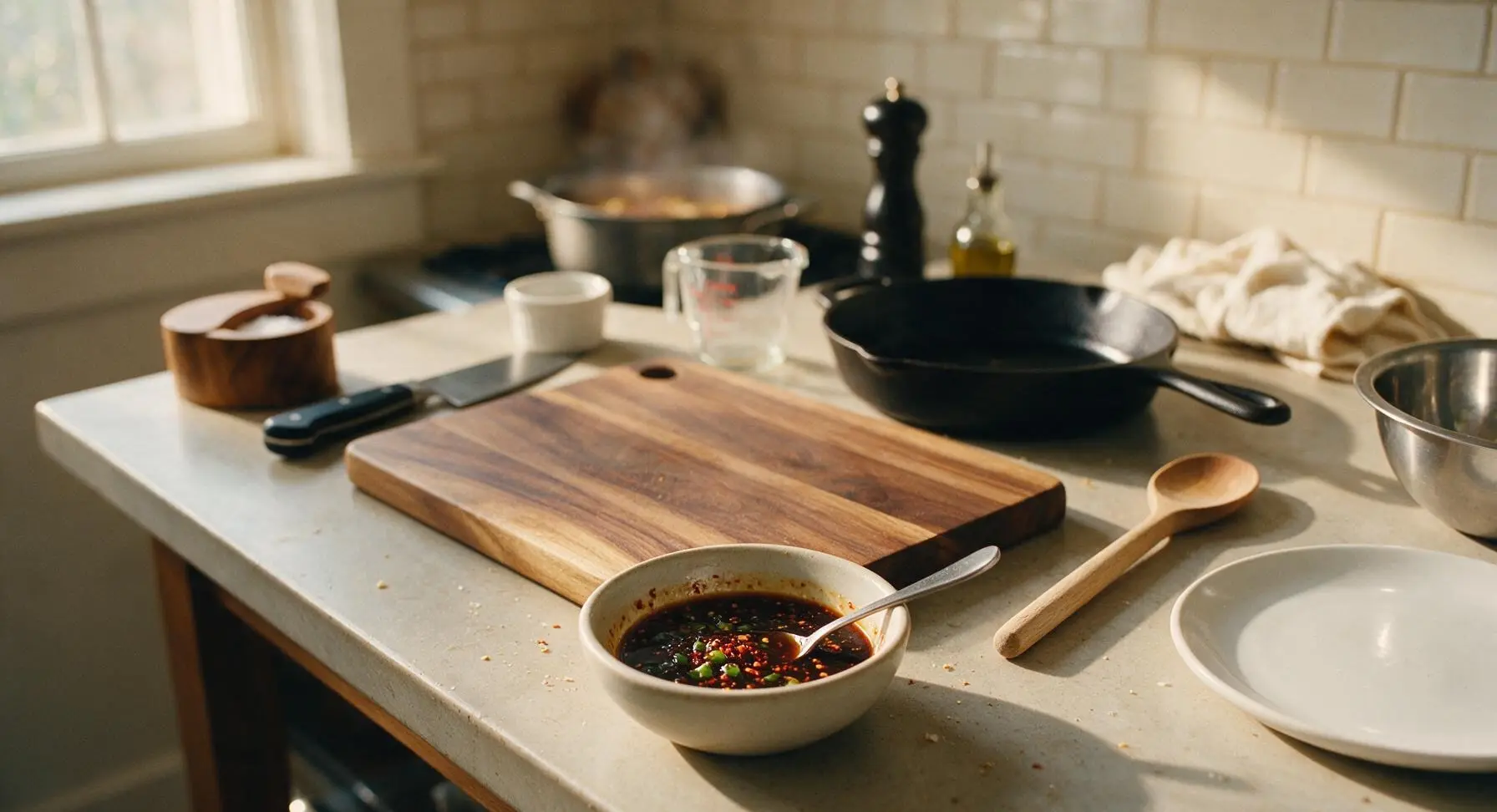
While ribs simmer, add 3 teaspoons toasted sesame oil, 1 teaspoon gochugaru, 1 teaspoon minced garlic, 2 tablespoons chopped scallion, and 1 teaspoon toasted sesame seeds to the small matte off-white ceramic sauce bowl holding the pre-measured soy sauce. Stir thoroughly with a small spoon until all ingredients are evenly distributed, then set the bowl aside on the counter to let flavors meld for at least 20 minutes before serving.
Drain tender cooked ribs
Once ribs reach the desired tender texture, turn off the stovetop heat. Use the silicone-tipped stainless steel tongs to carefully lift each rib from the simmering broth, holding each rib above the pot for 2 seconds to let excess broth drain off, and transfer ribs temporarily to the edge of the large white serving platter. Strain and reserve the remaining broth for other uses if desired, discarding the spent, soft aromatics.
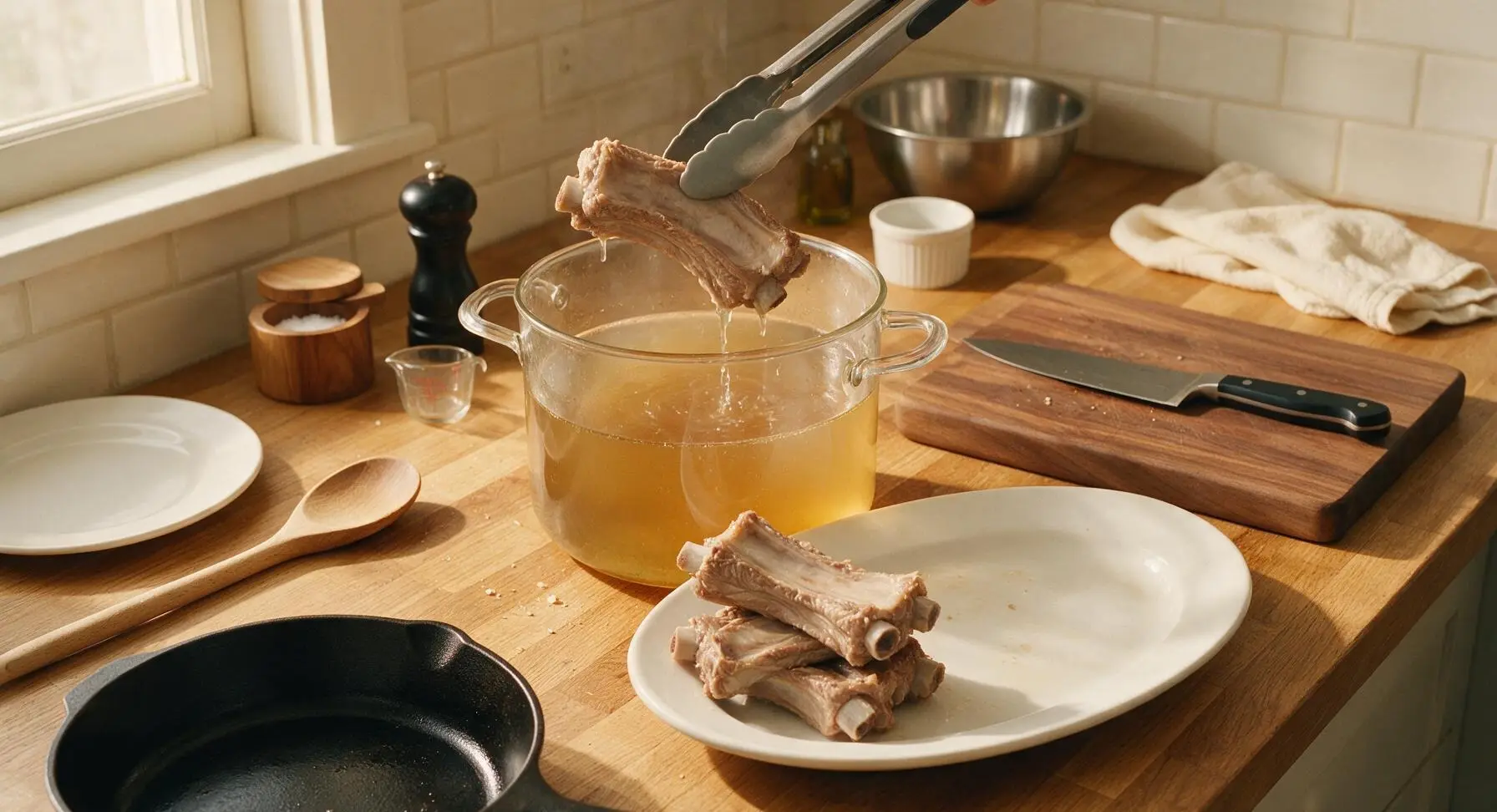
Plate and garnish ribs
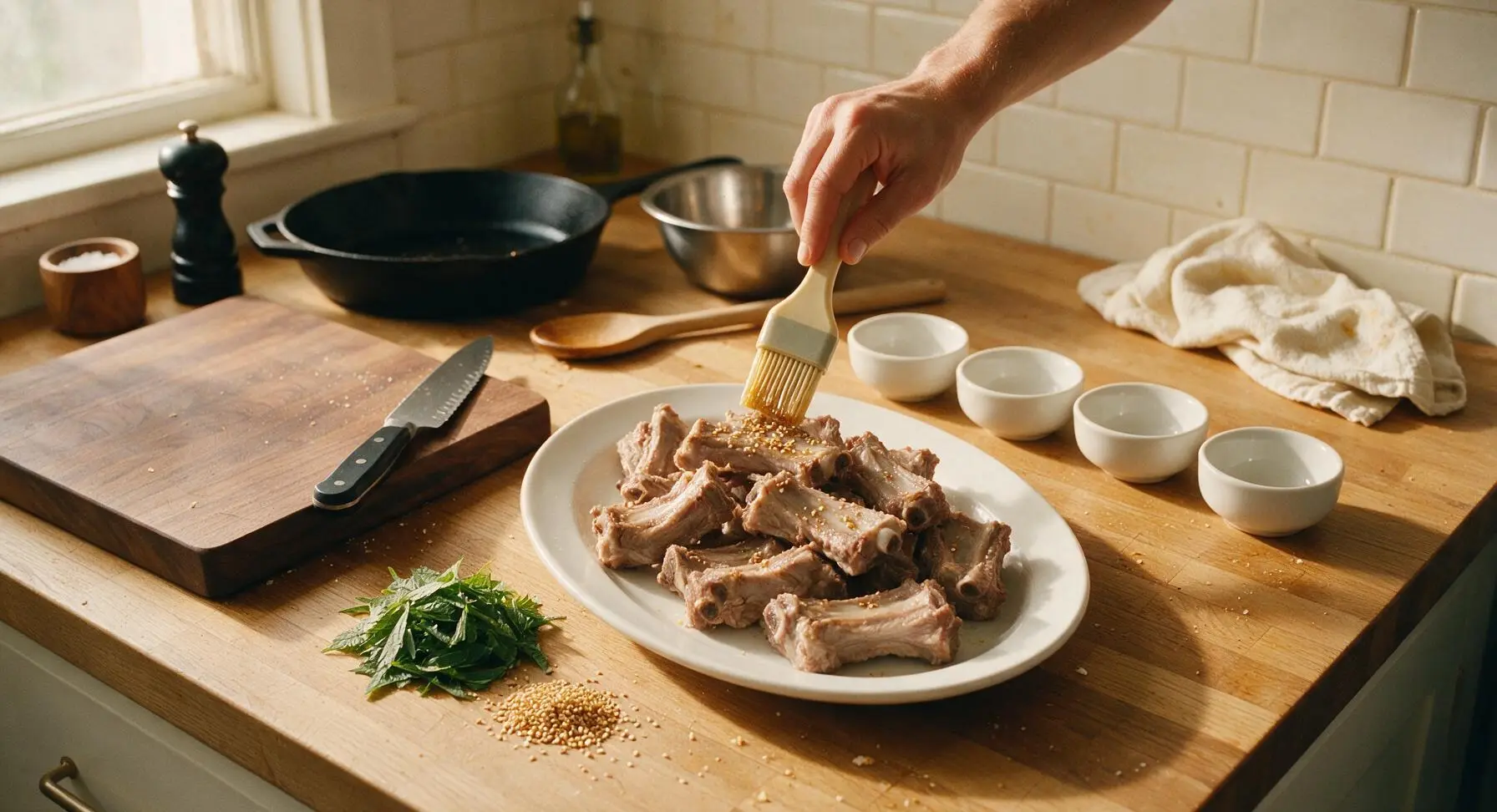
Arrange the drained warm ribs in a loose, inviting pile in the center of the large white oval serving platter. Use the silicone basting brush to lightly coat the rib surfaces with 1 teaspoon of toasted sesame oil for a subtle, appetizing sheen. Scatter thinly sliced perilla leaves and the remaining 1 teaspoon of toasted sesame seeds evenly over the top of the ribs. Divide the prepared ssam dipping sauce evenly between the four small white dipping bowls, and arrange the bowls around the platter for serving.
Tips
2.Never skip the 30-minute cold water soak and initial blanch: these steps remove trapped blood and surface impurities, eliminating the gamey, metallic aftertaste common in unprocessed boiled pork and keeping the meat pale and appetizing rather than gray.
3.Strain and reserve the leftover rib broth after cooking: it is deeply infused with onion, garlic, ginger, and doenjang flavor, and makes a perfect base for kimchi jjigae, kalguksu noodle soup, or rice congee for a zero-waste meal.


OMG these suyuk ribs were SO good! I made them for our Sunday family dinner and even my super picky 7 year old asked for seconds. The meat was fall-off-the-bone tender, I couldn’t believe how easy the recipe was to follow for how fancy it tastes. Total game changer for our weeknight rotation too, since it doesn’t require a million fancy ingredients.
I brought these to our neighborhood block party potluck last weekend and people were literally coming up to me for the recipe all night. The subtle savory, slightly garlicky flavor is chef’s kiss. Only note: I doubled the sauce because I knew people would want to drizzle extra over rice, 10/10 call.
Perfect for meal prep! I made a big batch on Sunday, portioned them out with roasted veggies and rice, and they held up amazing all week for lunches. No sad desk lunch here, coworkers kept stopping by my desk asking what smelled so good. Easy difficulty rating is no lie, even a cooking newbie like me didn’t mess this up.
Okay full transparency, I burn almost everything I try to make, but these suyuk ribs turned out perfect?? I followed the steps exactly, kept the temp where the recipe said, and 1 hour 20 minutes later I had restaurant quality ribs. My roommate thought I ordered takeout lmao. 10/10 will make again.
SO good, but I added a little extra gochugaru for a tiny kick and it was chef’s kiss. My partner ate half the rack in one sitting, no shame. We served it with quick pickled cucumbers on the side, highly recommend that pairing if you’re making this!
Made this last night after soccer practice with the kids, total lifesaver. I threw everything in the pot while the kids were doing their homework, and by the time we were done helping with math worksheets, dinner was ready. Zero fuss, zero complaints from the kids, which is basically a miracle in our house.
I’ve had suyuk ribs at a bunch of Korean restaurants in Denver and honestly this recipe tastes just like the ones I’ve paid $30+ for at restaurants. I was shocked how simple the ingredient list is, no weird hard to find stuff, I already had almost everything in my pantry.
Wait quick question — can I make this in a slow cooker instead of on the stovetop? I don’t have a big enough heavy bottomed pot right now and I’m really craving these ribs this weekend.
These are perfect for my high protein meal rotation! Each serving is packed with protein, super satisfying, and doesn’t leave me feeling bloated like the smoked ribs I usually make. The clean, savory flavor is so much better than heavy sauced ribs too, will be making these nonstop.
I made these for my grandson’s birthday dinner since he loves Korean food, and he said they were better than what he gets at his favorite spot near his college. I added a little extra ginger because I love ginger in savory dishes, and it turned out lovely. Thank you for such a reliable, easy recipe!
As someone who lives in a tiny apartment with a super janky oven, I love that this recipe is all stovetop! No need to preheat the oven for hours, no smoke setting off the fire alarm (I’m looking at you, oven baked rib recipes). Cooked perfectly on my tiny two burner stove, no issues at all.
Made these for our college football watch party this past weekend and they were gone in 10 minutes flat. I served them with little slider buns and kimchi slaw on the side, people were raving the whole game. Even my friend who swears he ‘doesn’t like Korean food’ ate three sliders. Total hit.
I’m super new to cooking Korean food and I was really nervous I’d mess this up, but the instructions are so clear! Quick question though — what’s the best way to store leftovers? I made a little too much for just me and my partner and I don’t want them to go bad.
Made these for date night last night and my partner was so impressed they asked if I ordered from that fancy new Korean spot downtown. We paired it with soju and garlic butter noodles, it felt like a fancy date night at home for a fraction of the price. 10/10 date night recipe, no stress, all flavor.
So happy this recipe is super easy to adapt for food allergies! I have a soy allergy so I swapped the regular soy sauce for coconut aminos, and it still turned out absolutely delicious. No weird aftertaste, the flavor was still rich and perfectly savory. I love when recipes are flexible without being complicated.