Tamago Scrambled Eggs

title 1
Tamago Scrambled Eggs
⏱️ cook time 5 minutes
🍽️ servings 2
⚡ Difficulty easy

intro

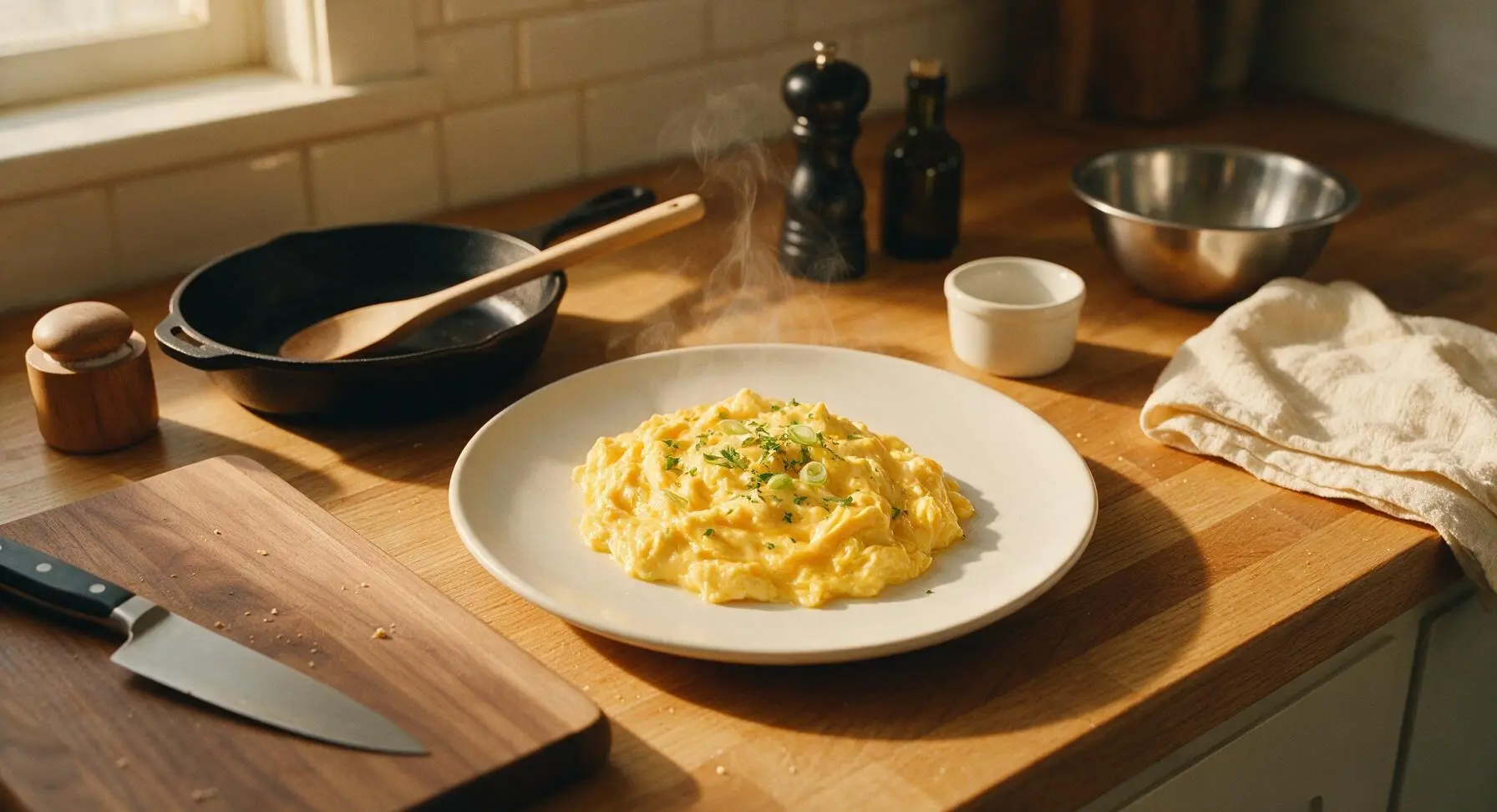
Silky, gently sweet Japanese-style tamago scrambled eggs, with tender custardy curds and subtle umami, perfect for light breakfasts or fast weeknight meals.

Ingredients
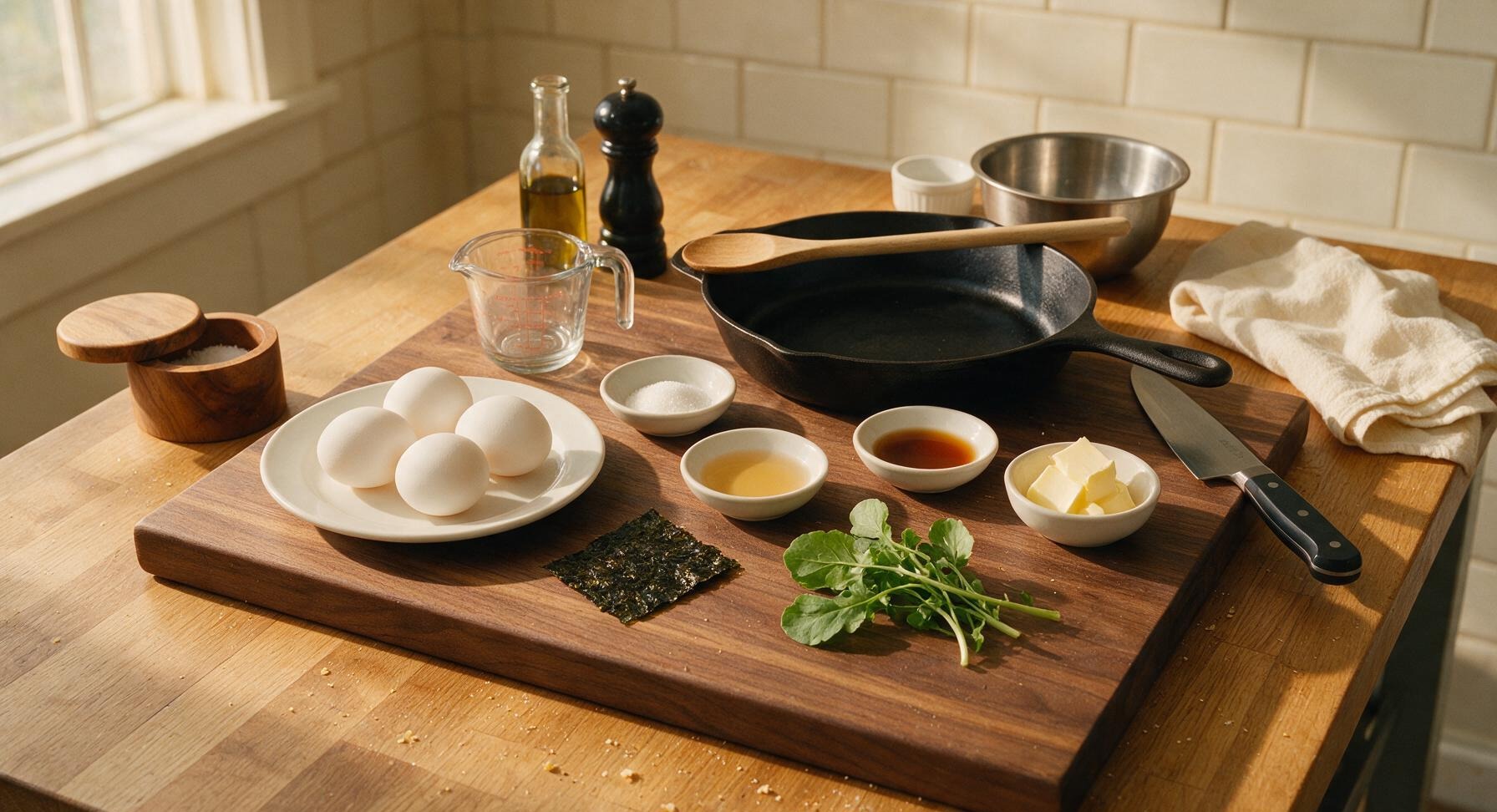
Large eggs 4 (about 200g, shelled)
Granulated white sugar 1 teaspoon
Mirin (sweet rice wine) 1 teaspoon
Light usukuchi soy sauce 1 teaspoon
Unsalted butter 1 tablespoon
Roasted nori sheet 1 small sheet (for garnish)
Fresh mizuna 1 sprig (for garnish)

Steps

1

Portion Seasoning Ingredients

Measure 1 teaspoon granulated white sugar, 1 teaspoon mirin, and 1 teaspoon light usukuchi soy sauce into the three separate small off-white ceramic pinch bowls. Arrange the bowls within easy arm’s reach of the induction cooktop to avoid fumbling for ingredients once cooking begins, as the eggs cook in under 3 minutes and require constant attention. This prep step takes approximately 2 minutes.
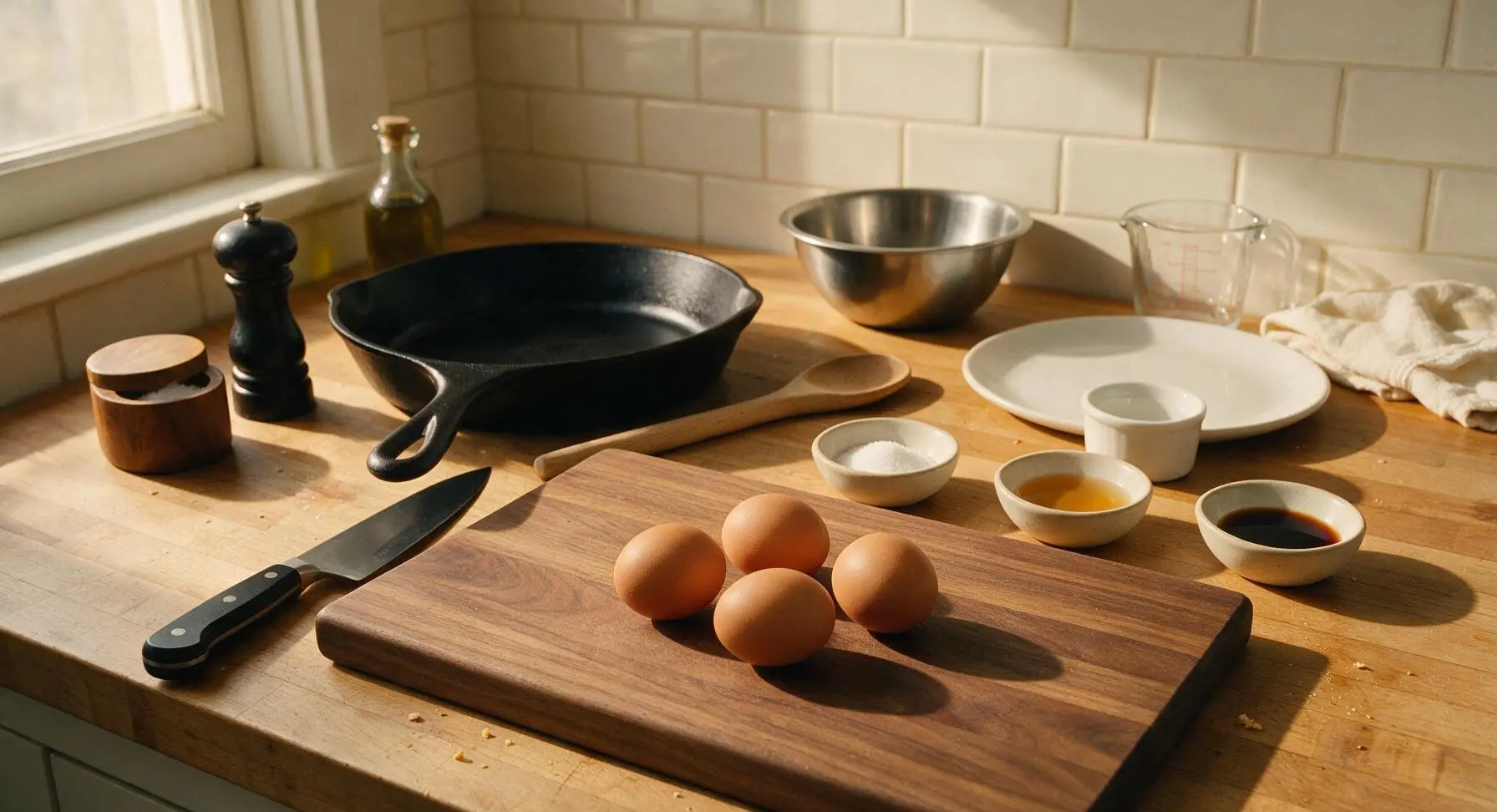
Step 1
step1:Portion Seasoning Ingredients
2

Crack and Whisk Eggs

Gently tap each egg against the rim of the stainless steel mixing bowl to crack the shell, letting the yolk and white fall into the bowl, taking care not to drop any shell fragments into the mixture. Add the pre-measured sugar, mirin, and soy sauce to the eggs. Use the bamboo cooking chopsticks to whisk the mixture slowly in a steady circular motion for 45 seconds, until yolks and whites are fully combined into a uniform pale golden liquid, with no streaks of clear egg white remaining. Avoid vigorous whisking, as excess air bubbles will create tough, spongy eggs instead of silky curds.
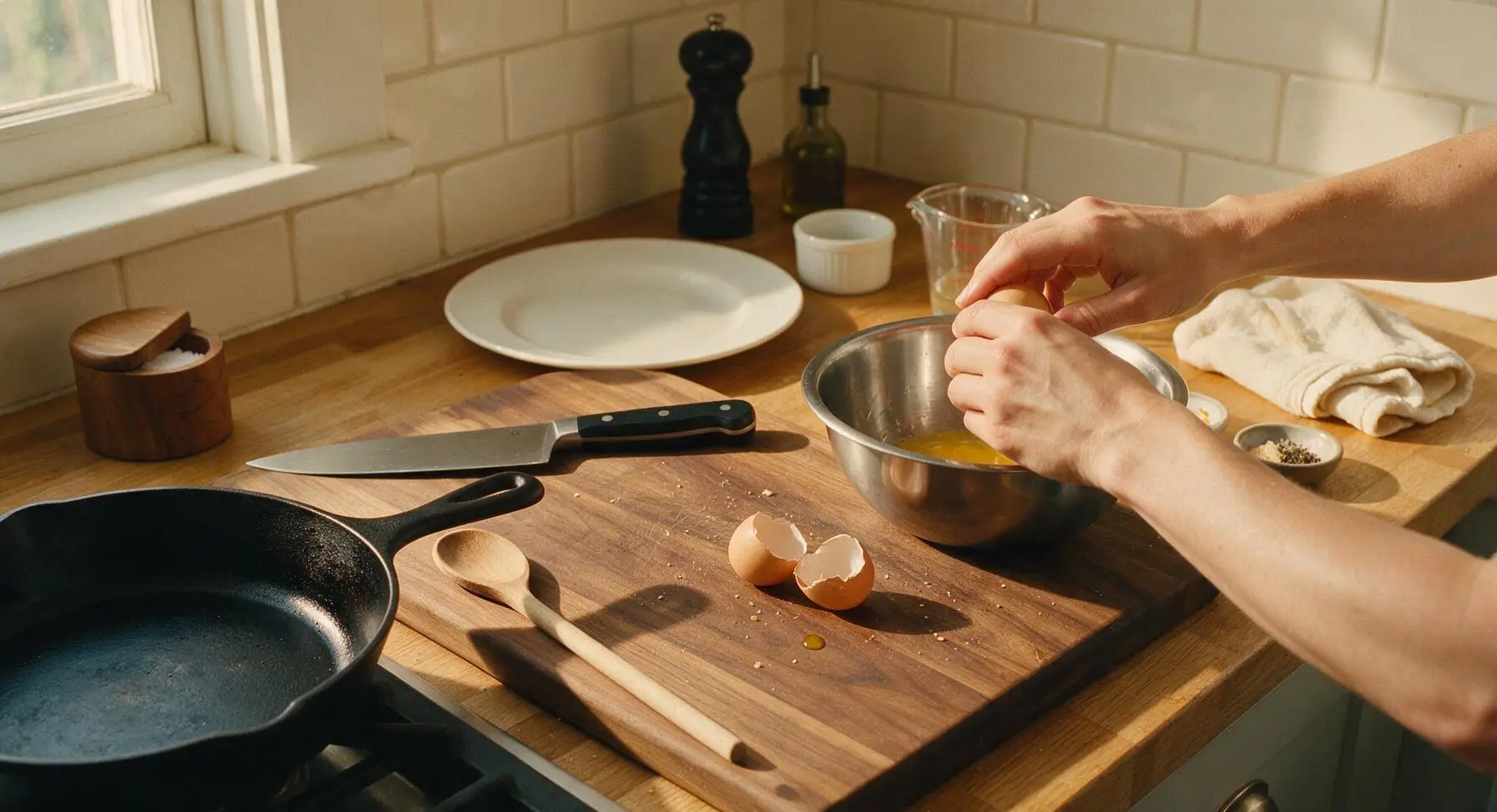
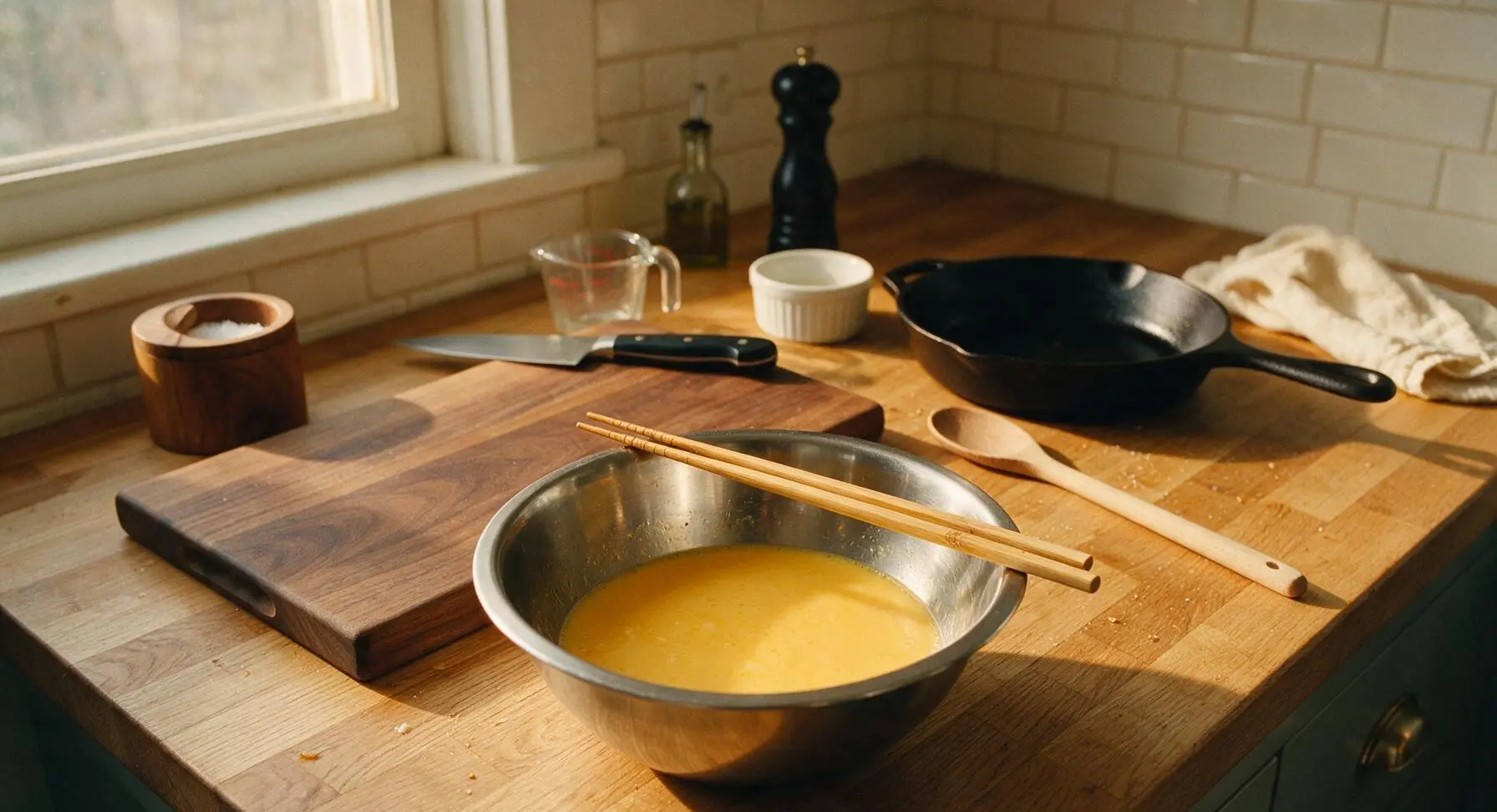
Step 2
step2:Crack and Whisk Eggs
Step 2
step2:Crack and Whisk Eggs
3

Strain Egg Mixture

Set the fine-mesh stainless steel sieve over the top of the mixing bowl. Pour the whisked egg mixture through the sieve to catch stringy chalazae and any tiny stray shell fragments. Use the bamboo chopsticks to gently press the egg liquid through the mesh, until only small, stringy white solids remain in the sieve; discard these solids. This step creates an ultra-smooth egg base that cooks into perfectly uniform, custardy curds with no chewy bits, and takes approximately 30 seconds.
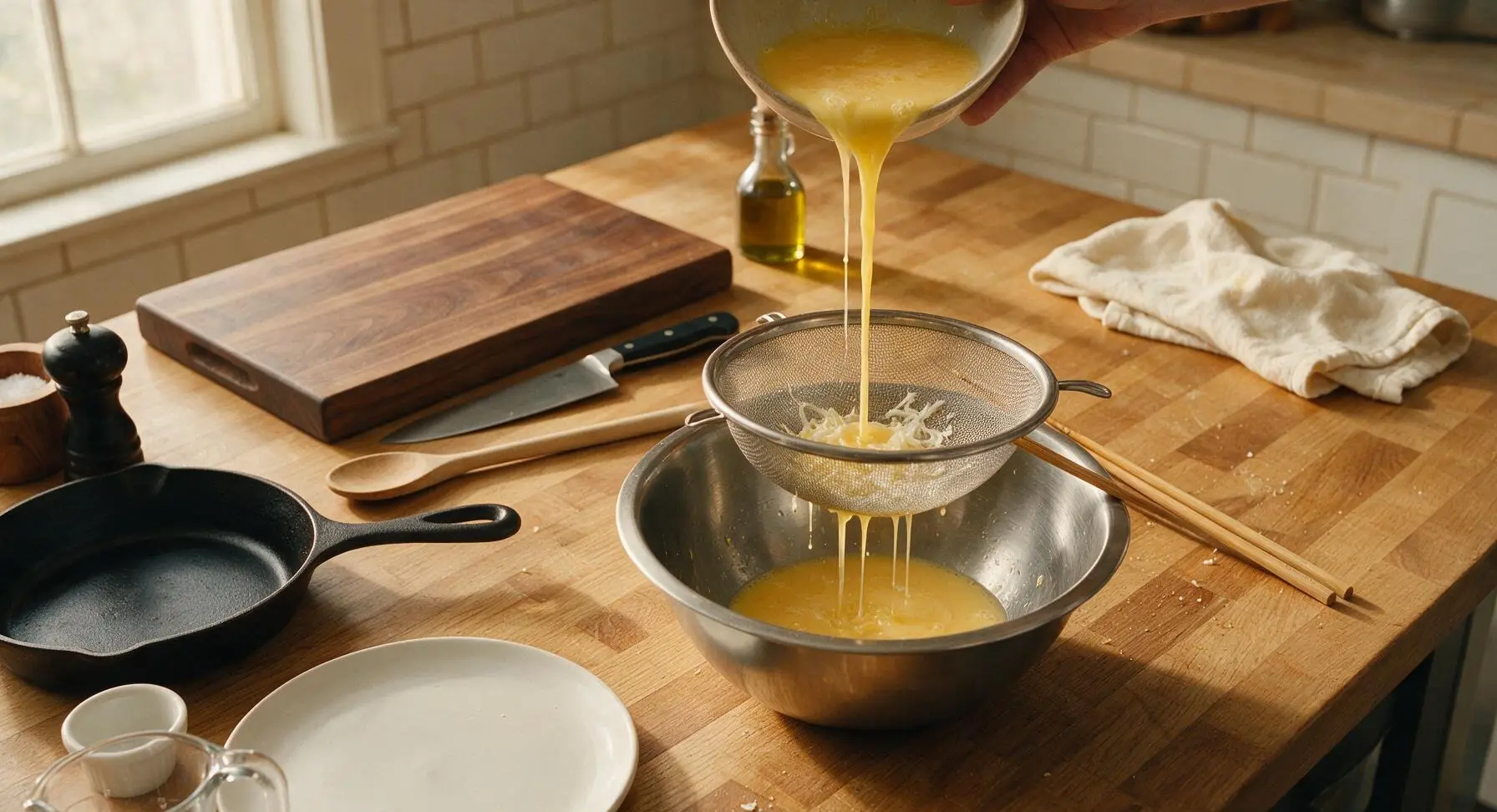
Step 3
step3:Strain Egg Mixture
4

Preheat Tamagoyaki Pan

Retrieve the 20cm non-stick tamagoyaki pan and place it on the induction cooktop, set to low heat (120°C / 250°F). Let the pan preheat for 1 full minute. Test the temperature by dropping a single pinhead-sized drop of egg mixture into the pan: the drop should set slowly into a soft opaque curd after 3 seconds, with no loud sizzle or immediate browning. If the drop sizzles violently, turn the heat down slightly to avoid overcooking the eggs.
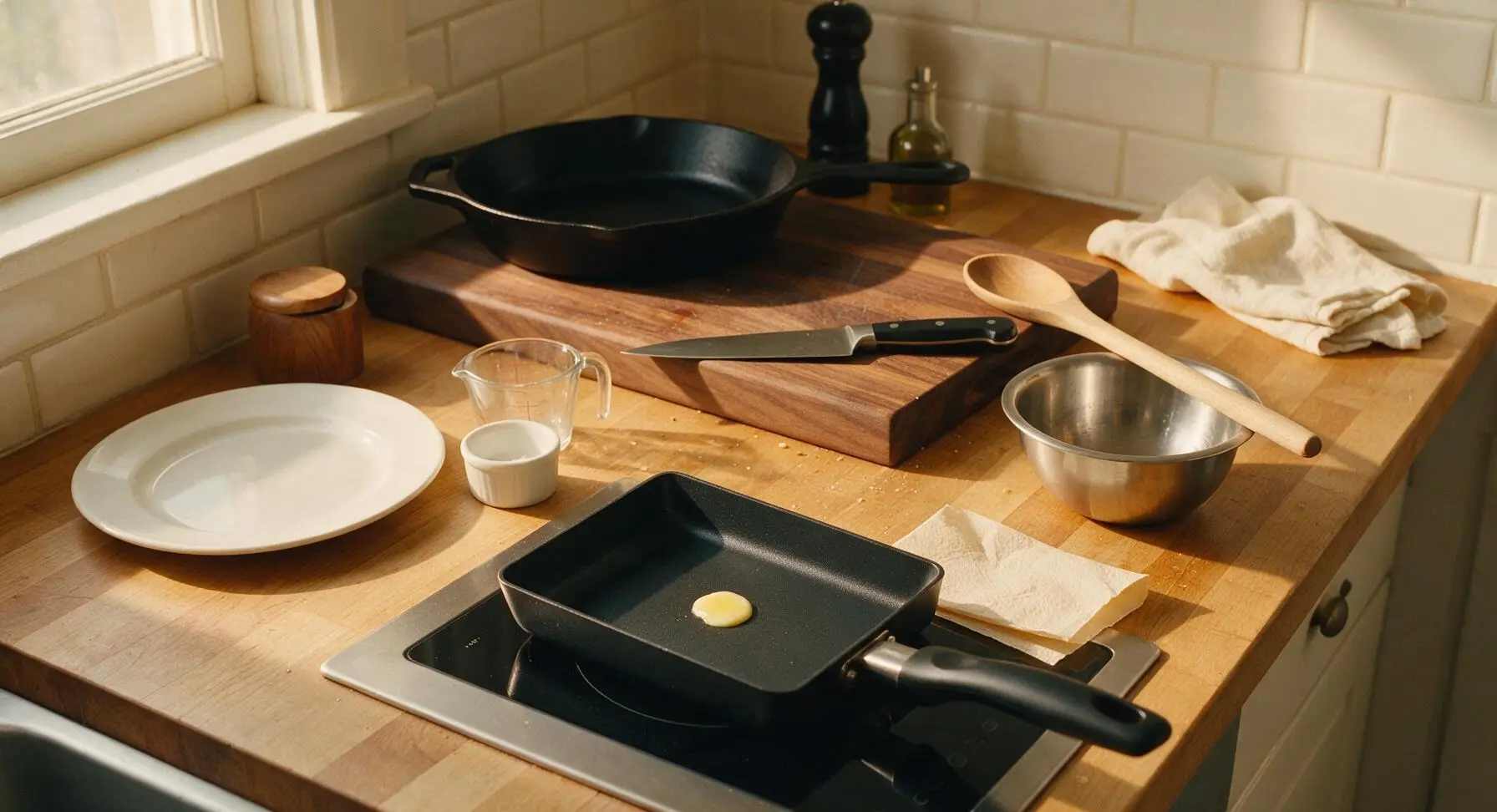
Step 4
step4:Preheat Tamagoyaki Pan
5

Melt Butter Evenly

Add 1 tablespoon of unsalted butter to the preheated pan. As the butter melts into a pale golden liquid, use the bamboo chopsticks to hold the folded unbleached paper towel, and wipe the melted butter across the entire sloped interior surface of the pan, soaking up any excess butter to leave only a thin, glossy coating. The butter should foam gently but not turn nut brown; if browning occurs, the pan is too hot and should be lifted off the heat for 10 seconds to cool slightly.
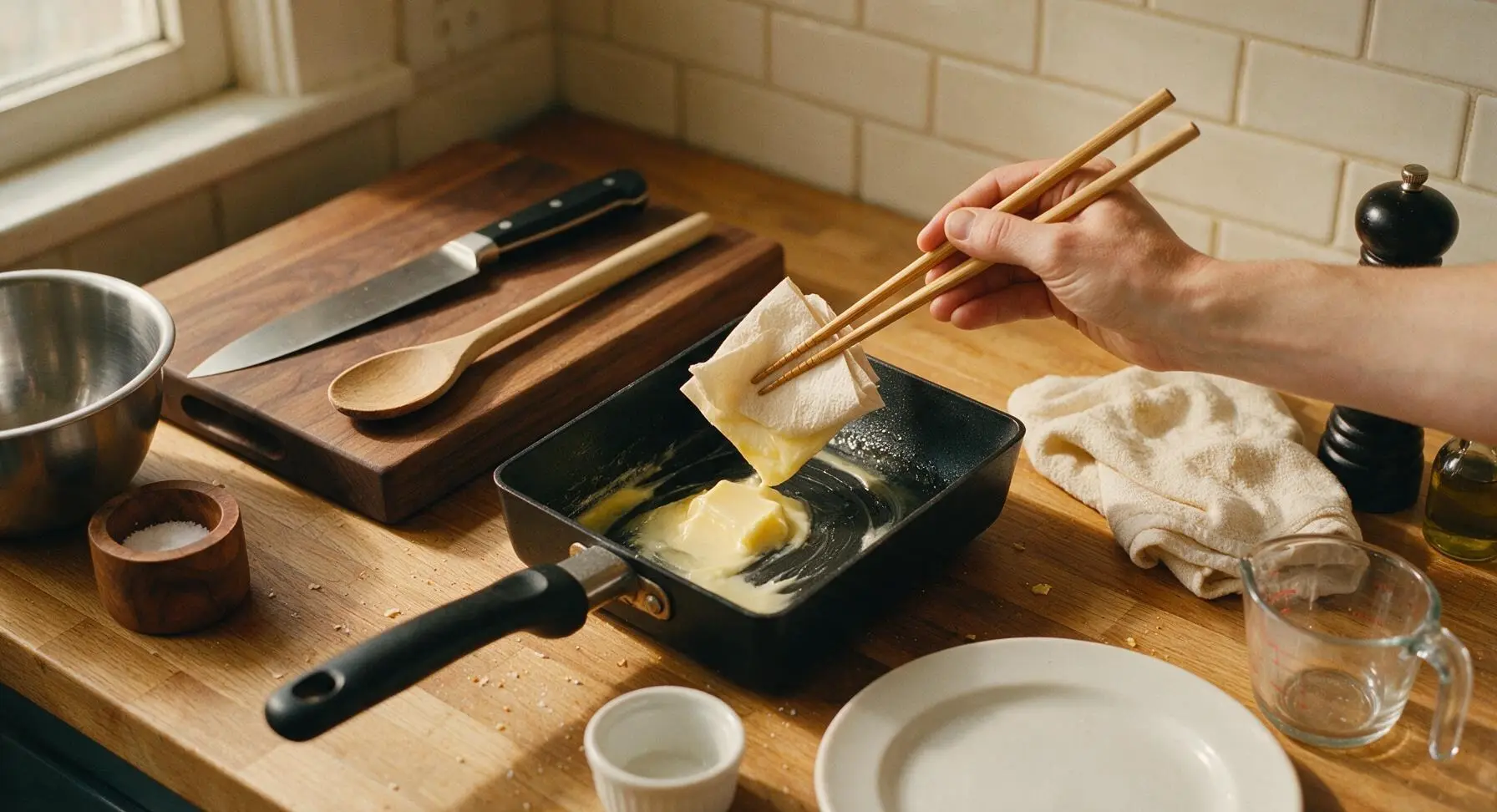
Step 5
step5:Melt Butter Evenly
6

Cook Soft Curds Gently

Pour all of the strained egg mixture into the buttered pan in one slow, even pour. Let the eggs sit undisturbed for 10 seconds on low heat, until the very bottom layer sets into soft, tender curds. Use the pale yellow silicone spatula to gently push set curds from the pan edges toward the center, letting runny uncooked egg flow into the empty gaps left behind. Repeat this gentle pushing motion every 10 seconds for 2 to 3 minutes total, keeping heat on low the entire time. Do not stir constantly, as this creates small, crumbly curds instead of large, custardy ones. Stop cooking when eggs are 80% set, with small patches of runny egg remaining, as residual heat will finish cooking them.
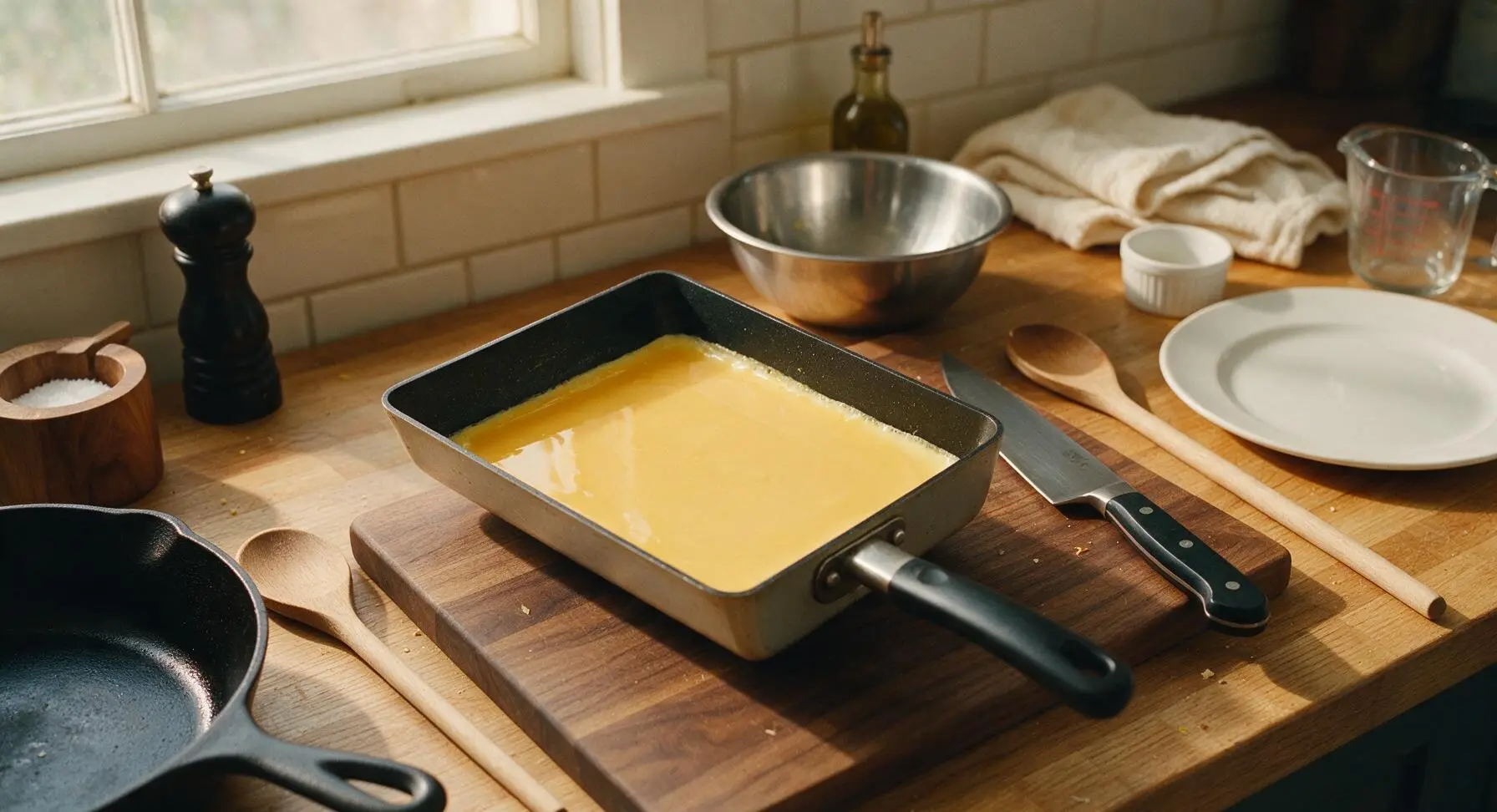
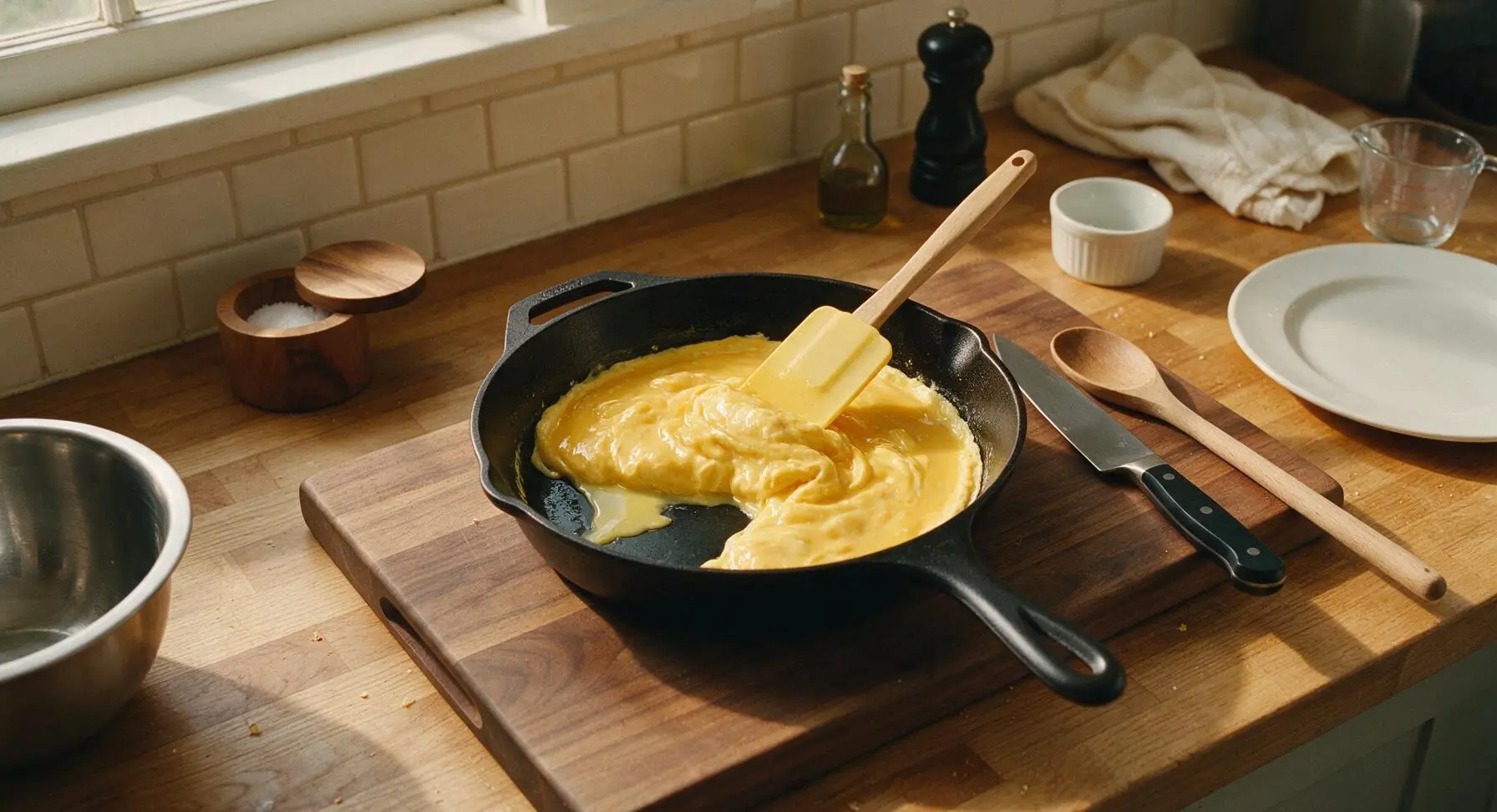
Step 6
step6:Cook Soft Curds Gently
Step 6
step6:Cook Soft Curds Gently
7

Plate and Garnish Eggs

Turn off the induction cooktop, and let the eggs rest in the pan for 30 seconds to let residual heat finish cooking the remaining runny spots, ensuring eggs are tender and not overcooked. Gently slide the soft scrambled eggs out of the pan onto the center of the off-white ceramic serving plate. Tuck one thin 5cm strip of roasted nori into the edge of the egg mound, and sprinkle a pinch of finely chopped fresh mizuna leaves over the top for a bright, peppery garnish. Serve immediately.
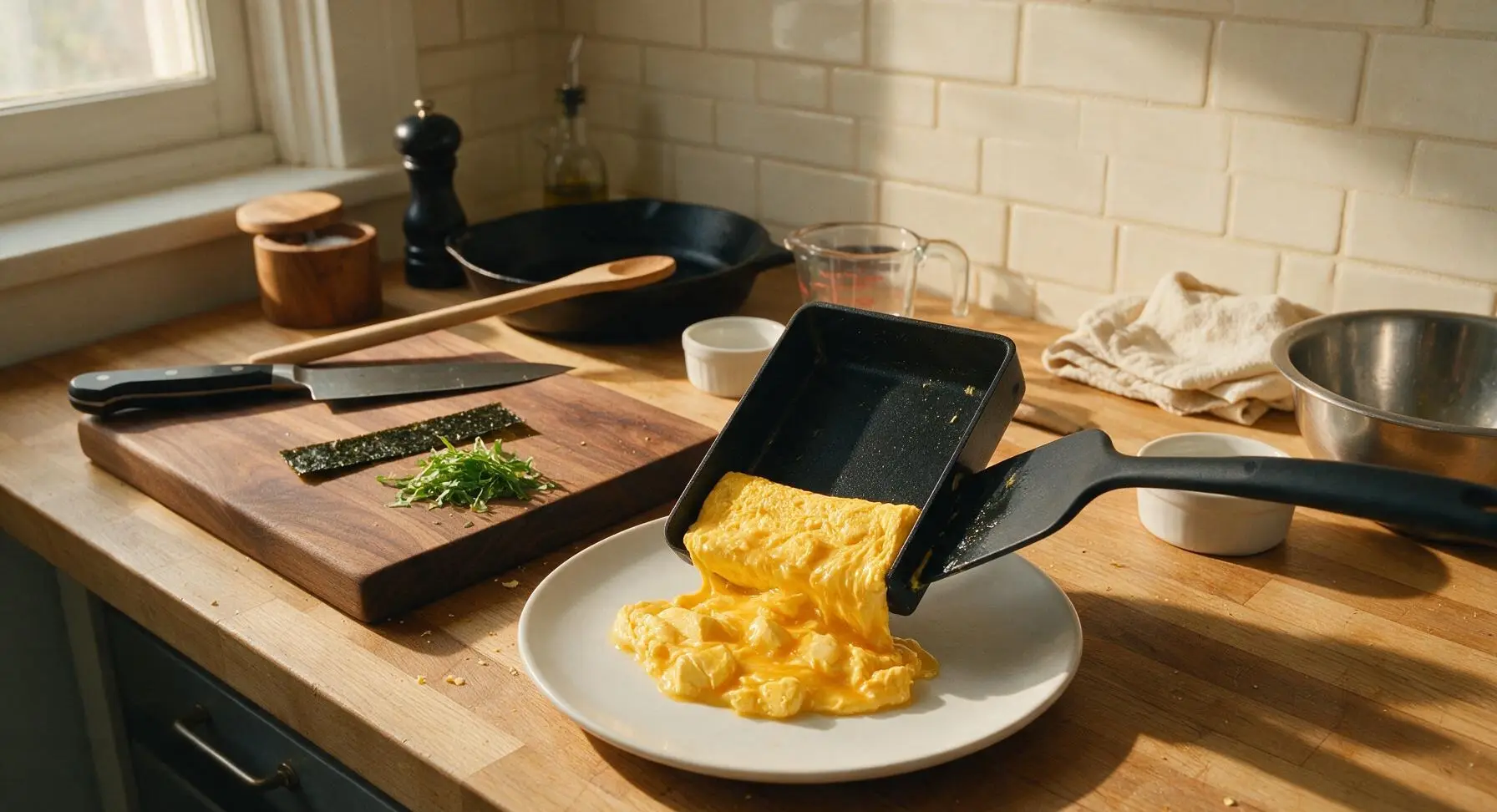
Step 7
step7:Plate and Garnish Eggs

Tips

1.Always cook these eggs on the lowest heat setting: high heat causes egg proteins to seize quickly into rubbery, browned curds, while low heat slowly builds soft, melt-in-your-mouth custard texture without browning.
2.Don’t skip straining the whisked egg mixture: the stringy white chalazae cords attached to egg yolks cook into firm, chewy bits if left in, and straining creates a perfectly uniform, smooth egg base.
3.Remove the pan from heat when eggs look slightly underdone: residual heat held in the pan will continue to cook eggs for 30–60 seconds after the heat is turned off, preventing dry, crumbly overcooked curds.

✨ You May Also Like

Breakfast
🍜 United States

Crisp-edged, fluffy lard griddle cakes are a nostalgic homestyle staple, with rich savoriness from rendered lard, perfect topped with maple syrup or savory gravy.

⏱️ 25 minuteBreakfast ★ 4.8
Breakfast
🍜 United States

Flaky, buttery homemade buttermilk biscuits smothered in creamy, peppery pork sausage gravy: a beloved, hearty Southern American comfort food classic.

⏱️ 35 minuteBreakfast ★ 4.8
Breakfast
🍜 United States

Golden, custardy brioche stuffed with sweet cream cheese and fresh berries, pan-fried to crisp perfection. An indulgent, cozy breakfast perfect for slow weekend mornings.

⏱️ 30 minuteBreakfast ★ 4.7
Breakfast
🍜 United States

Flaky, buttery Southern-style biscuits stuffed with savory salty country ham, a portable, satisfying classic perfect for casual on-the-go meals.

⏱️ 25 minuteBreakfast ★ 4.8
Breakfast
🍜 United States

Iconic puffy baked pancake popularized in Seattle, with crisp golden edges and soft custardy center, served warm with classic sweet toppings.

⏱️ 35 minuteBreakfast ★ 4.6
Breakfast
🍜 United States

Fluffy, golden pancakes studded with juicy peak-summer mixed berries, drizzled with maple syrup for a bright, comforting, crowd-pleasing family breakfast.

⏱️ 25 minuteBreakfast ★ 4.7

Tamago Scrambled Eggs:Frequently Asked Questions

1.What makes tamago scrambled eggs different from regular American scrambled eggs? ▾
The biggest difference is the balanced sweet-savory umami profile from mirin, a touch of sugar, and light soy, rather than the purely salty, peppery profile of most American scrambled eggs. They’re also cooked much more gently over lower heat to form delicate, custardy, melt-in-your-mouth curds instead of larger, firmer ones.
2.Can I skip the mirin if I don’t have it on hand? ▾
You can, but you’ll miss that subtle layered rice wine sweetness that makes these eggs feel authentic. If you’re out, swap 1 tablespoon of mirin for 1 teaspoon dry sherry mixed with 2 teaspoons extra granulated sugar dissolved in a splash of warm water to match its mild sweet profile. Skip rice vinegar as a swap—it’s far too tart.
3.What is usukuchi soy sauce, and can I use regular soy sauce instead? ▾
Usukuchi is a light-colored Japanese soy sauce that adds salty umami without turning eggs a dark, unappetizing brown. If you don’t have it, use half the amount of regular dark soy sauce mixed with a tiny pinch of extra salt, or low-sodium regular soy, to keep the pale golden color and balanced salt level of the finished dish.
4.Why do my tamago scrambled eggs turn out rubbery instead of silky? ▾
Rubbery eggs almost always come from cooking over too-high heat, stirring too aggressively, or cooking them too long past the point of soft curd formation. Tamago eggs need low, gentle heat, slow soft stirring with a silicone spatula, and come off the heat right when soft, barely set curds form—residual heat will finish cooking them.
5.How much sugar should I use so the eggs don’t taste like dessert? ▾
A good baseline is ½ teaspoon of granulated sugar per 3 large eggs—this adds just a subtle, background sweetness that balances the soy and mirin, not a cloying, dessert-like sweetness. Taste your egg mixture before cooking, and adjust by tiny pinches if you prefer a little more or less sweet depth.
6.Do I need to strain the egg mixture for extra silkiness? ▾
Straining isn’t strictly required for a quick weeknight batch, but it’s a simple trick that makes a noticeable difference. Pouring the beaten egg mixture through a fine-mesh sieve removes the stringy chalaza from the eggs, creating an ultra-smooth, uniform base that cooks into perfectly even, lump-free custardy curds with no chewy bits.
7.Is there a dairy-free swap for the unsalted butter? ▾
Absolutely—swap the unsalted butter for an equal amount of refined coconut oil (which has no strong coconut flavor) or a neutral, high-smoke-point oil like avocado oil. Avoid unrefined coconut oil, toasted sesame oil, or strong grassy olive oil, as those will overpower the delicate, mild sweet-savory taste of the eggs.
8.What heat setting should I use on my stove to get perfect curds? ▾
Use medium-low heat for the entire cooking process, no higher. If your pan is too hot when you add the eggs, they’ll seize up and turn rubbery the second they hit the surface. You should hear a very soft, gentle sizzle when you pour the egg mixture in, not a loud, sputtering crackle that signals too-high heat.
9.How do I know when the eggs are done cooking? ▾
Pull the pan off the heat the second you have soft, glossy, pale golden curds that are just barely set, with no runny liquid left pooling in the pan. The eggs will keep cooking for 30 to 60 seconds from residual pan heat after you take them off, so waiting until they look fully done in the pan leads to dry, overcooked eggs.
10.Can I add mix-ins like cheese or scallions to these eggs? ▾
You absolutely can, but keep mix-ins mild and minimal so you don’t cover up the delicate tamago flavor. Thinly sliced scallions, a tiny sprinkle of furikake, or a pinch of shredded mild white cheddar work great. Avoid strong mix-ins like spicy sausage, sharp blue cheese, or heavy salsa, which clash with the subtle sweet-umami profile.
11.Why do my eggs turn a weird brown color instead of pale gold? ▾
That brown tinge almost always comes from using too much dark soy sauce, cooking over too-high heat which scorches the eggs and sugar, or using browned butter instead of plain melted unsalted butter. Stick to light usukuchi soy, keep heat low, and melt butter just until foamy without browning to keep that bright pale golden hue.
12.How many eggs should I use per serving for a light breakfast? ▾
Plan for 2 to 3 large eggs per person for a light, satisfying breakfast, paired with a side of steamed rice, toast, or pickled vegetables. If you’re serving these as part of a larger Japanese-style spread with miso soup, grilled fish, and rice, 2 eggs per person is enough to feel filling without being heavy.
13.Can I make these eggs ahead of time for meal prep? ▾
These eggs are best eaten immediately after cooking for that perfect silky texture, but you can make them ahead if needed. Cook them slightly softer than you prefer, cool them completely in an airtight container in the fridge for up to 2 days, and reheat very gently in 10-second microwave bursts, stirring between each, to avoid rubbery results.
14.Do I need a special pan, like a square tamagoyaki pan, to make these? ▾
You don’t need a special square tamagoyaki pan at all for this scrambled version—any small, heavy-bottomed nonstick skillet will work perfectly. A heavy pan distributes heat evenly to avoid hot spots that scorch the eggs, and the nonstick surface lets you gently push curds around without the eggs sticking and tearing.
15.Should I add extra salt to these eggs, or is the soy sauce enough? ▾
The light usukuchi soy sauce adds most of the salty umami for the recipe, but it’s always smart to do a quick taste test of the egg mixture before cooking. If it tastes a little flat, add a tiny pinch of fine sea salt—go light, since you can always add a little extra soy at the end, but you can’t fix over-salting.
16.What’s the best utensil to use for stirring the eggs as they cook? ▾
Reach for a heatproof silicone spatula with a flexible edge for the best results. The soft, flexible edge lets you scrape every bit of egg from the bottom and sides of the pan as curds form, creating small, tender, even curds instead of big, chunky ones. Avoid metal utensils, which scratch nonstick pans and break curds too roughly.
17.Can I use egg substitutes instead of whole large eggs for this recipe? ▾
Liquid egg substitutes will work, but you won’t get quite the same rich, custardy texture that comes from whole egg yolks. If you’re using a plant-based egg substitute, pick one formulated for soft scrambled eggs, and cut the added sugar slightly, since many plant-based eggs have subtle sweet notes that can throw off the flavor balance.
18.Why do some recipes add dashi to tamago scrambled eggs? ▾
A tiny splash of dashi adds an extra layer of deep, savory umami that pairs beautifully with the sweet and salty notes of the classic recipe. It’s totally optional, though—if you want that extra depth, add 1 teaspoon of prepared dashi (or a pinch of dashi powder dissolved in warm water) to your egg mixture before cooking for restaurant-style flavor.
19.How do I avoid getting browned butter bits in my finished eggs? ▾
Melt your unsalted butter over medium-low heat, and add the egg mixture as soon as the butter is fully melted and foamy, before it starts to turn golden and develop nutty browned milk solids. If you accidentally let the butter brown a little, wipe out the pan and start with fresh butter, as those nutty bits clash with the eggs’ mild, clean taste.
20.What are the best sides to serve with these tamago scrambled eggs? ▾
These silky eggs pair beautifully with simple, mild sides that don’t compete with their delicate flavor. Steamed short-grain rice, buttered toast, quick pickled cucumbers, a small cup of miso soup, or lightly seasoned sautéed spinach all work perfectly. For a fast weeknight meal, serve them over rice with a sprinkle of furikake on top.

Comments (17)

2 days ago

OMG these tamago scrambled eggs are a total game changer! I’ve been making regular dry scrambled eggs for my kids for years and they went crazy for the silky, slightly sweet version this morning. 5 minutes total cook time? Perfect for chaotic school mornings. 10/10

1 day ago

Wait did you add a tiny splash of mirin like the recipe says? I almost skipped that step and wondered if it makes a difference!

1 day ago

So glad your kids loved them! That tiny splash of mirin is key for that classic tamago sweetness, but if you don’t have it on hand a pinch of sugar mixed with a drop of rice vinegar works great too!

1 week ago

Made these for my weekly meal prep to put on rice bowls all week, and they hold up way better than I thought they would! Super easy, no fancy skills needed, and the texture is chef’s kiss. Will be making these on repeat.

6 days ago

Love that you’re using these for meal prep! Pro tip: undercook them just a tiny bit before storing so they don’t get rubbery when you reheat them in the microwave!

3 days ago

SO good. I made these for a weekend brunch potluck with my friends and everyone was asking for the recipe. The texture is so fluffy and silky, I can never go back to regular scrambled eggs now.

5 days ago

Wait, is it normal that my first batch came out a little lumpy? I think I had the heat too high? Tasted amazing anyway, just not as smooth as the photos.

4 days ago

I had the same issue my first try! Turn the stove to low the second you pour the eggs in, it makes all the difference. I thought I messed up too but the second batch was perfect.

4 days ago

Great tip from MountainMamaCo! Low and slow is the secret to that silky, lump-free tamago texture—high heat will make the eggs seize up too fast. So glad they still tasted great for you!

yesterday

My picky toddler ate two whole servings of these for dinner tonight!!! I didn’t think anything could get him to eat eggs without drowning them in ketchup, but he ate them plain. Absolute win.

12 hours ago

Same here! My 3 year old usually turns her nose up at eggs but she asked for seconds of these. Magic!

2 weeks ago

Made these before an early morning hike last weekend and they were the perfect quick, protein packed breakfast. Didn’t even need to add cheese or hot sauce, the subtle umami flavor is perfect on its own.

2 hours ago

Obsessed! I paired these with some steamed rice and a little pickled ginger for a lazy Sunday breakfast and it felt like I got takeout from my favorite Japanese spot. So easy for how fancy it tastes!

1 hour ago

That pairing sounds absolutely delicious! Pickled ginger cuts through the richness of the eggs perfectly, we love that idea.

30 minutes ago

Tried adding a little pinch of chili crisp to these after they were done cooking and oh my GOD, game changer combo. Sweet, salty, a little kick. 10/10 would recommend.

15 minutes ago

Wait that sounds insane, I’m making these for breakfast tomorrow and I definitely have chili crisp in the fridge. Thanks for the hack!

5 minutes ago

What a fantastic add-in! A little heat pairs so well with the mild, sweet tamago flavor—we’re going to test that out in our test kitchen this week!

3 days ago

I’ve been looking for quick high-protein breakfasts that don’t require a ton of cleanup, and this is it. One pan, five minutes, minimal ingredients, and my whole family ate it without complaining. Added to the permanent rotation.

1 week ago

I will say, I was skeptical that eggs could be this good with just soy sauce and mirin, but wow. I’ve been overcomplicating scrambled eggs my whole adult life. The texture is so much creamier than the way I used to make them.

5 days ago

Right? I used to load mine up with cheese, veggies, hot sauce, everything, and now I just make these plain half the time because they don’t need anything else.

just now

Quick question—can I make these with just regular large eggs from the grocery store? I don’t have any fancy pasture raised eggs or anything, will it still turn out okay?

2 minutes ago

I made mine with regular cheap grocery store eggs last night and they came out perfect! Don’t overthink the eggs, the cooking method is what makes the texture great.

1 minute ago

Absolutely! Regular grocery store eggs work perfectly for this recipe. The low heat and gentle stirring is what creates that signature silky texture, no fancy eggs required.

2 weeks ago

Made these for a quick breakfast when we were camping last weekend, cooked ‘em on a little camp stove on low heat and they turned out perfect. Even the guys in my camping group who only eat bacon and sausage were raving about them.

1 week ago

Camping breakfast win! Love that you made these work over a camp stove, that’s such a fun use for the recipe.

5 minutes ago

I make these every single morning now. 5 minutes is exactly how much time I have between walking my first set of dogs and getting ready for my second shift, so it’s the perfect quick bite. Tastes way better than a sad protein bar.

yesterday

I added a tiny sprinkle of furikake on top of these when I served them for family dinner last night, and my husband said it’s the best egg dish I’ve ever made. Win for the low-effort meal win column!

8 hours ago

Furikake on eggs is so underrated! I do that with my regular scrambled eggs but it’s gonna hit so much better with this tamago version, can’t wait to try.

2 days ago

As someone who can barely make toast without burning it, I was shocked how easy these were to pull off. No fancy equipment, no weird ingredients, just straight up good eggs. Saved me from spending $12 on breakfast takeout before class this morning.

2 hours ago

Wait, do you have to use dashi for this? I don’t keep dashi in my pantry and I don’t want to buy a whole container just for eggs. Anyone tried it without?

1 hour ago

I made it without dashi the first time just using a little extra soy sauce and it was still amazing! It doesn’t taste exactly like restaurant tamago but it’s still way better than regular scrambled eggs.

45 minutes ago

You don’t need dashi at all! The base recipe is designed to be pantry-friendly, so if you don’t have it, just follow the ingredient list as written and you’ll still get that delicious classic tamago flavor. No special grocery run needed!

1 week ago

Meal prep hack: I make a big batch of these on Sunday, wrap them up with some rice and seaweed for quick onigiri snacks to take to class all week. They stay so soft and flavorful, way better than the cafeteria food.

6 days ago

That is such a smart meal prep idea! Tamago onigiri is one of our all-time favorite quick snacks, so we love that you’re making it at home to save money during the semester.