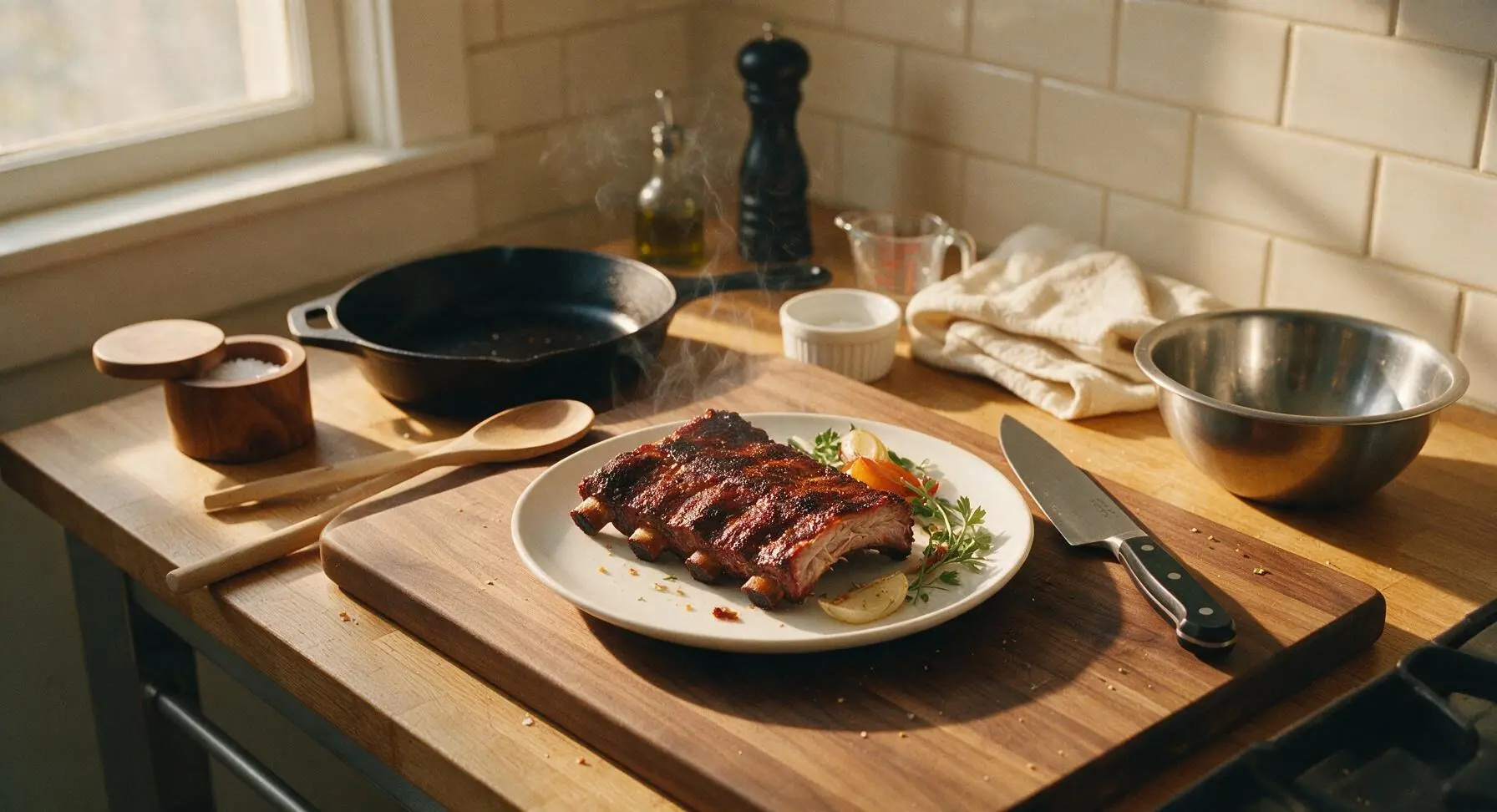
Texas Crutch Ribs

title 1
Texas Crutch Ribs
⏱️ cook time 6 hours
🍽️ servings 4
⚡ Difficulty medium

intro

Fall-off-the-bone tender smoked pork ribs made with the iconic Texas crutch method, boasting caramelized bark and deep smoky flavor ideal for summer cookouts.

Ingredients
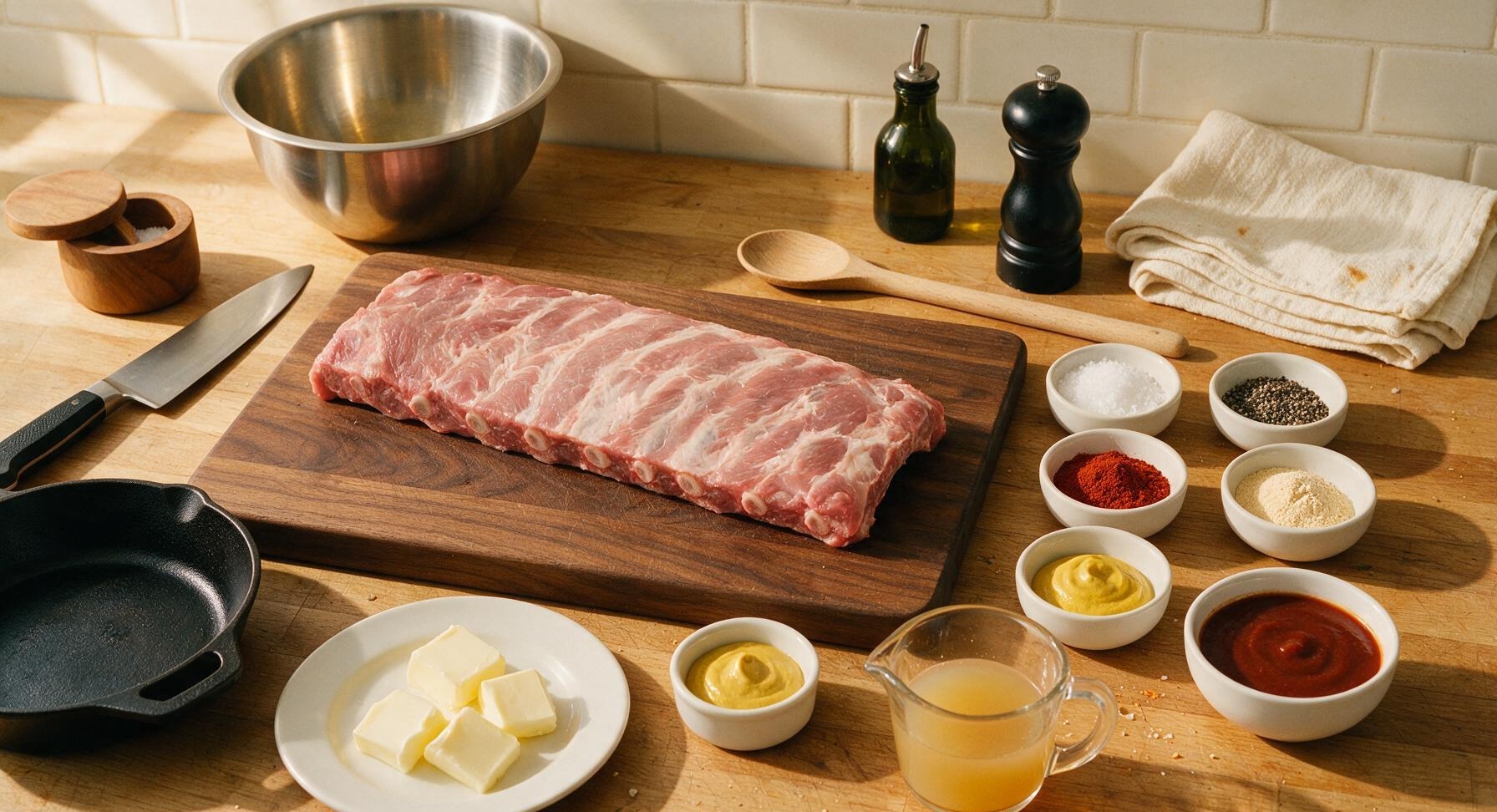
St. Louis-style pork spare ribs 1 rack (1.3kg / 3lb)
Coarse kosher salt 2 tbsp
Freshly ground black pepper 2 tbsp
Smoked paprika 1 tbsp
Garlic powder 1 tbsp
Onion powder 1 tsp
Cayenne pepper 1/2 tsp
Yellow mustard 1 tbsp
Unsalted butter 4 tbsp (60g, cut into pats)
Unsweetened apple juice 120ml (1/2 cup)
Tangy tomato-based BBQ sauce 120ml (1/2 cup)

Steps

1

Trim Spare Ribs

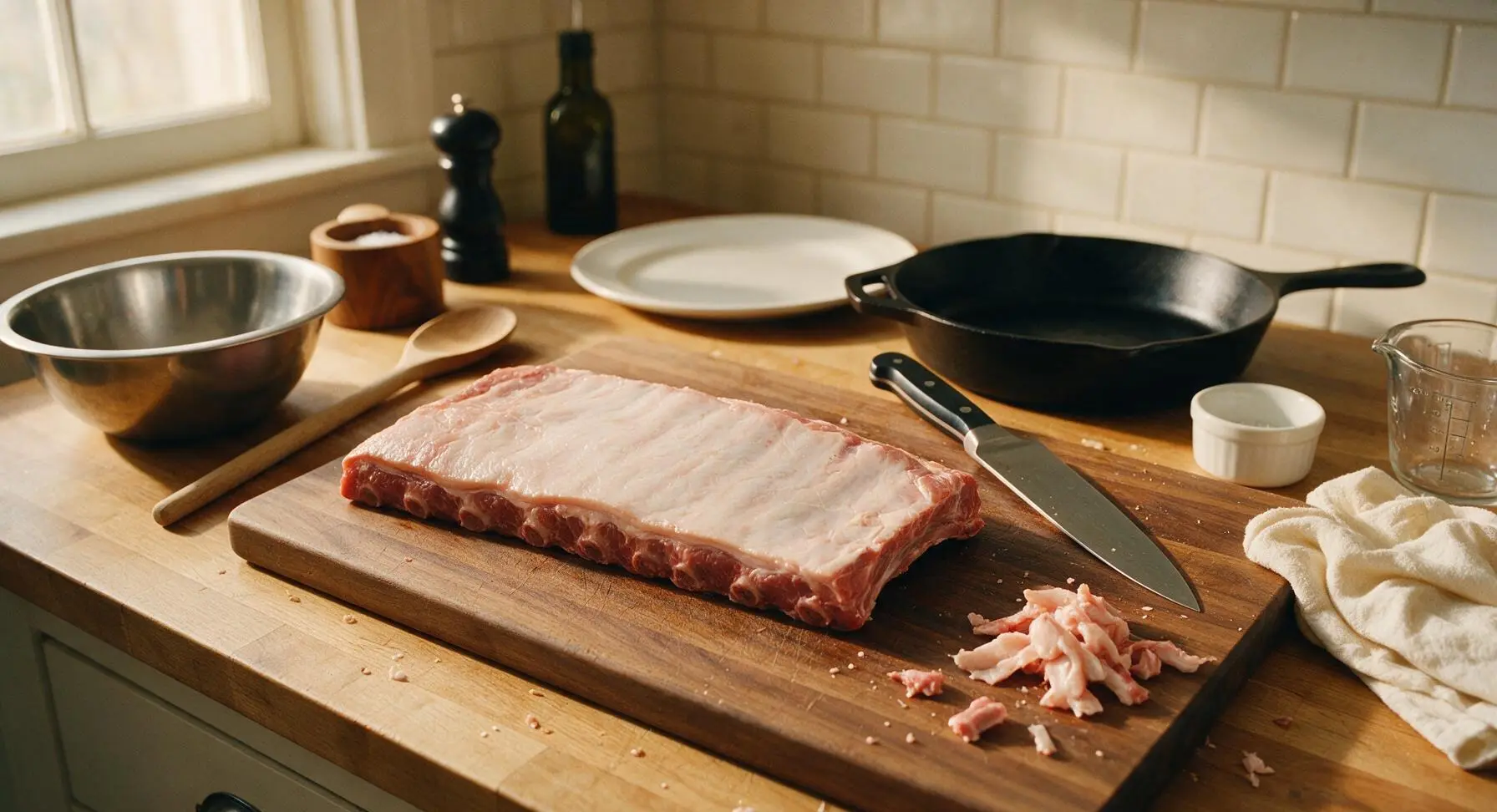
Remove the raw St. Louis rib rack from packaging, pat dry with paper towels, and place on the maple cutting board. Use the 6-inch boning knife to pull off the tough silver skin membrane from the bone side of the rack, trimming any excess hard fat or loose meat flaps to create a smooth, even surface. Leave a 1/4-inch thick fat cap on the meaty side to render during cooking.
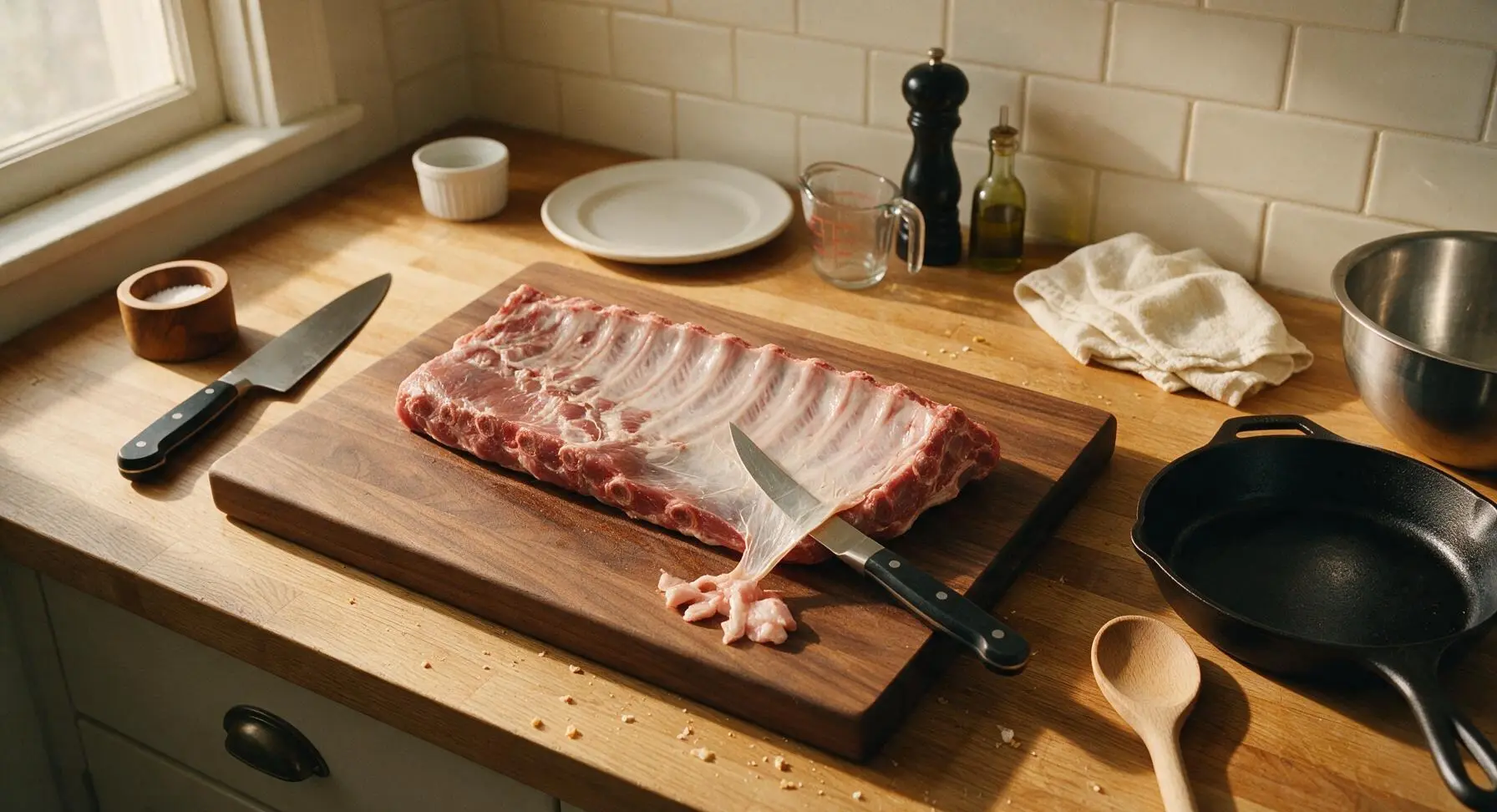
Step 1
step1:Trim Spare Ribs
Step 1
step1:Trim Spare Ribs
2

Apply Dry Rub

Combine kosher salt, black pepper, smoked paprika, garlic powder, onion powder, and cayenne pepper in the medium stainless steel mixing bowl, stirring with a spoon from the measuring spoon set until fully blended. Spread the 1 tablespoon of yellow mustard evenly across all surfaces of the trimmed rib rack to act as a flavorless binder. Generously sprinkle the dry rub over every side of the ribs, pressing lightly to ensure the spice adheres in an even, thick coating, with no bare meat spots visible. Let the rubbed ribs rest at room temperature for 20 minutes while you preheat your smoker to 225°F (107°C), using hickory or oak wood for authentic smoky flavor.
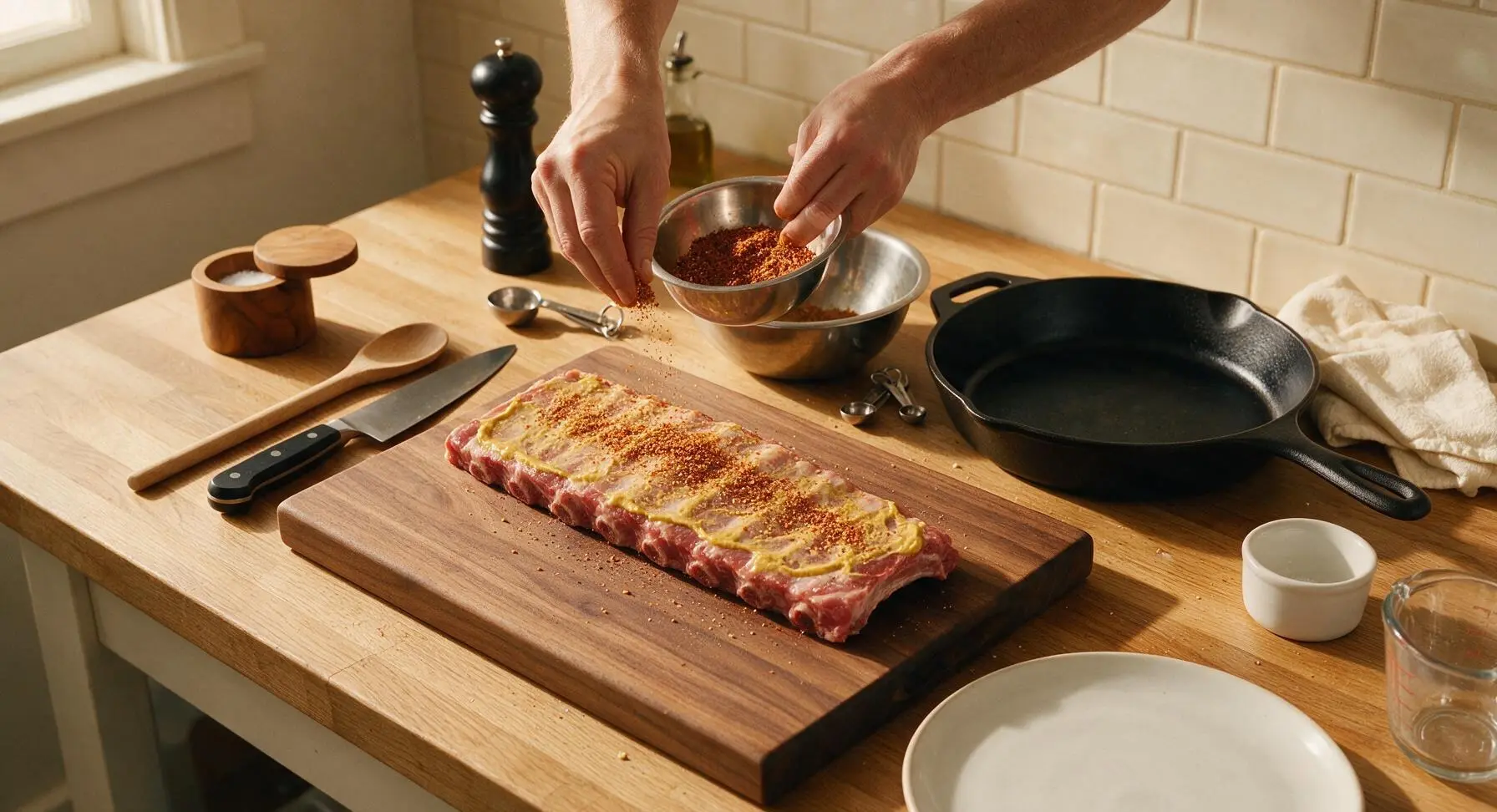
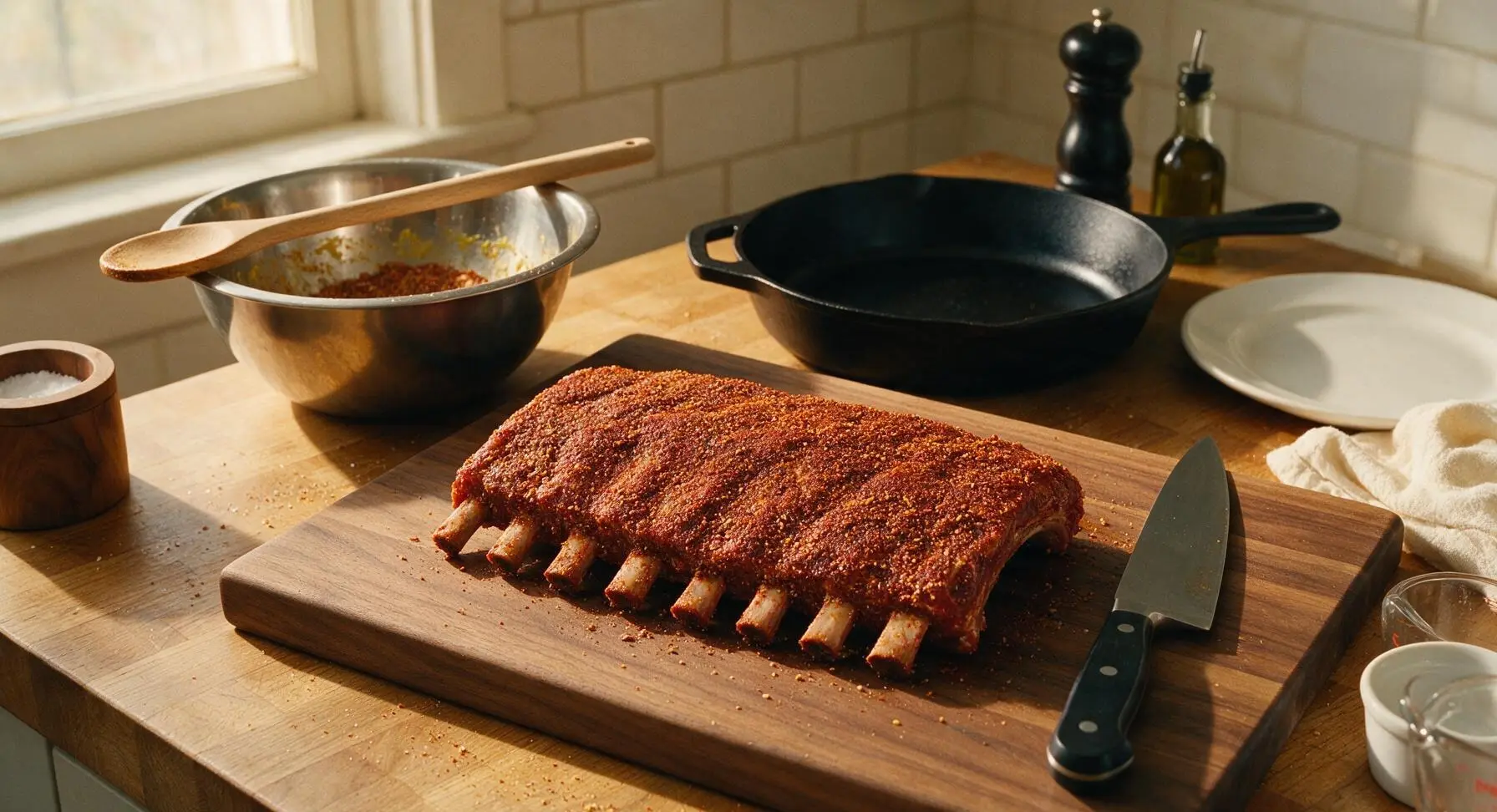
Step 2
step2:Apply Dry Rub
Step 2
step2:Apply Dry Rub
3

Smoke Ribs Unwrapped

Once the smoker reaches a steady 225°F (107°C), place the rubbed rib rack bone-side down directly on the smoker grates. Close the lid and smoke for 3 full hours, maintaining a consistent temperature between 225-250°F (107-121°C), avoiding opening the lid unnecessarily to retain heat and smoke. The ribs will develop a dark, matte mahogany outer bark at the end of this stage, with no raw red rub visible.
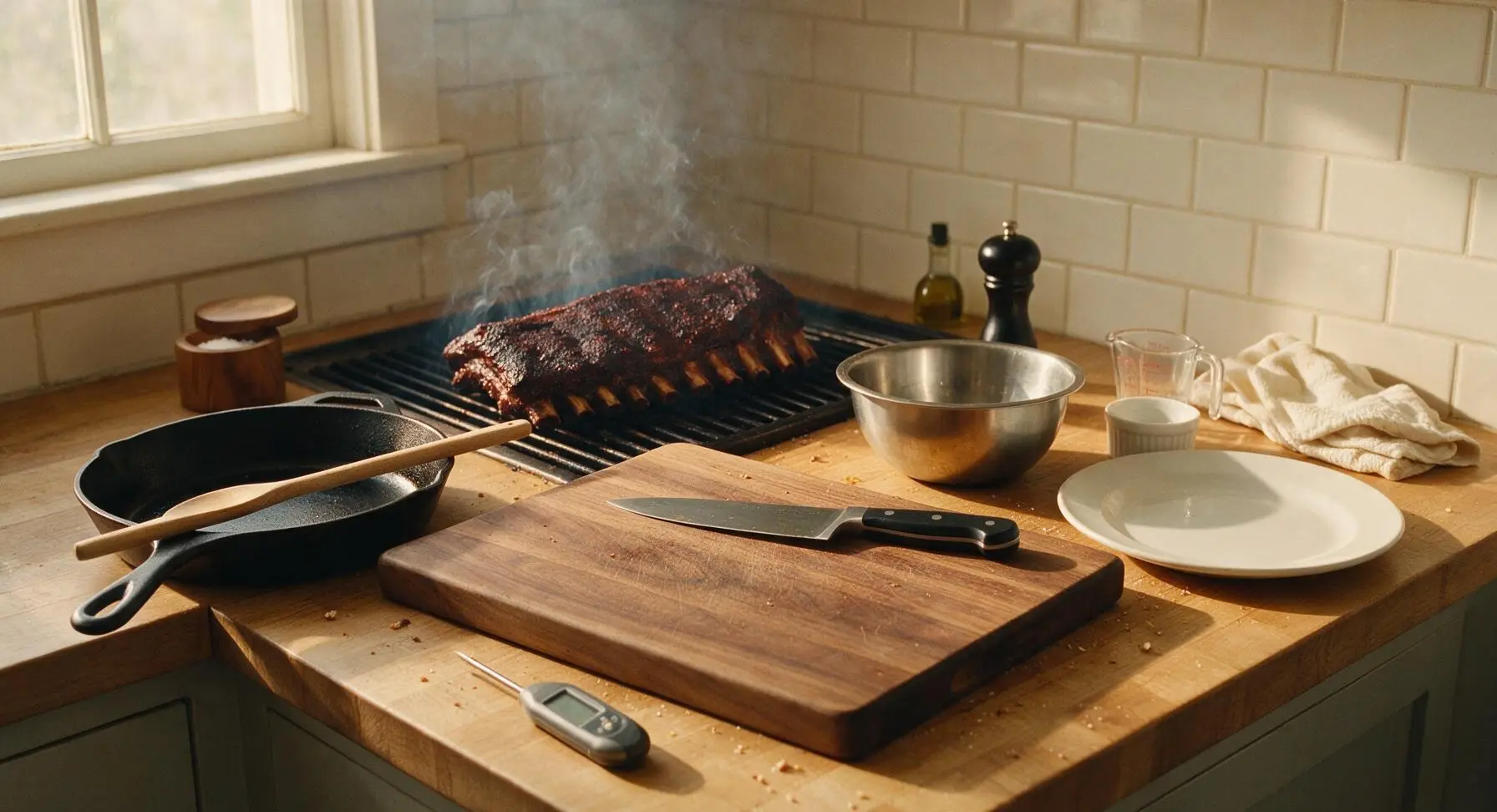
Step 3
step3:Smoke Ribs Unwrapped
4

Prepare Foil Crutch

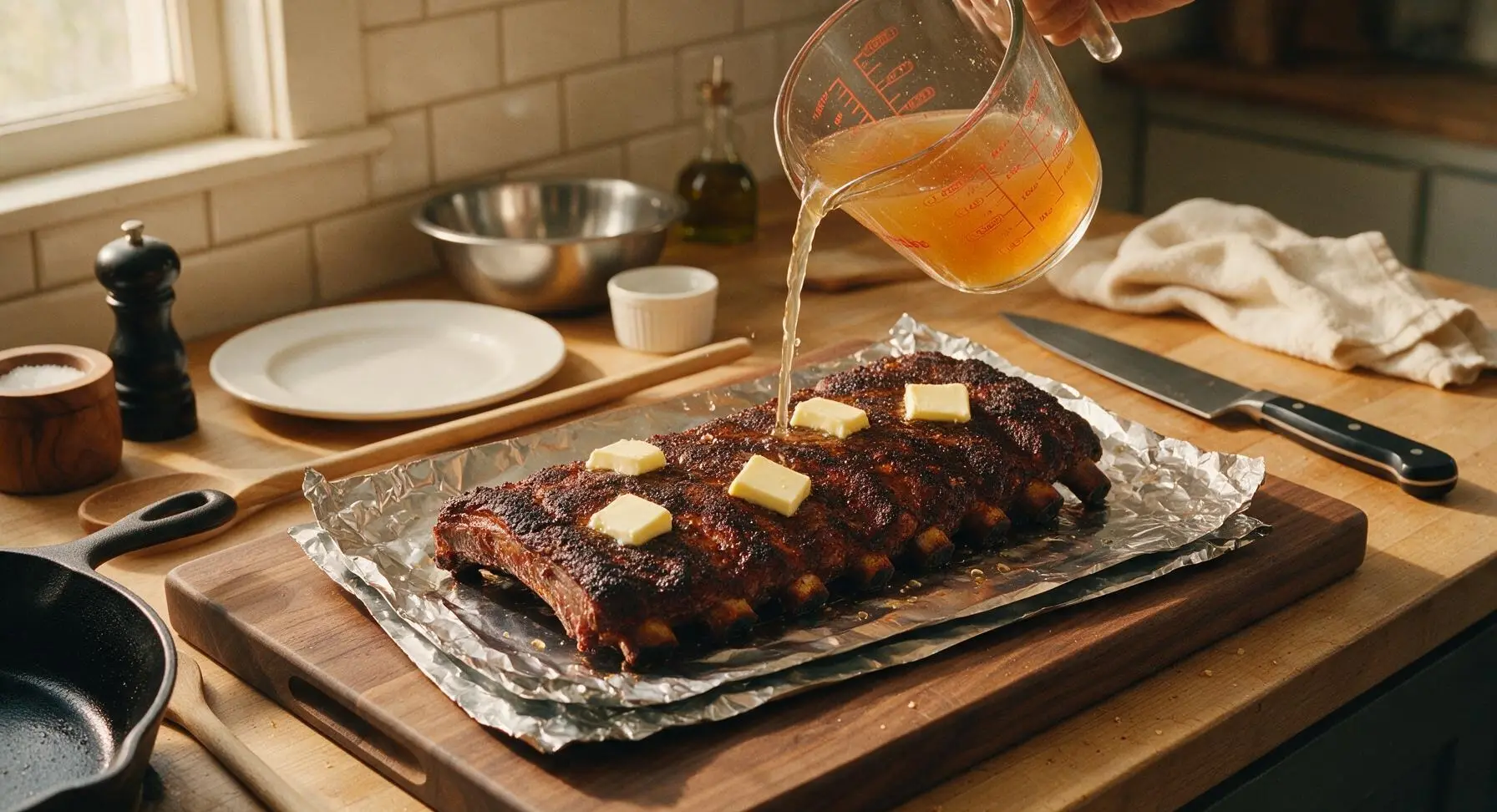
After 3 hours of unwrapped smoke, use the tan suede grill gloves to carefully remove the ribs from the smoker and transfer them back to the maple cutting board. Tear off two 60cm (2-foot) long sheets of heavy-duty aluminum foil, stacking them to create a double layer strong enough to hold the ribs and liquid without tearing. Place the ribs in the center of the foil, top with the 4 pats of unsalted butter, and pour the 120ml of apple juice over the top of the rack.
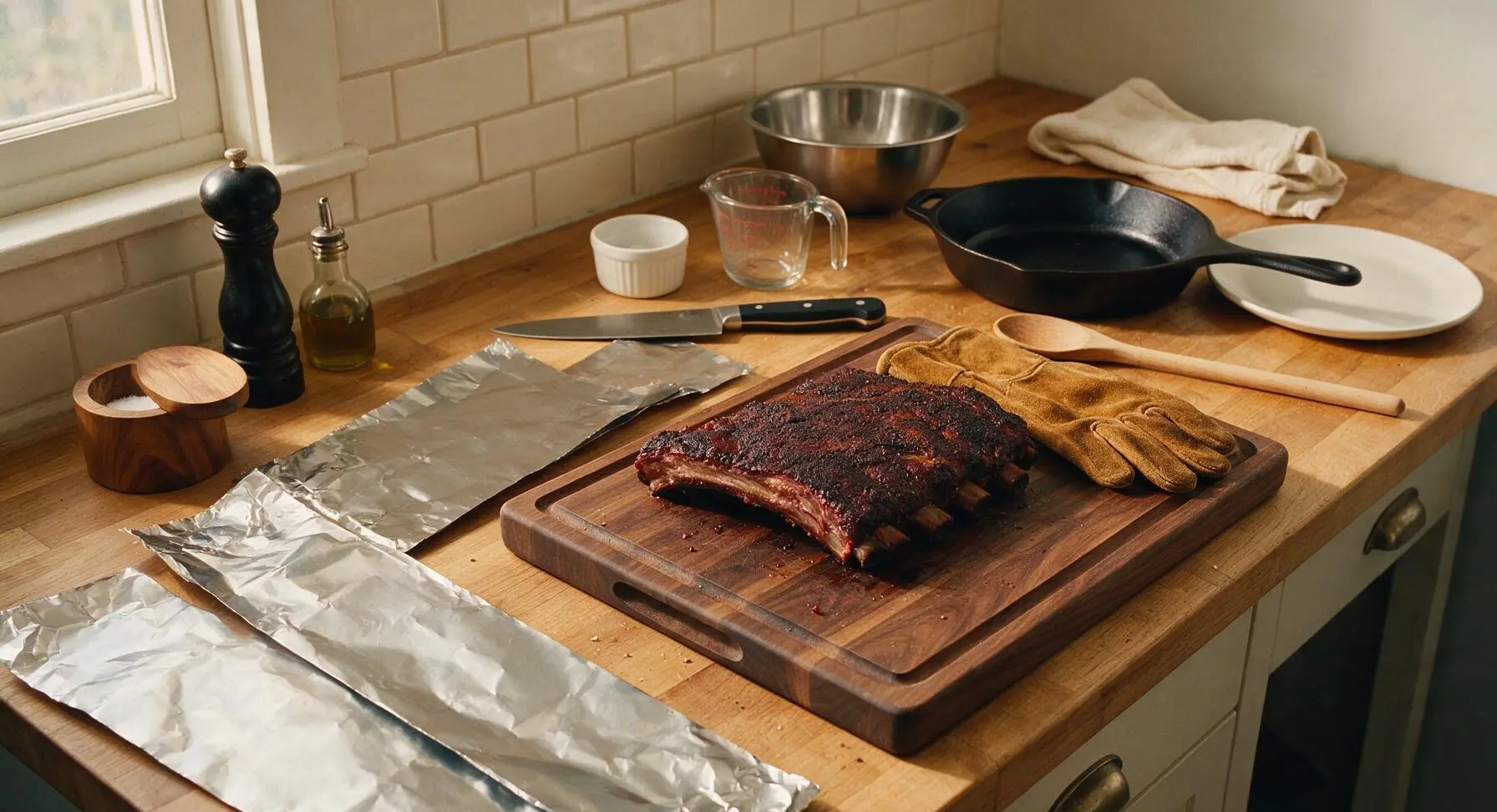
Step 4
step4:Prepare Foil Crutch
Step 4
step4:Prepare Foil Crutch
5

Wrap and Cook Tender

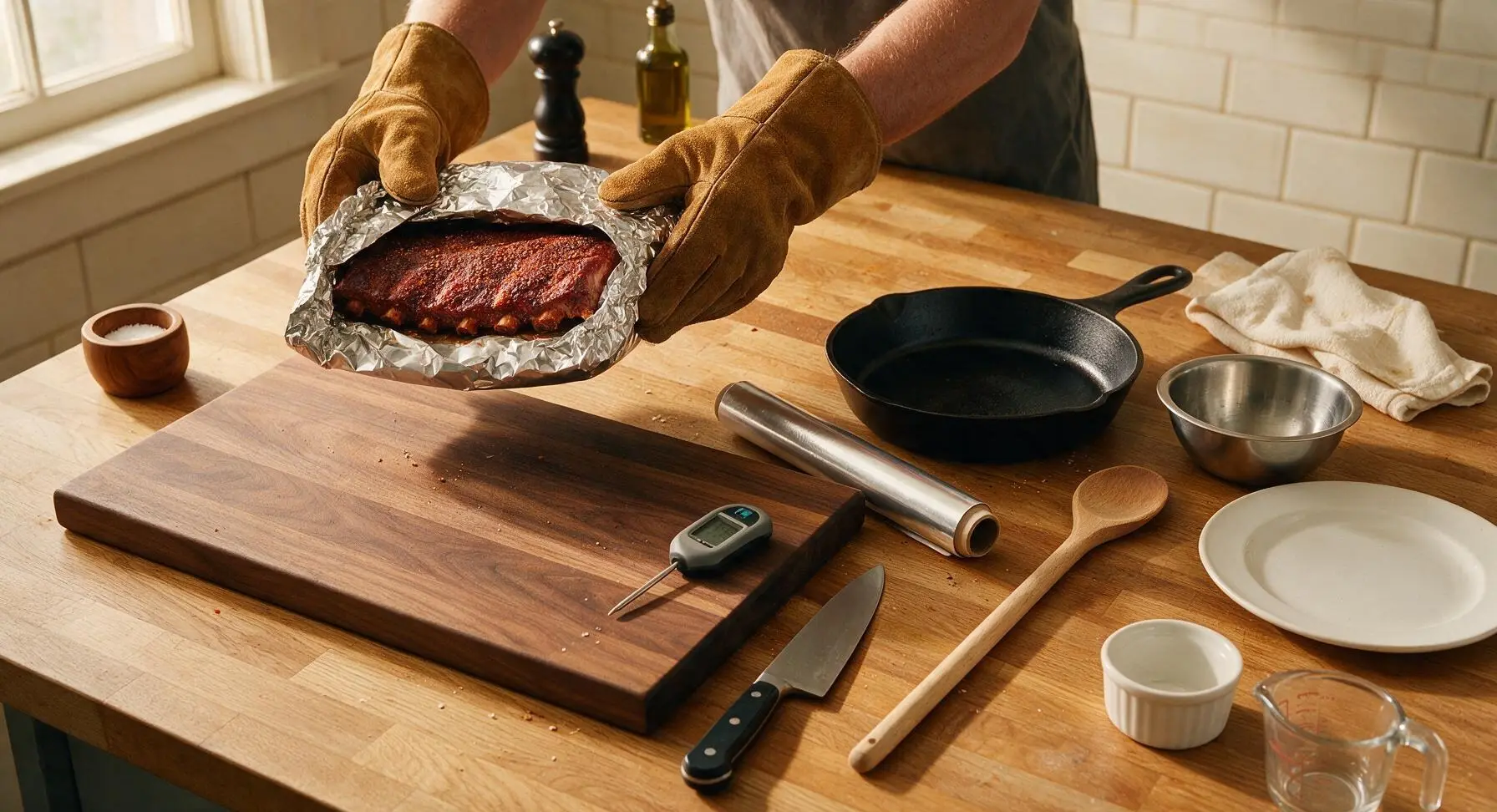
Fold the aluminum foil tightly around the ribs to create a fully sealed, airtight packet, leaving no gaps for steam to escape. Return the foil-wrapped ribs to the 225°F (107°C) smoker, and cook for 2 full hours. At the end of this stage, use the instant-read thermometer to check for tenderness: the probe should slide into the thickest part of the rib meat with no resistance, like sticking a knife into soft butter, at an internal temperature of around 203°F (95°C).
Step 5
step5:Wrap and Cook Tender
6

Sauce and Finish Ribs

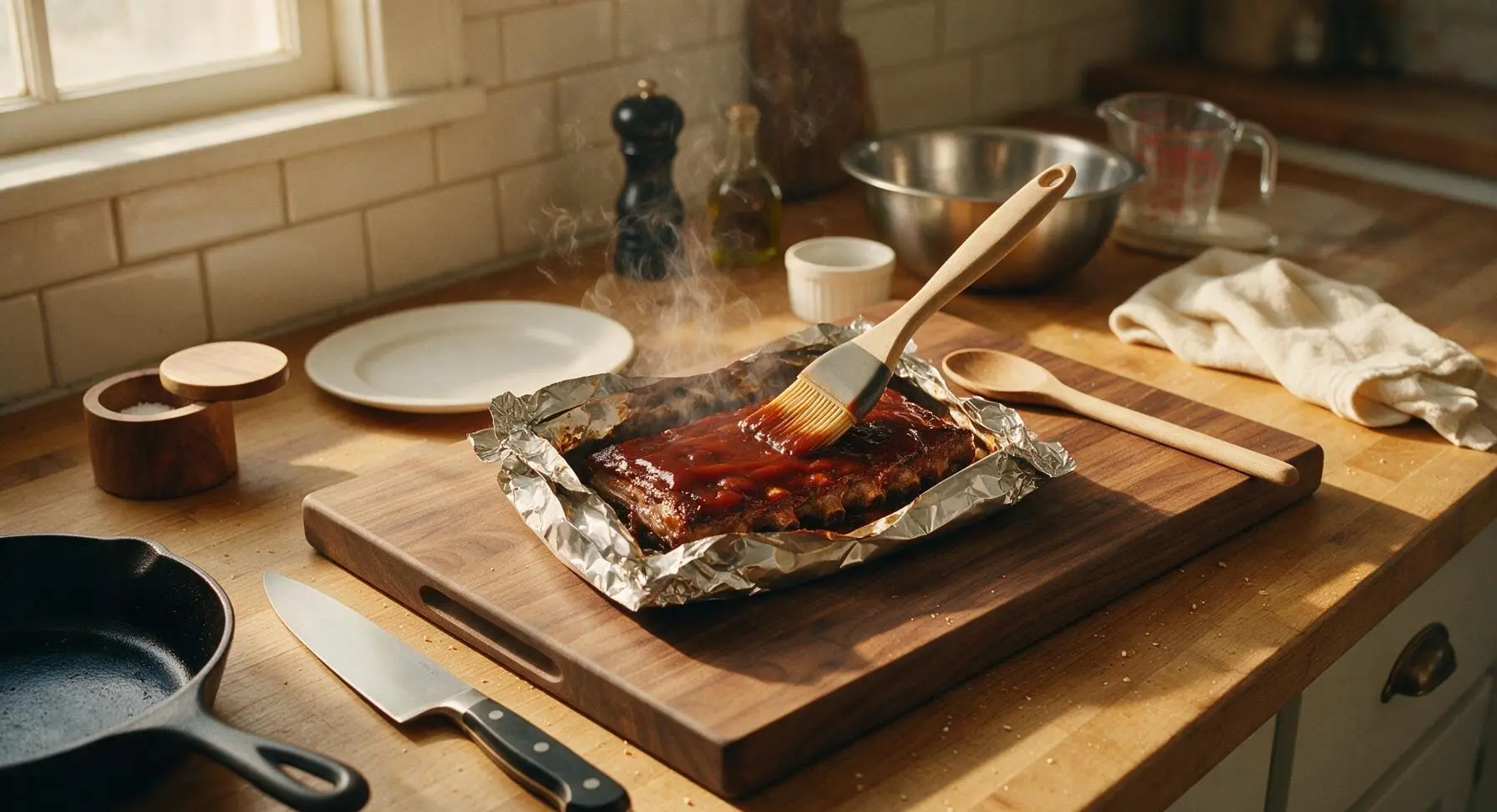
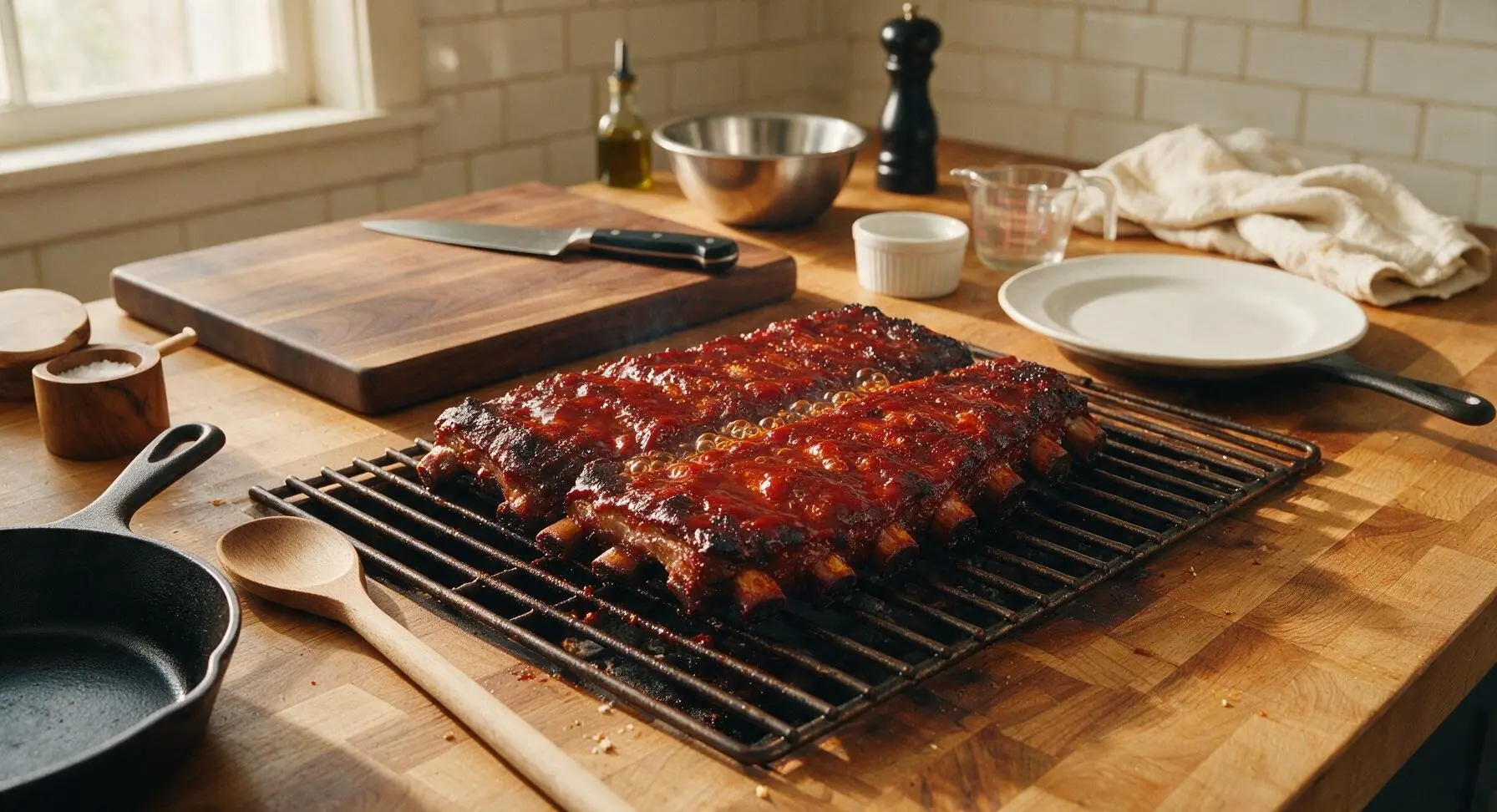
Use the grill gloves to carefully remove the foil packet from the smoker, open the top of the foil slowly to avoid burns from escaping hot steam, and brush the top surface of the ribs generously with BBQ sauce using the long-handled silicone basting brush. Leave the foil open, and return the ribs to the smoker for 1 final hour at 225°F (107°C), allowing the sauce to caramelize into a sticky, glossy coating that does not run when touched lightly.
Step 6
step6:Sauce and Finish Ribs
Step 6
step6:Sauce and Finish Ribs
7

Rest and Plate Ribs

Once the sauce is set and the ribs are probe-tender, remove them from the smoker and transfer to the large matte terracotta serving platter. Let the ribs rest uncovered for 15 minutes to allow the juices to redistribute back into the meat, rather than running out when sliced. Slice between each bone to create individual rib pieces, fan them slightly across the platter, and garnish with a small sprig of fresh parsley. Serve with extra BBQ sauce portioned into the small white ramekins on the side.
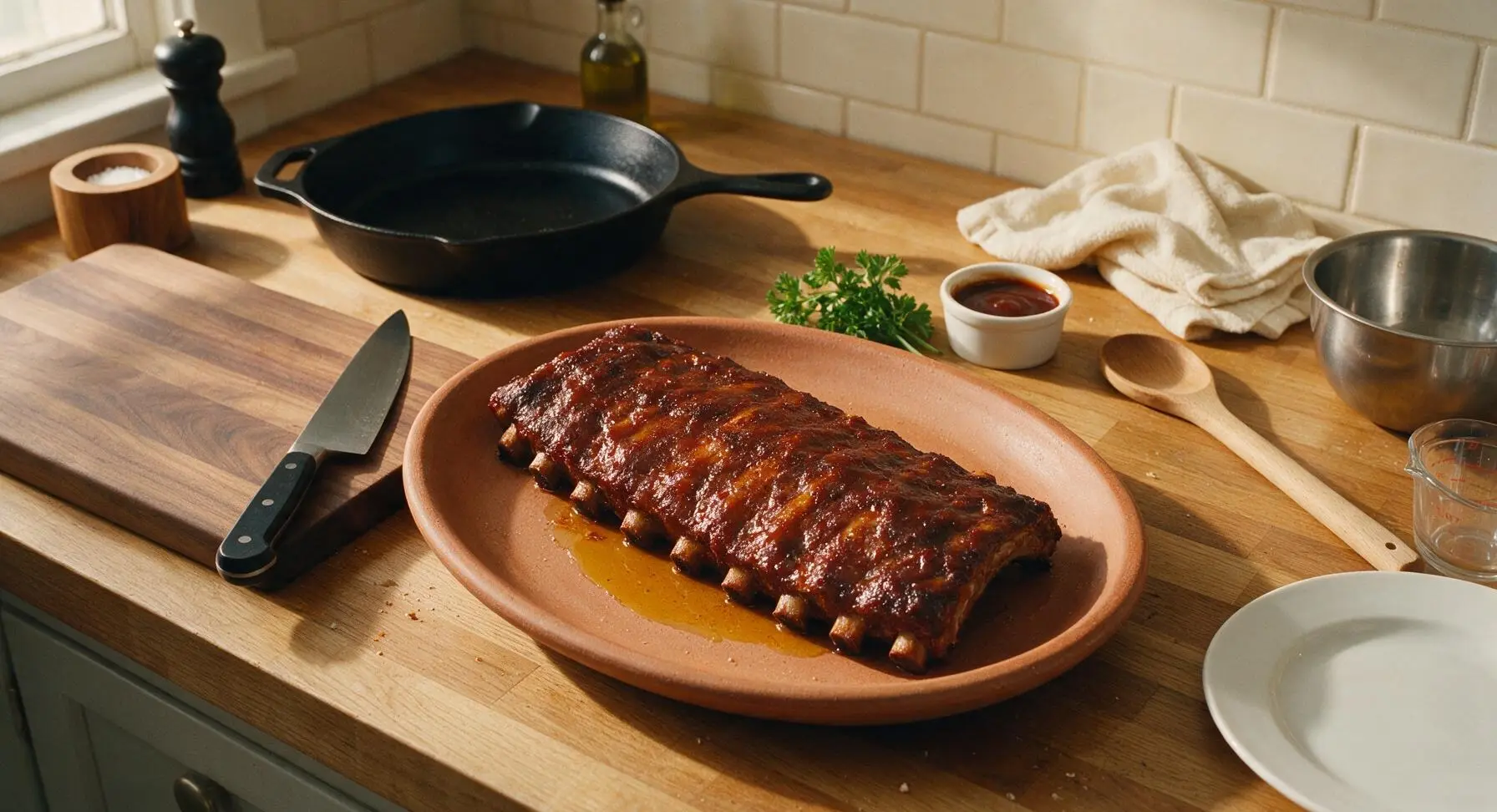
Step 7
step7:Rest and Plate Ribs

Tips

1.Always remove the tough silver skin membrane from the bone side of the ribs before adding rub: this chewy connective tissue will not break down during low-and-slow cooking, and blocks smoke and rub flavor from penetrating the meat, leading to tough, bland bites.
2.Make your Texas crutch foil seal completely airtight: trapped steam from the butter and apple juice is what breaks down rib connective tissue quickly to create that signature fall-off-the-bone tenderness; gaps in the foil let steam escape, leading to dry, tough ribs even after hours of cooking.
3.Avoid opening the smoker lid unnecessarily during the first 3 hours of unwrapped cooking: every lid drop lowers the smoker temperature by 25-50°F and releases trapped smoke, adding 15-20 minutes to total cook time and preventing a smooth, evenly colored dark bark from forming.
✨ You May Also Like

BBQ & Grilling
🍜 United States

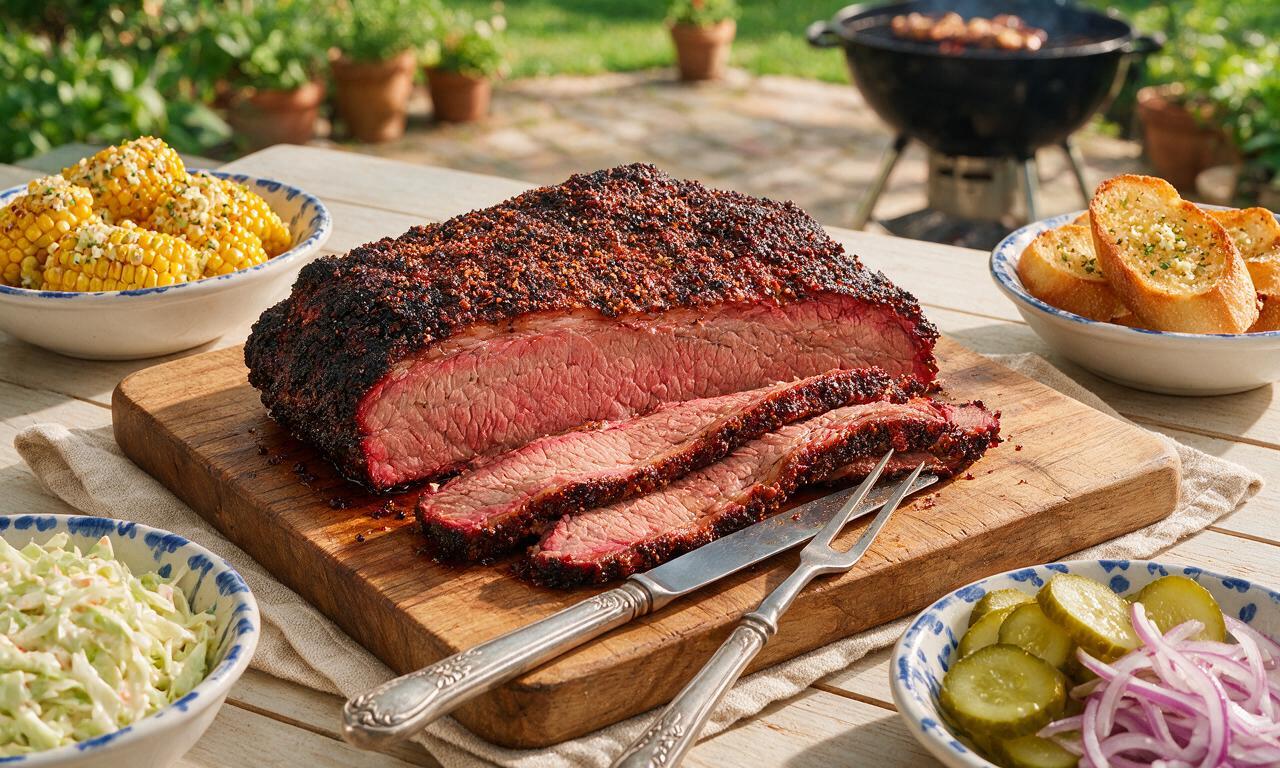
Tender, melt-in-your-mouth beef brisket with a crisp, spiced bark, slow-smoked to deep smoky perfection, the iconic centerpiece of Texas backyard barbecue.

⏱️ 12 hours BBQ & Grilling ★ 4.4
BBQ & Grilling
🍜 Korea

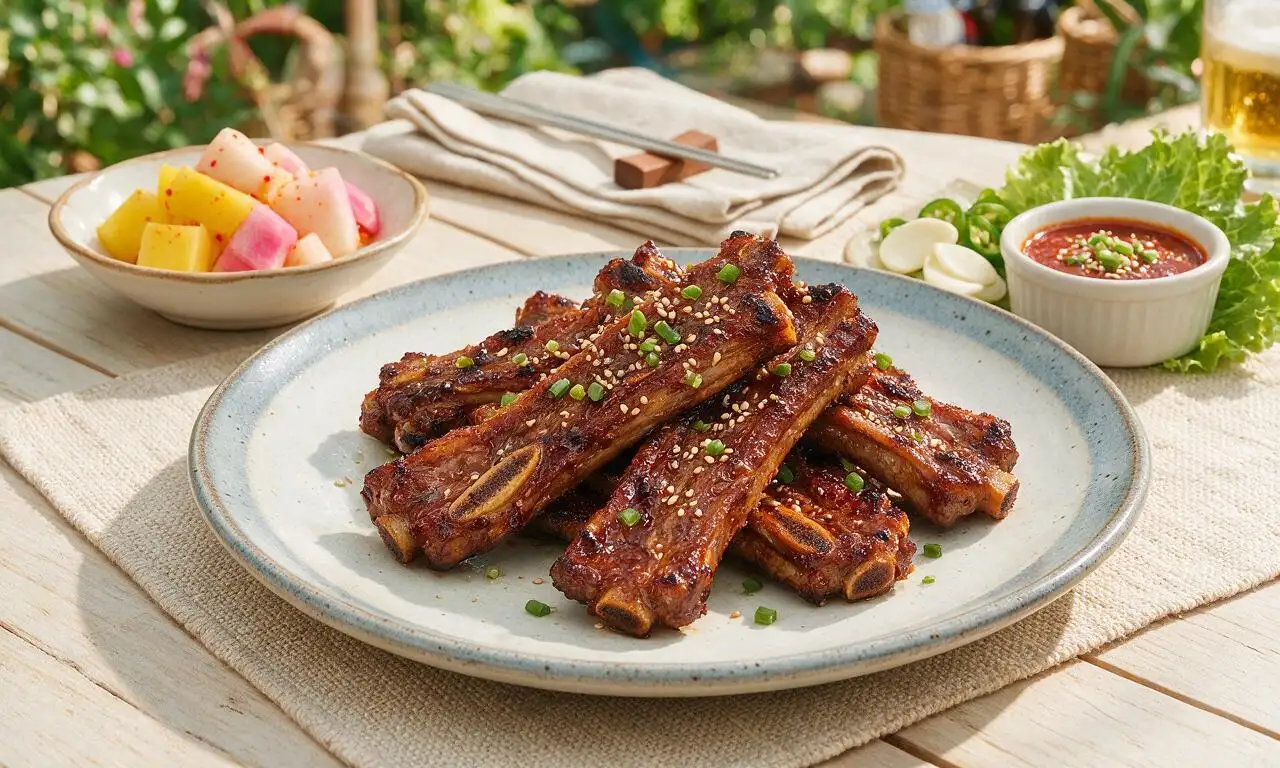
Tender, sweet-savory marinated beef short ribs, a beloved Korean BBQ staple with caramelized, slightly charred edges and deep umami flavor, perfect for outdoor summer gatherings.

⏱️ 4 hours 2BBQ & Grilling ★ 4.8
BBQ & Grilling
🍜 United States

Juicy grilled beef patties topped with smoky homemade chili, melted cheddar, and tangy pickles on toasted brioche buns for a hearty, flavor-packed handheld meal.

⏱️ 40 minuteBBQ & Grilling ★ 4.7
BBQ & Grilling
🍜 United States

A sweet, smoky, tangy BBQ sauce brightened with peak-season dark cherries, ideal for glazing grilled ribs, chicken, pork, or summer roasted veggies.

⏱️ 35 minuteBBQ & Grilling ★ 4.7
BBQ & Grilling
🍜 United States

Rich, smoky, slightly sweet homemade bourbon BBQ sauce with deep caramel notes, ideal for glazing grilled ribs, chicken, and burgers at cookouts.

⏱️ 25 minuteBBQ & Grilling ★ 4.7
BBQ & Grilling
🍜 United States

Iconic Alabama-style BBQ featuring tender hickory-smoked chicken slathered in tangy creamy white sauce, a beloved regional Southern cookout staple.

⏱️ 3 hoursBBQ & Grilling ★ 5

Texas Crutch Ribs:Frequently Asked Questions

1.What is the Texas crutch method, and why is it used for ribs? ▾
The Texas crutch is a classic barbecue technique where you wrap partially smoked ribs tightly in heavy-duty aluminum foil partway through cooking. It cuts through the low-and-slow “temperature stall” that hits around 150–160°F, locks in moisture for tender meat, and shaves 30–45 minutes off cook time without sacrificing deep smoky flavor.
2.What cut of ribs works best for Texas crutch ribs? ▾
This recipe is calibrated for St. Louis-style pork spare ribs, which are trimmed of excess cartilage, tough skirt meat, and pointy rib tips to make a uniform, rectangular rack. Their higher fat content compared to baby back ribs stays juicy through the long smoke and crutch step, delivering perfect fall-off-the-bone texture without drying out.
3.Can I use baby back ribs instead of St. Louis-style spare ribs for this recipe? ▾
You absolutely can, but you’ll need to adjust cook time to account for their smaller size and lower fat content. Baby backs cook 30–45 minutes faster than St. Louis-style spares, so watch internal temp closely during the crutch step, pulling them at 195°F to avoid overcooking lean meat into a mushy, dry mess.
4.Do I need to remove the membrane from the back of the rib racks before cooking? ▾
Yes, always peel off that tough, silvery membrane from the bone side of each rack before seasoning. Left on, it turns chewy and rubbery during smoking, blocks rub from penetrating the meat, and ruins that perfect tender bite. Slide a butter knife under the membrane at one end, grip it with a paper towel, and pull it off in one smooth sheet.
5.What’s the ideal rub ratio for these Texas crutch ribs? ▾
Stick to a simple, balanced ratio that lets smoke and pork flavor shine: 3 parts coarse kosher salt, 3 parts freshly ground black pepper, 2 parts smoked paprika, and 2 parts garlic powder. Mix it well, then apply a thin, even coat to every side of the ribs 45 minutes before smoking to let salt draw out moisture for a better, crispier bark.
6.What type of wood gives the most authentic Texas-style smoke flavor for these ribs? ▾
Post oak is the traditional Texas gold standard, delivering a mild, earthy, slightly sweet smoke that doesn’t overpower the pork. If you can’t find post oak, hickory is a reliable backup, or a 70/30 mix of hickory and apple wood for a subtle bright, fruity note. Skip resinous woods like pine, which leave a bitter, soapy aftertaste on meat.
7.What smoker temperature should I maintain for the best Texas crutch ribs? ▾
Hold your smoker at a steady 225°F for the entire cook—that’s the low-and-slow sweet spot for tender, flavorful ribs. Avoid temp swings larger than 25°F up or down, which cause uneven cooking, tough spots, or burnt bark before the meat tenderizes. Use a leave-in digital thermometer, as built-in lid gauges are often off by 30°F or more.
8.When is the right time to wrap the ribs in foil for the crutch step? ▾
Wrap the ribs once they’ve developed a dark, reddish-brown set bark and hit an internal temp of 150–160°F, usually 2.5 to 3 hours into the smoke. Waiting to wrap until this point ensures the meat absorbs enough deep smoky flavor first, so you don’t end up with pale, steamed-tasting ribs with no textured crust.
9.Do I need to add liquid to the foil packet when crutching the ribs? ▾
You don’t have to, but adding 1–2 tablespoons of apple juice, light beer, or plain water to the foil creates a small amount of steam that speeds up tenderizing. Don’t douse the ribs, though—too much liquid will wash off your dry rub and turn that crisp, caramelized bark soft and mushy before the final finish step.
10.How long should ribs stay wrapped in foil during the crutch step? ▾
Keep the tightly wrapped ribs back on the smoker for 1.5 to 2 hours, until the meat is perfectly probe-tender. You’ll know they’re ready when a meat thermometer slides into the thickest part of the rack with no resistance—like sticking a knife into soft butter—and hits an internal temperature between 195 and 203°F.
11.Why do I need to unwrap the ribs after the crutch step instead of leaving them wrapped? ▾
Unwrapping the ribs for the final 30–45 minutes of cooking lets the surface dry out and re-crisp the bark, which gets soft and steamy inside the sealed foil packet. If you leave them wrapped for the whole cook, you’ll get tender but soggy ribs that lack that signature caramelized, textured crust that makes great barbecue so satisfying.
12.How do I get fall-off-the-bone tender ribs without them turning mushy? ▾
The key is nailing the final internal temperature and not overcooking them. When wrapped, pull ribs once a probe slides in with light, buttery resistance at 195–203°F, then finish them unwrapped to set the bark. If you cook them past 210°F, connective tissue breaks down too much, leaving mushy meat that slides off the bone in bland chunks.
13.Can I make Texas crutch ribs on a regular charcoal grill if I don’t own a smoker? ▾
Absolutely! Set your charcoal grill up for indirect heat: pile all lit coals on one side, place a drip pan on the empty cool side, and add hardwood chunks to the coals for smoke. Hold the grill temp steady at 225°F, keep ribs on the cool side the whole cook, and follow the exact same crutch timing for nearly identical, smoky results.
14.Are these ribs meant to be served dry, or should I add barbecue sauce? ▾
Traditional Texas crutch ribs are often served dry, letting the simple rub and smoky pork take center stage, but sauce is totally welcome if you prefer it. If you want sauced ribs, brush on a thin layer of your favorite tangy BBQ sauce during the final 15 minutes of the unwrapped finish, so it sets into a sticky glaze instead of burning or running off.
15.How long should I let finished ribs rest before slicing and serving? ▾
Let cooked ribs rest for 15–20 minutes, tented loosely with a single sheet of foil, before slicing. Resting gives hot, tight muscle fibers time to relax and reabsorb all the moisture that gets pushed to the surface during cooking. Slice them right off the smoker, and all those delicious juices will run out onto your board, leaving dry ribs.
16.What’s the best way to slice Texas crutch ribs for serving? ▾
After resting, flip the rack bone-side up on your cutting board so you can clearly see the natural lines between each rib. Use a sharp, long-bladed knife to slice cleanly between each bone for even, single-rib portions. Avoid sawing back and forth, which tears tender meat and pulls it off the bone—one smooth, steady cut per rib is all you need.
17.Can I prep these ribs ahead of time for a summer cookout? ▾
You can prep ribs up to 24 hours ahead to cut down on cookout day work! Trim the racks, remove the membrane, apply your dry rub, then wrap them tightly in plastic and store in the fridge. Let them sit out at room temperature for 30 minutes before putting them on the smoker to take the chill off for even, consistent cooking.
18.What’s the best way to store leftover Texas crutch ribs? ▾
Let leftover ribs cool fully to room temperature within 2 hours of cooking, then wrap them tightly in plastic wrap or heavy-duty foil and store in an airtight container in the fridge for up to 4 days. For longer storage, freeze tightly wrapped ribs for up to 3 months, taking care to seal out air to prevent freezer burn from drying out the tender meat.
19.How do I reheat leftover ribs without drying them out or making them rubbery? ▾
The best reheat method is low and slow in the oven. Preheat to 250°F, place ribs on a baking sheet, add a tablespoon of water or apple juice to the tray, and cover tightly with foil. Heat for 20–25 minutes until internal temp hits 165°F, then uncover for 5 minutes to crisp the bark back up. Skip the microwave, which turns meat rubbery fast.
20.What is the “stall” people talk about when smoking ribs, and how does the crutch fix it? ▾
The stall is that frustrating point 2–3 hours into low-and-slow cooking where rib internal temp stops rising, usually hovering around 150–160°F for hours as evaporating surface moisture cools the meat. The Texas crutch traps moisture around the ribs to power right through this stall, so you don’t waste extra fuel waiting for temps to climb again.

Comments (5)

2 days ago

OMG these Texas Crutch Ribs were a total game changer for our Sunday family dinner! I’ve struggled for years to get fall-off-the-bone tender ribs without them turning mushy, and this method nailed it. My kids went back for seconds, and my husband said they’re better than the ones we get at our local BBQ joint down in Austin. Cook time was totally worth the wait, will absolutely be making these for our next neighborhood potluck!

yesterday

Wait did you use spareribs or baby back for this? I’m making them for a cookout this weekend and don’t wanna mess it up!

2 hours ago

Great question! This recipe works perfectly for both, but we recommend spareribs for that classic Texas BBQ bite if you’re serving a crowd. Just make sure to wrap them tight with the butter and brown sugar when you do the crutch step to lock in all that moisture!

3 days ago

Taste was SO good, but I definitely messed up the crutch wrap step my first go-round and lost a bunch of that juicy butter and brown sugar drippings all over my smoker. Ended up taking almost 7 hours total instead of 6 because I had to re-wrap, but the end result still got rave reviews from my buddies at the lake trip. Medium difficulty is no joke, don’t try to rush this one if you’re a beginner like me!

1 week ago

Made a double batch of these for meal prep last week and they reheated like an absolute dream! I was worried ribs would get tough in the fridge, but 30 seconds in the microwave and they tasted just as fresh off the smoker. My partner keeps asking when I’m making them again, might have to add these to our weekly rotation. Worth every minute of the 6 hour cook time, promise!

5 days ago

So happy to hear these work great for meal prep! A lot of folks don’t realize how well Texas crutch ribs hold up for leftovers, that’s such a smart call making a double batch. If you end up freezing portions, wrap them tight in foil before bagging and they’ll keep for up to 3 months!

5 days ago

Brought these to our church potluck last weekend and people were literally lined up to get the recipe! I added a little extra dry rub (a pinch more cayenne for a tiny kick) and it was chef’s kiss. Even the self-proclaimed BBQ snob in our group said these were top tier. 10/10, will make again and again.

3 days ago

How much extra cayenne did you add? I love a little heat but don’t want to make them too spicy for my kids!

2 days ago

Love that you added extra cayenne! For kid-friendly heat, we usually recommend 1/4 tsp extra per rack of ribs, but if you like a bigger kick you can go up to a full tsp. So glad they were a hit at the potluck!

2 weeks ago

Followed the recipe step by step but my ribs came out a little drier than I expected? I think my smoker temp ran a little hot the first couple hours, even though I calibrated it before starting. Flavor was great though, will definitely give it another shot next weekend and keep a closer eye on the temp. The crutch step felt a little weird at first but it did seem to help tenderize them.

1 week ago

Sorry to hear they came out a little dry on your first try! Smoker temp spikes are super common, even with calibrated units—we recommend keeping a cheap oven thermometer right on the grate next to the ribs to track temp more accurately. Next time, if you notice temps climbing over 275°F, crack the vent a little to bring it back down, and you’ll get perfect juicy ribs!