thai chicken coconut soup

title 1
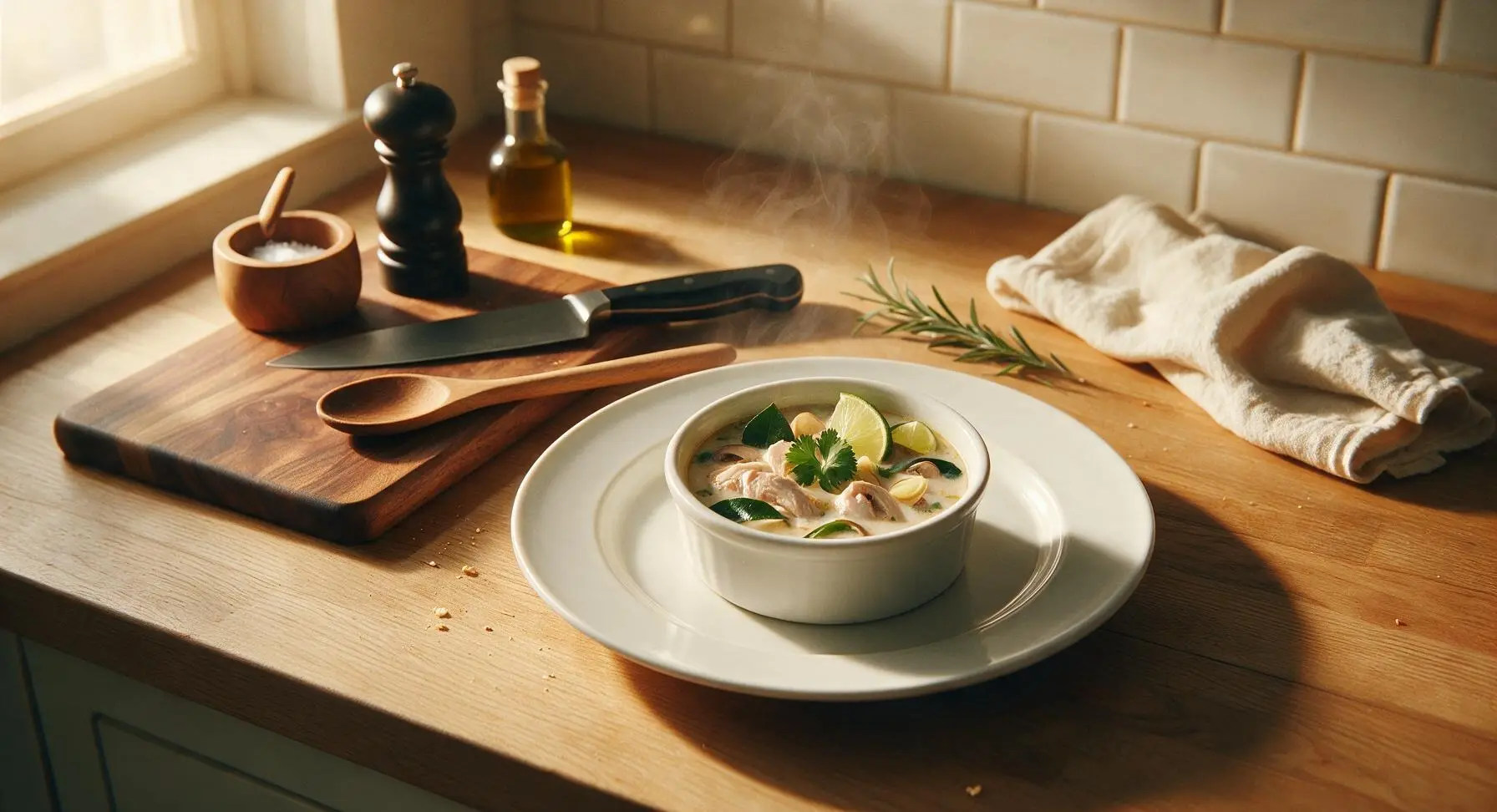
thai chicken coconut soup
⏱️ cook time 20 minutes
🍽️ servings 4
⚡ Difficulty easy

intro

Fragrant, creamy, and perfectly balanced with tangy lime, savory galangal, rich coconut milk, and tender chicken, this iconic Thai soup delivers bright, layered comfort in every spoonful.

Ingredients
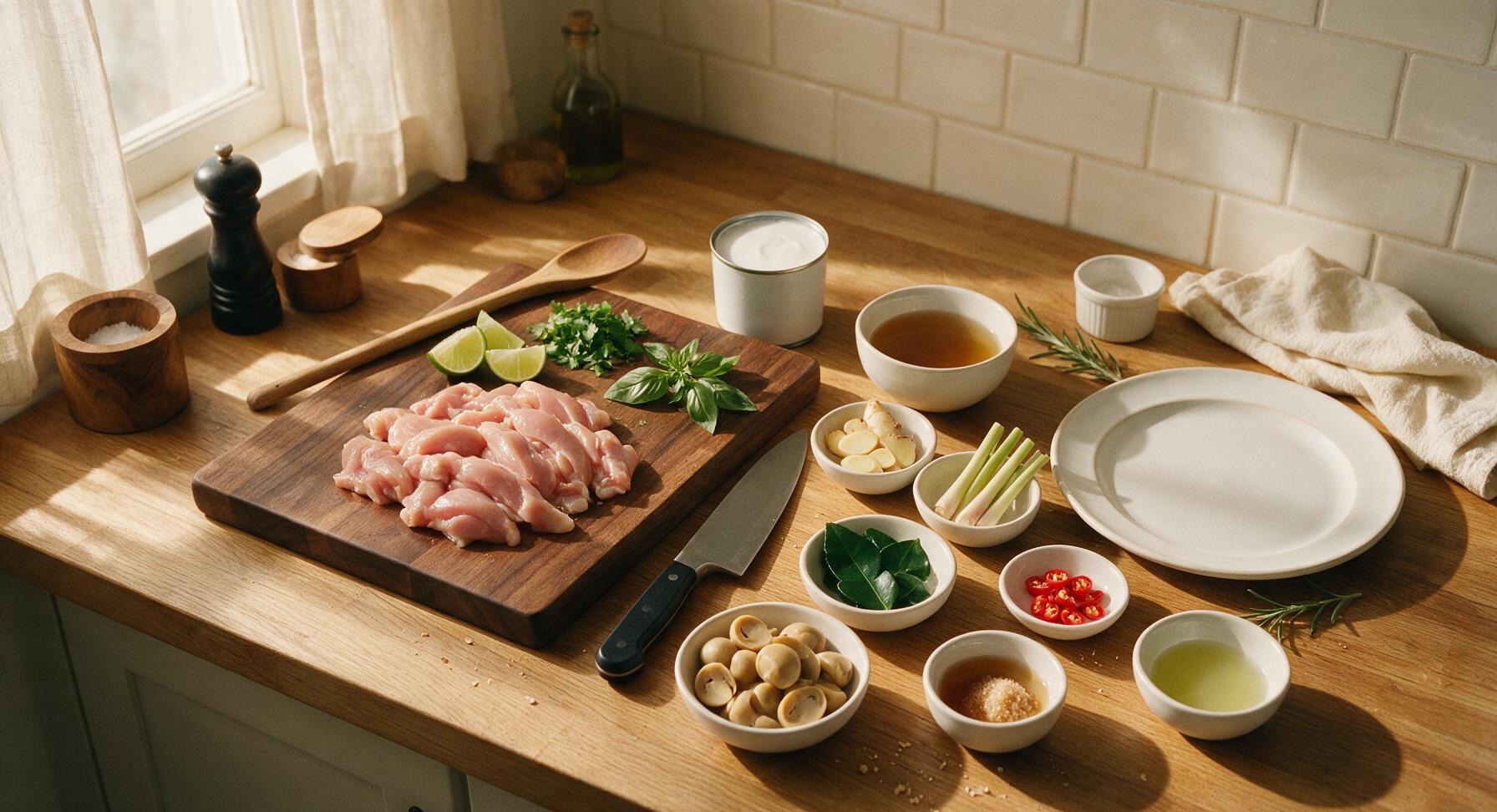
Boneless skinless chicken thighs, sliced into 1cm thick strips 450g
Full-fat coconut milk (canned, shaken well) 400ml
Low-sodium chicken stock 250ml
Fresh galangal, peeled and thinly sliced 5cm piece
Lemongrass, outer woody layers removed, bottom 10cm bruised and cut into 5cm sections 1 stalk
Kaffir lime leaves, central vein removed and torn in half 6 leaves
Bird's eye red chilies, thinly sliced (seeds removed for mild heat) 2 whole
Canned straw mushrooms, drained and halved lengthwise 200g
Fish sauce 2 1/2 tbsp
Grated palm sugar (or light brown sugar as substitute) 1 tbsp
Fresh lime juice 3 tbsp
Fresh cilantro, roughly chopped 1/4 cup
Fresh Thai basil leaves 2 tbsp

Steps

1

Prep Aromatic Base

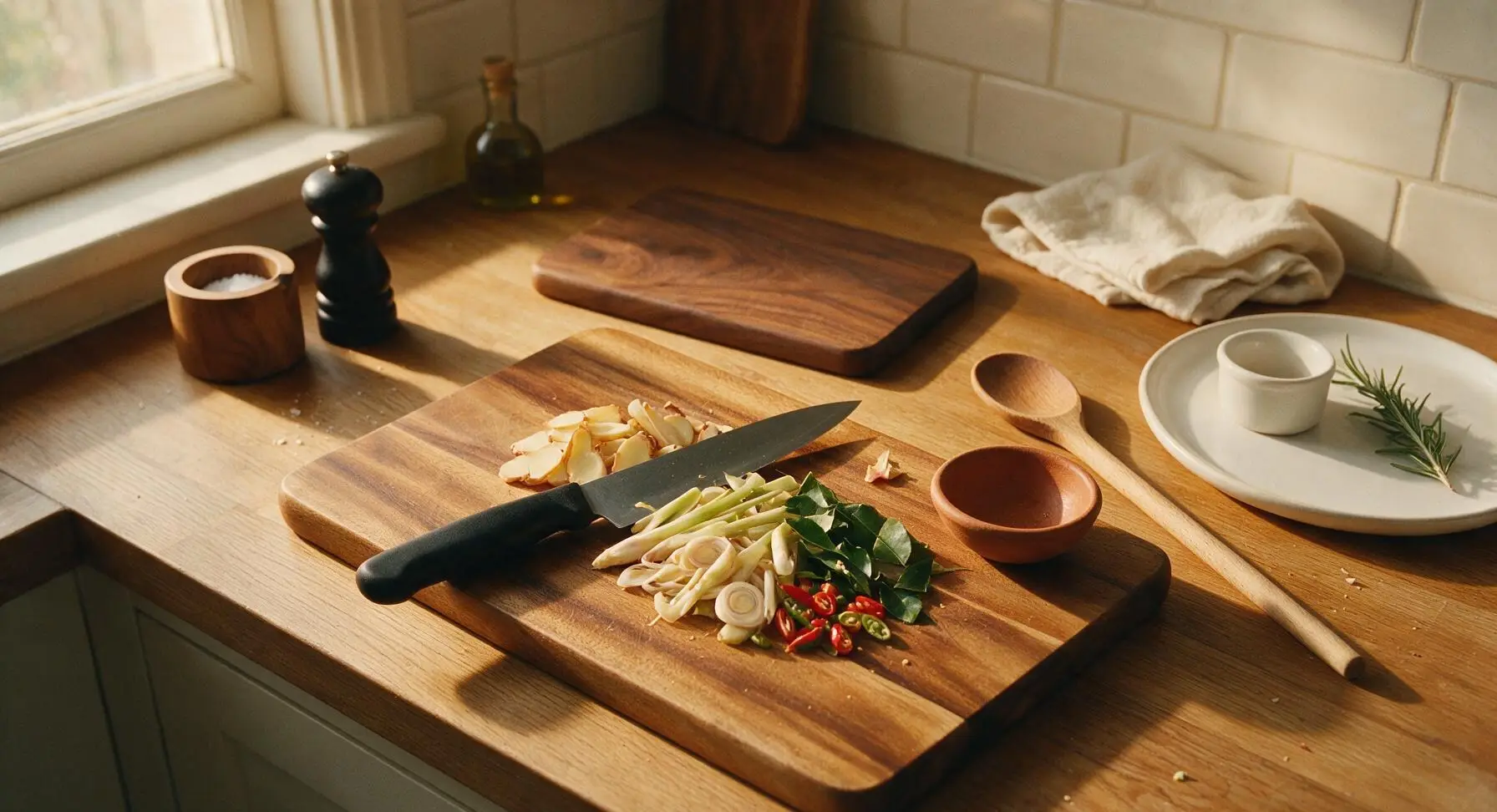
Place the acacia wood cutting board in the center of the work zone. Use the 8-inch chef knife to prep the soup aromatics: peel and thinly slice the galangal into 2mm thick rounds, trim the woody top of the lemongrass stalk, bruise the tender bottom 10cm with the flat of the knife blade and cut into 5cm sections, tear the kaffir lime leaves in half after removing the tough central vein, and thinly slice the bird's eye chilies (remove seeds for milder heat). Transfer prepped aromatics to one of the terracotta pinch bowls. The aromatics will release a bright, citrusy, pine-like scent when properly bruised and torn.
Step 1
step1:Prep Aromatic Base
2

Slice Chicken Thighs

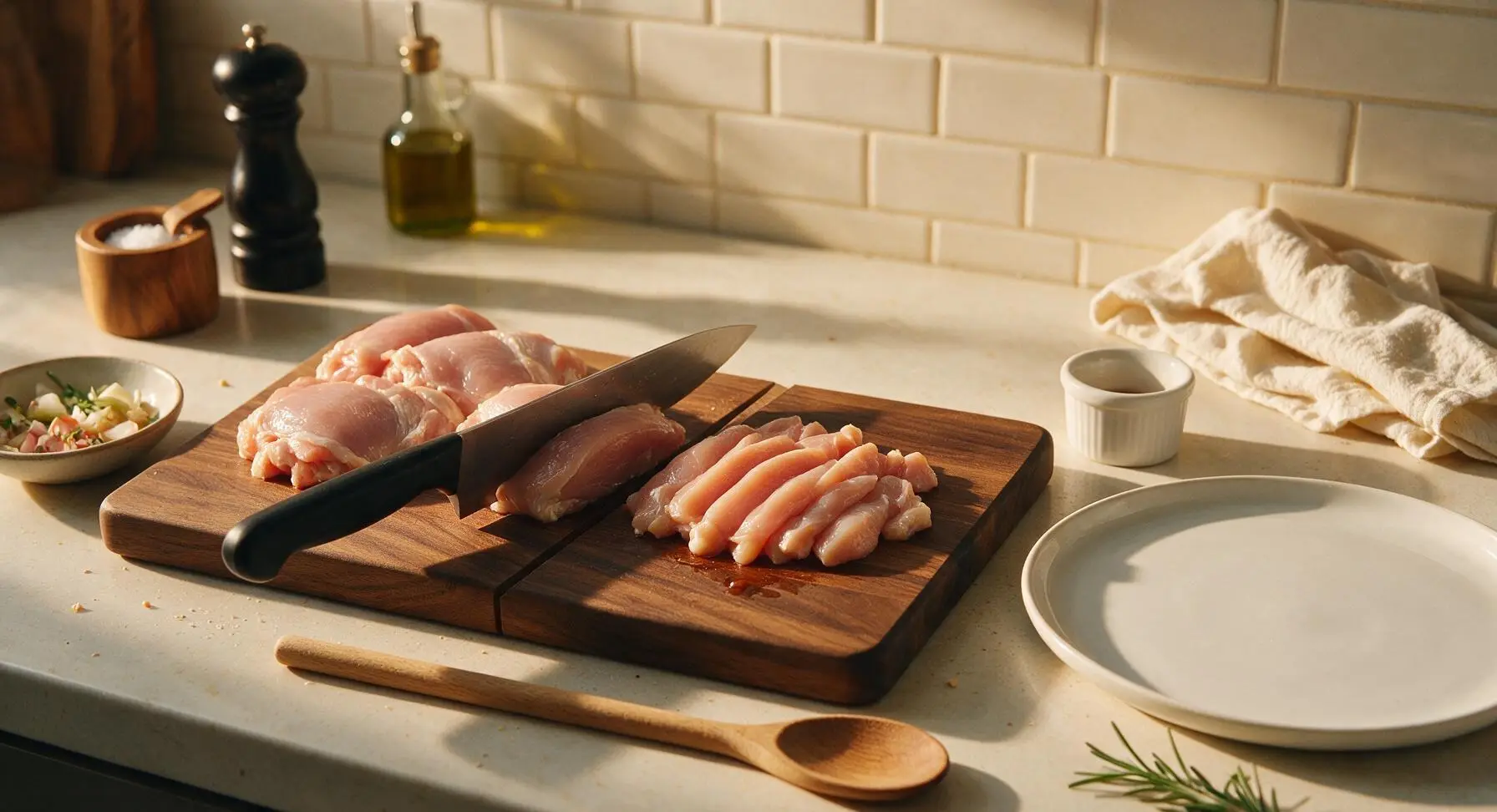
Pat the chicken thighs completely dry with a corner of the fixed linen towel. Using the chef knife, slice the thighs against the grain into uniform 1cm thick, bite-sized strips. Even slicing ensures the chicken cooks evenly in 3-4 minutes without becoming tough or overcooked on the edges. Transfer sliced chicken to a second clean terracotta pinch bowl.
Step 2
step2:Slice Chicken Thighs
3

Simmer Infused Broth

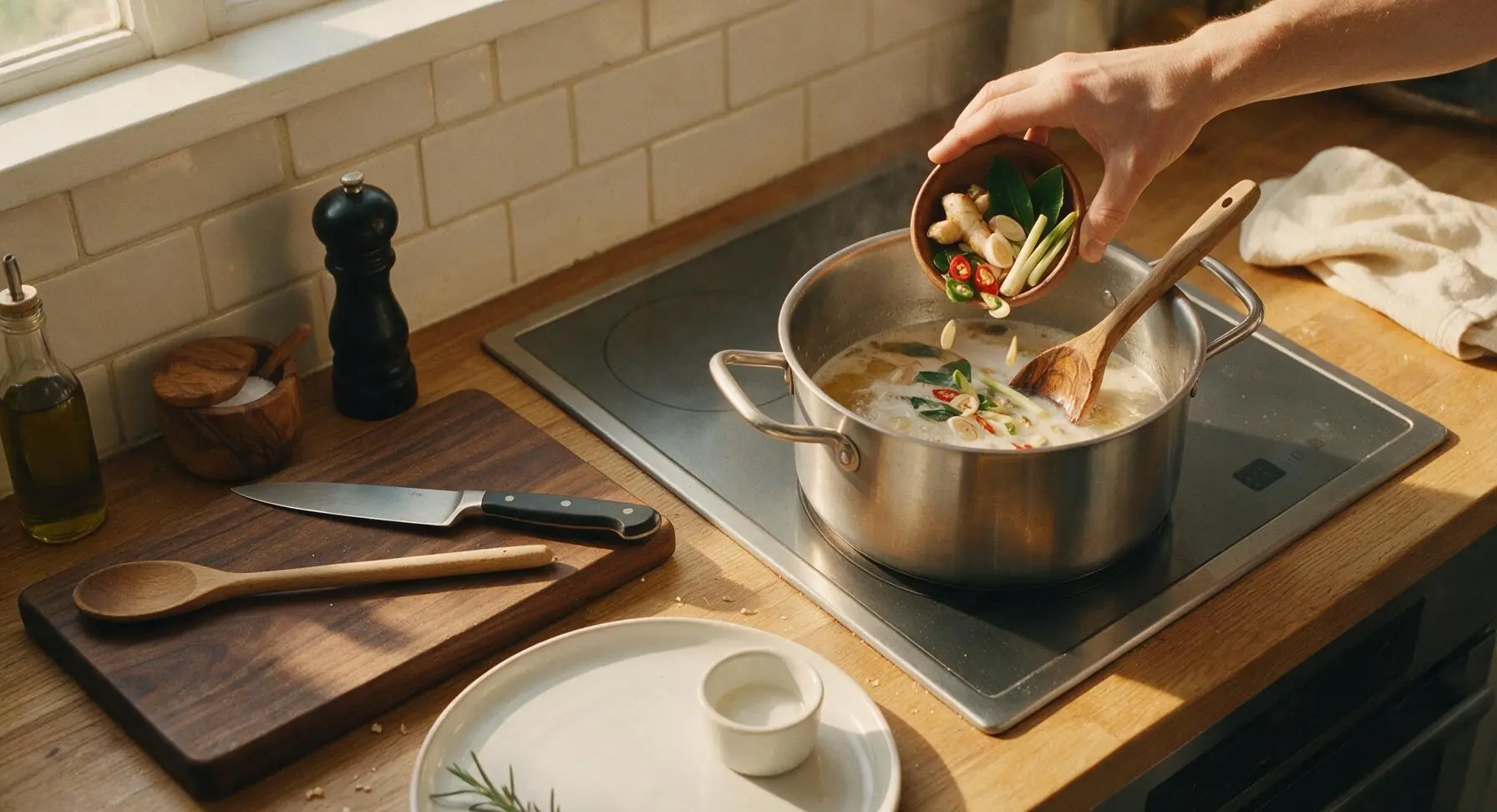
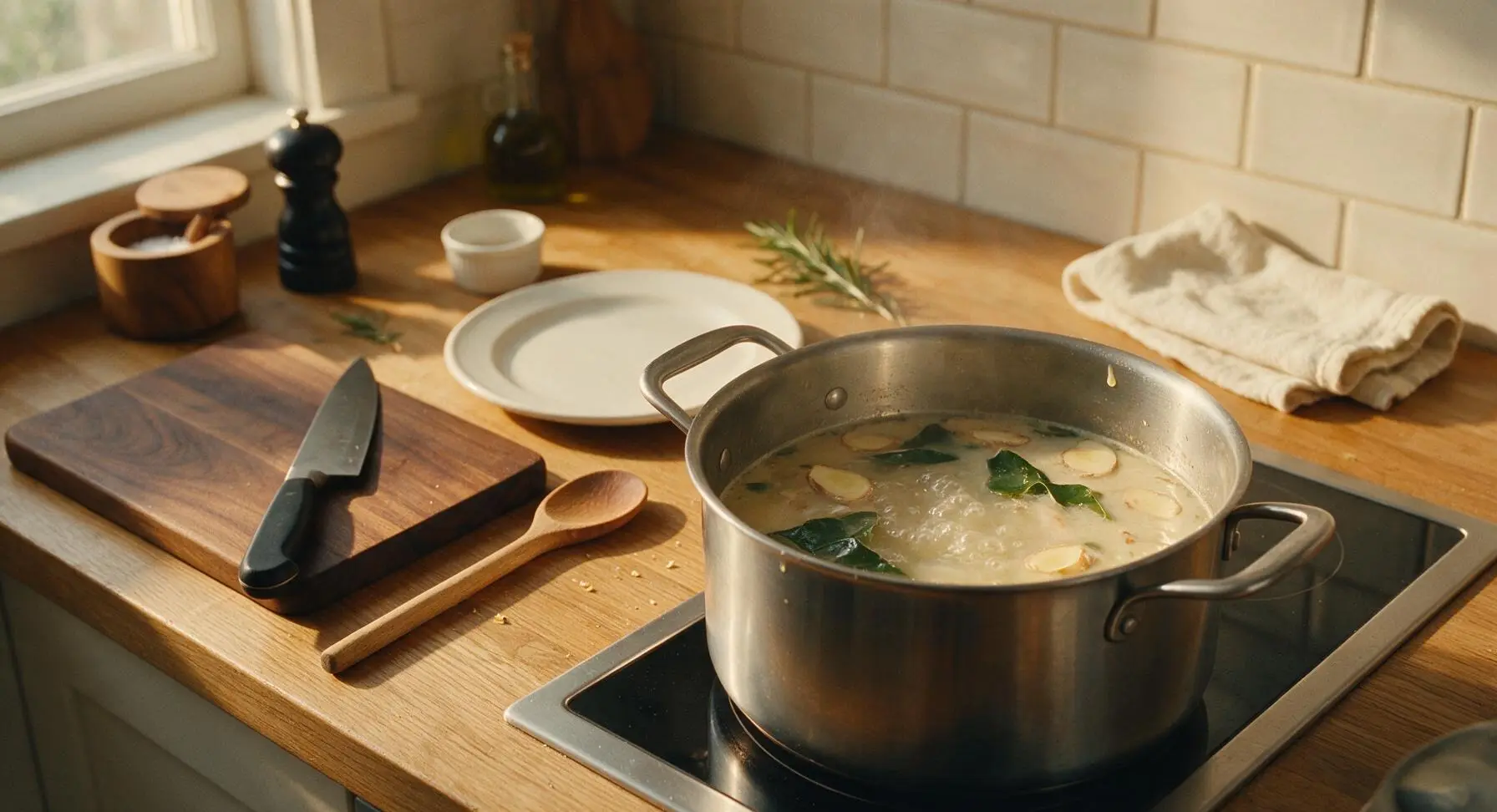
Place the 3L brushed stainless steel stock pot on the integrated induction stovetop burner over medium heat (160C/320F). Pour in 250ml of the shaken coconut milk (reserve the remaining 150ml for later) and all 250ml of low-sodium chicken stock. Add the prepped galangal, lemongrass, kaffir lime leaves, and sliced chilies from the pinch bowl. Bring to a gentle, low simmer (do not let it reach a rolling boil) and cook for 5 minutes to infuse the broth with aromatic flavor. The broth will smell strongly of citrus and galangal when fully infused.
Step 3
step3:Simmer Infused Broth
Step 3
step3:Simmer Infused Broth
4

Add Chicken and Mushrooms

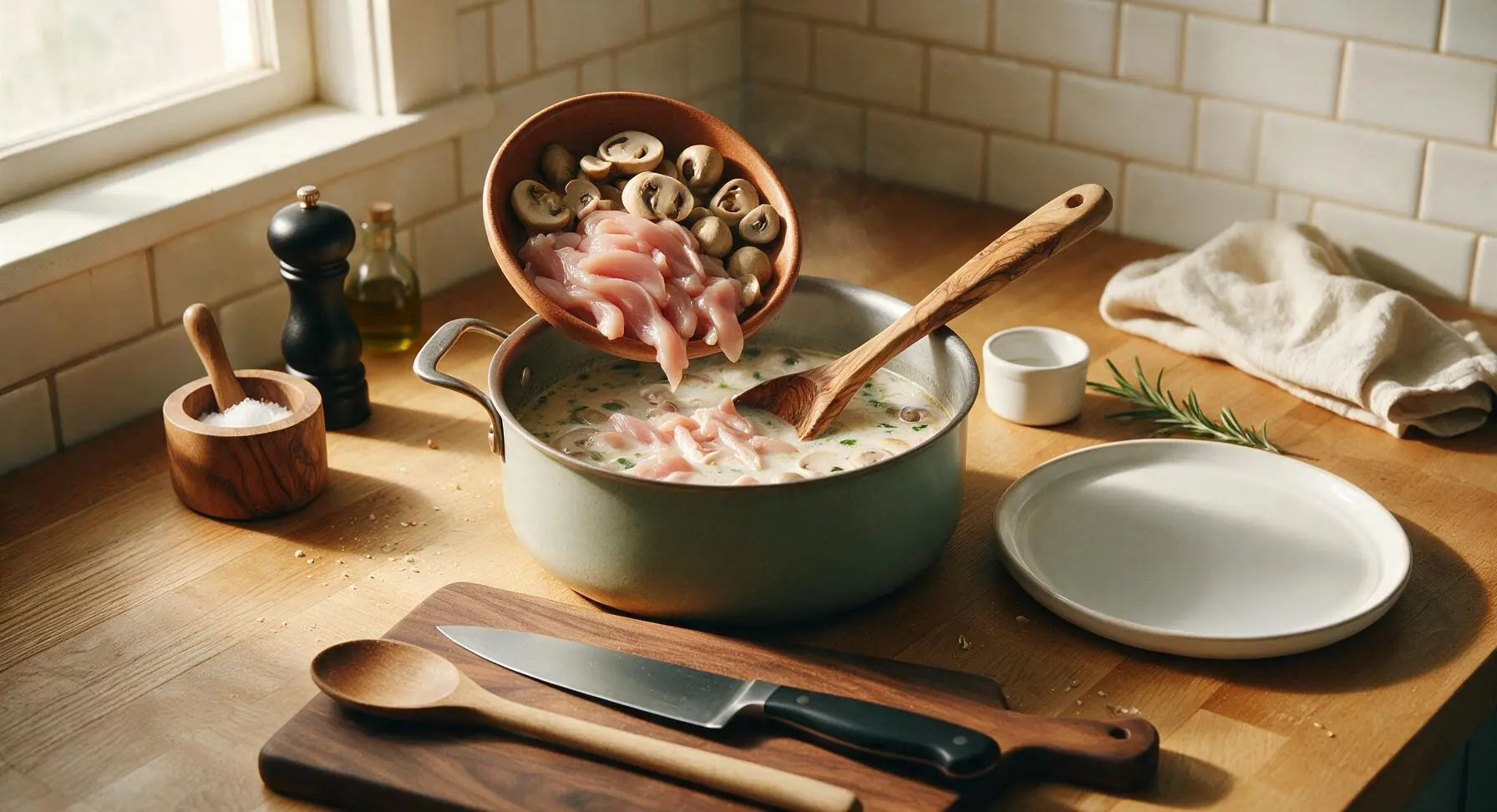
Once the broth is fully infused, add the sliced chicken strips and drained, halved straw mushrooms to the pot. Stir gently with the olive wood spoon to separate the chicken strips so they do not clump together as they cook. Maintain the gentle simmer and cook for 4 minutes, until the chicken is just opaque and cooked through. Do not increase heat to a rapid boil, as this will cause the coconut milk to separate and develop a grainy, greasy texture.
Step 4
step4:Add Chicken and Mushrooms
5

Season Broth for Balance

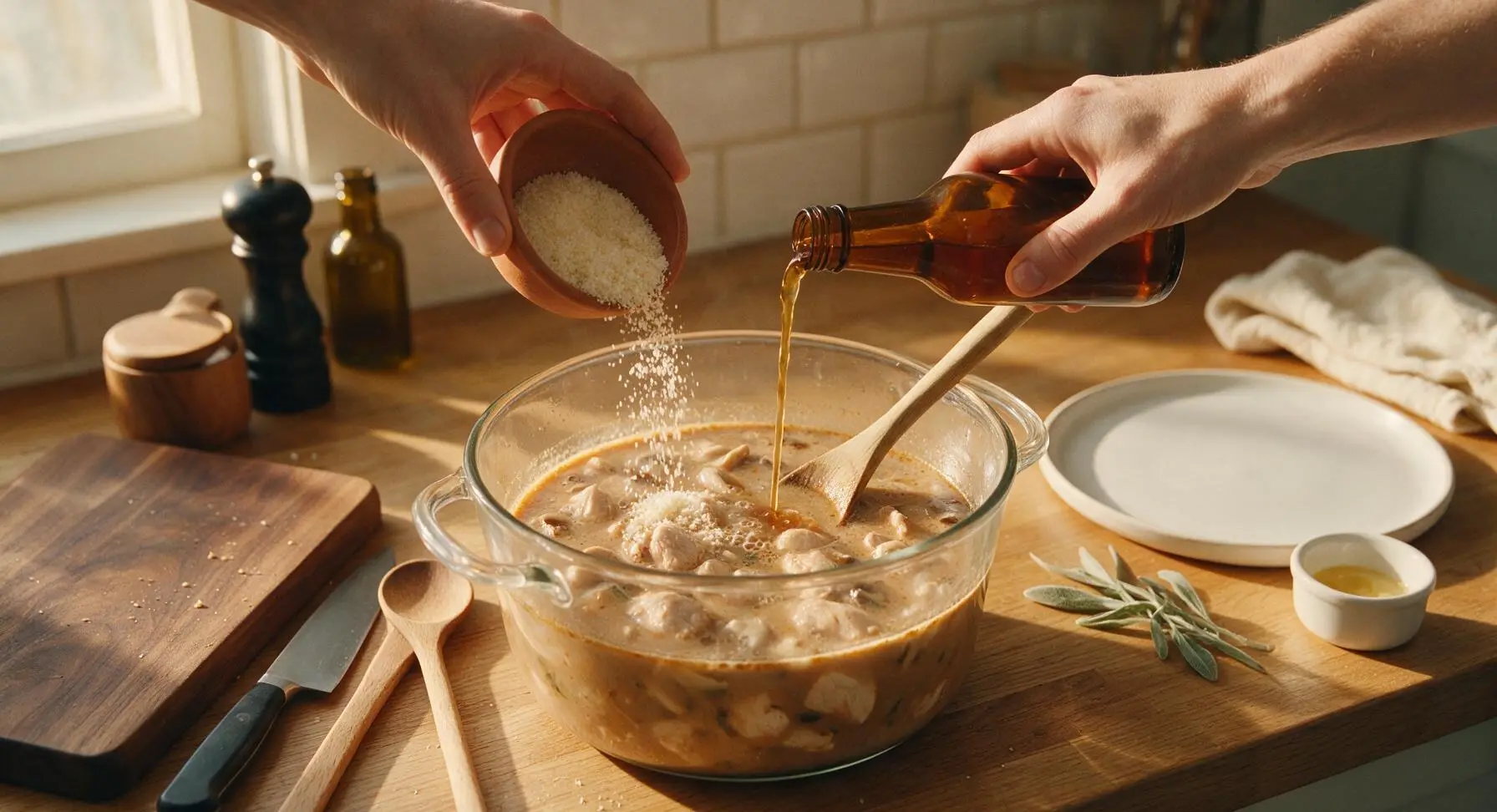
Stir in 2 1/2 tablespoons of fish sauce and 1 tablespoon of grated palm sugar, mixing with the olive wood spoon until the sugar fully dissolves into the broth. Taste the broth: it should taste savory and lightly sweet at this stage, before adding the final sour element. Adjust with an extra 1/2 tablespoon fish sauce if the broth tastes flat, or a tiny pinch more palm sugar if it tastes overly sharp. Simmer for 1 more minute to meld the seasonings.
Step 5
step5:Season Broth for Balance
6

Stir in Reserved Coconut

Pour the reserved 150ml of thick coconut milk into the pot, stirring gently to combine fully. Bring the soup back to a very gentle simmer for 2 minutes, again taking care not to let it reach a hard boil. Adding the thick coconut milk at the end keeps the broth rich, velvety, and smooth, without a greasy separated texture. The broth will be a uniform pale warm golden-cream color when fully mixed.
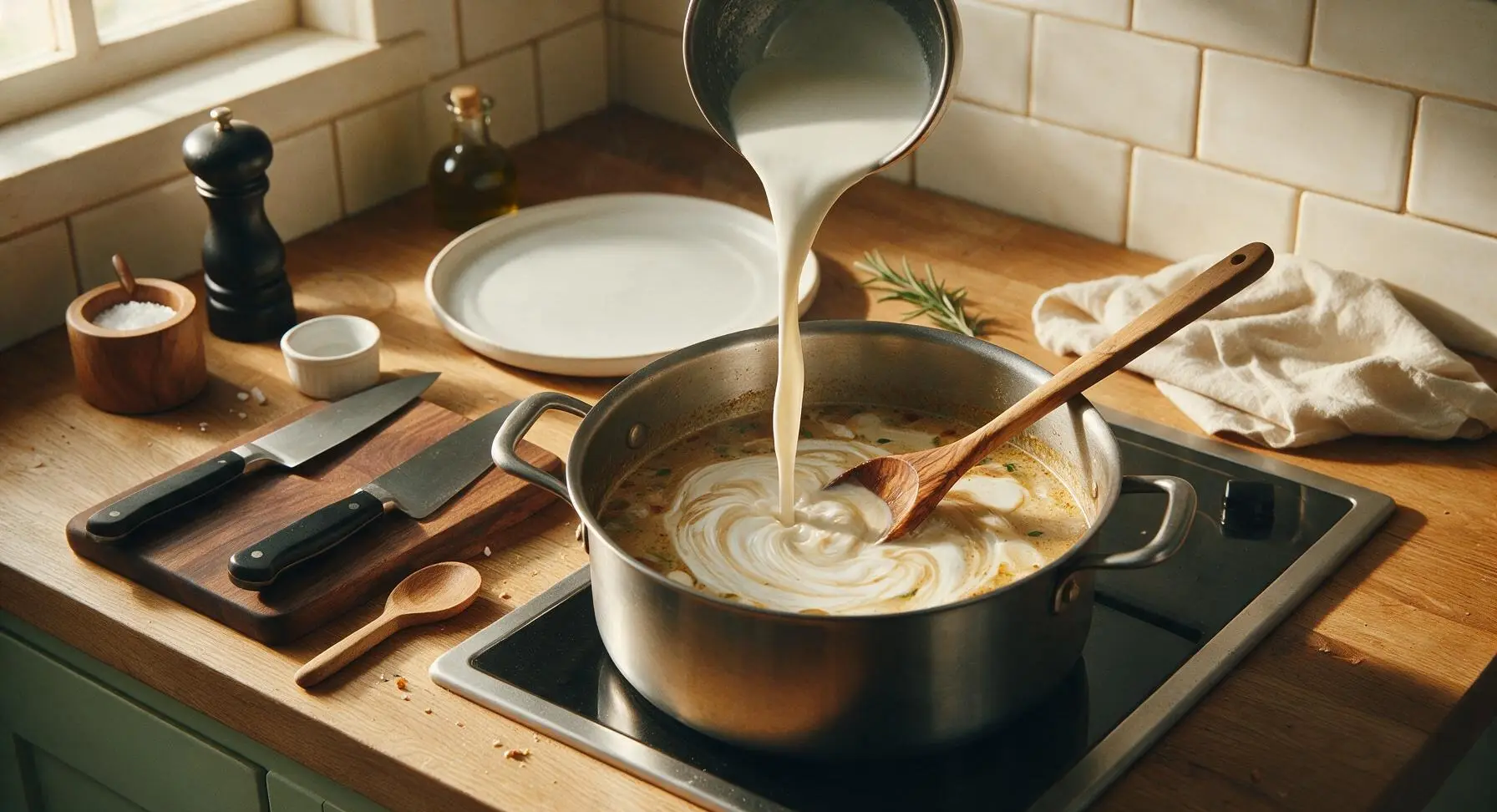
Step 6
step6:Stir in Reserved Coconut
7

Add Bright Lime Finish

Turn off the stovetop heat and slide the pot off the hot burner. Stir in 3 tablespoons of fresh lime juice, tasting immediately to check the classic tom kha flavor balance: the soup should taste equally salty, sweet, sour, and spicy, with no single flavor overpowering the others. Never boil the soup after adding lime juice, as high heat breaks down citric acid and creates a flat, bitter aftertaste.
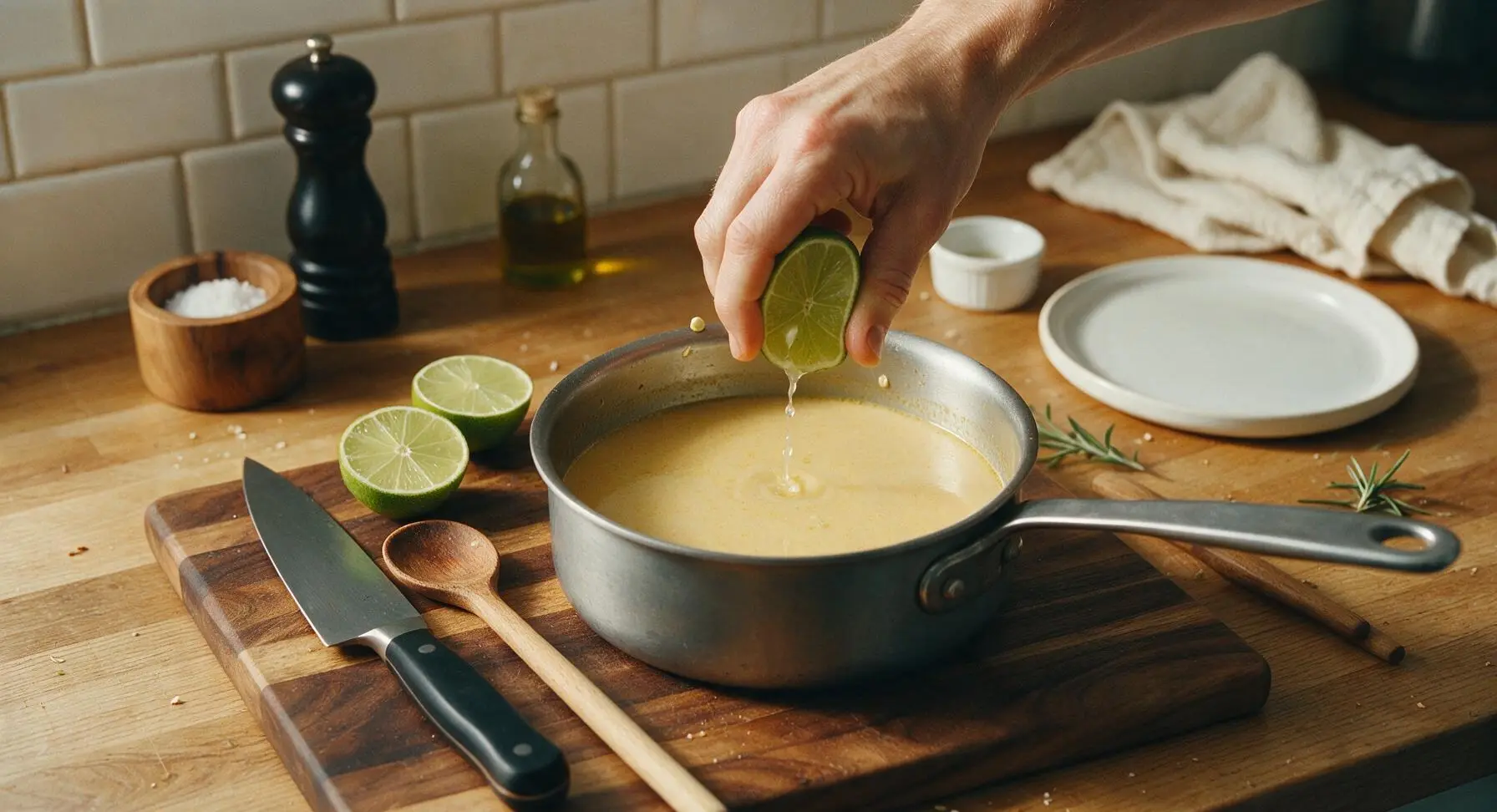
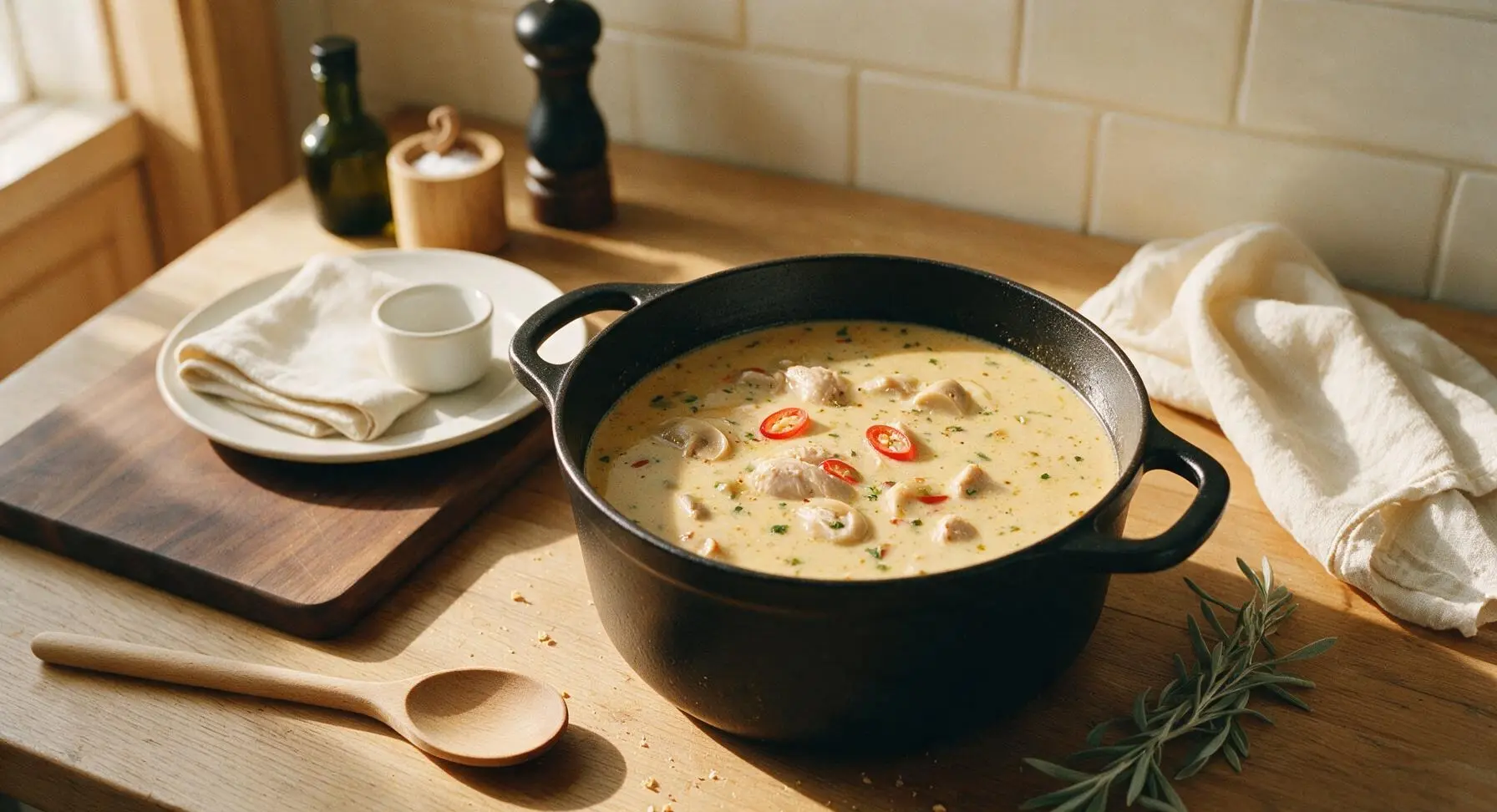
Step 7
step7:Add Bright Lime Finish
Step 7
step7:Add Bright Lime Finish
8

Ladle and Garnish Soup

Place the wide matte cream ceramic soup bowl in the center of the counter. Use the olive wood spoon to ladle the hot soup into the bowl, making sure each serving gets a mix of chicken, mushrooms, and broth (note: galangal slices, lemongrass pieces, and kaffir lime leaves are for infusion only and are not meant to be eaten). Top the soup with roughly chopped cilantro and fresh Thai basil leaves. Serve immediately while hot.
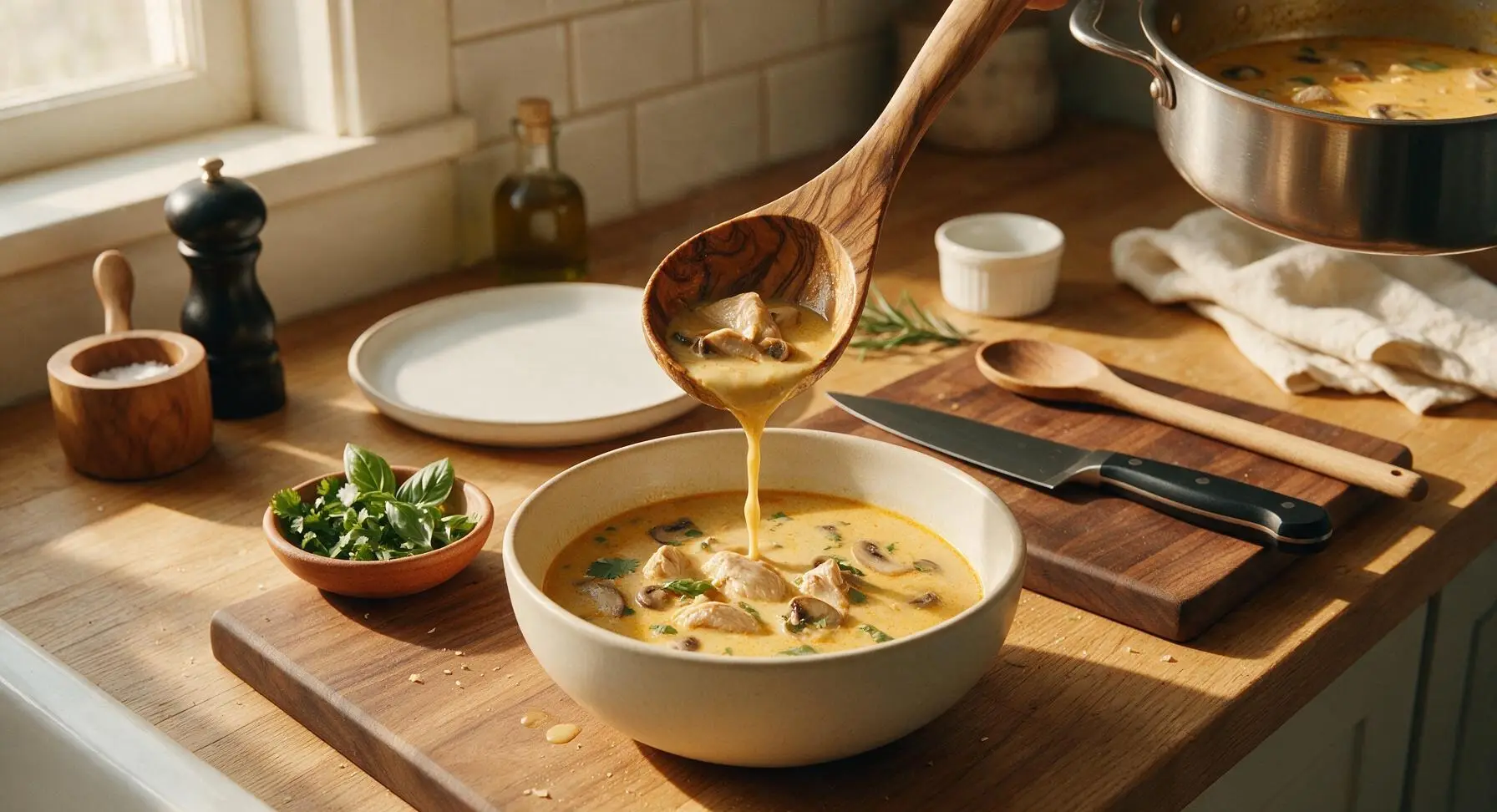
Step 8
step8:Ladle and Garnish Soup

Tips

1.Choose chicken thighs over breast: Thighs stay juicy and tender even when simmered in hot broth, while lean chicken breast will quickly turn dry, rubbery, and stringy with even a minute of overcooking.
2.Avoid substituting ginger for galangal: Galangal has a sharp, citrusy, pine-like flavor that is core to authentic tom kha gai, while common ginger is warmer, spicier, and more earthy; if fresh galangal is unavailable, use 1 teaspoon dried galangal powder instead of fresh ginger for a closer flavor match.
3.Add lime juice off heat: Boiling lime juice breaks down its bright, fresh citric acid, creating a flat, bitter aftertaste that throws off the soup's signature balance; stirring lime juice in after removing the pot from heat preserves its bright, tangy kick.
✨ You May Also Like

Soups & Stews
🍜 Japan

Rich, umami-dense Hokkaido-style miso ramen with chewy noodles, savory fermented broth, and classic toppings, a cozy, deeply satisfying warm meal.

⏱️ 45 minuteSoups & Stews ★ 4.5
Soups & Stews
🍜 United States

A hearty, peppery tripe and root vegetable stew with colonial Philadelphia roots, thick, warming, and packed with bold savory flavor for cold winter days.

⏱️ 2 hours 3Soups & Stews ★ 4.6
Soups & Stews
🍜 Mexico

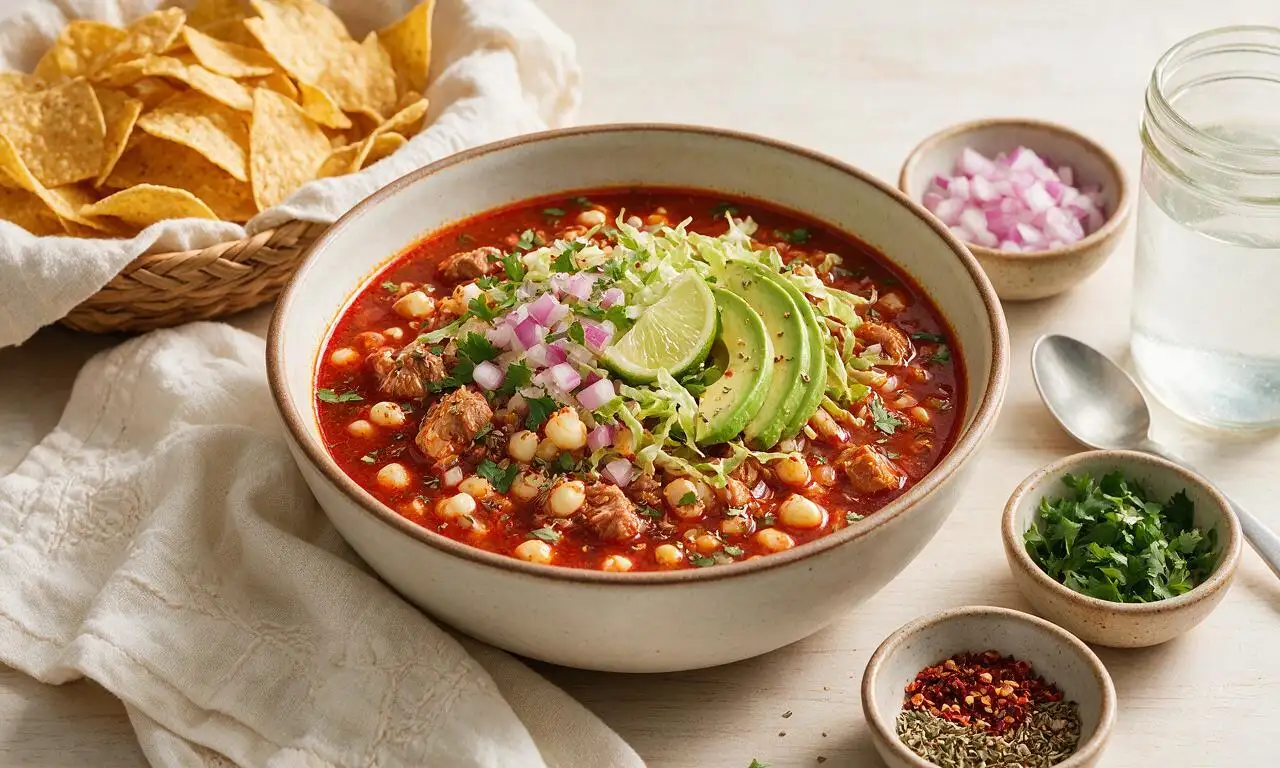
Hearty, warming red pork posole loaded with tender hominy, slow-simmered in a rich smoky chile broth, served with zesty fresh garnishes for a deeply comforting, satisfying meal.

⏱️ 2 hours 3Soups & Stews ★ 4.7
Soups & Stews
🍜 United States

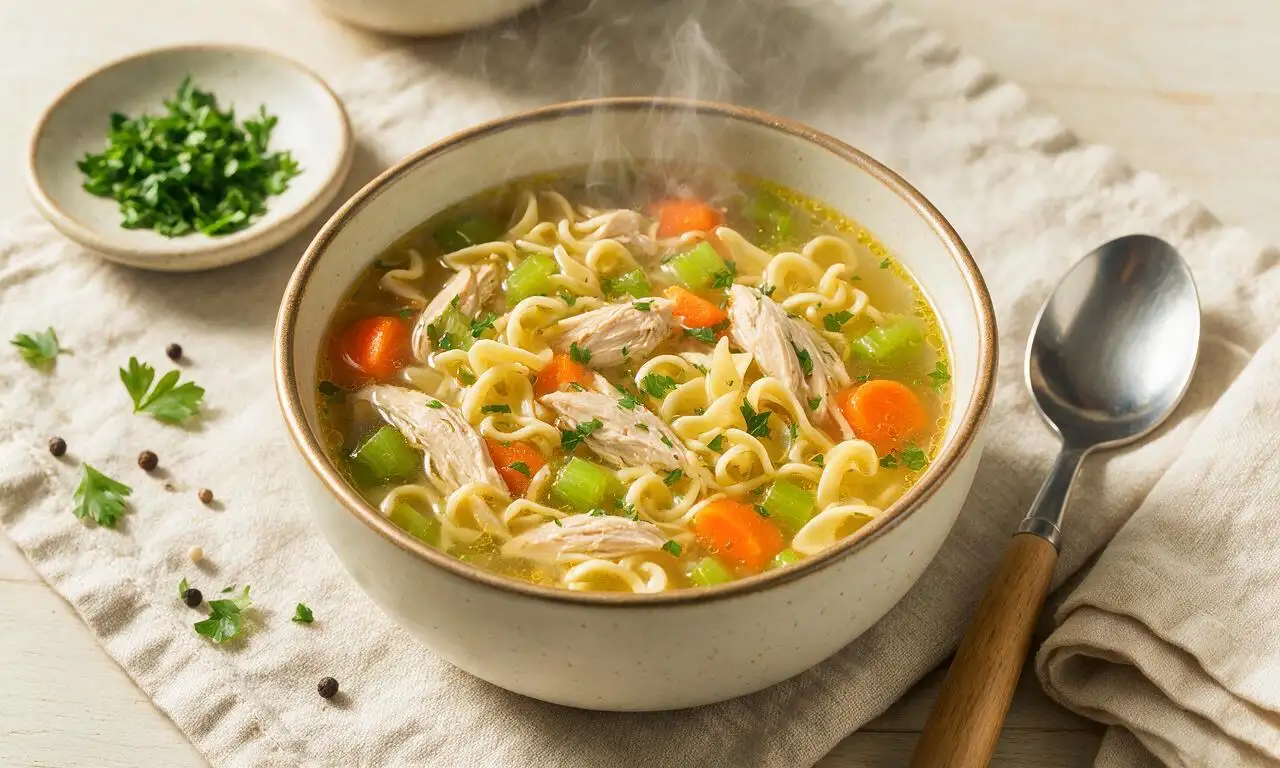
Warm, soothing classic chicken noodle soup loaded with tender chicken, soft egg noodles, and savory veggies, perfect for chasing chills and feeding the whole family.

⏱️ 40 minuteSoups & Stews ★ 4.9
Soups & Stews
🍜 France

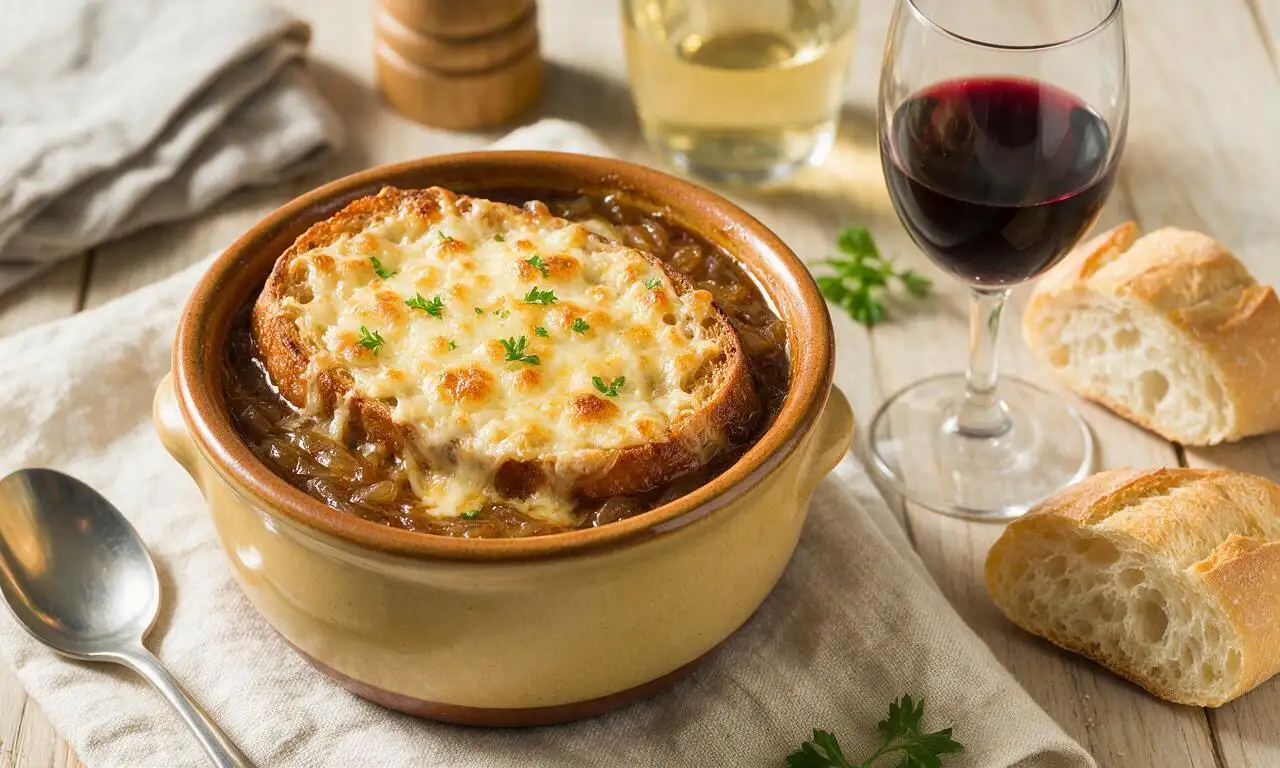
Deeply savory caramelized onion broth topped with crusty bread and bubbly melted Gruyère, a timeless French bistro comfort food ideal for cold days.

⏱️ 1 hour 25Soups & Stews ★ 4.8
Soups & Stews
🍜 United States

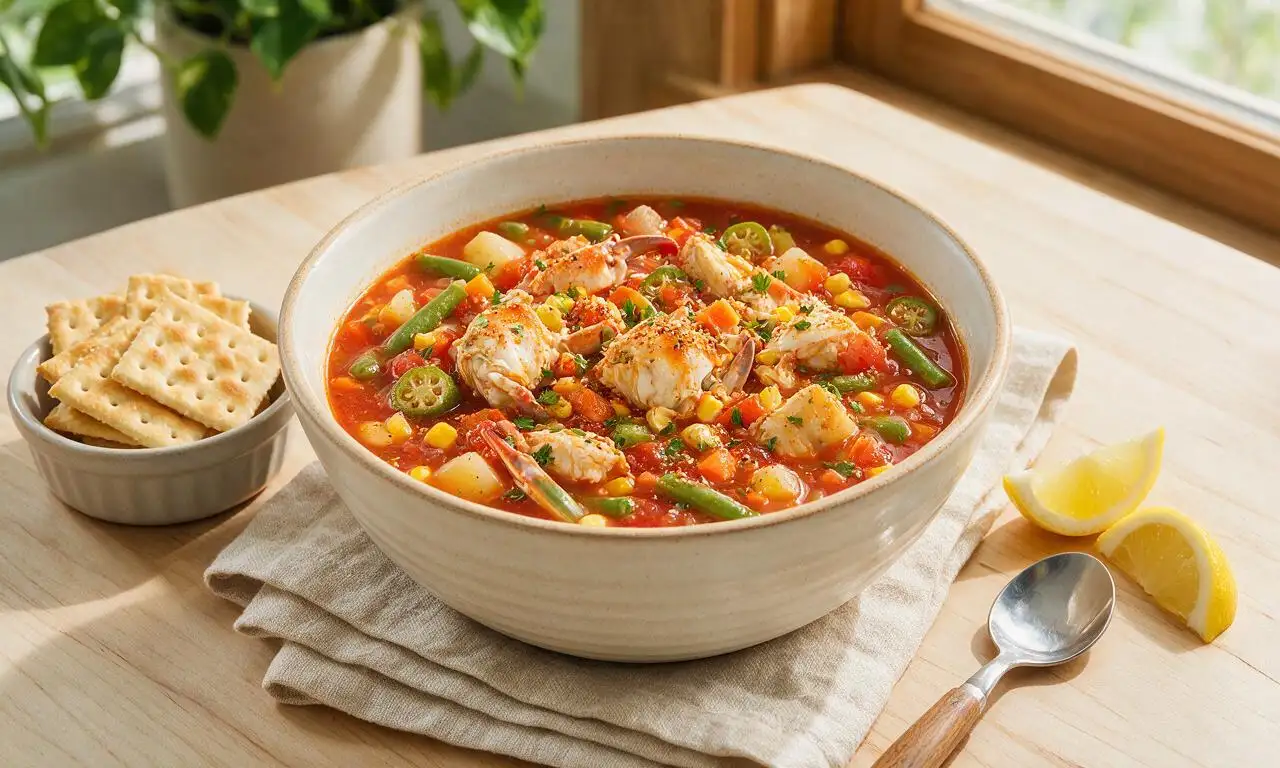
Hearty, briny Maryland crab soup loaded with sweet blue crab, tender summer vegetables, and zesty Old Bay, a beloved Chesapeake Bay coastal comfort staple.

⏱️ 55 minuteSoups & Stews ★ 4.9

thai chicken coconut soup:Frequently Asked Questions

1.Can I use chicken breast instead of boneless skinless chicken thighs? ▾
You can, but I strongly recommend thighs for this soup—breast easily overcooks and turns dry in the simmering coconut broth, while thighs stay juicy and tender even with slightly longer cook time. If you do use breast, cut it 0.5cm thick and add it in the last 3 minutes of cooking to avoid tough, rubbery bites.
2.What if I can’t find fresh galangal for the recipe? ▾
Fresh galangal has a sharp, citrusy-piney flavor distinct from ginger, but if you can’t source it, use 1.5x the amount of fresh young ginger plus a tiny pinch of ground cardamom to mimic its bright, earthy note. Frozen pre-sliced galangal works great too; skip dried galangal, as it tastes flat and muddy compared to fresh or frozen.
3.Do I really need to use full-fat canned coconut milk? ▾
Full-fat coconut milk is non-negotiable for that rich, velvety, authentic mouthfeel that balances the soup’s tangy, salty, spicy notes. Light coconut milk is cut with water and stabilizers that make the broth thin, watery, and prone to separating when simmered. If cutting fat, swap ¼ of the full-fat coconut milk for extra stock, but skip light canned versions entirely.
4.Why do I bruise lemongrass instead of chopping it finely? ▾
Bruising lemongrass by smashing it with the flat of a knife breaks down its tough, fibrous cell walls to release its bright, lemony-herbal aroma without leaving chewy bits in your soup. You’ll simmer the sections to infuse the broth, then fish them out before serving—fine chopping would leave unpleasant, woody strands that ruin the smooth soup texture.
5.How spicy is traditional Tom Kha Gai? ▾
Traditional Tom Kha Gai is mildly to moderately spicy, with heat coming from fresh Thai bird’s eye chilies, but you can adjust the heat totally to your taste. Start with 1 bruised chili for a mild, kid-friendly batch, 2-3 for balanced warmth, and 4+ if you love bold, searing heat. Bruise rather than chop chilies for gentle, infused heat instead of sharp, bitey spice.
6.Can I make a vegetarian version of this soup? ▾
Absolutely! Swap the chicken for 1cm slices of pressed firm tofu or king oyster mushrooms, replace the low-sodium chicken stock with low-sodium vegetable stock, and add 1 teaspoon of white miso paste to bump up the umami chicken normally adds. Keep all the aromatic herbs and coconut milk base the same for that classic, balanced Tom Kha flavor.
7.Why does my coconut milk look curdled when I simmer it? ▾
Curdling happens when you boil coconut milk too hard over high heat, which causes its fat and water content to separate. Fix this by keeping your soup at a gentle, low simmer once you add coconut milk, never a rolling boil. If it does separate, stir in 2 tablespoons of cold stock while turning down the heat, and it will smooth right out in 30 seconds.
8.Am I supposed to eat the galangal and lemongrass pieces in the finished soup? ▾
Nope! Those aromatics are used purely to infuse the broth with flavor, and they’re too tough, woody, and fibrous to eat pleasantly. I recommend fishing out all galangal slices, lemongrass sections, and whole chili pieces right before serving, or just warn guests to push them to the side of their bowl as they eat.
9.How long do leftovers of Tom Kha Gai last in the fridge? ▾
Stored in a sealed airtight container, this soup will keep well in the fridge for 3 to 4 days. The flavors will actually meld and get deeper the day after you make it! Reheat it gently over low heat on the stovetop, stirring occasionally, rather than microwaving on high, to prevent coconut milk separation or rubbery chicken.
10.Can I freeze leftover Tom Kha Gai for later? ▾
I don’t recommend freezing the finished soup, honestly. The high coconut milk content tends to separate and turn grainy when thawed, and chicken can develop a mushy, off texture after freezing and reheating. If prepping ahead, freeze the aromatic stock base (no coconut milk or chicken) for up to 3 months, then add those components fresh when ready to serve.
11.What’s the actual difference between Tom Kha Gai and Tom Yum soup? ▾
Great question! Tom Yum is a brighter, thinner, more tart soup that uses very little (if any) coconut milk, with a heavier focus on lime juice and chili paste. Tom Kha Gai has a rich, creamy coconut milk base, a stronger galangal note ("kha" means galangal in Thai), and a more mellow, balanced tang rather than sharp, bracing acidity.
12.Can I add extra vegetables to this soup? ▾
Absolutely! Traditional add-ins include sliced straw mushrooms, halved cherry tomatoes, and thin strips of bell pepper, which all hold up well to the short simmer time. Add heartier veggies like bok choy or sliced baby corn 3 minutes before the soup is done, and delicate greens like spinach right at the end so they wilt without turning mushy.
13.Why does the recipe specify low-sodium chicken stock instead of regular? ▾
Regular chicken stock can have wildly varying sodium levels, and it’s easy to over-salt the soup once you add fish sauce (the classic salty seasoning for Tom Kha) at the end. Using low-sodium stock gives you full control over the final salt level, so you can adjust the tang-salt-sweet-spice balance perfectly without ending up with an overly salty batch.
14.What should I serve alongside Tom Kha Gai? ▾
This soup pairs perfectly with fluffy jasmine rice to soak up the creamy, flavorful broth, or crispy rice crackers for a light crunch. If serving it as part of a larger Thai meal, pair it with stir-fried greens, pad see ew, or green papaya salad for a spread with balanced flavors and textures. It also works beautifully as a light standalone lunch.
15.Can I use bottled lime juice if I don’t have fresh limes? ▾
Bottled lime juice has a flat, slightly metallic aftertaste that throws off the soup’s bright, fresh balance, so I really recommend using fresh-squeezed lime juice if at all possible. If you’re in a total pinch, use ¾ the amount of bottled lime juice, taste as you go, and add a tiny pinch of sugar to cut the flat, sharp artificial tang before serving.
16.Why does my Tom Kha Gai taste bland even when I follow the recipe? ▾
Bland Tom Kha usually comes down to not simmering aromatics long enough, or skipping the final flavor balance adjustment. Make sure you simmer galangal, lemongrass, and chilies in stock for 10 full minutes before adding coconut milk and chicken, then adjust the finish with extra lime, fish sauce, or a pinch of sugar until every flavor pops.
17.Can I use frozen pre-sliced galangal and lemongrass instead of fresh? ▾
Absolutely! Frozen pre-sliced galangal and frozen lemongrass sections work almost as well as fresh for infusing broth, since they’re flash-frozen right at peak ripeness when their aromatic oil content is highest. There’s no need to thaw them first—just toss them straight into the simmering stock, and add 1 extra minute of simmer time to draw out all their flavor.
18.What can I use instead of fish sauce for a vegan, soy-free version? ▾
For a vegan, soy-free alternative to fish sauce, use coconut aminos plus a tiny pinch of sea salt to add that salty, umami depth. Start with 1 tablespoon of coconut aminos, taste, and add more as needed—it’s milder and slightly sweeter than fish sauce, so you may need a small extra squeeze of lime to keep the flavor balance bright.
19.How do I make sure the chicken stays tender and doesn’t overcook? ▾
First, stick with boneless skinless chicken thighs cut into uniform 1cm strips so they cook evenly. Add them to the gently simmering (not boiling) coconut broth, and cook for just 5 to 7 minutes, until opaque all the way through with no pink center. Boiling the soup at too high a heat will make chicken seize up and turn tough, even when using thighs.
20.What is that thin white film that sometimes forms on top of the soup? ▾
That thin, pale layer is just natural coconut fat rising to the top as the soup simmers, and it’s totally harmless and delicious! If you prefer a cleaner-looking broth, you can skim it off with a spoon before serving, but I usually leave it in—it adds extra richness and that signature creamy mouthfeel that makes Tom Kha so comforting. It’s not a sign of spoilage or curdling.

Comments (4)

2 days ago

OMG this Tom Kha Gai is SO good! I was craving takeout from my local Thai spot all week but didn’t want to drop $20 on soup, so I tried this recipe last night for family dinner. It came together in 20 minutes exactly, even with my 7 year old “helping” me dump in the coconut milk! My kids loved it so much they asked for seconds, and my husband said it’s better than the restaurant version. Total game changer for weeknight meals. I added extra mushrooms because we love them, perfect call.

yesterday

Wait did you use regular white mushrooms or the shiitake ones the recipe mentions? I’ve been wanting to make this but only have baby bellas in the fridge right now, wondering if that’ll work!

2 hours ago

So glad your whole family loved it, Sarah! @Jake T. Baby bella mushrooms work perfectly here if that’s what you have on hand — they add a great earthy depth that pairs so well with the coconut and lime. Just slice them thin and you’re good to go!

3 days ago

Super easy recipe, made it for my potluck at work yesterday and everyone was asking for the recipe! I only knocked off a star because I didn’t have fresh galangal so I used dried, and it was a little less fragrant than I remember Tom Kha being. Still absolutely delicious though, and so fast to throw together. Will 100% keep this in my regular meal prep rotation for cold winter weeks.

2 days ago

So happy this was a hit at your potluck, Luna! Dried galangal is a great swap if you can’t find fresh — you can bump up the amount by about 50% next time to get that brighter, zingy flavor you’re missing without running to a specialty grocery store!

30 minutes ago

I was skeptical I could make good Tom Kha Gai at home because every time I’ve tried Thai recipes before they require a million hard-to-find ingredients, but this was so straightforward! 20 minutes start to finish, no fancy steps, and the flavor is spot on. I added a little extra chili oil at the end because I like my soup spicy, and it was chef’s kiss. Made enough for leftovers for lunch today, and it tasted even better after sitting in the fridge overnight.

1 week ago

Made this last night when my sister came over for our weekly dinner night, and we both went back for a second bowl! The balance of creamy coconut, tangy lime, and savory chicken is exactly what I want on a rainy evening. I used chicken thighs instead of breast like I saw someone mention in a different review, and they were so tender and juicy. Will absolutely be making this again soon!

5 days ago

Oh I never thought to use chicken thighs here! I made it with breast last week and it was a little dry, definitely swapping for thighs next time I make this — thanks for the tip!